

How to Choose a Behind-Faucet Splash Guard for Your Sink
The best kitchen sink splash guard behind the faucet is a slim, absorbent stone slab or an elevated caddy sized to fit the exact gap between your tap and the wall. Measure that strip first. Most gaps run 8 to 12 cm deep, so a 10 cm wide piece sits flush without crowding the bowl or blocking the mixer handle.
That narrow strip is the one spot almost nobody wipes. Water pools behind the tap base, sits under the soap bottle, and stays damp for days, which is how you end up with grey marks on the benchtop and a grimy ring around the tap. A guard made from diatomite fixes the cause instead of hiding it: the stone pulls water in on contact, the surface feels dry within seconds, and the moisture evaporates back into the air rather than sitting against your stone or laminate. A 60 cm mat covers the full run behind a standard tap, or a 25 cm caddy raised 2.5 cm on steel legs handles just the soap and sponge with airflow underneath.
Table of Contents
Where the Water Actually Comes From
Three things wet that strip. Splash-back bounces off the sink edge whenever the stream hits a plate on an angle, drips roll off wet hands reaching for the mixer handle, and bottles and sponges parked on the bench leak run-off from their bases.
None of it dries on its own. There is no airflow between the tap and the splashback, the tap base blocks a cloth from reaching the last few centimetres, and a flat silicone tray holds water underneath instead of letting it go.
Over months, that damp lifts laminate at the seams, swells and darkens timber edges, and softens grout lines until they stain. Renters in flats with poor ventilation see it first, since the same conditions behind condensation and damp in a bathroom sit at the back of a kitchen bench too.
| Water source | Where it lands | Mark it leaves |
|---|---|---|
| Splash-back off the sink edge | Bench strip and splashback join | Cloudy mineral spotting |
| Drips from wet hands | Around the mixer handle | Sticky residue, dull finish |
| Run-off from bottles and sponges | Under bottle and sponge bases | Swollen laminate seam |
| Standing water left to sit | Grout lines and timber edges | Dark grout, lifted edge |
Measure the Gap Behind Your Tap First
Three numbers decide what fits: length, depth, and the clearance above the bench. Take all three with a tape measure before you look at a single product.
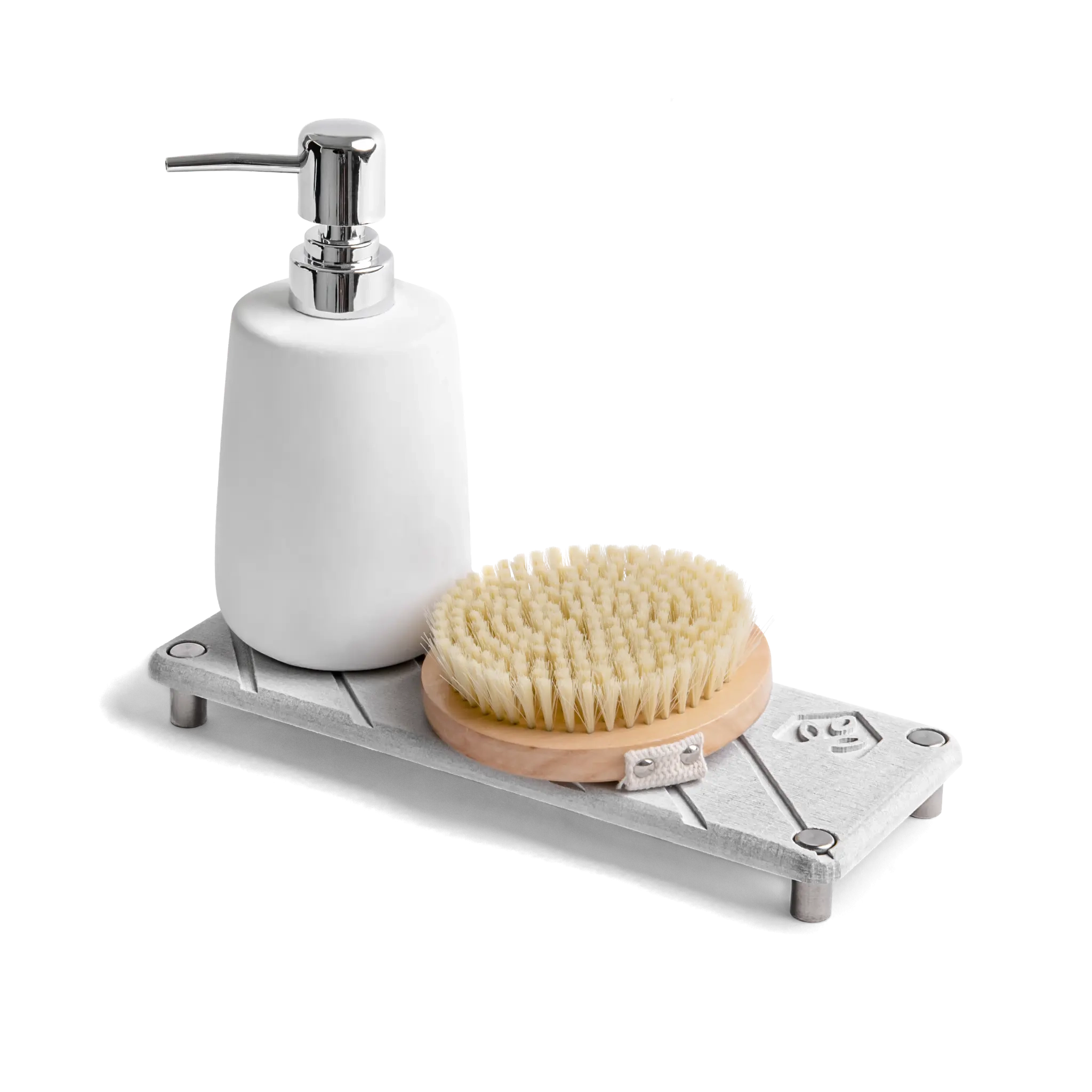
Stone Sink Caddy - Flow
Measure length along the back of the sink from edge to edge, then measure depth from the sink lip back to the wall, splashback or window sill. Check what is left behind the mixer handle when you lift it through its full range, and if you have a swan-neck tap, swing it fully to one side, since spout reach changes how much of that strip stays usable.
- Length along the back edge of the sink or bench run
- Depth from the sink lip to the wall, splashback or sill
- Clearance behind the mixer handle at full lift
- Swivel arc of the spout at its widest swing
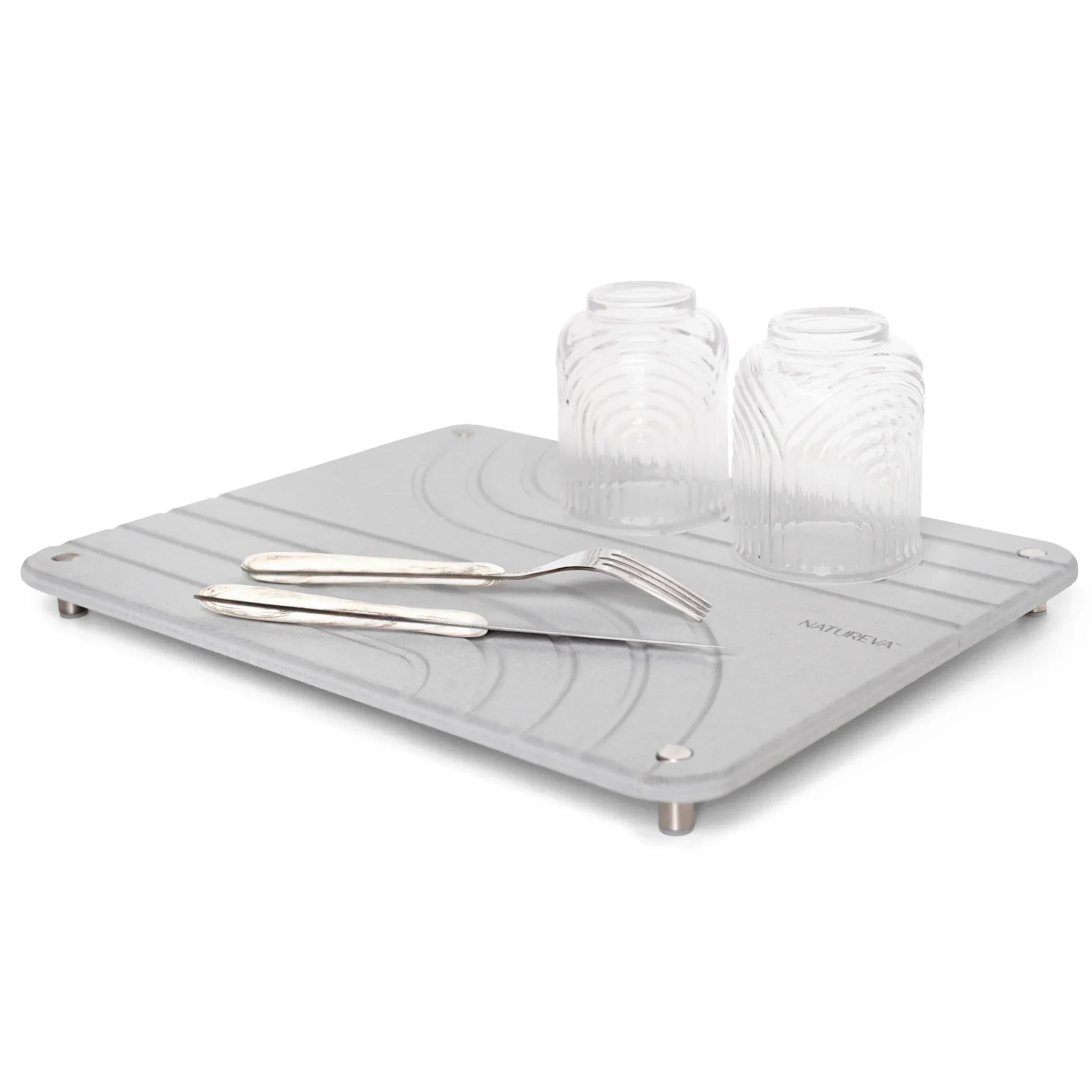
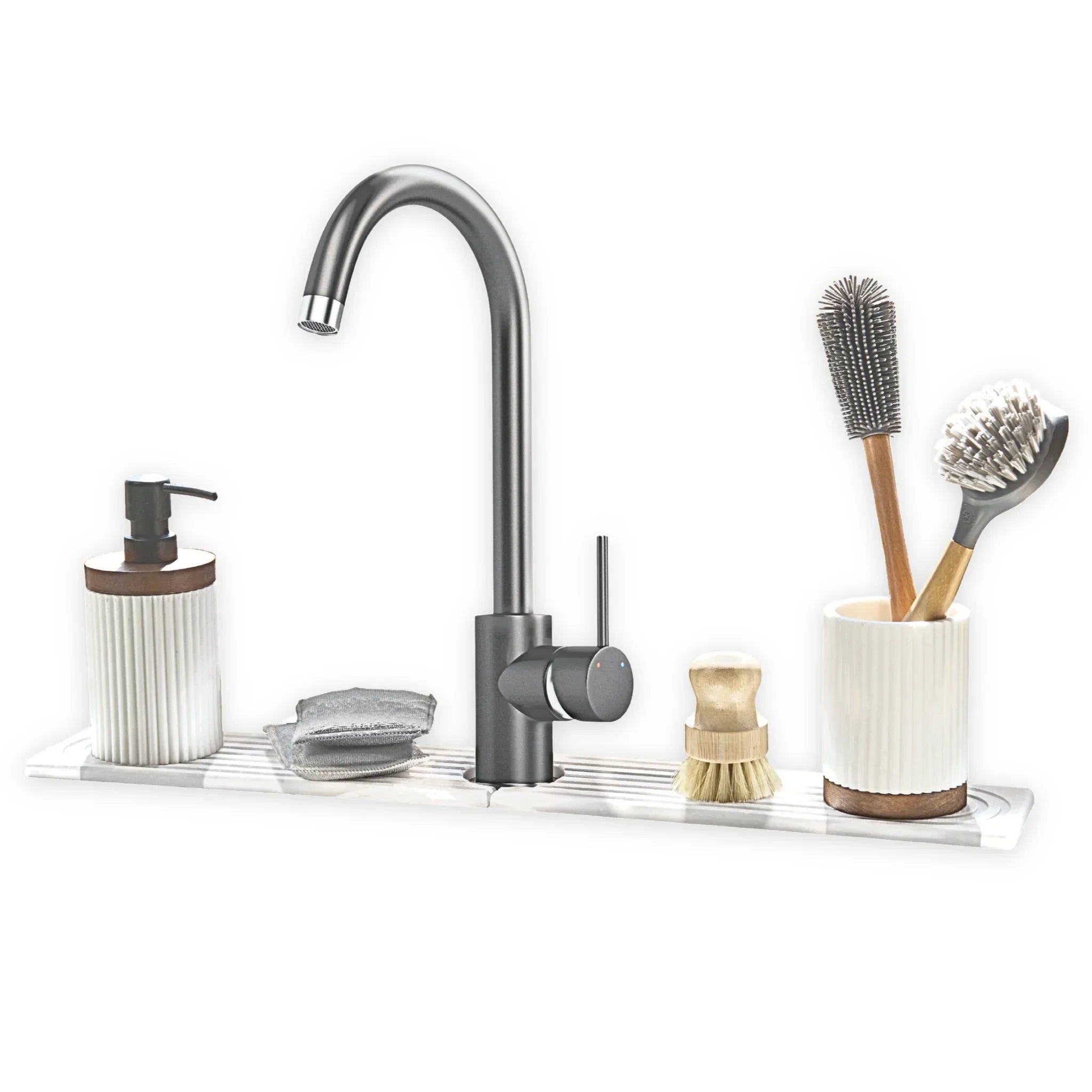
A faucet mat measures 60 × 10 × 0.9 cm and lies flat as a narrow strip on most standard sinks. A caddy is 25 × 10 cm and stands 2.5 cm up on stainless steel legs, which suits a shorter gap that still has to hold bottles. Write the numbers down before you shop so you only compare guards that actually fit.
Stone, Silicone, Rubber or Microfibre
What separates these materials is what happens to the water after it lands. One group holds it, one hides it, and one takes it in and releases it.
- Silicone and rubber trays hold water in a shallow pool on top and trap damp against the bench underneath.
- Fabric and microfibre pads soak water up but stay wet, so they turn sour and need washing every few days.
- Acrylic and glass splash screens block spray, then let the water run straight back down onto the bench.
- Diatomite stone absorbs on contact and evaporates the water back into the air, so no damp is left sitting for odour or mould to develop.
Diatomite is fossilised algae, ground fine and blended with recycled paper and lime. The lime binds it into a solid slab, the paper fibre adds strength, and the millions of pores in the algae do the absorbing. There are no coatings or added treatments on it, so the drying is the whole mechanism rather than something sprayed on the surface.
The next generation of home essentials: naturally made, cleaner by design, sustainable by nature.
SHOP ALLFaucet Mat or Sink Caddy for Your Bench
Pick by what sits on your bench. If water lines the whole back edge of a long sink, you want the full strip; if the mess comes from bottles, you want something raised.
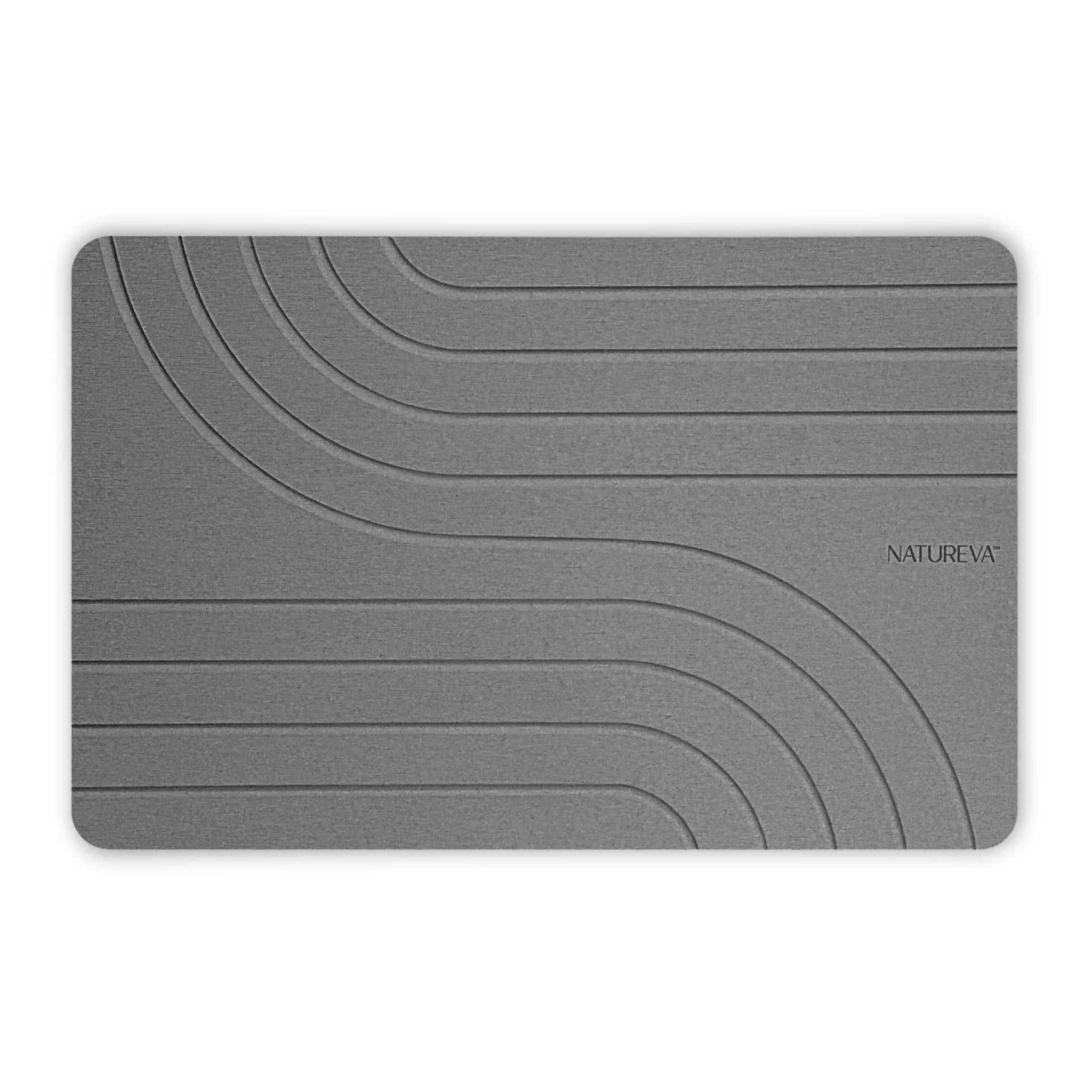
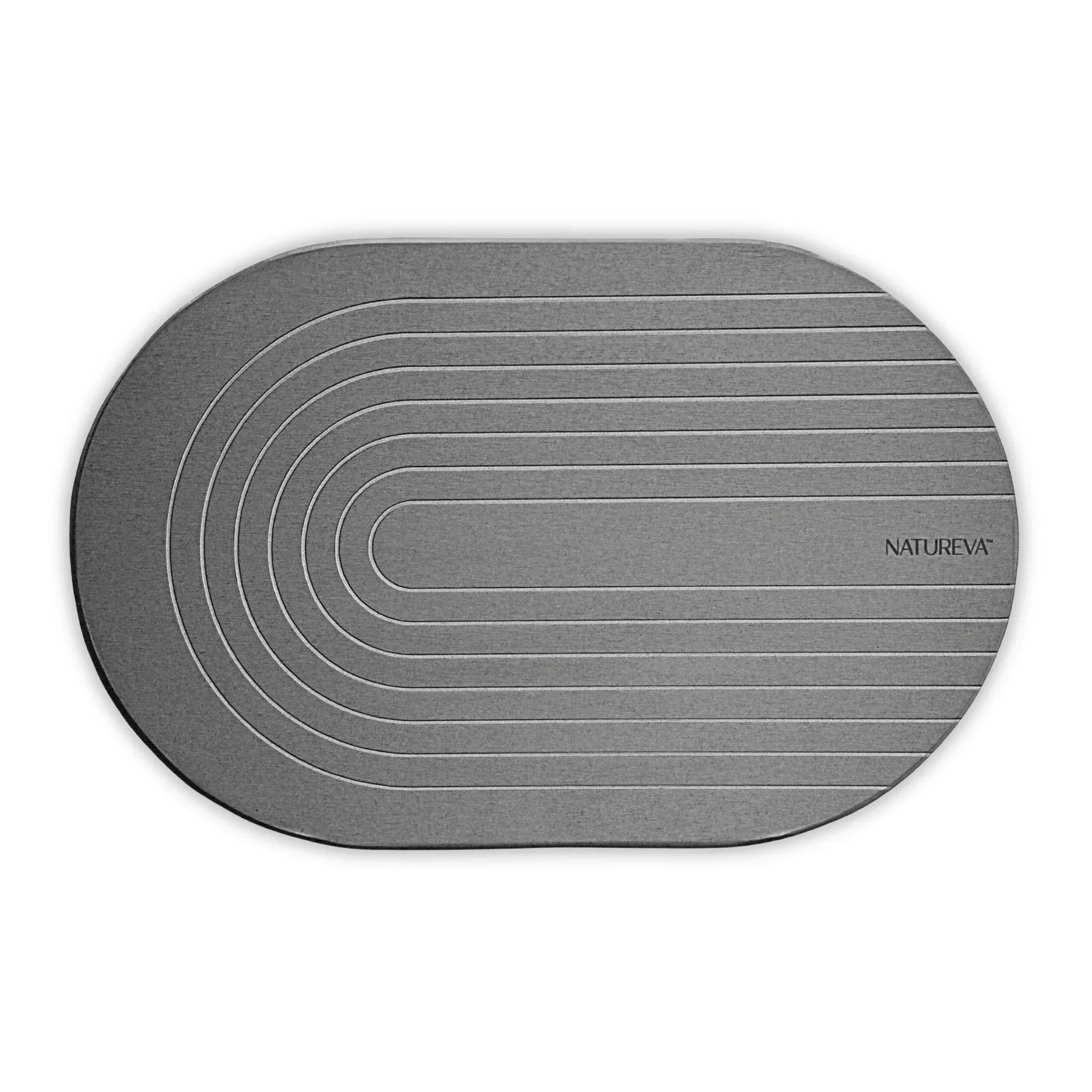
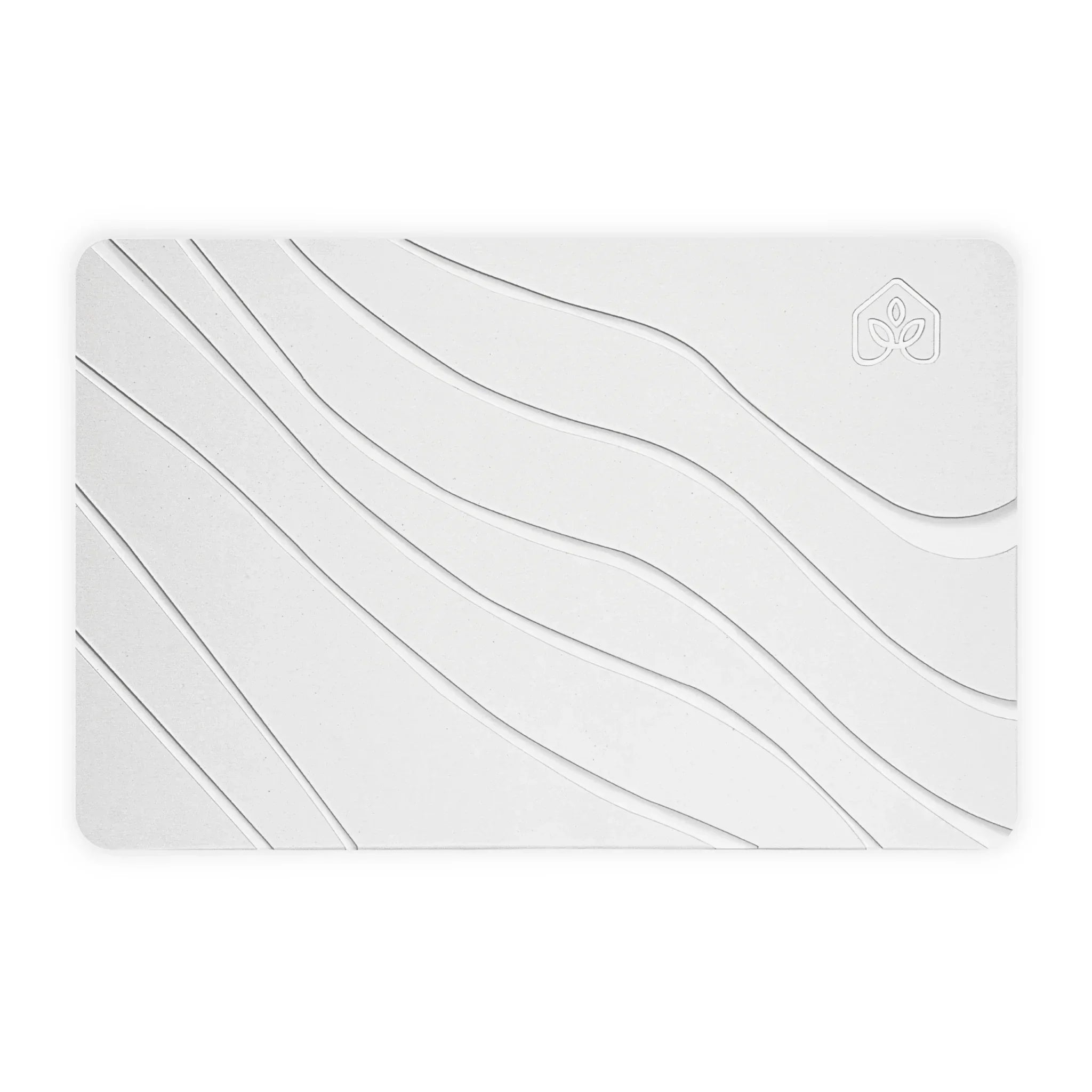
The Stone Faucet Mat runs the length of the back edge, and the Arch engraving has tight parallel contour channels that guide water along the slab instead of letting it sit in one spot. The Stone Sink Caddy gives dish soap, hand wash and a sponge a home, with 2.5 cm of airflow underneath so run-off from bottle bases dries out instead of pooling.
- Long sink, water across the whole back edge: the 60 cm mat, $29
- Bottles and a sponge to corral: the elevated caddy, $25
- Both, mat along the back edge with the caddy to one side of the tap
- Colours are Graphite, Slate and Chalk, with black coated legs on Graphite and raw stainless on the other two
Shipping is free on orders over $100 in Australia and Canada, which is worth knowing if you are pairing pieces across the kitchen.
Grip, Airflow and Keeping It Absorbent
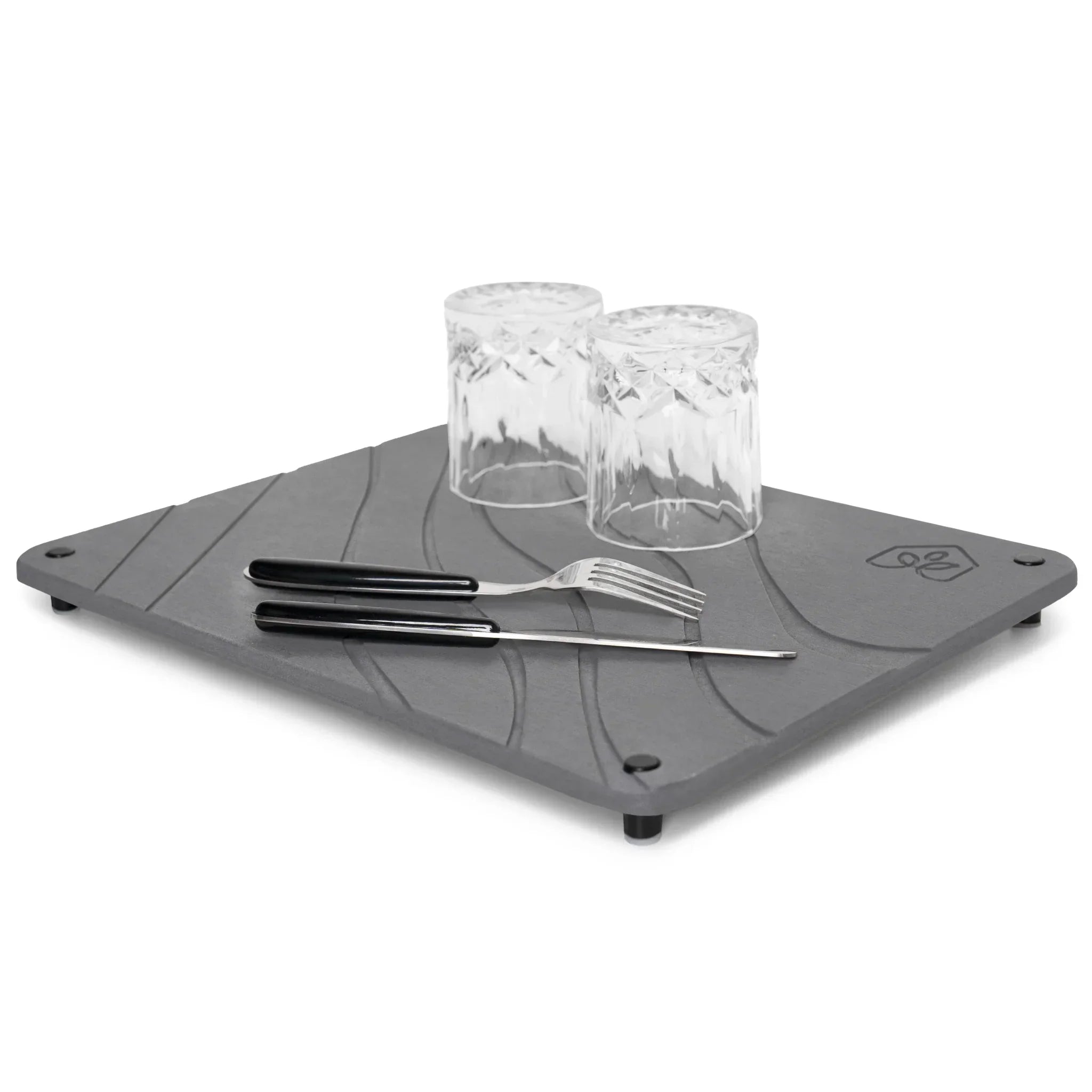
A guard that slides around behind the tap is worse than none, because it drags water with it. Non-slip pads matter in a wet zone, which is why the faucet mat ships with 10 transparent 2 mm silicone pads and the caddy with 6 that sit under the steel legs.
Those pads do two jobs. They stop the stone shifting on a wet bench, and they keep it off the surface so you do not get scratches or pressure marks, sitting flush underneath with no visible overhang. Airflow underneath also stops moisture saturating one patch of stone, which is the reason the caddy stands on legs rather than flat.
- Wipe weekly with a 1:1 vinegar and water mix, then let it air dry
- Never bleach it, never soak it, never put it in the dishwasher
- Sand lightly every 3 to 4 months with the included P320 disc to reopen the pores
- Sand while the stone is slightly damp, or outdoors in a well-ventilated spot, as it is best not to inhale the dust
Skip the sanding and build-up slowly clogs the pores, which is what makes absorbency drop in year two or three.
Which Splash Guard Is Worth the Space
Our view is simple. A screen that only blocks spray moves the water somewhere else on your bench, so you still pick up a cloth afterwards. A slab that takes the water in and releases it to the air ends the job instead of relocating it.
Stone is firm and cool to the touch, never soft, and that is the point. It reads as part of the kitchen, like a piece of the benchtop, rather than a cleaning item parked next to the tap. If you want something you can fold up or throw in the wash, this is the wrong material for you.
| Style | What it costs you | Wrong for |
|---|---|---|
| Acrylic or glass screen | Daily bench wipe | Busy households |
| Microfibre pad | Wash every 2-3 days | Poorly ventilated flats |
| Silicone tray | Lift and dry underneath | Timber or laminate edges |
| Diatomite slab | Sand every 3-4 months | Anyone wanting soft underhand |
The proof behind the stone claim sits outside our own copy. Homes To Love rated the stone bath mat 9 out of 10 and found it dried fully in under eight minutes, the Stone Dish Mat took Bronze in Kitchen Essentials as part of three wins and four finalist places at the Clean + Conscious Awards 2026, and every stone piece is certified asbestos-free by a NATA-accredited Australian laboratory and retested regularly.
Pick Your Length, Then Pick Your Colour
Pull out the note with your three measurements and match the longer number to a piece: a back strip near 60 cm takes the faucet mat, a shorter gap that mostly holds bottles takes the caddy. Then pick the colour against your benchtop and tap finish, Graphite for dark stone and matte black tapware, Slate for grey and brushed nickel, Chalk for white or pale timber. Order the one that fits. If you have been meaning to sort the drying side of the sink as well, adding a dish mat brings the order past $100 and the shipping is covered in both Australia and Canada.
The next generation of home essentials: naturally made, cleaner by design, sustainable by nature.
SHOP ALLSplash Guard Questions Behind the Tap
Can I cut or trim a stone faucet mat if my gap is shorter?
No, the stone is not meant to be cut down. It is a solid slab, so cutting risks cracking it and leaves a raw edge that chips. If your back strip is short, go for the compact caddy shape instead, or shift a longer slab slightly off-centre so it clears the tap base and sits within the run you have.
Will it still work if my tap is wall mounted?
Yes, and wall-mounted tapware often makes it easier. With no tap base taking up bench space, the whole strip stays clear, so a slab can sit right against the splashback. Water from a wall spout tends to land further forward, so check where your drips actually fall and position the stone under that line rather than hard up against the wall.
Does hard water leave white marks on the stone?
It can leave faint mineral spotting over time, the same as it does on tiles and glass. The weekly vinegar wipe already in your routine lifts most of it. Anything stubborn comes off with a light pass of the included sanding disc while the stone is damp, which also reopens the pores. Natureva ships that disc with every stone piece.
What happens if I knock it into the sink or drop it on tiles?
Stone can chip or crack on a hard fall, so treat it like a ceramic dish rather than a mat. A slab weighs about 0.4 kg, which is light to lift but still solid enough to break on tile. If yours turns up damaged in the post, email your order ID and photos and a replacement is arranged within 48 hours.