
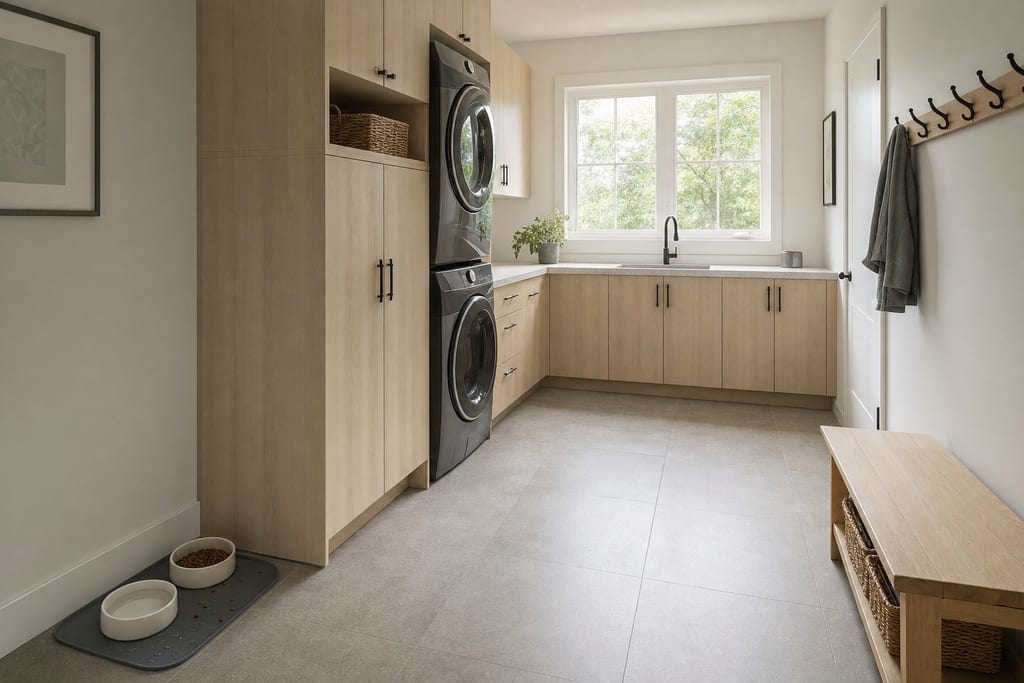
Get a Pet Feeding Mat That Catches Spills and Stays Put
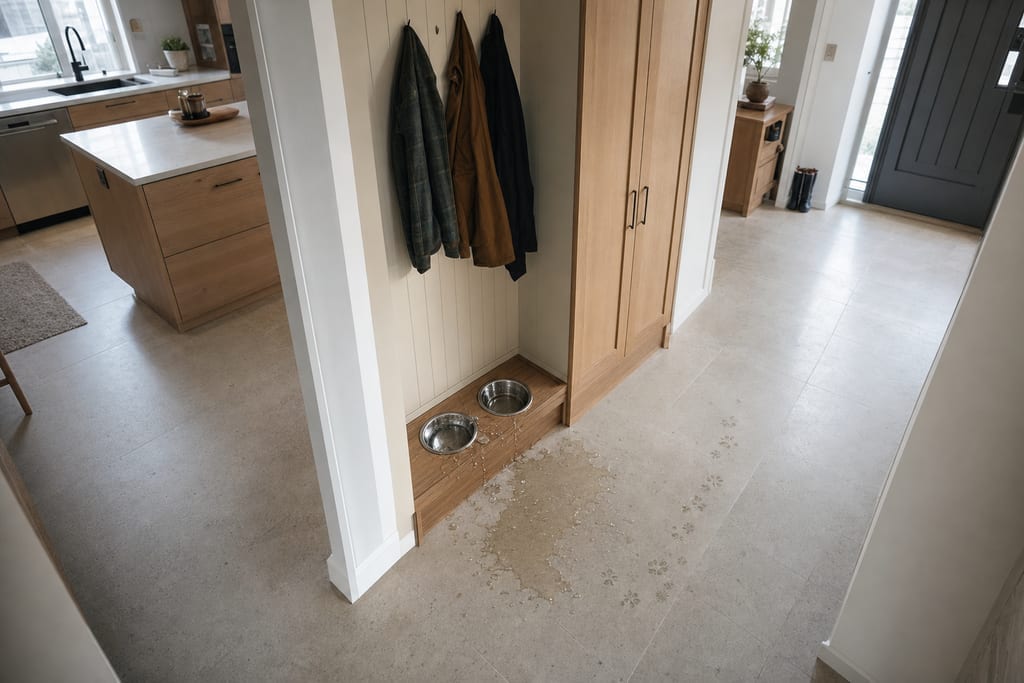
A sliding water bowl can spread half a cup of water across the floor in one meal, and that's enough to make a pet feeding mat worth owning. Dogs and cats push bowls as they eat and drink, and on a hard floor that pushing turns into puddles that spread toward cabinets, skirting boards, and bare feet. A feeding mat only earns its place if it does two things well: it stops spills from running, and it refuses to slide when a paw catches the edge of the bowl.
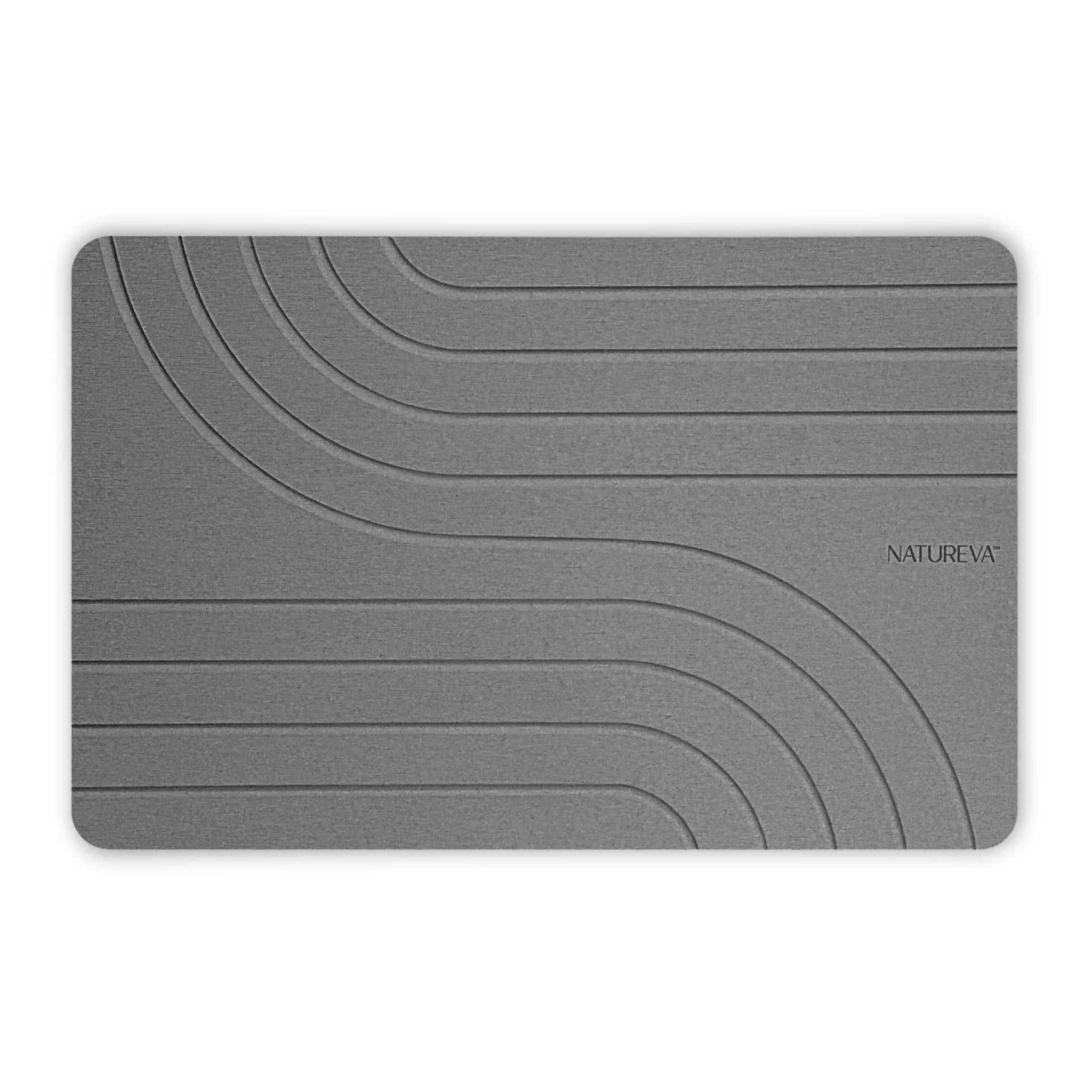
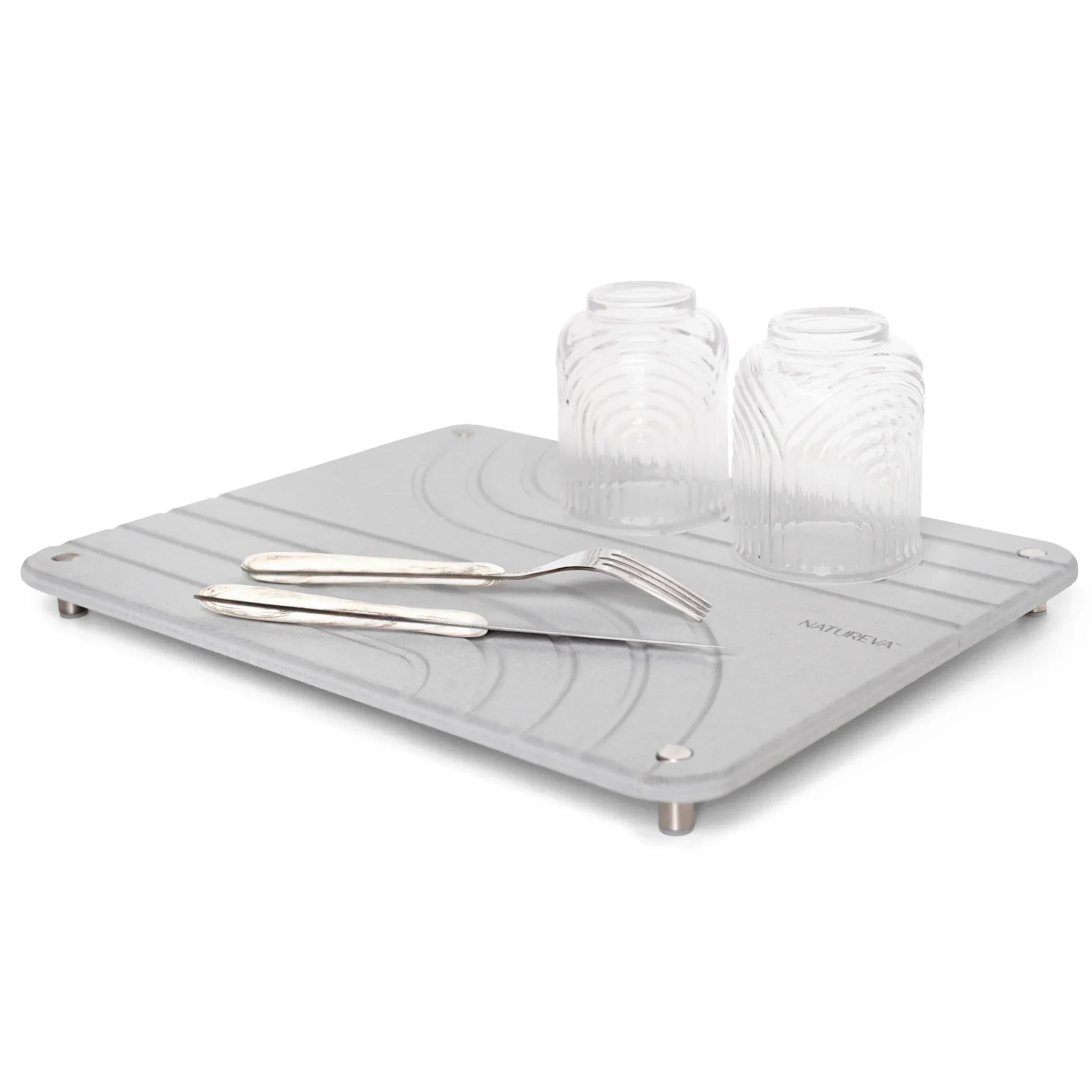
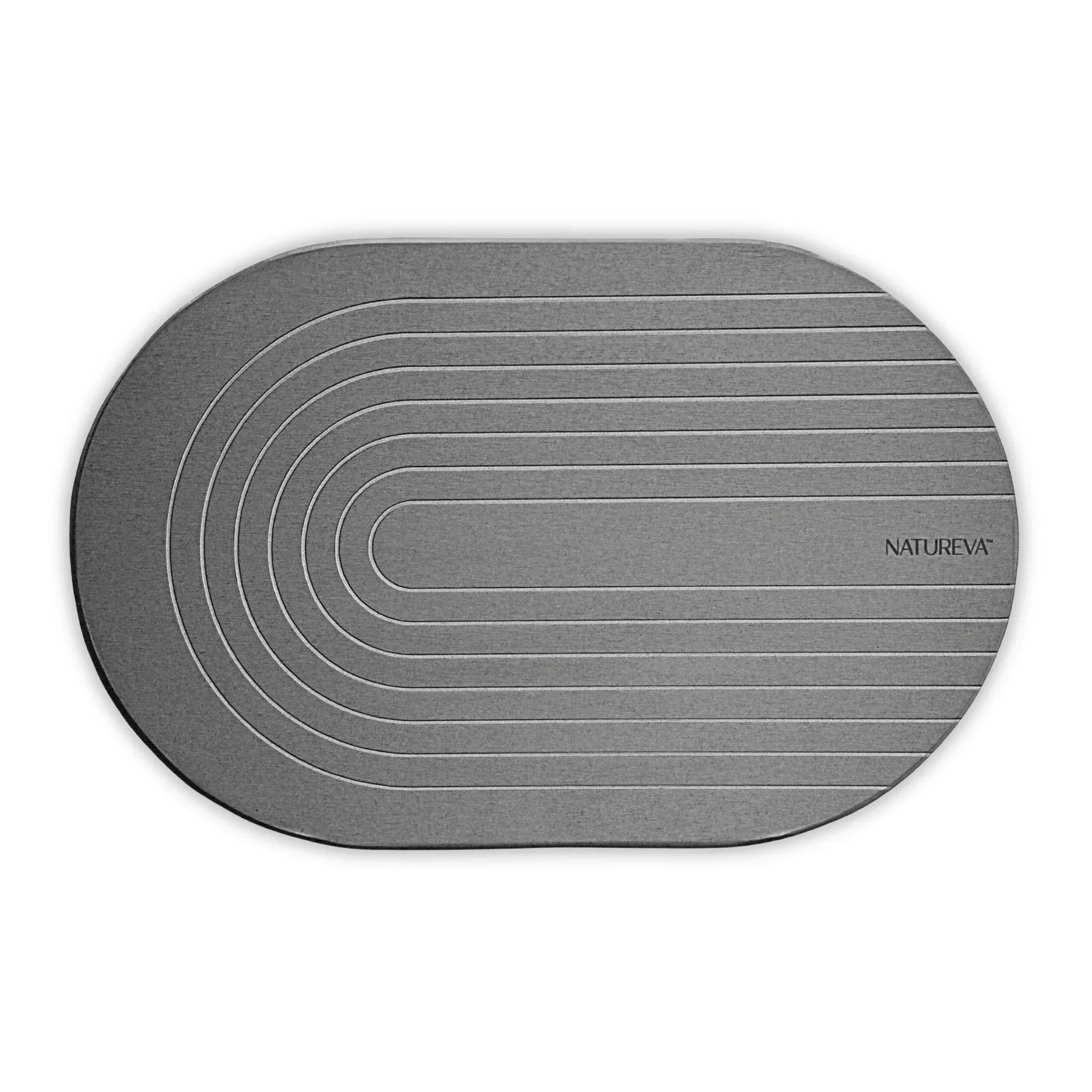
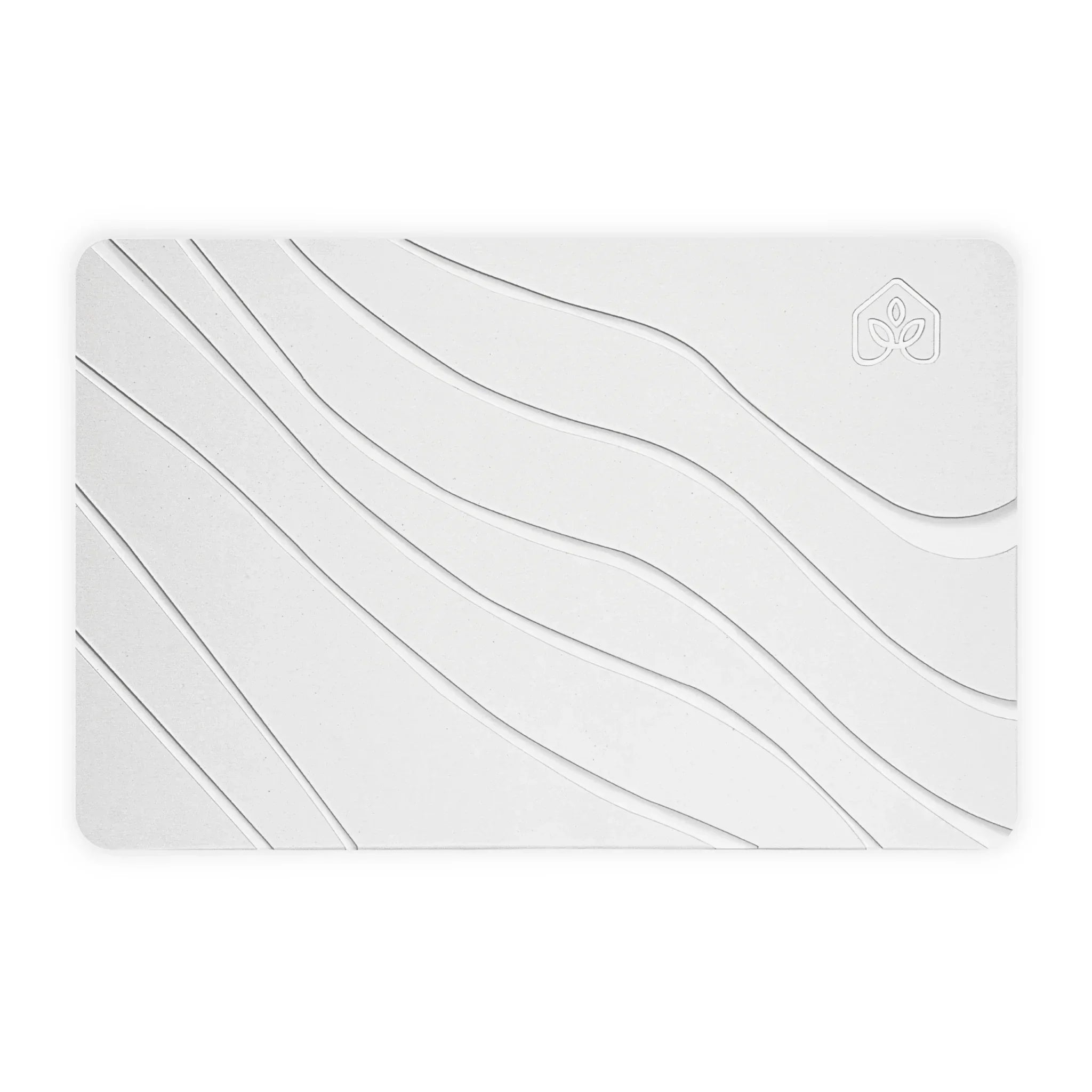
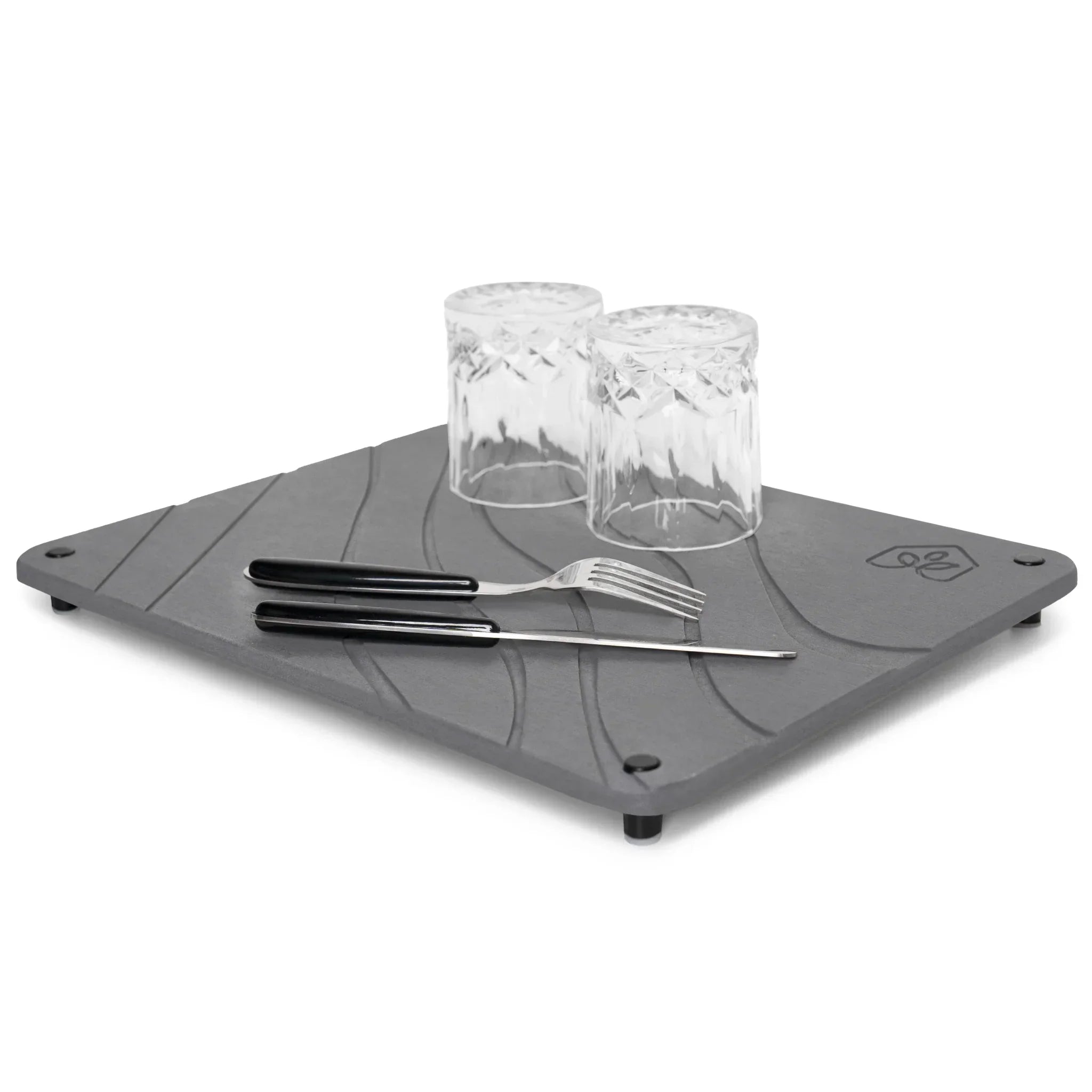
Most mats sold for this job are fabric, rubber, or silicone, and each one trades off something. Fabric soaks up water but stays damp for hours, which means odour and mildew start before the mat has a chance to dry. Rubber and silicone sit flatter against the floor but tend to pool water on the surface instead of absorbing it, so a knocked bowl still means wiping up a puddle by hand. Natureva's Stone Pet Feeding Mat, made from diatomite, is one option worth comparing against those three materials, since it absorbs water on contact rather than letting it sit or soak through.
Table of Contents
What Makes a Feeding Mat Actually Work
A feeding mat earns its spot on the floor by passing four tests: spill containment, grip, size, and dry time. Spill containment is whether water stays on the mat instead of running off the edge. Grip is whether the mat holds still when a dog or cat bumps the bowl. Size is whether the mat is big enough to catch the bowl plus a margin of splash. Dry time is how long the surface stays wet after a spill.
Looks are rarely the problem. Most mats fail on grip or dry time, two things a shopper can't judge from a product photo. A mat with a smooth back slides across tile the first time a paw catches it, and a mat that holds water on its surface instead of drying it out becomes a damp spot that needs wiping after every meal.
| Criterion | What to check | Common failure point |
|---|---|---|
| Spill containment | Raised edge or absorbent surface | Flat mats let water run off |
| Grip | Non-slip backing on hard floors | Thin rubber backing slides on tile |
| Size | Covers bowl plus splash zone | Mats too small for bowl footprint |
| Dry time | Minutes for surface to dry fully | Fabric and silicone stay wet for hours |
Each of these four points sets up a direct comparison in the rest of this guide, since a stone pet feeding mat handles them differently than the fabric and silicone options sold alongside it.
Feeding Mats Worth Shortlisting
Four materials show up again and again in pet feeding mats, and each one behaves differently once water hits it. Knowing the trade-offs before you buy saves you from replacing a mat within a year.
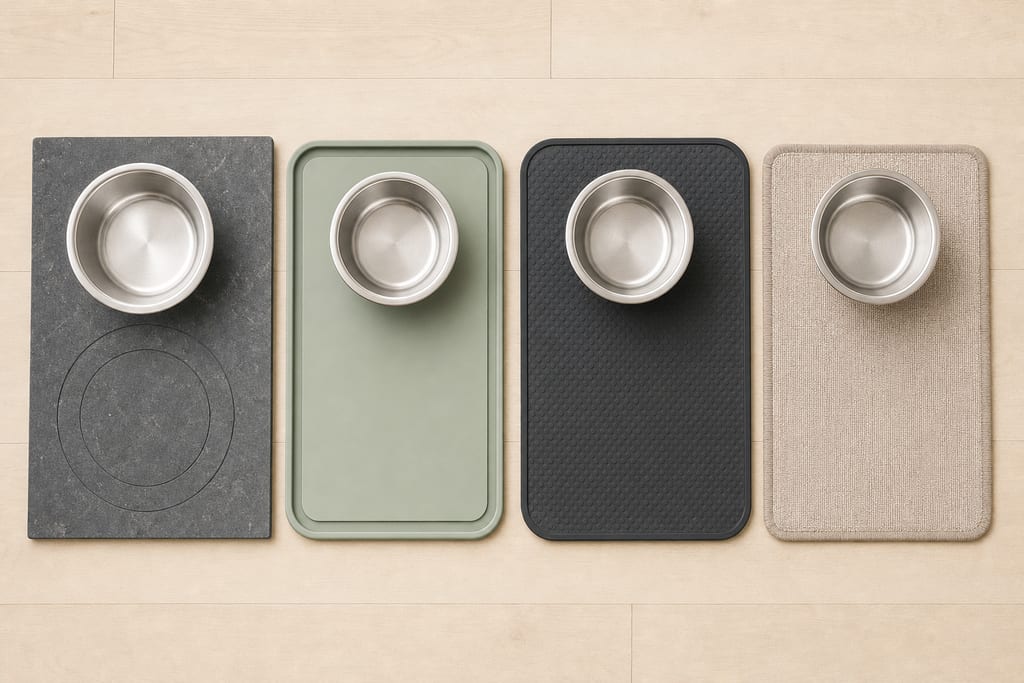
Stone feeding mats made from diatomite, like Natureva's stone pet feeding mat, absorb spills directly into the surface and dry within minutes rather than sitting wet. Silicone mats use raised edges to trap water in a shallow well, but that same water sits exposed and the mat can curl at the corners over time. Rubber mats grip the floor well, yet moisture often gets trapped underneath, where it stays damp and starts to smell. Fabric mats look soft and feel low-cost at first glance, but they soak through fast and need washing daily to stay usable.
| Mat type | Material | Price range | Best for |
|---|---|---|---|
| Stone | Diatomite | $40 to $60 | Fast drying, low upkeep |
| Silicone | Food-grade silicone | $15 to $35 | Raised-edge containment |
| Rubber | Natural or synthetic rubber | $20 to $40 | Grip on smooth floors |
| Fabric | Cotton or microfibre | $10 to $25 | Light spill catching only |
Dry time is the single biggest difference between these four materials, and it's the one most buyers overlook until the mat starts smelling.
Why Spills Stay Put Or Don't
A mat's underside, not its top surface, decides whether it stays where you put it. Tile and hardwood are both slick, and any mat without real grip underneath will skid the moment a paw catches the bowl.
Diatomite stone works by pulling water into millions of microscopic pores instead of letting it pool on top, which is why the surface stays dry rather than slippery after a spill. Raised-edge silicone mats can hold water inside their rim, but the mat itself still slides across hard flooring if the base is smooth, so containment alone doesn't solve the problem. A non-slip base pad is the single biggest factor in whether a mat stays under a bowl, more than the pattern or material on top.
- Check the underside for a full rubber or silicone pad, not just a few small dots.
- Press down on one corner of the mat on a hard floor and see if it shifts.
- Look for a surface that absorbs rather than one that only channels water to an edge.
- Avoid mats with smooth plastic backing on tile or polished floors.
The next generation of home essentials: naturally made, cleaner by design, sustainable by nature.
SHOP ALLSizing A Mat To Your Bowls
Measure your bowl's diameter first, then add at least 5cm of buffer on each side to catch splashes that land outside the bowl itself. A single-bowl setup rarely needs more than that, but skipping this step is how people end up with a mat too small to matter.
Two-bowl setups need a mat at least 40cm wide to keep both bowls contained without water bridging onto bare floor between them. Natureva's Stone Pet Feeding Mat is 47 x 29cm, sized for two standard bowls side by side with room left over for splash. Going bigger than you need adds visual weight to a small kitchen corner and makes the mat harder to lift and clean underneath.
- Measure bowl diameter, then add 5cm buffer per side.
- Add both bowl footprints together for two-bowl setups.
- Stay at or under 50cm wide unless you're covering a large dog's full feeding station.
- Leave enough mat length to lift one edge by hand for cleaning.
Keeping A Feeding Mat Clean Long Term
Cleaning effort is where mat types separate the most over time. Fabric mats need washing every few days or they start to smell, since the material holds moisture against its fibres long after a spill happens.
Rubber and silicone mats need their undersides dried out regularly, because trapped moisture there doesn't evaporate on its own. Stone mats wipe clean with a damp cloth and dry through evaporation rather than toweling, which cuts the routine down to a quick weekly pass. If a stone mat ever stops drying as fast as it used to, a sanding tool restores its absorbency by reopening the surface pores, a fix that fabric and rubber mats have no equivalent for.
- Fabric: wash every few days, more often with heavy drinkers.
- Rubber and silicone: lift and dry the underside weekly.
- Stone: wipe weekly with a damp cloth, air dry if fully saturated.
- Stone: use the included sanding tool if drying slows down.
Which Material Fits Your Household
The right mat depends on which trade-off you can live with, not which material sounds best on paper. Stone costs more upfront than the other three but dries fastest and leaves no damp smell behind. Silicone contains spills inside a raised rim but stays wet on the surface for hours after a bowl gets knocked.
Rubber grips hard floors better than any other option here, which matters for large dogs that shove bowls hard. That same grip comes with a cost: water gets trapped underneath the rubber where it can't evaporate, and that trapped moisture is what starts to smell after a few days. Fabric is the softest and cheapest option on the shelf, but it loses on every measure that matters over time, including spill containment, grip, and how long it holds up to daily washing.
| Material | Strongest point | Weakest point |
|---|---|---|
| Stone | Dry time, odour control | Higher upfront cost |
| Silicone | Spill containment via raised edges | Slow surface dry time |
| Rubber | Grip on hard floors | Trapped moisture underneath |
| Fabric | Softness, low price | Fails durability and hygiene |
A household with a heavy drinker or a dog that paws at its water bowl gets the most value from a surface that dries fast, since that's the setup where damp mats smell worst. A renter moving between hard floors and carpet edges benefits more from a mat with strong grip, even if it holds water longer. Multi-pet homes with two bowls side by side need containment and size more than they need speed, which is where raised-edge silicone earns its keep despite the slower dry time.
What To Check Before You Add One To Cart
Your floor type and bowl count decide this, not the colour or pattern on top. Hard floors like tile or hardwood pair best with a stone mat, since that's where sliding and pooling water cause the most damage to cabinets and skirting. Two bowls side by side need a surface at least 40cm wide, which is why Natureva sized its diatomite feeding mat at 47 x 29cm. Multi-pet households gain the most from stone because it cuts daily wiping down to a weekly pass instead of washing fabric or drying out rubber underneath. Measure your bowls, check the mat's base for full non-slip coverage, and confirm the size covers both bowls plus a splash margin before you check out.
The next generation of home essentials: naturally made, cleaner by design, sustainable by nature.
SHOP ALLFeeding Mat Questions Pet Owners Still Have
Can a feeding mat go outside on a patio or deck for outdoor feeding?
A stone feeding mat works fine outdoors on a covered patio, since it dries the same way whether a spill comes from a water bowl or rain. Direct sun and constant rain exposure will wear the surface faster than indoor use. Keep it under cover and bring it in during heavy storms to avoid prolonged water sitting on the surface overnight.
Will a heavy stone mat be hard to move for a renter who needs to pack it up?
At around 1.1kg, a stone feeding mat is light enough to lift with one hand and pack into a moving box without trouble. It's heavier than a fabric mat but far lighter than a ceramic tile or ceramic dish rack of similar size. Renters moving often won't find it a burden compared to furniture or larger pet gear.
Does a hard mat bother a dog's paws compared to a soft fabric one?
No, a flat stone mat sits level with the floor and most dogs don't react to it any differently than tile or hardwood underfoot. Dogs notice texture more during play than during a quick meal, when they're focused on the bowl rather than the surface beneath their paws. A dog already comfortable walking on hard flooring won't hesitate at a stone mat.
What happens if a cat knocks the bowl off the edge of the mat?
Water that lands past the mat's edge pools on the bare floor, since the absorbent surface only catches spills within its own footprint. This is why sizing the mat with extra buffer around the bowl matters more for cats, who tend to bat at bowls rather than just push them. A mat sized generously around both bowls cuts down how often this happens.