
Drying Mats vs Dish Racks Which Keeps Counters Drier
Water pooling around your dish rack isn't just annoying—it's creating a breeding ground for bacteria while slowly damaging your countertops. The debate between drying mat vs dish rack comes down to one simple question: which option actually keeps your kitchen counter dry instead of just moving water around? Understanding how each solution manages moisture will help you choose the right tool to protect your surfaces and maintain a cleaner kitchen.
Table of Contents
How Water Behaves on Kitchen Surfaces
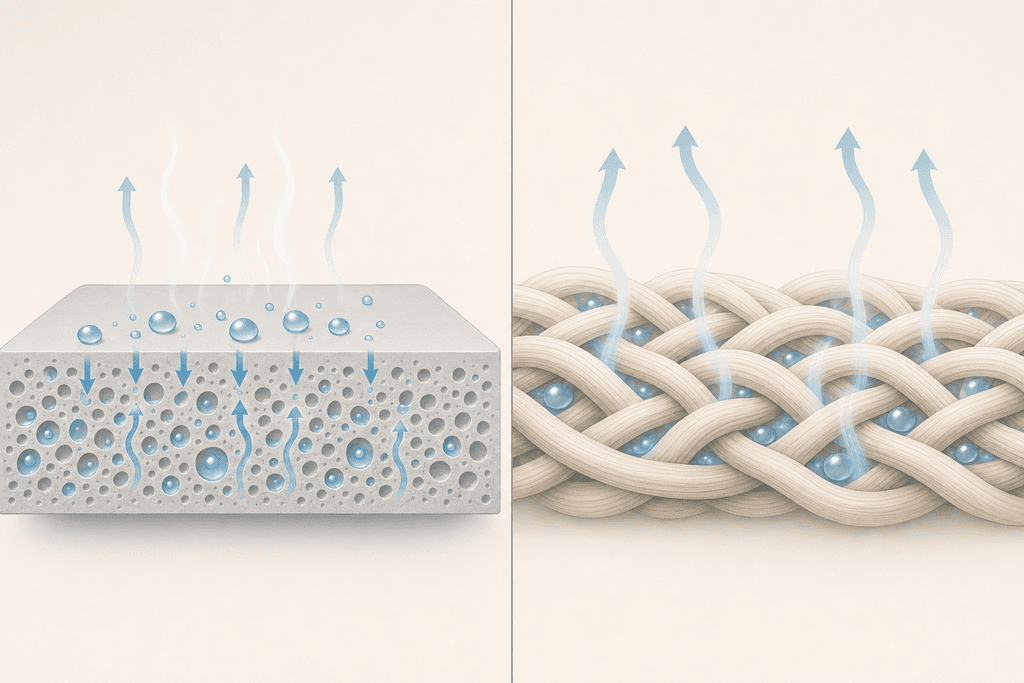
A single wet dish can leave a puddle on your counter for hours, but most people never think about why. Water doesn't just sit there doing nothing. It's either evaporating into the air or soaking into whatever surface it touches. The speed of that process depends entirely on what the water lands on and how much air can reach it. When you understand how moisture moves, the choice between a drying mat vs dish rack starts to make a lot more sense.
Why Some Surfaces Stay Wet Forever
Not all materials handle water the same way. Some absorb it quickly, some repel it completely, and others trap it in place where bacteria love to grow. The material matters just as much as the design when you're trying to keep your kitchen dry.
Here's what happens with common kitchen surfaces:
- Plastic and silicone push water away but don't absorb it, so puddles just sit there
- Fabric and microfiber soak up water but hold onto it for hours, staying damp and smelly
- Metal racks let water drip through but create pools underneath that you have to wipe up
- Stone materials like diatomite pull moisture in and release it back into the air within minutes
The problem with most traditional options is they either trap moisture against your counter or force you to deal with standing water. Neither option actually solves the wetness problem.
Evaporation Rates Across Different Materials
When water can't evaporate quickly, it creates the perfect environment for mold and bacteria. Temperature and airflow play a role, but the material itself is the biggest factor. A comparison of dish drying materials shows just how different these surfaces perform in real kitchens.
| Material Type | Drying Time | Moisture Retention | Airflow |
|---|---|---|---|
| Microfiber Fabric | 4-8 hours | High | Blocked |
| Silicone Mat | 6-12 hours | Surface only | None |
| Metal Dish Rack | 2-4 hours | Drips below | Good |
| Diatomite Stone | 5-15 minutes | Very low | Excellent |
The difference between materials isn't just about convenience. When moisture sits on a surface for hours, it damages countertops and creates health risks. Wood counters can warp, laminate can peel, and bacteria multiply in damp conditions.
What Trapped Moisture Does to Your Kitchen
Most people focus on drying their dishes and forget about what's happening underneath. A wet mat or pooled water under a dish rack doesn't just look messy. It actively damages your kitchen over time.
Problems caused by poor moisture management include:
- Mold growth in fabric mats that never fully dry between uses
- Bacterial buildup in standing water that sits for hours
- Counter stains from minerals in tap water that don't evaporate
- Warped wood or damaged laminate from constant moisture exposure
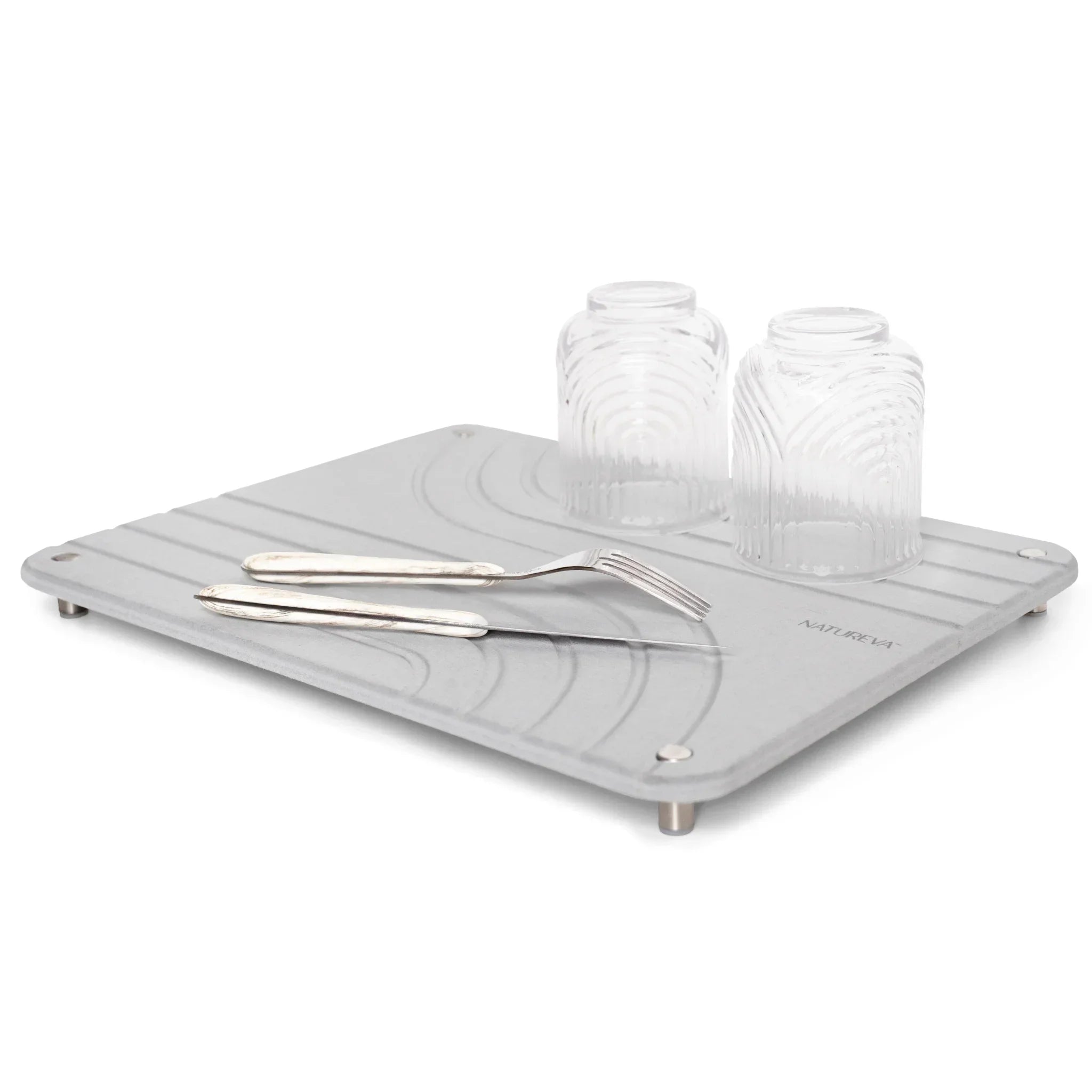
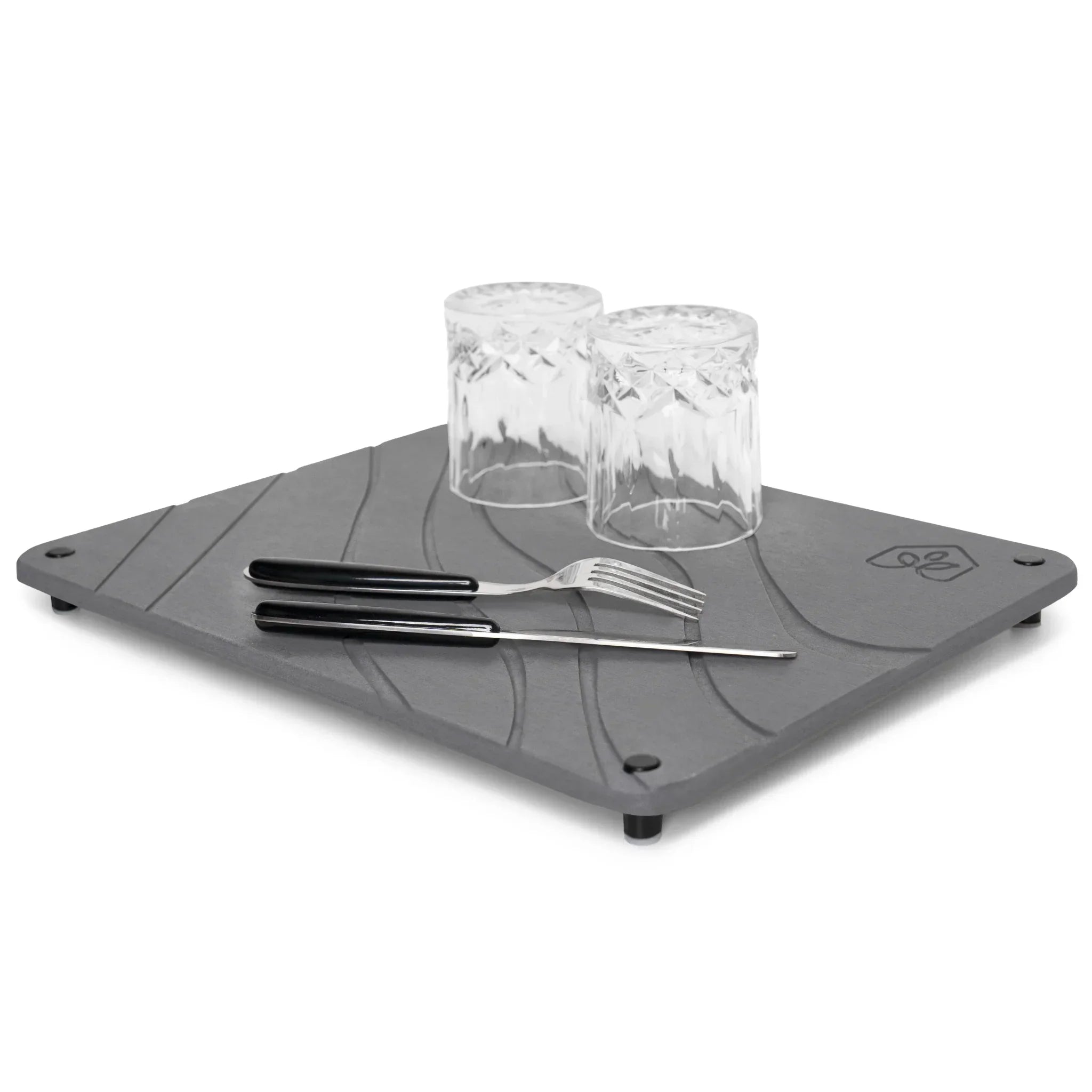
Traditional dish racks create their own issues by letting water drip onto the counter, while fabric mats soak it up and hold it against the surface. Our stone dish mats solve this by absorbing water instantly and releasing it into the air through millions of microscopic pores, keeping both the mat and your counter completely dry. The elevated design with stainless steel legs ensures airflow underneath, so moisture never gets trapped.
Traditional Dish Racks and Moisture Traps
Most dish racks work the same way they did decades ago. Water drips off your clean dishes, collects in a plastic or metal tray below, and sits there until you remember to empty it. The problem is that water doesn't just stay in the tray. It pools around the rack's base, seeps under the edges, and leaves your counter wet for hours. Even racks with drainage spouts require you to position them perfectly near the sink, and let's be honest, most counters aren't designed for that.
The materials used in traditional racks make the moisture problem worse. Metal and plastic don't absorb anything, so every drop of water has nowhere to go except down. Between the bars where your dishes sit, water drips continuously onto the counter surface below. You end up wiping the same spots multiple times a day, and that constant wetness creates the perfect environment for bacteria to grow in places you can't easily see or reach.
- Drainage trays need manual emptying or they overflow onto counters
- Water pools under and around the rack base even with drainage systems
- Bacteria thrives in standing water that sits in trays between uses
- Racks occupy permanent counter space whether you're using them or not
- Metal bars allow continuous dripping onto surfaces below
The worst part is how much space these racks take up. They're bulky, always visible, and you can't just tuck them away when you need extra counter room. Consumer Reports testing shows that even highly rated dish racks struggle with water containment, which explains why your counters stay damp.
Pros and Cons of Traditional Dish Racks
| Advantages | Disadvantages |
|---|---|
| Holds dishes upright | Requires manual tray emptying |
| Familiar design | Water pools on counters |
| Multiple dish capacity | Permanent space occupation |
| Organized drying | Bacteria growth in trays |
How Drying Mats Handle Water Differently
Drying mats work on a completely different principle than racks. Instead of letting water drip and collect, absorbent materials pull moisture away from dishes the moment they make contact. The water doesn't sit on the surface or pool underneath. It gets absorbed into the mat's structure and then evaporates back into the air. This means your dishes dry faster and your counter stays completely dry throughout the process.
The key difference is in how the mat interacts with moisture. Traditional fabric mats absorb water but can stay damp for hours. Stone-based mats like those made from diatomite work differently because of their microscopic porous structure. Millions of tiny air pockets pull water in instantly and release it through rapid evaporation. The surface feels dry to the touch within minutes, not hours.
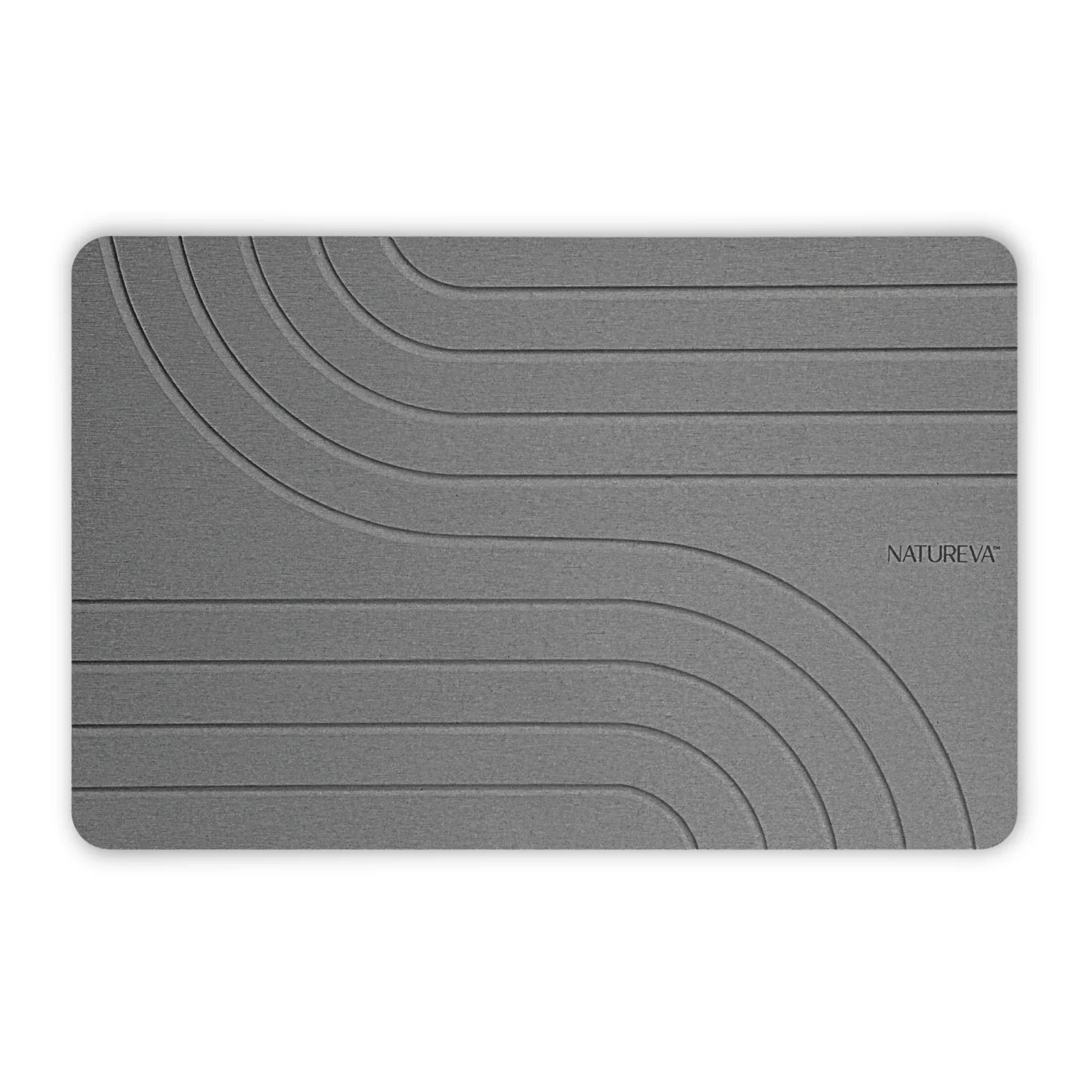
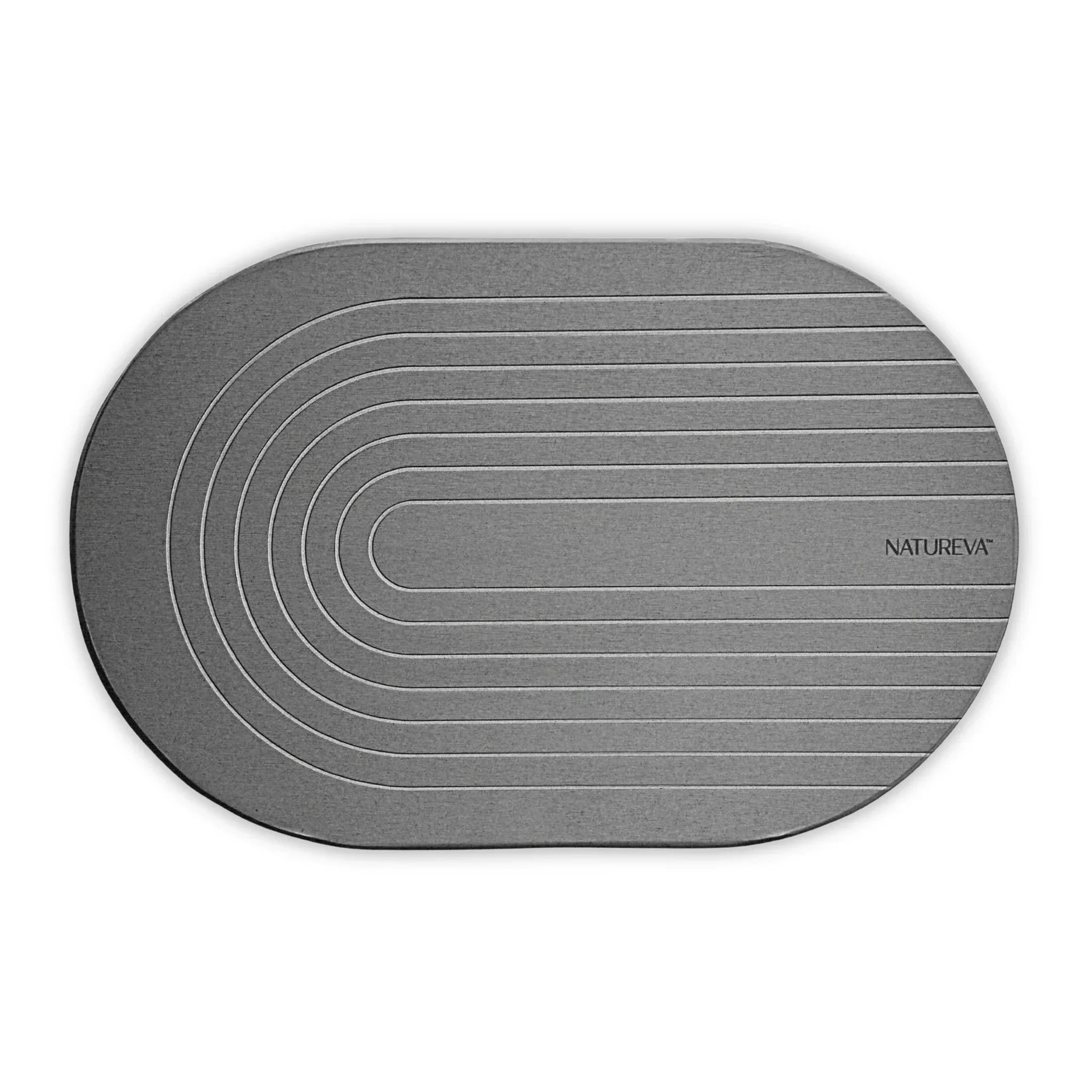
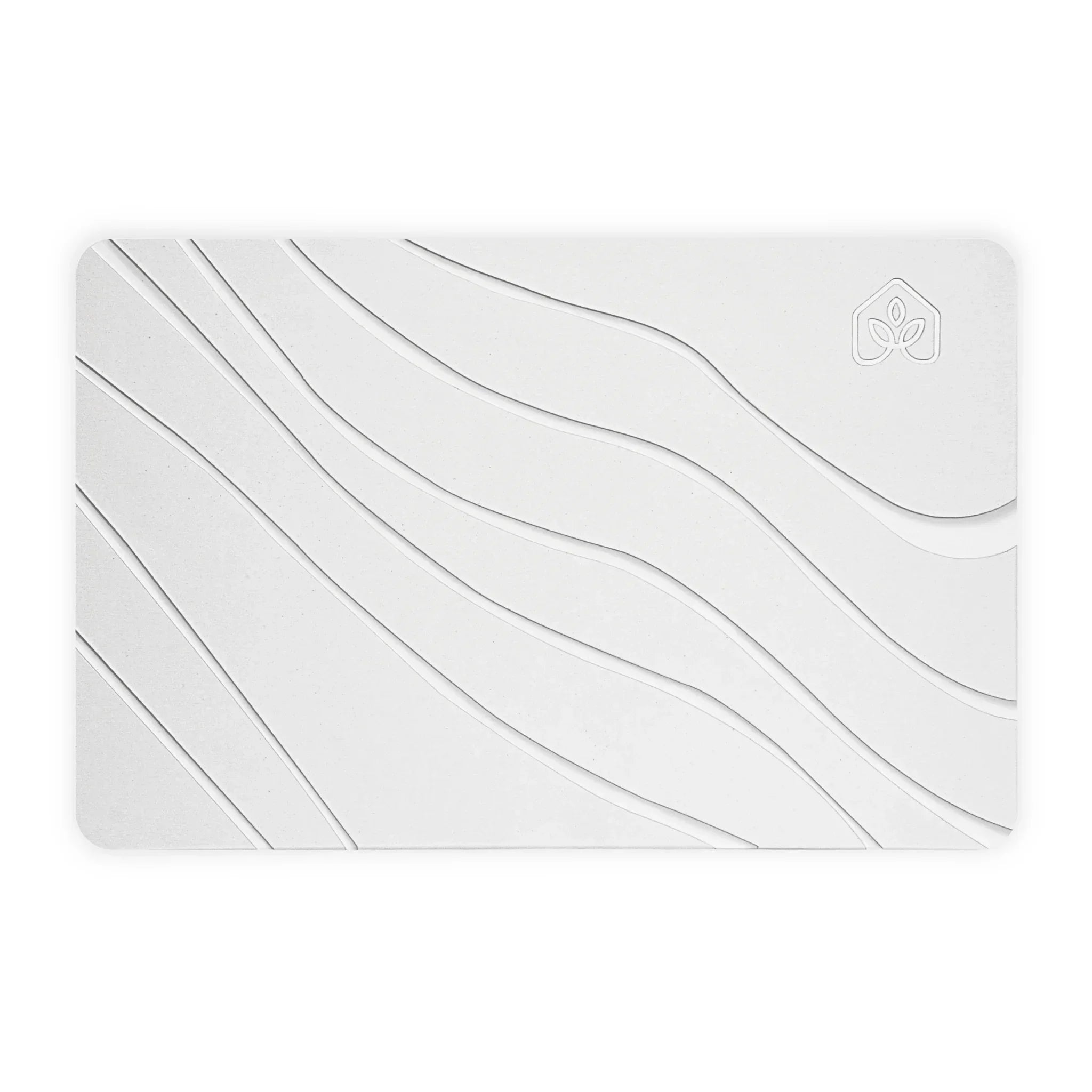
Elevation makes a huge difference too. When a mat sits flat against your counter, moisture can get trapped underneath and cause the same problems as a dish rack. Smart kitchen alternatives focus on airflow as much as absorption. Our Stone Dish Mat in Flow sits 2.5 cm above the counter on stainless steel legs, creating constant airflow underneath that prevents saturation and keeps both the mat and counter surface dry.
- Diatomite absorbs water instantly through natural porosity
- Rapid evaporation keeps surfaces dry within minutes
- Elevated designs prevent moisture trapping underneath
- Airflow circulation stops bacterial growth before it starts
- No manual emptying or maintenance required between uses
The next generation of home essentials: naturally made, cleaner by design, sustainable by nature.
SHOP ALLThe material science behind stone mats explains why they outperform both traditional racks and fabric alternatives. Diatomaceous earth is formed from fossilized algae, and its structure naturally wicks moisture away while staying rigid and durable. Unlike fabric that needs washing or plastic that needs wiping, stone mats maintain their performance without constant intervention.
Counter Protection and Long Term Damage
The real cost of wet counters shows up months or years later. Standing water doesn't just evaporate harmlessly. On wood counters, it seeps into the grain and causes permanent dark staining that no amount of cleaning can remove. Stone and quartz surfaces develop water rings and dull spots where minerals in the water etch the finish. Even sealed counters aren't immune because water finds its way into microscopic gaps and cracks over time.
Moisture trapped under dish racks creates an even bigger problem. That dark, damp space between the rack base and your counter is where mold starts growing. You might not see it for weeks because it's hidden, but the musty smell eventually gives it away. By then, you're dealing with deep cleaning or potential health concerns, especially in homes with kids or anyone sensitive to mold spores.
| Feature | Dish Racks | Drying Mats |
|---|---|---|
| Counter wetness | Frequent pooling | Stays dry |
| Airflow underneath | Minimal to none | Elevated design |
| Mold risk | High in trays | Low with evaporation |
| Staining potential | Water rings common | Protected surface |
| Maintenance needs | Daily tray emptying | Weekly wipe down |
Elevated mats solve both problems at once. The Stone Dish Mat in Tide includes transparent silicone pads that sit under each stainless steel leg. These pads protect your counter from scratches while keeping the mat stable, even when wet. The 2.5 cm elevation creates enough space for air to circulate freely, which means moisture never gets trapped against your counter surface.
Material choice affects how much maintenance you'll deal with long term. Dish racks need their trays scrubbed regularly to prevent buildup and odors. Fabric mats need washing and complete drying to avoid mildew. Stone mats just need a quick vinegar water wipe once a week. The difference in daily effort adds up, especially when you're already managing a busy kitchen. Comparing drying solutions shows that absorption and elevation together provide the best protection for counter surfaces.
The choice between a drying mat and dish rack comes down to whether you want to manage moisture or eliminate it. Racks require constant attention to keep counters dry. Mats handle the moisture automatically through absorption and airflow. For kitchens where counter space matters and you'd rather not spend time emptying trays, a stone drying mat keeps things cleaner with less effort. You can explore the full range of moisture managing solutions at Natureva Home, where every product is designed around the same principle of keeping surfaces dry naturally.
Which Option Actually Keeps Counters Drier
The real difference between a drying mat vs dish rack comes down to how fast water disappears from your counter. Dish racks collect water in trays that sit there until you remember to empty them, while drying mats absorb moisture and release it into the air through evaporation. This means the counter around a mat stays dry, but the area around a rack often ends up with puddles and water rings. The speed at which moisture leaves your kitchen matters more than just moving it from one spot to another. Most people don't realize that evaporation rate determines actual dryness, not just where the water ends up sitting.
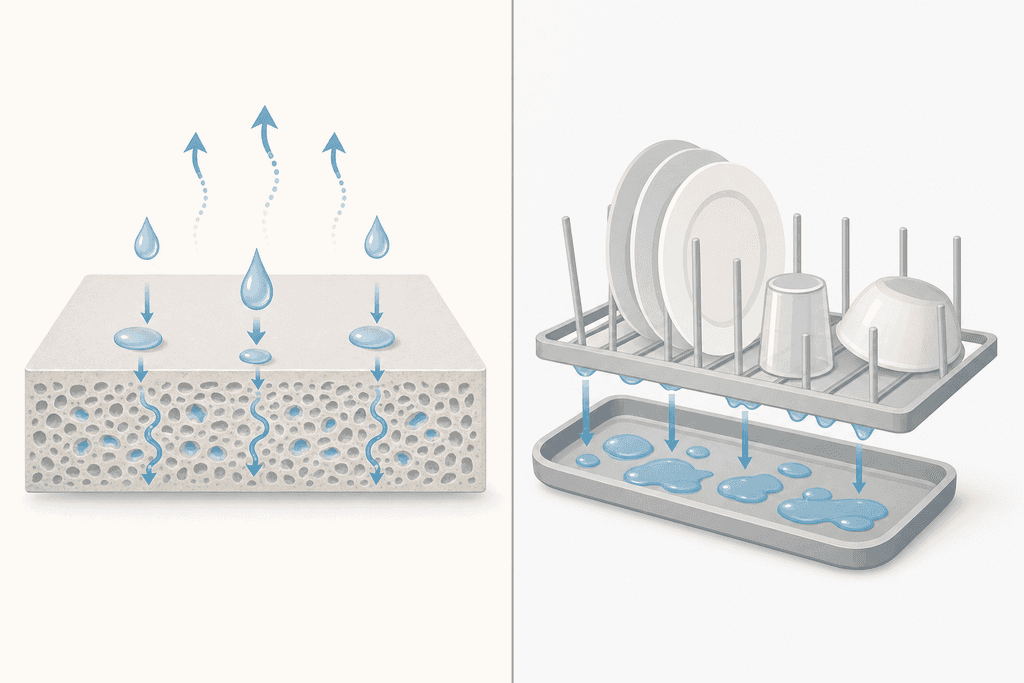
Testing shows that diatomite stone mats can dry completely within 30 to 60 minutes after dishes are removed, while dish rack trays often hold standing water for hours. The microscopic pore structure in materials like diatomaceous earth pulls moisture away from surfaces instantly and releases it back into the air continuously.
- Stone mats absorb water on contact instead of letting it pool
- Elevated designs with airflow underneath prevent moisture from getting trapped
- Dish racks require manual emptying and cleaning of collection trays
- Evaporation happens faster on porous surfaces than in plastic containers
Kitchen Size and Dish Volume Matter
Small kitchens with limited counter space benefit more from flat mats that don't take up vertical room. Large families washing multiple dish loads daily might need both solutions working together. A single person household rarely generates enough dishes to justify a full rack system, making mats the more practical choice.
| Kitchen Type | Best Solution | Drying Time |
|---|---|---|
| Small apartment | Stone mat | 30-60 min |
| Family kitchen | Mat + rack combo | 60-90 min |
| Single person | Stone mat | 20-45 min |
According to Bon Appétit's testing of dish drying racks, even the best racks still require regular tray maintenance and cleaning. Stone dish mats like Natureva's Flow and Tide designs eliminate this step entirely by absorbing moisture directly into the material and evaporating it through natural airflow created by stainless steel legs.
Material Science Beats Design Features
Fancy dish racks with drainage spouts and angled trays still can't match the physics of absorption and evaporation. The material composition matters more than clever engineering when it comes to keeping counters actually dry. Diatomite's natural pore structure does the work automatically without any moving parts or maintenance routines beyond occasional sanding to refresh the surface.
- Natural materials outperform synthetic drainage systems
- Absorption prevents water from spreading across counters
- Rapid evaporation means no bacterial growth in standing water
Making Your Kitchen Counter Drier
The difference between a drying mat and a dish rack comes down to one thing: how much water stays on your counter. Traditional dish racks let water pool underneath, which means you're wiping down surfaces constantly or dealing with that weird sticky film that builds up over time. Elevated drying mats with absorption pull moisture away from both your dishes and your counter, which is why they keep things noticeably drier.
Material matters more than most people think. Fabric mats trap moisture and start smelling within days. Plastic racks look clean but leave puddles. Stone dish mats absorb water instantly and release it back into the air through evaporation, so nothing sits wet for long. The 2.5 cm stainless steel legs create airflow underneath, which prevents that moisture from ever reaching your counter in the first place.
If you're tired of constantly drying your counters or noticing water damage around your sink, the setup you're using probably isn't managing moisture well enough. Most kitchen setups weren't designed with evaporation in mind. That's the part people miss when comparing a drying mat vs dish rack.
The right system doesn't just dry your dishes faster. It protects your counters from long term water damage and cuts down on the kind of maintenance that eats up time every single day. You'll probably have questions about how these materials actually work in real kitchens, which is exactly what we'll cover next.
Common Questions About Kitchen Drying Solutions
Do drying mats really keep counters drier than dish racks?
It depends on the type of drying mat you choose. Traditional fabric or microfiber mats trap water inside their fibres, which means moisture sits on your counter until the mat dries out completely. Dish racks let water drip into a tray, but that tray needs emptying and the water often pools underneath. Stone drying mats like the Natureva Dish Mat absorb moisture instantly and release it through evaporation, keeping both the mat and your counter dry without needing constant attention.
How often do you need to clean each option?
Dish racks need weekly scrubbing to remove mineral deposits and soap scum that build up in corners and joints. Fabric drying mats require washing every few days to prevent mildew and odour. Stone drying mats need a simple weekly wipe with vinegar water and occasional sanding if absorbency decreases. The maintenance is lighter because the material dries so quickly that bacteria and mould have less chance to grow.
Can drying mats handle large dish loads?
Most fabric mats get overwhelmed when you stack too many dishes because they can only absorb so much water before becoming saturated. Dish racks have physical limits based on their size and structure. Stone drying mats work best when dishes are spread out rather than stacked, allowing air circulation and faster drying. For families with heavy dish loads, using a stone mat alongside a minimalist dish rack gives you the best of both worlds.
What happens if water gets trapped under a drying mat?
This is where elevation matters. Flat mats that sit directly on counters can trap moisture underneath, leading to water rings and potential mould growth. The Natureva Dish Mat sits on stainless steel legs that create 2.5 cm of airflow space beneath the stone surface. Silicone pads under the legs prevent slipping and protect your counter from scratches while keeping air moving freely.
Are elevated drying mats worth the extra cost?
If you want your counter to stay genuinely dry, elevation is essential. Without it, you end up wiping down surfaces constantly or dealing with water damage over time. The small price difference pays off in less maintenance and longer counter lifespan. Plus, elevated stone mats last years without needing replacement, unlike fabric versions that wear out or dish racks that rust.
How long do drying mats take to dry completely?
Fabric mats can take hours or even overnight to dry fully, especially in humid climates. Stone drying mats made from diatomite dry within minutes after dishes are removed because the porous structure releases moisture into the air rapidly. You can use the mat multiple times throughout the day without waiting for it to reset, which makes cleanup faster and more flexible.
The next generation of home essentials: naturally made, cleaner by design, sustainable by nature.
SHOP ALL