
Article: How to Choose Absorbent Mats for Bathroom Use
How to Choose Absorbent Mats for Bathroom Use
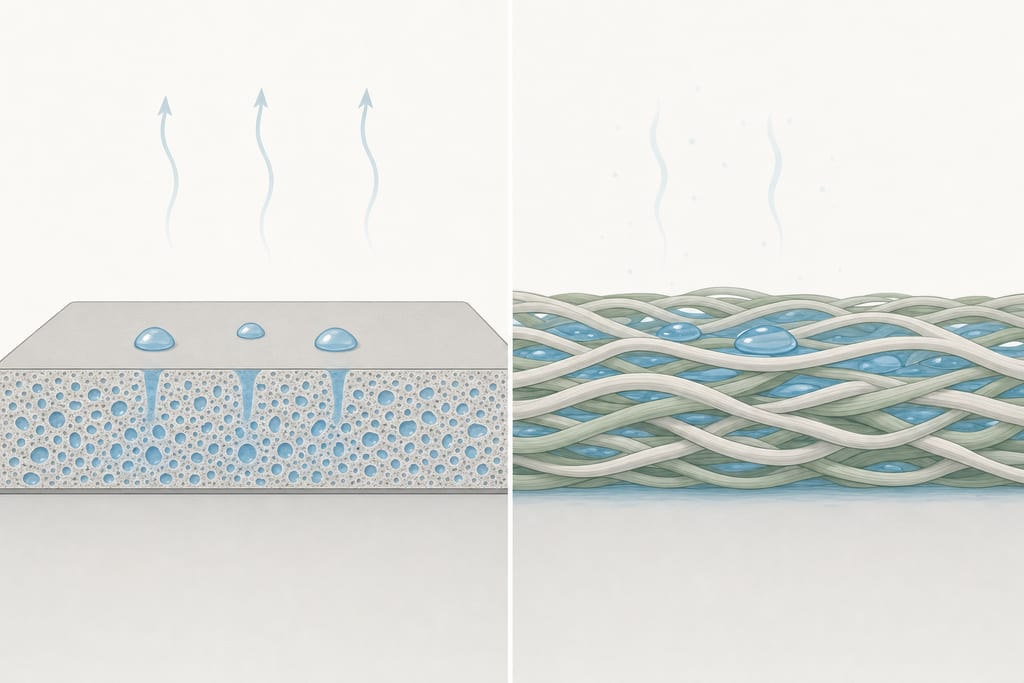
A standard cotton bath mat can stay damp for 4 to 6 hours after a shower, which is the main thing to check when you're picking absorbent mats for bathroom floors. A diatomite stone mat, by comparison, dries within minutes because the material pulls moisture in and releases it straight back into the air. That gap matters more than colour or price, since a mat that stays wet all afternoon is also a mat that sits in the damp conditions where mould and mildew develop.
Picking the right one comes down to four things: material, size, drying speed, and non-slip grip. Material decides whether the mat dries in minutes or hours. Size needs to match your floor space and foot traffic, not just look good in a photo. Drying speed is what keeps the surface hygienic between uses. Grip determines whether the mat stays flat and stable on a wet tile floor or slides and bunches underfoot. Instead of working through generic buying advice, use the filters below to match a mat to your bathroom by these four factors.
Table of Contents
Compare Mat Types Before You Choose
Four materials cover most of what you'll find in a bathroom aisle: stone, cotton, microfiber, and rubber. Each one handles water, grip, and upkeep differently, so the table below lines up the specs that actually change your day to day experience.
| Material | Average Dry Time | Non-Slip Base | Typical Price Range |
|---|---|---|---|
| Diatomite stone | Under 8 minutes | Yes, rubber base pad | $50 to $70 |
| Cotton | 4 to 6 hours | No, needs separate grip pad | $15 to $35 |
| Microfiber | 2 to 4 hours | Sometimes, thin rubber dots | $10 to $25 |
| Rubber | Dries fast but pools water on top | Yes, built in | $15 to $30 |
Independent testing by Homes To Love confirmed a diatomite stone mat dried fully in under 8 minutes, which is the fastest figure on this list by a wide margin. Fabric and microfiber mats sit at the other end, often taking hours to dry and needing a wash every few days to avoid a musty smell. Rubber mats dry the underlying material quickly but tend to hold a layer of standing water on the surface until it's wiped or shaken off, which still leaves bare feet landing on a wet mat.
Shop By Material First
Material is the first filter to apply when choosing absorbent mats for bathroom floors, because it decides how your feet meet the mat and how fast it dries between showers. Diatomite stone absorbs water on contact through millions of microscopic pores and releases it back into the air through rapid evaporation, so the surface resets itself without a wash cycle.
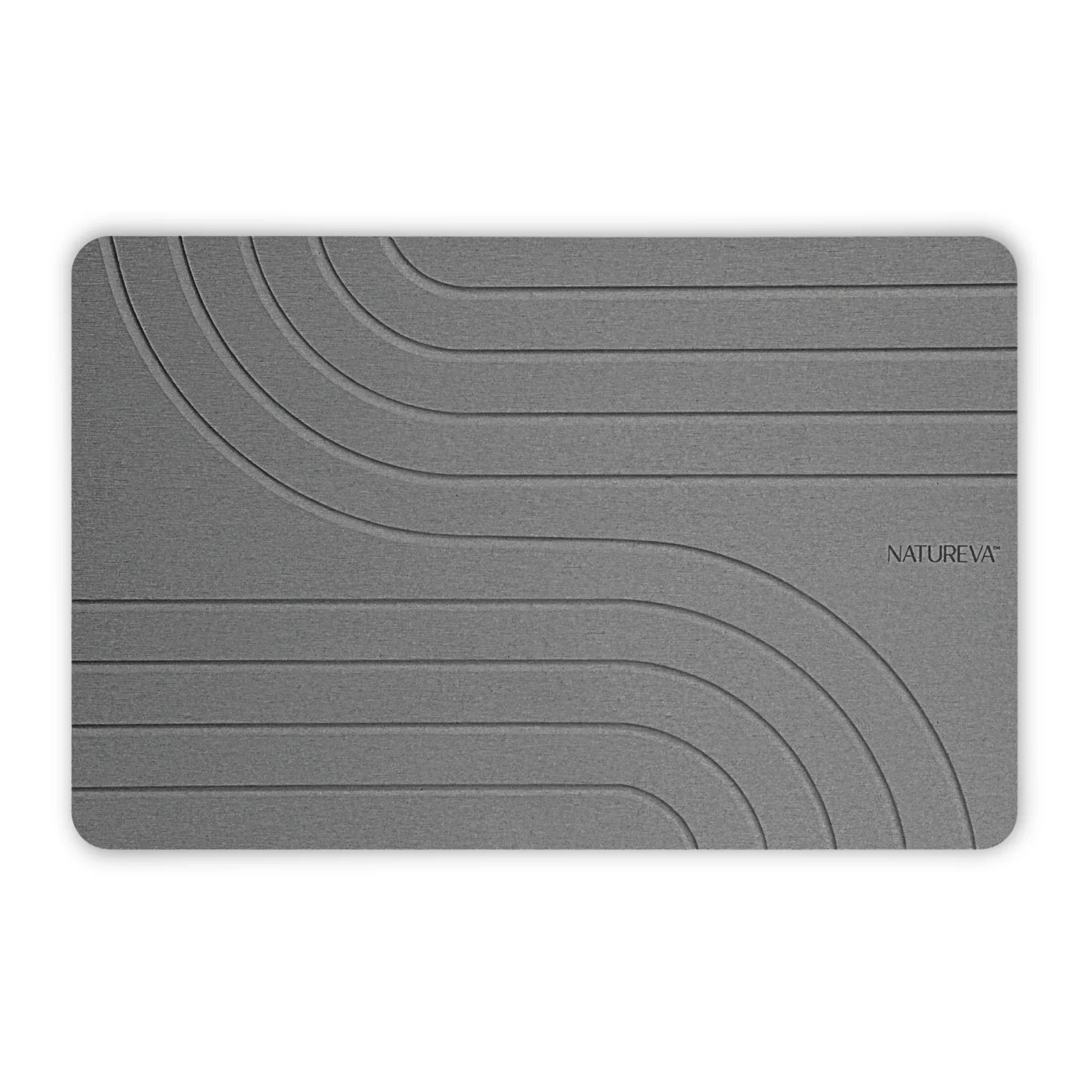
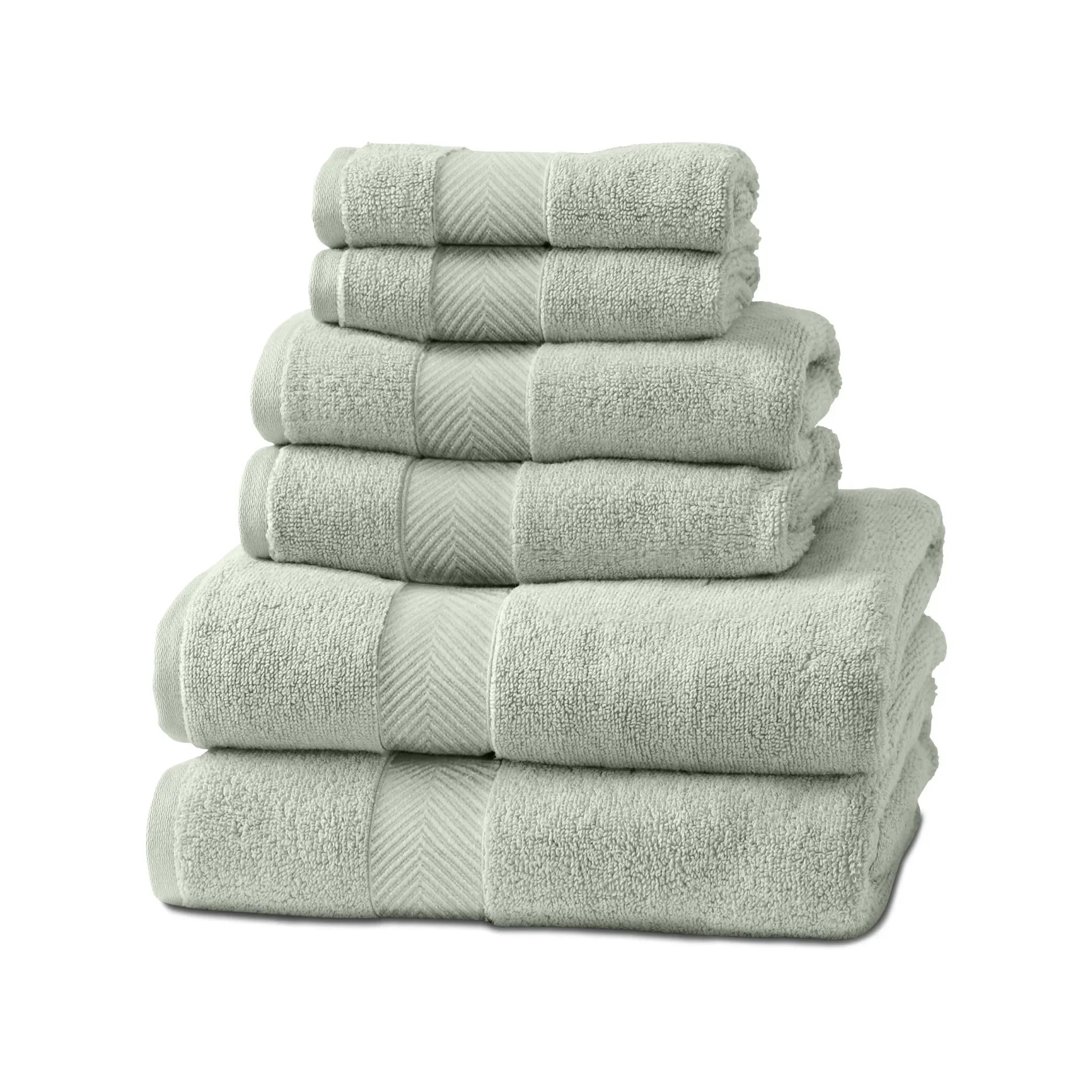
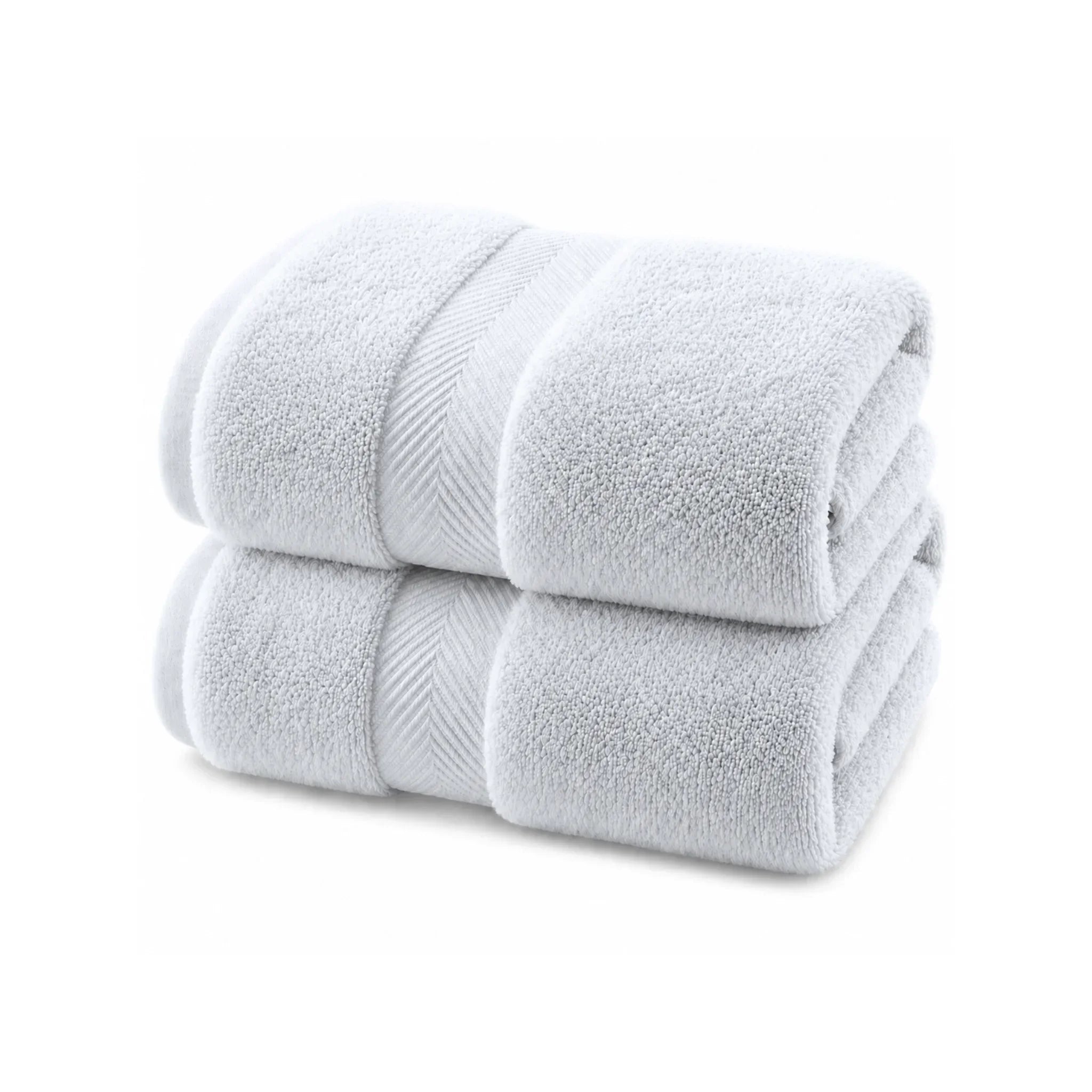
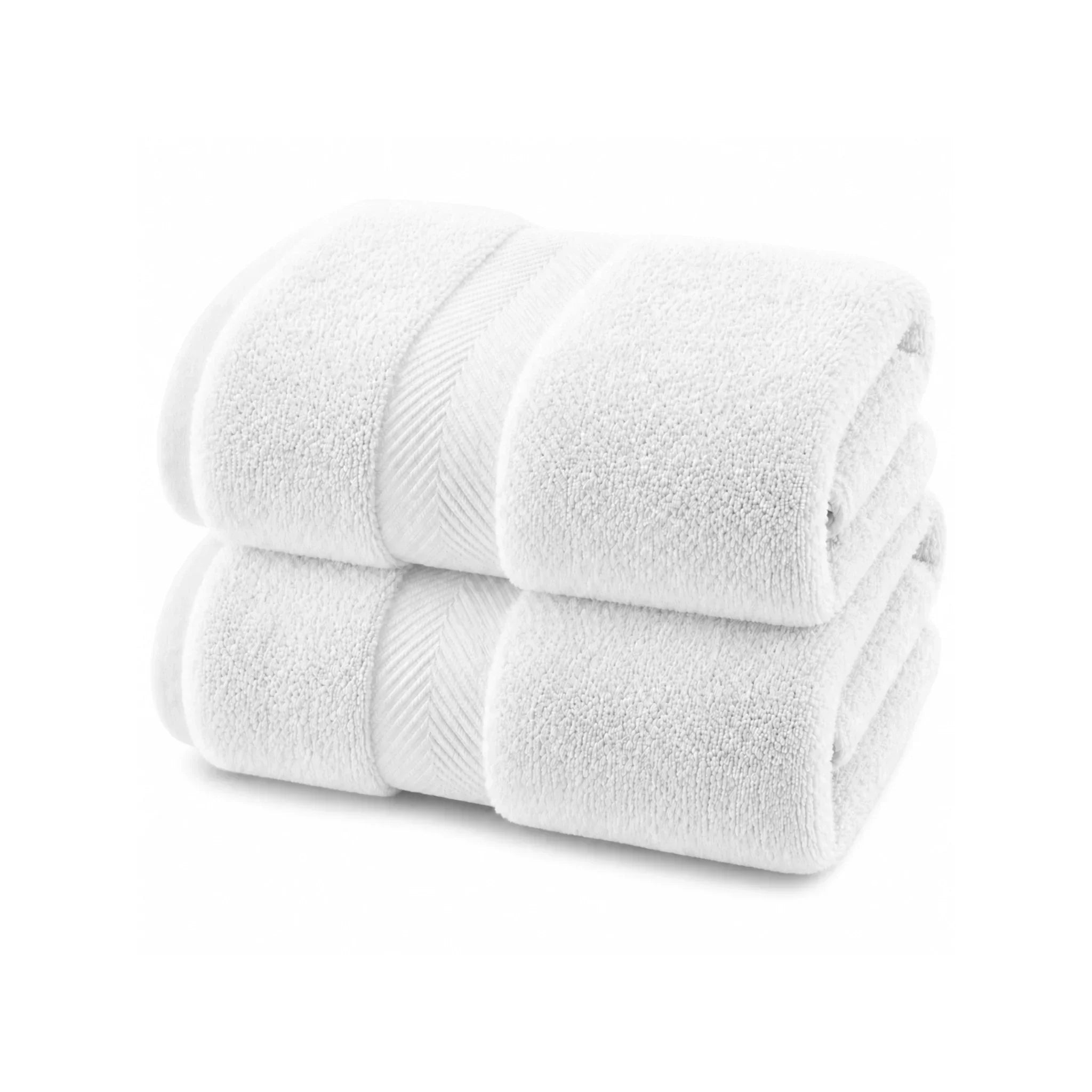
The Stone Bath Mat range (Tide, Flow, Arch, Rain) is made from diatomaceous earth and recycled paper, tested and certified asbestos-free by a NATA-accredited Australian laboratory, and priced at $59. If you want a softer surface near the mat rather than underfoot, bamboo cotton towels at 70% zero-twist cotton and 30% bamboo viscose pair well with a stone mat and start from $69 for a towel set. Rubber and standard microfiber mats work differently: water sits on or inside the material rather than evaporating off it, which traps moisture underneath and creates the damp conditions where mould and mildew develop.
- Stone: dries in minutes, rigid, wipe-clean surface
- Bamboo cotton: soft underfoot, used for towels and layering, not floor mats
- Microfiber: absorbs quickly but holds moisture inside the fibres
- Rubber: sheds water on top but traps it underneath
Shop By Size And Shape
Size and shape decide whether a mat actually covers the wet zone in your bathroom, not just whether it looks right in a photo. Rectangular mats like Tide, Flow, and Rain measure 60 × 39 cm and suit standard vanity and shower exit areas where feet land in a straight line.
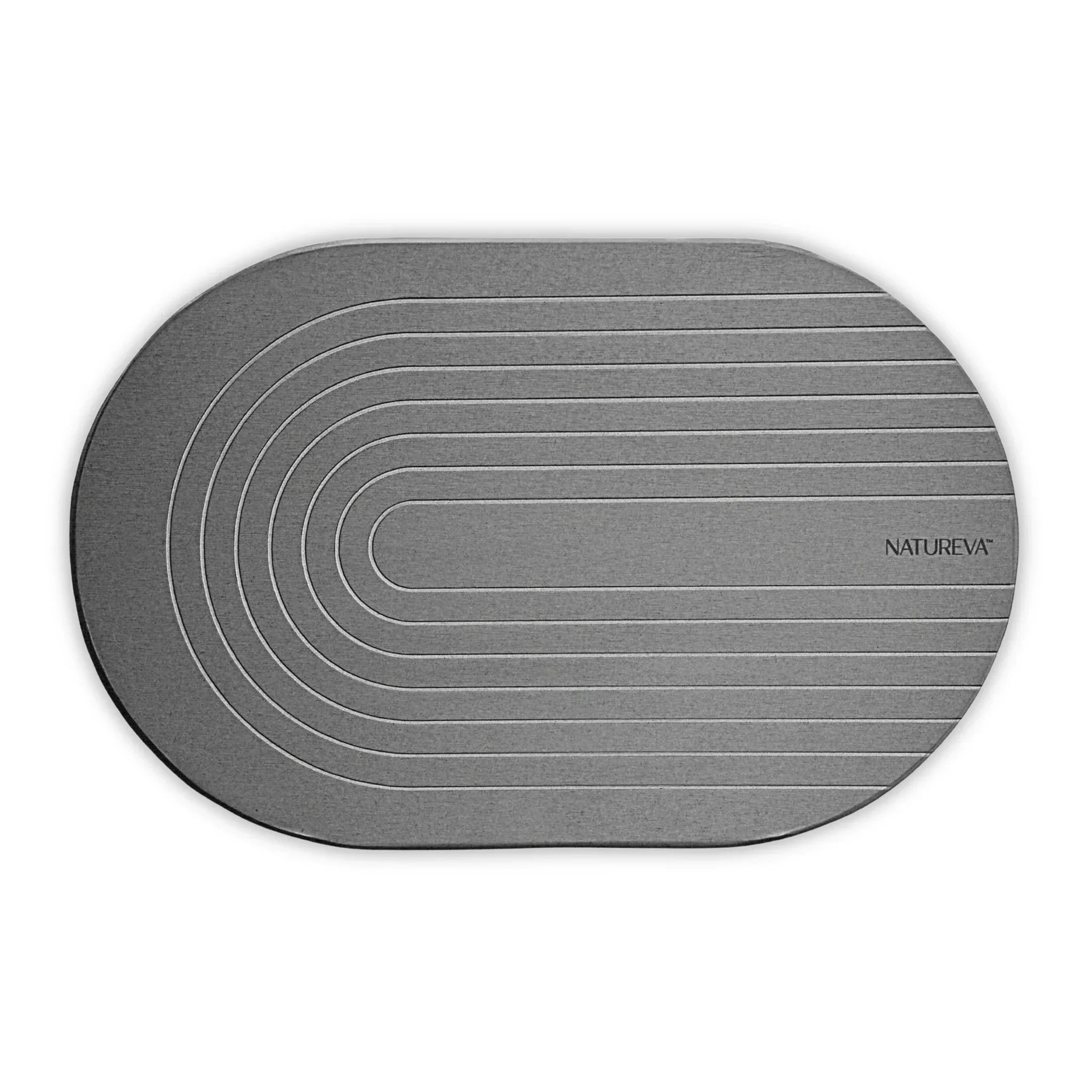
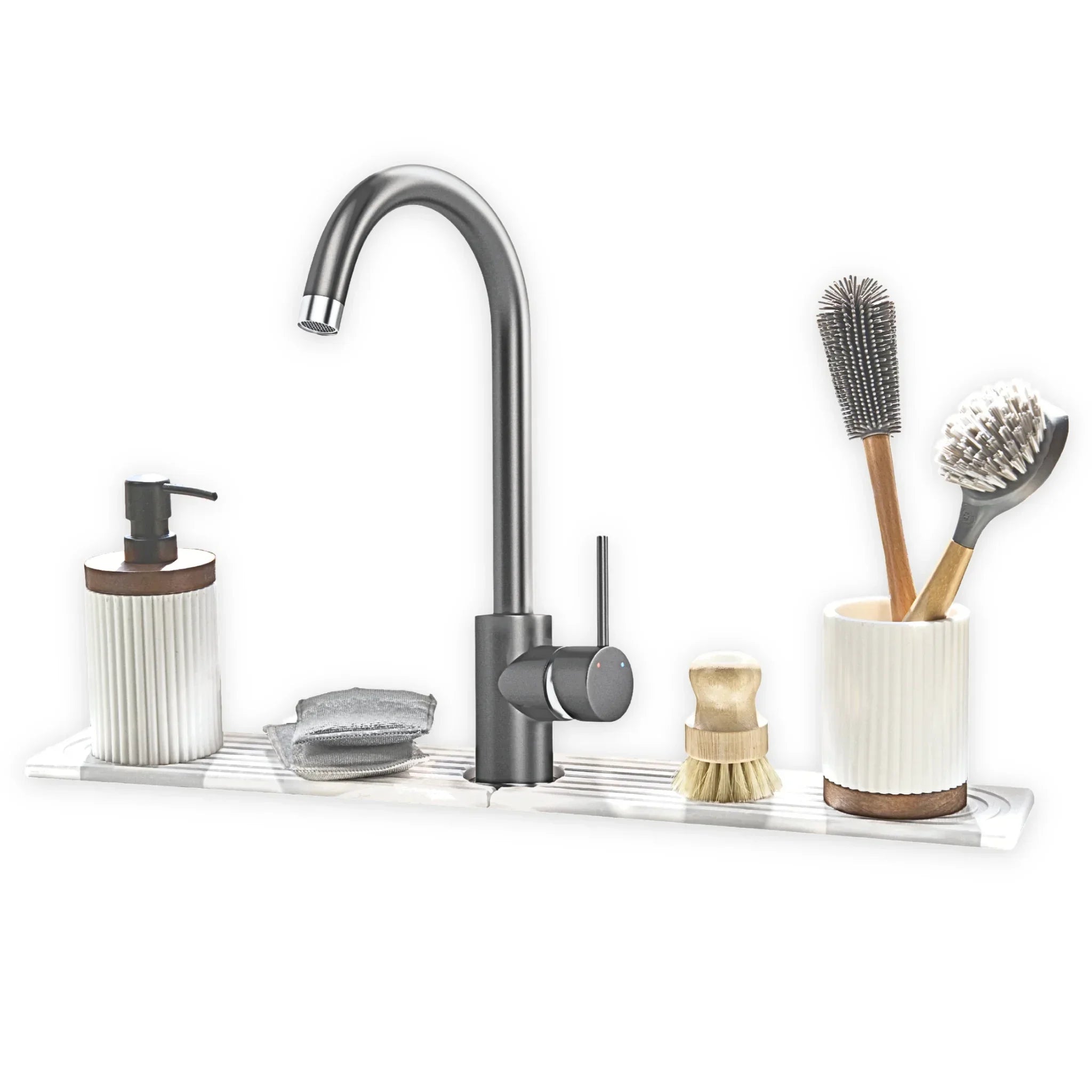
The Arch oval mat is the same 60 × 39 cm footprint at approximately 1.55 kg, and its rounded edge suits bathrooms with curved vanities or freestanding tubs where a hard rectangle looks out of place. For narrow counter edges beside a sink, the Faucet Mat runs a slim 60 × 10 cm and costs $29. Pairing a full-size floor mat with a faucet mat gives complete counter-to-floor coverage in a single bathroom.
- Tight ensuite: one rectangular mat at the shower exit
- Double vanity: a mat per sink, plus a faucet mat along the counter edge
- Freestanding tub: the oval Arch mat for a softer line
- Full coverage: floor mat plus faucet mat used together
The next generation of home essentials: naturally made, cleaner by design, sustainable by nature.
SHOP ALLShop By Design And Colourway
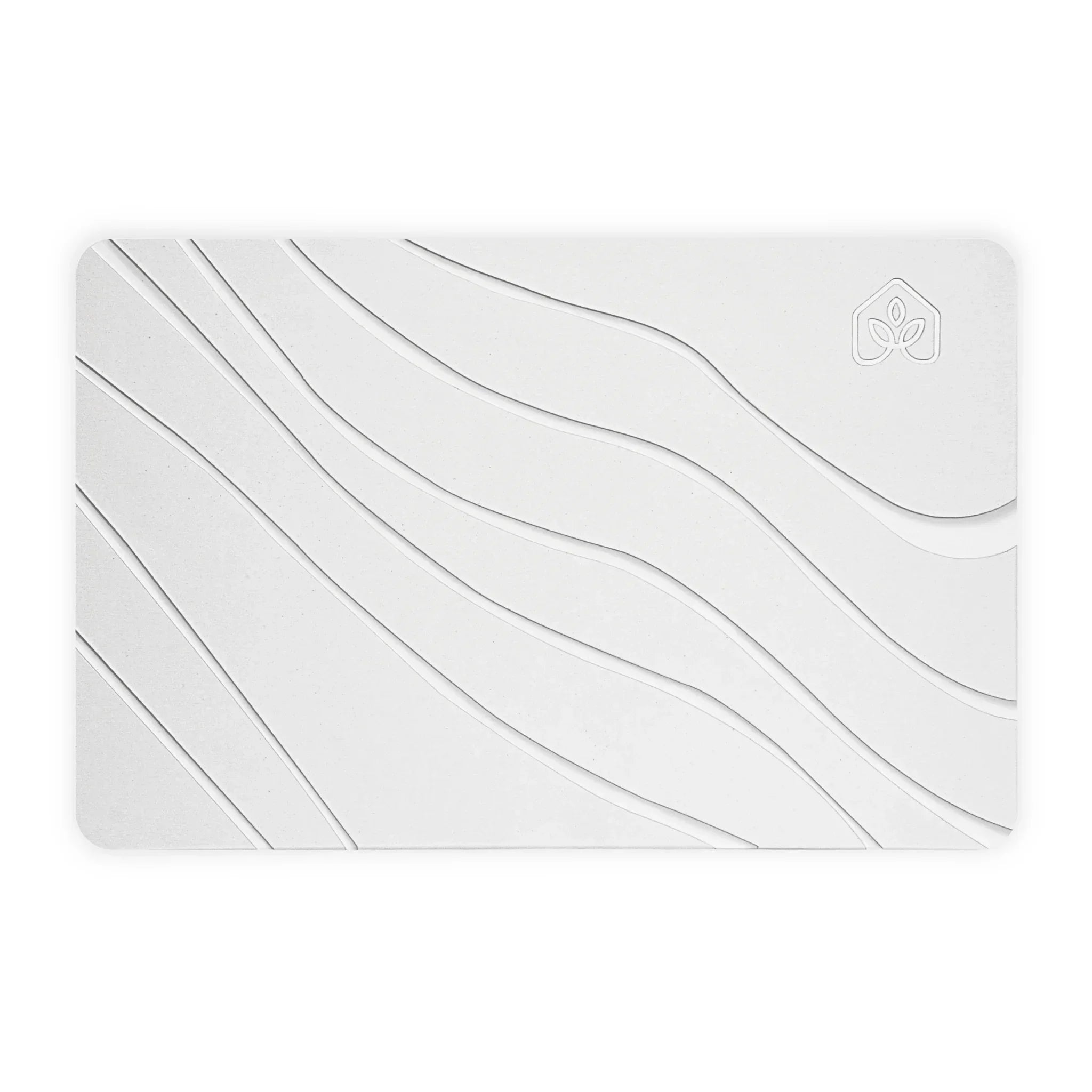
Pattern and colour are the last filter once material and size are settled, and they're what make a mat look chosen rather than grabbed off a shelf. Natureva carves four patterns into its stone range: Tide (horizontal bands), Flow (diagonal waves), Arch (rounded contours), and Rain (vertical droplet lines), each available across three stone colourways, Graphite, Slate, and Chalk, consistent on bath mats, faucet mats, and sink caddies.
Bamboo cotton towels add two further tones, Eucalyptus and Dune, so there's room to layer colour into the bathroom beyond the stone palette. Matching the same pattern and colour across a bath mat, faucet mat, and sink caddy turns three separate purchases into one coordinated set rather than three mismatched objects.
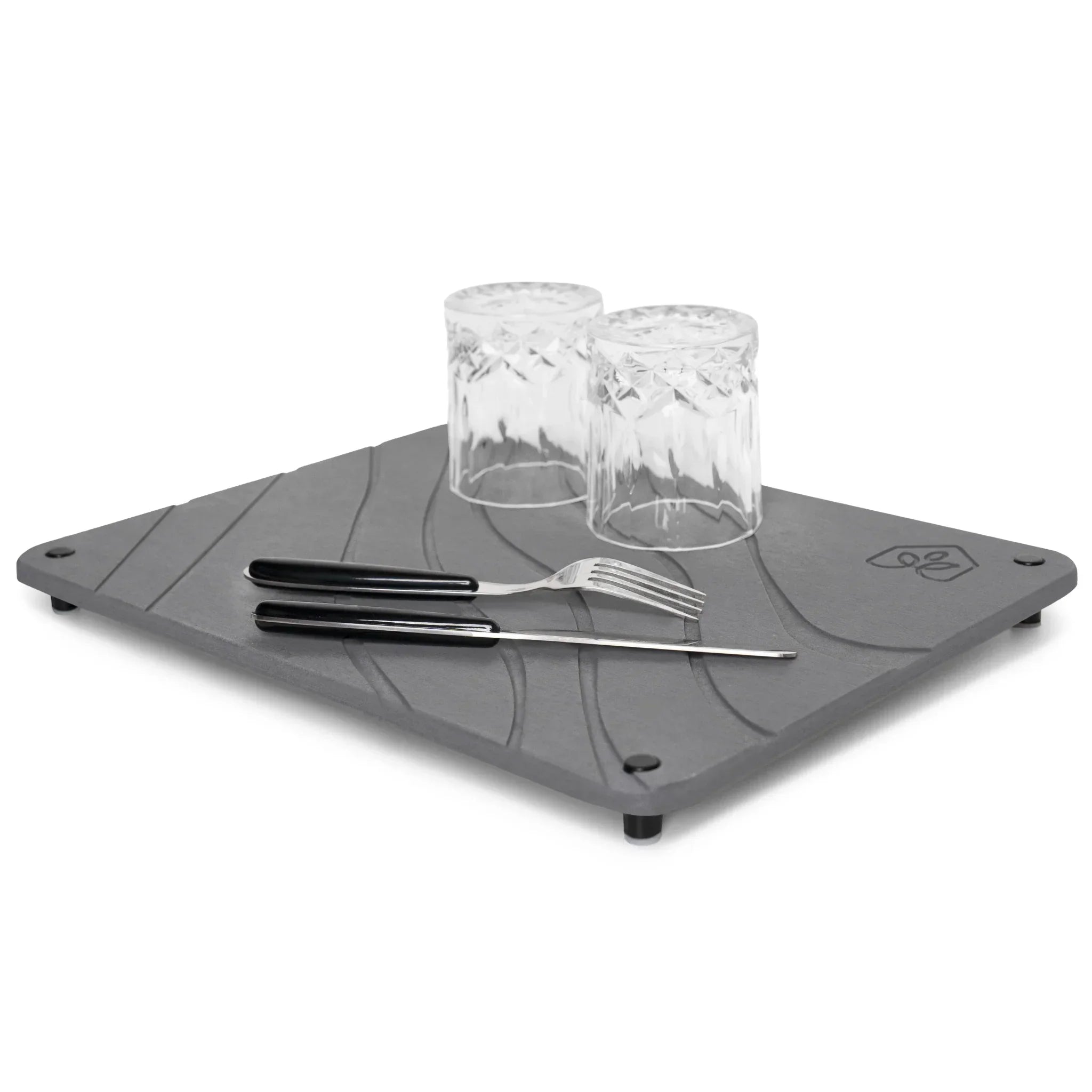
- Graphite: deep charcoal, suits dark tile and brass fixtures
- Slate: soft grey, works with most existing bathroom colours
- Chalk: near white, pairs with light tile and timber
- Eucalyptus or Dune towels: adds warmth or green beyond the stone tones
Shop By Grip And Safety Features
Grip is the feature to check last but it matters most for households with kids or older adults, since a mat that moves underfoot is a fall risk regardless of how fast it dries. Natureva bath mats and pet mats include a full non-slip base pad that keeps the mat anchored to wet tile, and because the stone slab is rigid and flat, it doesn't bunch or curl the way a fabric mat does after repeated use.
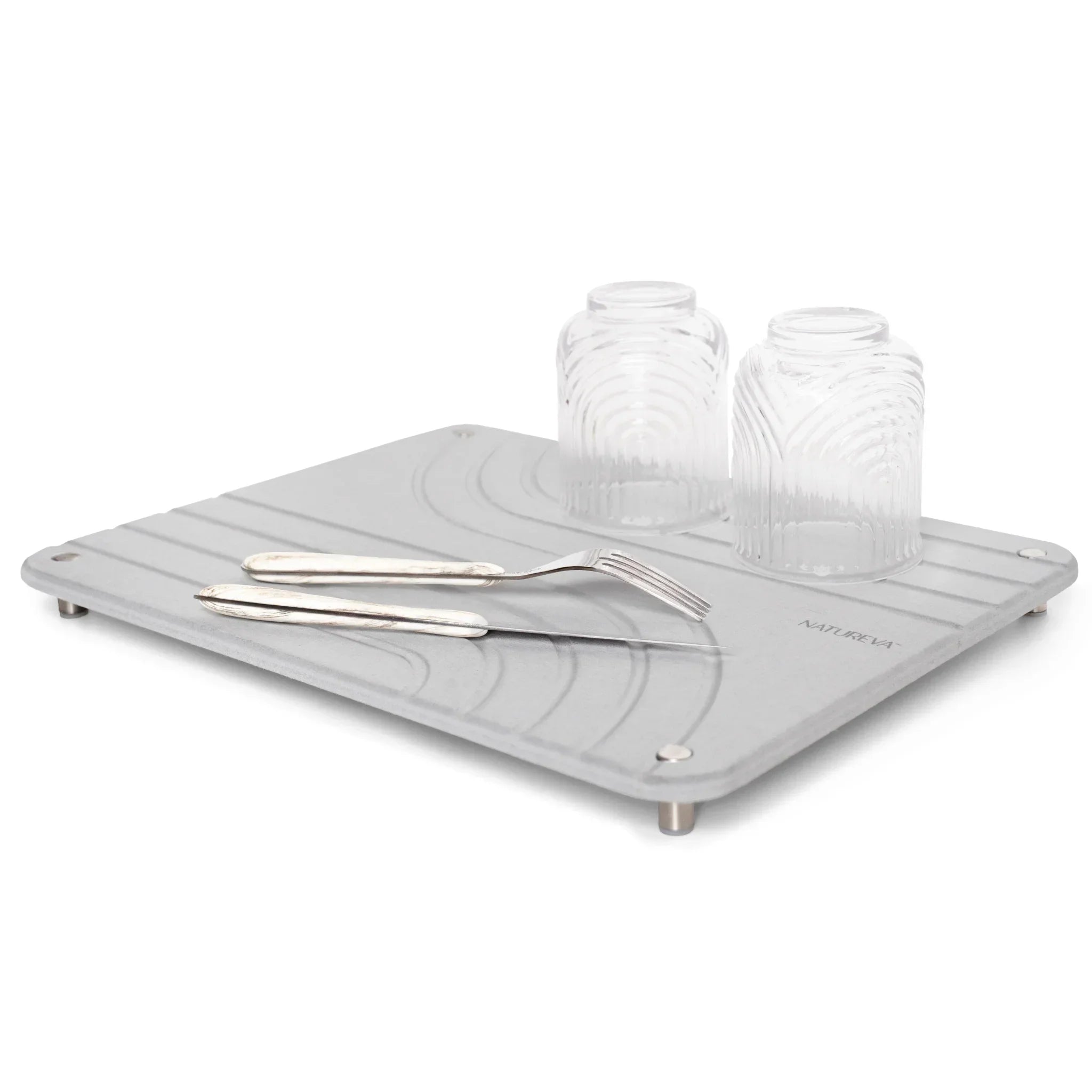
Sink caddies and dish mats use a different setup: stainless steel legs sit on silicone under-leg pads sized to match the leg diameter exactly, which stops the caddy sliding on a wet counter and protects the benchtop surface underneath. Independent testing bodies such as Consumer Reports have flagged slip resistance as a leading factor in bath mat safety reviews, which lines up with why a stable base matters more than softness alone.
- Shower floor mats: full base pad is non-negotiable
- Pet feeding areas: non-slip base stops the mat sliding during meals
- Kitchen or bathroom counters: silicone under-leg pads for stability
- Older adults or young kids: prioritise a flat, rigid surface over a cushioned one
Stone Or Fabric, Which One Fits Your Bathroom
Stone wins on drying speed, hygiene, and long-term upkeep, while fabric wins on one thing only: a softer first step out of the shower. If plush softness underfoot matters more to you than how the mat performs after week three, fabric still has a place. For most bathrooms, though, the ongoing maintenance gap is the deciding factor.
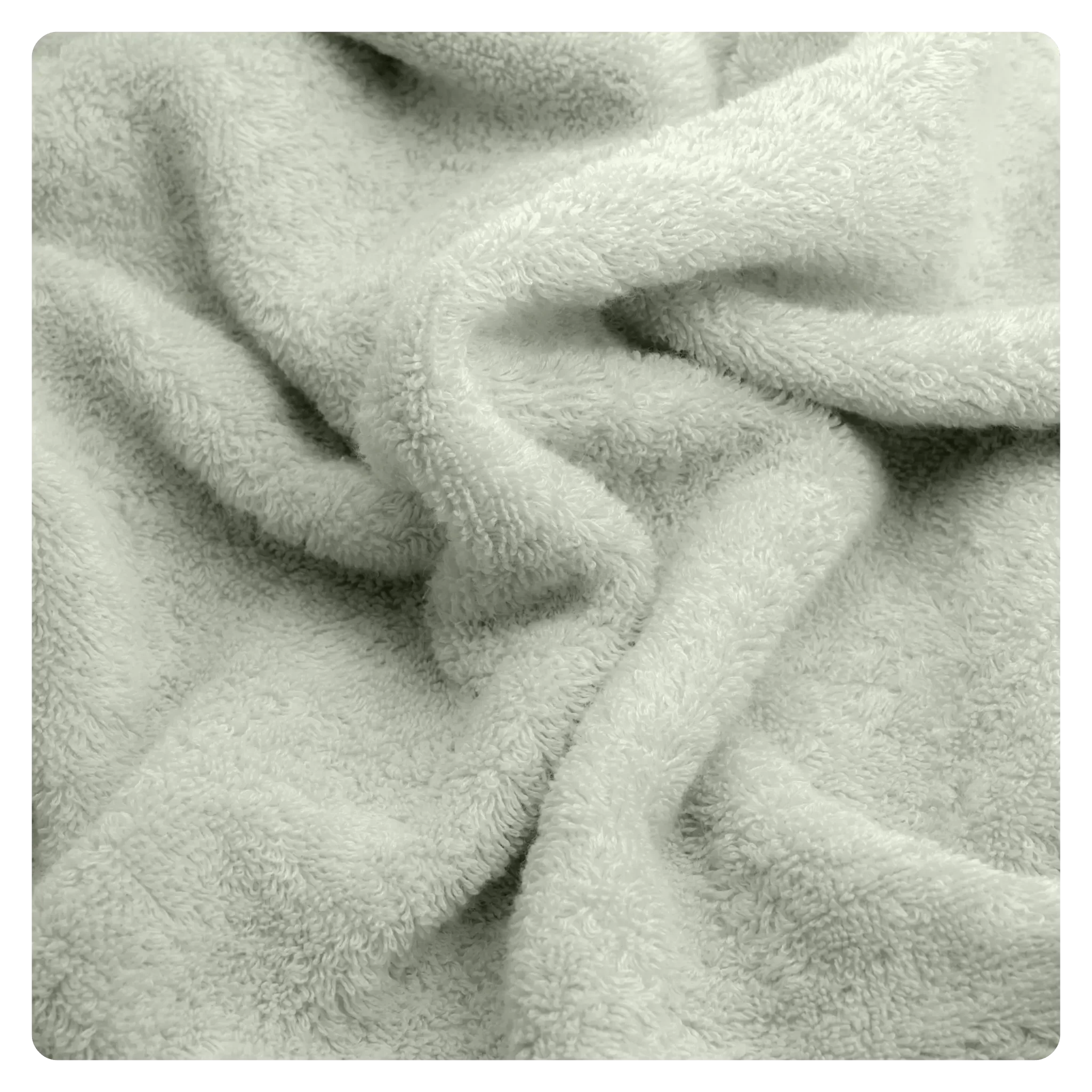
Fabric and microfiber mats need a wash roughly once a week to stay odour-free, since damp fibres hold moisture long enough for smell to build. A stone mat skips that cycle entirely because it stays clean through rapid moisture evaporation rather than needing detergent to reset it.
| Factor | Stone Mat | Fabric Mat |
|---|---|---|
| Upfront cost | $59 | $15 to $35 |
| Washing needed | Wipe weekly | Machine wash weekly |
| Typical lifespan | Years with resanding | Months before fraying or odour |
| Feel underfoot | Firm, solid | Soft, cushioned |
Stone costs more at checkout, but it replaces the repeating cycle of washing, fraying, and eventually binning a fabric mat every few months. Pairing a stone bath mat with a bamboo cotton towel set covers both needs at once: a hard-surface mat that handles the floor, and a soft textile for drying off, without asking one material to do both jobs badly.
Settle On One Mat And Check Out
Run the four filters together instead of researching them one at a time: pick the material you want to live with, the size that fits your floor, and the colour that matches your tile, then stop there. A Graphite or Slate bath mat paired with a matching faucet mat and a bamboo cotton towel set completes a bathroom in one order, rather than three separate decisions spread across different sites. Natureva ships free on orders over $100 across Australia and Canada, so bundling the mat, faucet mat, and towels into one order usually clears that line anyway. You already have the facts on drying time, grip, and upkeep. Add the mat to your cart and make the call now.
The next generation of home essentials: naturally made, cleaner by design, sustainable by nature.
SHOP ALLBathroom Mat Buying Questions
How do I know what size mat fits my bathroom layout?
Measure the wet zone first, meaning the floor space your feet actually land on after stepping out of the shower or bath, then match the mat to that footprint rather than the whole bathroom floor. A narrow galley bathroom usually only needs one rectangular mat at the shower exit. Wider layouts with a vanity and a shower on opposite walls often need two mats, one at each wet point, to stop bare feet hitting cold tile in between.
Can I mix a stone bath mat with a faucet mat and sink caddy in the same bathroom?
Yes, these three pieces are designed to sit in the same bathroom at the same time without clashing. A bath mat covers the shower exit, a faucet mat sits along the sink edge, and a sink caddy holds bottles or soap off the wet counter, all keeping the floor and counter dry through the same evaporation process. Keeping them in the same colourway makes the bathroom read as one set instead of three separate purchases.
Does the non-slip base pad ever need replacing?
The base pad is built to last the life of the mat under normal daily use and does not need routine swapping. It can wear down faster if the mat sits on a rough, unsealed tile surface or gets dragged across the floor repeatedly instead of lifted. If the pad starts lifting at the edges or losing grip, that is the signal to check it, rather than replacing it on a fixed schedule.
Do Graphite, Slate, and Chalk show water marks differently?
Chalk shows water marks and footprints the fastest of the three because its pale surface has the least contrast with a damp patch, while Graphite hides the same marks almost completely due to its dark tone. Slate sits in the middle, showing a faint shadow briefly before the surface dries. None of this affects drying time, since all three colours use the same diatomite material underneath.