
Stone Bath Mat Guide for Faster Drying and Cleaner Floors
A regular fabric bath mat can stay damp for up to four hours after your shower, giving mildew plenty of time to move in. A stone bath mat works differently, pulling water into its surface and releasing it back into the air in minutes instead of hours. This guide breaks down exactly why that happens, starting with the material that makes it possible.
How does a stone bath mat dry faster than a regular bath mat?
Stone bath mats are made from porous diatomaceous earth or natural stone composite that absorbs water into thousands of micro-channels and evaporates it within 1-2 minutes, compared to several hours for cotton or microfiber mats. This rapid absorption prevents standing water and the damp, musty conditions that fabric mats retain after each shower.
What is a stone bath mat made of?
A stone bath mat is typically made of diatomaceous earth, a fossilized algae-based sediment, combined with a binding agent and often paired with a non-slip rubber or silicone backing. This composition gives the mat its signature quick-drying, porous surface.
Is a stone bath mat worth switching to?
Yes, a stone bath mat is worth switching to for households prioritizing faster drying, reduced mold and mildew growth, and lower long-term maintenance compared to fabric or rubber mats. The main tradeoffs are a firmer underfoot feel and a higher upfront cost, typically $20-$50 versus $10-$15 for standard fabric mats.
Table of Contents
What Is a Stone Bath Mat Made Of
Millions of years ago, tiny algae called diatoms lived in water and had shells made of silica. When they died, their shells piled up over time and turned into a soft rock called diatomite. That rock is now the whole reason your bath mat can dry itself in minutes. Each shell left behind millions of tiny holes, so small you cannot see them with just your eyes. Those holes are the secret to how a stone bathmat works, and once you get how they function, the rest of this guide will make a lot more sense.
Think of the pores like tiny straws packed into the surface of the mat. The second water touches the stone, it gets pulled into those pores. Then, instead of sitting there, the water evaporates back out into the air pretty quickly. That is why the surface feels dry again so fast, even after a wet foot steps right off the shower.
Here's a simple breakdown of the material facts:
| Fact | Detail |
|---|---|
| Origin | Fossilised algae (diatoms) |
| Pore function | Absorbs water, releases through evaporation |
| Drying time | Under 8 minutes (independently tested) |
| Material composition | Diatomite + recycled paper, no coatings |
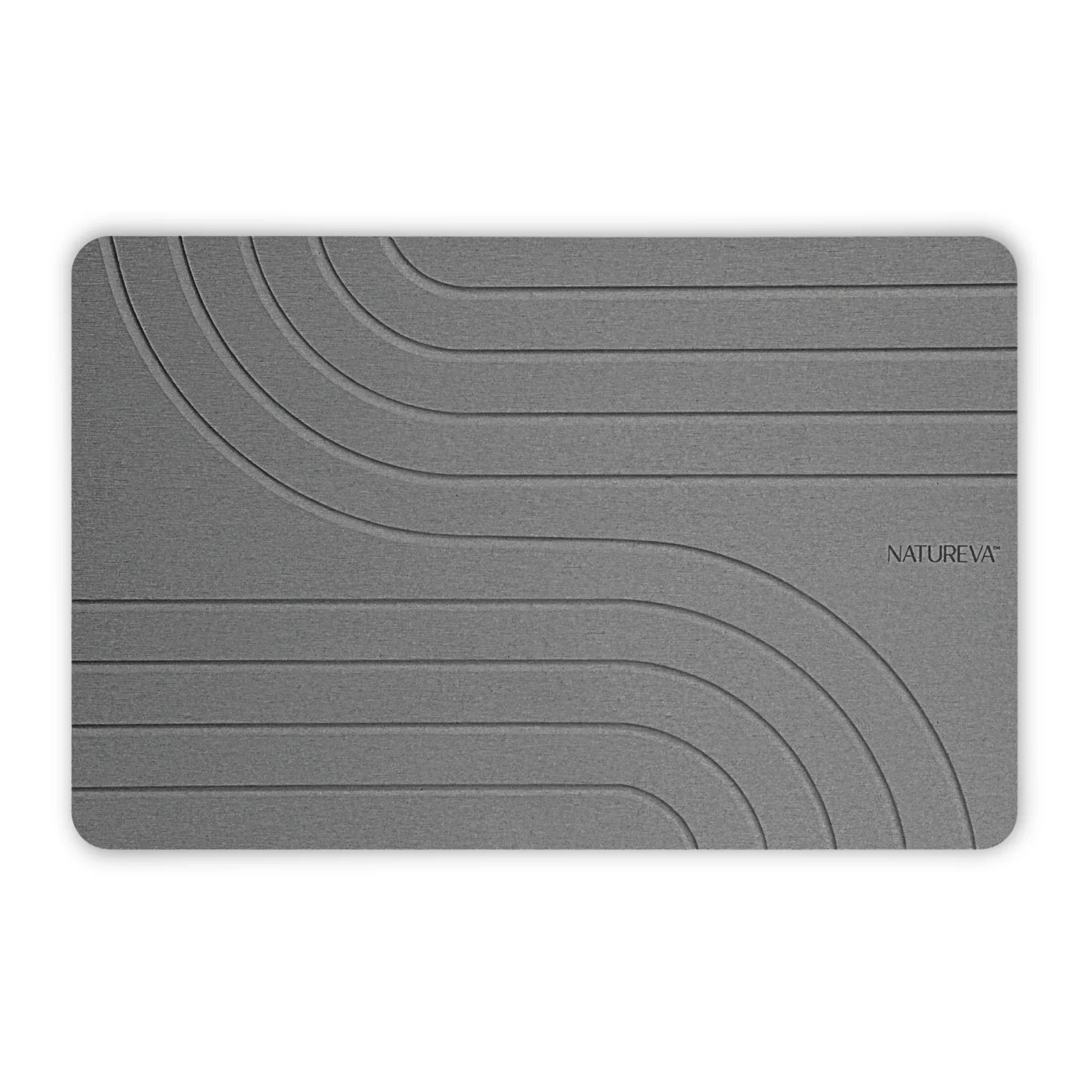
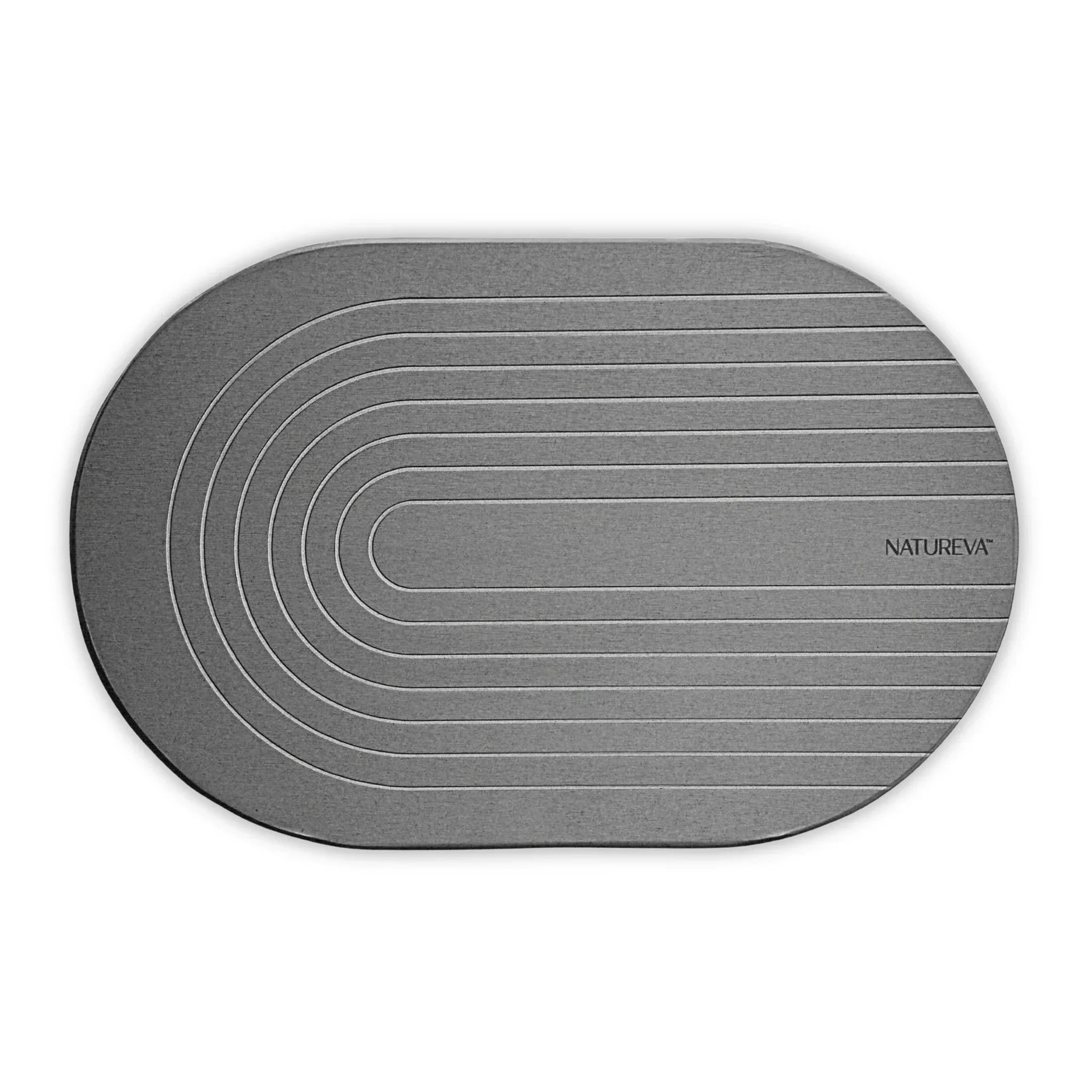
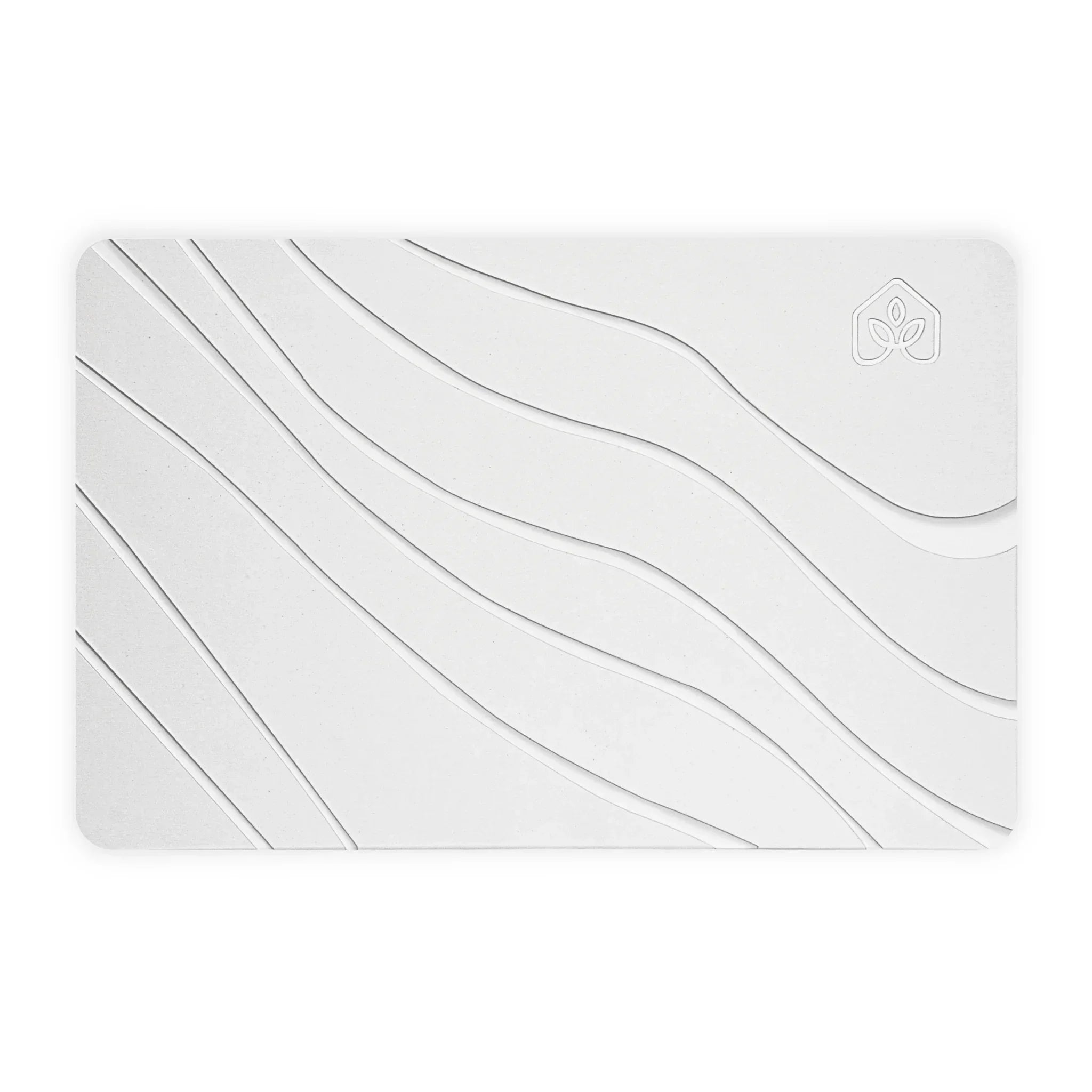
Not all stone mats are built the same way. Natureva's version is made from a composite of diatomite and recycled paper, pressed together into a dense, solid slab. There are no synthetic coatings and no moisture-trapping finishes added on top, which matters because coatings can block the pores from doing their job. The material stays hygienic by design, since the drying itself is what stops damp conditions from forming in the first place, not a chemical layer sprayed on top.
Fabric, rubber, and silicone mats work differently since they mostly just sit on top of water instead of pulling it in. If you want to compare how different bath mat materials stack up side by side, this expert guide on popular bath mat materials breaks down the pros and cons of each type. Once you understand what diatomite actually is, the drying speed starts to make a lot more sense.
How Stone Mats Dry Floors So Much Faster
Diatomite is made from fossilised algae, and its surface is packed with millions of tiny pores you can't even see. When water hits a diatomite bath mat, it doesn't sit on top like it does with fabric. It gets absorbed on contact, pulled straight into those pores instead of pooling around your feet. That's the whole trick. Fabric mats work like a sponge that's already halfway full, so water just sits there waiting to evaporate on its own timeline. Stone doesn't wait around.
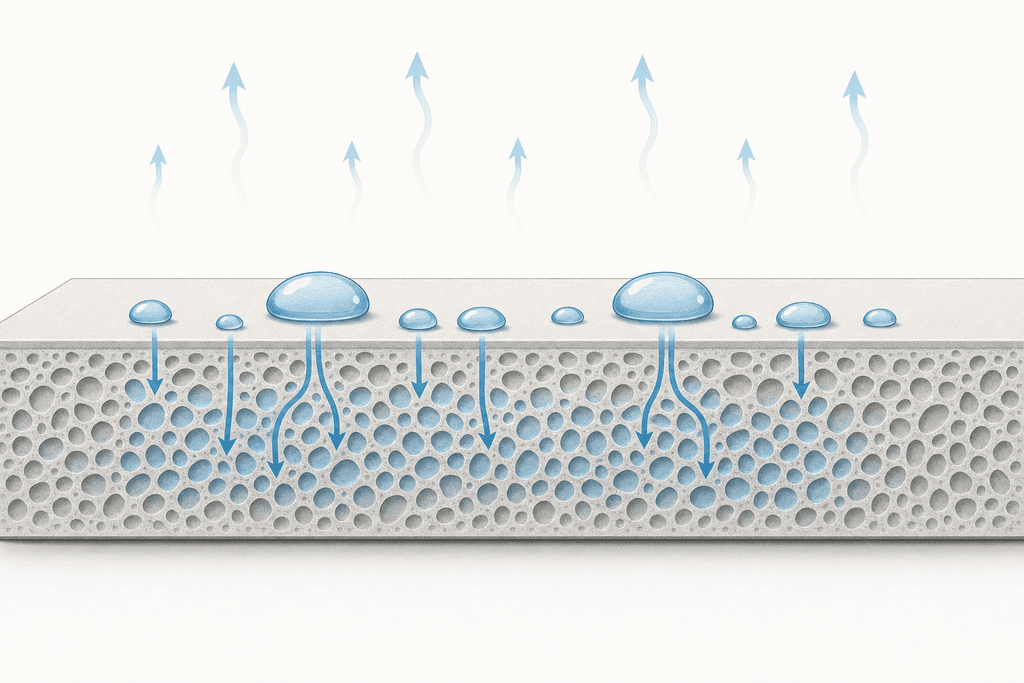
Once the water is inside the material, it doesn't stay there. It evaporates back out fast, which means the surface never stays wet long enough for mould or mildew to get a foothold. That's the real difference between a mat that looks clean and one that actually stays clean.
Here's what happens step by step:
- Contact — water is pulled in immediately instead of sitting on the surface
- Absorption — the porous structure draws moisture below the surface
- Evaporation — moisture releases back into the air, drying the mat within minutes
Stone vs Fabric vs Rubber Bath Mats
Fabric bath mats need washing every few days, sometimes more if your household showers a lot. That's because they hold onto moisture, and damp fabric left sitting on a bathroom floor is exactly the kind of environment where odour and mildew start to form. Rubber and silicone mats aren't much better. They might resist water on the surface, but water often gets trapped underneath the mat itself, against the tile, where you can't see it happening.
Stone works differently because it doesn't rely on you remembering to wash it. It stays dry through evaporation, not through constant laundering.
| Material | Drying Time | Wash Frequency | Slip Safety |
|---|---|---|---|
| Stone | Under 8 min | Weekly wipe | Non-slip base |
| Fabric | Hours | 2-3x weekly | Bunches, slides |
| Rubber/Silicone | Traps water | Weekly | Can curl edges |
Fabric mats that bunch or slide are more than a nuisance, they're a real fall risk on a wet floor. According to the CDC's data on falls, bathrooms are one of the most common places for slip injuries at home, particularly for older adults. A dense, flat stone surface with a non-slip base doesn't bunch, doesn't slide, and doesn't curl at the edges over time.
Choosing and Caring for Your Stone Bath Mat
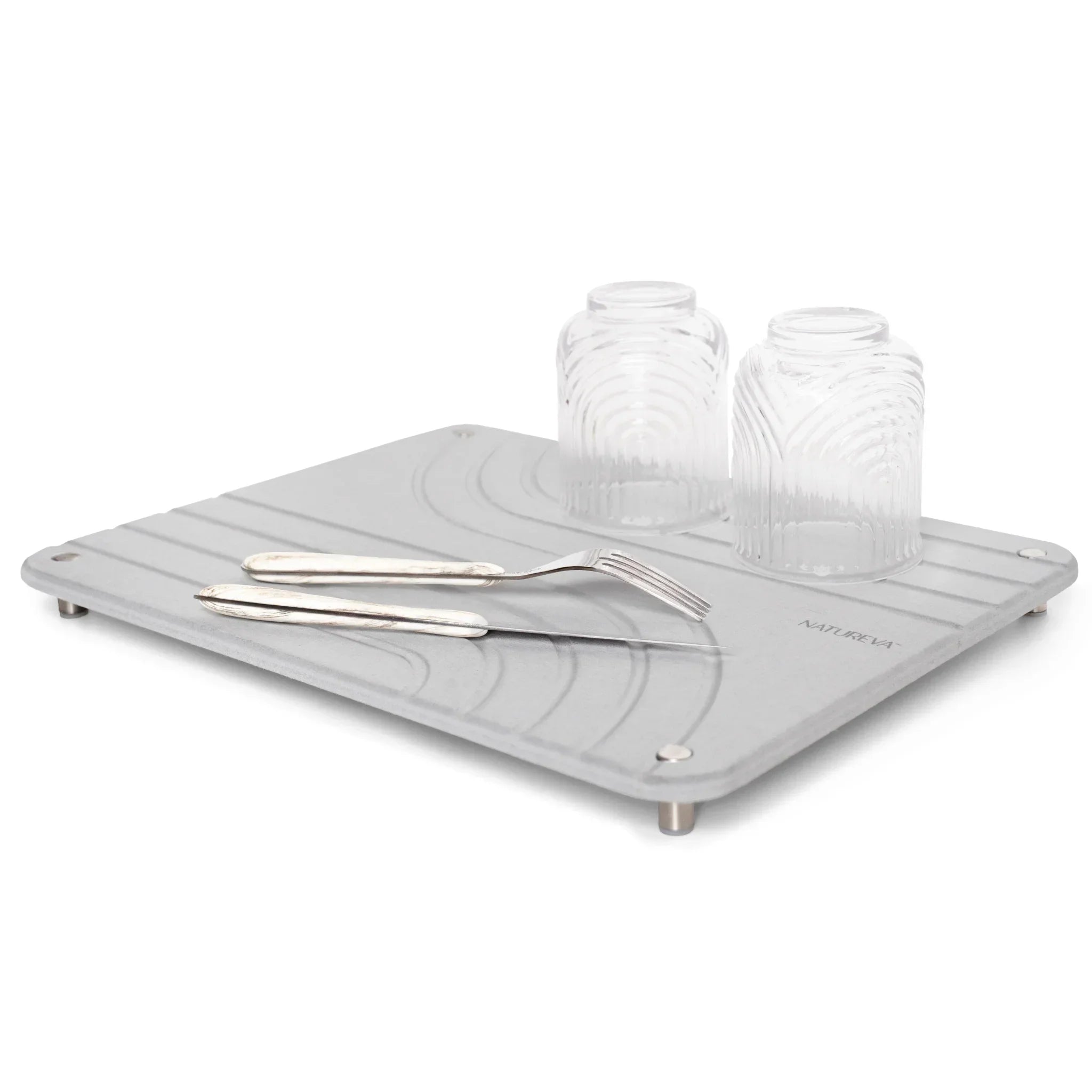
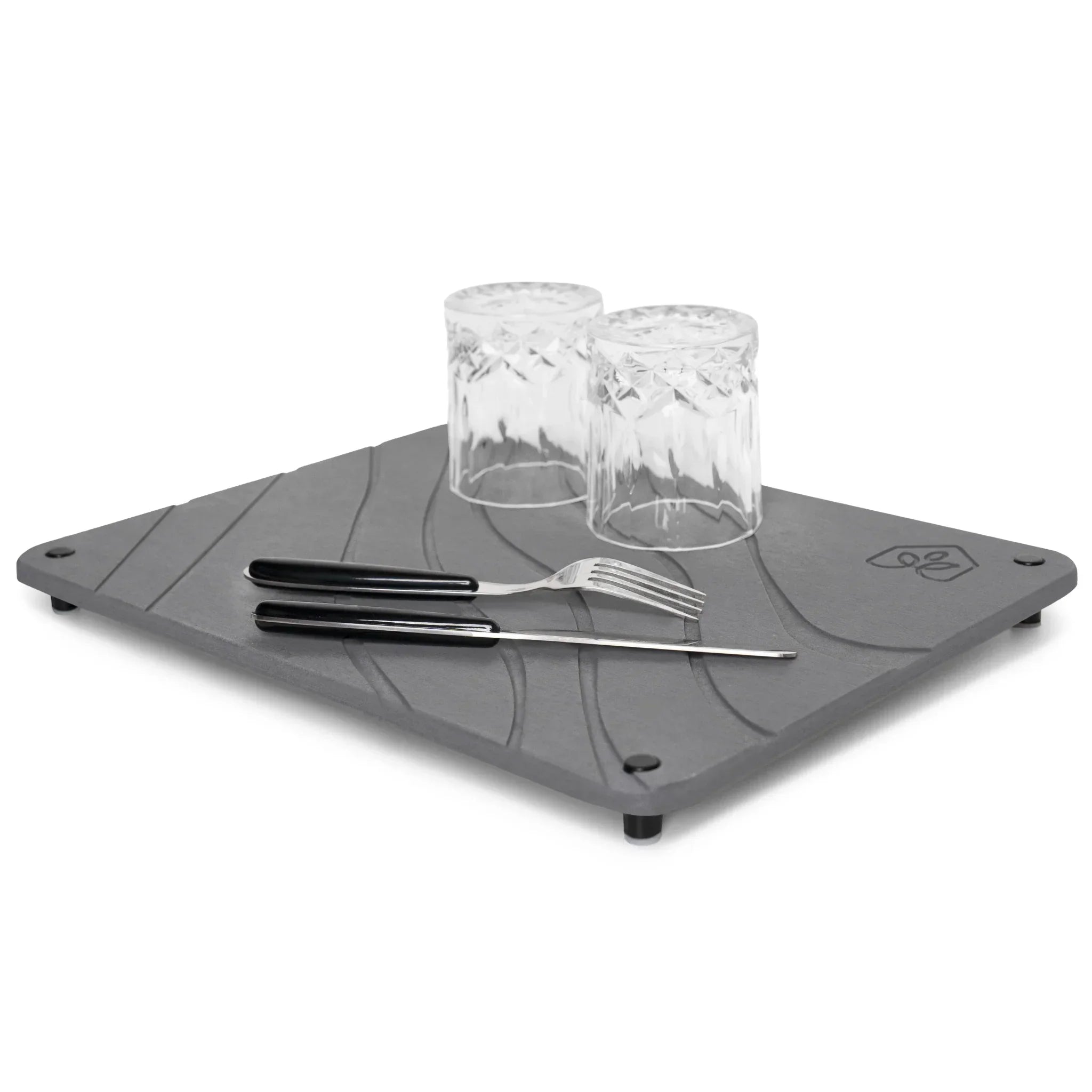
Picking a stone bath mat comes down to two things, size and colour. Measure your floor space first, since a mat that's too big for a small bathroom just becomes another thing to step around. Colour-wise, Graphite works well in darker or moody bathrooms, Chalk suits bright minimalist spaces, and Slate sits nicely in between if you're not sure. The Natureva stone bath mat collection comes in patterns like Tide, Flow, Arch, and Rain, so there's some room to match whatever look your bathroom already has going on.
Once you've got one, keeping it working well doesn't take much effort. The routine is simple and doesn't need to happen often.
- Wipe weekly with a warm damp cloth and cleaning vinegar
- Avoid coloured soaps, which can stain the surface
- Rinse any spots or stains directly under water
- Use hydrogen peroxide or the included sanding tool for tougher marks
- Let it air dry upright if it ever gets fully saturated
If you notice the mat absorbing water a bit slower after months of use, that's normal. The surface pores can get slightly clogged over time. The included P320 grit sanding disc reopens those pores and brings the absorbency back, so you're not stuck buying a new mat every year. For a deeper look at the full care process, our complete guide to diatomite walks through it in more detail.
Is a Stone Bath Mat Worth Switching To
A cheap fabric bath mat usually lasts about 6 to 12 months before it starts smelling musty or losing its shape. That's the real cost most people don't think about when comparing prices at the store. A stone bath mat costs more upfront, but you're not buying a mat that needs replacing every year. So the question isn't really "is stone expensive" — it's "how much do you spend over 3 years on fabric mats you keep tossing out." When you look at it that way, the math starts to shift.
The next generation of home essentials: naturally made, cleaner by design, sustainable by nature.
SHOP ALLSwitching from fabric to stone comes with real tradeoffs, and it's worth being honest about both sides before you buy.
- Pro: No more musty smell since there's no damp fabric sitting on the floor all day
- Pro: A stable, non-slip base that won't bunch, curl, or slide like fabric mats do on wet tile
- Pro: Less washing and scrubbing since the surface dries on its own
- Con: Higher price at checkout compared to a $15 fabric mat
- Con: Feels harder underfoot than a plush towel-style mat
The bunching and sliding issue is a bigger deal than people realize, especially for older adults or households with young kids. Fabric mats shift under wet feet, and that's how falls happen in bathrooms. A flat, heavy stone slab with a non-slip base pad just sits still, which matters more than it sounds like on paper.
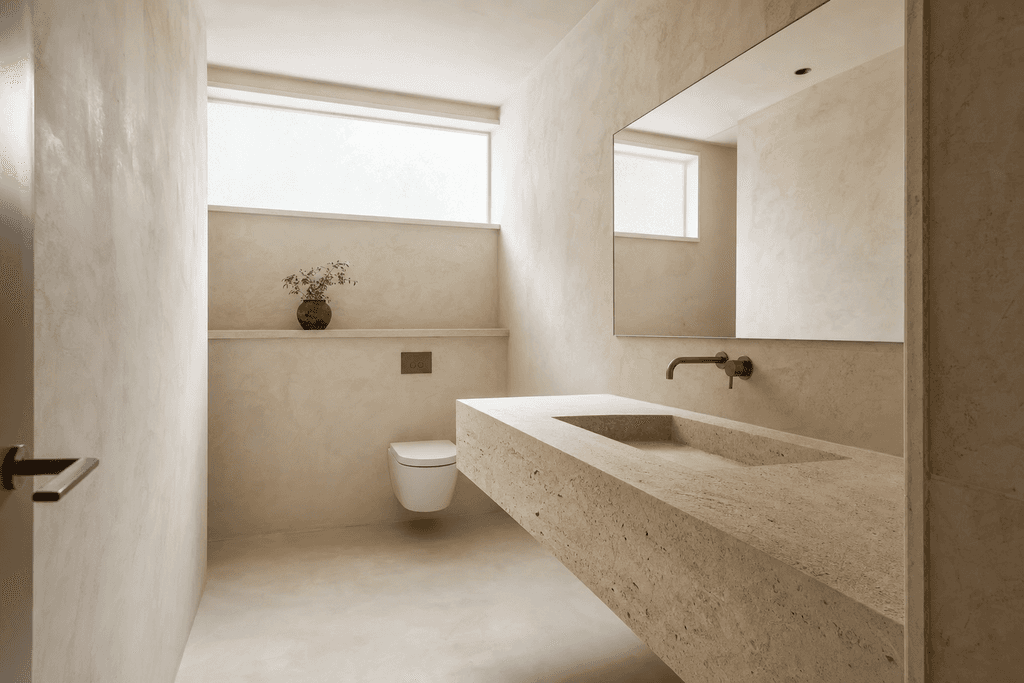
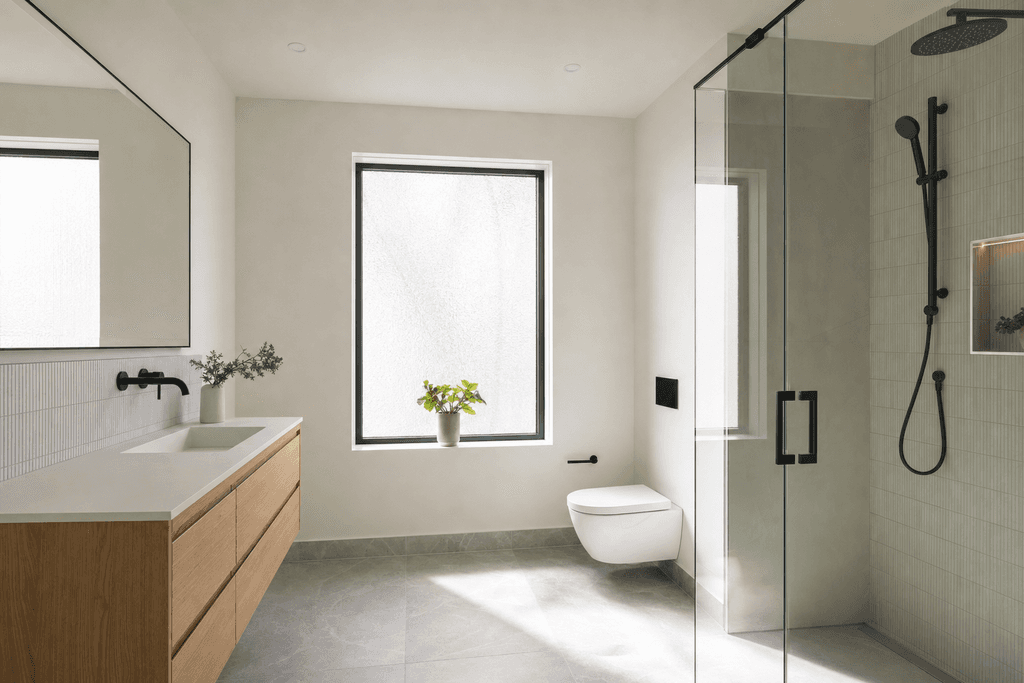
Stone mats aren't for every bathroom though. If you want something soft to sink your feet into after a shower, fabric still wins there. But if you're after a low-maintenance, design-forward finish that matches a modern or Japandi-style bathroom, stone is built for that job specifically. This independent 2025 review breaks down how well stone bath mats actually perform if you want a second opinion before deciding.
At Natureva, our stone bath mats are built around this exact tradeoff — you pay more once, and then you stop thinking about your bath mat altogether.
Wrap-up
Millions of tiny pores in diatomite are the whole reason a stone bath mat dries fast, not some coating or chemical spray. That's the core of it. Once you get how the material works, everything else about these mats makes sense.
Here's what actually matters when it comes to picking a bath mat that keeps your floor dry and your bathroom cleaner:
- Fast drying happens because of the stone's pore structure, not additives
- A dry surface means mould and mildew don't get the damp conditions they need to grow
- Weekly wipe-downs with a damp cloth keep the mat working like new
- Sanding the surface once in a while reopens pores if the mat starts absorbing slower
Fabric mats hold water. Rubber ones trap moisture underneath. Stone just does the job differently, and once your floor stops staying damp, you stop dealing with the smell and mess that comes with it. If you're shopping around, our diatomite bath mat collection has a few different surface patterns and colours to fit whatever bathroom setup you've got.
Care is the other half of this. It's not complicated, but skipping it is how mats lose their absorbency over time. If you want the full breakdown on what to check before buying one, this guide on features to check before buying covers the details we didn't get into here.
Still have questions about how these mats hold up, how long they last, or what to do if yours stops drying like it used to. That's exactly what we're covering next.
Stone Bath Mat Questions Answered
You've made it this far, so you probably still have a few questions rattling around. That's normal. Stone bath mats are still pretty new to most Australian bathrooms, and it's smart to ask before you buy. Here's what people ask us the most, answered plainly.
How long do stone bath mats take to dry
Most stone bathmats dry within a few minutes of stepping off them. Homes To Love actually tested our Stone Bath Mat and clocked full drying at under 8 minutes. Compare that to a fabric mat, which can stay damp for hours and start smelling by the next day.
Are stone bath mats safe and asbestos free
This is the question you should be asking, honestly. Diatomite is a natural mineral, but not every brand tests it the same way, and some diatomite products on the market have faced recalls over asbestos contamination. Our stone mats are tested and certified asbestos-free by a NATA-accredited Australian lab, and we retest regularly to keep that standard, not just claim it once and move on.
How often do they need cleaning or sanding
A weekly wipe with a warm damp cloth and some cleaning vinegar is really all it takes. If you notice the surface feels less absorbent over time, that just means the pores need reopening.
- Wipe weekly with warm water and vinegar
- Avoid coloured soaps, which can clog the pores
- Use the included sanding tool every few months to restore full absorbency
- Air dry upright if the mat ever gets fully saturated
Do stone mats slip on wet floors
No, and this matters more than people think, especially for older homeowners or anyone with kids in the house. Every Natureva bath mat comes with a non-slip base pad underneath, so it stays put even when it's covered in water. Fabric mats bunch and curl at the edges over time, which is actually a bigger fall risk than most people realise.
Will a stone mat scratch my bathroom floor
The non-slip base pad also protects your floor from scratches or pressure marks, so you don't need to worry about it damaging tile or timber underneath.
How is this different from other stone mats on the market
Plenty of brands sell diatomite mats now, but not all of them share independent lab results for asbestos safety. We think that's a detail worth checking before you put something on your bathroom floor every single day, and it's a big reason people choose Natureva over other stone bathmay options.
The next generation of home essentials: naturally made, cleaner by design, sustainable by nature.
SHOP ALL