

Top Materials for Drying Dishes Fast and Streak-Free
A damp fabric dish mat can stay wet for six hours or more after you finish washing up, even in a warm kitchen. That long drying window is exactly what mildew and musty smells need to settle in, and it happens quietly under a stack of plates most people never think to move. The real issue isn't how often you wash your mat, it's what the mat is made of, which is why finding the best material for drying dishes matters more than most kitchen habits.
What is the fastest material for drying dishes?
Diatomite stone dries dishes fastest, absorbing surface water in under 2 minutes due to its porous, mineral structure. This is significantly faster than fabric or microfibre mats, which can take 20-30 minutes to fully dry.
What causes streaks on dishes after drying?
Streaks form when mineral deposits from hard water or leftover detergent residue are left to air-dry on a surface instead of being absorbed. Materials that trap moisture and dry slowly, like standard cotton fabric, are the most likely to cause streaking.
Is a diatomite stone mat better than a microfibre mat?
Diatomite stone mats outperform microfibre mats in drying speed and mold resistance, as the stone's porous surface absorbs water instantly rather than holding it against the surface. Microfibre remains a better choice for gentle drying of delicate glassware, but requires frequent washing to prevent bacterial buildup.
Table of Contents
Why Drying Material Actually Matters
A wet sponge left on the counter can hold onto water for hours, sometimes even a full day, depending on what it's made of. That's the whole story with dish drying mats too. Some materials just sit there holding water like a sponge, while others push that water back out into the air fast. This one difference is basically why some kitchens smell fine and others start smelling a little off by the end of the week. If you're searching for the best material for drying dishes, this is really the first thing to understand before anything else.
Absorbing water and getting rid of water are actually two separate jobs, and a lot of materials are only good at one of them. Fabric mats soak up water fast, sure, but then that water just sits inside the fibers with nowhere to go. Stone materials work differently. They pull moisture in and then let it evaporate back out almost right away, so the surface itself doesn't stay wet.
- Fabric and cotton mats soak up water but hold onto it for hours
- Microfibre dries a bit faster but still stays damp underneath
- Rubber and silicone barely absorb anything, so water just pools on top
- Stone surfaces pull moisture in and push it back out through evaporation
Here's the part people don't think about enough. It's not the dirty dishes that cause bad smells or mildew spots on a mat. It's the water that gets trapped underneath and around them. Damp spots that never fully dry are basically a welcome sign for mildew and musty smells to move in.
| Material | Average Dry Time | Moisture Retention |
|---|---|---|
| Fabric | 4 to 8 hours | High |
| Microfibre | 2 to 4 hours | Medium |
| Rubber | Water pools, doesn't absorb | Medium to High |
| Stone | Under 8 minutes | Low |
Numbers like these are why more people are moving away from the fabric mat sitting soggy by the sink. A fast-drying surface that reduces the conditions where mould and mildew develop matters more than most people realize until they actually switch.
Fabric, Microfibre, and Rubber The Usual Suspects
Diatomaceous earth was formed from algae that lived millions of years ago, but that's a story for the next section. First, let's talk about what's probably sitting on your kitchen counter right now. Most Australian kitchens use one of three drying materials: cotton dish towels, microfibre mats, or rubber trays. Each one has a real problem that shows up after a few uses, not on day one. That's usually why people don't notice the issue until their kitchen starts smelling a bit off.
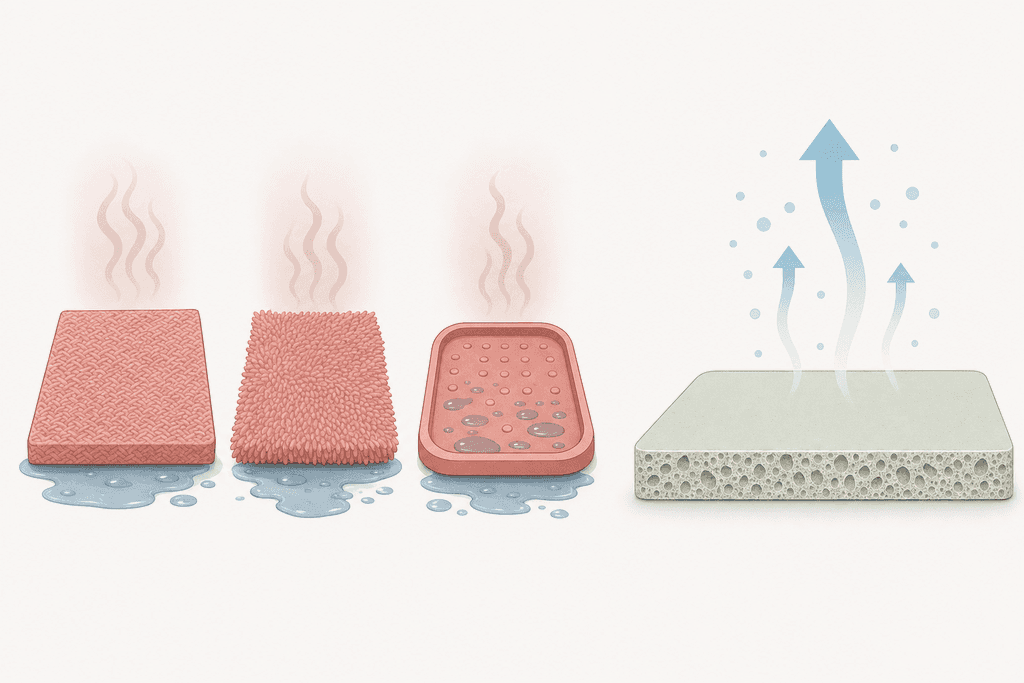
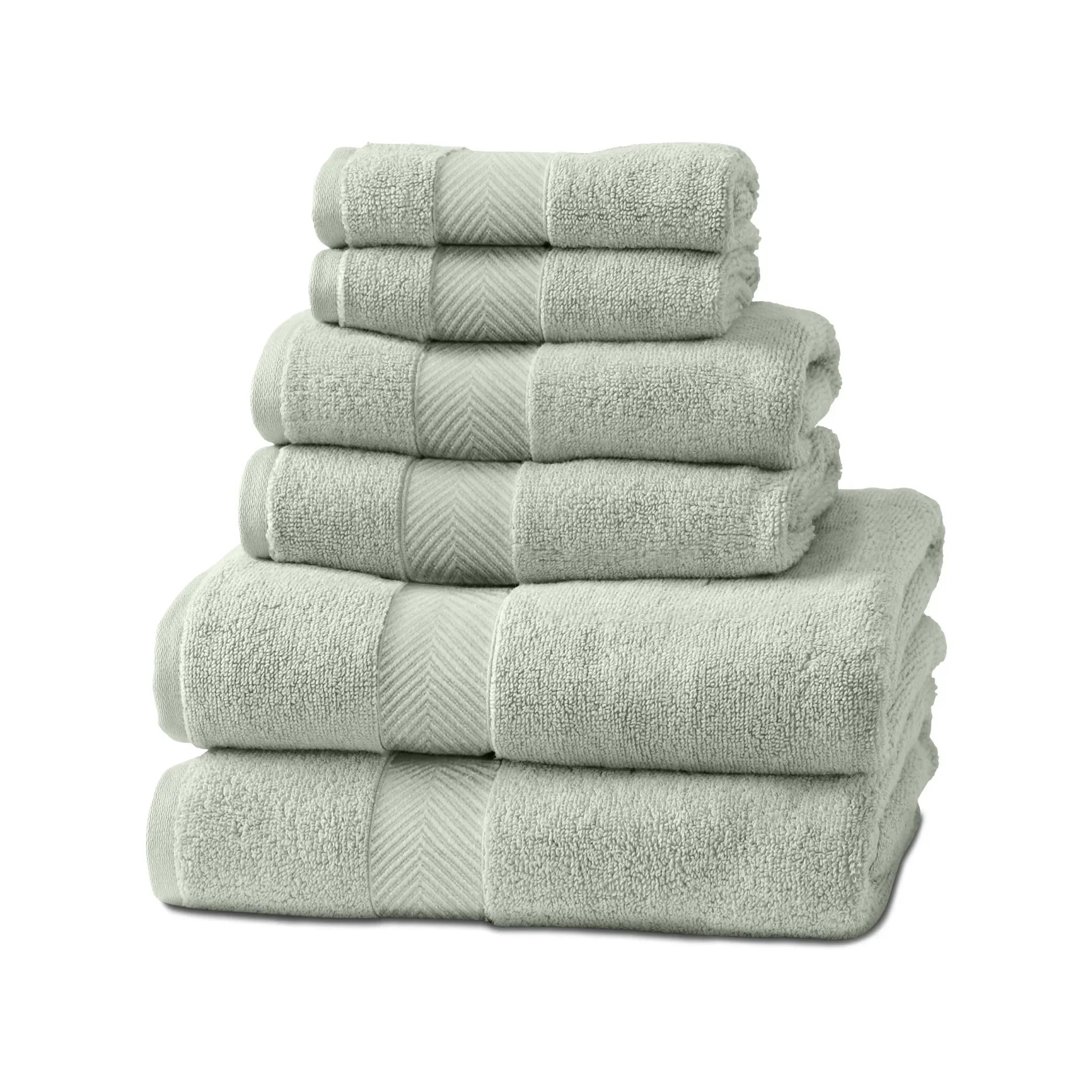
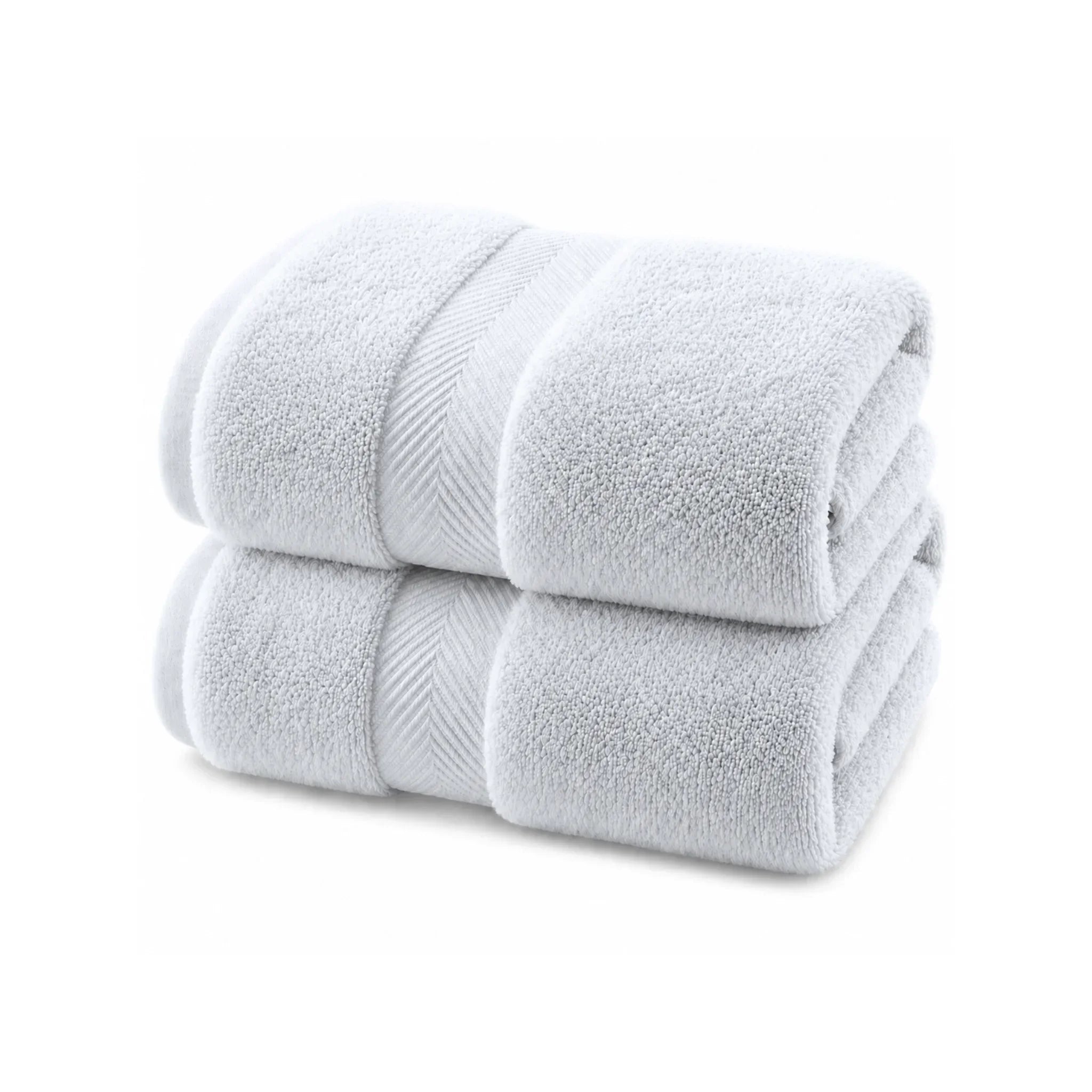
Cotton and microfibre soak up water fine, but they hold onto it for hours afterward. A damp towel folded on the counter overnight is basically an invitation for bacteria and mildew to move in. Rubber mats trap water underneath the ridges, so the mat never actually dries flat, even after a full day sitting out.
- Cotton and microfibre: absorb well, dry slowly, need daily washing
- Rubber mats: water pools underneath, rarely lies flat when drying
- Both: shed lint or trap soap residue, which shows up as streaks on glasses
This is why so many people end up rewashing towels every couple of days just to keep the smell away. If you've ever wondered why your glassware looks cloudy even after a wash, the drying material is often the actual culprit, not the dishwasher or soap. For a deeper look at towel materials specifically, this comparison of linen, cotton, and flour sack towels breaks down how each fabric behaves with water.
Why Diatomite Stone Dries Dishes in Minutes
Diatomite is a mineral made from fossilised diatoms, a type of microscopic algae that lived in water millions of years ago. When these organisms died, their shells piled up and compressed over time into a soft, chalky stone full of tiny holes. Under a microscope, this stone looks almost like a sponge carved out of rock, with millions of pores running through it. That structure is the whole reason diatomite behaves so differently from fabric or rubber when water hits it.
Water doesn't sit on top of diatomite. It gets pulled straight into the material through capillary action, the same basic physics that lets a paper towel wick up a spill. Once inside, the water evaporates back out into the air fast, because there's so much surface area packed into those pores.
- Diatomite absorbs water on contact through millions of microscopic pores
- Moisture releases through rapid evaporation, not slow air drying
- No chemical coatings are used, just the material's natural pore structure
- The mechanism is hygienic by design, reducing the conditions where mould and mildew develop
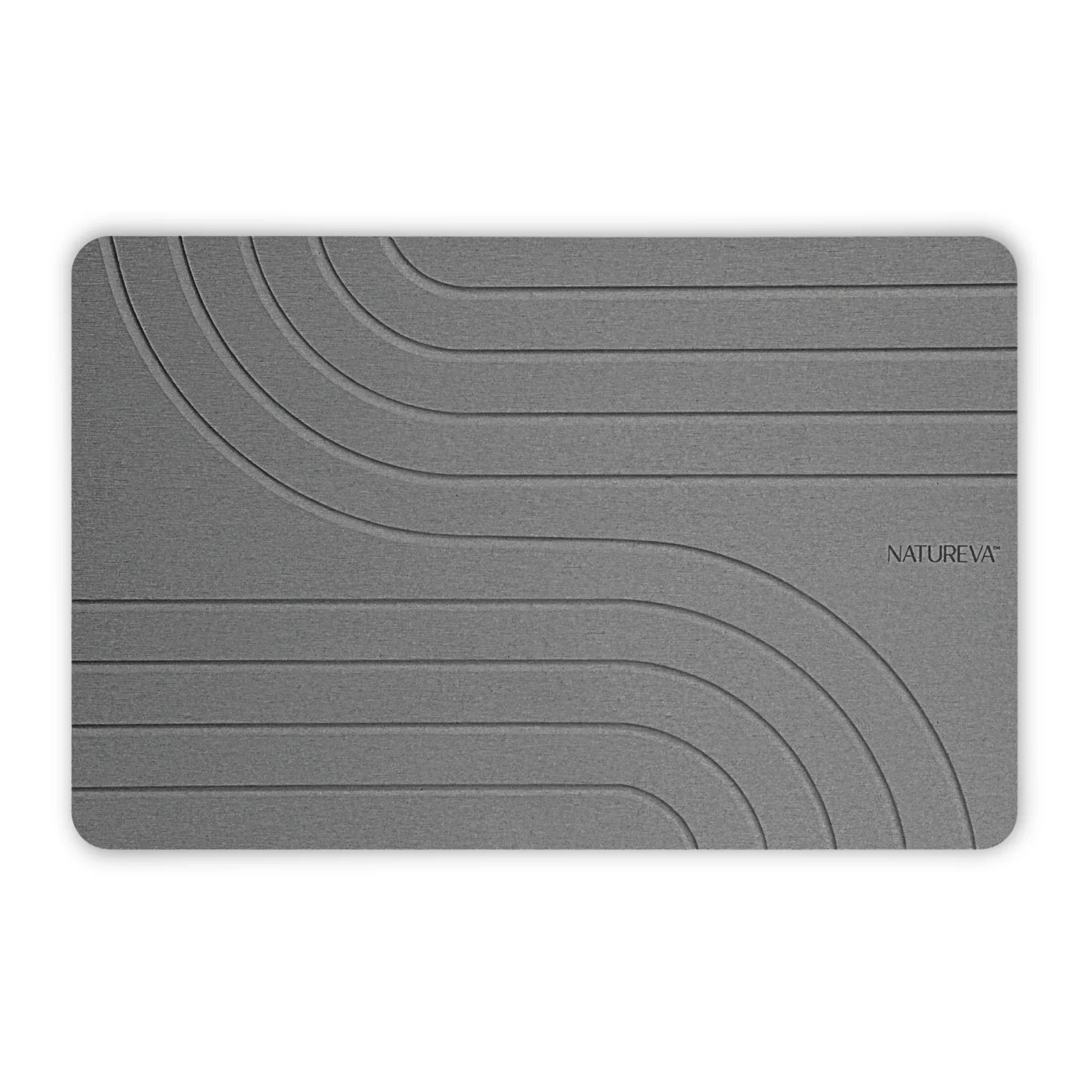
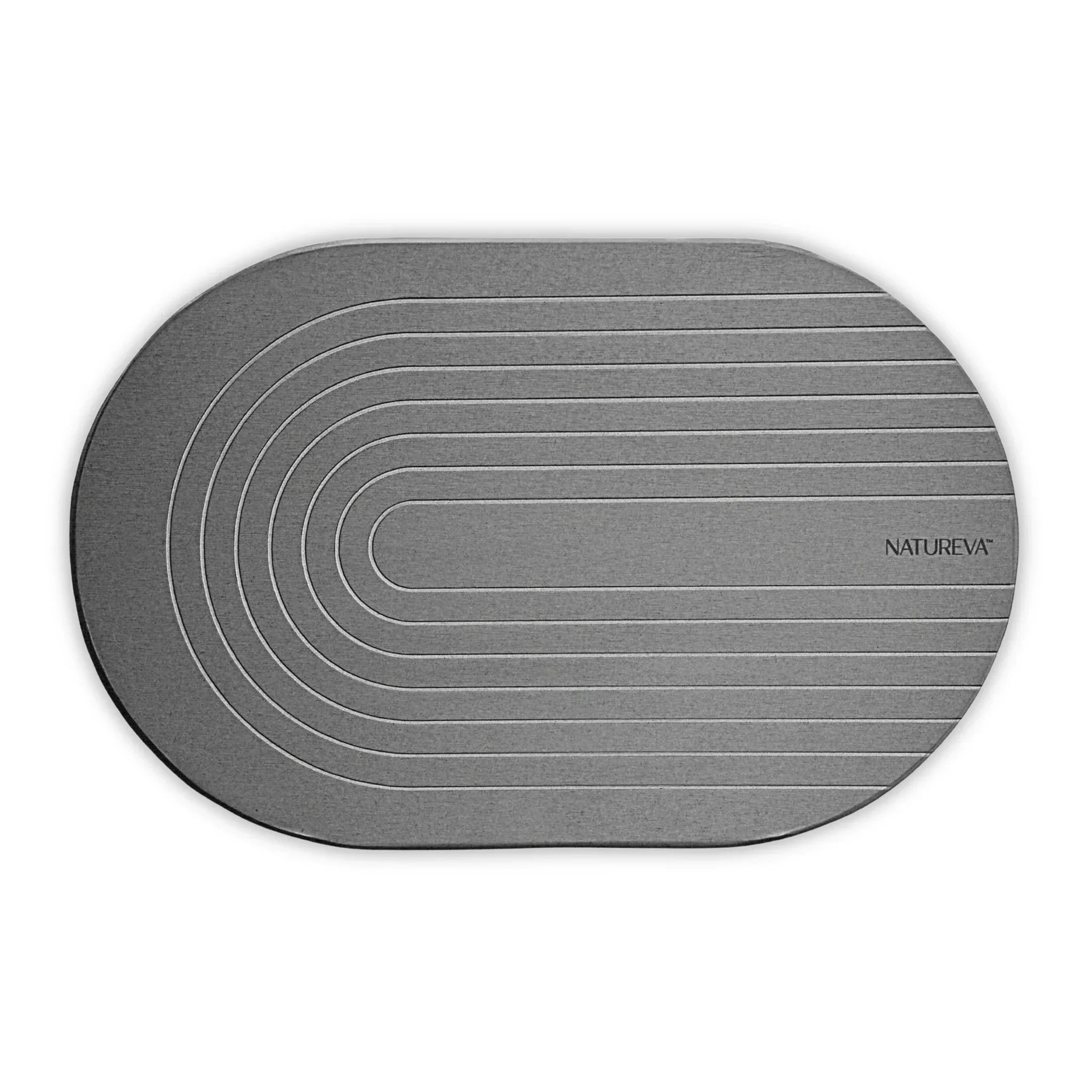
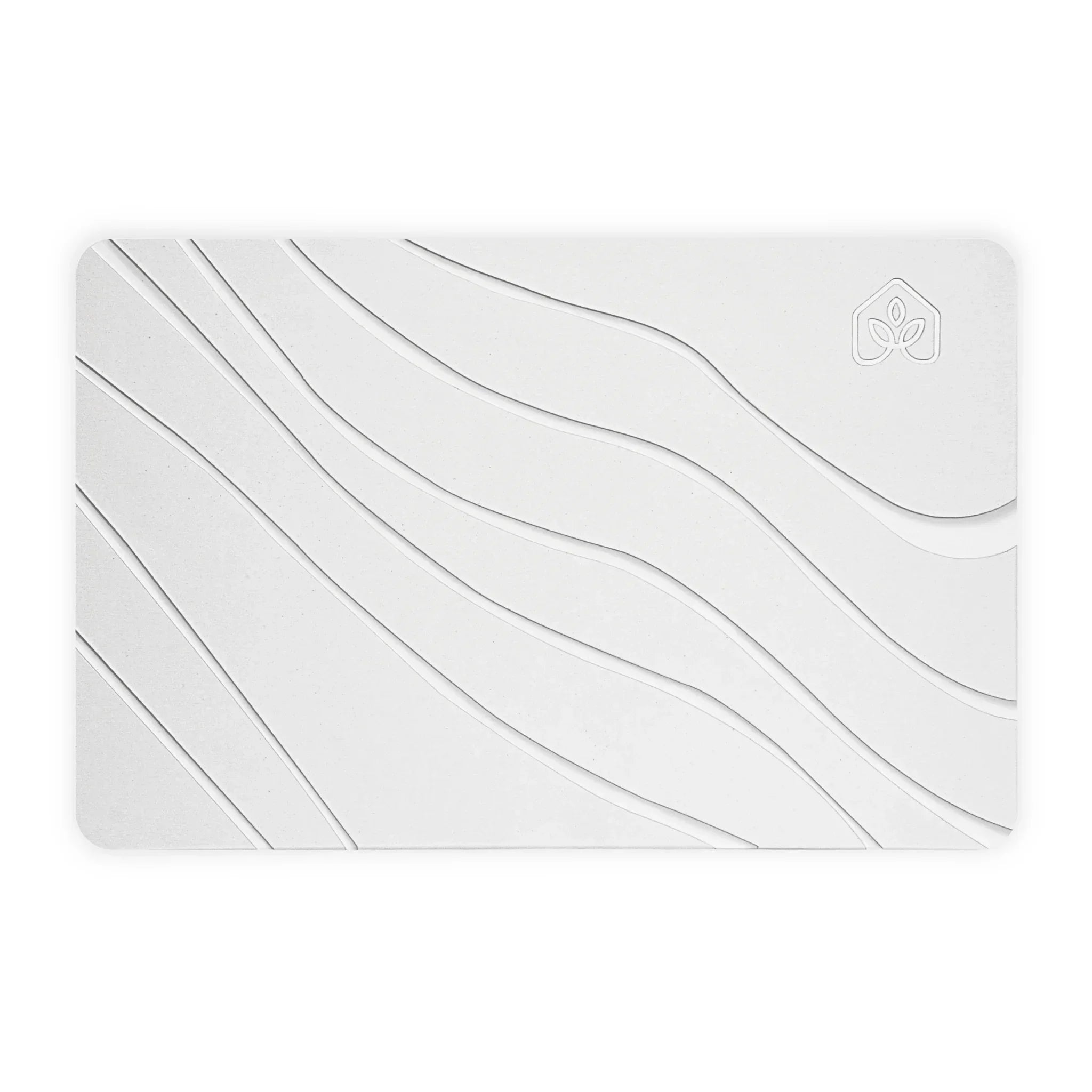
Independent testing backs this up. Australia's Homes To Love publication tested a diatomite stone bath mat and clocked full drying in under 8 minutes. That's not a marketing number, it's an independent review result. A dish mat made from the same material works on the same principle, just applied to plates, cutlery, and cups instead of feet. Natureva's Stone Dish Mat in Tide and the Flow design both use this exact material system.
If you want the full science breakdown, this guide to diatomite covers how the material is sourced and shaped into home products.
What Actually Causes Streaks and How to Avoid Them
Streaks form when water sits on a flat surface and evaporates unevenly, leaving mineral deposits and soap film behind in patchy patterns. This is why glasses drying on a flat plastic tray often come out cloudier than glasses dried by hand. The water has nowhere to go, so it just sits there until it evaporates on its own terms, leaving marks wherever it pooled last. Elevation and airflow are what actually fix this, not just the material a mat is made from.
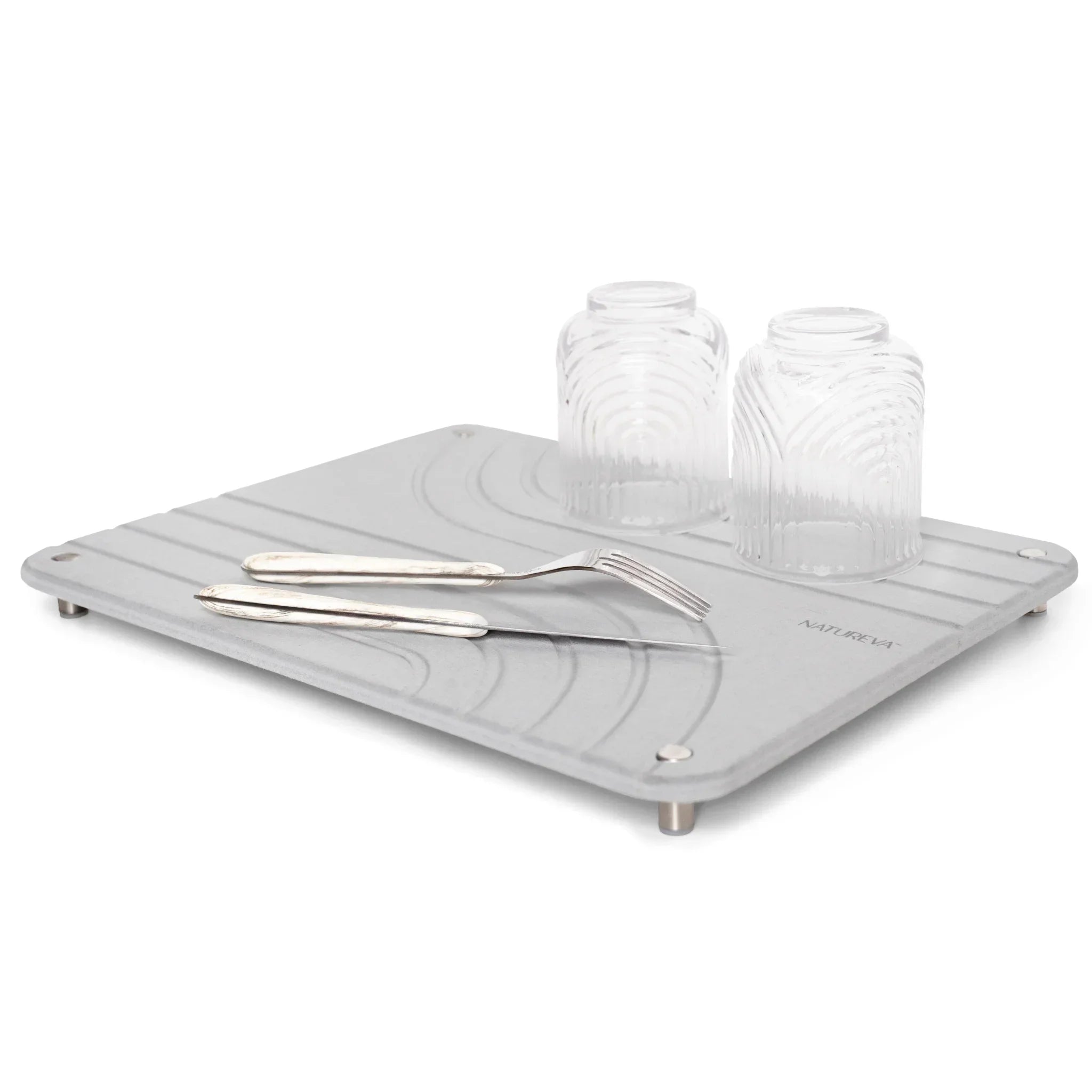
When a surface is raised off the counter, air can move underneath it. That airflow speeds up evaporation on all sides of whatever's drying, not just the top.
| Setup | Airflow | Streak Risk |
|---|---|---|
| Flat rubber tray | None | High |
| Flat fabric mat | Low | High |
| Elevated stone, 2.5 cm | Full underside | Low |
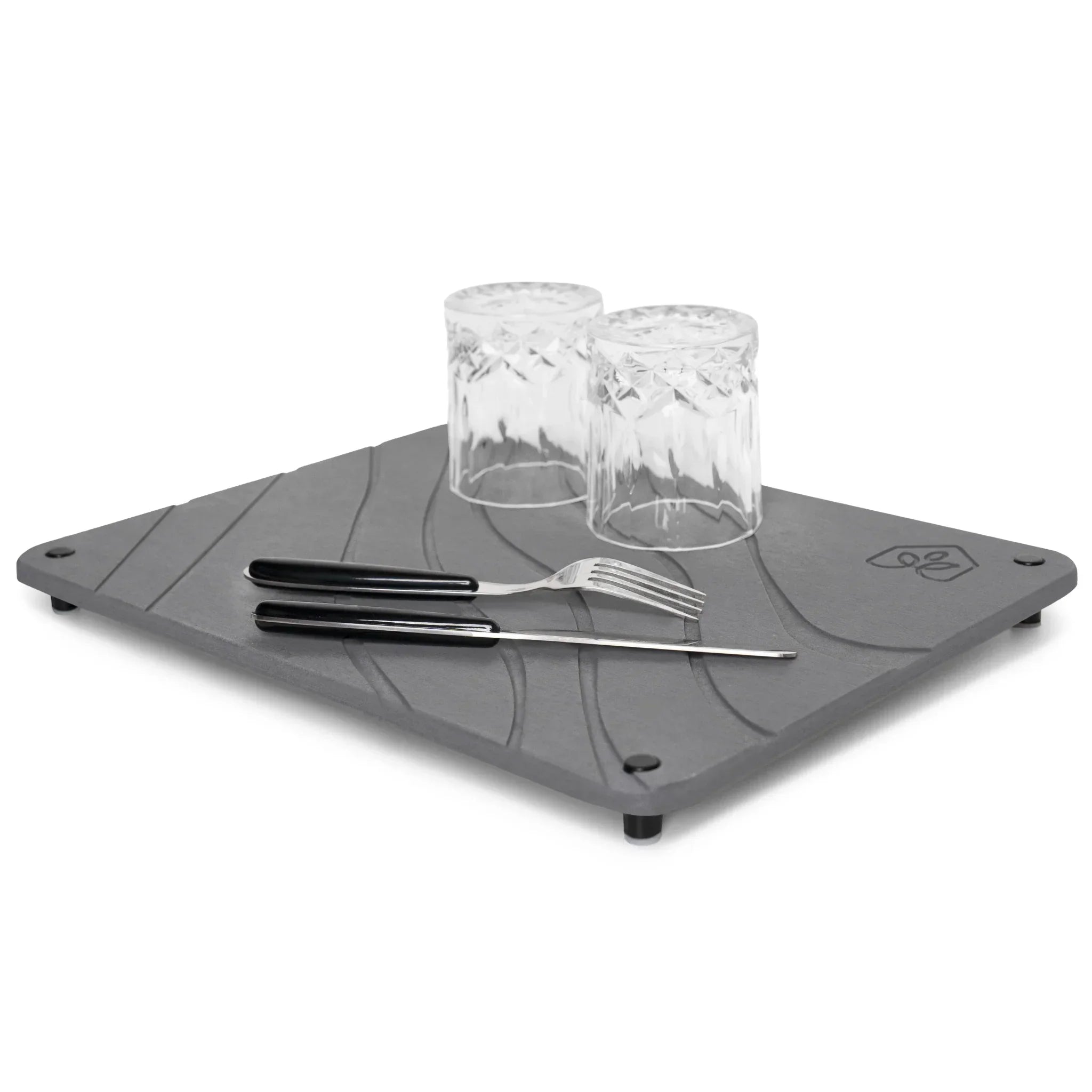
Natureva's Stone Dish Mats sit on stainless steel legs, elevated 2.5 cm off the counter. Combined with the porous stone surface, water doesn't pool underneath the mat or on top of it. Both problems get solved at once, which is really the point of designing a mat around the material instead of just shaping fabric into a mat form.
The next generation of home essentials: naturally made, cleaner by design, sustainable by nature.
SHOP ALL- Choose a surface with airflow underneath, not flat contact with the counter
- Pick a porous material over rubber or silicone if streaks are a recurring issue
- Check for stainless steel or raised legs, at least 2 cm of clearance is ideal
- Avoid anything that needs daily washing just to control odour
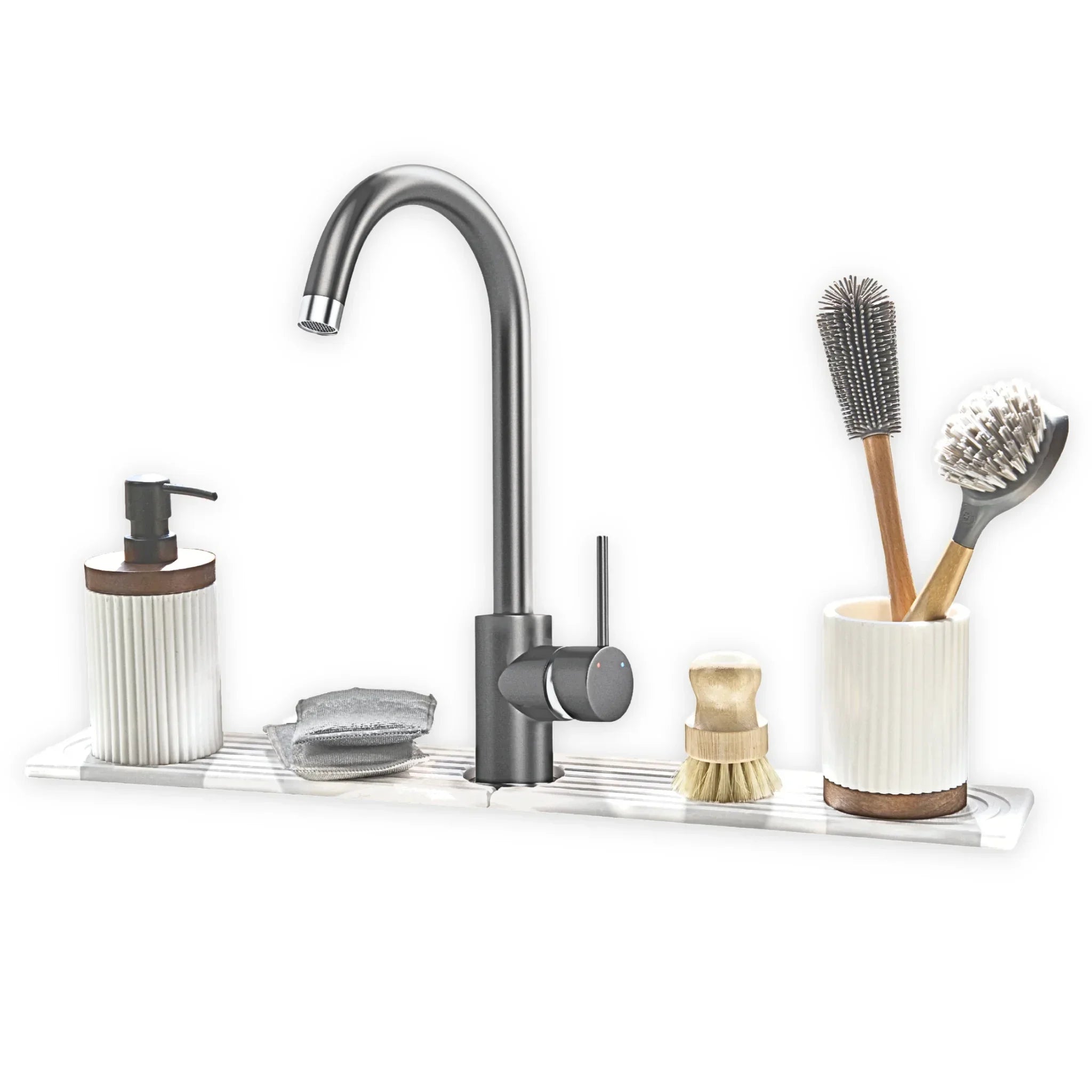
You can browse the full dish mat collection or check out the wider kitchen range for matching pieces like sink caddies. For those weighing up other bathroom-first stone mats on the market, this comparison of tested kitchen towels is worth a look too, just to see how far conventional textiles still lag behind on drying speed.
Stone vs the Rest, A Clear Comparison
An independent review from Homes To Love tested a diatomite stone bath mat and clocked a full dry time of under 8 minutes. That number matters here too, because the same material used in bath mats is what makes stone dish mats work. Fabric and microfibre dish mats hold onto water for hours, sometimes overnight, which gives bacteria and mildew a place to grow. Rubber mats trap moisture underneath instead of letting it evaporate, so puddles just sit there. When you line these up side by side, the drying time gap is not small, it is the whole point.
| Material | Drying Time | Maintenance | Streak Resistance |
|---|---|---|---|
| Stone (diatomite) | Under 8 minutes | Weekly wipe, occasional sanding | High |
| Microfibre | 2-4 hours | Daily wash | Medium |
| Cotton | 4-6 hours | Daily wash | Low |
| Rubber | Traps moisture, rarely fully dry | Frequent scrubbing | Low |
Maintenance is where the real difference shows up. Fabric and microfibre mats need to be washed daily to stay hygienic, otherwise they start smelling and growing mildew under the sink. Stone skips that whole cycle.
- Weekly wipe with a damp cloth is all stone needs
- No daily laundry loads or hamper buildup
- Occasional sanding restores full absorbency in minutes
- No soap residue buildup causing streaks on dishes
Design is the part people don't expect. A lot of buyers assume a fast-drying surface has to look industrial or clinical, but that's not the case anymore. Stone dish mats come in carved patterns and neutral tones that sit well on an open shelf or next to the sink. Natureva's Tide and Flow designs were built with exactly this in mind, so function and countertop style don't have to be a tradeoff. Rubber and microfibre were never designed to be looked at, they were just tools. Stone changes that expectation without asking you to compromise on drying performance.
Wrap-up, Choosing the Right Drying Material
Here's the thing about drying dishes fast, it all comes down to what the material is actually made of, not how many times you wash it or wring it out. Fabric and rubber mats hold onto water because that's just how their structure works. Diatomite stone is different at a basic level, it's full of tiny pores that pull moisture in and let it evaporate right back out.
That's really the whole story behind the best material for drying dishes. A cotton dish mat or rubber tray can look dry on top while staying damp underneath for hours. Stone doesn't have that problem because there's nothing for water to hide in.
A few quick things to remember before you go pick something:
- Drying speed depends on the material's structure, not the brand name on the label
- Diatomite stone dries dishes fast without trapping water or leaving streak marks behind
- Pairing a stone dish mat with a matching stone sink caddy or bath mat cuts down on daily wiping and washing across the whole house
If you're curious how this actually works on a science level, we get into it more in our complete guide to diatomite. And if you're shopping around, our Tide dish mat or Flow dish mat both do the job without the streaky, damp mess you get from fabric versions.
Once you see how much less maintenance a stone kitchen setup needs, it's hard to go back to wiping down a soggy mat every night. So the real question isn't whether stone works better, it's which design fits your kitchen.
Frequently Asked Questions
Still have questions about drying dishes without streaks or smells? Here are the ones we get asked the most.
What is the fastest drying material for dishes
Diatomite stone is the fastest option out there right now. It's made from fossilised algae with millions of tiny pores that pull water in fast, then let it evaporate just as quick. Fabric and microfibre mats hold onto water for hours, while stone surfaces can dry in minutes.
Why do dish mats get smelly
Smelly dish mats usually come down to trapped moisture. Fabric fibers soak up water and hold it, creating a damp environment where odour and mildew start to form. A fast-drying surface that reduces the conditions where mould and mildew develop is the real fix, not more washing.
How do you clean a stone dish mat
Wipe it down weekly with a warm damp cloth and a bit of cleaning vinegar. Skip coloured soaps since they can leave marks on the stone. For tougher stains, rinse under water or use a bit of hydrogen peroxide.
- Weekly wipe down with vinegar and water
- Rinse stains under running water
- Use hydrogen peroxide for deeper marks
- Sand lightly with the included tool if it stops absorbing well
Natureva's Stone Dish Mats come with a sanding tool built for this exact job. It reopens the surface pores so the mat keeps drying like new.
Are stone dish mats safe for daily kitchen use
Yes, as long as the brand has independent testing to back it up. This matters more than people think, since some diatomite products from unverified sources have faced recalls over asbestos concerns. Natureva's stone products are tested and certified asbestos-free by a NATA-accredited Australian lab, and that testing is repeated regularly to keep the standard current.
How long do stone dish mats last
With basic care, a stone dish mat can last for years. The material doesn't wear out the way fabric mats do, it just needs the occasional sanding to keep the surface pores open. That's a small trade for something that skips constant washing and never really goes soggy.
The next generation of home essentials: naturally made, cleaner by design, sustainable by nature.
SHOP ALL