

Drying Stone in the Kitchen Guide
A wet kitchen counter can hold onto moisture for hours, giving mold and mildew exactly what they need to grow. Drying stone kitchen mats work differently. They pull water in on contact and release it back into the air in minutes, not hours, which means fewer soggy sponges and less wiping down. Natureva's stone dish mats use this same idea, and once you see how the material actually works, it's easy to understand why fabric mats can't keep up.
What is drying stone made of?
Drying stone is made of diatomite, a soft sedimentary rock formed from fossilized diatoms (microscopic algae) with silica shells. Its porous structure gives it the ability to absorb water rapidly, often drying a wet cup or dish within seconds of contact.
Is a diatomite drying stone better than a fabric or silicone dish mat?
Diatomite drying stone absorbs and evaporates water within minutes, while fabric and silicone mats trap moisture on their surface and require manual wringing or air-drying. Diatomite stone also resists mold and odor buildup better than fabric, though it is more brittle and can crack if dropped.
How do you clean and maintain a diatomite dish drying mat?
Wipe the stone with a damp cloth and mild soap, then let it air-dry completely in sunlight or open air to restore its absorbency, typically within 1–2 hours. Sand the surface lightly with 220-grit sandpaper every few months if water stops beading and absorbing quickly, since oils and residue can clog the pores over time.
Table of Contents
The Science Behind Diatomite Stone
Diatomite comes from fossilised algae called diatoms, tiny organisms that lived millions of years ago and left behind mineral-rich skeletons. Those skeletons are packed with millions of microscopic pores, and that's the whole secret. When water touches the surface, it gets pulled into those pores almost instantly instead of sitting on top like it does on a countertop or a fabric mat.
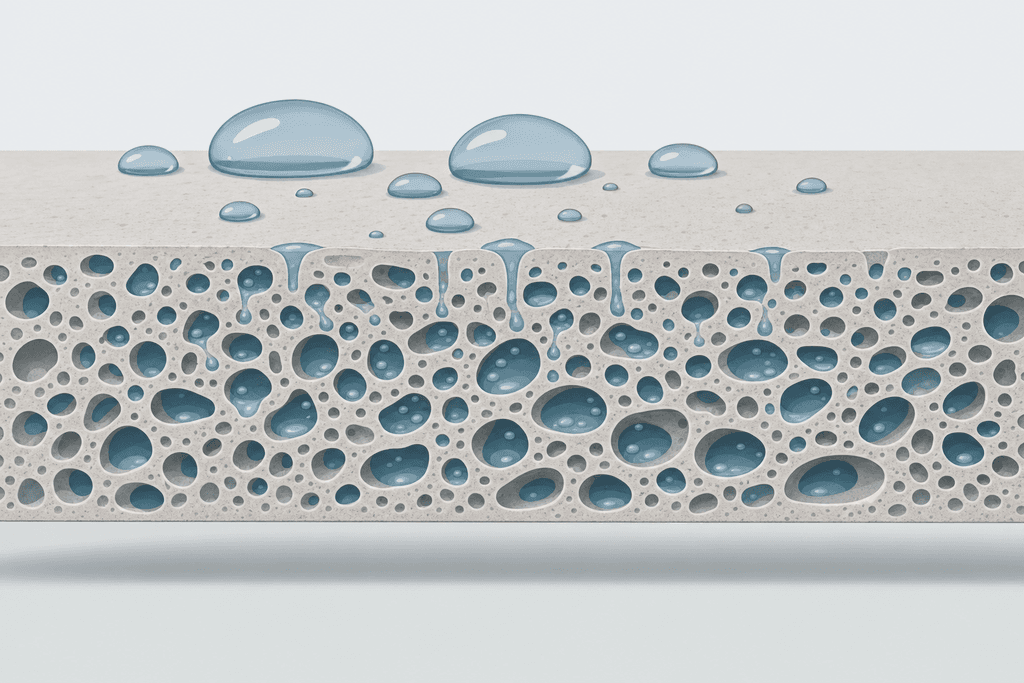
The moisture doesn't just sit there either. It evaporates back out into the air fast, which is what actually keeps the surface hygienic by design, not some coating or chemical treatment sprayed on top.
- No synthetic coatings or moisture-trapping finishes
- No added chemicals to control odour or mildew
- Works purely through absorption and evaporation
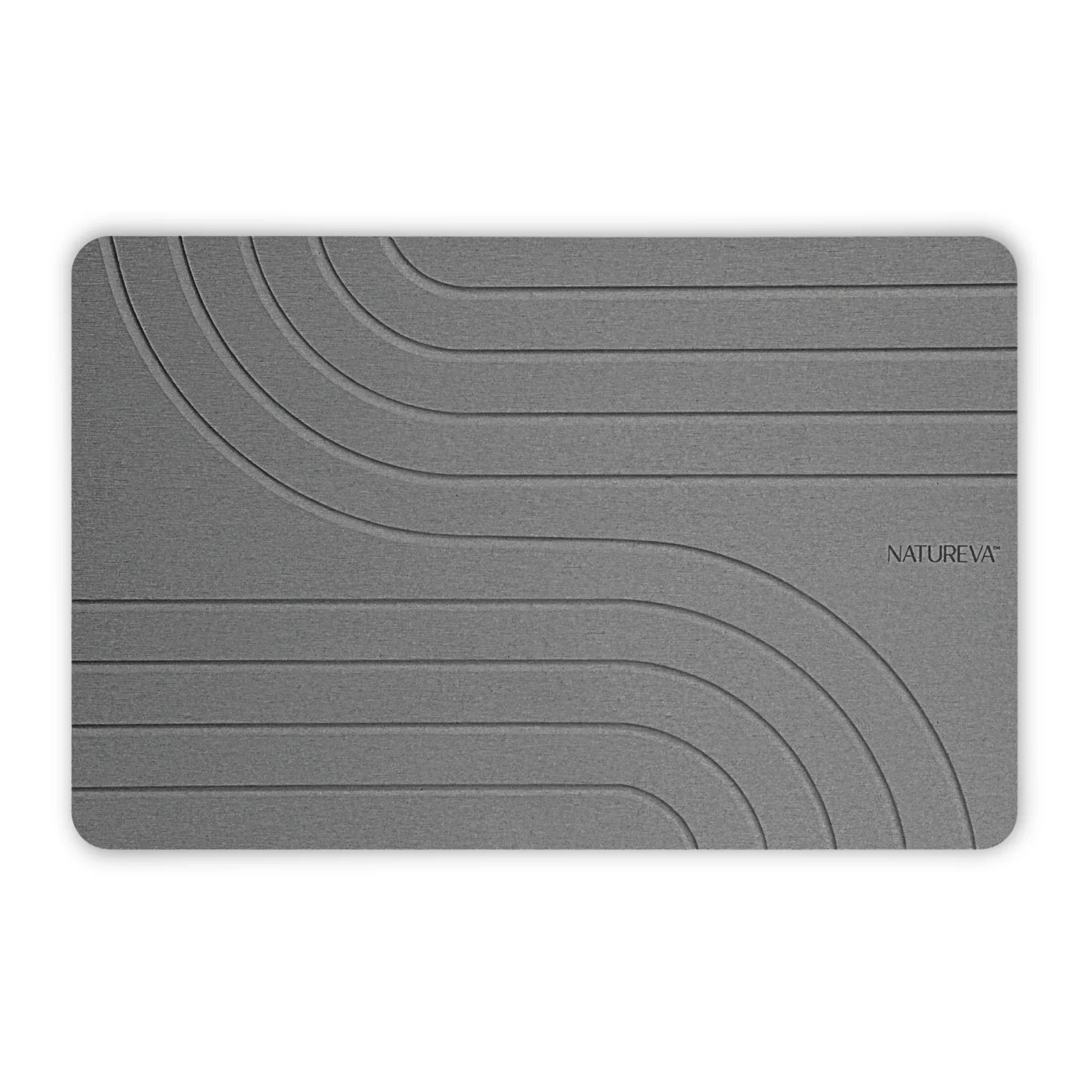
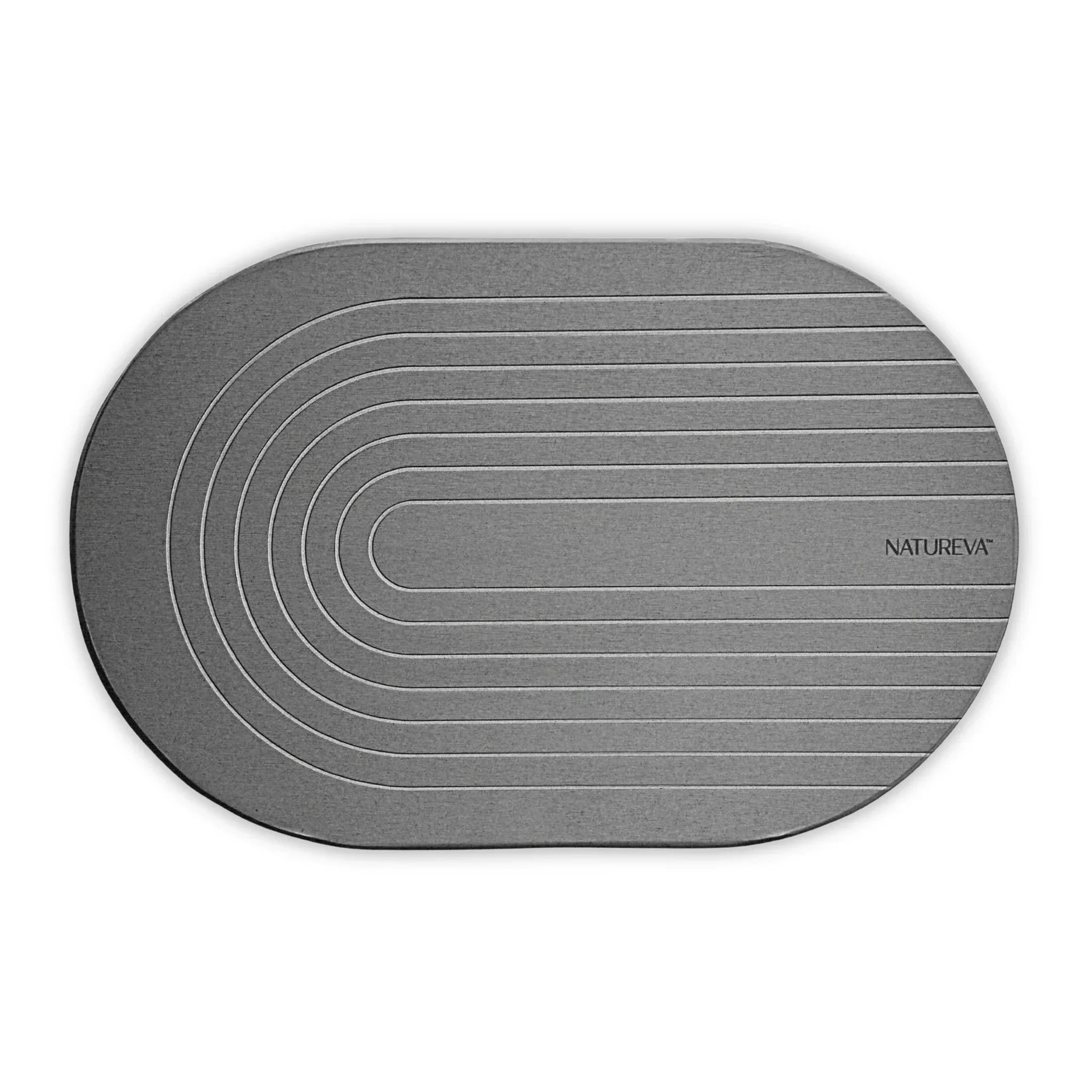
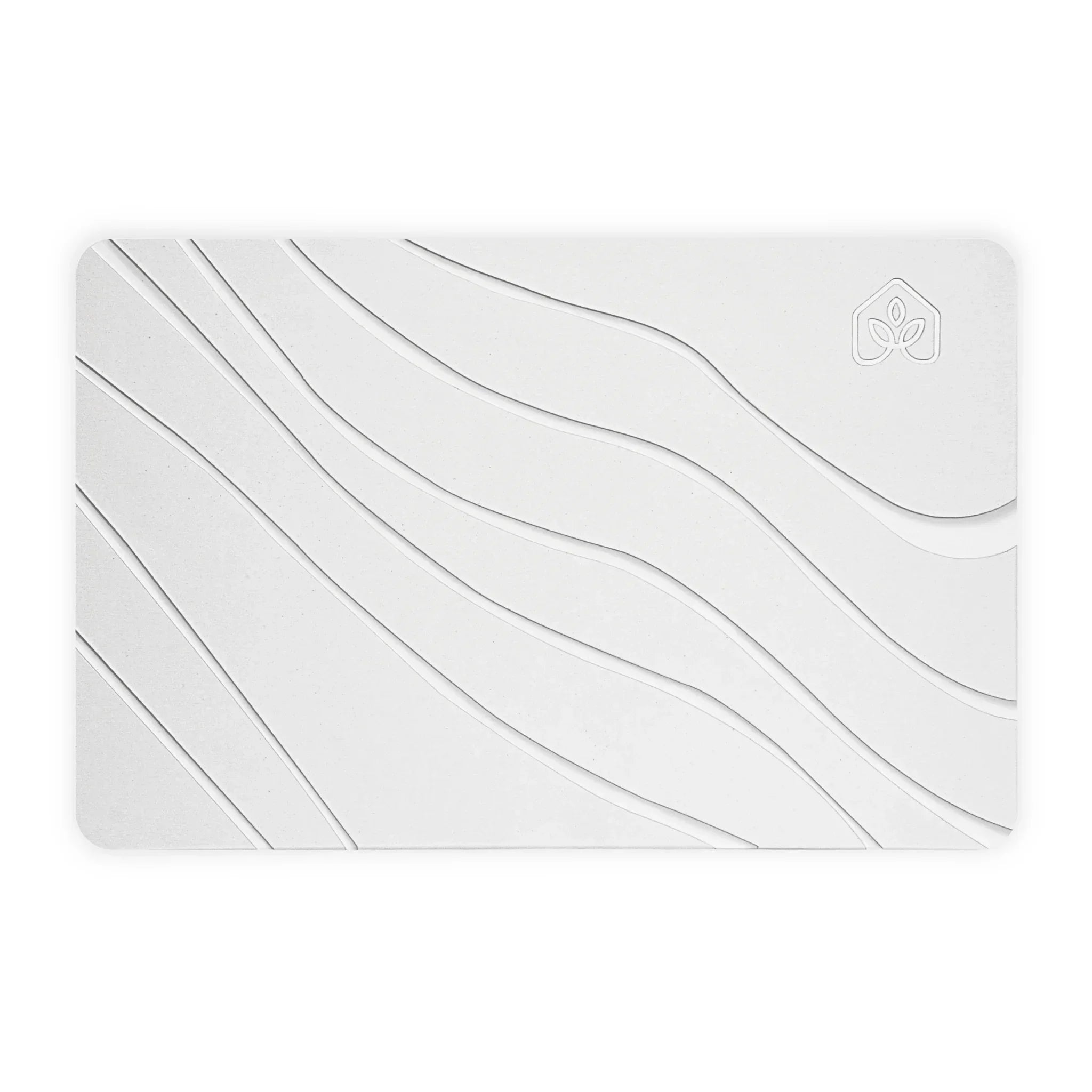
Natureva's dish mats are made from a composite of diatomite and recycled paper, pressed into a solid but breathable slab. You can read more about how the material is sourced and processed in our complete guide to diatomite.
Drying Stone vs Fabric and Silicone Mats
Fabric dish mats stay damp for hours after you finish washing up, sometimes longer if your kitchen doesn't get much airflow. That long wet window is exactly the kind of environment where odour and mildew get a foothold, which means more frequent washing just to keep things smelling normal.
Silicone and rubber mats have a different problem. Water runs off the top fine, but it pools and gets trapped underneath the mat itself, against the counter, out of sight.
| Material | Dry Time | Maintenance |
|---|---|---|
| Fabric mat | Hours | Weekly wash |
| Silicone/rubber mat | Traps moisture | Frequent wipe-down |
| Drying stone | Minutes | Weekly wipe |
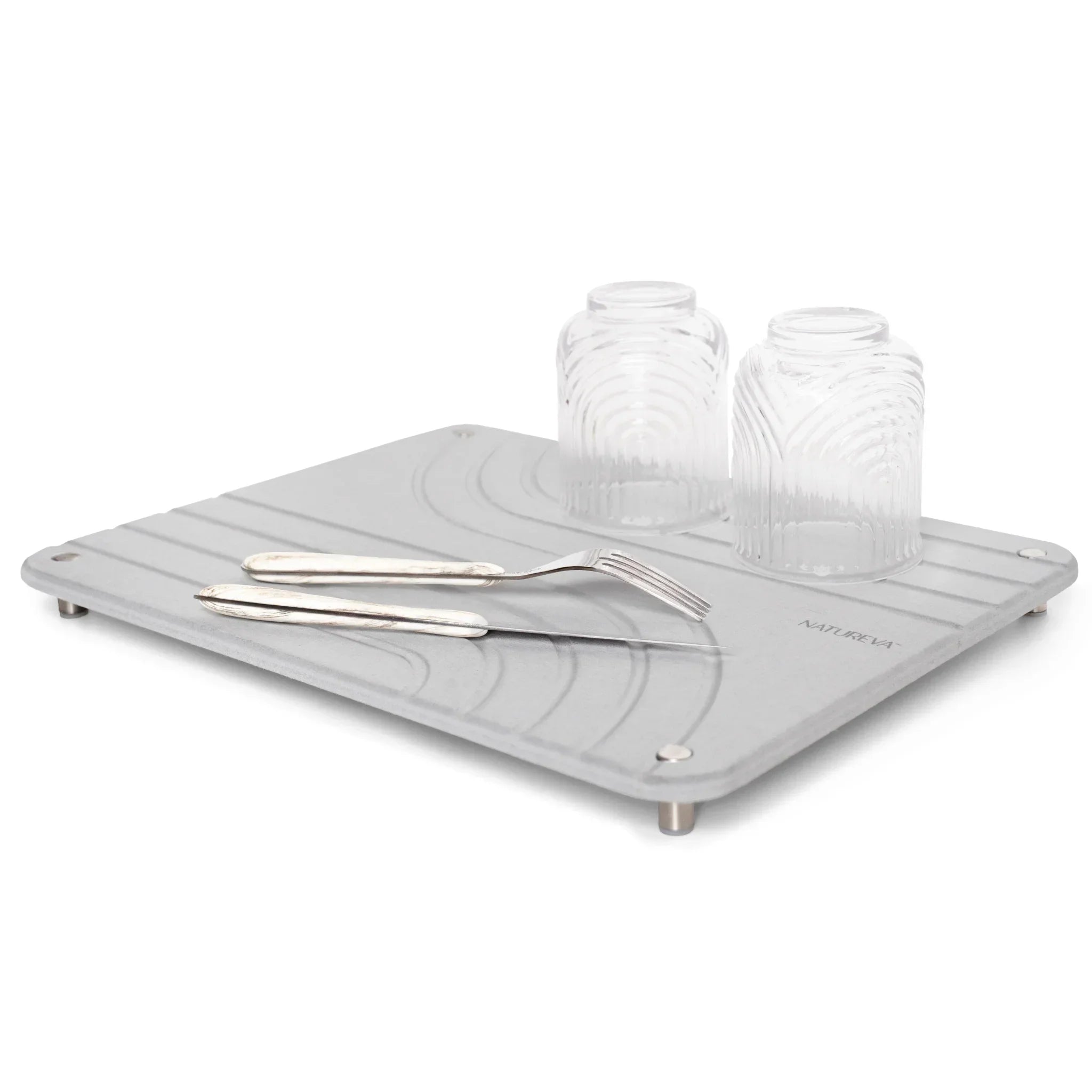
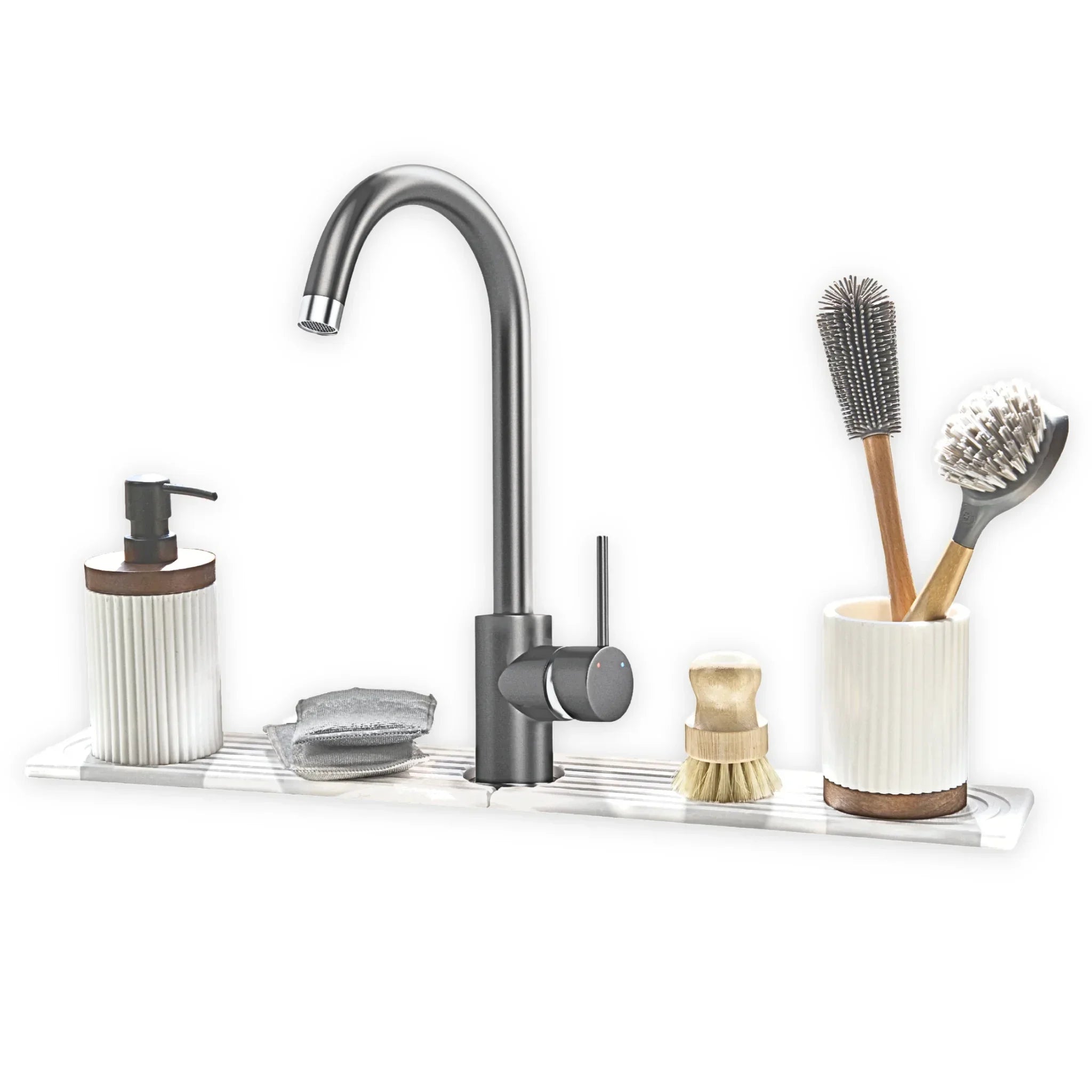
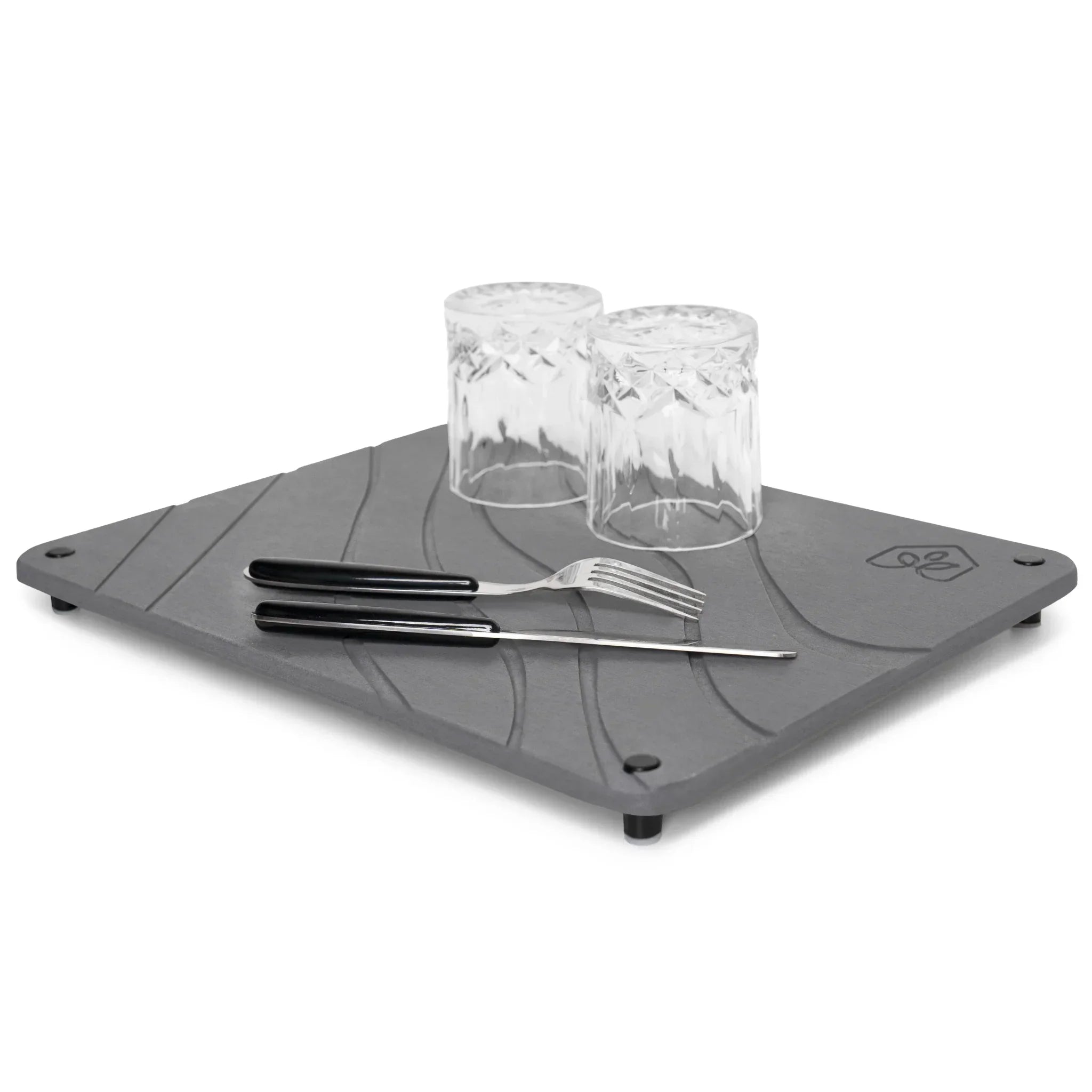
A drying stone kitchen mat dries within minutes, which cuts out the damp window where mould and odour usually start. Natureva's stone dish mats also sit on elevated stainless steel legs, so air moves underneath the mat too, not just across the top. You can see how that plays out in the Stone Dish Mat Tide or the Stone Dish Mat Flow, both built the same way.
Using and Caring for a Stone Dish Mat
The best spot for a stone dish mat is right next to the sink, wherever dishes, bottles, and utensils usually end up dripping while they air dry. That placement gets the most use out of the surface without you having to think about it.
Keeping it working well doesn't take much effort, but a few habits matter more than others.
- Wipe weekly with a warm damp cloth and cleaning vinegar
- Skip coloured or dyed soaps, they can stain the porous surface
- Rinse stains under running water when they happen
- Use the included P320 grit sanding tool if the surface stops absorbing well
That sanding tool matters more than people expect. Over time, pores on the surface can clog with residue, and a quick pass with the disc reopens them so the stone goes back to absorbing at full strength. It's a small step, but skipping it is the main reason people think their mat has "stopped working" when really it just needs a light refresh.
Wrap-up
Diatomite pulls water in and lets it go back into the air faster than fabric or silicone ever could, which is really the whole story here. That speed means less scrubbing, fewer soggy mats sitting by your sink, and a kitchen that stays cleaner without you having to think about it much.
If you want to see this in action, our Stone Dish Mats bring that same drying stone into a kitchen setup that actually looks like it belongs there, not some bulky plastic tray. Curious how the material itself works? Check out our full breakdown on diatomite before your next kitchen refresh.
What is drying stone actually made from
Drying stone is made from diatomite, a mineral that comes from fossilised algae called diatoms. It's packed with tiny pores that soak up water fast. Natureva's version blends diatomite with recycled paper, pressed into a solid slab with no synthetic coatings or added chemicals.
The next generation of home essentials: naturally made, cleaner by design, sustainable by nature.
SHOP ALLHow long does drying stone take to dry
Most drying stone kitchen mats dry within minutes since the pores release moisture back into the air right away. An independent review from Homes To Love clocked the Natureva Stone Bath Mat drying fully in under 8 minutes, which gives you a real benchmark for kitchen use too.
How do you restore a stone's absorbency
Over time, surface pores can clog with soap residue or oils, which slows drying. A quick pass with a P320 grit sanding disc reopens those pores and brings absorbency back. Natureva includes this sanding tool with every stone product, so restoring it takes a couple minutes, not a replacement.
The next generation of home essentials: naturally made, cleaner by design, sustainable by nature.
SHOP ALL