
Stone Foot Mat Guide for Safer, Faster-Drying Bathrooms
A wet fabric bath mat can hold onto moisture for hours after your morning shower, turning it into a damp little breeding ground for mould and bad smells. A stone foot mat works differently. Made from diatomite, a fossilised algae mineral packed with microscopic pores, it soaks up water on contact and dries within minutes, so your bathroom floor stays safer and cleaner without the constant washing fabric mats demand.
What makes a stone foot mat dry so fast?
Stone foot mats are made from diatomite, a porous sedimentary rock composed of fossilized diatoms with microscopic capillary channels that absorb water on contact and pull it below the surface. This allows the mat to dry completely within 30 to 60 seconds after use, compared to several hours for cotton or fabric mats.
Are stone foot mats safer than fabric or rubber bath mats?
Stone foot mats are safer than fabric or rubber mats because their rapid-drying surface prevents the standing water and moisture buildup that leads to mold, mildew, and bacterial growth. Their textured, non-slip surface also stays dry underfoot, reducing slip-and-fall risk in a way that damp fabric mats cannot match.
Is a stone foot mat worth switching to from a traditional bath mat?
Yes, a stone foot mat is worth switching to for most bathrooms because it eliminates recurring mold and odor issues, requires no washing or drying, and lasts for years with minimal maintenance. The main tradeoffs are a firmer feel underfoot and a higher upfront cost than a fabric mat.
Table of Contents
- Fabric Mats vs Stone Mats at a Glance
- The Science Behind Diatomite and Instant Drying
- Why Stone Foot Mats Are Safer Than Fabric or Rubber
- How to Choose the Right Stone Foot Mat for Your Bathroom
- Caring for a Stone Foot Mat to Keep It Performing
- Is a Stone Foot Mat Worth Switching To
- Wrap-up
- Stone Foot Mat Questions Answered
Fabric Mats vs Stone Mats at a Glance
Most bathroom mats sitting on floors right now are still wet underneath, even hours after someone's last shower. That's just how fabric, rubber, and silicone work. They soak up water on the surface but trap it underneath, which means the mat stays damp way longer than anyone realizes. A stone foot mat works on a totally different idea, pulling water in and letting it evaporate out fast, instead of just holding onto it. Before we get into how stone mats solve the damp floor problem, it helps to see exactly how the materials stack up side by side.
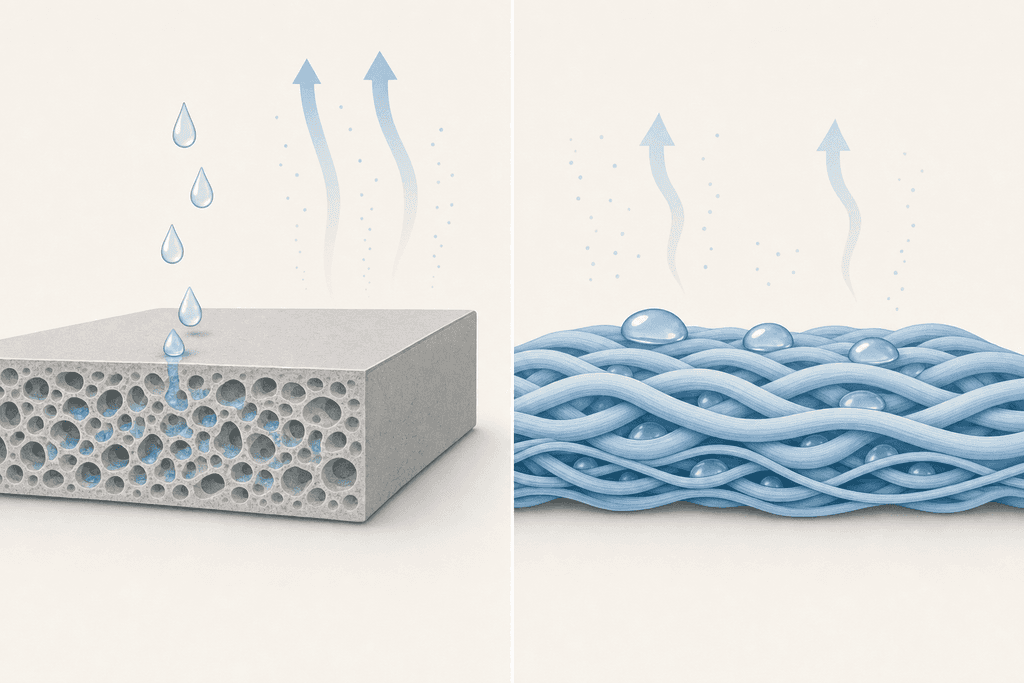
Here's a simple breakdown of drying time, slip risk, and how often each type needs cleaning to stay hygienic.
| Mat Type | Drying Time | Slip Risk | Cleaning Frequency |
|---|---|---|---|
| Fabric | Several hours | High when wet | Weekly wash needed |
| Rubber | 1-2 hours | Moderate, can slide | Weekly wipe down |
| Silicone | 1-2 hours | Moderate, curls at edges | Weekly wipe down |
| Stone | Under 8 minutes | Low, stays flat | Weekly wipe, low effort |
The numbers above line up with independent testing too. Homes To Love put a stone bath mat through real testing and found it dried fully in under 8 minutes, which is a pretty big gap compared to fabric.
A few things explain why fabric mats fall behind so often:
- Loose fibers hold water instead of releasing it
- Bunching and curling happens once fibers get wet
- Mold and mildew form fast in damp fabric left on tile
- Machine washing is required often to stay hygienic
Rubber and silicone mats do better in some ways, but they carry their own issues:
- Surface water sits on top instead of soaking in
- Edges can lift or curl over time
- Moisture gets trapped underneath, away from air
- Some cheaper versions crack or discolor with regular use
If you want a deeper look at how absorbent stone actually is compared to other materials, this breakdown on stone bath mat absorbency covers some of the science in more detail.
The Science Behind Diatomite and Instant Drying
Diatomite comes from fossilised algae called diatoms that lived millions of years ago. When these tiny organisms died, their skeletons piled up and turned into a soft, chalky rock full of tiny holes. Millions of microscopic pores run through every piece of diatomite, and those pores are the whole reason a stone foot mat works the way it does. Water hits the surface and gets pulled in almost right away, instead of sitting on top like it does with a towel or bath mat. Once it's inside, the water doesn't just stay there. It moves back out through evaporation, fast.
This is what people mean when they say a product is hygienic by design. There's no spray, no coating, no chemical doing the work. It's just the structure of the stone pulling moisture in and pushing it back out into the air. Natureva's mats are made from a composite of diatomite and recycled paper, pressed into a solid slab that stays chemical-free the whole time.
Independent testing backs this up. Homes To Love in Australia tested a Natureva stone bath mat and found it dried fully in under 8 minutes. That's a wet mat turning bone dry before most people even finish their morning routine. For more on the material itself, this complete guide to diatomite breaks down how the stone forms and why it behaves the way it does.
Why Stone Foot Mats Are Safer Than Fabric or Rubber
Fabric bath mats are one of the more overlooked fall risks in a bathroom. They bunch up, slide across tile, and curl at the edges once they get wet, which is exactly when someone's stepping out of the shower with soap still in their eyes. A stone foot mat doesn't move like that. It's a solid slab with a non-slip base pad underneath, so it stays flat no matter how wet it gets. This matters a lot for households with young kids or older adults, where one bad step on a slippery mat can turn into a real injury.
Rubber and silicone mats have their own problem. They're often marketed as water-resistant, but water resistant just means the water sits underneath instead of soaking through. That trapped moisture creates the exact damp conditions where mildew develops. Stone mats work the opposite way, they stay clean through rapid moisture evaporation, not by trapping water where you can't see it.
Here's a quick side by side:
- Fabric mats: absorb water slowly, stay damp for hours, can bunch and slide
- Rubber or silicone mats: water pools underneath, mildew risk goes up
- Stone foot mats: dry within minutes, stay flat and stable, no trapped moisture
Consumer Reports has tested several stone bath mats and found similar drying advantages across the category, which lines up with what we see in our own testing. You can read more in their stone bath mat review if you want a third-party comparison.
How to Choose the Right Stone Foot Mat for Your Bathroom
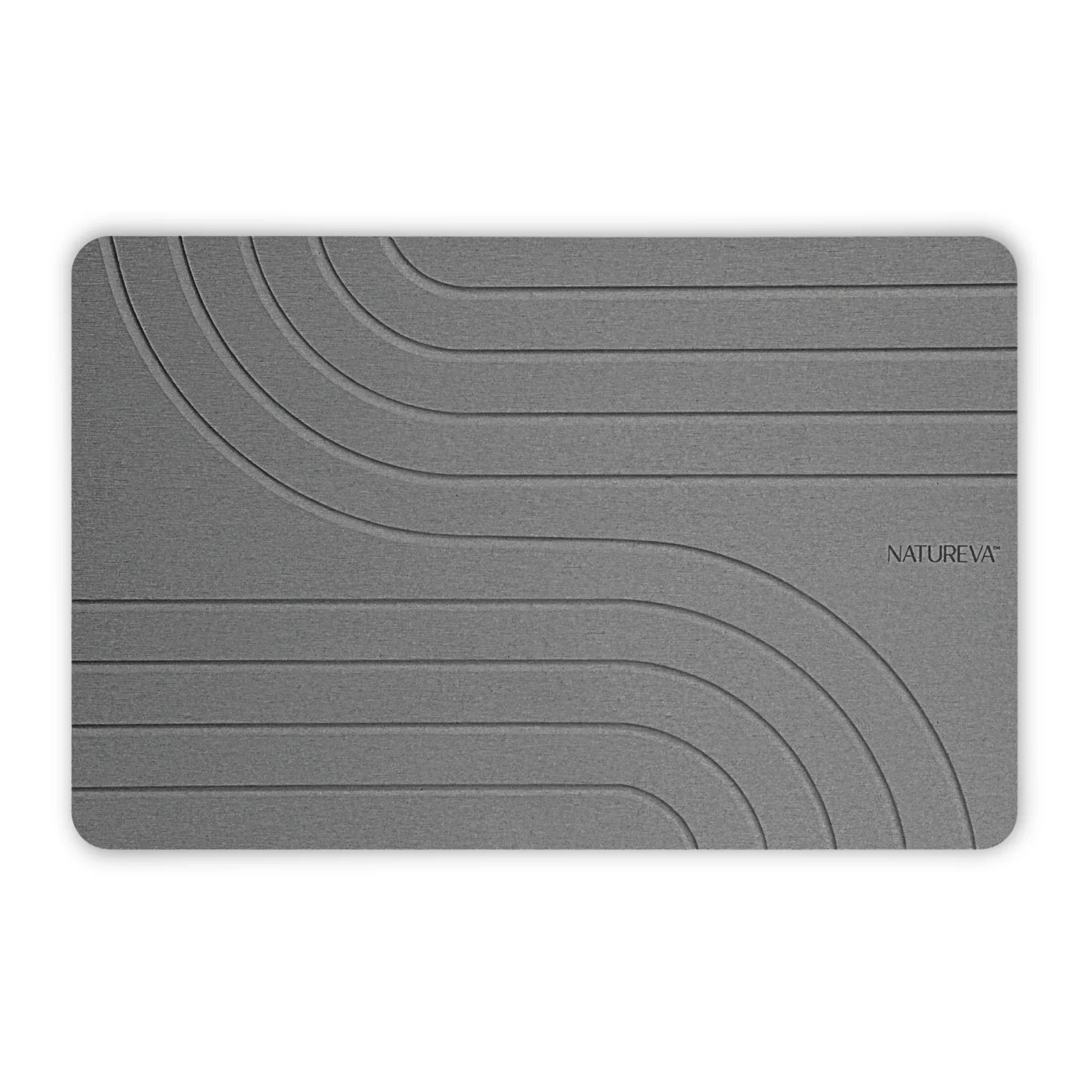
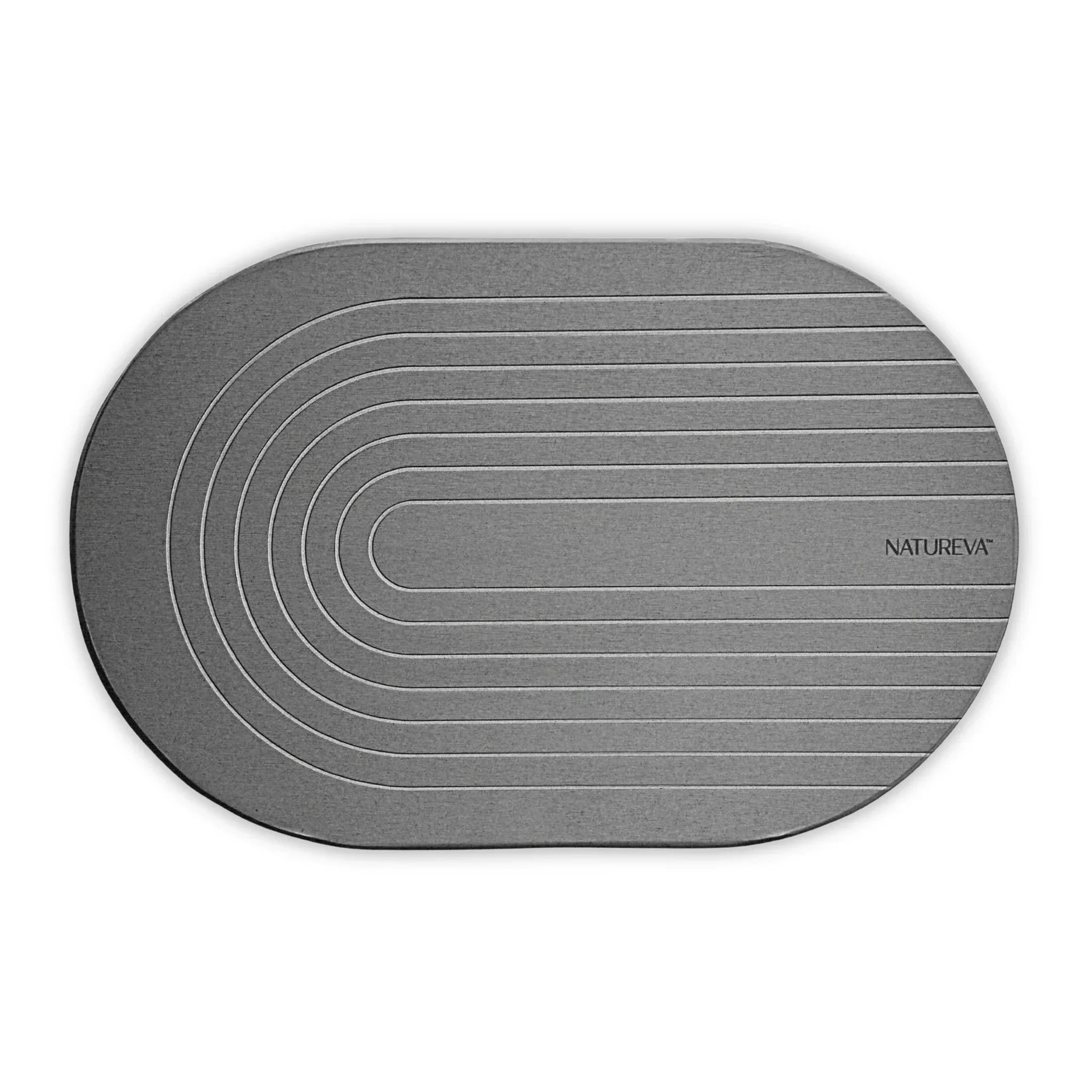
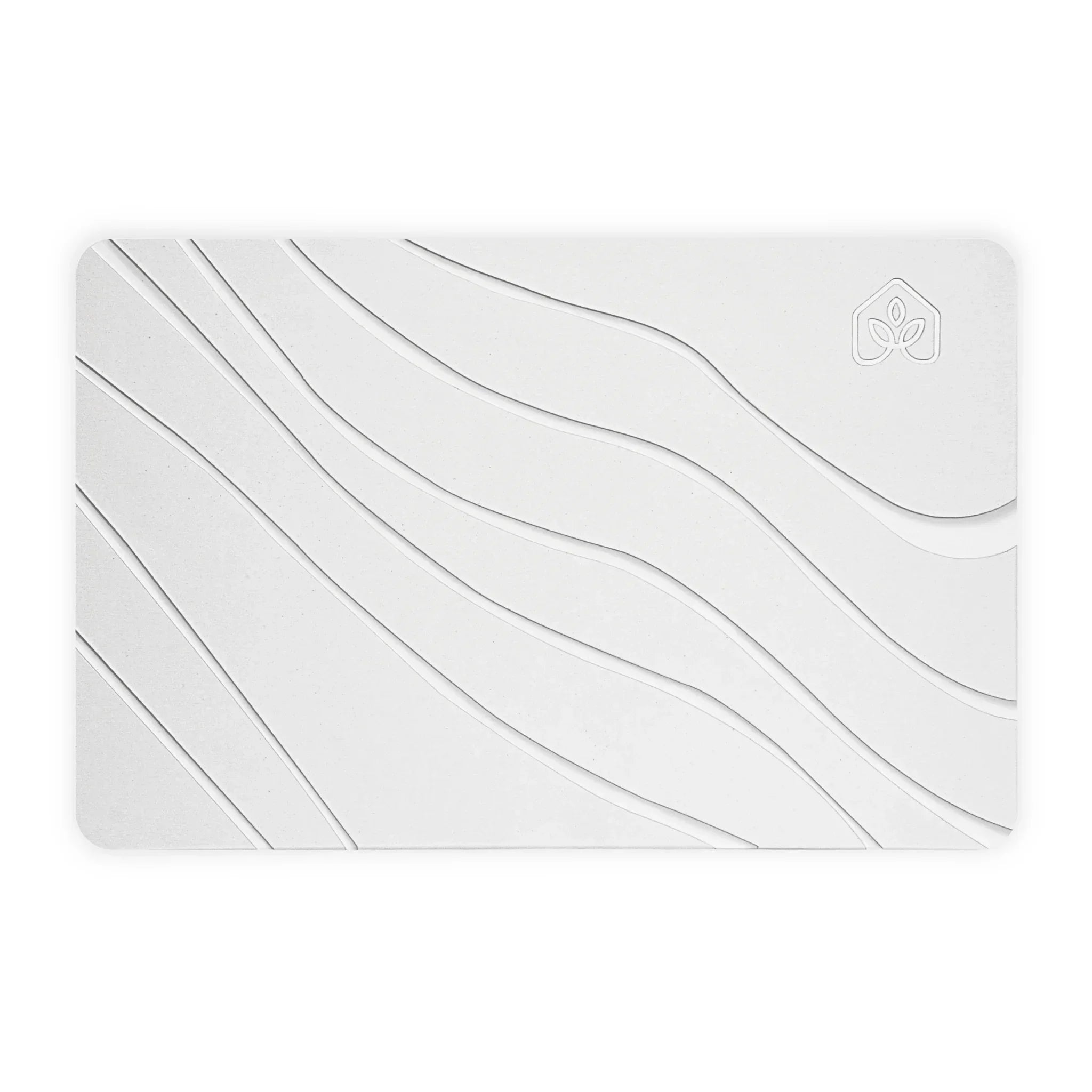
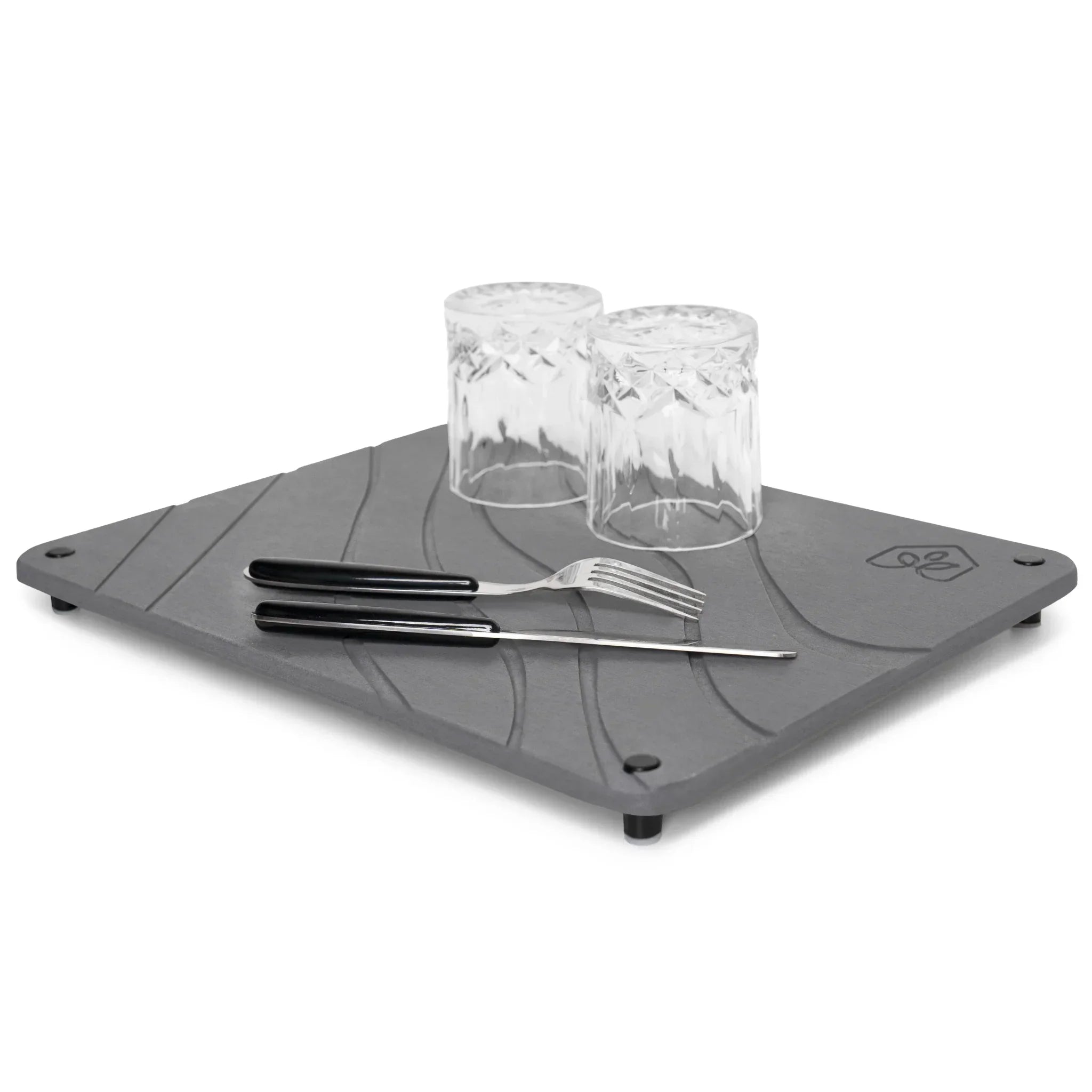
Not every bathroom has the same footprint, so the shape of your mat actually matters more than people think. A long narrow bathroom usually works better with a rectangular mat, while a mat placed near a freestanding tub might look better as an oval. Natureva makes both, the Arch is the oval option, and Tide, Flow, and Rain are all rectangular with different engraved patterns.
Colour is the next thing to think about. Graphite leans dark and modern, Slate is a soft grey that blends into most colour schemes, and Chalk reads close to white for a brighter bathroom. The engraved patterns add a bit of texture without turning the mat into a decoration piece, which keeps it in line with a minimalist or Japandi style bathroom.
A short checklist before you buy:
- Measure the floor space next to your shower, tub, or vanity
- Pick rectangular for tight spaces, oval for open floor areas
- Match the colour to your tile, vanity, or towel set
- Place it where feet land first, right at the shower exit or tub edge
If you want a deeper breakdown of what to check before buying, this post on five diatomite bath mat features to check before buying covers it well. You can also browse the full diatomite bath mat collection to compare shapes and colours side by side.
Caring for a Stone Foot Mat to Keep It Performing
A stone foot mat doesn't need much upkeep, but it does need the right kind of upkeep. Once a week, wipe it down with a warm damp cloth and a bit of cleaning vinegar. That's usually enough to keep the surface looking fresh and to stop any buildup from settling into the pores. Coloured soaps are worth skipping since they can stain the porous surface over time, and that stain is a lot harder to get out than it is to avoid in the first place.
Over months of use, the pores on the surface can start to clog with soap residue or skin oils, which slows down how fast the mat absorbs water. When that happens, the included P320 grit sanding tool is there to help. A light pass over the surface reopens the pores and brings the absorbency back close to new.
The next generation of home essentials: naturally made, cleaner by design, sustainable by nature.
SHOP ALLIf the mat ever gets fully saturated, just stand it upright somewhere with airflow to dry out completely.
Quick maintenance rundown:
- Wipe weekly with warm water and cleaning vinegar
- Skip coloured soaps near the mat
- Sand lightly with the included tool if drying slows down
- Stand upright to air dry if fully soaked
Is a Stone Foot Mat Worth Switching To
A fabric bath mat can take anywhere from 4 to 12 hours to dry fully, depending on humidity and fabric thickness. A stone foot mat cuts that down to minutes, not hours. That gap alone changes how a bathroom feels day to day. But the switch isn't automatic for everyone, and it helps to look at who actually gets the most out of it before deciding.
Some households will notice the difference more than others. Families with young kids or older adults living in the home tend to benefit the most, mainly because of how the mat behaves underfoot when wet.
- Fabric mats can slide, bunch, or curl at the edges on wet tile
- Stone mats sit flat and stable with a non-slip base pad
- Reduced fall risk matters more for older adults and small children
- A dry surface within minutes means less time standing on a damp mat
Time is another factor worth weighing. Fabric mats need regular washing to stay fresh, and that adds up over a year. A stone foot mat skips that cycle almost entirely, since it stays clean through rapid moisture evaporation instead of trapping dampness in fibres.
- No weekly washing or drying cycles
- No replacing worn-out or mildewed mats every few months
- Less laundry means less time spent on bathroom upkeep
Cost is the part people hesitate on. A stone foot mat costs more upfront than a fabric one, but fabric mats wear out and get replaced repeatedly, while a stone mat is built to last with basic care and occasional sanding to restore absorbency, as covered in this independent look at stone bath mat performance.
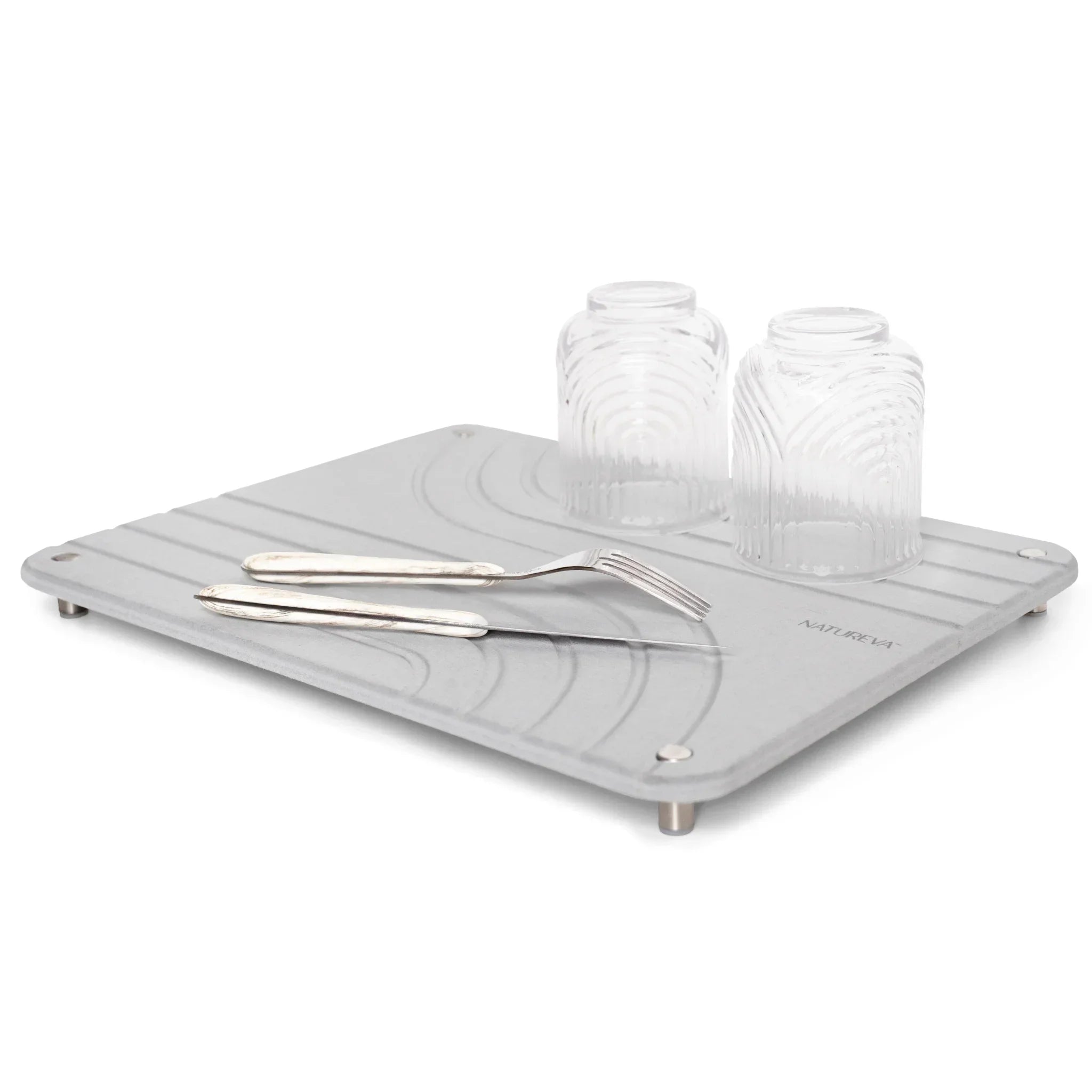
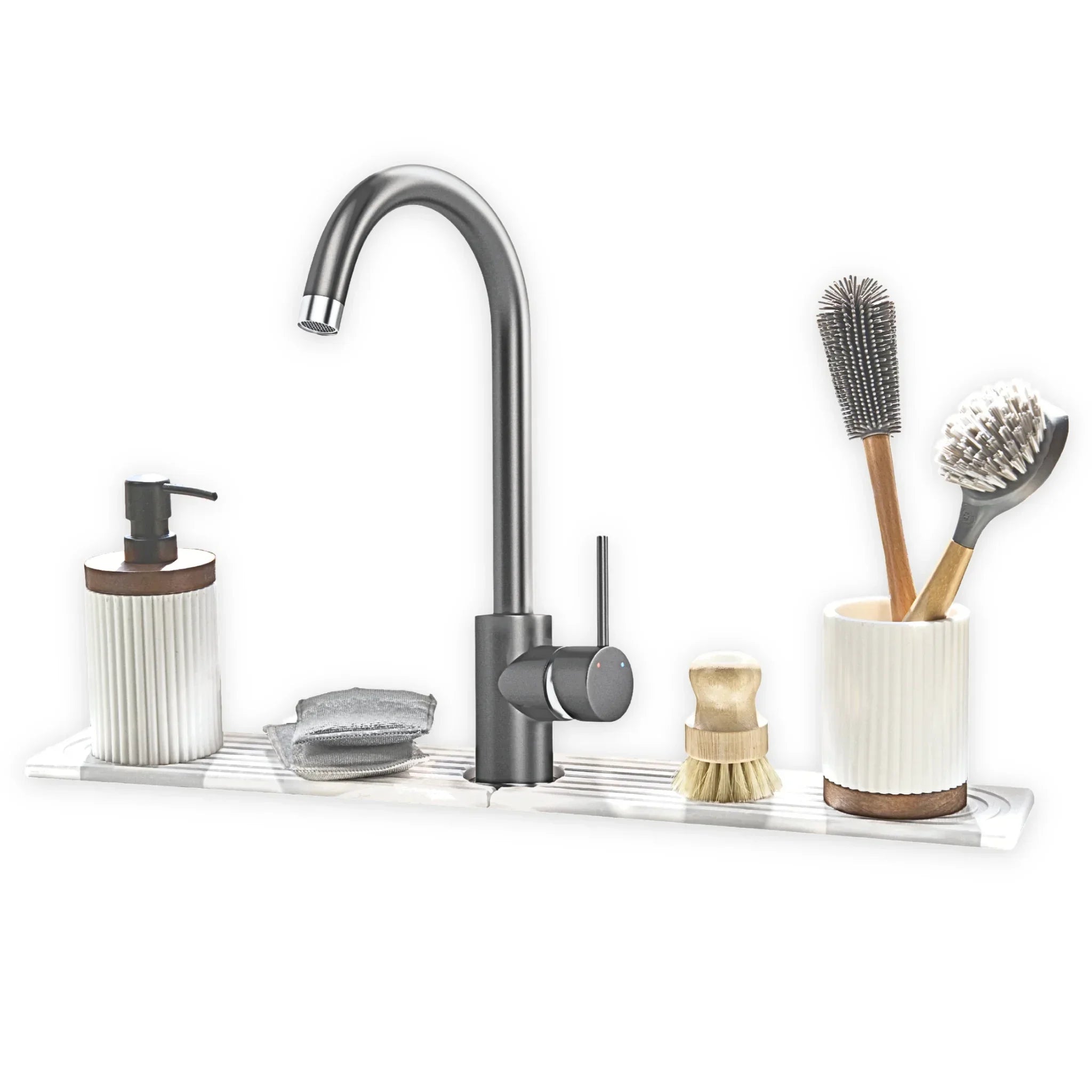
There's also the design angle. Matching a stone foot mat with a sink caddy or dish mat in the same colourway gives bathrooms and kitchens a coordinated look, something fabric mats rarely offer since they're picked one at a time without much thought to the rest of the room.
Wrap-up
Bathroom floors don't have to stay wet for twenty minutes after a shower. That's really the whole point of a stone foot mat. Diatomite pulls water into its pores the second your feet touch down, then lets it evaporate back out, so the mat is dry again in minutes instead of sitting damp on your floor all day.
Here's what actually matters when you're comparing stone to a regular fabric mat:
- Stays flat and stable, so it won't bunch up or slide under wet feet like fabric does
- Dries fast enough that mould and mildew don't get the damp conditions they need to grow
- Needs almost no upkeep, just a weekly wipe with warm water and vinegar
- Comes in matching designs across the bathroom collection, so your mat, faucet mat, and even kitchen dish mat can all look like they belong together
If you're still deciding which pattern or shape fits your space, our guide on what to check before buying a diatomite mat breaks down the small details that make a big difference. And if you want the full science on why this material works the way it does, the complete guide to diatomite covers that in plain terms.
Fabric mats have had their turn for decades. Whether stone earns a spot in your bathroom next probably comes down to how tired you are of stepping onto something damp every morning.
Stone Foot Mat Questions Answered
A stone foot mat looks pretty simple from the outside, but there's a lot of stuff people want to know before they actually buy one. Here's the short version of what we get asked most.
How long does a stone foot mat take to dry
Most diatomite mats absorb water the second your feet touch them, then release the moisture back into the air within minutes. Independent testing on the Natureva Stone Bath Mat clocked full drying at under 8 minutes. That's a lot faster than any towel-based mat sitting on your floor.
Are stone foot mats safe and asbestos free
This is the question people should be asking more, honestly. Diatomite is a natural mineral, but not every product made from it gets tested properly, and some cheaper imports have run into asbestos contamination issues in the past.
Natureva mats are tested and certified asbestos-free by a NATA-accredited Australian lab, and that testing happens on a regular basis, not just once. It's stated as a fact, not a marketing line, because in this category it actually matters.
How do you clean and restore a stone mat
Cleaning is low effort. A weekly wipe with a warm damp cloth and some cleaning vinegar keeps things fresh. Skip coloured soaps since they can leave residue in the pores.
- Rinse light stains under water
- Use hydrogen peroxide for tougher marks
- Use the included sanding tool if the surface stops absorbing well
That sanding disc is P320 grit, about 10cm across, and its whole job is reopening the tiny pores that soak up water. A few passes and the mat works like new again.
Can stone mats be used outside the bathroom
Yes, and a lot of people do. Stone mats work well by kitchen sinks, laundry doors, entryways, and even under pet water bowls. Anywhere water tends to pool or drip is a good spot for one.
Do stone mats work better than fabric or rubber mats
Fabric mats hold onto moisture, which is exactly the damp environment where mildew likes to grow. Rubber and silicone mats trap water underneath instead of letting it evaporate. A stone mat's whole design is built around getting rid of that moisture fast, so there's no soggy mat sitting around all day.
Will a stone mat crack or wear out quickly
Stone mats are dense and solid underfoot, not brittle. With basic care, like avoiding drops onto hard tile edges, they hold up well over years of daily use, which is longer than most fabric mats ever last before they start smelling musty.
The next generation of home essentials: naturally made, cleaner by design, sustainable by nature.
SHOP ALL