
Best Dish Drying Mat Materials Compared
The best dish drying mat is a stone one, because a damp cotton towel can stay wet for six hours or more, giving bacteria a warm, moist place to grow the entire time. A stone mat made from diatomaceous earth pulls that same puddle in and dries within minutes, since its surface is covered in pores small enough to pull water in by capillary action. Material is the single biggest factor in how a mat performs. It decides how fast water disappears, how many years the mat lasts before it cracks or peels, and whether it looks clean or grimy sitting next to your sink.
Cotton, silicone, microfiber, and stone all dry dishes, but they are not close to equal. Cotton and microfiber hold moisture inside their fibers, which is why they need a daily wash or a trip through the dryer. Silicone sheds water on the surface but traps it underneath in ridges and grooves, so mold can build up where you cannot see it. Stone mats skip that problem entirely, since the water evaporates instead of sitting in fabric or pooling under rubber. The rest of this comparison sorts picks by the material they are made from, so you can match the mat to how your sink actually gets used.
Table of Contents
What Actually Makes A Dish Mat Dry Fast
Four materials cover almost every dish mat sold today: stone, microfiber, wood, and silicone. Each one handles water differently, and that difference shows up the first week you own it, not just over time.
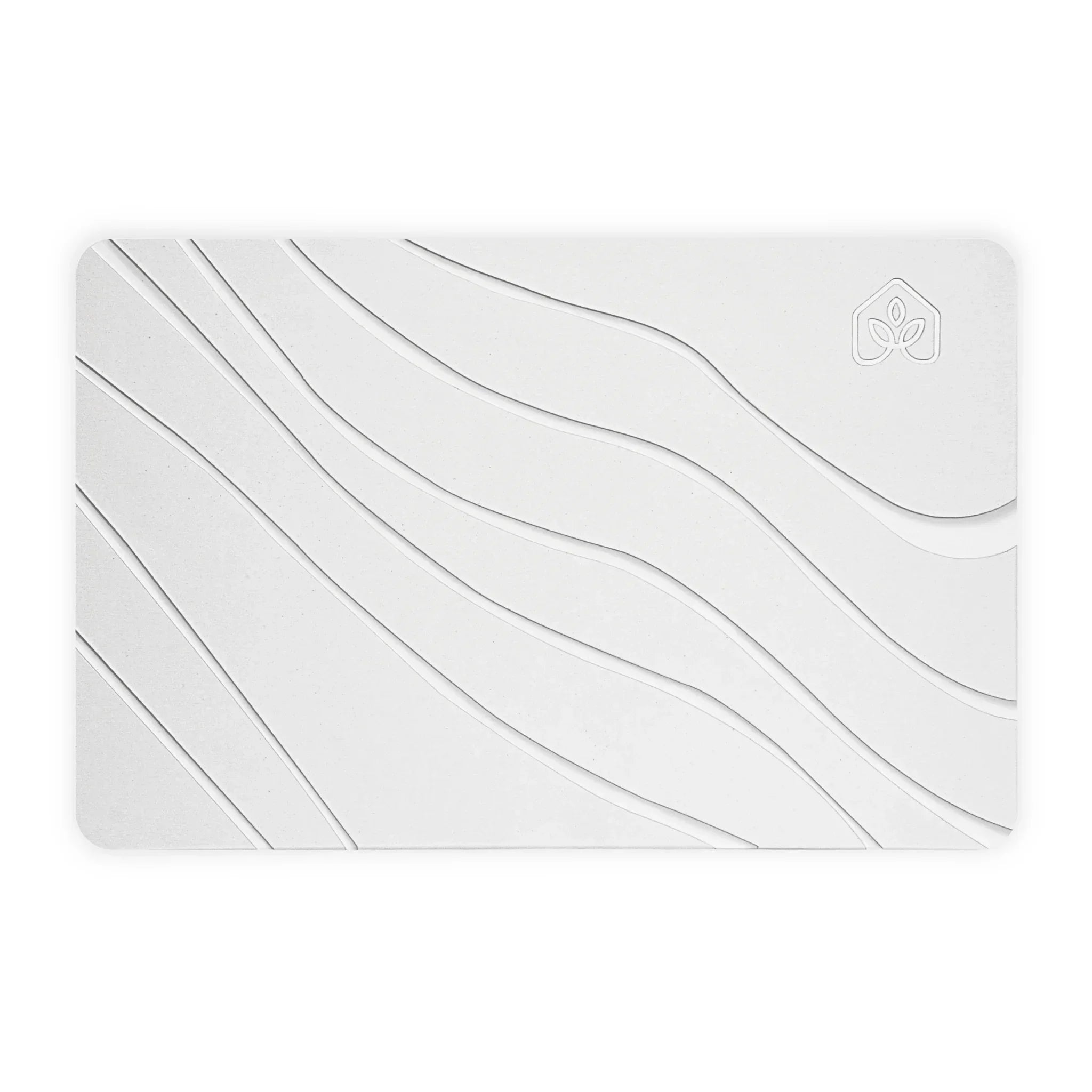
Stone Dish Mat - Tide
Drying speed is the number one factor, since a mat that stays wet defeats the point of buying one. Odor resistance matters almost as much, because any material that holds water long enough will start to smell musty within a few days. Counter space is the third factor most shoppers overlook, since a thick mat that never fully dries takes up room you can't use for anything else.
| Material | Typical Dry Time | Lifespan | Rough Price |
|---|---|---|---|
| Stone | Under 5 minutes | 3-5 years | $40-60 |
| Microfiber | 2-4 hours | 1-2 years | $10-20 |
| Wood | 1-2 hours | 2-4 years | $25-40 |
| Silicone | 30-60 minutes | 3-6 years | $15-30 |
Wood mats dry faster than microfiber but still need wiping down and occasional oiling to keep the surface from splitting. Silicone holds up for years and resists cracking, but it needs a rinse and full air dry on both sides since water collects underneath the ridges. The next few picks break down which option fits a small apartment sink versus a busy family kitchen.
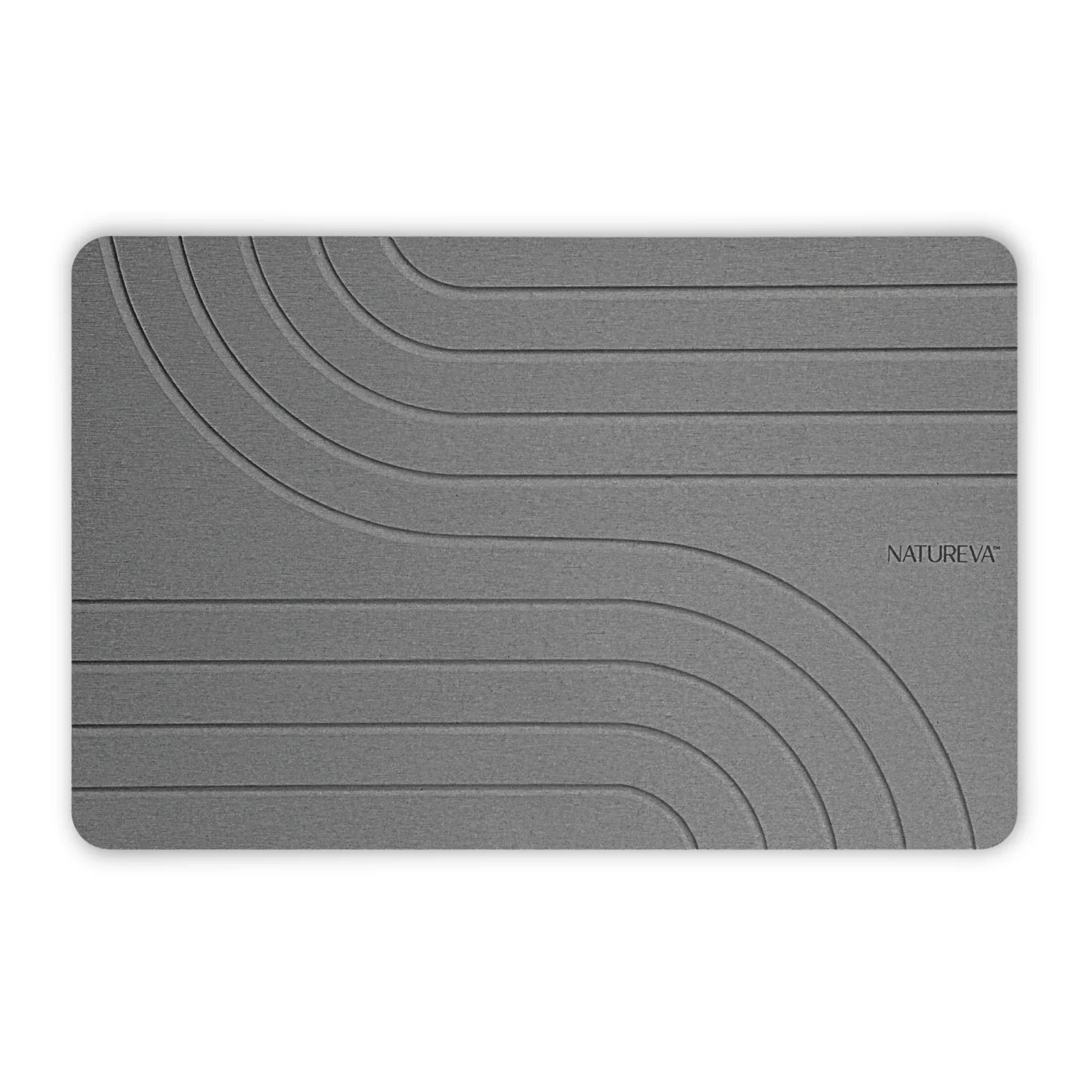
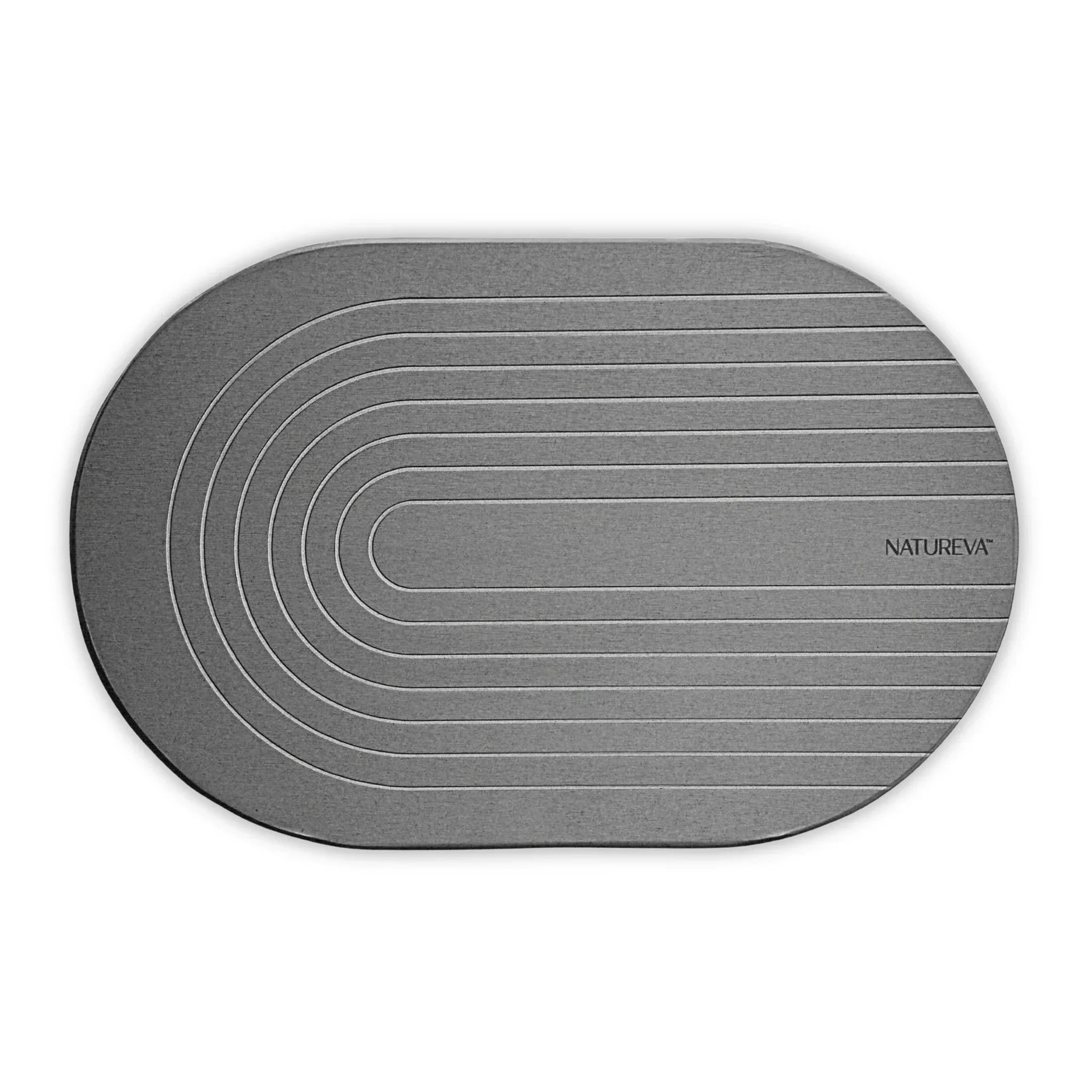
Best Dish Drying Mat Overall Natureva Tide
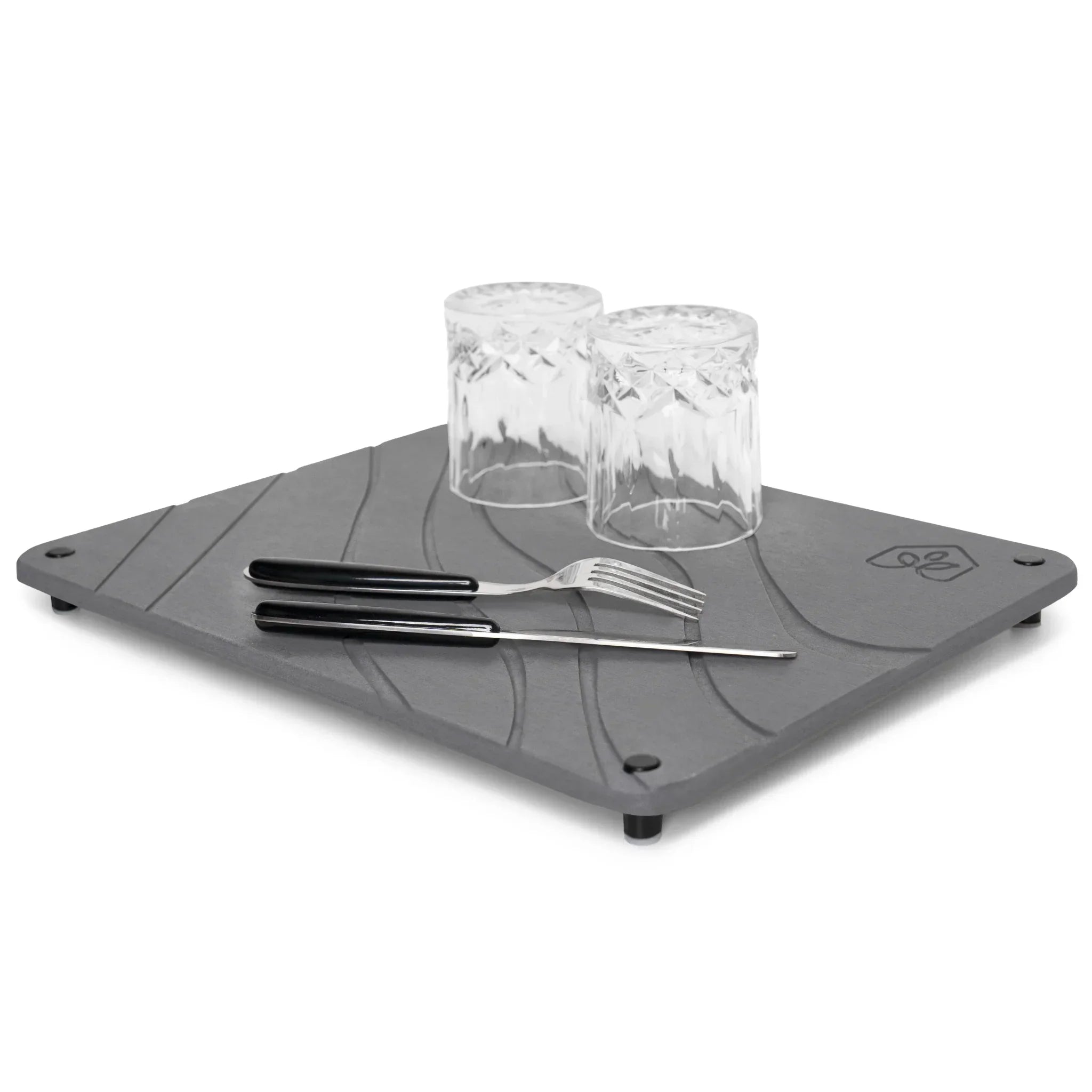
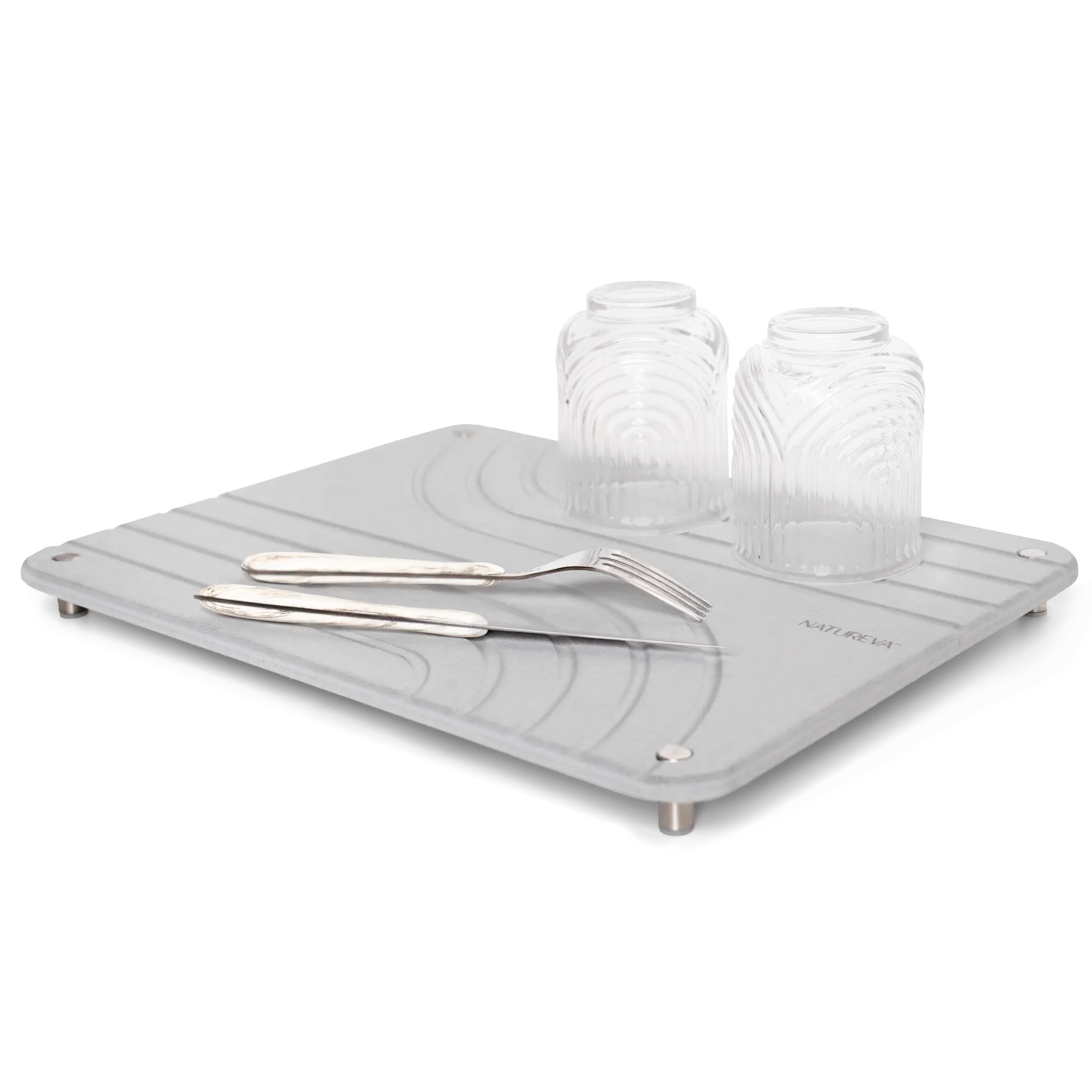
The Natureva Stone Dish Mat - Tide is the top pick for most kitchens because diatomite earth soaks up a wet dish load the second it lands, pulling water into the stone instead of leaving it to puddle on the counter. It sits at 49.00 USD and comes in a neutral tide-toned finish that matches granite, quartz, or laminate counters without clashing.
Before you buy one, weigh these points against how your sink actually gets used:
- Fast evaporation means no soggy towel smell building up overnight
- Mold resistance comes from the stone itself, not a coating that wears off over time
- Wipes clean with a damp cloth, no detergent needed
- Weighs more than a fabric mat, so lifting it to clean underneath takes two hands
- Can scratch glass or ceramic cookware if you set it down roughly
The upside outweighs the downside for daily use: fast drying, mold resistance, and easy wipe-down beat the extra weight and the need for a gentler hand with delicate glassware.
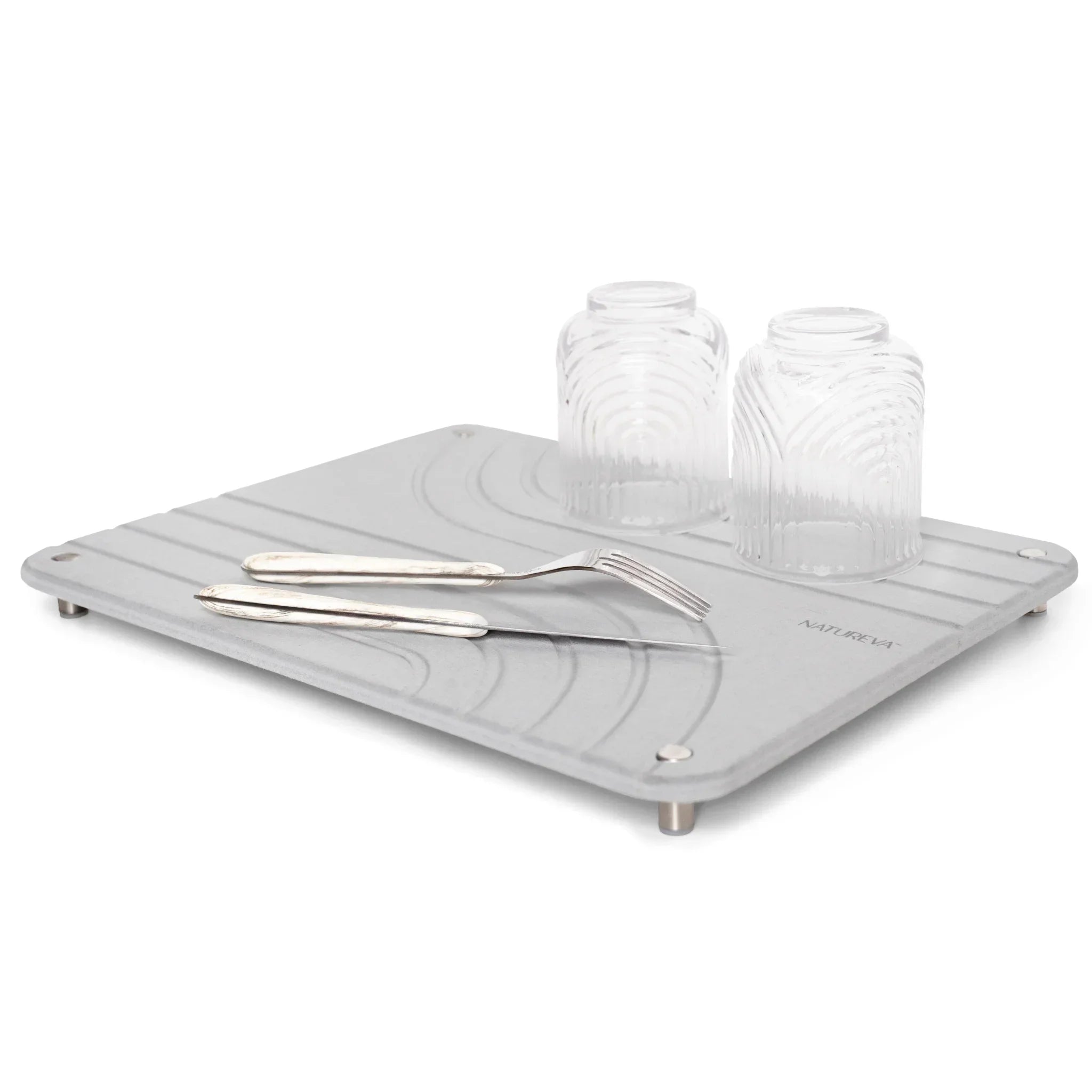
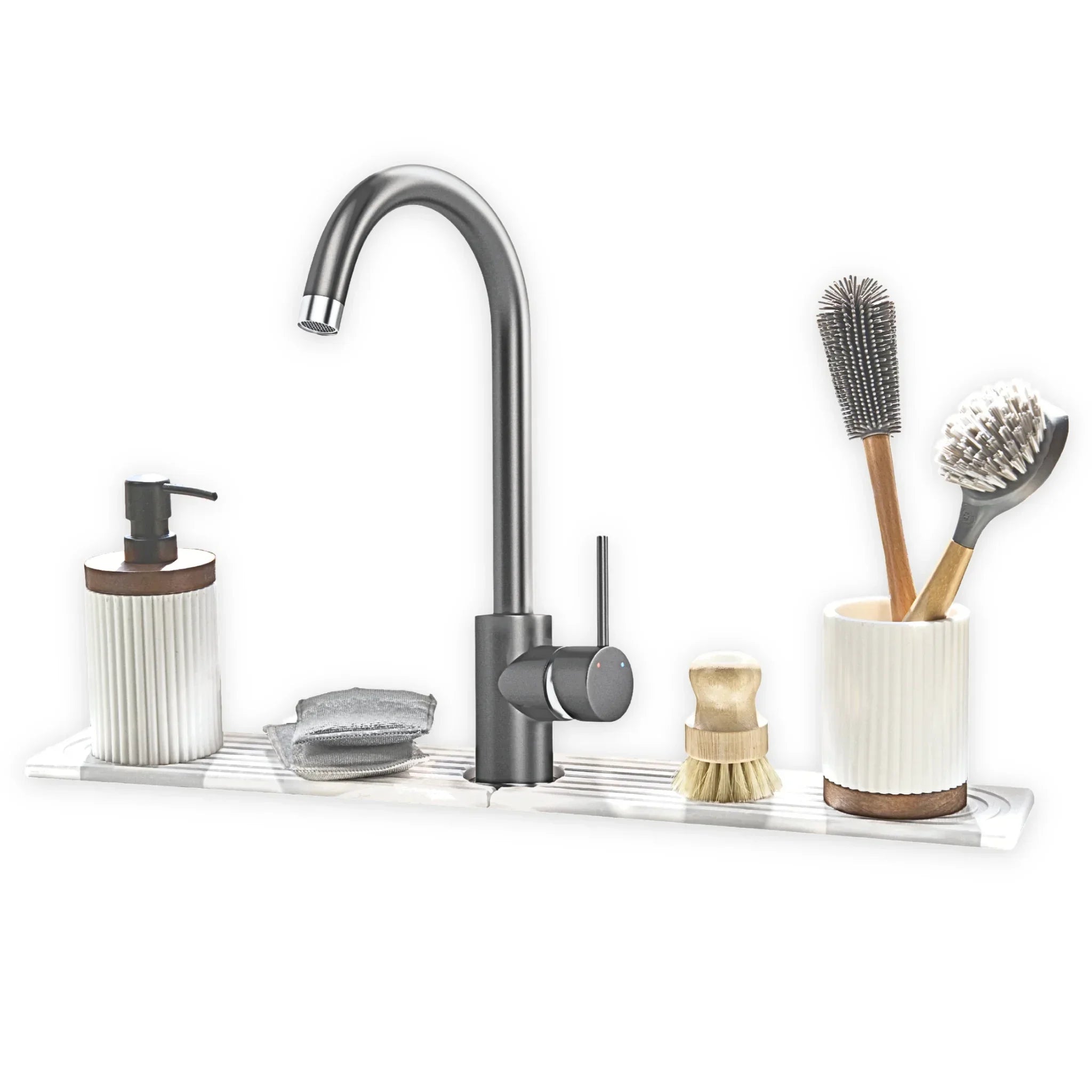
Best For Small Kitchens Natureva Flow
The Natureva Stone Dish Mat - Flow fits tight counters because it uses the same diatomite body as Tide but in a narrower shape built for single-basin sinks. It still runs 49.00 USD and tucks beside a faucet without eating up the only open stretch of counter in a small apartment kitchen.
Check these points before picking Flow over a full-size mat:
- Footprint is narrow enough to fit beside one basin instead of spanning a double sink
- Drying speed matches Tide since the stone and pore structure are identical
- Still rigid stone, so it needs a flat spot and can't bend around a corner
- Smaller surface holds fewer dishes at once, which matters for a full dinner-party load
Flow trades surface area for size, which is the right trade for anyone drying two coffee mugs and a cutting board rather than a full sink of pots. The compact shape is the main reason to pick it over Tide, not a difference in how fast it dries.
The next generation of home essentials: naturally made, cleaner by design, sustainable by nature.
SHOP ALLBest Budget Pick Microfiber Mats
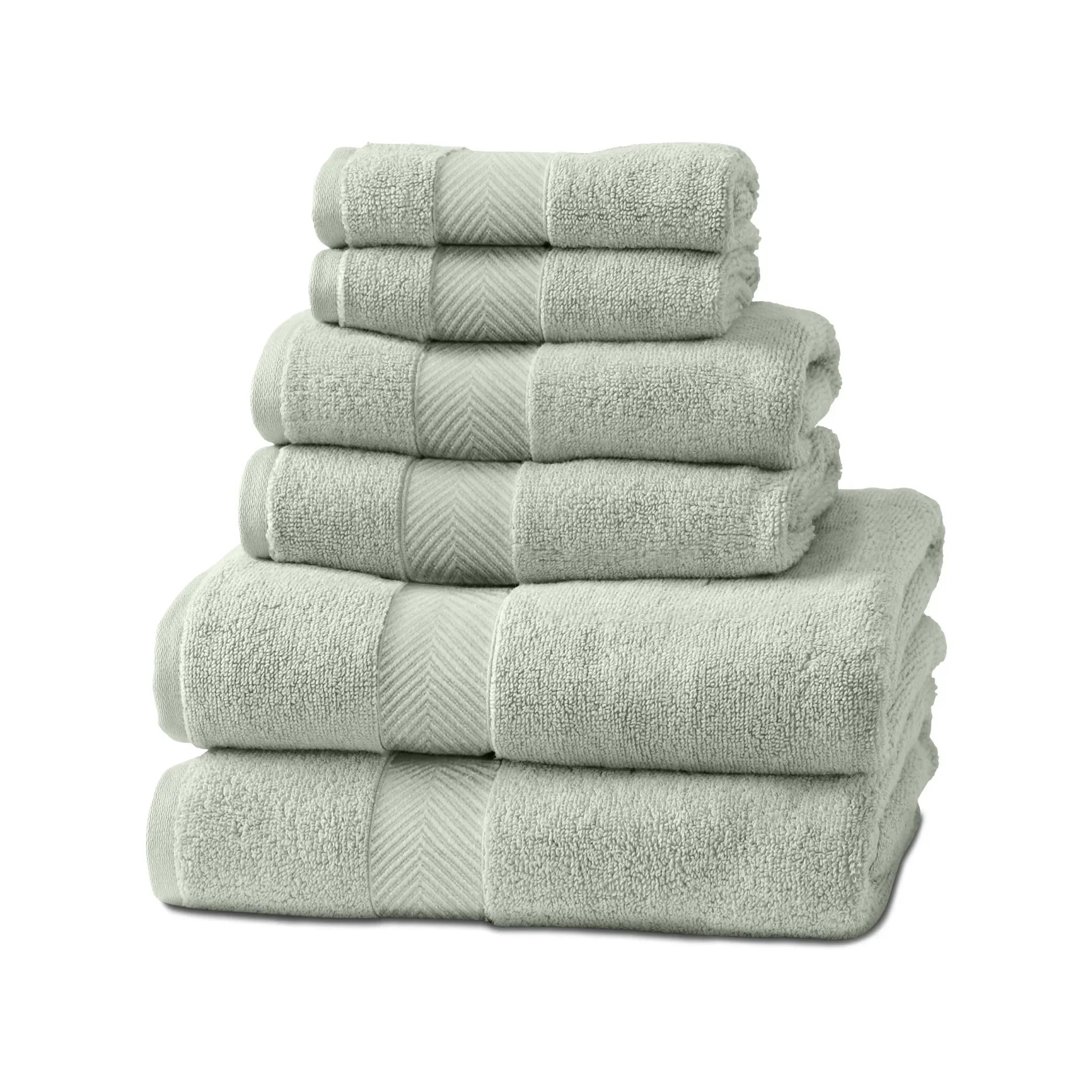
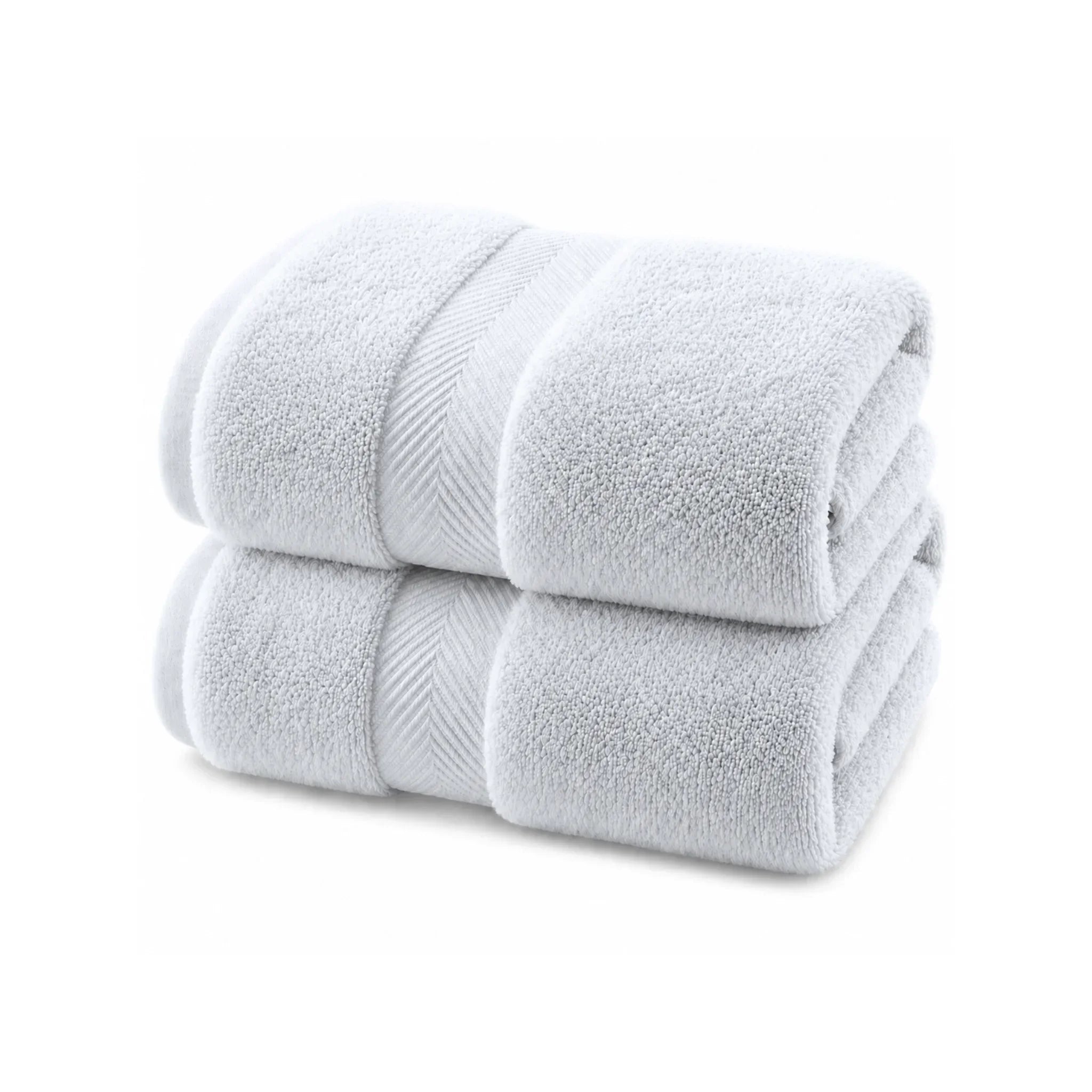
Microfiber mats cost the least of any dish mat material, usually 10 to 20 USD, and they go in the washing machine like a towel. They soak up a wet dish load fast at first, since the fibers are woven to grab water, but that same fabric holds the moisture inside instead of letting it evaporate.
That trapped moisture is the tradeoff a shopper is really paying for at this price:
- Stays damp for two to four hours after a dish load, depending on fabric thickness
- Needs a wash every few days to stop a musty smell from setting in
- Lasts one to two years before the fibers mat down and lose their grip on water
- Safe for stacking glassware since the surface is soft, not stone or ridged rubber
Microfiber works fine for a renter who wants something cheap and machine washable, but it stays the slowest-drying material on this list. Independent testing of dish mats backs up that same gap in drying time.
Best For Heavy Loads Wood And Silicone
Wood and silicone mats hold up best under cast iron pots and stock pots that would be awkward to balance on a thin stone or fabric mat. Wood roll-up mats drain water straight through their slats, and a sealed finish keeps the wood from warping even with daily soaking.
Silicone handles heat differently, since it won't melt or crack under a pot straight off the stove, though water collects underneath its ridges and needs a full flip to air out. Pick between the two based on what the load actually demands:
- Wood drains fast but needs an oil coat every few months to stop splitting
- Silicone survives direct heat from a hot pan without scorching
- Wood gives an upscale look that fits open shelving or a butcher block counter
- Silicone traps moisture underneath, so mold can grow where you can't see it unless it's flipped and dried
Either material beats fabric for sheer pot weight, but neither dries as fast as stone, since both still hold some water against the surface after the dishes come off.
Choosing By How Often You Run The Sink
A household that washes dishes twice a day or more gets the most value from stone, since the mat dries in minutes between rounds and can last three to five years before it cracks. That speed matters most when the next load hits the counter before the last one is even put away. The upfront cost is higher, but spread over years of daily use it beats replacing a fabric mat every season.
A renter, a single person, or anyone who washes a few cups a night has less to gain from paying for stone. Microfiber costs a third as much and goes in the washing machine, which suits a kitchen where the mat sits mostly empty and a slower dry time never becomes a problem. The trade is time, not money: a quick wash every few days instead of a one-time purchase.
The table below lines up kitchen type against the material that fits it best, using the picks already covered.
| Kitchen Type | Best Match | Why It Fits |
|---|---|---|
| Busy family, daily full loads | Stone | Dries in minutes, holds up for years |
| Small apartment, single basin | Stone, compact size | Narrow footprint fits beside one sink |
| Renter or light user | Microfiber | Low cost, washable, no stone to crack |
| Cast iron and stock pots | Wood or silicone | Handles heat and heavy weight better |
For anyone drying a full sink of pots every night, the stone dish mat lineup is built for that pace and won't need replacing after a single season.
Measure Your Counter Before You Pick
Grab a tape measure before you add anything to cart. Measure the open stretch of counter next to your sink, then check it against a full basin width for Tide and a single-basin gap for Flow. Next, count how many loads you run a day. Two or more means the upkeep on microfiber, wood, or silicone starts to cost real time, since each needs washing, oiling, or flipping to stay dry. One or two light loads a day means that upkeep is barely noticeable. For anyone who keeps buying a new fabric mat every few months because the last one went soft and soggy, Natureva's stone mats are built to skip that cycle entirely.
The next generation of home essentials: naturally made, cleaner by design, sustainable by nature.
SHOP ALLDish Drying Mat Questions Readers Still Ask
Do stone mats make noise when you set dishes down on them?
Yes, stone makes a harder sound than fabric or silicone when a glass or plate touches down. It's closer to setting something on a tile counter than on a towel. If you have delicate glassware, set it down slowly rather than dropping it, since the stone surface won't cushion the impact the way a soft mat would.
Can you put a stone dish mat directly on a wood or laminate counter?
Yes, a stone mat sits fine on wood or laminate without a liner underneath. The mat itself absorbs the water before it reaches the counter, so there's no puddle sitting against the wood finish. The only thing to watch is the weight of the stone when you lift it to wipe the counter underneath, since it takes both hands.
Is it okay to use a stone mat and a microfiber mat in the same kitchen?
Yes, plenty of kitchens run both at once. A stone mat like Natureva's Tide or Flow can sit right at the sink for daily dish loads, while a microfiber mat handles overflow spots like a coffee station or a second counter run. There's no conflict between the two materials, since each just handles its own job.
Does a stone dish mat fit under a dish rack?
Yes, a flat dish rack can sit directly on top of a stone mat. The stone still pulls water down through its pores even with a rack resting on it, so drips from the rack don't pool on the surface. Just make sure the rack's feet don't scrape the stone when you slide it on or off.