
Article: Dish Dryer Mats Compared by Material, Drying Speed, and Care
Dish Dryer Mats Compared by Material, Drying Speed, and Care
Dish dryer mats made from stone dry in under fifteen minutes, while a soaked microfiber mat can stay damp for three hours or more. That gap comes down to what the mat is made of, not how big it is. A cotton or microfiber mat traps water in its fibers and holds onto it until air finally pulls it out. A stone mat made from diatomaceous earth pulls water into thousands of tiny pores and lets it evaporate almost as fast as it lands.
Material is the single biggest factor in how fast a mat dries, more than thickness, more than size, more than brand. Two mats of the same size can finish a load of dishes at completely different speeds if one is cloth and one is stone. Checking the material tag before buying tells you more about drying time than any other spec on the package. From here you can match a mat to your counter space and your dish habits instead of guessing.
Table of Contents
What Your Current Mat Is Probably Doing Wrong
Most foam and rubber-backed mats sit on a solid layer that water cannot pass through. Water gets stuck between the mat and the counter, which is exactly the dark, damp spot bacteria need to grow. Wipe one up after a week of daily use and you will likely find a musty smell underneath.
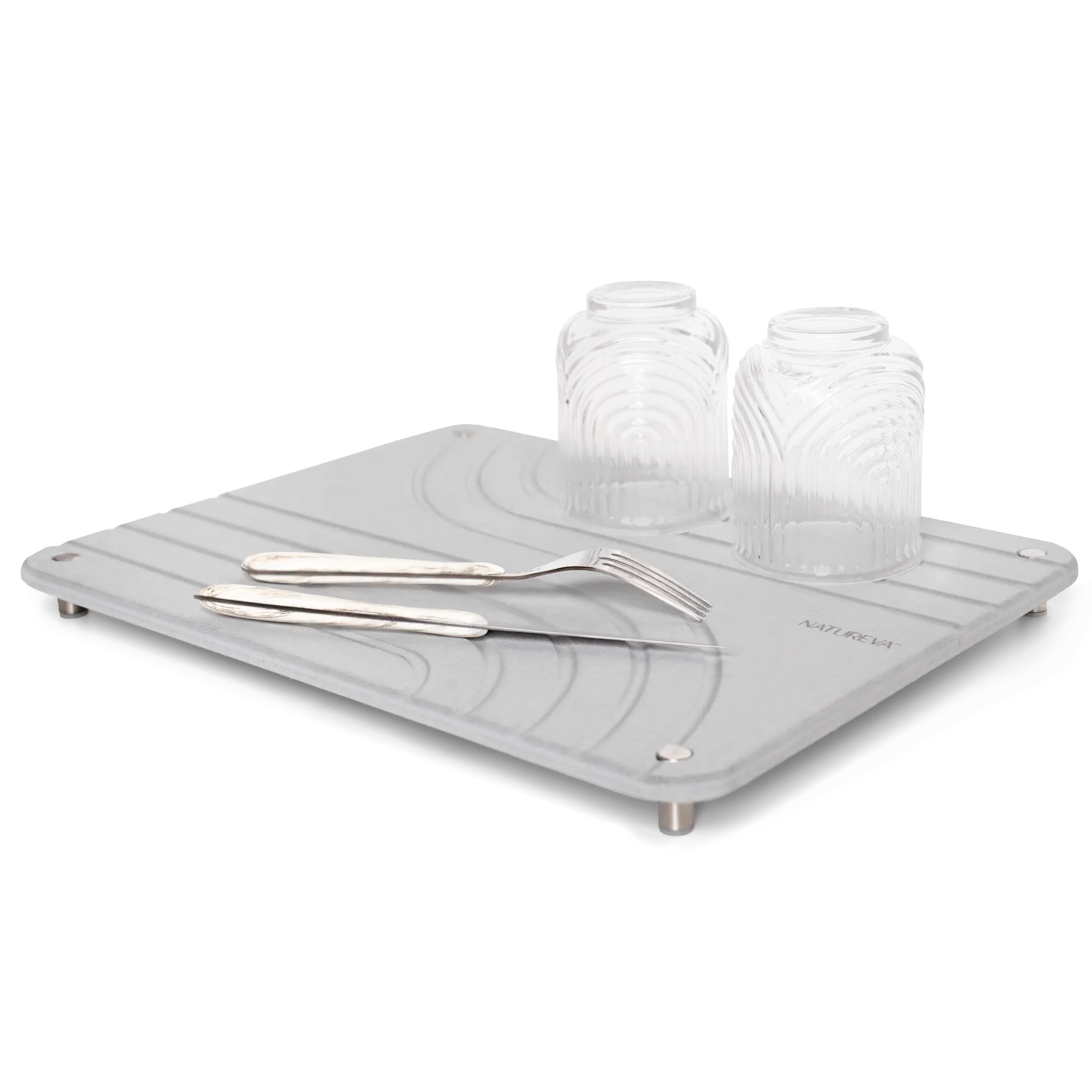
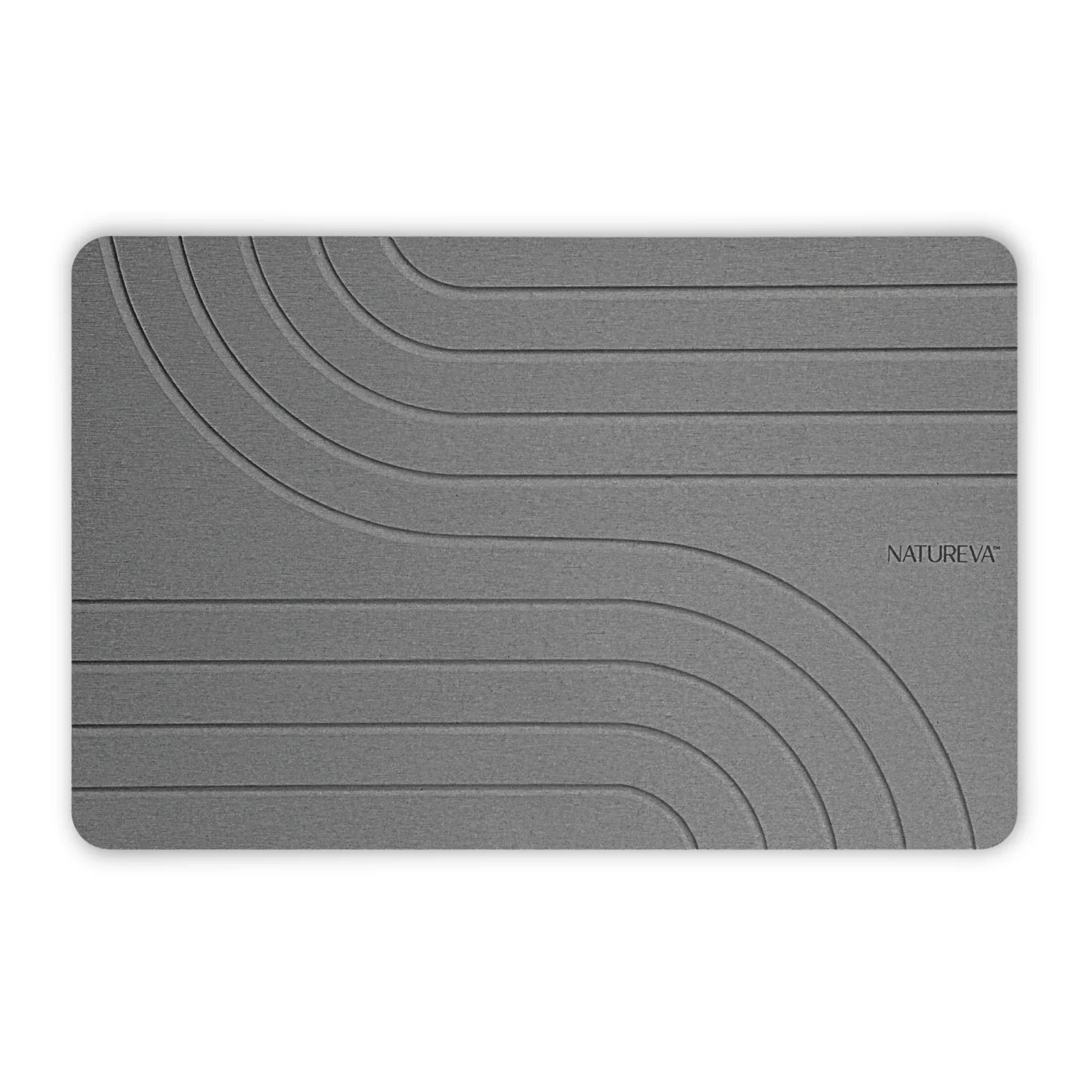
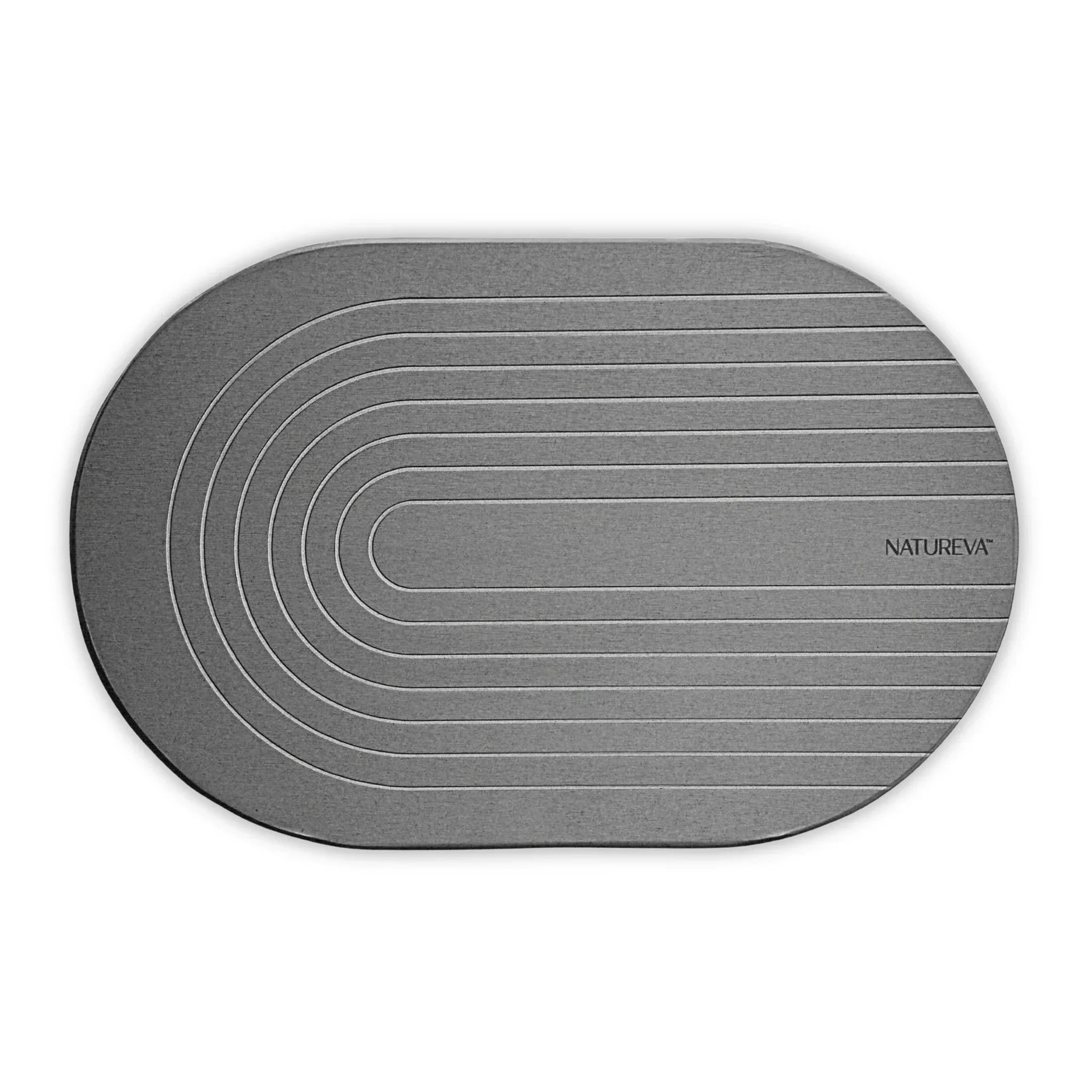
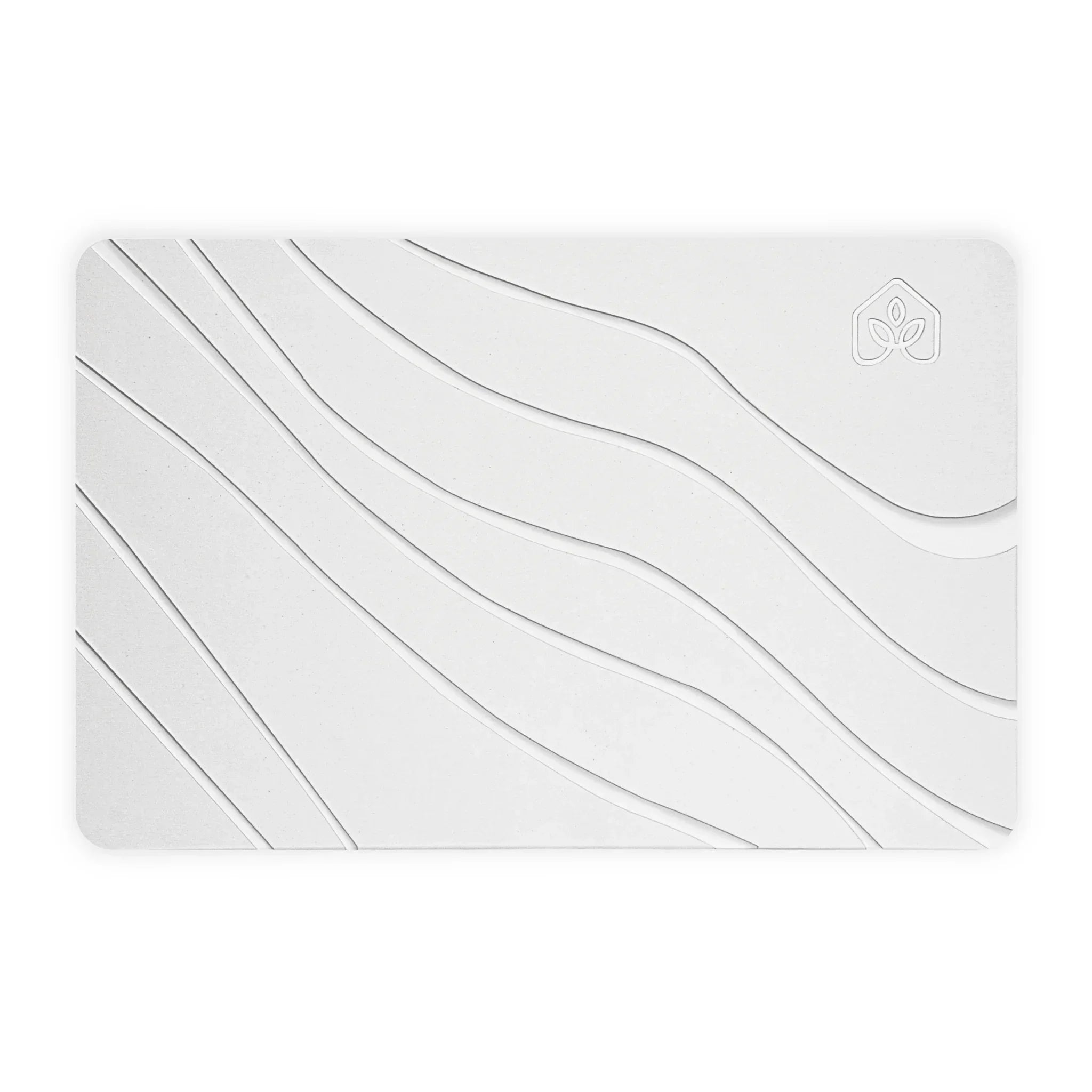
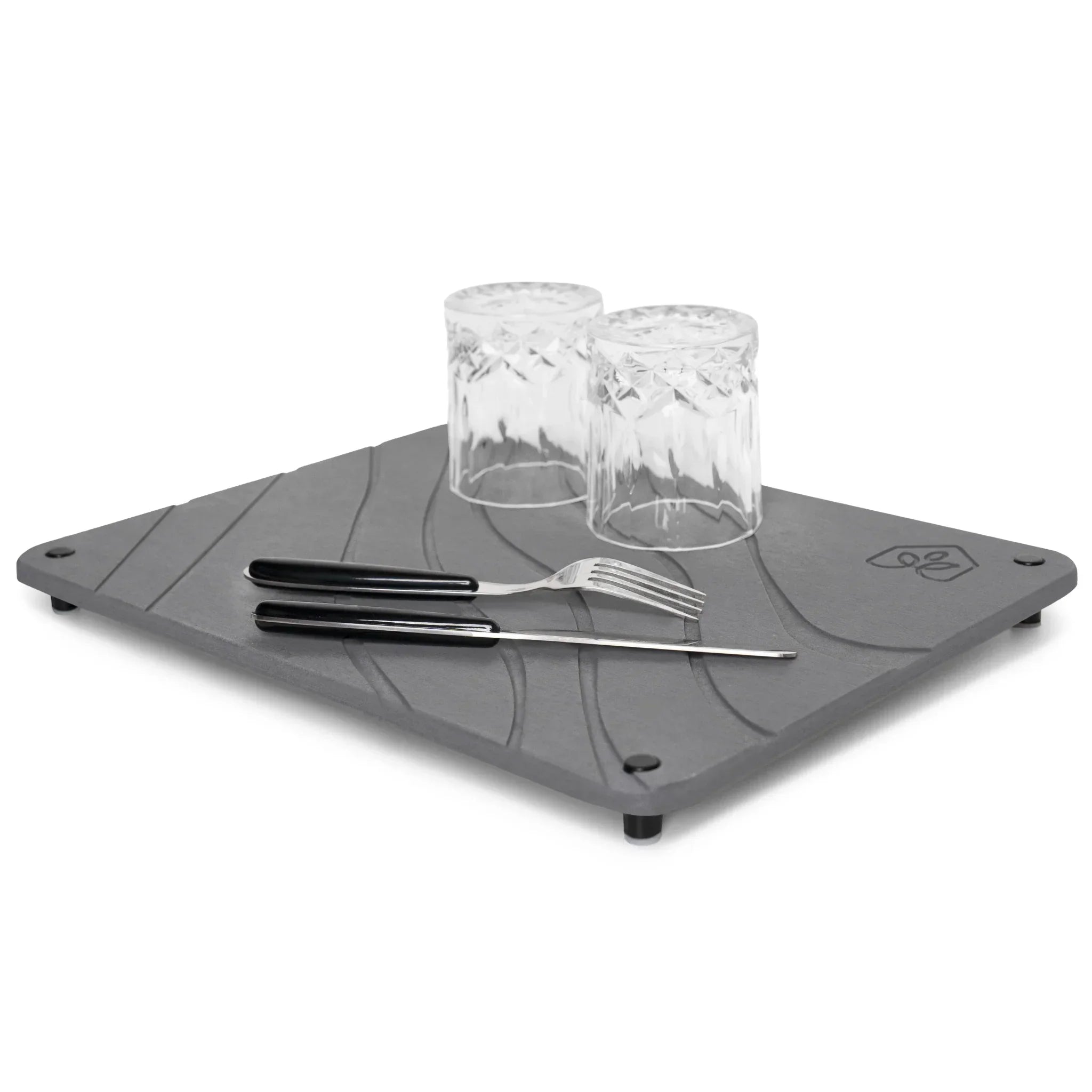
Stone Dish Mat - Tide
Cotton and microfiber mats soak up water fast on the surface but hold it inside their fibers for hours. The moisture does not go anywhere, it just sits in the weave until room air slowly draws it out. That is why a cloth mat can look dry on top while the layer underneath is still wet to the touch.
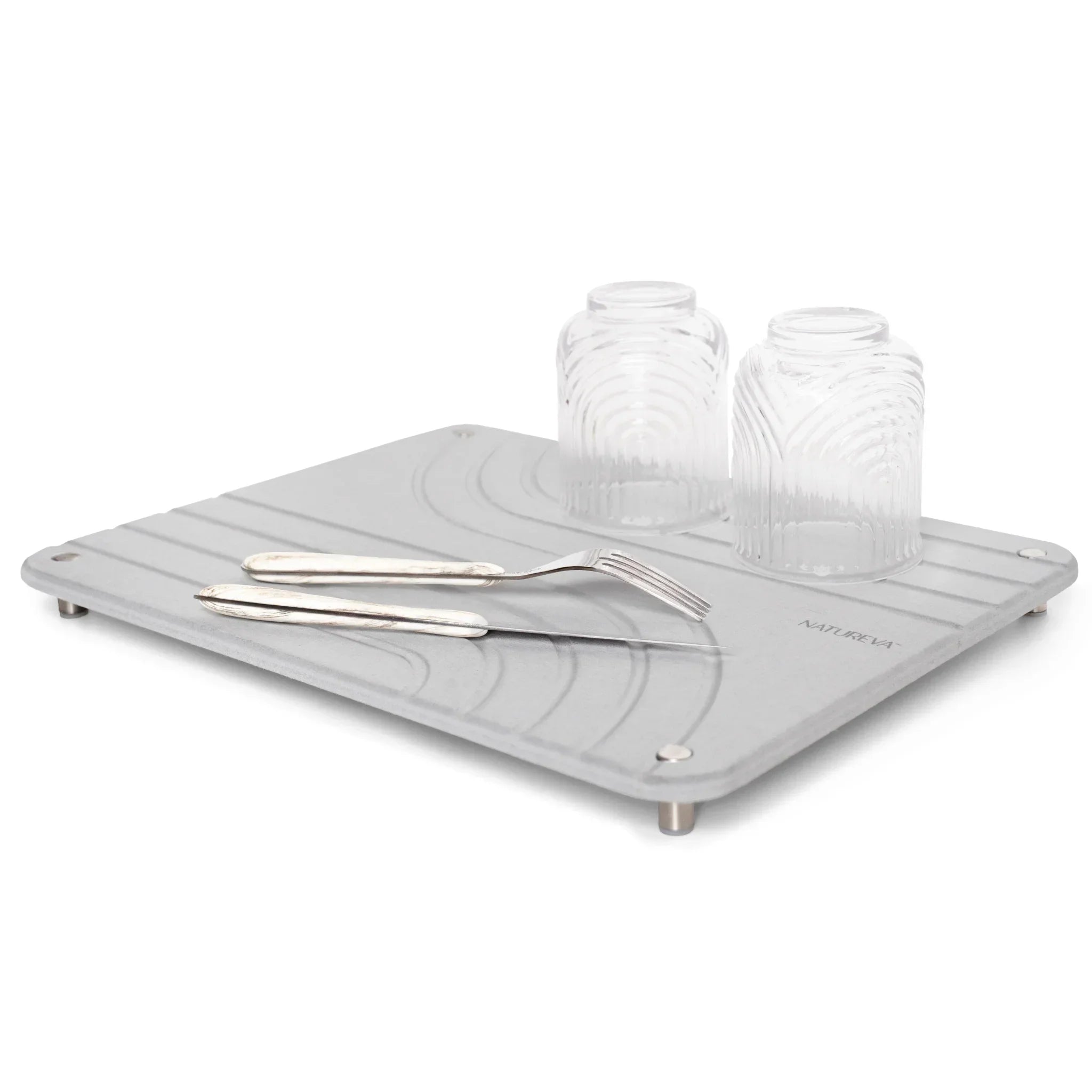
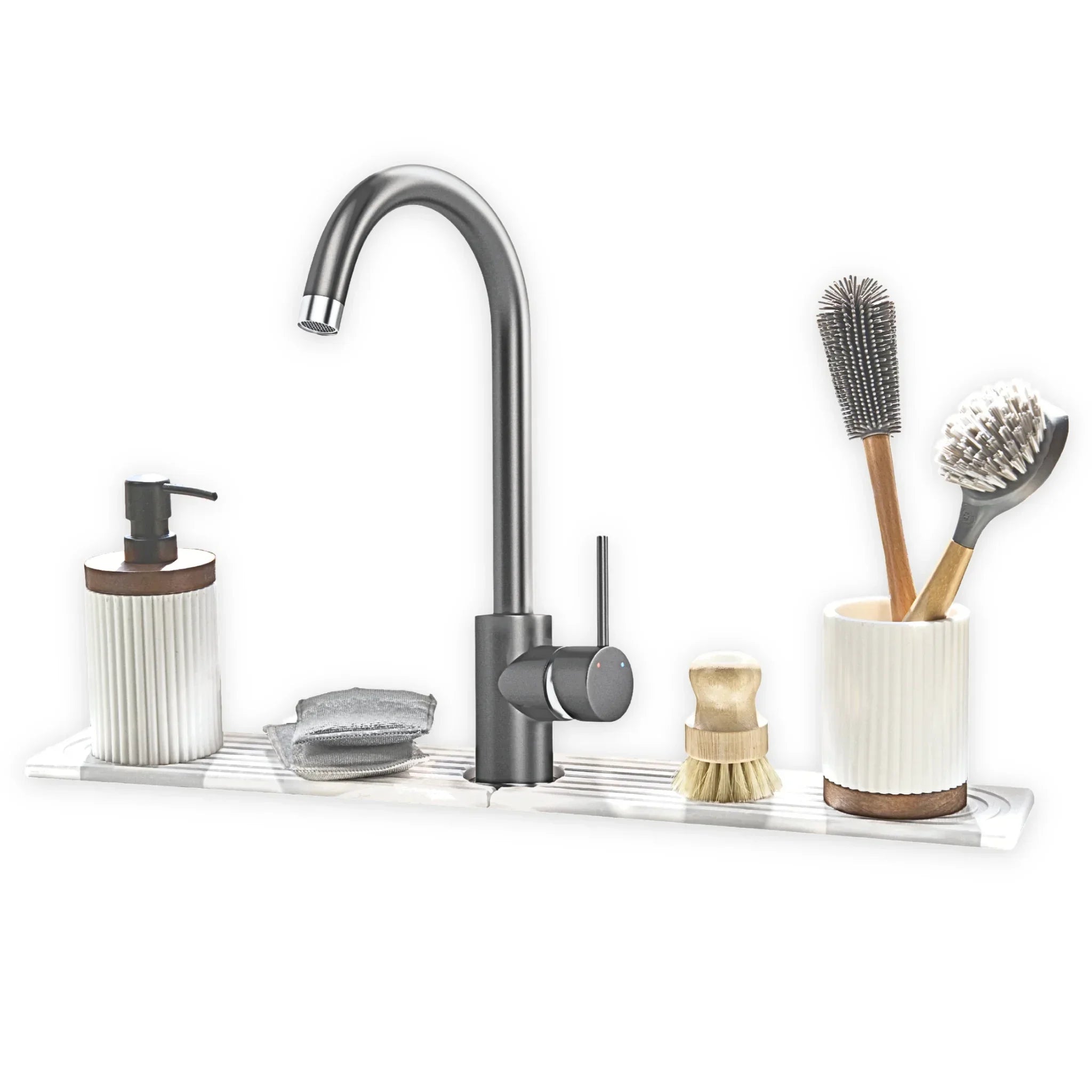
Diatomite works on a different principle. The stone is full of microscopic pores that pull water in and push it back out as vapor, so there is no standing layer of moisture left to feed mold. The Flow dish mat uses this same porous structure to clear a sink full of wet dishes without leaving a damp patch behind.
| Material | Absorbs water | Releases water |
|---|---|---|
| Foam/rubber-backed | Slow, pools on top | Trapped underneath |
| Cotton/microfiber | Fast | Slow, hours to fully dry |
| Diatomite stone | Fast | Fast, evaporates on contact |
How Stone Dish Dryer Mats Pull Water Away Fast
Diatomite dries fast because of its structure, not a coating on top. The stone is packed with microscopic pores that pull water in through capillary action, the same pull that draws ink up a paper towel. Natureva's Tide and Flow mats use this same porous stone to soak up drips the second a wet plate touches down. Because the water moves into the stone and leaves as vapor, there's no puddle sitting around to build a mildew smell after a few days of use.
Soft fabric mats work the opposite way. They store water instead of releasing it, so the mat stays damp long after the dishes themselves are dry. Comparing the two side by side shows why material decides the outcome more than size does:
- Stone pulls water in within seconds of contact
- Fabric holds water in the weave until room air slowly draws it out
- Stone surfaces just air dry and skip the laundry step
- Fabric needs regular washing or it starts to smell musty
Microfiber And Silicone Mats That Dry Slower
Microfiber feels soft underfoot but it's the slowest common mat material to dry. The fibers grab water fast on contact, which is fine for a quick wipe, but they hold that moisture inside the weave for hours afterward. Silicone works differently: it sheds water across a smooth surface instead of absorbing it, so drops run to the low spots and pool at the mat's edges or the counter beside it. Neither material actually removes water, it just relocates it until air or a towel finishes the job.
Both still make sense in specific spots:
- Microfiber suits a soft spot near a bare-foot kitchen floor
- Silicone suits a counter edge you're willing to wipe daily
- Both need a rinse or wash every few days to avoid odor
The next generation of home essentials: naturally made, cleaner by design, sustainable by nature.
SHOP ALLPicking The Right Size For Your Sink Setup
Measure the counter run next to your sink before ordering, since that length decides which mat actually fits. Note the exact space in inches, including any room taken up by a faucet base or soap pump, because a mat that overlaps the sink lip will shift every time you set a wet pan down.
From there, matching mat to kitchen comes down to a short checklist:
- Measure the length and depth of the counter beside the sink
- Small kitchens: a single compact mat under the rack is enough
- Larger loads: a longer mat holds a full rack plus extra pans
- Confirm the exact mat dimensions before buying, not just the product photo
The dish mat collection lists dimensions for each size so you can match one to your counter before it arrives.
Keeping Any Dish Mat Clean Long Term
Stone mats take less upkeep than fabric ones, and that gap only grows over months of daily use. A damp cloth wipe followed by air drying is enough to keep a stone mat working, while fabric needs an actual wash cycle to stay sanitary. Wipe stone mats weekly, and run fabric mats through the wash every few days to stop either one from holding onto smells.
A short routine keeps a stone mat performing like new for years:
- Wipe the surface with a damp cloth, then let it air dry fully
- Rinse off soap residue so it doesn't clog the pores over time
- Light sanding with fine-grit paper restores a mat that's stopped absorbing well
- Store the mat flat so it doesn't crack while drying between uses
Stone Or Fabric, Which One Fits Your Sink
Stone costs more at checkout, but it skips the ongoing cost that fabric mats carry every week. A stone mat runs around 49 USD and lasts years with a wipe-down. A fabric mat costs less upfront but adds a load to the wash every few days, which adds up in detergent, water, and time over a year.
Fabric mats also pick up smell faster than stone does. Because they hold moisture in the weave for hours, bacteria get a head start before the mat ever reaches the laundry. Stone releases that moisture as vapor almost as fast as it lands, so there's nothing sitting around to go sour between washes.
For a kitchen running daily dish loads, speed matters more than how soft the mat feels underfoot. A rack of wet dishes needs a surface that clears fast, not one that cushions bare feet. That's the trade worth naming plainly: fabric buys comfort, stone buys time back every single day.
| Factor | Stone mat | Fabric mat |
|---|---|---|
| Upfront cost | Around $49 | Usually under $20 |
| Weekly upkeep | Wipe and air dry | Full wash cycle |
| Odor risk | Low, water evaporates fast | Higher, moisture lingers |
| Feel underfoot | Firm, hard surface | Soft, cushioned |
A household doing dishes once or twice a day and wanting the counter dry in minutes gets more out of a stone mat like the Tide dish mat. A household with a smaller dish load, or one that doesn't mind tossing a mat in with regular laundry, can stick with fabric and accept the extra washing as the price of a softer surface.
What To Do Before You Check Out
Count how many times you run dishes in a day. Once a day, a single compact mat handles the load and clears before bed. Twice a day or more, a longer mat keeps up without a damp patch forming between rounds. Next, measure your counter run in inches and match it to Tide or Flow, both sized the same way, with the choice between them coming down to which color sits better next to your sink and backsplash. Natureva makes both in the same diatomite stone, so neither one dries faster than the other. Order the size that fits your counter now, and you stop wiping down a wet countertop every night.
The next generation of home essentials: naturally made, cleaner by design, sustainable by nature.
SHOP ALLCommon Questions About Dish Mats
Will a stone dish mat scratch my countertop surface?
No, a diatomite mat is gentle on standard countertop materials like laminate, quartz, and sealed wood when it sits flat and dry. The stone itself has a sandy, matte texture but it does not scrape the surface during normal use. The only risk is sliding it across the counter with grit trapped underneath, so lift it to move it instead of dragging it.
Can I leave wet silverware directly on the mat overnight?
Yes, silverware is one of the easiest things to leave on a stone mat overnight since it has no fabric weave to trap moisture against metal. Stainless steel left on a damp cloth mat for hours can develop water spots or a faint smell, but stone pulls the moisture away fast enough that this is not a concern. Just avoid stacking wet pieces directly on top of each other.
Does the mat lose its absorbency if I use dish soap on it?
Soap residue can slow down absorption over time if it builds up in the pores, but it does not ruin the mat permanently. Rinsing the surface with plain water after soap contact keeps the pores clear. A mat that has gone cloudy or slow to dry from soap buildup usually bounces back after a rinse and a full air dry.
How many dishes can one mat realistically dry at once?
A compact mat like the Tide dish mat handles a few plates, a bowl, and a cup at a time without water running off the edges. A full dish rack with pots and pans needs the longer Flow size or two mats placed side by side. Matching mat size to your actual load, not just your counter length, keeps water from overflowing onto bare countertop.