
Article: Compare Diatomite Stone Bath Mats and Choose the Right One
Compare Diatomite Stone Bath Mats and Choose the Right One
A diatomite stone bath mat dries in about sixty seconds, while a fabric mat can stay wet for three to four hours after a shower. That gap matters more than it sounds, since a damp mat is where mildew and foot bacteria build up fastest. Three stone styles exist, named Tide, Arch, and Rain, and each one carries a different surface pattern that changes how water moves across it and how the texture feels under bare feet. The price is the same across all three, so the choice really comes down to how your bathroom floor is laid out and what grip pattern you want underfoot.
Picking between them is mostly a matter of texture, size, and drainage grooves, not performance, since all three use the same diatomaceous earth core. A wave-cut surface pushes water toward the edges faster than a flat one, which matters if your bathroom gets heavy splash from a walk-in shower. Size matters too, since a mat that is too small leaves wet footprints just past its edge on the way to the towel rack. By the end, you will know which surface pattern fits your space and which one just looks nice in photos.
Table of Contents
Why Diatomite Beats Cotton Bamboo and Rubber
Diatomite is fossilized algae, ground into a porous stone that is full of tiny channels invisible to the eye. Those channels pull water in by capillary action, the same force that lets a paper towel wick up a spill. The material has been used in filters and absorbent powders for over a century, long before it showed up as a bath mat.
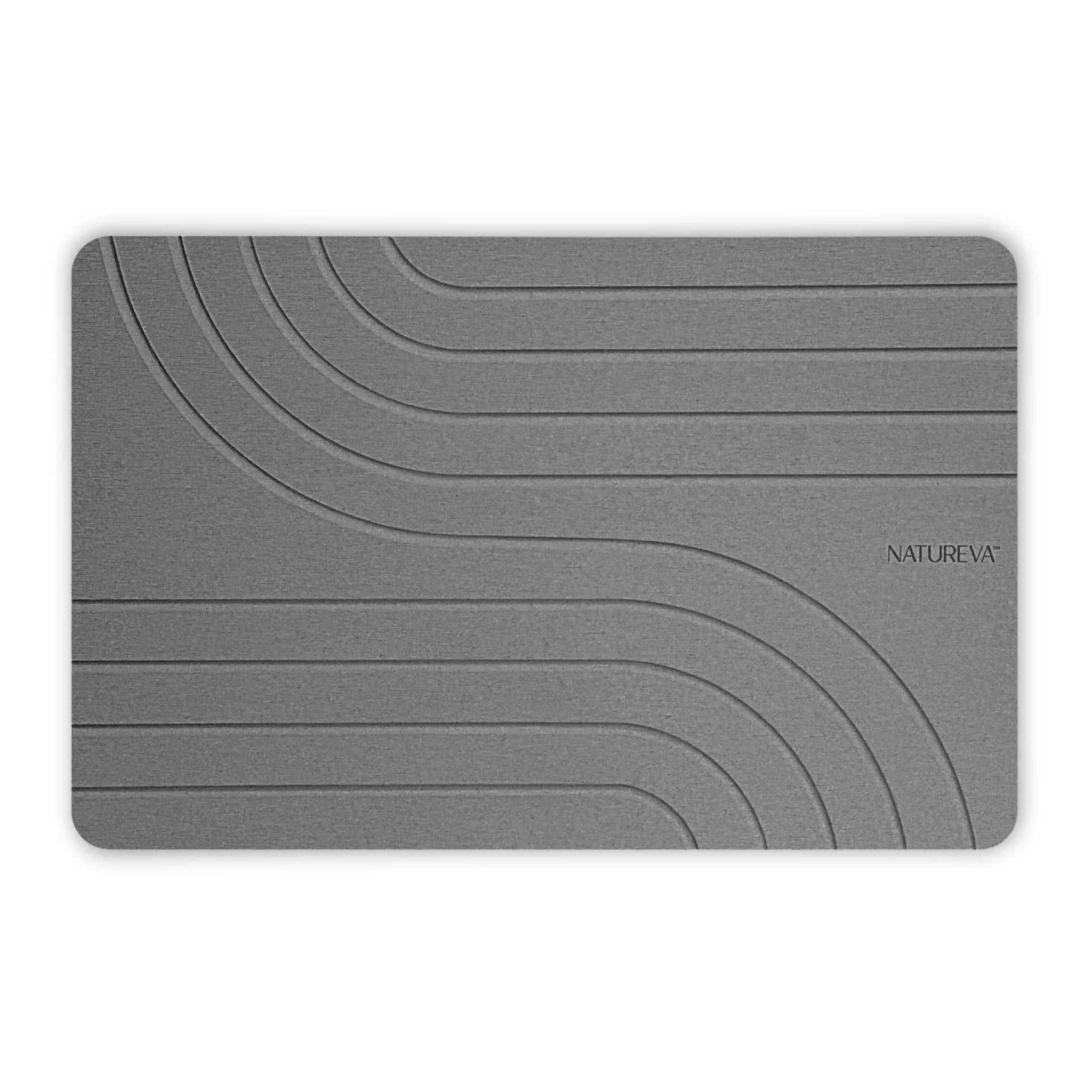
Stone Bath Mat - Tide
Cotton and bamboo mats work by soaking water into their fibers, but the water just sits there until it evaporates on its own, which can take hours. Rubber mats shed water off the surface instead of absorbing it, so puddles slide underneath and get trapped against the floor, creating a dark, damp spot that mold likes. Neither material has the micro-pore structure that lets a stone surface pull moisture in and release it into the air.
| Material | Drying Time | Odor Risk | Typical Lifespan |
|---|---|---|---|
| Diatomite stone | About 60 seconds | Low | 3 to 5 years |
| Cotton | 3 to 4 hours | High | 1 to 2 years |
| Bamboo | 2 to 3 hours | Medium | 2 to 3 years |
| Rubber | Does not absorb | High | 2 to 4 years |
A rundown of the drying science behind these mats shows why the pore structure matters more than the thickness of the mat itself, as explained in the science behind diatomite bathmats. The shorter drying time also means less time for bacteria to multiply, since most mold needs standing moisture for several hours to take hold.
Surface Textures and Drainage Patterns Explained
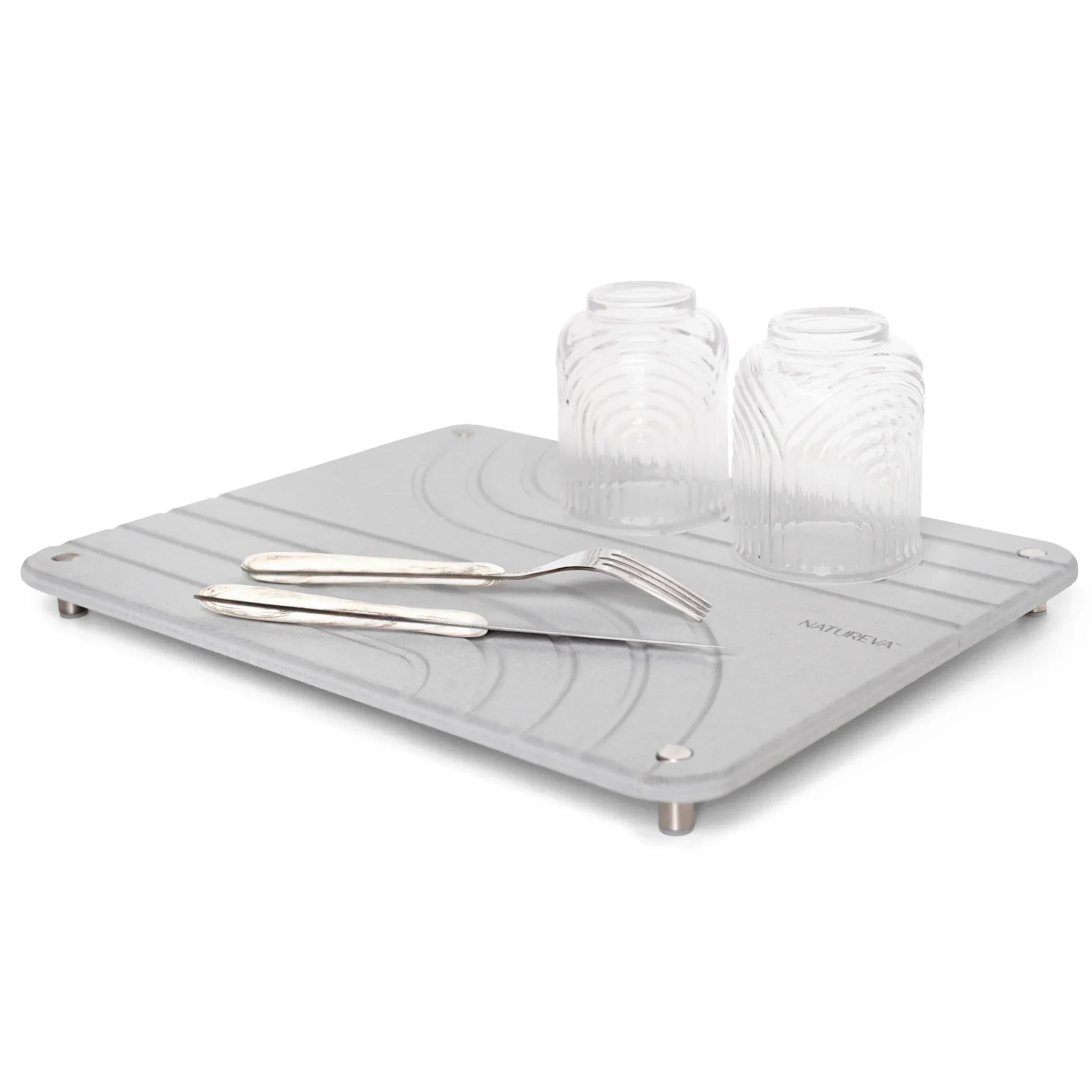
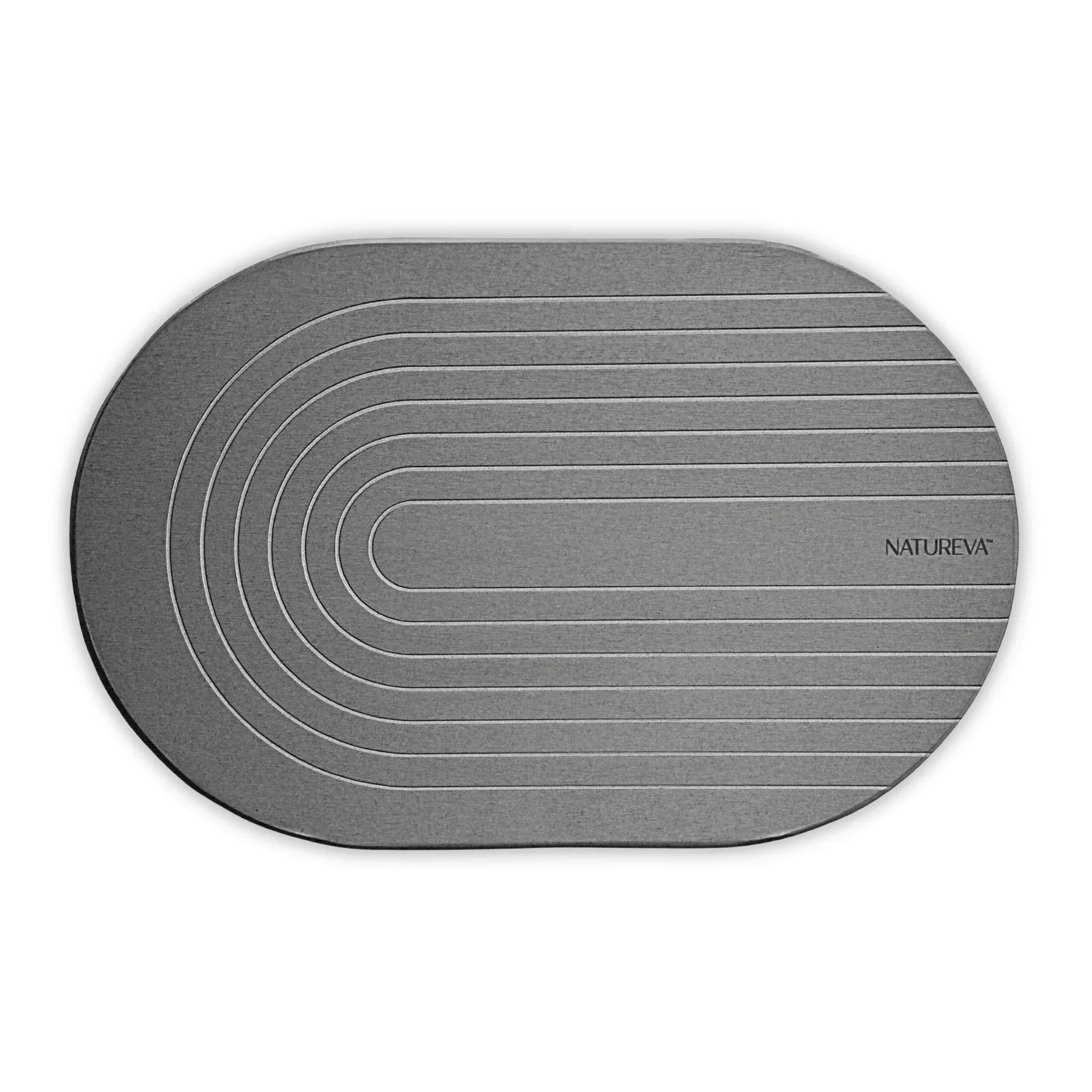
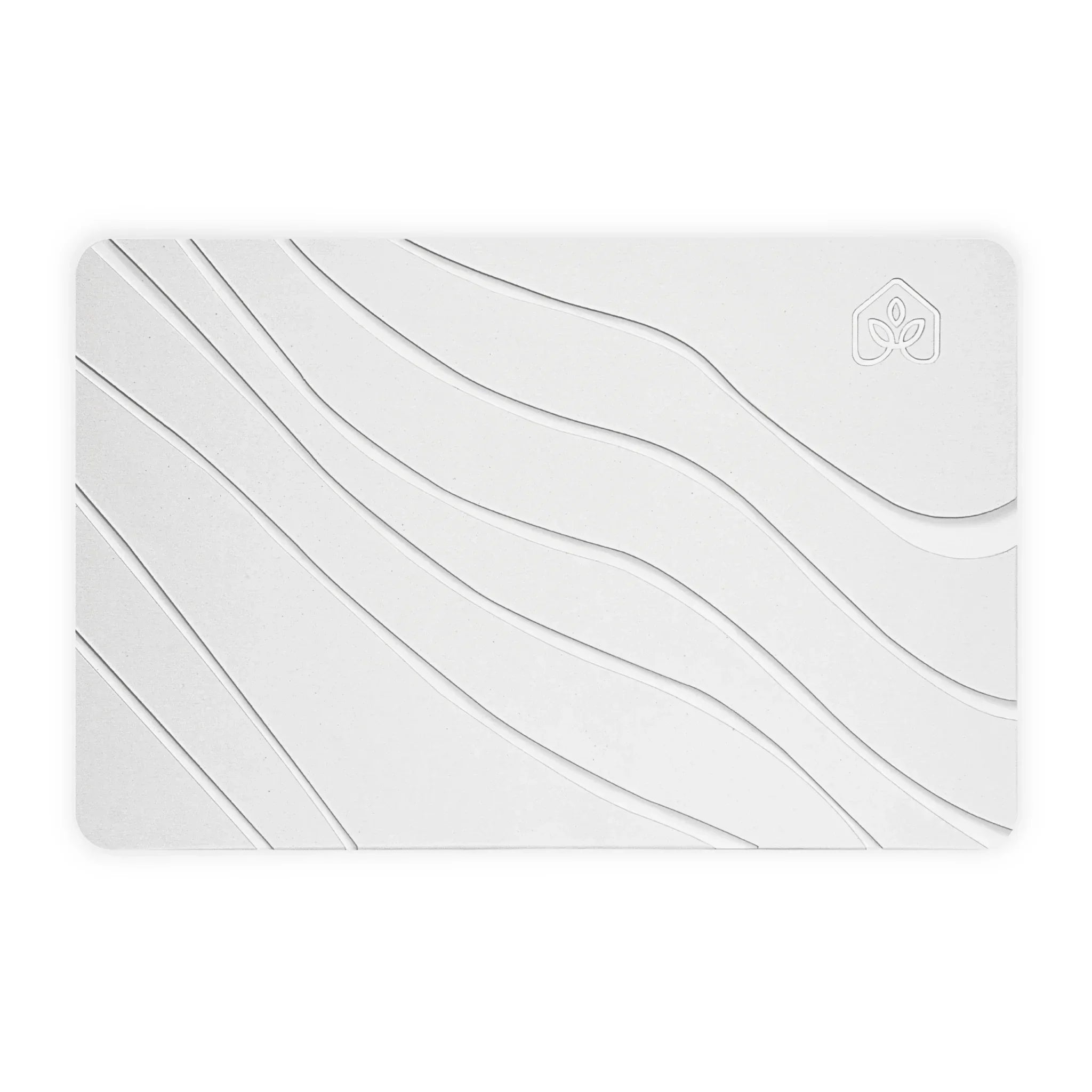
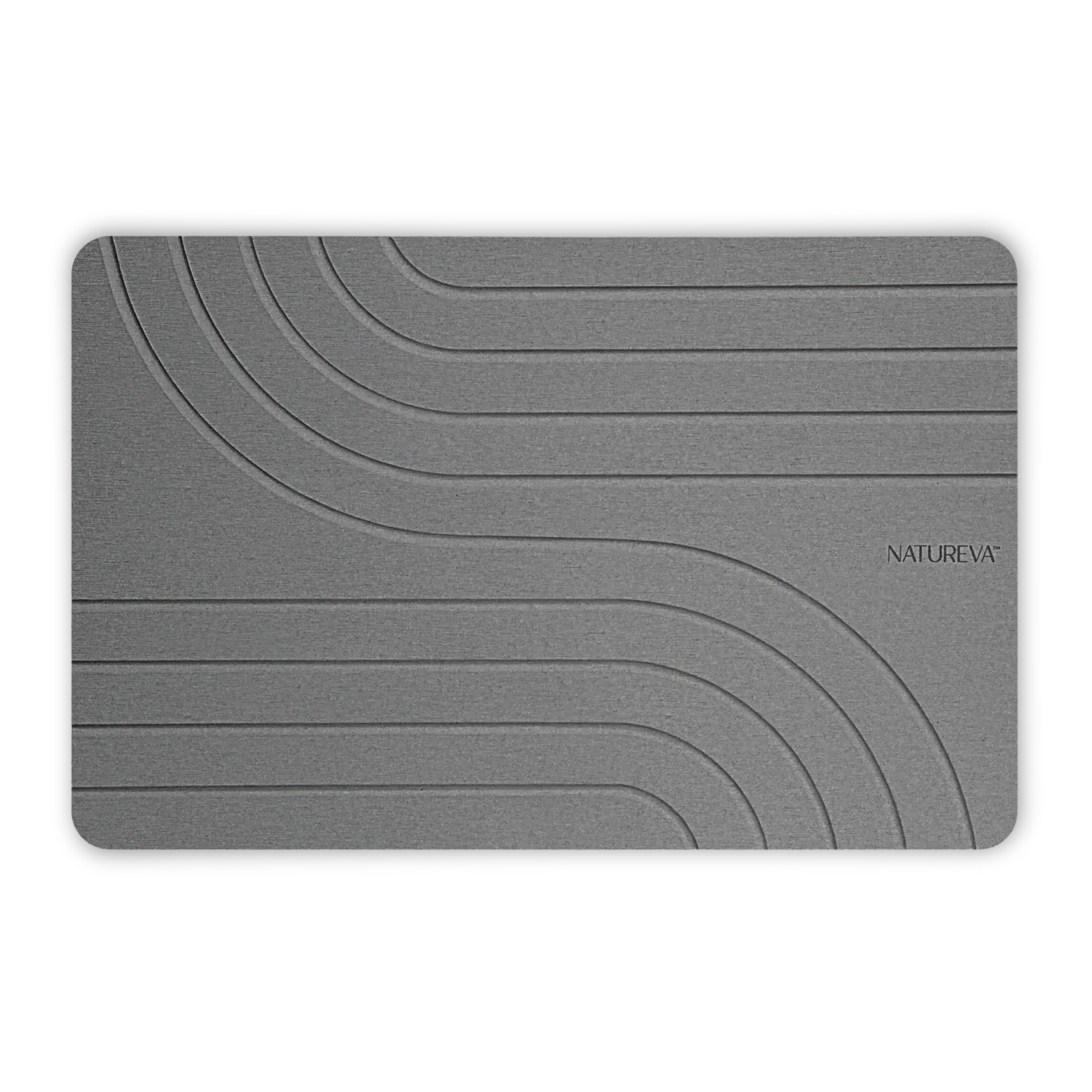
The surface pattern on a diatomite mat decides how water moves across your feet, not how fast the stone itself dries. Tide has wave-shaped grooves running across the surface that push water toward the edges, clearing puddles in seconds even under a dripping body. Arch swaps those straight grooves for curved ridges, giving a softer look on the floor while draining water at close to the same speed.
Rain uses a fine linear texture, almost like light etching, and that texture adds extra grip for wet feet stepping straight out of the tub. All three share the same diatomite core, so the drying speed underneath the pattern never changes, only how the water spreads on top.
| Style | Texture | Grip Level | Drainage Speed |
|---|---|---|---|
| Tide | Wave grooves | Medium | Fast, edge-channeled |
| Arch | Curved ridges | Medium | Fast, similar to Tide |
| Rain | Fine linear etching | High | Fast, even spread |
The one rule worth remembering: pattern changes grip and spread, not total drying time, since that depends on the diatomite itself.
Natureva Tide Arch and Rain Side by Side
All three Natureva mats sell for the same 59 USD, so price never has to factor into the decision. The pick comes down to which pattern fits the room and who uses it.
Tide works best in modern bathrooms that already lean on bold geometric tile or dark fixtures, since the wave pattern reads as a design detail rather than just a mat. Arch suits a softer, rounded decor style, the kind of bathroom with curved mirrors or an oval tub, and its ridges blend in rather than stand out. Rain is the pick for households with kids or older adults, since the fine texture gives the most underfoot traction right where people step out wet.
- Tide: bold wave pattern, best for modern or dark-tiled bathrooms
- Arch: curved ridges, best for soft or rounded bathroom decor
- Rain: fine texture, best grip for kids, elderly, or shared bathrooms
- All three: same 59 USD price, same diatomite drying speed
Check the stone bath mat in the Rain pattern if traction is the main concern in your house.
The next generation of home essentials: naturally made, cleaner by design, sustainable by nature.
SHOP ALLChecking a Mat Actually Dries Fast Before You Buy
Pour a small cup of water on the mat and watch it. Water should sink within a few seconds, not bead up or sit on top, and if it pools longer than that the stone is likely sealed or low quality.
Over months of use, soap film and lotion residue build up and clog the tiny pores that pull water in, so the mat starts drying slower even though nothing is physically wrong with it. Light sanding with fine-grit sandpaper, done once or twice a year, strips that film off and restores the original absorbency. Standing the mat upright against a wall for a few hours every month or two lets both sides air out and resets the pores fully.
- Pour water and confirm it sinks in within a few seconds
- Wipe off soap scum and lotion residue weekly
- Sand lightly once or twice a year to strip buildup
- Stand the mat upright occasionally for a deeper air dry
Skipping the soap wipe-down is the most common reason a stone mat starts to feel slow, since residue sits right on top of the pores that normally do the work.
The Right Diatomite Stone Bath Mat for Your Bathroom
Match the mat to your bathroom size and who uses it, not to the price tag, since all three cost the same 59 USD. A small bathroom does best with Arch, since its curved footprint sits neatly next to a pedestal sink or a narrow tub without looking oversized.
Sensitive skin or cracked heels do better with Rain, because the fine texture is gentler on bare feet than a deeper groove pattern. Tide is the better call near a walk-in shower or tub where splash is heavier, since the wave grooves move the most water the fastest. The only real deciding factor is which texture fits your foot traffic, because the diatomite core performs the same in every style.
- Small bathroom or pedestal sink: Arch
- Sensitive skin or cracked heels: Rain
- Heavy splash near tub or shower: Tide
- Shared bathroom with kids or elderly: Rain
For a closer look at sizing and groove depth across the line, the diatomite bath mat collection lists dimensions for each style side by side.
Texture or Decor Which One Wins
Drying speed is not a deciding factor here, since the diatomite core performs the same no matter which surface pattern sits on top. What actually separates the three options is how the grooves grip bare feet and how that grip reads against your tile, grout, and fixtures. A deep wave groove looks sharp against plain white tile but can feel busy next to patterned flooring that already has a lot going on.
Edge finish changes how a mat sits on different floor surfaces, and this matters more on uneven or heated flooring than most buyers expect. A squared edge sits flat on tile but can curl slightly on textured stone flooring, while a beveled edge hugs both surfaces without lifting at the corners. Thickness plays into this too: a thinner mat flexes to match small dips in the floor, while a thicker one holds its shape but needs a flatter surface underneath to avoid rocking.
- Grooved or ridged texture: reads as a design feature on plain tile
- Fine etched texture: blends into patterned or busy flooring
- Squared edge: best on flat, even tile
- Beveled edge: sits flatter on slightly textured or heated floors
If you want a breakdown of edge and groove depth before you commit, the features to check before buying a bath mat covers what to look for beyond the surface pattern itself.
Pick Your Texture and Order the Mat That Fits
Walk into your bathroom and look at two things: the floor pattern and who steps out wet most often. If the tile is plain and you want a design accent, order Tide. If the room has curves, a pedestal sink, or soft fixtures, order Arch. If kids, grandparents, or sore feet use that bathroom, order Rain. All three run 59 USD, so cost never breaks the tie. Once you know which grip and look match your space, go to the Natureva product page for that style and place the order. The decision is the texture, not the price.
The next generation of home essentials: naturally made, cleaner by design, sustainable by nature.
SHOP ALLCommon Questions About Stone Bath Mats
Will the stone surface feel rough or scratchy on bare feet?
No, diatomite stone is smooth to the touch even though it looks textured. The grooves and etching change how water moves, not how the stone feels against skin. Most people describe the surface as slightly matte, similar to unglazed tile, rather than gritty or abrasive. Rain's fine etching is the softest underfoot of the three, which is why it suits sensitive feet.
Can I place the mat on a heated bathroom floor without damage?
Yes, diatomite stone handles radiant floor heat fine since it is a fired mineral material, not plastic or rubber that can warp. The concern with heated floors is the mat's edge lifting slightly if the surface underneath is uneven, not the stone cracking from heat. A beveled edge sits flatter on a heated floor than a squared one, so check which edge style a mat has before placing it over heating elements.
Does the mat need a rubber backing to stop it from sliding?
No, Natureva mats grip tile through their own weight and flat underside, so no separate rubber pad is needed. A rubber backing actually traps moisture underneath the stone, working against the whole point of a fast-drying mat. If a mat slides on your floor, the floor itself is likely too polished or glossy for stone to grip well, and that's a floor issue rather than a mat defect.
What should I do if the mat chips or cracks?
A chipped or cracked diatomite mat should be replaced rather than repaired, since glue or sealant clogs the pores and kills the absorbency in that spot. Cracks usually come from the mat being dropped on a hard edge or stepped on unevenly by a heavy weight concentrated on one corner. A small chip in a corner won't stop the mat from working, but a crack running through the drainage grooves will slow drying noticeably.