
Stone Bath Mats for Bathrooms and How to Choose the Right One
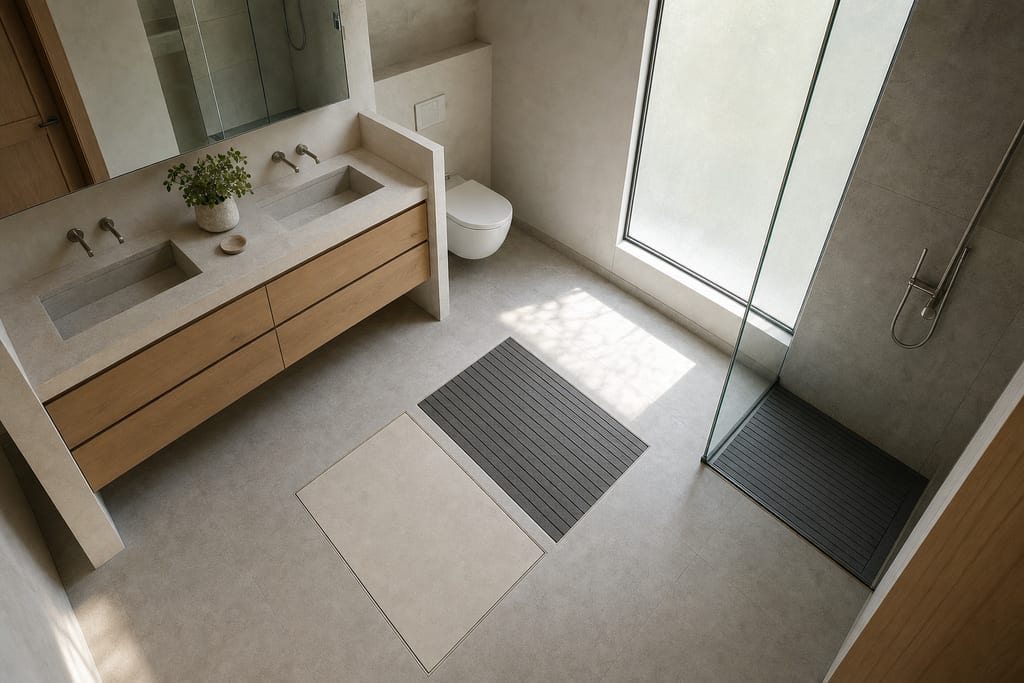
A stone mat bathroom setup can dry a puddle in under a minute, while a fabric bath mat stays damp for hours after your shower. That damp fabric is also where bacteria and mildew start building up, since the moisture has nowhere to go but sit in the fibers. Stone mats work the opposite way: they pull water in and let it evaporate off the surface almost as fast as it lands.
Fabric mats need to be washed often just to stay sanitary, and even then they can hold a musty smell after a few weeks of daily use. Stone mats skip that problem by design, since the material itself dries instead of soaking and holding water. Picking the right one still comes down to how the stone works, what it looks like in your space, and what it costs to own one for the long run.
Table of Contents
Stone Mats vs Fabric Mats at a Glance
A stone mat lasts 3 to 5 years with normal care, while most fabric bath mats wear out or go flat within 12 to 18 months. That gap alone changes the math on replacement costs, since you are buying fabric mats three or four times over for every one stone mat.
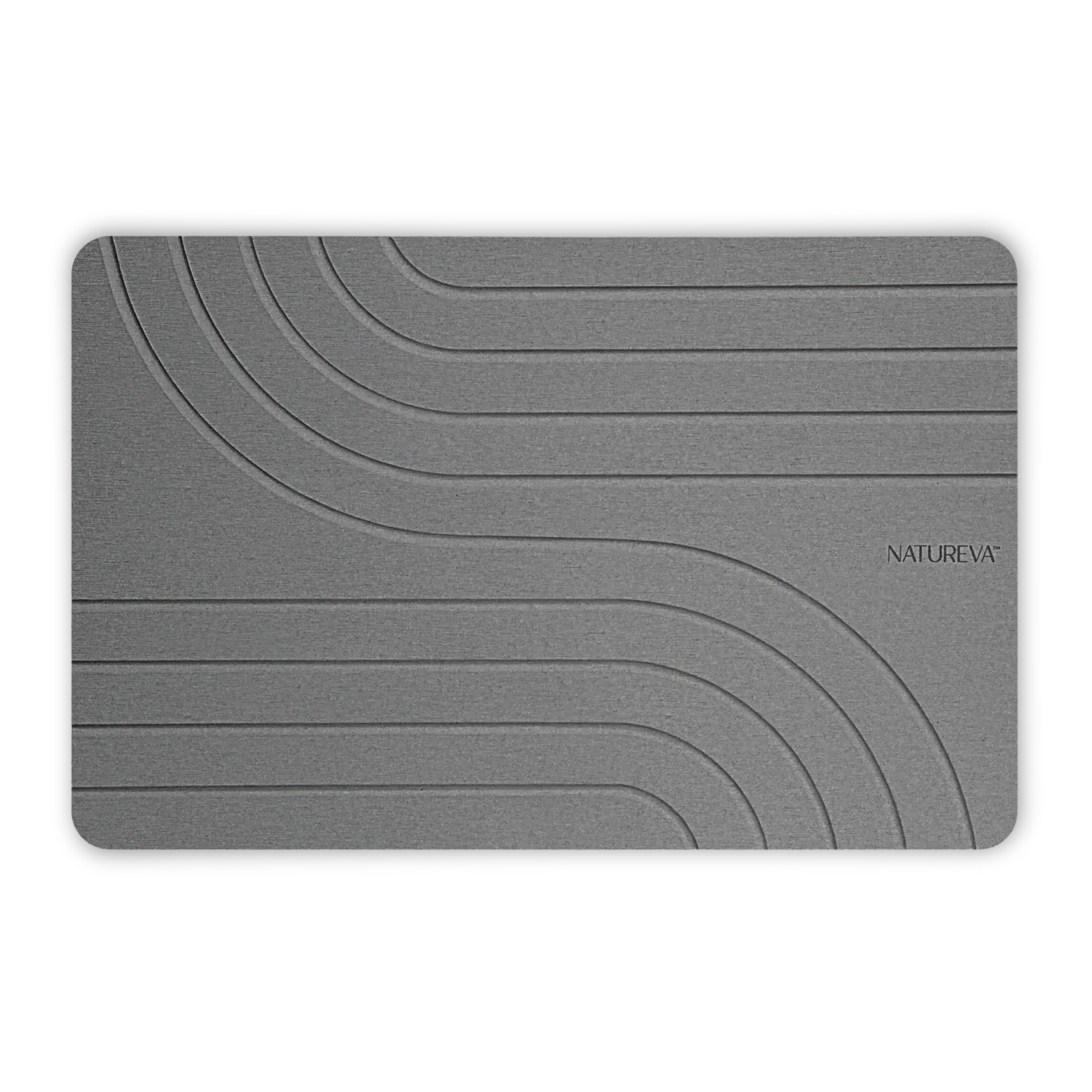
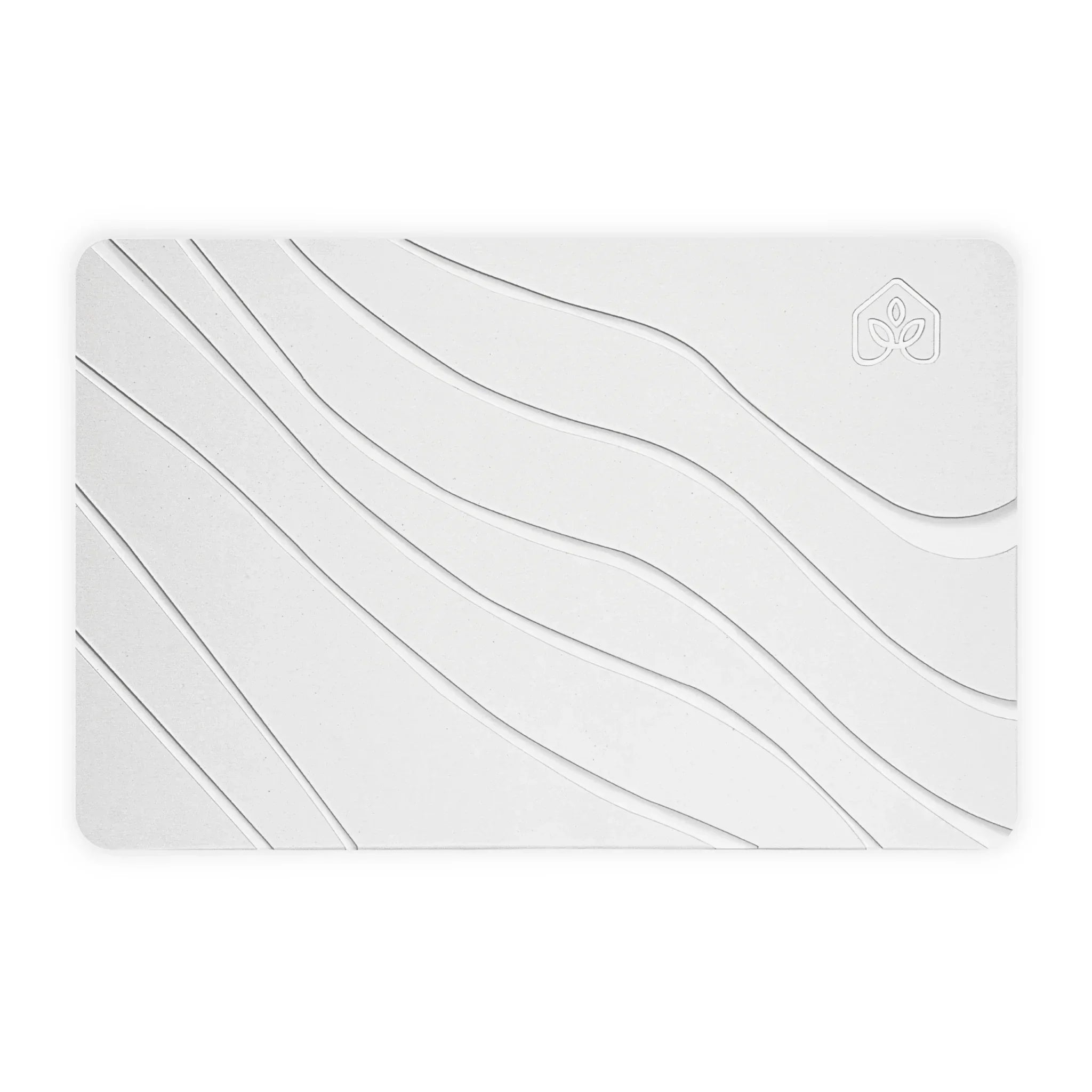
Stone Bath Mat - Tide
Fabric mats also carry a hidden cost in washing. A household that washes its mat weekly spends on detergent and machine time year after year, something a stone mat skips since it only needs a wipe-down and occasional light sanding to refresh the surface.
| Feature | Stone Mat | Fabric Mat |
|---|---|---|
| Dry time | Under a minute | 2 to 4 hours |
| Average lifespan | 3 to 5 years | 12 to 18 months |
| Replacements per 5 years | 1 to 2 | 3 to 5 |
| Maintenance routine | Wipe down, occasional light sanding | Weekly machine wash |
Run the numbers over five years and a stone mat usually comes out cheaper per year of use, even though the upfront price is higher than a basic fabric mat. The diatomite bath mat collection shows that price gap directly if you want to compare options side by side before deciding which fits your bathroom.
The Science Behind a Mat That Dries Itself
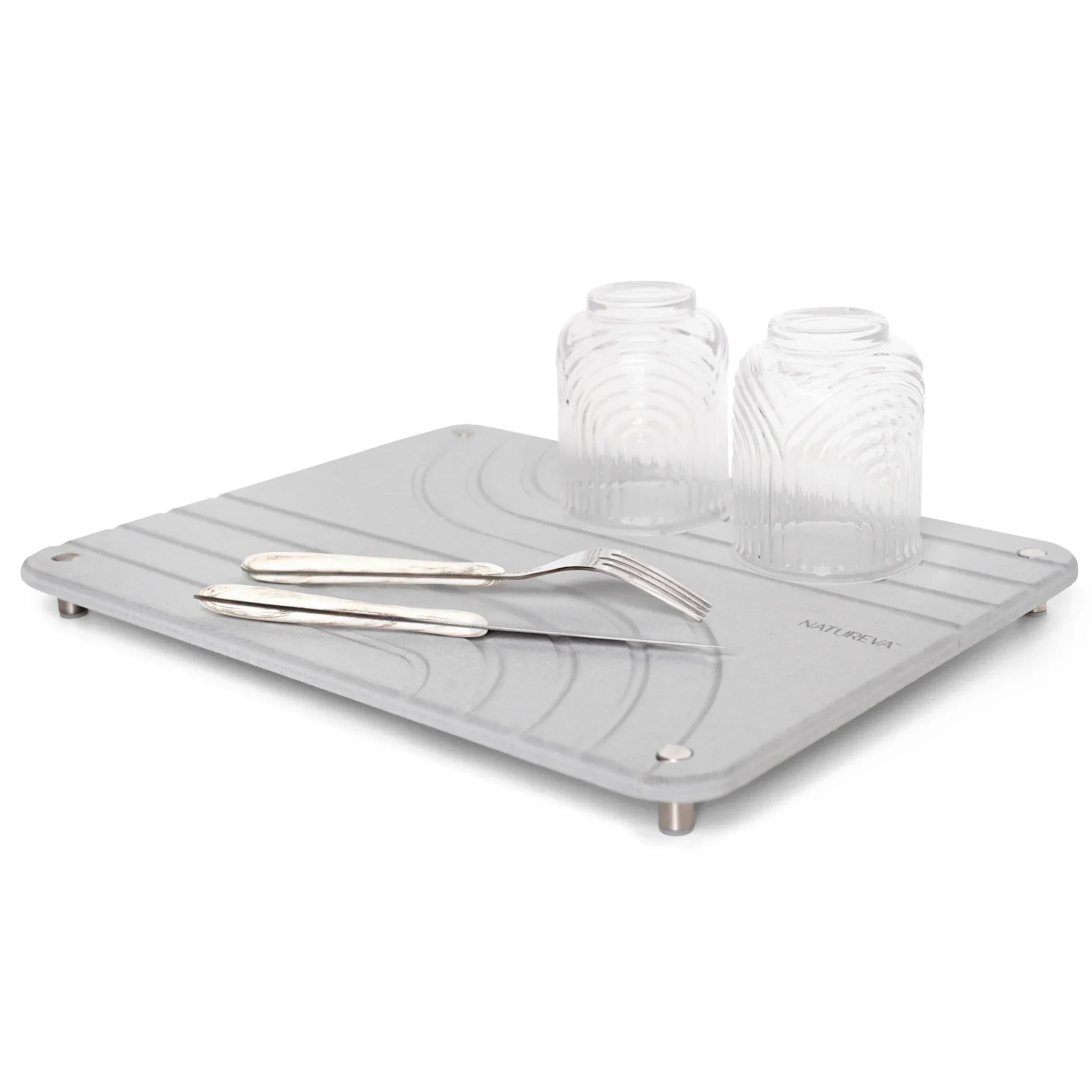
Diatomite is fossilized algae, called diatoms, that settled on ancient lake and ocean floors over millions of years and hardened into a porous stone. Under a microscope that stone looks like a sponge made of glass, riddled with millions of microscopic pores per square inch. Those pores pull water in through capillary action instead of letting it sit as a puddle on top.
Once water enters the stone, it spreads through the pore network and reaches the surface again as vapor. A puddle that lands on a diatomite mat is gone from view in seconds, and the stone itself is dry to the touch again within minutes. Three things decide how fast that happens in your bathroom:
- Pore density: more pores per square inch means more surface area pulling water in at once
- Mat thickness: a thinner mat has less stone mass to saturate before it starts releasing vapor
- Room airflow: a bathroom with a working exhaust fan clears that vapor faster than a sealed, steamy room
Matching a Stone Mat Bathroom Finish to Your Decor
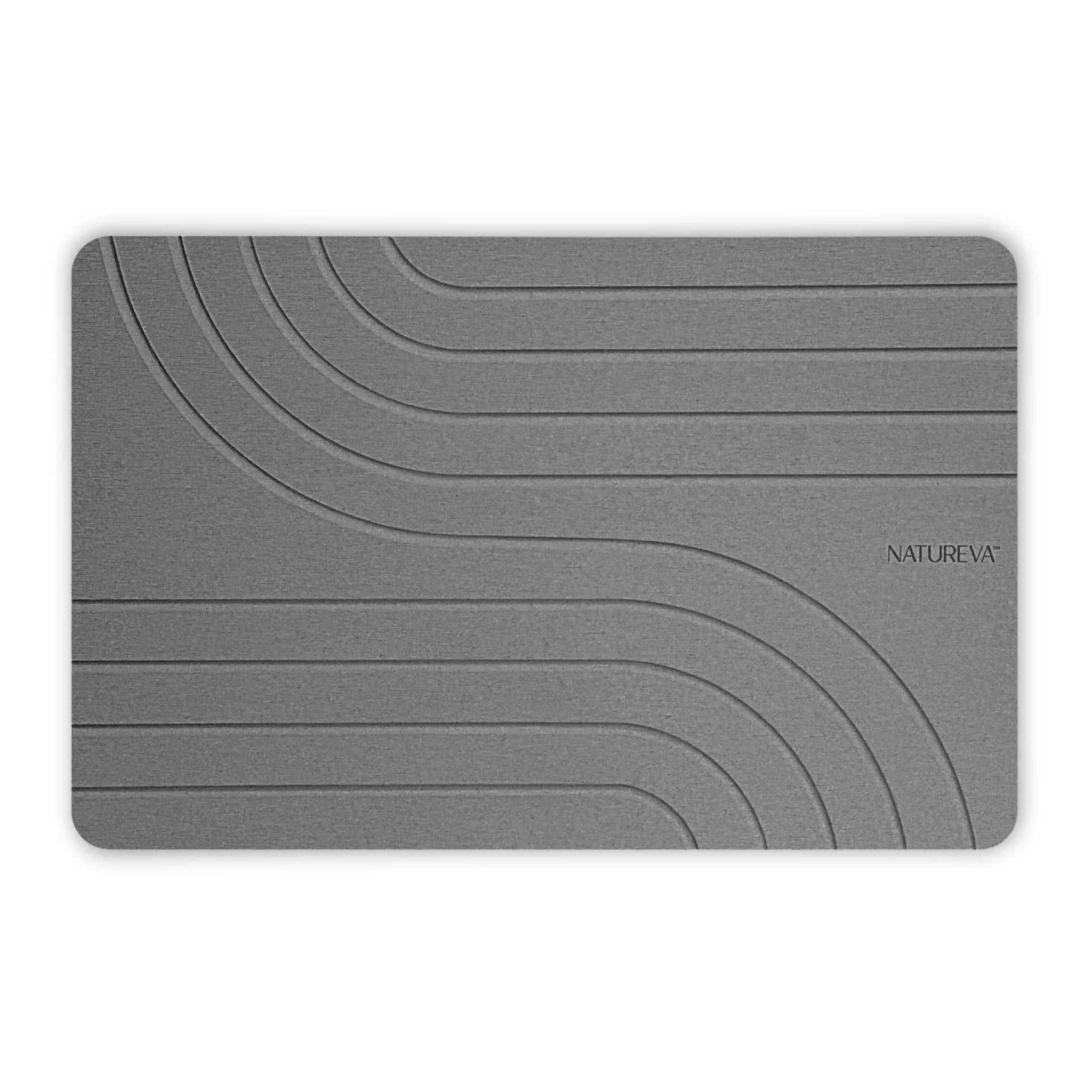
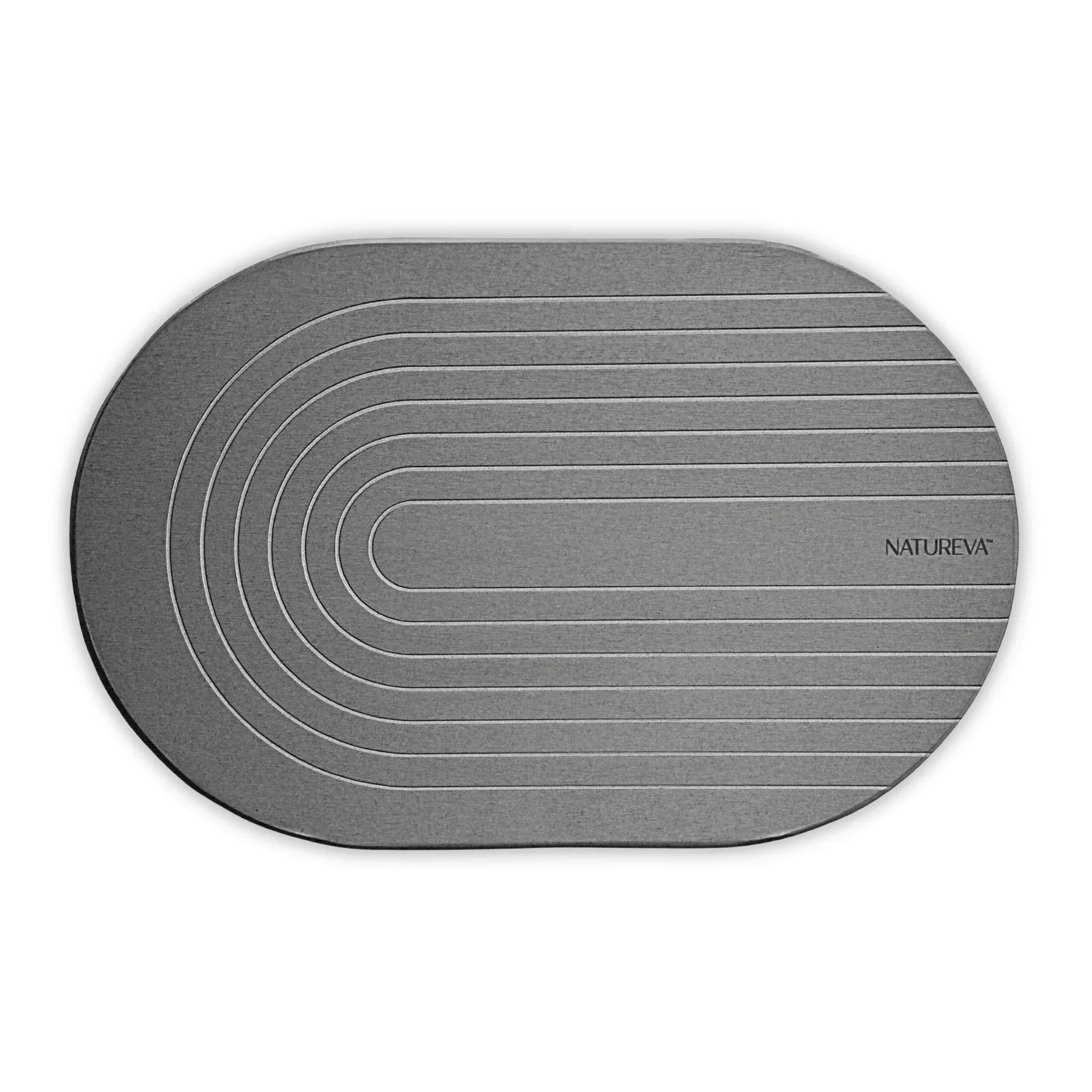
The right finish depends on the lines already in your bathroom, not just the color of the tile. Natureva's three styles cover the main looks most bathrooms fall into. Tide has a smooth, wave-like texture that suits a calm, minimalist room with clean fixtures and few patterns.
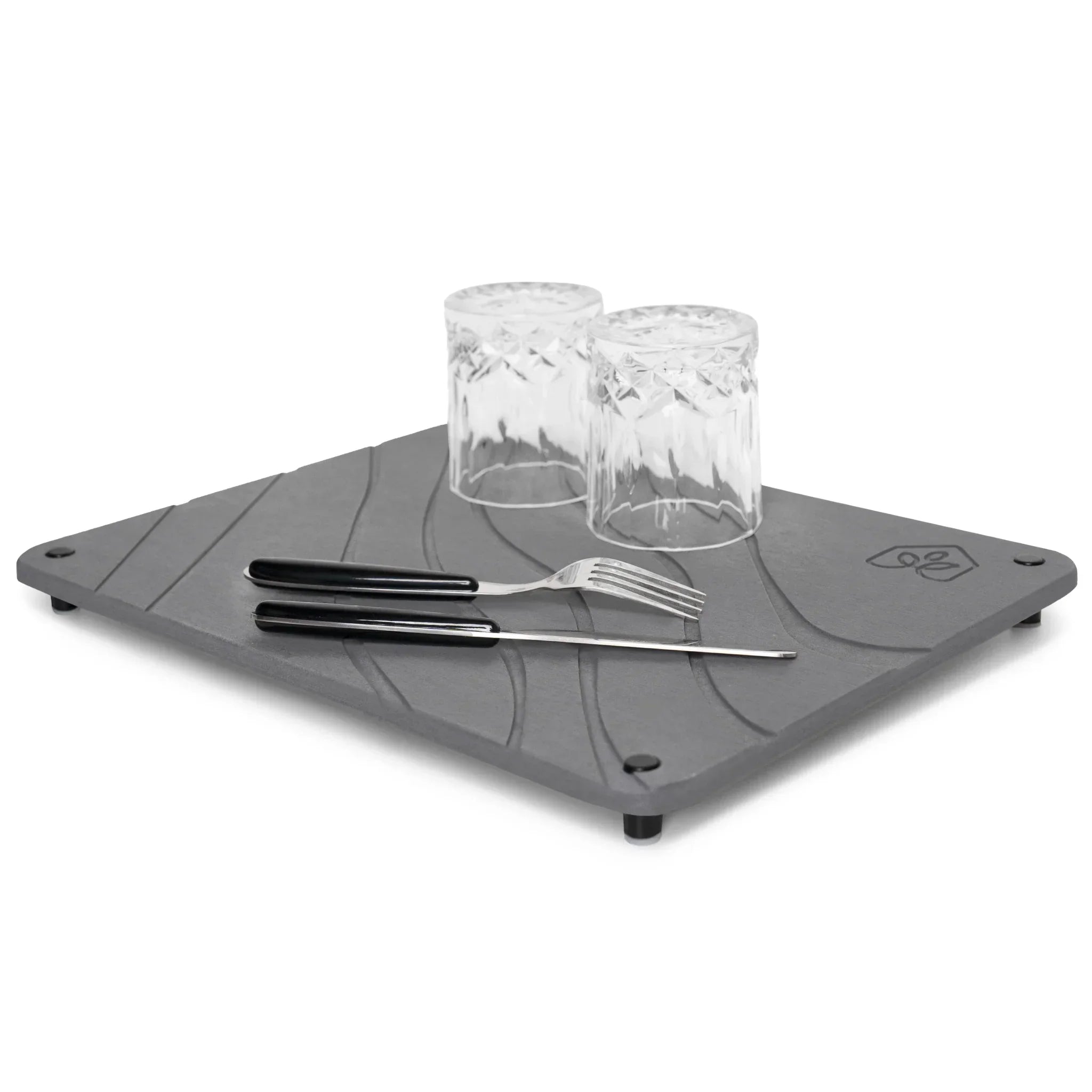
Arch has soft, curved edges that pair well with round sinks, oval tubs, and any space built around softer shapes instead of hard corners. Rain carries a raised texture pattern that hides water spots between uses and gives bare feet more grip than a flat surface. All three come in neutral stone tones that sit well against most tile colors without fighting the existing palette.
| Style | Surface | Edge Shape | Best Fit |
|---|---|---|---|
| Tide | Smooth, wave-like | Straight | Minimalist bathrooms |
| Arch | Smooth | Curved | Rounded fixtures |
| Rain | Textured pattern | Straight | High-traffic, bare feet |
If grip matters more than looks, the Rain stone bath mat is the one built for that.
The next generation of home essentials: naturally made, cleaner by design, sustainable by nature.
SHOP ALLDiatomite, Lava Rock, or Composite Which Wins
Diatomite, lava rock, and composite stone are the three materials you will see across most stone mat listings, and each trades off differently. Diatomite dries the fastest and weighs the least of the three, which matters if you are lifting the mat to clean under it. Lava rock is more porous but heavier, and its surface can start to crumble at the edges after a couple years of daily use.
Composite stone mixes resin with crushed minerals, which makes it the most chip-resistant of the three but also the slowest to dry since the resin blocks some of the pore structure. Independent testing from Consumer Reports found drying speed, not price, was the biggest differentiator between stone mat materials in daily use.
- Diatomite: lightest weight, fastest dry time, needs light sanding over time
- Lava rock: heavier, highly porous, prone to edge crumbling with age
- Composite: most chip-resistant, slowest to dry, usually the priciest of the three
Questions to Answer Before You Add to Cart
Measure the open floor space in front of your tub or shower before ordering, since a mat that overhangs the edge becomes a trip hazard instead of a convenience. Check the stated weight capacity against the heaviest person who will step on it daily, not just the average adult. A textured finish like Rain gives more grip for kids or older household members, while a smooth finish like Tide suits a low-traffic guest bath.
Confirm the mat sits flush on your specific flooring before you commit, since uneven or heavily grouted tile can leave a gap under one edge. These four checks take less than five minutes and prevent a return shipment later.
- Measure the floor space where the mat will sit, including clearance from the tub edge
- Match the weight capacity to the heaviest regular user, not the household average
- Pick a textured surface for shared bathrooms and a smooth one for low-traffic spaces
- Set the mat on your actual flooring for a day before deciding it fits flush
One Mat for Years or Five Mats Over Time
A $59 stone mat can outlast five or more fabric mat replacements over the same stretch of years, since cheap fabric mats flatten and fray long before a stone surface wears down. If you buy a $12 fabric mat every year, you spend more than $59 inside five years and still end up with a damp, worn-out mat at the end of it. The stone mat costs more on day one, but the fabric mat costs more every year after.
Washing habits decide a big part of that math. A fabric mat needs a weekly trip through the machine to stay sanitary, which adds up to roughly 50 washes a year in detergent and dryer time. A stone mat only needs an occasional wipe-down, so the upkeep cost drops close to zero once you own one.
Mold and musty smells carry a cost most people do not count until it happens. A fabric mat that starts smelling musty usually gets thrown out and replaced, not deep-cleaned, which means the real lifespan of a cheap mat is often shorter than its label suggests. The guide to diatomite breaks down which features actually slow that kind of wear, if you want to compare materials before you decide.
- Choose fabric if you need something today and plan to move within a year or two
- Choose stone if you plan to stay in the home 3 years or more
- Choose stone if musty smells or mold have been a repeat problem in your bathroom
Choosing Between Tide, Arch, and Rain
Pull a tape measure before you pick a color. Write down the exact width and depth of the open floor space in front of your tub or shower, then check that number against each mat's listed dimensions instead of eyeballing it from a photo. Next, look at what's already in the room: straight-edged fixtures and clean lines call for Tide, rounded sinks and tubs call for Arch, and a shared bathroom with kids or older adults calls for Rain's textured grip. Natureva's diatomite mats run $59 each, and that single purchase typically replaces years of fabric mats and weekly washes. Once your measurement and your fixture shapes agree on one mat, order that one.
The next generation of home essentials: naturally made, cleaner by design, sustainable by nature.
SHOP ALLCommon Questions About Stone Bath Mats
Can you cut a stone bath mat to fit a smaller space?
No, you cannot cut a diatomite stone mat without cracking it. The material is a fired, porous stone, not a flexible fabric, so trying to trim it with a saw usually breaks the pore structure along the cut line and ruins the mat. If your floor space is tight, measure first and order a size that fits as is, or pick a spot with a bit more room.
How much weight can a stone bath mat hold?
Diatomite mats are built to hold a full adult's weight during normal use, including stepping, pivoting, and standing to dry off. The stone is dense and rigid rather than springy, so it does not flex or sag under one person standing on it like a foam mat might. Check the listed capacity on the product page against your heaviest daily user before you order.
Does a stone mat still dry fast in a bathroom with no fan?
It dries slower, but it still beats fabric. Airflow is one of three things that control dry time, so a sealed, steamy bathroom without an exhaust fan will hold vapor near the mat longer than a well-ventilated one. Cracking a window or running a fan for ten minutes after a shower speeds the process back up and keeps the stone working the way it is meant to.
Is there a real performance difference between Tide, Arch, and Rain?
All three dry at roughly the same speed because they are the same diatomite material underneath. The difference is surface feel and grip, not absorption. Rain's raised texture gives more traction for bare feet, while Tide and Arch have smoother surfaces that suit lower-traffic bathrooms. Natureva sells all three at $59, so the choice comes down to which surface and edge shape fit your room.