
Grey Bathroom Mat Ideas for Different Bathroom Styles
Yes, gray bathroom mats are the most searched bath mat color, and that's because gray does something most colors can't: it sits neutral against almost any tile, vanity, or wall tone without fighting for attention. A cool gray softens a white marble-look bathroom, while a warmer charcoal grounds timber vanities and black tapware. That flexibility is why gray shows up more in search data than blue, beige, or white.
Not every gray works the same way, though, and not every material behaves the same under wet feet. A pale dove gray reads soft and coastal, a deep slate reads modern and architectural, and the wrong shade in the wrong room can look either washed out or too heavy. Material matters just as much as shade. A gray cotton mat absorbs water but stays damp for hours, while a gray stone surface pulls moisture in and releases it through evaporation, so the color stays looking fresh instead of turning patchy or faded with repeated soaking. Getting both the shade and the material right is what separates a mat that looks considered from one that just happens to be gray.
Table of Contents
Why Grey Works Across So Many Bathroom Styles
Three grey tones cover most bathroom styles: Graphite, a deep charcoal; Slate, a soft mid-grey; and Chalk, a near-white grey. Each one reads differently depending on what it sits next to, so picking the right tone matters more than just picking "grey."
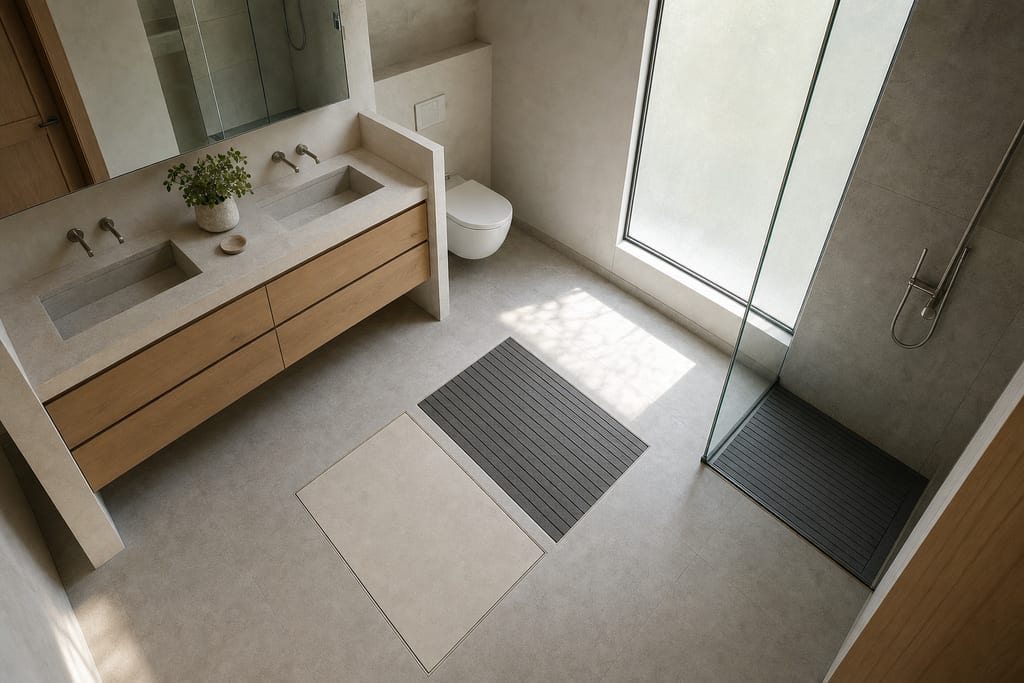
Graphite pairs with black tapware, timber vanities, and matte black fixtures, giving a bathroom a grounded, architectural feel. Slate sits between warm and cool, so it works with both white subway tile and natural stone benchtops. Chalk is closest to white and suits coastal or Japandi bathrooms with light oak and brushed brass fittings.
| Tone | Best Paired With | Style Direction |
|---|---|---|
| Graphite | Black tapware, timber vanities | Modern, architectural |
| Slate | White subway tile, stone benchtops | Transitional, versatile |
| Chalk | Light oak, brushed brass | Coastal, Japandi |
Unlike blush pink or navy, which move in and out of fashion every few years, grey has stayed a constant in bathroom design because it doesn't compete with trend cycles. A mat in blush or navy can date a renovation within five years, while a grey mat tends to still look current against whatever fixtures replace the original ones. That's part of why diatomite bath mats are offered across all three grey tones rather than seasonal colourways.
Grey Mats for Modern Minimalist Bathrooms
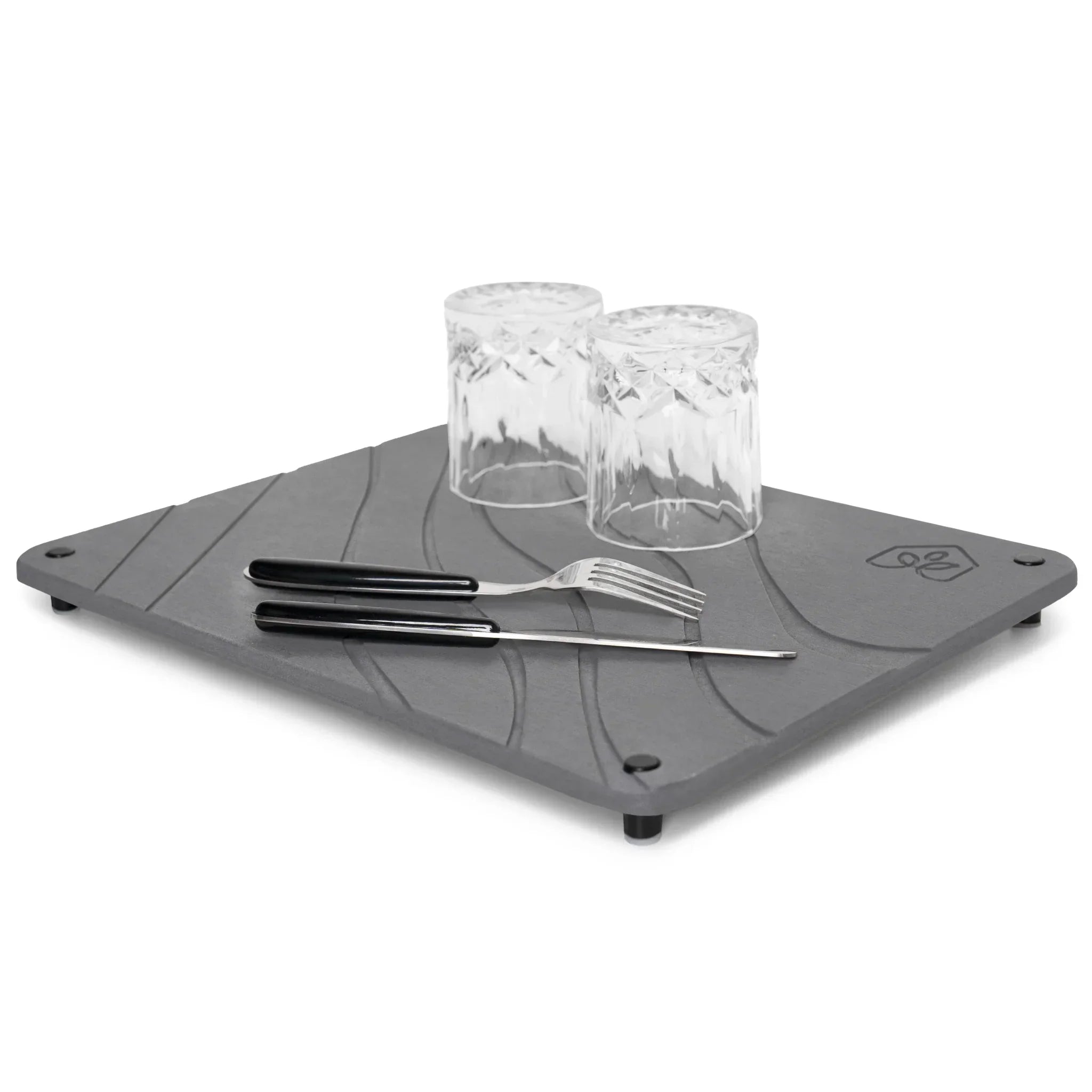
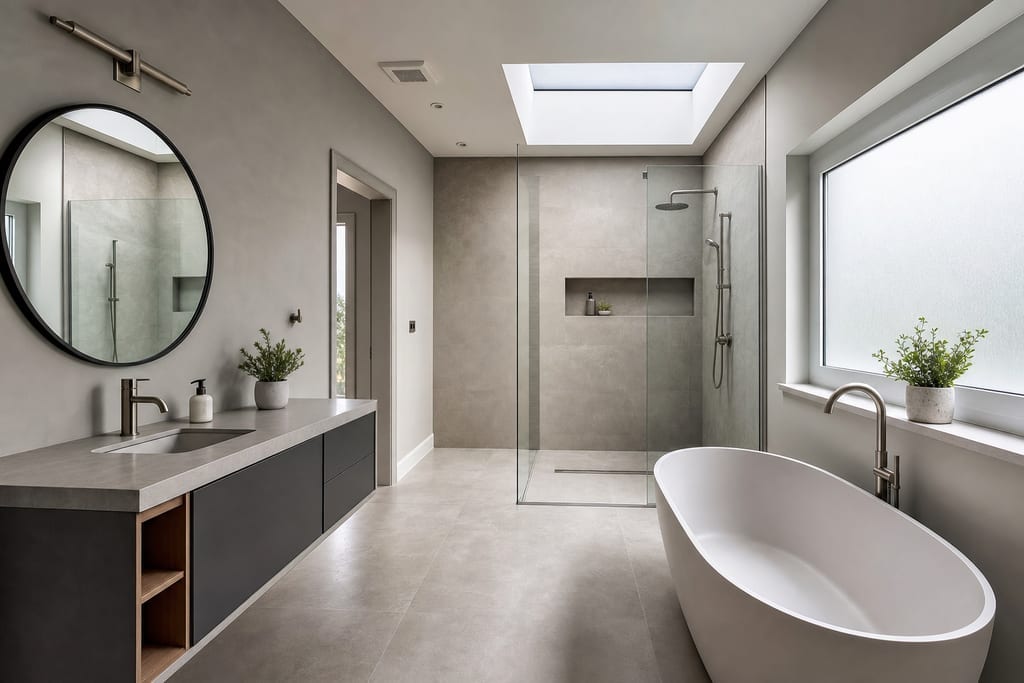
Graphite is the grey that works hardest in a minimalist bathroom. It pairs with matte black tapware and concrete-look tiles without any of the visual noise that a patterned or lighter mat brings into the room.
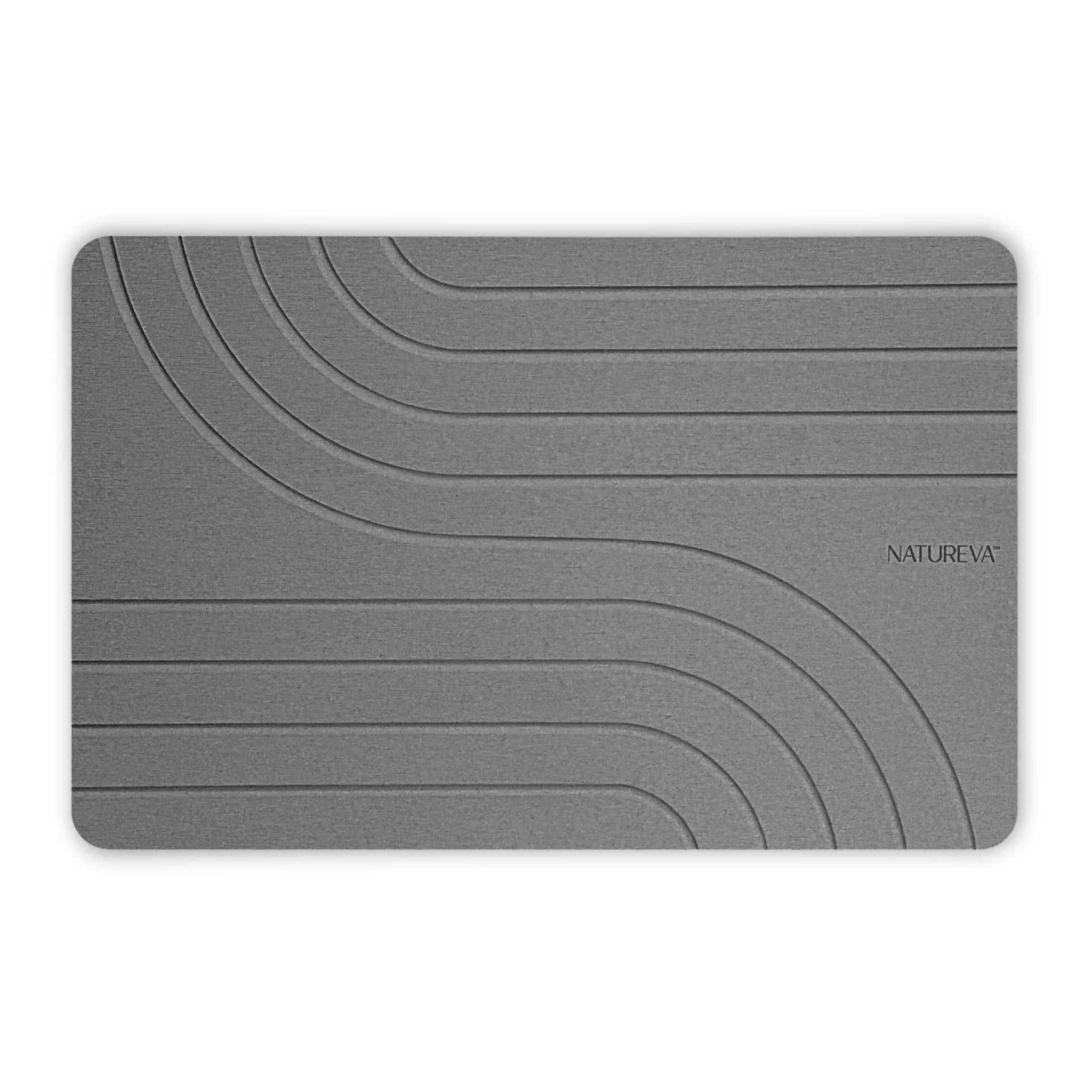
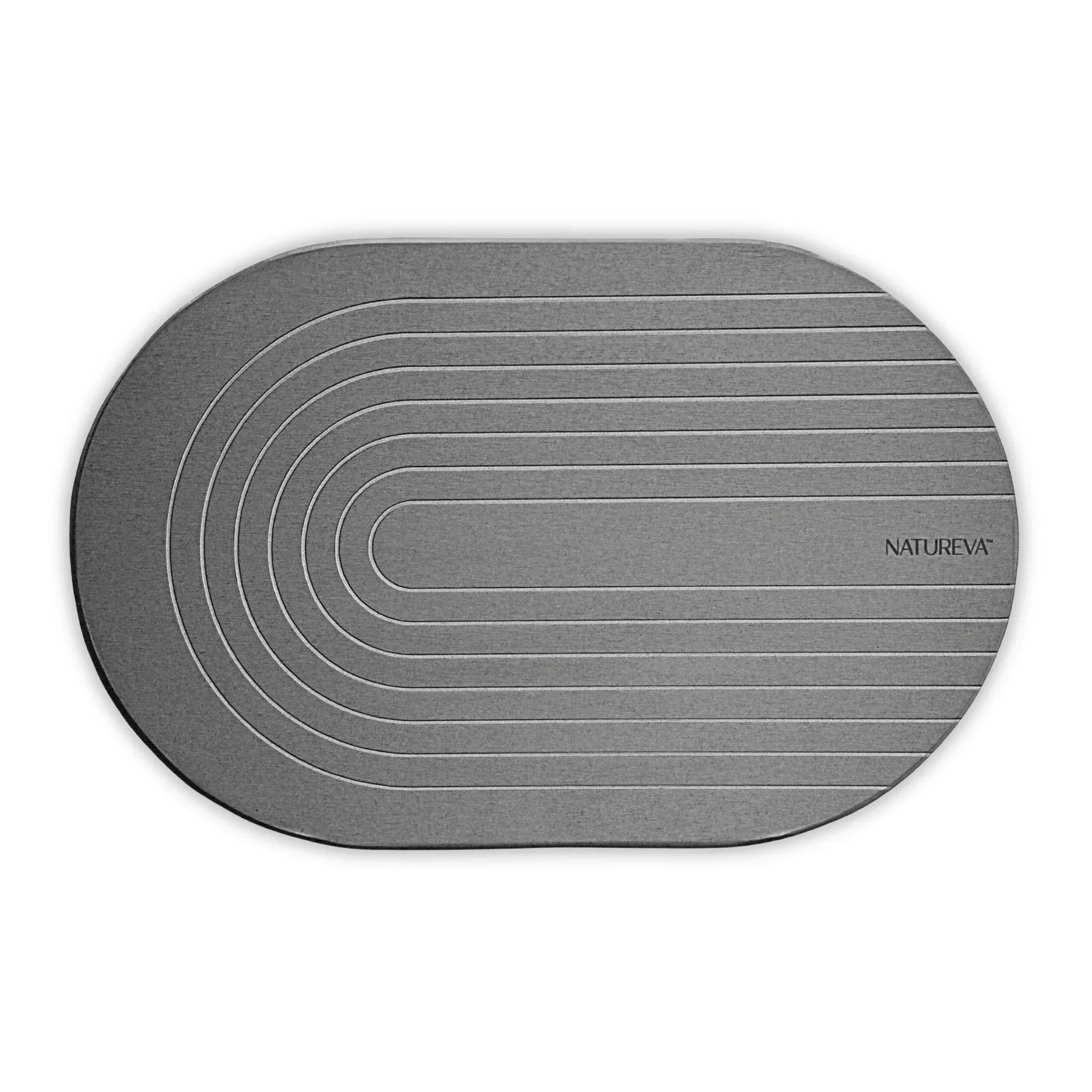
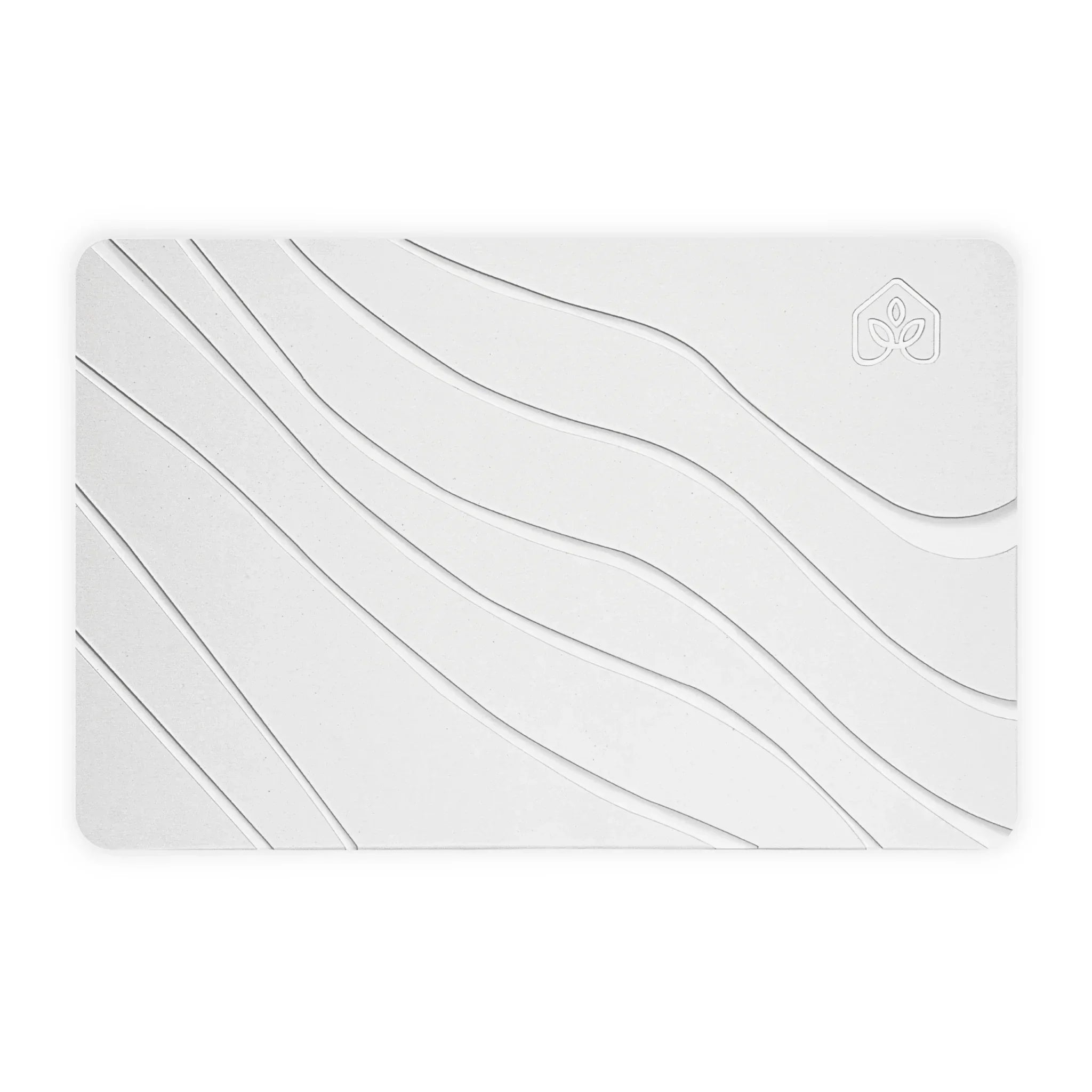
Minimalist bathrooms are built on restraint, so the carved surface matters as much as the colour. Patterns like Tide or Flow add quiet texture without turning into decoration, which keeps the surface in line with an uncluttered room rather than competing with it.
Profile also matters more than most people expect in a small, minimal space. A flat stone mat sits under 1 cm thick, keeping sightlines clean, while a bunched or curled fabric mat breaks up the floor plane and reads as clutter even when it's clean.
- Graphite stone against black tapware and grey concrete-look tile
- Carved geometric pattern instead of a printed design
- Flat profile under 1 cm versus a fabric mat's raised pile
- Rectangular shape for a straight-edged vanity run
Grey Mats for Japandi and Warm Neutral Bathrooms
Chalk and Slate are the two tones that soften against timber rather than fight it. Both sit lighter than Graphite, so they pick up warmth from timber vanities and warm lighting instead of reading cold or industrial.
Japandi styling leans on natural, imperfect shapes, and the organic contour engraving on a stone mat echoes that without using any colour at all. A soft horizontal or diagonal pattern reads as landscape, not hardware, which is the look Japandi bathrooms are built around.
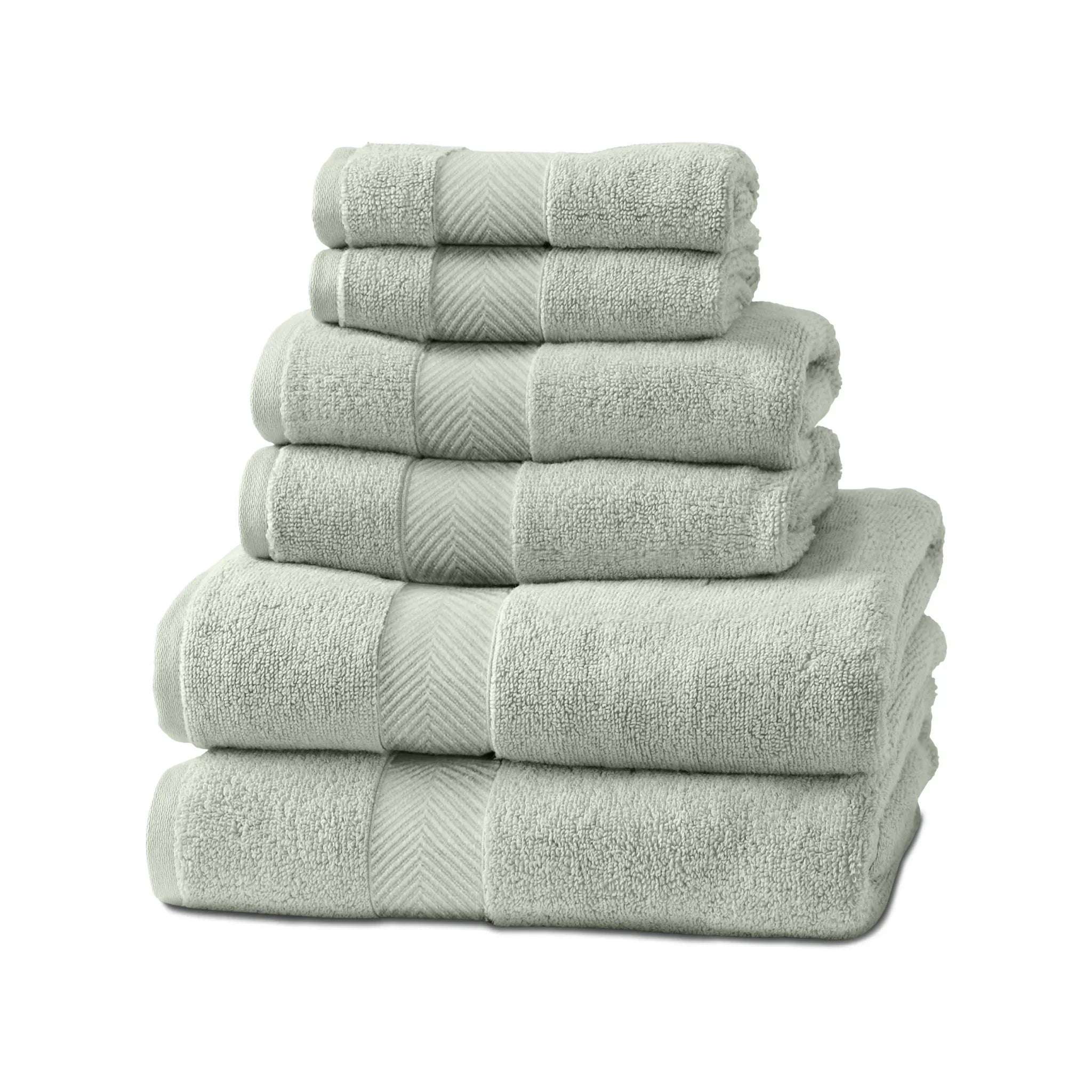
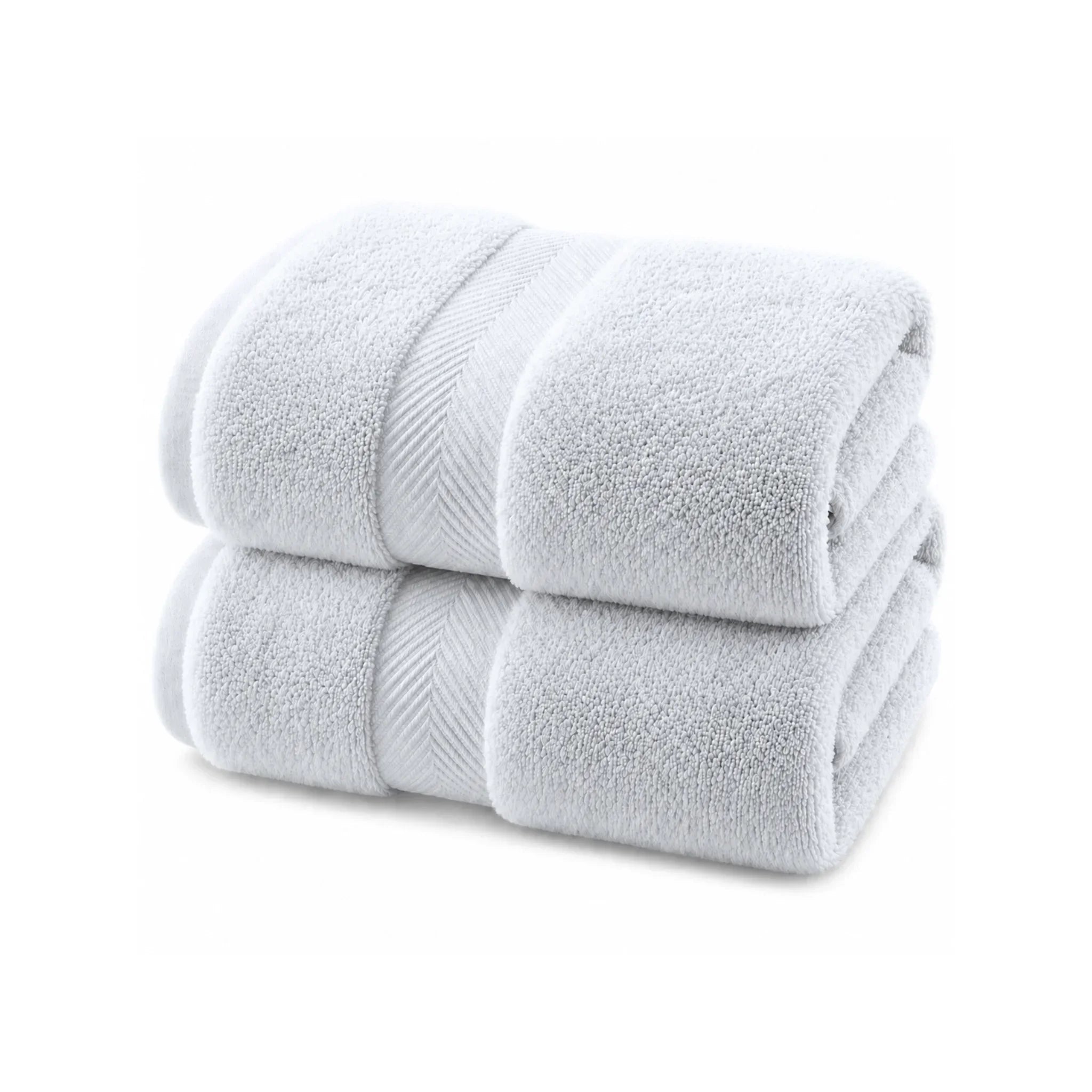
Colour coordination carries the palette through the rest of the room. Pairing a Chalk or Slate mat with sage or sand-toned towels, such as the Eucalyptus or Dune shades in a bamboo cotton set, keeps every textile in the bathroom working off the same warm neutral base.
- Chalk mat with light oak vanity and brushed brass tapware
- Slate mat where the room mixes warm and cool tones
- Sage-toned towels layered against a grey stone mat
- Sand-toned towels for a warmer, more neutral finish
The next generation of home essentials: naturally made, cleaner by design, sustainable by nature.
SHOP ALLGrey Mats for Classic and Coastal Bathrooms
A light Chalk grey is the tone that sits easiest next to white subway tile and chrome tapware. It reads close enough to white to stay traditional, without the stark contrast a pure white mat creates against grouted tile.
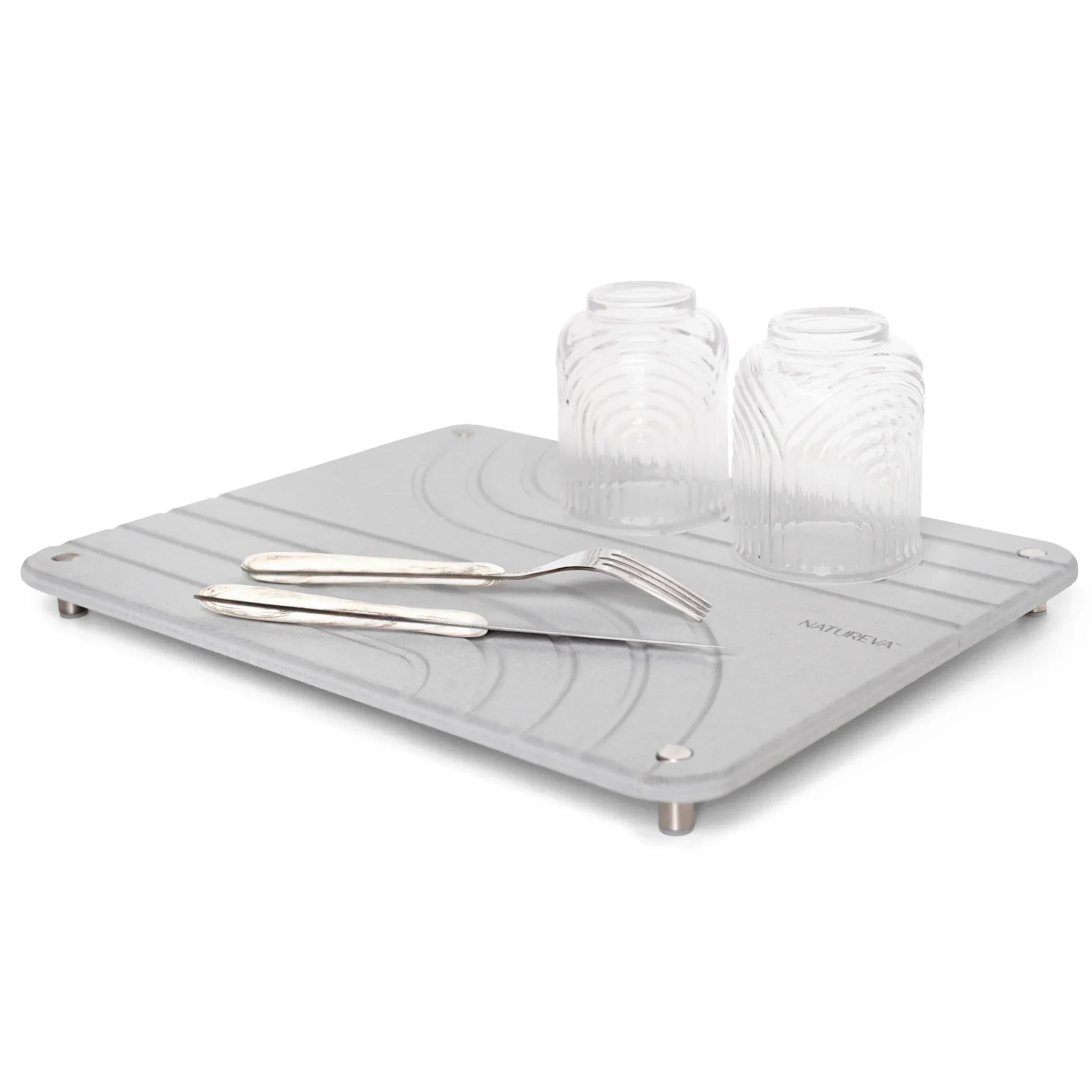
Shape does more work in a classic bathroom than colour does. The oval Arch mat's rounded, architectural contour lines suit softer, more traditional layouts where a sharp rectangular mat can look out of place against curved tapware or a pedestal basin.
Grey also avoids the clash that stronger colours create in a coastal scheme. It sits neutral against coastal blues and natural timber accents, so the mat never competes with the room's main colour, whether that's a navy vanity or a timber stool.
- Chalk mat against white subway tile and chrome fixtures
- Oval Arch shape for curved basins and pedestal sinks
- Grey as a buffer colour next to coastal blue cabinetry
- Slate as a slightly deeper option where tile reads warmer
Matching Mat Material to Your Bathroom's Daily Use
Colour decides how a mat looks, but material decides how it performs day to day. Fabric mats hold moisture inside their pile, and that trapped damp needs frequent washing to avoid odour building up between uses.
Rubber and silicone mats solve the slip problem but create a new one underneath. Water collects under the mat with limited airflow, so the floor beneath stays damp even after the top surface looks dry.
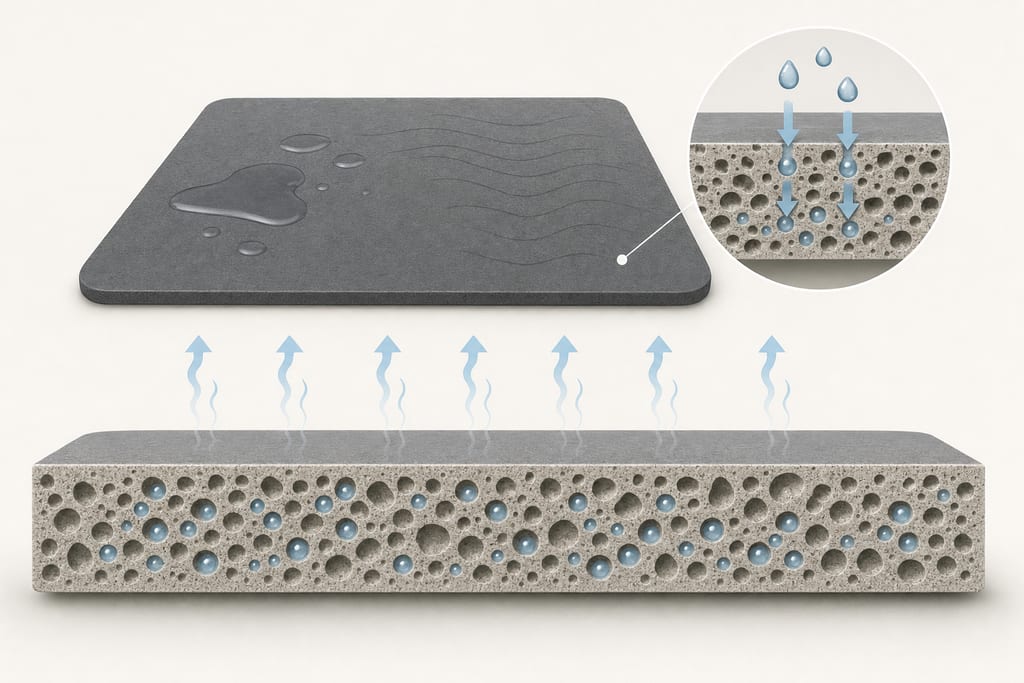
Stone mats work on a different mechanism entirely. A diatomite surface like Natureva's stone bath mat range dries within minutes, staying hygienic by design because there's no damp layer left for odour or mould to develop in.
| Material | Drying behaviour | Maintenance |
|---|---|---|
| Fabric | Stays damp for hours | Weekly wash required |
| Rubber/silicone | Traps water underneath | Needs regular lifting and drying |
| Diatomite stone | Dries within minutes | Weekly wipe, occasional sanding |
For anyone weighing up more than just colour, the deciding factor usually comes down to one thing: how long the surface stays wet after use, not how it looks when it's dry.
Shade Gets You the Look, Material Gets You the Result
A shade decision and a material decision answer two different questions, and only one of them affects how the mat performs in six months. Matching Chalk to a light oak vanity or Graphite to black tapware solves how the bathroom looks the day it's installed. It says nothing about what the mat is doing after the fifth or fiftieth shower.
A mat that stays wet will develop mould no matter how well the grey matches the grout. The colour sits on top of the problem, it doesn't touch the cause, which is moisture trapped in fabric pile or pooling under a rubber base. Independent testing from Homes To Love confirmed a stone bath mat dried fully in under 8 minutes, a result fabric mats don't come close to because the pile holds water rather than releasing it. That gap in drying time is the real variable between a mat that stays looking like the colour you chose and one that patches, fades, or smells within a month.
- Shade matching: solves how the mat looks against tile, tapware, and vanity tone
- Material choice: solves how fast the mat dries and whether mould gets a chance to start
- Verified result: a diatomite surface dried fully in under 8 minutes in independent testing
If the budget only stretches to fixing one of these, fix the material first. A slightly mismatched grey is a styling note, a damp mat is a maintenance problem that repeats every week, as outlined in 25 Bathroom Rug Ideas That Give the Whole bathroom its finishing touch, where colour and texture choices are treated as separate from how a rug or mat actually handles wear.
Choosing Your Grey Mat and Checking It Dries Fast
Start with your fixtures, not the mat itself. Hold a sample against your tapware and vanity: black hardware calls for Graphite, timber and brushed brass call for Chalk, and mixed tones usually settle on Slate. Once the shade is settled, ask the only question that matters after that: how fast does the surface actually dry. A fabric or rubber mat can match your grout perfectly and still stay damp for hours. Natureva's stone bath mat range comes in all three tones and dries within minutes, so the colour you picked keeps looking right instead of turning patchy from trapped moisture.
The next generation of home essentials: naturally made, cleaner by design, sustainable by nature.
SHOP ALLCommon Questions About Grey Bath Mats
Will a dark grey mat show lint, hair, or dust more than a light one?
Graphite shows dust and lint more than Chalk or Slate because the dark surface contrasts against light debris. A carved stone surface still hides more than a flat fabric mat would, since the engraved lines break up the surface visually. A quick weekly wipe with a damp cloth keeps a dark mat looking clean between proper cleans.
Can I use a grey stone mat if my bathroom already has grey tiles?
Yes, a grey mat works well against grey tile as long as the tones sit apart rather than matching exactly. Pairing a cooler tile with a warmer grey mat, or a light tile with a deeper Graphite mat, creates contrast so the floor doesn't flatten into one block of colour. Matching the exact same grey shade tends to make the mat disappear into the floor instead of standing out as a design element.
Does a grey mat work in a small bathroom without making it feel darker?
Chalk is the safest grey for a small bathroom because it stays close to white and reflects light rather than absorbing it. Graphite can work too if the rest of the room is already light, since one dark accent against pale tile and a white vanity reads as a deliberate design choice rather than a room-darkening mistake. A flat stone profile also helps, since it doesn't bulk up the floor the way a thick pile mat does.
How do I keep a grey mat looking new instead of patchy or faded?
A stone mat stays looking even because moisture evaporates out of the surface instead of sitting in it and causing blotchy patches over time. Natureva's diatomite bath mats come with a sanding tool that reopens the surface pores if the finish starts to look dull or less absorbent, which restores the original colour and performance. A weekly wipe with a damp cloth and cleaning vinegar keeps the surface from building up soap residue that dulls the grey over time.