
Diatomaceous Earth Stone Bath Mat Guide for First-Time Buyers
Fabric bath mats stay damp for hours after a shower, creating the perfect breeding ground for mildew and that musty smell no amount of washing seems to fix. Stone bath mats made from diatomaceous earth solve this problem by absorbing water instantly and drying within minutes, thanks to millions of microscopic pores in fossilised algae that pull moisture from the surface and release it into the air. If you're buying your first diatomaceous earth stone bath mat, understanding what separates a certified, high-performance product from cheaper alternatives will help you choose a mat that actually delivers on the promise of a cleaner, drier bathroom.
How long does a diatomaceous earth bath mat take to dry?
A diatomaceous earth stone bath mat dries completely within 60 seconds to 3 minutes after use, absorbing moisture through its porous structure that wicks water away from the surface instantly. This rapid evaporation occurs because diatomaceous earth contains millions of microscopic pores that pull water into the stone and release it into the air.
How often do you need to clean a stone bath mat?
Stone bath mats require light sanding with fine-grit sandpaper (220-400 grit) every 1-2 months to maintain absorption, plus weekly wiping with a damp cloth to remove soap residue and skin oils. Deep cleaning is only necessary when the mat stops absorbing water quickly, typically every 3-6 months depending on household usage.
What is the main advantage of stone bath mats over fabric?
Stone bath mats made from diatomaceous earth eliminate bacterial growth and mildew because they dry within minutes, while fabric mats remain damp for hours and require machine washing every 3-7 days to prevent odor and bacteria buildup. The stone material also maintains its absorption performance for 2-3 years without degrading, compared to fabric mats that lose absorbency after 6-12 months of regular washing.
Table of Contents
What Is Diatomaceous Earth and How Does It Work
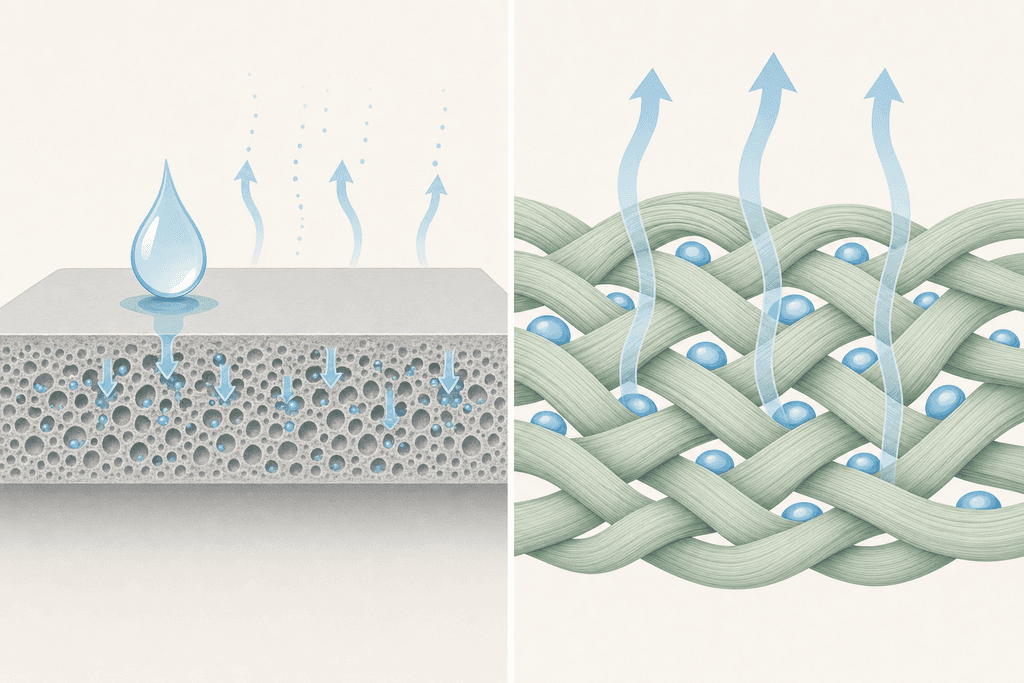
Millions of years ago, microscopic algae called diatoms lived in ancient oceans and lakes, and when they died, their silica-rich skeletons settled on the bottom and compressed into layers over time. That fossilised material is what we now call diatomaceous earth, or diatomite. It looks like solid stone, but under a microscope, it's actually filled with millions of tiny pores that act like a natural sponge. When water touches the surface, those pores pull moisture in instantly, then release it back into the air through evaporation.
How the Porous Structure Absorbs Moisture
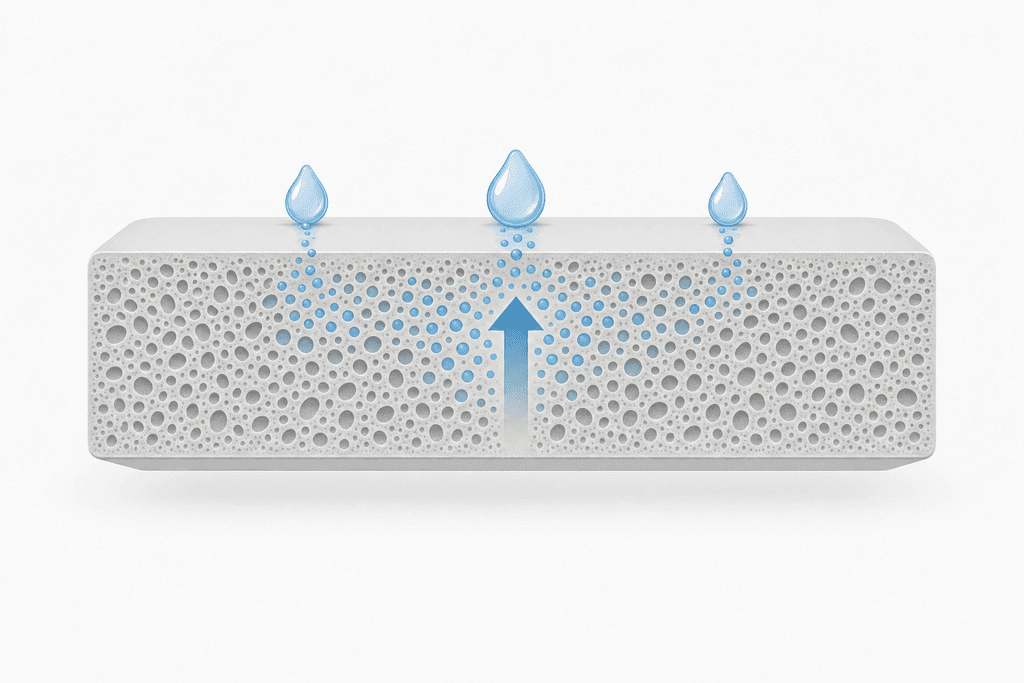
The secret to diatomite's performance is in its structure. Each microscopic pore creates a pathway for water to move through the material, spreading moisture across a huge internal surface area. This means a bath mat made from diatomite can absorb water the moment your feet touch it, instead of leaving you standing on a damp surface.
Here's what makes the material work so well:
- Natural porosity from fossilised algae creates instant absorption on contact
- High surface area inside the material spreads moisture thin for faster drying
- No chemical coatings or treatments needed to maintain performance
- Stays hygienic by design because moisture evaporates before mould can form
Why Rapid Evaporation Matters
Most fabric bath mats stay damp for hours after you step out of the shower. That wet environment is exactly where mould, mildew, and odour-causing bacteria love to grow. Diatomite works differently because it doesn't trap moisture inside fibres or layers. Instead, the stone releases water back into the air within minutes, leaving the surface dry and ready for the next use.
The drying process happens in stages:
- Water absorbs into the porous structure immediately
- Moisture spreads across the internal surface area
- Air circulation pulls water out through evaporation
- Surface returns to dry state, usually within 8 to 10 minutes
Natureva's stone bath mats use this natural drying mechanism without any synthetic additives. The material stays clean through rapid moisture evaporation, reducing the conditions where mould and mildew develop. It's a simple concept that solves a problem most people didn't realise had a better solution.
| Material Type | Drying Time | Maintenance Frequency |
|---|---|---|
| Fabric Bath Mat | 4-6 hours | Weekly washing |
| Rubber Bath Mat | 2-3 hours | Weekly scrubbing |
| Diatomite Stone Mat | 8-10 minutes | Monthly wipe down |
If you want to understand how stone mats compare to traditional options in more detail, this comparison breaks down the practical differences between diatomaceous earth and cloth bath mats.
What to Look for When Buying Your First Stone Bath Mat
Most people don't realize that the damp fabric mat sitting outside their shower is creating the exact environment where mould thrives. When you're shopping for your first diatomaceous earth stone bath mat, the material composition matters more than anything else. A proper stone bath mat is made from a composite of diatomaceous earth and recycled paper, compressed into a solid, chemical-free slab. This porous structure is what allows the mat to absorb water instantly and release it back into the air through rapid evaporation. Without this specific composition, you're just buying a heavy tile that won't perform.
Safety certification is non-negotiable. The diatomite category has faced serious issues with asbestos contamination from unverified sources. Look for NATA-accredited asbestos-free certification from an Australian laboratory. NATA is Australia's peak accreditation body for laboratory testing, and this certification means the product has been independently tested and verified safe. Our stone bath mats carry this certification and are regularly tested to maintain that standard.
- Material composition: Diatomaceous earth and recycled paper composite, no synthetic coatings
- Safety certification: NATA-accredited asbestos-free testing from Australian laboratory
- Non-slip base: Full base pad to prevent sliding on wet floors
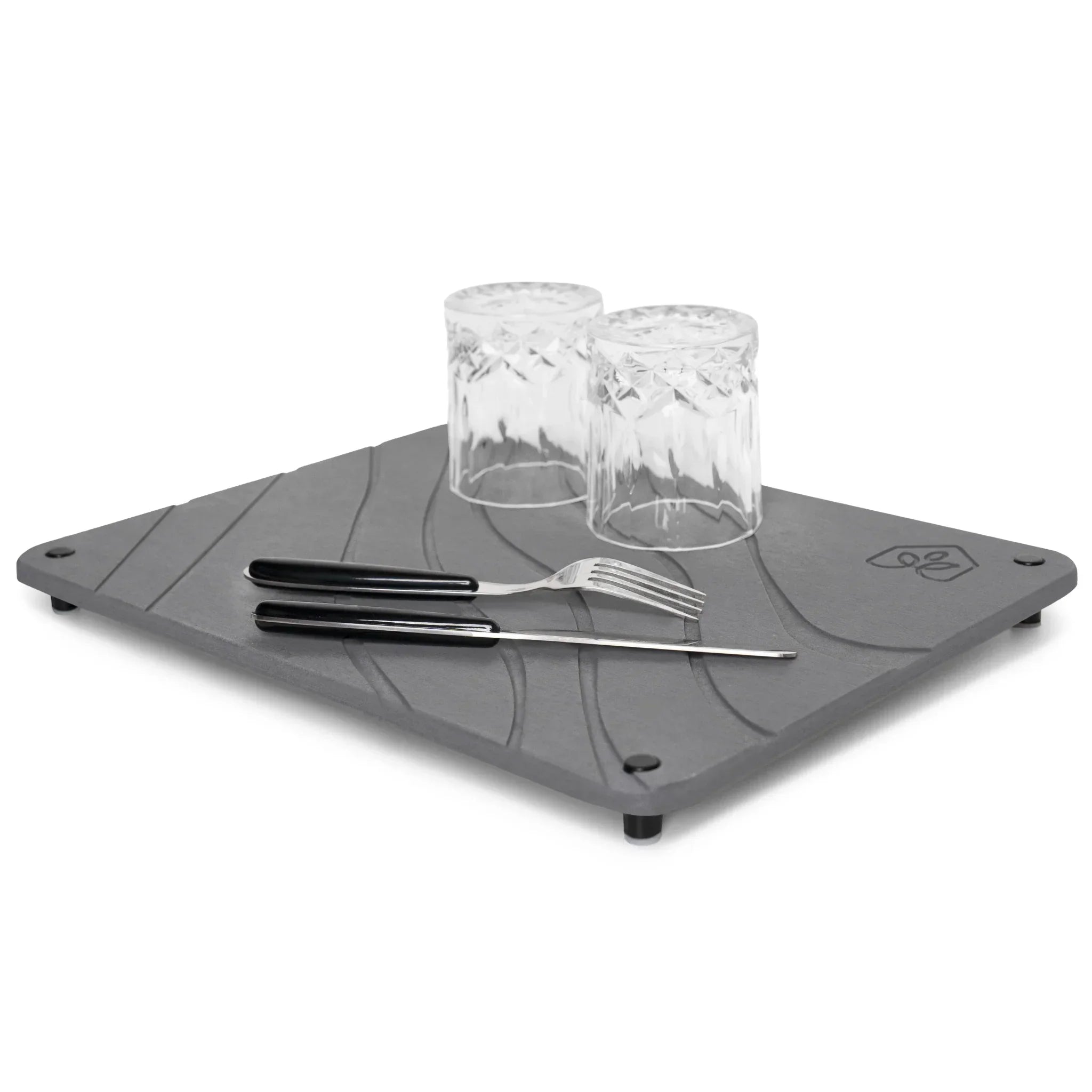
- Maintenance tools: Included P320 grit sanding disc (approximately 10 cm diameter) to restore absorbency
- Design quality: Engraved patterns that complement modern interiors without compromising function
The non-slip base pad is critical for bathroom safety. Unlike fabric mats that bunch, slide, or curl on wet floors, a stone mat with a proper base stays firmly in place. This matters especially for older adults or anyone stepping out of a slippery shower. The mat should also come with a sanding tool, a small disc that reopens the surface pores when absorbency starts to decline after months of use.
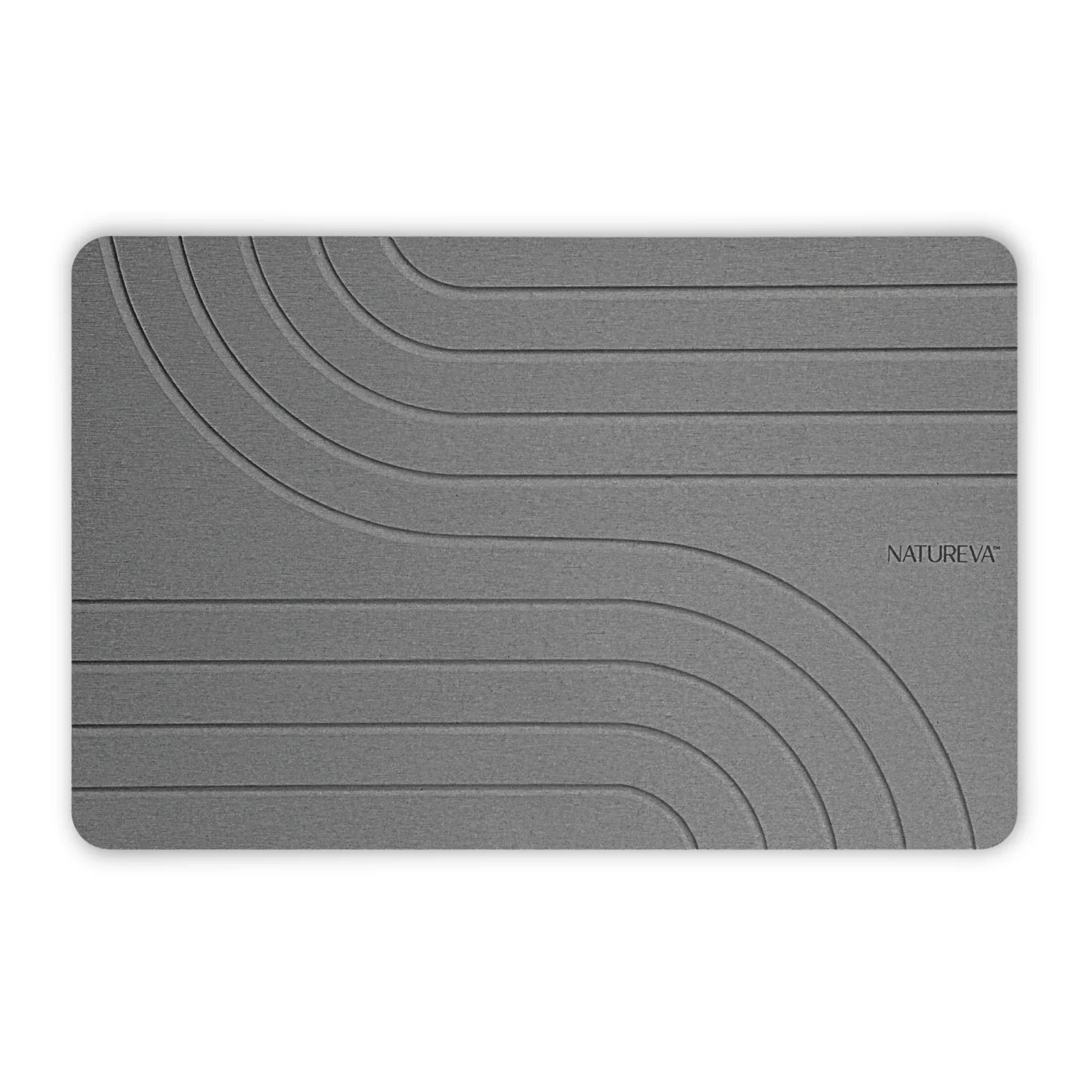
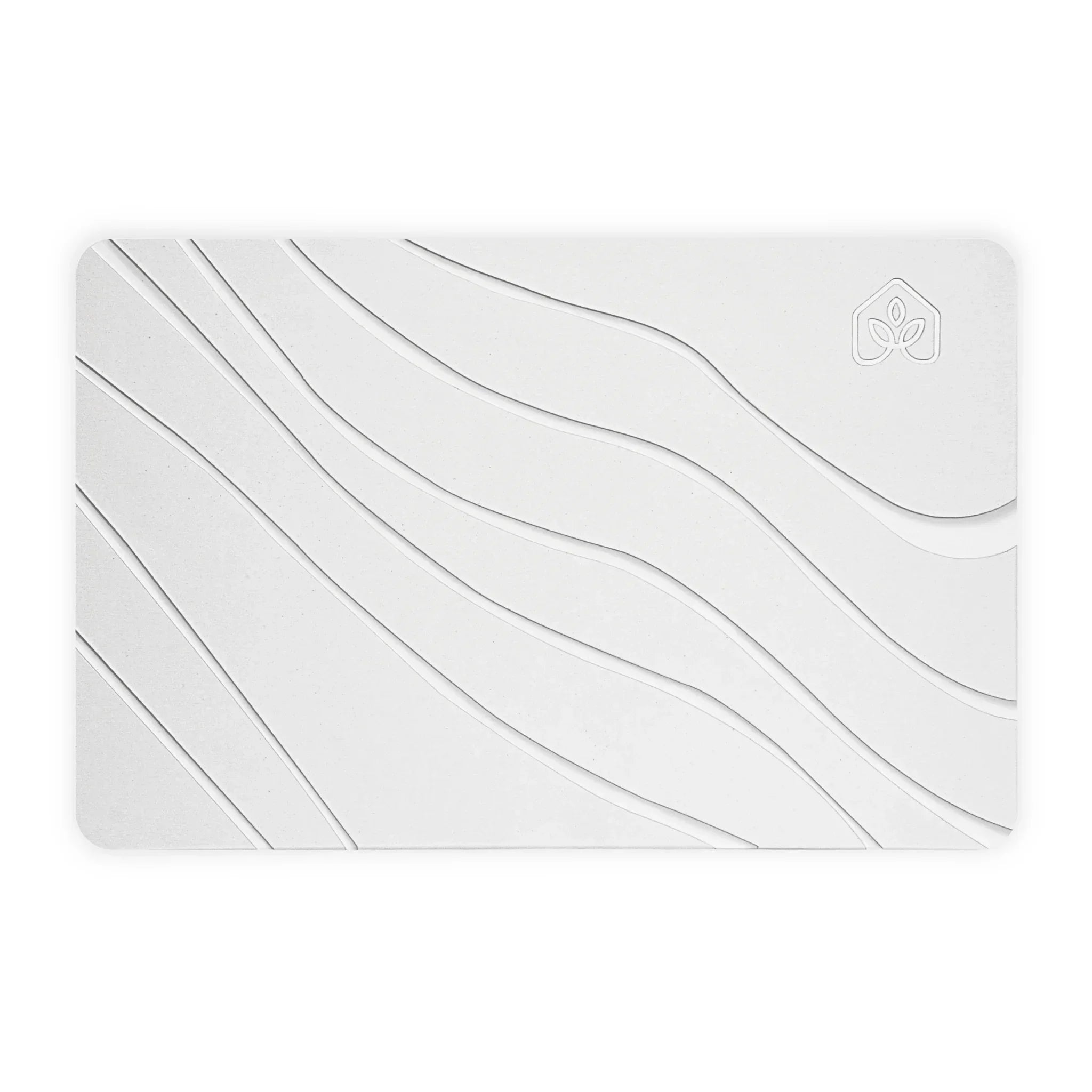
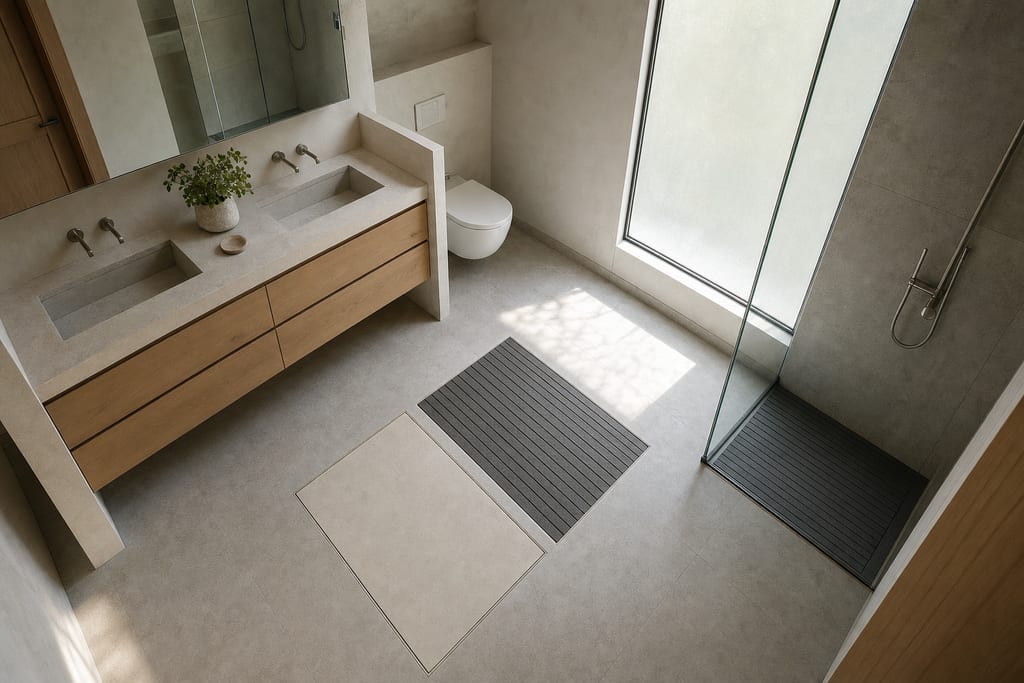
Design matters more than you'd think. You'll see this mat every single day, so it needs to fit your bathroom aesthetic. Look for minimalist engraved patterns rather than busy graphics or printed designs. The engraving should add visual rhythm without feeling decorative or overdone. Patterns like soft horizontal contours, diagonal waves, or sparse vertical lines work well in modern, Japandi, and contemporary bathrooms.
Stone vs Fabric Bath Mats: The Performance Gap
Fabric bath mats stay damp for hours after use, sometimes staying wet until the next person showers. That constant moisture creates the perfect breeding ground for mould, mildew, and odour. Stone mats dry within minutes through rapid evaporation, leaving no damp environment for these problems to develop. The difference isn't subtle. Independent testing by Australia's Homes To Love publication confirmed that a stone bath mat dried fully in under 8 minutes.
Maintenance requirements tell the real story. Fabric mats need washing every week or two, which means hauling a heavy, wet mat to the laundry, running a full wash cycle, and waiting for it to dry. Stone mats need a quick wipe with a warm damp cloth and cleaning vinegar once a week. That's it. No washing machine, no drying time, no fabric softener.
| Feature | Stone Mat | Fabric Mat | Rubber/Silicone Mat |
|---|---|---|---|
| Drying time | Under 8 minutes | 4-6 hours | Traps moisture underneath |
| Maintenance | Weekly wipe-down | Weekly washing | Weekly scrubbing |
| Mould risk | Low (rapid drying) | High (stays damp) | High (trapped moisture) |
| Surface stability | Rigid, non-bunching | Bunches and slides | Can curl at edges |
| Lifespan | Years with sanding | 6-12 months | 1-2 years |
Rubber and silicone mats create their own problems. They trap moisture underneath, which means the floor stays wet and can develop mould in the grout or on the tile. The surface also gets slimy and requires regular scrubbing with harsh cleaners. Stone mats sit on a non-slip base pad that allows airflow underneath while keeping the mat stable.
Safety is where stone really pulls ahead. Fabric mats bunch up when wet, creating trip hazards. Rubber mats can curl at the edges. Stone mats stay flat and rigid, providing a stable surface that doesn't shift underfoot. For anyone concerned about bathroom falls, especially older adults, this stability matters more than any other feature. You can read more about the performance differences in this detailed buyer's guide.
Understanding Stone Bath Mat Designs and Colours
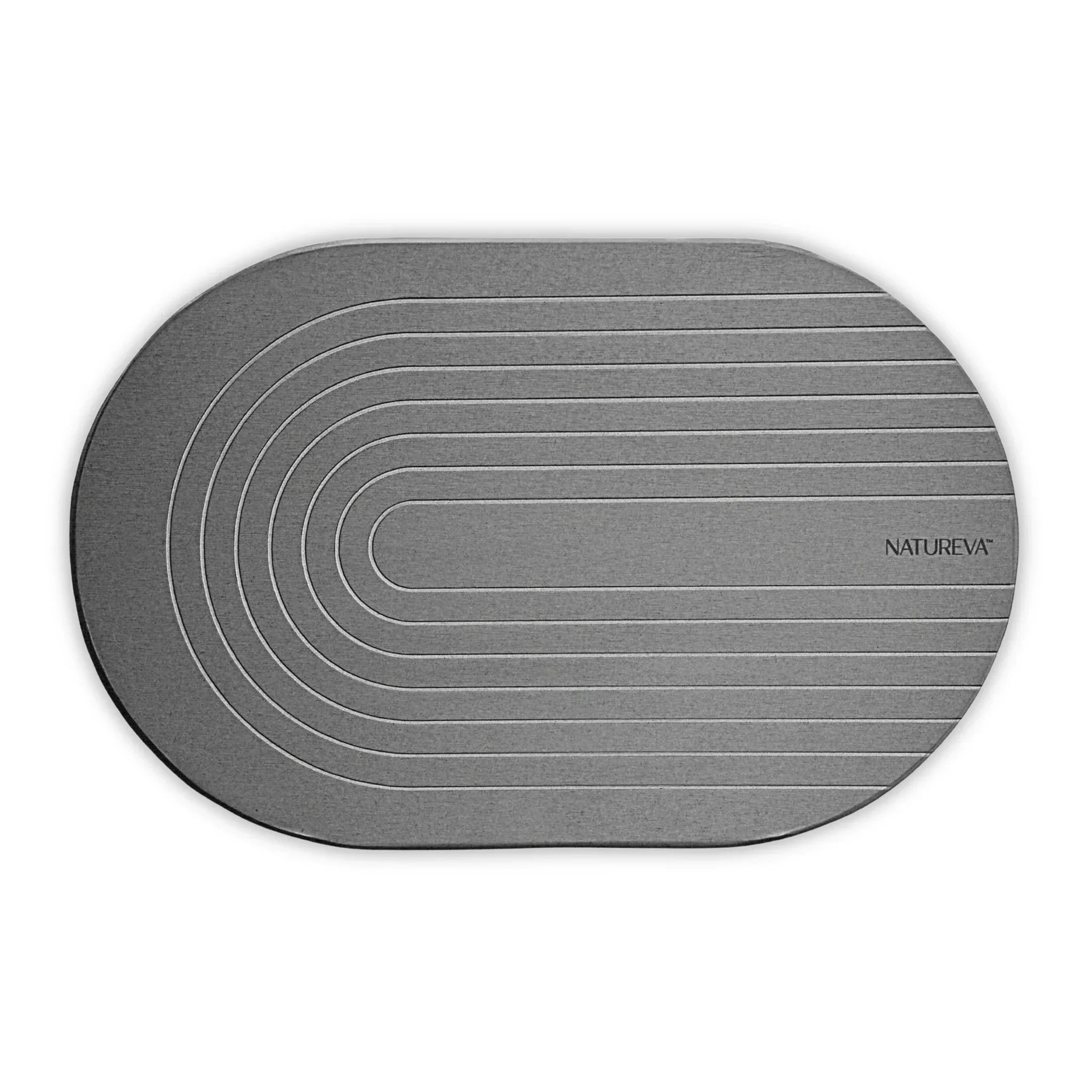
Stone bath mats come in four distinct design patterns, each with its own visual character. Tide features soft horizontal contour bands that resemble shoreline movement. Flow uses layered diagonal wave contours that suggest landscape motion. Arch has rounded architectural contour lines that echo an oval silhouette. Rain creates sparse vertical line segments arranged like falling droplets. These aren't just decorative choices. The engraved patterns add visual interest while maintaining the flat, functional surface you need for safe footing.
Colour selection comes down to three neutral options: Graphite (charcoal), Slate (soft grey), and Chalk (white). These tones work across different bathroom styles without competing for attention. Graphite anchors darker, moody bathrooms. Slate bridges warm and cool palettes. Chalk brightens white and light-toned spaces. The colours are consistent across the entire product range, so your bath mat, faucet mat, and sink caddy can coordinate seamlessly.
- Tide: Horizontal shoreline curves, works in coastal and minimalist bathrooms
- Flow: Diagonal landscape waves, fits modern and Japandi aesthetics
- Arch: Oval contour lines, architectural feel for contemporary spaces
- Rain: Vertical droplet segments, sparse and structured for clean interiors
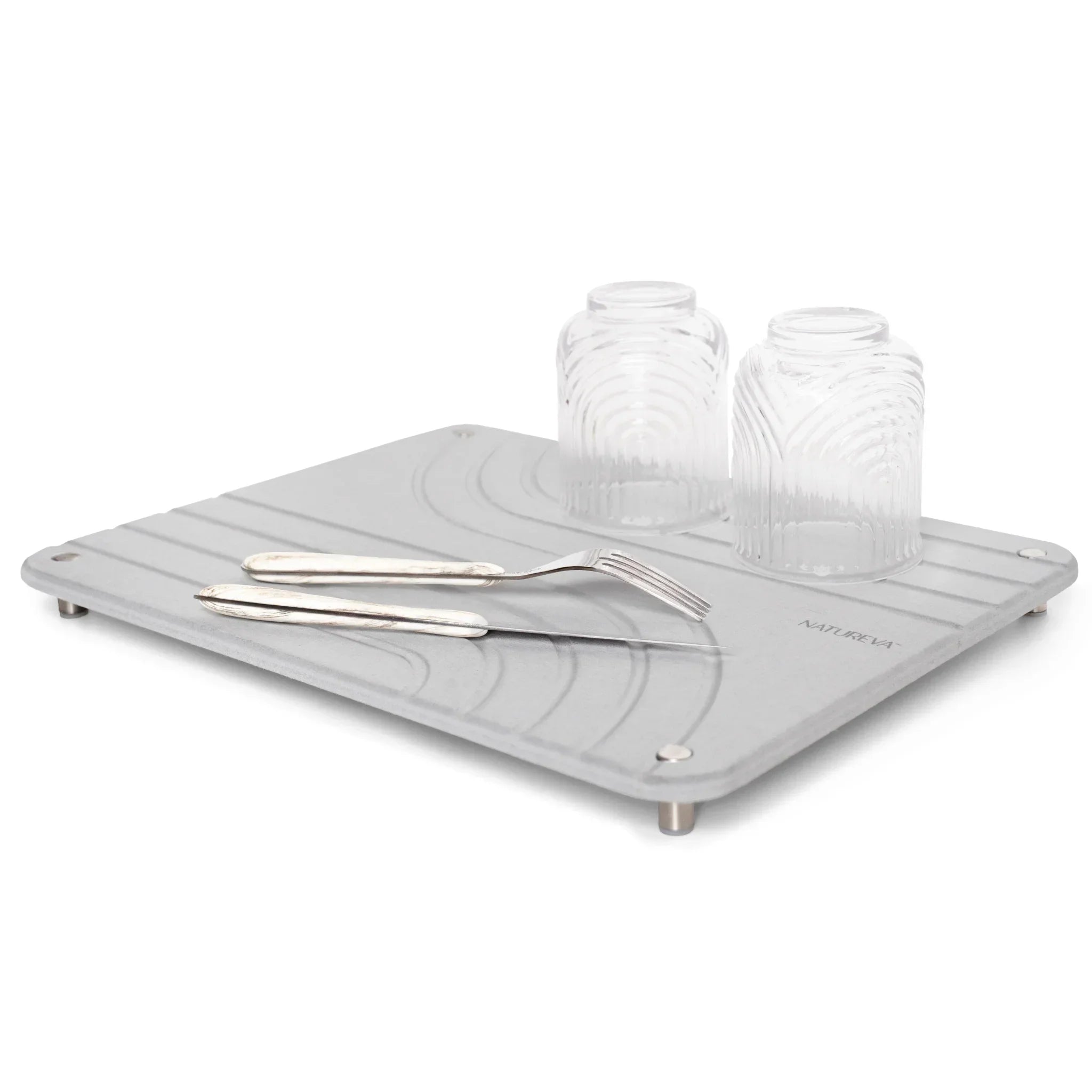
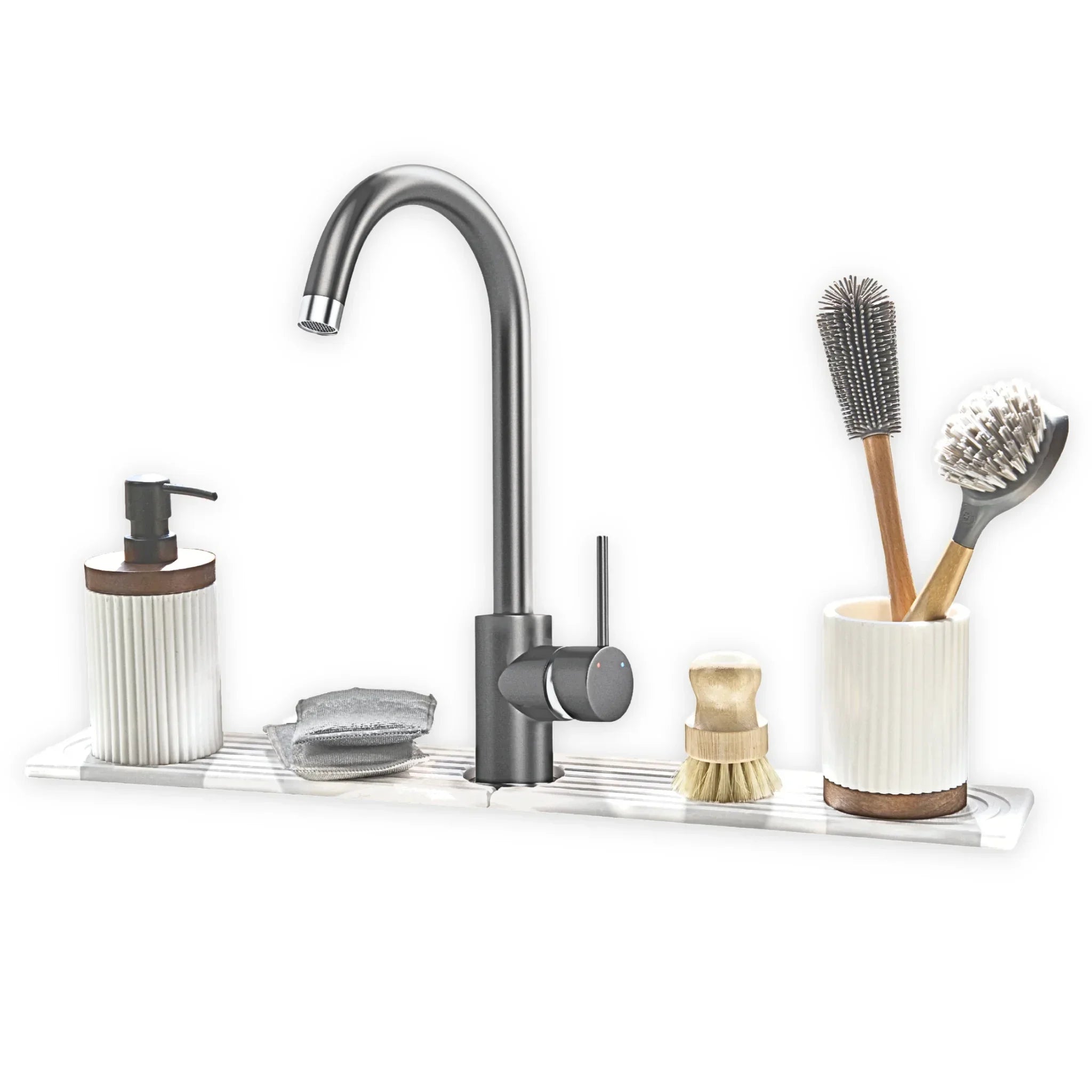
The engraved patterns are carved into the stone surface, not printed or painted on. This means they won't fade, peel, or wear off over time. The texture is subtle enough to feel smooth underfoot but visible enough to create visual rhythm. If you're furnishing a modern bathroom or mid-renovation, the coordinated design language extends beyond bath mats. You can add a faucet mat in the same pattern, a sink caddy with matching engraving, and even a dish mat for the kitchen in the same colourway.
Design consistency across the home is rare in this category. Most brands offer a single bath mat with no coordinating products. Our range includes matching designs across bathroom, kitchen, accessories, and pet products, all in the same three neutral colours. This makes it easy to create a cohesive look without hunting for products that happen to match. You can explore the full coordinated range in our stone bath mat collection.
Caring for Your Stone Bath Mat: Maintenance Made Simple
The next generation of home essentials: naturally made, cleaner by design, sustainable by nature.
SHOP ALLStone bath mats need less maintenance than fabric mats, but they do need some basic care to keep performing well. Once a week, wipe the surface with a warm damp cloth and cleaning vinegar. This removes soap residue, body oils, and any buildup that can clog the porous surface. Avoid coloured soaps or heavily dyed products, as the porous material can absorb pigments and stain. Clear or white cleaning products work best.
The sanding tool is your reset button. After months of daily use, you might notice the mat doesn't absorb water as quickly as it did when new. This happens because the microscopic pores on the surface get filled with mineral deposits, soap residue, and body oils. The included P320 grit sanding disc (approximately 10 cm diameter) reopens those pores in about 30 seconds of light sanding. Just rub the disc across the surface in circular motions, rinse the mat under water, and let it air dry. Full absorbency returns immediately.
- Weekly: Wipe with warm damp cloth and cleaning vinegar
- As needed: Rinse stains under running water
- For deep marks: Apply hydrogen peroxide or use sanding tool
- When saturated: Air dry upright to allow full evaporation
- Every few months: Light sanding to restore absorbency
If the mat gets fully saturated (which can happen if multiple people shower back-to-back), just lean it upright against a wall to air dry. The material releases moisture quickly, so it'll be ready to use again within an hour or two. For stubborn stains, hydrogen peroxide works well. Pour a small amount directly on the stain, let it sit for a few minutes, then rinse under water.
Avoid harsh chemicals and abrasive scrubbing. The porous surface doesn't need aggressive cleaning. In fact, harsh chemicals can damage the material or leave residues that interfere with absorbency. Stick to simple, natural cleaners like vinegar and hydrogen peroxide. The mat stays hygienic through its rapid drying mechanism, not through chemical treatments. You can find more detailed care instructions in our complete guide to diatomite.
Why Material Quality Matters More Than Price
Not all diatomaceous earth stone bath mats are created equal, and the difference isn't just about design or thickness. Over the past few years, multiple diatomite products sold through online marketplaces have been recalled due to asbestos contamination, a serious health risk that comes from unverified sourcing and manufacturing. When you're standing barefoot on a product every single day, the material safety standards matter more than saving a few dollars. The problem is that diatomite, a naturally occurring mineral, can sometimes be mined from deposits that contain asbestos fibres, and without proper testing, there's no way to know what you're bringing into your home.
What Independent Testing Actually Means
NATA-accredited laboratory testing isn't just a marketing badge. It's Australia's peak accreditation body for laboratory testing, and it means an independent third party has verified that a product is asbestos-free through rigorous scientific analysis. Natureva stone bath mats are tested and certified asbestos-free by a NATA-accredited Australian laboratory, with regular testing to maintain that standard over time.
- Independent verification removes the guesswork from material safety
- Regular testing ensures consistency across production batches
- NATA accreditation means the lab itself meets strict quality standards
- Australian-designed products typically follow higher safety protocols than unverified imports
The Hidden Cost of Cheap Alternatives
Budget diatomite products often skip the testing process entirely or use lower-grade composite materials that crack, chip, or lose absorbency within months. The upfront savings disappear when you're replacing a mat every six months instead of using one that lasts for years. Quality composite materials, like the blend of diatomaceous earth and recycled paper used in certified products, create a durable structure that maintains performance without chemical coatings or synthetic fillers.
| Factor | Certified Products | Unverified Products |
|---|---|---|
| Safety Testing | NATA-accredited lab verified | Often untested |
| Material Quality | Controlled composite blend | Unknown composition |
| Lifespan | Years with proper care | Months before degradation |
| Recall Risk | Minimal with regular testing | Higher contamination risk |
The real value in a diatomaceous earth stone bath mat comes from knowing exactly what you're getting and how long it will last. When a product is independently tested and made from quality materials, you're not just buying a bath mat. You're investing in a surface that stays hygienic through rapid drying, requires almost no maintenance beyond a weekly wipe, and won't need replacing every season because it's built to perform consistently over time.
Making the Switch to Stone
A diatomaceous earth stone bath mat solves the damp floor problem through material science, not fabric that stays wet for hours. The porous structure of diatomite absorbs water on contact and releases it back into the air within minutes, which means your bathroom floor stays dry and you spend less time dealing with mildew or that musty smell fabric mats develop. This isn't about adding another product to your cleaning routine. It's about replacing something that creates problems with something that doesn't.
When you're shopping for your first stone mat, certification matters more than price. Look for NATA-accredited asbestos-free testing from an Australian laboratory, because not all diatomite products are created equal and some have faced safety recalls. Our stone bath mats are regularly tested to maintain that standard, which is why we can state it as fact rather than marketing language.
Design and colour should complement your bathroom, not fight it. Graphite works in modern spaces with dark fixtures, Slate fits almost anywhere, and Chalk suits light or coastal interiors. The carved patterns add texture without being loud about it.
Maintenance is simpler than you think. A weekly wipe with warm water and cleaning vinegar keeps the surface clean, and the included sanding tool restores absorbency if it ever slows down. Most people find they're doing less work than they did with fabric mats that needed constant washing. If you want to understand more about how the material actually works, the science behind diatomite explains why stone outperforms fabric, rubber, and silicone alternatives.
Common Questions About Stone Bath Mats
Switching from fabric to stone feels like a big leap, and most people have the same questions before they buy their first diatomaceous earth stone bath mat. The material works differently than anything you've used before, so it's normal to wonder about performance, safety, and how it holds up over time. Here's what first-time buyers ask most often.
How long does a stone bath mat take to dry?
A diatomaceous earth stone bath mat dries in minutes, not hours. The porous structure pulls moisture from your feet instantly and releases it back into the air through rapid evaporation. Most mats feel completely dry within 5 to 10 minutes after use, even in humid bathrooms where fabric mats would stay damp for hours.
Are stone bath mats safe and asbestos-free?
Safety depends entirely on where the diatomite comes from and whether it's been tested. Some diatomite products from unverified sources have faced recalls due to asbestos contamination, which is why independent laboratory certification matters. Natureva stone bath mats are tested and certified asbestos-free by a NATA-accredited Australian laboratory, with regular testing to maintain that standard. NATA is Australia's peak accreditation body for laboratory testing, so this certification isn't just a marketing claim.
Do stone mats work in humid bathrooms?
Yes, and that's actually where they perform best. The fast-drying surface reduces the conditions where mould and mildew develop, even in steamy bathrooms with poor ventilation. Because the mat stays dry through rapid moisture evaporation, it doesn't trap humidity the way fabric or rubber mats do.
How do you clean a stone bath mat?
Wipe it down weekly with a warm damp cloth and cleaning vinegar. That's it. No washing machine, no hanging to dry, no mildew smell building up between washes. For deeper marks or stains, rinse under water or use the included sanding tool to reopen surface pores and restore full absorbency.
Will a stone mat crack or break?
Stone mats are solid and durable, but they're not indestructible. Dropping them on tile or concrete can cause cracks, just like dropping a ceramic plate. Handle them with normal care during cleaning and they'll last for years. The material itself doesn't wear out or degrade from daily use.
Can stone mats handle daily family use?
Absolutely. The surface absorbs water on contact, so it works just as well after the fourth person steps out of the shower as it does after the first. Unlike fabric mats that get soaked and stay wet, diatomite releases moisture continuously, so the mat resets itself between uses without any effort from you.
The next generation of home essentials: naturally made, cleaner by design, sustainable by nature.
SHOP ALL