
Do Stone Bath Mats Contain Asbestos? Natureva's Independent Test Results
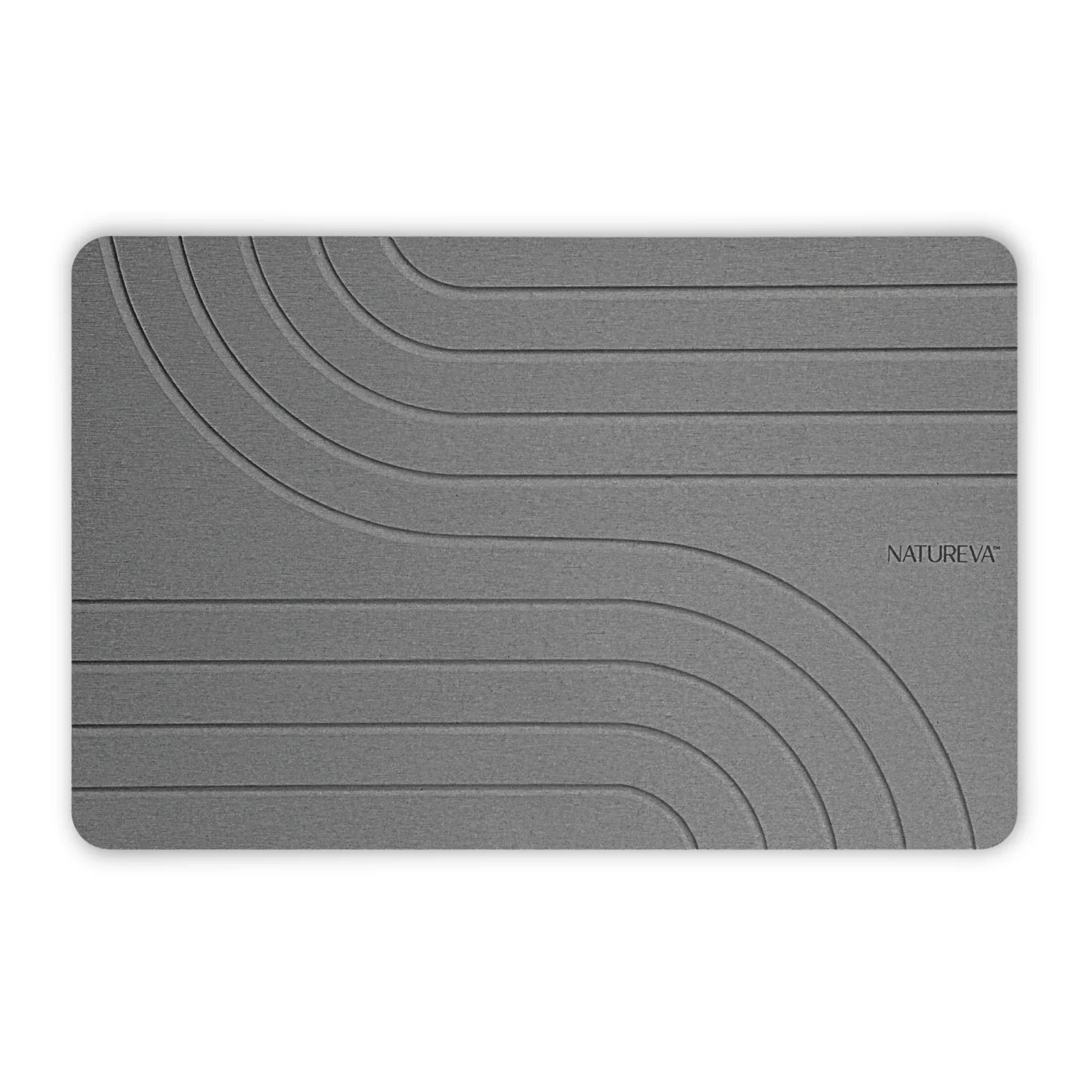
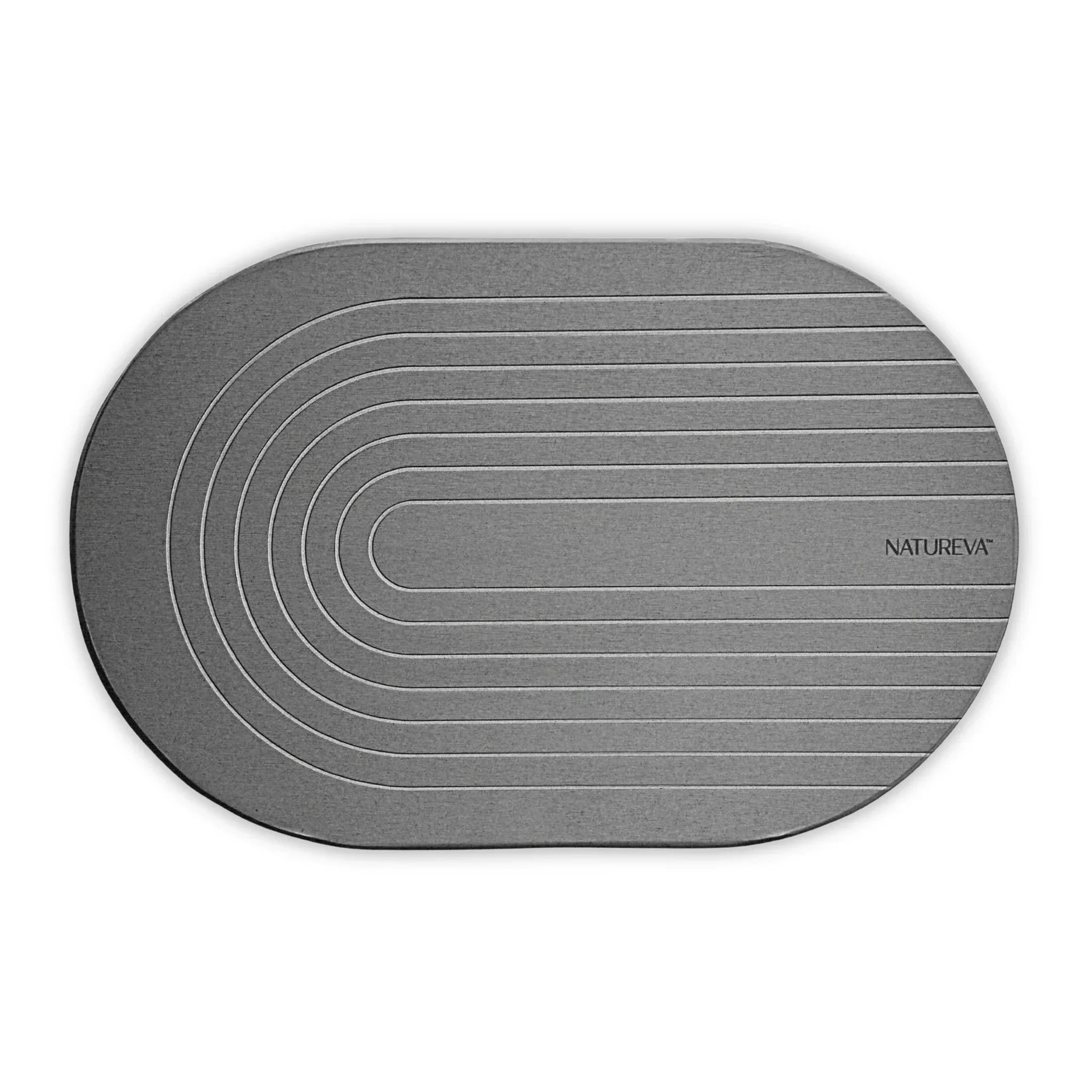
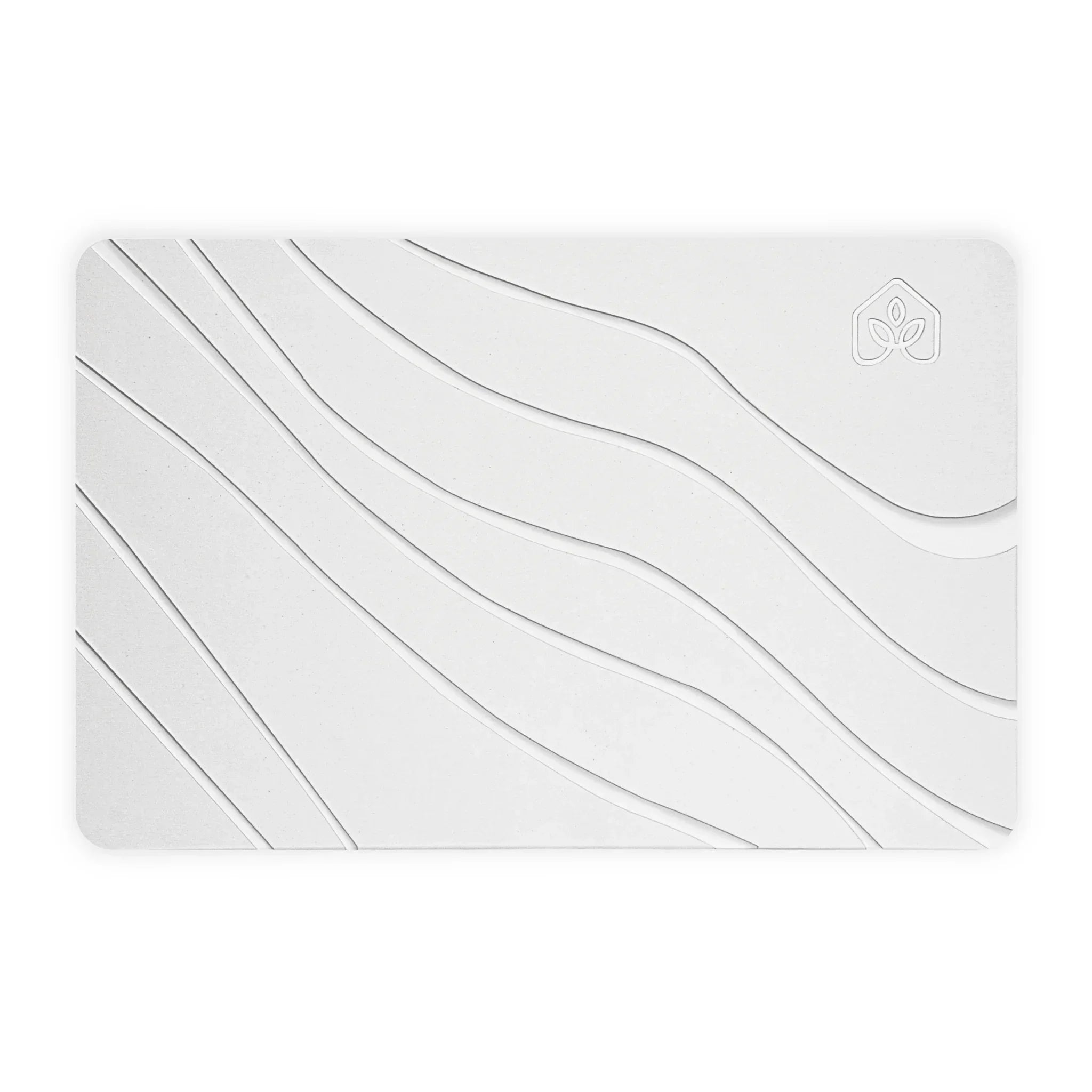
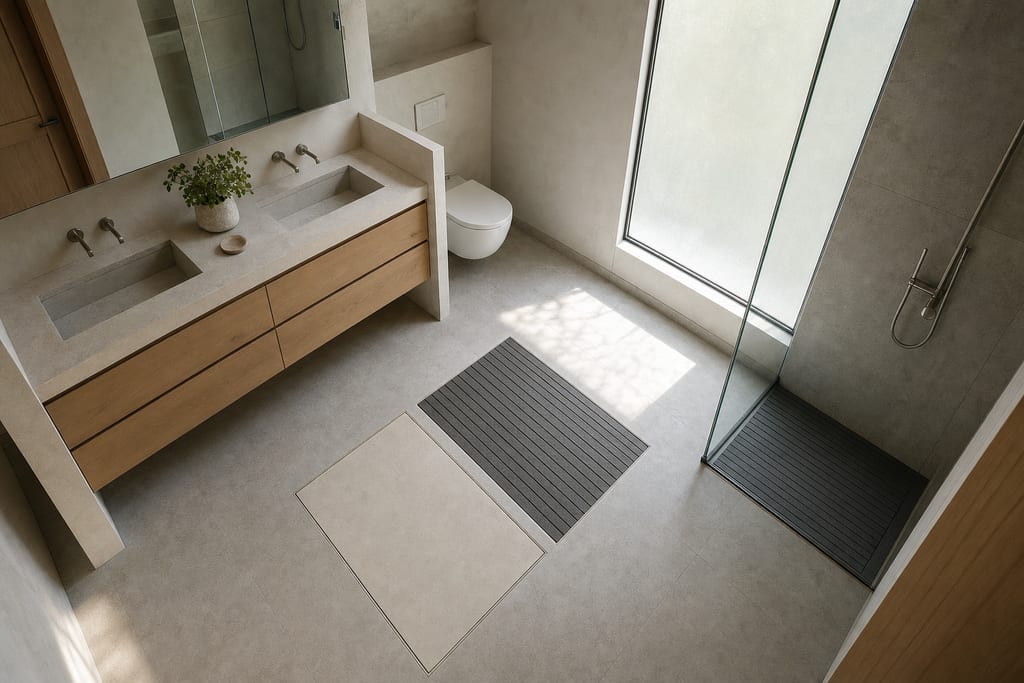
If you've searched this question before stepping onto a stone bath mat, you're not being overly cautious – you're being sensible. A string of product recalls in recent years put diatomite bath mats under scrutiny, and rightly so. At Natureva, we had our stone bath mats tested by an independent, NATA-accredited laboratory. The result? No asbestos detected.
Here's where the concern came from, what the science says, and why the answer depends on which brand is behind the product in your bathroom.
Table of Contents
- Quick Answer
- Why Asbestos Became a Talking Point for Stone Bath Mats
- What Asbestos Actually Is (And Why It's Taken Seriously)
- Natureva's Independent Test Results, Explained Simply
- Not Every Stone Bath Mat is Made or Tested the Same Way
- How to Spot a Trustworthy Stone Bath Mat Brand
- Choosing with Confidence
Quick Answer
- Diatomite (the natural material used in stone bath mats) is not asbestos, but the raw stone it's quarried from can, in rare cases, contain trace asbestos fibres if a supplier isn't careful about sourcing.
- Real risk cases have involved specific overseas manufacturers, not the material itself.
- Natureva's finished bath mat material was tested to ISO 22262-1:2012 using SEM-EDS and X-ray diffraction. The result was no asbestos detected.
- Reputable brands verify safety through independent, accredited labs.
- Look for lab names, accreditation numbers, and test methods before you buy, not just the word "tested."
Why Asbestos Became a Talking Point for Stone Bath Mats
Stone bath mats made from diatomite (also called diatomaceous earth) became popular for a simple reason: they dry almost on contact, instead of sitting damp and breeding bacteria like a cotton mat left on the bathroom floor.
That popularity is why the category came under the microscope. In late 2020, a major Japanese retailer voluntarily recalled several diatomite bath mats and coasters after testing found asbestos fibres in some batches. The products in question were manufactured overseas, and the issue traced back to the raw diatomite ore used, not the finished product category as a whole.
It's an important distinction. Diatomite itself, which is a fossilised remains of ancient algae, contains no asbestos. But it's a naturally quarried rock, and depending on the deposit it comes from, trace mineral impurities can occasionally be present if the source isn't properly screened. A responsible manufacturer sources from vetted quarries and tests the finished product to confirm it's clean. A less careful one might not.

What Asbestos Actually Is (And Why It's Taken Seriously)
Asbestos is a group of naturally occurring fibrous minerals once prized for heat resistance and durability, and once common in building materials. The fibres are odourless and invisible to the naked eye, which is precisely what makes them concerning, since exposure can't be judged by sight or smell, only by proper testing.
Long-term inhalation of asbestos fibres is linked to serious respiratory illness, which is why Australia enforces some of the strictest asbestos regulations globally and why products entering Australian homes deserve the same scrutiny as building materials.
Diatomite and asbestos are chemically and structurally different substances. The concern isn't that diatomite "contains" asbestos by nature, but that unscreened raw stone, sourced carelessly, can carry contamination. Testing is how that gets ruled in or out.
Natureva's Independent Test Results, Explained Simply
Rather than rely on supplier assurances, we sent a sample of our finished diatomite homeware material, the same composition used across our products, for independent laboratory testing. Here's exactly what that involved:
- Testing body: Safe Environments Pty Limited, trading as AsbestosCheck, a NATA-accredited laboratory (Accreditation No. 17139) operating under ISO/IEC 17025.
- Standard applied: ISO 22262-1:2012 – the international standard for sampling and qualitative determination of asbestos in bulk materials.
- Methods used: Scanning Electron Microscopy with Energy Dispersive Spectroscopy (SEM-EDS) and X-ray diffraction (XRD), two independent analytical techniques, which the standard itself recommends for confidence in non-homogeneous or mixed materials.
- Sample tested: Finished Natureva diatomite homeware material, the shared composition used across our diatomite home accessories range.
- Result: No asbestos detected, at a reporting detection limit of 0.01%.
The report was issued on 6 July 2026 under Test Report No. R35811, with the sample received on 25 June 2026 and analysed on 3 July 2026.
In plain terms, the material used in our stone bath mats was independently checked by two separate scientific methods, by a lab accredited to international testing standards, and came back clean.
Not Every Stone Bath Mat is Made or Tested the Same Way
This is the part worth sitting with: the diatomite bath mat category is not uniform. Manufacturing standards, quarry sourcing, and quality control vary significantly from one supplier to the next, and a mat that looks identical on the outside can have a completely different safety history behind it.
This is exactly why the 2020 recalls didn't sink the entire category. Rather, they exposed which manufacturers had weak sourcing and testing practices, and which didn't. A well-run brand treats testing as an ongoing part of quality assurance, not a one-off box to tick after a scare.

How to Spot a Trustworthy Stone Bath Mat Brand
Before choosing any diatomite product for your home, a few checks go a long way:
- Ask for the actual test report, not just a claim of "asbestos-free." A trustworthy brand can produce one.
- Check who conducted the testing. Independent, accredited laboratories carry far more weight than in-house or unnamed testing.
- Look for the standard used (such as ISO 22262-1) and the analytical method (SEM-EDS, XRD, or PLM), rather than vague reassurances.
- Confirm accreditation, such as NATA in Australia or an equivalent recognised body, which signals the lab itself meets international testing standards.
- Favour transparency over marketing. Brands willing to publish their actual results, rather than summarise them, generally have nothing to hide.
Choosing with Confidence
Stone bath mats aren't inherently risky, but not every brand sources and tests with the same rigour. Natureva Home’s has been independently verified, using internationally recognised methods, by an accredited Australian laboratory. Plus, we're happy to show you the paperwork rather than just tell you.
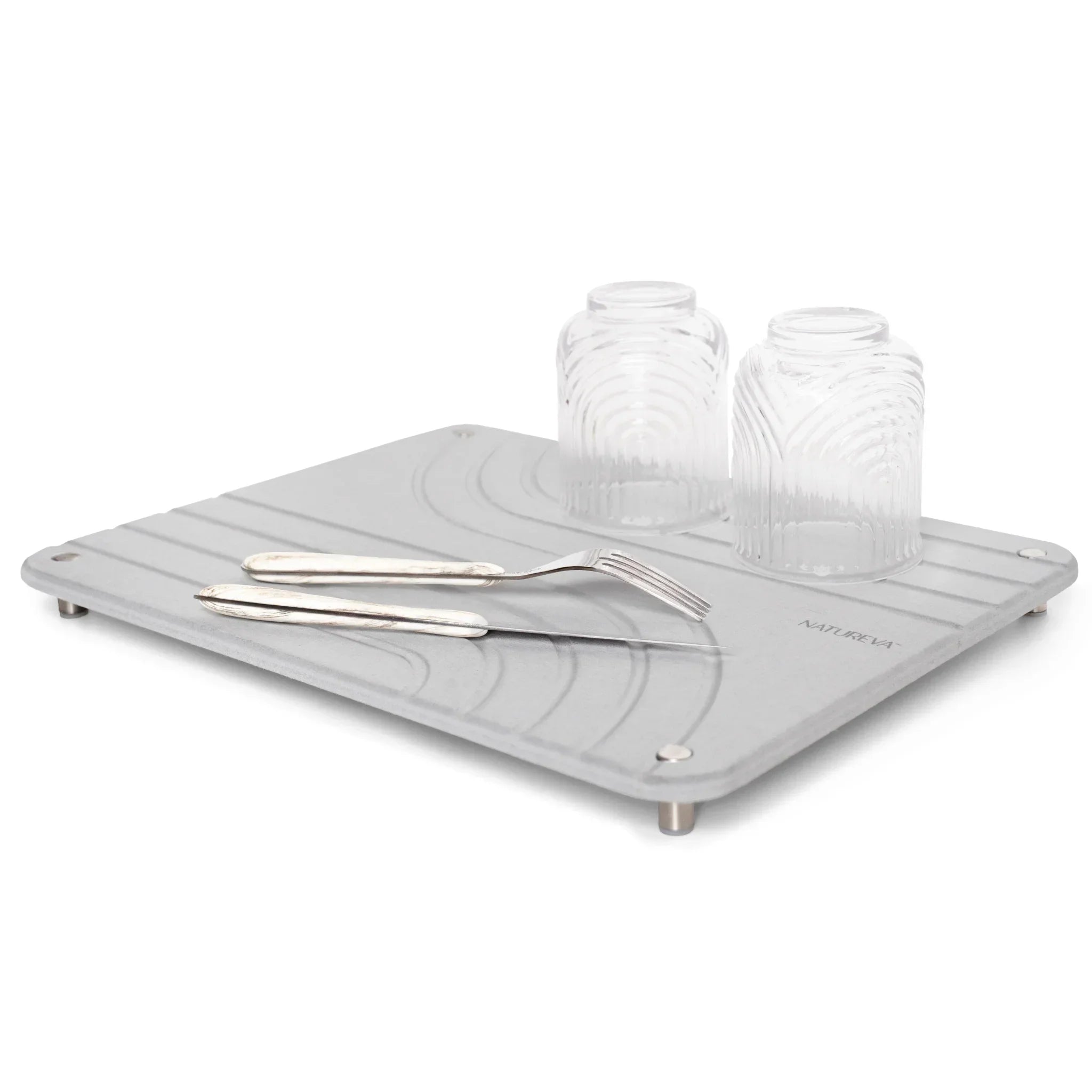
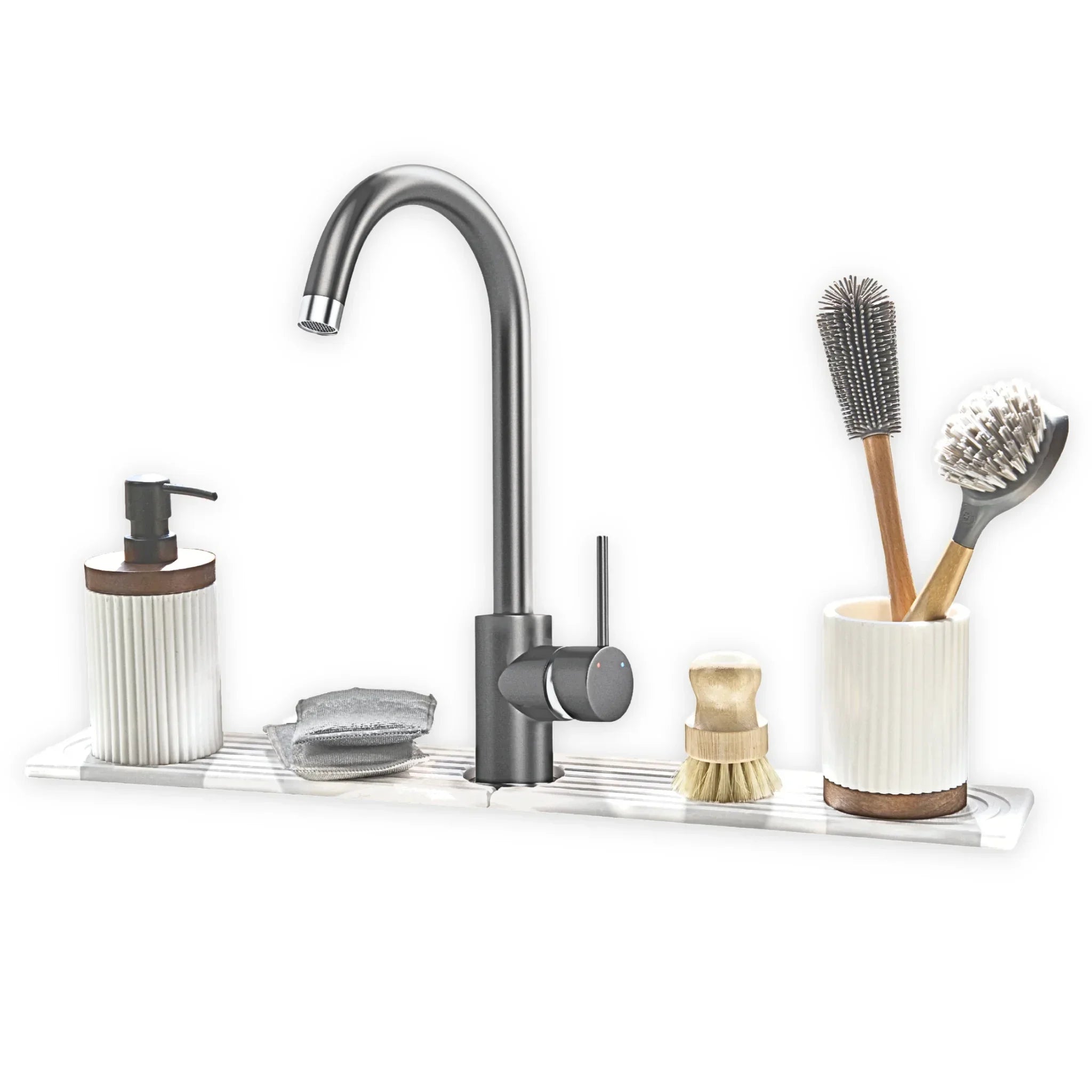
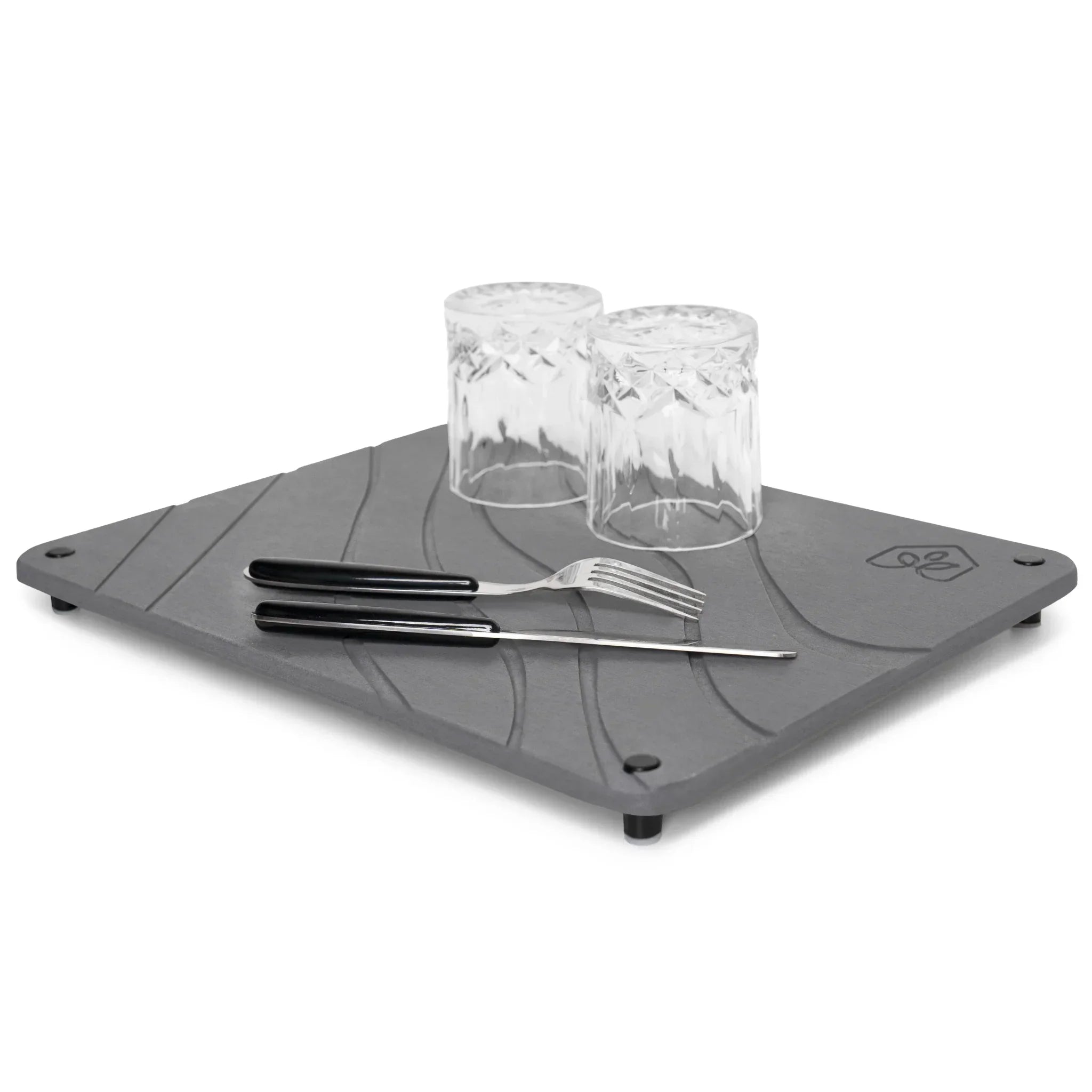
That same approach carries across our range, from our stone bath mats and stone dish drying mats to the rest of our diatomite homeware. If you'd like to see how the material performs alongside its safety credentials, get in touch with our team.
The next generation of home essentials: naturally made, cleaner by design, sustainable by nature.
SHOP ALL