
Quick Drying Stone Bath Mats Explained and How to Choose
A fabric bath mat can stay damp for up to 24 hours after a single shower, creating the perfect environment for mould, mildew, and odour to develop. Stone bath mats solve this problem by using diatomite—a naturally porous fossilised algae that absorbs water on contact and evaporates it within minutes, leaving the surface dry and hygienic without constant washing. Understanding how quick drying bath mat stone technology works helps you choose a solution that keeps your bathroom cleaner with far less effort.
How long does it take for a stone bath mat to dry?
Stone bath mats typically dry within 10 to 15 minutes due to their porous diatomaceous earth or pumice composition, which absorbs moisture and releases it through rapid evaporation. This is significantly faster than fabric mats, which can remain damp for 2 to 4 hours.
What material are quick drying stone bath mats made of?
Quick drying stone bath mats are made from diatomaceous earth, a naturally porous sedimentary rock composed of fossilized algae, or pumice stone. These materials contain millions of microscopic pores that absorb water instantly and allow air circulation for rapid evaporation.
How often should you clean a stone bath mat?
Stone bath mats should be wiped down with a damp cloth weekly and deep cleaned with fine-grit sandpaper every 2 to 3 months to remove soap residue and restore absorbency. Regular cleaning prevents buildup that can clog the porous surface and reduce drying efficiency.
Table of Contents
What Makes Stone Bath Mats Different
Most people don't know that the stone in their bath mat started as tiny algae floating in ancient oceans millions of years ago. Diatomite, the material behind quick drying stone bath mats, is formed from fossilised microscopic algae called diatoms. When these organisms died, their silica-based skeletons accumulated on ocean floors over thousands of years, eventually forming thick deposits of what we now mine as diatomaceous earth. The result is a naturally porous material with a structure unlike anything synthetic manufacturers can replicate.
How the Porous Structure Works
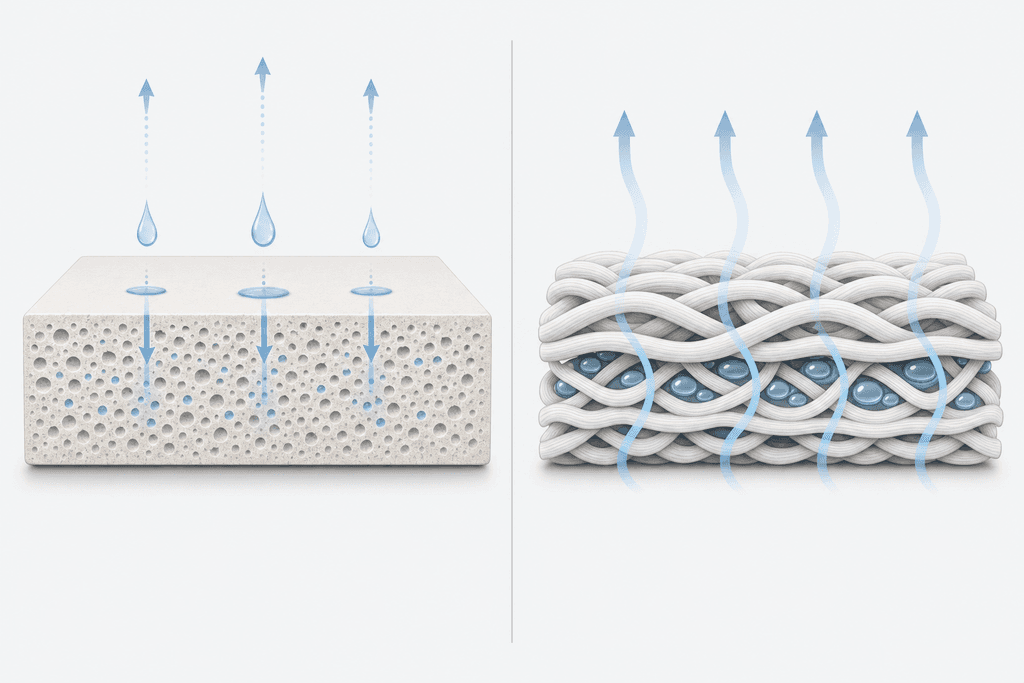
The secret to instant absorption lies in millions of microscopic pores running through the material. Each tiny cavity acts like a sponge, pulling water away from your feet the moment you step out of the shower. But unlike fabric that holds moisture, diatomite releases it back into the air through rapid evaporation. This means the mat surface dries within minutes instead of staying damp for hours.
Here's what happens when water hits the surface:
- Microscopic pores absorb moisture on contact through capillary action
- Water spreads throughout the internal structure instead of pooling on top
- Air circulation pulls moisture out through natural evaporation
- The surface returns to a dry state without any manual drying needed
Natural Composition Without Chemicals
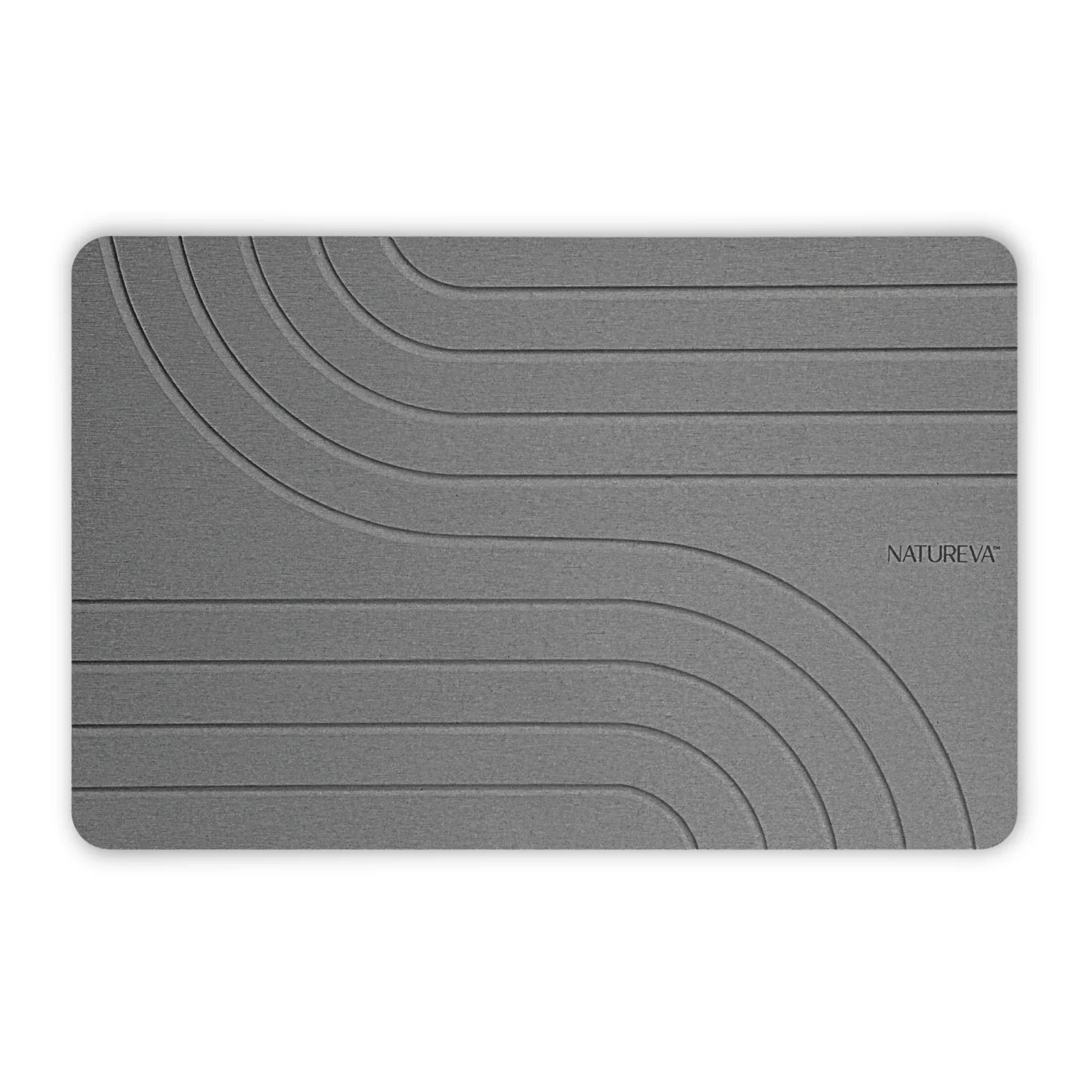
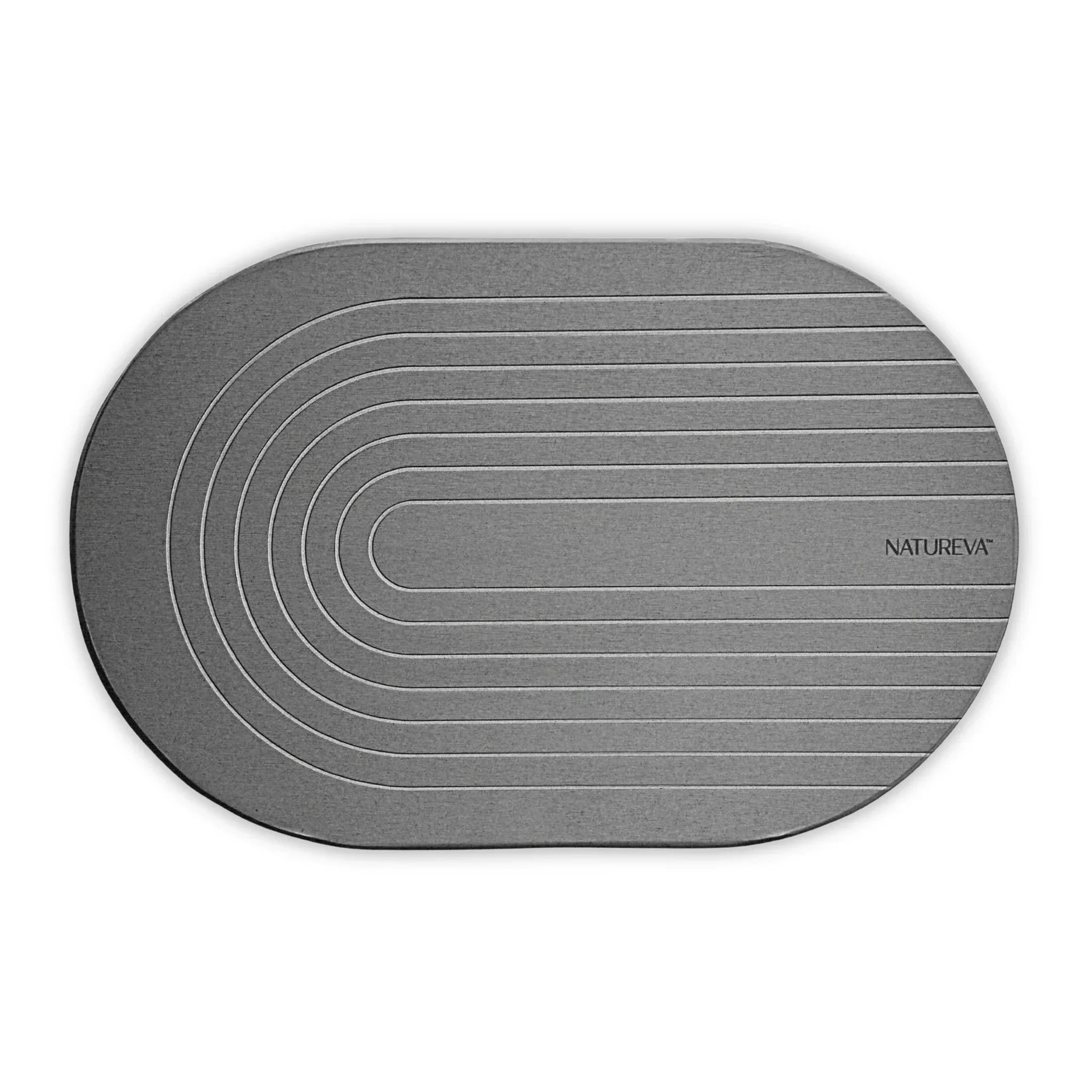
Stone bath mats like the ones from Natureva use compressed diatomaceous earth mixed with recycled paper to create a solid, durable slab. No synthetic coatings, no moisture-trapping finishes, and no chemical treatments are added to the material. The natural composition means the mat stays hygienic through its drying mechanism rather than relying on additives that wear off over time.
Compare this to conventional options:
| Mat Type | Drying Time | Chemical Treatments | Lifespan |
|---|---|---|---|
| Stone (Diatomite) | Under 10 minutes | None needed | Years with care |
| Fabric/Cotton | Several hours | Often treated | 6-12 months |
| Microfiber | 1-2 hours | Sometimes treated | 1-2 years |
| Rubber/Silicone | Doesn't absorb | Varies | 1-3 years |
According to testing by Consumer Reports, stone bath mats consistently outperform traditional materials in both absorption speed and moisture management. The material eliminates the damp environment where mould and mildew typically develop, which is why stone mats stay cleaner between washes compared to fabric alternatives that need frequent laundering.
How Stone Compares to Fabric, Rubber, and Silicone
A fabric bath mat can stay damp for 6 to 12 hours after a single shower, creating the exact conditions where mould and mildew thrive. That damp feeling underfoot isn't just unpleasant, it's a sign that moisture is sitting in the fibres, waiting to develop odours and require another wash cycle. Stone bath mats work differently because they're made from diatomite, a naturally porous fossilised algae that absorbs water on contact and releases it back into the air within minutes.
The difference in drying time is where stone pulls ahead. Fabric mats need hours of air circulation or a trip through the dryer. Rubber and silicone mats don't absorb water at all, they just let it pool on top or trap it underneath, which leads to that slimy feeling and musty smell over time.
| Material | Drying Time | Maintenance | Lifespan |
|---|---|---|---|
| Fabric | 6-12 hours | Weekly washing | 1-2 years |
| Rubber/Silicone | Surface only | Frequent scrubbing | 2-3 years |
| Stone (Diatomite) | Under 10 minutes | Weekly wipe | 5+ years |
Stone mats require a simple wipe with warm water and vinegar once a week. No laundry cycles, no fabric softener, no waiting for the dryer. The surface stays hygienic by design because moisture doesn't linger long enough for odour or mould to form. Rubber and silicone mats need constant scrubbing to remove the buildup that develops when water gets trapped underneath.
Durability is another factor that separates stone from the rest. Fabric mats lose their absorbency after repeated washing, rubber mats crack and peel, and silicone develops permanent stains. A properly maintained stone mat can last five years or more because the material doesn't degrade from moisture exposure. When the surface does lose absorbency over time, a quick pass with the included sanding tool reopens the pores and restores full performance.
For anyone tired of washing bath mats every few days or dealing with that damp rubber smell, stone offers a different approach entirely. It's not about adding more steps to your routine, it's about removing them.
What to Look for When Choosing a Stone Bath Mat
Not all stone bath mats are made the same, and the differences matter more than you'd think. The material composition is the first thing to check because diatomite quality varies widely depending on the source and how it's processed. A high-quality stone mat uses a composite of diatomaceous earth and recycled paper, compressed into a dense, chemical-free slab. Some products dilute the diatomite with too much filler, which reduces absorbency and makes the mat feel chalky or brittle.
Safety certifications should be non-negotiable. Diatomite products have faced recalls in the past due to asbestos contamination from unverified sources. Look for NATA-accredited asbestos-free certification, which means the product has been tested by an Australian laboratory that meets national accreditation standards. This isn't a marketing claim, it's a verifiable safety standard that protects you from materials that could pose health risks.
- Material composition: diatomite and recycled paper, no synthetic coatings
- NATA-accredited asbestos-free testing from an Australian lab
- Non-slip base pad for stability on wet tile or vinyl floors
- Included sanding tool for long-term maintenance
- Weight between 1.5 to 1.8 kg for standard rectangular mats
The non-slip base pad is essential for safety, especially on wet floors. A stone mat without proper grip can shift underfoot, which defeats the purpose of having a stable surface when you step out of the shower. The base should cover the entire underside, not just corner pads that leave the middle unsupported.
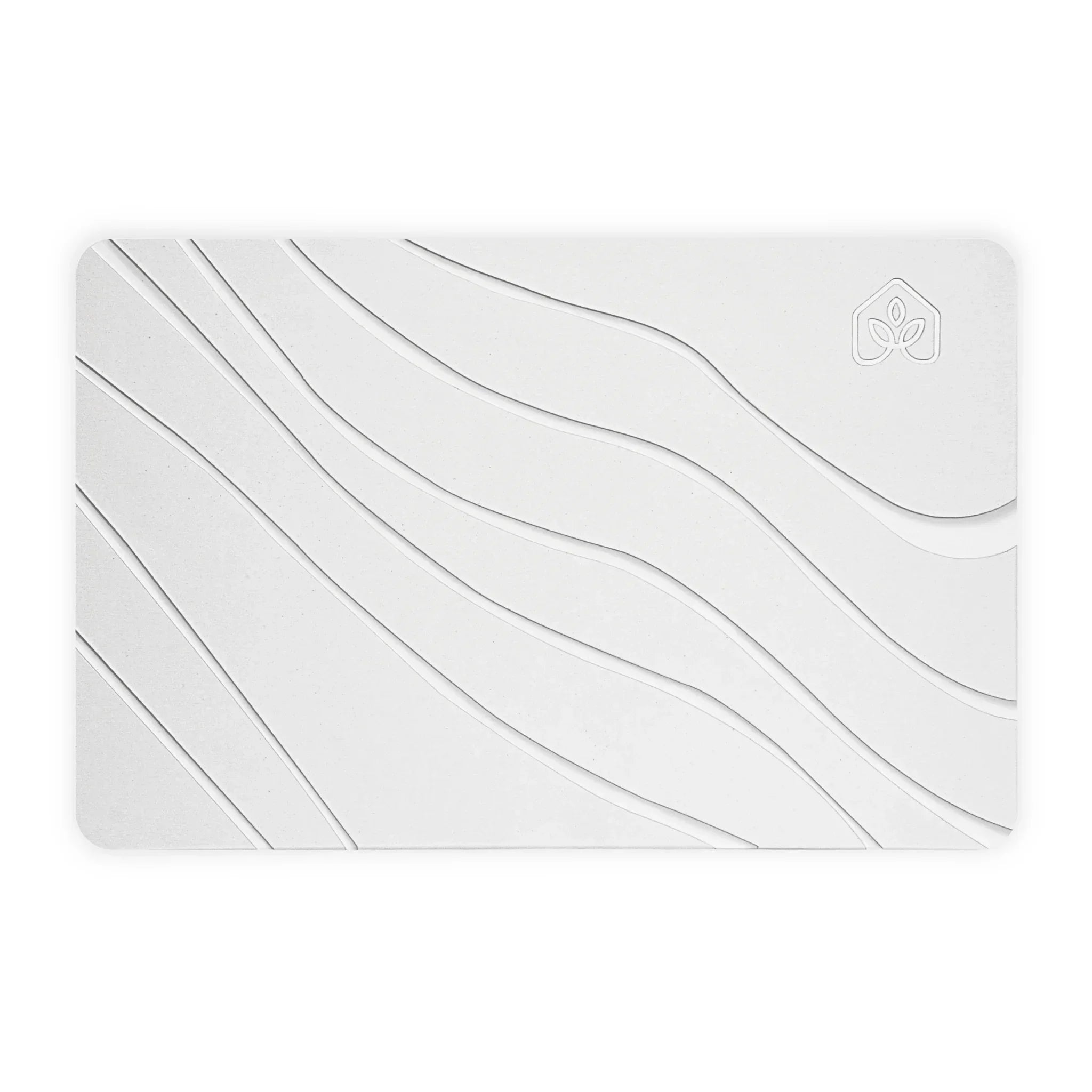
Size and shape depend on your bathroom layout. Rectangular mats like the Tide, Flow, and Rain fit standard spaces in front of showers and tubs, measuring approximately 60 × 39 cm. An oval mat like the Arch works well in tighter spaces or for a softer visual profile. The thickness should be around 0.9 cm, which provides durability without making the mat too heavy or awkward to move.
Surface design affects both water channeling and how the mat looks in your bathroom. Engraved patterns like horizontal contours, diagonal waves, or vertical line segments guide water across the surface and add visual texture without feeling decorative. A completely flat surface works fine, but carved geometry helps water spread and evaporate faster while integrating better with modern, minimalist interiors.
Weight and density are quality indicators. A mat that feels too light for its size probably has too much filler and not enough diatomite. A standard rectangular stone mat should weigh around 1.8 kg, which gives it the solid, stable feel that makes it safe to use on wet floors. If it feels flimsy or hollow, it won't perform as well over time.
Check what's included with the mat. A sanding tool should come standard because surface pores will eventually fill with mineral deposits from water, and you'll need to restore absorbency. The tool should be a P320 grit sandpaper disc, approximately 10 cm in diameter, designed specifically to reopen the microscopic pores without damaging the surface. If a brand doesn't include one, that's a sign they're not thinking about long-term use.
For more detailed guidance on what to check before buying, this article on five diatomite bath mat features covers the technical details worth knowing.
Caring for Your Stone Bath Mat
Stone bath mats need less maintenance than fabric, but they do need some attention to keep performing at full capacity. The porous structure that makes diatomite so absorbent also means it can pick up soap residue, oils, and mineral deposits from water over time. These fill the microscopic pores and slow down the drying process, but the fix is straightforward.
Weekly cleaning takes about two minutes. Wipe the surface with a warm damp cloth and a small amount of cleaning vinegar. The vinegar breaks down mineral buildup without leaving a film the way soap does. Avoid coloured soaps or body wash on the mat because the porous surface can absorb pigments and leave permanent stains. If you do get a stain, rinse the mat under running water and let it air dry upright.
- Wipe weekly with warm water and vinegar
- Avoid coloured soaps that stain porous surfaces
- Rinse stains under water immediately
- Air dry upright when fully saturated
- Use sanding tool every few months to restore absorbency
For deeper marks or stubborn stains, hydrogen peroxide works well. Apply it directly to the stain, let it sit for a few minutes, then rinse and dry. The mat will lighten slightly as it dries, which is normal.
The sanding tool is what keeps the mat working like new. Every few months, or whenever you notice the surface isn't absorbing as quickly, use the included P320 grit sandpaper disc to lightly sand the top layer. This reopens the pores that have been clogged with soap scum or mineral deposits. Sand in small circular motions, wipe away the dust with a damp cloth, and the mat will feel fresh again. It's the same principle as refinishing wood, you're removing a thin layer to expose clean material underneath.
When the mat gets fully saturated, which can happen if multiple people shower back-to-back, stand it upright against a wall to dry. The airflow on both sides speeds up evaporation. This is rare with normal use because the mat dries so quickly between showers, but it's good to know if you have a busy household.
Expected lifespan with proper care is five years or more. The material doesn't break down from moisture exposure the way fabric does, and it won't crack or peel like rubber. The only wear you'll see is gradual surface smoothing from foot traffic, which is why the sanding tool matters. As long as you maintain the porous structure, the mat keeps working.
If you want to understand more about how the material itself functions, this complete guide to diatomite explains the science behind the absorption and evaporation process. For a broader look at how stone mats compare to other bathroom options, this article on stone mats for bathrooms covers the practical pros and drawbacks.
Stone bath mats aren't maintenance-free, but they're close. A quick wipe once a week and occasional sanding is all it takes to keep them performing better than any fabric mat you'd have to wash every few days. The full range of stone bath mats includes different designs and colours, all with the same low-maintenance, fast-drying performance that makes them worth considering if you're tired of damp bathroom floors.
Why Stone Works Better in Modern Homes
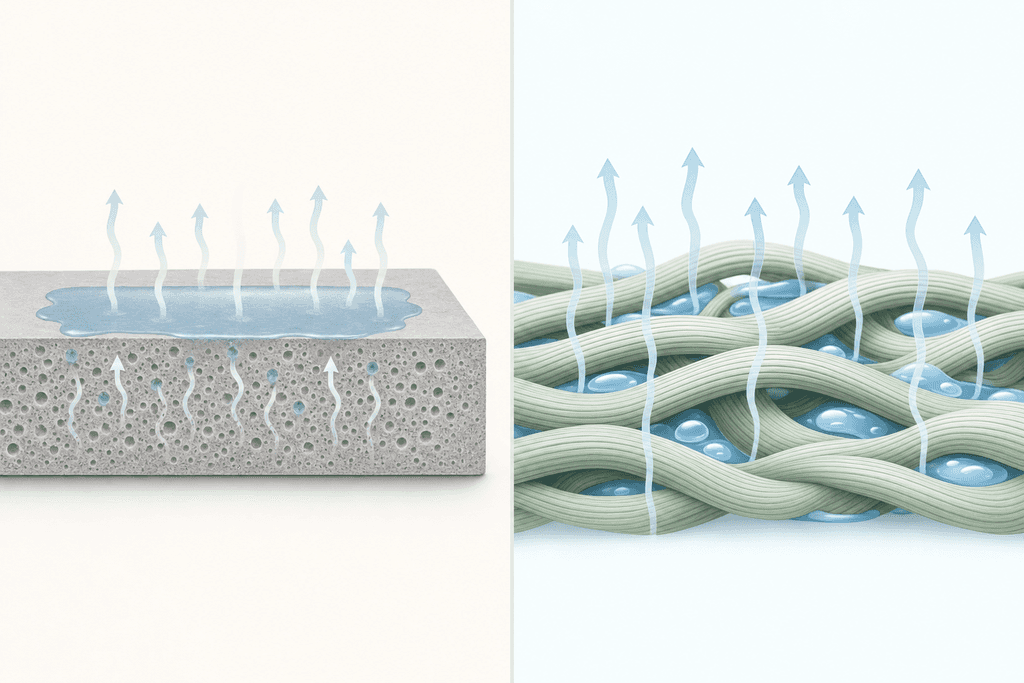
The average household washes fabric bath mats every 3 to 7 days to prevent mildew buildup, which adds up to 52 to 182 loads of laundry per year just for a single bathroom mat. Stone bath mats eliminate this cycle entirely because they dry within minutes after use, leaving no damp environment for odour or mould to form. This shift from constant maintenance to zero-effort upkeep changes how modern households manage bathroom hygiene. Instead of scheduling mat washing into weekly routines, the surface stays hygienic by design through rapid moisture evaporation.
Time Savings That Compound Weekly
The next generation of home essentials: naturally made, cleaner by design, sustainable by nature.
SHOP ALLEliminating mat washing saves more than just laundry time. It removes the mental load of tracking when the mat was last cleaned, whether it smells, and if it needs replacing. Quick drying bath mat stone surfaces require only a weekly wipe with warm water and vinegar, a task that takes under 60 seconds compared to the 20 to 30 minutes spent washing, drying, and replacing a fabric mat.
- No weekly washing cycles means fewer loads of laundry per year
- No drying time required between bathroom uses
- No replacement purchases every 6 to 12 months when fabric mats wear out
- No storage space needed for backup mats during wash cycles
Hygiene Benefits for Health-Conscious Households
Families with young children crawling on bathroom floors or households with immune-compromised members need surfaces that stay clean without chemical treatments. Stone mats stay hygienic through their fast-drying mechanism rather than relying on antimicrobial coatings that wear off over time. The material absorbs water on contact and releases it back into the air through evaporation, so the surface returns to a dry state within minutes.
This matters because mould and mildew require sustained moisture to develop. When the surface dries faster than these organisms can establish, the conditions for growth simply don't exist. According to research on indoor air quality and moisture control, reducing moisture in living spaces is the primary method for preventing mould growth, which makes rapid-drying surfaces a practical solution for bathroom environments.
Design Cohesion in Minimalist Interiors
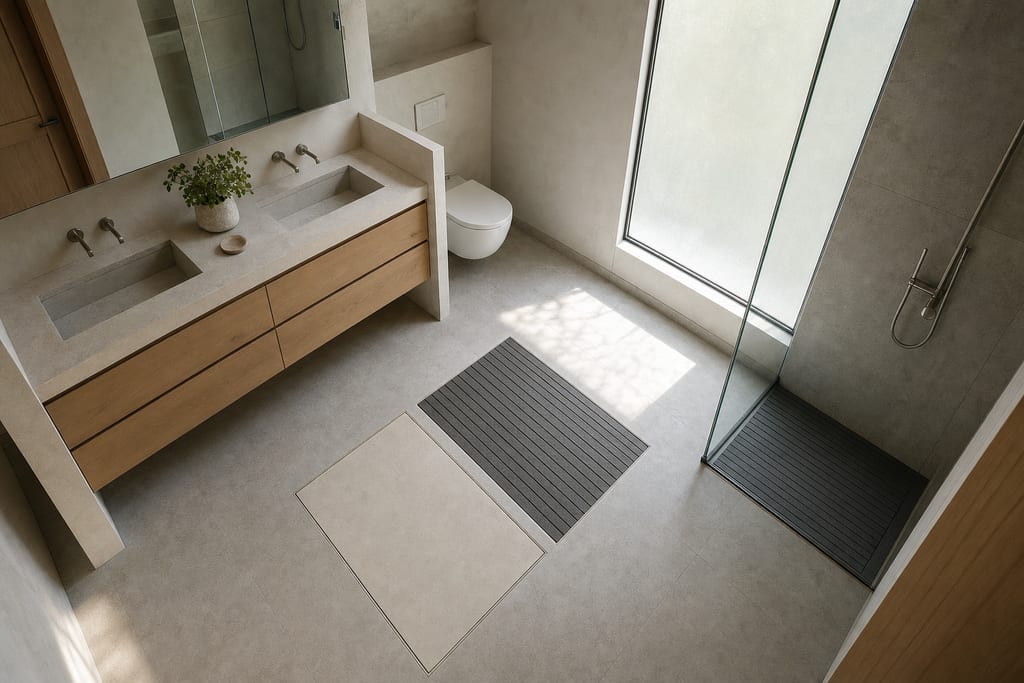
Modern bathroom design trends lean toward clean lines, natural materials, and coordinated colour palettes. Stone bath mats integrate into these spaces as permanent fixtures rather than temporary accessories. The solid slab format with engraved patterns like Tide, Flow, Arch, and Rain adds subtle texture without visual clutter.
| Design Style | Stone Mat Advantage |
|---|---|
| Minimalist | Permanent fixture, no fabric bulk |
| Japandi | Natural material, neutral tones |
| Modern Industrial | Architectural engraving, solid form |
| Scandinavian | Functional simplicity, muted palette |
Natureva's stone bath mats come in Graphite, Slate, and Chalk colourways that coordinate across bathroom, kitchen, and accessory products. This creates a unified material system throughout the home rather than mixing fabric, rubber, and silicone products that rarely match in tone or texture.
Bathroom Safety Advantages
Stone mats provide a stable, non-slip surface that doesn't bunch, curl, or slide on wet floors, which reduces fall risk compared to fabric mats that shift underfoot. The solid slab sits flat with a full non-slip base pad, creating a predictable surface every time you step out of the shower. This stability matters for older adults, anyone with mobility concerns, and households where children run in and out of bathrooms.
- Solid slab construction prevents bunching or folding
- Non-slip base pad keeps mat anchored in place
- Consistent surface texture without wear patterns
- No curling edges that create trip hazards
Environmental Consideration and Product Longevity
Fabric bath mats typically last 6 to 18 months before they develop permanent odours, lose absorbency, or show visible wear. Stone mats are designed to last years with minimal maintenance. The included sanding tool restores full absorbency by reopening surface pores, extending the product's functional lifespan without replacement. This longevity reduces the cycle of purchasing, discarding, and replacing bathroom textiles.
The material itself is a composite of diatomaceous earth and recycled paper, compressed without synthetic coatings or chemical treatments. When a stone mat eventually reaches end of life, the natural mineral composition breaks down more readily than synthetic rubber or microfibre alternatives.
Coordinated Moisture Management Systems
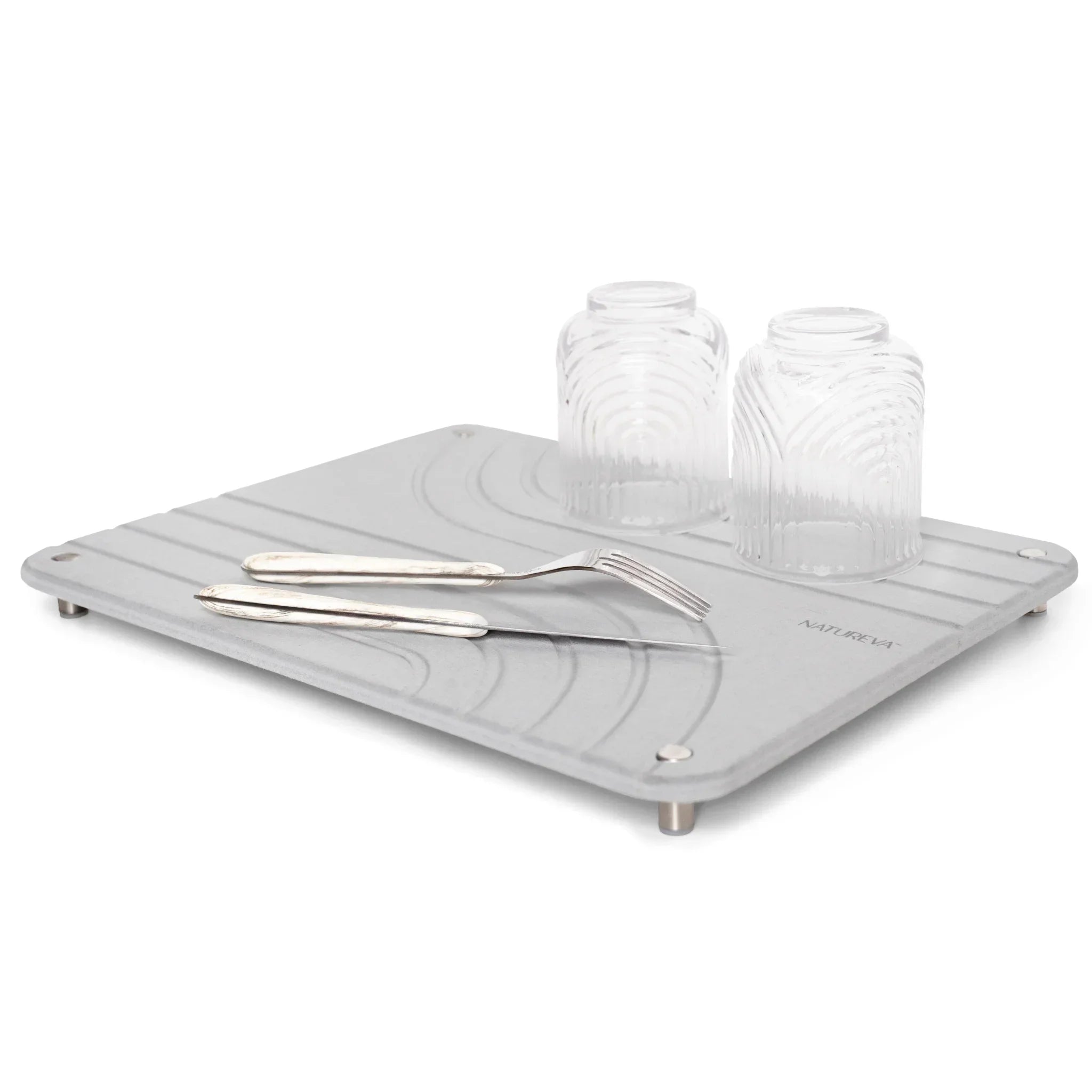
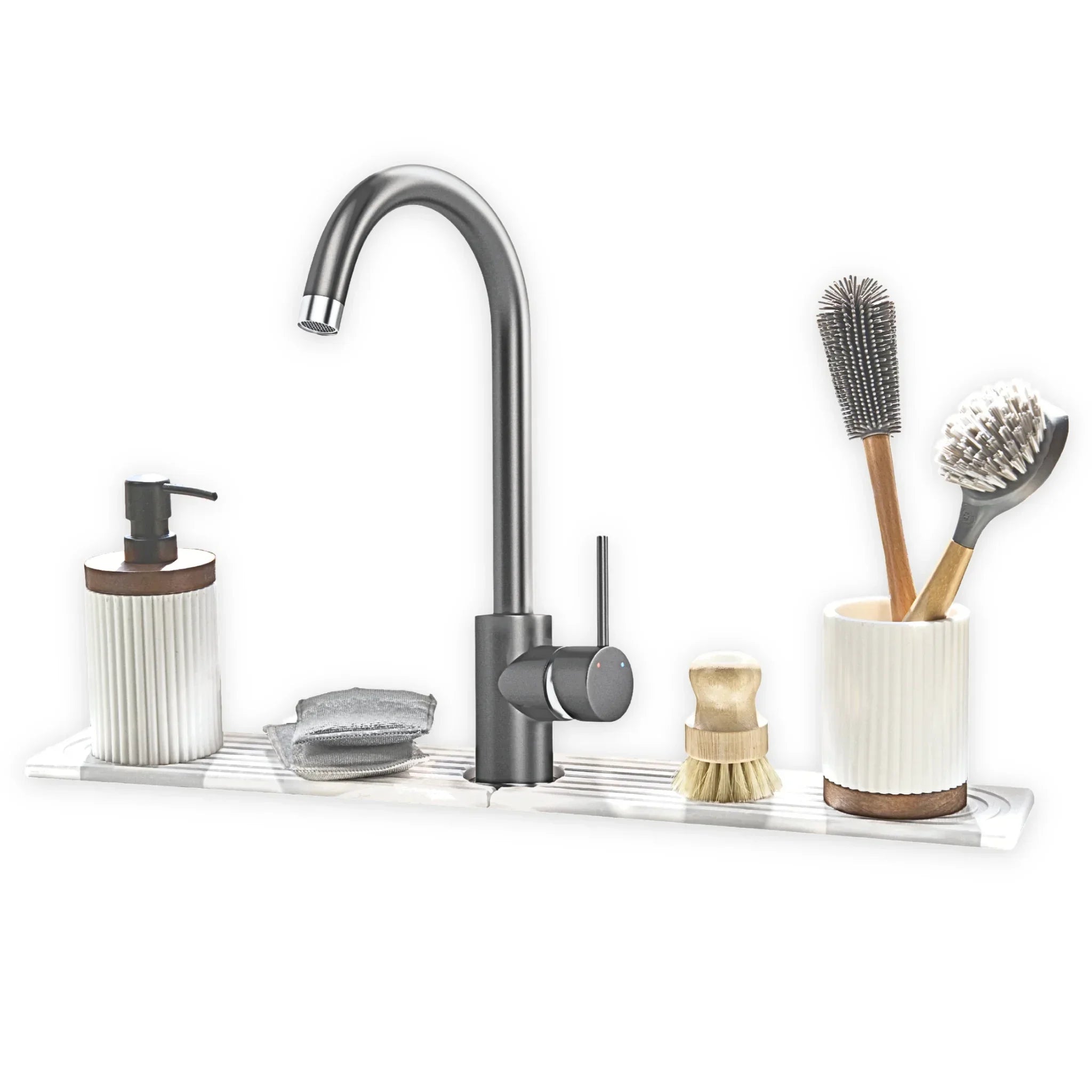
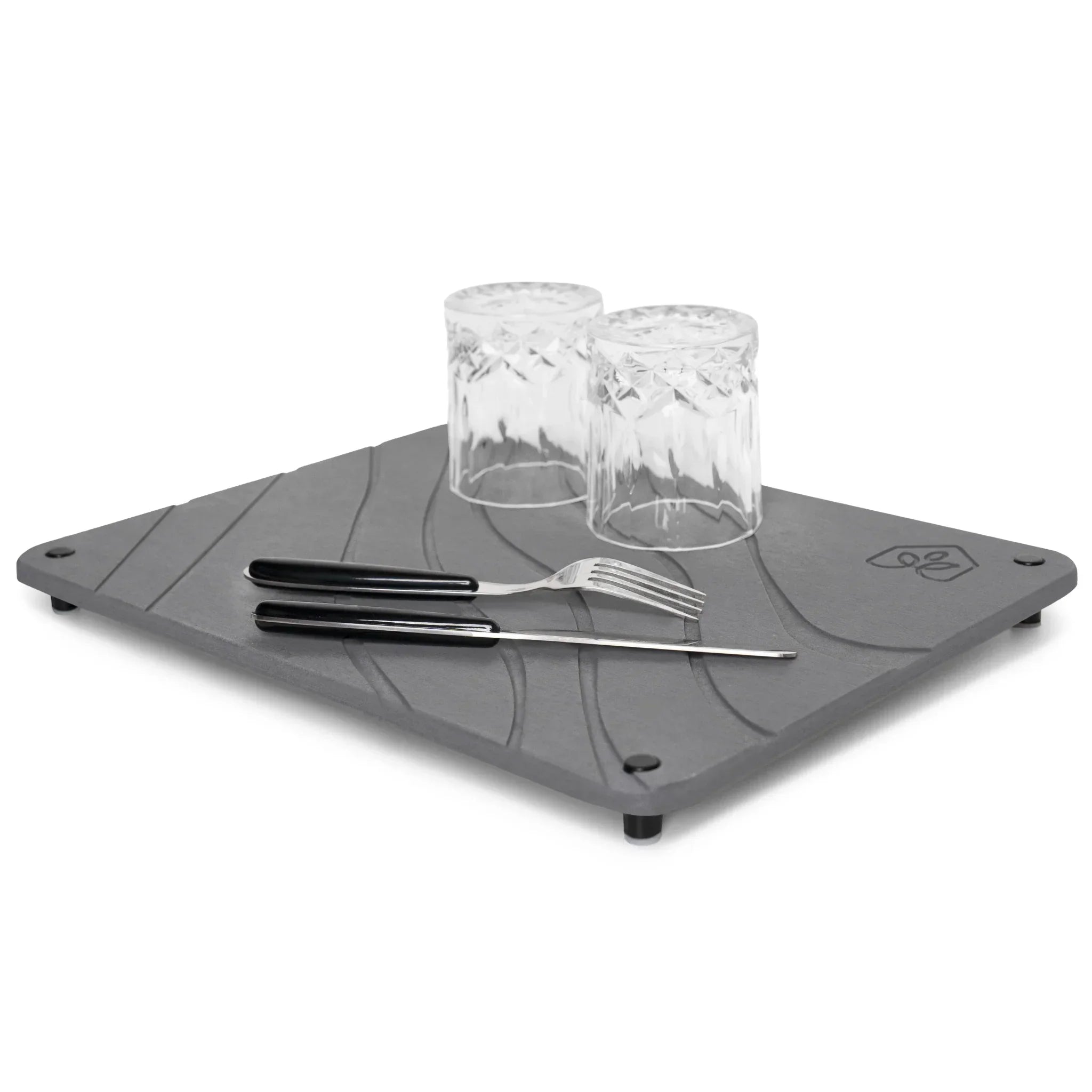
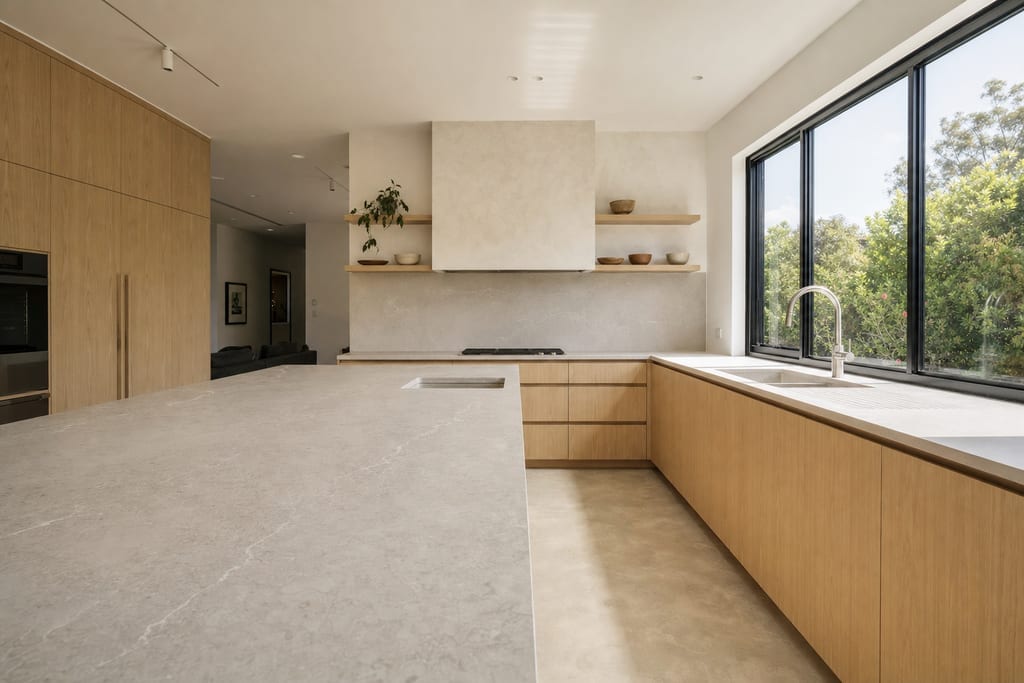
Stone bath mats work best as part of a broader moisture management approach. Pairing a quick drying bath mat stone surface with matching faucet mats, sink caddies, and dish mats creates consistent drying performance across wet zones in the home. Natureva's coordinated product system uses the same diatomite material, design language, and colour palette across bathroom and kitchen, so every surface that encounters water dries at the same rapid rate.
- Bath mats handle post-shower floor moisture
- Faucet mats absorb sink splashes and drips
- Sink caddies keep soap and sponges elevated and dry
- Dish mats replace fabric drying racks with stone platforms
This system approach means fewer damp surfaces throughout the home, which collectively reduces humidity levels, limits mould development, and cuts down on cleaning frequency. Instead of managing moisture with multiple product types that require different care routines, the entire system operates on the same principle: absorb water instantly, evaporate rapidly, stay dry between uses.
Making the Switch to Stone
The problem with traditional bath mats has always been the same thing: they stay wet. Fabric mats trap moisture in their fibres, rubber mats create sealed surfaces where water pools, and both end up sitting damp on your bathroom floor for hours. That dampness creates the exact conditions where mould, mildew, and that musty smell develop. Stone bath mats solve this through material science, not marketing claims.
Diatomite's naturally porous structure absorbs water on contact and releases it back into the air through rapid evaporation. The surface dries within minutes instead of hours. This natural drying mechanism means less maintenance, better hygiene, and a longer lifespan than fabric alternatives that need constant washing and eventual replacement.
When you're choosing a quick drying bath mat stone, the material quality and safety certifications matter more than the price tag. Not all diatomite products are created equal, and some have faced recalls over contamination concerns. Knowing what to look for before buying protects your household and ensures you're getting a product that actually performs.
Our stone bath mat range includes NATA-accredited asbestos-free certification and comes in four carved designs (Tide, Flow, Arch, and Rain) across three colours. Each mat includes a sanding tool to restore absorbency and a non-slip base pad for stability. The switch from fabric to stone isn't just about trying something new, it's about choosing a material that actually stays dry.
Common Questions About Stone Bath Mats
Switching from fabric to stone raises a few practical questions. Most people wonder about the feel, the maintenance, and whether these mats actually work as well as they claim. Here are the answers to the most common concerns that come up when someone's considering a quick drying bath mat stone for their bathroom.
How long does a stone bath mat take to dry?
A properly made diatomite stone mat dries in under ten minutes. The porous structure pulls water from your feet instantly and releases it into the air through evaporation. You'll notice the surface feels dry to the touch within moments of stepping off, which is why independent testing on products like the Natureva Stone Bath Mat confirmed full drying in under eight minutes.
Are stone bath mats safe and non-slip?
Stone mats are actually safer than fabric options because they don't bunch, slide, or curl when wet. The solid surface stays flat and stable, and most quality stone mats include a non-slip base pad underneath. The textured surface also provides grip for wet feet, making them a good choice for households concerned about bathroom falls.
Do stone bath mats need special cleaning?
Not really. A quick wipe with a damp cloth and cleaning vinegar once a week keeps them fresh. There's no washing machine cycle, no waiting for them to dry, and no fabric softener to worry about. If you get a stubborn stain, most stone mats come with a sanding tool that reopens the pores and removes marks in seconds.
How long do stone bath mats last?
Years, not months. Stone doesn't break down like fabric or rubber, so as long as you don't drop something heavy on it, a diatomite mat will outlast multiple fabric replacements. The material doesn't degrade from moisture exposure, which is the main reason fabric mats wear out so quickly.
What if the mat stops absorbing water?
This happens when soap residue or oils clog the surface pores. A light sanding with the included tool restores full absorbency in under a minute. It's a simple fix that brings the mat back to like-new performance without needing to replace anything.
Are stone bath mats cold on bare feet?
Stone feels cool at first touch, but it's not uncomfortably cold. The material adjusts to room temperature quickly, and most people find the sensation refreshing rather than jarring. If you live somewhere with very cold winters, placing the mat away from direct drafts helps.
The next generation of home essentials: naturally made, cleaner by design, sustainable by nature.
SHOP ALL