
Why Your Dish Drying Mat Smells (And What a Stone Drying Mat Does Differently)
Your fabric dish mat is probably damp right now. Not because you just washed dishes, but because it never fully dried from the last time. That lingering moisture is where the musty smell comes from, where bacteria quietly multiplies, and where water seeps through to stain the counter underneath. A stone drying mat works on a completely different principle. It absorbs water on contact, evaporates it within minutes, and stays dry to the touch between uses. No more wringing out soggy fabric, no more tossing mats in the wash every few days, and no more pretending that damp smell is normal.
Table of Contents
What Makes a Stone Drying Mat Different
Most kitchen drying mats are made from fabric, microfiber, or silicone, and they all share the same fundamental problem: they trap water instead of getting rid of it. When you place a wet dish on a fabric mat, moisture soaks into the fibers and sits there for hours. That creates a damp environment where bacteria grows, odors develop, and your countertop underneath can end up with water damage or mold over time.
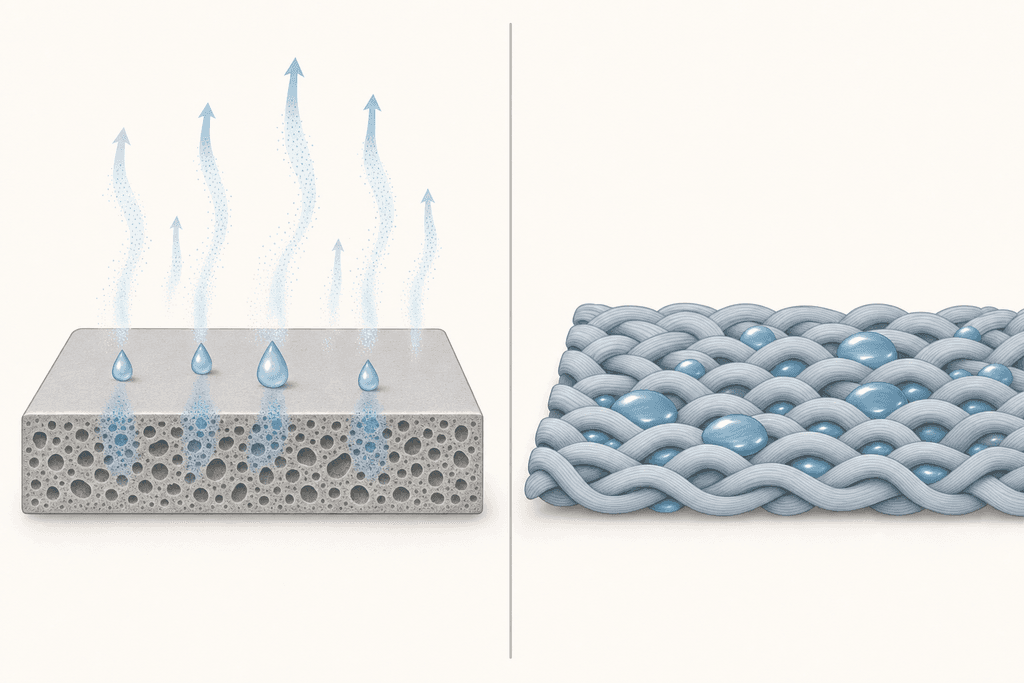
A stone drying mat works on completely different physics. It's made from diatomite, a natural material formed from fossilized algae called diatoms. The structure of diatomite is filled with millions of microscopic pores that pull water in through capillary action the moment it touches the surface. But instead of holding onto that moisture like fabric does, the porous structure allows air to flow through and evaporate it within minutes. Water moves through the material and escapes from both sides at once, which is why the surface feels dry to the touch so quickly.
The Elevated Design That Protects Your Counter
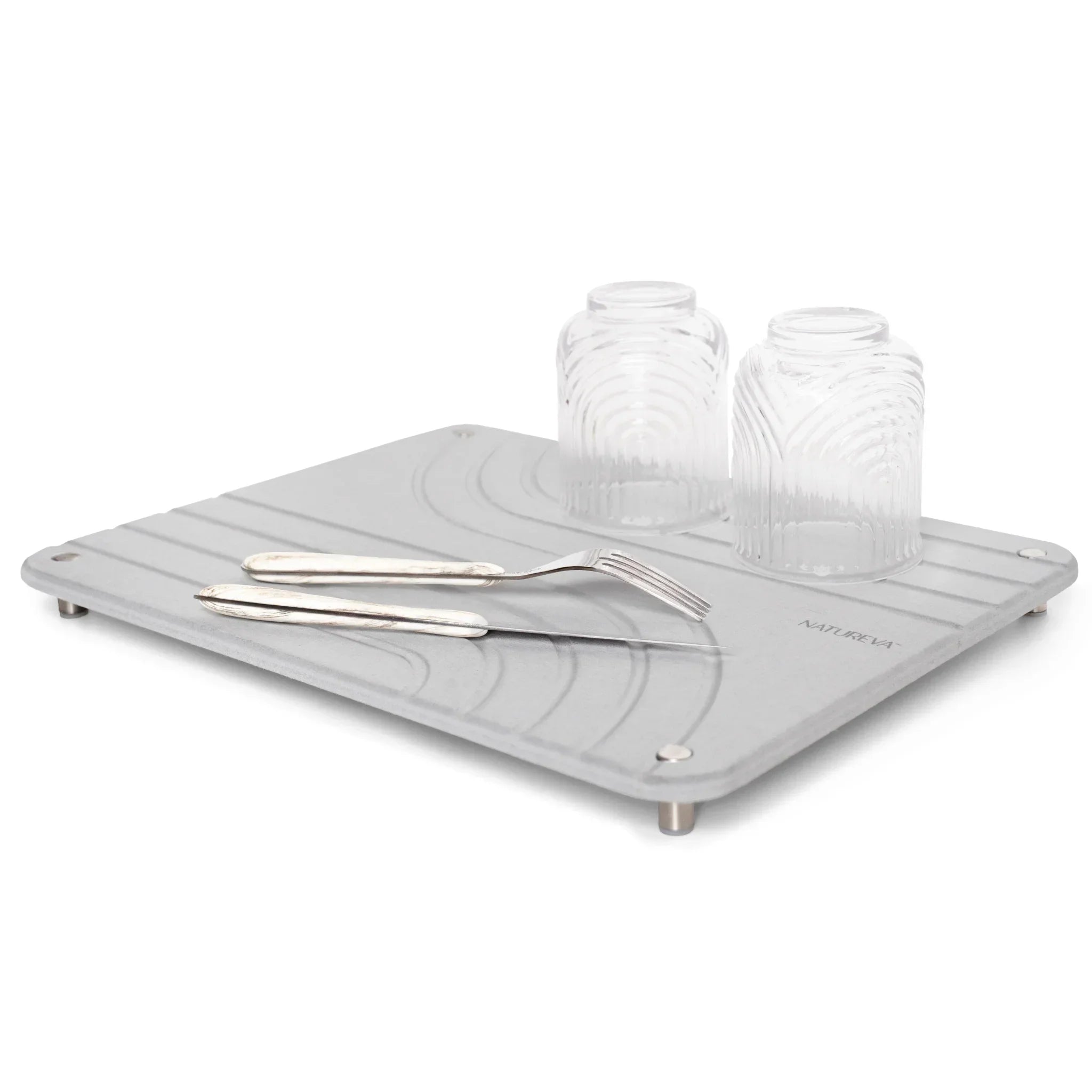
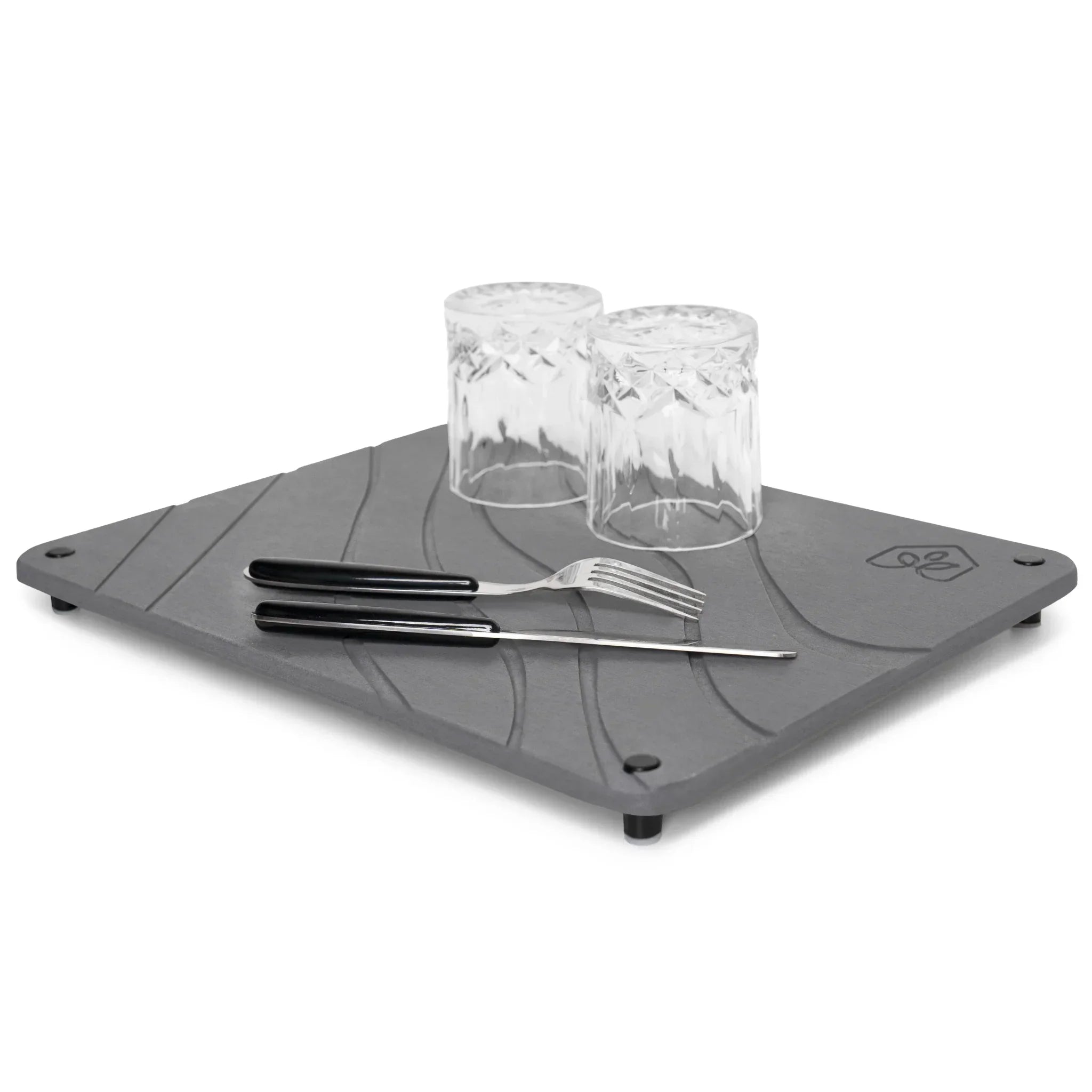
What sets a quality stone drying mat apart from cheaper versions is how it sits on your counter. Natureva's stone dish mats include stainless steel legs that lift the mat 2.5 cm off the surface, creating an air gap underneath. This does two important things: it allows moisture to evaporate from the bottom of the mat just as quickly as from the top, and it protects your countertop from the water damage, staining, and mold that happen when damp mats sit directly on surfaces for hours.
The legs come with small silicone pads that prevent scratching and keep the mat stable even when loaded with wet dishes. This design detail means you're not just drying dishes faster, you're also protecting the countertops underneath from the kind of slow damage that fabric mats cause over months of daily use.
Naturally Antibacterial Without Chemicals
Here's something worth knowing about fabric drying mats: many of them are treated with antimicrobial chemicals to fight bacteria growth. That's because wet fabric creates the perfect conditions for microbes to multiply. A stone drying mat doesn't need any chemical treatment because it simply doesn't stay wet long enough for bacteria to establish themselves. The rapid evaporation means there's no damp environment for odor causing bacteria or mold to thrive in.
This natural approach to hygiene matters in a kitchen where you're placing clean dishes and cooking surfaces. You don't want chemical residues near your plates or cutting boards. The antibacterial effect comes purely from the material's physical properties, not from added substances that wear off or wash away over time.
How Stone Compares to Fabric and Silicone
When you compare a stone drying mat against fabric and silicone side by side, the differences are stark across every metric that matters in daily kitchen use:
| Feature | Stone Drying Mat | Fabric / Microfiber Mat | Silicone Mat |
|---|---|---|---|
| Water Absorption | Instant on contact | Slow, stays damp | None (water pools) |
| Drying Time | 30 to 60 minutes | 4 to 8 hours | N/A (must wipe dry) |
| Odor Buildup | None | Musty within days | Minimal |
| Bacteria Growth | Naturally resistant | Common (damp fibers) | Low but pools water |
| Counter Protection | Elevated with airflow | Direct contact (traps moisture) | Direct contact |
| Maintenance | Weekly vinegar wipe | Frequent machine washing | Wipe after each use |
| Lifespan | 3 to 5 years | 3 to 6 months | 1 to 2 years |
The performance gap is especially obvious in busy kitchens. Fabric mats need washing every few days to prevent odors, while a stone drying mat can go weeks with just a quick vinegar wipe. Natureva's Flow and Tide dish mats handle heavy daily use without developing the musty smell that fabric gets after just a week of regular kitchen duty.
Instant Absorption That Keeps Counters Dry
Fabric dish mats turn into soggy sponges within minutes of use, leaving puddles on your counter and water rings that damage wood and laminate surfaces. The problem isn't just annoying, it's a design flaw built into the material. Fabric traps moisture instead of managing it, so you're constantly dealing with drips, spills, and that wet feeling every time you reach for a clean dish.
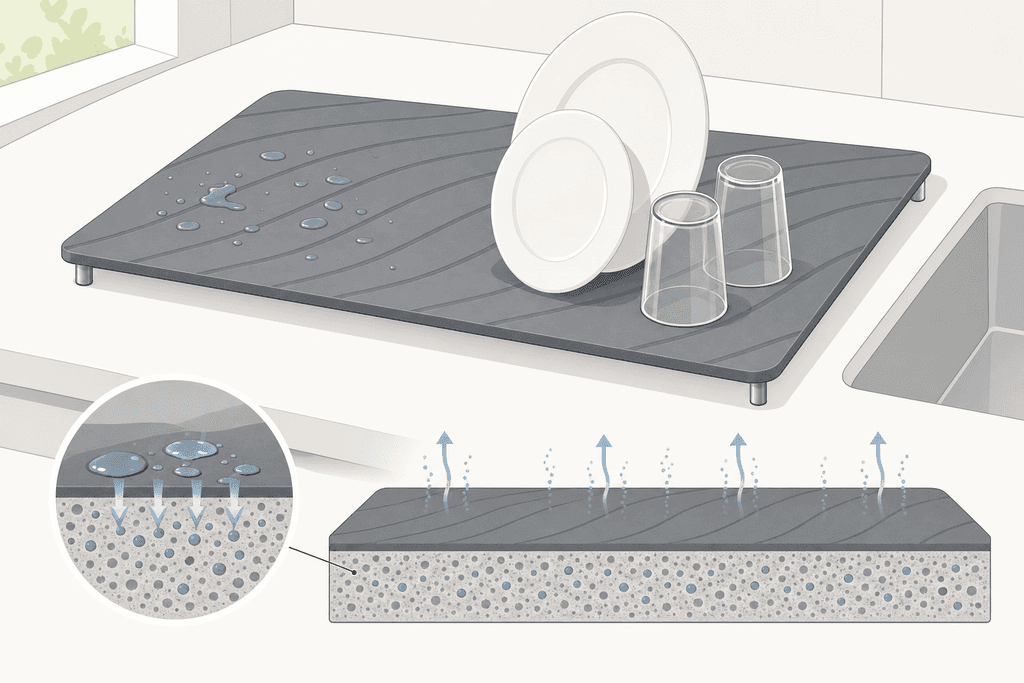
Water disappears on contact with the diatomite surface
A stone drying mat absorbs water on contact. The diatomite pulls moisture into millions of microscopic pores, leaving the surface dry to the touch almost immediately. This isn't just faster than fabric, it's a fundamentally different approach to managing kitchen moisture.
- Water disappears from dishes within seconds of touching the stone surface
- Stainless steel legs create a 2.5 cm airflow gap so moisture doesn't get trapped underneath
- Prevents water rings and counter damage from prolonged moisture sitting on surfaces
- Handles a full dinner's worth of dishes without becoming saturated
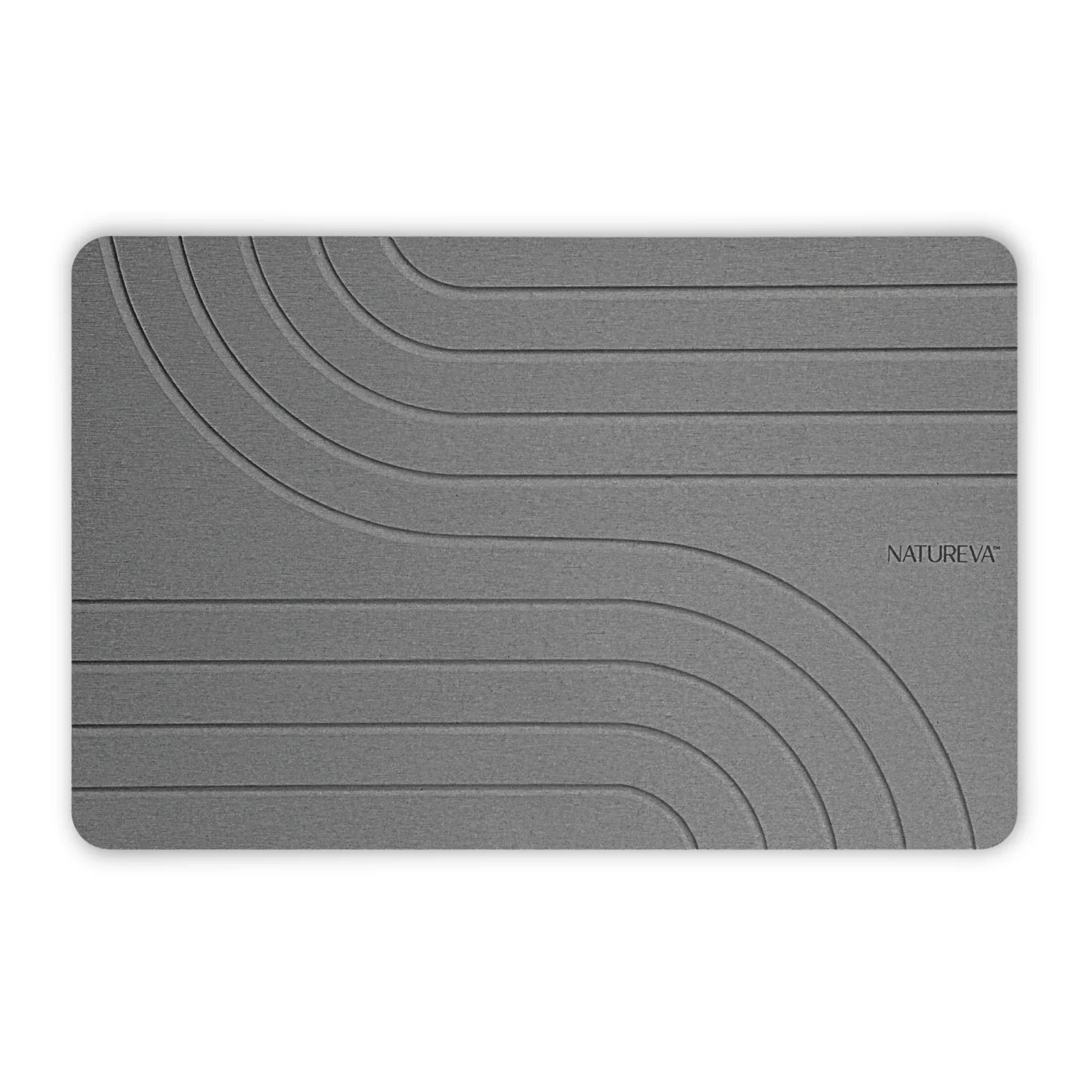
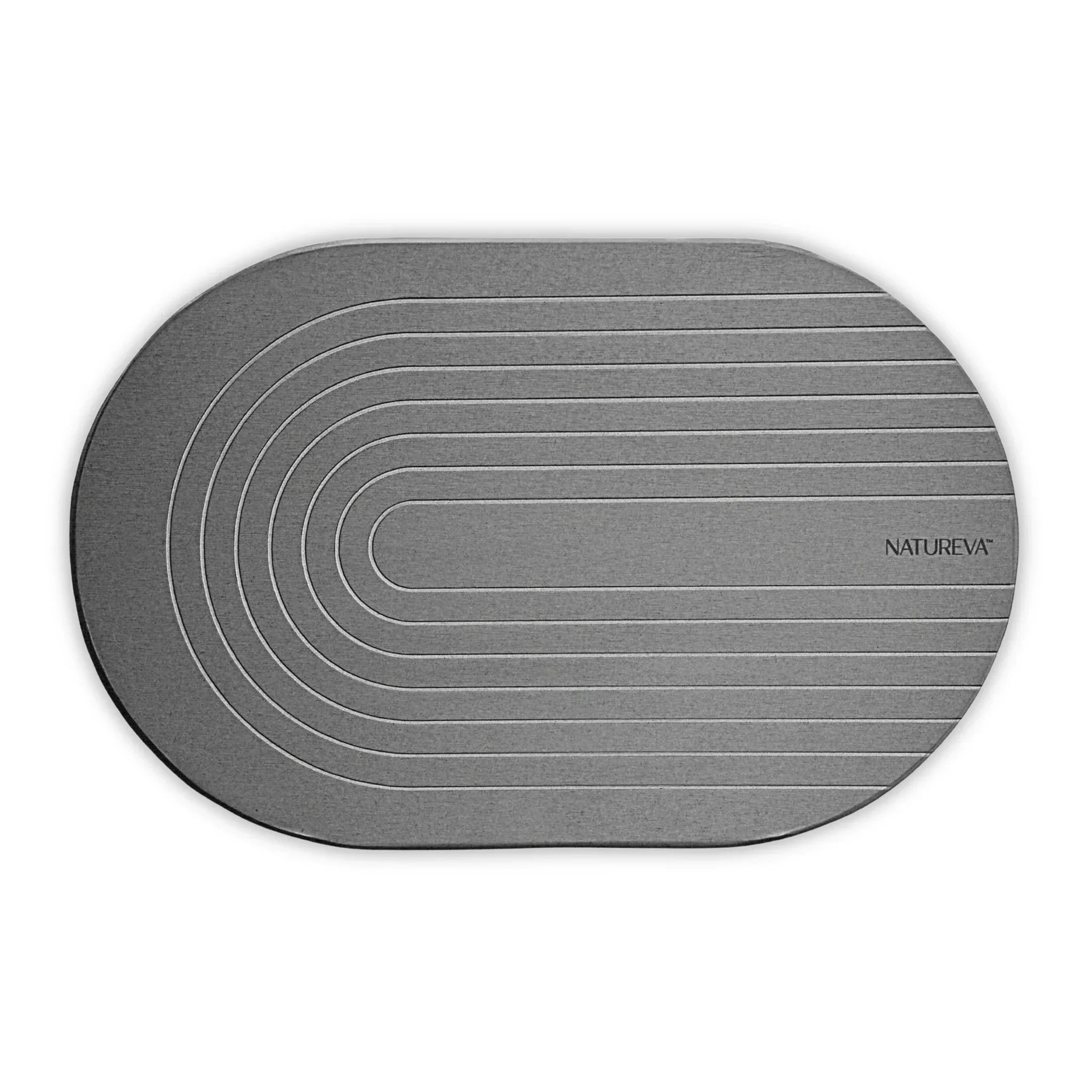
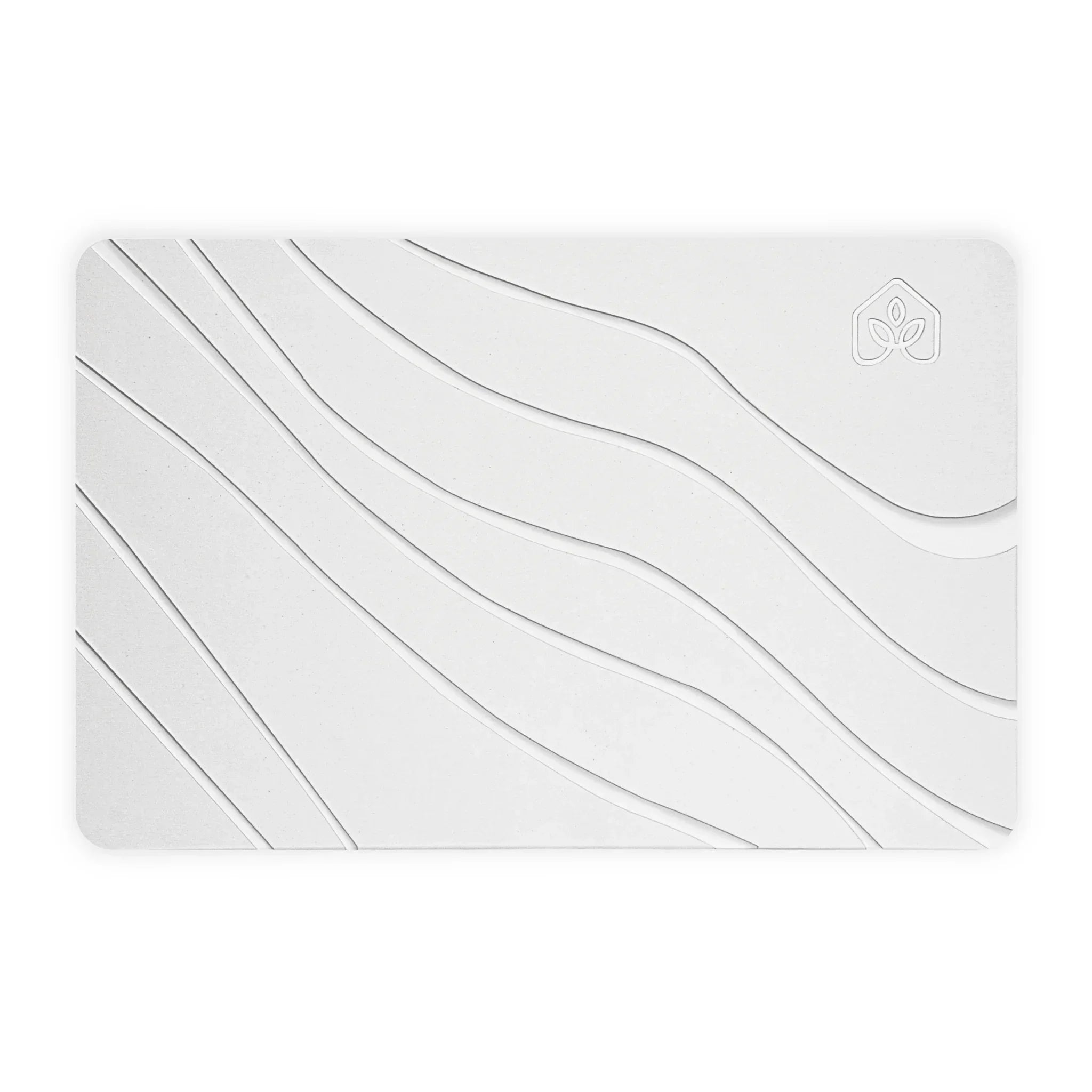
Both the Flow and Tide dish mats measure 39.5 x 29.5 cm, giving you enough room for a full load without crowding. The engraved patterns aren't just decorative either. They guide water across the surface for more even absorption, so moisture doesn't pool in one spot.
Self Drying Surface That Prevents Odor
That musty smell coming from your dish mat isn't normal, even though most people accept it as part of kitchen life. It's bacteria growing in trapped moisture, and it happens because fabric stays damp for hours after use. The longer a surface stays wet, the more time bacteria has to multiply and produce the compounds that create that familiar sour smell.
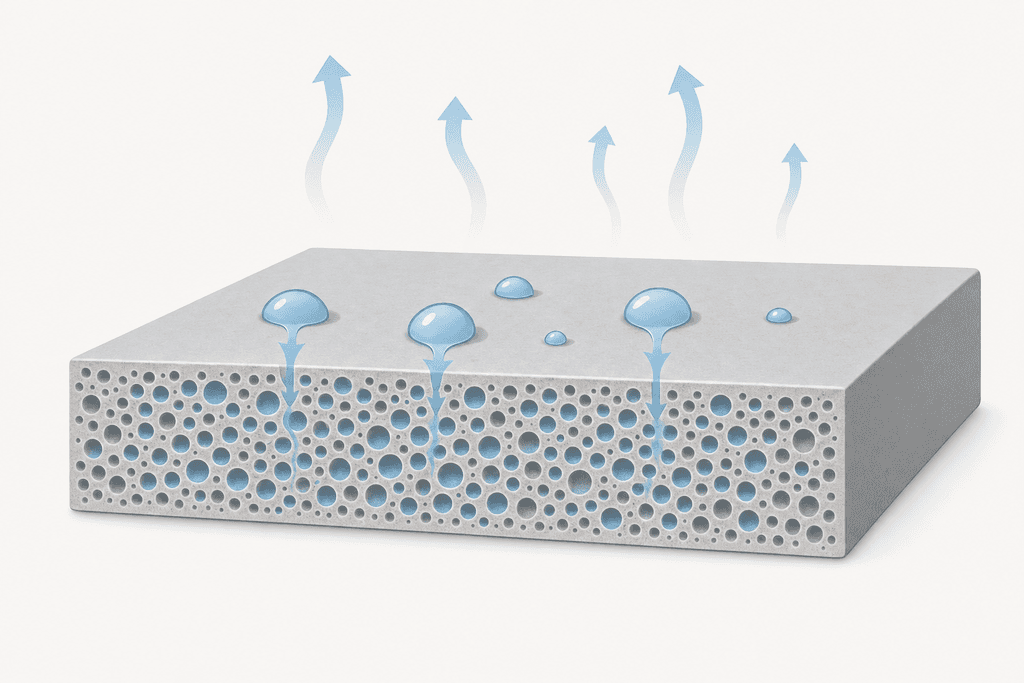
Moisture evaporates through the porous surface within minutes
A stone drying mat eliminates this problem at the source. It releases absorbed moisture back into the air within 30 to 60 minutes, leaving nothing behind for bacteria to feed on. While fabric holds water in its fibers until you physically wring it out or throw it in the dryer, diatomite releases moisture naturally through the same microscopic pores that absorbed it in the first place. Bacteria simply cannot thrive on surfaces that dry completely between uses.
The next generation of home essentials: naturally made, cleaner by design, sustainable by nature.
SHOP ALLMaintenance is surprisingly minimal. A weekly wipe with diluted vinegar keeps the surface clean, replacing the constant washing routine that fabric demands. When absorption starts to slow down after months of use, the included P320 grit sanding tool restores performance by reopening the surface pores. It takes about two minutes and makes the mat absorb like new again. For a deeper look at how stone compares to microfiber in real kitchen conditions, see our stone vs microfiber comparison.
Built to Last Years Not Months
Fabric mats fray, tear, and develop permanent stains within months of regular use. You've probably replaced yours multiple times already, each one following the same pattern: looks great for a few weeks, starts smelling after a month, falls apart after three. A stone drying mat is a compressed composite of diatomaceous earth and recycled paper, formed into a dense slab that doesn't have fibers to break down or edges to unravel.
The engraved patterns on the Tide and Flow designs do more than look good. Tide's horizontal contour bands and Flow's diagonal wave engraving create channels that direct water across the surface for faster, more even absorption. It's functional design that happens to look clean and minimal on your counter. Both are available in Graphite and Slate to match modern kitchen aesthetics.
- No fibers to fray, no edges to unravel, no stains that won't come out
- Engraved patterns guide water flow for more efficient absorption
- Available in Graphite and Slate to match modern kitchen styles
- No chemical coatings or synthetic finishes that wear off over time
- Wipe surface with diluted vinegar and water
- Rinse under tap if any stains appear
- Stand upright to air dry if fully saturated
- Sand surface lightly every few months to restore absorbency
When you compare the cost of replacing fabric mats every few months to a single stone drying mat that lasts years, the value becomes obvious. Factor in the time and water saved on constant washing, and it's one of those kitchen upgrades that pays for itself fairly quickly. The entire kitchen collection follows this same care routine, making it easy to maintain multiple stone products without complicated instructions.
A Cleaner Kitchen Starts with Better Drying
The problem with fabric dish mats has always been simple: they stay wet too long. That moisture creates the conditions for bacteria to grow, which means your clean dishes are sitting on a surface that's anything but clean. A stone drying mat absorbs water instantly and releases it back into the air within minutes, not hours. The surface stays dry, bacteria doesn't get the chance to settle in, and your counters stay cleaner without any extra effort on your part.
The elevated design matters more than most people think. When you place a stone dish mat on your counter, the stainless steel legs create airflow underneath that prevents moisture from getting trapped between the mat and your surface. No water rings, no counter damage, and no need to constantly lift and wipe underneath like you would with fabric.
One stone mat replaces years of washing, drying, and eventually throwing out fabric versions that never quite dry properly. The Natureva dish mat collection includes options in both Tide and Flow patterns, each designed to handle daily kitchen moisture while looking like an intentional part of your space rather than something you're hiding in a drawer between uses.
If you're tired of damp fabric mats that smell musty by day three, switching to stone changes how your kitchen works. The same principle applies across the entire kitchen range, from sink caddies to faucet mats. Faster drying means less cleaning, fewer replacements, and a kitchen that actually stays as clean as it looks.
Common Questions About Stone Drying Mats
Switching from fabric to stone feels like a big change, and most people have the same questions before making the jump. Here's what you actually need to know about how a stone drying mat works in a real kitchen.
How long does a stone drying mat take to dry?
Most stone drying mats dry within 30 to 60 minutes after use. The diatomite pulls moisture from dishes instantly and releases it into the air through evaporation. In more humid environments it might take a bit longer, but the mat should still feel dry to the touch well within a couple of hours.
Can it handle heavy pots and pans?
Yes. Stone drying mats are made from compressed diatomite composite that supports cast iron skillets, Dutch ovens, and stacked dishes without cracking. Just avoid dropping heavy items directly onto the surface from a height, since that can cause damage the same way it would with any hard surface.
What if it stops absorbing water?
When a stone drying mat loses absorbency, it usually means the surface pores are clogged with soap residue, oils, or mineral deposits. A quick sand with the included restoration tool reopens the pores and brings the mat back to full performance. A vinegar wipe can also help clear buildup before sanding.
How do you clean a stone drying mat?
Weekly maintenance takes about a minute. Wipe the surface with a mixture of water and white vinegar to prevent buildup. Avoid coloured soaps or harsh chemical cleaners that can stain the porous surface. If the mat gets heavily saturated, prop it upright to air dry completely before laying it flat again.
Is stone better than silicone or microfiber?
Stone dries faster and stays cleaner than both. Microfiber traps moisture and needs frequent washing to avoid mildew. Silicone doesn't absorb water at all and just creates puddles you have to wipe up. A stone drying mat absorbs instantly and dries itself, so you're not dealing with damp fabric or standing water on your counter.
Does it work in humid climates?
Yes. Drying times may extend slightly in high humidity, but the elevated stainless steel legs allow airflow underneath, which helps moisture evaporate even when the air is heavy. As long as the mat isn't sitting in standing water, it will continue absorbing and releasing moisture effectively.
The next generation of home essentials: naturally made, cleaner by design, sustainable by nature.
SHOP ALL