

What Anti Slip Bath Mat Patterns Prevent Falls
Every year, over 230,000 people end up in the emergency room because of bathroom falls, and most of these accidents happen the moment wet feet hit a slippery surface after a shower. The pattern on your anti slip bath mat isn't just about looks—it's actually the key feature that determines whether you stay upright or take a dangerous tumble. Understanding which patterns work best can reduce your slip risk by up to 80%, and it all comes down to how the design handles water and creates grip under your feet.
Table of Contents
How Anti Slip Technology Actually Works
Every year, bathroom falls send thousands of people to the emergency room, and wet floors are the main culprit. When you step out of the shower with dripping feet, a thin layer of water forms between your skin and the mat surface. This water acts like a microscopic skating rink, reducing the natural grip your foot would normally have. The science behind preventing these slips comes down to understanding friction and how different materials handle moisture.
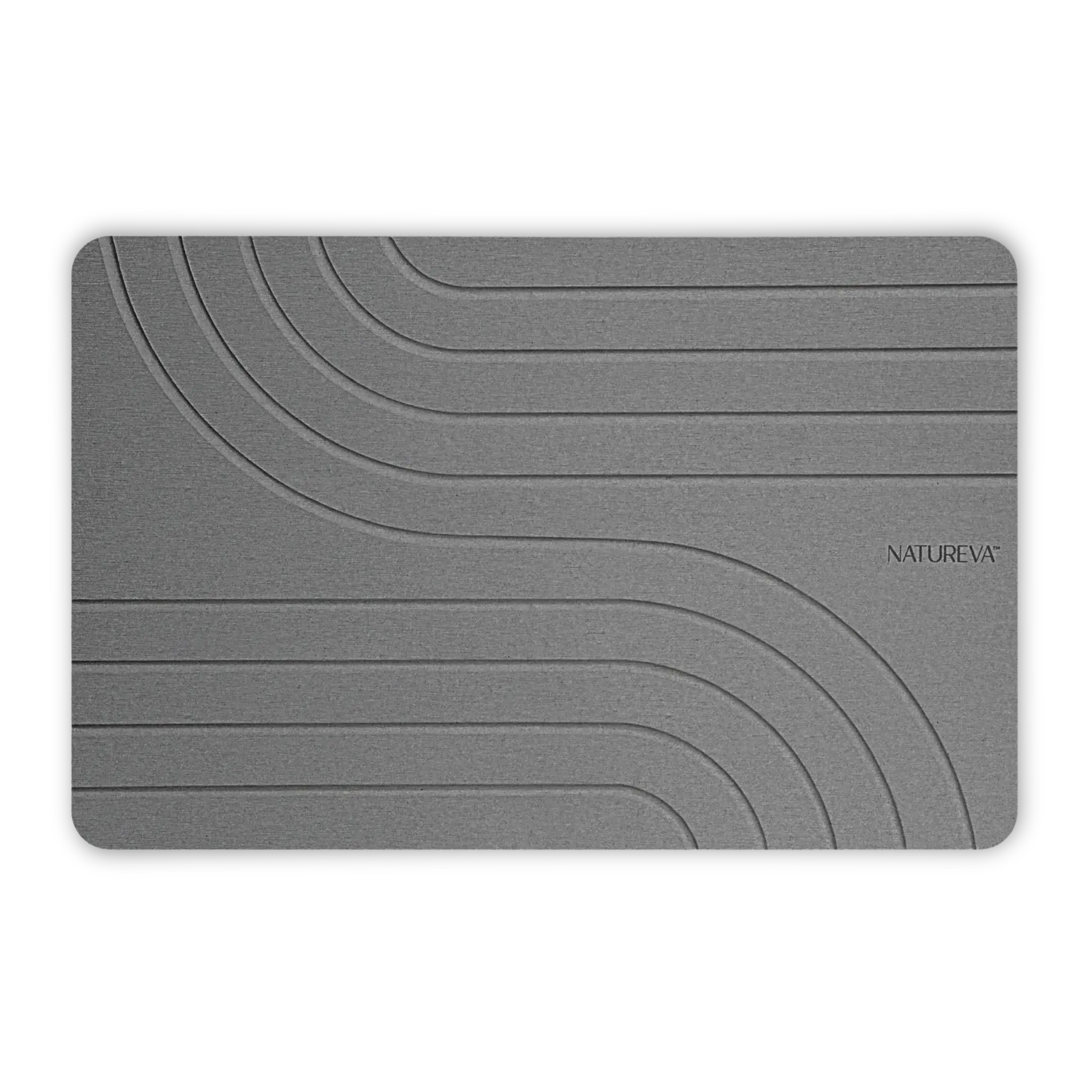
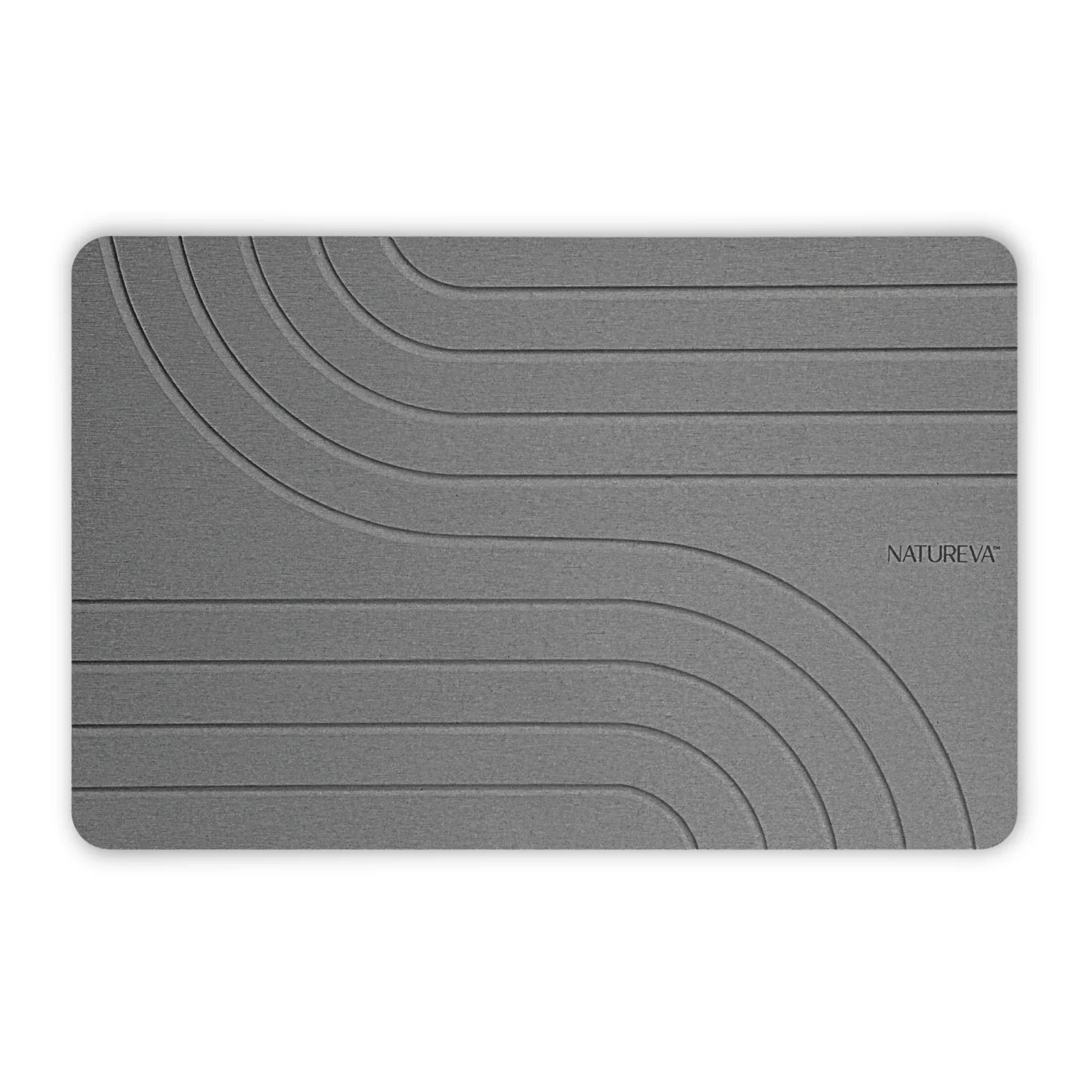
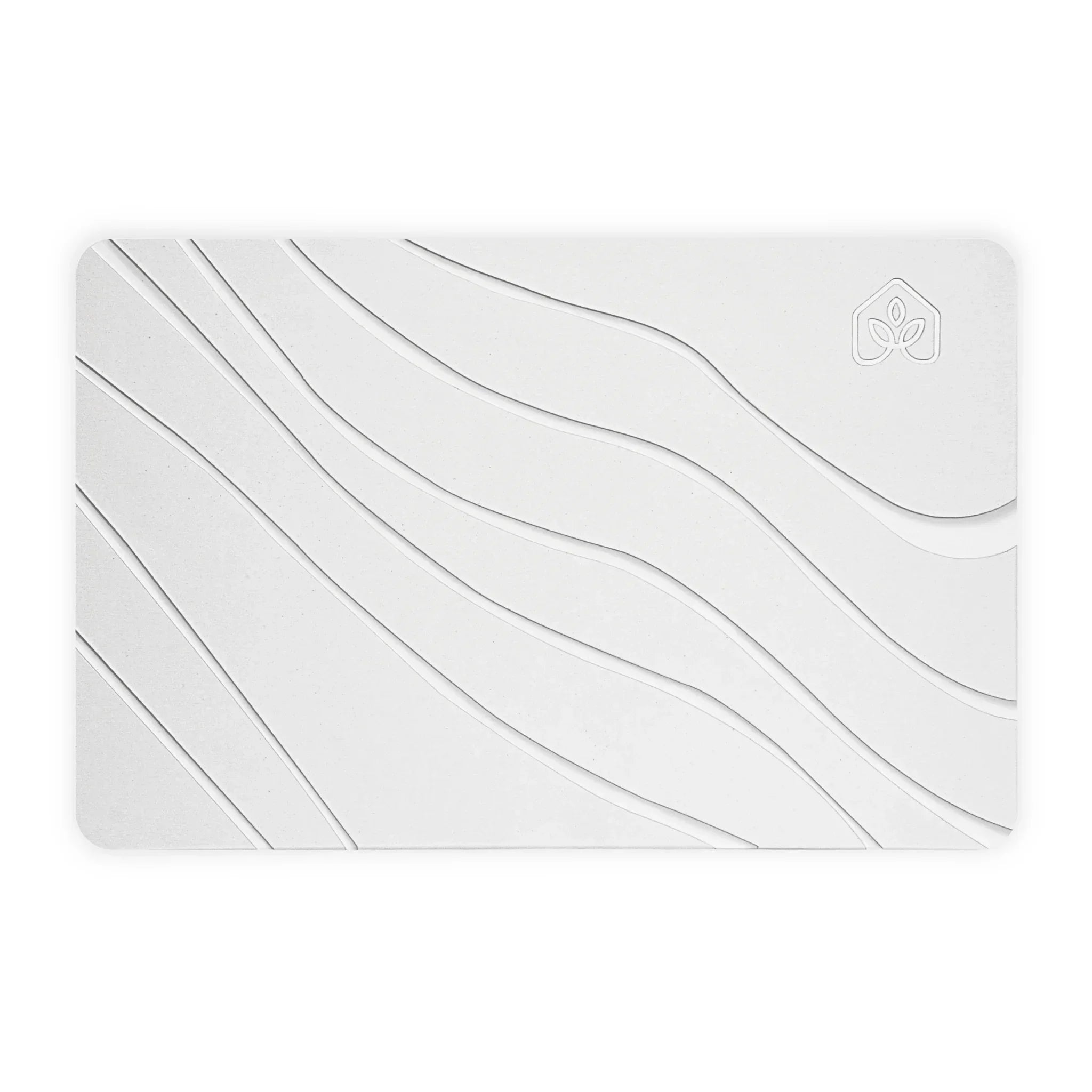
Stone Bath Mat - Tide
Understanding Friction Coefficients
Friction coefficient is just a fancy way of measuring how much grip a surface provides. Scientists use a scale from 0 to 1, where higher numbers mean better traction. Most safety experts agree that anything below 0.5 is considered slippery, especially when wet. Research on bathroom injuries shows that the right surface texture can make a huge difference in preventing falls.
Here's what affects friction on wet surfaces:
- The material's natural texture and porosity
- How quickly water drains away from contact points
- The pattern design and depth of grooves
- Surface hardness and flexibility under pressure
Breaking the Water Barrier
The real trick to preventing slips is breaking up that water layer before it causes problems. When your wet foot touches an anti slip bath mat, the surface needs to do two things at once. First, it has to channel water away from the contact points where your foot presses down. Second, it needs to create enough texture so your skin can grip something solid instead of sliding on liquid.
Traditional fabric mats try to absorb water, but they get saturated quickly and stay damp for hours. Rubber mats with suction cups work better, but they can trap moisture underneath. Stone bath mats like our Natureva collection use diatomaceous earth, which absorbs water instantly and releases it through evaporation within seconds.
Material Performance Comparison
Different materials handle wet conditions in very different ways. Some absorb water but hold onto it, while others repel moisture entirely. The best anti slip bath mat materials combine quick absorption with fast drying times.
| Material Type | Dry Friction | Wet Friction | Drying Time |
|---|---|---|---|
| Cotton Fabric | 0.6 | 0.3 | 4-6 hours |
| Rubber/PVC | 0.7 | 0.5 | 2-3 hours |
| Microfiber | 0.65 | 0.4 | 3-5 hours |
| Diatomaceous Stone | 0.75 | 0.7 | 30-60 seconds |
| Memory Foam | 0.55 | 0.35 | 5-8 hours |
The numbers tell an interesting story. While many companies like Dorah Home and Dry Sorb offer various bath mat solutions, the material composition makes the biggest difference in actual slip resistance. Stone-based mats maintain nearly the same friction coefficient whether wet or dry, which is exactly what you need when stepping out of a shower.
Why Patterns Matter for Grip
Surface patterns aren't just decorative. They create channels that move water away from high-pressure contact points. Think of tire treads on a car - the grooves push water to the sides so the rubber can grip the road. Bath mat patterns work the same way, but on a smaller scale.
- Deep grooves channel water away faster
- Raised textures create more contact points
- Geometric patterns distribute pressure evenly
The combination of material and pattern determines how safe your bath mat really is. A great pattern on poor material won't help much, and smooth stone won't grip as well as textured stone, even if it dries quickly.
Raised Texture Patterns That Grip Wet Feet
Most bathroom falls happen within seconds of stepping out of the shower, when your feet are still dripping wet and the floor becomes a skating rink. The right pattern on your bath mat can be the difference between a safe step and a trip to the emergency room. Raised textures work by creating multiple contact points between your wet foot and the mat surface, giving you grip even when water tries to act as a lubricant. The science behind this is pretty straightforward, but not all raised patterns are created equal.
Raised dot patterns are probably the most common design you'll see. The key is spacing - dots need to be close enough that your foot always touches several at once, but far enough apart that water can escape between them. Pattern height matters more than you'd think. Too low and the dots disappear under a layer of water. Too high and they feel uncomfortable or even painful on bare feet.
- Dot patterns: Work best when spaced 5-10mm apart with 1-2mm height
- Ridge and wave patterns: Channel water away while providing grip along multiple lines
- Geometric shapes: Hexagons and diamonds create more edge contact than simple circles
- Random patterns: Often outperform uniform grids because they adapt to different foot sizes and positions
Ridge patterns do double duty. They give you something to grip while also acting like tiny gutters that move water away from where your foot lands. Studies on bath mat safety show that water displacement is just as important as the texture itself. Wave patterns that curve across the mat surface tend to work better than straight lines because they catch your foot from multiple angles no matter how you step.
Here's something most people don't realize - there's a sweet spot between too smooth and too rough. A mat that feels like sandpaper might seem safer, but it's actually uncomfortable enough that people avoid using it. The best anti slip bath mat designs feel pleasant underfoot while still providing serious traction.
Absorbent Surface Patterns for Instant Drying
The smartest way to prevent slipping isn't just managing water - it's eliminating it completely. Traditional fabric mats sit there soaking wet for hours, which means they're slippery for hours. Materials like diatomaceous earth change the game by absorbing water so fast that the slip hazard barely exists. When water disappears within seconds instead of minutes, you're stepping onto a dry surface every single time. This is where surface patterns become less about texture and more about maximizing how much water the material can drink up.
Stone bath mats made from diatomaceous earth have microscopic pores that pull water in through capillary action. The surface patterns etched into these mats aren't just decorative - they increase the total surface area available for absorption. More surface area means faster drying times. Our Stone Bath Mat in Tide pattern uses wave-like grooves that spread water across a larger area instantly.
| Material Type | Absorption Time | Dry Time |
|---|---|---|
| Traditional fabric | Slow (stays wet) | 2-4 hours |
| Diatomaceous earth | Instant | Under 60 seconds |
| Rubber with texture | None (water pools) | Depends on evaporation |
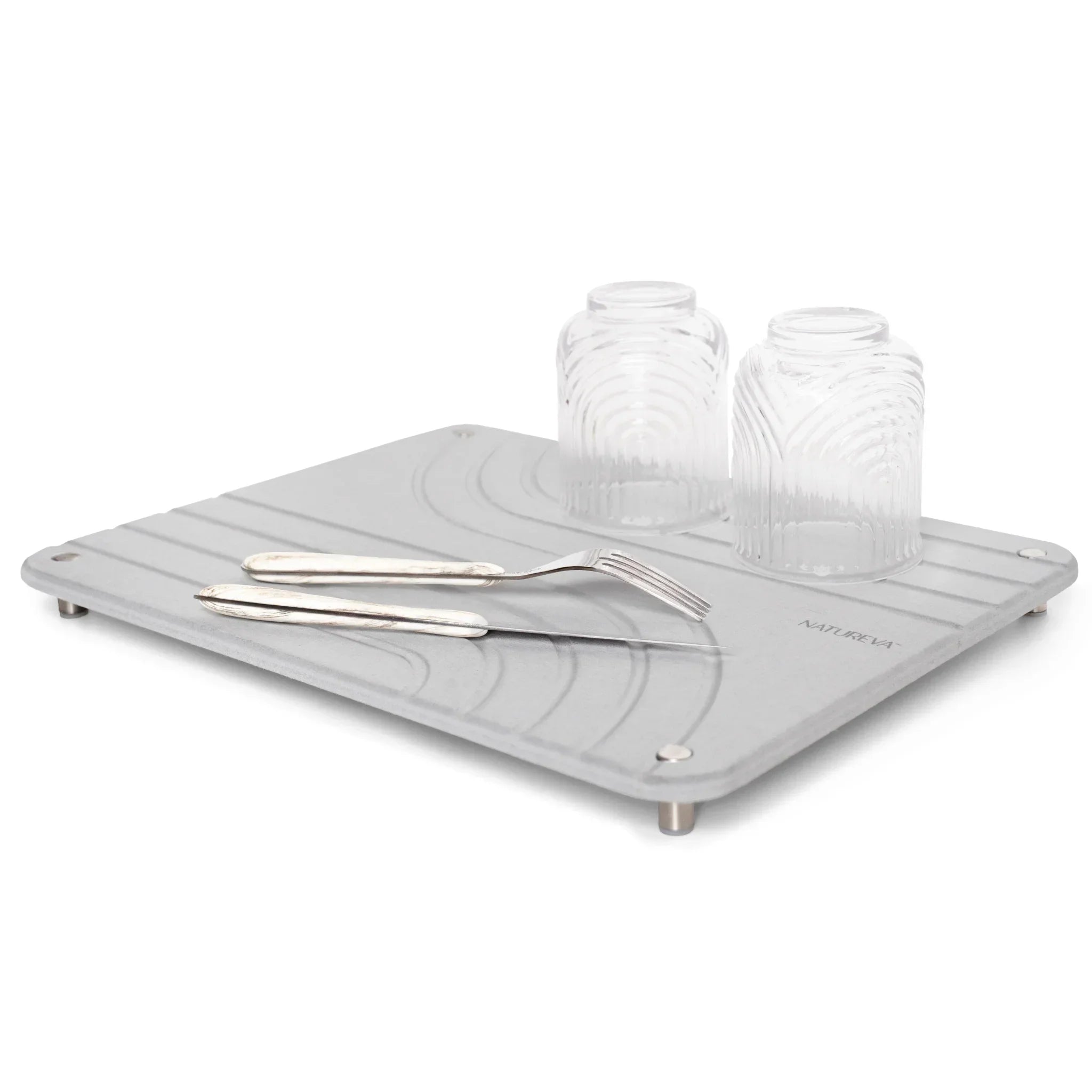
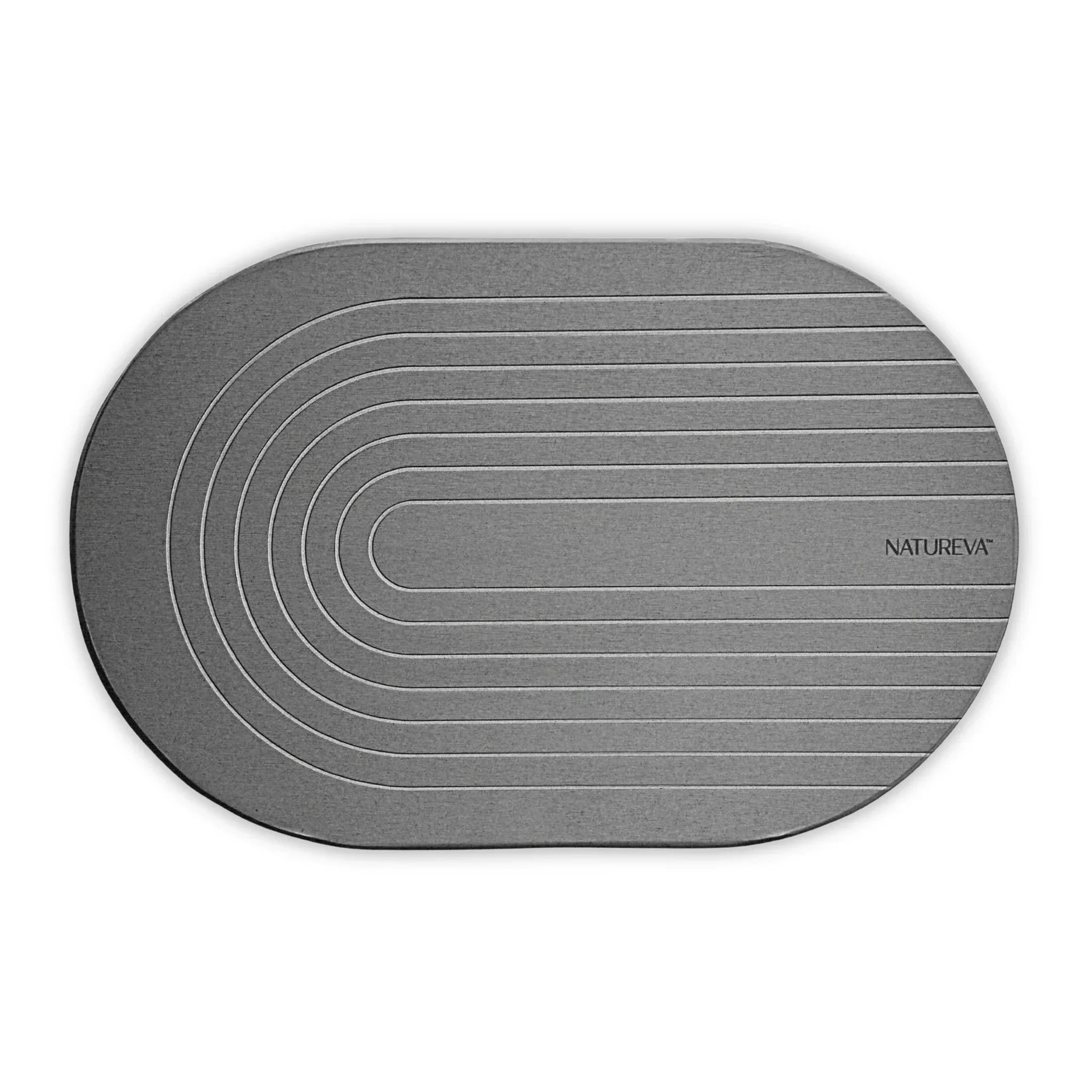
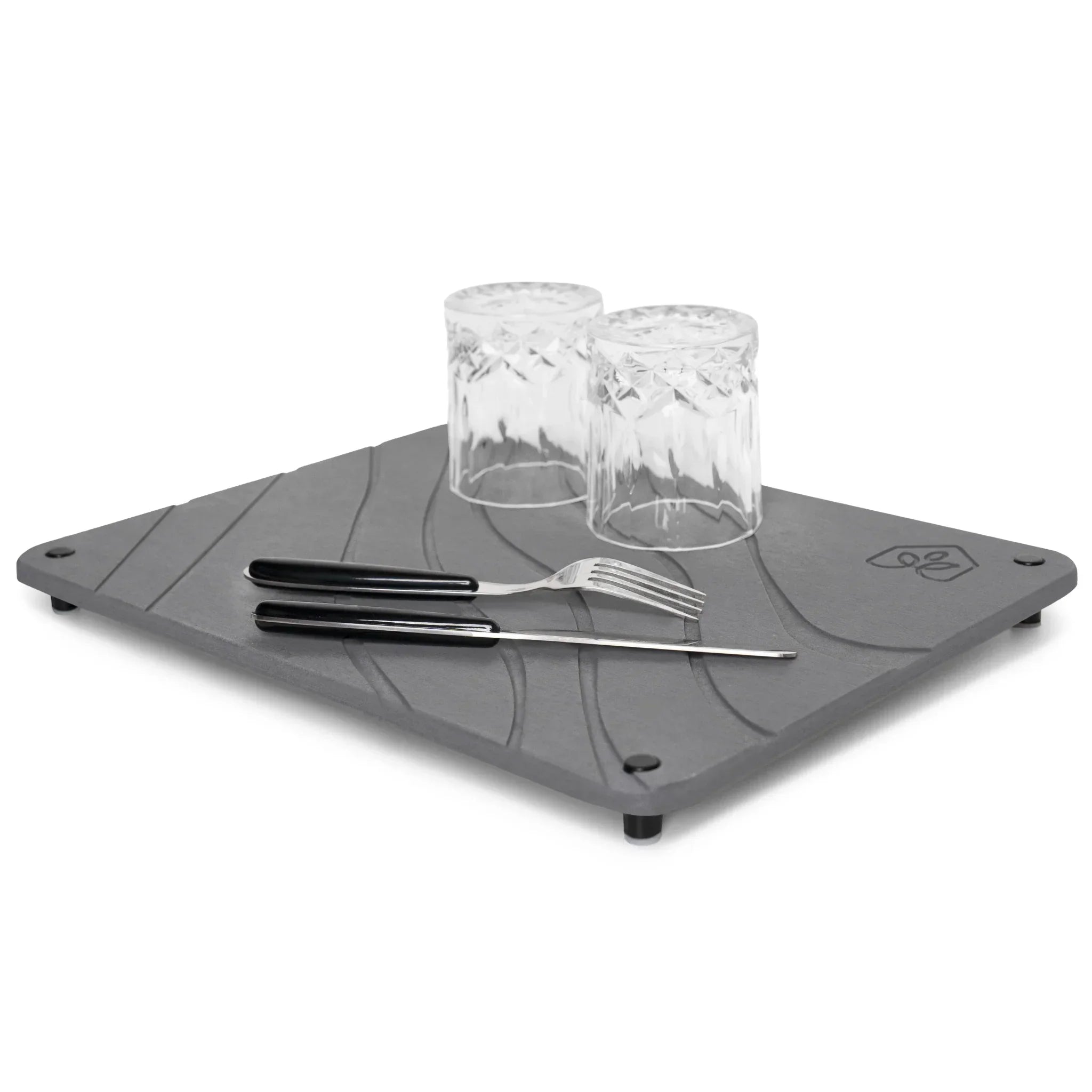
The Arch pattern and Rain design work the same way but with different groove arrangements. Each etched line creates more edges and surfaces for water molecules to contact. When absorption happens this fast, you're solving the problem at its source rather than just trying to grip through it. Bathroom safety experts point out that eliminating standing water is one of the most effective fall prevention strategies.
The water barrier problem is real. When you step on a wet rubber mat, there's actually a thin film of water between your foot and the mat surface. That film acts like a slip-and-slide no matter how textured the rubber is underneath. Stone mats that absorb instantly never develop that barrier layer.
Drainage Channel Patterns That Move Water Fast
Even the best texture won't help if water pools under your feet. This is where drainage channels come in - they're like highways that move water away from high-traffic areas. Channel patterns work by creating low points where water naturally flows, guided by gravity and the shape of the grooves. The goal is to keep the raised contact points dry while water escapes to the edges or into absorption zones. Smart mat designs combine both drainage and texture in the same pattern.
Groove depth and width need to be balanced carefully. Too shallow and water just sits there. Too deep and the channels become uncomfortable ridges under your feet. Most effective drainage grooves are 2-3mm deep and 3-5mm wide - enough to move water quickly without feeling weird when you stand on them.
- Radial patterns: Spread water outward from center like spokes on a wheel
- Grid channels: Create a network of escape routes in multiple directions
- Curved channels: Follow natural water flow patterns better than straight lines
- Combination designs: Mix raised dots with drainage grooves between them
Radial patterns are particularly clever because they work no matter where you step. Water gets pushed outward toward the mat edges where it can drip off or be absorbed. The spacing between raised elements creates natural drainage paths - this is why pattern spacing is just as important as the raised parts themselves. You can explore different bath mat patterns to see how various designs handle water displacement.
The next generation of home essentials: naturally made, cleaner by design, sustainable by nature.
SHOP ALLThe best anti slip bath mat designs don't rely on just one approach. They combine texture for grip, absorption for quick drying, and channels for water movement. Fall prevention research shows that addressing multiple risk factors at once gives you the best protection. When you're choosing a mat, look for patterns that do more than one job at the same time.
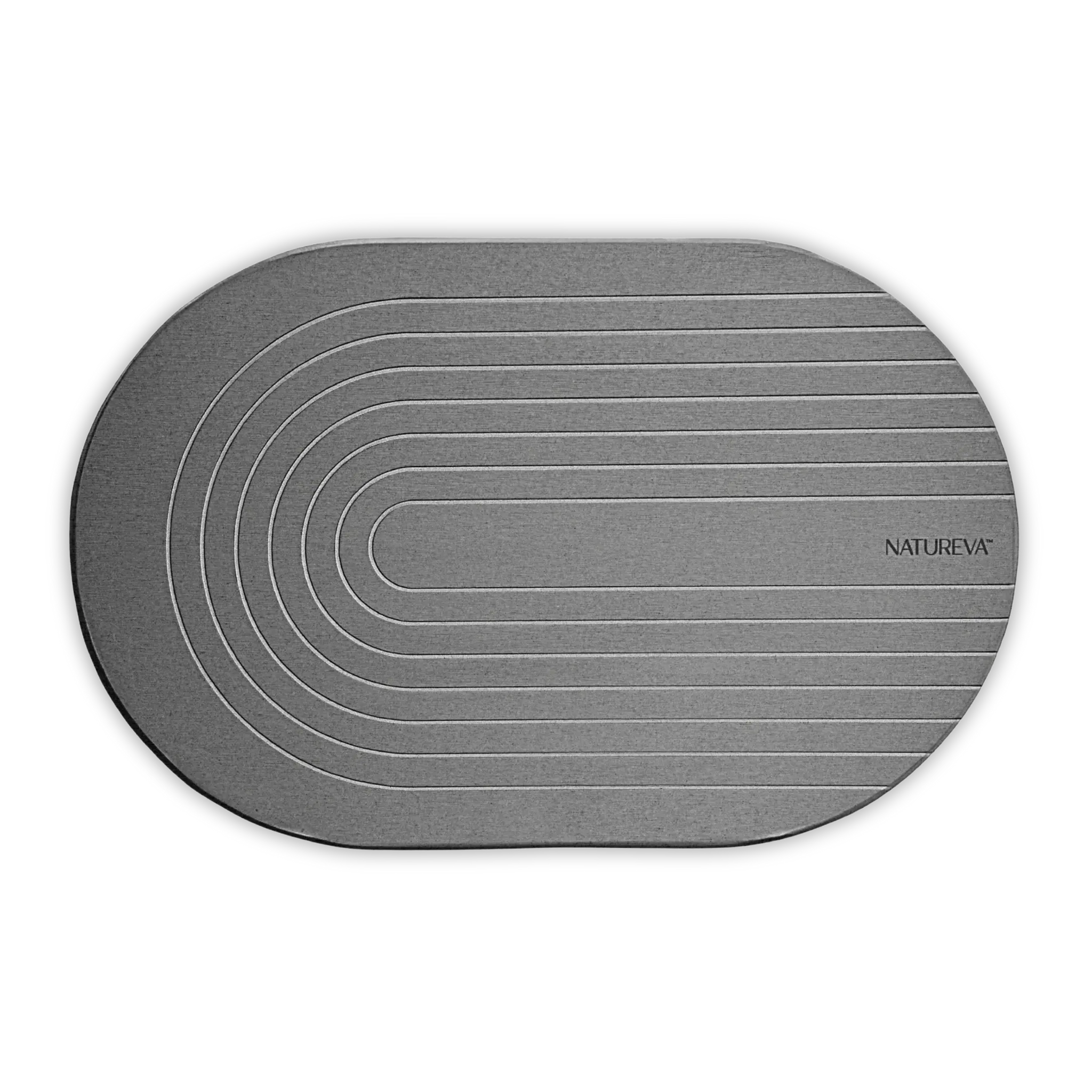
Stone Bath Mat - Arch
Choosing the Right Pattern for Your Bathroom Setup
The pattern on your anti slip bath mat matters more than most people realize, especially when you consider that different bathroom setups create unique challenges. A mat that works perfectly in a well-ventilated guest bathroom might fail completely in a humid master bath with poor airflow. The key is matching the pattern design to your specific situation, which means looking at factors like how much water hits the floor, who uses the bathroom, and how quickly moisture needs to disappear.
Traditional fabric mats with raised rubber patterns might seem like the obvious choice, but they often create more problems than they solve in high-moisture environments. The fabric stays wet for hours, and those rubber grips can actually trap water underneath, leading to mold growth and that musty smell nobody wants in their bathroom.
Matching Patterns to Shower Configurations
Walk-in showers and enclosed tubs each dump water onto your floor differently. The amount of water and how it spreads determines which pattern type will actually keep you safe versus just looking nice.
- Walk-in showers need patterns that handle large water volumes quickly
- Enclosed tubs work better with absorption-focused designs since water comes out in smaller amounts
- Corner showers benefit from mats with edge-to-edge coverage patterns
- Curbless showers require maximum drainage capacity in the pattern design
Stone bath mats like our Natureva options use surface texture patterns that work completely differently from fabric mats. The diatomaceous earth material absorbs water instantly through microscopic pores rather than relying on raised rubber bumps.
Special Considerations for Safety Needs
Households with elderly members or anyone with mobility challenges need to think beyond basic slip resistance. The pattern needs to provide grip without creating trip hazards from raised edges or bunched fabric.
| Bathroom Scenario | Best Pattern Type | Why It Works |
|---|---|---|
| High humidity, poor ventilation | Stone absorption patterns | Dries in seconds |
| Elderly users present | Flat textured surface | No trip edges |
| Multiple daily users | Quick-dry stone | Ready between uses |
| Small bathroom space | Compact absorption design | Maximum coverage, minimal size |
Humidity and Pattern Performance
Bathroom humidity levels directly impact how well any anti slip bath mat pattern actually works. In steamy bathrooms, fabric mats never fully dry between uses, which means the pattern loses effectiveness and bacteria starts growing in those damp fibers.
- Fabric patterns need 6-8 hours to dry completely in humid conditions
- Stone patterns dry within 60 seconds regardless of humidity levels
- Rubber-backed mats trap moisture underneath even when the top feels dry
The maintenance difference between pattern types becomes obvious after just a few weeks of use. Stone mats require a simple wipe-down occasionally, while fabric mats need weekly washing to prevent mold and odor buildup in the pattern grooves.
When Absorption Beats Drainage
Some patterns focus on letting water drain through to the floor below, while others absorb moisture directly into the material. For most home bathrooms, absorption patterns make more sense because they actually remove water from the equation instead of just moving it around.
- Drainage patterns still leave your floor wet underneath the mat
- Absorption patterns eliminate the water completely through evaporation
- Stone materials like diatomaceous earth combine both absorption and quick drying
Competitors like Dorah Home and Dry Sorb offer stone mat options, but the pattern design and material quality vary significantly between brands. Our Natureva stone bath mats feature patterns specifically designed to maximize surface contact with wet feet while maintaining the natural look that works in any bathroom style.
Your Next Step Toward a Safer Bathroom
The truth is, not all anti slip bath mat patterns are created equal. Some rely purely on raised textures for friction, while others focus on absorption to eliminate the real problem, which is standing water. The most effective mats combine both strategies, giving you multiple layers of protection against slips and falls.
Pattern effectiveness comes down to three main factors: texture that creates friction, materials that absorb water quickly, and designs that allow proper drainage. Traditional fabric mats with rubber backing might have texture, but they stay wet for hours and actually create slip hazards. Stone mats work differently because they pull moisture away from your feet within seconds.
Our stone bath mat collection uses natural diatomaceous earth with raised patterns like Tide, Arch, and Rain. These patterns aren't just decorative, they channel water while the stone material absorbs it instantly. The combination means your feet land on a dry, textured surface instead of a slippery wet one.
Investing in the right anti slip bath mat isn't about spending more money. It's about choosing a solution that actually addresses why falls happen in the first place. When you step out of the shower onto a surface that dries in seconds and provides natural grip, you're not just buying a mat, you're buying peace of mind for yourself and everyone in your household.
The patterns matter, but the material matters more. That's something worth remembering when you're comparing options and trying to figure out what will actually keep your bathroom safer.
Common Questions About Anti Slip Bath Mat Patterns
Choosing the right anti slip bath mat involves more than just picking a pattern you like. Most people have similar questions about how these mats actually work, how long they last, and whether the pattern really makes a difference in preventing falls. Here are the answers to the most common questions we hear from customers looking to make their bathrooms safer.
Which pattern type is most effective for preventing slips?
Textured patterns with raised surfaces work best because they create more contact points between your feet and the mat. Deep grooves and geometric designs like our Rain and Arch patterns provide better grip than smooth surfaces. The key is having enough texture to channel water away while still feeling comfortable underfoot.
Do anti slip patterns wear out over time?
Traditional rubber and fabric mats definitely lose their grip as the texture wears down from use and washing. Stone bath mats like our Natureva collection maintain their anti slip properties much longer because the material itself is naturally porous and doesn't rely solely on surface texture. The diatomaceous earth stays absorbent and provides consistent traction even after years of daily use.
How do I clean mats with textured patterns?
Textured patterns can trap dirt and soap residue in the grooves, which is annoying with fabric mats. Stone bath mats are much easier to maintain because you just wipe them down with a damp cloth or rinse them under water. The porous surface naturally resists bacteria growth, so you don't need harsh chemicals or frequent deep cleaning like you do with traditional mats.
Are stone bath mats really better than rubber or fabric?
Stone mats solve the biggest problems with traditional options. Fabric mats stay wet and grow mold, while rubber mats can feel sticky and degrade over time. Stone absorbs water instantly and dries within seconds, which means less slip risk and no musty smell. Brands like Dorah and Tosoro offer similar stone options, but our Natureva mats combine effective patterns with natural materials at a better price point.
What pattern works best for elderly users?
Elderly users need patterns that provide grip without being too aggressive or uncomfortable on sensitive feet. Gentle wave patterns like our Tide design offer excellent traction while still feeling smooth enough for daily comfort. The instant water absorption is especially important for older adults who may have slower reaction times if they step onto a wet surface.
Can I use anti slip mats on heated bathroom floors?
Most rubber mats aren't recommended for heated floors because the heat can break down the material and release odors. Stone bath mats work perfectly with radiant floor heating since they're made from natural minerals that won't melt or degrade. The heat actually helps the mat dry even faster, making it safer and more effective at preventing slips.
The next generation of home essentials: naturally made, cleaner by design, sustainable by nature.
SHOP ALL