
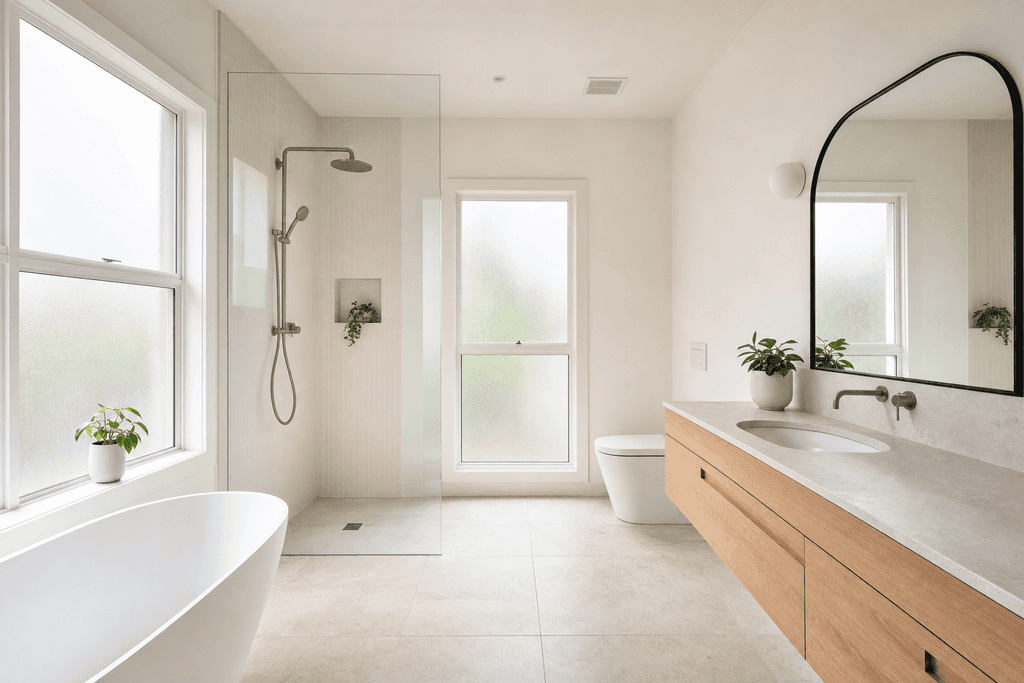
Best Diatomite Bath Mats in Australia for Fast-Drying Floors
Stepping out of the shower onto a soggy fabric bath mat is one of those small daily frustrations that most Australian households just accept as normal. Traditional mats stay damp for hours, creating the perfect environment for mould and bacteria to thrive in our humid climate. Diatomite bath mats absorb water the moment your feet touch the surface and dry completely within minutes, which is why more Australians are making the switch to this natural moisture-managing alternative.
Table of Contents
What Makes Diatomite Bath Mats Different
Most people step out of the shower onto a soggy fabric mat that stays damp for hours. That wet surface becomes a breeding ground for mould and bacteria, especially in humid Australian bathrooms where moisture just hangs around. Traditional bath mats trap water in their fibres, which means they need constant washing and take forever to dry properly. The problem gets worse in winter when airflow is limited and heating costs make tumble drying expensive.
The Science Behind Instant Absorption
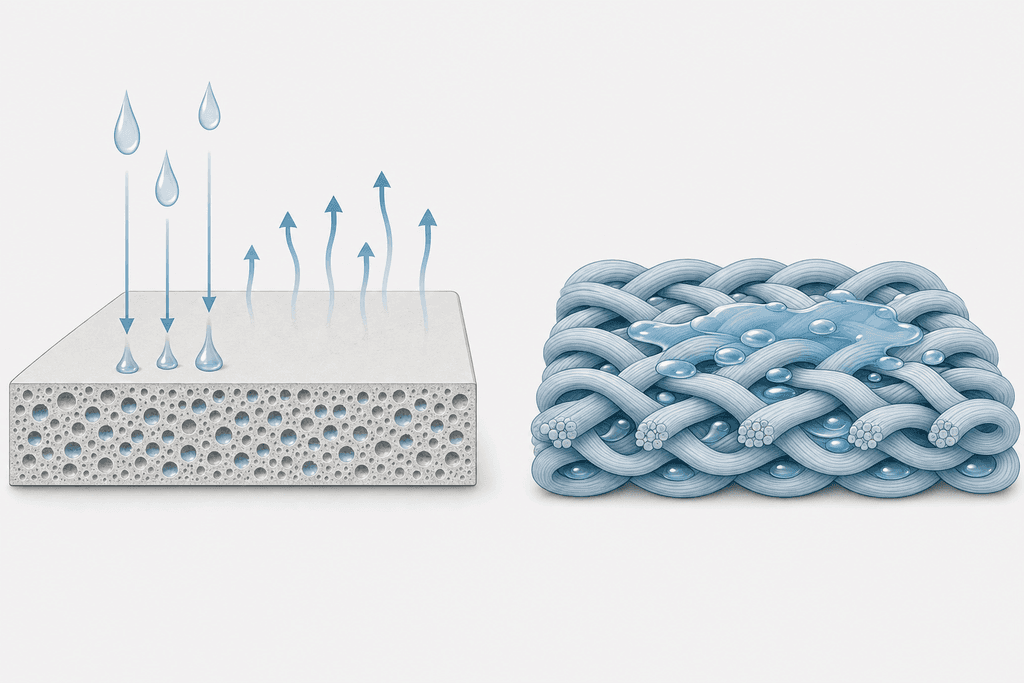
Diatomite is made from fossilised algae called diatoms that lived millions of years ago. When these tiny organisms died, their silica-based skeletons accumulated on ocean floors and eventually became the mineral-rich material we use today. The magic happens at a microscopic level where millions of tiny pores create a structure that pulls moisture in immediately and releases it back into the air through rapid evaporation.
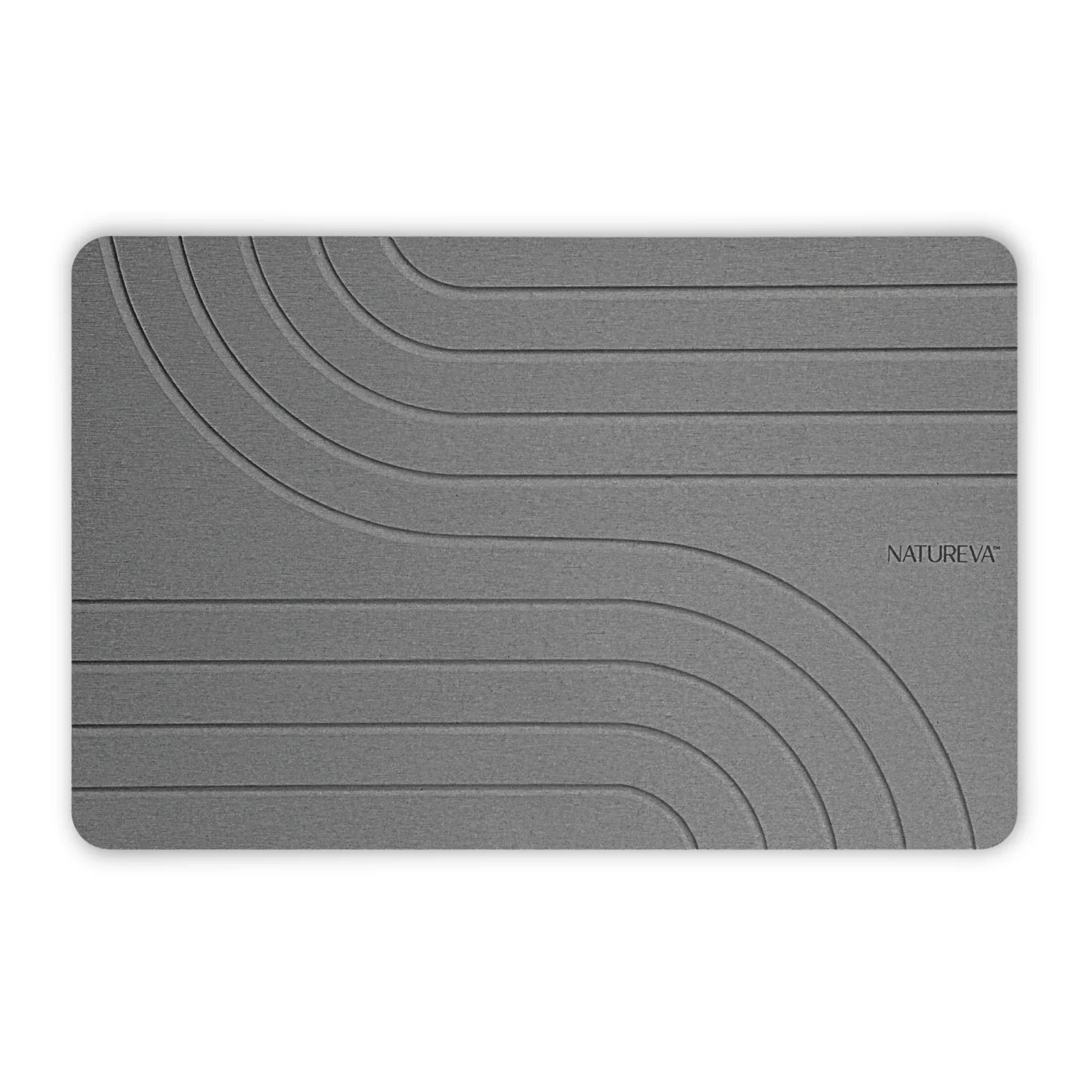
This natural process means the surface stays dry within minutes instead of hours. Our Natureva diatomite bath mats use this same material shaped into solid slabs that feel firm underfoot while remaining surprisingly lightweight. The porous structure does all the work without any chemical treatments or synthetic coatings.
Why Bacteria Can't Survive on Diatomite
The antibacterial properties of diatomite bath mats come from moisture elimination, not chemical additives. Bacteria need moisture to grow and multiply, but when water evaporates within minutes, there's simply no environment for them to thrive. This is completely different from fabric mats that stay damp and warm, which is exactly what bacteria love.
The porous structure naturally inhibits microbial growth through rapid moisture removal rather than chemical intervention. This makes diatomite bath mats one of the most hygienic options available for Australian bathrooms, where humidity can be a constant challenge.
How Diatomite Bath Mats Are Built to Last
A quality diatomite bath mat isn't just pure stone. The best ones combine diatomaceous earth with recycled paper in a composite construction that creates durability without sacrificing absorbency. This mixture gets compressed into dense, chemical-free slabs that can handle daily foot traffic for years.
- No synthetic coatings that trap moisture underneath
- Composite structure prevents cracking under normal use
- Lightweight design makes moving and cleaning simple
- Non-slip base pads protect floors and prevent sliding
The material naturally resists odour formation because it doesn't hold onto water long enough for smells to develop. When the surface does eventually show signs of reduced absorption after months of use, a quick sand with the included sanding tool reopens the pores and restores full performance. For what features to look for when choosing a diatomite bath mat, we've put together a detailed guide.
Diatomite Bath Mats vs Traditional Fabric Mats
The performance gap between diatomite and fabric becomes obvious when you compare them side by side. Traditional mats require frequent washing, take hours to dry, and need replacing every few months as they wear out and develop permanent odours.
| Feature | Diatomite Bath Mat | Traditional Fabric Mat |
|---|---|---|
| Drying Time | 2-5 minutes | 4-8 hours |
| Washing Frequency | Weekly wipe down | Every 3-7 days |
| Odour Resistance | Naturally odour-free | Develops smell over time |
| Mould Risk | Minimal to none | High in humid conditions |
| Lifespan | 2-3+ years | 6-12 months |
| Maintenance | Occasional sanding | Regular machine washing |
The upfront cost of a diatomite bath mat is higher, but the reduced maintenance and longer lifespan make it more economical over time. You're not constantly running the washing machine or replacing worn-out mats every season. For Australian households dealing with humidity and moisture issues, the switch to diatomite makes practical sense beyond just the hygiene benefits.
Natureva's Five Diatomite Bath Mat Designs
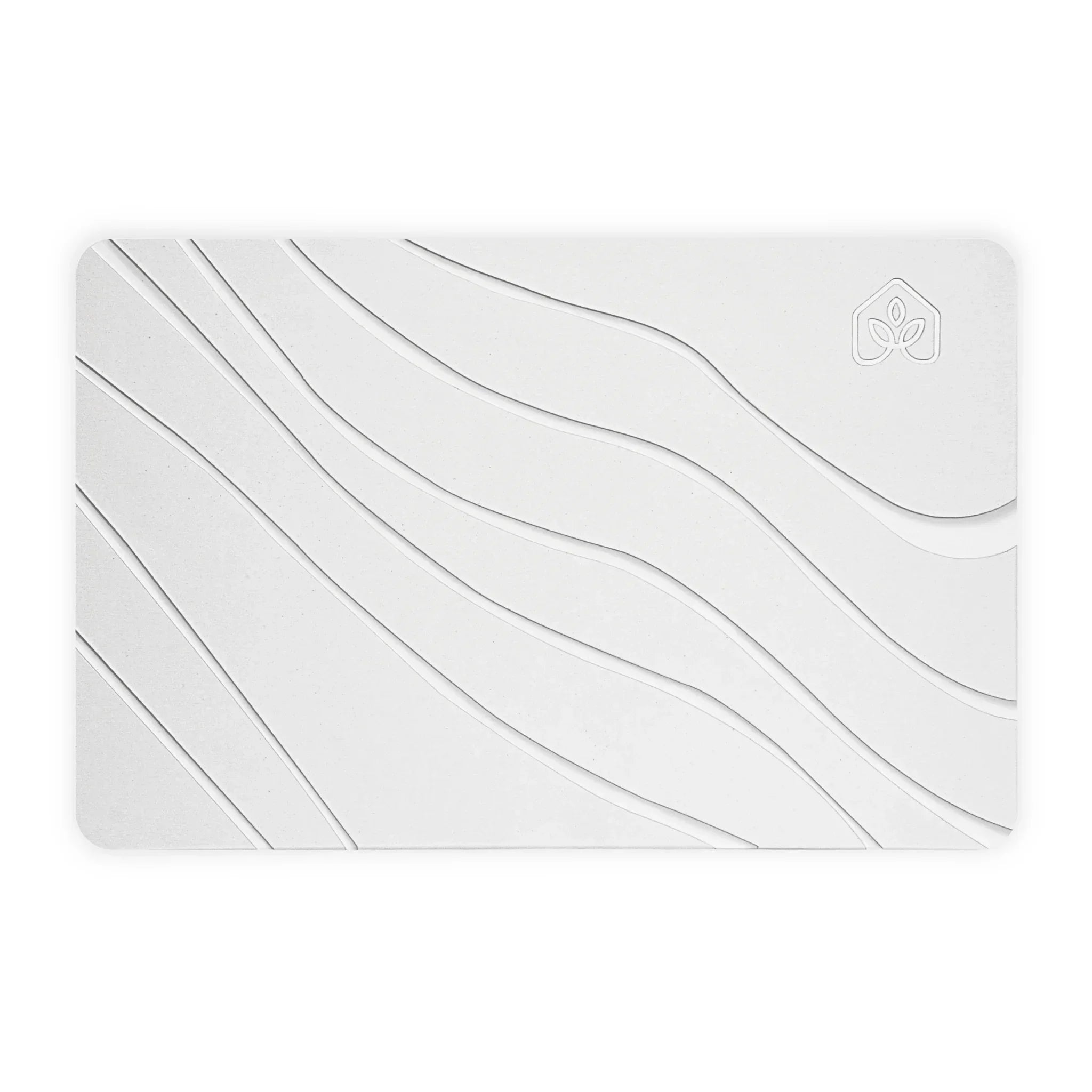
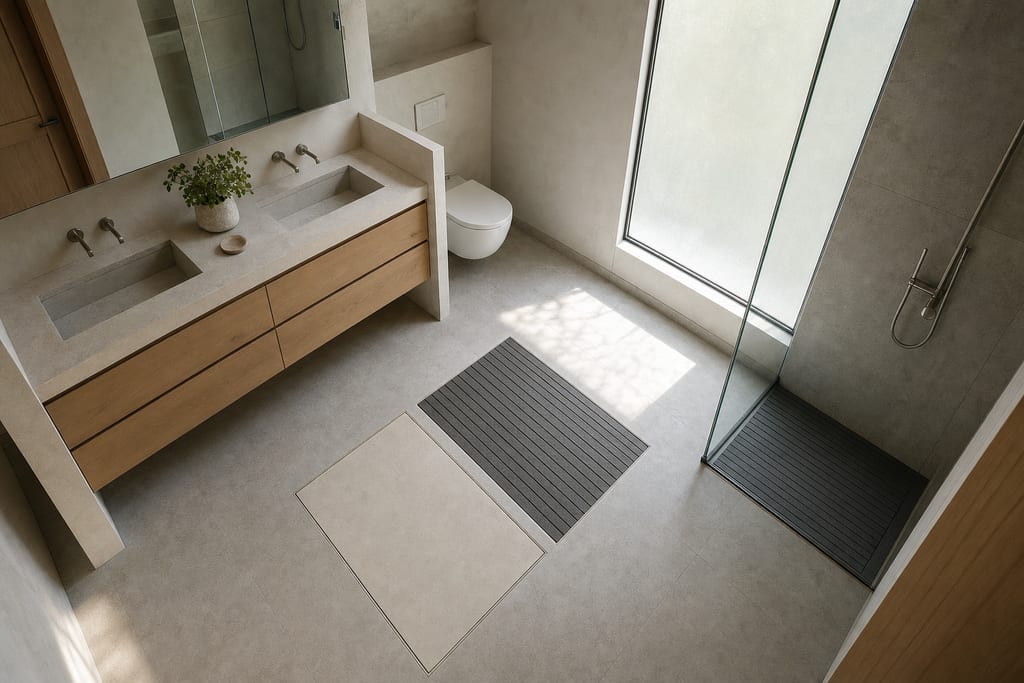
Most people don't realise that the pattern carved into a diatomite bath mat actually affects how water moves across the surface. Natureva offers five distinct designs, each with its own carved geometry that guides moisture in different ways. The Tide pattern features soft horizontal contour bands that mimic shoreline movement, while Flow uses diagonal wave contours that suggest landscape motion. These aren't just decorative choices — they create channels that help water spread and evaporate faster.
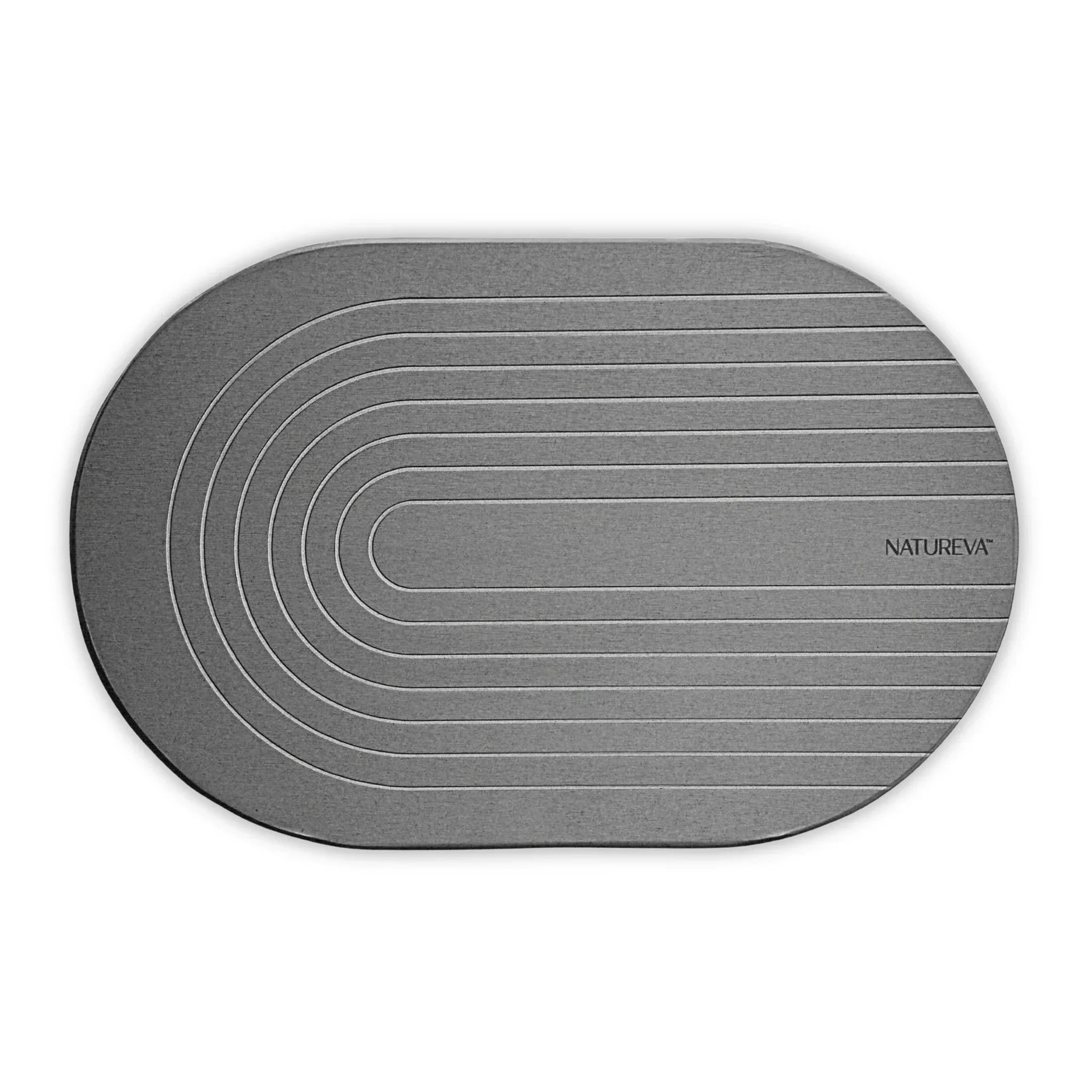
The Arch mat stands out as the only oval option in the lineup. Its rounded architectural contour lines echo the oval silhouette, making it perfect for smaller bathrooms or spaces where a rectangular mat feels too rigid. Rain takes a minimalist approach with sparse vertical line segments arranged like falling droplets, and Aura radiates outward from a central circle in a sunburst pattern.
| Design | Shape | Pattern Style | Best For |
|---|---|---|---|
| Tide | Rectangular | Horizontal contours | Wide bathrooms |
| Flow | Rectangular | Diagonal waves | Modern spaces |
| Arch | Oval | Rounded contours | Compact areas |
| Rain | Rectangular | Vertical lines | Minimalist bathrooms |
| Aura | Rectangular | Radial sunburst | Statement pieces |
All rectangular mats measure approximately 60 × 39 × 0.9 centimetres and weigh around 1.8 kg, while the Arch comes in slightly lighter at 1.55 kg. Every diatomite bath mat includes a non-slip base pad and a P320 grit sanding tool for surface restoration. The retail price sits at $59 across all five designs, regardless of pattern or colour choice.
Choosing the Right Colour for Your Space
The colour you pick doesn't change how fast your diatomite bath mat dries, but it definitely changes how often you'll be cleaning it. Graphite is the darkest option, sitting in a charcoal tone that works well in modern bathrooms with dark tiles or fixtures. This colour hides water marks and minor stains better than the lighter options, which means less visible maintenance between deep cleans. If you have kids or high bathroom traffic, Graphite tends to look cleaner longer.
Slate offers a soft grey middle ground. It's the most versatile choice because it doesn't commit to either extreme. Most bathroom styles can accommodate Slate without clashing, whether you have white subway tiles or darker stone finishes. According to Consumer Reports testing of stone bath mats, grey tones show the least visible wear patterns over time.
- Graphite: Best for dark-toned bathrooms, hides stains effectively
- Slate: Works with most colour schemes, balanced maintenance
- Chalk: Creates spa-like aesthetic, requires frequent cleaning
Chalk is the near-white option that creates that clean, spa-like feeling. It looks stunning in all-white or light-coloured bathrooms, but you'll notice every water mark and soap residue. Chalk requires more frequent wiping to maintain its pristine appearance, though the actual absorption performance stays identical across all three colours.
Performance Features That Matter
The moment your wet feet touch a diatomite bath mat, you can feel the water being pulled away from your skin. This isn't gradual absorption like a fabric mat — it's instant. The material's microscopic pore structure creates millions of tiny channels that draw moisture in immediately. Within minutes, that same moisture evaporates back into the air, leaving the surface completely dry. The Strategist calls diatomaceous earth mats a bathroom essential for anyone tired of damp, mildew-prone fabric options.
The non-slip base pad serves a critical safety function. Wet bathroom floors are slippery enough without adding a sliding mat into the mix. Natureva's full base pad coverage prevents any movement, even when you step onto the mat with full body weight right after a shower.
- Instant water absorption on contact
- Complete drying within minutes through rapid evaporation
- Non-slip base pad prevents sliding on wet tiles
- Chemical-free construction safe for sensitive skin
- Naturally antibacterial through moisture elimination
The antibacterial properties come from the material's behaviour, not from added chemicals. Bacteria need moisture to thrive, and diatomite simply doesn't stay wet long enough for bacterial growth to establish. At 1.8 kg, the mat feels solid underfoot without being too heavy to move when needed. The included sanding tool uses P320 grit to reopen surface pores when absorption starts to slow down, which typically happens after months of daily use.
Caring for Your Diatomite Bath Mat in Australia
The next generation of home essentials: naturally made, cleaner by design, sustainable by nature.
SHOP ALLA quick weekly wipe with a damp cloth and vinegar-water mixture keeps the surface clean and prevents buildup. This takes about 30 seconds and stops oils and residue from clogging those microscopic pores. Coloured soaps are the main enemy of diatomite bath mats because dyes can seep into the porous structure and create permanent staining. If you use body wash or shampoo with strong colours, rinse your feet before stepping onto the mat, or switch to clear products in your bathroom routine.
When stains do appear, work through these steps in order:
- Scrub with dishwashing liquid: Gently scrub the area under running water using a sponge and a clear, non-coloured dishwashing liquid, then rinse thoroughly.
- Still there? Try hydrogen peroxide: Apply a small amount of hydrogen peroxide to the area and gently scrub. This can help lift tougher stains without damaging the surface.
- Last resort — sanding: If the stain remains, lightly sand the surface using the included sanding tool. Take care not to sand too strongly. Avoid sanding over the printed logo.
The sanding tool is your reset button for absorption too. When water stops disappearing as quickly as it used to, a light sand reopens the clogged pores and restores full performance.
If your diatomite bath mat becomes fully saturated from extended use or high humidity, prop it upright against a wall to air dry in a well-ventilated area (not in direct sunlight). This rarely happens with normal use because the evaporation rate typically keeps pace with daily moisture exposure. For detailed care instructions, visit our care and cleaning guide.
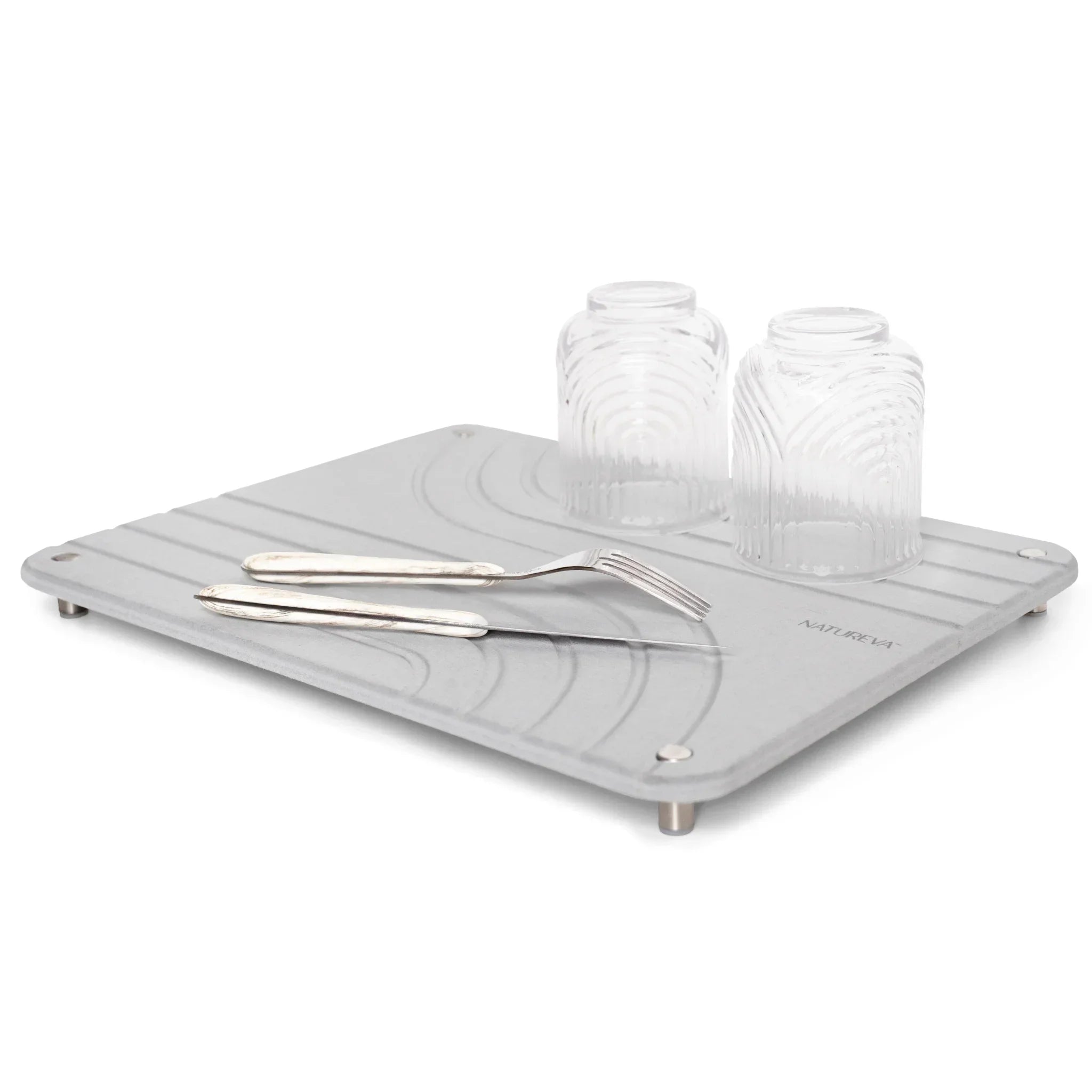
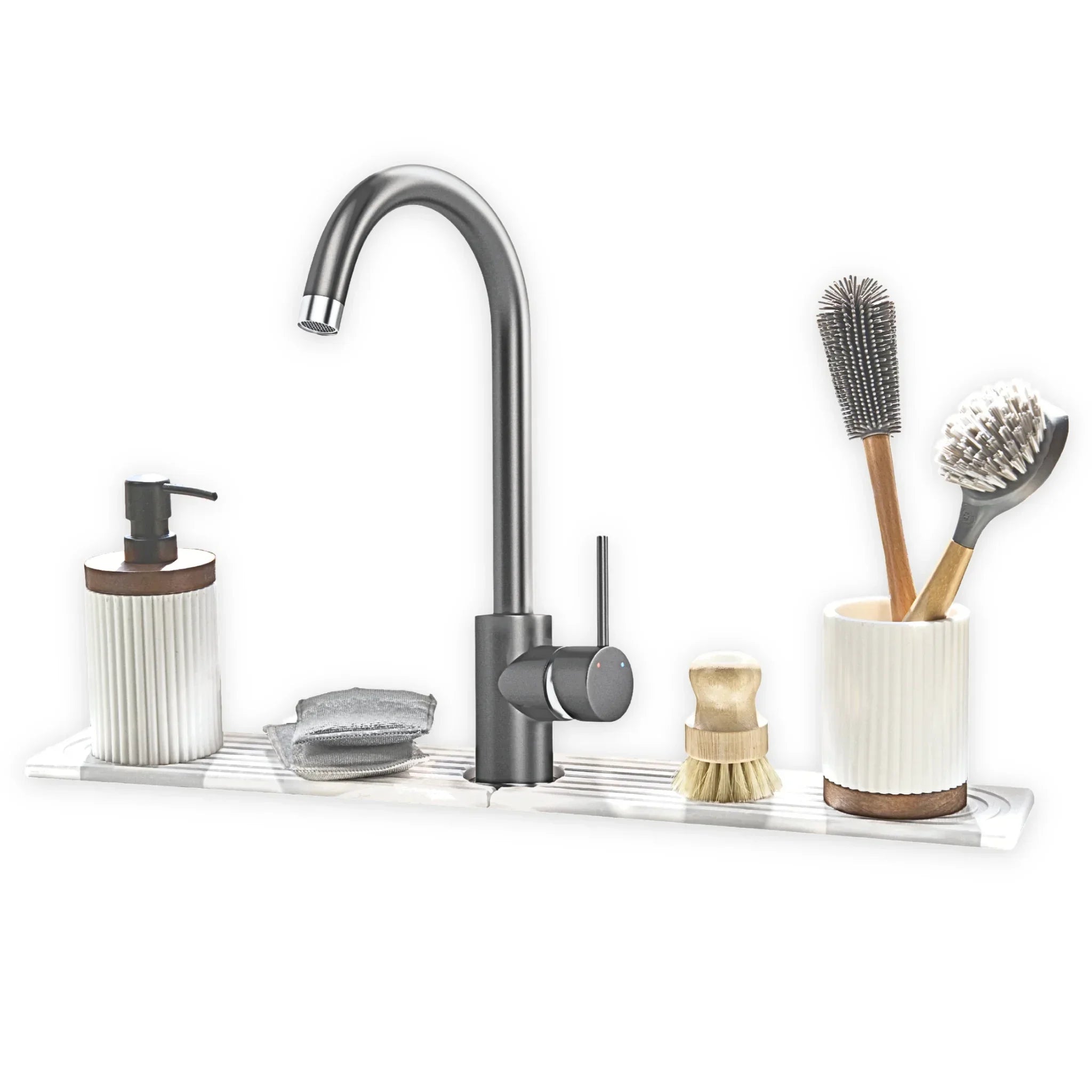
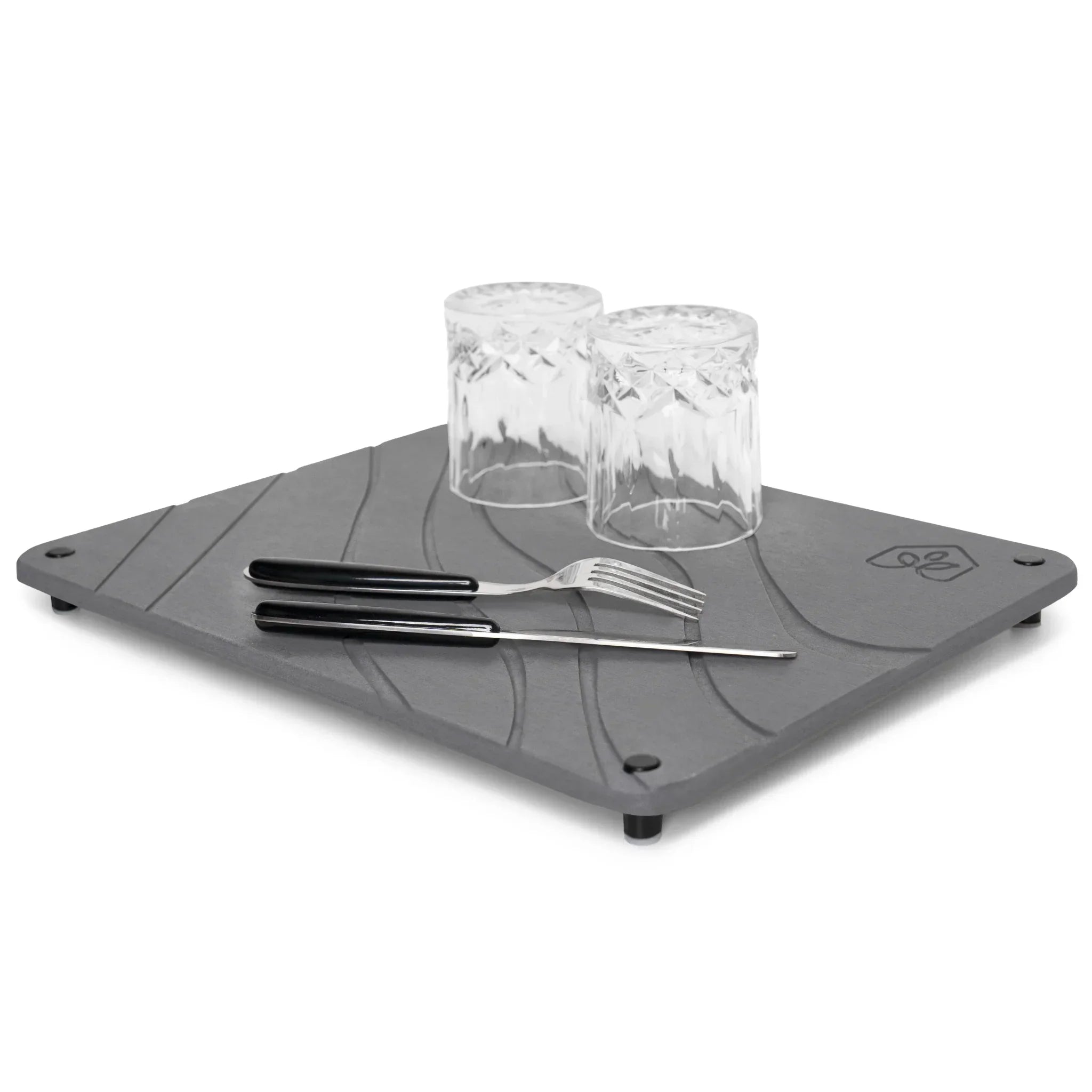
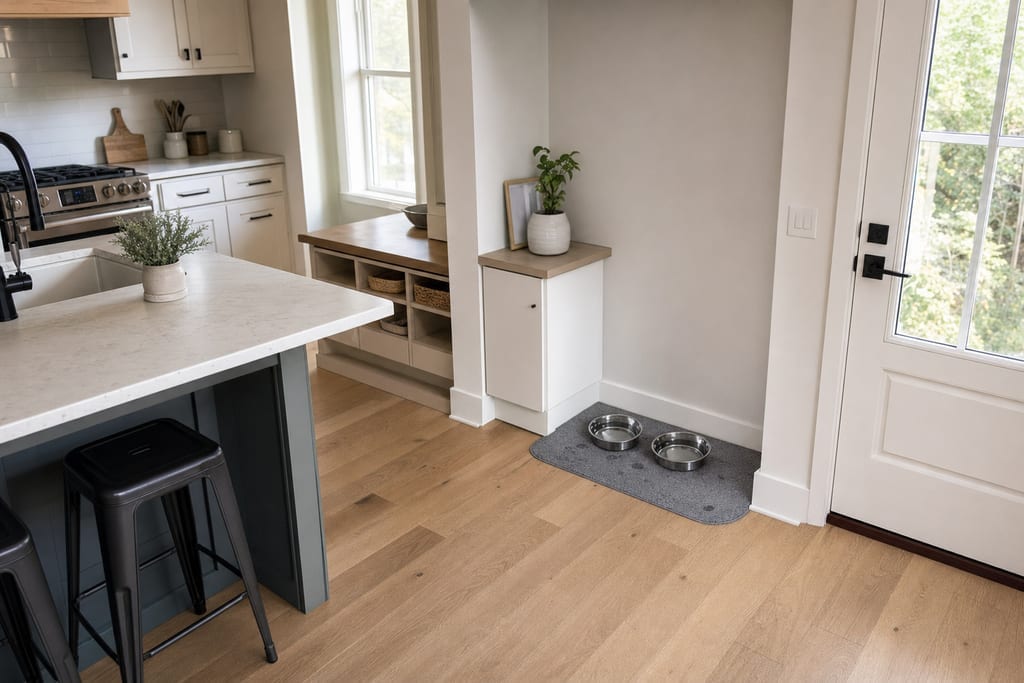
Natureva's complete diatomite bath mat collection includes all five designs in three colours, with options like the Tide, Flow, Arch, Rain, and Aura patterns. The same diatomite technology extends to dish mats, faucet mats, sink caddies, and even a pet mat for water bowl spills.
Why Australian Bathrooms Need Diatomite Bath Mats
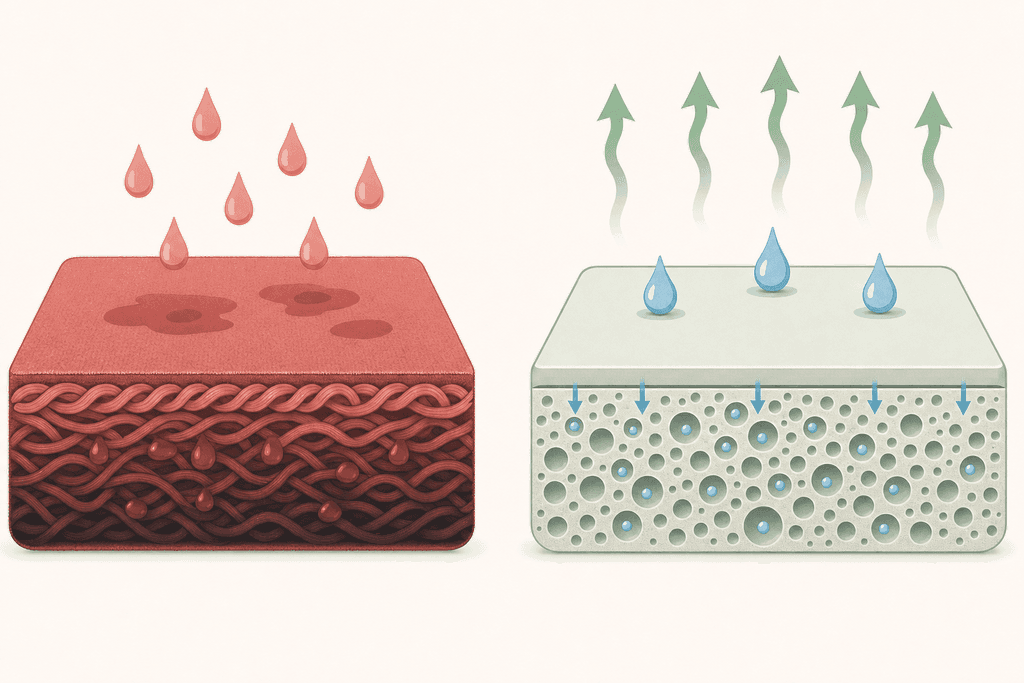
Most Australian homes deal with humidity levels between 50% and 70% year-round, creating the perfect breeding ground for mould and mildew. Coastal cities like Sydney and Brisbane face even higher moisture levels, while Adelaide's summer humidity can spike unexpectedly. Traditional fabric bath mats absorb water but hold onto it for hours, sometimes staying damp well into the next day. That constant moisture creates a warm, wet environment where bacteria multiply rapidly.
The problem gets worse when you consider how often most people actually wash their bath mats. According to home care experts, fabric mats should be washed weekly, but most households stretch that to two or three weeks. During that time, the mat sits there collecting moisture, dead skin cells, and soap residue.
The Hidden Cost of Traditional Mats
Beyond the hygiene concerns, fabric bath mats create an ongoing maintenance cycle that wastes water and energy. Every wash uses roughly 50 litres of water, plus electricity for drying. Over a year, that adds up to thousands of litres just to keep one mat clean.
- Fabric mats require weekly washing in hot water to kill bacteria
- Tumble drying uses significant energy and shortens mat lifespan
- Most fabric mats need replacing every 12-18 months due to wear
- Synthetic materials in cheap mats shed microplastics into waterways
A diatomite bath mat solves these problems through its natural structure. The fossilised algae creates millions of microscopic pores that pull moisture in instantly, then release it back into the air within minutes. This rapid evaporation means bacteria never get the damp conditions they need to grow, all without using antimicrobial chemicals or treatments.
Why Adelaide-Based Design Matters
Natureva's Adelaide roots mean the brand understands Australian climate challenges firsthand. The city experiences hot, dry summers and cool, damp winters, requiring bathroom solutions that work year-round. Diatomite bath mats handle both extremes without losing performance.
- No washing machine cycles needed, saving water in drought-prone regions
- Natural materials break down safely without leaving microplastics
- Stone construction lasts years instead of months
The shift toward sustainable home products in Australia isn't just a trend. More households want solutions that reduce waste while actually working better than conventional options. Diatomite bath mats deliver on both fronts, which explains why they've become a bathroom staple for moisture-conscious Australians.
Finding Your Perfect Diatomite Bath Mat in Australia
Every diatomite bath mat in our Australia range performs exactly the same way. The Tide, Flow, Rain, Aura, and Arch all absorb water instantly, dry within minutes, and cost $59. The only real difference is which carved pattern you prefer looking at when you step out of the shower.
Your colour choice matters more than you might think. Graphite hides water marks better but shows dust. Chalk looks clean and modern but needs more frequent wiping. Slate sits somewhere in the middle and works with most bathroom styles.
The actual problem diatomite bath mats solve is pretty straightforward. Fabric bath mats stay damp for hours, smell weird after a few weeks, and need constant washing. Diatomite dries itself between uses, so bacteria and mould don't get the moisture they need to grow.
If you're ordering from anywhere in Australia, shipping is free over $100 and takes between 2 to 8 business days. You could pair a diatomite bath mat with a faucet mat or sink caddy to hit that threshold while keeping your entire bathroom dry.
The questions people usually have at this point are pretty specific, so we've answered the most common ones below.
Common Questions About Diatomite Bath Mats in Australia
Switching from fabric to diatomite sounds like a big change, and most people have similar questions before making the jump. These are the things Australian customers ask us most often about diatomite bath mats, answered without the fluff.
How long do diatomite bath mats actually last?
A quality diatomite bath mat should last 2 to 3 years with regular use, sometimes longer if you maintain it properly. The surface can be restored with light sanding when absorption slows down, which extends the lifespan significantly. Natureva diatomite bath mats include a sanding tool specifically for this purpose, so you're not stuck buying a new mat every time performance dips.
Can diatomite bath mats handle multiple people back-to-back?
Yes, but there's a limit. The mat absorbs water instantly and starts evaporating it right away, but if three or four people step out of the shower within minutes of each other, the surface can become temporarily saturated. Most households find that diatomite handles morning routines just fine, especially compared to fabric mats that stay damp for hours. If you have a large family with overlapping bathroom schedules, you might notice the mat needs a few minutes between users during peak times.
Do diatomite bath mats work on heated bathroom floors?
They work perfectly on heated floors and actually dry even faster because of the warmth underneath. The heat helps speed up evaporation, which means the mat returns to its dry state quicker than it would on a cold tile floor. Just make sure the mat has proper airflow underneath, which is why Natureva includes a full non-slip base pad that still allows air circulation.
What happens if my diatomite bath mat stops absorbing water?
When absorption slows down, it usually means the microscopic pores on the surface are clogged with soap residue, body oils, or mineral deposits from hard water. First, try scrubbing with a sponge and clear, non-coloured dishwashing liquid under running water. If that doesn't work, apply hydrogen peroxide to the affected area and gently scrub. As a last resort, a quick sand with the included tool reopens those pores and brings the mat back to full performance.
Are diatomite bath mats safe for kids and elderly family members?
The non-slip base keeps the mat stable, and the dry surface actually reduces slip risk compared to wet fabric mats. The stone surface feels solid and secure underfoot, which many people find reassuring. That said, diatomite is a hard material, so it doesn't have the cushioning of a thick bath mat. Most users adjust quickly, but it's worth considering if someone in your household has balance or mobility concerns.
How do you clean stains from a diatomite bath mat?
For everyday maintenance, wipe weekly with a damp cloth and vinegar-water mixture. For stains, scrub with a sponge and clear, non-coloured dishwashing liquid under running water. Hydrogen peroxide works well for deeper marks that don't respond to dishwashing liquid. If that still doesn't do the job, light sanding will remove the stained layer entirely. Avoid sanding over the printed logo. Visit our care and cleaning guide for detailed instructions.
The next generation of home essentials: naturally made, cleaner by design, sustainable by nature.
SHOP ALL