
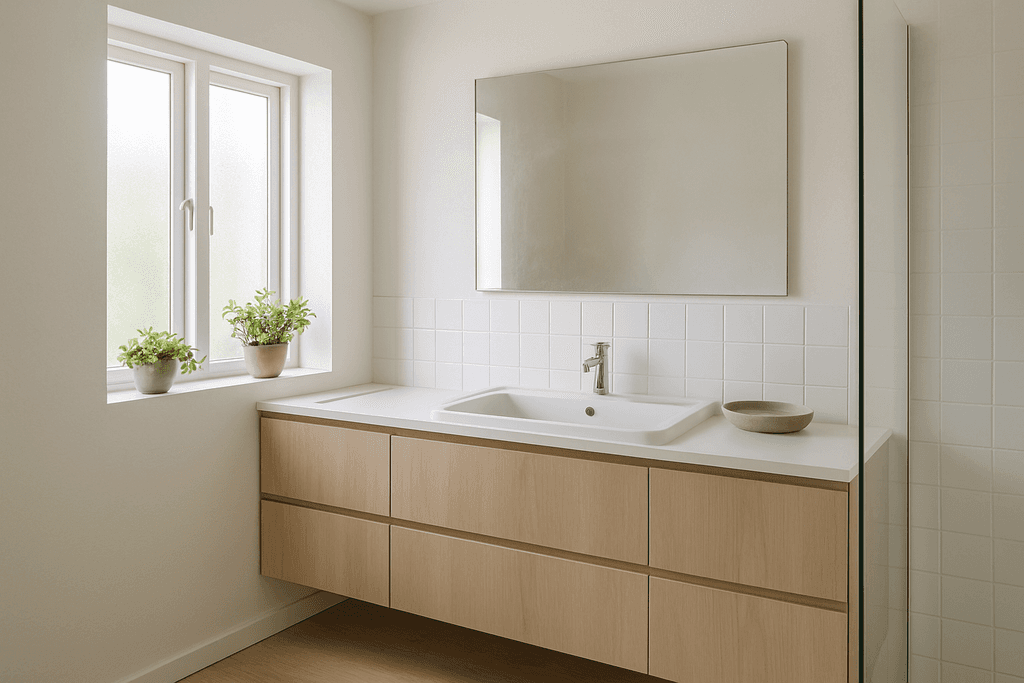
Handy Bathroom Trays That Keep Counters Spot Free
Table of Contents
Why Traditional Bathroom Trays Fall Short
Most people don't realize that the bathroom tray sitting on their counter might be creating more problems than it solves. Traditional bathroom trays made from plastic, ceramic, or metal look nice at first, but they have a hidden flaw that affects your health and home. When you place wet items like soap bars, toothbrushes, or razors on these trays, water pools underneath and stays there for hours or even days. This trapped moisture becomes a breeding ground for things you definitely don't want in your bathroom.
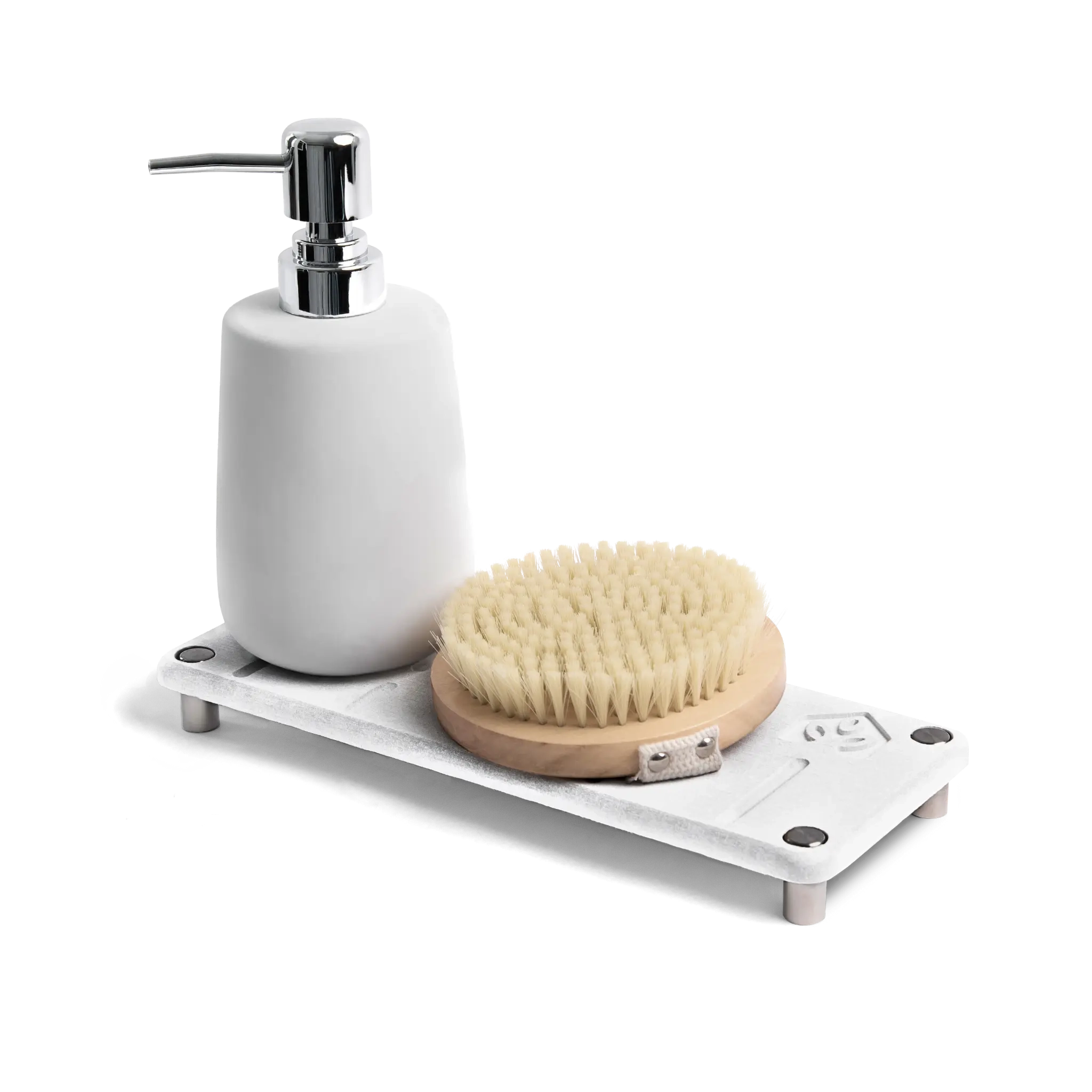
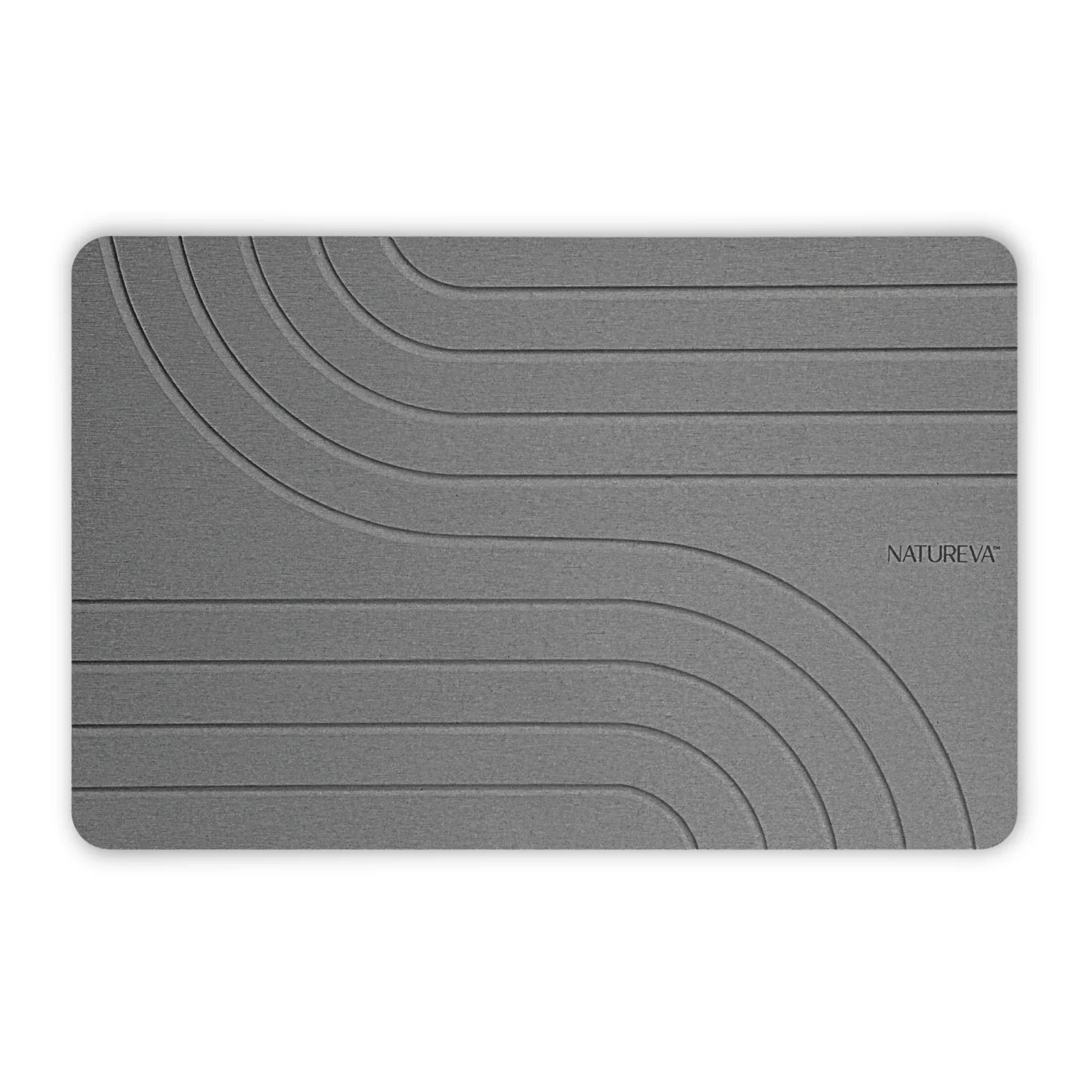
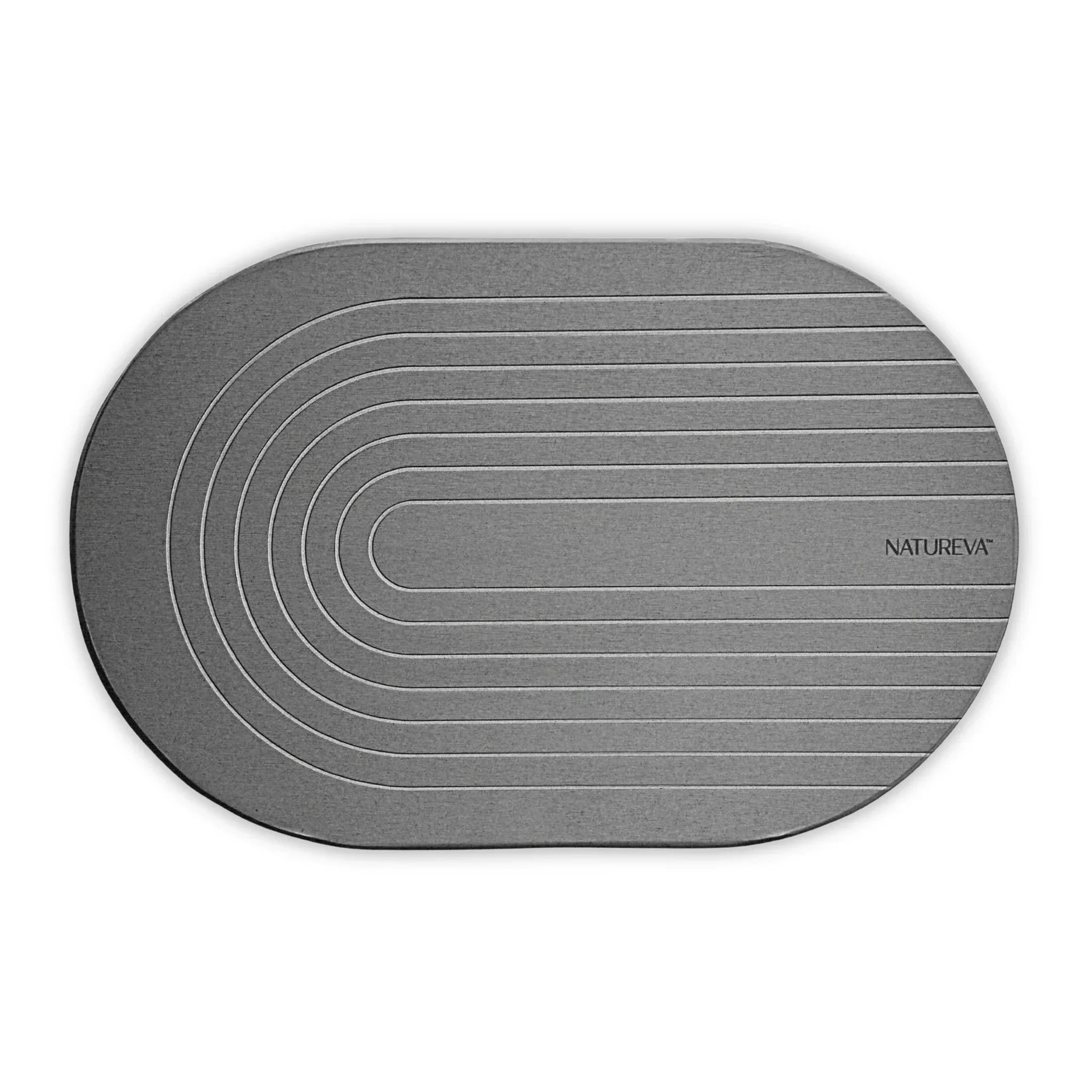
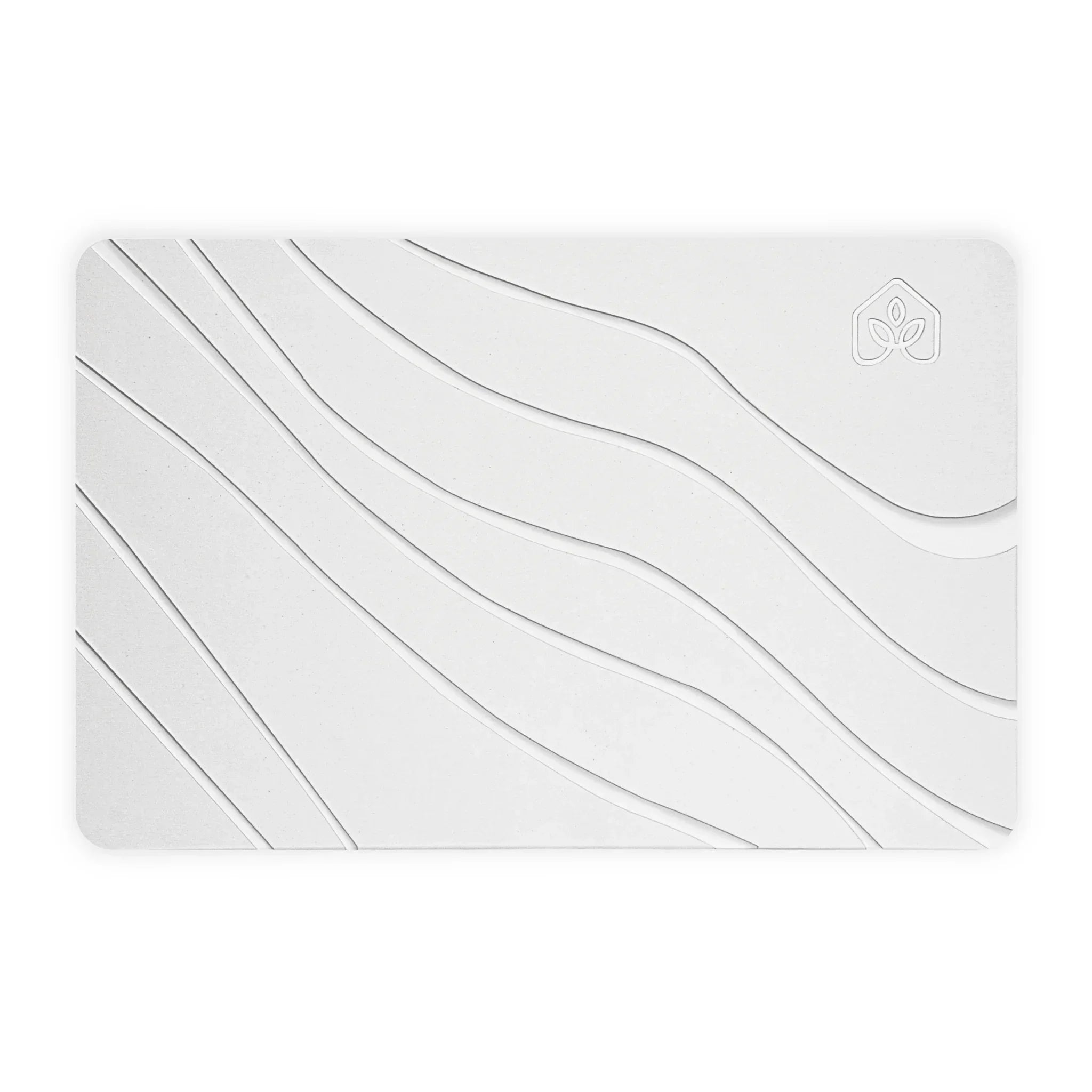
Stone Sink Caddy - Rain
The Moisture Problem Nobody Talks About
Standing water on bathroom trays creates the perfect environment for mold and bacteria to grow. Within just 24 to 48 hours, mold spores can start developing in damp conditions. The warm, humid bathroom environment makes this happen even faster.
Here's what happens with conventional bathroom trays:
- Water sits trapped between your items and the tray surface
- Moisture can't escape, creating a mini swamp for germs
- Soap scum mixes with standing water to form slimy residue
- You have to constantly wipe down and clean the tray
- Mold and mildew stains appear over time
The design of traditional bathroom trays focuses on looks rather than function. They weren't built to handle the constant exposure to water that happens in real bathrooms.
How Diatomaceous Earth Changes Everything
Diatomaceous earth is a natural material made from fossilized algae that lived in oceans millions of years ago. When these tiny organisms died, their skeletons settled on the ocean floor and eventually became the chalky substance we use today. What makes it special is its structure - it's full of microscopic pores that suck up water like a super-powered sponge.
The science behind diatomite stone is pretty simple. Those millions of tiny holes absorb moisture on contact, then release it into the air through evaporation. Our Stone Sink Caddy uses this natural process to keep your bathroom items dry without any effort from you.
| Feature | Traditional Trays | Diatomite Stone Trays |
|---|---|---|
| Water Management | Traps moisture underneath | Absorbs and evaporates water |
| Drying Time | Hours to days | Minutes to seconds |
| Mold Risk | High | Very low |
| Cleaning Frequency | Daily wiping needed | Minimal maintenance |
| Bacteria Growth | Common problem | Naturally prevented |
What This Means for Your Bathroom
The difference between a tray that traps water and one that absorbs it affects more than just cleanliness. It impacts how much time you spend cleaning, how often you need to replace bathroom accessories, and even the air quality in your bathroom. Mold spores can trigger allergies and respiratory issues for sensitive people.
Benefits of proper moisture management include:
- Less time spent scrubbing and cleaning bathroom surfaces
- Fewer gross surprises when you lift up your soap or toothbrush
- Better smelling bathroom without that musty odor
- Longer lasting bathroom accessories that don't sit in water
The shift toward absorbent materials like diatomaceous earth represents a smarter approach to bathroom organization. Instead of fighting against water, these materials work with it naturally.
How Water-Absorbing Stone Trays Work
Most bathroom trays just sit there collecting water and grime, but stone trays made from diatomaceous earth actually do something about the moisture. This material comes from fossilized algae that lived millions of years ago, and its structure is filled with microscopic pores that you can't see with your naked eye. When water hits the surface, those tiny pores pull it in like a sponge, except way faster than any regular sponge you've ever used.
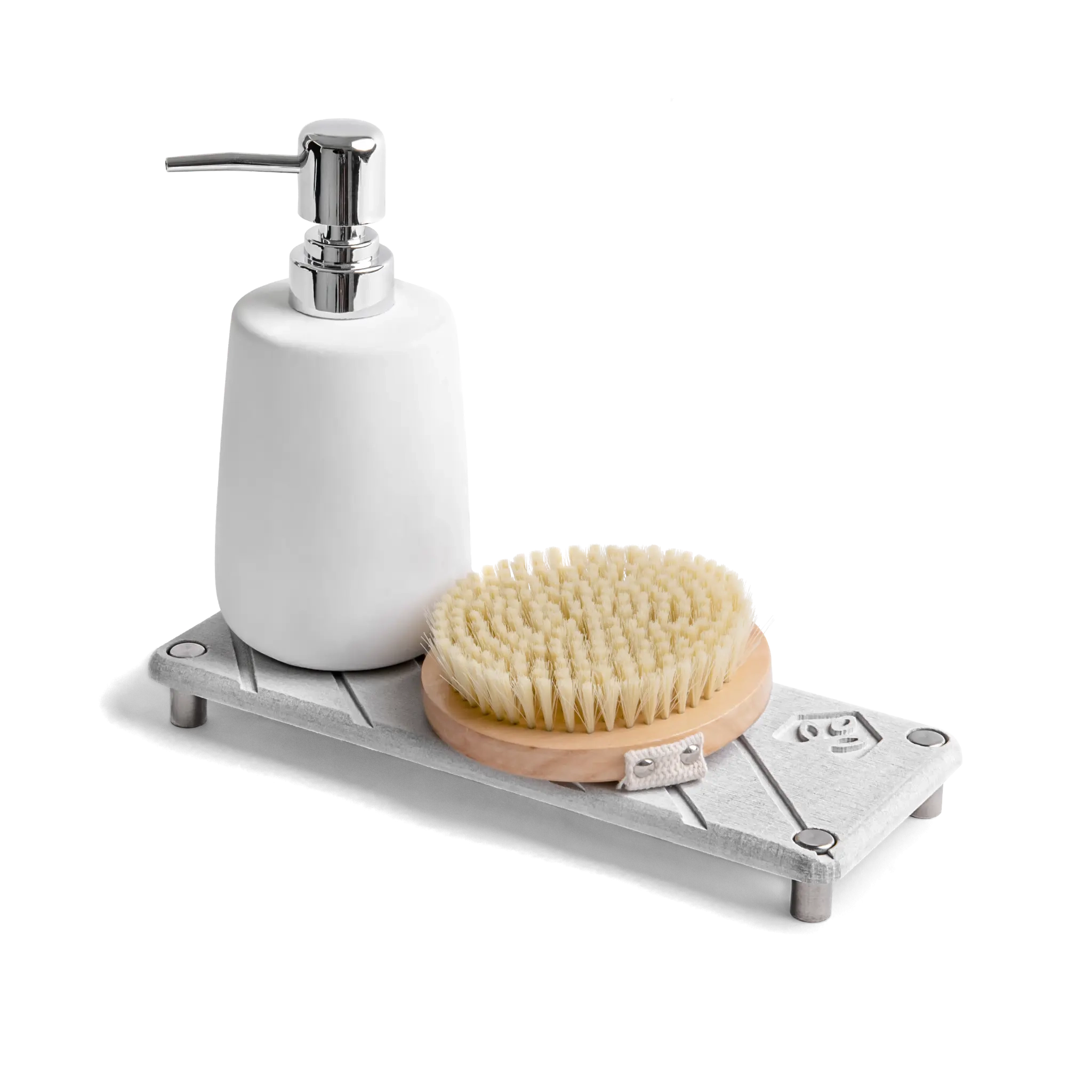
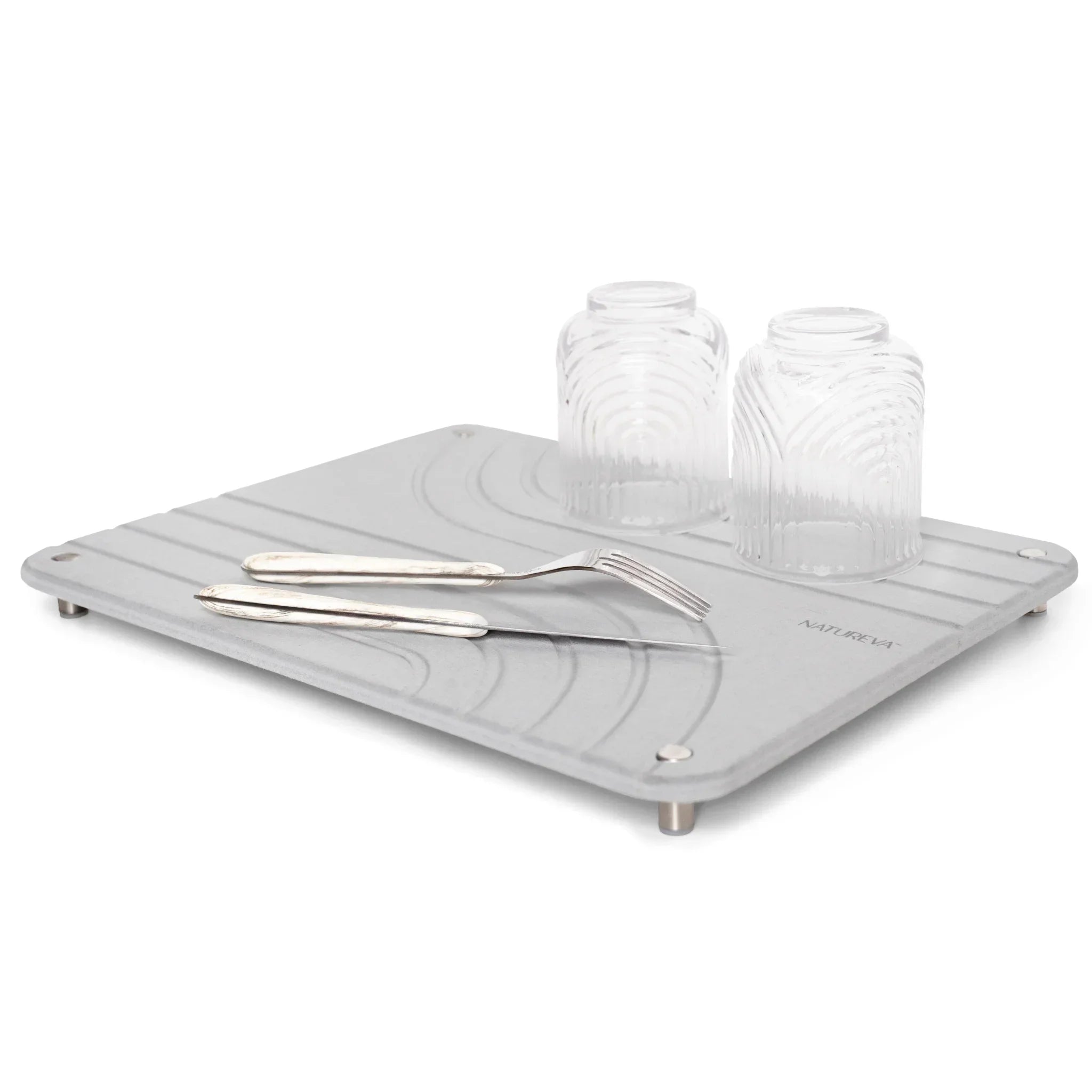
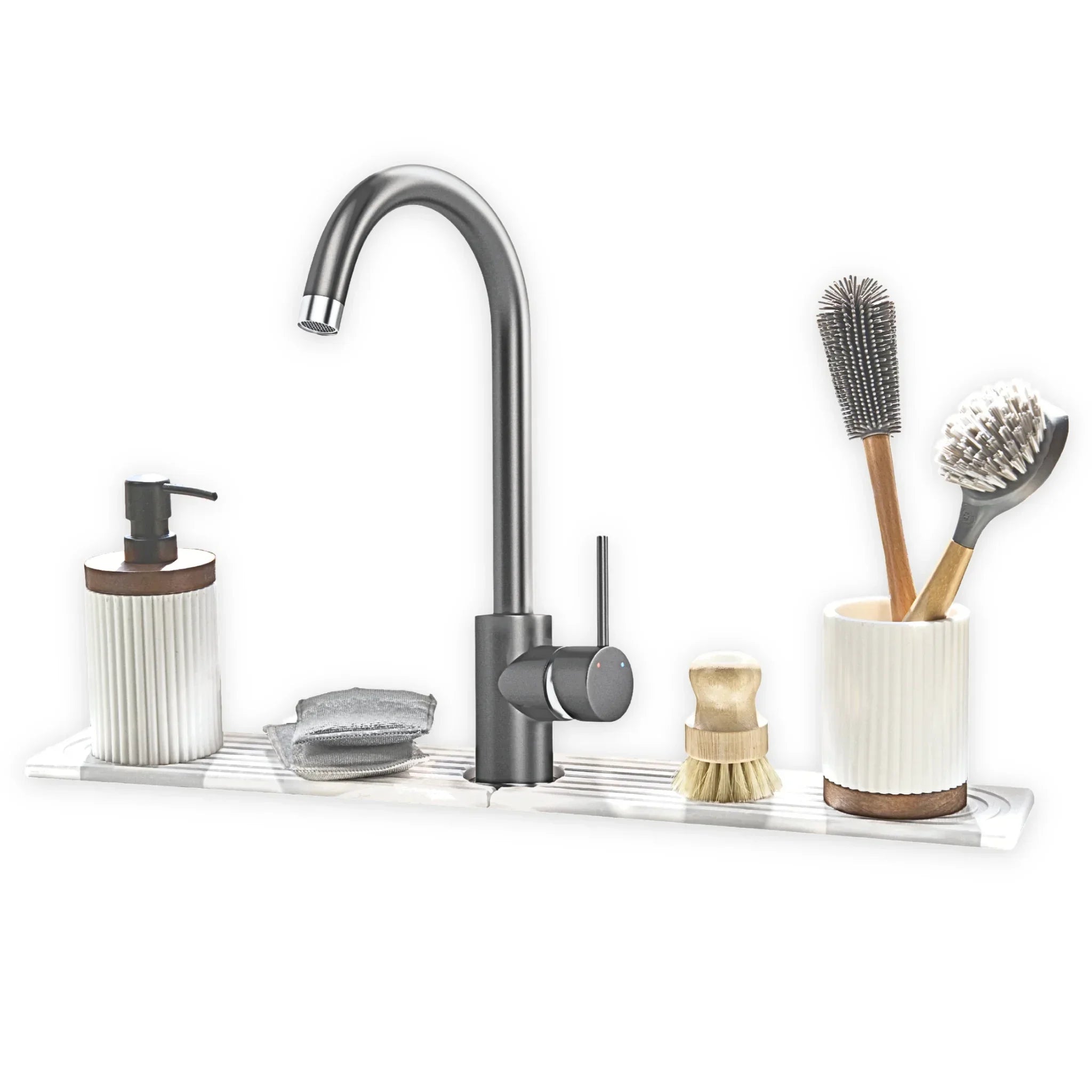
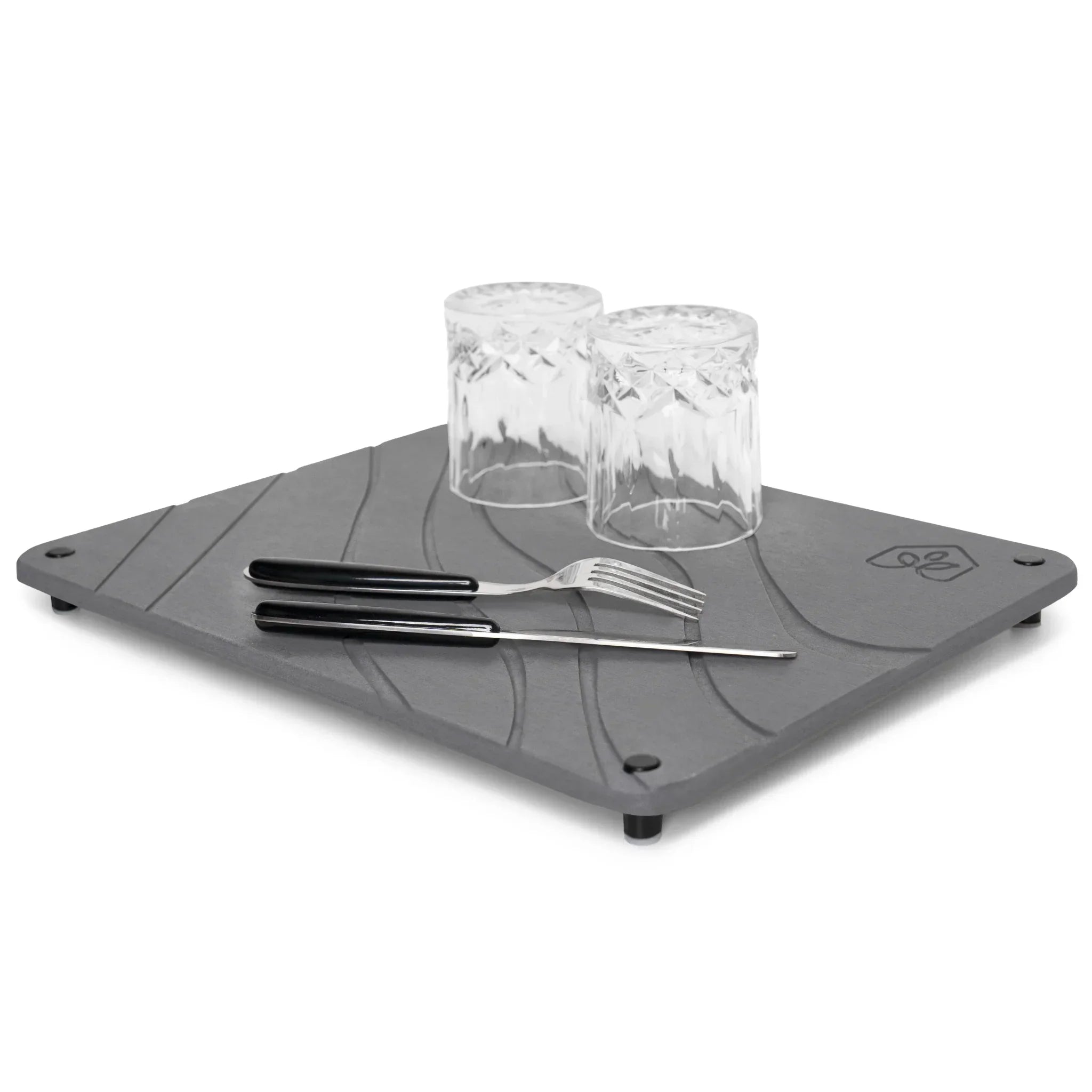
Stone Sink Caddy - Flow
The magic happens because diatomaceous earth absorbs water instantly on contact and then lets it evaporate through natural air circulation. Unlike plastic or ceramic bathroom trays that trap moisture underneath your soap and toothbrush, these stone trays actively work to keep things dry.
- Microscopic pores create thousands of tiny channels for water absorption
- Natural evaporation happens within seconds, not hours
- Prevents mold and bacteria growth by eliminating standing water
- No wiping needed since the tray dries itself
The Stone Sink Caddy - Rain and Stone Sink Caddy - Flow both use this technology to keep your counters spot-free. You can learn more about how diatomaceous earth works on our site, but the basic idea is simple: water goes in, air comes out, and your counter stays dry.
Traditional bathroom trays from brands like Drai Home or Dry Sorb might look nice, but they don't address the real problem. Standing water breeds bacteria, and that slimy feeling on the bottom of your soap dispenser isn't just annoying, it's actually kind of gross when you think about what's growing there.
Choosing the Right Bathroom Tray for Your Space
Not all bathroom counters are created equal, and the tray that works perfectly in a spacious master bath might overwhelm a tiny powder room. Before you pick a bathroom tray, take a quick measurement of your available counter space and think about what you're actually going to put on it. Some people need room for multiple soap bottles and hand lotions, while others just want a spot for their toothbrush and one bar of soap.
The design matters more than you might think. Your bathroom tray should match your existing aesthetic, not fight against it. A modern minimalist bathroom calls for clean lines, while a more traditional space might benefit from subtle patterns.
| Design Style | Best For | Pattern Type |
|---|---|---|
| Rain Pattern | Modern bathrooms | Organic, flowing lines |
| Flow Pattern | Contemporary spaces | Geometric, structured |
The next generation of home essentials: naturally made, cleaner by design, sustainable by nature.
SHOP ALLAccording to design experts at Decoist, bathroom trays serve both functional and decorative purposes. The key is finding one that does both jobs well without taking up too much real estate on your counter.
Think about what items you use daily and need quick access to. Hand soap, face wash, moisturizer, and toothbrush holders are common candidates for tray placement. If you're storing bottles that drip after use, a water-absorbing tray becomes even more important.
Size considerations depend on your bathroom layout. A small guest bathroom might only need space for hand soap and a small plant, while a family bathroom needs room for multiple products. The sink caddy collection offers options that work for different counter sizes without looking cramped or leaving too much empty space.
Keeping Your Bathroom Counter Organized and Dry
The best bathroom tray in the world won't help if you place it in the wrong spot or pile too much stuff on it. Most people put their tray right next to the sink where water splashes the most, which makes sense for catching drips. But you also want to make sure it's not blocking your faucet or getting in the way when you wash your hands. Strategic placement means thinking about your daily routine and where water actually lands when you use the sink.
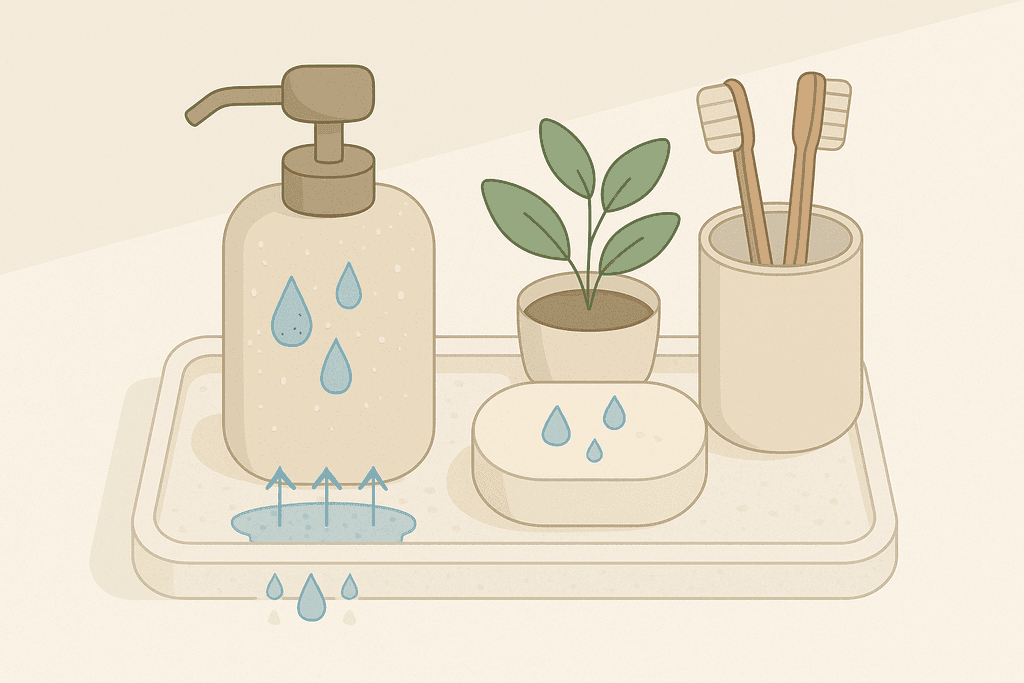
Keeping Your Bathroom Counter Organized and Dry
Items that benefit most from water-absorbing trays include anything that sits in a puddle after use. Soap dispensers, toothbrush holders, and face wash bottles all drip water that would normally pool on your counter. Bathroom organization guides recommend grouping similar items together, but the real trick is arranging them so water can drain properly.
- Place taller items toward the back so you can see everything
- Leave small gaps between products for air circulation
- Keep frequently used items within easy reach
- Group morning routine items separate from evening ones
Maintenance for stone trays is surprisingly simple. Unlike traditional bathroom trays that need constant wiping and drying, diatomaceous earth trays mostly take care of themselves. When you notice the absorption slowing down after months of use, a light sanding with fine sandpaper refreshes the surface. You can find detailed instructions on our care and cleaning page.
Creating zones on your counter helps maintain organization long-term. One section for hand washing essentials, another for skincare products, and maybe a third for decorative items like a small plant or candle. The stone material works well with other bathroom accessories like bath mats and faucet mats that use the same water-absorbing technology.
The difference between a cluttered counter and an organized one often comes down to having the right tools. Water-absorbing bathroom trays eliminate the gross factor of traditional trays while keeping everything in its place. No more wiping up mystery puddles or dealing with that slimy residue that builds up under soap bottles.
Wrap-up
Bathroom trays made from diatomite stone solve a problem most of us didn't even realize we could fix. Those puddles around your soap dispenser and toothbrush holder aren't just annoying, they're actually creating the perfect environment for mold and bacteria to grow. The difference between a regular tray and one made from natural diatomaceous earth is pretty simple: one traps water while the other absorbs it and dries in seconds.
Our Stone Sink Caddy works the same way as other diatomite bathroom products, pulling moisture away from your counters instead of letting it sit there. You get a cleaner surface without having to wipe things down constantly. Plus, it actually looks good sitting on your counter, which is more than you can say for most bathroom organizers.
The health benefits matter more than you might think. Standing water breeds problems you can't always see right away. When your bathroom stays drier, you're dealing with fewer germs and less cleaning overall.
If you're tired of wiping down your bathroom counter every day or dealing with that gross film that builds up under regular trays, switching to a stone option makes sense. It's one of those small changes that actually makes a difference in how your bathroom looks and feels. You might have questions about how these trays work or how to take care of them, which is exactly what we'll cover next.
Common Questions About Bathroom Trays
Switching to a water-absorbing bathroom tray brings up a lot of questions, especially if you've only used plastic or ceramic options before. These natural stone trays work differently than what most people are used to, so it makes sense to wonder about durability, cleaning, and whether they'll actually work in your space. Here are the answers to the most common questions we hear about diatomite stone bathroom trays.
How long do diatomite stone trays last?
A quality diatomite stone tray can last several years with proper care. The material doesn't break down from water exposure like wood or rust like metal. Most people find their trays stay effective for 2-3 years of daily use before the absorption rate starts to slow down, though some last even longer depending on how well they're maintained.
How do you clean a stone bathroom tray?
Cleaning is actually simpler than you'd think. Just rinse the tray with water and let it air dry completely. If you notice the absorption slowing down over time, lightly sand the surface with fine-grit sandpaper to open up the pores again. Avoid using soap or harsh chemicals since these can clog the natural pores that make the stone absorbent in the first place.
Will the tray work with all bathroom products?
Yes, these trays work with soap dispensers, toothbrush holders, razors, and pretty much anything you'd normally keep by your sink. The stone absorbs water from the bottom of items, so even if your soap bottle drips or your toothbrush is wet, the tray keeps everything dry. Our Stone Sink Caddy works great for organizing all your daily essentials while keeping your counter spotless.
Can you use these trays in humid bathrooms?
Absolutely. The diatomaceous earth material actually works better than plastic or ceramic in humid environments because it actively evaporates moisture instead of trapping it. While brands like Dorah Home and Dry Sorb offer similar products, the key is choosing a tray made from genuine diatomite stone rather than composite materials that don't breathe as well.
What's the difference between Rain and Flow designs?
The difference is purely aesthetic. Both the Rain and Flow patterns offer the same water-absorbing performance and durability. Rain features a dotted pattern while Flow has linear grooves. Pick whichever design matches your bathroom style better since they both do the exact same job.
Are stone trays better than plastic or ceramic?
Stone trays have a clear advantage when it comes to moisture management. Plastic and ceramic trays collect water in puddles, which means you're constantly wiping them down or dealing with soap scum buildup. Stone bathroom trays absorb and evaporate water naturally, which helps prevent mold and keeps your counter actually dry instead of just containing the mess.
The next generation of home essentials: naturally made, cleaner by design, sustainable by nature.
SHOP ALL