
Stone Faucet Mats for Kitchen Sinks That Keep Counters Dry
That puddle of water sitting around your kitchen faucet never really dries, does it? Most people reach for fabric mats or folded towels to soak it up, but those just trap moisture against the counter and start smelling musty within days. A stone faucet mat for kitchen sink areas works differently by absorbing water instantly and releasing it back into the air through rapid evaporation, so your counter actually stays dry instead of just looking temporarily better.
Table of Contents
What Makes Stone Different from Regular Kitchen Mats
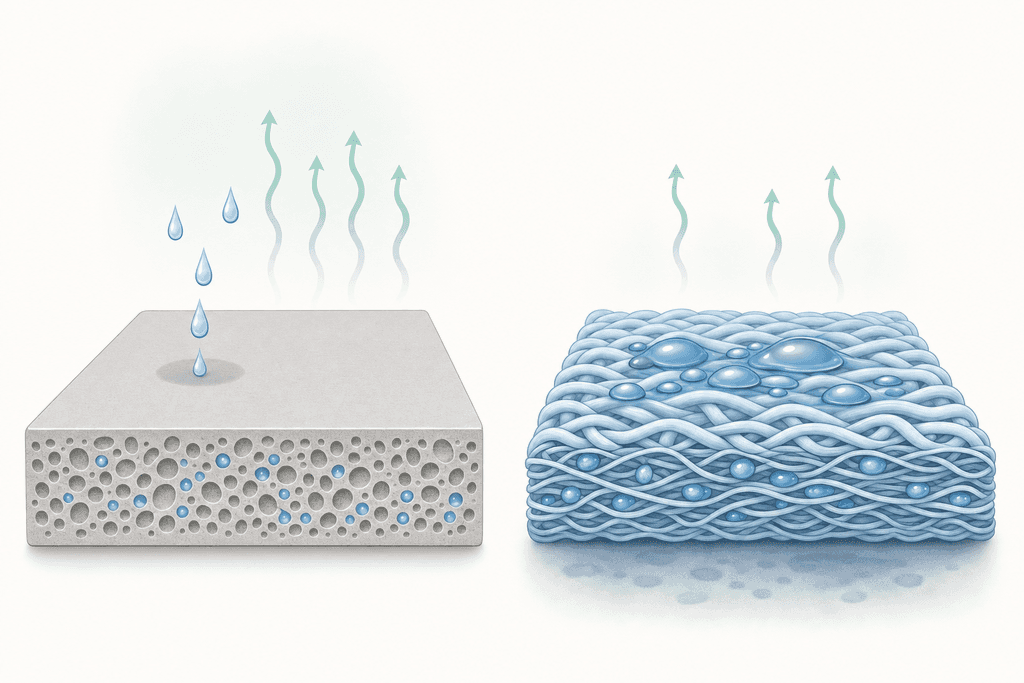
Most kitchen mats around your sink are basically sponges that never fully dry. They sit there soaking up water from dish soap bottles, sponges, and wet hands, then stay damp for hours or even days. That constant moisture creates the perfect environment for bacteria and mildew to grow, which is exactly what you're trying to avoid in a space where you prepare food. The problem isn't just that these mats get wet, it's that they trap moisture instead of releasing it back into the air.
How Diatomite Stone Actually Works
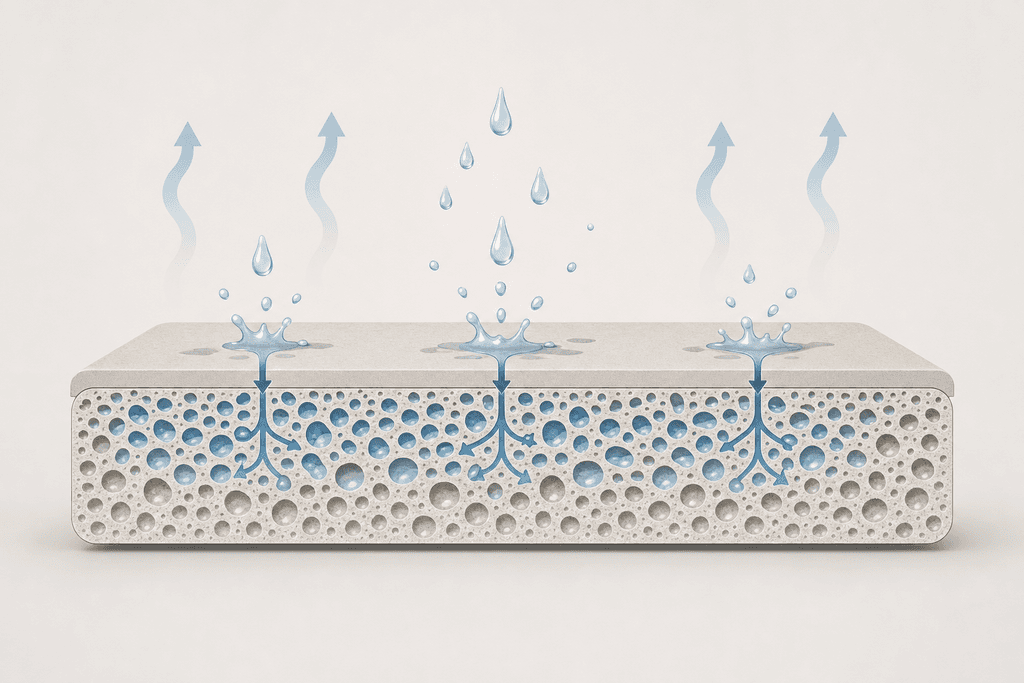
Stone faucet mats made from diatomite work completely differently than fabric or silicone options. Diatomite is formed from fossilized microscopic algae called diatoms, and its internal structure is filled with millions of tiny pores that you can't see with your eyes. When water hits the surface, these pores pull moisture in instantly, then release it back into the air through rapid evaporation.
This process happens so fast that the mat feels dry to the touch within minutes. The stone doesn't stay wet like fabric does, which means bacteria and mold don't have the damp conditions they need to multiply. It's not that chemicals are added to make it antibacterial, the material naturally prevents bacterial growth by eliminating the moisture that bacteria feed on.
- Water absorbs instantly on contact instead of pooling on the surface
- Moisture evaporates within minutes rather than hours
- The mat stays dry between uses throughout the day
- No damp smell develops even in humid kitchens
Why Traditional Mats Fail at Moisture Control
Fabric mats absorb water but then hold onto it. The fibers get saturated and can take 6 to 12 hours to fully dry, depending on your kitchen's humidity and airflow. Silicone mats don't absorb at all, they just let water pool on top until it eventually evaporates or you wipe it away. Plastic dish mats have drainage holes but water still collects underneath them, creating a breeding ground for slime and bacteria between the mat and your counter.
All of these options require constant maintenance. You have to wash fabric mats regularly to prevent odors, wipe down silicone mats multiple times a day, and lift plastic mats to clean the gross buildup underneath. Stone mats like the Natureva Stone Faucet Mat eliminate these problems by keeping the surface dry naturally without any extra effort on your part.
- Fabric traps moisture in fibers for hours
- Silicone creates standing water on the surface
- Plastic allows bacterial growth in hidden areas underneath
Performance Comparison Across Mat Types
The differences between mat materials become obvious when you compare them side by side. Drying time matters because the longer a surface stays wet, the more opportunity bacteria have to multiply. Maintenance requirements add up over time, and nobody wants to spend extra minutes every day dealing with a kitchen mat.
| Factor | Stone (Diatomite) | Fabric | Silicone |
|---|---|---|---|
| Drying Time | 2-5 minutes | 6-12 hours | Water pools, doesn't absorb |
| Bacteria Growth | Minimal (stays dry) | High (stays damp) | Moderate (standing water) |
| Odor Development | None | Develops quickly | Mild over time |
| Daily Maintenance | Weekly vinegar wipe | Wash every 2-3 days | Wipe multiple times daily |
| Lifespan | Years with sanding | 3-6 months | 1-2 years |
The science behind diatomite isn't new, but using it for kitchen applications solves a problem that most people just accept as normal. A stone faucet mat for kitchen sink areas stays dry naturally, which means less cleaning, no bad smells, and a more hygienic space around one of the most used areas in your home.
How Stone Faucet Mats Keep Water Off Your Counters
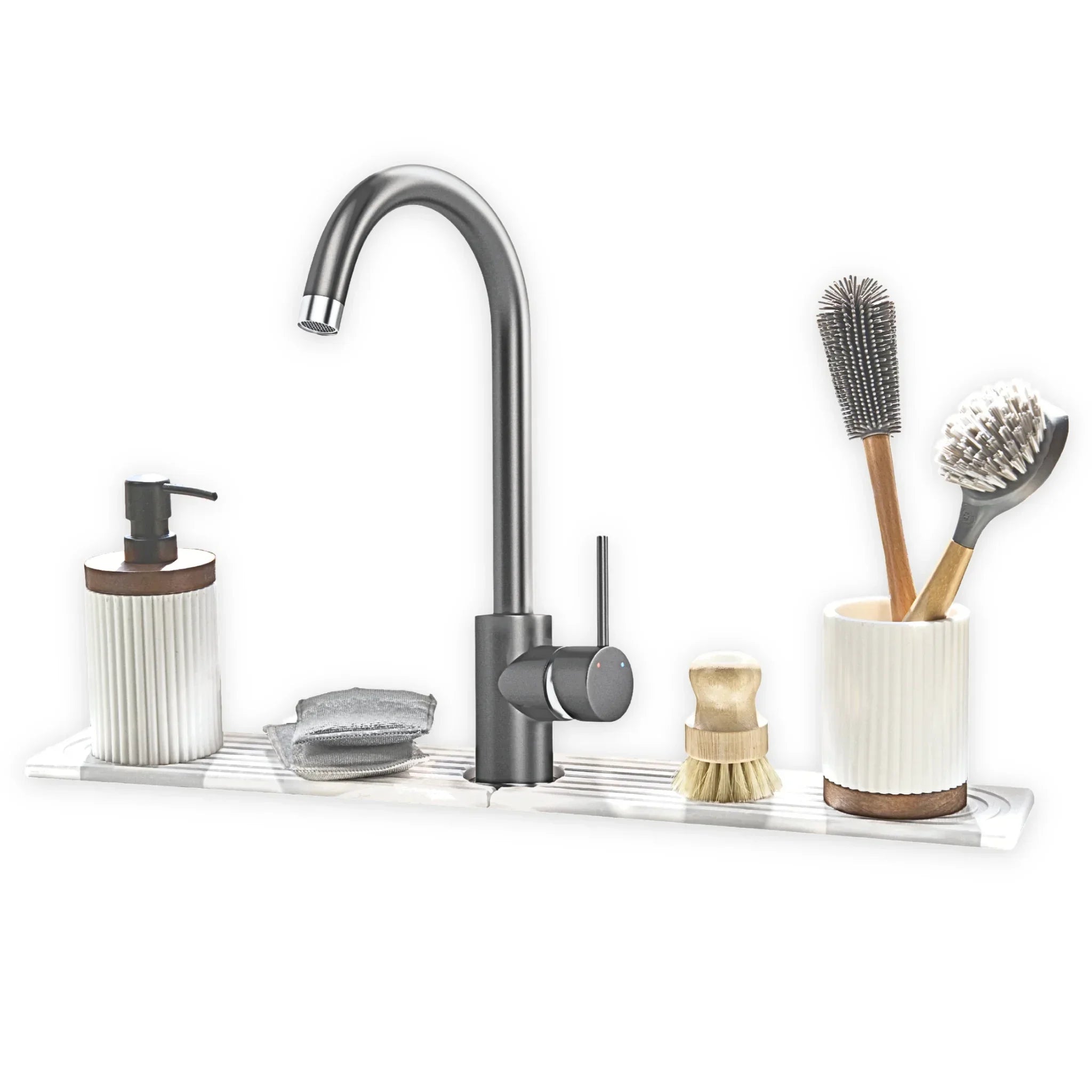
Most kitchen counters around the sink stay damp all day because water splashes every time you wash your hands, rinse vegetables, or fill a pot. That constant moisture creates a breeding ground for bacteria and leaves water marks on your countertop. A stone faucet mat for kitchen sink areas sits right behind your faucet where most of the splashing happens, catching drips before they spread across your counter. The material absorbs water instantly instead of letting it pool, which means your counter actually stays dry between uses.
The way diatomite works is pretty straightforward. When water hits the surface, millions of microscopic pores pull the moisture in immediately. Then the water evaporates back into the air naturally, leaving the mat ready for the next splash. This happens fast enough that even after washing dishes or rinsing produce multiple times, the mat doesn't feel soggy or saturated.
- Strategic placement behind faucets catches splashes from hand washing and dish rinsing
- Instant absorption when water makes contact with the diatomite surface
- Parallel contour channels guide water along engineered paths for faster drying
- Handles daily kitchen tasks without becoming waterlogged or smelly
- Silicone pad system protects countertops while creating airflow underneath
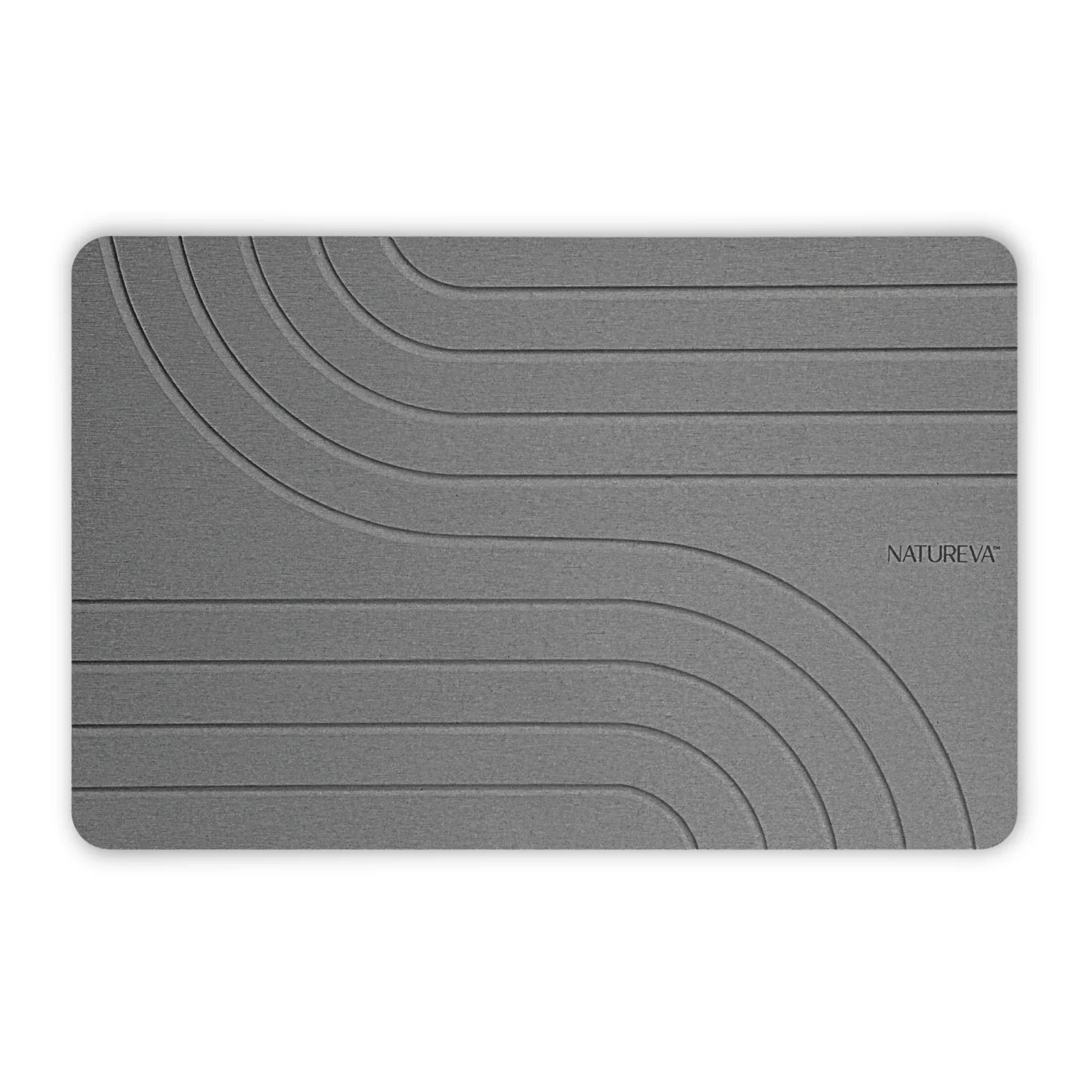
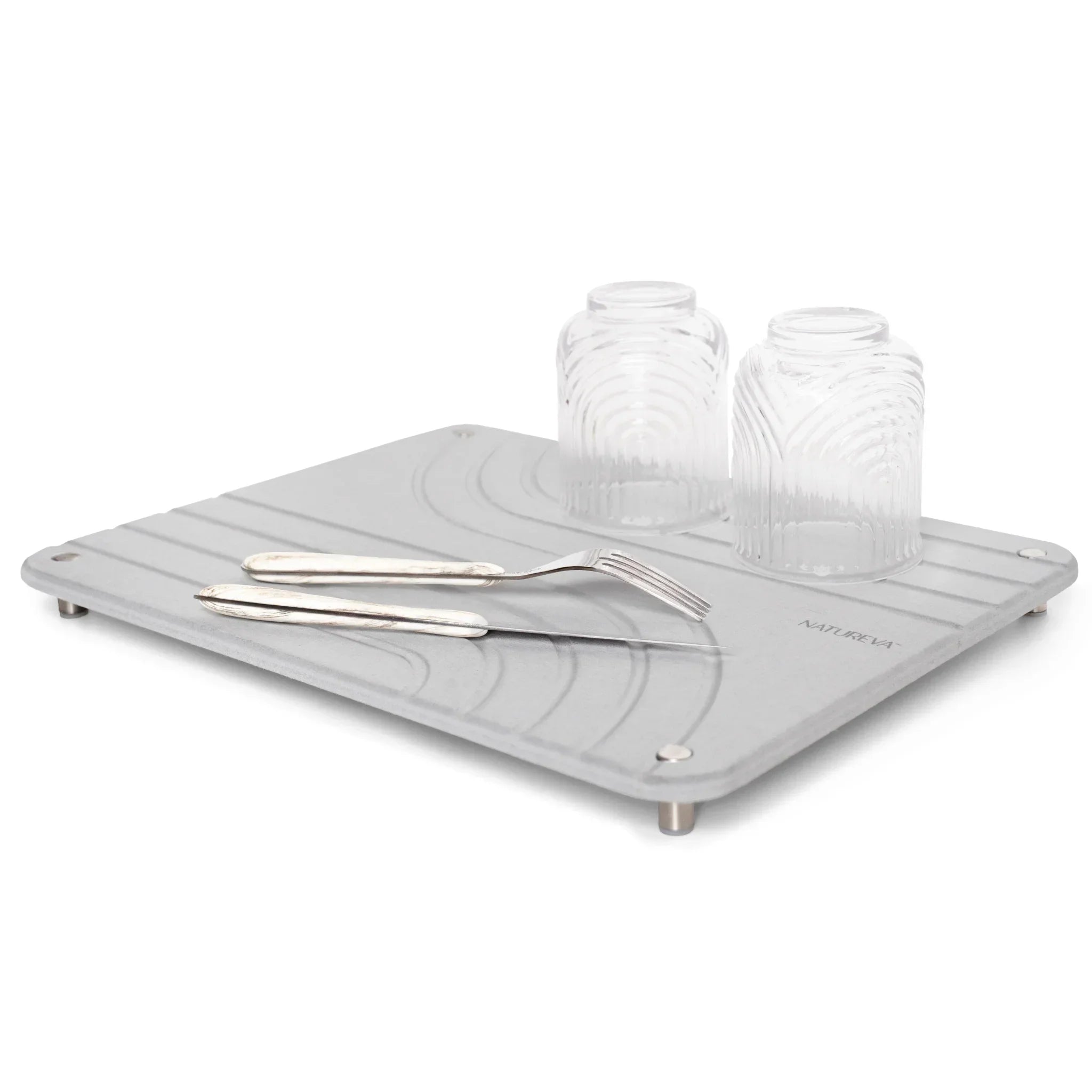
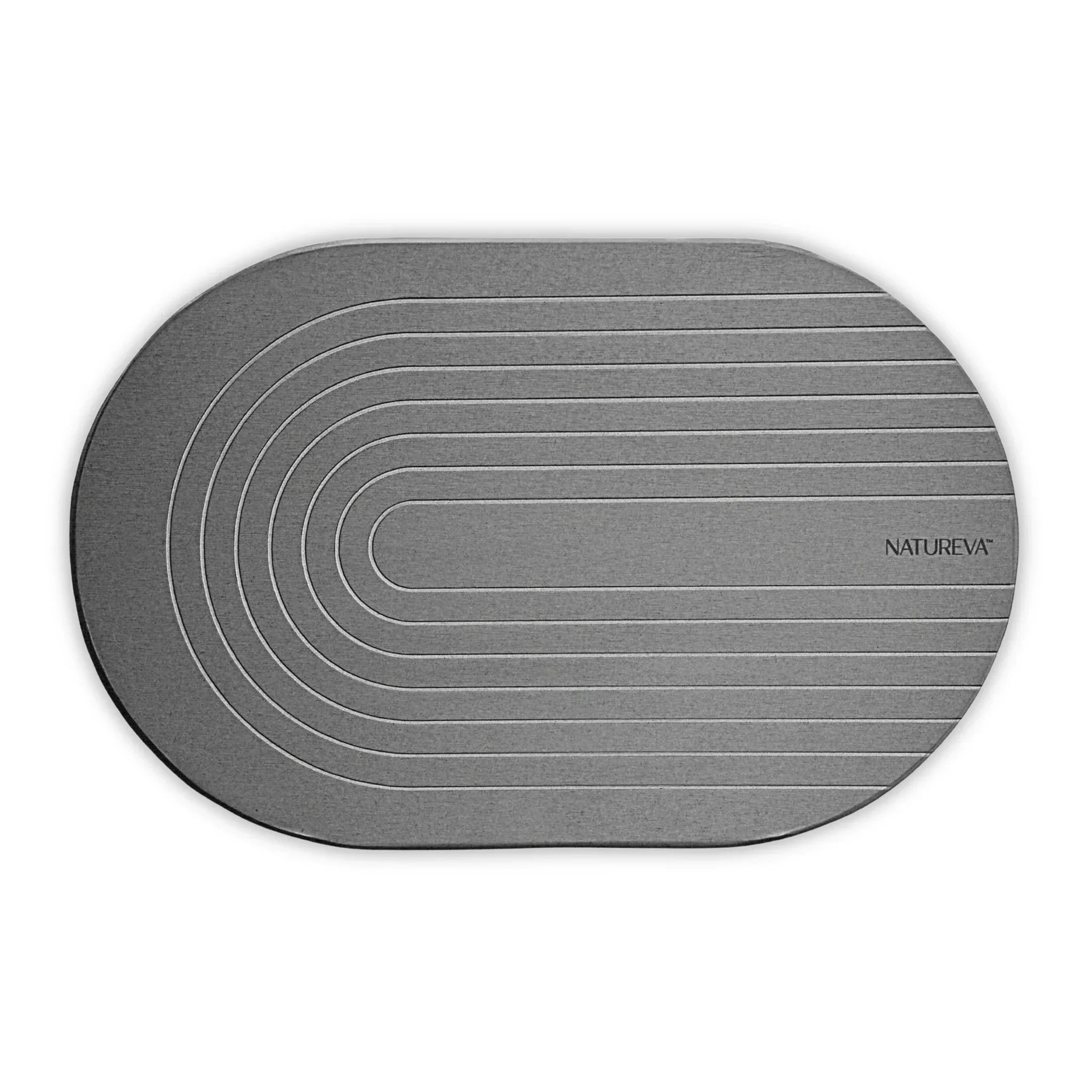
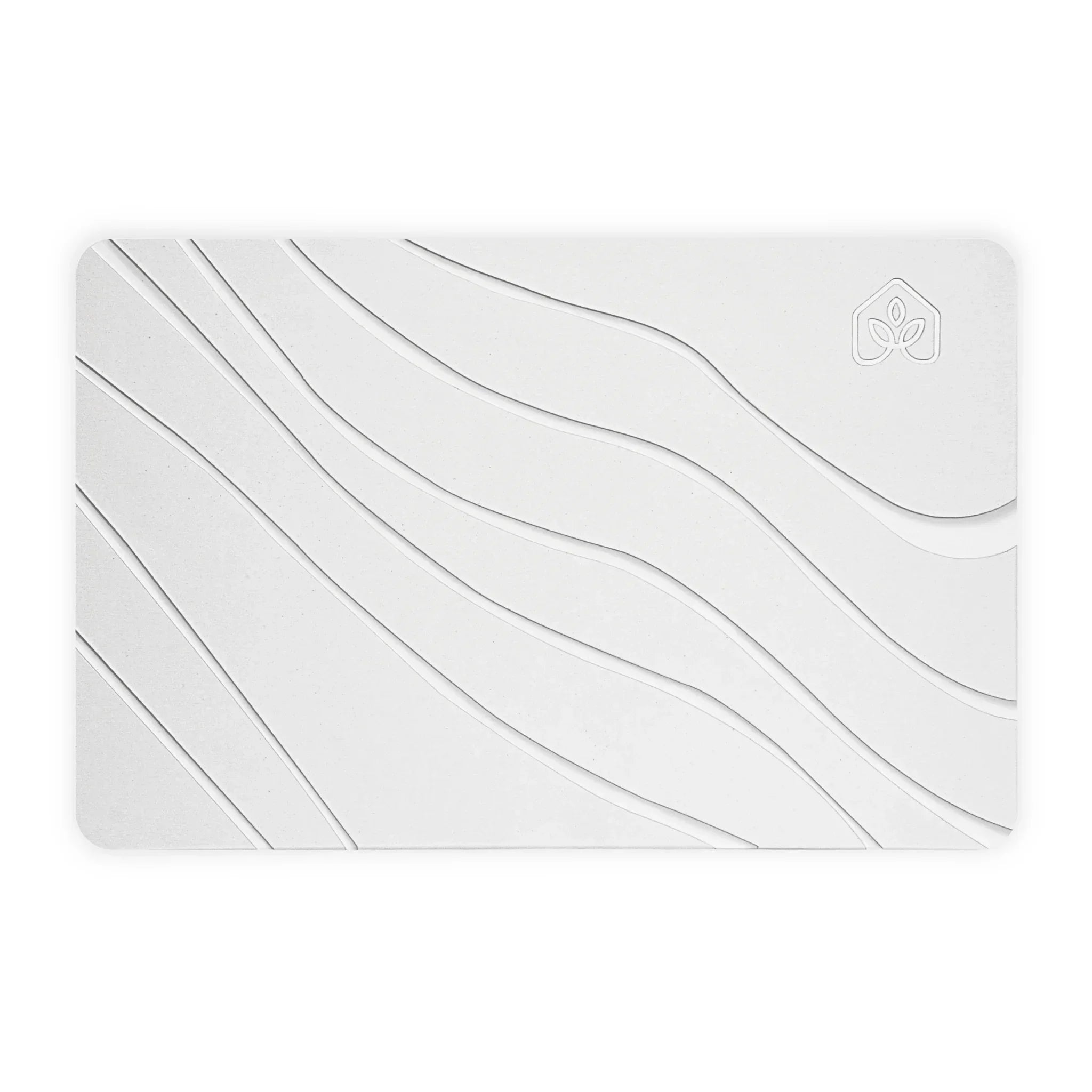
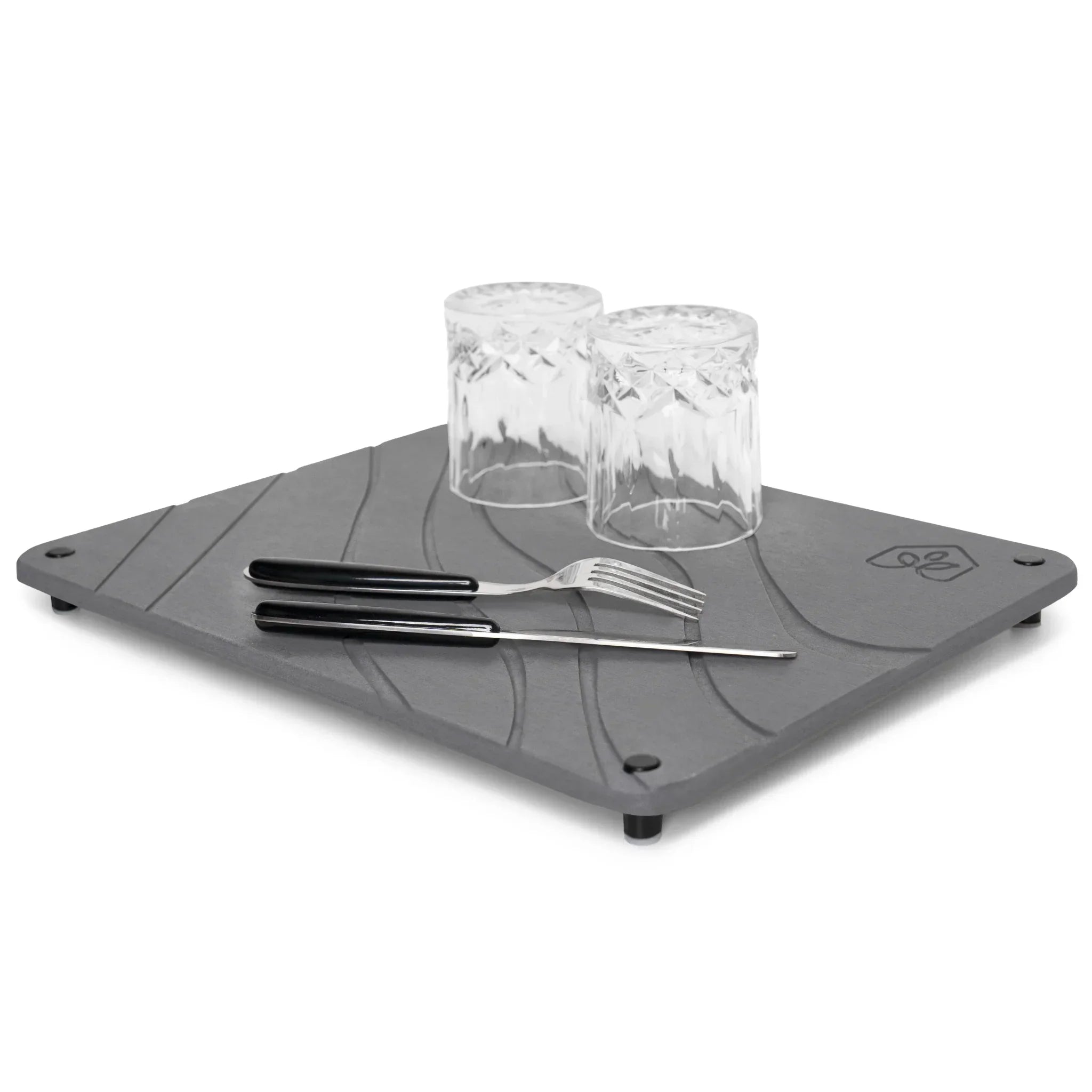
The Arch pattern on Natureva's stone faucet mat includes tight parallel channels that run the full length of the mat. These aren't just decorative. Water follows these grooves, spreading out across more surface area so it can evaporate faster. The 10 transparent silicone pads underneath lift the mat just 2mm off your counter, which creates enough space for air to circulate and prevents moisture from getting trapped between the stone and your countertop.
People who test diatomite products often describe the absorption as "wizardry" because water disappears so quickly. That's just the material doing what fossilized algae does naturally. The porous structure pulls moisture in faster than fabric or rubber mats, and because there's no coating or sealant, the water can escape through evaporation instead of staying trapped inside.
Design Features That Actually Matter
The dimensions of a faucet mat determine whether it actually catches the water or just sits there looking nice. At 60cm long, the stone faucet mat covers the entire zone where splashing happens, from the base of your faucet to where you typically set wet dishes or produce. Most fabric mats are too short or too narrow, which means water still ends up on your counter. The 10cm width fits perfectly in that space behind the faucet without taking up too much room on your workspace.
The mat weighs only 0.4kg despite feeling solid like stone. That's light enough to move when you need to wipe down your counter, but heavy enough that it doesn't slide around when wet. The composite construction combines diatomaceous earth with recycled paper, compressed into a dense material that holds its shape without any synthetic coatings.
| Specification | Details |
|---|---|
| Dimensions | 60 × 10 × 0.9 cm |
| Weight | 0.4 kg |
| Colors | Graphite, Slate, Chalk |
| Included Accessories | Sanding tool, 10 silicone pads |
| Pad Thickness | 2 mm |
| Pad Diameter | 1.2 cm |
The next generation of home essentials: naturally made, cleaner by design, sustainable by nature.
SHOP ALLThe three color options work with different kitchen styles. Graphite is a deep charcoal that hides stains well in busy kitchens. Slate is a soft grey that matches stainless steel appliances. Chalk is an off-white that blends into lighter countertops. All three colors use the same diatomite composite, so performance stays consistent regardless of which one you choose.
The transparent silicone pads sit underneath the mat at precise intervals. Each pad is 1.2cm in diameter and 2mm thick, sized to stay hidden under the mat while protecting your counter from scratches. Diatomaceous earth has been used for moisture control in various applications, but shaping it into functional home products requires careful engineering. The pads also prevent the mat from slipping when water makes the counter surface slick, which matters when you're working quickly in the kitchen.
Keeping Your Stone Mat Working Like New
Stone faucet mats don't need much maintenance, but a few simple habits keep them absorbing water properly for years. The microscopic pores that pull in moisture can get clogged with soap residue, mineral deposits, or food particles over time. When that happens, water starts sitting on the surface instead of disappearing immediately. A quick weekly wipe with diluted vinegar prevents buildup before it becomes a problem.
Mix equal parts white vinegar and water, wipe down the mat, then rinse it under your faucet. That's usually enough to clear any residue. If you notice a stain from coffee, wine, or colored liquids, rinse it right away under running water. The faster you address stains, the less likely they are to set into the porous surface.
- Weekly vinegar water wipe prevents mineral and soap buildup
- Rinse stains immediately under running water
- Use the included sanding tool to restore absorption when needed
- Avoid colored soaps that can stain the porous surface
- Air dry upright when the mat becomes saturated
- Proper care extends the mat's lifespan indefinitely
Every stone product from Natureva Home includes a sanding tool specifically designed to reopen the surface pores. It's a P320 grit disc about 10cm in diameter. When you notice the mat isn't absorbing as quickly as it used to, a light sanding brings back the original performance. Just rub the disc across the surface in circular motions until you see a fine dust, then rinse the mat clean.
Colored soaps and harsh chemicals can leave permanent marks on diatomite, so stick with clear or white dish soap near your mat. If the mat gets completely saturated from heavy use, prop it upright against your backsplash to dry. The airflow on both sides speeds up evaporation. Most people find their mat dries within an hour or two even after being thoroughly soaked.
The same care principles apply to other diatomite products like stone dish mats and sink caddies. Once you understand how the material works, maintaining it becomes second nature. The stone faucet mat handles daily kitchen moisture without the mildew smell or constant washing that fabric alternatives require, as long as you give it that weekly vinegar wipe and occasional sanding when absorption slows down.
A Simple Fix for Wet Kitchen Counters
The puddles around your kitchen sink don't need to be a permanent feature of your counter. A stone faucet mat for kitchen sink areas absorbs water the moment it hits the surface, then dries itself within minutes through natural evaporation. Unlike fabric mats that sit wet for hours and need constant washing, diatomite stone handles moisture without creating more work for you.
The Natureva Stone Faucet Mat sits flat along your sink edge with carved channels that guide water across the surface. The material pulls moisture into millions of microscopic pores, then releases it back into the air instead of trapping it against your counter. That means no mildew smell, no bacteria buildup, and no soggy mess to deal with every time you wash dishes.
Maintenance is minimal compared to traditional options. A quick vinegar wipe once a week keeps the surface clean, and if absorption slows down over time, the included sanding tool reopens the pores in about 30 seconds. No washing machine cycles, no waiting for fabric to dry, no replacing worn-out mats every few months.
The same diatomite material works across other wet zones too. Stone dish mats handle drying racks, bath mats manage post-shower drips, and sink caddies keep soap bottles from leaving rings. If wet counters have been bothering you, there's a straightforward solution that doesn't require constant attention.
Still have questions about how stone faucet mats work or whether they'll fit your setup? The answers below cover the most common concerns.
Common Questions About Stone Faucet Mats
Stone faucet mats are still pretty new to most kitchens, so people naturally have questions about how they work and whether they'll actually solve the puddle problem. The good news is that once you understand how diatomite works, most concerns disappear pretty quickly. Here are the questions we hear most often from people considering a stone faucet mat for kitchen sink areas.
How long does it take for the mat to dry after getting wet?
The mat starts releasing moisture almost immediately through evaporation, and most surface water disappears within minutes. The Natureva Stone Faucet Mat uses diatomite's natural pore structure to pull water in and push it back out into the air, so you won't see standing water like you would on fabric or plastic mats. Even after heavy use, the surface feels dry to the touch within about 15 to 30 minutes depending on your kitchen's humidity level.
Will the mat damage my countertop surface?
No, the mat actually protects your countertop from water damage. It comes with 10 transparent silicone pads that sit underneath and create a small gap for airflow, which prevents moisture from getting trapped between the mat and your counter. The pads also keep the mat from sliding around when wet and protect surfaces like marble or laminate from scratches or pressure marks.
Can I use the mat with any type of kitchen faucet?
Yes, the mat works with standard kitchen faucets, pull-down sprayers, and even commercial-style faucets. The 60 cm length fits most sink configurations, and because it's only 0.9 cm thick, it sits flat without interfering with faucet movement or cabinet doors underneath. Just position it where water tends to splash or drip most.
What happens if the mat stops absorbing water?
When the surface pores get clogged with soap residue or mineral deposits, absorption slows down. That's why every mat includes a sanding tool with P320 grit sandpaper. Just lightly sand the surface in circular motions to reopen the pores, and the mat will absorb like new again. Most people only need to do this every few months depending on water hardness and soap use.
How do I clean stains or discoloration?
For regular maintenance, wipe the mat weekly with a vinegar and water solution to prevent buildup. If you notice stains from coffee, tea, or coloured liquids, rinse the mat under water and let it air dry upright. Stubborn marks usually respond to hydrogen peroxide or light sanding with the included tool. Avoid using coloured dish soaps directly on the mat since they can leave tints over time.
Is the mat safe for food prep areas?
Yes, diatomite is a natural mineral material with no synthetic coatings or chemical treatments. The mat's antibacterial properties come from its rapid drying behaviour, not from added chemicals. That said, it's designed to sit near the faucet to catch drips and splashes, not as a cutting board or direct food contact surface.
The next generation of home essentials: naturally made, cleaner by design, sustainable by nature.
SHOP ALL