
Bamboo vs Turkish Cotton Towels Compared for Daily Use
If you are weighing up bamboo vs Turkish cotton towels for everyday use, bamboo cotton blends dry faster and feel soft from the first wash, while Turkish cotton starts out stiffer and builds its absorbency over many washes. That difference matters most in the kind of bathroom where a towel has to dry on a hook, in a room with one small window and a fan that barely works.
A towel that is still damp when you reach for it the next morning is a bathroom problem, not a laundry problem. Damp fabric hanging in a humid room is where that musty smell starts, and no amount of washing fixes a towel that never gets a chance to dry through. Softness, absorbency, drying speed and durability are the four things worth comparing, and the two fibres do not rank the same way on all four.
Table of Contents
What each fibre actually is
Turkish cotton is a long-staple cotton, meaning the individual fibres are longer than standard cotton, so the yarn is stronger and sheds less. It is usually woven into mid-weight terry, most often somewhere between 400 and 600 GSM, which is a measure of how much the fabric weighs per square metre.
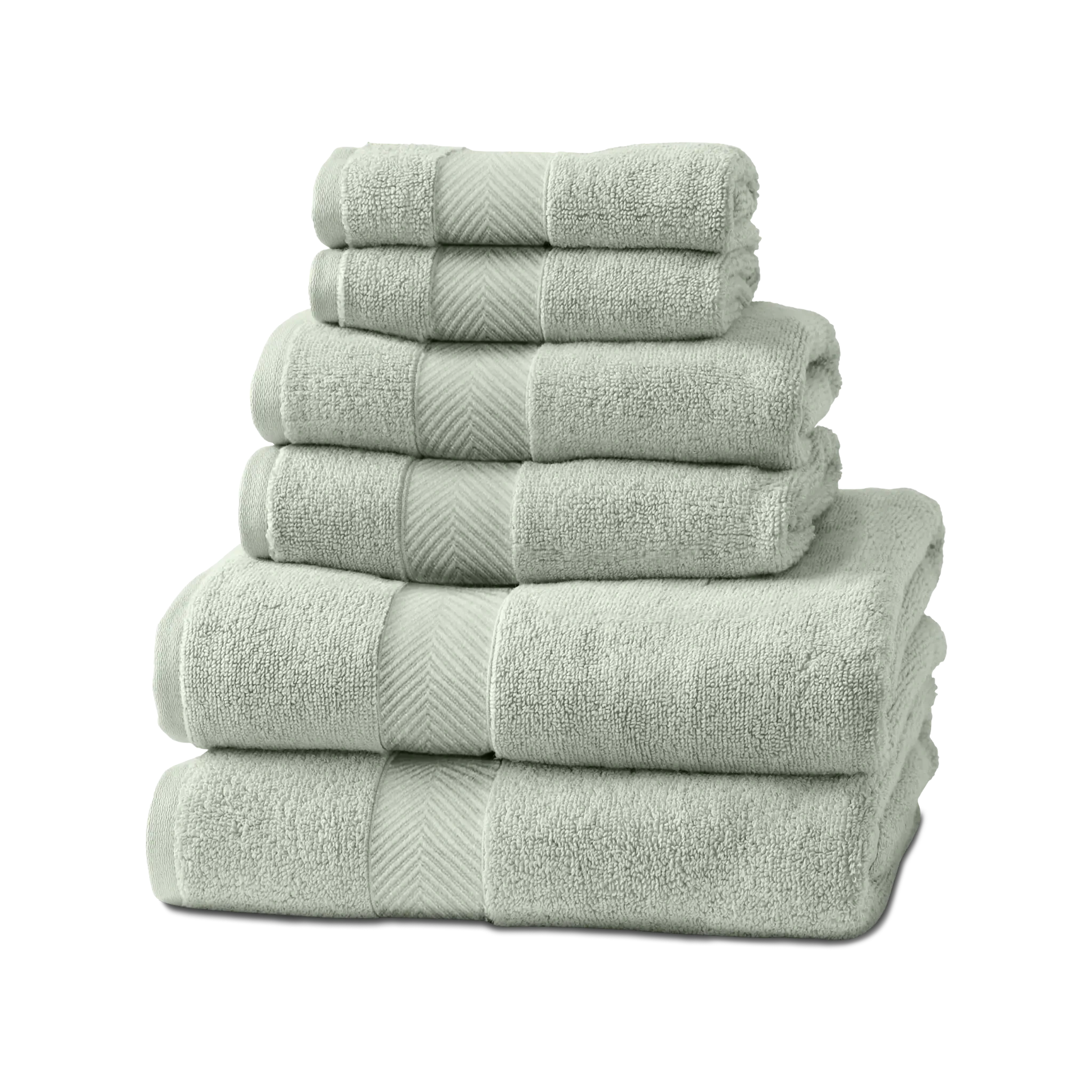
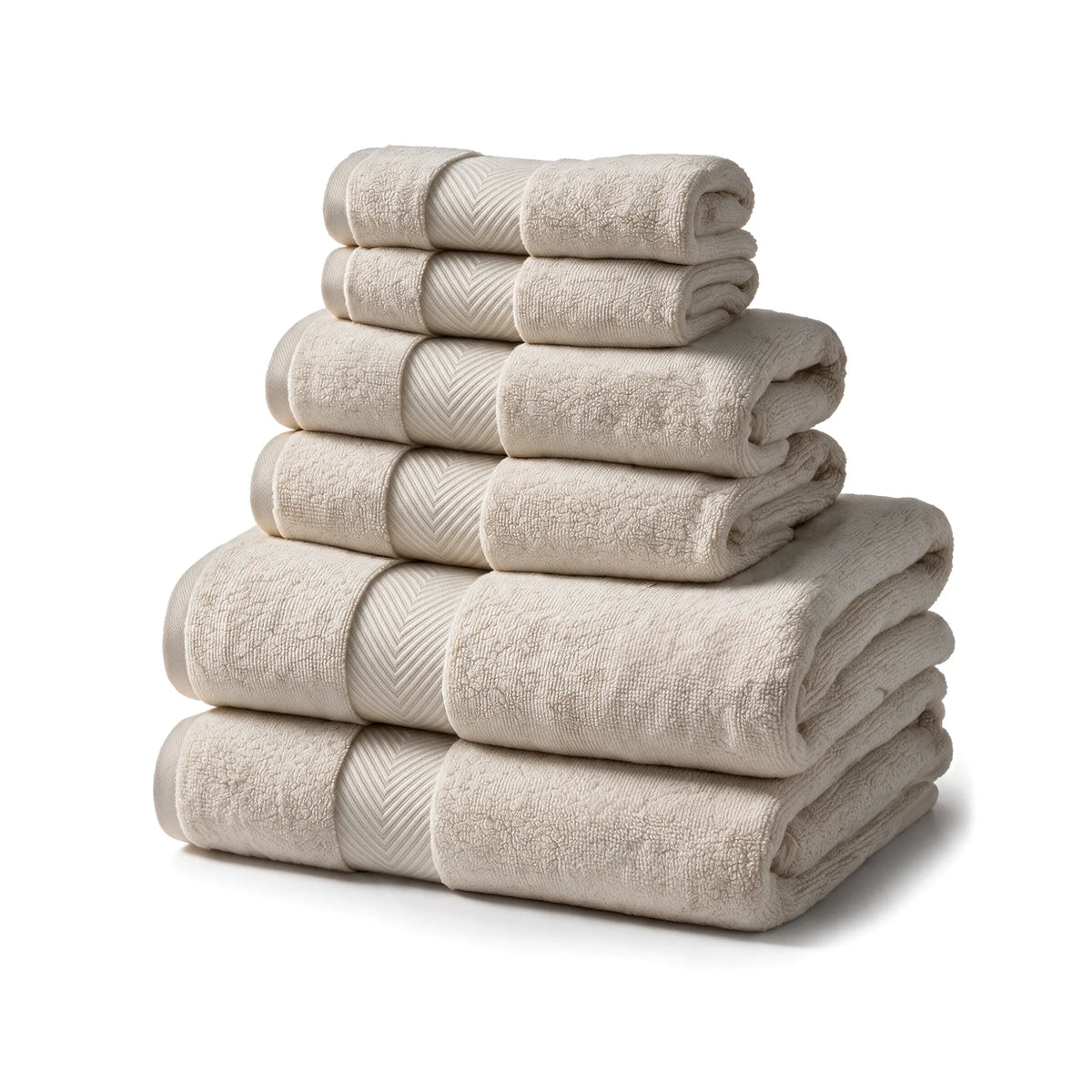
Bamboo Cotton Towels - Set of 6
Bamboo towels are almost never pure bamboo. Viscose made from bamboo pulp loses strength when it is wet, so it is blended with cotton to hold the loops together. A common build, and the one used in Natureva's bath towels, is 70% long-staple zero-twist cotton with 30% viscose from bamboo at 700 GSM.
Zero-twist means the yarn is spun loosely instead of tightly wound. More fibre surface sits against water, and because the loops are not packed hard, the towel sheds less lint once it settles in. Both options are natural-fibre towels, so the real decision sits with the weave, the blend and the weight.
| Spec | Turkish cotton | Bamboo cotton blend |
|---|---|---|
| Fibre makeup | 100% long-staple cotton | 70% cotton, 30% bamboo viscose |
| Typical GSM | 400 to 600 | 700 |
| Yarn | Twisted terry loops | Zero-twist, loosely spun |
| Feel when new | Flat, slightly stiff | Plush, silky |
Which towel feels softer from day one
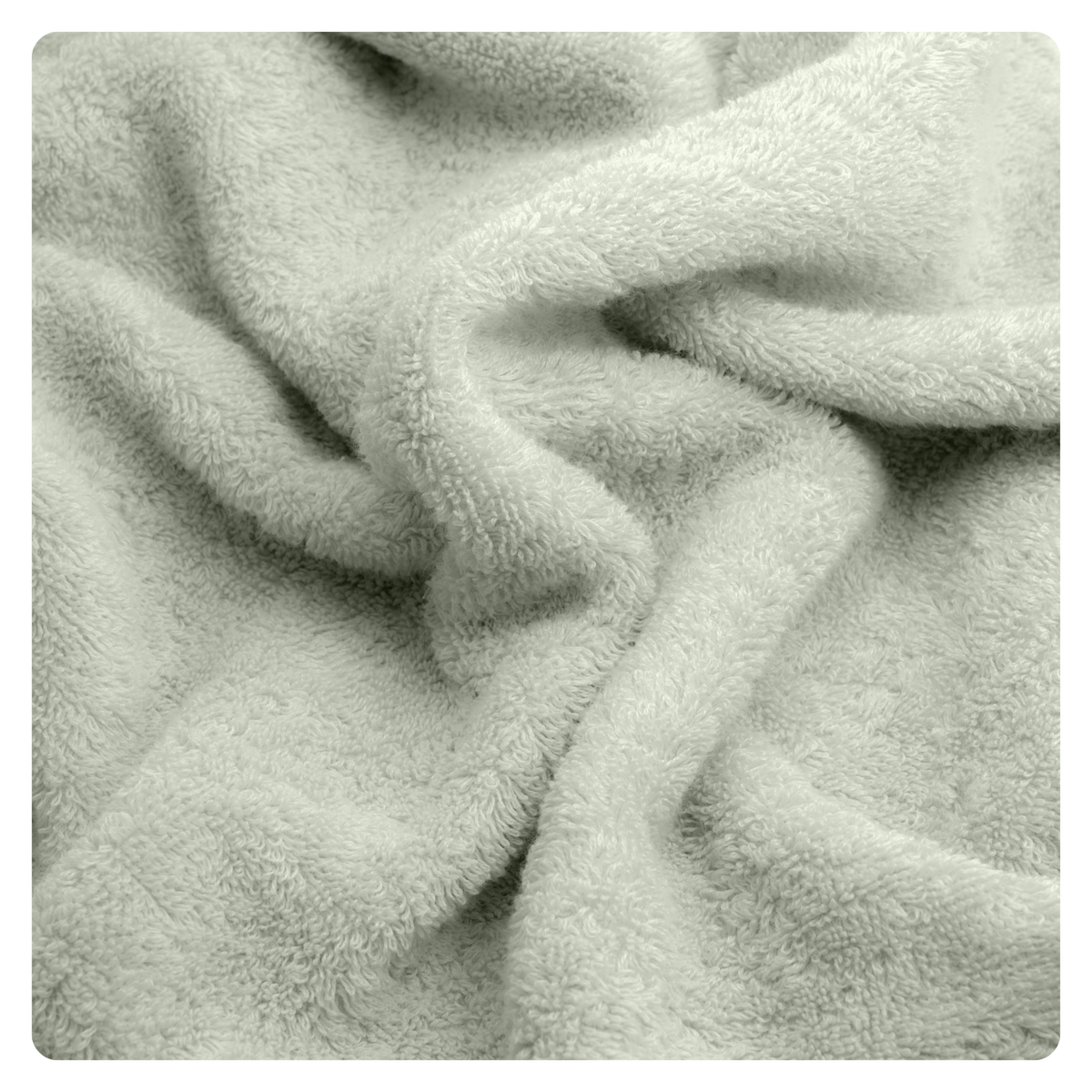
A bamboo cotton blend wins on first use. The viscose gives the surface a silky hand feel you notice straight out of the packet, before a single wash has done anything to the fibres.
Turkish cotton takes a different route. The loops sit tight and flat when new, and they need several washes before they open up and start to feel plush against skin. Both fibres improve on that timeline, because terry loops relax every time they go through the machine, so a towel you buy today should feel better in three months than it does tonight.
Zero-twist loops are the shortcut. Because the yarn is spun loosely rather than wound tight, the surface reads as soft instead of scratchy from the start.
- Skip fabric softener on either fibre. It coats the loops and cuts absorbency while faking a soft feel.
- Give any new towel a wash before judging it, especially tightly woven cotton.
- Look at where the decorative weave sits. On a bamboo cotton bath towel, the herringbone sits in a border band so the main body stays uniform and plush.
- Rub the towel across the back of your hand, not your palm. Thinner skin picks up scratchiness faster.
How much water each one actually soaks up
Both soak up plenty, but not on the same schedule. Turkish cotton is absorbent and slow to wake up, so a new one often pushes water around your back for the first few washes instead of pulling it in.
In a blend, the long-staple cotton does most of the absorbing. The viscose from bamboo moves that moisture sideways through the fabric rather than parking it in one wet patch, which is why a blended towel feels less soggy halfway through drying off.
GSM measures density, not quality. A denser towel holds more water, and it also takes longer to give that water back, which is the trade-off behind every heavy hotel towel.
- Wash any new towel before first use to clear finishing residue from the mill.
- Treat 400 to 600 GSM as mid-weight and anything near 700 as spa-weight.
- At 700 GSM with 70% long-staple zero-twist cotton and 30% viscose from bamboo, the blend is dense without staying heavy and wet.
- Judge absorbency after wash three, not on day one.
The next generation of home essentials: naturally made, cleaner by design, sustainable by nature.
SHOP ALLDrying speed in a bathroom with no window
Zero-twist yarn has the edge here. Loosely spun fibres release moisture faster because air can reach more of the surface, where a tightly twisted loop holds water in its core.
A heavy Turkish cotton bath sheet in a sealed ensuite can still be damp at the next shower, and a thick blended sheet will struggle too if it is folded in half over a rail. Airflow decides this more than fibre does. A towel bunched on a rail only dries from the outside.
Musty smell is damp fibre, not dirty fibre. Fix the drying and the smell goes, no change of detergent needed.
- Hang on a hook, not a rail, using the hanging loop so air reaches both faces.
- Spread the towel to full length instead of doubling it over.
- Keep two towels per person in rotation so each gets a full day to dry out.
- Pull towels from the dryer promptly rather than leaving them warm in a heap.
Which one lasts longer through the wash
Staple length settles this, not the fibre name on the label. Long-staple fibres are the durability factor in both Turkish cotton and a well built bamboo blend, because longer fibres hold together in the yarn instead of working loose.
Short-staple cotton is what sheds and pills within months, whatever the marketing says. Viscose from bamboo weakens when wet on its own, so the cotton percentage is what carries a blended towel through years of hot showers and spin cycles.
Minor linting over the first 2 to 3 washes is normal with zero-twist yarn, then it settles. Snip any loose thread with scissors and never pull a loop out.
- Wash cold on gentle with similar colours, tumble low.
- No bleach, no fabric softener, and keep benzoyl peroxide products away from coloured towels.
- Check that towels are pre-shrunk and colourfast before you commit to a set.
- Look for OEKO-TEX Made in Green, which audits the full production chain rather than the finished cloth alone.
Who should buy which towel
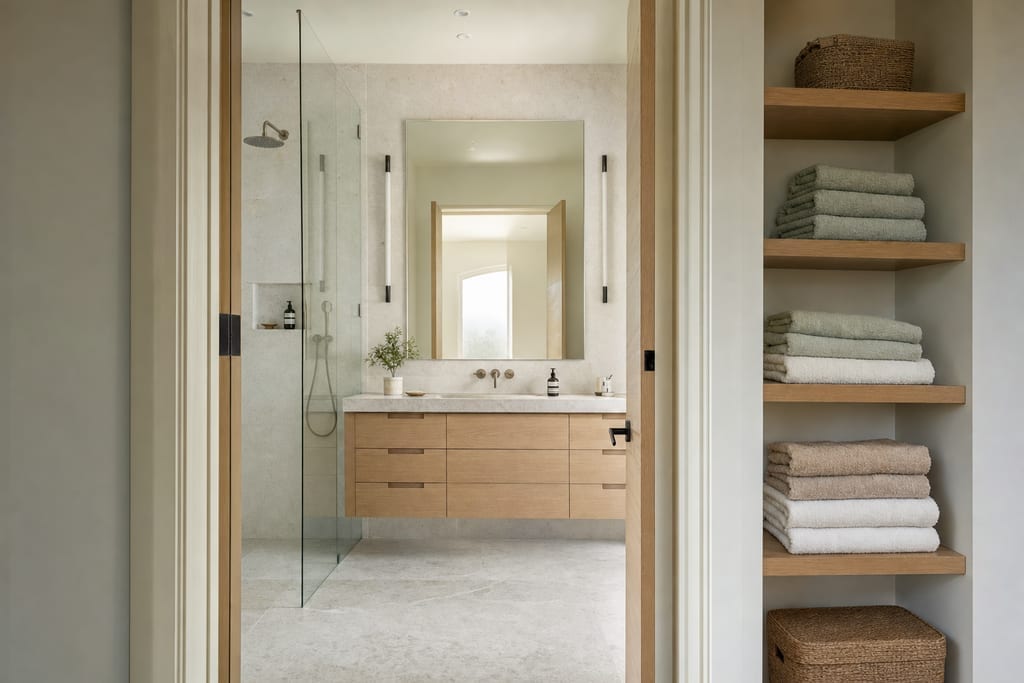
A rental bathroom with one small window and a tired exhaust fan settles this quickly. Go with the zero-twist blend and hang it from the loop, because a mid-weight Turkish terry in that room will still be cool and damp by morning.
Shared family bathrooms work the same way. With four or more people on one rail, drying time beats plushness every time, or the towels never catch up between showers.
Turkish cotton terry is the right call for one person in particular: someone with real airflow who likes a thin, broken-in towel and is happy to wait out the first dozen washes. Gift buyers should go the other way, since a present that feels soft on the first use lands better than one that needs months of laundering.
The honest trade-off is that a dense towel of either fibre feels better and gives water back slower, so hook storage is not optional at this weight.
| Situation | What to prioritise | Where to start |
|---|---|---|
| Damp rental, two adults | Fast moisture release, hanging loop | Two bath towels, $69 |
| Family of four or more | Rotation and drying time | Six-piece mixed towel set, $89 |
| Tall adults, good airflow | Full body coverage | Bath sheets, $99 |
| Housewarming or Christmas gift | Soft on first use | Any set over $100 ships free |
Check your bathroom tonight, then choose
Walk into your bathroom tomorrow morning and put your hand on last night's towel. If it is still cool and damp, the fibre choice is made for you: take the zero-twist blend, use the hanging loop, and give it a hook with air on both sides. Then work out how many you need. One towel per person is not enough in a slow-drying room, so buy a set and keep a second on standby while the first dries through. Natureva's bamboo cotton towels and bath sheets come in five modern neutrals, Eucalyptus, Graphite, Mist, Chalk and Dune, so a second set matches the first.
The next generation of home essentials: naturally made, cleaner by design, sustainable by nature.
SHOP ALLBamboo and Turkish cotton questions
Can I wash bamboo cotton and Turkish cotton towels together in the same load?
Yes, as long as you sort by colour and stick to cold water on a gentle cycle. Both fibres handle the same wash settings, so there is no need to run separate loads. The one thing to watch is a brand new Turkish towel releasing dye onto a pale blend. Wash anything new on its own the first time, then combine freely after that.
Will my towels shrink after a few hot washes?
A pre-shrunk towel holds its size, which is why the label matters more than the fibre. Natureva's bamboo cotton range is pre-shrunk and colourfast, so a bath towel stays the size you measured in the listing. Hot water and high dryer heat are still the main enemy of any terry loop, so stay on cold wash and low tumble either way.
What does OEKO-TEX Made in Green actually prove about a towel?
It proves the whole production chain was checked, not just the finished cloth. The certification covers testing for harmful substances, environmentally responsible manufacturing and audited labour standards. Each piece carries a unique product ID and facility ID, so you can look up exactly which facility made it. That is a tier above Standard 100, which tests the final fabric alone.
Should I buy bath towels or bath sheets if two adults share one bathroom?
Bath towels at 76 by 142 cm suit most adults and dry faster on a hook. Bath sheets at 89 by 178 cm give taller people full coverage but hold more water, so they need real air on both sides. If your bathroom is slow to dry out, two bath towels each beats one bath sheet each.