
What Diatomaceous Earth Is in Stone Home Products
If you have ever wondered about diatomaceous earth and what it is, the short answer is this: it's a soft, chalky rock made from the fossilised shells of microscopic algae called diatoms, laid down over thousands of years in ancient lake and sea beds. Each shell is built from silica and riddled with pores far too small to see. Millions of them, packed into every piece of stone.
Those pores are the whole point. Water hits the surface, gets pulled straight in, then evaporates back out into the air. That's why a material formed at the bottom of a prehistoric lake now sits under wet dishes on a kitchen bench and along the back of a bathroom sink, soaking up the splashes that usually leave a cloth mat damp all day.
Table of Contents
Where diatomaceous earth comes from
Diatoms are single-celled algae that build themselves a glass-like silica shell while they live. When they die, the shells sink and settle in layers, and over long stretches of time that sediment compacts into a soft white rock called diatomite.
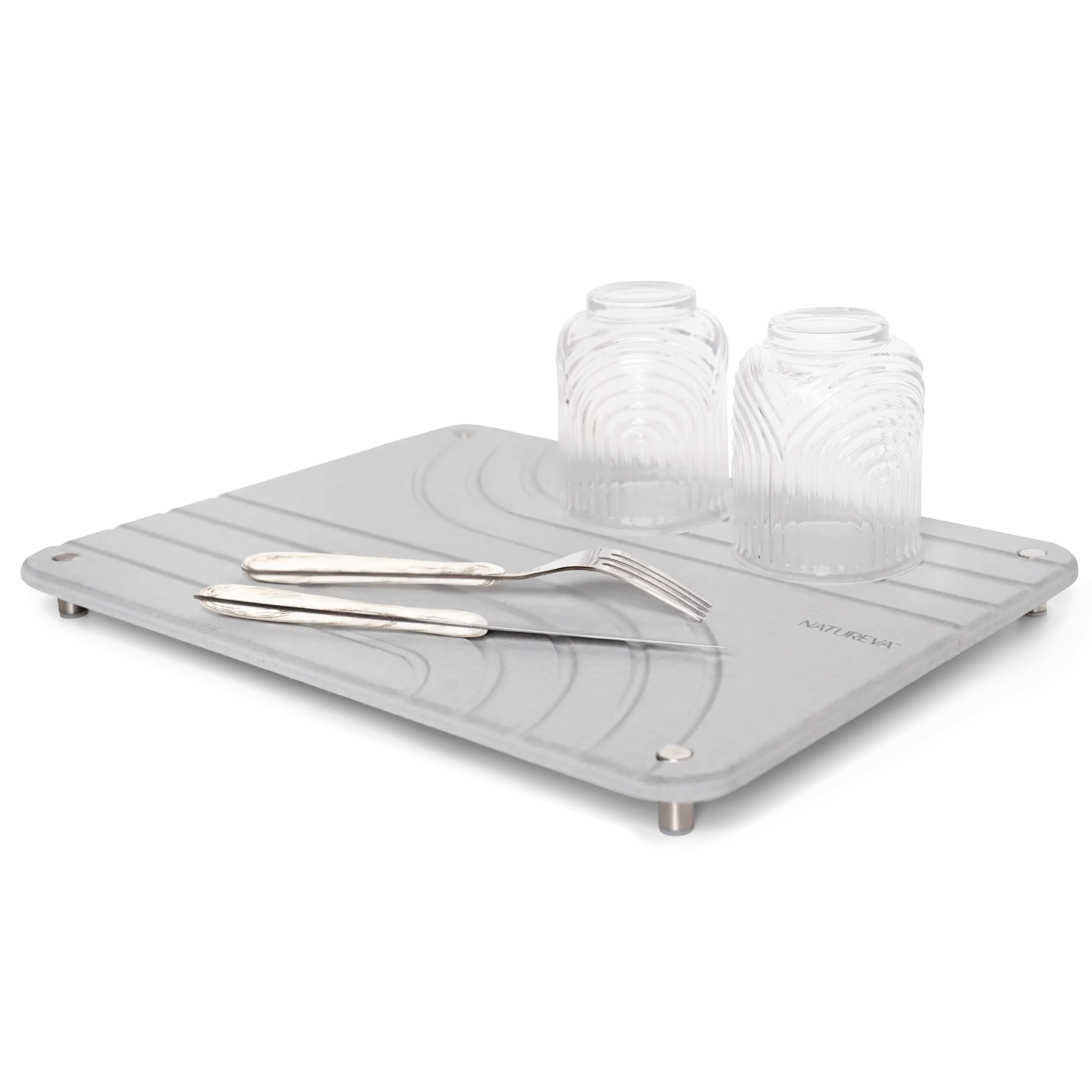
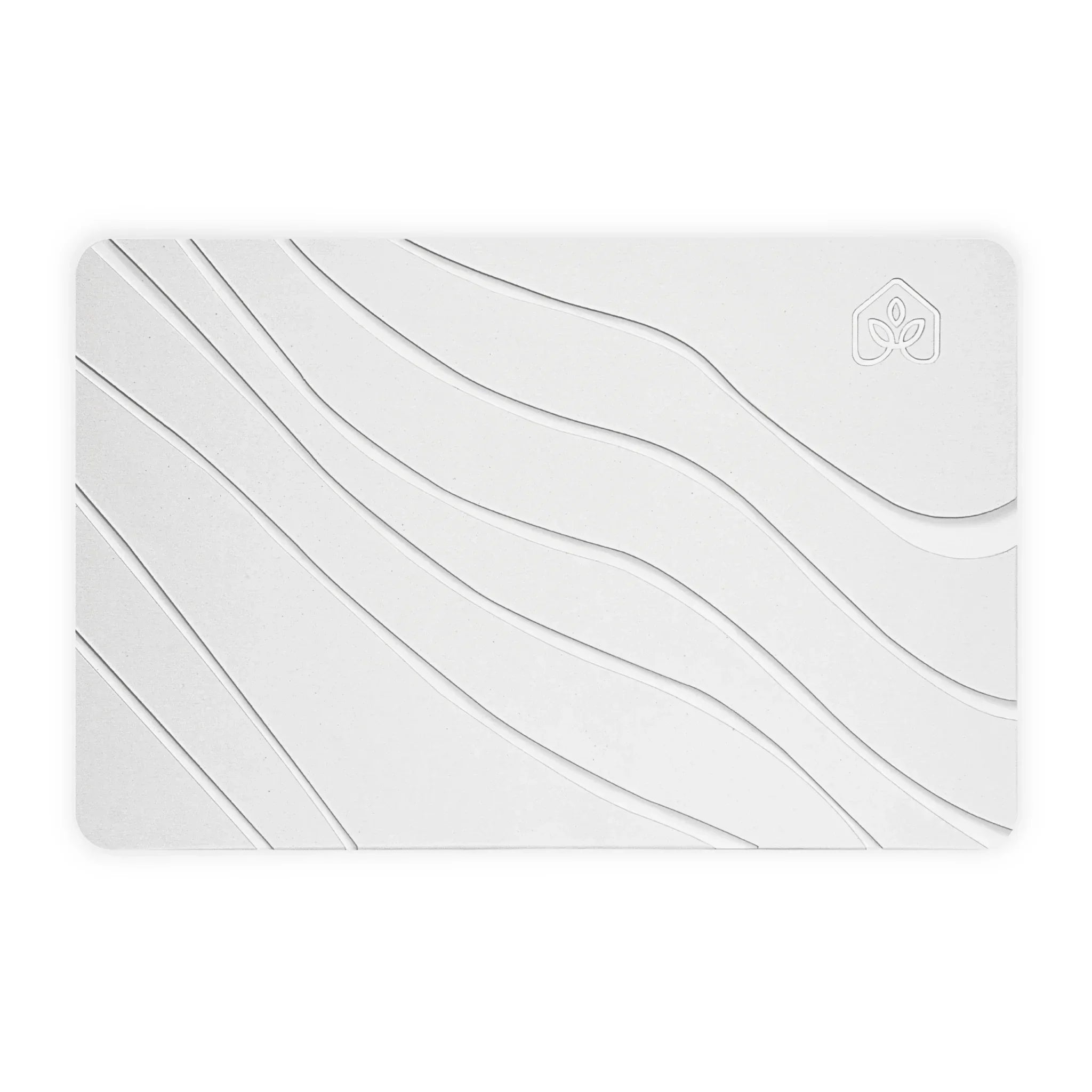
Stone Dish Mat - Tide
Mining it is straightforward. The rock is quarried, dried, then ground into a fine powder and graded by particle size and purity, because a filter needs a different grade to a garden product or a pressed stone slab.
Diatomite, diatomaceous earth and DE all name the same material. What changes between a pool filter cartridge and a bath mat is the grade and how it has been processed, not the mineral itself.
| Common form | Where you meet it | Physical state |
|---|---|---|
| Filter grade | Pool filters, beer and wine clarifying | Loose powder in a cartridge |
| Garden grade | Non-toxic pest control around plants | Dusted powder |
| Absorbent granules | Cat litter, workshop spill kits | Loose granules |
| Pressed stone | Bath, dish and faucet mats | Fired-hard solid slab |
Home drying surfaces use the last one. The powder is blended with lime and recycled paper fibre, pressed and hardened into a solid slab, so there is nothing loose to spill, tip over or breathe in during normal use. More on how that slab handles water sits in the complete guide to diatomite.
How those tiny pores pull water in
Capillary action does the work. The pore walls inside the slab attract water more strongly than the water holds itself together, so a drop touching the surface is drawn down into the stone instead of beading on top.
Once inside, the water spreads across an enormous internal surface area, the combined walls of millions of pores. A large internal surface area means fast evaporation, because more water is exposed to air at once. That is why the top feels dry within seconds while the moisture is still leaving the slab from the inside.
Australia's Homes To Love tested a Natureva Stone Bath Mat and found it dried fully in under 8 minutes, rating it 9 out of 10. Four things make that possible, and none of them involve a power point:
- Pores open at the surface, so water is pulled in on contact
- Internal surface area spreads the water thin
- Air movement across and under the slab carries the moisture away
- No coating, no chemical drying agent, no electricity
Silicone and plastic have none of this. Water sits on top until you wipe it or it evaporates slowly from one flat film.
What a stone mat is actually made of
A stone mat is not a block of pressed powder. Three ingredients go in, each with a job, and the balance between them is what makes the slab firm enough to stand on and still breathable all the way through.
| Ingredient | Job in the mat |
|---|---|
| Diatomite | Absorbs and releases moisture |
| Lime | Binds and hardens the slab |
| Recycled paper fibre | Adds strength |
The result feels dense and cool, closer to a paver than a tile. No synthetic coatings, sealants or added treatments are used, so the hygiene comes from how fast it dries rather than from anything applied to it.
Raw diatomite deposits can carry naturally occurring contaminants, which is why stone mats from unverified sources have faced recalls over asbestos concerns. Every stone product we make is certified asbestos-free by a NATA-accredited Australian laboratory and retested regularly, most recently in report R35811 by Safe Environments, July 2026. Ask any brand for a current lab report before you buy, and if they cannot produce one, walk away.
The next generation of home essentials: naturally made, cleaner by design, sustainable by nature.
SHOP ALLWhy it beats fabric, rubber and silicone
Fabric and microfibre dish mats hold water against the counter. The underside stays damp for hours, which is where the sour smell starts, and the only fix is a wash cycle every few days.
Rubber and silicone go the other way. They are waterproof, not absorbent, so water pools on top and creeps underneath, trapping a wet film against the benchtop where you cannot see it.
- Microfibre: water sits in the fibres, washing needed, high odour risk
- Silicone: water sits on top and runs underneath, wiping needed
- Stone: water moves into the slab and evaporates out, no washing
Stone absorbs on contact and evaporates, leaving no damp environment for odour or mould to form. That makes it hygienic by design rather than treated with antibacterial chemicals. A rigid slab also stays put: no bunching, no curling corners, no sliding on wet tiles, no furry worn edges. One slab replaces the cycle of cloth mats that get grey, then thrown out, then replaced each year.
Diatomaceous earth around the kitchen sink
The wettest patch in most homes is the 60 cm of benchtop around the tap. Puddles sit under the soap bottle, splash collects behind the sink, and a tea towel under the clean dishes stays damp until dinner.
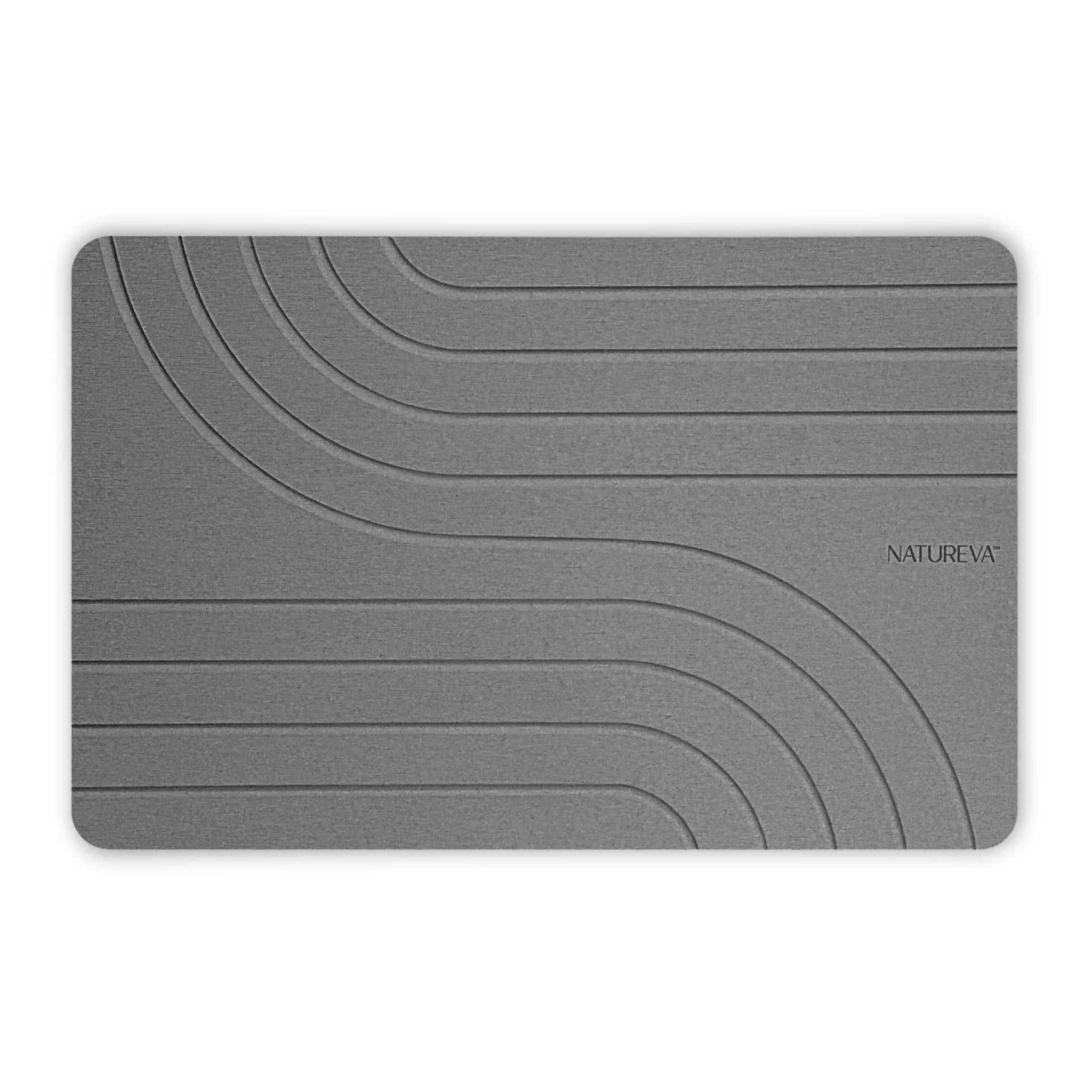
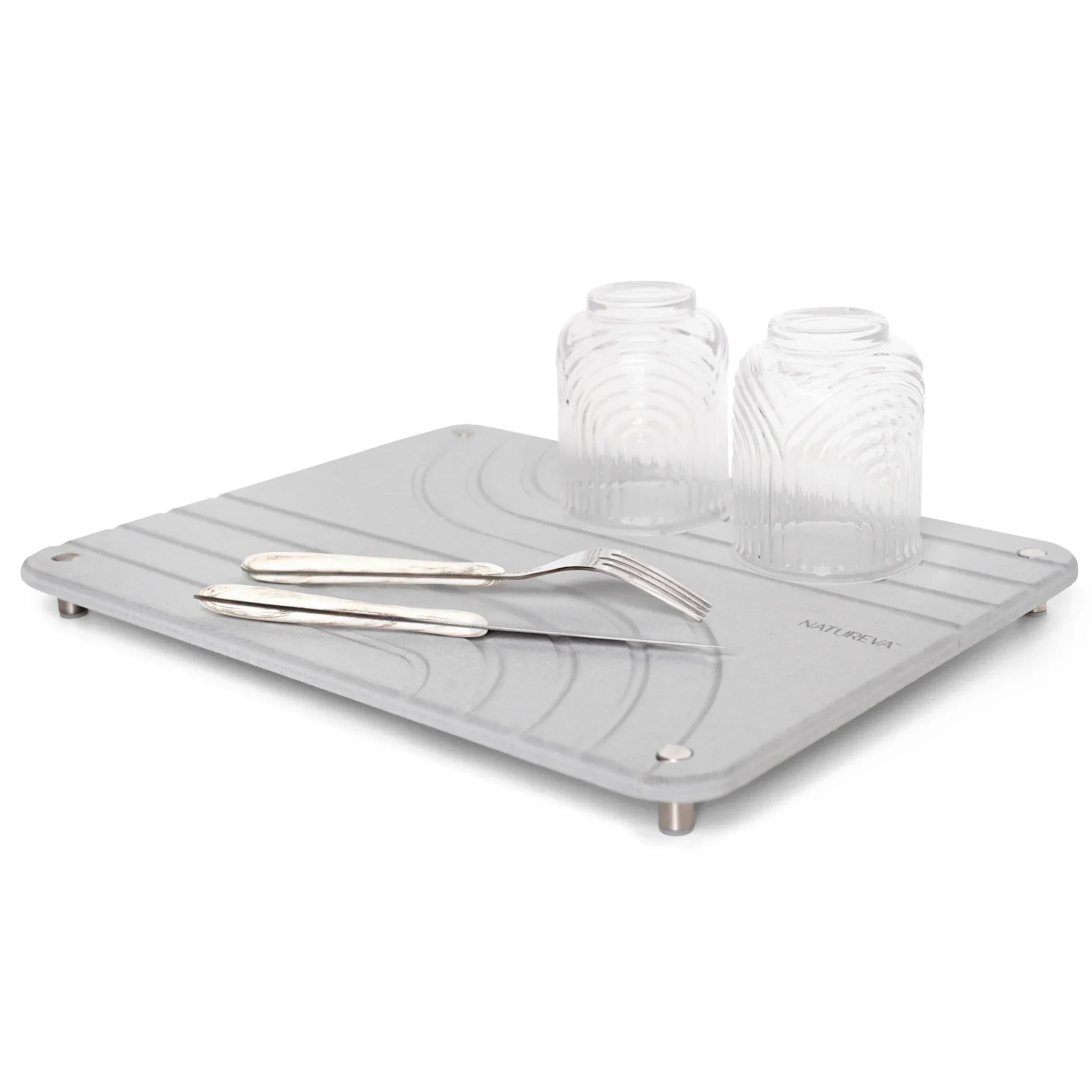
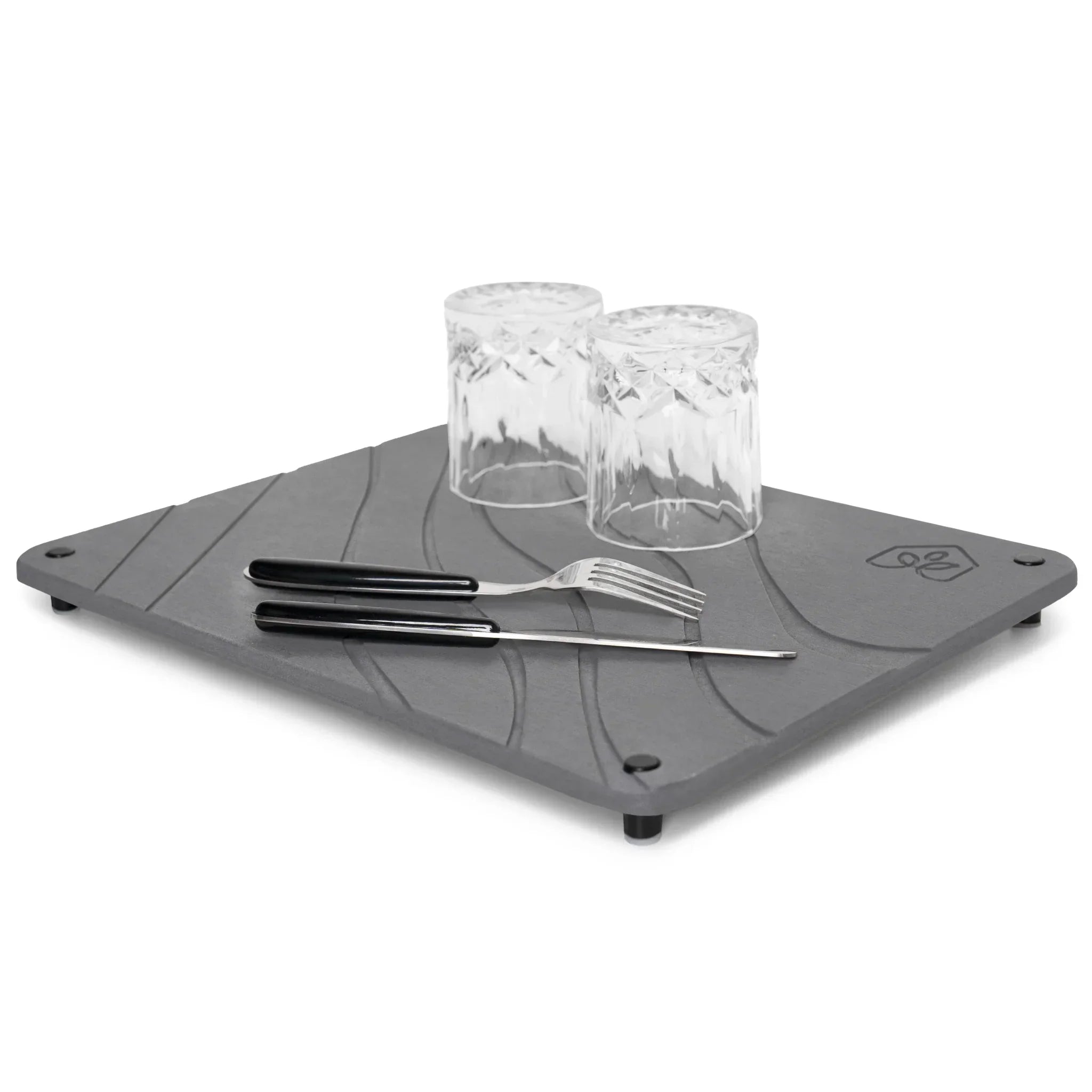
The Stone Dish Mat in Tide or Flow, $49, is a rigid drying platform for washed dishes at 39.5 × 29.5 cm, raised 2.5 cm on stainless steel legs so air moves underneath and the bench is never sealed in. It took Bronze in Kitchen Essentials at the Clean + Conscious Awards 2026.
A few details worth knowing before it lands on your bench:
- Transparent silicone pads sit under each leg as anti-slip stabilisers and stop pressure marks; spares are included
- The dish mat is a drying surface, not a chopping or food-prep board
- Dish mat colours are Graphite and Slate
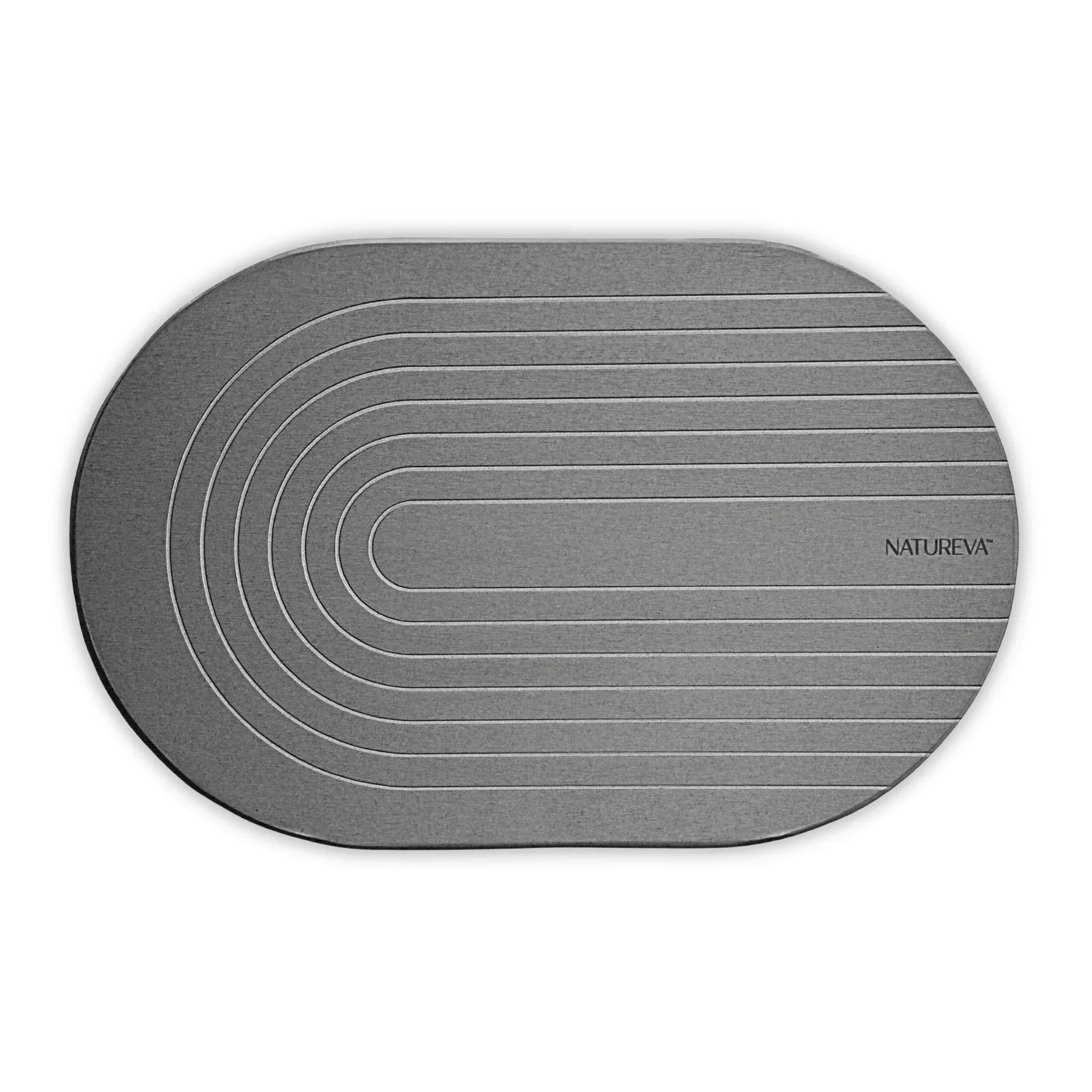
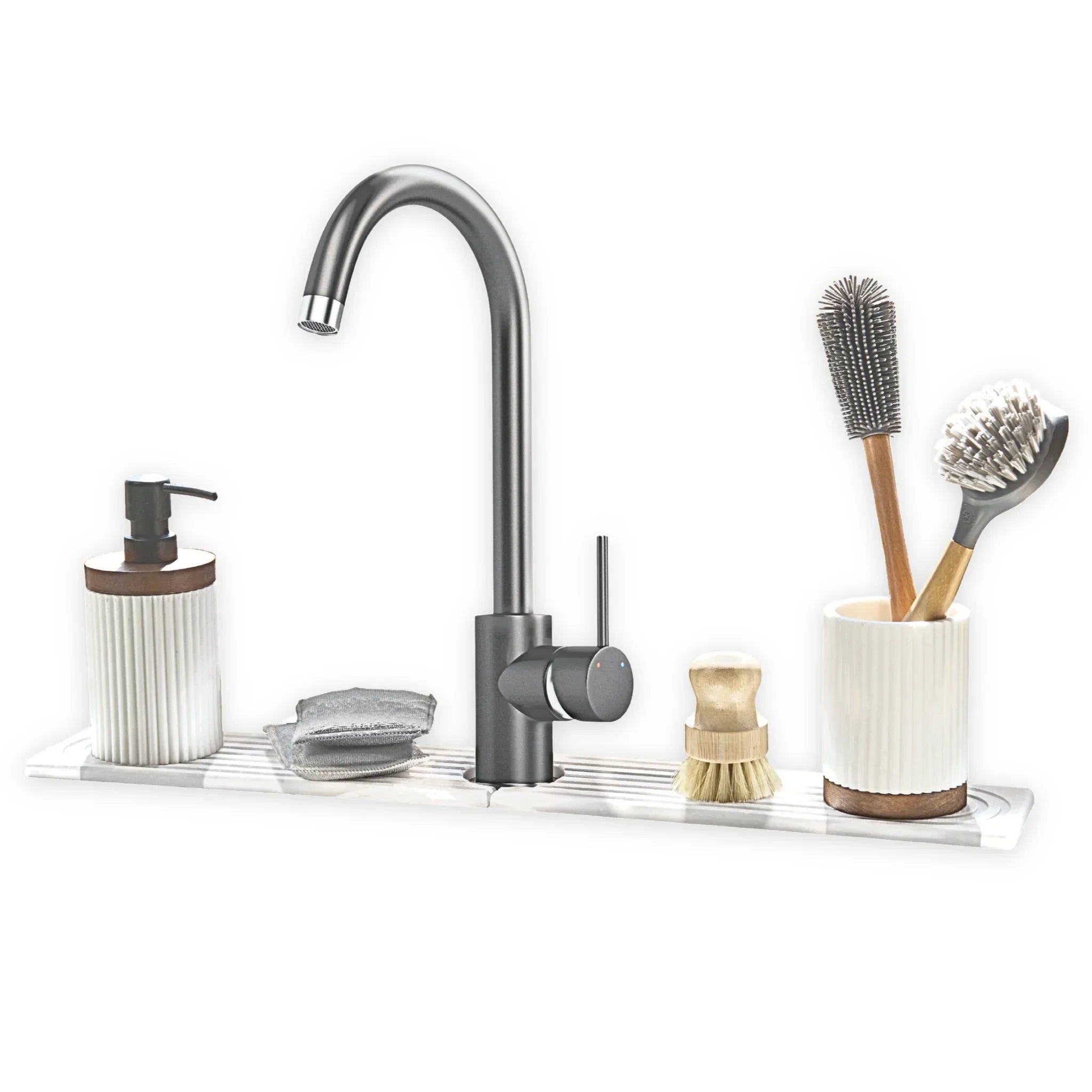
Behind the tap, the Stone Faucet Mat in Arch, $29, is a 60 × 10 cm strip with parallel contour channels that catch tap splash before it reaches the wall. It comes in Graphite, Slate and Chalk.
How much upkeep you want to sign up for
Stone does not wear out. Absorbency drops because soap film, cooking grease and mineral build-up from hard water slowly seal the pores shut, so less water can get in. Three levels of upkeep fix that, and you pick based on how hard the slab works.
The weekly wipe is the floor: a warm damp cloth with a 1:1 vinegar and water mix, then air dry, propped upright after a heavy soak. That alone is enough for a guest bathroom or a one-person kitchen, and not enough for a shared bathroom in a flat with poor airflow, where splashes land daily.
Light sanding every three to four months is the step most people skip, and it is the one that brings absorbency back. Use the P320 disc supplied with the stone, with the slab slightly damp, or work outdoors or in a well-ventilated room, because it is best not to inhale the dust. Wipe the residue off and dry it upright before it goes back down.
| Upkeep step | When | What it clears |
|---|---|---|
| Vinegar and water wipe | Weekly | Soap film, surface grime |
| Scrub under running water | When a mark appears | Grease, coffee, toothpaste stains |
| Light sand, P320 | Every 3 to 4 months | Clogged pores, slow absorption |
For stains, use a sponge and a little clear, non-coloured dishwashing liquid under running water, then rinse well. Never reach for bleach, oils, coloured soaps or abrasive brushes, never put stone in a dishwasher or washing machine, and never soak it. Ventilation helps too, as keeping a bathroom dry and mould free naturally explains.
Start with your wettest surface
Two things to do before you spend anything. First, ask the seller for a current asbestos-free report from an accredited laboratory and read the date on it. A brand that cannot send one within a day does not have one. Second, walk through your home and find the surface that is wet most often. For most people it is the strip of bench beside the sink or the narrow band behind the tap, not the bathroom floor. Fix that spot first and the rest can wait. Natureva ships both the dish mat and the faucet mat locally within Australia and Canada, with free shipping once an order passes $100.
The next generation of home essentials: naturally made, cleaner by design, sustainable by nature.
SHOP ALLCommon questions about diatomite stone
Is the diatomaceous earth in a stone mat the same thing as the pest powder sold for the garden?
It is the same mineral, prepared very differently. Garden products are loose, untreated powder meant to be dusted around plants, while a mat uses finely ground diatomite pressed and bound into a hard slab. You cannot swap one for the other. Scraping a mat will not give you usable garden dust, and garden powder will not absorb puddles on a bench.
Can a stone mat crack or chip if I knock it off the bench or drop a heavy pan on it?
Yes. It is a rigid slab, so a hard fall onto tile can chip an edge or crack it, the same way a ceramic dish would. Day to day it handles plates, pots and body weight without trouble. If something arrives damaged, Natureva replaces it free once you email your order ID and photos, with a replacement organised within 48 hours.
Is it safe to have one around toddlers and pets who touch everything?
Yes, for normal use. There is no coating, sealant or chemical additive on the surface, and the material is certified asbestos-free by a NATA-accredited laboratory. Nothing is loose for small hands to pick up. The only real caution is sanding, which should happen away from children and animals, and pets should never be allowed to chew on a stone product.
Will a stone mat leave chalky dust or marks on my benchtop?
Not during normal use. The slab is hardened, not pressed powder, so it does not shed. The only time you will see dust is when you sand it, and that wipes away with a damp cloth. Fine white marks on a dark stone are usually mineral residue from hard water, which a vinegar and water wipe clears.