
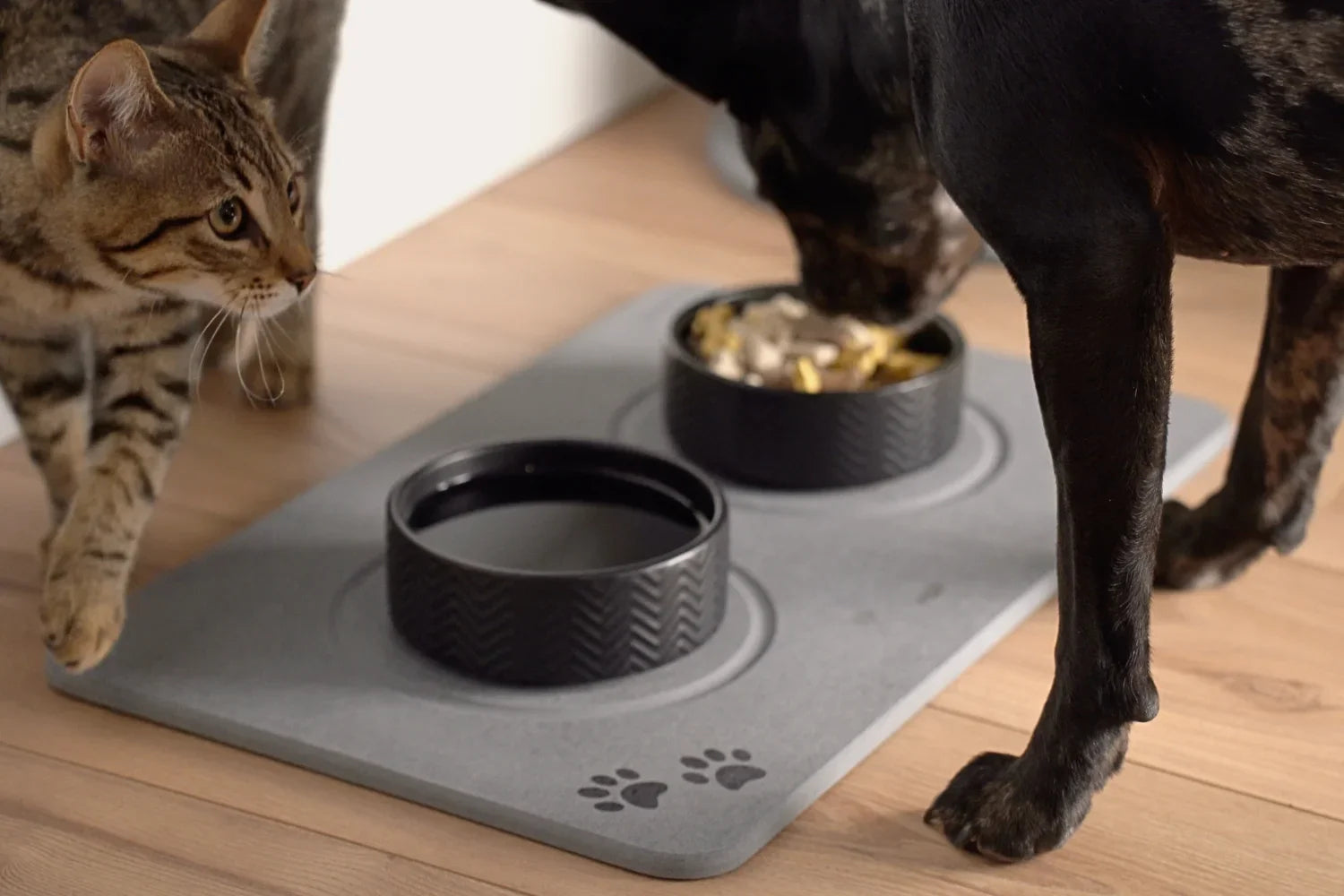
Five Odour Issues a Pet Feeding Mat Solves Fast
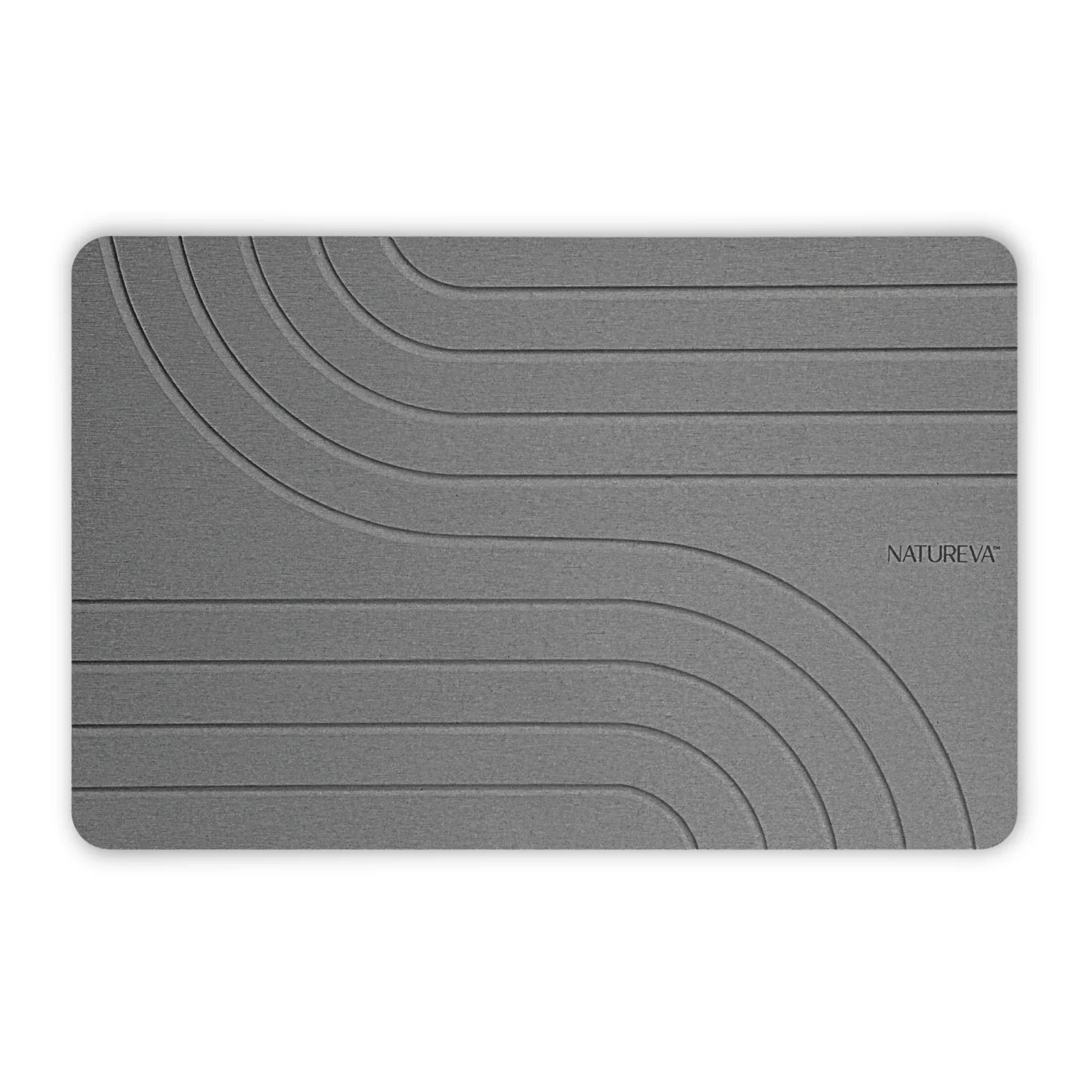
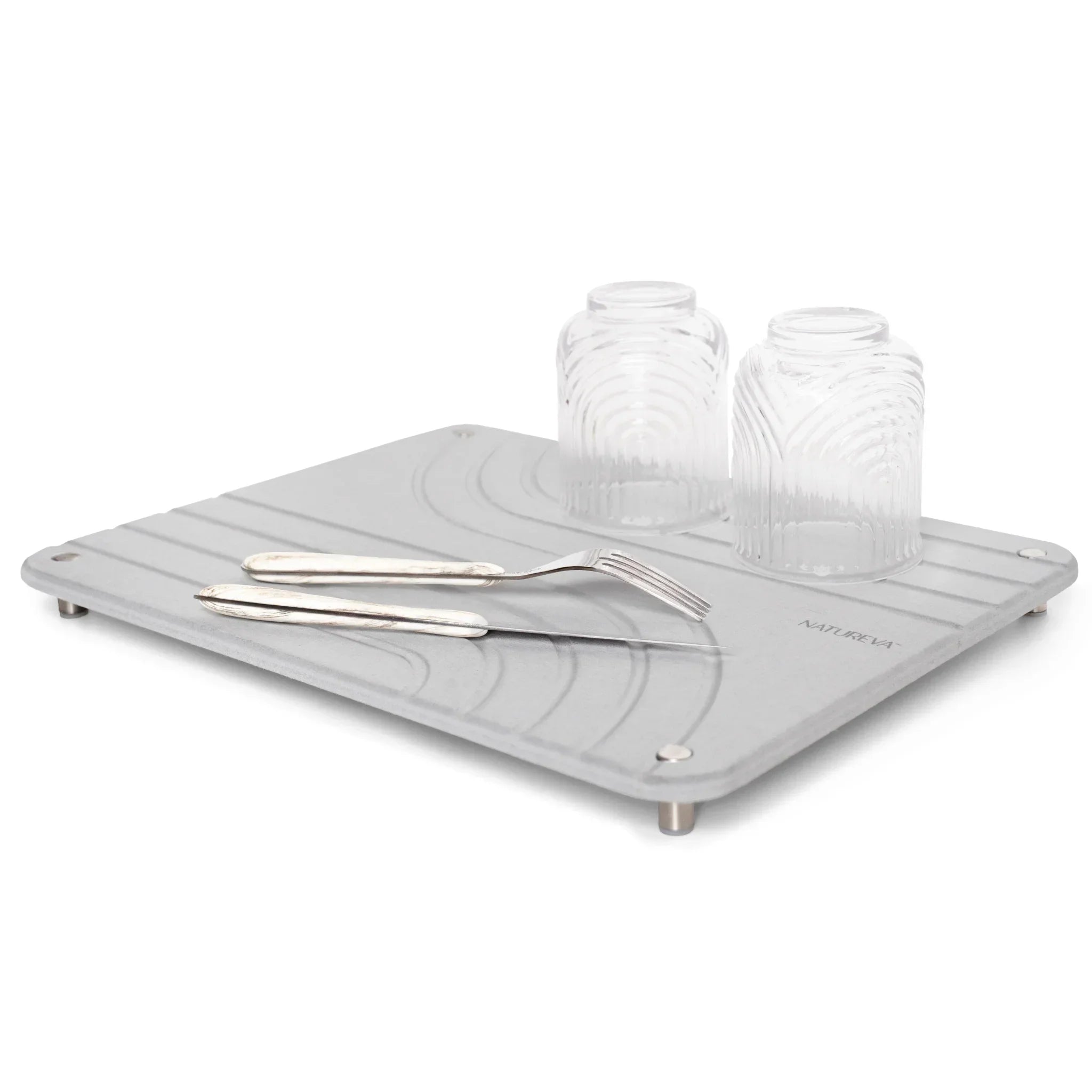
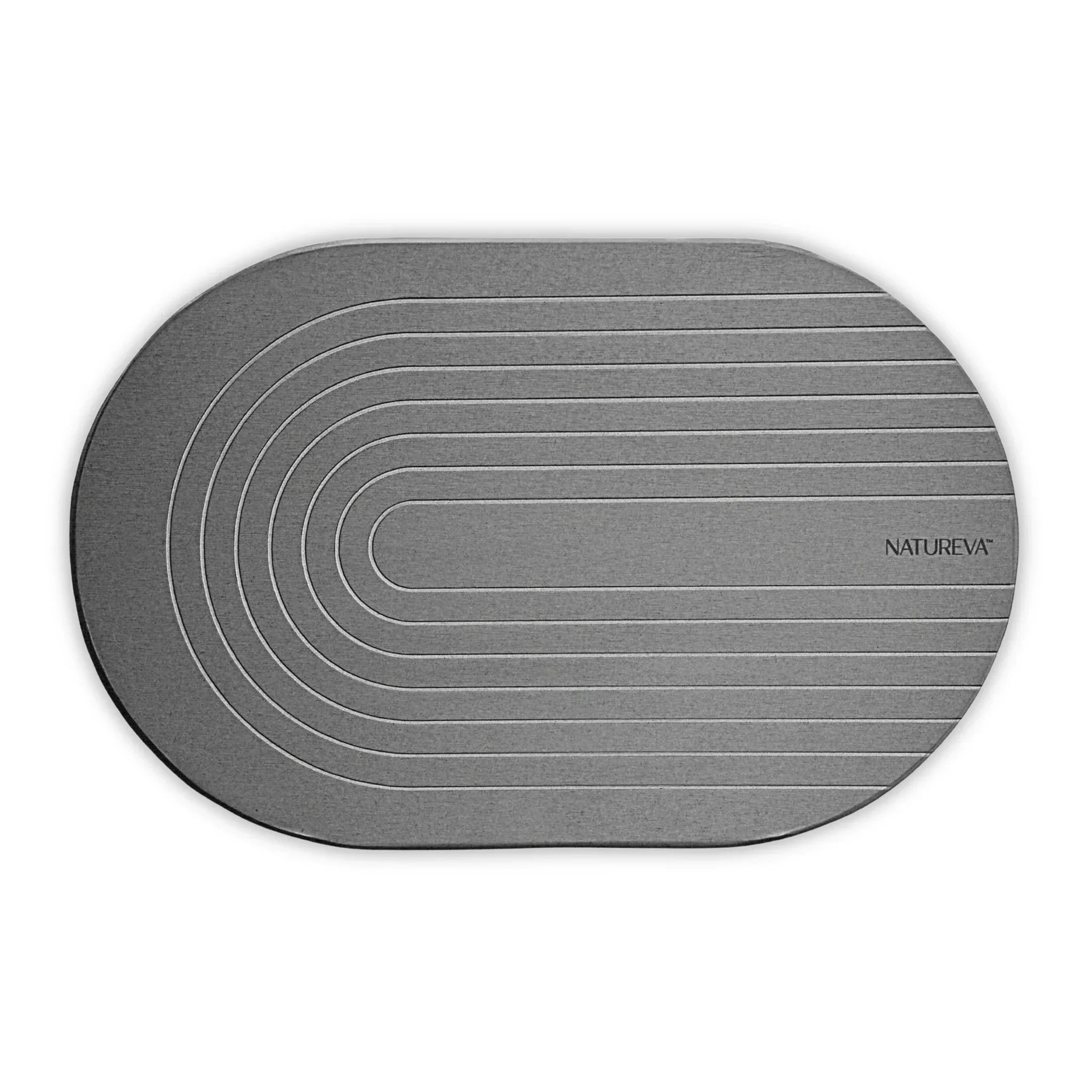
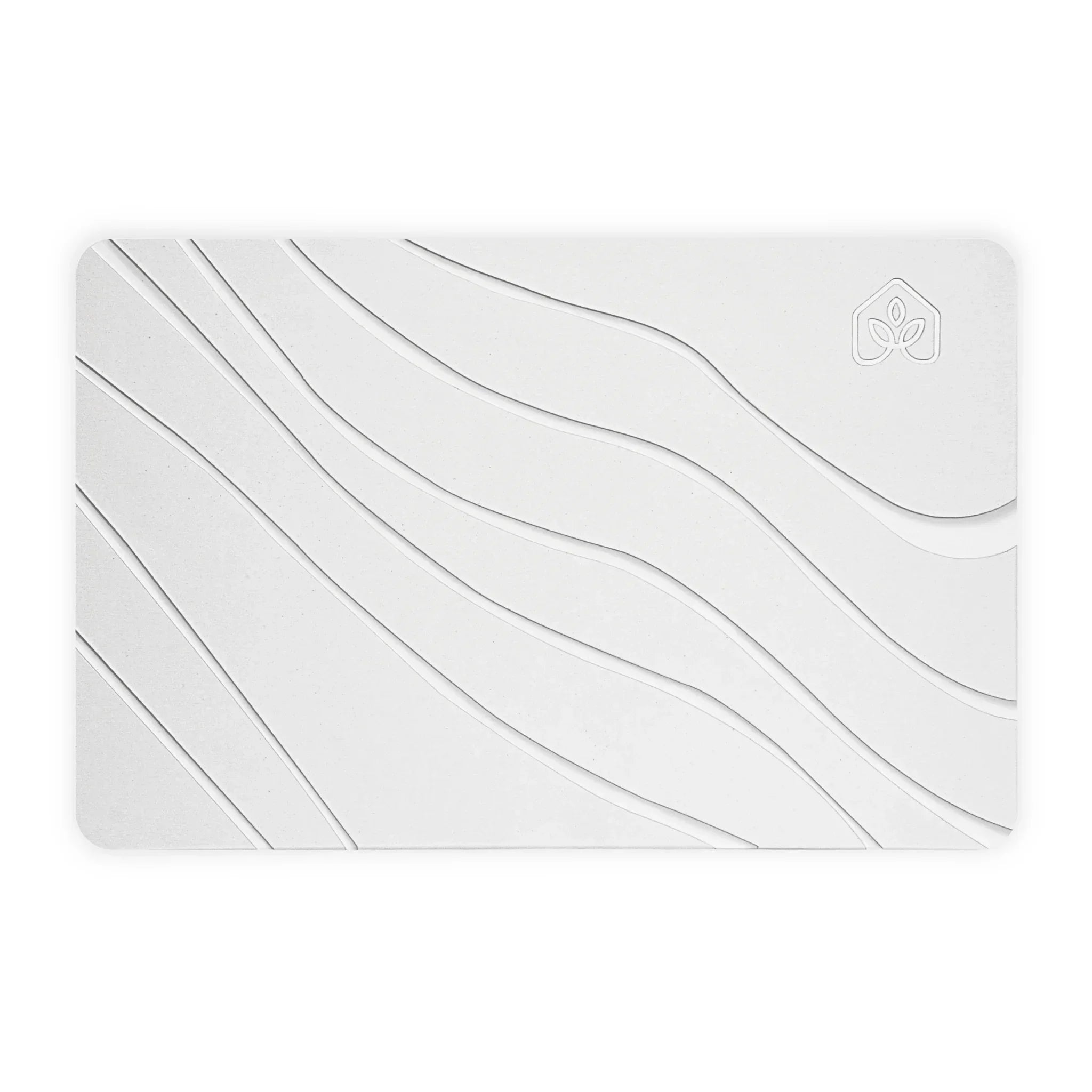
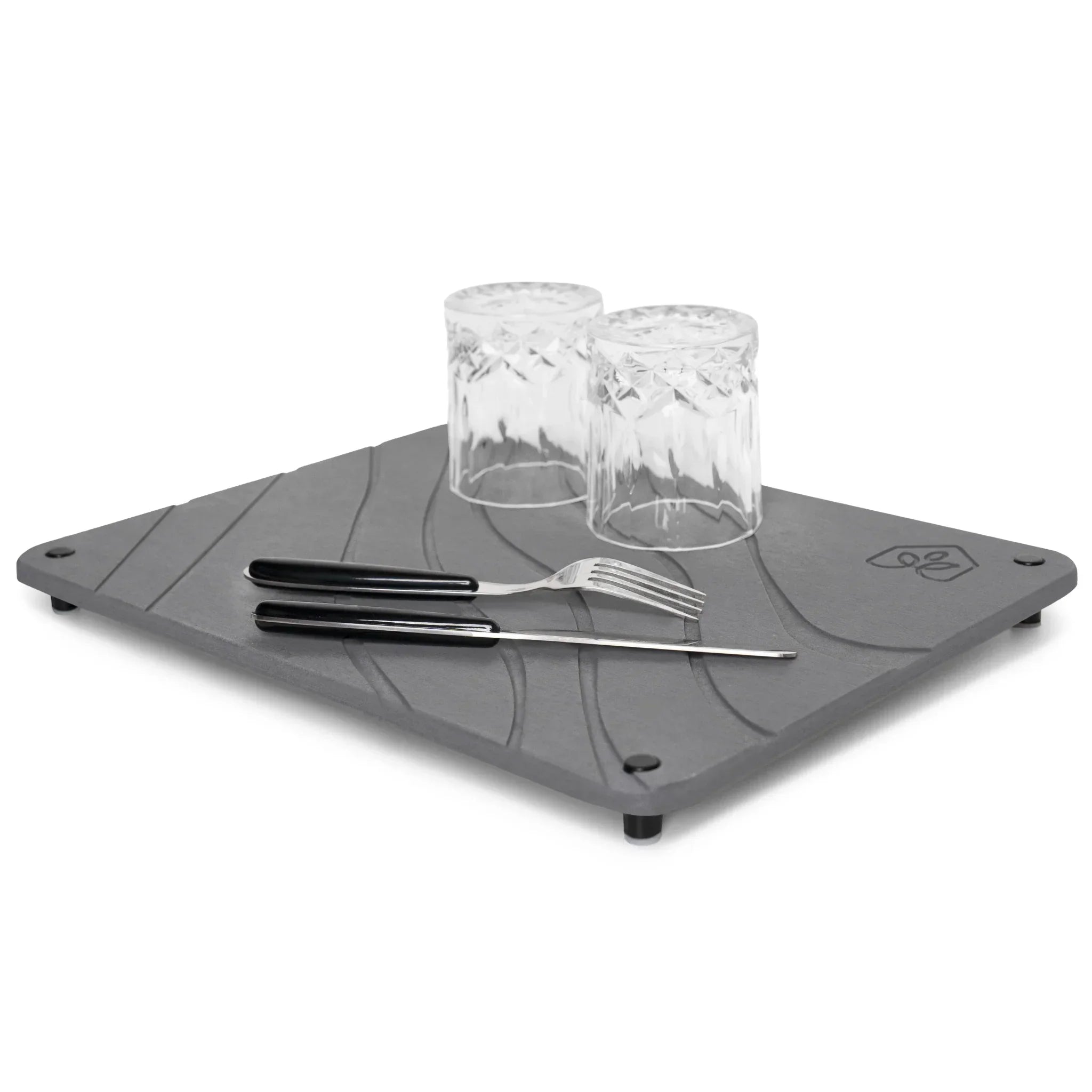
That sour smell near your pet's bowls isn't just leftover kibble or dirty water. Most pet feeding area odours actually come from moisture that gets trapped underneath bowls and mats, creating the perfect environment for bacteria to multiply and release unpleasant smells within just a few days. A pet feeding mat designed to absorb and evaporate water quickly, like Natureva's Stone Pet Mat, stops this moisture problem before odours can even start.
Table of Contents
The Science Behind Pet Feeding Area Odours
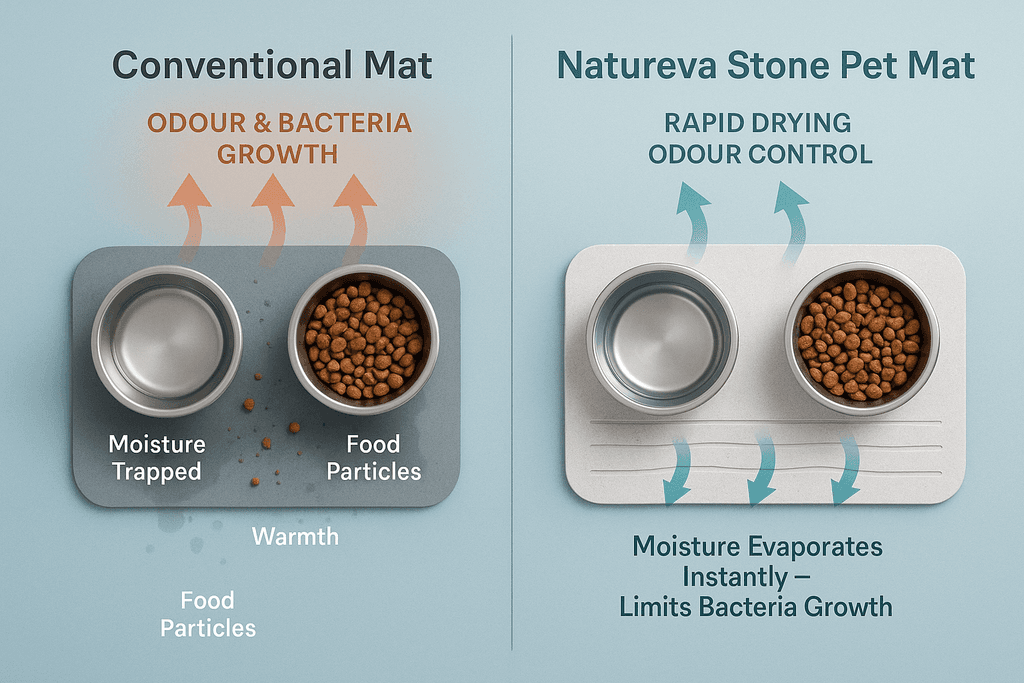
A single bacteria cell can multiply into more than 8 million cells in less than 24 hours when conditions are right. Pet feeding areas create the perfect storm for this kind of growth because they combine three things bacteria love: moisture, food particles, and warmth. Every time your dog or cat drinks from their bowl, water splashes onto the surface below, and that's where the real problem starts. Most pet owners focus on washing the bowls themselves but completely miss what's happening on the mat underneath.
Why Moisture Matters More Than You Think
The longer water sits on a surface, the more time bacteria have to set up camp and start reproducing. Traditional pet feeding mats made from fabric, rubber, or silicone can stay damp for hours or even days depending on your home's humidity. That trapped moisture doesn't just sit there doing nothing.
Here's what actually happens when water pools around pet bowls:
- Food particles from kibble or wet food mix with standing water
- Bacteria feed on these organic materials and multiply rapidly
- As bacteria break down food waste, they release volatile organic compounds
- These compounds are what your nose picks up as that distinctive pet area smell
- The cycle repeats with every meal and water refill
How Different Materials Handle Moisture
Not all pet feeding mat materials deal with water the same way. Some trap it, some repel it, and some actually absorb and release it quickly. The difference in drying time directly affects how fast bacteria can grow.
| Material Type | Average Drying Time | Bacterial Growth Rate | Odour Development |
|---|---|---|---|
| Fabric/Cotton | 12-24 hours | High | Develops within 6-8 hours |
| Silicone/Rubber | 8-12 hours | Moderate to High | Develops within 8-12 hours |
| Plastic Trays | 6-10 hours | Moderate | Develops within 10-14 hours |
| Diatomite Stone | 1-3 minutes | Minimal | Rarely develops |
The Hidden Problem With Common Solutions
Most pet owners try to solve odour issues by washing their pet's mat more often or using antibacterial sprays. These approaches treat the symptom but ignore the root cause, which is moisture retention. A fabric mat might smell fresh right after washing, but it'll be damp again within minutes of your pet's next drink.
Silicone mats seem like a smart choice because they're easy to wipe down, but water still sits on the surface until you manually dry it. That's why even clean silicone mats can develop that sour smell by the end of the day. The Natureva stone pet mat takes a different approach by absorbing water instantly and releasing it through evaporation in minutes, which means bacteria never get the chance to establish themselves in the first place.
Stagnant Water Bowl Smell
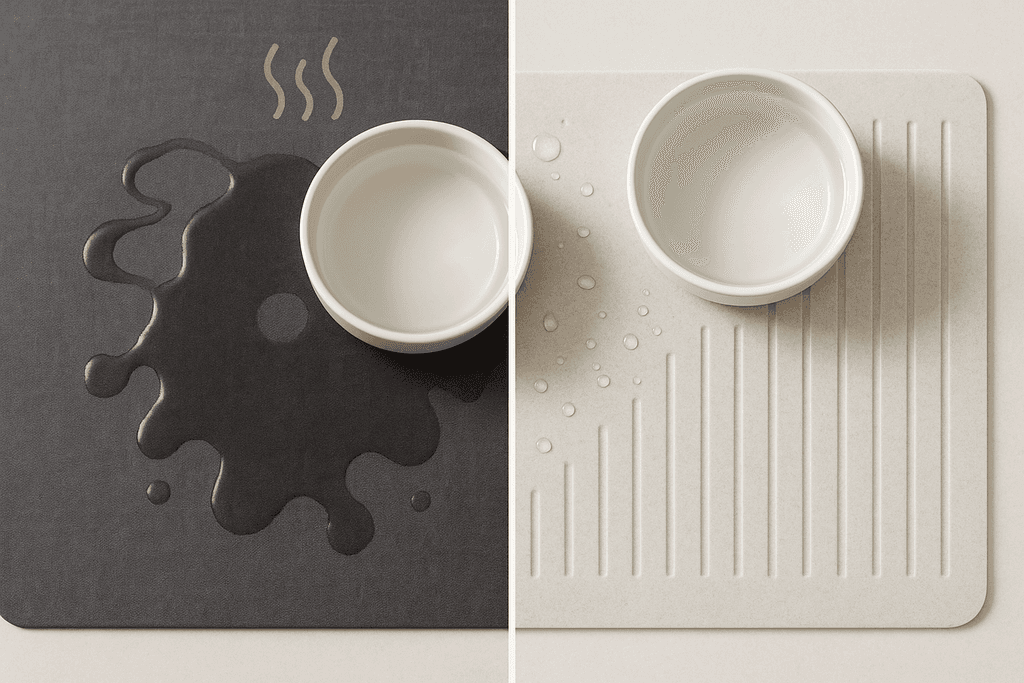
Dogs spill between 50 and 200 millilitres of water every single day just from drinking. That's nearly a full cup of water sitting on your floor, soaking into whatever mat you've placed under their bowls. Most pet owners don't realize that standing water develops bacterial biofilm within just 24 hours, creating that distinctive musty smell that seems to hang in the air around feeding areas. The smell isn't just unpleasant, it's a sign that microorganisms are thriving in the moisture.
Stagnant Water Bowl Smell
Traditional fabric or rubber mats act like sponges, holding onto that spilled water for hours. The longer water sits, the worse the smell becomes.
What happens to spilled water on different surfaces:- Fabric mats retain moisture for 6-12 hours
- Rubber mats create sealed pockets where water can't evaporate
- Tile floors allow water to spread and pool in grout lines
- Diatomite absorbs spills instantly and releases moisture through evaporation within minutes
The Stone Pet Mat keeps the feeding area dry between cleanings because of how the material works. Water disappears from the surface almost immediately, which means bacteria never get the chance to establish themselves. No standing water means no musty smell spreading through your kitchen or laundry room.
Trapped Food Residue Odours
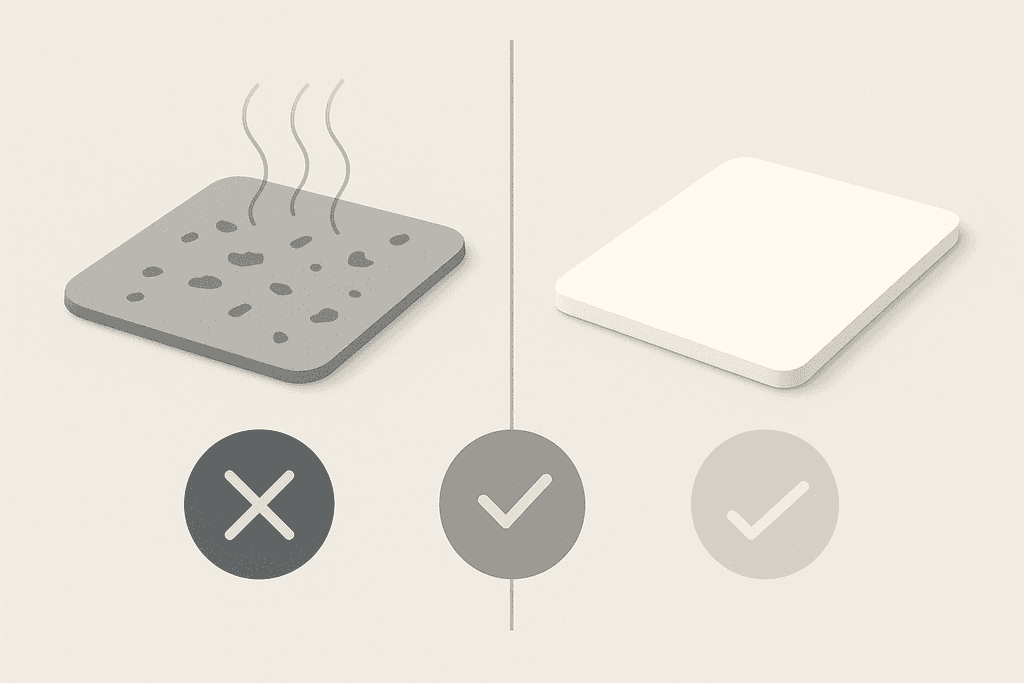
Every time your pet eats, tiny pieces of wet food and kibble crumbs fall around their bowls. On a traditional mat with fabric or textured surfaces, those food particles get trapped in the material's structure. When moisture from water spills combines with those trapped food bits, decomposition starts immediately. That's where the sour, rotten smell comes from, the kind that regular cleaning never quite eliminates because you can't reach the particles embedded deep in the mat's fibers.
Trapped Food Residue Odours
The smooth surface of diatomite changes this completely. Food particles can't embed themselves into the stone material, so they sit on top where you can see them and wipe them away.
A quick wipe with a damp cloth after feeding removes residue before any odours have time to develop. Compare this to fabric mats that need to be scrubbed, soaked, and often thrown in the washing machine just to get partially clean.
Cleaning comparison between mat types:- Fabric mats require machine washing and 12+ hours drying time
- Silicone mats need scrubbing in textured grooves where food hides
- Stone surface needs only a quick wipe and air dries in minutes
Mildew and Mould Growth Smell
The next generation of home essentials: naturally made, cleaner by design, sustainable by nature.
SHOP ALLThat persistent musty odour that never quite goes away, even after you've washed the mat, is usually mildew or mould. Fabric and rubber mats retain moisture for 6 to 12 hours after spills, creating the perfect environment for mould spores to colonize. Mould can establish itself on damp surfaces within just 48 hours, and once it's there, it's incredibly difficult to remove completely. The smell permeates nearby areas, making your whole kitchen or laundry room smell stale and damp.
Mould isn't just unpleasant, it's a health concern for both humans and pets. Breathing in mould spores can cause respiratory issues, especially in animals who spend time near their feeding area multiple times a day.
Rapid evaporation prevents the conditions where mould can establish in the first place. The natural antibacterial properties of diatomite inhibit microbial growth without any chemical additives. The material stays dry between uses, which means mould spores have nowhere to take hold.
Why traditional mats develop mould:- Moisture trapped in fabric fibers creates humid microenvironments
- Rubber backing prevents airflow and keeps undersides damp
- Textured surfaces hold water in grooves and patterns
- Multiple layers of material take too long to dry completely
Bacterial Biofilm Stench
Biofilm is that slimy layer you sometimes feel on surfaces that stay wet. It's actually a protective bacterial colony that forms on constantly damp materials, producing volatile organic compounds that create a persistent smell. Even after washing traditional mats, the biofilm often remains because regular cleaning doesn't fully remove it from porous fabric structures. The bacteria are protected within the mat's fibers, continuing to produce odours no matter how many times you scrub.
Dry surfaces prevent biofilm formation entirely. Bacteria need moisture to create their protective slime layer, and without it, they simply can't establish colonies.
The stone surface can be sanitized with a simple vinegar solution when needed. Because the material doesn't have porous fibers for bacteria to hide in, surface-level cleaning is actually effective. You're not fighting against embedded bacterial colonies, you're just maintaining a naturally inhospitable environment for them.
Absorbed Odour in Porous Materials
Fabric mats absorb liquids and odour molecules deep into their fibers, where they become permanently embedded after repeated exposure. This is why older pet mats develop a smell that washing can't fix. The odour compounds are trapped within the material's structure, not just sitting on the surface. Washing removes surface dirt but not the smell molecules absorbed into the fabric itself. Eventually, the mat becomes a source of odour rather than just a surface that gets dirty.
Non-porous diatomite doesn't absorb odours into its structure. Everything stays on the surface where it can be cleaned away.
Long-term odour control differences:- Fabric mats accumulate absorbed odours over weeks and months
- Foam materials trap smell compounds in air pockets
- Stone material maintains the same odour-neutral state indefinitely
- Surface-level cleaning remains effective for years
The included sanding tool restores the surface when needed for long-term use. If the mat's absorbency decreases over time, a light sanding opens up the microscopic pores again. This maintenance takes about two minutes and keeps the mat performing like new. You can find more details about this process on the care and cleaning page.
The pet collection uses the same diatomite material found in bathroom and kitchen products, so the odour-prevention benefits extend throughout your home. The same principles that keep bath mats fresh and dry work just as effectively under pet bowls.
Keep Your Home Fresh with the Right Mat
When you look at all five odour problems, they really come down to one thing: moisture sitting around your pet's feeding area. Water from bowls, food residue, and drool all create the perfect environment for bacteria to grow and smells to develop. Traditional fabric mats and rubber trays trap that moisture instead of getting rid of it, which is why they start smelling bad within days.
The solution isn't about masking odours with sprays or washing mats constantly. It's about stopping the moisture problem before smells even start. When water gets absorbed instantly and evaporates quickly, bacteria don't get the damp conditions they need to multiply. That's the difference between managing a smell and preventing it entirely.
Our stone pet mat uses diatomite to pull water off the surface the moment it spills, then releases it back into the air through natural evaporation. No chemicals, no constant washing, just a dry feeding area that stays fresh. The grooved channels keep bowls stable while the non-slip base keeps everything in place.
If you're dealing with any of these odour issues around your pet's bowls, the problem isn't your pet or even the mess itself. It's what happens after the mess sits there. You might also want to check out our other pet collection products or learn more about how diatomite works to keep surfaces dry and clean.
Common Questions About Pet Feeding Mat Odours
How often should you clean a pet feeding mat?
Traditional fabric or silicone pet feeding mats need daily wiping and a deep clean every few days to prevent odour buildup. Stone pet mats like the Natureva Stone Pet Mat only need a quick weekly wipe with a vinegar-water solution since they dry so fast that bacteria doesn't get a chance to grow. The difference comes down to how long moisture sits on the surface.
Can you eliminate existing odours from a traditional mat?
Once a fabric or rubber mat absorbs enough bacteria and food particles, the smell becomes nearly impossible to remove completely. You can scrub it with enzyme cleaners or baking soda, but the porous material holds onto moisture and organic matter deep inside. Most pet owners end up replacing traditional mats every few months because the smell just won't go away.
What causes the smell to come back so quickly?
The smell returns fast because moisture stays trapped in traditional materials for hours or even days. When water from bowls or drool sits on fabric, silicone, or rubber, bacteria multiply rapidly in that damp environment. Even after you clean the mat, the next spill starts the cycle all over again within hours.
Do stone mats work for messy eaters?
Stone mats actually work better for messy eaters because they absorb water instantly instead of letting it pool around bowls. The grooved channels in diatomite pet mats help stabilize bowls while the surface pulls moisture away from spills. Dogs and cats that splash water everywhere benefit most since the mat dries within minutes instead of staying wet all day.
How long does a diatomite pet mat stay odour-free?
A diatomite pet mat stays odour-free indefinitely as long as you maintain it properly. The material doesn't trap moisture or bacteria the way fabric does, so there's nothing creating the smell in the first place. If absorbency starts to slow down after months of use, a quick sand with the included tool brings it back to new condition.
What's the best way to maintain a stone pet mat?
Wipe the mat weekly with a 50-50 mix of white vinegar and water to remove any food residue or pet saliva. For stubborn stains, rinse the mat under water and scrub gently with a brush. If you notice the surface absorbing slower than usual, use the sanding tool to remove the top layer and restore full absorbency. Let it air dry upright if it gets completely saturated, though that rarely happens with normal use.
The next generation of home essentials: naturally made, cleaner by design, sustainable by nature.
SHOP ALL