
How to Choose a Stone Bath Mat: Your 2026 Buying Guide
Stepping onto a cold, damp bath mat isn’t ideal, but it has a simple fix. Stone bath mats absorb water instantly and dry in minutes, with no washing required. Here's how to choose one that actually performs (and lasts).
Quick Takeaways
- Stone bath mats are made from diatomite, a naturally porous mineral that absorbs water on contact and dries in minutes
- They resist mould, bacteria, and odour without needing constant washing
- Key buying factors include material quality, absorbency, thickness, safety, size, design, and maintenance requirements
- Stone bath mats are worth it for households that value hygiene and low-maintenance living
- Look for a food-grade diatomite core, bevelled edges, a non-slip base, and a sanding pad included
What is a Stone Bath Mat?
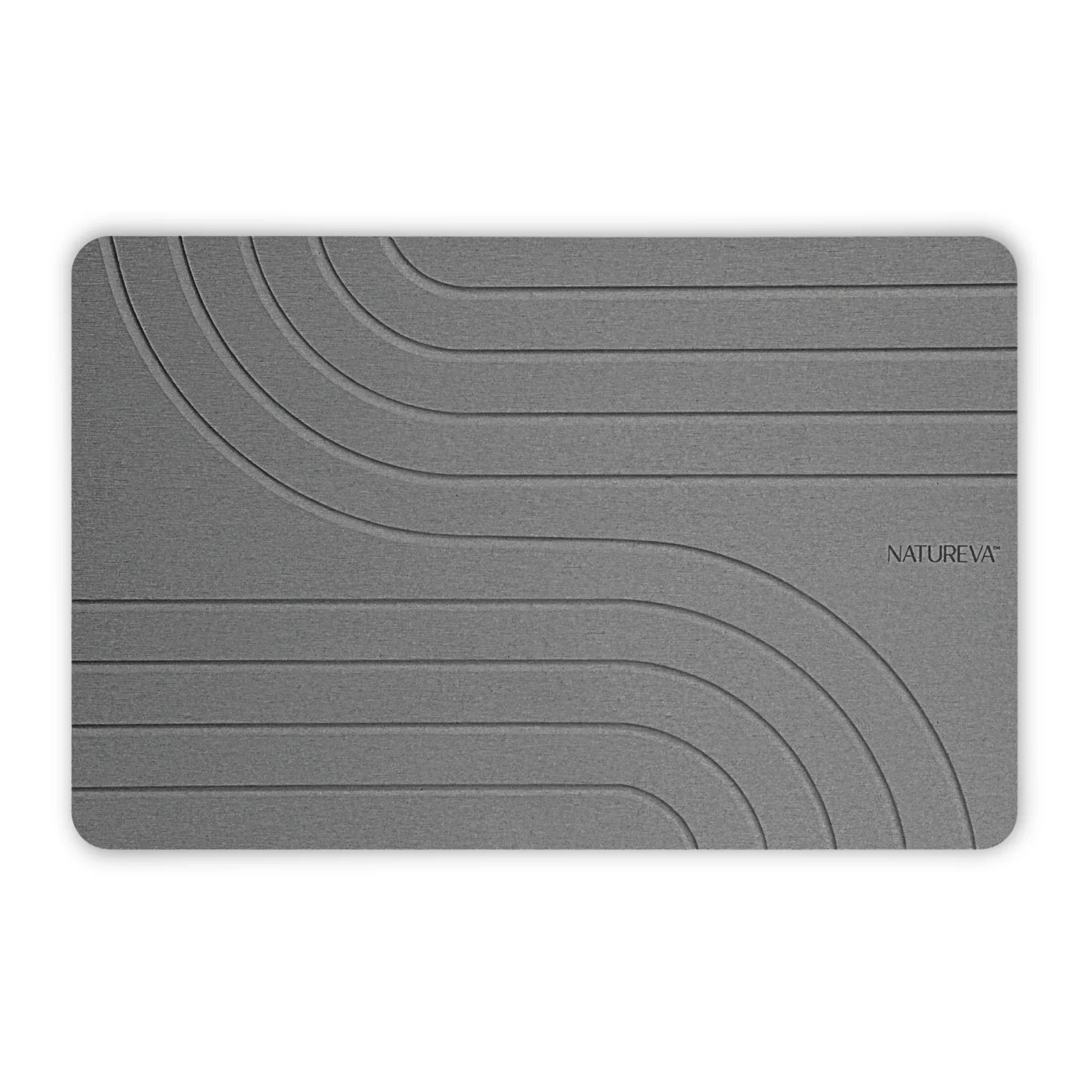
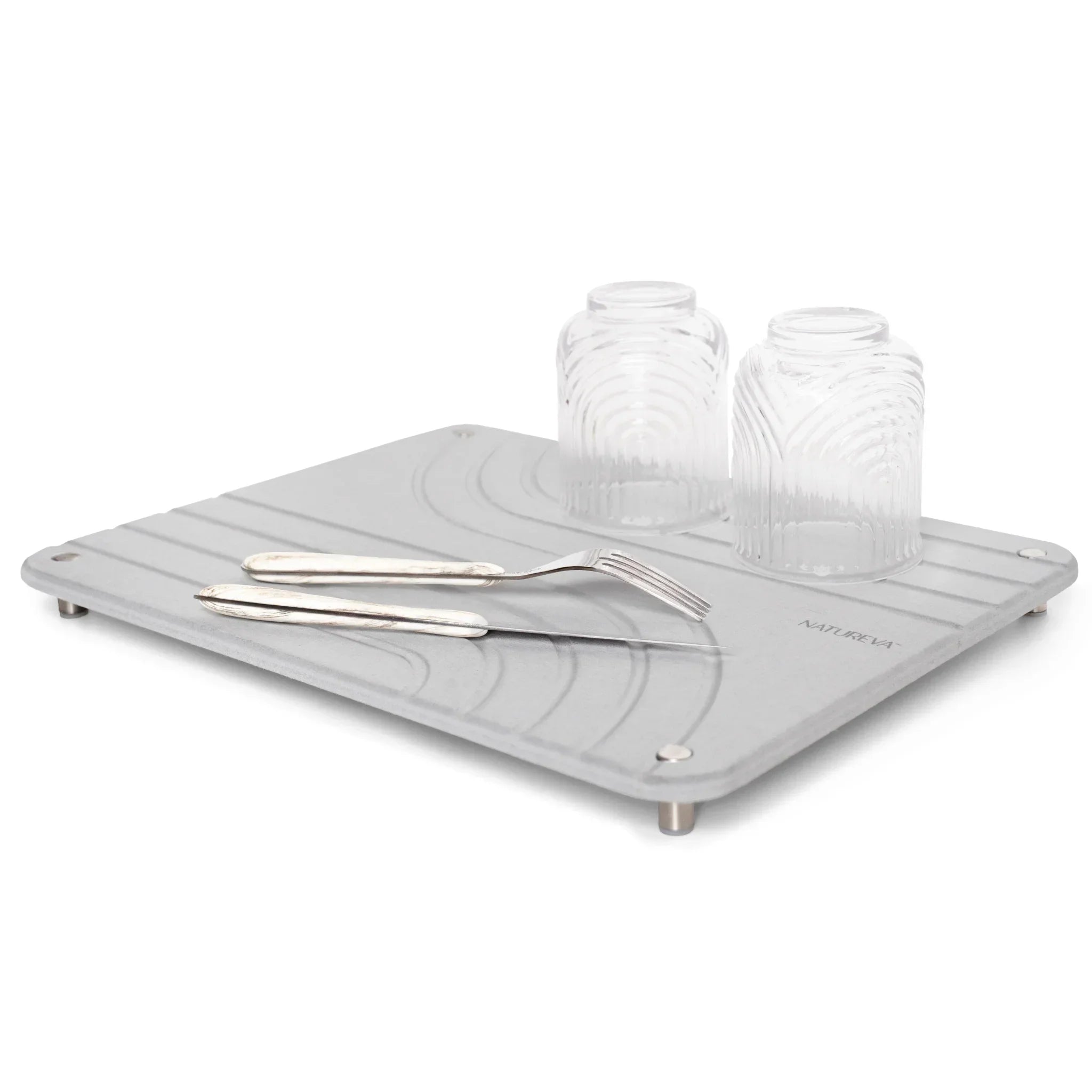
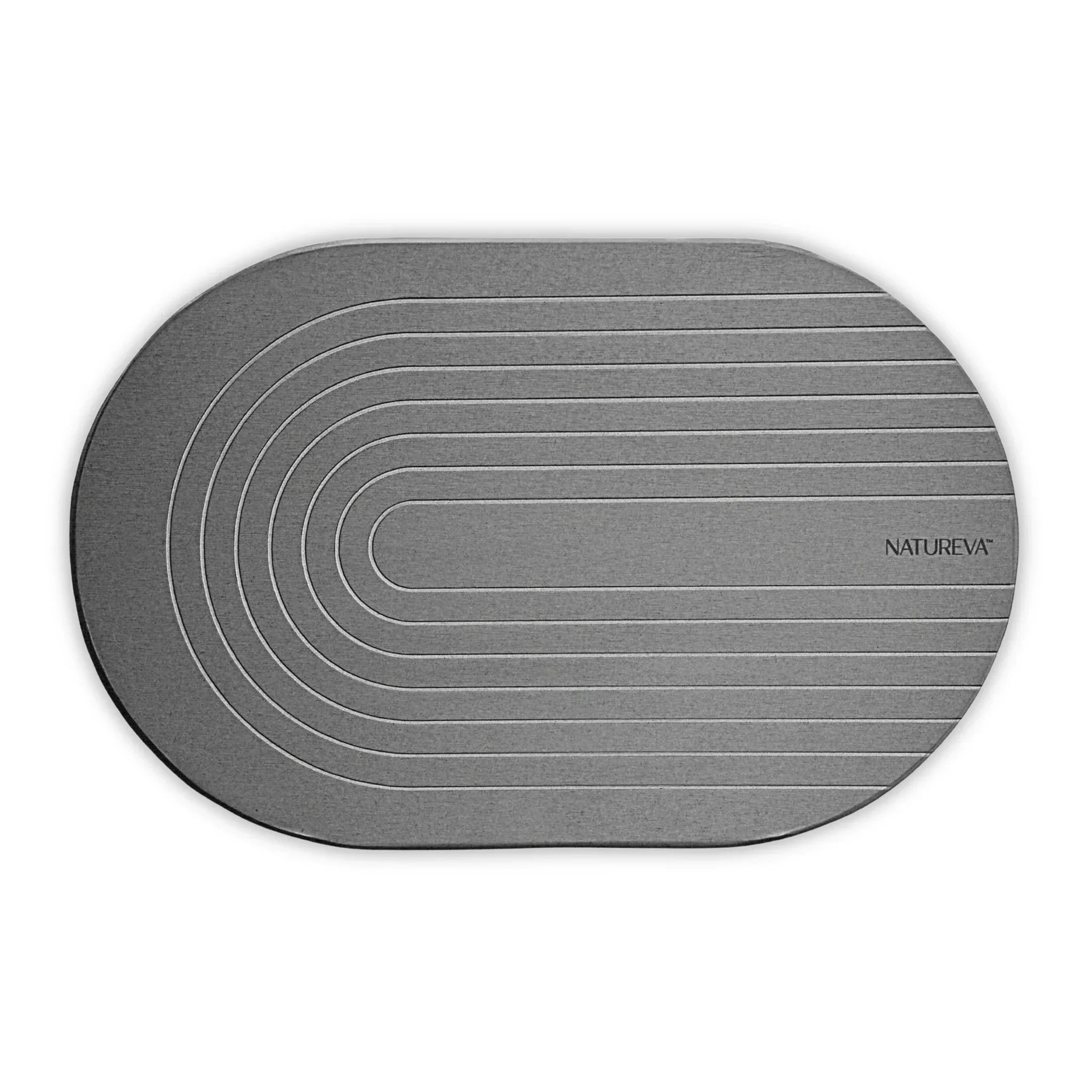
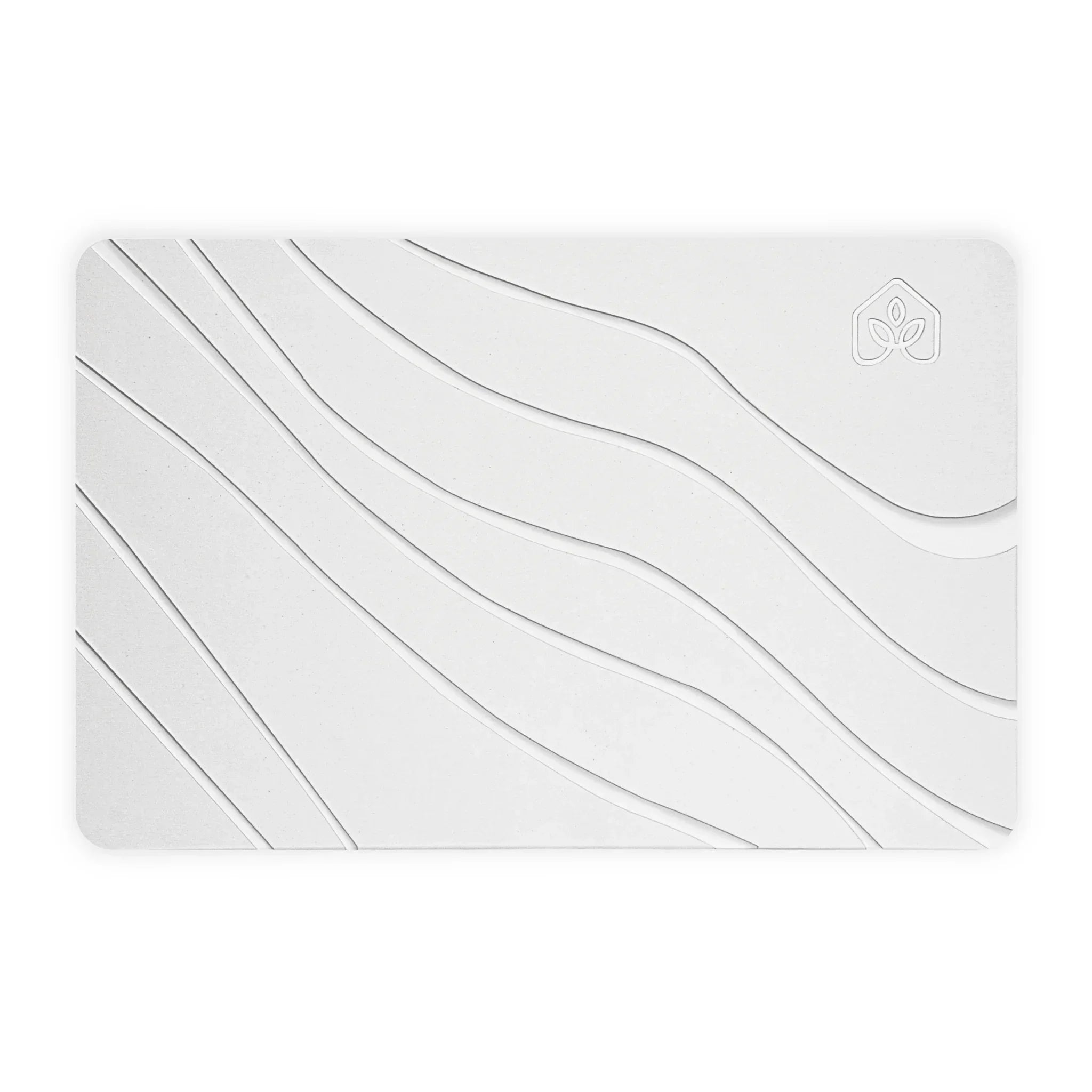
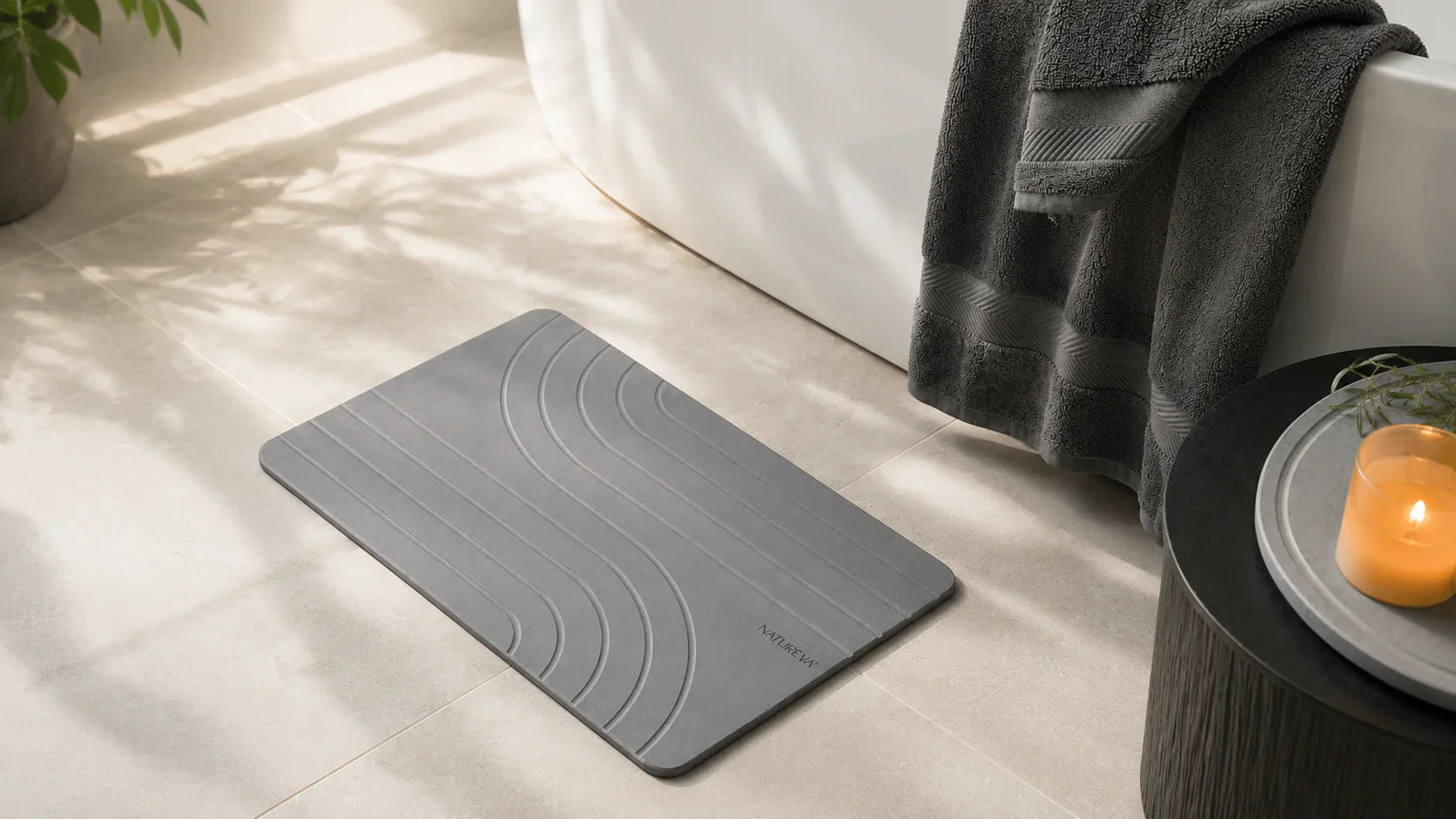
A stone bath mat is a solid, rigid mat made from diatomite, a sedimentary rock formed over millions of years from the fossilised remains of microscopic aquatic algae called diatoms. Rather than absorbing water the way a fabric mat does (by holding it in the fibres), diatomite pulls moisture inward through millions of tiny pores and releases it as vapour. The surface dries within minutes.
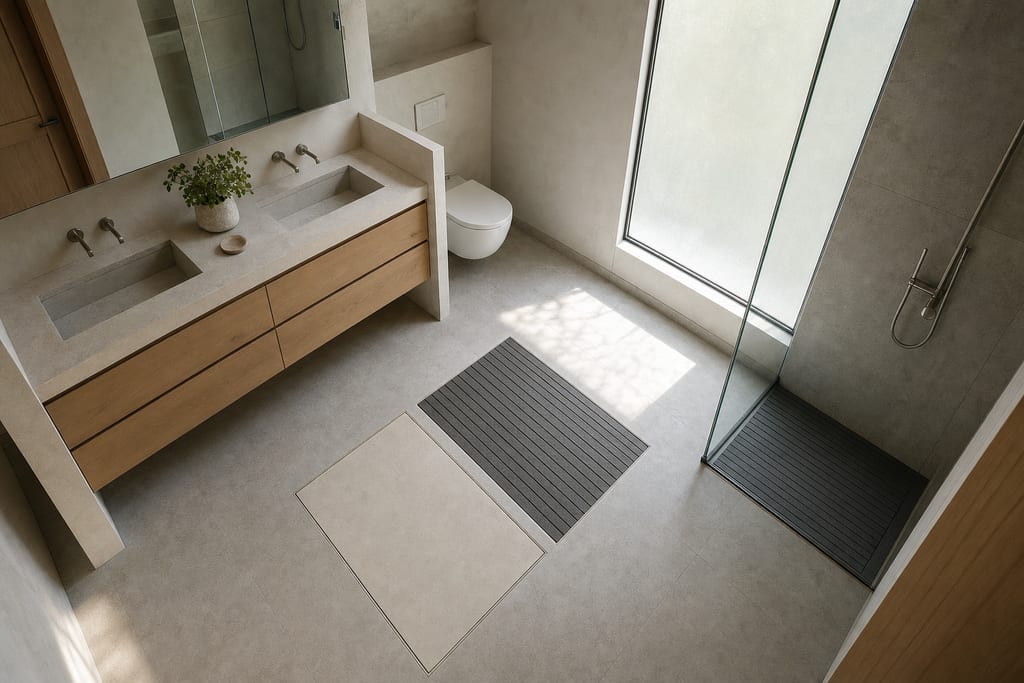
They're firm underfoot, aesthetically clean, and designed to sit permanently beside your shower or bath without ever needing to go in the washing machine.
How Diatomite Technology Works
Diatomite is highly porous, with porosity ranging from 70% to 90%. This means a significant portion of its volume consists of void spaces that hold liquids. That structure is what makes it work efficiently as a bath mat.
When you step out of the shower, water is drawn into the pores by capillary action. Research shows diatomite can absorb 1.5 to 4 times its own mass in water, which explains why the surface feels dry almost immediately. The moisture then evaporates through the base and sides.
Stone Bath Mat Pros and Cons
Understand the stone bath mat pros and cons to decide if it’s suitable for your home.
|
Pros |
Cons |
|
|
For most Australian households using a mat in a standard bathroom, the cons are manageable. The trade-off is straightforward: a little more care in handling, and almost no ongoing cleaning effort.

Diatomite Stone vs Alternative Materials
Fabric (Cotton/Microfibre)
Fabric mats hold water in their fibres rather than drawing it inward. That sustained moisture creates warm, damp conditions where bacteria and mould establish quickly. Most need machine washing twice a week to stay hygienic, and microfibre loses absorbency with repeated washing.
Silicone
Silicone is a sealed surface, so water doesn't absorb at all; it just pools and waits to evaporate. You're drying around the mat rather than stepping onto something that dries itself.
Wood (Bamboo/Teak)
Wood mats look the part but absorb moisture unevenly, leading to warping and mould in the joints over time. They also require regular oiling to maintain the surface.
|
Material |
Stone (Diatomite) |
Fabric/Cotton |
Silicone |
Wood/Bamboo |
|
Drying time |
10–15 minutes |
Hours |
Doesn't dry – water pools |
Hours |
|
Mould/bacteria risk |
Low |
High |
Moderate |
High |
|
Cleaning required |
Wipe weekly, sand monthly |
Machine wash 2x week |
Rinse weekly |
Oil regularly, dry thoroughly |
|
Lifespan |
3+ years with care |
1–2 years |
2–3 years |
1–3 years |
|
Aesthetic |
Clean, modern |
Varies |
Limited |
Warm, natural |
Are Stone Bath Mats Worth It?
Our honest answer? Yes. Especially if bathroom hygiene is a priority in your home.
Only 13% of tested bathrooms show no mould presence, and the main driver is persistent moisture. Traditional fabric mats stay wet for hours after each use, and that sustained dampness is precisely what feeds mould. A diatomite bath mat removes that moisture within minutes, removing the primary condition mould needs to grow.
The CDC recommends keeping indoor humidity at no higher than 50% to inhibit mould growth. A fast-drying mat is one of the simplest ways to reduce bathroom moisture without additional ventilation equipment.
For families with children, people with allergies, or anyone who wants a bathroom that stays cleaner with less effort, stone bath mats are often worth it.
What to Look for When Buying a Stone Bath Mat
1. Material Quality
Higher-grade diatomite mats use food-grade diatomite with a fine, uniform pore structure. On the other hand, lower-grade versions use inferior material that may be sealed or compressed too tightly, dramatically reducing absorbency.
2. Absorbency & Drying Speed
Look for mats that specify they hold at least 150% of their weight in moisture and return to a dry surface within 10 to 15 minutes.
3. Thickness & Durability
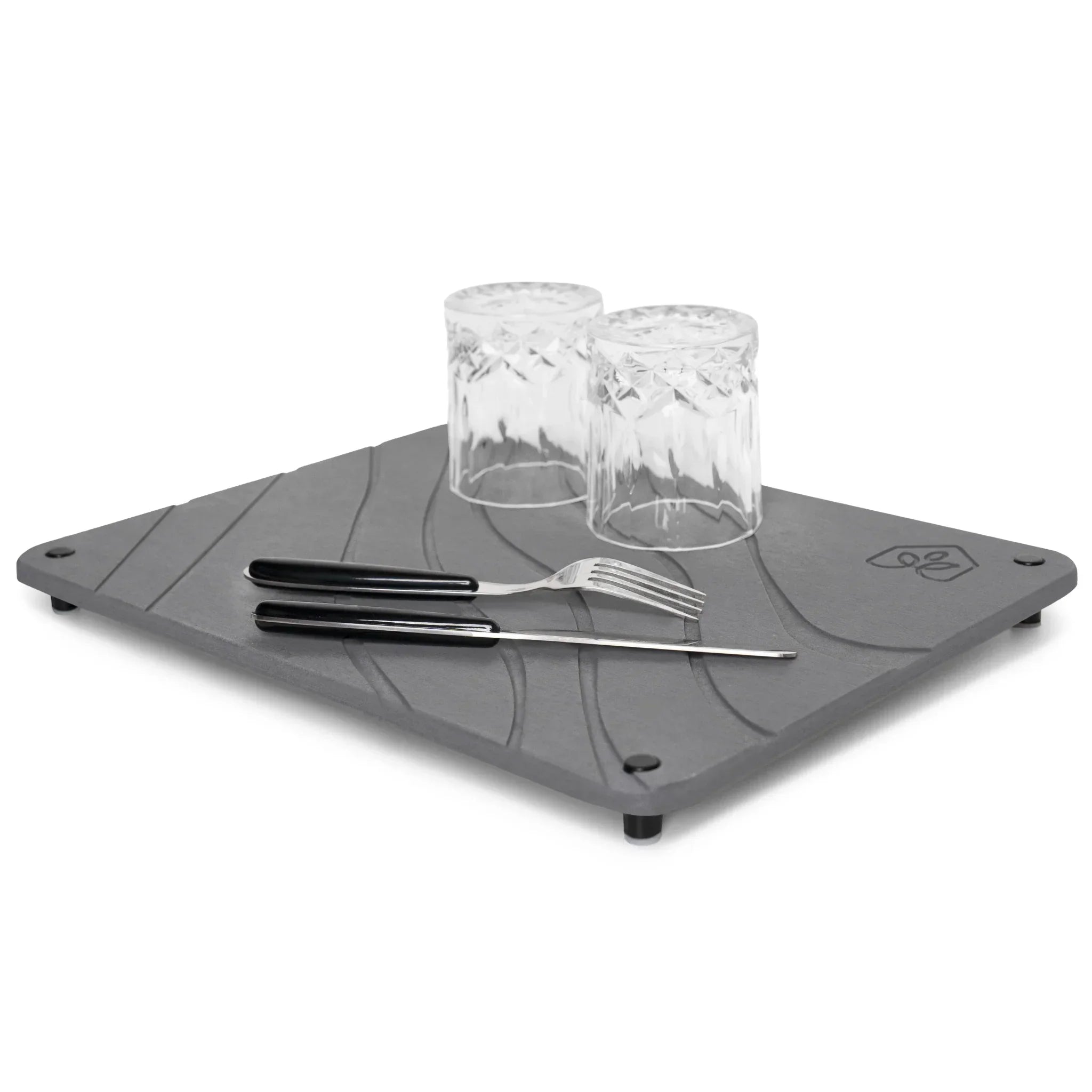
A thickness of around 9–11mm (0.4–0.45 inches) is the practical range. Thinner than this, and the mat is prone to cracking under everyday stress, while thicker options add unnecessary weight. Check whether the product has been tested for load tolerance; a dropped soap dish or bottle from bench height shouldn't damage a well-made mat.
4. Non-Slip Base for Safety
A stone mat that slides is a safety risk. Look for a mat with a textured or rubberised base designed for wet tile and smooth floor surfaces.
5. Edge Finish
Bevelled or rounded edges are much safer than sharp 90-degree corners. Sharp edges chip on contact with hard surfaces, create rough edges that are unpleasant underfoot, and are an added safety risk.
6. Size & Fit
Standard stone bath mats run approximately 60cm x 39cm, with enough room for most step-out spaces beside a shower or bath. Measure your bathroom floor space before buying to find one that suits your home.
7. Design & Aesthetic
Muted, neutral tones work across most bathroom palettes. Surface patterns can add subtle texture interest without competing with other design elements.
8. Simple Maintenance
Check if the mat comes with a sanding pad. As soap residue gradually glazes the pores, absorbency drops. A light sanding every few months restores performance.
Common Mistakes to Avoid
- Using soap or detergent:Rinse or wipe with clean water, and use mild dish soap only for stains. Rinse well, as residue can reduce absorbency.
- Leaving it face-down after rinsing: Let it air-dry upright or leaning slightly so moisture can escape from all sides.
- Poor maintenance: Skipping periodic sanding can affect your stone bath mat’s performance.
- Buying on price alone: Budget stone mats often use thinner, lower-grade diatomite that underperforms and cracks within months.
Create a Clean, Cohesive Bathroom Setup
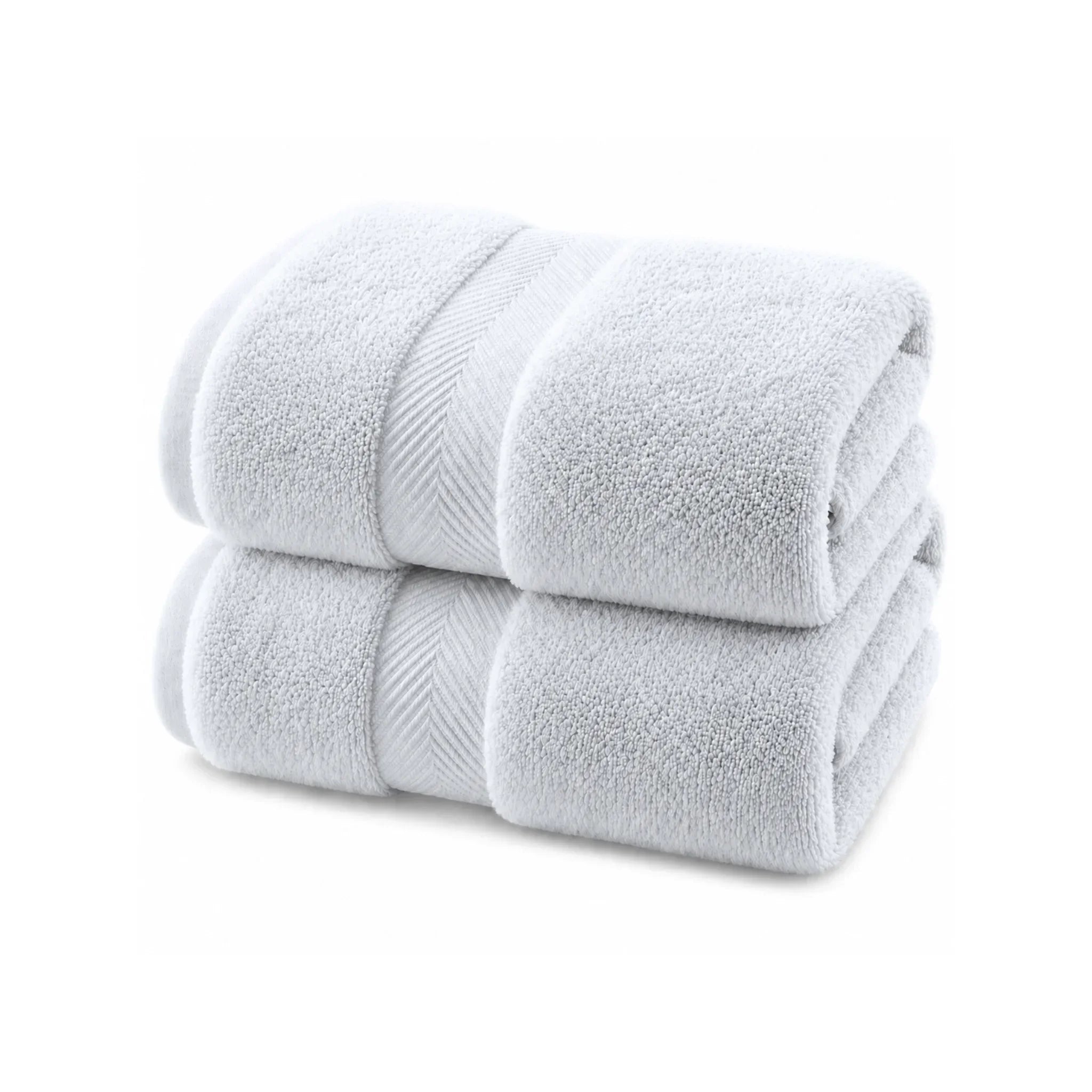
Ready to make the switch? Shop natural diatomite home products and pair your mat with quality bamboo cotton bath towels for a home that handles moisture well at every point of contact. With Natureva, your space is noticeably fresher day to day.