
What a Dish Drying Stone Does and How to Choose One
That soggy fabric mat under your dish rack probably smells like mildew right now, and your counter stays damp for hours after doing dishes. A dish drying stone solves both problems by absorbing water instantly and drying out in minutes, thanks to millions of microscopic pores in fossilised algae called diatomite. Unlike traditional mats that trap moisture and breed bacteria, stone dish mats like Natureva's elevated designs keep your kitchen counter dry and hygienic without the constant washing and replacement cycle.
Table of Contents
The Science Behind Stone That Drinks Water
Most kitchen drying mats trap moisture between fabric layers, creating damp spots that smell weird after a few days. A dish drying stone works completely differently because it's made from diatomite, a natural material formed from fossilised microscopic algae called diatoms. These tiny organisms lived millions of years ago, and when they died, their silica-based skeletons piled up on ocean floors and lake beds. Over time, these deposits compressed into a chalky, porous rock that's now mined and shaped into household products.
How the Porous Structure Works
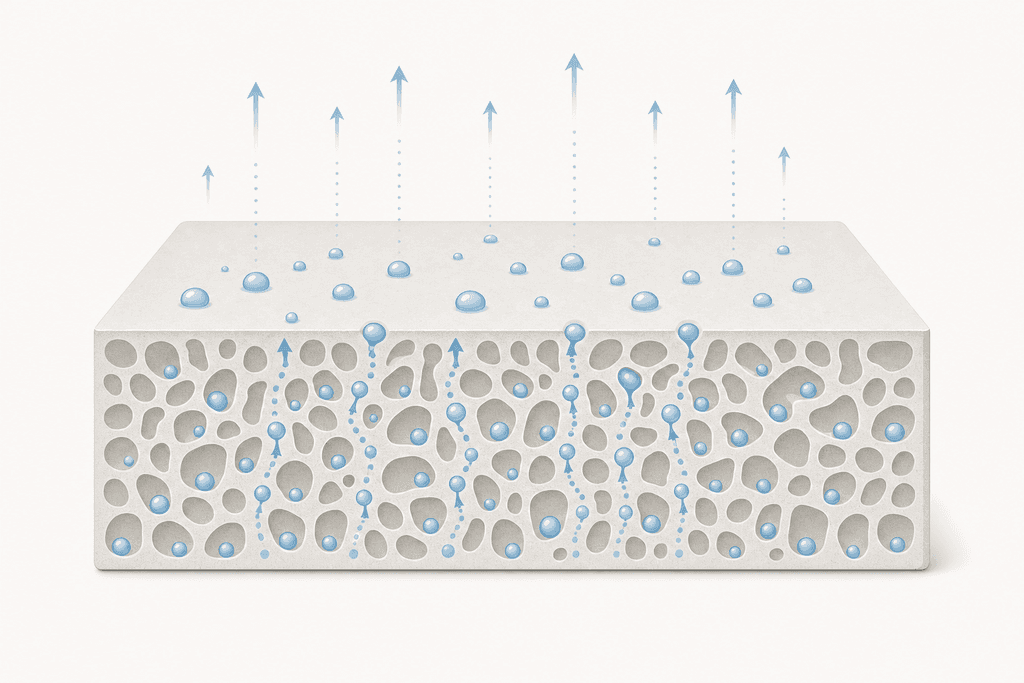
The magic happens at a microscopic level. Each piece of diatomite contains millions of tiny pores that act like miniature sponges. When water hits the surface, it gets pulled into these pores instantly through capillary action. But unlike a regular sponge that holds onto moisture, diatomite releases water back into the air through rapid evaporation. This means your dish drying stone can absorb water from wet plates and be completely dry again within minutes.
Here's what makes this structure so effective in kitchens:
- Water absorption happens on contact, not gradually like fabric
- The open pore network allows air to flow through the material
- Moisture evaporates from the surface and internal channels simultaneously
- The stone stays dry between uses, preventing that musty smell
Natural Antibacterial Properties Without Chemicals
Most people assume antibacterial products need chemical treatments to stay clean. Diatomite stays hygienic simply by staying dry. Bacteria need moisture to grow and multiply, but when a surface dries within minutes, there's no environment for microbes to thrive. This is why stone dish mats don't develop the slimy film or sour odour that fabric mats get after a week of use.
The antibacterial effect comes from physics, not chemistry:
- Rapid drying eliminates the damp conditions bacteria need
- No moisture means no mould or mildew growth
- The material itself contains no synthetic antimicrobial additives
- Regular rinsing keeps the surface clean without special products
Composite Construction for Kitchen Durability
Pure diatomite would be too brittle for daily kitchen use, so modern dish drying stones use a composite material. Diatomaceous earth gets mixed with recycled paper and compressed into dense slabs that feel solid but remain lightweight. This construction method creates a product that can handle the weight of cast iron pans without cracking, while still maintaining the absorbent properties of the raw material.
| Material Component | Purpose | Benefit |
|---|---|---|
| Diatomaceous Earth | Absorption | Instant water uptake |
| Recycled Paper | Structure | Impact resistance |
| Compression Process | Density | Long-term durability |
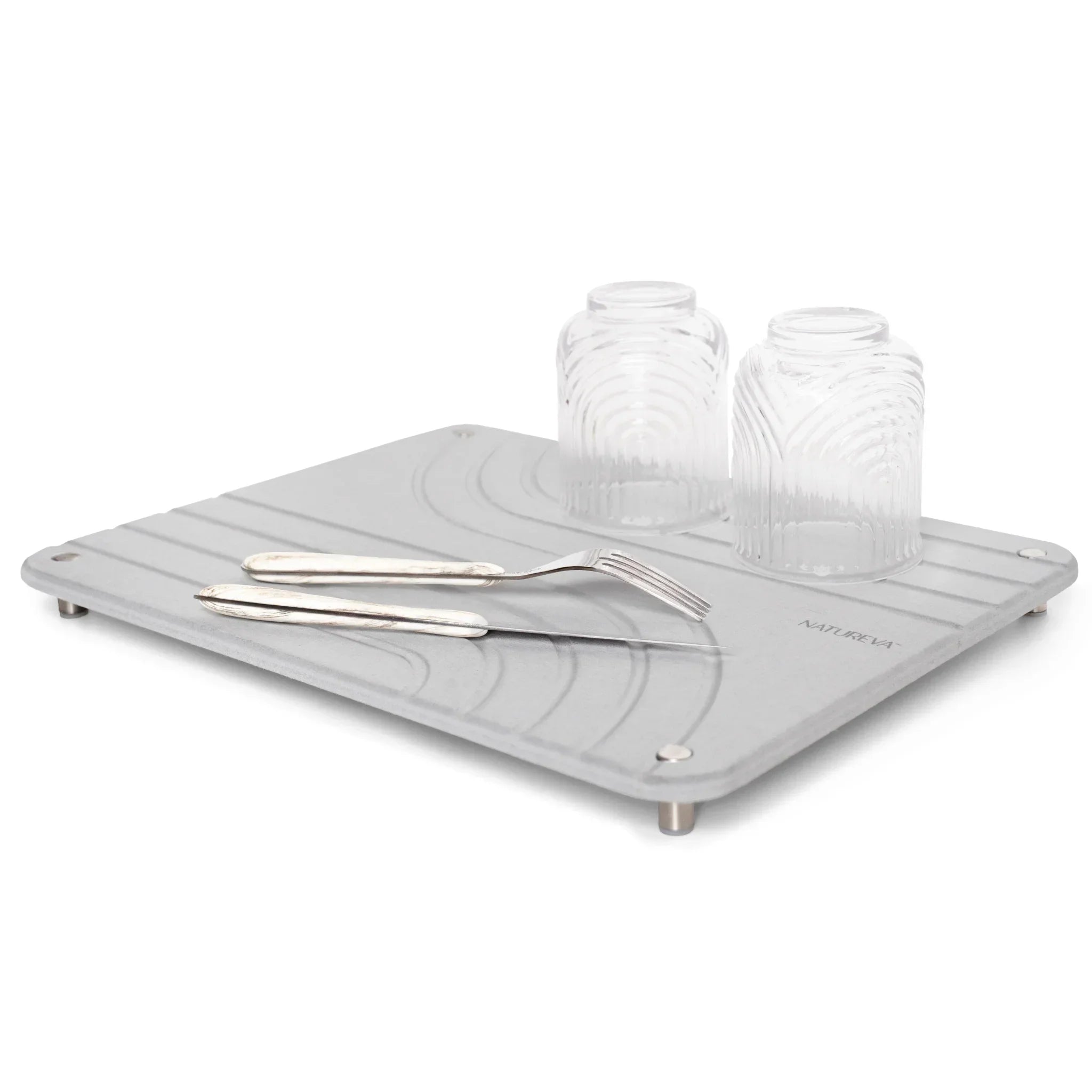
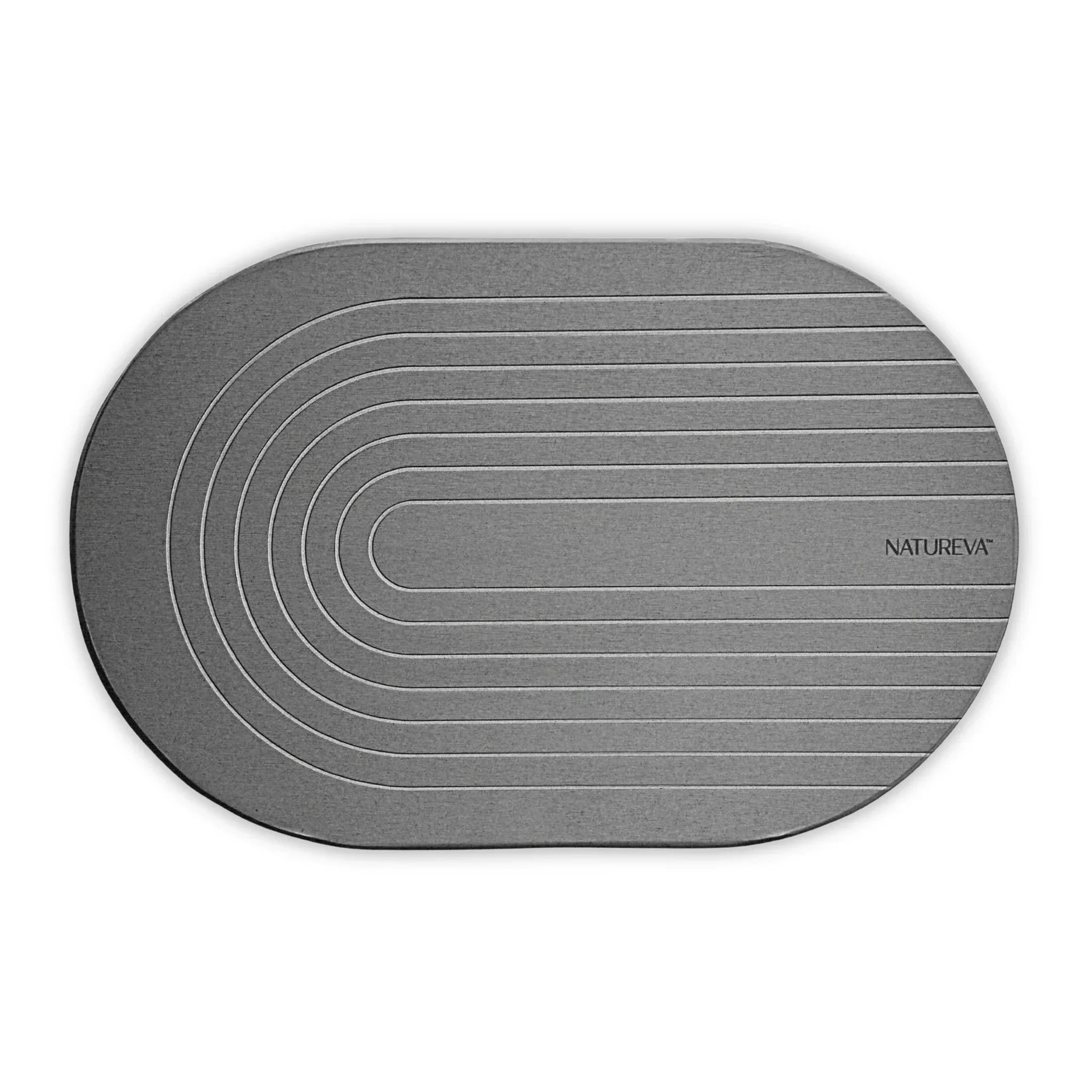
Products like the Natureva stone dish mat use this composite approach with elevated stainless steel legs underneath. The elevation creates airflow beneath the stone, which speeds up drying even more and protects your countertop from constant moisture contact. No synthetic coatings or sealants are added, which means the pores stay open and functional for years. If the surface ever loses absorbency from soap buildup or mineral deposits, a quick sand with the included tool reopens the pores and restores performance. You can read more about how this absorption technology performs in bathroom settings in this detailed analysis of stone mat absorbency.
What Makes Dish Drying Stones Different
Most people still use fabric dish mats that sit wet on their counters for hours, creating the perfect environment for bacteria and that musty smell nobody wants near their clean dishes. A dish drying stone works completely differently because it's made from diatomite, a natural material formed from fossilised algae with millions of microscopic pores. These pores pull moisture away from your dishes instantly and release it back into the air through rapid evaporation. The surface feels dry to the touch within minutes instead of staying damp all day like traditional mats.
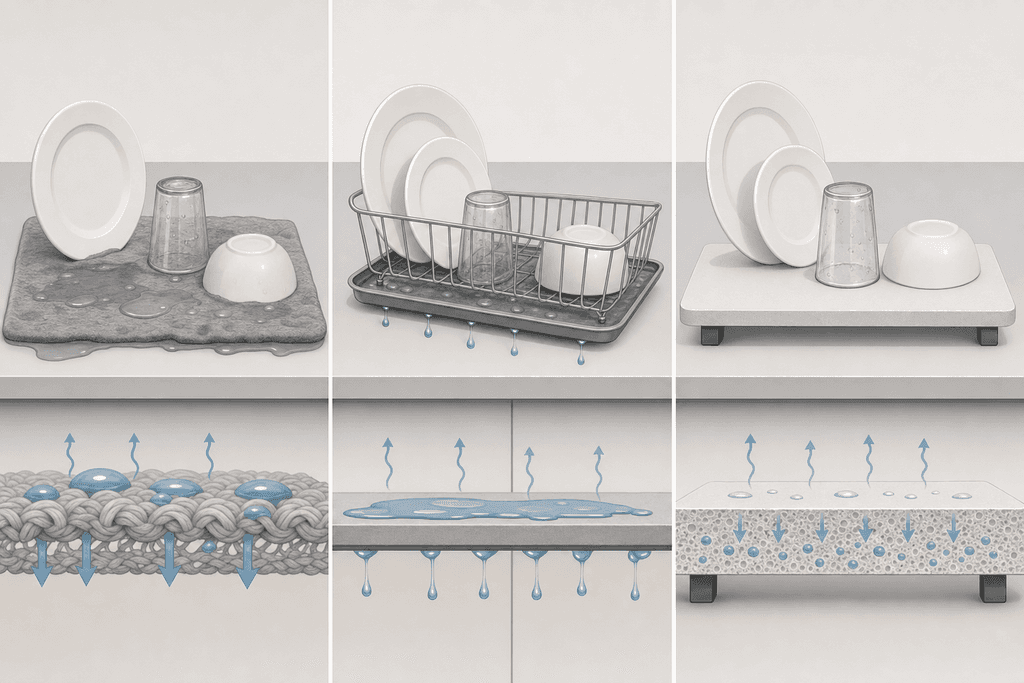
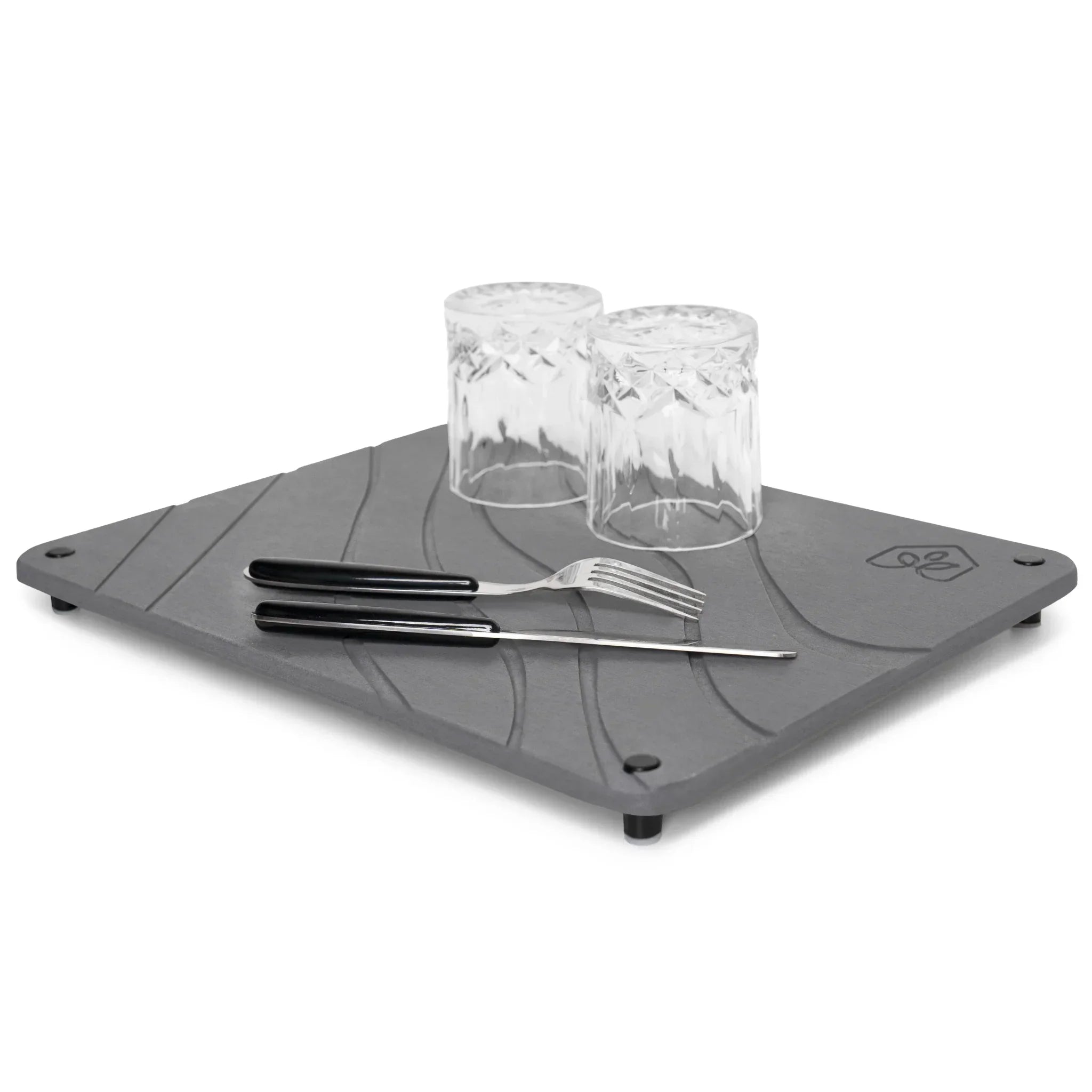
The construction makes all the difference. Natureva's stone dish mats sit on stainless steel legs that create a 2.5 cm airflow gap underneath the entire platform. This elevation prevents moisture from getting trapped between the mat and your counter, which is what causes fabric mats to develop mildew and odours over time.
| Feature | Fabric Mat | Wire Rack | Dish Drying Stone |
|---|---|---|---|
| Drying Time | 4-8 hours | 2-4 hours | Minutes |
| Needs Washing | Weekly | Monthly | Never |
| Mildew Risk | High | Medium | None |
| Counter Protection | Poor | Scratches | Silicone pads |
The transparent silicone pads that sit underneath each stainless steel leg serve two purposes. They keep the mat stable even when wet dishes are stacked on top, and they protect your countertop from scratches or pressure marks. These pads are precision sized at 2 mm thick and 1.2 cm diameter to match the exact diameter of the legs, so they sit flush without any visible overhang.
Unlike wire racks that rust or fabric mats that need constant trips through the washing machine, stone dish mats require almost no maintenance beyond a quick weekly wipe. Research shows that materials with rapid drying properties naturally limit bacterial growth because microbes need moisture to thrive.
How to Choose the Right Dish Drying Stone
The first thing to consider is how much counter space you actually have and how many dishes you typically wash by hand each day. Natureva's dish mats measure 39.5 × 29.5 cm, which fits most standard counter spaces next to the sink without taking over your entire workspace. If you're washing dishes for a family of four or more, this size handles multiple plates, bowls, and cups at once. For smaller households or limited counter space, you might want to start with a sink caddy instead.
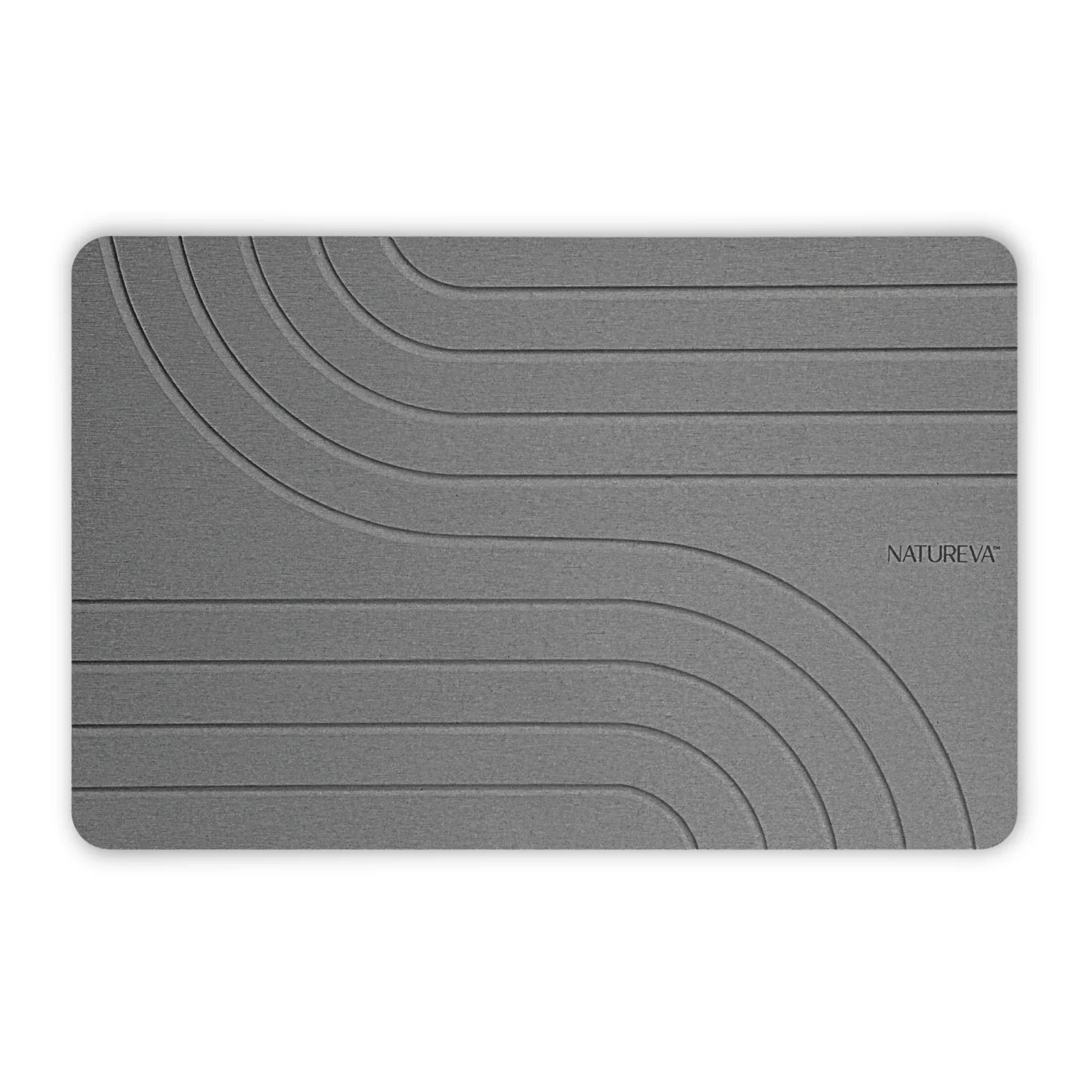
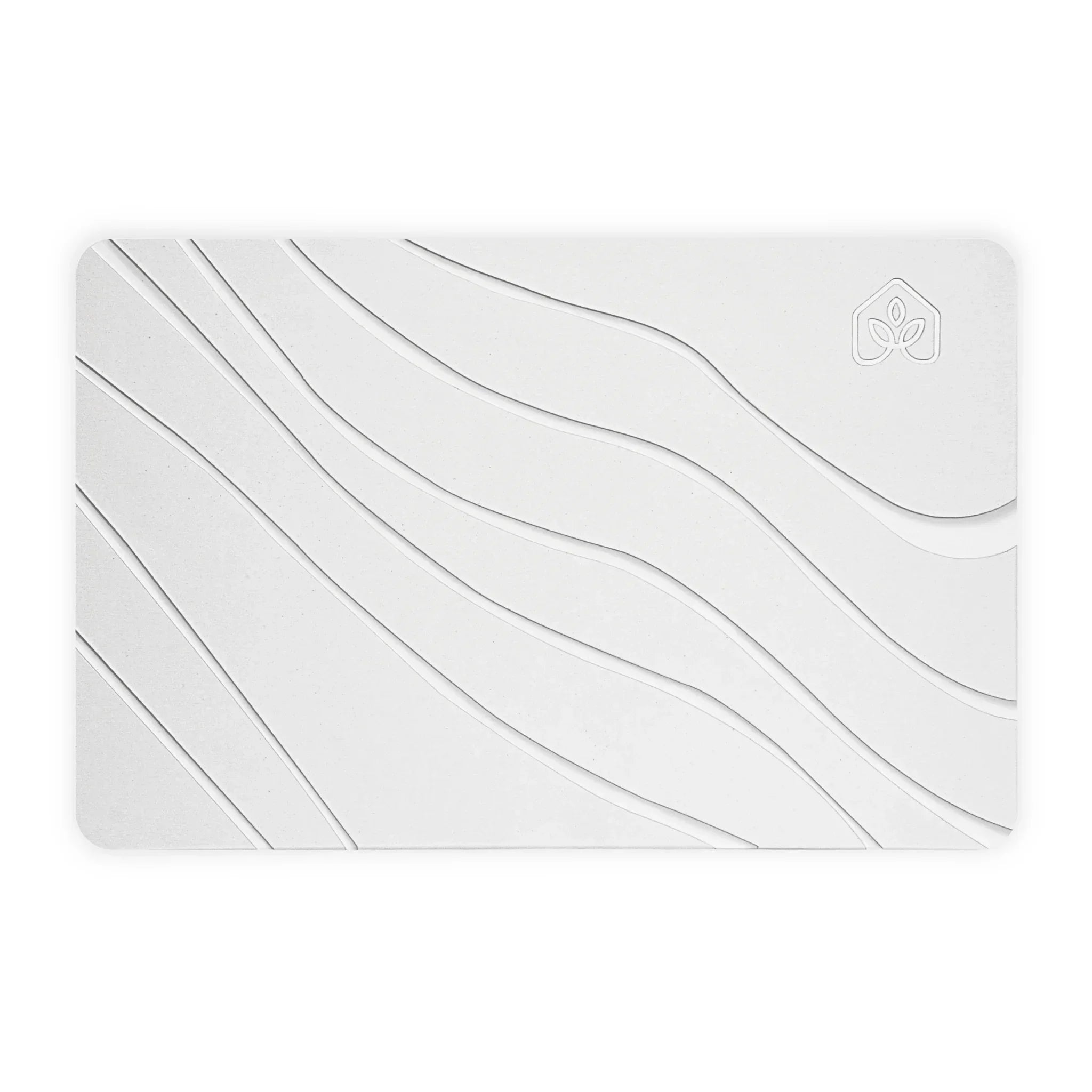
The design pattern you choose isn't just about looks. Both Tide and Flow patterns feature carved channels that guide water across the surface, helping it evaporate faster. Tide has wide horizontal curves that resemble shoreline movement, while Flow uses diagonal wave engraving that creates a more dynamic visual rhythm.
- Graphite: Deep charcoal that hides water spots and pairs with modern or industrial kitchens
- Slate: Soft grey that works with both warm and cool colour schemes
Both colours come with matching hardware. Graphite includes black coated stainless steel legs, while Slate features raw stainless steel. The elevated leg design is non-negotiable because it prevents the bottom of the mat from staying saturated, which would eventually reduce its absorbency.
Checklist Before Buying
- Measure your counter space next to the sink (need at least 40 × 30 cm)
- Count how many dishes you hand wash in a typical day
- Check if your kitchen style leans warm or cool toned
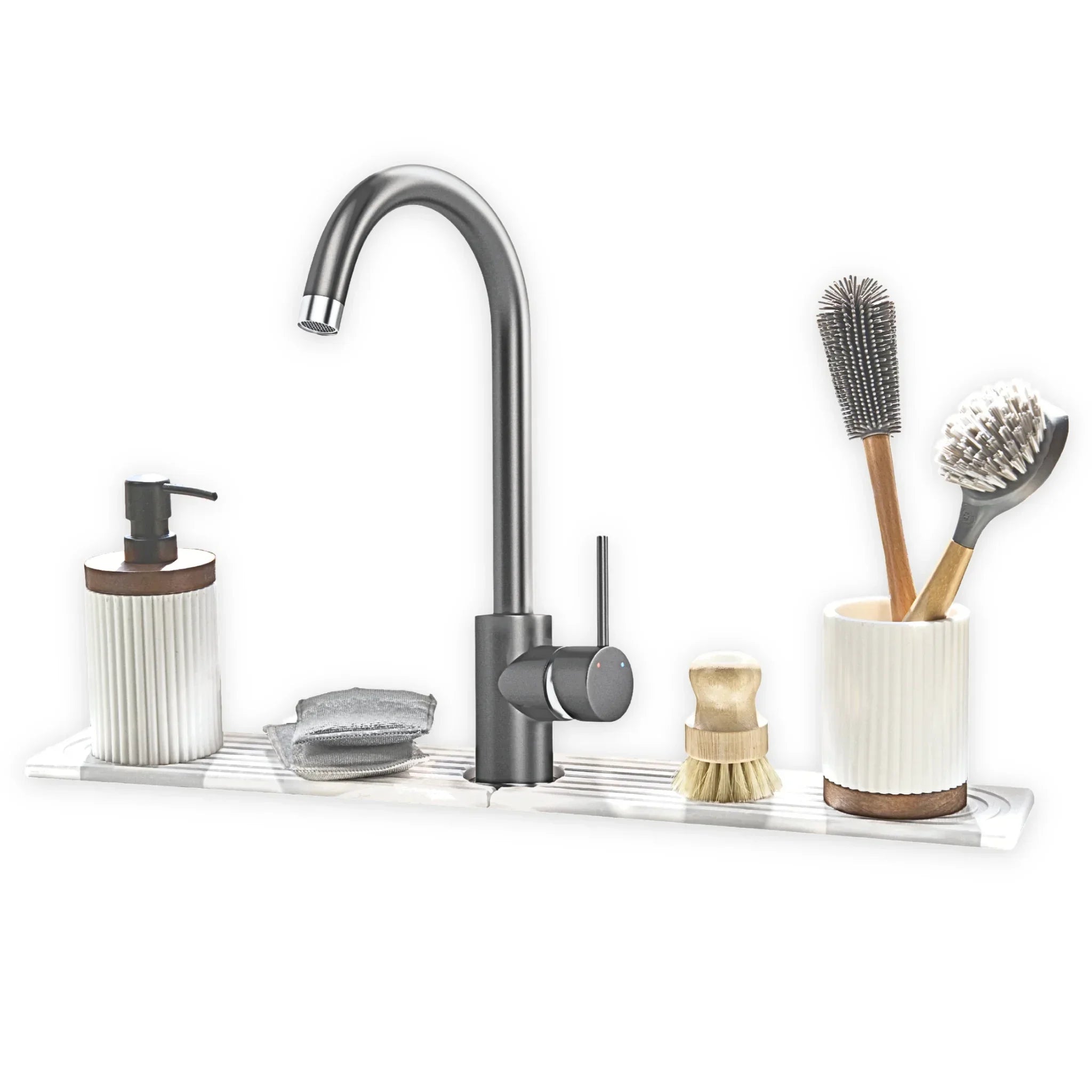
- Consider if you need matching accessories like sink caddies or plant saucers
- Verify you have space to store the mat upright when fully saturated
The next generation of home essentials: naturally made, cleaner by design, sustainable by nature.
SHOP ALLEvery dish mat includes a sanding tool in the box. This P320 grit disc is about 10 cm in diameter and designed specifically to restore absorbency when the surface pores get clogged over time. You won't need it right away, but having it means your mat can last for years instead of losing performance after a few months.
Keeping Your Dish Drying Stone Working Like New
The maintenance routine for a dish drying stone is simpler than most people expect. Once a week, mix equal parts white vinegar and water in a spray bottle, wipe down the entire surface, and let it air dry. This prevents soap residue and mineral buildup from clogging the microscopic pores that make the stone absorb water so quickly. The whole process takes about two minutes and keeps the mat performing like new.
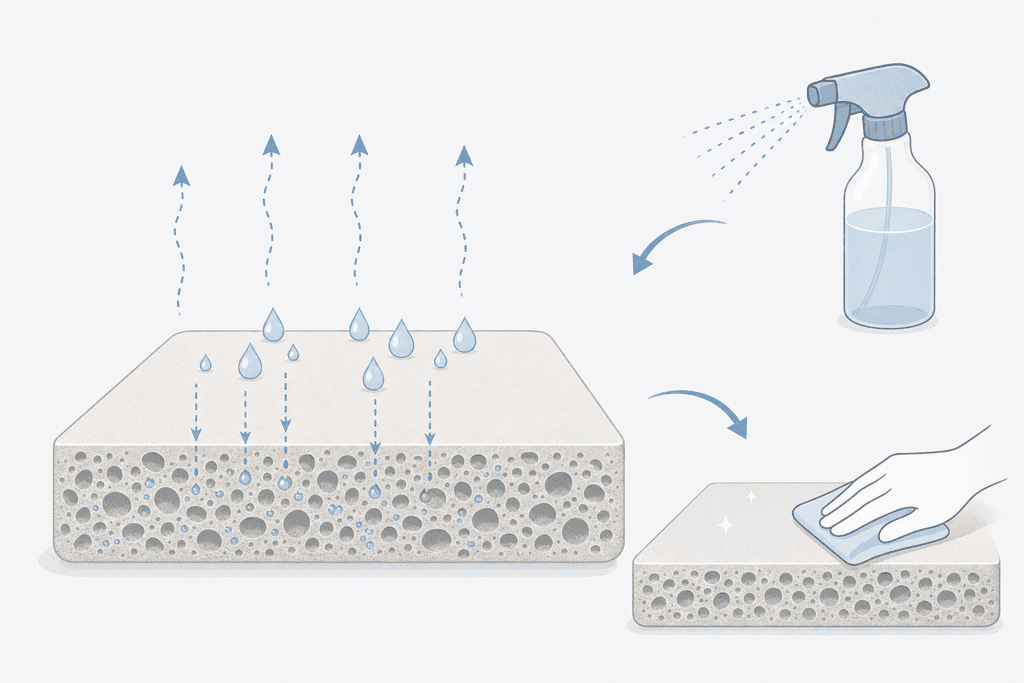
Coloured dish soaps can leave stains if they sit on the surface too long. If you notice any discolouration, just rinse the mat under running water right away. For deeper stains that don't come out with water, hydrogen peroxide works without harsh chemicals. Pour a small amount directly on the stain, let it sit for a few minutes, then rinse clean.
Simple Maintenance Routine
- Wipe with vinegar water solution weekly
- Rinse coloured soap residue immediately after washing dishes
- Sand surface with included tool when water stops absorbing quickly
- Air dry upright against a wall when fully saturated
- Apply hydrogen peroxide to stubborn stains as needed
The sanding tool that comes with your mat is what keeps it working long term. When you notice water pooling on the surface instead of disappearing instantly, it means the pores are clogged with soap residue or minerals from hard water. Studies on drying methods show that surface texture directly impacts moisture evaporation rates. Light sanding with the P320 grit disc reopens those pores and brings back full absorbency in about 30 seconds of gentle circular motion.
When the mat gets completely saturated from a large load of dishes, prop it upright against your backsplash or wall to dry. This exposes both sides to air and restores full capacity faster than leaving it flat on the counter. The composite construction of diatomaceous earth and recycled paper is designed to handle this without warping or cracking.
Most competing brands don't include restoration tools or provide clear maintenance instructions, which is why their products lose effectiveness after a few months. The difference between a dish drying stone that lasts six months and one that lasts several years comes down to these simple care steps. Natureva's kitchen collection is built around this idea that natural materials need minimal maintenance when designed correctly from the start.
Dry Counters Without the Hassle
A dish drying stone solves one of the most annoying kitchen problems: that puddle of water that sits under your drying rack for hours. The diatomite material absorbs water the second your dishes touch it, then releases that moisture back into the air within minutes. No more wiping down counters or dealing with that musty smell that fabric mats get after a few weeks.
The elevated design matters more than you might think. Those stainless steel legs on products like our Flow dish mat and Tide dish mat create airflow underneath, which prevents the stone from staying saturated and protects your counter from water damage. The silicone pads under each leg keep everything stable and scratch-free.
What makes diatomite different from other materials is how it handles bacteria and odor. Because it dries so fast, there's no damp environment for mildew or bacteria to grow. You're not dealing with that sour smell that happens with traditional dish mats.
Maintenance is straightforward. A quick wipe with vinegar water once a week keeps the stone working properly. If you notice the absorption slowing down after months of use, the included sanding tool reopens the surface pores in about 30 seconds. Most people find their dish drying stone lasts years with this simple care routine, which is longer than fabric alternatives that need replacing every few months.
The right dish drying stone depends on your counter space and how many dishes you typically dry at once. But the core benefit stays the same: dry surfaces without the constant cleanup.
Common Questions About Dish Drying Stones
Switching from a fabric mat to a stone surface raises some practical questions. Most people wonder about the same things when they first consider making the change. Here are the answers to what actually matters in daily use.
How long does it take for a dish drying stone to dry after use?
A properly functioning dish drying stone dries within minutes after dishes are removed. The diatomite material pulls moisture into its porous structure and releases it through evaporation almost immediately. If your stone is taking longer than 10 to 15 minutes to feel dry to the touch, it likely needs surface restoration with the included sanding tool.
Can you put hot pots and pans directly on the stone?
No, dish drying stones are designed for moisture absorption, not heat resistance. Placing hot cookware directly on the surface can cause thermal shock and cracking. Let pots and pans cool to room temperature before setting them on the stone, or use a traditional trivet for hot items.
What happens if the stone stops absorbing water?
When a dish drying stone loses absorbency, it means the microscopic pores on the surface have become clogged with mineral deposits, soap residue, or oils. The fix is simple and takes about 30 seconds. Use the included P320 grit sanding tool to lightly buff the surface in circular motions, which reopens the pores and restores full absorption. This maintenance step works every time and can be repeated as needed throughout the stone's lifespan.
How do you clean stains from coloured dish soap?
Coloured soaps can leave surface stains on lighter stone colours like Slate or Chalk. For light marks, rinse the stone under running water and wipe with a vinegar water solution. Stubborn stains respond well to a hydrogen peroxide soak for 10 to 15 minutes, followed by a rinse and air dry. If staining persists, sanding the surface removes the discoloured layer entirely.
Are dish drying stones better than fabric mats for bacteria?
Yes, because they eliminate the conditions bacteria need to grow. Fabric mats trap moisture between fibres and stay damp for hours, creating an ideal breeding ground. Dish drying stones dry in minutes, which means bacteria don't have the prolonged wet environment they require. The Natureva Flow and Tide dish mats also sit elevated on stainless steel legs, allowing airflow underneath so moisture never pools or saturates the material.
How long does a dish drying stone last with regular use?
With proper care, a dish drying stone can last several years. The composite diatomite construction is durable enough for daily dish loads, and periodic sanding extends performance indefinitely. Avoid dropping the stone or exposing it to extreme temperature changes, as these can cause cracking. Regular weekly cleaning with vinegar water and occasional surface restoration keeps the stone functioning like new.
The next generation of home essentials: naturally made, cleaner by design, sustainable by nature.
SHOP ALL