

What is a Stone Bath Mat and How Does It Work?
You step out of the shower, and your feet are wet. A fabric mat absorbs that moisture – and holds it. For hours. A stone bath mat does something entirely different: it draws water off your feet in seconds, then releases it back into the air as vapour, leaving the surface dry and ready for next time. But what is a stone bath mat, and how is this possible? It’s all about the physics of a naturally porous material that's been forming in ancient riverbeds and lake beds for millions of years. Here's exactly what it's made from, how the absorption works, and why it keeps your bathroom cleaner than any fabric alternative can.
What is a Stone Bath Mat, Exactly?
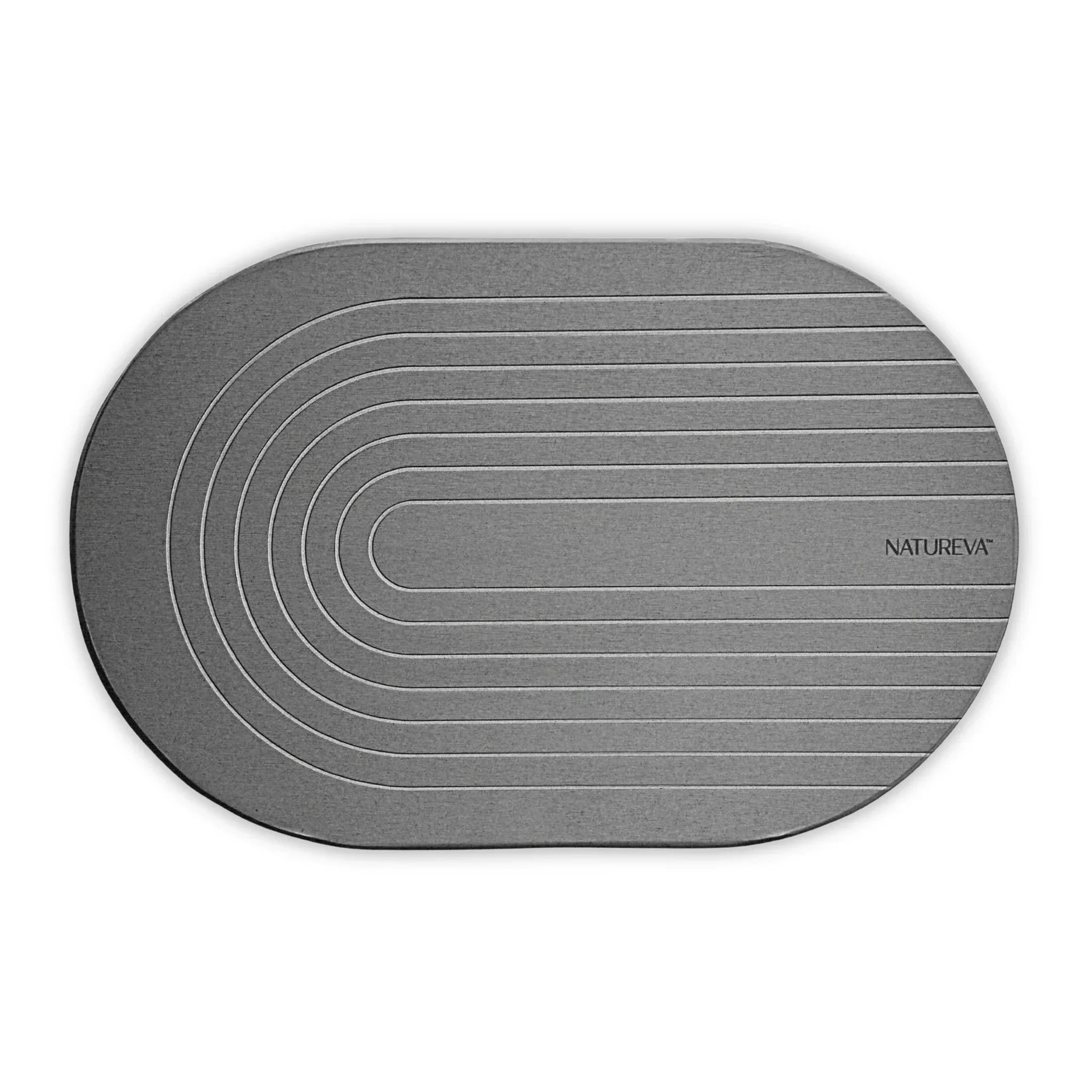
A stone bath mat is a solid, rigid mat made from compressed diatomite, a naturally occurring sedimentary rock composed of the fossilised remains of diatoms, microscopic single-celled algae that once lived in ancient bodies of freshwater. Over millions of years, the silica-rich shells of these organisms accumulated on lake and ocean floors, compacted, and mineralised into diatomite rock.
Diatomite is composed of 80–90% silica, making it chemically stable, lightweight, and extraordinarily porous. When compressed and shaped into a flat mat, that natural porosity is preserved. The surface you're standing on is full of tiny connected channels, and those channels are what make the mat perform the way it does – instant absorption and quick drying.
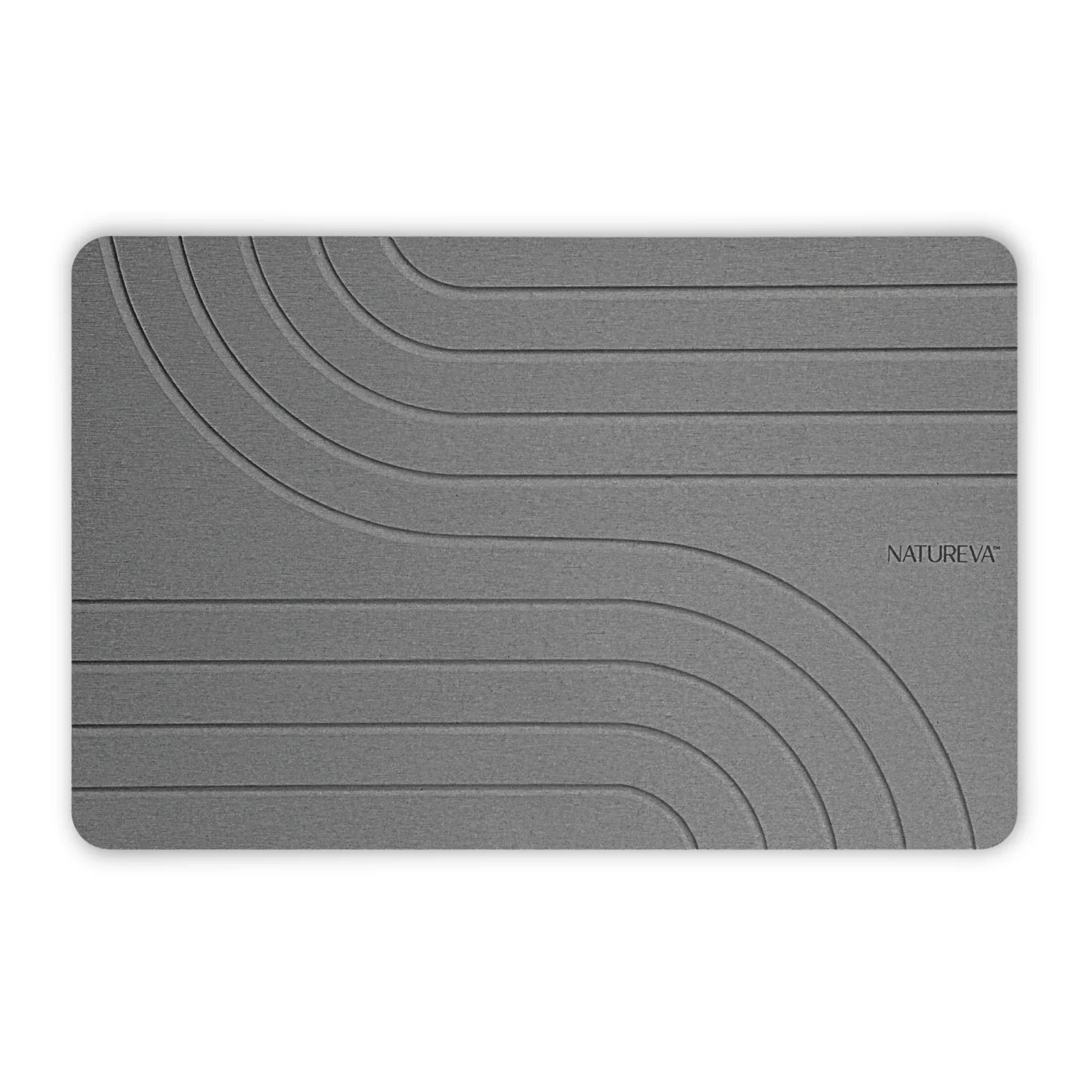
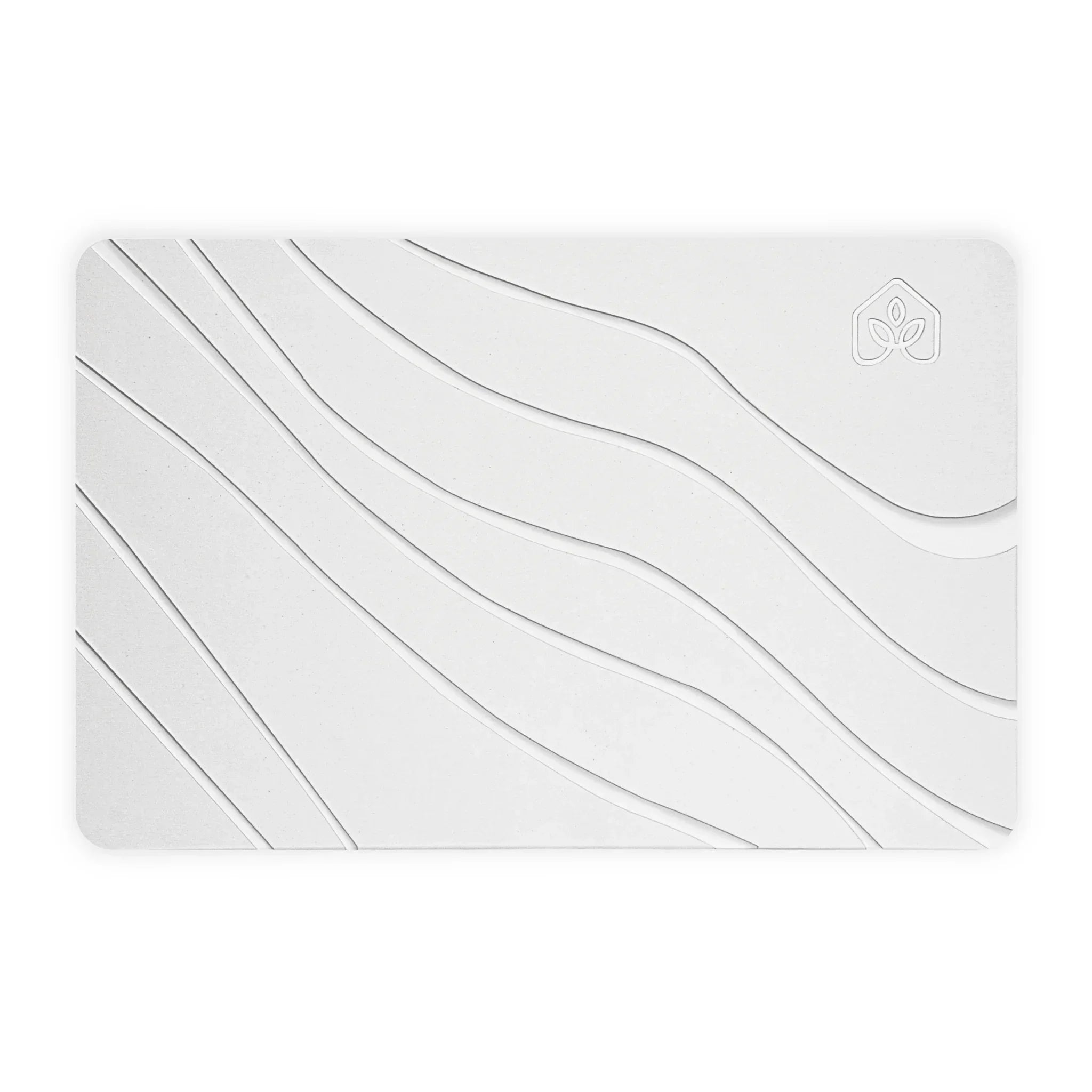
The result looks minimal and considered: smooth-faced, usually in soft grey, white, or warm stone tones, with a low profile that sits flush to the floor.
How a Stone Bath Mat Absorbs Water
The absorption comes down to two things: the pore structure of the material and capillary action.
Diatomite has a total porosity of around 61–63%, meaning a large part of the material is actually empty space, with a dense network of tiny, interconnected pores running through its entire structure.
When water touches the surface, those micro-pores draw moisture inward almost immediately through capillary action. It's the same principle that pulls liquid up a drinking straw or through the fibres of a paper towel. The shape of tiny channels and surface tension work together to move moisture away from the surface, so water doesn't sit on top, but gets pulled in.
Once inside, that moisture begins to evaporate. Because the pores are connected and air can move through the mat, moisture escapes as vapour rather than becoming trapped. The surface is dry again within minutes.
Good ventilation helps – a well-aired bathroom will speed up the time it takes for your mat to be completely dry between showers.

Why a Stone Bath Mat Stays Clean
Fabric mats stay damp for a long time after use. That sustained moisture is exactly what mould, mildew, and bacteria need to take hold, which is why fabric mats need regular washing to stay hygienic.
A stone bath mat breaks that cycle. Because the surface dries quickly, it rarely remains in damp conditions that allow microbial growth to begin. The silica structure of diatomite is inorganic. Meaning, it doesn't degrade, absorb odours, or break down the way textile fibres do over time.
It's also a well-established material. The Food & Drug Administration lists diatomaceous earth as "Generally Recognised as Safe." For a surface in daily contact with bare skin, that's a useful baseline – this is a known, naturally occurring material, not a synthetic blend.
Keeping a stone mat in good shape is easy. Because the surface is hard and smooth, there's nothing for soap scum or debris to embed into. A light rinse, or a gentle buff with fine-grit sandpaper every few weeks, is usually all it takes to maintain absorbency and keep it looking good.
Stone vs Fabric: The Real Difference
The practical gap between the two is bigger than most people expect.
Fabric Mats
A fabric bath mat (cotton, microfibre, or chenille) works by absorbing water into its fibres. The problem is that those same fibres hold moisture rather than releasing it. After a shower, the mat stays wet, and if it doesn't dry fully between uses, mould and mildew follow. Most people wash fabric mats weekly, which adds up in water, electricity, and detergent over time.
Stone Mats
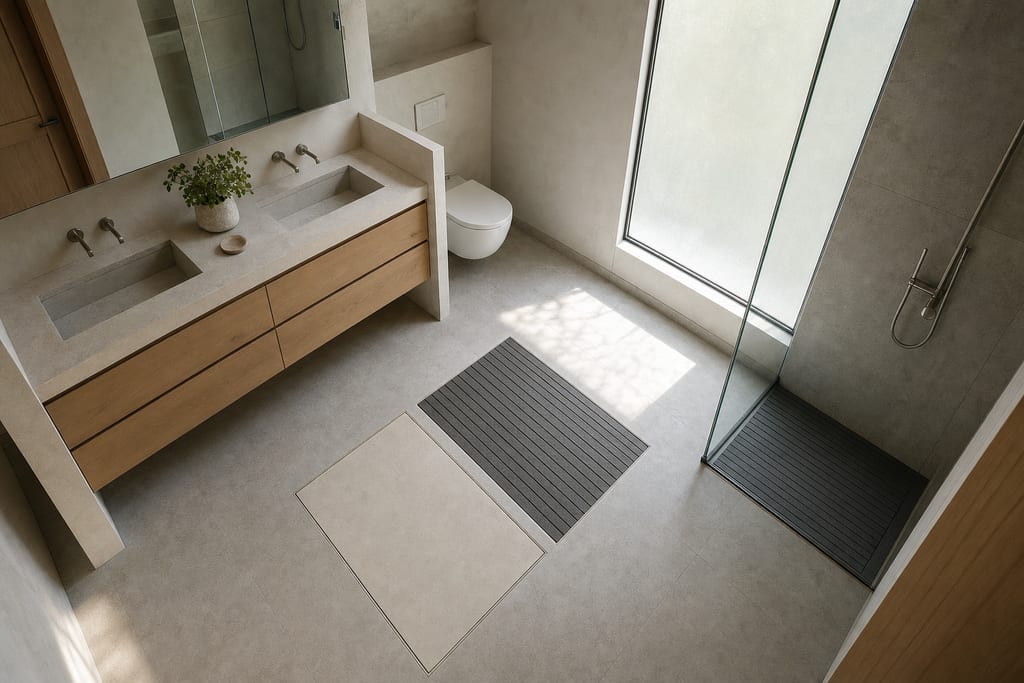
A stone bath mat absorbs water and releases it as vapour. The surface is dry within minutes. No washing needed, just occasional light maintenance. There is no lingering dampness and no need to drape it over a towel rail between uses.
The honest trade-off is feel. Stone is firm underfoot, not soft. It suits people who value function and hygiene, and who like the clean, considered feel of a solid surface.
What Makes a Quality Stone Bath Mat
Not all stone mats are the same. A few things worth looking at:
-
Diatomite Quality: Higher-quality mats use a consistent diatomite blend that keeps its pore structure over years of use. Lower-grade versions can lose absorptive capacity as pores gradually become blocked by residue.
-
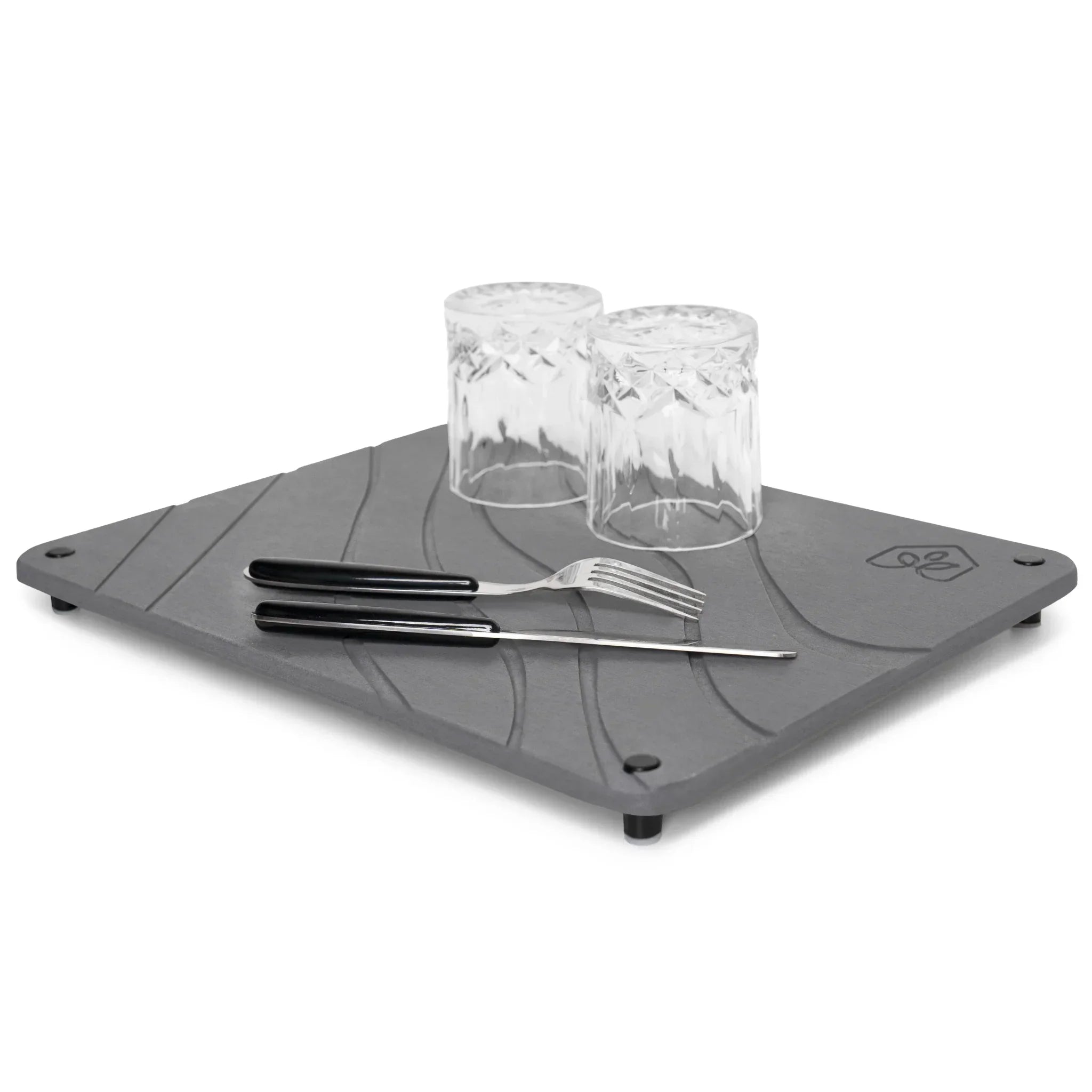
Non-Slip Base: The mat is rigid and smooth on its underside, so a silicone or rubber grip pad is essential on wet bathroom floors. Any mat worth buying includes this.
-
Thickness and Size: A thicker mat can handle more water before it needs to cycle through, which can be useful in a busy household. Most well-made mats sit between 8–12 mm thick and around 60 x 38 cm.
-
Surface Finish: A well-made stone mat has a smooth, consistent face, even colouring, and clean edges. Surface inconsistencies affect both its appearance and its longevity.
Shop Natureva Stone Bath Mats
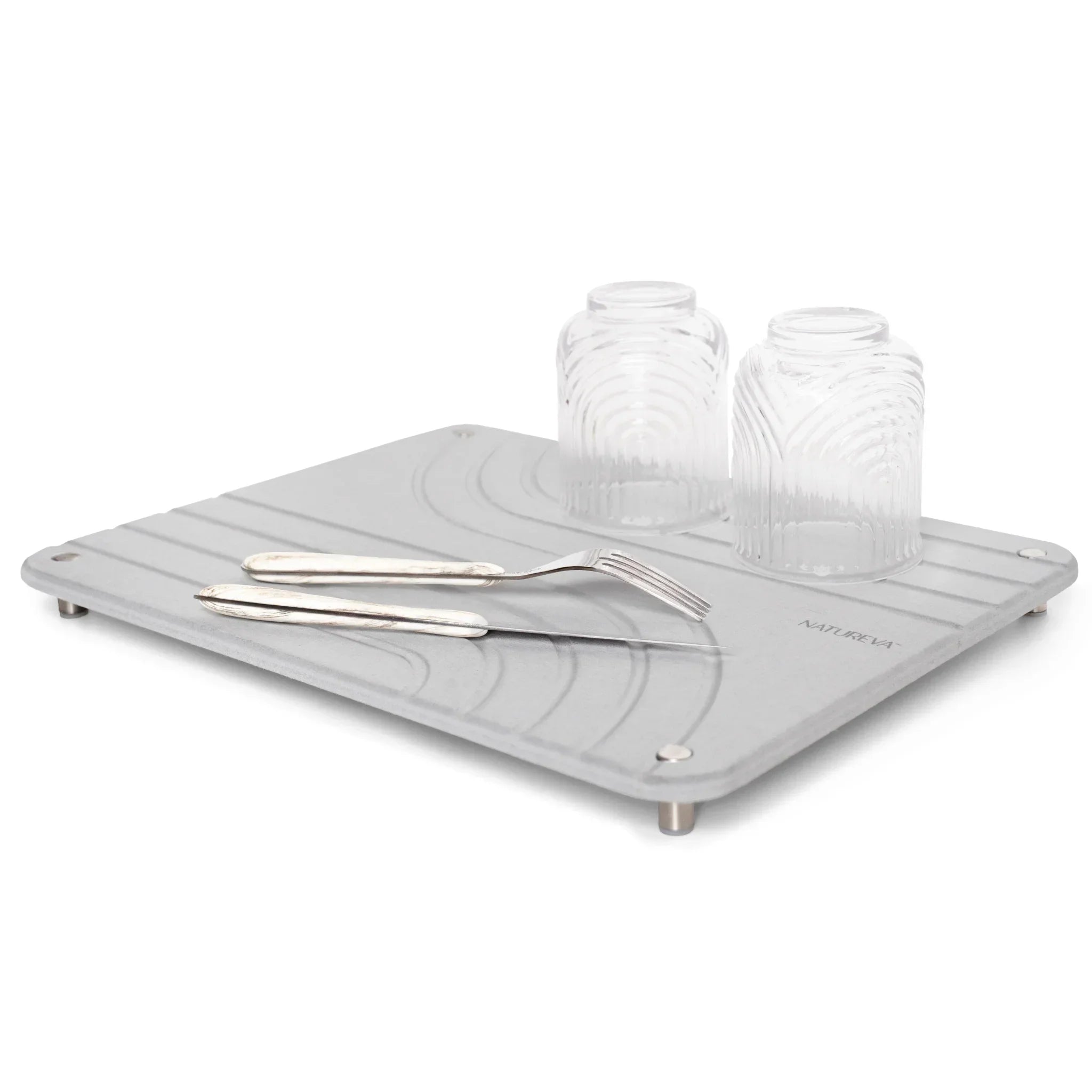
If you're looking for a stone bath mat that holds up to daily use, Natureva's stone bath mats are designed for modern homes: clean colourways, built from quality diatomite, and made to perform just as well a year in as on day one.
Each mat comes with a non-slip base, arrives ready to use, and requires almost no maintenance (just a light buff when needed). No washing, no drying racks, no replacing every year.
Browse the full range and find the size and finish that suits your bathroom.