
Kitchen Stone Drying Mats and How They Keep Benches Drier
A wet kitchen bench after washing dishes isn't just annoying, it's a breeding ground for bacteria and can slowly damage your countertop. Most fabric dish mats make the problem worse by trapping moisture underneath instead of eliminating it. A stone drying mat for kitchen use works differently, absorbing water instantly and releasing it back into the air so your bench actually stays dry.
Table of Contents
The Problem with Traditional Dish Mats
Most kitchen benches stay wet for hours after washing dishes, and the culprit is usually sitting right there under your drying rack. Traditional dish mats seem like they're doing their job when they soak up water, but they're actually creating a bigger problem. Fabric mats turn into soggy sponges that hold moisture against your countertop, while silicone versions trap water underneath in ways you can't even see. The result is a kitchen that never quite feels clean, no matter how often you wipe things down.
Why Fabric Mats Stay Wet Too Long
Fabric dish mats absorb water quickly, which feels helpful at first. But absorption isn't the same as drying. Once that water soaks into the fibres, it sits there for hours, sometimes even overnight.
Here's what happens during those wet hours:
- Bacteria multiply in the damp fabric, especially in warm kitchens
- Musty odours develop within 24 hours of regular use
- The mat itself needs constant washing, adding to your laundry pile
- Water seeps through to the countertop, leaving rings and moisture damage
- You end up needing multiple mats to rotate while others dry
According to research on household bacteria, damp kitchen textiles can harbour millions of bacteria within hours of getting wet. That dish mat isn't just wet, it's actively growing things you don't want near your clean dishes.
The Hidden Damage from Silicone Mats
Silicone mats seem like a smarter choice because they don't absorb water. But they don't let water evaporate either. Instead, water pools on top and gets trapped underneath between the mat and your bench.
This creates problems you might not notice right away:
- Water sits trapped against stone or timber countertops for hours
- Moisture stains develop on porous surfaces like marble or wood
- Mould grows in the thin layer of water you can't see
- The mat slides around because there's always a film of water underneath
Some brands like Drysorb and Dorah Home have tried to solve this with different materials, but most still rely on absorption rather than evaporation. The real solution isn't holding more water, it's getting rid of it faster.
Comparing How Different Mats Handle Moisture
The differences between mat types become obvious when you look at actual drying times and what happens to bacteria. Our stone dish mats, like the Tide and Flow models, use diatomite to absorb and evaporate water within minutes instead of hours.
| Mat Type | Drying Time | Bacteria Growth Risk | Countertop Protection |
|---|---|---|---|
| Fabric | 4-8 hours | High | Poor (water seeps through) |
| Silicone | 2-6 hours | Medium | Poor (traps water underneath) |
| Stone (Diatomite) | 15-30 minutes | Low | Excellent (elevated airflow) |
The speed difference matters more than you'd think. When a surface dries in under an hour, bacteria don't have time to establish colonies. That's why stone drying mats stay cleaner between uses without constant washing. You can read more about how diatomite absorption works in this detailed explanation of stone mat technology.
What Wet Benches Actually Cost You
A wet kitchen bench isn't just annoying, it costs you time and money in ways that add up. You're washing dish mats multiple times per week, which means extra laundry detergent, water, and energy.
But the bigger costs are less obvious:
- Countertop damage from prolonged moisture exposure can require expensive repairs
- Replacing mats every few months because they smell or fall apart
- Time spent cleaning mould from under mats and around sink areas
- The mental load of managing yet another thing that needs constant maintenance
Most people don't realize their dish mat is the problem until they switch to something that actually dries. The difference isn't subtle. When your bench stays dry, your whole kitchen feels cleaner, and you spend less time dealing with moisture problems that shouldn't exist in the first place.
How Diatomite Stone Actually Dries Your Bench
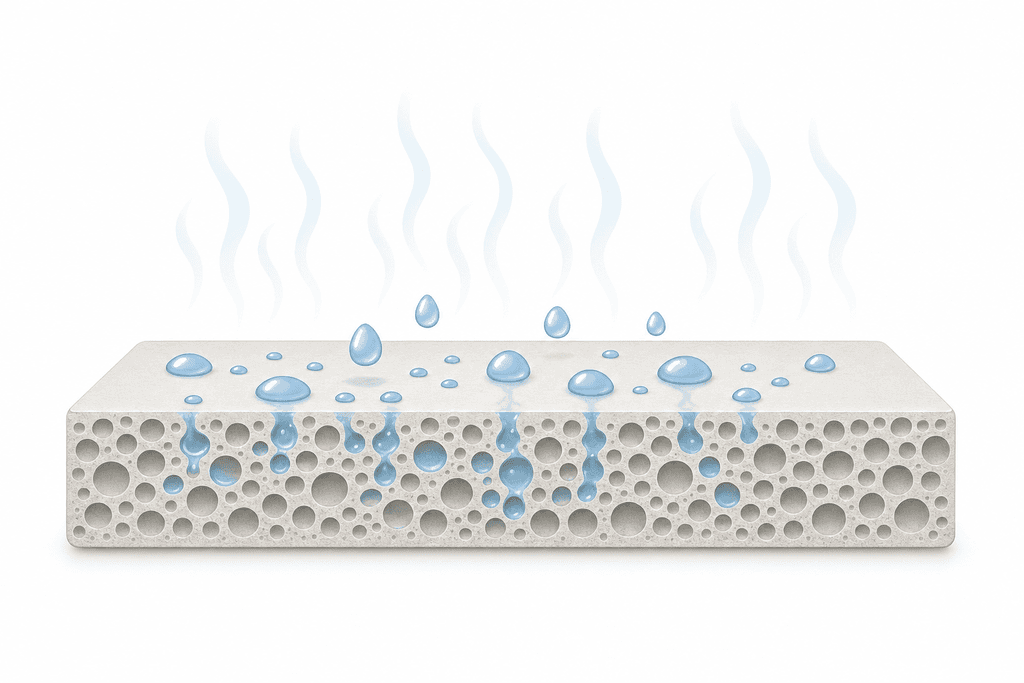
Most kitchen mats just move water around instead of actually drying it. The puddle sits there for hours, soaking into fabric or pooling on your counter. But diatomite works differently because of what it's made from. This material comes from fossilised microscopic algae called diatoms, and their ancient structure is what makes the magic happen. When these organisms died millions of years ago, they left behind shells with millions of tiny pores. Those pores are still there today, creating a natural sponge that works faster than anything synthetic.
The moment water hits a stone drying mat for kitchen use, it gets pulled into those microscopic channels. The absorption happens instantly, not gradually like with cloth or microfiber. What makes it even better is how the water leaves. Instead of staying trapped inside the material, it evaporates back into the air within minutes. Your dishes drip, the stone absorbs it, and the surface stays dry to the touch.
- Millions of microscopic pores from fossilised algae create instant absorption
- Water evaporates rapidly instead of staying trapped in fabric
- Surface stays dry within minutes, not hours
- No chemical treatments needed for antibacterial properties
- Composite construction with recycled paper adds durability
The antibacterial part is worth understanding too. Stone drying mats have become popular partly because they don't rely on chemical coatings to stay clean. Bacteria need moisture to grow, and when the surface dries this fast, there's simply no environment for them to thrive. Natureva's stone dish mats use a composite of diatomaceous earth and recycled paper, compressed without any synthetic finishes. The material does the work naturally.
The next generation of home essentials: naturally made, cleaner by design, sustainable by nature.
SHOP ALLElevation Design Prevents Surface Damage
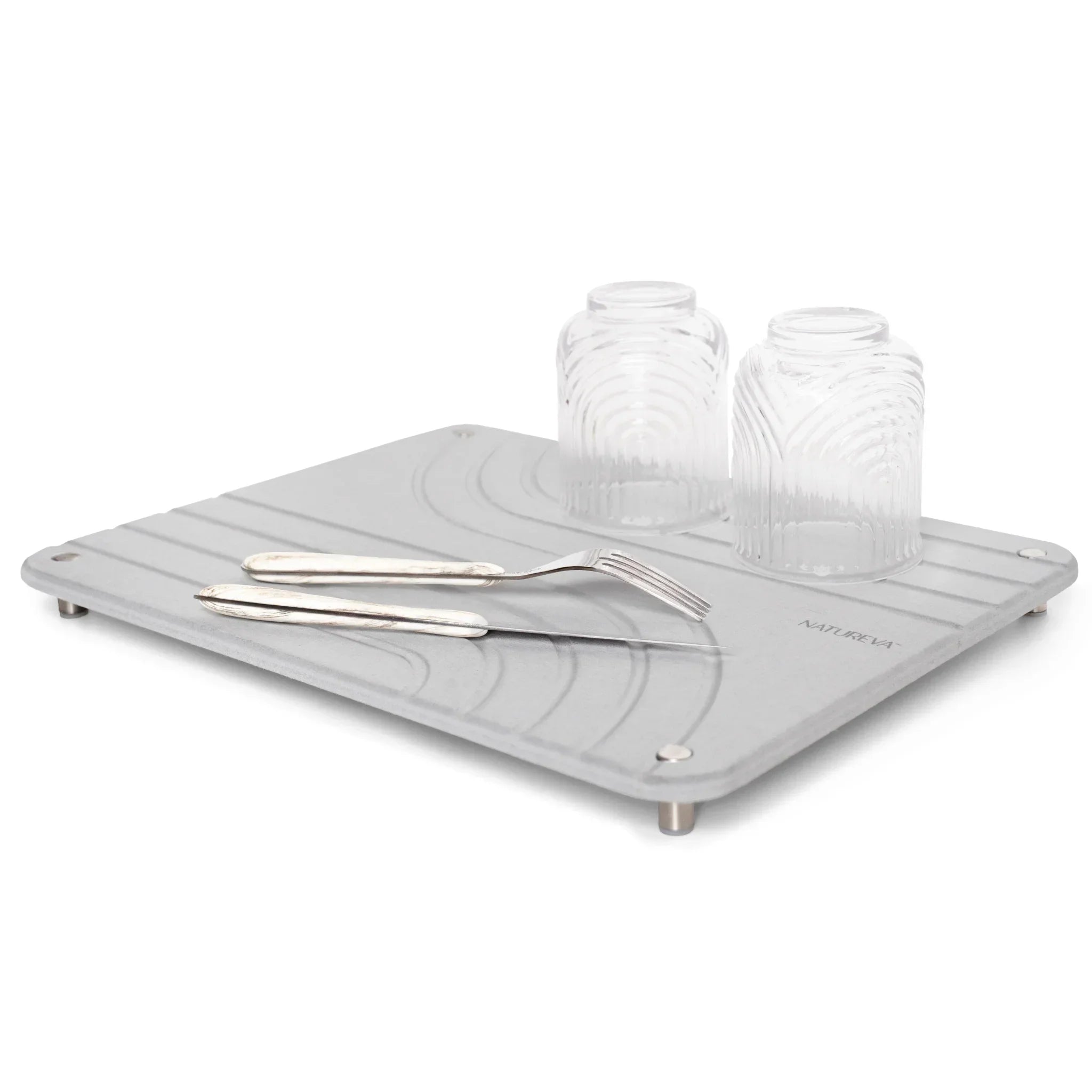
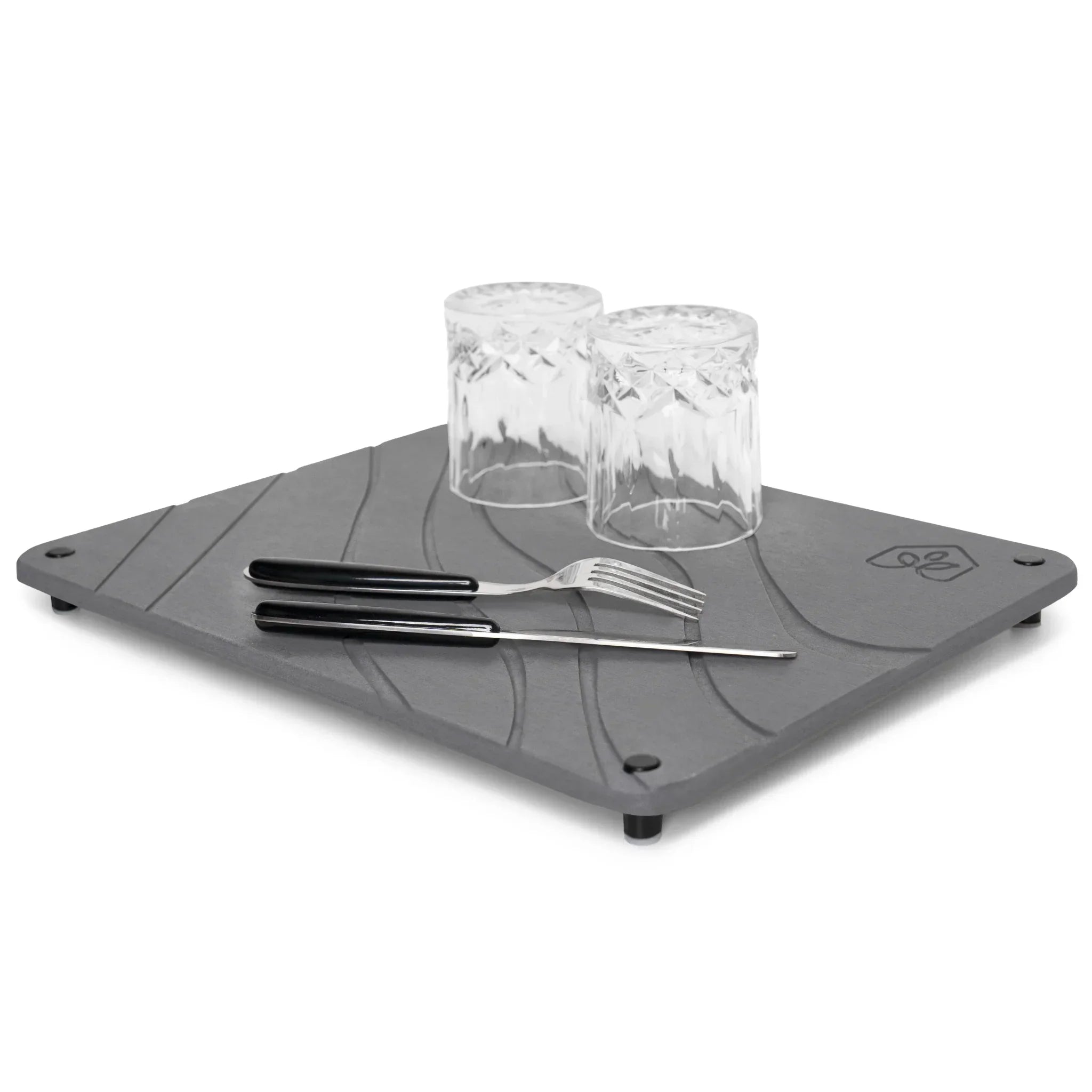
Flat mats create a problem most people don't think about until it's too late. When water gets trapped between the mat and your counter, it can't escape. That moisture sits there, potentially damaging the surface underneath or creating a breeding ground for mold. The solution isn't just about the stone material itself. It's about how the mat sits on your counter. Natureva's stone dish mats use stainless steel legs that lift the entire platform 2.5 cm above the surface. This creates a gap where air can flow freely underneath.
The legs alone would work, but there's another detail that matters. Six transparent silicone pads sit underneath those stainless steel legs, precision sized to match the exact diameter of each leg. They're 2 mm thick and 1.2 cm wide, sitting flush without any visible overhang. These pads do two things at once: they protect your countertop from scratches and pressure marks, and they act as anti-slip stabilizers when the surface gets wet.
- 2.5 cm elevation creates airflow underneath the mat
- Stainless steel legs provide stable, durable support
- Transparent silicone pads protect countertops from scratches
- Anti-slip function keeps the mat stable in wet conditions
- No trapped moisture between mat and counter surface
- Works on all materials without damage risk
This design prevents the exact problem that makes fabric mats frustrating. Water doesn't pool underneath, the counter stays protected, and the mat itself dries faster because air reaches both sides. Compared to microfiber alternatives, the elevated stone design eliminates the moisture trap issue entirely. Whether you have granite, marble, laminate, or wood counters, the silicone pads create a safe barrier.
Real Kitchen Performance and Maintenance
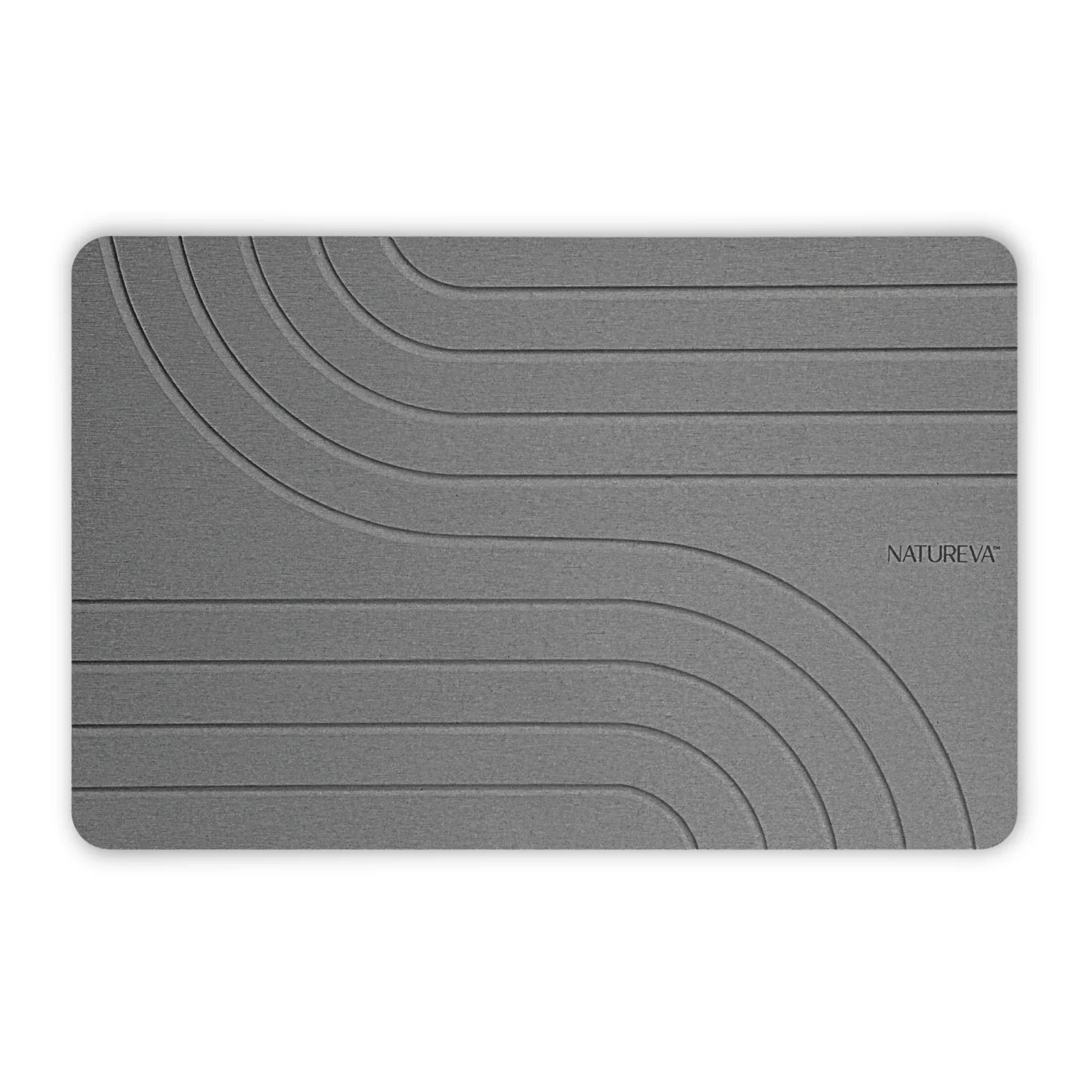
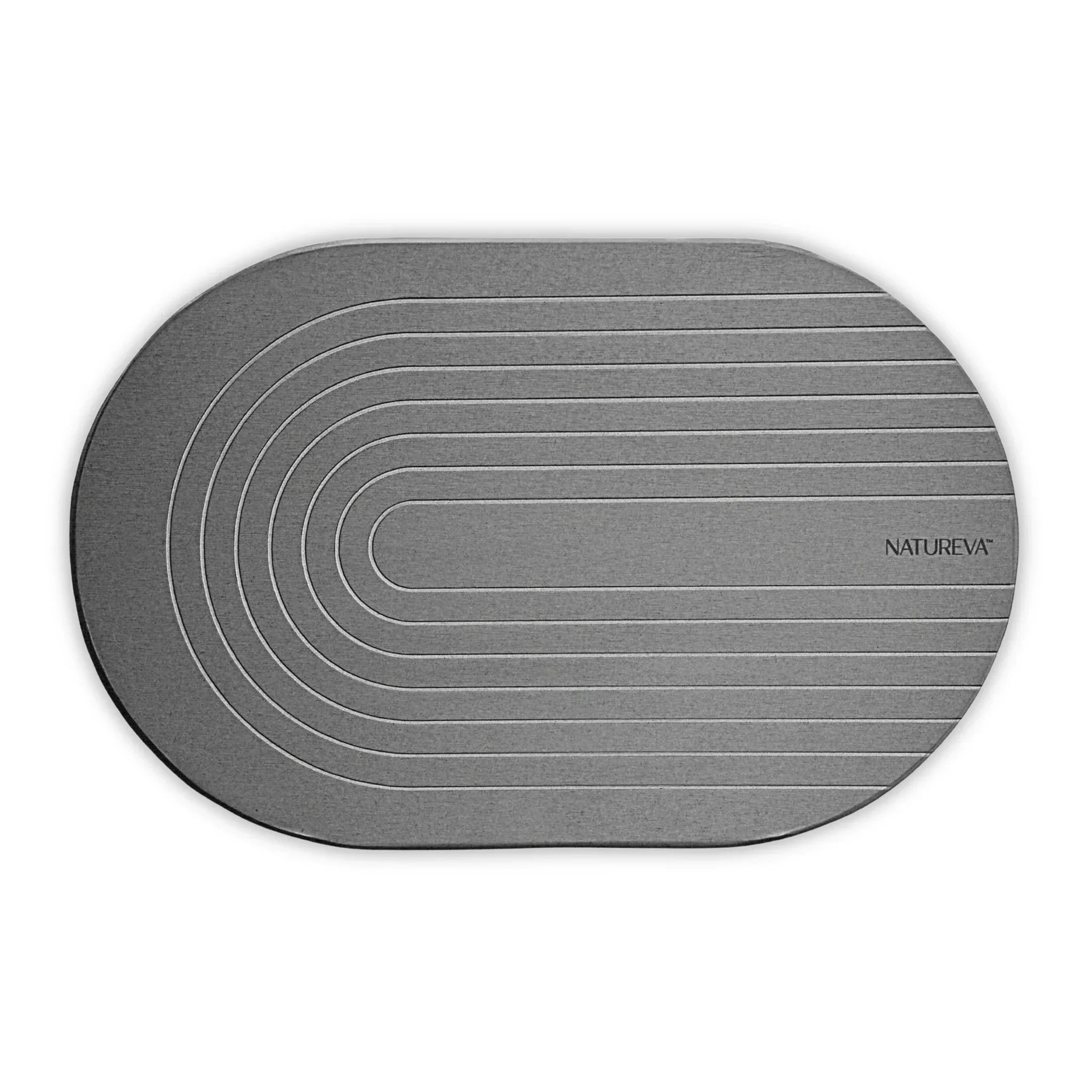
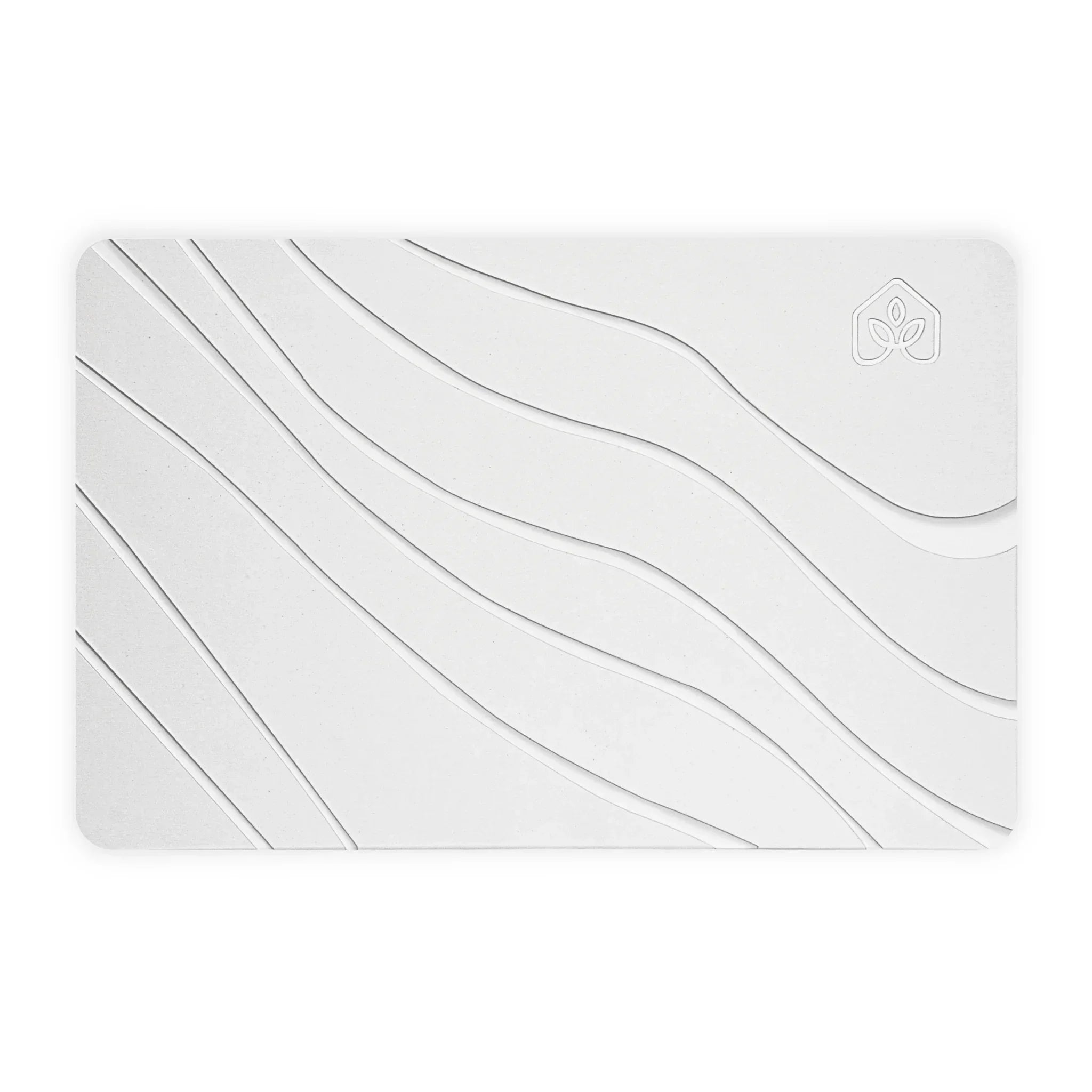
Theory is one thing, but daily use tells the real story. A stone drying mat for kitchen needs to handle everything from coffee mugs to cast iron pans without turning into a puddle. The surface absorbs drips from dishes, glasses, pots, and utensils without water pooling around the edges. You can stack wet items on it and the moisture gets pulled away from the bottom of each piece. The carved patterns on Natureva's Tide and Flow designs aren't just decorative. Those engravings create channels that help guide water across the surface for even faster evaporation.
Maintenance is simpler than most people expect. A weekly wipe with vinegar water keeps the surface clean and fresh. The porous nature of diatomite means you should avoid coloured soaps, which can stain the material. If something does stain, rinse it under water or use hydrogen peroxide for deeper marks. Over time, the surface pores can get clogged with minerals or residue, which slows down absorption. That's where the included sanding tool comes in.
- Weekly vinegar water wipe maintains surface cleanliness
- Sanding tool included to restore absorbency when needed
- Avoid coloured soaps that can stain porous surface
- Rinse stains under water or use hydrogen peroxide
- Air dry upright when fully saturated for fastest recovery
- Available in Tide and Flow designs with Graphite or Slate colours
The sanding tool is a P320 grit disc in a light grey colour, about 10 cm in diameter. Gently sanding the surface reopens those microscopic pores, bringing back the original absorption speed. It's a simple process that takes a couple minutes. If the mat gets completely saturated from a large spill or heavy use, prop it upright to air dry. The material will release that moisture naturally and be ready to use again within a few hours.
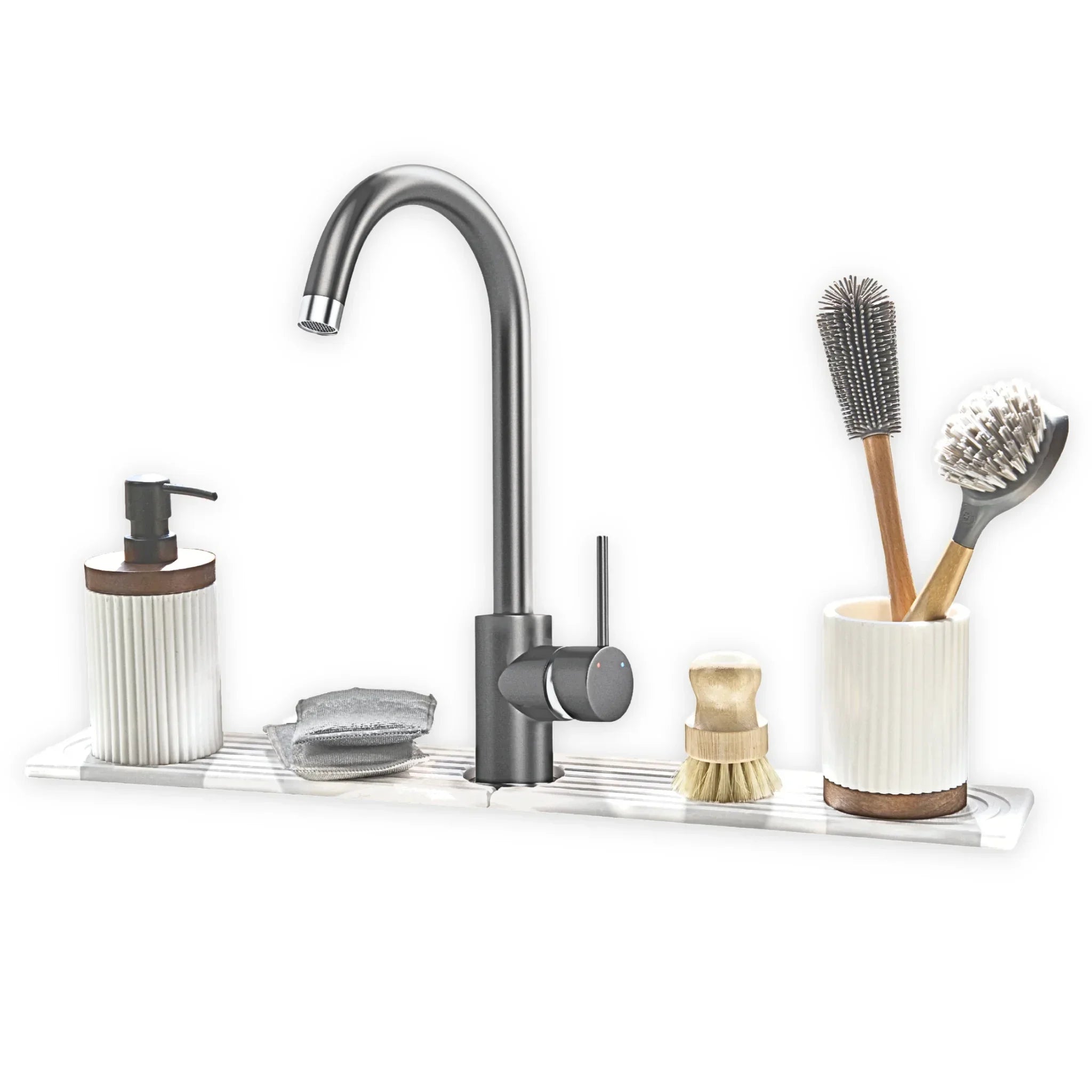
Natureva's Tide dish mat and Flow dish mat both measure 39.5 × 29.5 × 2.5 cm and weigh about 0.9 kg. They're solid enough to feel substantial but light enough to move around easily. The same elevation system and silicone pads work across the entire kitchen collection, including sink caddies and faucet mats. If you're looking at other areas of your home, the same diatomite technology appears in bath mats, coasters, and even a pet mat for feeding areas.
Keeping Benches Drier Starts with Better Materials
The problem with wet kitchen benches isn't just annoying puddles. It's the fact that most drying mats trap moisture instead of getting rid of it. Fabric mats sit there soaking wet for hours, creating the exact conditions where bacteria love to grow. A stone drying mat for kitchen use works differently because it absorbs water instantly and releases it back into the air through rapid evaporation. The surface stays dry, your bench stays protected, and you're not dealing with that damp smell that fabric mats develop over time.
What makes stone mats actually work is the combination of material and design. The diatomite stone dish mats we make sit on stainless steel legs that lift them 2.5 cm off your countertop. That gap underneath means air flows freely, so moisture never gets trapped between the mat and your bench. The silicone pads under each leg keep everything stable and protect your surface from scratches.
Maintenance is simpler than you'd think. A weekly wipe with vinegar water keeps the surface clean, and if absorption slows down after months of use, the included sanding tool reopens the pores in about 30 seconds. No washing machine needed, no waiting for things to dry.
The real benefit shows up in how your kitchen feels day to day. Benches stay drier, dishes dry faster, and you're not constantly wiping up water that's spread across the counter. Whether you go with the Tide or Flow pattern, the function stays the same. It's just a cleaner way to handle the water that comes with washing dishes.
Common Questions About Stone Drying Mats
Switching from fabric to stone might feel like a big change, and most people have similar questions before making the jump. The material works differently than anything you've used before, so it's normal to wonder about durability, maintenance, and whether it'll actually stay dry. Here's what people ask most often about stone drying mats for the kitchen.
How long does it take for a stone mat to dry completely?
Most stone drying mats dry within 30 to 60 minutes after use, depending on how much water they absorbed and the humidity in your kitchen. The diatomite pulls moisture into its porous structure and releases it back into the air through evaporation. If you live somewhere humid or your kitchen doesn't get much airflow, it might take a bit longer, but the surface itself feels dry to the touch within minutes.
Can stone mats handle heavy pots and pans?
Yes, stone dish mats are solid enough to support cast iron pans, ceramic dishes, and stacked plates without cracking. Natureva's dish mats are made from compressed diatomite composite that's dense and durable, not fragile like decorative stone. The elevated stainless steel legs also distribute weight evenly across the mat, so there's no single pressure point that could cause damage.
Do stone mats work on all countertop types?
Stone mats work on any flat countertop surface, including granite, laminate, wood, and tile. The transparent silicone pads underneath the stainless steel legs protect your bench from scratches and keep the mat stable even when wet. The slight elevation also prevents moisture from getting trapped between the mat and your counter, which is especially important on wood or sealed stone surfaces.
What happens if the mat stops absorbing water?
If your mat starts beading water instead of absorbing it, the surface pores are likely clogged with soap residue, oils, or mineral buildup. You can restore absorbency by lightly sanding the surface with the included P320 grit sanding tool, which reopens the microscopic pores. For stubborn stains or buildup, a quick wipe with hydrogen peroxide or a vinegar water solution usually does the trick before sanding.
How do stone mats compare to fabric mats in terms of hygiene?
Fabric mats stay damp for hours, which creates the perfect environment for bacteria and mildew to grow between washes. Stone mats dry so quickly that bacteria don't have time to multiply, and the material itself doesn't trap moisture or odours. You're not dealing with that sour smell that fabric mats get after a few days, and you don't need to throw them in the wash constantly.
Are stone dish mats difficult to clean?
Stone mats are easier to maintain than fabric because they don't absorb stains or hold onto grime. A weekly wipe with diluted vinegar keeps them fresh, and you can rinse them under water if something spills. There's no machine washing, no waiting for them to dry, and no fabric breakdown over time.
The next generation of home essentials: naturally made, cleaner by design, sustainable by nature.
SHOP ALL