
Article: How to Choose an Antibacterial Bathroom Mat That Stays Hygienic

How to Choose an Antibacterial Bathroom Mat That Stays Hygienic
A bathroom mat stays hygienic when it dries fast, not when it carries an antibacterial bathroom mat label. Most of the smell and mildew that build up on bath mats come from trapped moisture sitting in fabric or foam for hours after a shower, not from bacteria that a spray or coating could wipe out. Coatings marketed as antibacterial sit on the surface and wear away with every wash, and they do nothing about the damp fibres underneath where mould actually gets its start.
The real fix is simple: a surface dry enough that mould and mildew never get the conditions they need to grow. Mould needs moisture and time, usually more than a few hours of damp sitting still. A mat that absorbs water and releases it back into the air within minutes removes that window completely. That is a property of the material and how it is built, not something sprayed on afterward.
Table of Contents
Why Bathroom Mats Turn Gross So Fast
Mould and mildew need two things to grow: moisture and time. Lab studies on household surfaces put that window at roughly 24 to 48 hours of sustained dampness before spores take hold and start spreading through a material. A mat that stays wet past a single use, let alone a full day, gives mould exactly the conditions it needs.
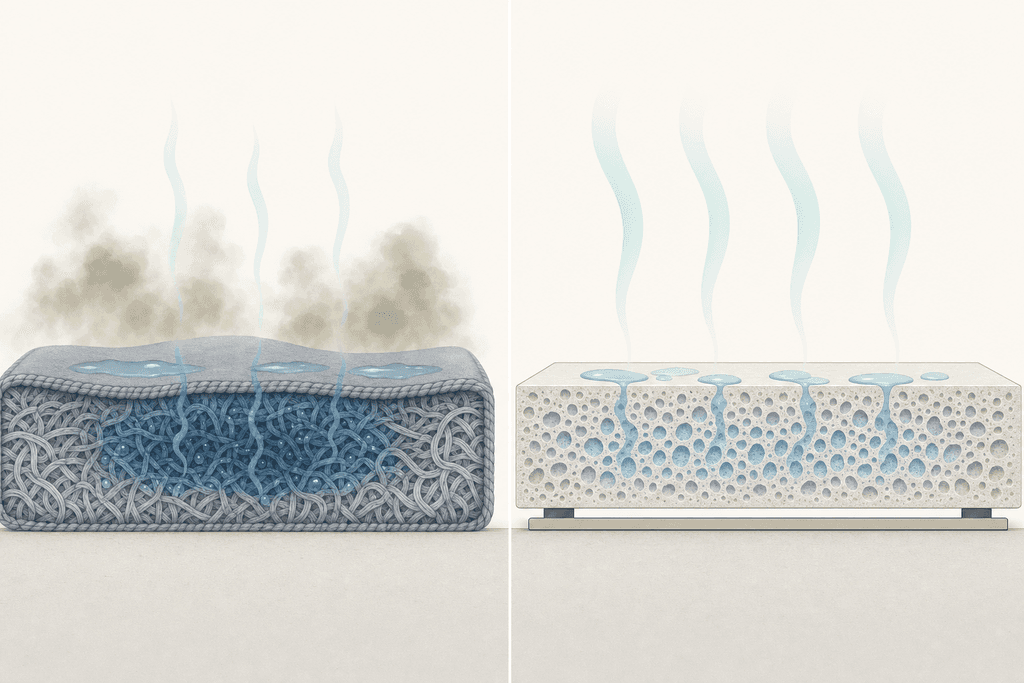
Fabric bath mats hold water inside their fibre loops with almost no airflow underneath, so the centre of the mat can stay damp long after the top feels dry to a bare foot. Rubber mats trap moisture between the mat and the floor, creating a sealed, humid layer that never gets exposed to air. Neither material was built to release water quickly, so the clock on mould formation starts the moment you step off.
Drying speed is the one variable that actually changes the outcome, and it differs a lot by material.
| Material | Typical dry time | Airflow underneath |
|---|---|---|
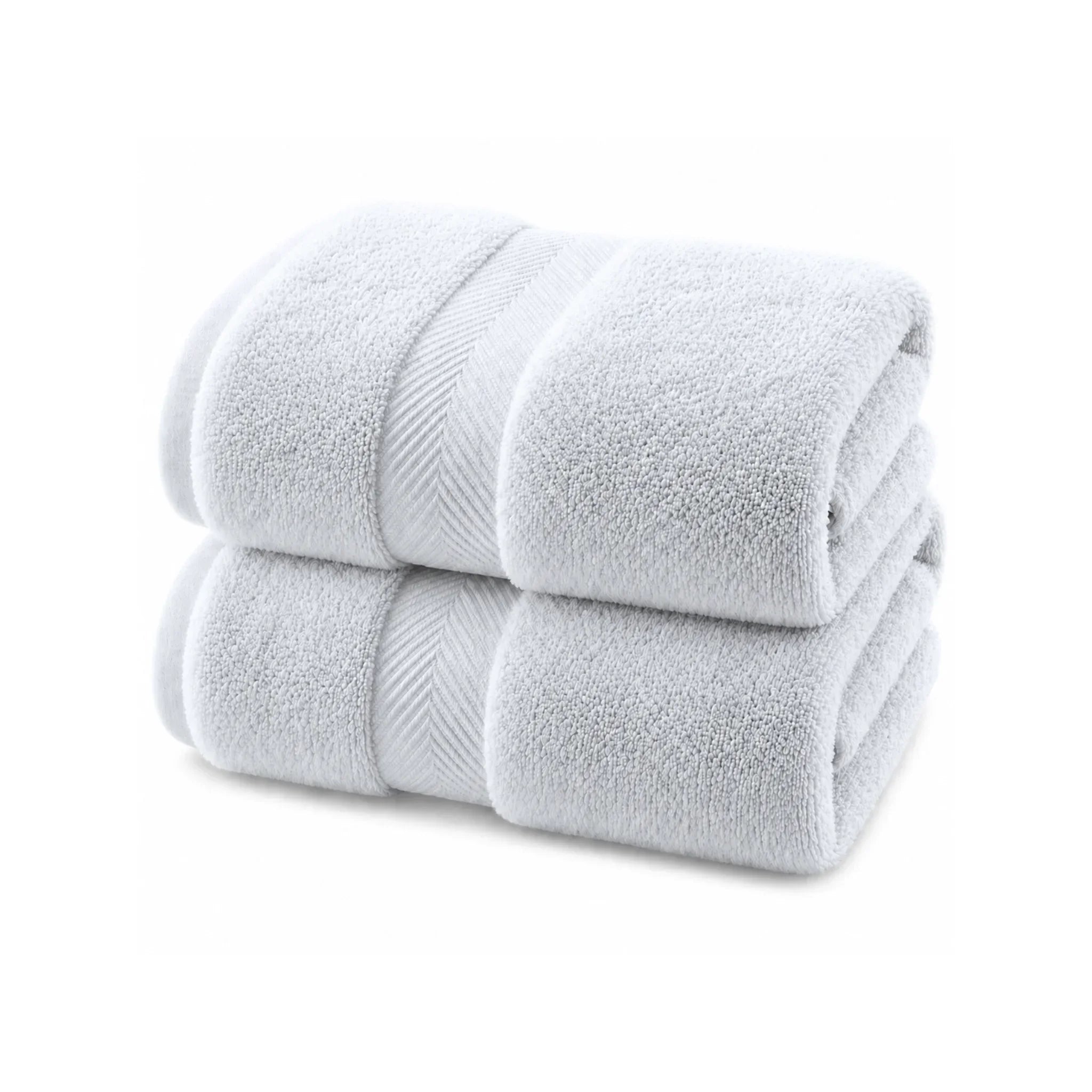
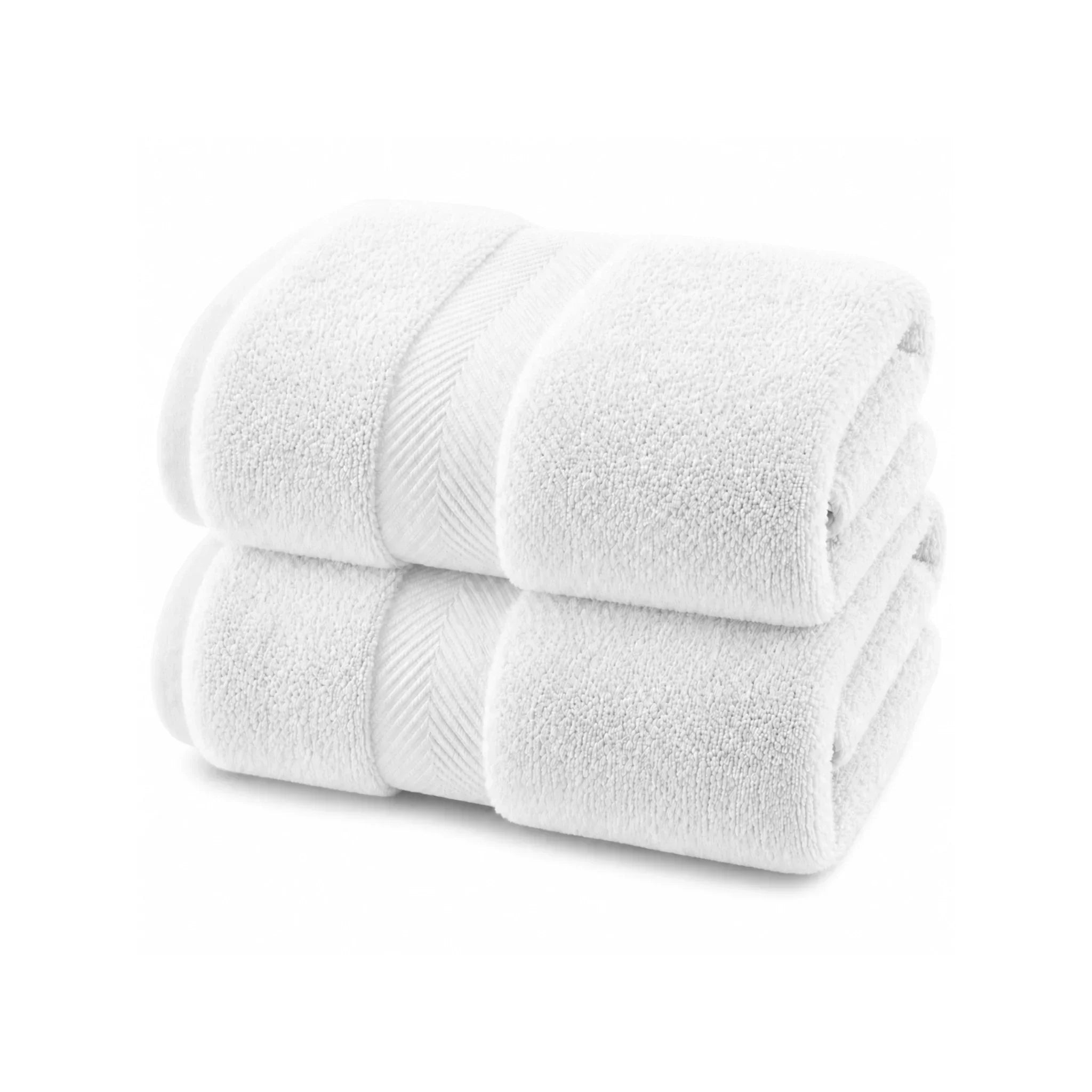
| Cotton or microfibre mat | 4-8 hours | None |
| Rubber-backed mat | 6-10 hours | None |
| Foam mat | 8-12 hours | Minimal |
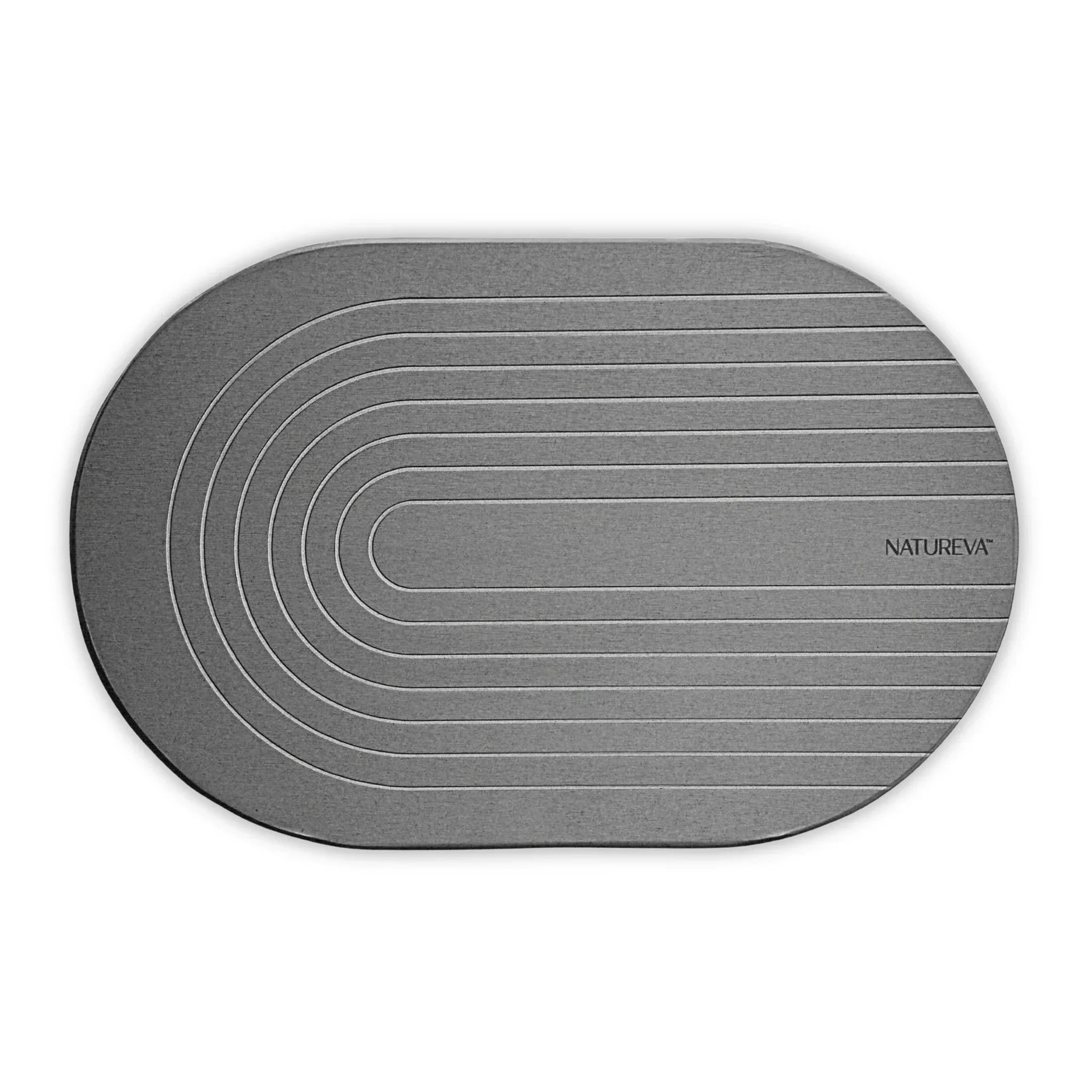
| Diatomite stone mat | Under 8 minutes | Full, via raised base |
What an Antibacterial Bathroom Mat Label Means
An antibacterial bathroom mat label usually points to a surface treatment, not a change in how the mat handles water. These claims fall under regulated pesticide-style advertising rules in most countries, which means the brand is supposed to hold test data proving the treatment actually does something, yet enforcement is patchy and many labels go unchecked.
A microbiologist quoted by The Skimm has pointed out that bath mats collect skin cells, soap residue, and moisture no matter what coating sits on top. The coating addresses one narrow slice of the problem while the mat underneath stays wet for hours.
Instead of trusting the word on the packaging, compare mats on how they actually behave after a shower:
- Ask for the lab or certification body behind any safety claim, not just a marketing phrase
- Check whether the claim covers the whole mat or only a surface coating
- Look for stated drying time, not vague wellness language
- Confirm the claim is renewed through testing, not a one-time stamp from years ago
The Material Traits That Actually Keep Mats Clean
Porosity decides how fast a mat clears water, and it matters more than any coating sprayed on top. Diatomite is riddled with microscopic pores that pull water in on contact and push it back out through evaporation, so the surface does the work without added chemicals.
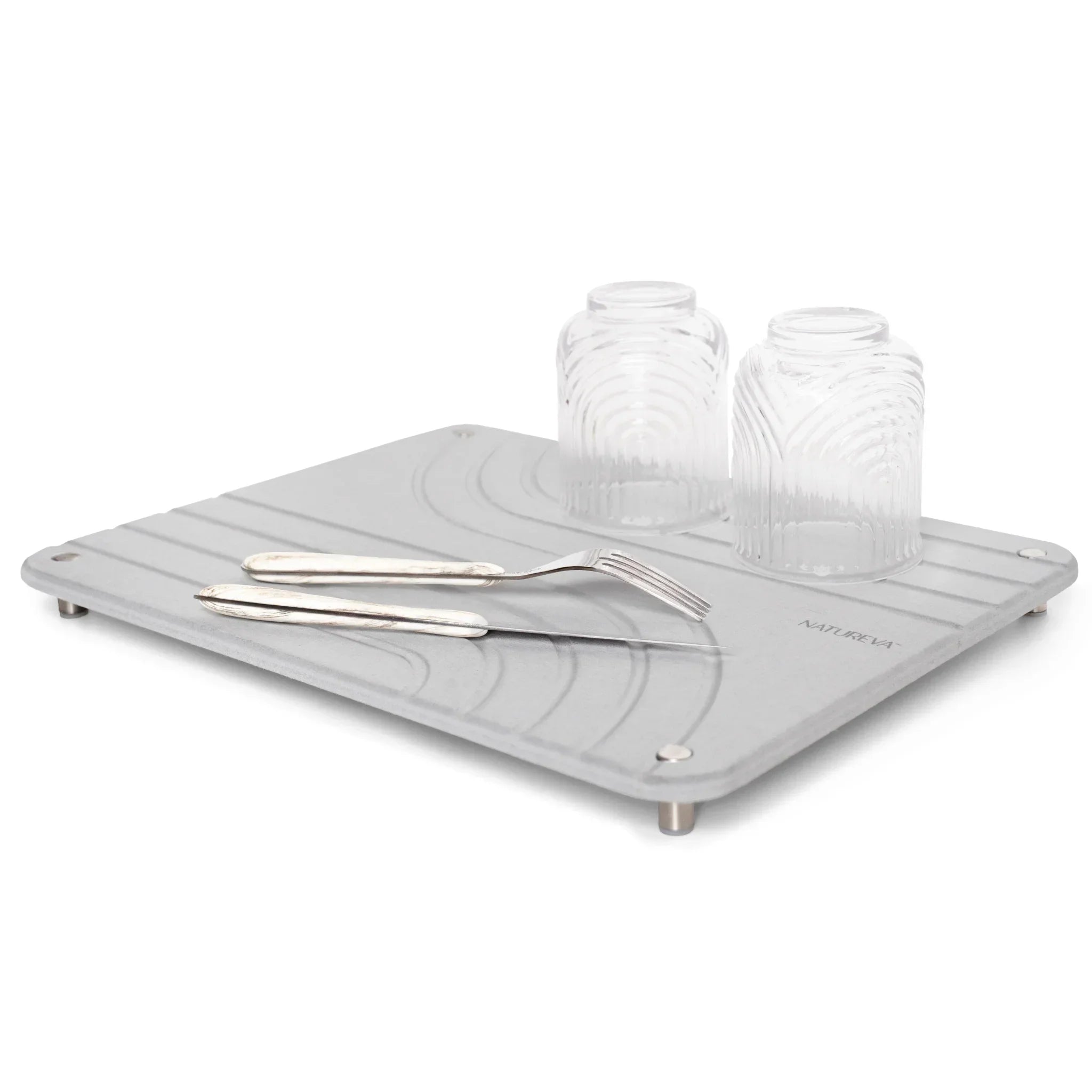
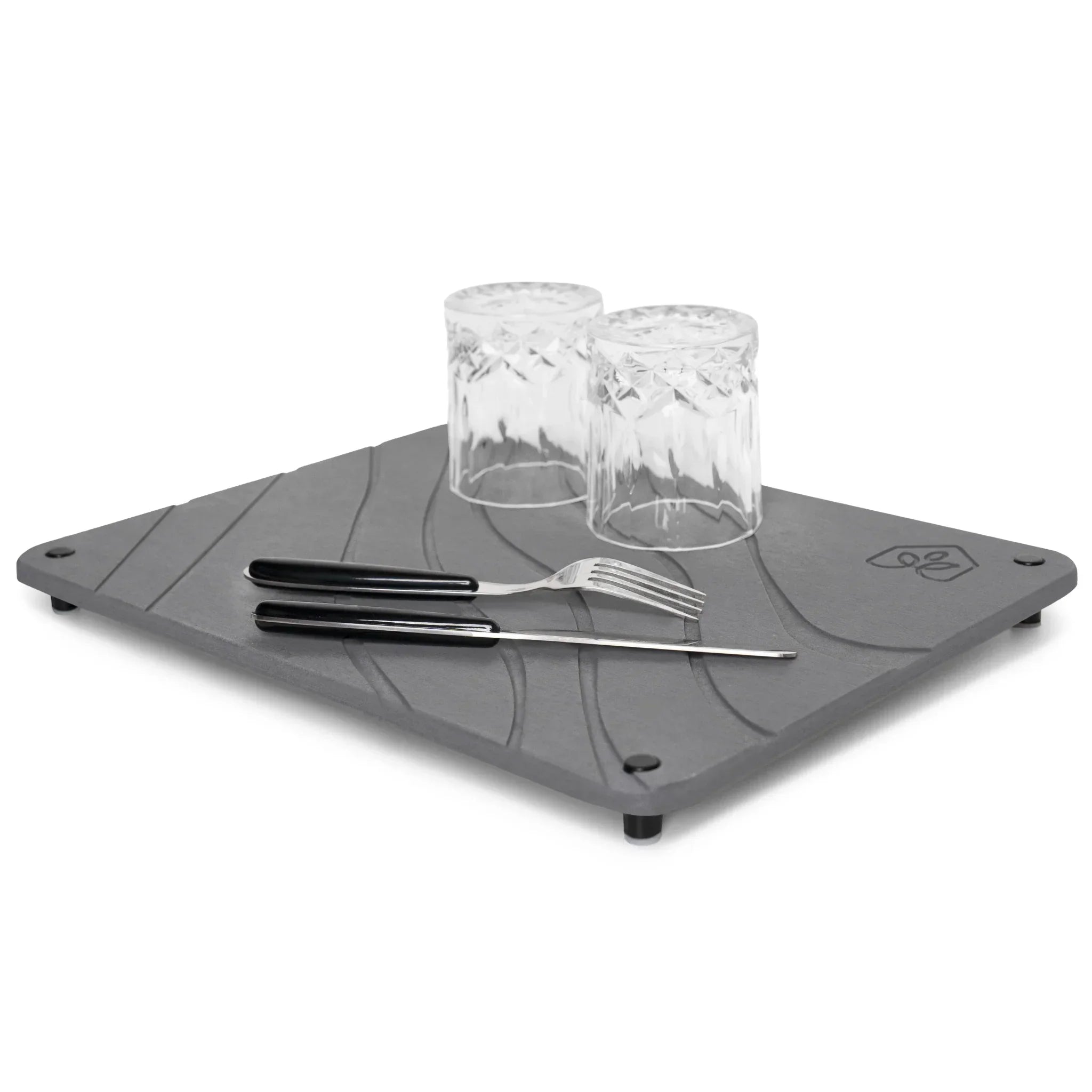
Elevation is the second trait that counts. A mat raised even a few millimetres off the tile lets air move underneath, which stops water from pooling in a sealed layer against the floor. Dense woven fabric and rubber backing do the opposite, holding water inside the material where it has nowhere to evaporate to.
When comparing options, weigh these four traits against each other:
- Pore structure: open and absorbent versus closed and water-resistant
- Base design: elevated with airflow versus flush against the floor
- Density: lightweight and breathable versus thick and water-retentive
- Surface finish: untreated material versus a chemical coating
Mats like the Flow stone bath mat combine open pore structure with a raised non-slip base, which is what gives porous stone its drying edge over fabric and rubber.
The next generation of home essentials: naturally made, cleaner by design, sustainable by nature.
SHOP ALLQuestions to Ask Before You Buy
Four questions tell you more about a mat's hygiene performance than any label on the packaging. Start by asking how long the mat takes to dry fully after a shower, since a damp mat left overnight is a mat that needs replacing sooner.
Next, check the base. A mat that sits flush against tile with no gap traps water underneath, while one with legs, pads, or a raised edge lets air pass through. Then ask for the certificate behind any safety or material claim, since a named lab and test date carry more weight than a vague phrase like "natural" or "safe."
Finally, think about your own washing habits before you buy:
- How long does the mat take to dry after one shower
- Does the base allow airflow or sit flat on the floor
- Is there a named, dated safety certificate behind the claim
- Will you realistically wash it every week to keep odour down
A mat that needs weekly hot washing just to stay odour-free is telling you something about its drying speed before you even get it home.
Keeping Any Mat Hygienic Over Time
Fabric mats need hot washes on a regular cycle plus full air drying between uses, since any lingering dampness in the fibres restarts the mould clock. Rubber-backed mats need the same attention to the underside, which is harder to dry since it never sees open air.
Stone mats work differently. They stay clean through rapid moisture evaporation and only need an occasional wipe with a damp cloth and a little cleaning vinegar, with no washing machine involved. If a stone mat starts absorbing more slowly after months of use, a P320 grit sanding disc reopens the surface pores and restores it, a step covered in more detail in this rundown of diatomite bath mat features to check before buying.
What matters most is matching the material to your household. A home with kids, pets, or a steamy bathroom and no exhaust fan puts more moisture through a mat in a week than a quiet adult household does in a month, and that difference should decide what you buy before price or colour does.
Coating Versus Drying Speed, the Real Choice
A coating and a fast-drying material solve two different problems, and only one of them matches what actually happens to a bathroom mat. A coating is a layer added after the mat is made, designed to act on whatever grows on the surface. A fast-drying material changes the surface itself, so there is nothing left for mould to grow on in the first place.
Lab certification tells you something a label cannot. A NATA-accredited Australian laboratory tests for material safety, including confirming a stone product is free of asbestos, a known risk in unverified diatomite sourcing. That is a dated, named, repeatable test result, not a phrase chosen by a marketing team.
- Coating: added after manufacture, wears off with washing, targets symptoms on the surface
- Fast-drying material: built into the material itself, does not wear off, removes the damp conditions mould needs
- Lab certification: a dated test from a named body, repeatable and checkable by the buyer
An independently tested stone surface can dry fully in under 8 minutes, confirmed by a Homes To Love review of a diatomite bath mat. That number is the clearest proof point in this comparison: a mat that clears water in minutes never gives mould the 24 to 48 hours of sustained dampness it needs to take hold, no coating required.
Judge the Mat in Front of You
Pick up the mat and check two things before you check the price tag: what it's made from, and how fast that material clears water. Skip any packaging claim that doesn't name a lab, a test date, or a drying time in minutes. A mat built from diatomite, like Natureva's stone bath mats, is designed around the drying mechanism itself and carries NATA-accredited testing confirming the material is asbestos-free, a fact you can check rather than take on faith. That's the standard to hold any mat to, stone or fabric: does it dry fast enough to starve mould of the time it needs, and can the brand show you proof.
The next generation of home essentials: naturally made, cleaner by design, sustainable by nature.
SHOP ALLBathroom Mat Hygiene Questions
Can I spray a regular bath mat to make it antibacterial myself?
A spray can reduce surface bacteria temporarily, but it does nothing to dry out the fibres or foam underneath. The moisture that feeds mould and mildew stays trapped in the material regardless of what you spray on top. Washing and fully air drying the mat between uses does more than any spray, since it removes the dampness mould actually needs.
Why does my bathroom mat smell musty even after washing it?
A musty smell after washing usually means the mat did not dry all the way through before its next use. Thick fabric and foam mats can take hours to dry fully, even after a hot wash, so damp fibres sit against each other and start smelling again within a day or two. Wringing the mat and hanging it somewhere with airflow, rather than laying it flat on tile, speeds this up.
Is a mat with no visible texture still able to dry quickly?
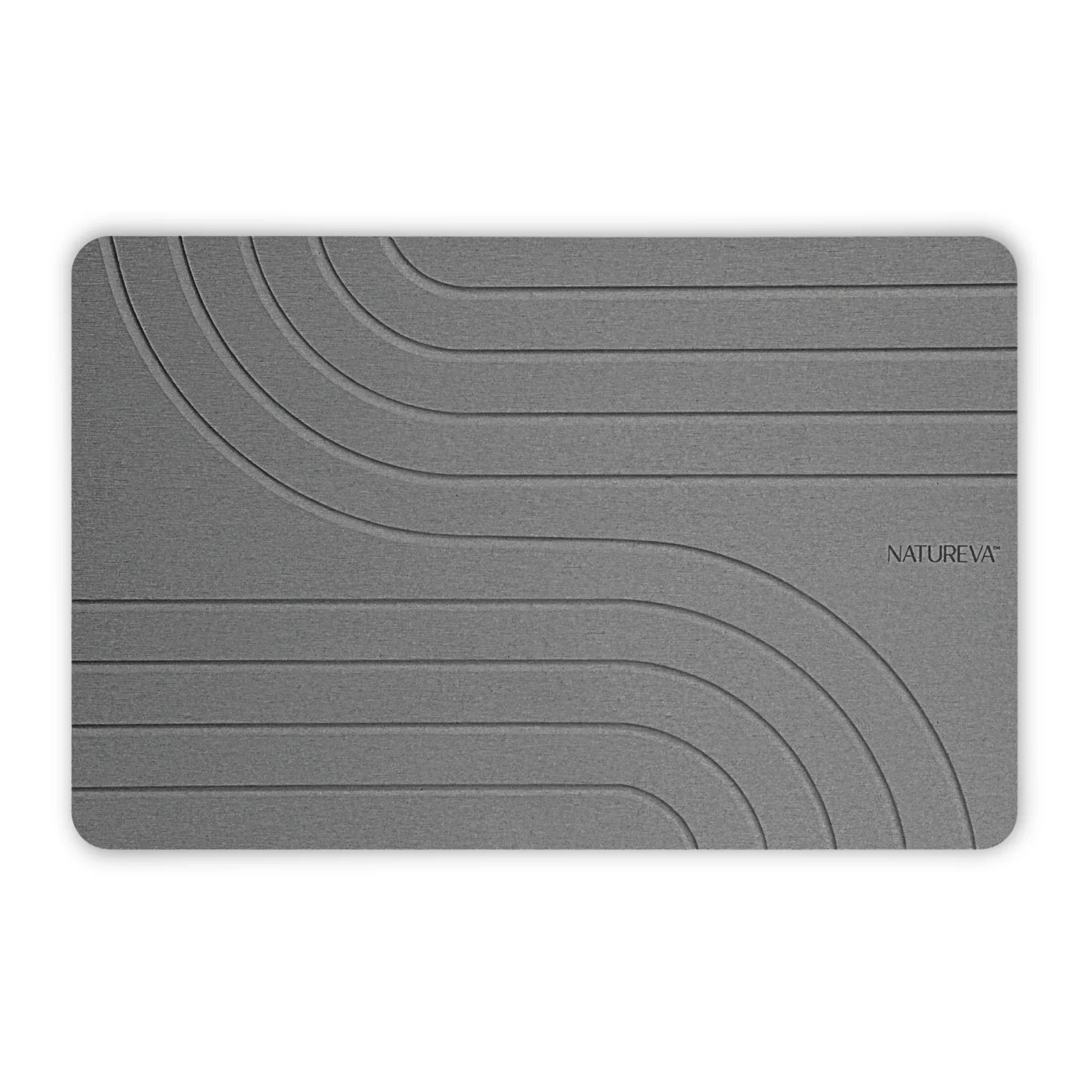
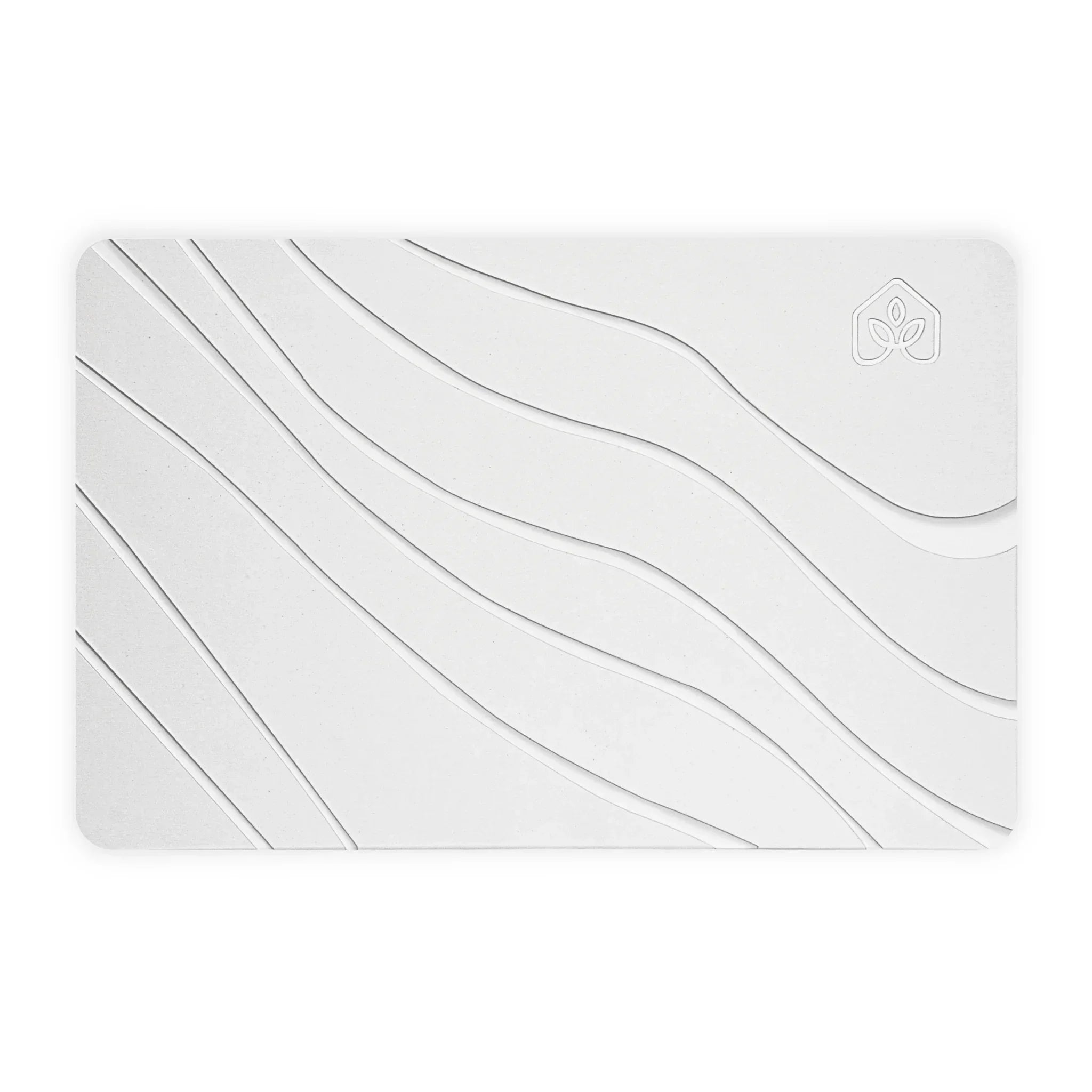
Drying speed comes from what the mat is made of, not whether you can see a pattern on top. A smooth diatomite surface, like the Natureva stone bath mats, pulls water in through microscopic pores regardless of the engraved design on the surface. The carved patterns on stone mats are a design choice, not the part doing the absorbing.
Do hygienic mats cost more to maintain long term than regular ones?
A fast-drying stone mat generally costs less to maintain than a fabric mat over time, since it skips the washing machine entirely. Fabric and rubber mats need regular hot washes plus full drying time to stay odour-free, which adds detergent, energy, and water use every week. A stone mat only needs an occasional wipe with a damp cloth and vinegar, with a sanding disc on hand for the rare deep stain.