

Keep Your Bathroom Dry After a Shower With These Simple Steps
A hot shower can push bathroom humidity above 90 percent, and it can take over an hour for that moisture to fully clear the air. During that time, water sits on your floor, walls, and bath mat, creating the exact damp conditions where mould and mildew start to grow. The good news is that keeping your bathroom dry after a shower does not take a deep clean, it just takes a few small changes and the right materials in the right spots.
How long should you run the bathroom fan after a shower?
Run the bathroom exhaust fan for at least 20 to 30 minutes after a shower to fully clear humid air. This prevents moisture from settling on walls, ceilings, and grout, where mold spores thrive.
Why does a bath mat make a bathroom more humid?
A bath mat traps and holds shower moisture instead of letting it evaporate, keeping the floor damp for hours after use. Mats made of cotton or foam absorb water rather than release it, making them a hidden source of mold and mildew.
What is the best way to keep a bathroom dry without constant cleaning?
Preventing moisture buildup through ventilation, quick-dry materials, and daily habits like squeegeeing surfaces is more effective than repeated cleaning. Addressing humidity at the source stops mold growth before it starts, eliminating the need for heavy scrubbing later.
Table of Contents
- What Actually Causes Bathroom Moisture Buildup
- Simple Habits That Cut Down Bathroom Humidity
- Why Your Bath Mat Might Be Making Things Worse
- Ventilation and Airflow Fixes That Actually Work
- Choosing Materials That Dry Themselves
- Why Prevention Beats Constant Cleaning
- A Drier Bathroom Takes Less Effort Than You Think
- Common Questions About Keeping Bathrooms Dry
What Actually Causes Bathroom Moisture Buildup
A single hot shower can release more than half a litre of water into the air as steam. That water has to go somewhere, and in most bathrooms it lands on the walls, mirrors, floors, and whatever mat is sitting there. This is why so many people search for how to keep bathroom dry after shower, because the problem isn't really the shower itself, it's what happens in the ten minutes after you turn the water off. Understanding where that moisture goes is the first step to actually dealing with it. Once you know the sources, the fix becomes a lot more obvious.
Here's a simple breakdown of common moisture sources in a bathroom and roughly how long each one takes to dry on its own.
| Moisture Source | Typical Drying Time |
|---|---|
| Tile floor | 15 to 30 minutes |
| Fabric bath mat | Several hours |
| Rubber bath mat | Hours, often stays damp underneath |
| Mirror or glass surfaces | 10 to 20 minutes |
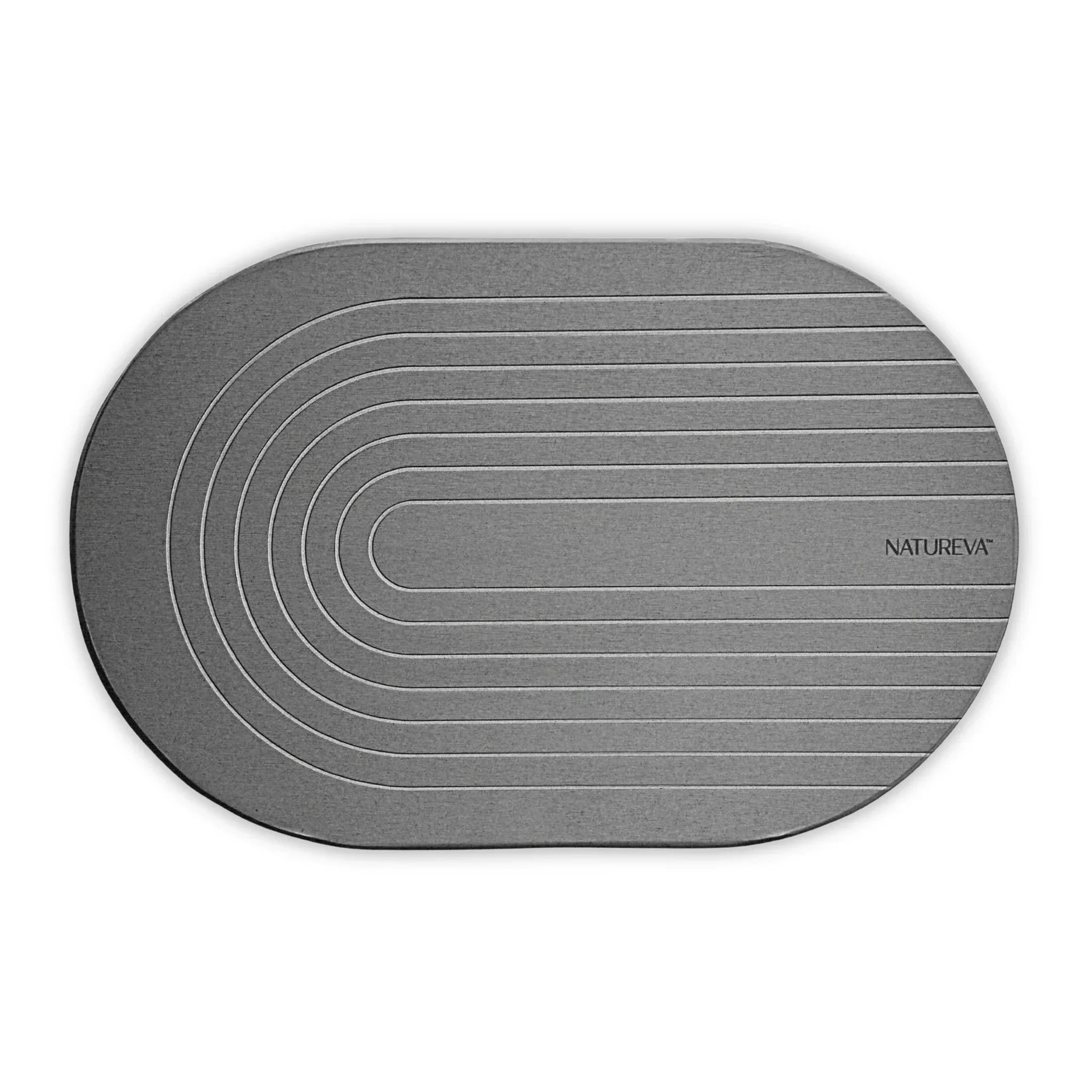
| Diatomite stone mat | Under 8 minutes |
Ventilation plays a big role too. Without a fan or open window, steam has nowhere to escape, so it just settles back onto surfaces. That trapped moisture is exactly the kind of damp condition where mould and mildew develop. A few things make this worse in most bathrooms:
- Small or windowless bathrooms with weak exhaust fans
- Thick towels left bunched up on the floor
- Fabric or rubber mats that soak up water but don't release it
- Long, hot showers that pump out more steam than usual
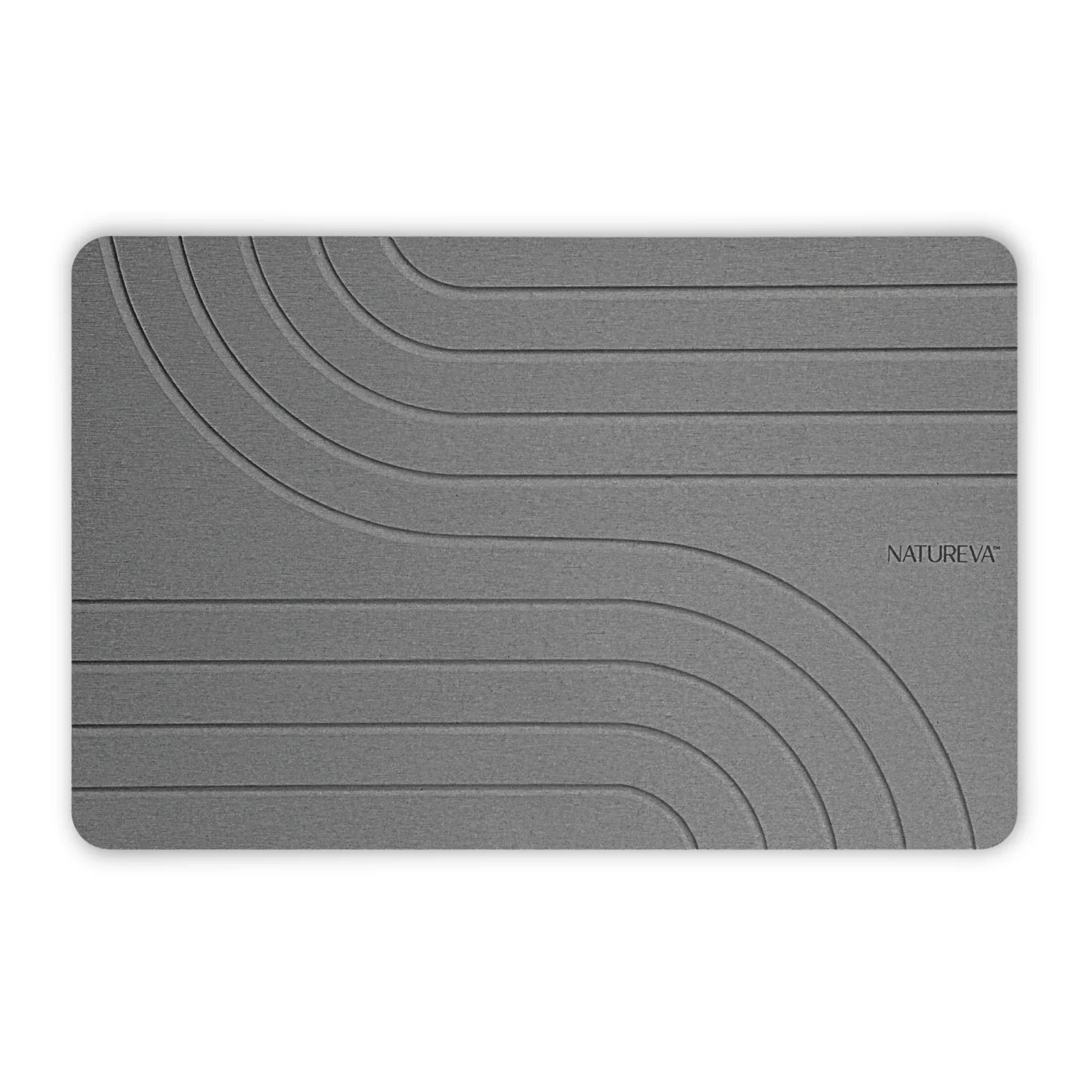
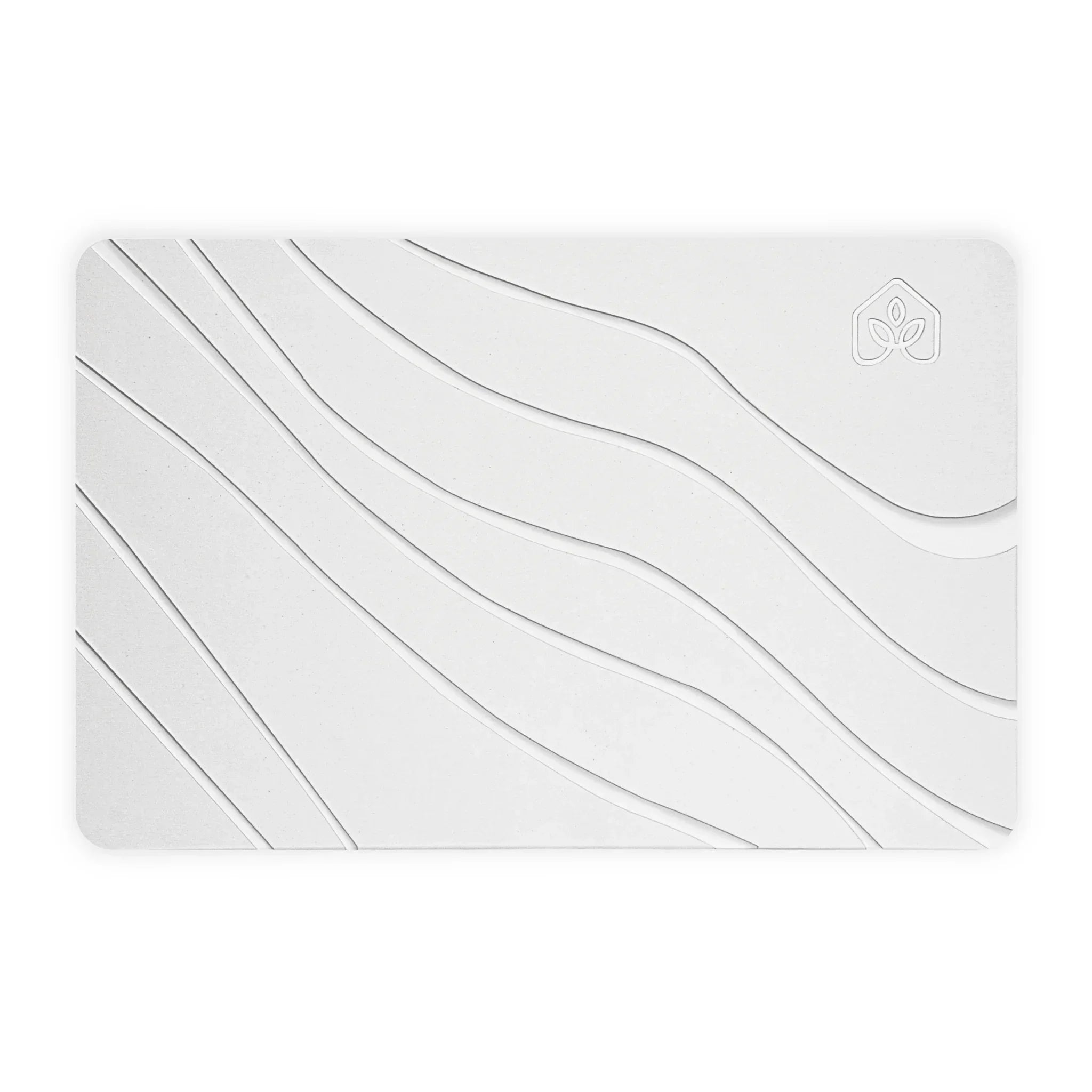
That last point about mats matters more than people realise. Fabric and rubber mats hold water instead of releasing it, which means they stay wet long after your feet are dry. This is one of the exact problems Natureva's stone bath mats were designed around, since diatomite pulls moisture in and lets it evaporate fast instead of sitting there. It's a small difference in material, but it changes what your bathroom floor looks and feels like an hour after a shower.
Simple Habits That Cut Down Bathroom Humidity
A hot shower dumps about half a litre of water into the air as steam, and that moisture has to go somewhere. If it just sits there, you're basically growing a science experiment on your ceiling. The good news is you don't need fancy equipment to deal with it. A few small habits, done right after you turn off the water, make a real difference.
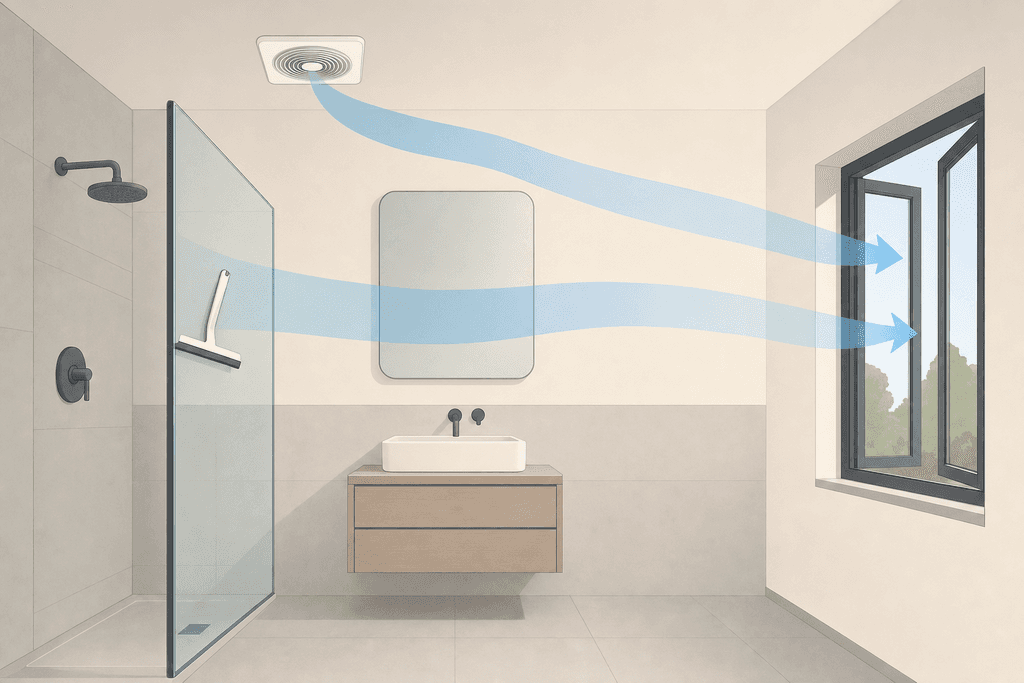
Run the exhaust fan for at least 20 minutes after showering. Most people switch it off the second they step out, which defeats the purpose since steam keeps lingering in the air. Leaving it on a bit longer pulls out the humid air before it settles onto walls and tiles.
- Squeegee glass and tiles right after you shower to remove standing water
- Crack a window or door so fresh air can push the steam out
- Hang towels and mats spread out, not bunched into a damp pile
- Wipe down the sink and counter if water splashed during your shower
These steps take maybe two extra minutes. The EPA's guide on mold and moisture backs this up too, noting that controlling moisture is the single biggest factor in stopping mould before it starts.
Why Your Bath Mat Might Be Making Things Worse
Your bath mat could be the wettest thing in the whole room, and you probably don't even notice. Fabric mats soak up water fine, but they can take hours to actually dry out, so you're stepping onto a damp sponge every single time you get out of the shower. Rubber and silicone mats aren't much better since water gets trapped underneath where you can't see it, creating a hidden damp spot that never really airs out.
This is where diatomite stone mats work differently. Diatomite is a naturally porous material made from fossilised algae, and it's full of microscopic holes that pull water in on contact, then release it back into the air fast. There's no waiting around for it to dry.
| Mat Type | Dry Time | Mould Risk |
|---|---|---|
| Fabric | Several hours | High |
| Rubber | Hours, traps moisture underneath | Moderate to high |
| Silicone | Hours, traps moisture underneath | Moderate to high |
| Diatomite stone | Under 8 minutes | Low |
Independent testing by Homes To Love confirmed the Natureva stone bath mat dried fully in under 8 minutes. That's the kind of drying time that leaves no damp environment for odour or mould to form in the first place. If you want to see how the material actually works, our complete guide to diatomite breaks down the science in plain terms.
Ventilation and Airflow Fixes That Actually Work
Bad airflow is usually the real reason a bathroom stays damp long after everyone's finished showering. Even a strong exhaust fan won't help much if the vent cover is caked in dust, so it's worth pulling it off and giving it a clean every few months. Beyond the fan itself, small changes to how you set up the room can speed up drying quite a bit.
- Check your exhaust fan strength and clean the vent cover regularly
- Keep shower doors or curtains slightly open after use so air can circulate
- Elevate bath accessories on legs or pads to let air move underneath
- Avoid stacking damp towels or mats against the wall where air can't reach them
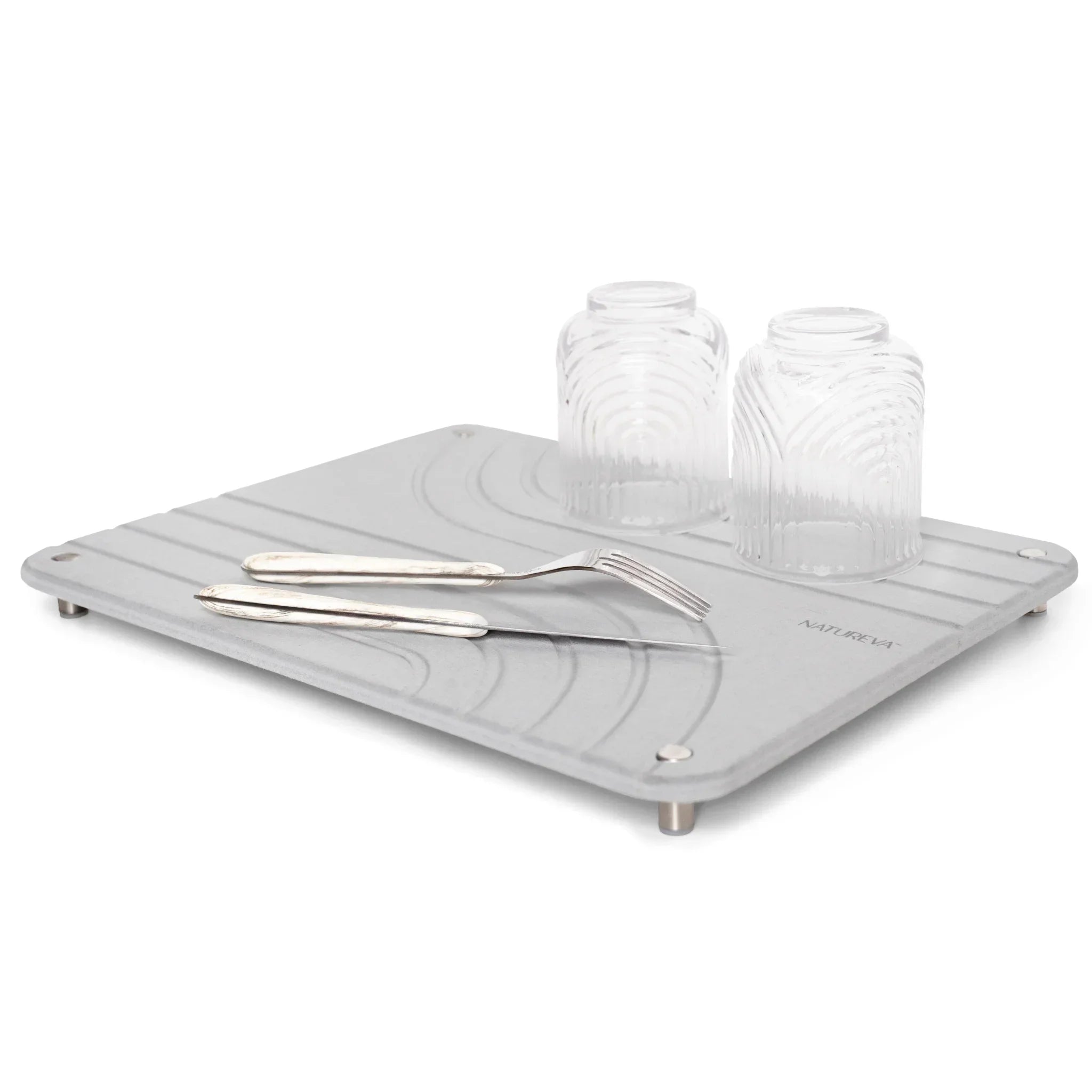
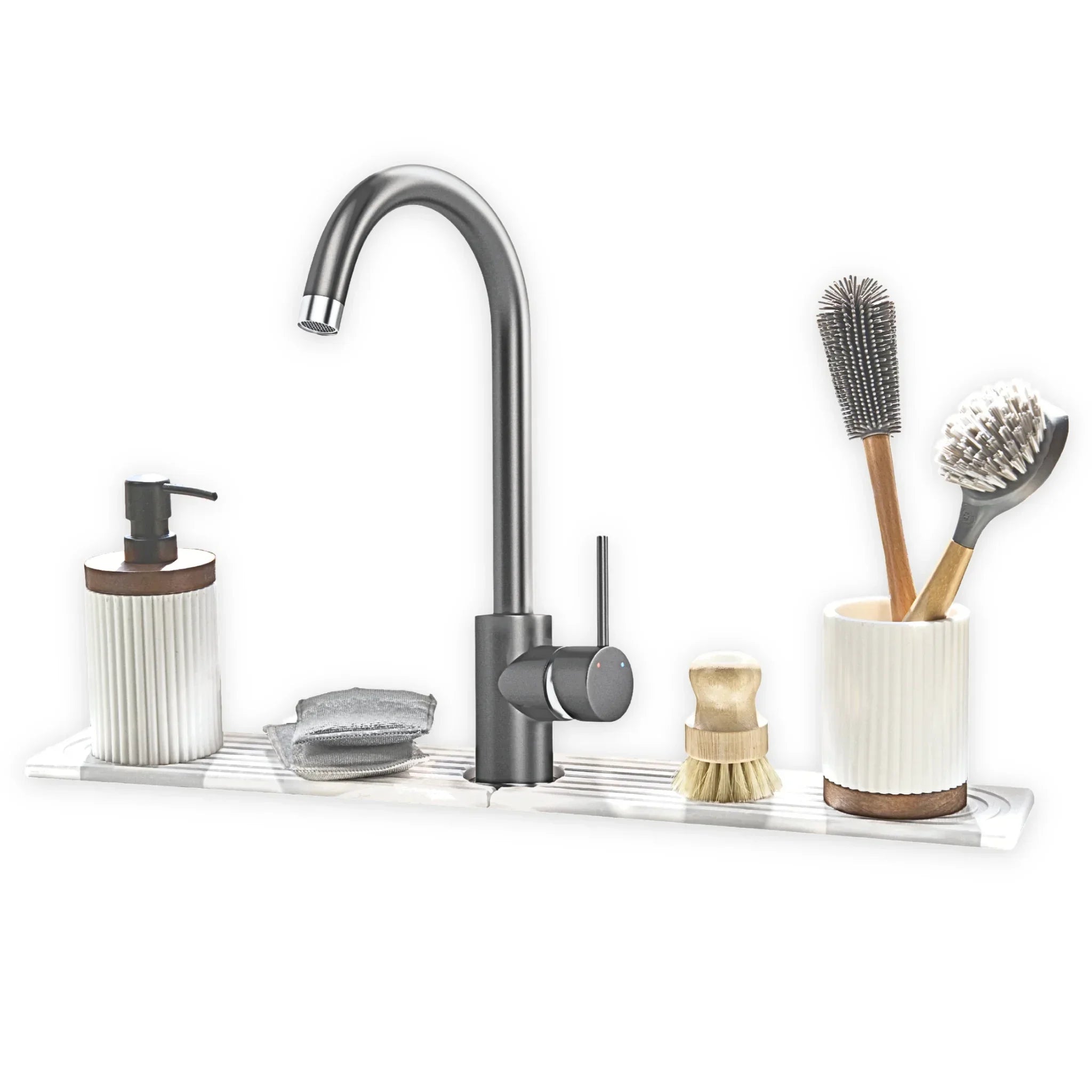
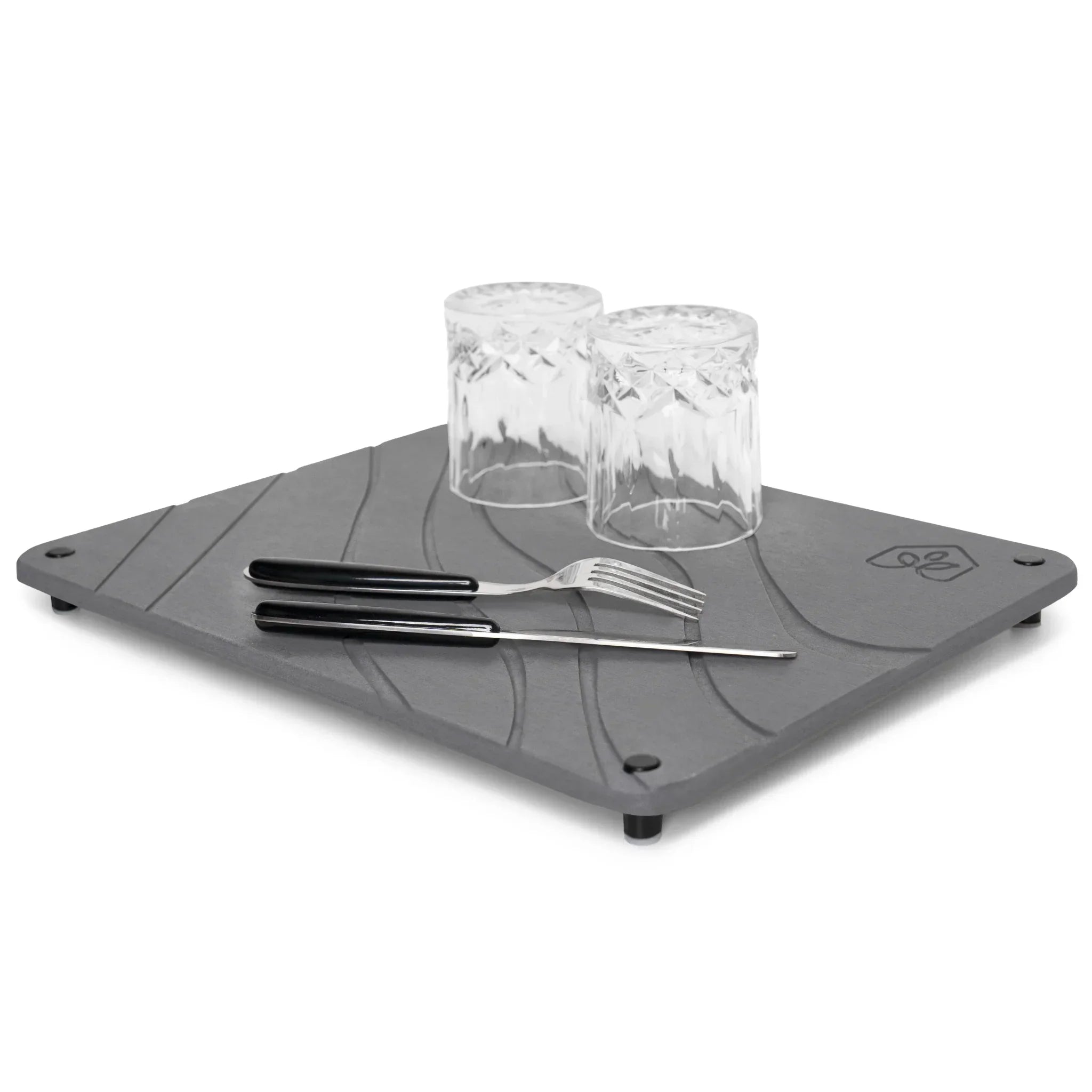
That last point matters more than people think. A mat or towel pressed flat against tile or a wall has nowhere for moisture to escape. This is why products like the stone sink caddy sit on raised stainless steel legs, giving a 2.5 cm gap underneath for air to move freely. For more structural fixes around the house, this guide on preventing bathroom condensation covers ventilation upgrades worth considering if your fan just isn't cutting it.
Choosing Materials That Dry Themselves
Habits only get you so far. You can squeegee the glass and crack the window every single day, but if the materials in your bathroom hold onto water, you're still fighting an uphill battle. Better materials solve moisture problems better than better habits ever will, which is really the whole idea behind switching to stone.
Diatomite stays hygienic through its drying mechanism, not chemical coatings. There's nothing sprayed on, nothing to wear off over time. A coordinated setup, like matching pieces from the bathroom collection, keeps every wet zone in the room drying the same way.
- No synthetic coatings or moisture-trapping finishes
- Works through evaporation, not additives
- Comes with a sanding tool to restore surface pores when absorbency slows down
- Pairs across bath mats, faucet mats, and sink caddies for a full system
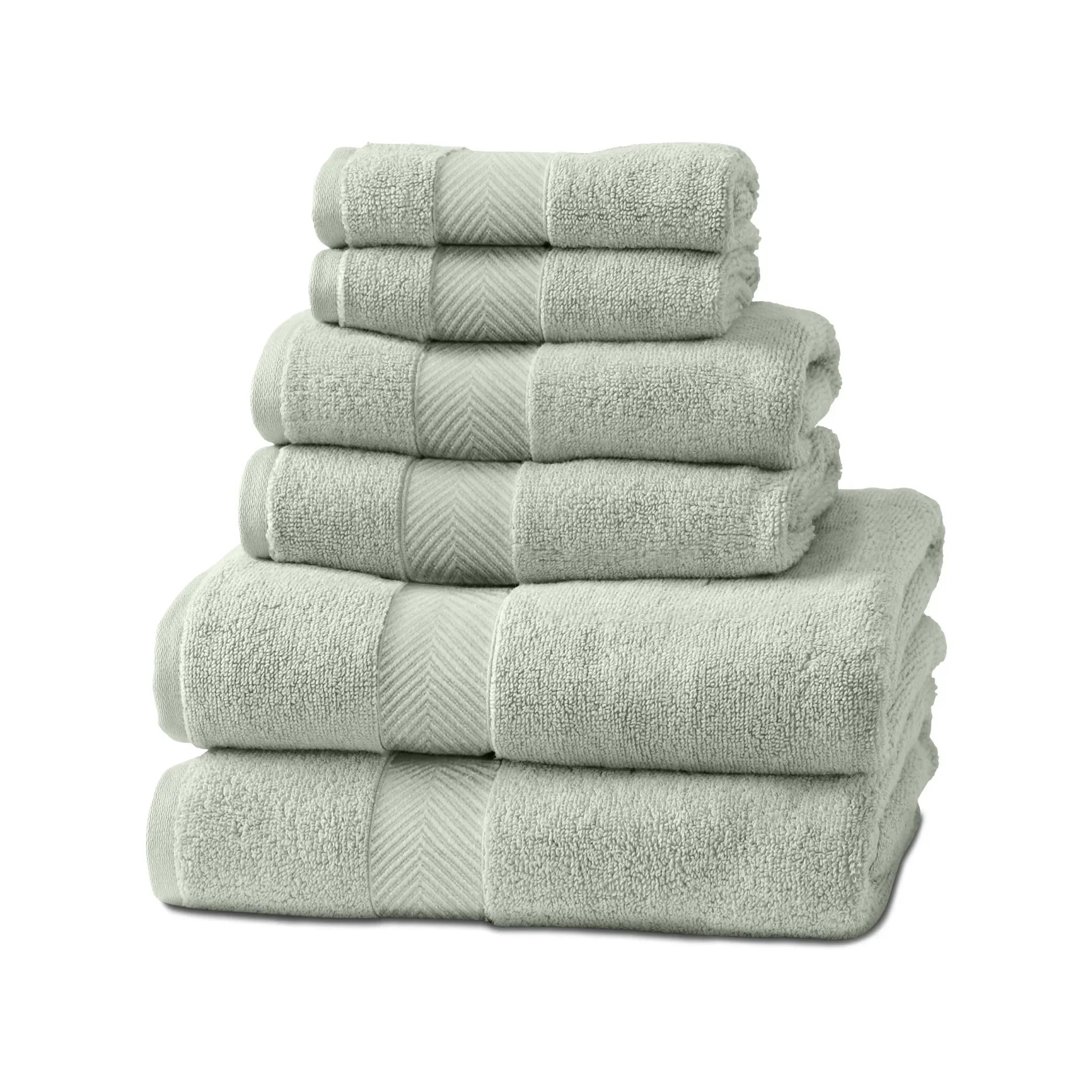
Compare that to fabric mats, which need frequent washing and still stay damp between uses, versus stone that just needs an occasional light sanding to keep performing. If you're weighing which mat shape fits your space, the five features to check before buying a diatomite mat is worth a quick read before you decide. And if towels are next on your list, pairing stone with the bath towel range keeps the fast-drying approach going past the floor.
Why Prevention Beats Constant Cleaning
The next generation of home essentials: naturally made, cleaner by design, sustainable by nature.
SHOP ALLMost people treat a damp bathroom like a chore they have to repeat forever. Wash the mat, dry the mat, wash it again next week. That cycle feels productive, but it's really just cleaning up a mess after it's already happened. If you want to know how to keep bathroom dry after shower without doing laundry every few days, the answer isn't a better scrubbing routine. It's removing the water before it has time to sit around and cause problems.
Fabric mats soak up water and hold onto it. That's the whole problem in one sentence.
- Fabric fibers trap moisture deep inside, away from air
- Wet fabric takes hours to fully dry, sometimes a full day in humid weather
- Mould and mildew need damp conditions to grow, and a wet mat gives them exactly that
- Weekly washing only resets the clock, it doesn't stop the cycle from starting again
A fast-drying surface changes the timeline completely. Instead of water sitting for hours, it evaporates in minutes.
That number matters more than it sounds. Under 8 minutes means there's barely a window for mould or mildew to even get started, let alone take hold. Compare that to a fabric mat still damp at the end of the day, and the difference in maintenance adds up fast over a month.
Good habits still help. Cracking a window, running the exhaust fan, wiping down the shower glass, these all cut down moisture in the room. But habits alone can't fix a mat that's designed to hold water rather than release it.
- Pick a surface material built to dry fast, not just absorb
- Pair it with basic airflow habits like ventilation
- Skip the weekly wash cycle since there's nothing sitting around to grow
This is where Natureva's stone bath mats fit into the picture. Instead of asking you to wash and dry a mat constantly, the diatomite surface does the drying work on its own, so there's less for mould and mildew to latch onto in the first place.
A Drier Bathroom Takes Less Effort Than You Think
Cracking a window, running the exhaust fan, and wiping down the shower glass are habits that matter just as much as any product you buy. But habits only get you so far if the mat under your feet is soaking up water and holding onto it for hours. That's the part most people forget about, and it's the part that actually causes most of the damp, musty smell problem in the first place.
Swapping out a fabric or rubber mat for something that actually dries is the single biggest change you can make. Fabric holds water. Rubber traps it underneath. Neither one is doing you any favors, no matter how often you wash them.
A few things worth keeping in mind:
- Airflow habits (fans, windows, wiping down surfaces) reduce overall moisture in the room
- The mat you stand on either helps or works against everything else you're doing
- A dry bathroom floor is also a safer one, since damp fabric mats are more likely to slide or bunch up
This is really the whole idea behind a stone bath mat, it does the drying work on its own, so you're not relying on habits alone to keep the room in check. If you're curious about what actually makes these mats dry so fast, our complete guide to diatomite breaks down the material science behind it.
Small changes stack up fast. Better airflow, a mat that actually does its job, and a little less time spent scrubbing mildew off the floor. That's really all a dry bathroom takes.
Common Questions About Keeping Bathrooms Dry
Got a few quick questions before you go change up your bathroom routine? Here's what most people want to know about keeping things dry and mould-free without turning it into a chore.
How long should the exhaust fan run after a shower
Leave it running for at least 20 to 30 minutes after your shower. This gives the fan enough time to pull out the humid air before it settles into walls, grout, and fabric surfaces. If your bathroom still feels damp after that, the fan might be too small for the room or blocked with dust.
Do stone bath mats really dry faster than fabric ones
Yes, and it's not a small difference. Fabric mats hold water in their fibres and can stay damp for hours, which is exactly the kind of environment mould likes. Stone mats made from diatomite pull water in and release it back into the air fast, our Natureva stone bath mats were independently tested and dried fully in under 8 minutes.
How often should bath mats be cleaned
Fabric bath mats need a wash at least once a week, sometimes more if your household showers a lot. That's because damp fibres are a breeding ground for odour and mildew if left too long between washes. Stone mats need way less upkeep, a quick wipe with a damp cloth and some cleaning vinegar once a week is usually enough to keep them looking new.
Can poor bathroom ventilation cause mould even with regular cleaning
Yes. Cleaning removes existing mould, but it doesn't stop new mould from forming if moisture keeps hanging around in the air. Ventilation is what actually removes the damp conditions mould needs to grow in the first place. That's why pairing good airflow with a fast-drying surface works better than either one on its own.
What should I do if my stone mat stops absorbing water
Over time, surface pores can get clogged with soap residue or skin oils, which slows down absorption. This is normal and easy to fix. Every Natureva stone mat comes with a small sanding tool that reopens those pores and restores full absorbency in a couple of minutes.
Is it normal for a bathroom to smell musty even when it's clean
A musty smell usually means moisture is sitting somewhere it shouldn't, even if the room looks spotless. Common spots are inside damp mats, behind shower curtains, or in poorly ventilated corners. Tracking down where the dampness is lingering is more useful than cleaning harder.
The next generation of home essentials: naturally made, cleaner by design, sustainable by nature.
SHOP ALL