
Article: What a Diatomite Mat Is and Whether It Suits Your Home
What a Diatomite Mat Is and Whether It Suits Your Home
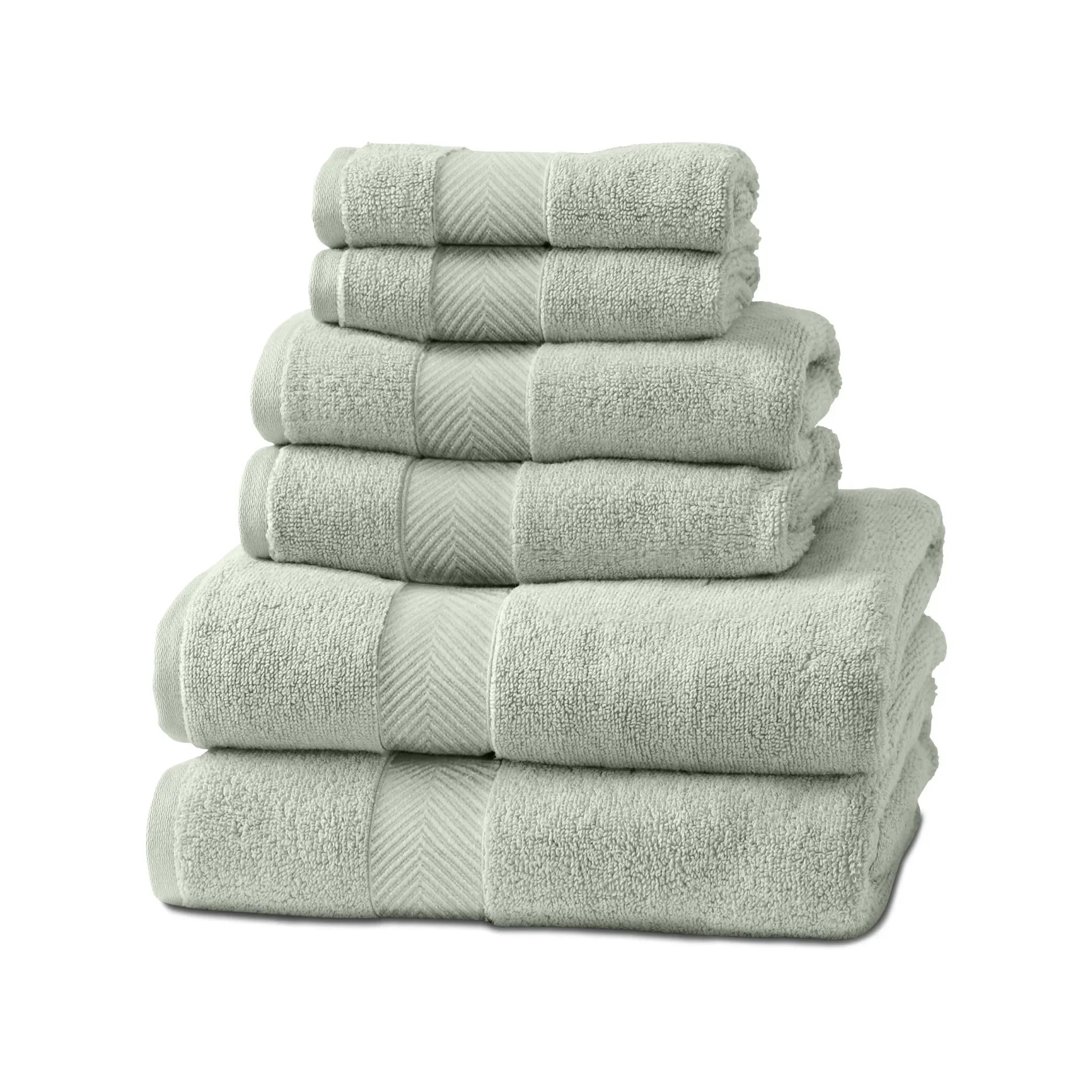
A diatomite mat is a hard, stone-like slab cut from fossilized algae that pulls water in on contact and lets it go again as vapor. Step off the shower and the surface stays dry within seconds, not minutes, because the fossil material is riddled with tiny pores that act like a sponge made of rock. A cotton bath mat can hold that same puddle for an hour or more, soaking into the fibers and staying damp long after you've left the bathroom. That gap in dry time is the whole reason this material showed up in bathrooms in the first place.
The stone itself is called diatomaceous earth, formed from the skeletons of diatoms that settled on ancient lake and ocean floors over thousands of years. Those skeletons are mostly silica, and the structure they left behind is full of microscopic channels that draw in moisture fast and release it just as fast through evaporation. A damp fabric mat left on tile can hold onto bacteria and mildew smell within a day or two, while a dry stone surface gives mold far less to work with. That difference in how each material handles water is what decides whether one is a better fit for a particular bathroom.
Table of Contents
Where This Stone Material Comes From
Diatomite deposits form in old lake beds and seafloors where diatoms, a type of single-celled algae, piled up and fossilized over millions of years. Each diatom shell is made of silica and packed with pores too small to see without a microscope. Quarries in places like the western United States and parts of Europe cut this soft rock into slabs, then fire it to make it rigid enough to walk on.
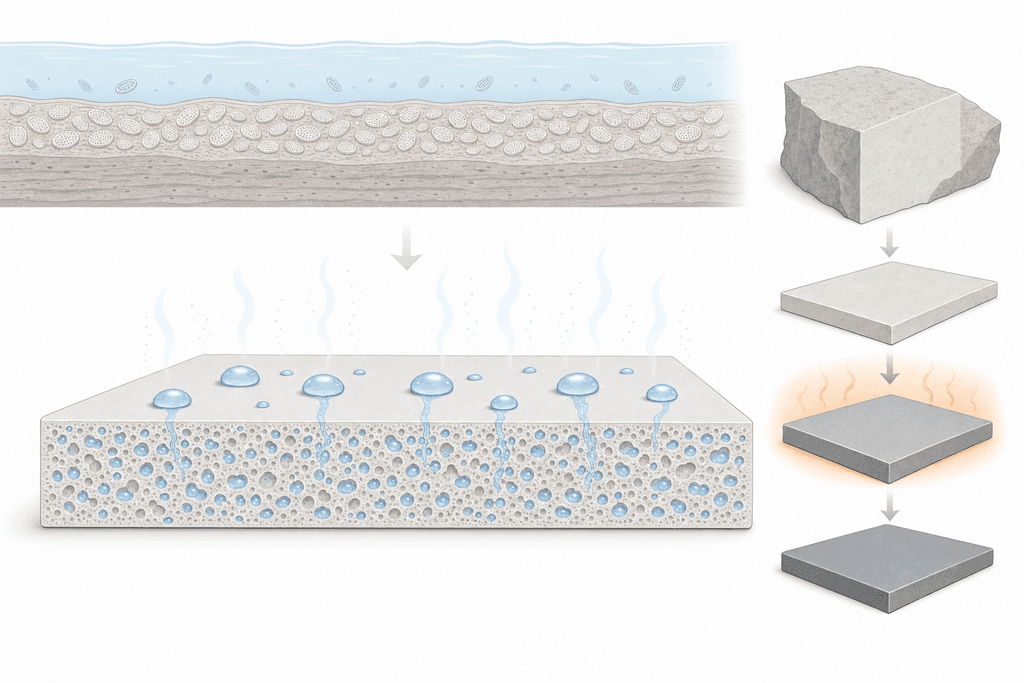
Cork and cotton come from living plants, so their structure is fibrous rather than porous like a mineral sponge. Fiber traps water between strands and holds it there, which is why those materials need time to release moisture back into the air. A fired stone slab works more like a dry sponge than a woven surface, pulling water into thousands of tiny channels at once.
| Material | Water uptake | Typical dry time |
|---|---|---|
| Diatomite | High, instant | Under 1 minute |
| Cork | Moderate | 10 to 15 minutes |
| Cotton | High, slow release | 2 to 4 hours |
The complete guide to diatomite breaks down how quarrying and firing affect the finished slab's strength and surface feel.
How the Stone Pulls Water Away So Fast
The pull comes from millions of pores packed into the slab, each one narrow enough to draw water in through capillary action, the same force that moves water up a paper towel. On a bath mat that process happens at a micro scale across the whole surface at once, not in a few scattered spots. That's why a footprint disappears almost as soon as it lands.
Surface area is what lets the water leave again just as fast. A diatomite surface can expose thousands of times more air contact per square inch than a flat tile, so moisture pulled in by the pores evaporates back out before it has time to sit. No standing water means nothing left behind to feed odor-causing bacteria overnight.
- Pores: microscopic channels that pull water in on contact
- Surface area: high exposure that speeds evaporation
- Core material: pressed diatomaceous earth, not fiber or foam
- Result: a dry top surface within seconds of stepping off
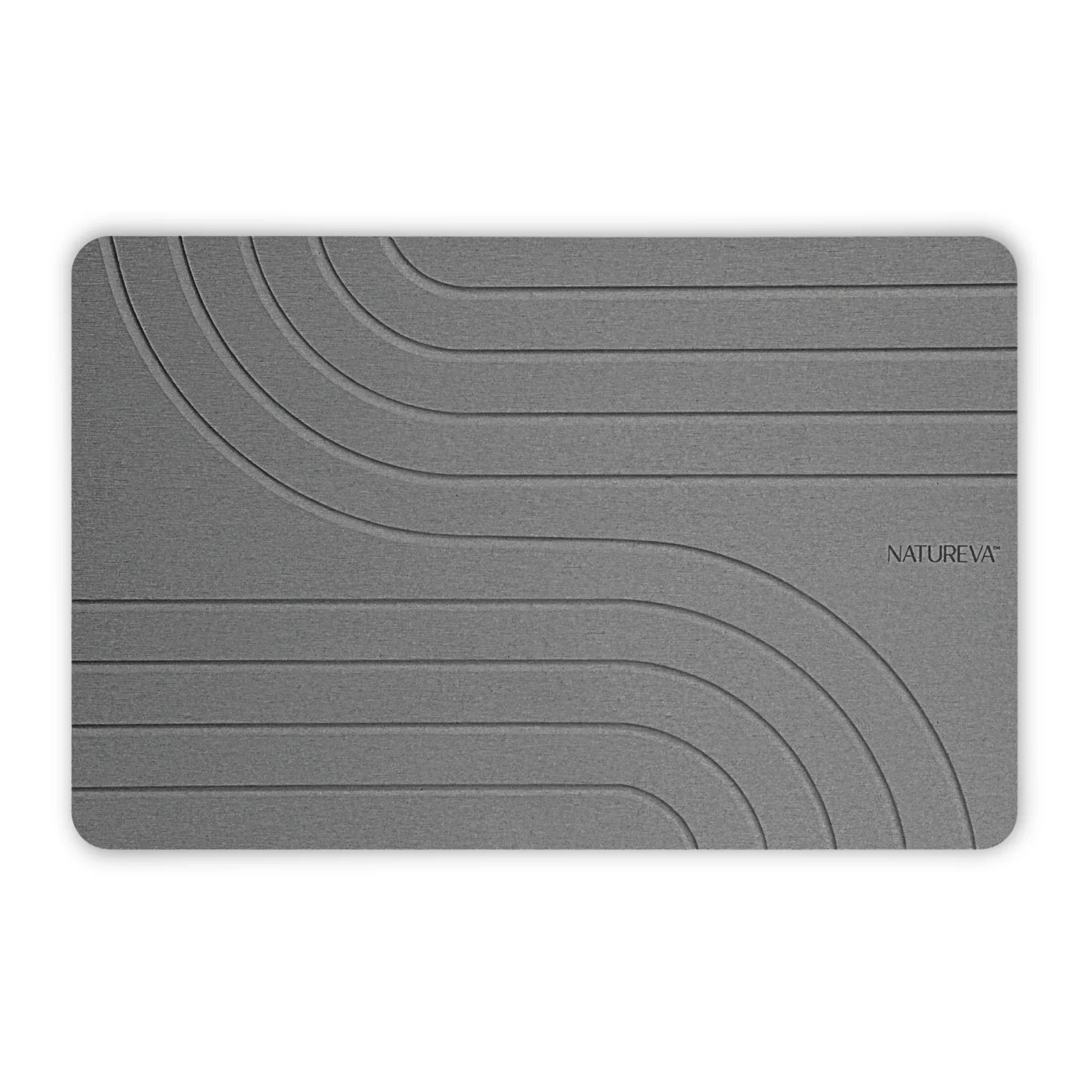
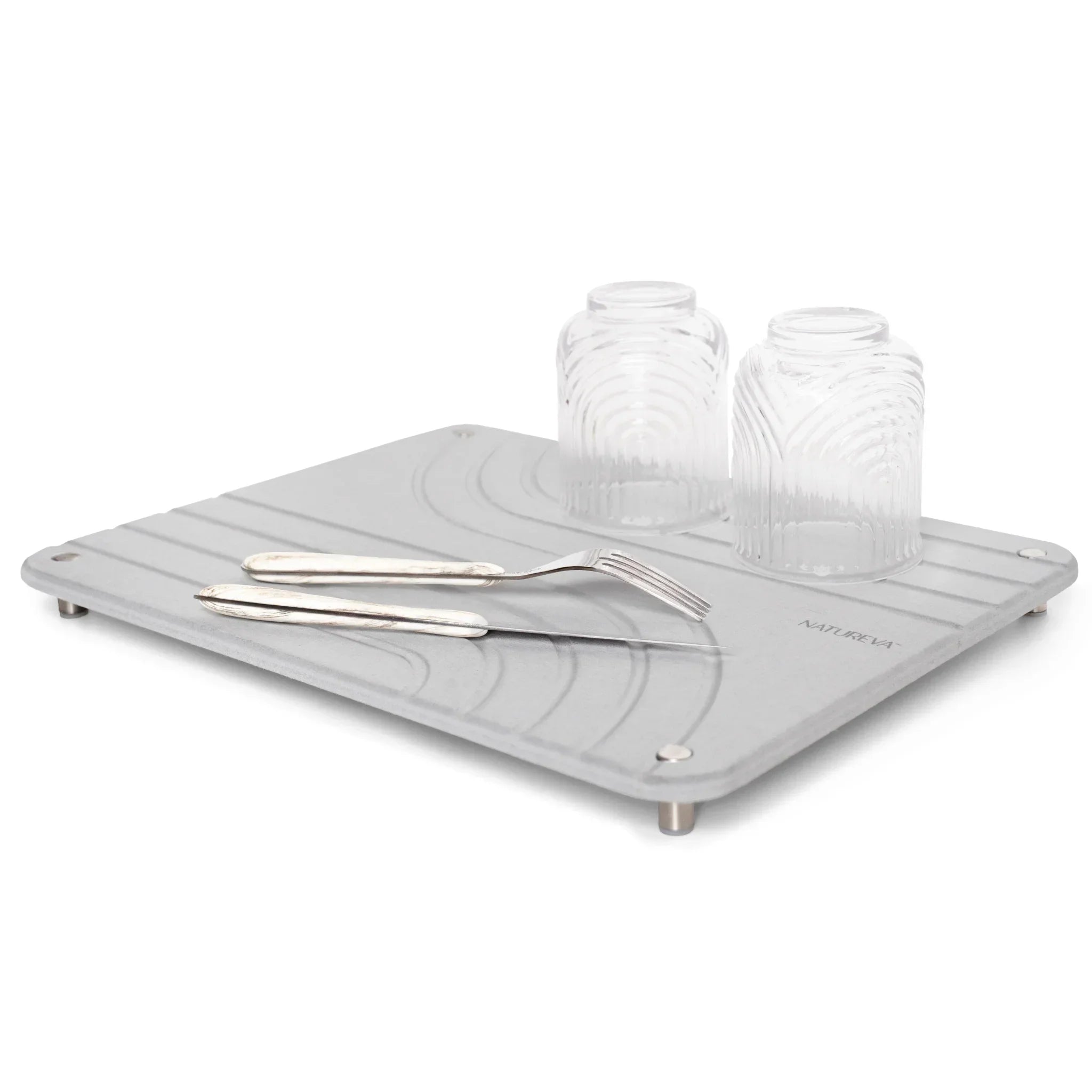
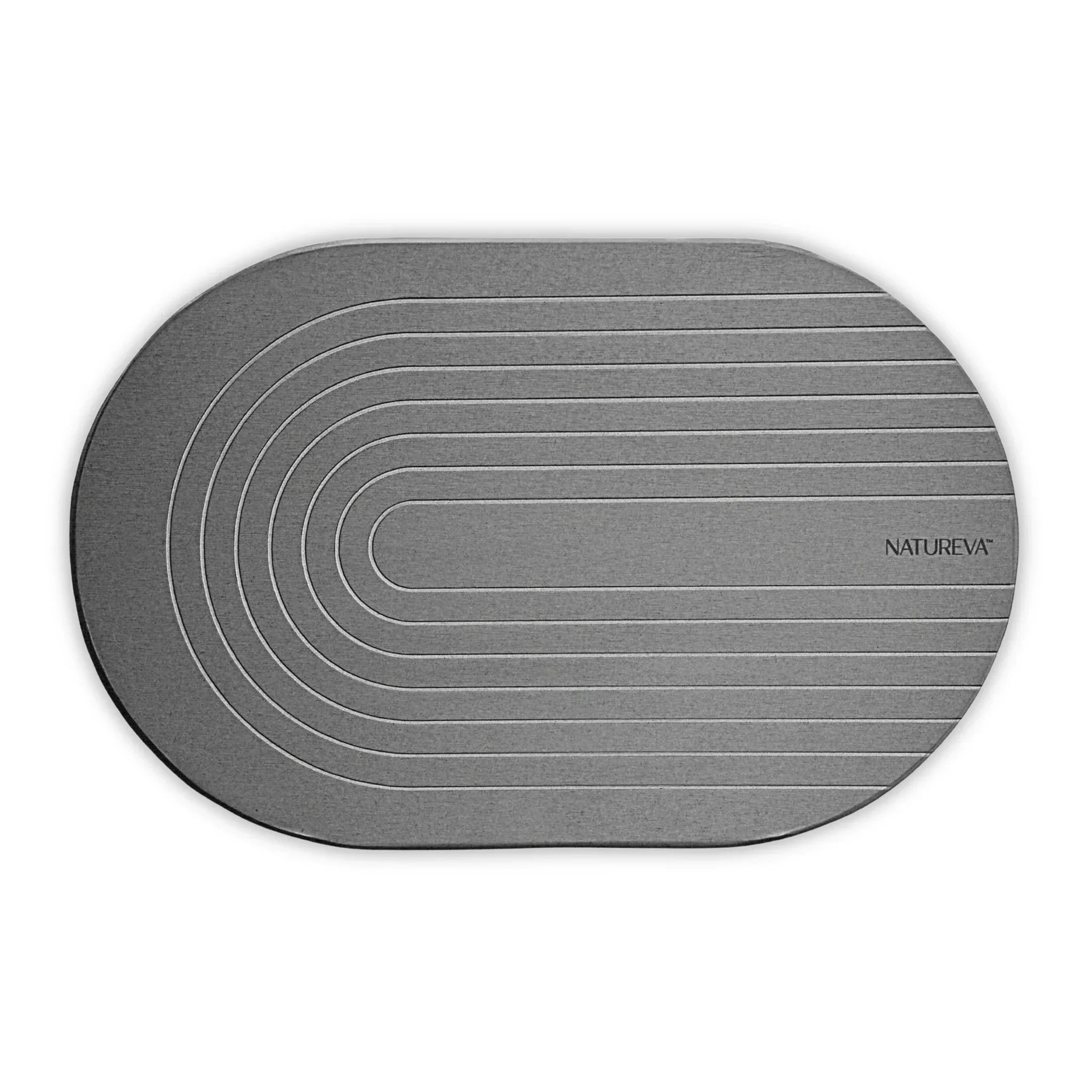
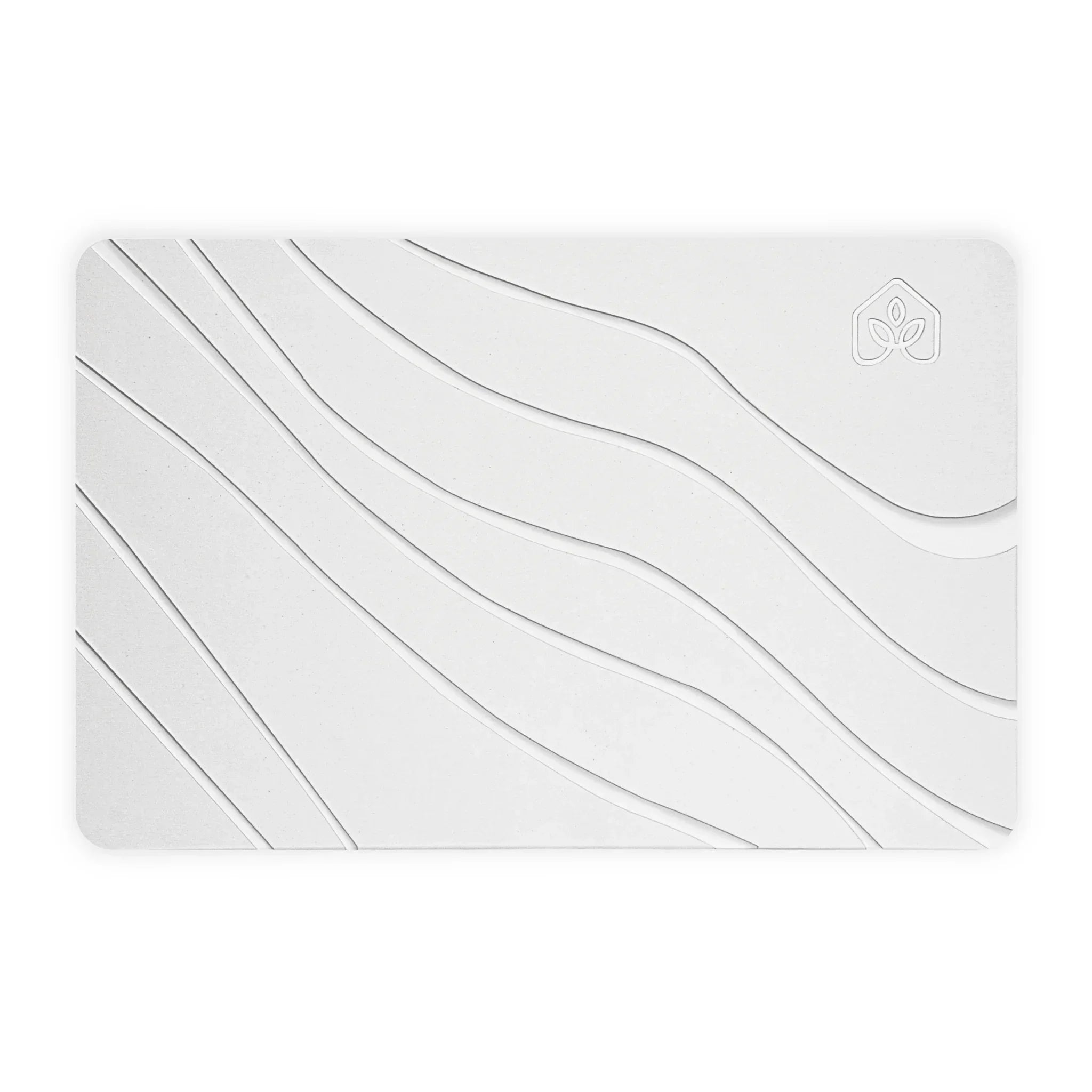
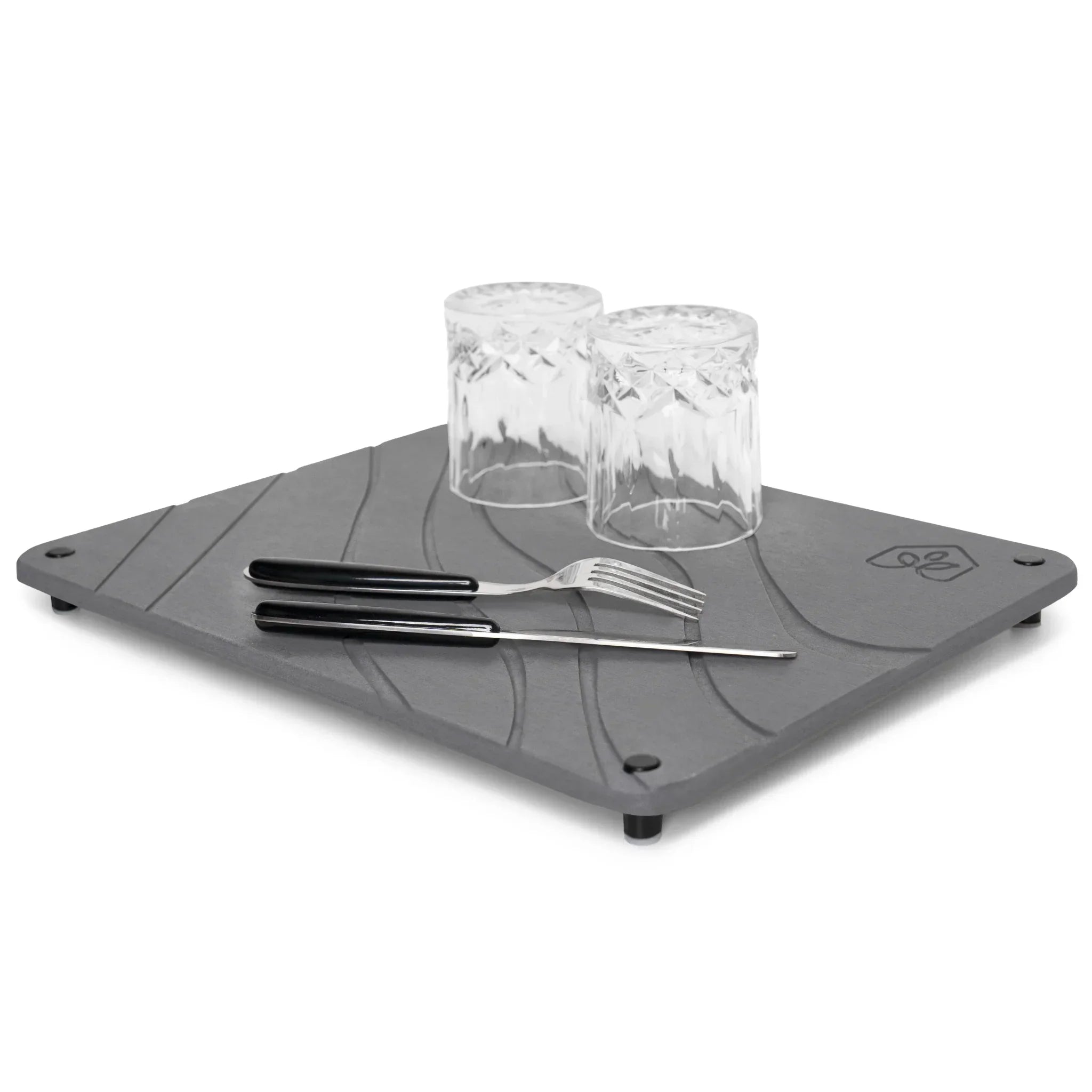
Natureva's Tide, Arch, and Rain mats all share this same pressed core, just in different surface patterns, so the drying speed doesn't change with the design you pick.
Signs Your Bathroom Could Use One
A musty smell near the shower exit, or a bath mat that's still damp when you wake up, is the clearest signal. Those are both symptoms of fabric holding water longer than it should, which gives mildew a head start before the fibers ever fully dry.
Washing a fabric mat weekly and still noticing it feels slow to dry is another sign the material, not your cleaning habit, is the problem. Shared bathrooms with back-to-back showers make this worse, since a fabric mat barely gets a dry break between uses. Humid climates add to it, since the air itself isn't pulling moisture out of the fibers the way it would in a drier room.
- Mat still damp by morning, hours after the last shower
- A musty smell that returns within a day of washing
- Two or more people showering within the same hour each day
- Bathroom humidity that stays high even with a fan running
If two or more of these sound familiar, the issue is the mat's drying speed, and that's the one variable a diatomite surface is built to fix.
The next generation of home essentials: naturally made, cleaner by design, sustainable by nature.
SHOP ALLWhere It Fits and Where It Doesn't
A stone mat fits best in a solo or couple bathroom with one or two showers a day on tile or vinyl flooring. That kind of use gives the pores time to fully release moisture between steps, which keeps the surface working at full speed. A bathroom with a toddler, an elderly family member, or anyone who needs a cushioned, non-slip step underfoot is a weaker match, since stone has no give and won't flex like foam or fabric backing.
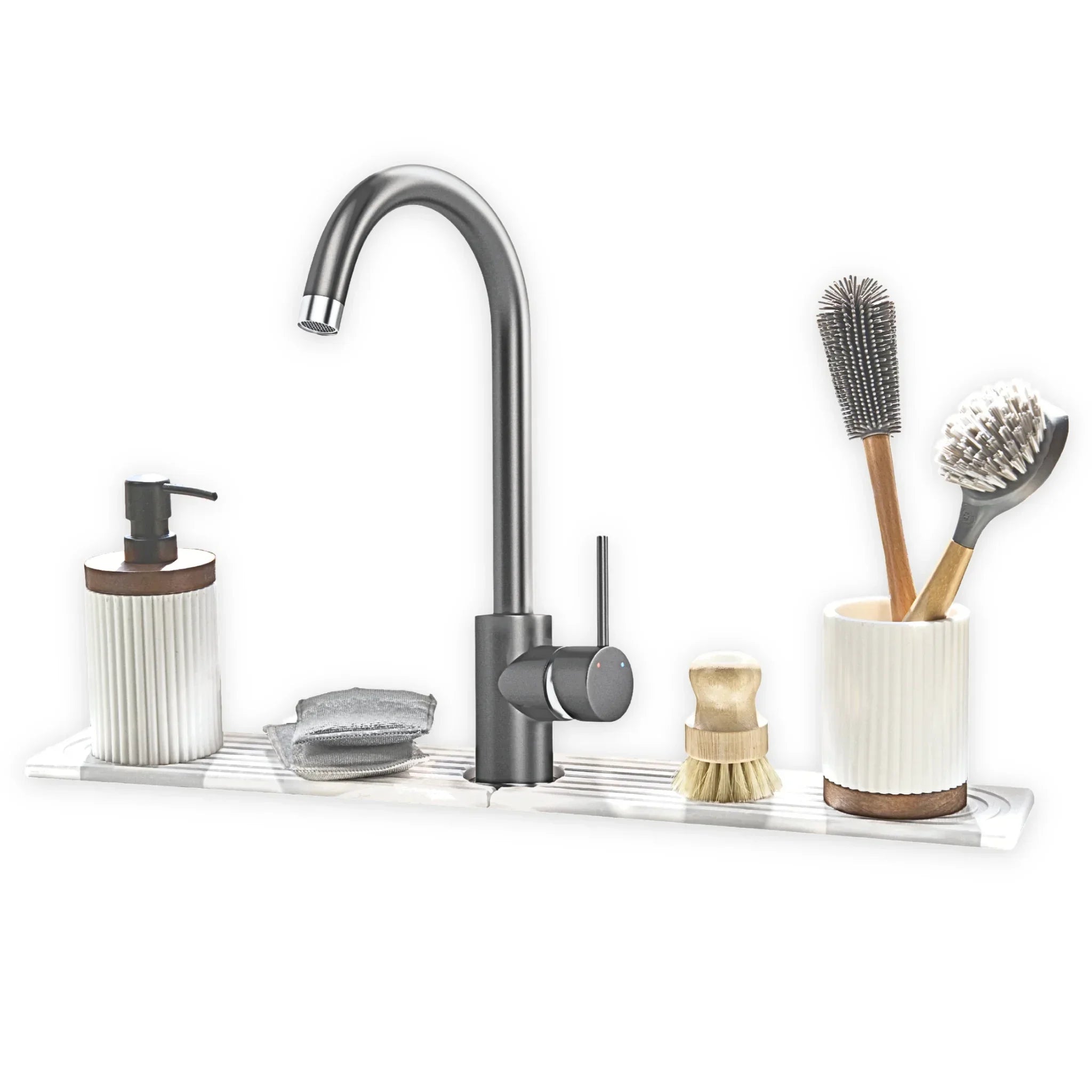
It's not limited to the shower exit either. A mat next to the sink catches splash water from brushing teeth or shaving, and one by the washing machine handles drips from a leaky hose or an overflowing load just as well.
- Solo or couple bathroom, tile or vinyl floor: strong fit
- Household with toddlers or seniors needing cushioning: weaker fit
- Sink splash zone: good secondary spot
- Laundry room next to a washing machine: good secondary spot
The floor underneath matters too, since a stone mat on an uneven or carpeted surface can rock or sit unevenly underfoot.
Keeping a Stone Mat Working Like New
A diatomite mat needs almost no upkeep beyond a wipe-down and the occasional sun exposure. If absorbency starts to slow after months of use, light sanding with fine sandpaper opens the surface pores back up and restores most of the original speed.
There's no washing machine involved at any point. Wipe the surface with a damp cloth, then set it out in sunlight occasionally to air dry fully and clear out any trapped moisture deep in the pores. Natureva's Tide, Arch, and Rain designs are sealed along the edges, which keeps the pressed core intact over years of daily stepping. Never soak the mat fully underwater or scrub it with harsh chemical cleaners, since both can break down the surface faster than normal wear would.
- Wipe with a damp cloth after use
- Air dry in sunlight every few weeks
- Light sanding if absorbency slows
- Avoid full submersion or harsh chemicals
Stone Mat or Fabric Mat, What Pays Off Over Time
A $59 stone mat usually costs less over three years than fabric mats bought again and again at $15 to $20 each. Most households replace a worn or smelly fabric mat two to four times in that span, which lands between $30 and $80, before counting the washing that comes with it. One stone mat bought once can outlast all of those replacements combined.
Fabric mats carry a hidden cost beyond the price tag: water, detergent, and a wash cycle every week or two to keep mildew smell down. That adds up in utility bills and laundry time that a stone surface never asks for, since it only needs a wipe and the occasional sun airing. Stone carries its own risk though, since a dropped mat can chip a corner, something a fabric mat simply can't do.
| Cost factor | Fabric mat | Stone mat |
|---|---|---|
| Upfront price | $15 to $20 | $59 |
| Replacement over 3 years | 2 to 4 times | Rarely needed |
| Ongoing upkeep | Weekly wash cycle | Wipe and occasional sun |
| Main risk | Mildew and odor | Chipping if dropped |
The real payoff isn't the sticker price, it's what you stop dealing with. Less laundry, less mildew smell, and fewer trips to replace a worn-out mat matter more than the number on the shelf. Anyone who drops things often in the bathroom, or has young kids tossing towels around, should weigh that chip risk before choosing stone over fabric.
Buy One Mat Before You Replace Them All
If damp mornings or a musty smell keep showing up near the shower, that's the problem this material is built to solve, not a cleaning habit you're getting wrong. Once you've decided the material switch makes sense, the choice between Tide, Arch, and Rain is just about which pattern looks right on your floor, since all three share the same pressed core and dry at the same speed. Put one mat by the shower where the dampness actually happens, and watch it for a week before you consider swapping out the sink mat or the laundry room one too. Natureva makes all three patterns, so picking a look doesn't mean picking a different level of performance.
The next generation of home essentials: naturally made, cleaner by design, sustainable by nature.
SHOP ALLCommon Questions About Stone Bath Mats
Does a diatomite mat crack if something heavy is dropped on it?
Yes, a hard enough drop can crack or chip the slab, since it's fired stone rather than a flexible material. A dropped bottle of shampoo usually just bounces off, but a glass jar, a toilet lid, or a heavy ceramic item hitting a corner can chip the edge. The center of the mat holds up better than the edges, so where an item lands matters as much as its weight.
Can a diatomite mat be trimmed or cut to fit a tight bathroom layout?
No, these mats are not meant to be cut at home. The pressed core runs through the whole slab, and cutting it breaks the sealed edge that keeps moisture from seeping into the sides over time. Natureva's Tide, Arch, and Rain all come in fixed sizes, so the better move in a tight layout is picking the pattern closest to your space rather than trying to resize one.
Will the mat scratch a vinyl or laminate floor underneath it?
It can, if the mat gets dragged across the floor instead of lifted. The bottom surface is rougher than a fabric backing, and sliding it repeatedly over vinyl or laminate can leave fine scuff marks over months of daily use. Picking the mat straight up when you move it, rather than sliding it, avoids this almost entirely.
Is a diatomite mat slippery when wet?
No, the same pores that pull water in also keep the top surface from pooling, which is what gives fabric and rubber mats their slip risk in the first place. Since water doesn't sit on top, there's no thin film for a foot to slide on. The one exception is right after a mat has been wiped with a damp cloth, before it's had a chance to fully dry.