
Best Shower Mats for Fast Drying and Better Bathroom Grip
A wet bath mat can hold onto moisture for up to 24 hours, which is more than enough time for mould to move in. The best shower mat solves this with one simple trick: a material that dries in minutes instead of hours while still keeping your feet steady on wet tile. Diatomite stone, a naturally porous mineral that soaks up water the second it touches the surface, is leading this shift away from soggy fabric and rubber mats, and it's exactly what we build our stone bath mats around. Before you buy your next mat, it helps to see how the materials actually stack up against each other.
What is the fastest-drying material for shower mats?
Diatomite (diatomaceous earth) stone dries surfaces in under 60 seconds by absorbing water into its porous structure, making it the fastest-drying shower mat material available. Standard foam or rubber mats, by contrast, can stay damp for 2-4 hours after use.
How often should you clean a shower mat to prevent mold?
Shower mats should be cleaned at least once a week and fully dried between uses to prevent mold and mildew growth. Mats that trap moisture for more than a few hours create conditions where mold can develop within 24-48 hours.
What shower mat material provides the best grip on wet surfaces?
PVC mats with raised suction cups and textured rubber mats provide the strongest grip on wet bathroom floors, reducing slip risk more effectively than diatomite stone or memory foam. Suction-cup PVC mats anchor directly to the floor, while textured rubber offers high friction even when fully saturated.
Table of Contents
Why Drying Speed Matters More Than You Think
A wet bath mat sitting on your floor for hours is basically a mould invitation. Fabric and rubber mats trap water instead of releasing it, which creates the damp, dark conditions where mould and mildew develop. This isn't about being extra clean, it's just how these materials work.
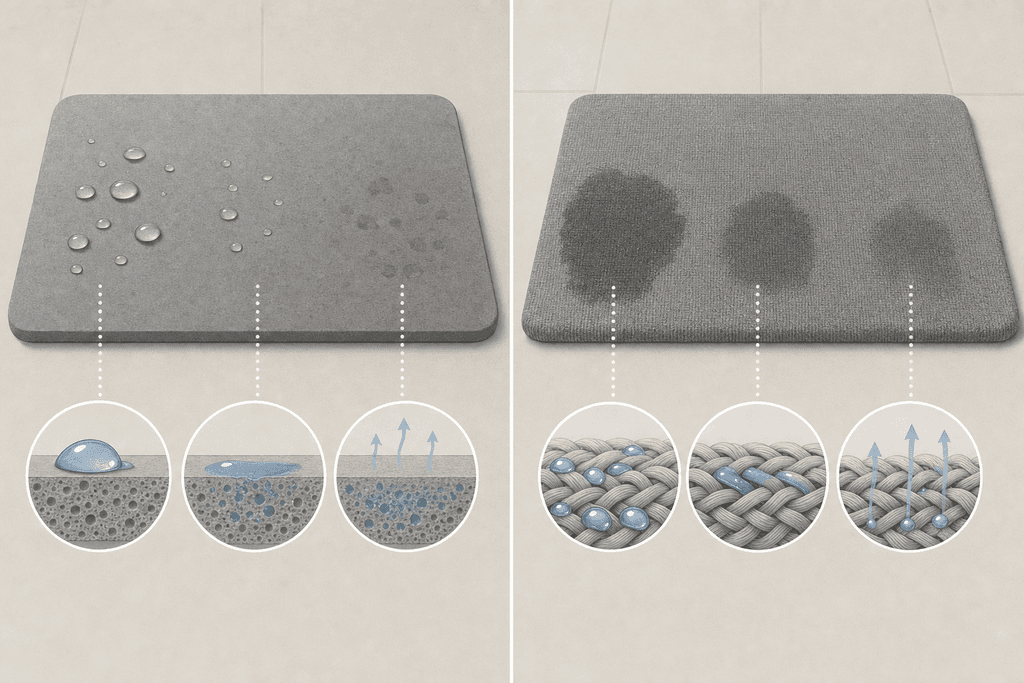
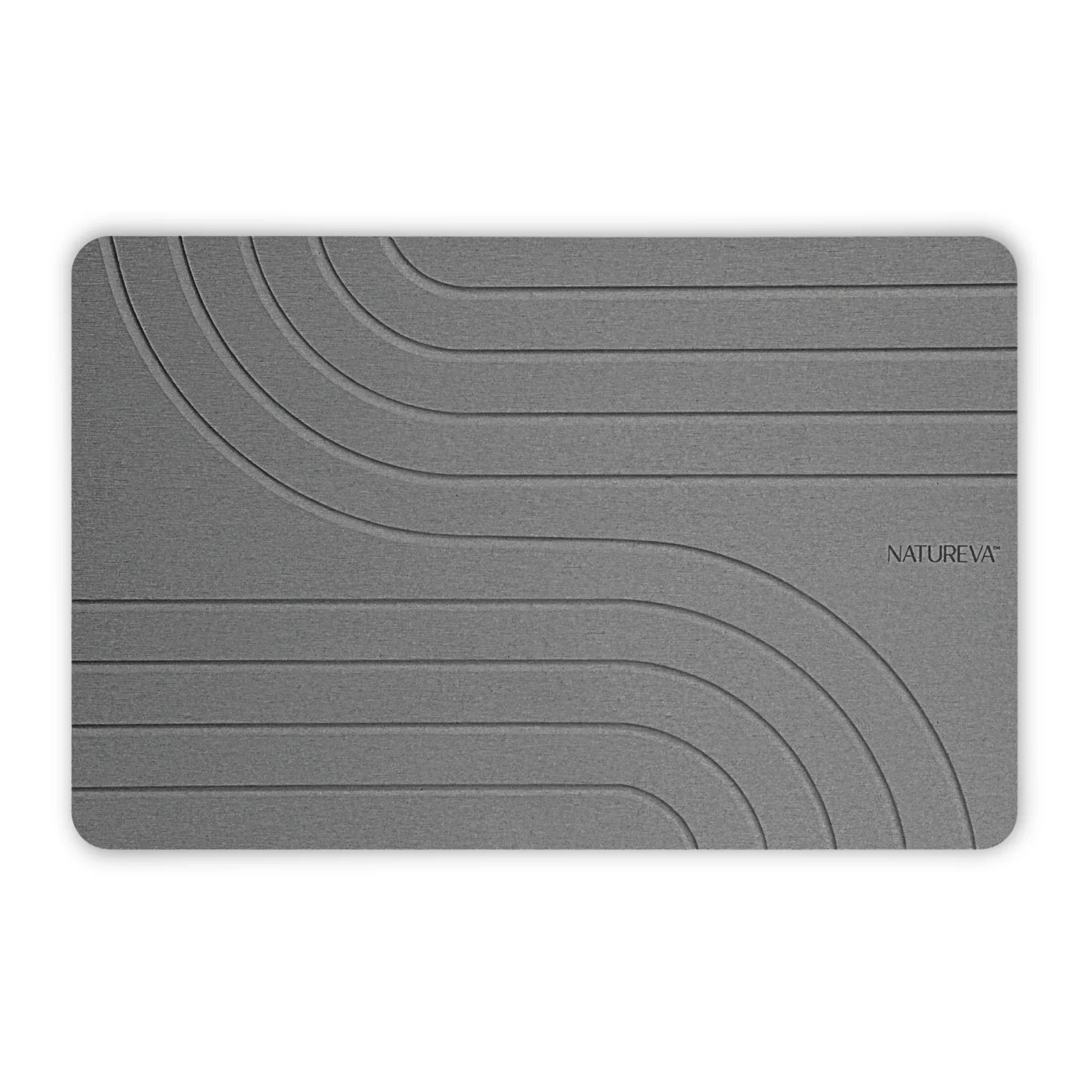
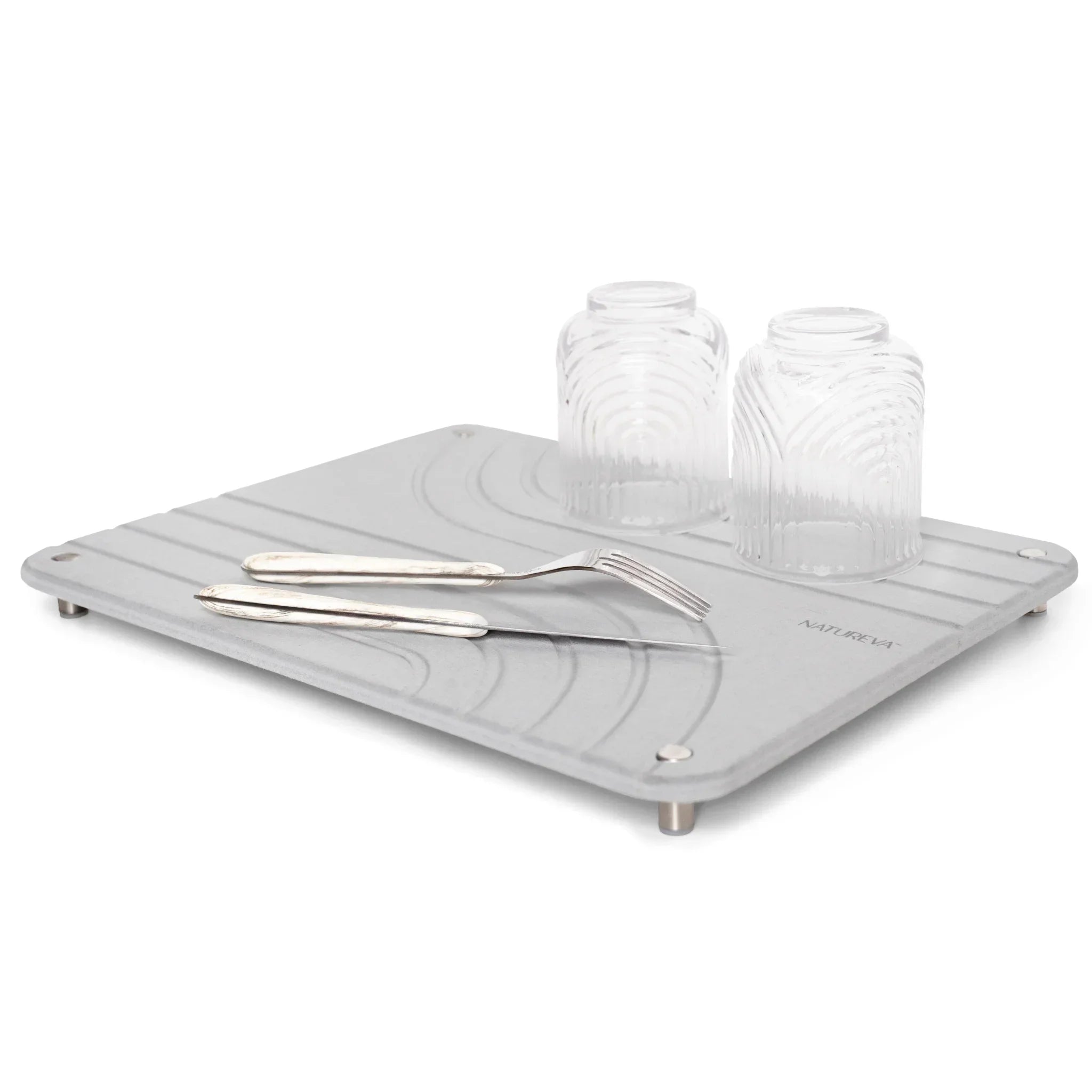
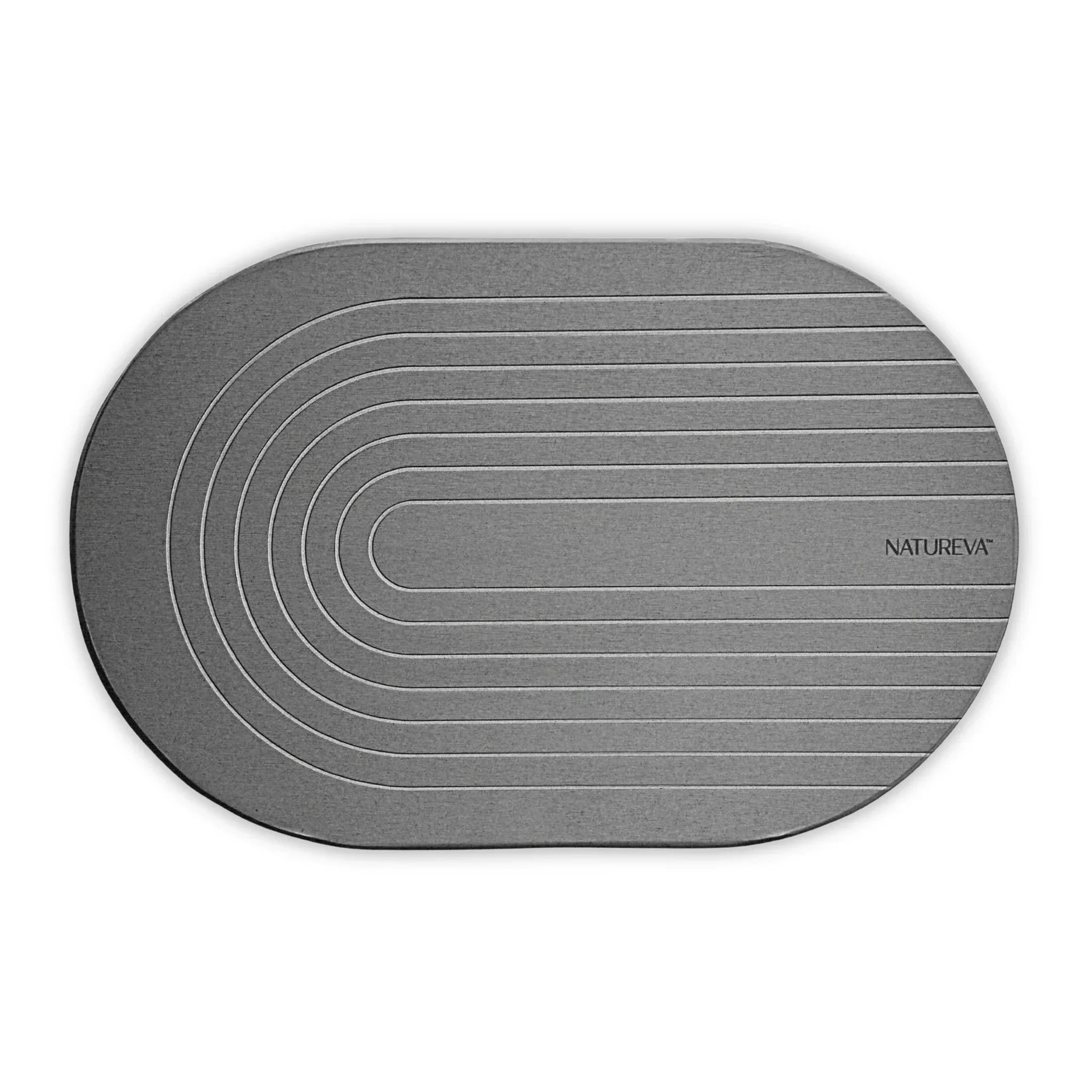
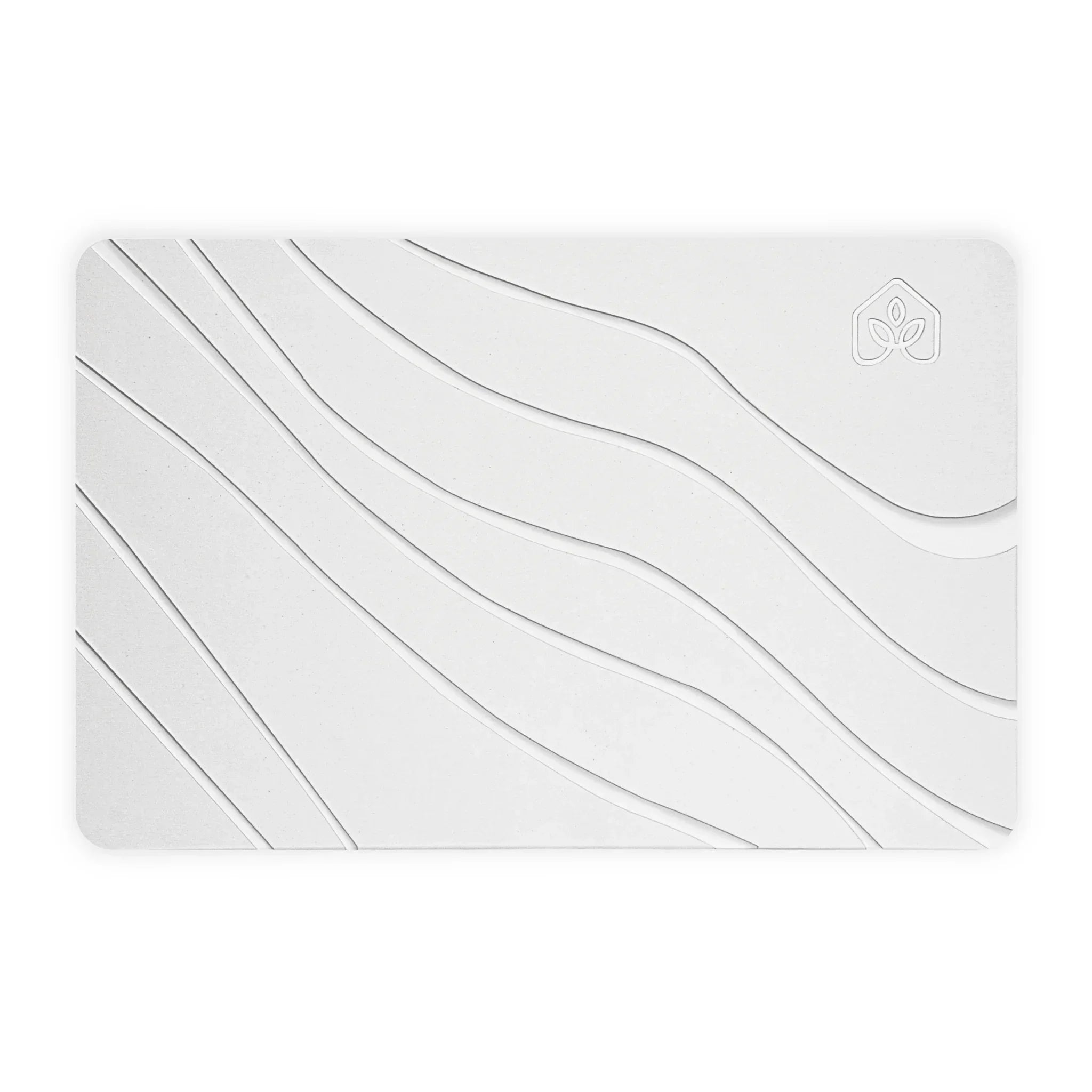
Diatomite works differently at a structural level. It's packed with microscopic pores that absorb moisture the second your feet touch the surface, then release that water back into the air through fast evaporation. No trapping, no soaking, just quick in and out.
Homes To Love, an independent Australian publication, actually tested this claim on the Natureva Stone Bath Mat.
- Result: dried fully in under 8 minutes
- Rating: 9 out of 10
- Tested independently, not brand-reported
That's the difference between a mat that's still damp when you brush your teeth and one that's already bone dry.
Grip and Safety in Wet Bathrooms
A good shower mat needs to stay put, not slide around under wet feet. Fabric mats are the worst offenders here, they bunch up, curl at the edges, and slide across tile once they get soaked. That's a real fall risk, especially for older adults or kids getting in and out of the shower.
Rubber and silicone mats seem like a fix at first, but they have their own issue. Over time, a thin layer of water can build up underneath the suction cups, which weakens the grip.
- Fabric mats: slide, bunch, curl at edges when wet
- Rubber and silicone mats: lose suction as water builds up underneath
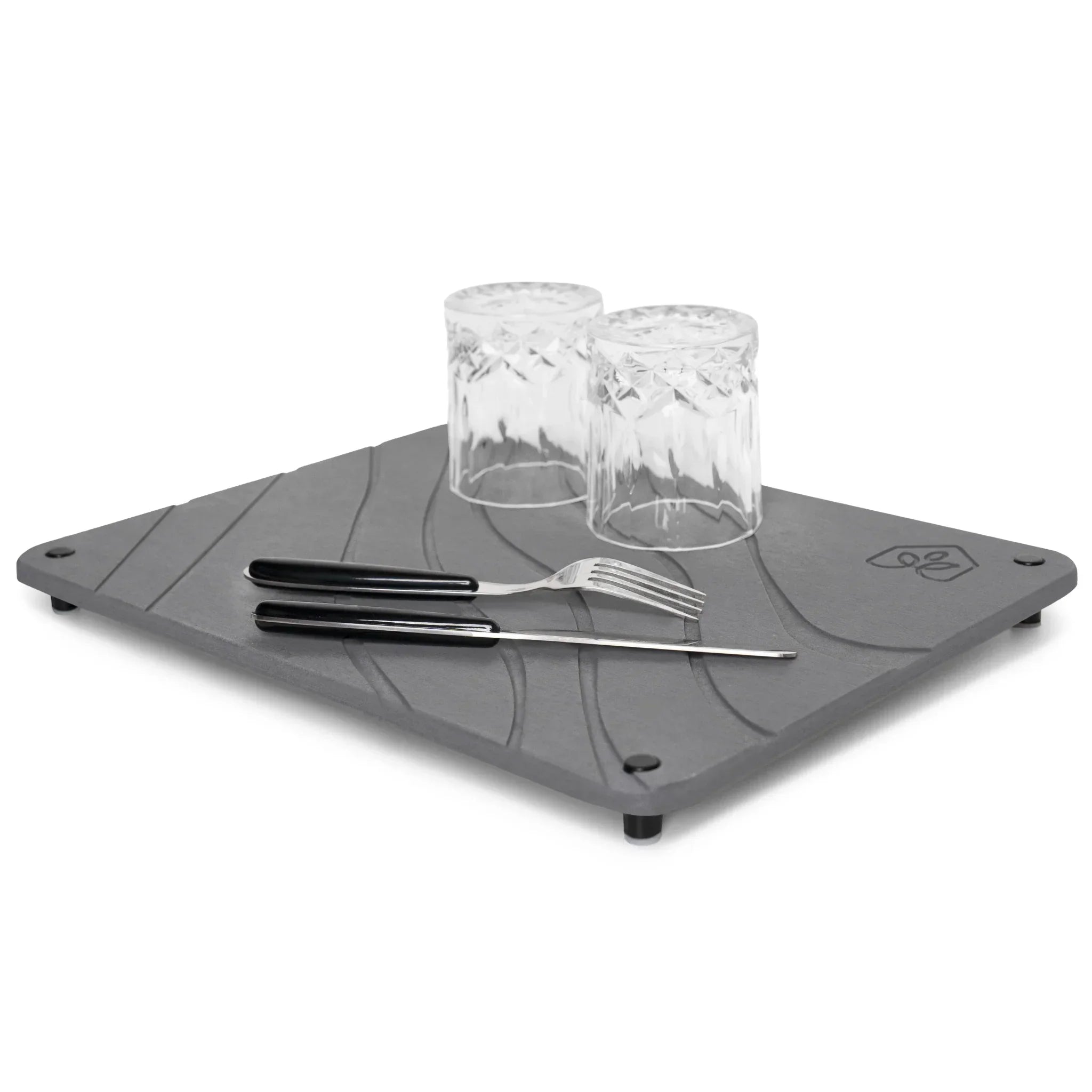
- Dense stone mats: stay flat and stable thanks to weight plus non-slip base pads
A heavy, dense stone slab paired with a proper non-slip base doesn't have this problem. It's simply too stable to bunch or slide, which matters more than people think until they're standing on a wet floor.
Comparing Materials Side by Side
The next generation of home essentials: naturally made, cleaner by design, sustainable by nature.
SHOP ALLNot all shower mat materials age the same way, and some need a lot more upkeep than others. Fabric mats need frequent washing and, honestly, they rarely fully dry between showers even with regular laundering. Rubber and silicone mats can start smelling over time as moisture gets trapped underneath.
| Material | Dry Time | Grip | Maintenance |
|---|---|---|---|
| Fabric | Hours | Poor when wet | Weekly wash |
| Rubber | Slow | Fades over time | Regular scrubbing |
| Silicone | Slow | Loses suction | Regular scrubbing |
| Stone (diatomite) | Under 8 mins | Stable, non-slip base | Weekly wipe |
Stone mats stay clean through rapid moisture evaporation, so there's no damp environment sitting around for odour or mould to form. Maintenance is just a weekly wipe with a warm damp cloth, no scrubbing marathons required.
If you're comparing options, Consumer Reports' bath mat testing is a good independent reference point for how different materials hold up over time. For a deeper look at what to check before buying, our guide on five diatomite bath mat features to check before buying breaks down what actually matters. Our own diatomite bath mat collection is built around this exact drying mechanism, so you're not stuck rewashing or replacing mats every few months.
Wrap-Up
Picking the best shower mat really comes down to two things: does it dry fast, and does it stay put when your feet are wet. Fabric mats stay damp for hours and rubber ones slide around or trap gunk underneath, and neither fixes the problem long term.
Our diatomite stone bath mats are built to solve both issues at once, soaking up water on contact and drying within minutes so mould and mildew never really get a chance to start. Check out the full bath mat collection or read our guide on what to check before buying a stone bath mat before you decide.
Shower Mat Questions Answered
Quick answers to common questions about choosing and caring for shower mats.
How long should a shower mat take to dry
A good stone mat should be dry within minutes, not hours. Independent testing on the Natureva Stone Bath Mat confirmed it dried fully in under 8 minutes. Fabric and rubber mats often stay damp for hours, which is exactly the kind of environment mould and mildew like to form in.
Are stone shower mats safe for kids and older adults
Yes, as long as the mat is tested and certified. Diatomite is naturally porous, but some unverified products in this category have had asbestos concerns. Natureva mats are NATA-accredited asbestos-free and include a non-slip base, which also helps reduce fall risk for older adults compared to mats that slide or bunch.
How do you clean a stone shower mat
Wipe it weekly with a warm damp cloth and a bit of cleaning vinegar. Skip coloured soaps since they can stain the surface. For deeper marks, use hydrogen peroxide or the included sanding tool, which reopens the pores so the mat keeps absorbing water like new.
The next generation of home essentials: naturally made, cleaner by design, sustainable by nature.
SHOP ALL