
Article: Best Stone Drying Dish Mats for Faster, Cleaner Benchtops
Best Stone Drying Dish Mats for Faster, Cleaner Benchtops
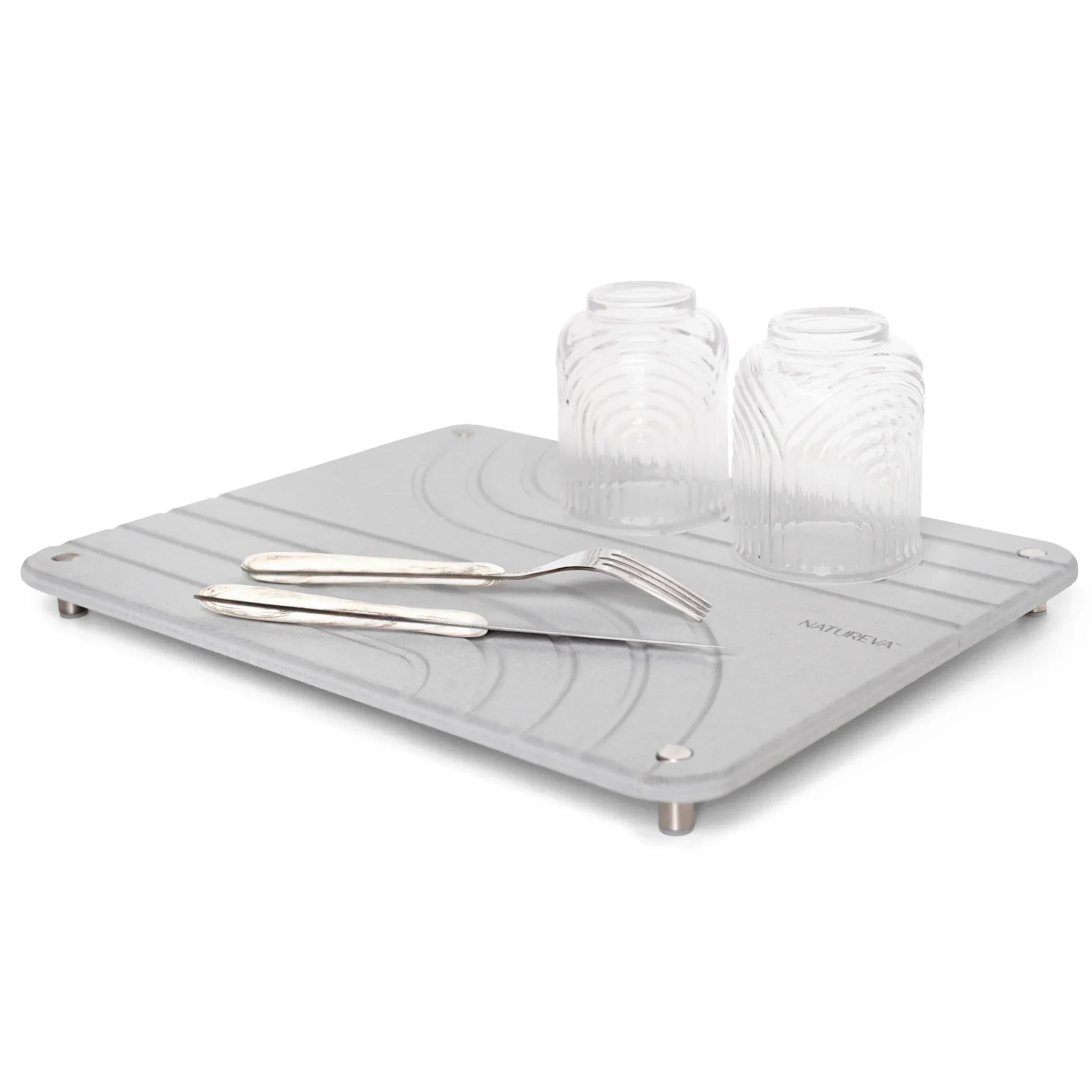
A stone drying dish mat pulls a standing puddle off the counter in under a minute, while a cloth mat can stay damp for hours after the last dish is set down. That speed comes from diatomite, a porous mineral full of tiny channels that draw water in and let it evaporate instead of sitting on the surface. Cloth fibers just hold water until air and time do the work, which is why a soggy mat under the dish rack is such a common kitchen problem.
Spending 40 to 60 dollars on a slab of stone is not a small decision, so a side-by-side look at shape, size, drying speed, and durability is worth doing before buying one. Most buyers want to know how fast a mat dries, whether it fits their counter space, and how long it holds up to daily use before it cracks or wears smooth.
Table of Contents
Why Wet Benchtops Cause More Problems Than You Think
Standing water left on a benchtop gives mould and bacteria enough time to colonize within 24 to 48 hours. That window gets shorter in a warm, humid kitchen, where condensation from dish racks and sink splashback keeps the surface wet long after you finish cleaning up. Granite, laminate, and sealed wood counters all absorb some of that moisture at the seams, which is where staining and odour usually start.
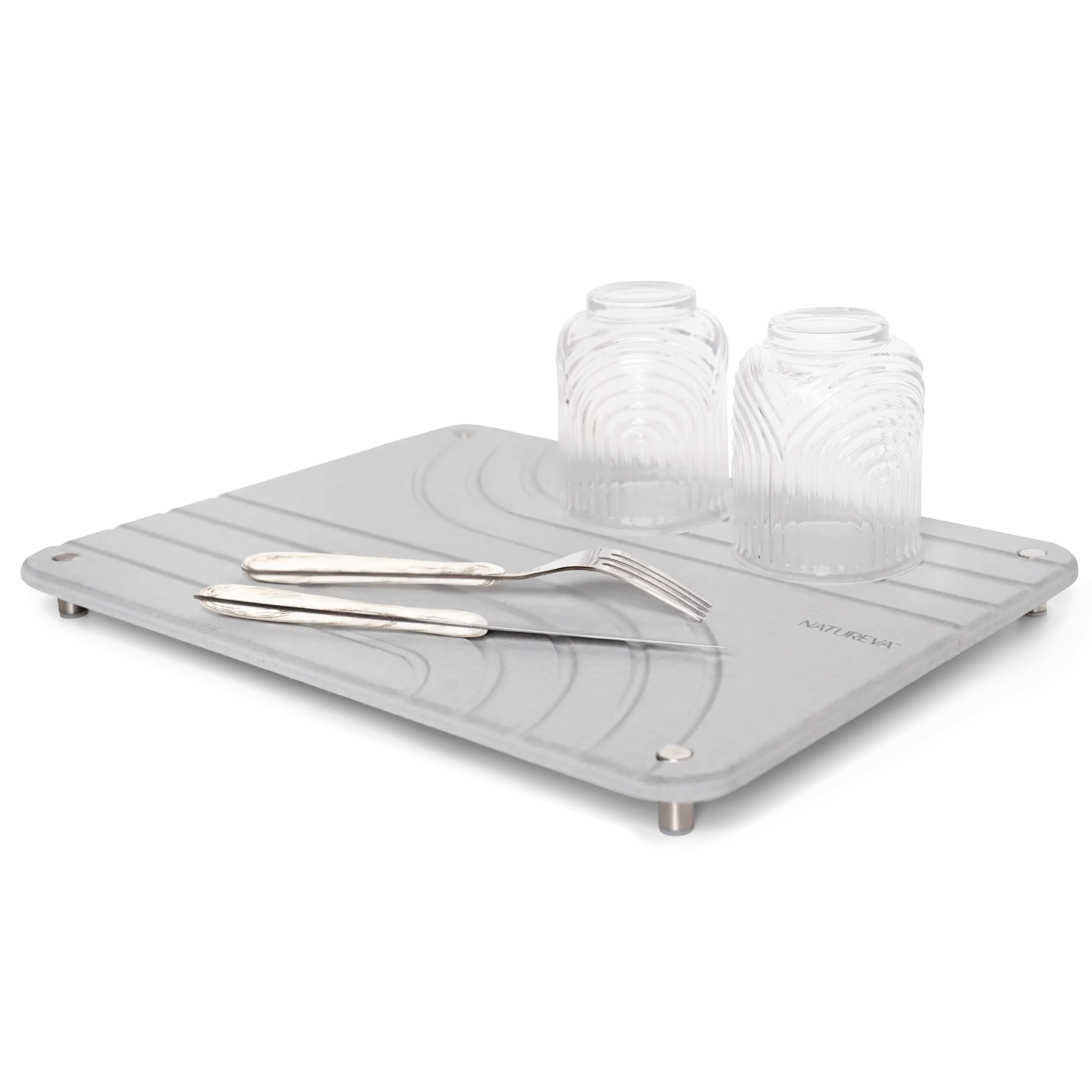
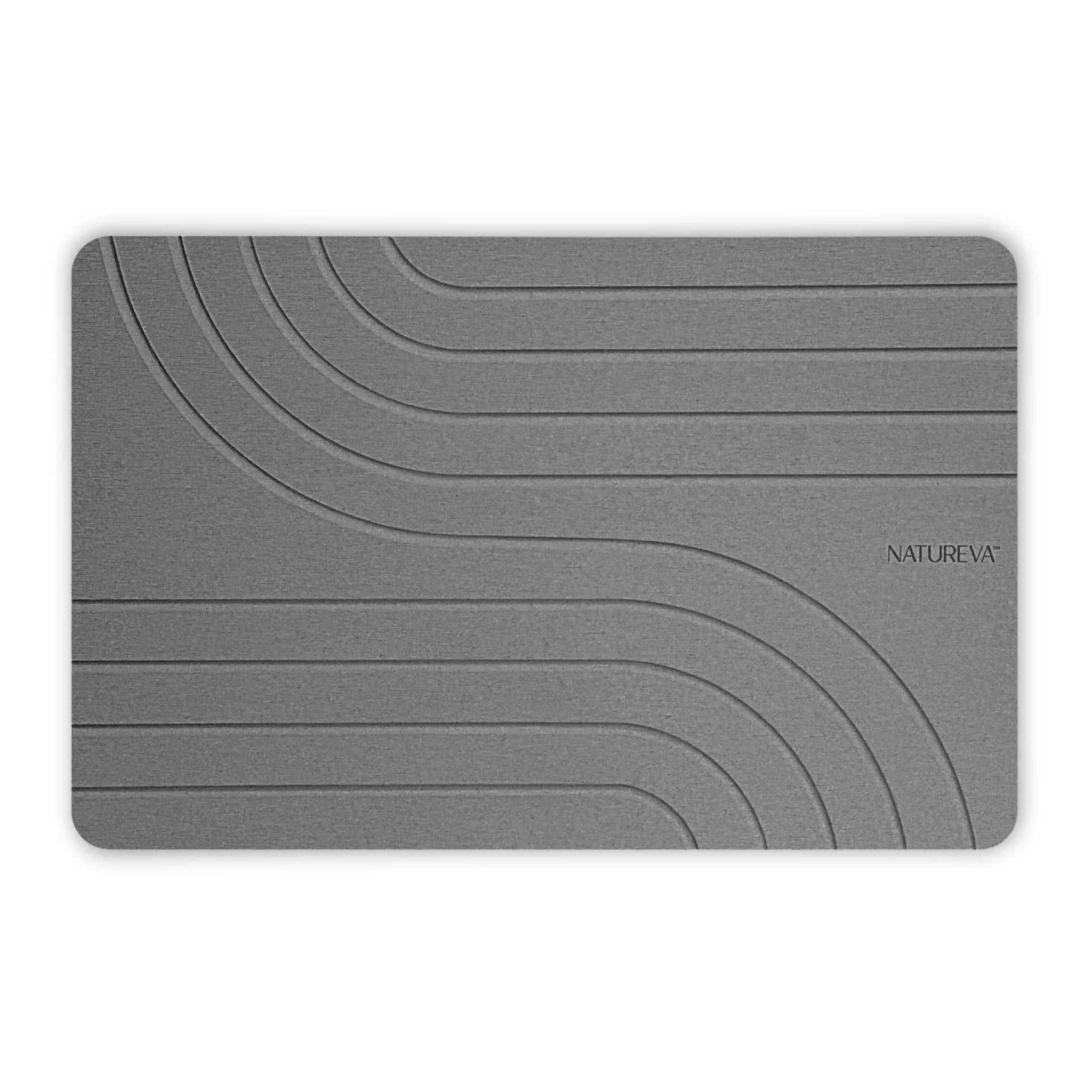
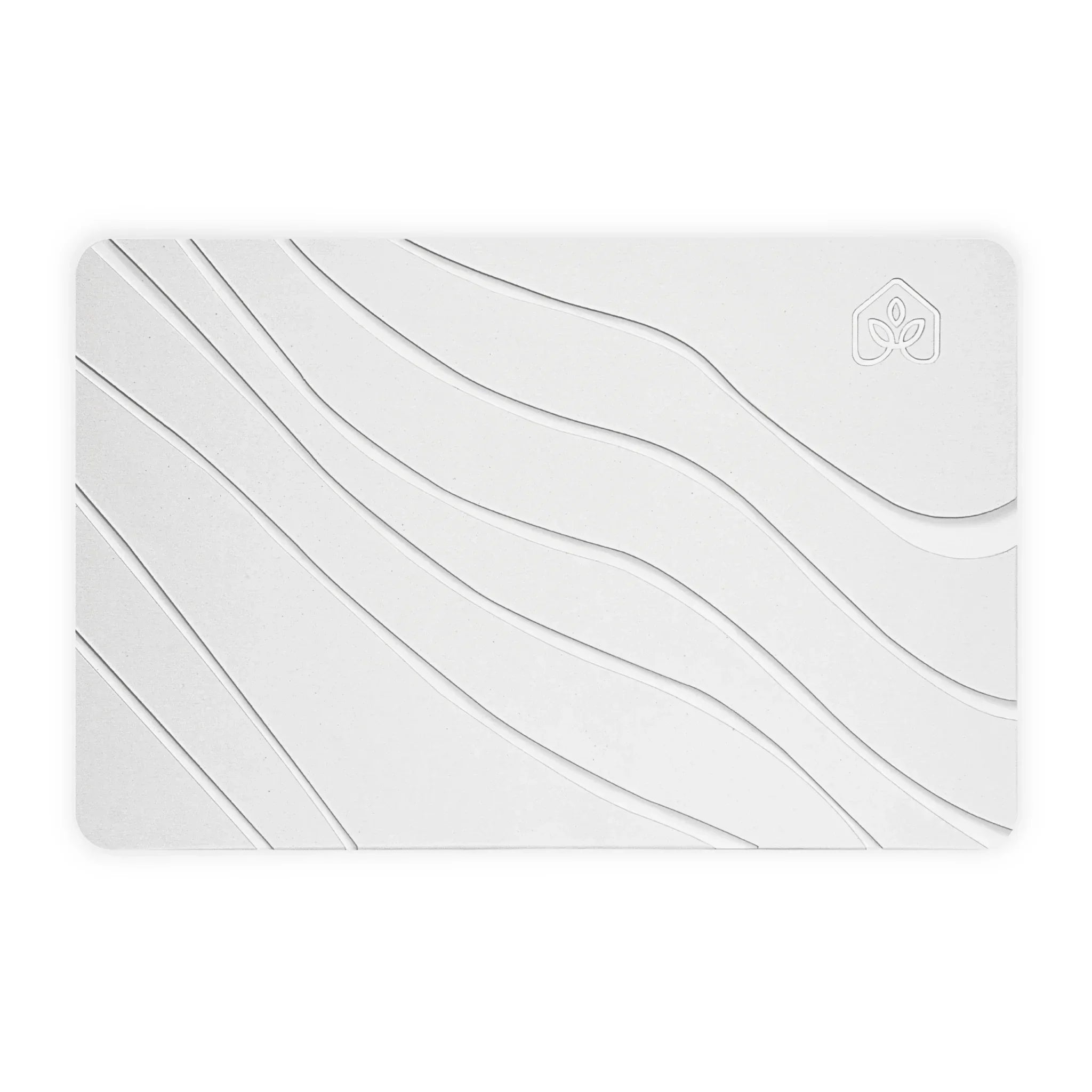
Stone Dish Mat - Tide
Cloth mats make the problem worse because the fibers hold water rather than letting it go. A damp cloth mat left overnight becomes a breeding ground on its own, sitting right under your dishes. Diatomite avoids that trap because its structure is full of microscopic pores that pull water in fast and release it into the air as vapour, so the surface dries instead of staying saturated.
| Surface type | How it handles standing water | Risk after 24-48 hours |
|---|---|---|
| Bare benchtop | No absorption, water pools | Seam staining, water spots |
| Cloth dish mat | Absorbs but holds moisture | Mould and musty odour |
| Diatomite stone mat | Absorbs and evaporates | Minimal, surface stays dry |
What to Check Before Buying a Stone Drying Dish Mat
Pore density decides how fast a mat dries. A tighter weave of micro-channels pulls water off plates in seconds, while a loosely pressed slab can leave a thin film behind for an hour or more.
Surface texture matters just as much as speed. A mat with a lightly textured top protects glassware and ceramic from scratches, but a rougher finish can scuff delicate glazes, so run a fingernail across the surface before you commit to one.
Size has to match the counter, not the other way around. A mat that's too long for the gap next to your sink will overhang the edge and catch splashes instead of catching dishes.
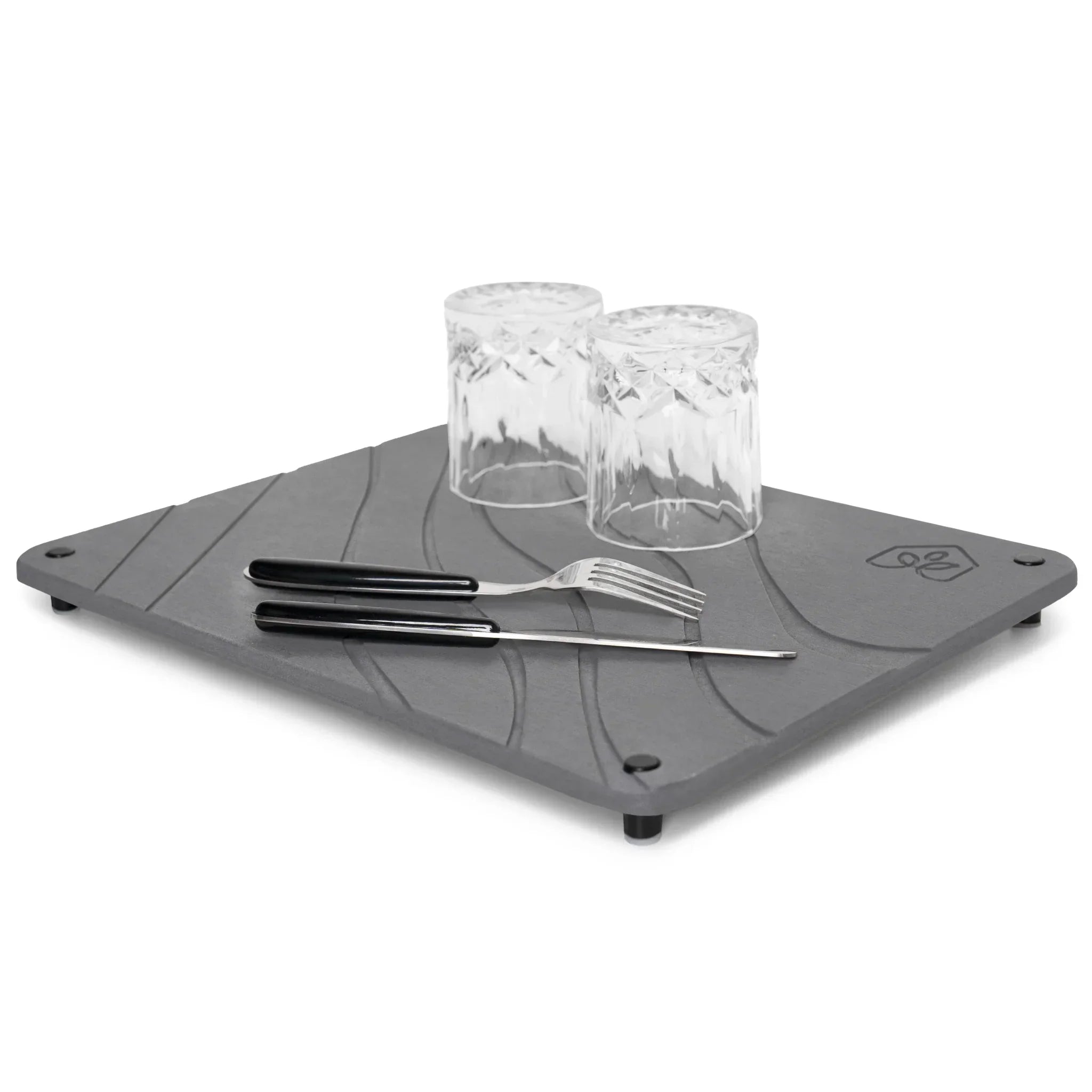
Check the edge finish and backing before ordering, since a sealed edge resists chipping and a non-slip base keeps the mat from sliding when you set down a heavy pot.
- Pore density, tighter channels dry faster
- Surface texture, smooth enough to protect glassware
- Footprint, measured against your actual counter gap
- Edge seal, prevents chipping at corners
- Backing grip, stops sliding on wet stone or laminate
How Stone Mats Compare on Speed Size and Price
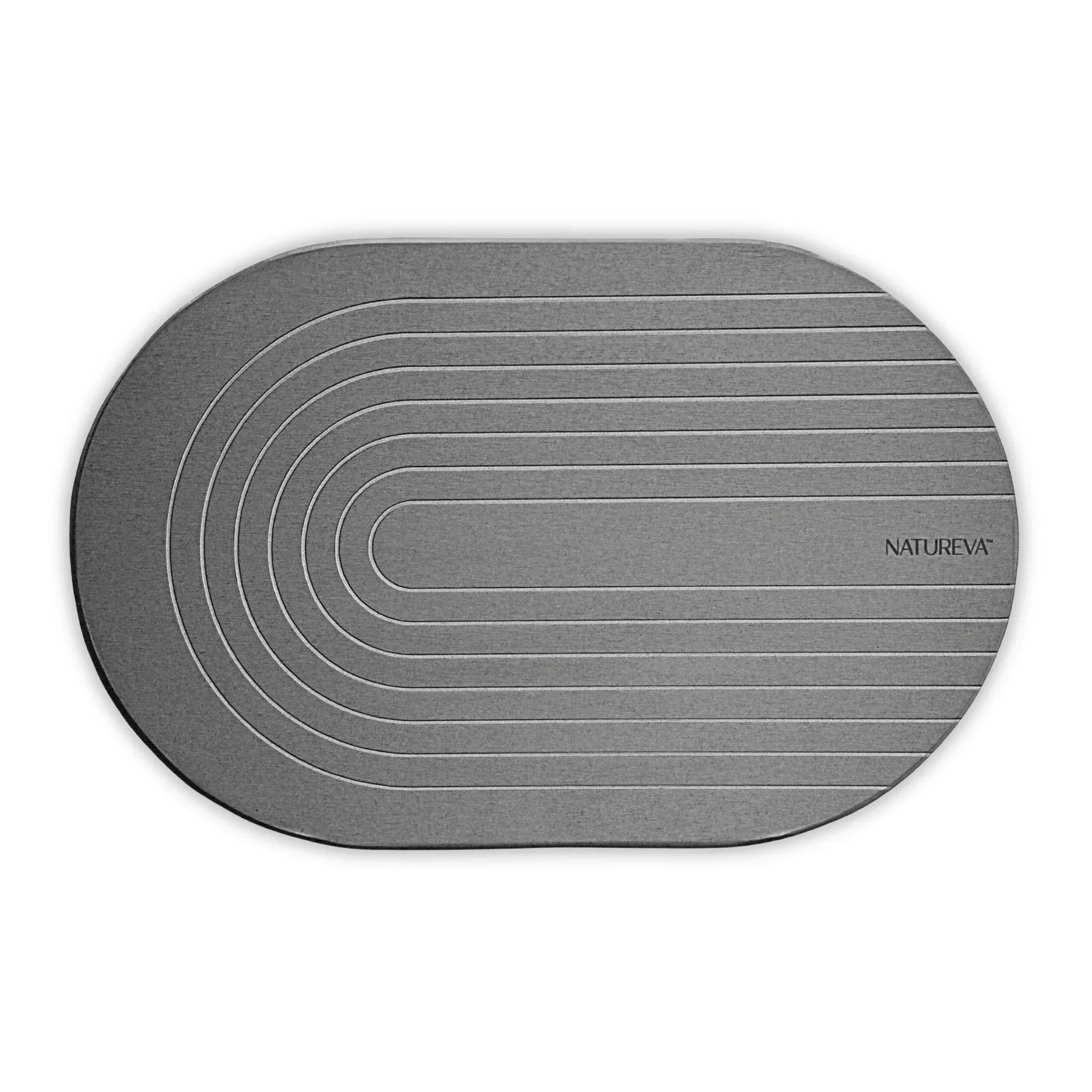
Most stone dish mats fall into four groups, and price alone won't tell you which one drains fastest. The Stone Dish Mat - Tide and the Stone Dish Mat - Flow both run 49 USD and use the same raw diatomite core, so drying speed is identical between them and the only real difference is the pattern on top.
Basic unbranded diatomite mats usually sell for less, but the slabs are thinner, which means they heat up and dry slower, and the edges chip more easily under daily use. Large stone drying boards handle stockpots and baking sheets better, though they eat up more counter space than a standard mat.
Ceramic-coated stone mats look smoother and show fewer fingerprints, but the coating slows water absorption compared to raw, uncoated diatomite.
- Natureva Tide or Flow, 49 USD, fast even drying, pattern is the only difference
- Unbranded thin diatomite, lower price, slower drying, fragile edges
- Large stone drying boards, best for big cookware, takes more space
- Ceramic-coated stone, smoother finish, slower absorption than raw stone
The next generation of home essentials: naturally made, cleaner by design, sustainable by nature.
SHOP ALLPicking the Right Size and Pattern for Your Sink
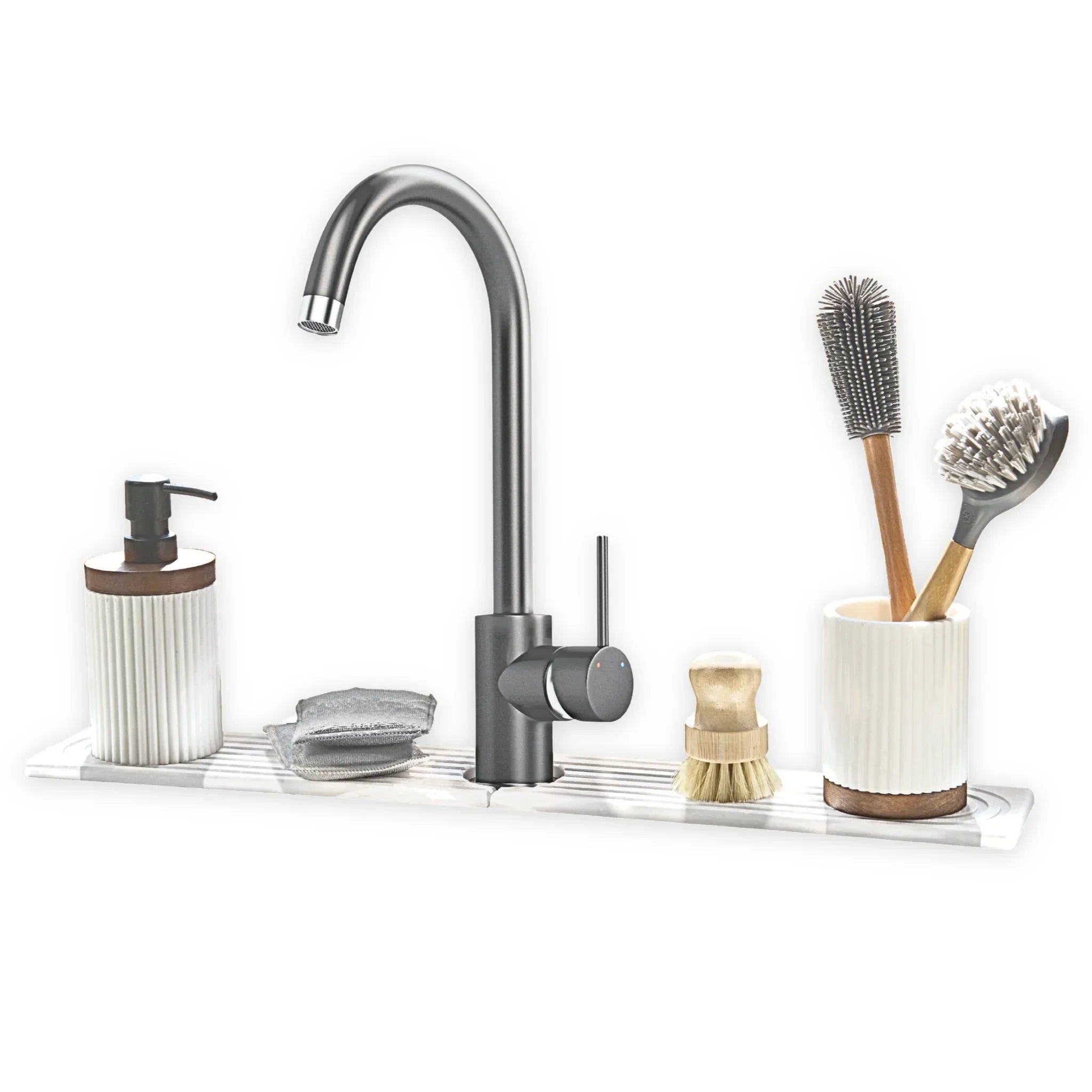
Start by measuring the open counter space beside your sink before you order anything. A mat that's too wide for that gap will sit crooked or hang over the edge, which defeats the point of keeping the counter dry.
Pattern is a style choice, not a performance one. The Tide pattern suits a minimal, clean-lined kitchen, while Flow's wave texture fits a softer, coastal look, and both dry water at the same rate.
If you stack a full dish rack after big meals, size up. An oversized mat holds more run-off from a tall rack without pooling water at the edges where it can drip onto the floor.
Leave at least an inch of clearance between the mat and the sink lip, since a mat pressed right against the basin stays damp at that edge and dries slower overall.
- Measure the counter gap in inches before ordering
- Match pattern to kitchen style, not performance
- Size up for stacked racks and large pots
- Keep clearance from the sink edge
Keeping Your Stone Mat Working Like New
A stone mat needs dry crumbs and food bits wiped off before they settle into the pores. Once debris packs into the channels, water can't soak in the way it's supposed to, and the mat starts behaving like a flat piece of stone instead of a drying surface.
Avoid submerging the mat in a sink full of water. A quick rinse under the tap or a wipe with a damp cloth is enough, and full soaking can trap moisture deep in the stone where it takes far longer to release.
Let the mat air dry flat on its own, not leaned against a wall or stacked under other dishes, since trapped moisture against one face can lead to uneven wear over time.
If absorption slows noticeably after several months, a light sanding or a fresh mat is the fix, since clogged pores don't reopen on their own. For more on what drives that wear, the complete guide to diatomite covers how the stone ages with daily use.
- Wipe off crumbs before they clog the surface
- Skip full soaking, a rinse or wipe is enough
- Dry flat, never stacked or leaned
- Sand lightly or replace once absorption drops off
Picking Between Branded, Unbranded, and Oversized Mats
Price per month of use beats the sticker price every time. A branded mat at 49 USD that lasts three years works out to about $1.36 a month, while a cheaper unbranded mat that cracks after six months can cost more over the same stretch once you've replaced it five or six times.
Branded mats hold their shape and finish because the diatomite core is pressed thicker and the edges are sealed. Unbranded versions cut cost by thinning the slab, and that thinner stone is exactly what chips at the corners and loses absorption within months of daily dish piles. If you wash dishes every day, the thinner option is the one that costs you more in the long run, not less.
Oversized boards only pay off for a household that actually fills a full rack most nights. A single cook or a two-person kitchen rarely generates enough run-off to need the extra surface, and the board just eats counter space that could hold a coffee maker or a cutting board instead.
| Option | Upfront cost | Typical lifespan | Best fit |
|---|---|---|---|
| Branded diatomite mat | 49 USD | 2-3 years | Daily dish washing, any household size |
| Unbranded thin mat | 20-30 USD | 4-8 months | Light, occasional use only |
| Oversized stone board | 60-90 USD | 2-3 years | Large households, frequent full racks |
If counter space is tight and you wash dishes most days, the standard size holds up better per dollar than either a thin unbranded slab or a board you don't have room for. The collection of dish mats shows the size range side by side if you want to compare footprints before deciding.
Settling on the Mat That Fits Your Kitchen
Grab a tape measure and check the open counter space beside your sink before you place an order, since that gap, not the picture on screen, decides whether a mat sits flat or hangs over the edge. Once you know the inches you have to work with, the only choice left is pattern: Tide for a clean, minimal counter or Flow for a softer, coastal look, since both pull water at the same rate. Natureva sells both at the same price, so there's no trade-off to weigh beyond which one matches your kitchen. Order straight from the product page for whichever pattern fits, set it in place, and let it start drying your dishes the same day it arrives.
The next generation of home essentials: naturally made, cleaner by design, sustainable by nature.
SHOP ALLStone Dish Mats Common Questions
Can a stone mat chip if a heavy pot is dropped on it?
Yes, a hard drop can chip the edge or corner of a stone mat, since diatomite is a mineral slab, not a flexible rubber pad. The center of the mat handles weight fine, but the edges are the thinnest part of the stone and take the most damage from a dropped pan or a cast iron skillet. Set heavier cookware down gently near the middle rather than at the rim.
Will the mat's color fade from dish soap or hot water over time?
Dish soap and hot water will not fade a diatomite mat, since the stone's color comes from the mineral itself, not a surface dye. What does change the look over months of use is dullness from mineral buildup in the pores, which a light sanding clears up. Soap residue left to sit can leave a faint film, so a quick wipe after washing keeps the surface looking even.
Can I use the mat on a wood countertop without it scratching the surface?
A stone mat can scratch a wood countertop if the underside has a rough, unsealed base, so check for a non-slip backing before setting it on wood. Natureva's Tide and Flow mats both use a grip base designed to sit flat without sliding or marking the surface underneath. On sealed or finished wood, wipe the counter dry under the mat occasionally to stop moisture from seeping into the seal.
Is there a weight limit for how many dishes can sit on the mat at once?
There is no fixed weight limit, since the stone itself supports the weight of a full dish rack without bending or cracking under normal use. The real limit is surface area, not weight, so once dishes overhang the edges, water starts dripping onto the counter instead of soaking into the mat. Size up to a larger mat if your rack regularly spills past the current one's edges.