

Drying Rack vs Drying Mat Which Is Best for Your Kitchen
After washing dishes, most kitchen counters turn into a wet mess that takes forever to dry and leaves water rings everywhere. The choice between a drying rack vs drying mat isn't just about where your dishes go, it's about keeping your counter clean, dry, and actually usable. Understanding how each option handles moisture will help you pick the right solution for your space.
Table of Contents
How Kitchen Drying Solutions Evolved
For most of the 20th century, if you wanted to dry dishes, you grabbed a wire rack and called it a day. These metal frames sat beside sinks in nearly every home, holding plates upright while gravity did the work. The design was simple and it worked because air could move freely around wet dishes. Nobody questioned it much because there weren't many other options that made sense.
When Wire Racks Ruled the Kitchen
Wire racks became the default solution for good reasons. They were cheap to make, lasted forever, and the open design meant dishes actually dried instead of sitting in puddles. Most kitchens had counter space to spare, so a permanent rack setup wasn't a big deal.
The basic wire rack design included these features:
- Vertical slots that held plates and bowls upright
- Open wire construction that let air circulate from all sides
- A separate tray underneath to catch dripping water
- Utensil holders attached to the side
- Rubber feet to protect countertops
Why Flat Alternatives Started Appearing
Things changed when apartments got smaller and kitchen design became something people actually cared about. Countertop space turned into premium real estate, especially in cities where every square inch mattered. A bulky wire rack that lived on the counter full time started feeling like a waste of space. Homeowners wanted solutions they could tuck away when not in use, and traditional racks didn't fold up neatly.
At the same time, the minimalist design movement made people rethink what belonged on their counters. According to recent kitchen design trends, more households are ditching permanent dish racks for cleaner looking alternatives. Instagram-worthy kitchens don't usually feature clunky metal frames, which pushed manufacturers to think differently.
Material Science Enters the Conversation
The real shift happened when new materials made flat drying surfaces actually functional. For decades, putting dishes on a towel or fabric mat meant they'd sit in moisture for hours. But materials like diatomite changed that equation completely. These absorbent stone surfaces could pull water away from dishes and release it into the air fast enough to compete with traditional racks.
Modern drying mats now offer several advantages:
- They lay completely flat when not in use
- Some materials absorb moisture instead of just collecting it
- They take up minimal drawer or cabinet space
- Design options match modern kitchen aesthetics
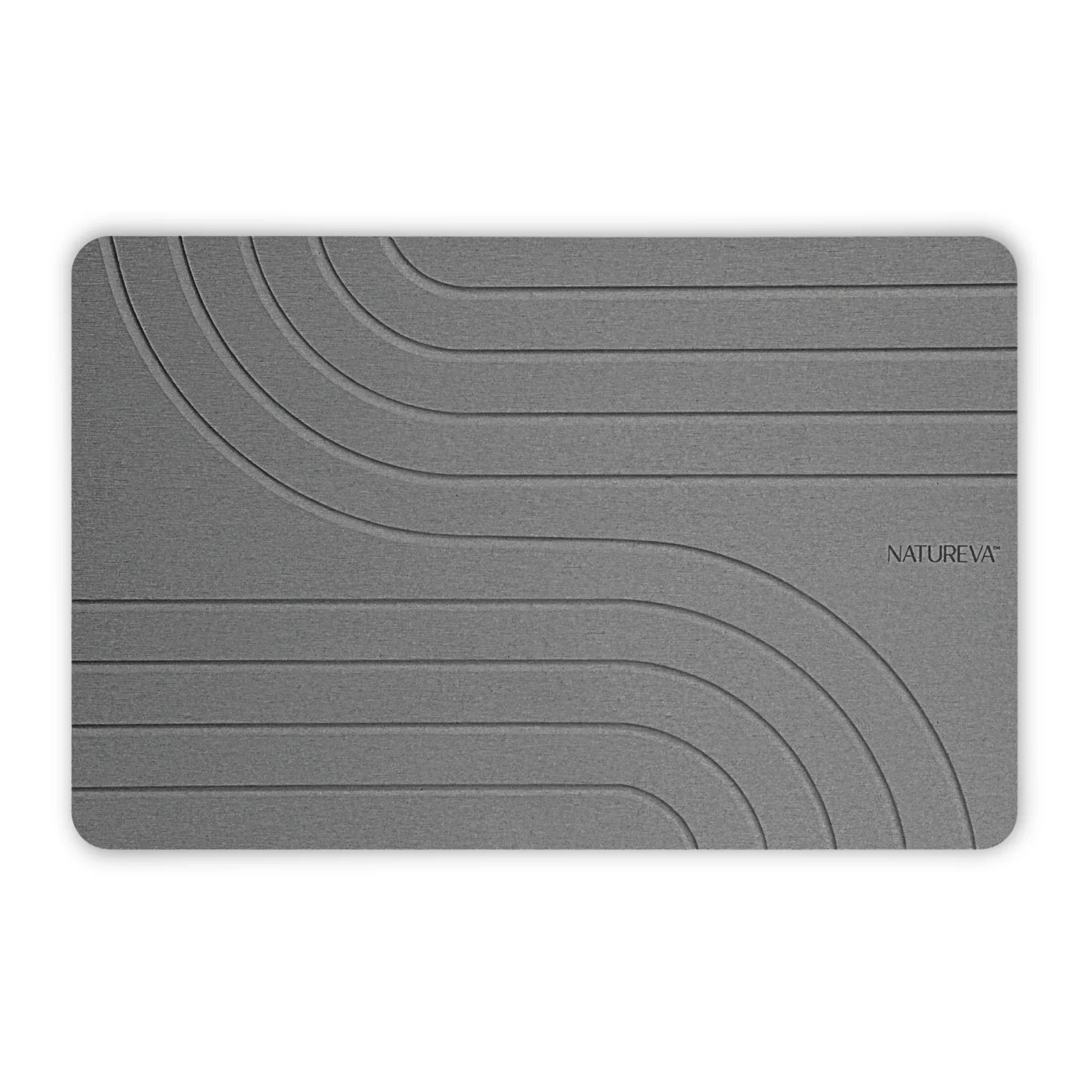
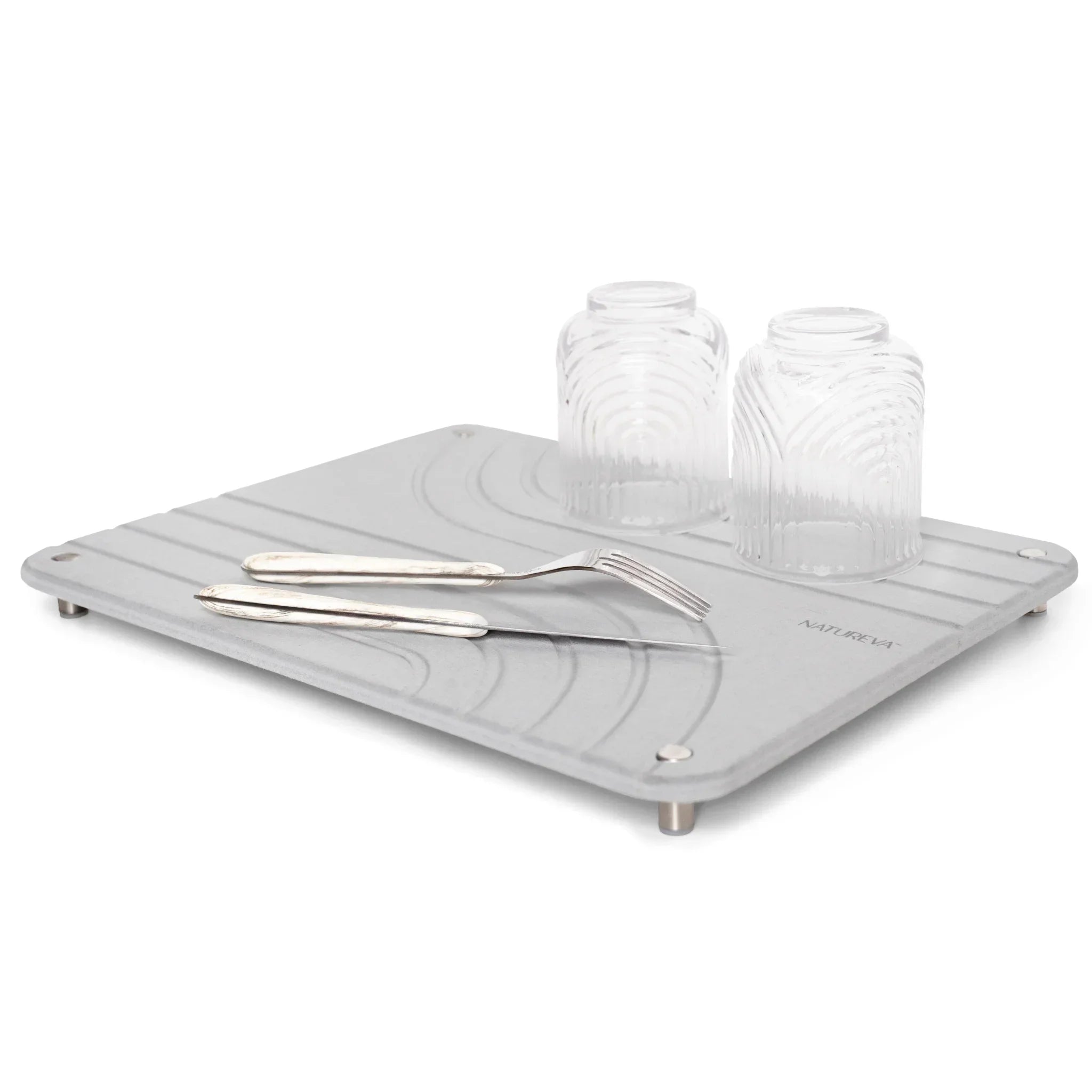
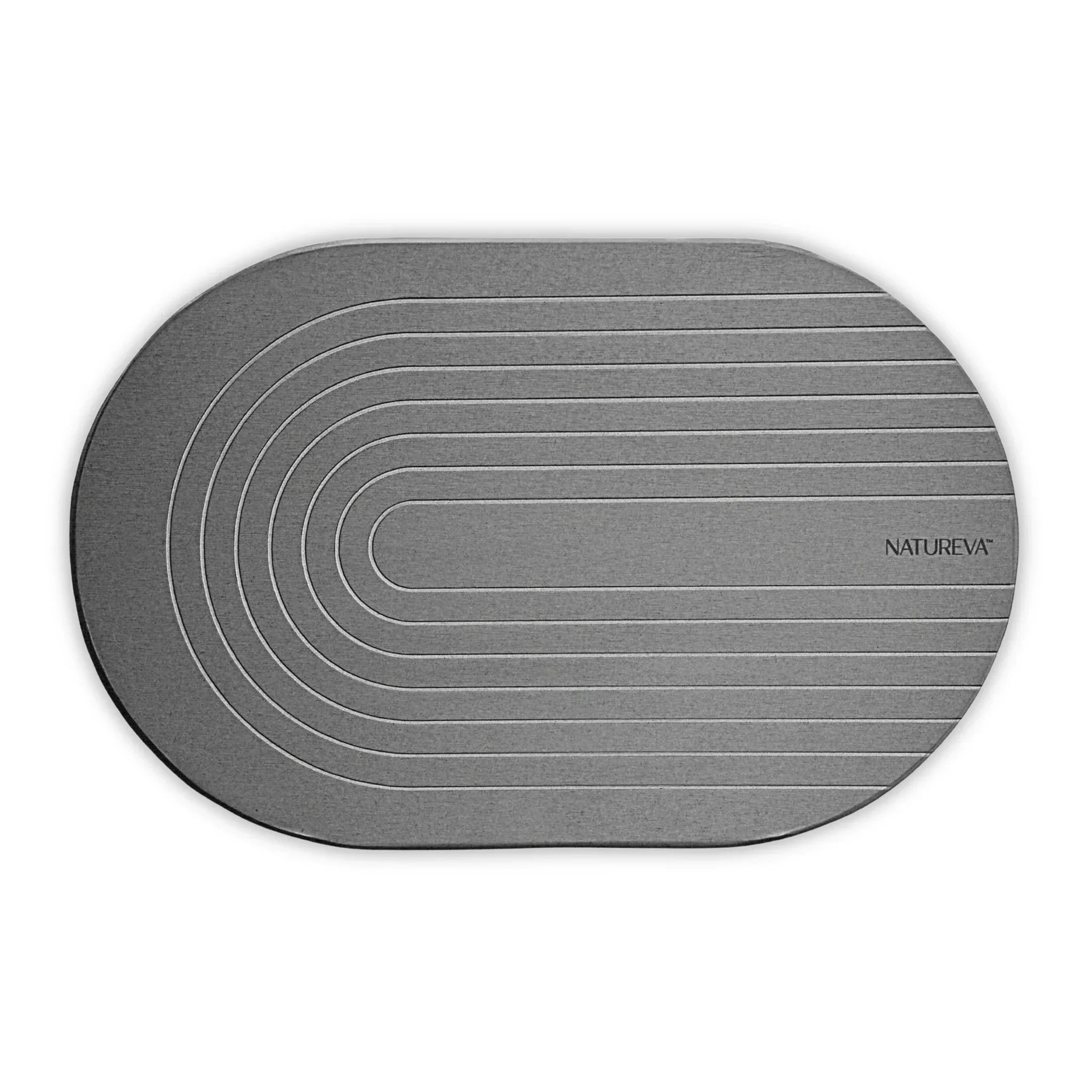
Brands started experimenting with different approaches. Some used microfiber fabrics, others tried silicone with drainage channels, and a few turned to natural stone materials. Our Natureva stone dish mats use diatomite composite that absorbs water on contact and dries within minutes, sitting on elevated stainless steel legs for airflow underneath. The question became whether these flat alternatives could actually dry dishes as well as racks, or if they were just prettier versions of the old dish towel.
| Era | Primary Solution | Main Driver |
|---|---|---|
| 1950s-1990s | Wire racks | Function over form |
| 2000s-2010s | Fabric mats emerge | Space saving needs |
| 2020s | Stone and hybrid options | Design plus performance |
The debate between racks and mats isn't really about which one is "better" overall. It's about which solution fits your specific kitchen setup, how much counter space you have, and whether you value quick drying or quick storage more. Both options have evolved significantly from their original designs, and understanding what each does well helps you pick the right one for your home.
How Drying Racks Handle Moisture
Most kitchens have dealt with the same problem for decades: a wire or plastic rack sitting next to the sink, collecting water droplets that slowly drip into a tray below. The basic idea makes sense on paper. Air circulates around your dishes, gravity pulls water down, and eventually everything dries. But anyone who's used a drying rack knows the reality is messier than that.
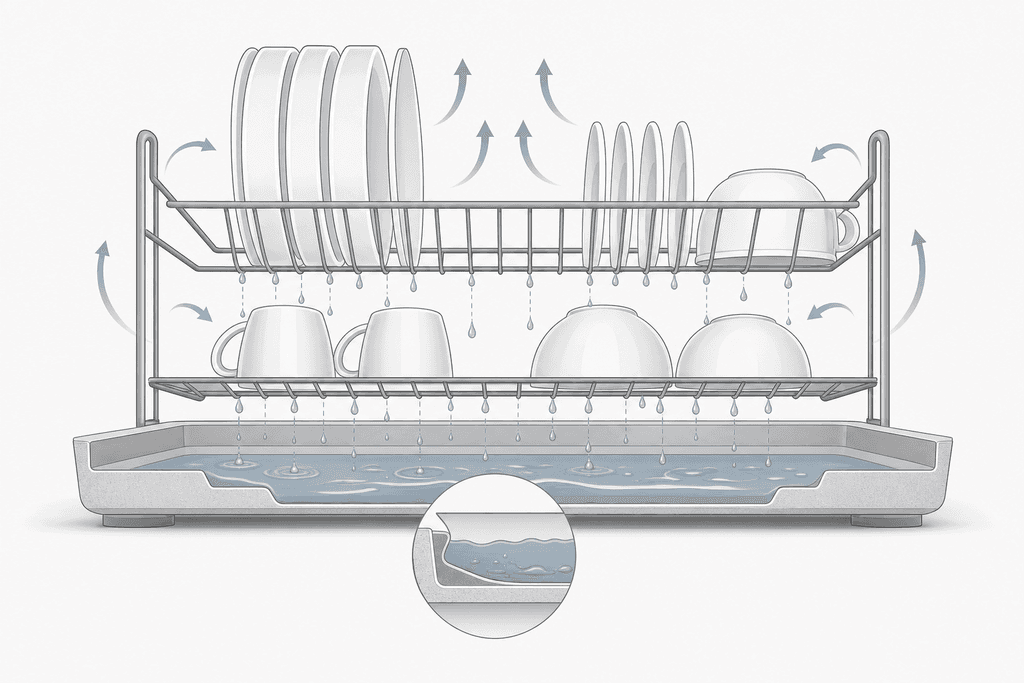
Wire and plastic racks depend entirely on airflow and time to work. When you stack dishes too close together, which happens in almost every household, the air can't move freely. Water gets trapped between plates and bowls. What should take an hour to dry can stretch into several hours, especially in humid weather.
- Water drips into catch trays that need emptying multiple times a day
- The counter space underneath stays damp between dish loads
- Mold starts growing in corners and joints within weeks
- Mineral deposits from hard water create white crusty buildup
- Metal racks develop rust spots that stain dishes
The catch tray is where things get particularly annoying. That pool of standing water becomes a breeding ground for bacteria if you forget to empty it even once. And let's be honest, most people forget regularly.
According to Bon Appétit's testing of dish drying racks, even the best-designed racks struggle with moisture management in real-world conditions. The problem isn't just about drying dishes anymore. It's about what happens to your counter, your rack, and the air quality in your kitchen when moisture lingers.
| Rack Type | Drying Time | Maintenance Frequency |
|---|---|---|
| Wire Rack | 2-4 hours | Weekly deep clean |
| Plastic Rack | 3-5 hours | Twice weekly |
| Bamboo Rack | 2-3 hours | Weekly treatment |
How Drying Mats Absorb and Evaporate
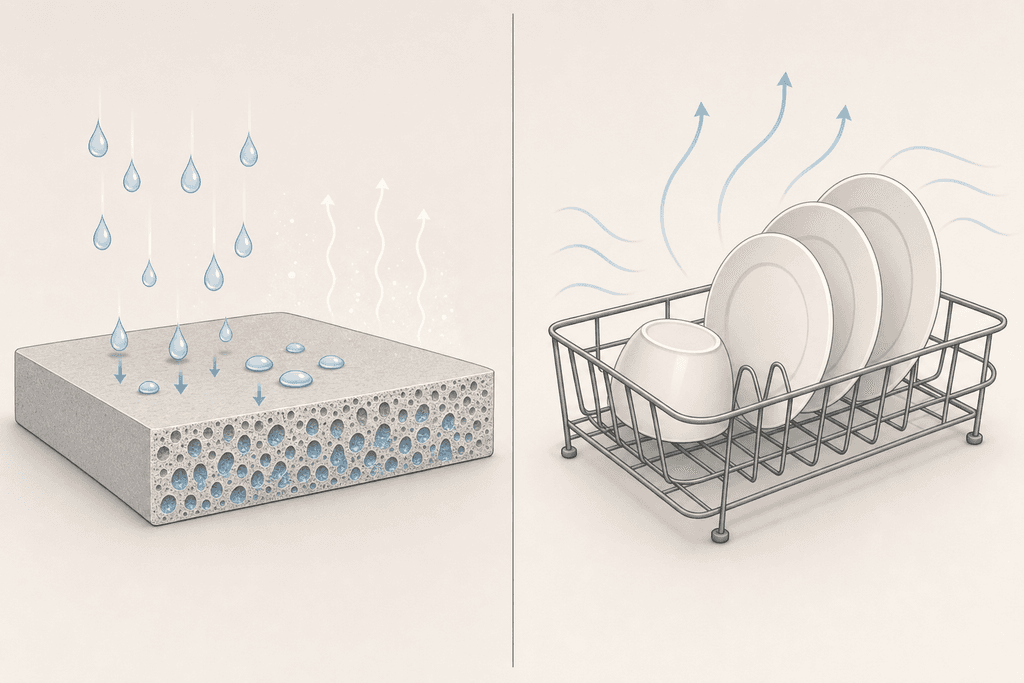
Drying mats work on a completely different principle than racks. Instead of letting water drip away, they pull moisture in and hold it until it evaporates. But here's where material choice becomes critical. Not all absorption is created equal, and the speed of evaporation determines whether you're solving a problem or creating a new one.
Traditional fabric mats absorb water into their fibers, but then trap that moisture inside. Microfiber and cotton mats can hold impressive amounts of water initially. The issue is what happens next. That water sits in the fabric, creating the exact humid environment where bacteria thrive. Research on microfiber drying mats shows they can harbor significant bacterial growth within 24 hours of use.
- Fabric mats feel damp to the touch hours after use
- Odors develop quickly, usually within a few days
- Machine washing is required every 2-3 days minimum
- Stains from food and minerals become permanent
- The mat itself becomes part of your cleaning routine
Stone mats made from diatomite operate on a fundamentally different system. The material contains millions of microscopic pores that pull water in instantly through capillary action. But unlike fabric, these pores don't trap moisture. They release it back into the air through rapid evaporation.
Our Stone Dish Mats use this natural process without any chemical additives. The diatomite composite absorbs water the moment a wet dish touches the surface. Within minutes, that moisture evaporates completely. The mat feels dry to the touch even while actively absorbing water from your dishes.
| Mat Material | Absorption Speed | Evaporation Time | Bacterial Growth Risk |
|---|---|---|---|
| Microfiber | Fast | 4-8 hours | High |
| Cotton | Medium | 6-12 hours | High |
| Diatomite Stone | Instant | 5-15 minutes | Low |
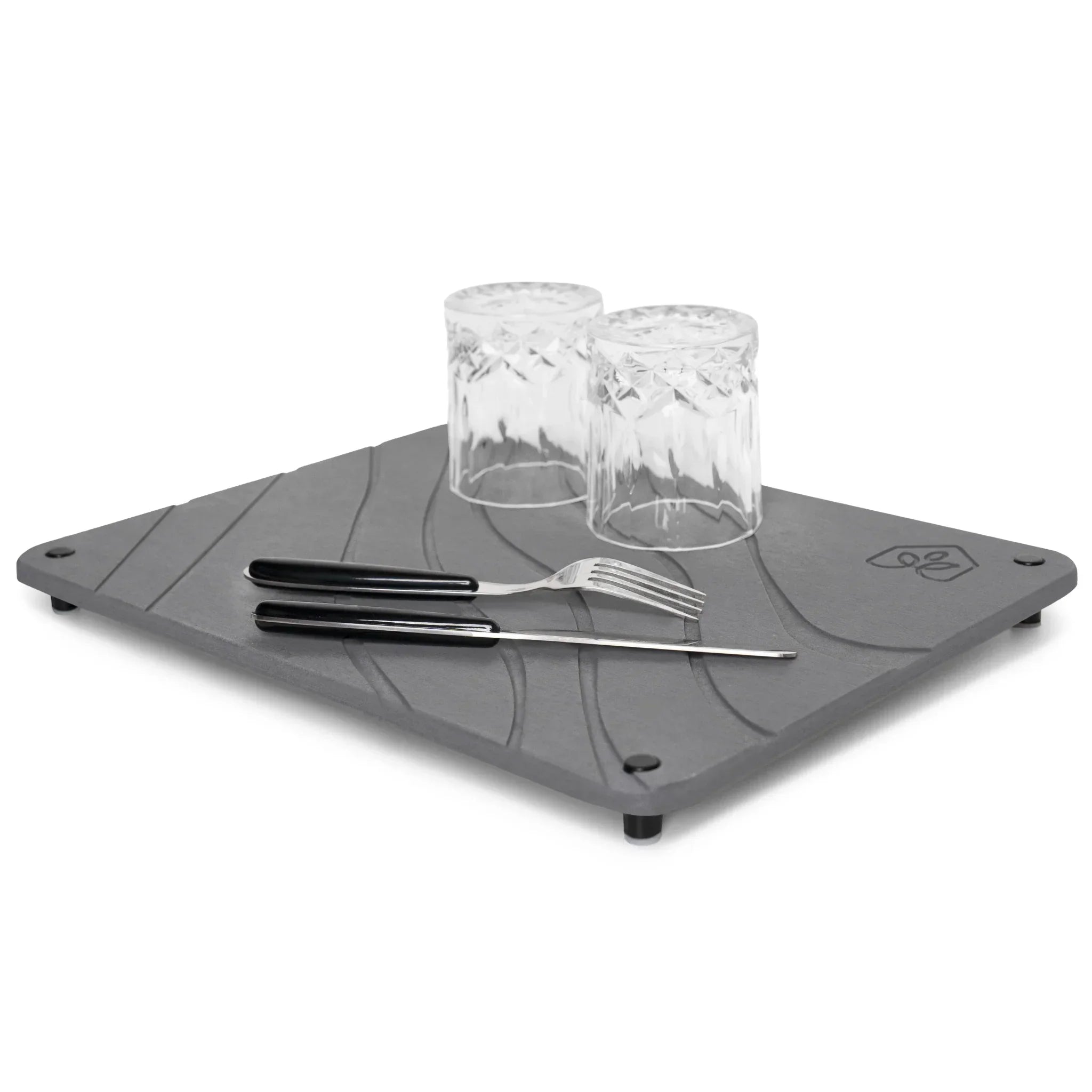
Elevation makes a significant difference too. Natureva's Stone Dish Mats include stainless steel legs that lift the mat 2.5 cm off your counter. Air flows underneath continuously, preventing moisture from getting trapped between the mat and your countertop. The transparent silicone pads under each leg protect your surface from scratches while keeping everything stable.
The difference between a fabric mat and a stone mat isn't just about absorption speed. It's about whether moisture disappears or just moves to a different location in your kitchen.
Space and Design Considerations
Your kitchen counter is valuable real estate. Every appliance, cutting board, and drying solution competes for the same limited space. The choice between a rack and a mat often comes down to how much visual and physical space you're willing to sacrifice. Racks demand vertical territory and stay visible all day. Mats integrate flat against your counter and disappear when you need the space back.
Traditional racks create a permanent fixture on your counter. Even collapsible models take up room when folded. They become part of your kitchen's visual landscape whether you're actively using them or not. For small kitchens or minimalist designs, this constant presence can feel cluttered.
- Racks occupy 12-18 inches of counter depth permanently
- Vertical height blocks backsplash access and outlets
- Moving a rack for meal prep means relocating wet dishes
- Visual bulk dominates counter aesthetics
- Cabinet storage for racks requires significant space
Flat mats offer flexibility that racks can't match. When you're done with dishes, a mat can be stored vertically in a cabinet gap or leaned against a wall. The counter returns to full usable space. This matters more than people realize until they actually need that extra room for cooking.
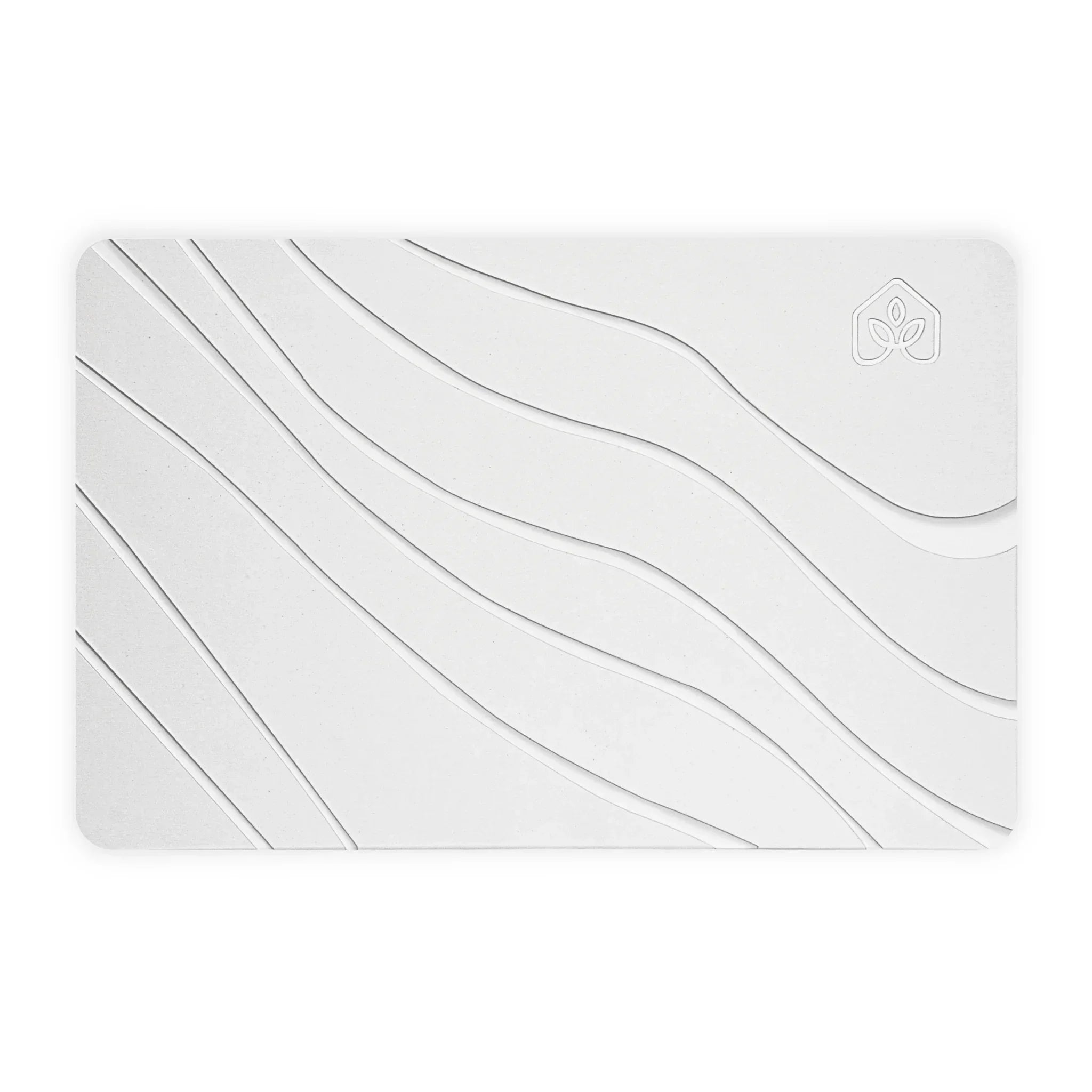
Design-conscious homes face another challenge. A wire rack with colorful plastic trays doesn't exactly complement modern kitchen aesthetics. Stone mats in Graphite or Slate blend into counter surfaces rather than standing out as utilitarian equipment. The carved patterns on our Flow and Tide designs add subtle texture without screaming "dish drying station."
Workflow matters too. With a rack, dishes stay in one fixed location until dry. With a mat, you can position it wherever makes sense for your current task, then move it when you need the counter for something else. That kind of adaptability changes how you use your kitchen space throughout the day.
Maintenance and Longevity Reality
The next generation of home essentials: naturally made, cleaner by design, sustainable by nature.
SHOP ALLEvery kitchen solution looks great when it's new. The real test comes after months of daily use, when mineral deposits accumulate, materials degrade, and cleaning becomes a chore you can't ignore. The maintenance requirements for racks versus mats reveal costs that don't show up on the price tag. Time spent scrubbing, replacing, and dealing with odors adds up faster than most people expect.
Racks require constant attention to stay functional and hygienic. Those wire joints where water collects become mold magnets. Hard water leaves white crusty deposits that need scrubbing with vinegar or specialized cleaners. Plastic components crack and discolor. Metal rusts despite protective coatings. Within a year, most racks look significantly worse than when purchased.
- Weekly deep cleaning to prevent mold buildup
- Monthly descaling for hard water deposits
- Rust treatment or replacement of corroded parts
- Catch tray emptying and sanitizing daily
- Complete replacement every 1-2 years on average
Fabric mats become laundry items that compete with your actual laundry. They need washing every few days to prevent bacterial growth and odors. But frequent washing degrades the absorbent fibers. Stains become permanent. The mat starts to smell even when freshly washed. Most fabric mats last 6-12 months before they're too worn or stained to use.
Stone mats require different maintenance, but significantly less of it. A weekly wipe with diluted vinegar keeps the surface clean. If stains appear from colored soaps or food, rinsing under water usually handles it. For deeper marks, the included sanding tool restores absorbency by reopening the microscopic pores. This takes about 30 seconds and extends the mat's life indefinitely.
| Solution | Weekly Maintenance | Deep Clean Frequency | Expected Lifespan |
|---|---|---|---|
| Wire Rack | 15-20 minutes | Weekly | 1-2 years |
| Fabric Mat | Machine wash cycle | Every 2-3 days | 6-12 months |
| Stone Mat | 2-3 minutes | Monthly | 5+ years |
The initial cost comparison between a $15 fabric mat and a $49 stone mat looks straightforward until you factor in replacements. Replacing fabric mats twice a year costs more over three years than buying one stone mat that lasts significantly longer. The same logic applies to racks that need replacement when rust or cracks make them unusable.
Maintenance time has value too. Spending 15 minutes weekly scrubbing a rack adds up to 13 hours per year. Stone mats need maybe 2-3 hours of total maintenance annually. That difference matters when you're already juggling everything else in a busy household.
Which Solution Fits Your Kitchen Best
The right choice between a drying rack and a drying mat depends less on which product is objectively better and more on how your kitchen actually functions day to day. A family of five running the dishwasher twice daily has completely different needs than a couple who hand wash a few items each evening. Your kitchen size, cleaning habits, and even your local climate all play a role in determining which solution will actually get used instead of shoved under the sink after two weeks.
Household Size and Dish Volume
Large families generate a constant stream of dishes that need somewhere to go. Racks with vertical capacity handle high volume better because they stack items in layers rather than spreading them across counter space. But this advantage only matters if you're actually dealing with that volume consistently.
- Families with 4+ people typically need multi-tier rack systems
- Single people or couples rarely fill vertical rack space efficiently
- Households that use dishwashers primarily only need overflow drying space
- Frequent entertainers benefit from expandable rack capacity during gatherings
Kitchen Footprint and Counter Real Estate
Small kitchens punish bulky equipment. A traditional rack might hold more dishes, but it also claims 18 inches of permanent counter space whether you're using it or not. Flat mats like Natureva's Stone Dish Mat sit flush against the counter and can be stored vertically in a cabinet gap when not needed.
- Apartments and galley kitchens benefit from low-profile mat designs
- Open concept spaces where kitchen visibility matters favor minimal equipment
- Renters who move frequently prefer lightweight, portable solutions
Climate and Moisture Management
Humid environments create a hidden problem that most people don't consider until they notice the smell. Bacterial growth thrives in moisture that lingers for hours, which is exactly what happens with fabric mats or poorly ventilated racks. According to Consumer Reports testing of dish drying solutions, drying speed directly impacts hygiene performance.
- Coastal and tropical climates require fast-evaporating materials
- Stone-based mats absorb and release moisture within minutes rather than hours
- Traditional fabric mats stay damp and develop odors in humid conditions
- Racks with poor airflow trap water in corners and joints
Aesthetic Tolerance and Storage Preferences
Some people don't mind visible kitchen equipment. Others want every surface clear when not actively cooking. If you're the type who puts away the coffee maker after each use, a permanent rack setup will drive you crazy. Your tolerance for visible clutter matters more than product features when it comes to long-term satisfaction.
- Minimalist kitchens need solutions that disappear when not in use
- Busy households often prefer leave-it-out convenience
- Design-focused spaces benefit from materials like stone that read as intentional rather than utilitarian
Making the Right Choice for Your Counter
The drying rack vs drying mat debate really comes down to what you can tolerate in your kitchen. Racks handle a lot of dishes at once, but they drip everywhere, rust over time, and take up permanent counter space even when you're not using them. Fabric mats fold away nicely and cost less upfront, but they're basically sponges that sit wet on your counter for hours, breeding bacteria and smelling funky by day three.
Stone mats changed the game here. Our diatomite dish mats absorb water instantly and dry within minutes, so you get the flat profile of a mat without the moisture problem. They don't need washing every few days like fabric, and they don't rust or collect grime like metal racks.
Your decision should match your kitchen size and how much moisture you're willing to deal with. Small kitchens with limited counter space usually can't spare room for a permanent rack. Busy households that wash dishes multiple times a day need something that dries fast between uses, not something that stays damp all day.
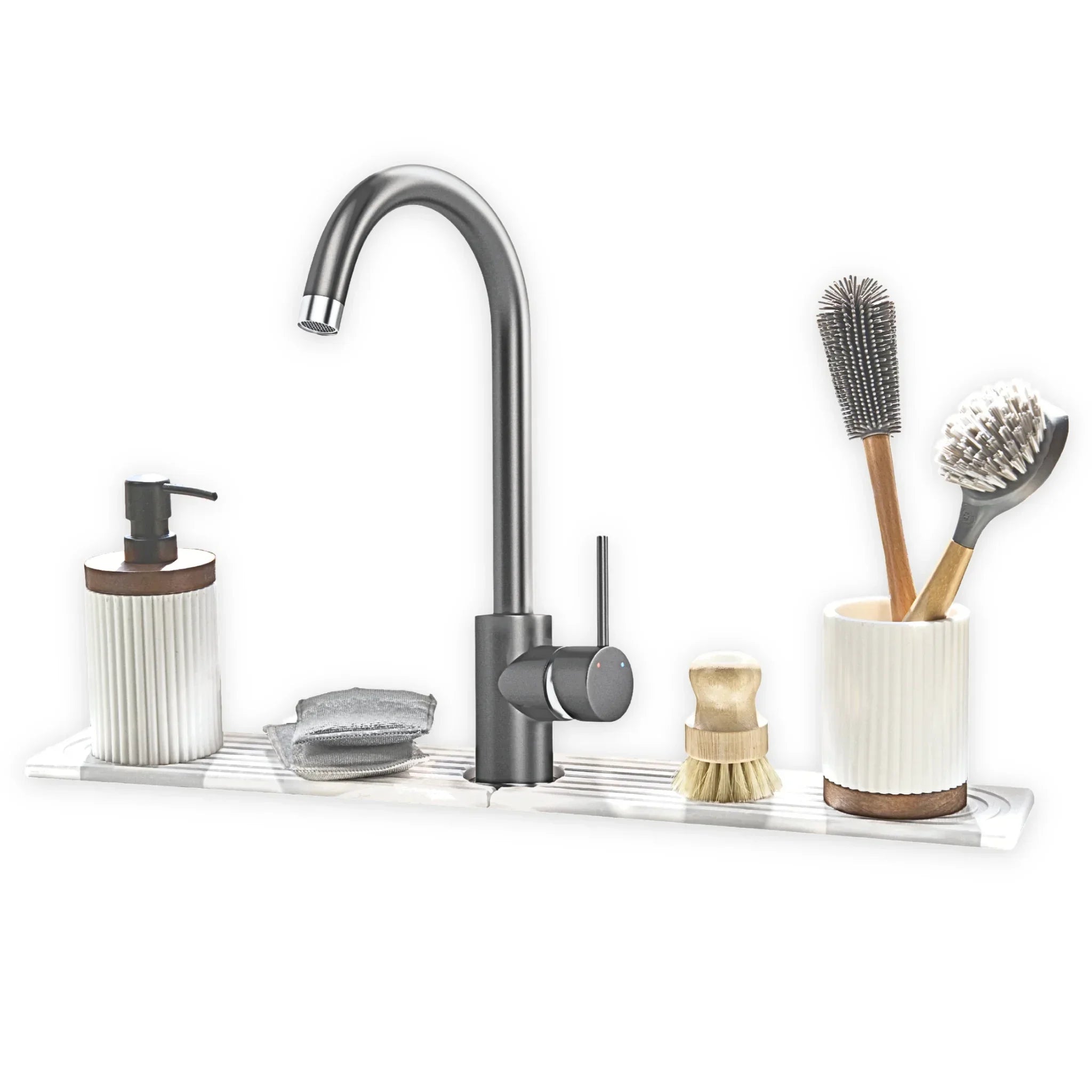
The Flow and Tide patterns in our kitchen collection work the same way as our bath mats, just sized for dishes instead of feet. The carved surface channels water while the porous stone pulls moisture away from your plates and glasses.
Modern materials like diatomite made flat drying surfaces actually functional instead of decorative. You're not choosing between convenience and hygiene anymore.
Common Questions About Drying Solutions
Choosing between a drying rack and a drying mat brings up a lot of practical questions. Most people want to know if they're making the right choice for their kitchen setup, how much maintenance they're signing up for, and whether the solution will actually last. These are the questions that come up most often when people are weighing their options.
Can drying mats really replace traditional racks?
Yes, but it depends on your dish volume and kitchen habits. Stone mats like the Natureva Dish Mat absorb water instantly and dry within minutes, so they work well for daily dish loads. If you're washing dishes for a large family multiple times a day, you might still want a rack for the sheer capacity, but for most households, a mat handles the job without taking up counter space.
How often do stone mats need maintenance?
Stone diatomite mats need a quick wipe with vinegar water once a week to stay fresh. If you notice the surface absorbing slower over time, a light sand with the included tool reopens the pores and brings back full performance. It takes about two minutes and keeps the mat working like new for years.
Do fabric mats develop mold and odors?
Fabric mats trap moisture in their fibers, which creates the perfect environment for bacteria and mold growth. Even with regular washing, they tend to develop that damp smell within a few days of use. Stone mats eliminate this problem entirely because they don't hold water in the material, they release it back into the air through evaporation.
What's the best option for small kitchens?
Flat or low profile elevated mats work better in tight spaces because they don't block your workspace or create visual clutter. A dish rack takes up permanent counter real estate and can't be easily moved or stored. Mats slide into cabinets or lean against the wall when you need the counter back.
How long do different drying solutions last?
Wire racks rust and break down within a year or two, especially around joints and welds. Fabric mats wear out even faster and need replacing every few months once staining and odor set in. Stone mats last indefinitely with basic care since the material doesn't degrade, rust, or harbor bacteria.
Are elevated mats better than flat ones?
Elevation makes a difference for airflow and countertop protection. Elevated designs like Natureva's stainless steel leg system lift the mat 2.5 cm off the surface, which prevents moisture from getting trapped underneath and protects your counter from water damage. Flat mats can work but need to be lifted and dried regularly to avoid issues.
The next generation of home essentials: naturally made, cleaner by design, sustainable by nature.
SHOP ALL