
Simple Dog Food Mat Placements That Block Drips
Every time your dog finishes drinking, a trail of water droplets follows them across your kitchen floor. Most pet owners think placing a mat directly under the bowl solves the problem, but spills and splashes actually spread much wider than that small space. The right dog food mat placement can stop those drips before they reach your floors, and it starts with understanding where the mess really happens.
Table of Contents
How Dogs Create Feeding Area Messes
A dog's tongue works like a backward ladle, scooping water in reverse and flinging droplets everywhere in the process. When your dog drinks, their tongue curls backward to form a column of water that gets pulled into their mouth. This natural drinking method sends water splashing onto floors, walls, and anything nearby. The faster they drink, the bigger the splash zone becomes, and there's really no way to train this behavior away since it's just how dogs are built to drink.
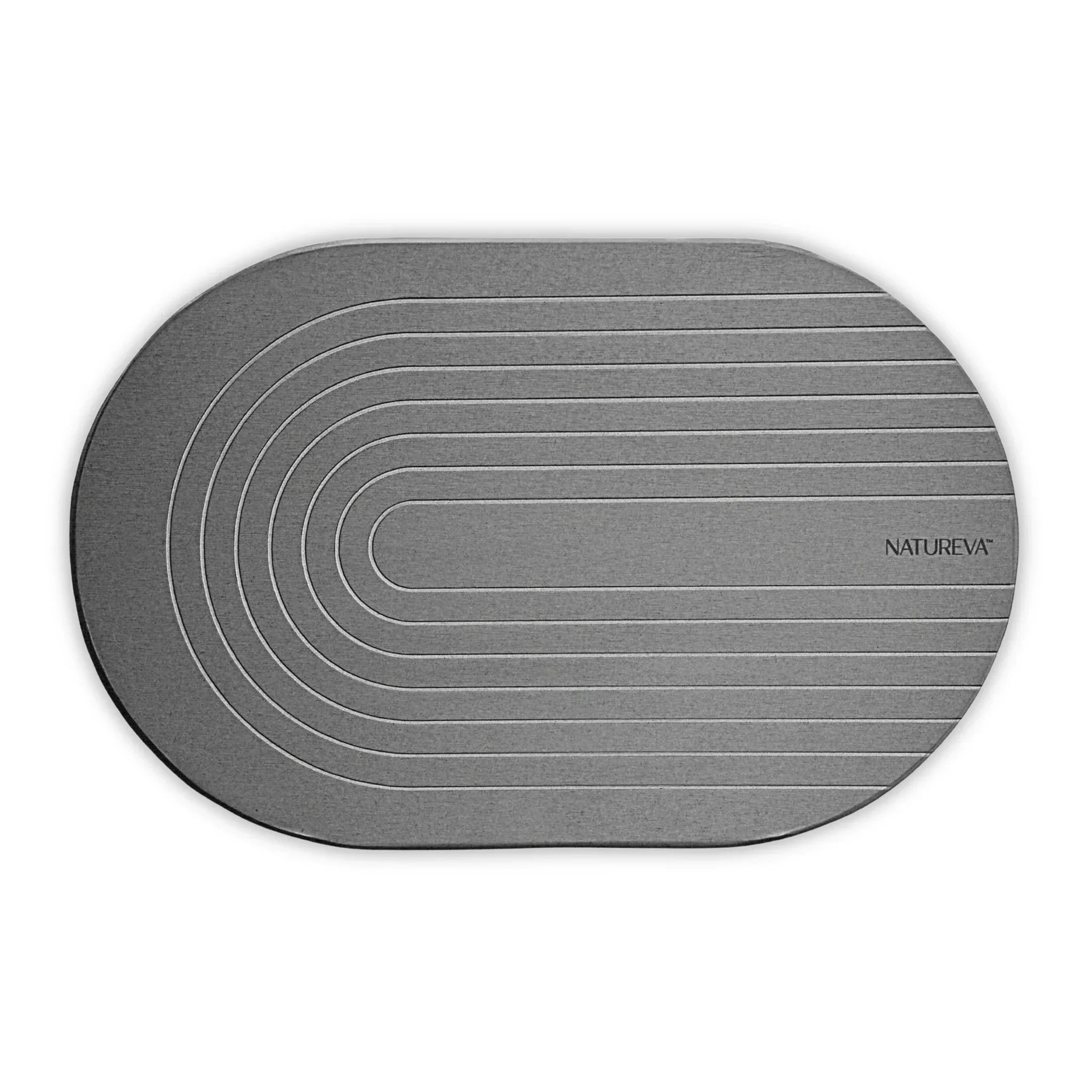
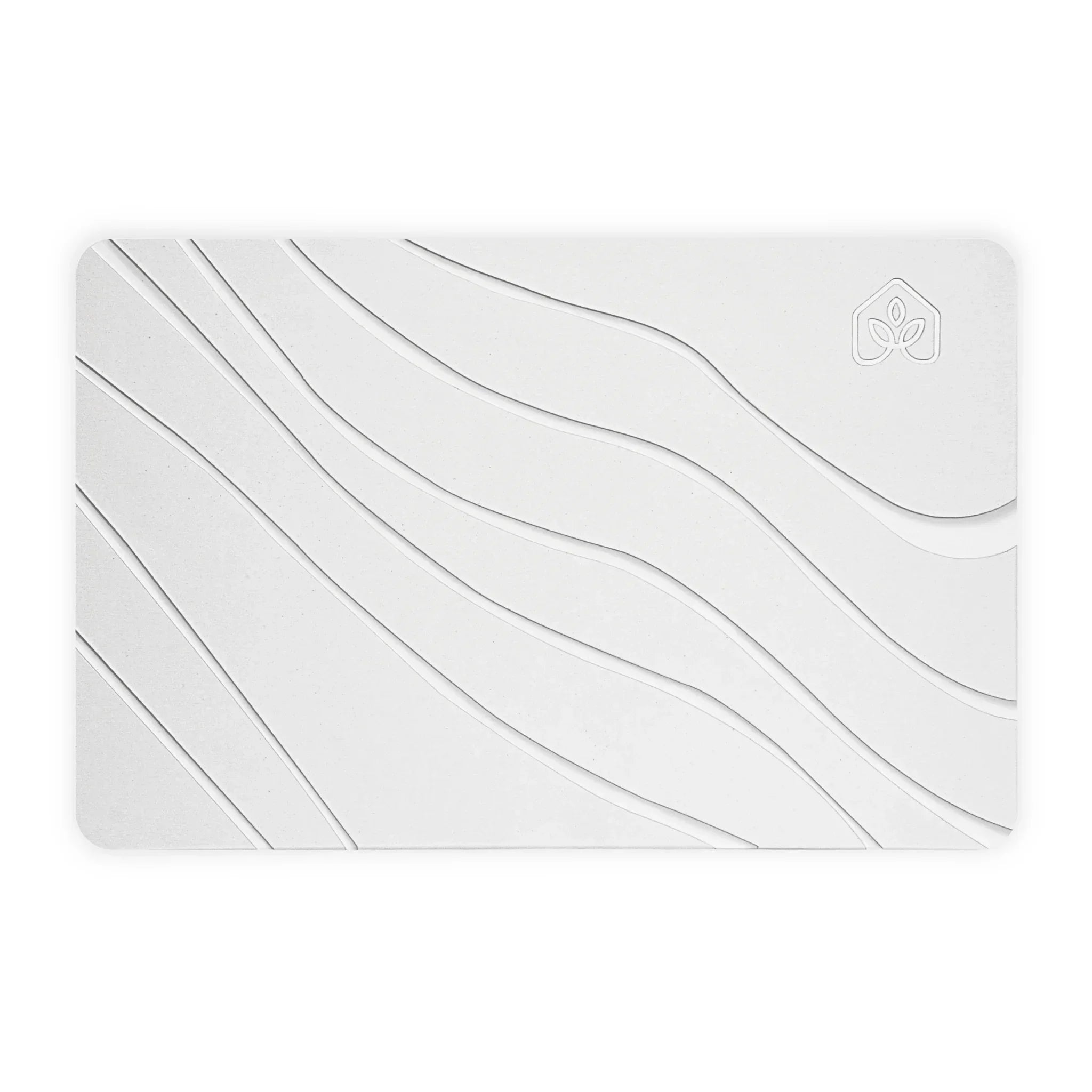
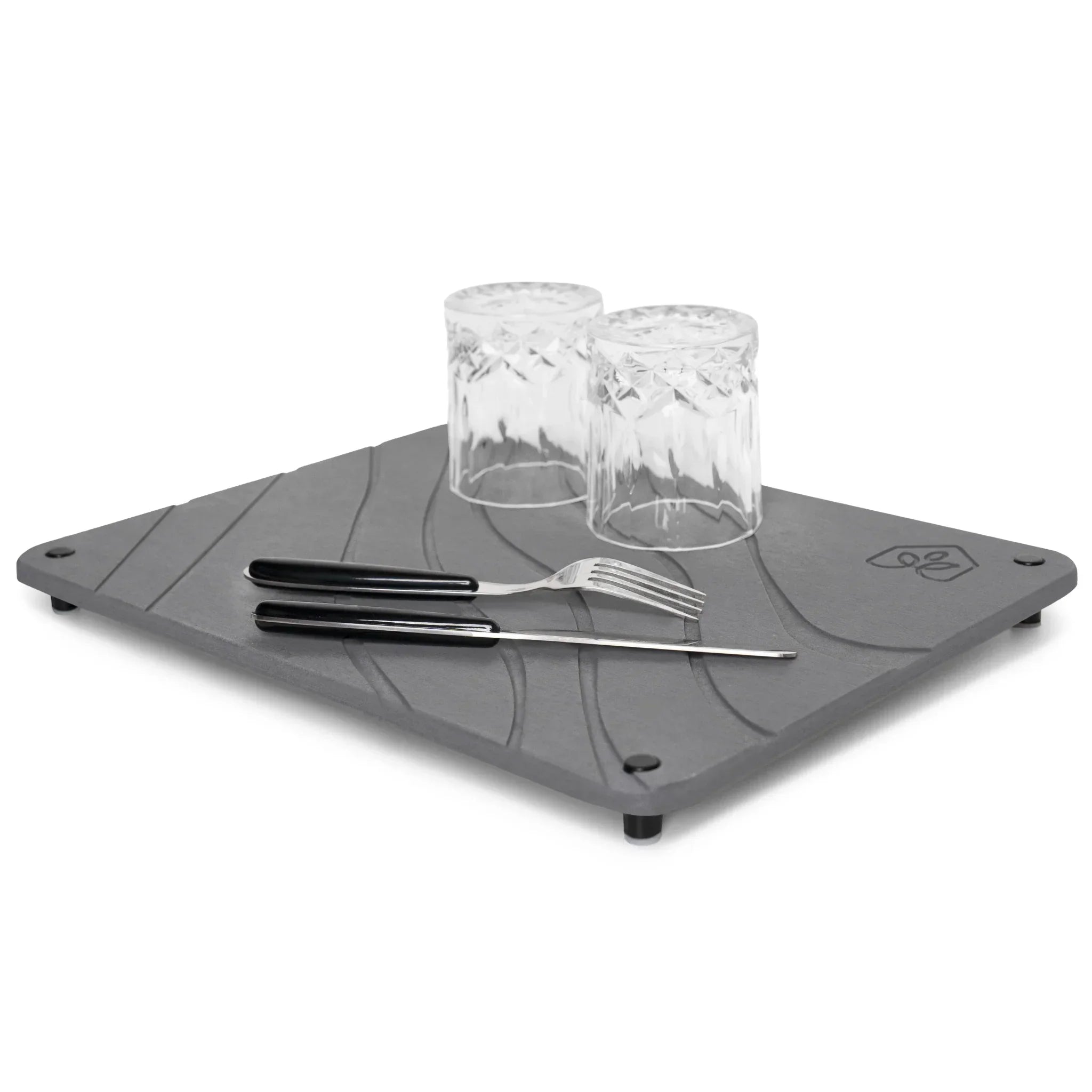
Stone Pet Mat
Why Kibble Goes Flying
Dogs don't have the same table manners we do, and their eating style shows it. Enthusiastic eaters push their bowls around, sending kibble pieces skittering across the floor like tiny hockey pucks. Some dogs grab mouthfuls and carry them a few feet away before dropping half the pieces. Others tilt their heads while chewing, letting food fall out the sides of their mouths.
The mess doesn't stop when the bowl is empty either. Dogs often have water dripping from their jowls and beards after drinking, leaving a trail of wet spots wherever they walk next.
Mess Patterns by Dog Type
Not all dogs create the same kind of chaos at mealtime. The size and breed of your dog directly affects how far the mess spreads and what type of cleanup you're facing. Larger dogs with loose jowls create different problems than small dogs with fast eating habits.
| Dog Size | Splash Radius | Common Mess Type | Cleanup Frequency |
|---|---|---|---|
| Small (under 20 lbs) | 6-12 inches | Light drips, scattered kibble | Once daily |
| Medium (20-50 lbs) | 12-18 inches | Water puddles, food debris | Twice daily |
| Large (50-80 lbs) | 18-24 inches | Heavy drool, wide scatter | After each meal |
| Giant (80+ lbs) | 24-36 inches | Major puddles, drool trails | Multiple times daily |
Breed Specific Eating Behaviors
Certain breeds come with their own special mess-making talents. Here's what different types of dogs bring to the feeding area:
- Jowly breeds like Bulldogs and Mastiffs trap water in their facial folds and release it in puddles
- Long-eared dogs like Cocker Spaniels dip their ears right into water bowls
- Fast eaters like Labradors scatter kibble in their rush to finish first
- Bearded breeds like Schnauzers carry water in their facial hair and drip for minutes
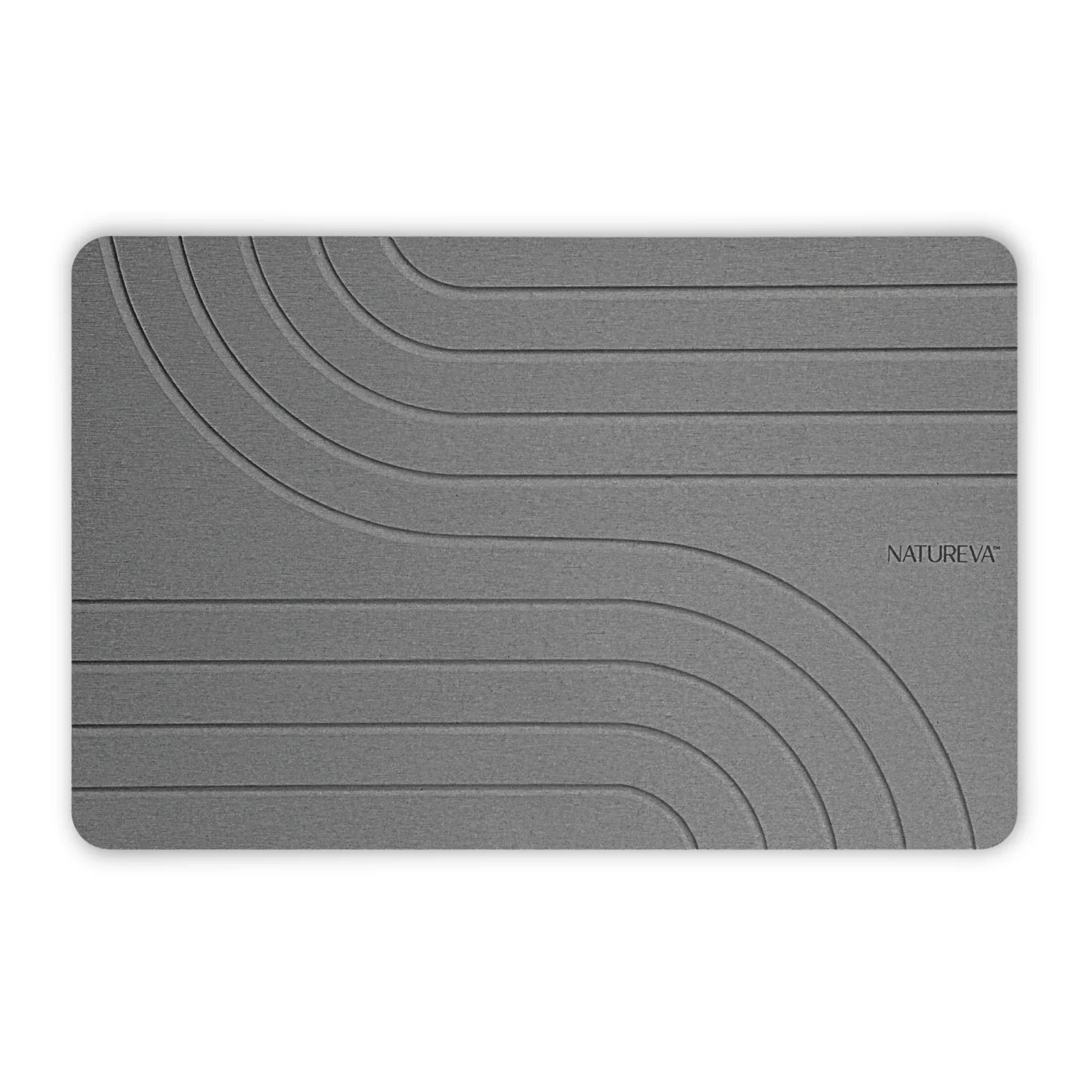
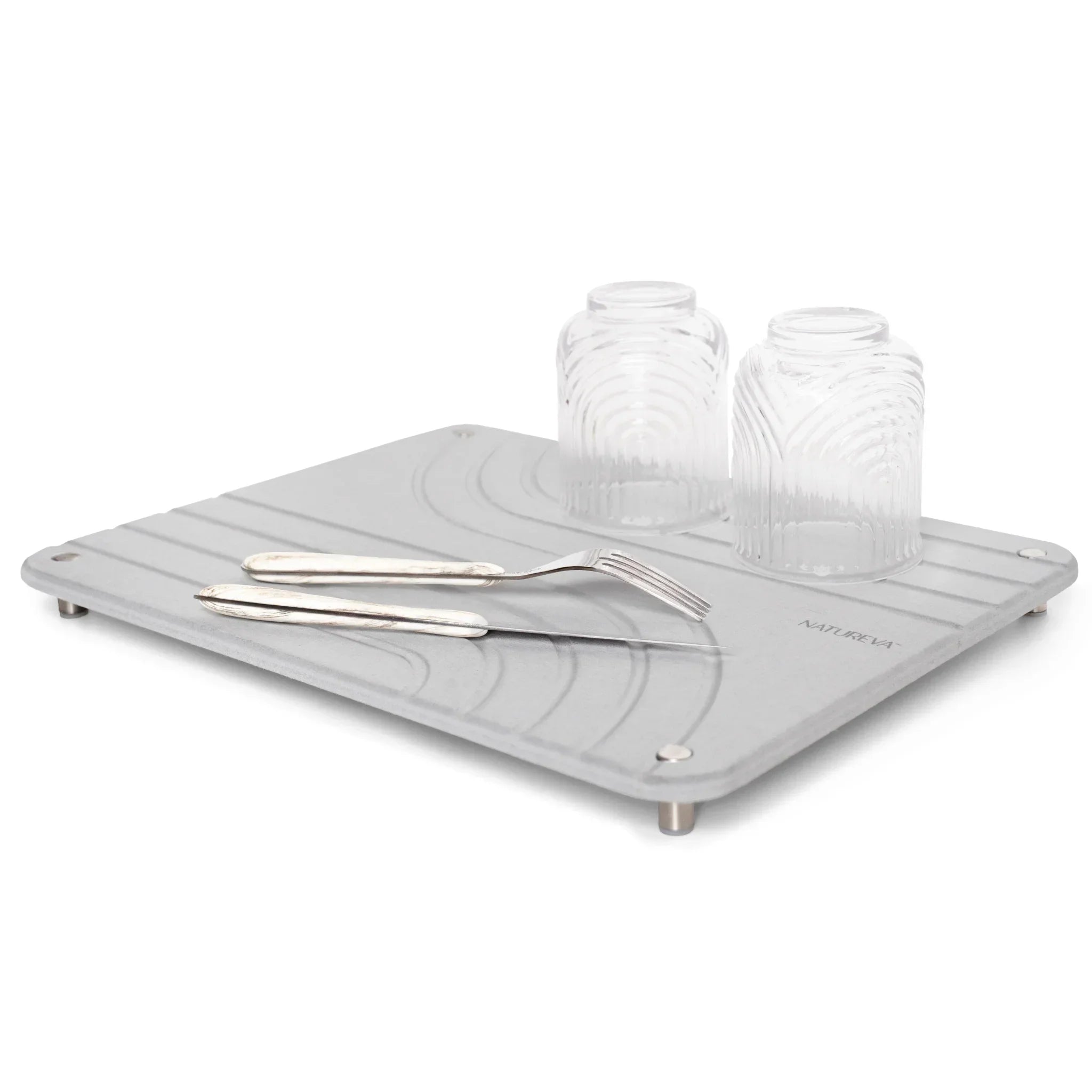
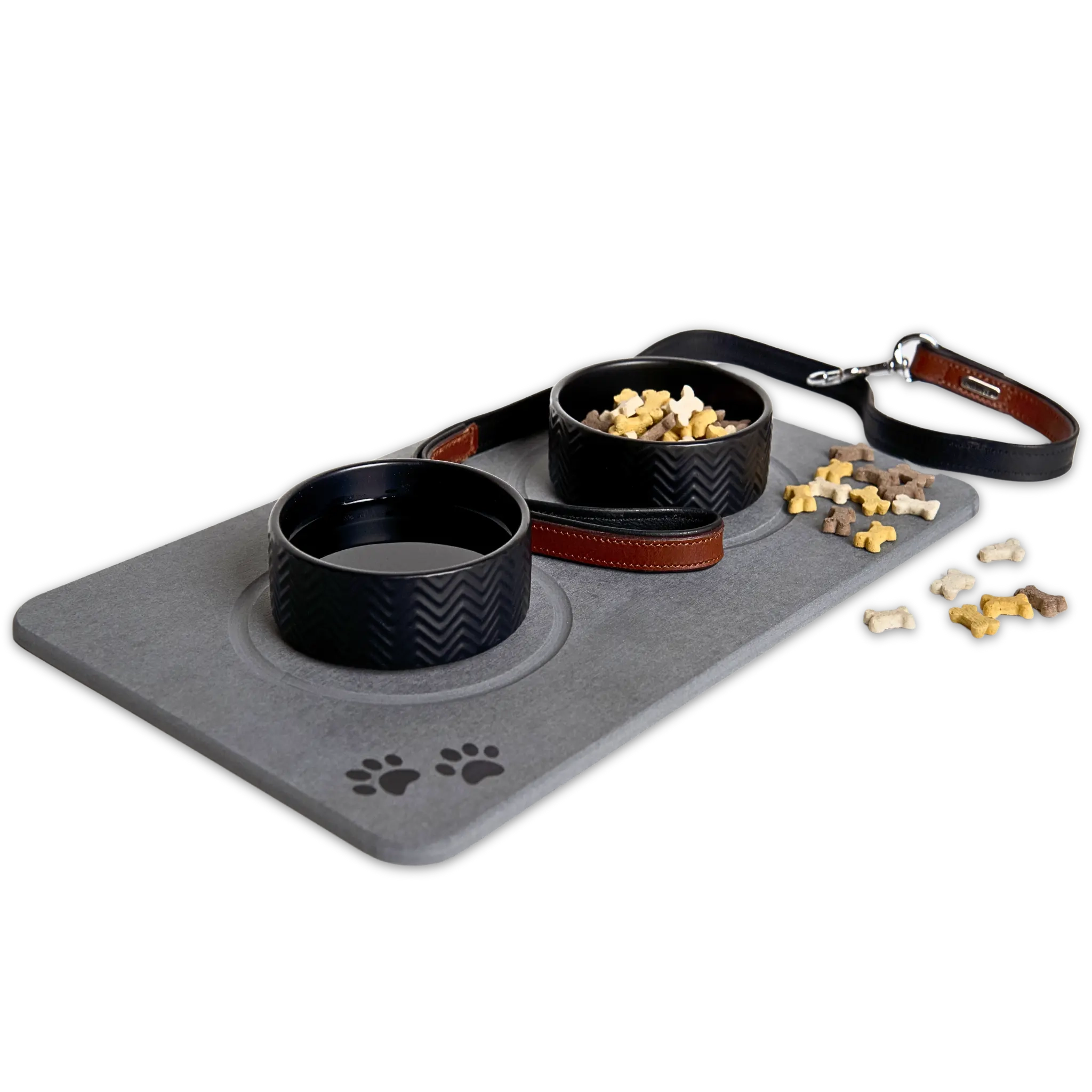
A good dog food mat needs to handle all these different mess types. The Natureva Stone Pet Mat absorbs water instantly and dries fast, which helps no matter what kind of messy eater you're dealing with. The key is having something that can catch drips before they spread across your floor and create slip hazards or stains.
The Bowl Surround Method
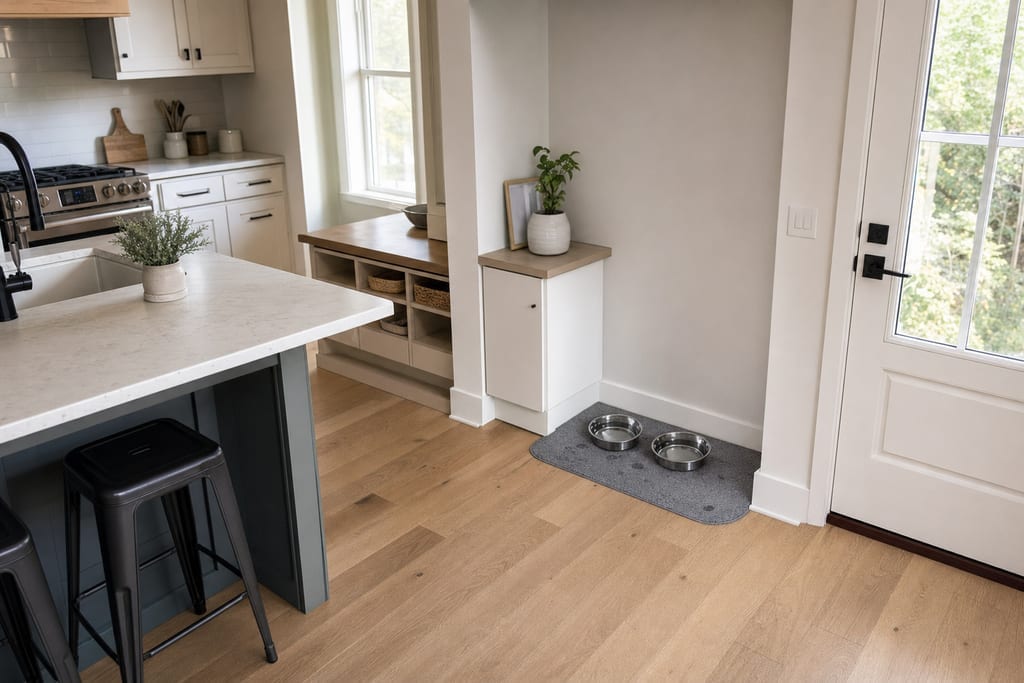
Most dog owners place a mat directly under the food bowl and call it a day. But here's what actually happens: your dog approaches from different angles, water splashes sideways, and kibble gets pushed in every direction. The truth is, a single centered mat only catches about half the mess. The bowl surround method changes this by creating a protective zone that accounts for how dogs actually eat and drink.
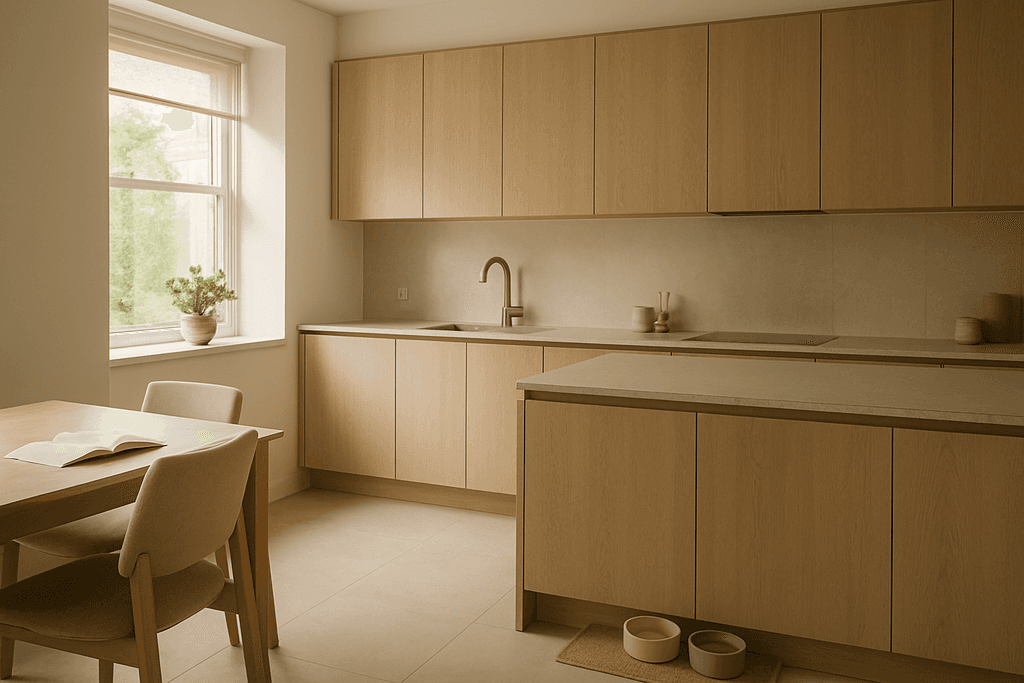
Think of it like a landing pad for all the chaos that happens during mealtime. You want to position your dog food mat to extend 3-4 inches beyond the bowl edges on all sides. This gives you coverage no matter which direction your pup decides to attack their dinner from.
Step-by-Step Placement Guide
- Measure your bowl diameter and add 6-8 inches to determine minimum mat size
- Watch where your dog stands when eating for two or three meals
- Position the mat so their front paws rest comfortably on the surface
- For double-bowl setups, ensure the mat covers the space between bowls
- Test the placement by gently pushing the bowl to see if it stays on the mat
The Natureva Stone Pet Mat works really well for this method because it absorbs spills instantly. Made from natural diatomaceous earth, it has millions of tiny pores that soak up water before it can spread across your floor. Unlike rubber or silicone mats that just trap moisture underneath, this material actively evaporates water so you're not dealing with that gross soggy feeling.
One thing people forget is accounting for their dog's approach angle. Some dogs walk straight up to their bowl, while others come in from the side. Watch your pet for a day or two and you'll notice a pattern.
The Splash Zone Strategy
Ever notice how some dogs drink water like they're trying to empty the ocean? Every tongue flick sends droplets flying in a specific direction. The splash zone strategy is all about figuring out where that water lands and putting protection there. This isn't just about the bowl area anymore. We're talking about the actual trajectory of water as it leaves your dog's mouth and hits the ground.
Start by identifying your dog's drinking style. Does water spray forward when they lift their head? Does it drip straight down? Big dogs with loose jowls create a completely different splash pattern than small breeds with tight lips.
The next generation of home essentials: naturally made, cleaner by design, sustainable by nature.
SHOP ALL| Mat Material | Absorption Speed | Drying Time | Bacteria Resistance |
|---|---|---|---|
| Diatomaceous Earth | Instant | Under 1 hour | High |
| Rubber | None (traps water) | 4-6 hours | Low |
| Silicone | None (pools on top) | 3-5 hours | Medium |
| Fabric | Moderate | 6-8 hours | Low |
Messy eaters add another layer of complexity because they push their bowls around. You need to account for bowl movement during eating by placing your mat where the bowl ends up, not just where it starts. Some dogs are bowl pushers who shove their dish across the floor while eating.
The post-drink drool zone is real. After your dog finishes drinking, they usually walk a few steps before that last bit of water drips from their mouth. Position your mat to catch these delayed drips too. Materials like diatomaceous earth handle this perfectly because they provide instant moisture control the moment water hits the surface. Research shows that absorbent mats can block up to 95% of food and water splash compared to bare floors.
High Traffic Path Protection
Your dog doesn't just eat and stay put. They drink water, then walk to their bed. They finish dinner, then head to the living room. Every step of that journey leaves a trail of drips on your floor. Most people only think about protecting the bowl area, but the real mess happens along the path your dog takes after eating. This is where strategic mat placement makes the biggest difference in keeping your floors dry.
Start by mapping your dog's path from bowl to favorite lounging spot. Spend a day watching where they go after meals. You'll probably notice they follow the same route every single time.
Steps to Identify and Cover High-Traffic Drip Zones
- Follow your dog after they drink water and mark where drips land
- Check for wet spots on different floor surfaces (tile, hardwood, carpet)
- Note where your dog pauses or stops along their route
- Identify transition points between rooms or surface types
- Measure the distance from bowl to first resting spot
Transition points between surfaces are critical. If your dog walks from tile in the kitchen to hardwood in the hallway, place a mat right at that junction. This catches drips before they hit your more vulnerable flooring. The same goes for areas where dogs pause after drinking, like doorways or the bottom of stairs.
For longer distances, you might need to layer multiple mats. Some dogs travel 10 or 15 feet from their bowl to their bed. You don't need continuous coverage, just strategic placement at the spots where water tends to drip. Our stone pet mats work great for this because they're lightweight enough to position anywhere but heavy enough that they won't slide around.
If your bowls are near an exit door, this becomes even more important. Dogs who go outside right after eating track moisture both ways. A quick-drying mat near the door handles both the pre-walk drips and the post-walk paw prints. The natural properties of diatomaceous earth mean these mats stay dry and ready for the next round of traffic.
Wrap-up
Getting your dog food mat placement right makes a bigger difference than most people think. The three main strategies we covered are placing the mat under both bowls to catch all spills, positioning it slightly forward where your dog's chin drips, and keeping it away from walls so air can circulate around it. These simple adjustments can turn a soggy mess into a clean feeding area that actually stays dry between meals.
The truth is, placement matters way more than mat size. A smaller mat in the right spot will outperform a huge mat that's positioned wrong. Your dog's eating style tells you everything you need to know about where drips will land.
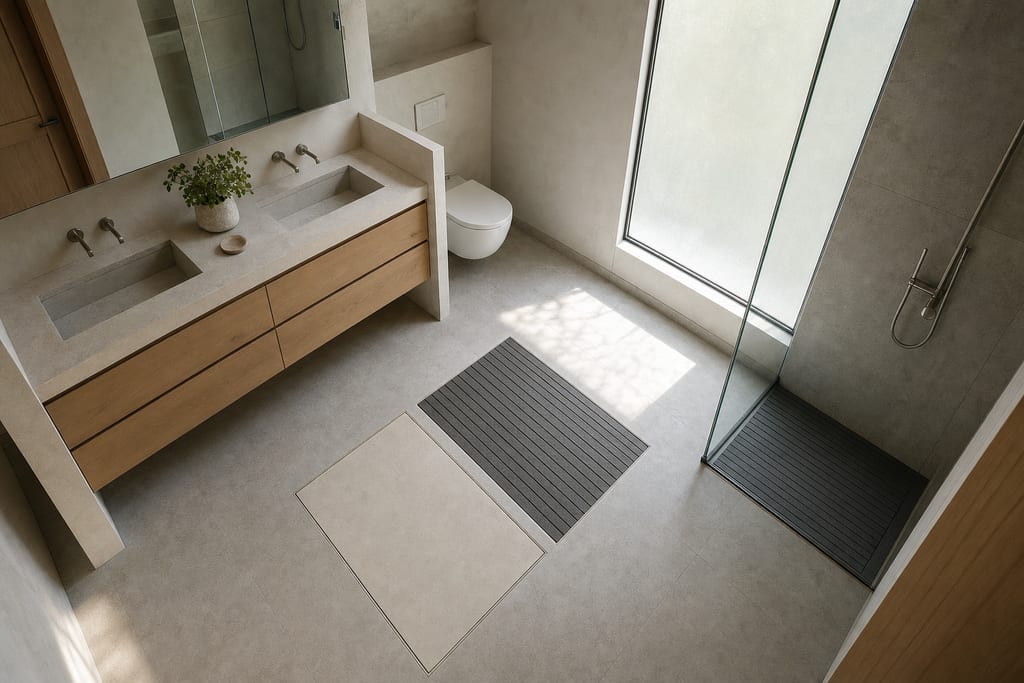
Material choice plays a huge role too. Regular fabric mats just soak up water and hold onto it, which is why they start smelling after a few days. Our Stone Pet Mat uses natural diatomaceous earth that actually evaporates moisture instead of trapping it. The same material works great in other areas of your home, like our bathroom collection for similar water problems.
Don't be afraid to test different positions for a week or two. Watch where the water actually lands when your dog drinks and adjust accordingly. Some dogs are neat eaters while others create splash zones that would surprise you.
You might still have questions about specific situations or how to handle multiple pets. That's where the details really matter.
Common Questions About Dog Food Mat Placement
Getting your dog food mat positioned just right can make the difference between a clean floor and a daily cleanup nightmare. Most pet owners have similar questions when they're trying to figure out the best setup for their furry friend's feeding station. Here are the answers to the most common questions about mat placement and maintenance that come up time and time again.
How far should the mat extend beyond the bowl?
Your dog food mat should extend at least 3-4 inches beyond the bowl on all sides to catch spills and drips effectively. Dogs that eat messily or drink enthusiastically might need even more coverage, so consider going 6-8 inches if your pup is a splasher. The goal is to create a buffer zone that catches everything before it hits your actual floor.
What if my dog moves their bowl around?
Bowl pushers need a larger mat that gives them room to scoot without pushing the dish off the edge. A mat that's too small will just move with the bowl, defeating the whole purpose. You can also try heavier bowls or non-slip bowl holders that anchor to the mat surface, though a generously sized mat usually solves the problem on its own.
Do I need different mats for food versus water?
Water bowls create way more mess than food bowls because of splashing and dripping, so they definitely need their own mat. Some people use separate mats for each bowl, while others prefer one large mat that fits both. The Stone Pet Mat from Natureva works well for both since it absorbs water instantly and dries fast, so you're not dealing with soggy spots all day.
How do I position mats for multiple dogs?
Multiple dogs need enough space between their feeding stations to avoid food guarding and territorial behavior. Give each dog their own mat placed at least 2-3 feet apart if possible. This setup keeps the peace during mealtimes and makes it easier to monitor who's eating what.
What's the best mat material for heavy droolers?
Heavy droolers need a mat that absorbs moisture quickly instead of letting it pool on the surface. Stone mats made from diatomaceous earth are ideal because they pull liquid into millions of tiny pores and evaporate it naturally. Rubber and silicone mats just trap moisture on top, which can get gross and smelly pretty fast.
How often should I clean or replace feeding mats?
Most dog food mats need a quick wipe-down after each meal and a deeper clean once a week. Stone mats can be rinsed and air-dried, while fabric mats usually need machine washing. Replace your mat when it starts to smell, stain permanently, or loses its ability to absorb moisture properly, which typically happens every 6-12 months depending on the material and how messy your dog eats.
The next generation of home essentials: naturally made, cleaner by design, sustainable by nature.
SHOP ALL