
Best Bathroom Mats That Absorb Water and Dry Fast
Most fabric bath mats stay damp for six to twelve hours after a single shower, creating a breeding ground for bacteria and mildew that thrives in wet environments. The problem isn't just about comfort—it's about hygiene and the musty smell that comes from moisture trapped deep in traditional materials. Bathroom mats that absorb water and release it quickly solve this at the source, keeping your bathroom cleaner and drier without constant washing or replacement.
Table of Contents
What Makes a Bath Mat Actually Dry Fast
Most people don't think about their bath mat until they step onto a cold, damp surface hours after someone else showered. The difference between a mat that stays wet all day and one that dries in minutes comes down to basic material science. How quickly water moves through a material and then evaporates into the air determines whether you're stepping onto something fresh or something that feels like a wet sponge. Traditional fabric mats trap moisture between their fibers, while newer materials are designed to release water almost immediately. Understanding what happens at the microscopic level explains why some mats work better than others.
How Materials Handle Moisture
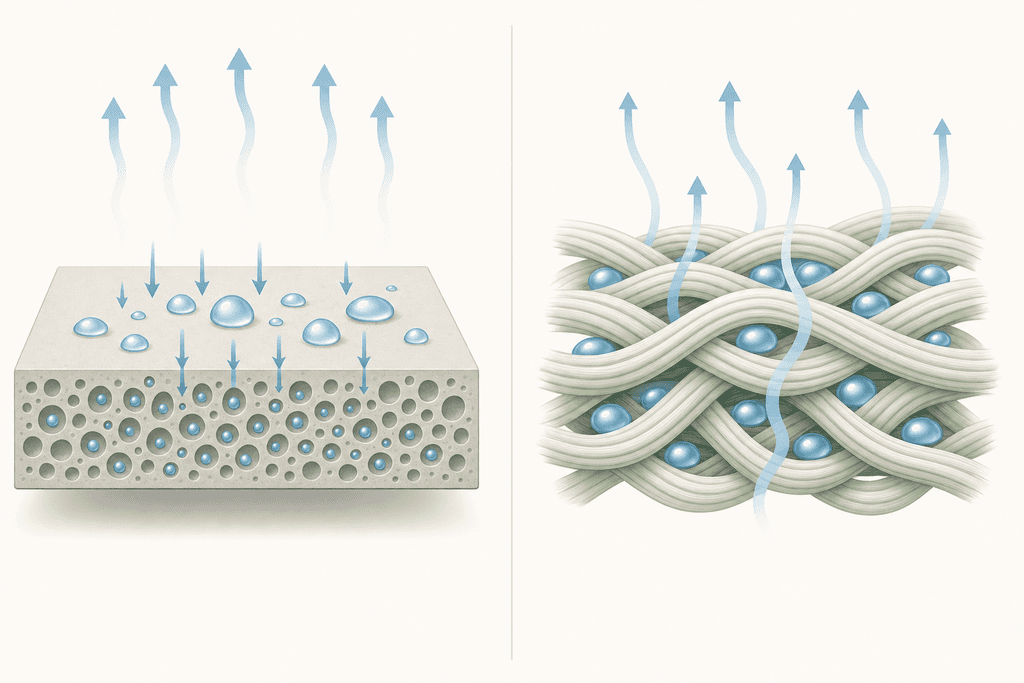
The internal structure of a bath mat material controls everything about its drying performance. Cotton and microfiber mats have tiny spaces between threads that soak up water like a sponge, but those same spaces hold onto moisture for hours. Materials with larger, more open pore structures let air flow through, which speeds up evaporation significantly.
Here's what matters most when a material interacts with water:
- Porosity determines how much water the material can absorb in the first place
- Surface area affects how much moisture is exposed to air at once
- Airflow underneath the mat prevents water from getting trapped against the floor
- Material density influences whether water sits on top or gets pulled inside
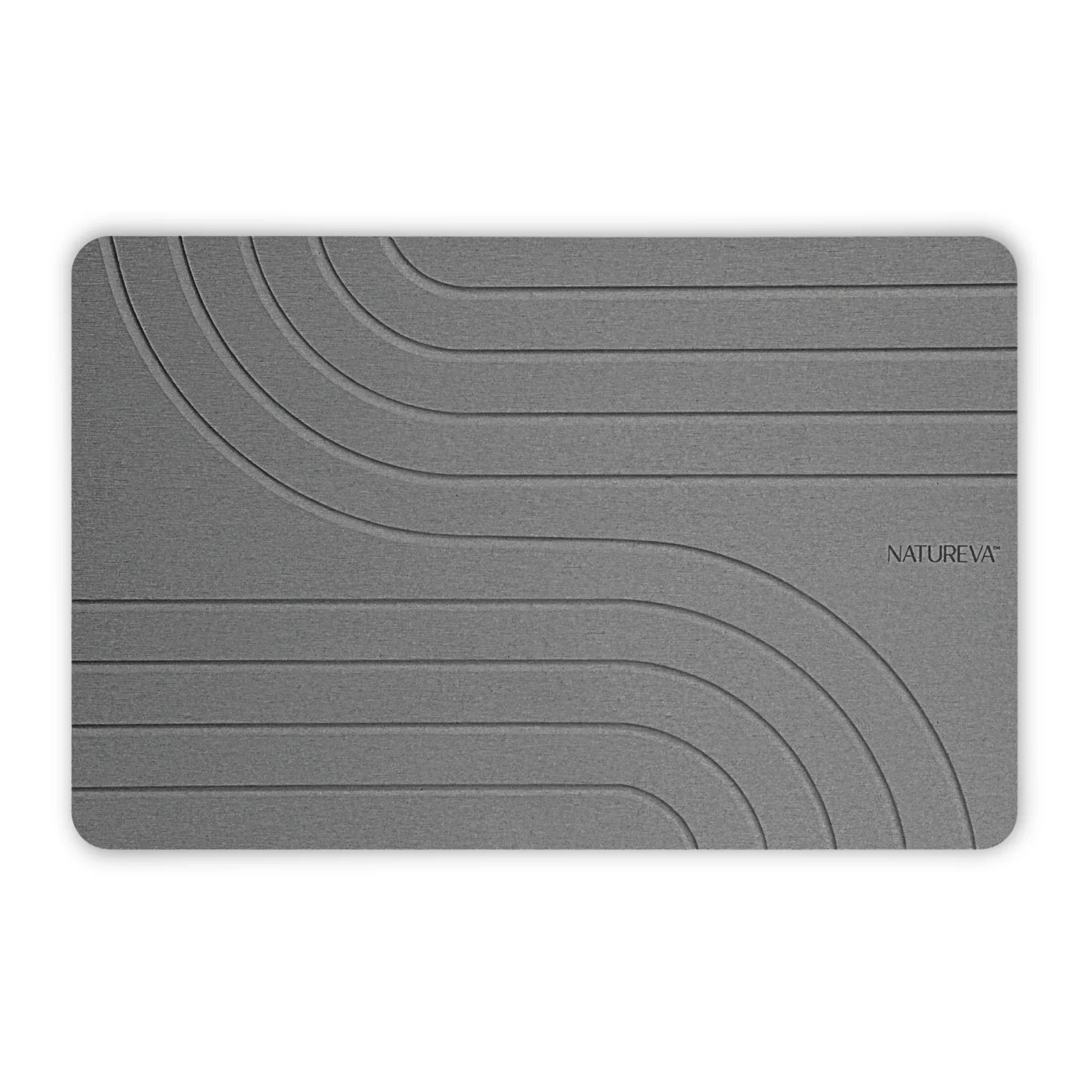
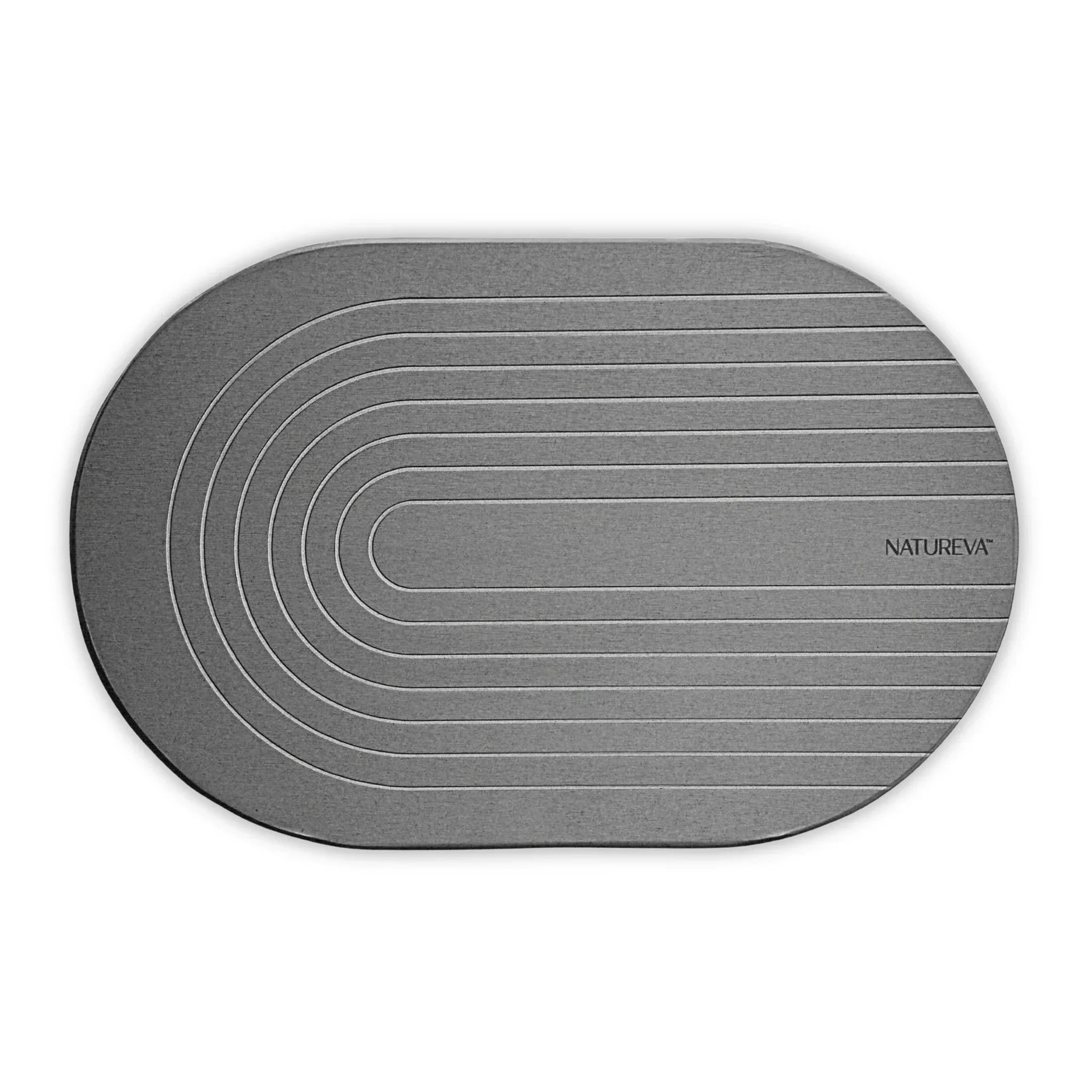
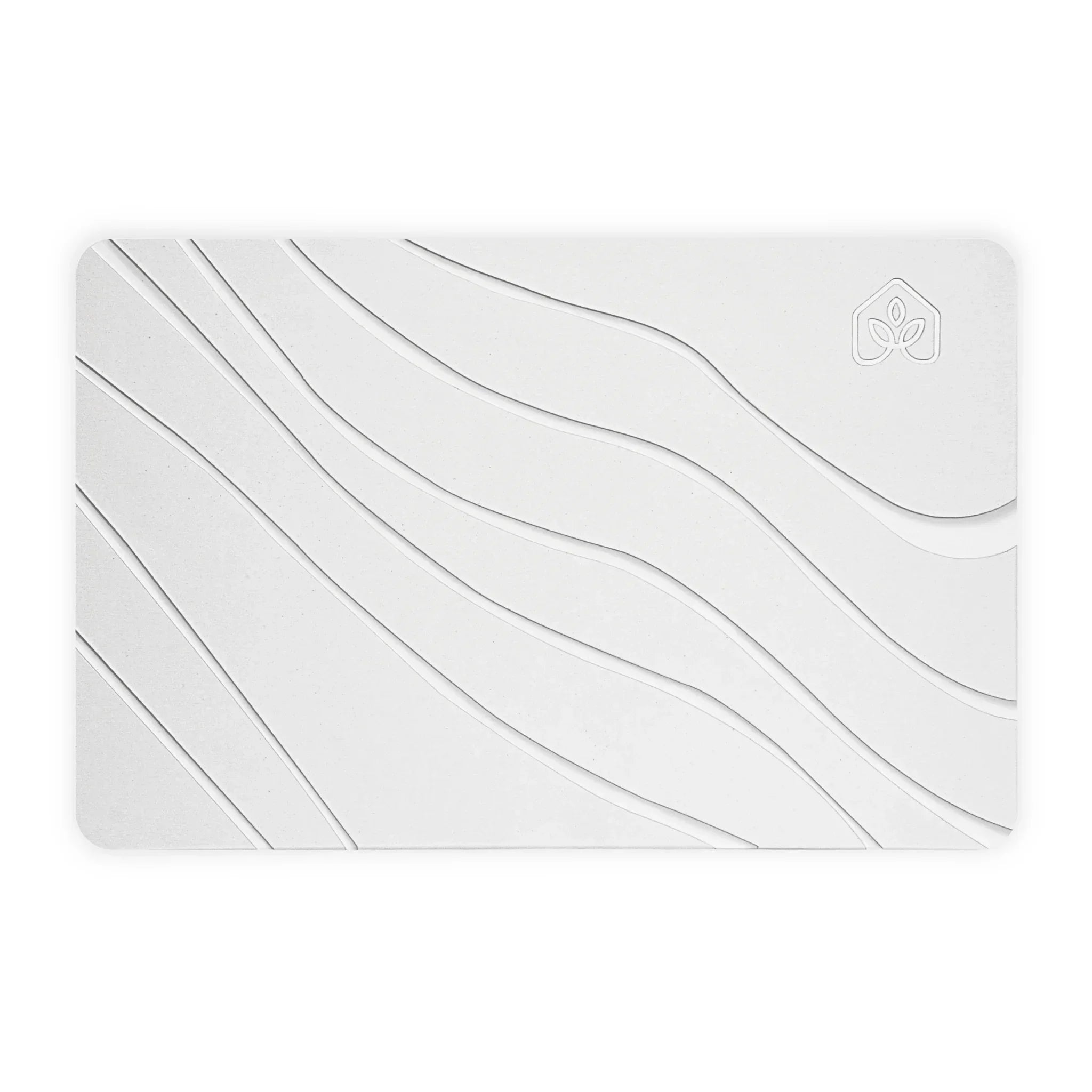
Diatomite stone mats, like the ones Natureva makes, use fossilized algae with millions of microscopic pores that pull water in instantly and then release it back into the air within minutes. The material doesn't hold onto moisture the way fabric does.
Comparing Drying Speeds Across Mat Types
Different bath mat materials perform very differently when it comes to actual drying time. Forbes testing of various bath mats shows that material choice makes the biggest difference in how long you're dealing with a wet surface.
| Material Type | Absorption Speed | Drying Time | Airflow Rating |
|---|---|---|---|
| Cotton | Moderate | 4-6 hours | Low |
| Microfiber | Fast | 2-4 hours | Low |
| Memory Foam | Slow | 6-8 hours | Very Low |
| Diatomite Stone | Instant | 5-15 minutes | High |
| Bamboo | Moderate | 3-5 hours | Medium |
The gap between traditional and modern materials is pretty dramatic. A cotton mat might still feel damp when you're ready for your next shower, while a stone mat is completely dry before you finish getting dressed. That difference isn't just about comfort, it's about preventing the damp, musty smell that comes from materials that stay wet too long.
Why Evaporation Rate Matters More Than Absorption
A mat that absorbs water quickly sounds good until you realize it's only half the equation. If the material can't release that moisture back into the air, you end up with a saturated mat that takes forever to dry. The real performance comes from how fast water evaporates after it's been absorbed.
Factors that speed up evaporation include:
- Open pore structure that exposes moisture to air continuously
- Elevated design that allows airflow underneath the mat
- Thin profile that doesn't trap water in thick layers
- Non-absorbent base materials that don't create a moisture barrier
This is why stone bath mats work so well in practice. The porous diatomite pulls water away from your feet immediately, then the same pores let air circulate through the material so moisture evaporates in minutes instead of hours. You're not waiting around for the mat to dry, it's ready for the next person almost immediately.
Stone Bath Mats Built from Diatomite
Most bathroom mats that absorb water still leave you standing on a damp surface minutes later. That soggy feeling happens because traditional materials trap moisture instead of releasing it. Diatomite works differently because of what it actually is: fossilized algae that died millions of years ago and compressed into a porous mineral. The microscopic structure contains millions of tiny air pockets that pull water in on contact and then push it back out through natural evaporation.
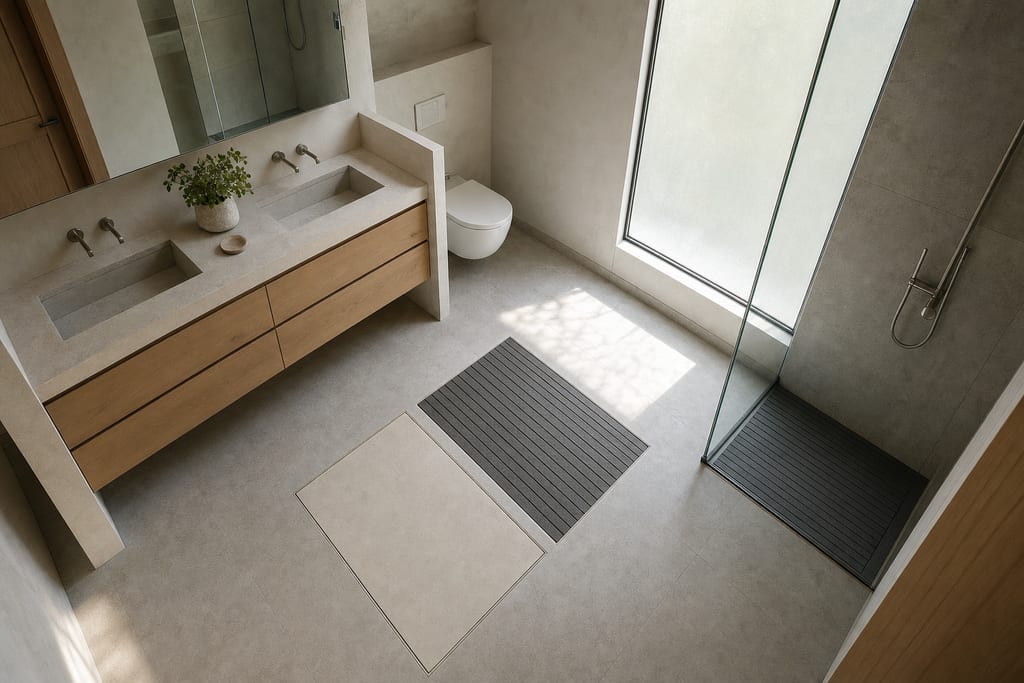
When you step onto a diatomite stone bath mat, the water from your feet disappears almost immediately. Within two to three minutes, the surface feels completely dry again. This isn't just faster than cotton or microfiber, it's a different category of performance altogether.
The material science behind this matters for your bathroom. Because water evaporates so quickly, bacteria and mold don't get the damp environment they need to grow. You're not adding chemicals or treatments to make this happen. The rapid drying itself creates a naturally antibacterial surface.
- No fabric means nothing to throw in the washing machine every week
- Solid construction won't fall apart or lose absorbency over time
- Surface stays hygienic without sprays or cleaners
- Works the same way whether it's humid or dry outside
Our stone bath mat collection includes five different carved patterns. The Tide design has horizontal contour bands, while Flow uses diagonal wave patterns. Rain features vertical line segments, Aura has a radial sunburst, and Arch comes in an oval shape with rounded contours.
Each mat weighs about 1.8 kg and measures 60 × 39 cm. The density gives it stability underfoot, but it's still light enough to move when you need to clean behind it. A non-slip base pad keeps it anchored on tile or wood floors.
Bamboo Cotton Towel Mats for Softness
Not everyone wants to step onto stone after a shower. Some people prefer the soft textile feel they're used to, but still want something that dries faster than regular cotton. That's where bamboo viscose blends come in. The bamboo fibers have a different cellular structure than cotton, which means they release moisture into the air more efficiently.
A 70% cotton and 30% bamboo blend gives you the absorbency of cotton with noticeably faster drying times. The bamboo component can reduce drying time by around 40% compared to pure cotton towels. This matters when you're using a towel as a bath mat because it won't stay damp and musty between uses.
| Material | Drying Speed | Softness | Durability |
|---|---|---|---|
| Pure Cotton | Slow | High | High |
| Bamboo Cotton Blend | 40% Faster | Very High | High |
| Diatomite Stone | 2-3 Minutes | Firm | Very High |
The next generation of home essentials: naturally made, cleaner by design, sustainable by nature.
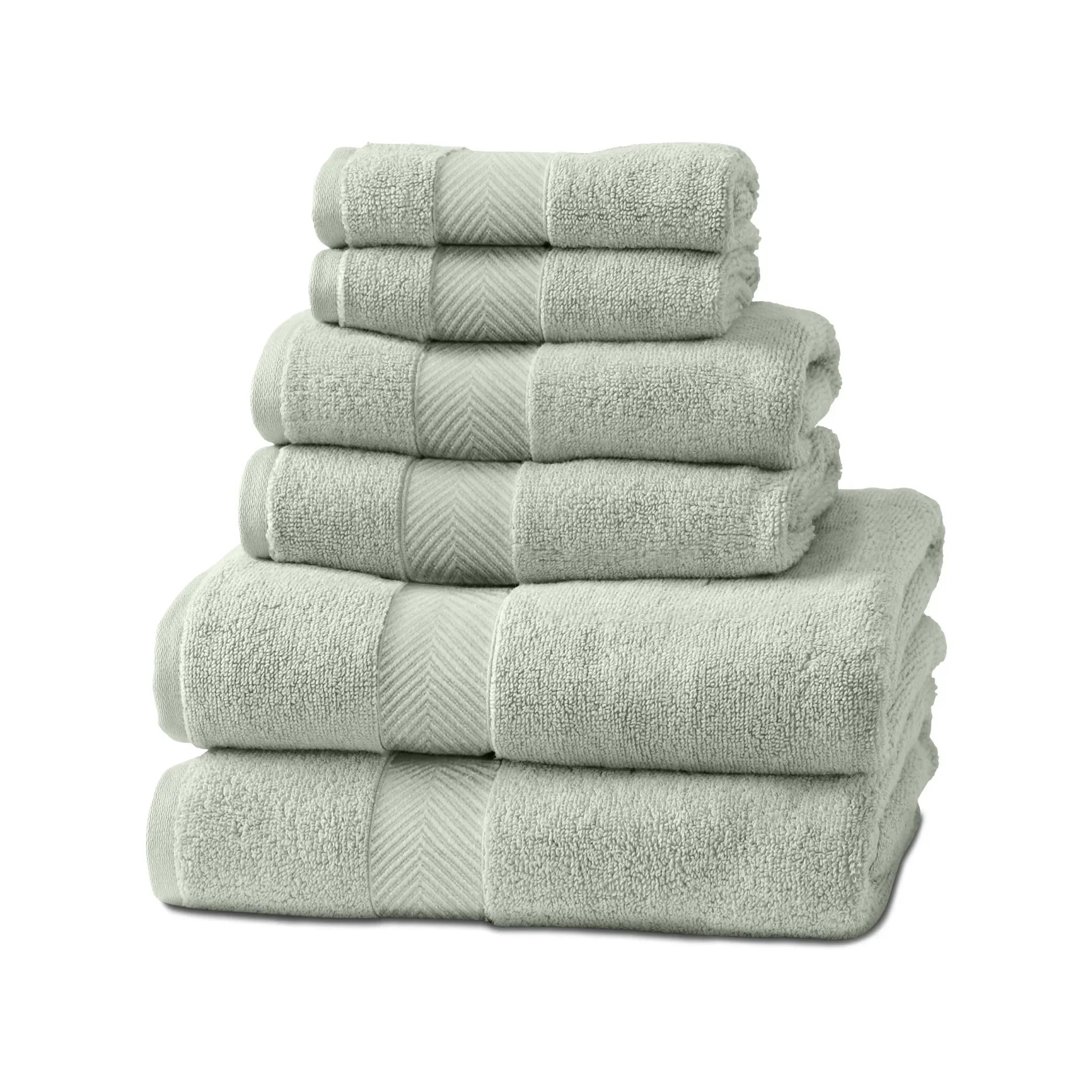
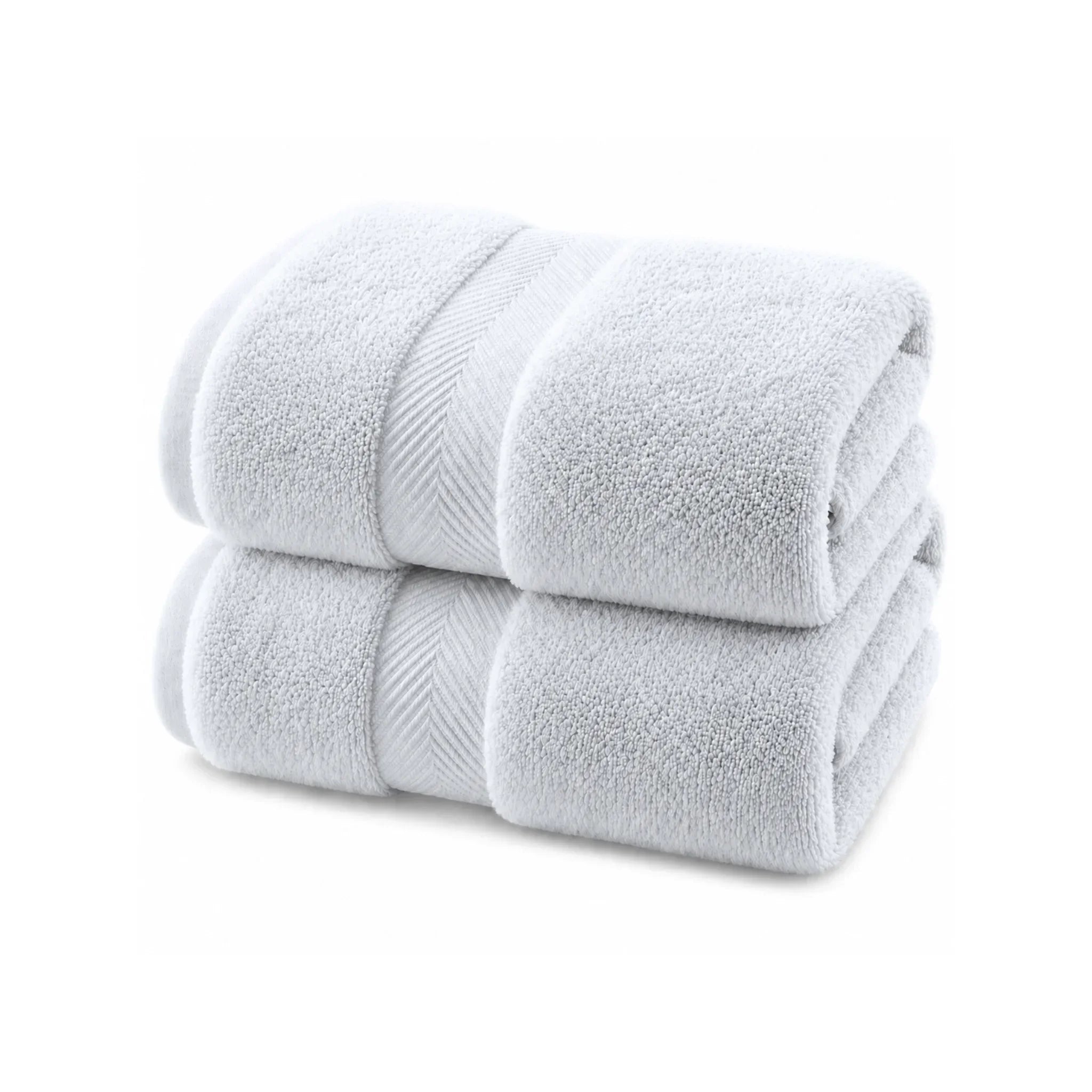
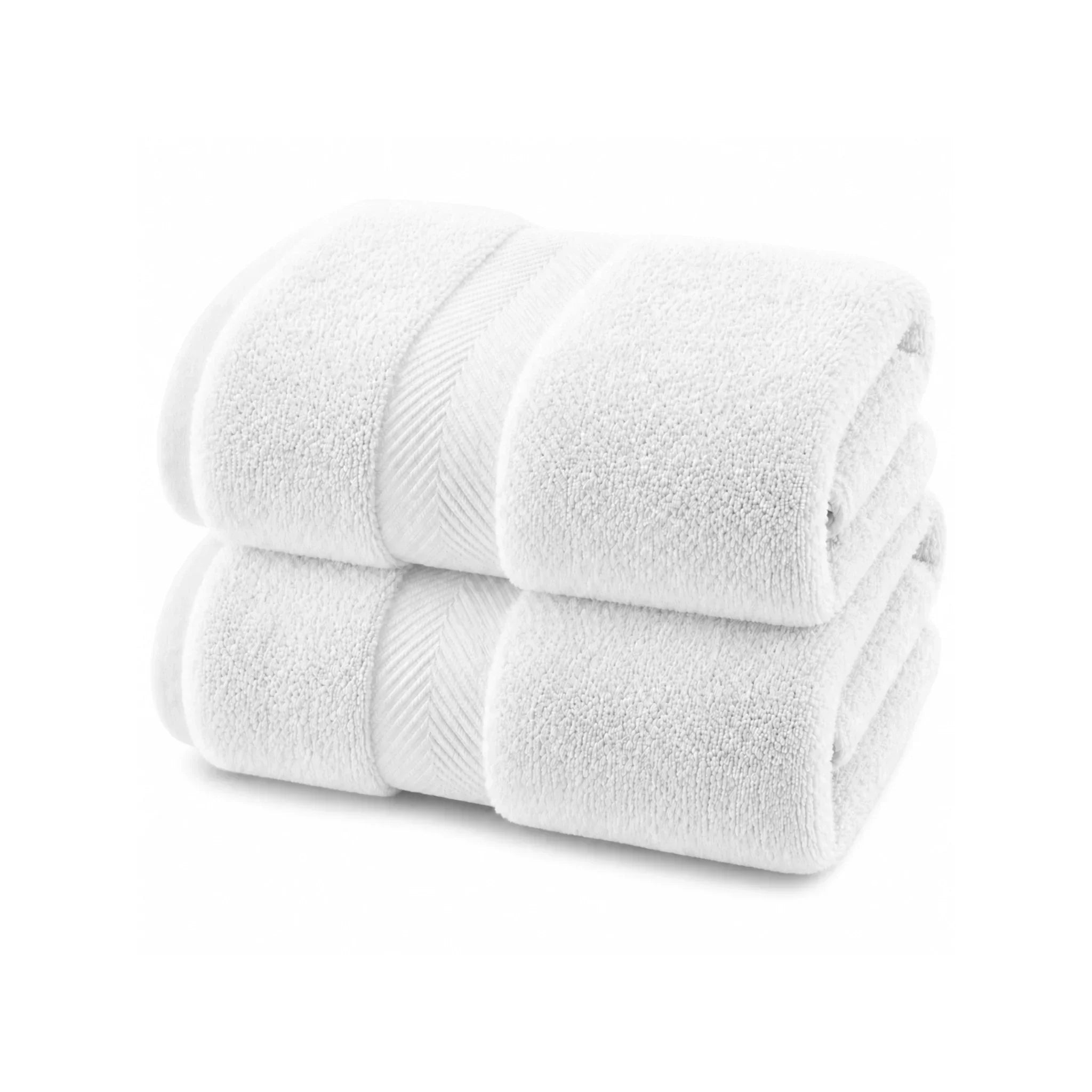
SHOP ALLOur bamboo cotton towel set includes bath towels that work well as soft bath mats if you fold them. The 700 gsm density means they're thick enough to absorb water without feeling thin or flimsy. OEKO-TEX certification confirms the entire production chain is free from harmful chemicals, which matters if you have sensitive skin or kids in the house.
The trade-off is maintenance. You'll need to wash these regularly, avoid fabric softener, and tumble dry on low to keep them soft. Air drying makes them stiff. Some linting happens at first because of the zero-twist yarn construction, but that's what creates the softness.
Best for: Anyone who wants faster drying than cotton but prefers textile comfort over stone. Also works well if you're using it in a guest bathroom where the aesthetic matters more than maximum performance.
Features That Speed Up Drying Time
The material itself only tells part of the story. How a bath mat is designed affects whether water evaporates quickly or sits trapped underneath. Airflow matters more than most people realize. When a mat sits flat against the floor with no gap underneath, moisture has nowhere to go. It just stays there, creating the perfect environment for mildew and that damp smell.
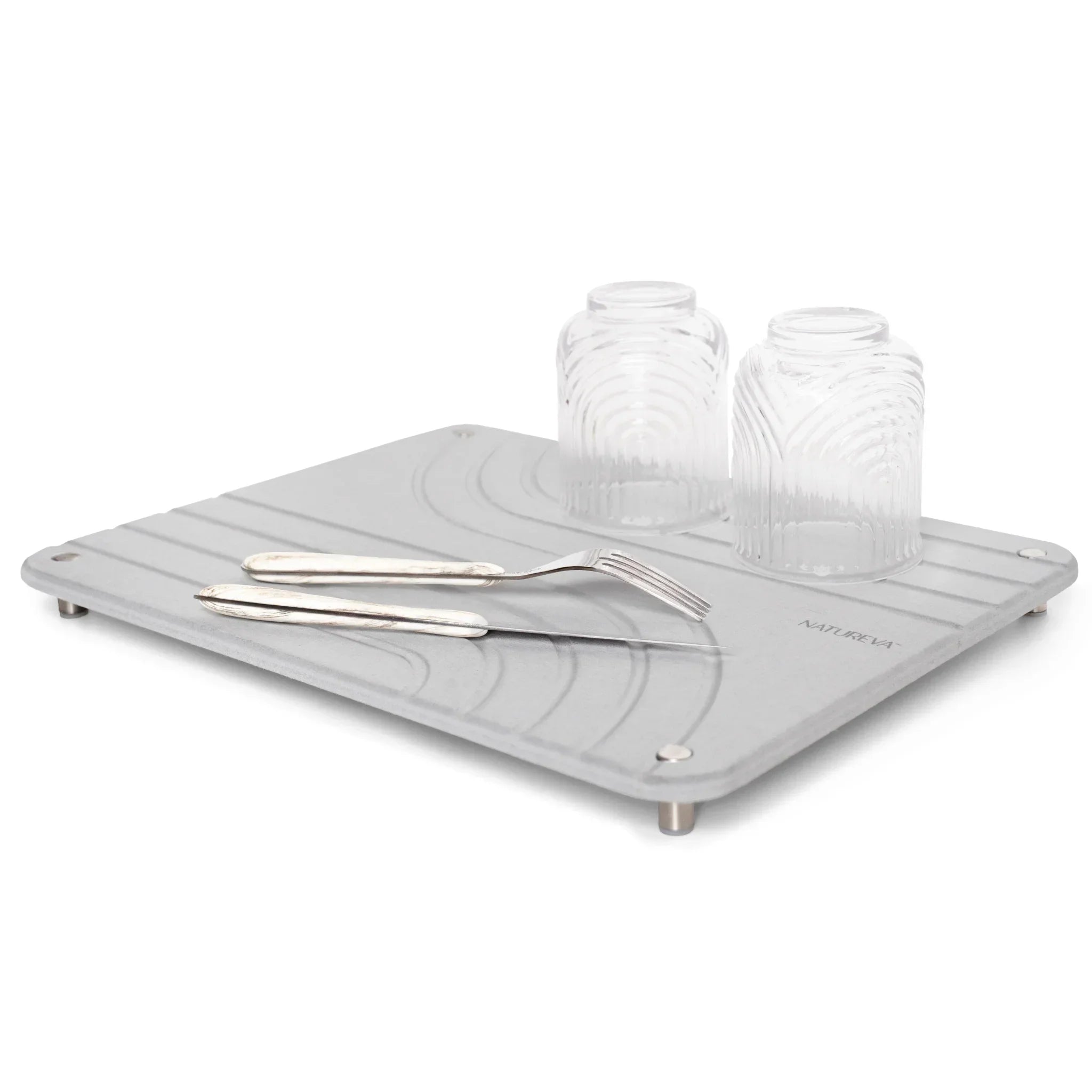
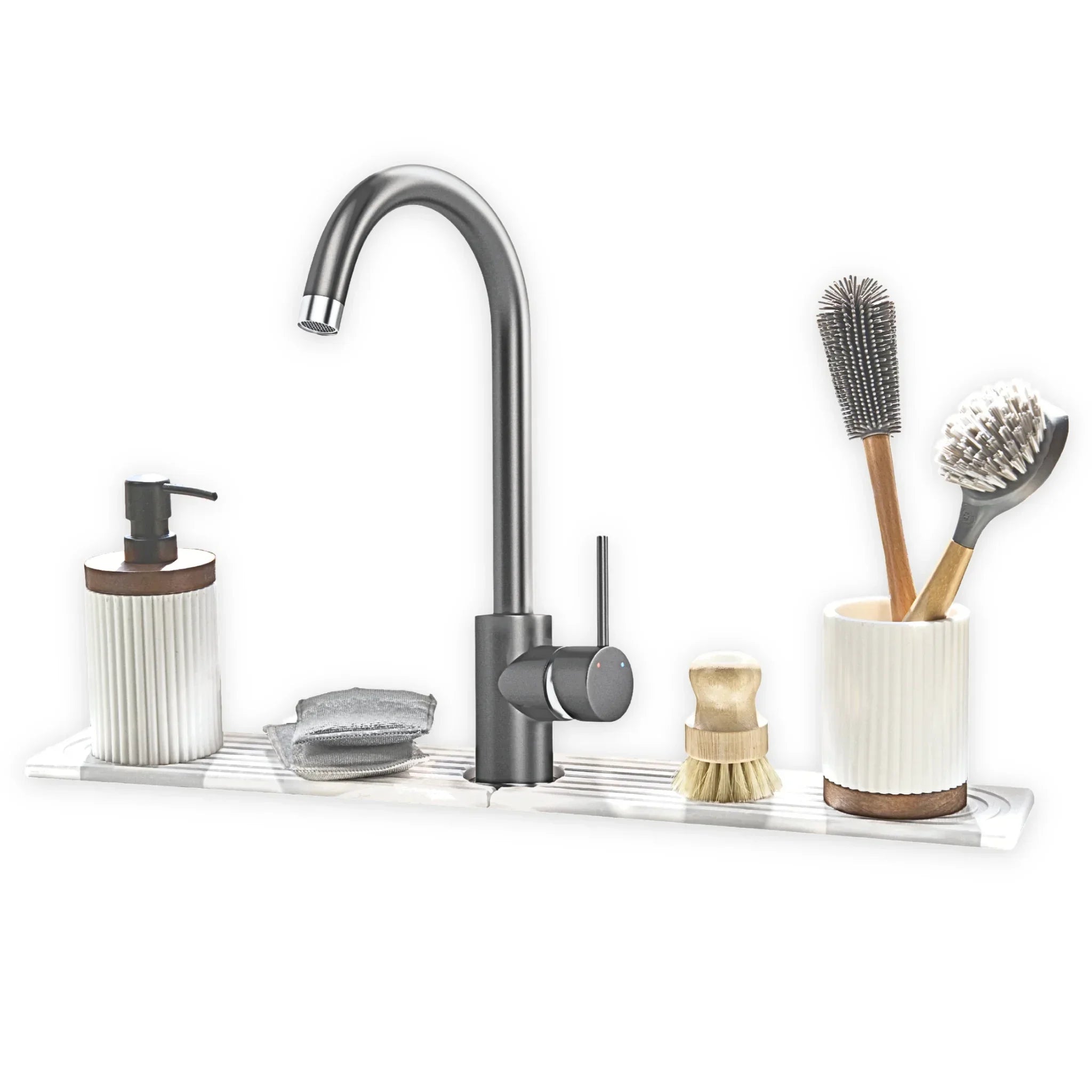
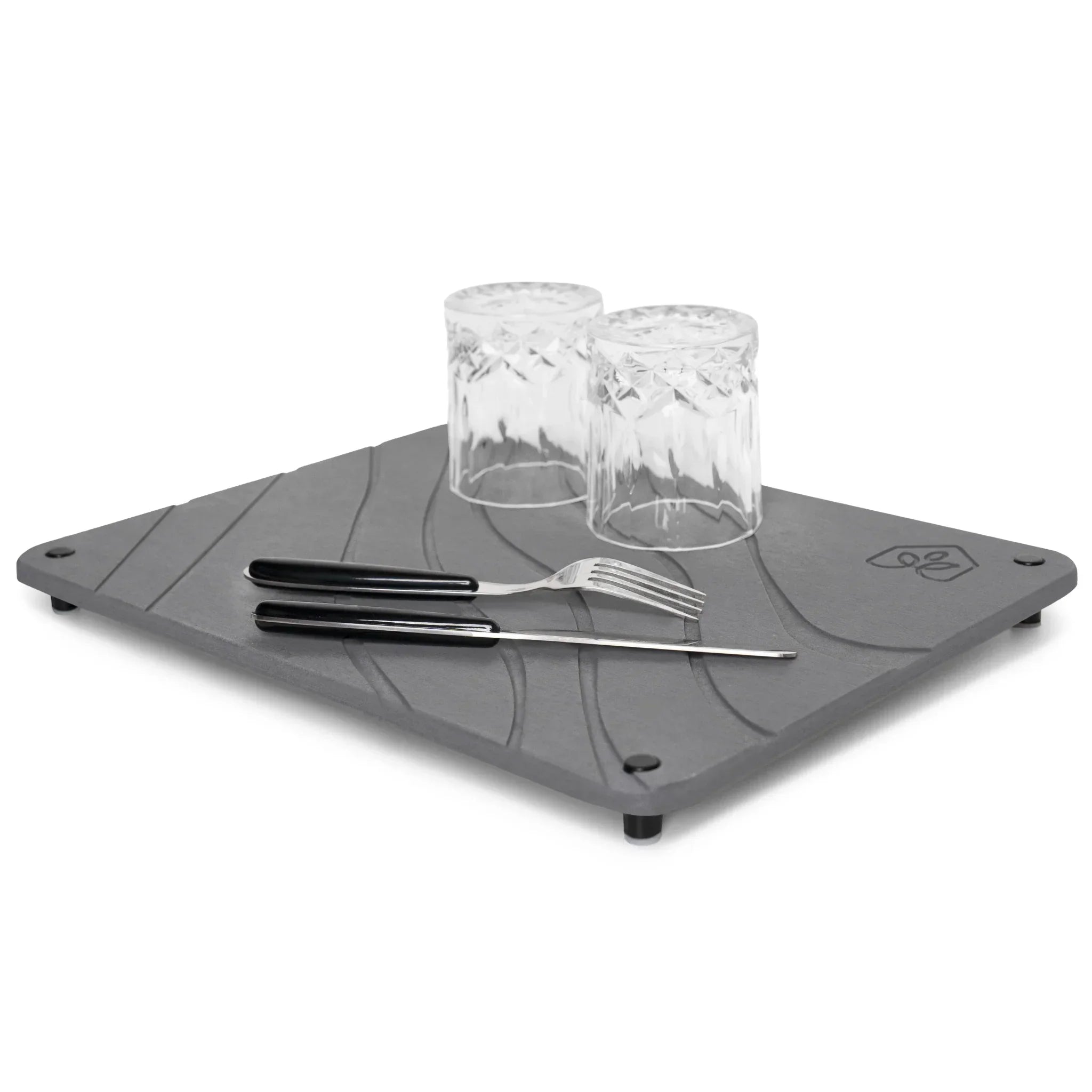
Elevation creates circulation. Even a small gap of 2-3 mm lets air move under the mat, which speeds up evaporation significantly. Our stone mats include non-slip base pads that lift the mat slightly off the floor. The sink caddies and dish mats use stainless steel legs that raise them 2.5 cm, with silicone pads underneath to prevent scratching.
- Surface texture: Carved patterns and grooves help distribute water across more surface area
- Material thickness: Thicker mats absorb more but take longer to dry completely
- Base design: Full coverage pads provide stability while still allowing airflow
- Weight distribution: Heavier mats stay in place but need proper elevation
Maintenance also affects long-term performance. For diatomite products, a weekly wipe with diluted vinegar keeps the pores clear. If the surface starts absorbing slower, the included P320 grit sanding tool reopens the microscopic pores. This takes about 30 seconds and restores the mat to like-new absorption.
For bamboo cotton options, washing in warm water without fabric softener preserves the fibers' ability to release moisture. Fabric softener coats the fibers and actually slows down drying, which defeats the purpose.
The combination of material choice and design features determines real-world performance. A poorly designed stone mat can still hold moisture if it has no airflow. A well-designed textile mat with proper care will outperform a neglected one every time. The bathroom collection addresses both aspects, which is why the mats actually stay dry between uses instead of just absorbing water once and staying damp.
Finding Your Perfect Fast Drying Mat
Choosing bathroom mats that absorb water quickly comes down to understanding what actually makes them dry fast. The material matters more than anything else, and not all absorbent surfaces work the same way. Stone mats made from diatomite pull moisture in instantly and release it back into the air within minutes, which is why they work so well in high traffic bathrooms where multiple people shower back to back. Textile options like bamboo cotton blends offer a softer feel underfoot but need proper airflow to dry between uses, otherwise they stay damp longer than you'd want.
The secret to keeping any mat dry isn't just the material though. Elevation and airflow underneath prevent moisture from getting trapped against your floor, which is something most fabric mats completely ignore. Our stone bath mats include non slip base pads that create just enough space for air to circulate, while options like the Rain or Tide designs add surface patterns that help water evaporate even faster.
If you're tired of replacing soggy mats every few months, investing in something that actually dries makes more sense than buying cheap versions over and over. The same logic applies beyond the bathroom too. Dish mats and sink caddies face the same moisture problems, just in different rooms.
What works best for your space depends on whether you prioritize speed or texture, but either way, proper drying prevents the mildew smell that makes you want to throw the whole thing out.
Common Questions About Fast-Drying Bath Mats
Switching from traditional fabric mats to fast-drying alternatives brings up practical questions about performance, care, and longevity. Most people want to know if these mats actually work as promised, especially in real-world conditions like humid bathrooms or homes with kids and pets. The answers often depend on the material and construction quality, which varies widely across different brands and price points.
How long do stone bath mats take to dry completely?
Stone bath mats made from diatomite typically dry within 60 to 90 seconds after use. The porous structure pulls moisture from your feet instantly and releases it into the air through rapid evaporation. This happens without any effort on your part, no wringing or hanging required.
Can you wash diatomite bath mats in a washing machine?
No, you should never put stone bath mats in a washing machine. The material is solid and rigid, not flexible fabric, so machine washing would damage both the mat and your washer. Instead, wipe the surface weekly with a vinegar-water solution and rinse any stains under running water. For deeper cleaning, use hydrogen peroxide or the included sanding tool to restore absorbency.
Do fast-drying mats work in humid climates?
Yes, bathroom mats that absorb water through diatomite construction work effectively even in humid environments. The material's evaporation process doesn't rely on low humidity to function. It releases moisture into the air regardless of ambient conditions, though extremely saturated air may slow drying slightly compared to dry climates. The key difference from fabric mats is that stone versions never stay damp or develop that musty smell.
How often should you replace a stone versus fabric mat?
Fabric bath mats typically need replacement every 6 to 12 months as they wear down, lose absorbency, and accumulate bacteria. Stone mats like Natureva's diatomite options can last several years with proper care. The surface can be restored using the included sanding tool whenever absorption slows, essentially resetting the mat to like-new performance without buying a replacement.
Are stone mats safe for children and elderly users?
Stone bath mats include non-slip base pads that keep them firmly in place on wet floors. The solid surface doesn't bunch or shift like fabric mats, which actually reduces trip hazards. The textured engraved patterns also provide grip underfoot. That said, the surface is firm rather than cushioned, so it feels different from plush fabric if that's a concern for comfort.
What maintenance keeps fast-drying mats performing well?
Weekly cleaning with vinegar water prevents buildup that can clog the porous surface. Avoid using coloured soaps directly on the mat, as they may leave stains. If you notice absorption slowing down, use the P320 grit sanding tool included with products like the Natureva stone bath mats to reopen the surface pores. Air drying the mat upright occasionally helps if it becomes saturated from heavy use.
The next generation of home essentials: naturally made, cleaner by design, sustainable by nature.
SHOP ALL