
Best Water Mats for Dog Bowls to Keep Floors Dry
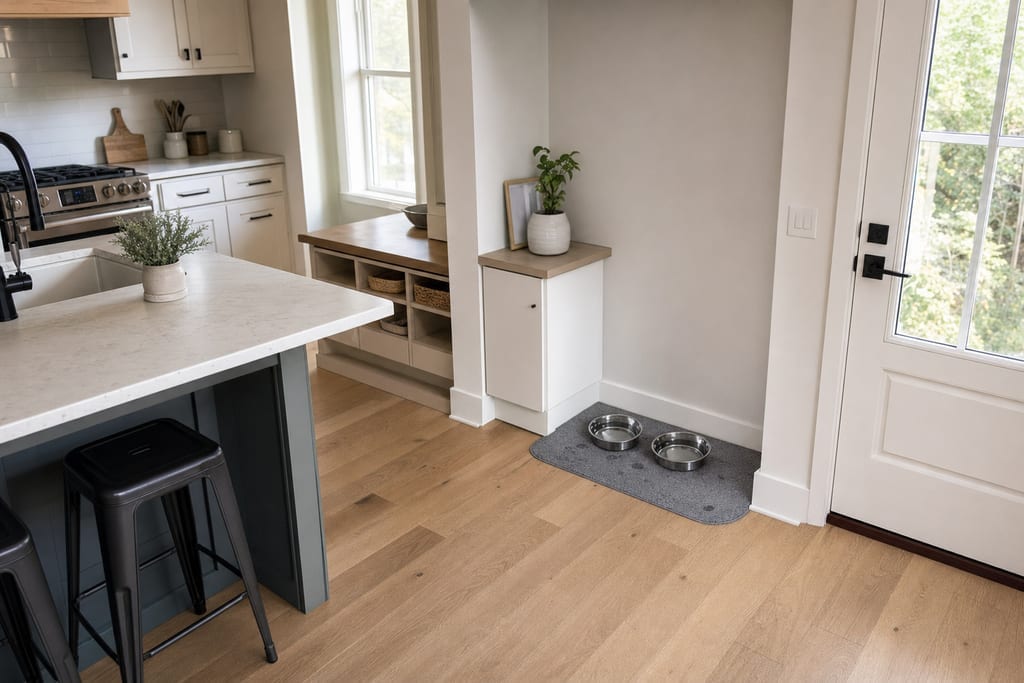
Every dog owner knows the frustration of stepping into a puddle around the water bowl, but most don't realize that wet floors create more than just an inconvenience. Standing water breeds bacteria, damages flooring, and leaves behind stubborn odour that regular cleaning can't fix. A water mat for dog bowl areas solves this by absorbing spills instantly and drying fast enough to keep your kitchen floor actually dry between refills.
Table of Contents
Material Options for Dog Bowl Water Mats
Most dog owners have dealt with the puddle problem around water bowls at some point. You wipe it up, and an hour later there's another wet spot spreading across your floor. The material you choose for a water mat makes all the difference between actually solving this problem or just moving it around. Not all mats are built the same, and some materials actually make the moisture situation worse instead of better.
Silicone and rubber mats are probably the most common options you'll find at pet stores. They catch the water, which sounds good in theory. But here's what actually happens: the water just sits there on top of the mat in a puddle. Your dog steps in it, tracks it around, and the mat itself stays wet for hours. You end up with a slippery surface that needs constant wiping.
Fabric mats absorb water initially, but they hold onto moisture like a sponge.They stay damp between feedings, which creates the perfect environment for bacteria and that musty smell that develops after a few days. Even after washing, fabric mats can retain odours and require frequent replacement.
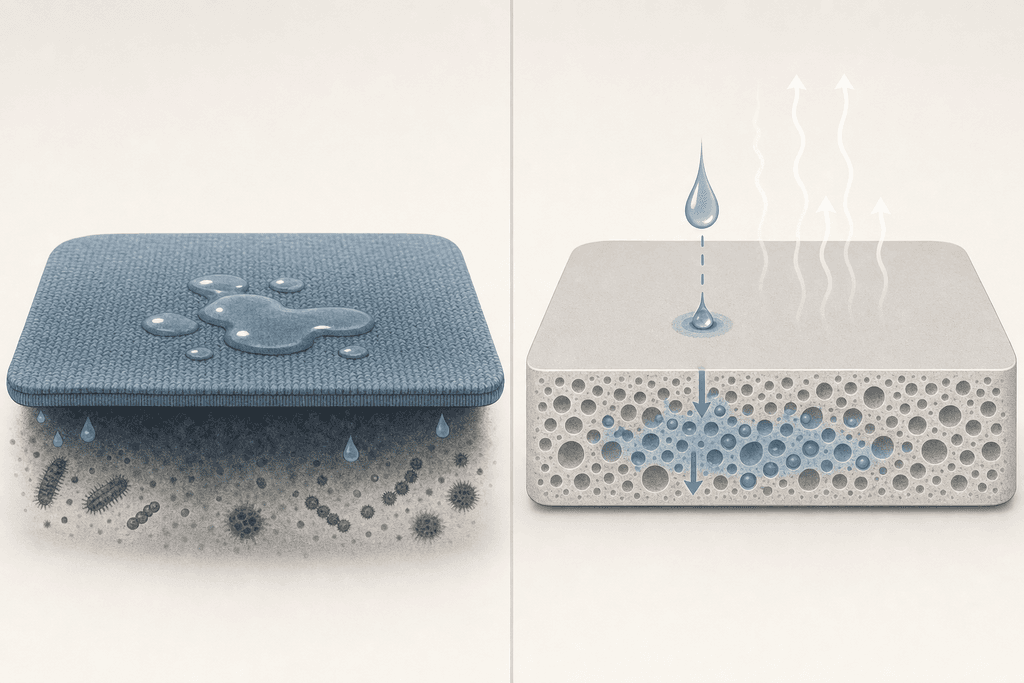
Diatomite stone mats work differently because they absorb water instantly and then release it back into the air through evaporation. The microscopic pore structure pulls moisture in the moment it hits the surface, so there's no standing water and no damp feeling. Within minutes, the surface is dry again and ready for the next spill.
| Material | Absorption Speed | Drying Time | Odour Risk |
|---|---|---|---|
| Silicone/Rubber | None (traps water) | Hours | Medium |
| Fabric | Fast | Hours to days | High |
| Diatomite Stone | Instant | Minutes | Low |
The material you pick affects how often you need to clean the mat and whether your floors stay protected. Materials that dry quickly reduce the cleaning cycle from daily to weekly maintenance.
Essential Features That Keep Floors Actually Dry
A water mat only works if it has the right features working together. You need more than just a piece of material sitting under the bowl. The best mats combine absorption capacity with smart design elements that prevent water from ever reaching your floor in the first place. Size matters too, because a mat that's too small just redirects the problem to the edges.
Absorption capacity determines how much water the mat can handle before it becomes saturated. Dogs that splash while drinking or have droopy jowls need mats with higher capacity. But capacity alone doesn't help if the mat takes forever to dry between uses.
- Look for mats that dry within 30 minutes to an hour
- Non-slip backing prevents the mat from sliding when your dog pushes against their bowl
- Size should extend at least 5-10 cm beyond the bowl edges on all sides
- Edge design matters for containing splashes and drips
- Easy cleaning means you'll actually maintain it regularly
Non-slip backing is critical because a mat that slides around defeats the purpose entirely. Your dog's bowl moves, water spills outside the mat zone, and you're back to square one. The backing needs to grip the floor firmly even when wet.
For different dog breeds, size considerations change. A Great Dane needs more coverage than a Chihuahua. Larger breeds tend to be messier drinkers, so factor in extra space around the bowl area. The mat should catch water from head shakes and drips as your dog walks away from the bowl.
Maintenance requirements separate good mats from frustrating ones.If you need to hand wash and air dry a mat every other day, you probably won't keep up with it. The best mats need minimal intervention, maybe a quick wipe down weekly and occasional deeper cleaning.
How Diatomite Stone Mats Solve the Moisture Problem
Diatomite stone works because of its internal structure, not because of any coating or treatment. The material comes from fossilised algae called diatoms, and when you look at it under a microscope, you see millions of tiny pores. These pores act like a network of channels that pull water in through capillary action the instant it makes contact. The water doesn't sit on the surface, it gets absorbed into the stone immediately.
Once the water is inside those microscopic pores, rapid evaporation takes over. The same pore structure that absorbs water also releases it back into the air quickly. This happens naturally without any help from you. Within minutes, the surface feels dry to the touch and ready for the next spill.
The antibacterial properties come from the drying speed, not from chemicals.Bacteria need moisture to grow, and when a surface dries this fast, there's no time for bacteria to establish themselves. This is why diatomite mats don't develop that funky smell that fabric mats get after a few days of use.
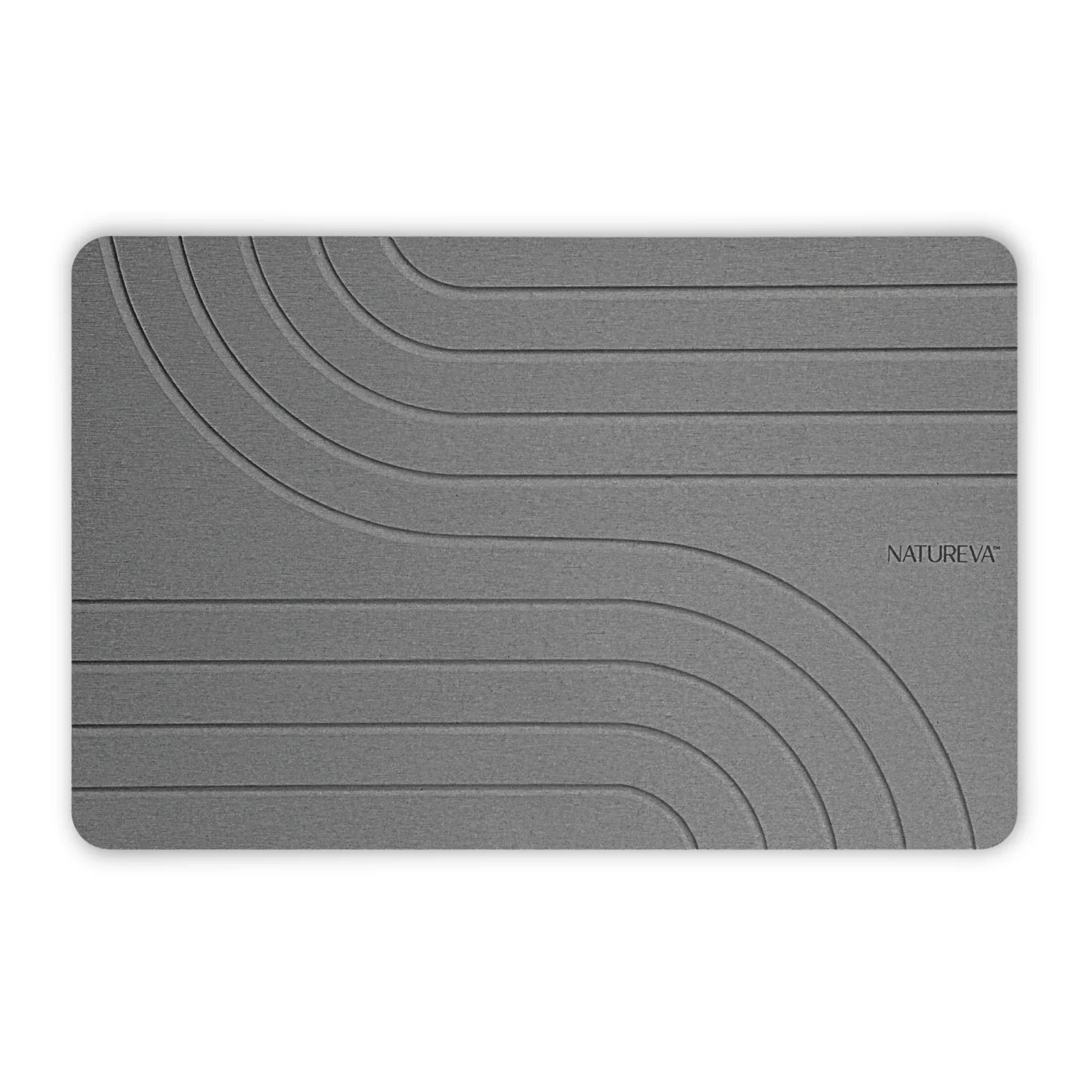
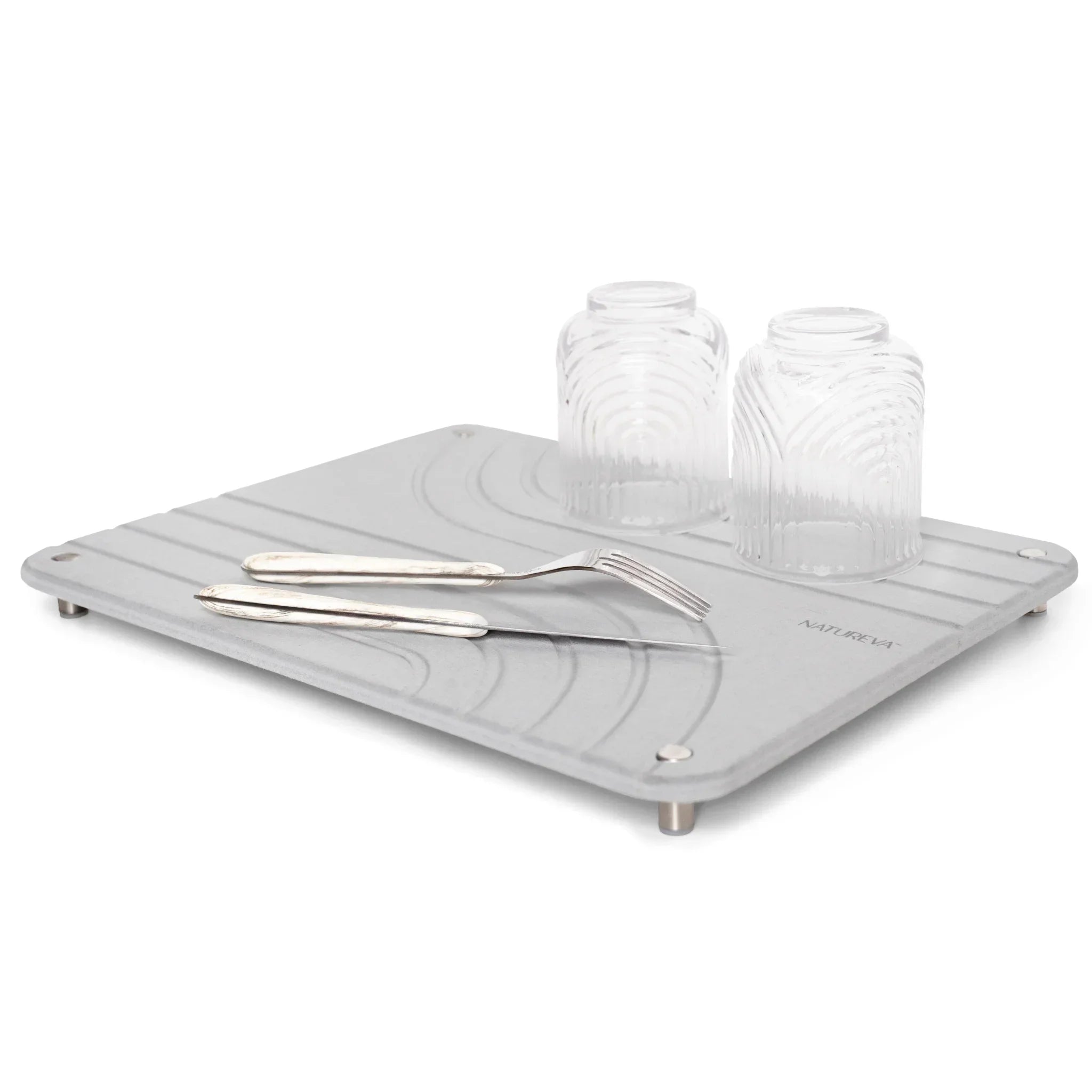
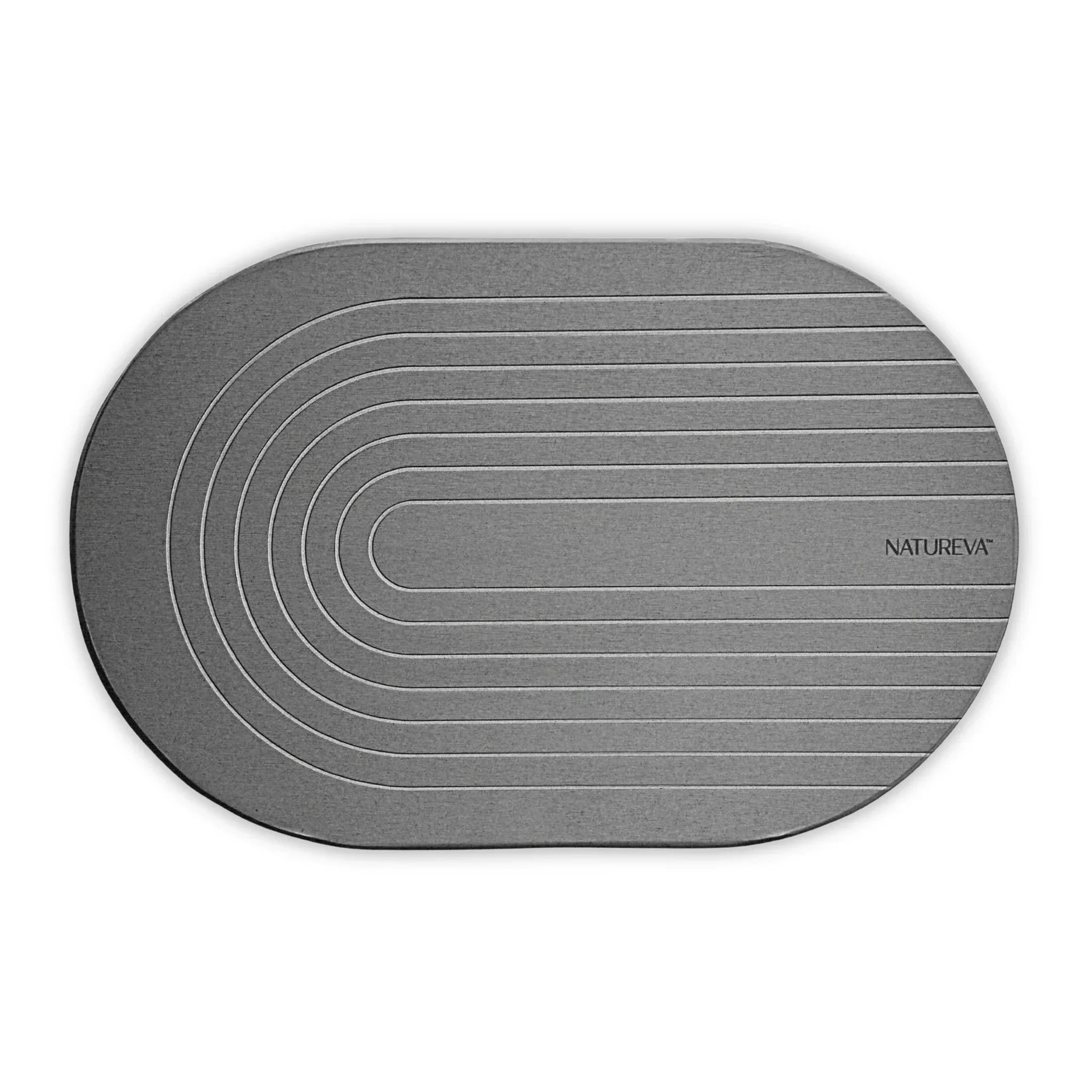
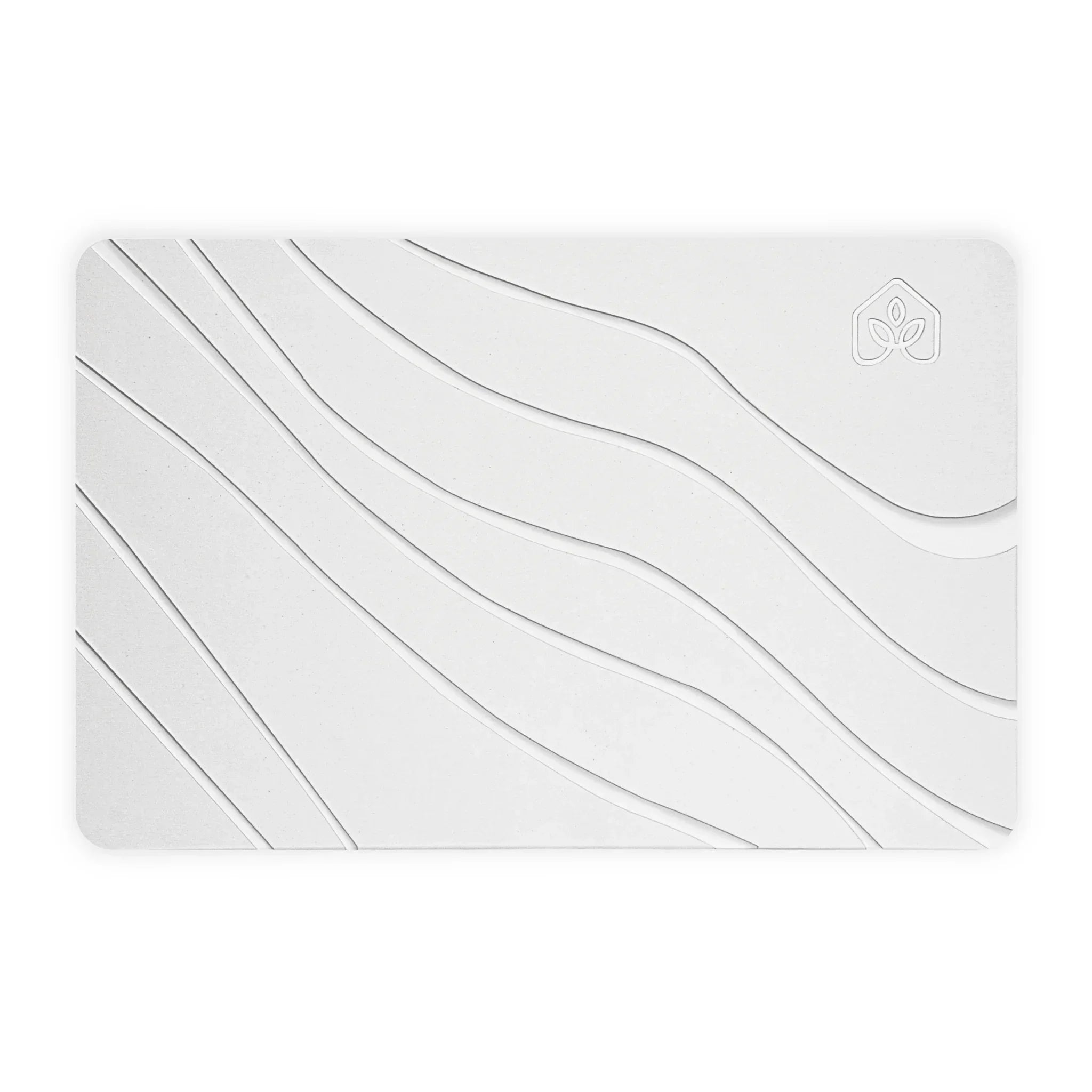
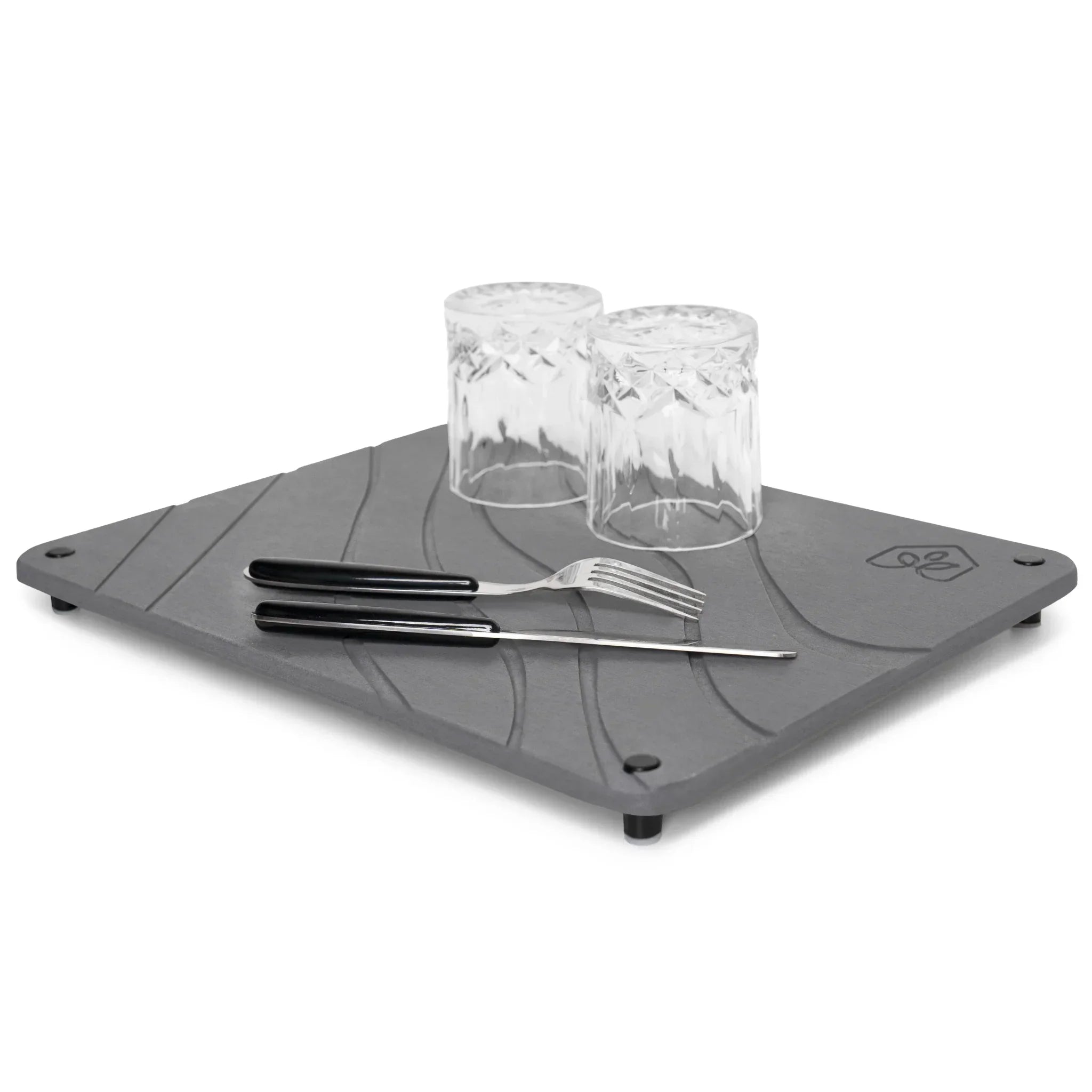
Our Stone Pet Mat uses this same diatomite technology specifically designed for feeding areas. It measures 47 × 29 × 0.9 cm and weighs 1.1 kg, giving it enough mass to stay put while your dog eats and drinks. The dual circular zones are engraved into the surface to mark where bowls should sit, and the concentric framing helps contain splashes.
- Microscopic pores absorb water on contact
- Surface dries within minutes through natural evaporation
- No chemical treatments needed for antibacterial properties
- Works for dogs that splash, drool, or make a mess while drinking
- Non-slip base pad keeps the mat stable during feeding
For messy drinkers, the instant absorption means water never pools on the surface. Your dog can't step in a puddle because there isn't one. The water gets pulled into the stone before it has a chance to spread. This also protects your floors from water damage over time, since moisture isn't sitting there seeping into wood or grout lines.
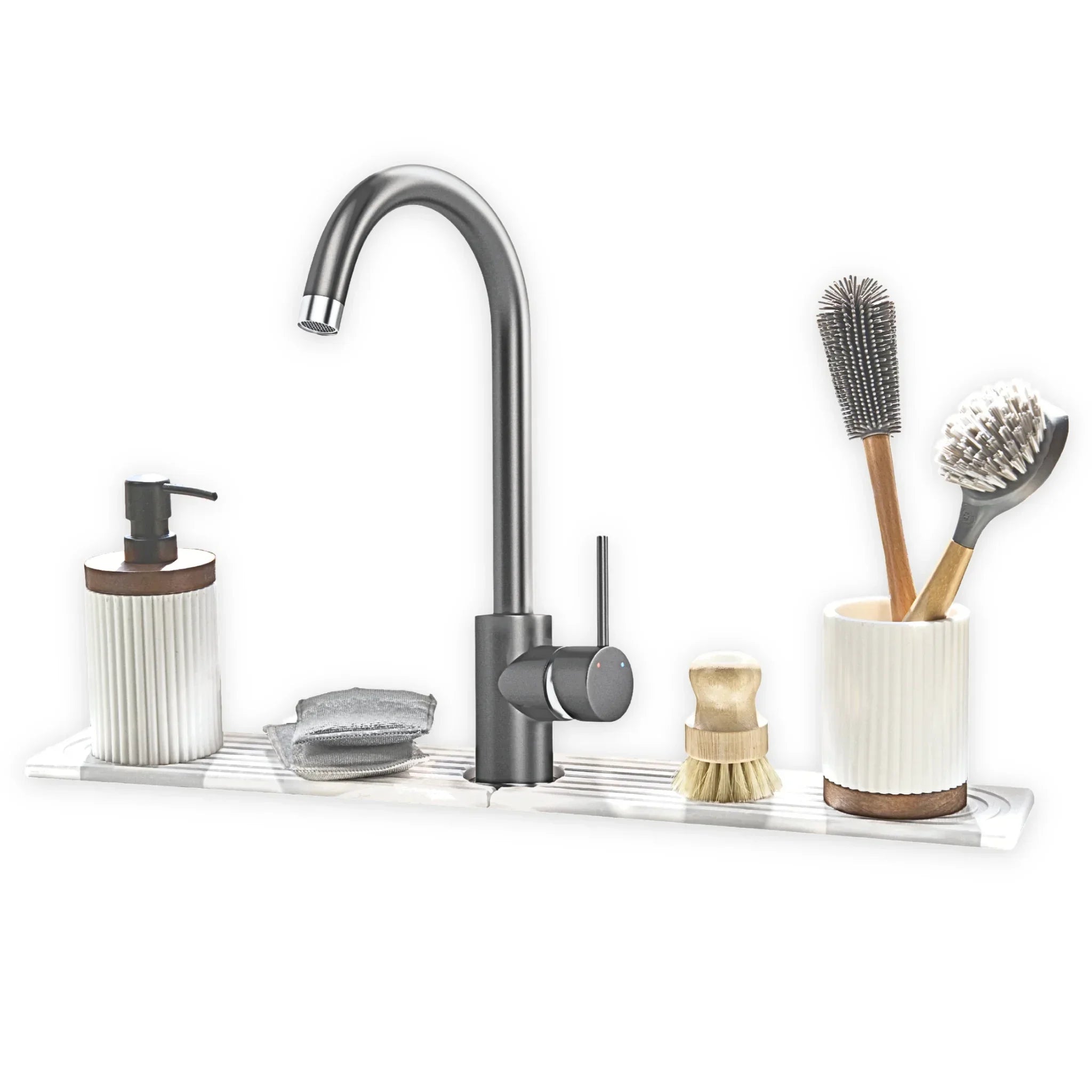
The mat comes with a sanding tool for maintenance. Over time, if you notice the absorption slowing down, a quick sand of the surface reopens the pores and restores full performance. It's a simple process that takes a minute and extends the life of the mat indefinitely. You can also check out our dish mat collection if you want the same technology for kitchen counters, or browse the full bath mat range for other areas of your home where moisture management matters.
What Makes Stone Mats Different from Traditional Options
Most pet owners have tried the usual suspects when it comes to protecting floors from water bowl mess. Fabric mats, rubber trays, and silicone pads all promise to catch spills, but they share a common problem that becomes obvious after just a few days of use. They stay wet for hours, creating damp spots that smell musty and feel gross underfoot. The moisture sits there, trapped against your floor, while bacteria and mold find a perfect breeding ground in those soggy fibers or pooled water.
Stone mats work on a completely different principle. Instead of trapping water like a sponge or collecting it in a tray, diatomite absorbs moisture instantly and releases it back into the air through rapid evaporation. The Natureva Stone Pet Mat uses this natural material to stay dry within minutes rather than hours, which changes the entire hygiene equation in your home.
Performance Over Time
The real difference shows up after weeks of daily use. Traditional fabric mats start their decline almost immediately, developing that characteristic damp smell even when they look clean. Rubber and silicone options fare better with odor but require constant emptying and wiping, plus they can trap moisture against your flooring if water seeps underneath.
The next generation of home essentials: naturally made, cleaner by design, sustainable by nature.
SHOP ALL- Fabric mats need washing every 3-5 days to prevent odor buildup
- Rubber trays collect standing water that must be dumped daily
- Silicone pads show water stains and require frequent cleaning
- Stone mats maintain their absorption capacity for months with minimal maintenance
Stone surfaces don't degrade the way fabric does. There's no material breakdown, no fiber compression, and no loss of structural integrity from repeated washing. When absorption does eventually slow down after extended use, a quick sand with the included tool reopens the surface pores and restores full performance.
Hygiene Advantages
The speed of drying matters more than most people realize. Protecting floors from pet bowl damage isn't just about preventing water marks. It's about stopping the conditions where bacteria thrive, which requires keeping surfaces dry.
- Fabric mats stay damp for 4-8 hours, creating bacterial growth conditions
- Stone surfaces dry in 15-30 minutes, limiting microbial activity
- No chemical treatments needed for odor control with stone
- Reduced need for harsh cleaning products around pet feeding areas
Traditional mats also create a secondary problem that's easy to overlook. When your dog steps on a damp fabric mat and then walks across your floor, they're tracking that moisture throughout your home. Stone mats eliminate this issue because the surface is already dry by the time your pet returns for their next drink.
Long Term Cost Analysis
Fabric mats seem cheaper upfront, but the math shifts when you factor in replacement cycles. Most fabric options last 6-12 months before they're too worn or stained to keep using. Rubber trays can last longer but often crack or warp, especially in homes with larger dogs who bump and shift their bowls frequently.
| Mat Type | Initial Cost | Lifespan | Annual Cost |
|---|---|---|---|
| Fabric | $15-25 | 6-12 months | $20-40 |
| Rubber Tray | $20-35 | 12-18 months | $15-30 |
| Stone | $49 | 3+ years | $12-16 |
Stone mats like the Natureva option carry a higher upfront cost but spread that investment across years rather than months. The material doesn't wear out in the traditional sense. It might need occasional sanding to maintain peak absorption, but the core structure remains intact indefinitely with basic care.
Environmental Impact
Disposable solutions create waste that adds up faster than most pet owners realize. Replacing fabric mats twice a year means sending synthetic materials to landfills where they'll sit for decades. Even natural fiber options break down slowly and often contain dyes and treatments that complicate composting.
- Average fabric mat contains polyester or nylon that won't biodegrade
- Rubber products release microplastics as they degrade
- Stone mats use fossilized algae and recycled paper with no synthetic coatings
- Single stone mat replaces 6-8 fabric mats over its lifespan
The production impact matters too. Manufacturing fabric mats requires water-intensive processes, chemical dyes, and often petroleum-based backing materials. Stone mats use naturally occurring diatomite that's shaped and compressed without chemical additives or synthetic finishes.
Real World Performance with Messy Drinkers
Dogs who splash water everywhere or drool excessively present the ultimate test for any mat system. Fabric options become saturated quickly and can't keep up with heavy drinkers who create puddles multiple times per day. Rubber trays work better for volume but require constant attention to prevent overflow.
Stone handles high-volume situations differently because the absorption is immediate and the drying is continuous. Water doesn't pool on the surface waiting to be soaked up slowly. It disappears into the porous structure the moment it hits, then evaporates from within. This means even dogs who create serious messes can't overwhelm the mat's capacity under normal circumstances.
Stone Mats Versus Traditional Options
Stone Mat Advantages:
- Dries in minutes instead of hours, preventing bacterial growth
- Lasts years rather than months with minimal maintenance
- No odor development even with daily heavy use
- Lower long-term cost despite higher initial price
- Made from natural materials without synthetic coatings
- Stays in place without shifting or bunching
- Works for both water and food bowl protection
Stone Mat Considerations:
- Higher upfront investment than fabric alternatives
- Heavier and less portable than fabric options
- Can crack if dropped on hard surfaces
- Requires occasional sanding to maintain peak absorption
- Limited color options compared to fabric variety
Traditional Mat Advantages:
- Lower initial purchase price
- Lightweight and easy to move
- Machine washable for deep cleaning
- Wide variety of colors and patterns available
Traditional Mat Drawbacks:
- Stay damp for hours, promoting bacteria and odor
- Require frequent washing and replacement
- Fabric options compress and lose absorbency quickly
- Rubber trays need daily emptying and cleaning
- Track moisture across floors when pets walk on damp surface
- Higher long-term cost due to replacement cycles
- Often contain synthetic materials that don't biodegrade
The choice between stone and traditional options ultimately comes down to whether you want to manage moisture reactively or prevent it from becoming a problem in the first place. Traditional mats ask you to stay on top of cleaning, washing, and replacing. Stone mats handle the moisture management automatically through their material properties, requiring only basic maintenance to keep performing year after year.
Finding the Right Water Mat for Your Dog
Picking a water mat for dog bowl setups really comes down to three things: how much water your dog splashes around, what kind of floors you're protecting, and how fast you need things to dry. Big dogs with messy drinking habits need more coverage, while smaller breeds can get away with compact mats. The material matters more than size though, because a mat that stays wet all day just creates new problems like mold and bacteria growth.
Most fabric mats trap moisture instead of managing it, which means you're washing them constantly or dealing with that damp smell. Stone based options like our Stone Pet Mat work differently because the diatomite absorbs water instantly and releases it back into the air within minutes. The dual bowl zones keep spills contained while the non slip base keeps everything in place, even when your dog is pushing bowls around.
Floor protection is another piece people forget about until water damage shows up. Hardwood and tile both need something that won't trap moisture underneath, which is why elevation or breathable materials make such a difference. The same principle applies to other moisture prone areas in your home, whether that's bath mats after showers or dish mats in the kitchen.
The right mat should feel like it disappears into your routine. You shouldn't be thinking about it multiple times a day or constantly moving it to dry out. If you're still dealing with wet floors or musty smells, the mat isn't doing its job.
Common Questions About Dog Bowl Water Mats
Choosing the right water mat for your dog's feeding area brings up a lot of practical questions. Most pet owners want to know if these mats actually work long term, how much maintenance they require, and whether they'll hold up to their specific dog's habits. The answers depend largely on what material you choose and how you care for it.
How often do dog bowl water mats need cleaning?
Stone mats made from diatomite need a quick wipe down with vinegar water about once a week to prevent buildup. If your dog is a messy drinker who splashes constantly, you might want to rinse the mat under water every few days and let it air dry upright. Fabric mats need washing every 2-3 days since they trap moisture and bacteria much faster than stone alternatives.
Do stone mats work for large breed dogs?
Yes, diatomite stone mats handle heavy use from large breeds without cracking or losing absorption. The Natureva Stone Pet Mat weighs 1.1 kg and measures 47 × 29 cm, which gives it enough surface area and stability for bigger dogs. The non slip base pad keeps it from sliding around even when a 70 pound dog steps on it after drinking.
How do you maintain absorption over time?
Stone mats can lose some absorption if the microscopic pores get clogged with dirt or soap residue. The fix is simple: use the included sanding tool to lightly buff the surface and reopen those pores. Most people only need to do this every few months, and it takes about 30 seconds. Avoid using coloured soaps or fabric softeners near the mat since these can leave films that block moisture absorption.
Do water mats work with elevated dog bowls?
Water mats work fine with elevated feeders as long as the mat is large enough to catch drips that fall from the raised height. The dual circular zones on stone pet mats are designed to accommodate standard bowl sizes whether they sit directly on the mat or in a stand above it. Just make sure the stand legs don't cover too much of the absorbent surface.
What if my dog splashes water everywhere?
Dogs who dig in their water bowls or splash aggressively need a mat with serious absorption speed. Diatomite pulls water in instantly, so even if your dog creates a small puddle, it disappears within seconds instead of spreading across your floor. Fabric mats just can't keep up with heavy splashers since they saturate quickly and stay wet for hours.
How long do diatomite dog mats last?
With proper care, stone mats can last several years without needing replacement. The material doesn't break down from water exposure like fabric does, and the sanding tool lets you restore performance whenever needed. If you accidentally stain the surface, hydrogen peroxide usually lifts it, or you can sand the area smooth again. The durability makes stone mats a better long term investment than disposable fabric options.
The next generation of home essentials: naturally made, cleaner by design, sustainable by nature.
SHOP ALL