
Article: Compare Stone Dog Mats for Cleaner Floors Around Water Bowls
Compare Stone Dog Mats for Cleaner Floors Around Water Bowls
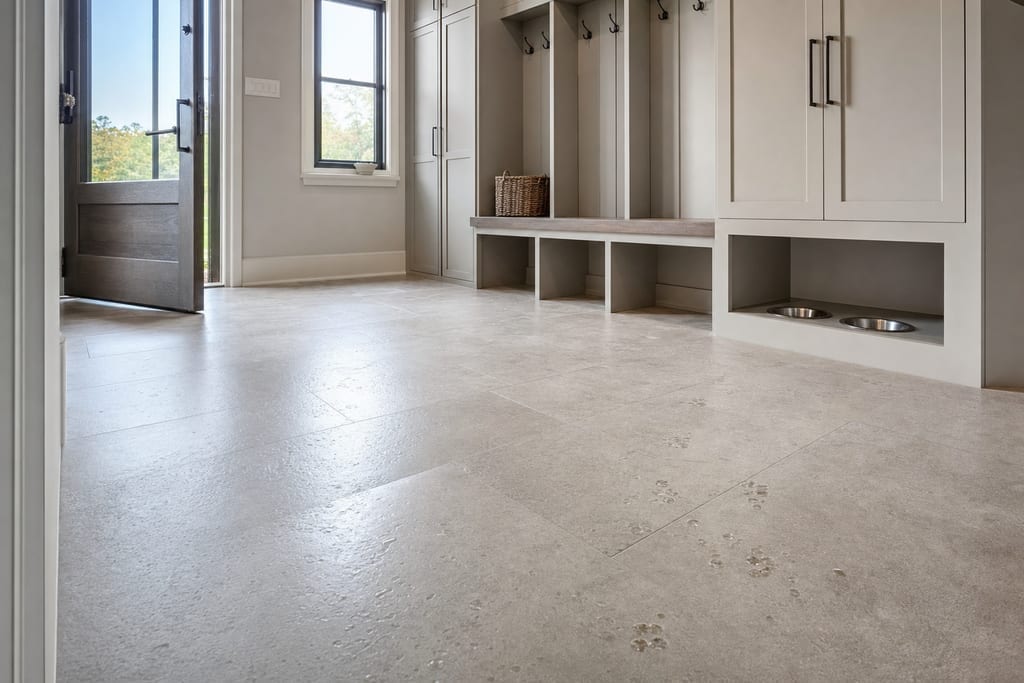
A stone dog mat is not a single product with one fixed performance level, since drying speed depends on the slab's density, pore structure, and finish. One enthusiastic drinker can splash close to a cup of water around a bowl in a single sitting, and where that water lands matters. On fabric, it sits on top, soaks into carpet underlay, or drips onto timber. On a dense diatomite slab, it gets pulled into the surface and released back into the air within minutes.
Not every stone mat on the market absorbs or dries at the same rate, even though most look similar at a glance. Pore density, slab thickness, and the composite mix behind the stone all change how fast a mat pulls moisture in and how much it can hold before it stops working. Judging options side by side means comparing absorption speed, surface durability, and how each mat handles repeated spills over months of daily feeding, not just the price tag on the box.
Table of Contents
Why Water Bowls Wreck Floors Faster Than Expected
Water from a feeding station rarely stays in one spot. It travels along tile grout lines, pools in laminate seams, and sits on timber boards until it finds a gap to seep into. Grout and seams are the weak points because they are the lowest part of an uneven floor surface, so spilled water collects there first.
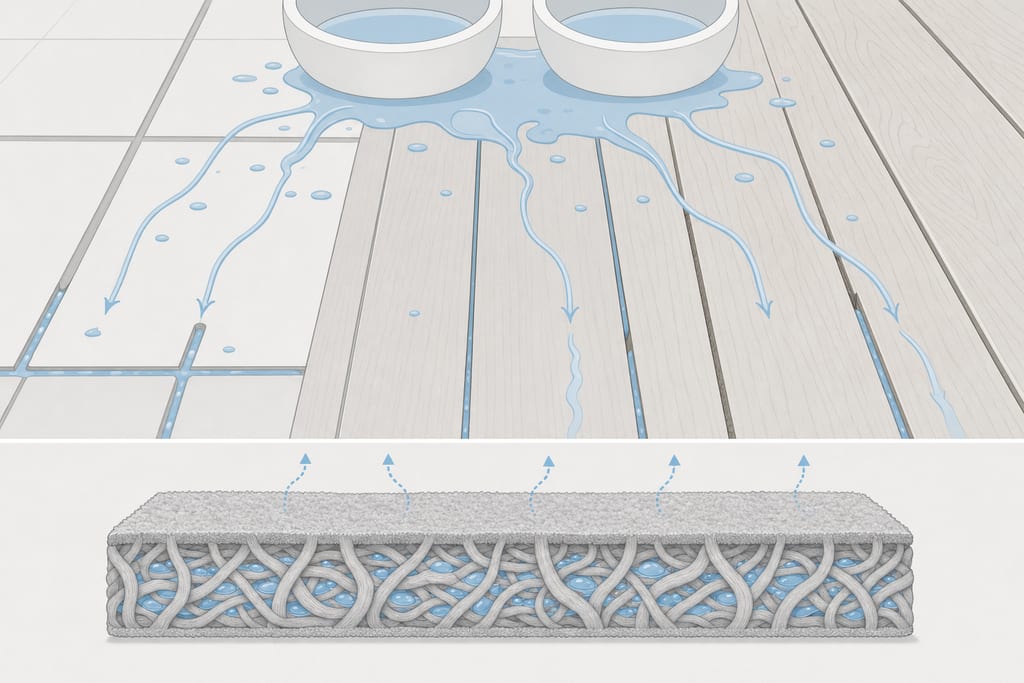
Fabric mats make this worse rather than better. A fabric mat soaks up the spill but holds that moisture in its fibres instead of releasing it, so the mat itself becomes a damp patch sitting directly on the floor for hours. That trapped moisture keeps the grout line or timber seam underneath wet for as long as the mat stays saturated, which is often the entire day between washes.
- Fabric mat: absorbs on contact, holds moisture, takes hours to fully dry
- Rubber mat: does not absorb, water pools on top and runs off the edge
- Silicone mat: does not absorb, water sits in a puddle until wiped
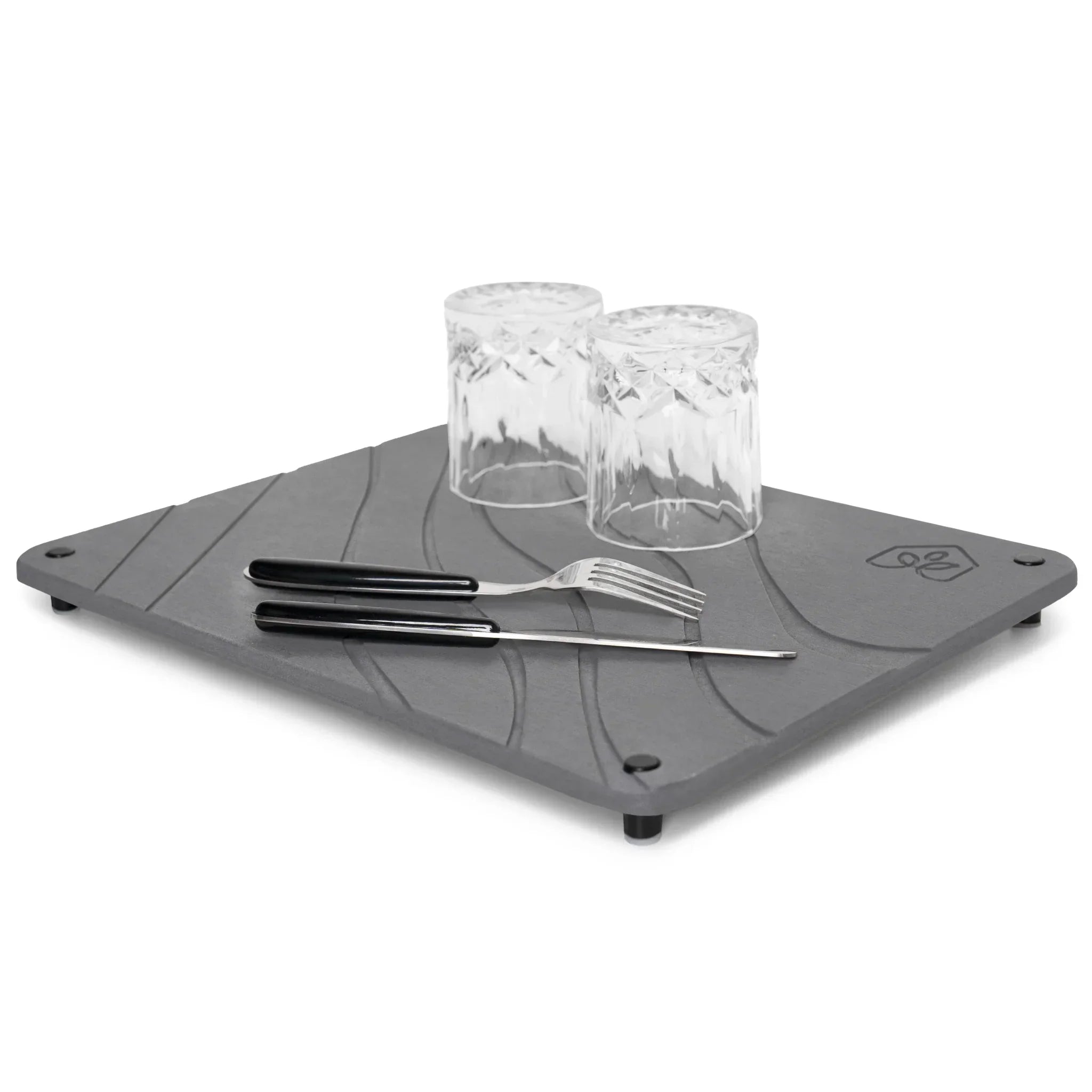
- Diatomite stone slab: absorbs on contact, releases moisture through evaporation, dries in minutes
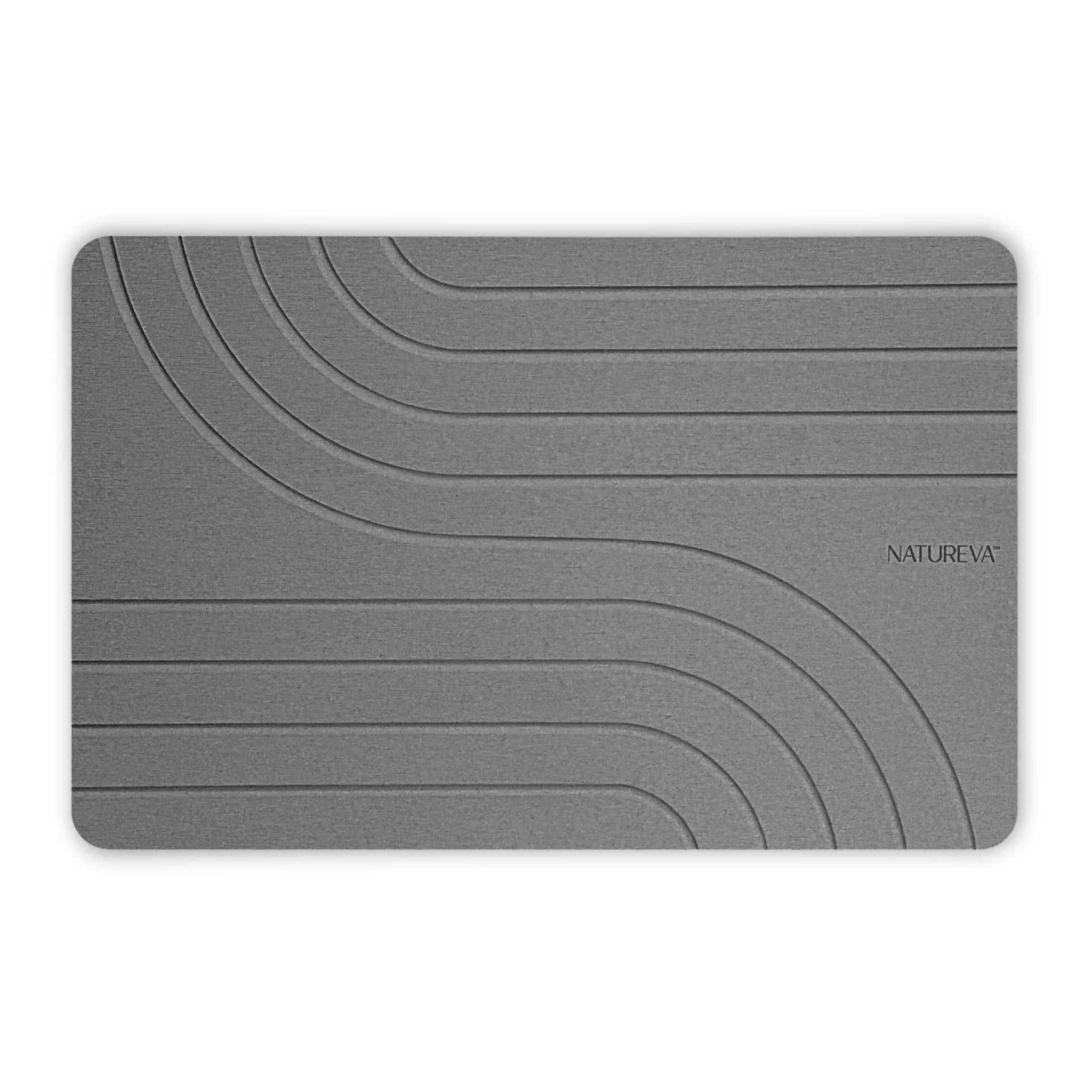
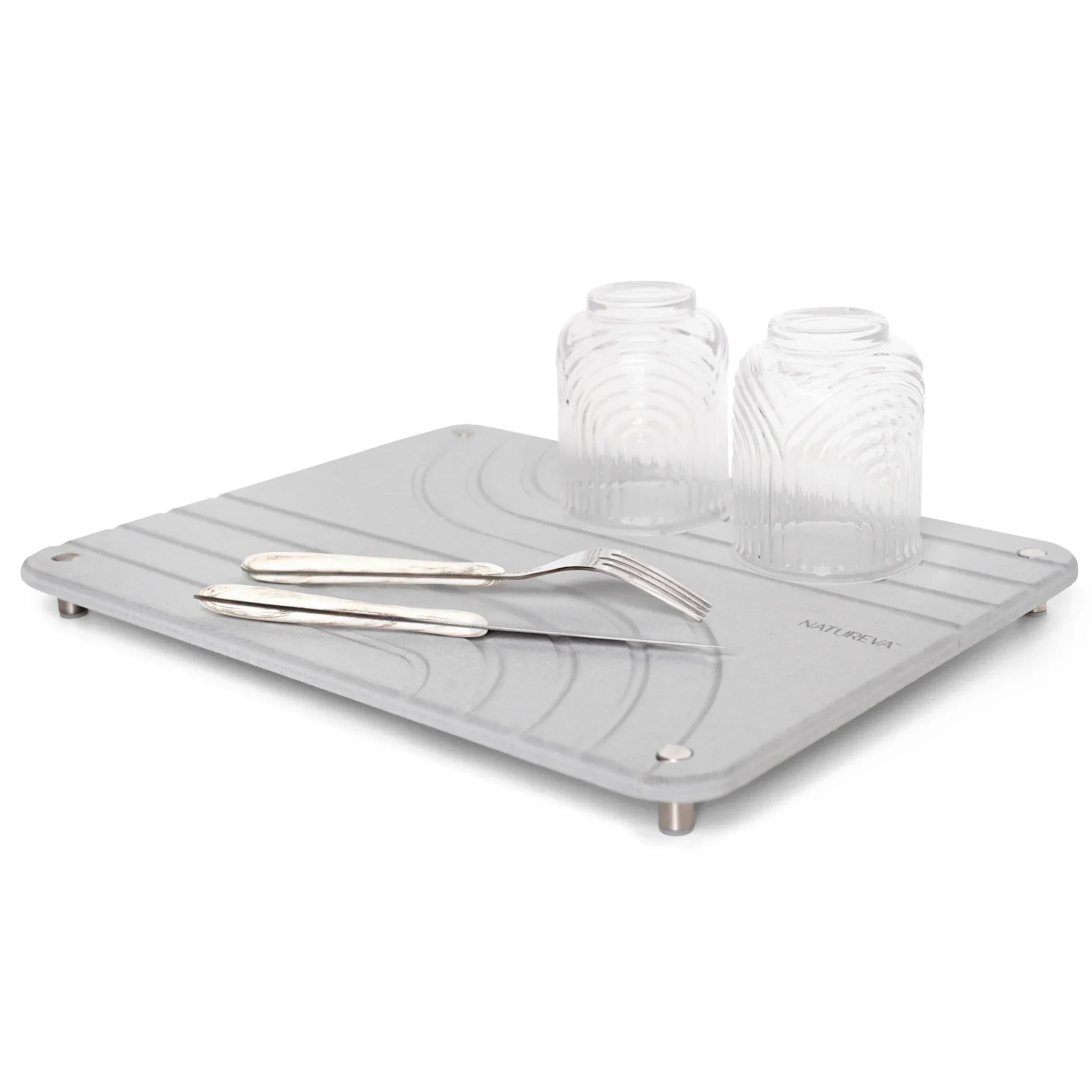
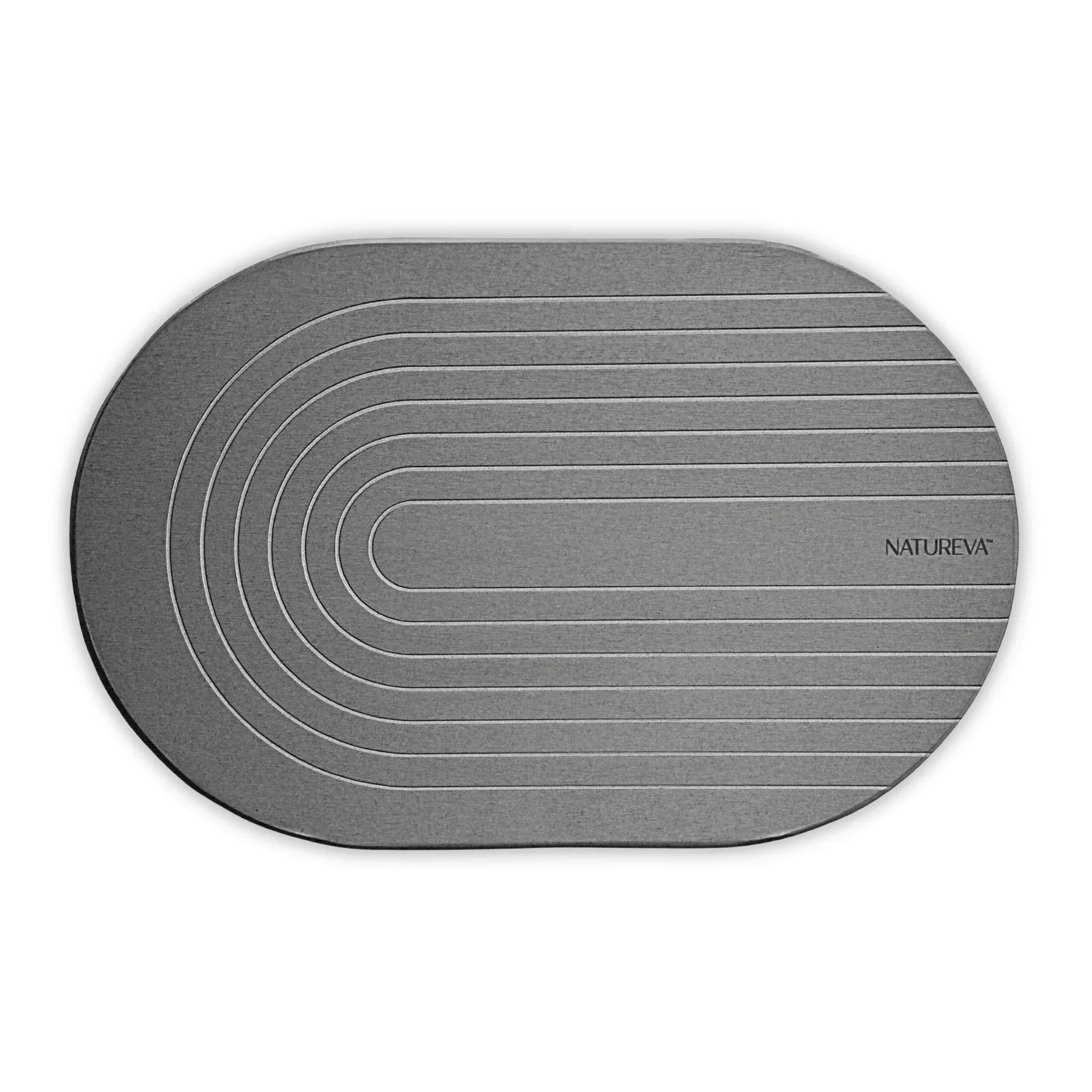
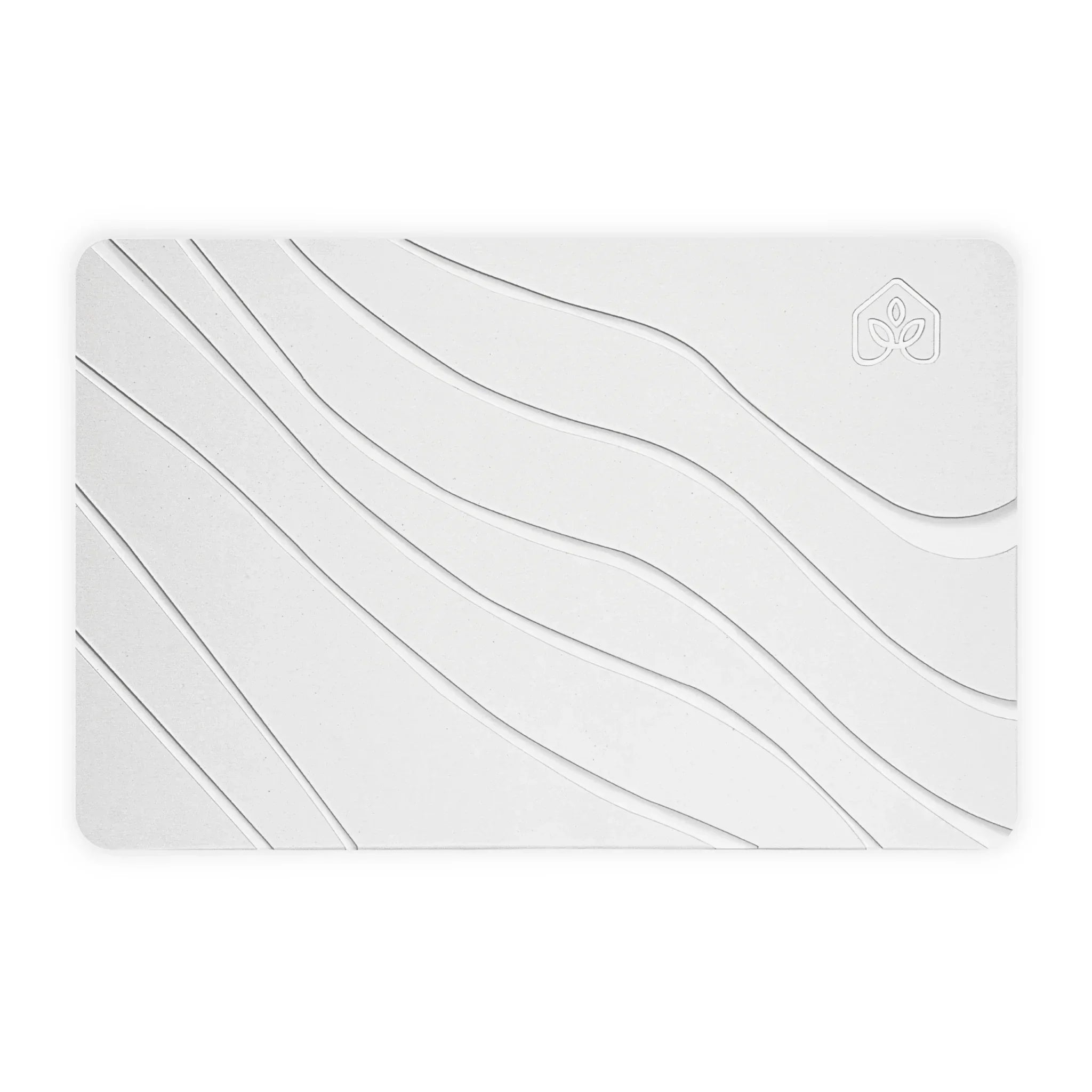
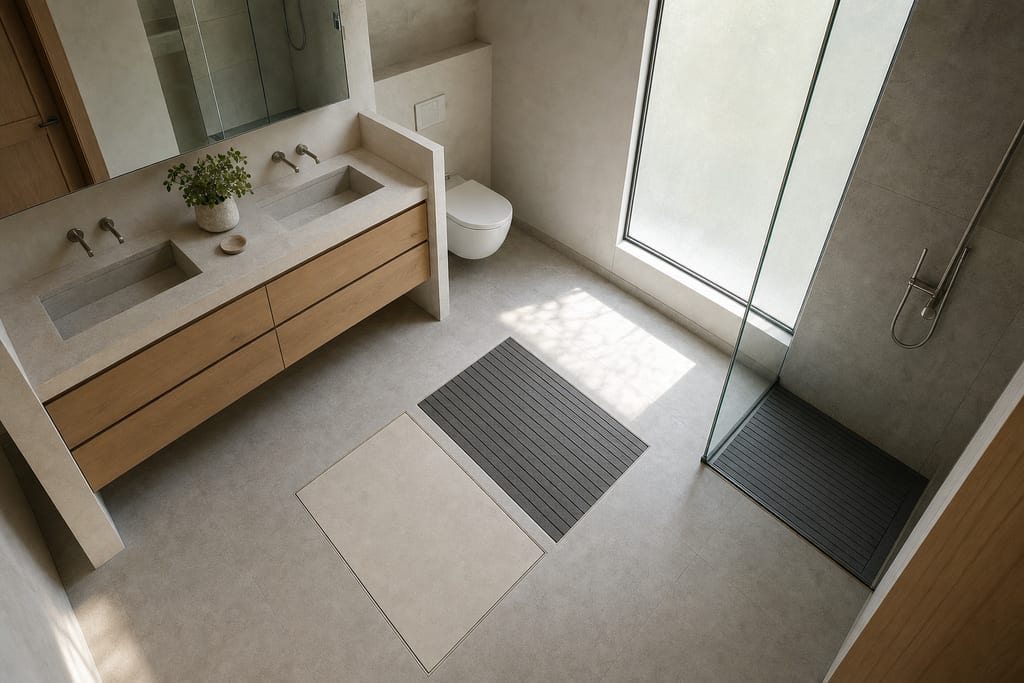
Of the four, only diatomite moves water out of the surface instead of just holding or redirecting it. A stone pet feeding mat works on the same drying principle as the brand's bathroom and kitchen mats, pulling moisture into the pores and letting it evaporate rather than sitting wet against the floor.
What Makes a Mat Actually Stop the Splash
A mat stops splash by pulling water into its pores the instant a paw or bowl touches it, not by sitting there waiting for the puddle to spread. Diatomite's internal structure is packed with microscopic channels that draw moisture in on contact, which is why a dense slab outperforms a thin or loosely pressed one even if the surface pattern looks identical. Pore density matters more than any carved design on top.
A non-slip base underneath is just as important as the stone itself, since a mat that skates across tile when a dog leans into the bowl defeats the point of buying one. Chemical-free construction also matters here in a way it does not for a bathroom floor, because this surface sits inches from food and water a dog eats from every day. Natureva's stone products use a composite of diatomaceous earth and recycled paper with no synthetic coatings, which keeps the drying mechanism doing the work instead of any added treatment.
- Pore density and slab thickness, not just surface pattern
- A full non-slip base pad, not a few adhesive dots
- Chemical-free composite with no coating near food and water
- How the mat has performed over repeated daily spills, not one test pour
These four points are the filter to run every mat through before comparing specific products, since a good-looking slab that fails on any one of them will underperform at the feeding station.
Sizing a Mat for One Dog or a Multi-Pet Home
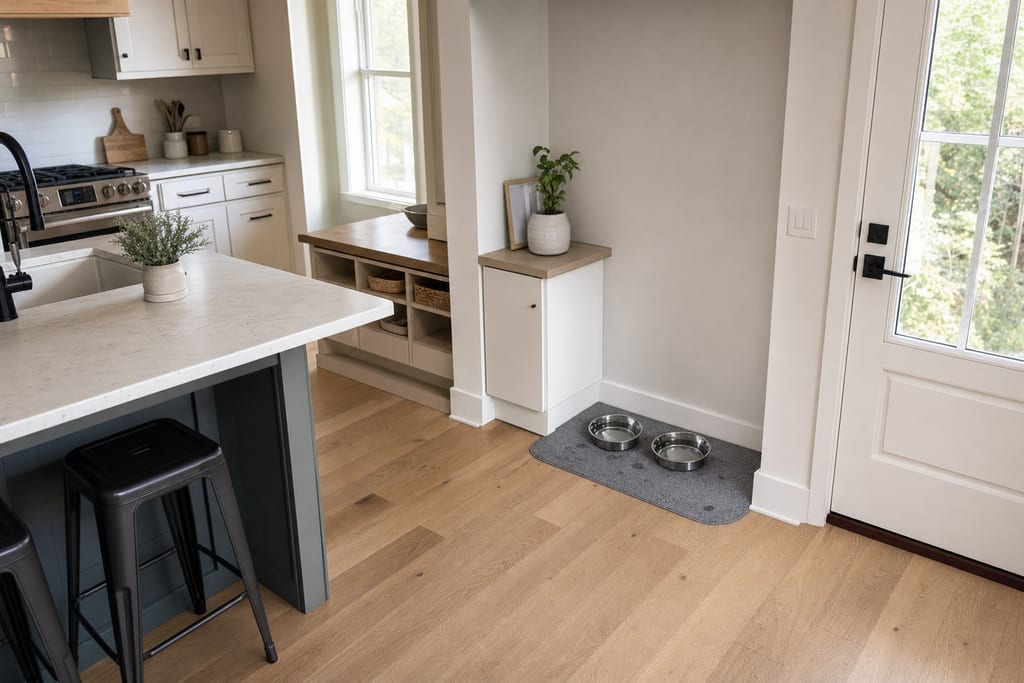
Mat size should match the feeding setup, not just the dog. A single small bowl sitting flat on the floor needs far less coverage than a raised double-bowl stand, where water can run down the stand's legs and land outside a narrow mat's edge.
Multi-dog households need width more than length, since two dogs drinking from opposite sides of a shared station splash in two directions at once. A mat sized for one bowl will leave half the spill landing on bare floor. Weight plays a role too: a slab around 1.1 kg resists sliding far better than a lightweight fabric pad when a larger dog leans its full weight against the bowl edge.
- Measure the full footprint of the feeding station, including stand legs
- Add width, not just length, for two dogs sharing a station
- Check the mat's listed weight against the dog's size and pushing force
- Confirm the base pad covers the full underside, not just the corners
These sizing and stability checks are the same filter used to compare the mats in the next section, so a mat that passes here is worth shortlisting and one that fails is not worth comparing further.
The next generation of home essentials: naturally made, cleaner by design, sustainable by nature.
SHOP ALLTop Stone Dog Mats Compared
Four mat types come up most often when shopping for this category: a purpose-built stone pet mat, a stone bath mat repurposed for a single bowl, a generic stone tile mat, and a fabric or microfibre mat as a baseline. Each one lands differently on absorption, stability, and cost.
A stone pet feeding mat is built around two concentric circular zones sized for standard bowls, so splash from both sides lands on absorbent stone instead of near the edge. A rectangular stone bath mat works under a single bowl if there's no dedicated pet mat on hand, though its longer footprint is designed for a foot stepping out of a shower, not a dual-bowl layout. Generic stone tile mats sold on general marketplaces often skip lab testing altogether, so there's no way to confirm they're free of asbestos contamination, a documented issue in this material category. Fabric and microfibre mats absorb fast at first but hold that moisture in their fibres for hours, the same limitation covered above.
| Mat type | Best for | Certification check |
|---|---|---|
| Dedicated stone pet mat | Dual-bowl stations | NATA-accredited asbestos testing |
| Repurposed bath mat | Single bowl, temporary use | NATA-accredited asbestos testing |
| Generic stone tile mat | Not recommended without testing | Usually none disclosed |
| Fabric or microfibre mat | Low-splash, infrequent cleanup | Not applicable |
The gap between the first two rows and the third is certification, not shape. A mat with no disclosed testing is a harder sell regardless of how well it drinks up water on day one.
Keeping a Stone Mat Working Like New
A stone mat stays absorbent with a short weekly routine, not a deep clean. Wiping the surface with a damp cloth and cleaning vinegar once a week keeps pet hair, food residue, and mineral buildup from clogging the pores that do the absorbing.
Over months of daily feeding, those pores can gradually close up from buildup, which shows up as water sitting longer than it used to instead of disappearing in minutes. The included sanding tool, a P320 grit disc about 10 cm across, reopens the surface and restores that absorbency in a few passes. Coloured soaps should be avoided since they can stain lighter stone finishes over repeated use, where plain vinegar and water will not.
- Wipe weekly with a damp cloth and cleaning vinegar
- Rinse spot stains under running water before they set
- Sand the surface once drying time noticeably slows down
- Skip coloured or dyed soaps on light finishes
This upkeep takes a few minutes a week, which is less than the daily wash a fabric mat needs to avoid holding onto odour and damp fibre for hours at a time.
Picking Between Fabric, Rubber, and Stone
Fabric costs the least up front but asks for the most work over time. It holds moisture in its fibres rather than releasing it, so it needs a daily wash to avoid sitting damp against the floor between feedings. For a household with one small dog and a light drinker, that daily wash might be manageable, but it stops being worth the effort once more than one dog shares a station.
Rubber and silicone solve the slipping problem but not the puddle problem. Water beads on top of both materials and stays there until someone wipes it up, which means the mat is only as clean as the last person who checked it. That trade-off suits a feeding spot that gets watched closely, but it fails at a station nobody refills or checks more than once a day.
A stone slab is the only option in this comparison that is absorbent and stable at the same time, pulling water in on contact while staying put under a leaning dog. It costs more than fabric and asks for a weekly wipe instead of nothing, but that weekly routine replaces a daily wash.
| Material | Handles splash | Stays put | Upkeep |
|---|---|---|---|
| Fabric | Absorbs, holds moisture | Can bunch or slide | Daily wash |
| Rubber or silicone | No absorption, pools on top | Stable | Wipe after each spill |
| Diatomite stone | Absorbs, dries in minutes | Stable with base pad | Weekly wipe |
The right pick comes down to how many pets use the station and how often someone actually refills or checks it. A single dog with a tidy drinking habit and an attentive owner can get by on rubber or fabric. A multi-dog household, or any station that goes unchecked for stretches of the day, is better served by a surface that clears the water itself.
Matching a Mat to Your Feeding Station
Start with the bowl count. A single bowl on flat floor needs only enough stone to sit under and slightly around it, while a raised double-bowl stand needs a mat wide enough to catch water running down both legs and off either side. Once size is settled, put a non-slip base ahead of any surface pattern on your checklist, since a mat that slides when a dog leans in causes more mess than the splash it was meant to catch. A dedicated stone pet mat, built with two bowl zones and a full base pad, holds up to daily feeding in a way a repurposed bath mat only manages short term. Natureva's stone pet mat covers both of those checks in one slab, so it's the simpler order for a station used every day rather than occasionally.
The next generation of home essentials: naturally made, cleaner by design, sustainable by nature.
SHOP ALLStone Dog Mat Questions and Answers
Can a stone dog mat go on carpet or does it need hard flooring underneath?
A stone dog mat works on carpet, but it works best on hard flooring where spills can be wiped around the edges. On carpet, the mat still absorbs and dries the water that lands on its surface, though any splash that misses the slab soaks straight into the carpet fibres underneath. Placing a mat at a feeding station on carpet still cuts down on standing water, it just will not catch every drop that lands outside its footprint.
Will the stone surface stay comfortable for a dog that likes to lie down near the bowl?
A stone mat feels hard and cool compared to fabric, since it is a dense compressed slab rather than a cushioned pad. Dogs that like to stretch out near their bowl for long stretches may prefer a soft mat alongside the stone one, rather than lying directly on it. The stone surface is built to manage water at the feeding zone itself, not to double as bedding.
Does a heavier dog or a puppy change which size mat makes sense?
Dog size changes stability needs more than it changes mat dimensions. A larger dog leaning its full weight against a bowl puts more sideways pressure on the mat, so a full non-slip base pad matters more as the dog gets bigger. A puppy drinking from a smaller bowl can usually fit on a smaller single-zone mat, but a growing dog that will soon use a bigger bowl is better served by sizing up early.
What happens if the mat gets stained from kibble or wet food instead of water?
Food residue stains the same way mineral deposits do, by sitting on the surface and gradually clogging the pores that do the absorbing. Rinsing spot stains under running water while they are fresh keeps most food marks from setting into the stone. Natureva's care routine of a weekly vinegar wipe handles everyday food residue the same way it handles water spots, without needing a separate cleaning step for kibble dust or wet food splatter.