

Cool Bath Mats That Balance Style, Drying Speed, and Function
Cool bath mats today are stone, not terry cloth, and they dry a puddle in seconds instead of staying damp all day. Bathroom floors used to get a plain towel nobody looked at twice. Now the mat sits out in the open like a tile or a rug, in a shape that matches the rest of the room, and it still has to earn its spot by actually drying.
Stone mats solve the old soggy-towel problem because the material pulls water in and lets it evaporate, instead of trapping it in fabric fibers where mold and smell build up. That matters most right after a shower, when a damp mat sitting on tile for hours is how mildew gets started. Shape matters too, since a long galley bathroom needs a different footprint than a small powder room, and a rounded or curved mat can fit a tight spot a rectangle never would.
Table of Contents
Quick Picks for Every Bathroom Style
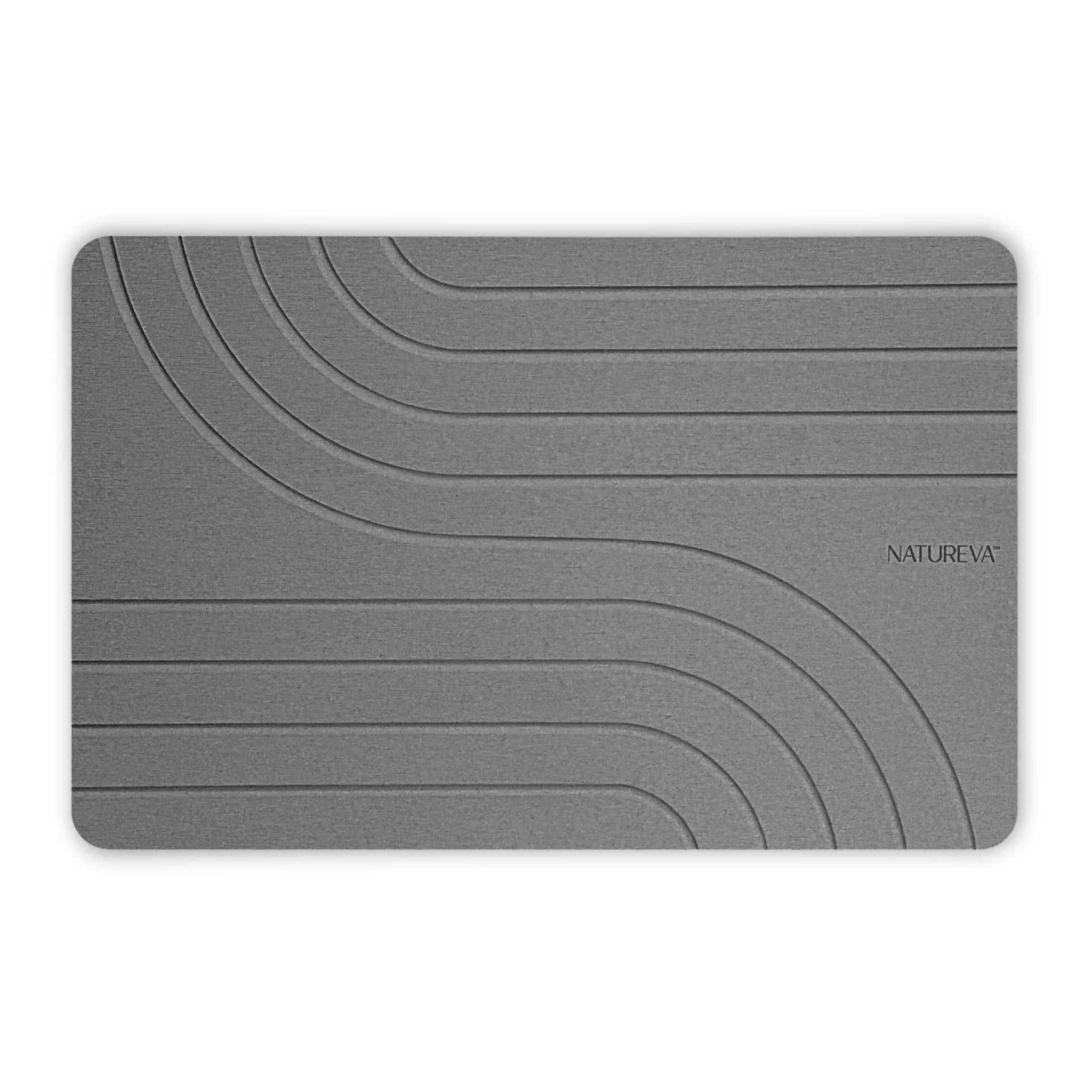
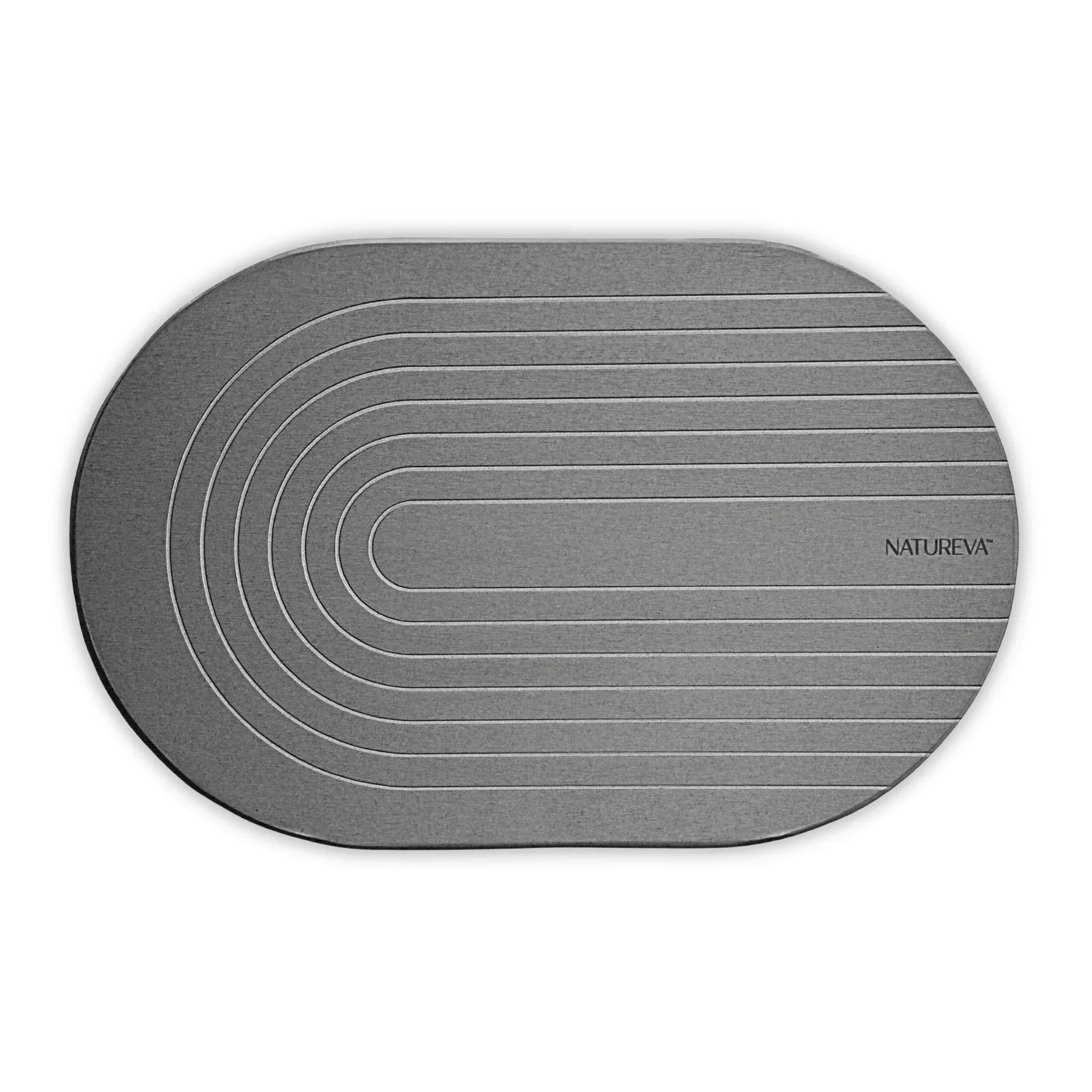
Three mat shapes cover most bathroom layouts, and matching the shape to the room matters more than picking a favorite color. The Tide has a straight, rectangular edge that sits flush against a modern vanity or a clean-lined tile floor. Minimalist bathrooms with sharp corners and simple fixtures call for a mat that matches those lines instead of breaking them.
The Arch has a rounded top edge built for curved vanities and softer, boho-style spaces. A rectangle mat next to a round pedestal sink looks out of place, while a curved edge follows the sink's shape instead of fighting it.
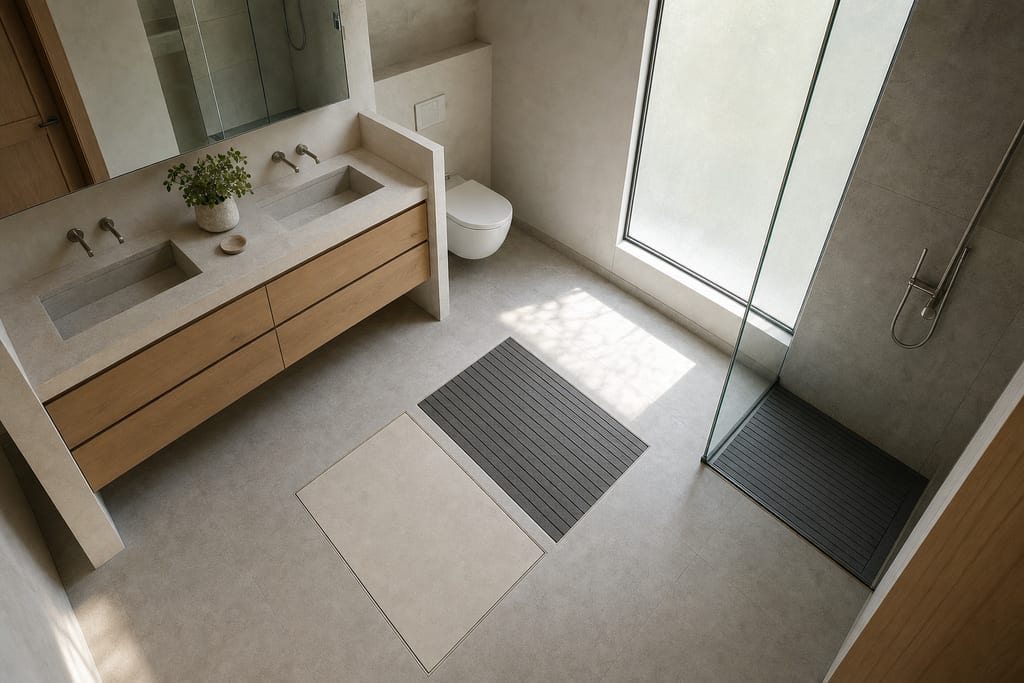
The Flow mat runs longer and narrower, which fits a tight galley bathroom or stretches across the floor in front of a double-sink layout. One Flow mat can cover a wide span that two smaller mats would otherwise need to split.
- Tide: straight edges, fits modern and minimalist layouts
- Arch: curved edge, fits boho spaces and round vanities
- Flow: long and narrow, fits galley floors and double sinks
- All three: $59, dry within seconds
Sleek and Minimal Looks With Tide
Tide fits bathrooms that favor straight lines over curves. Its edges run flush against a vanity cabinet or a wall-mounted sink, so it reads like part of the floor plan instead of an accessory dropped on top.
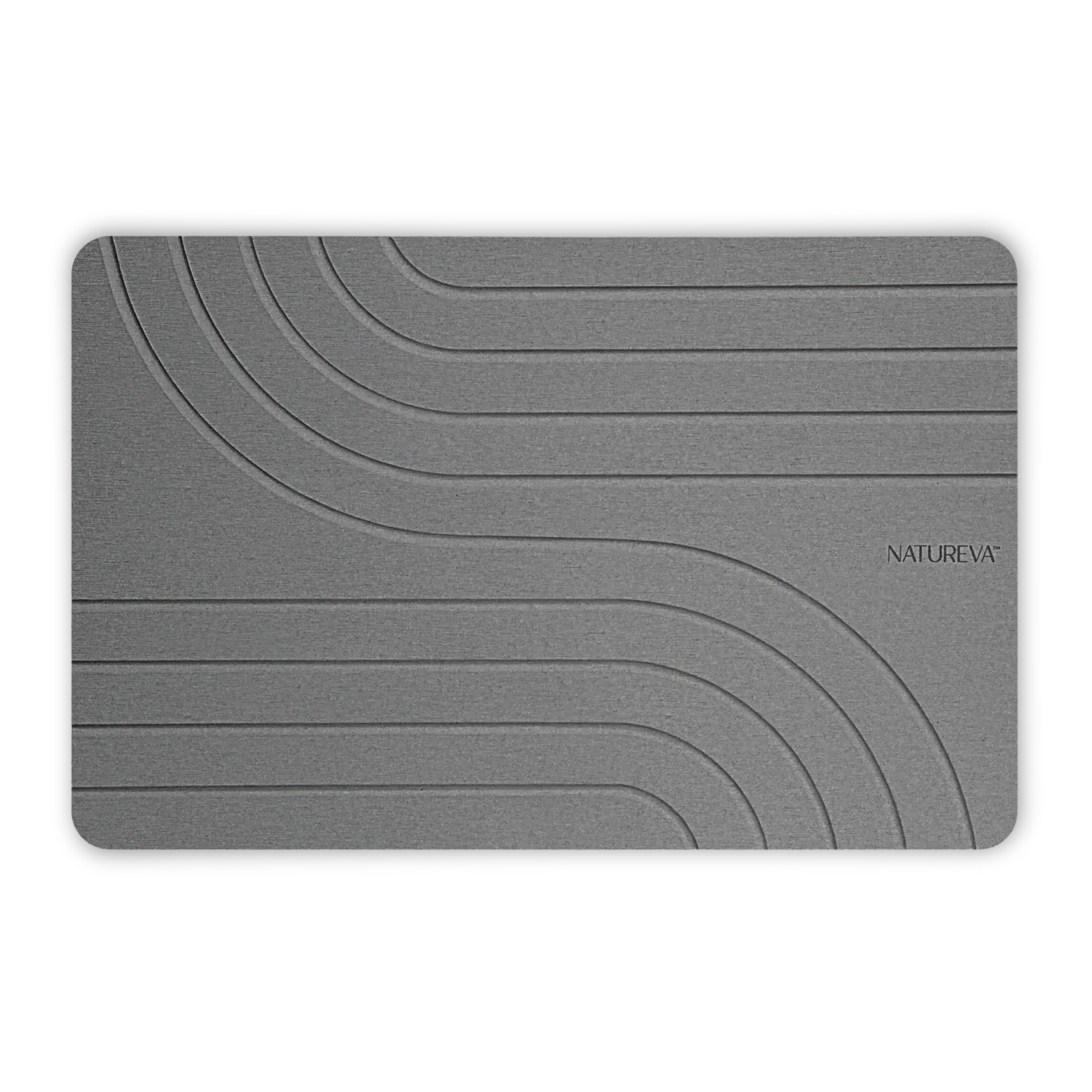
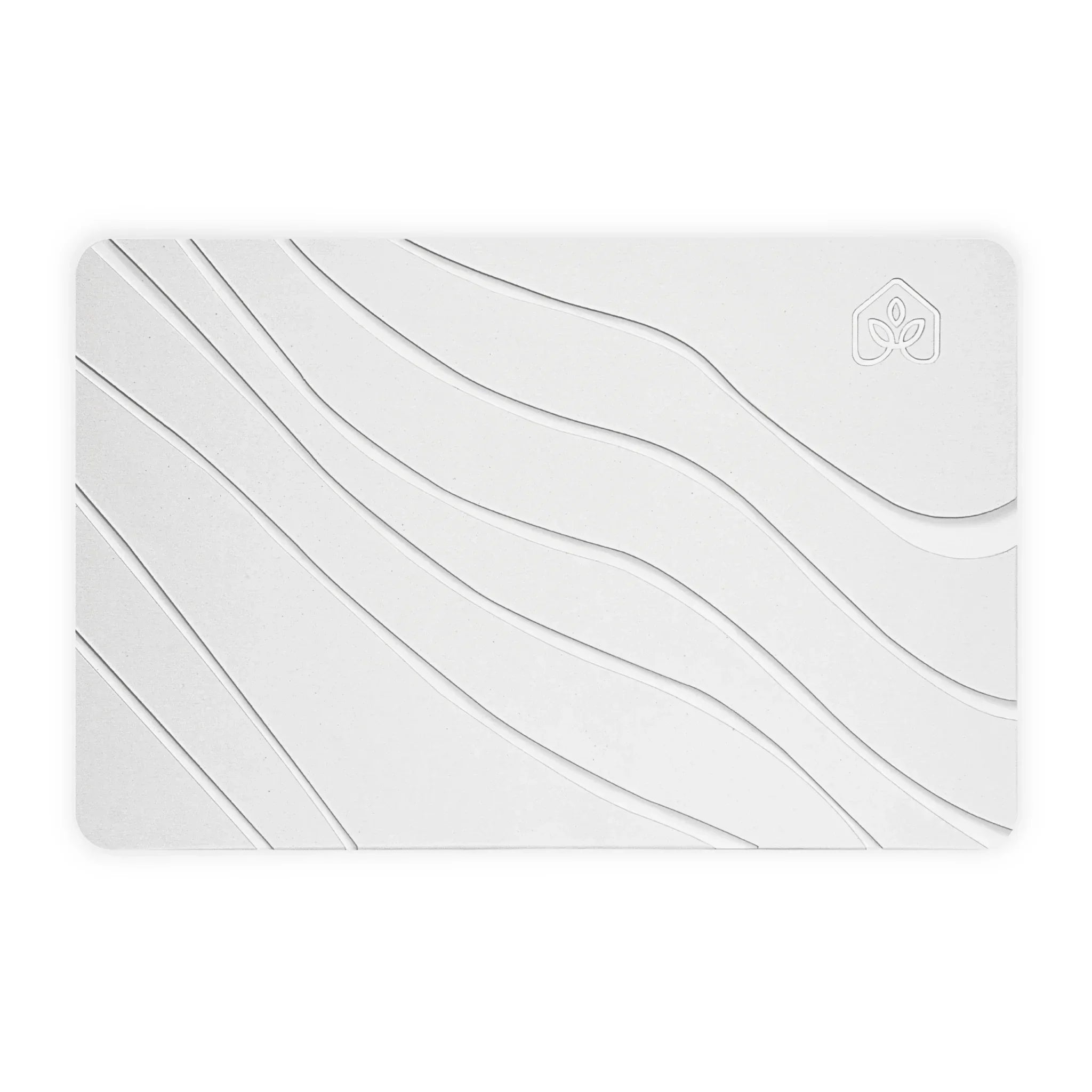
Stone Bath Mat - Tide
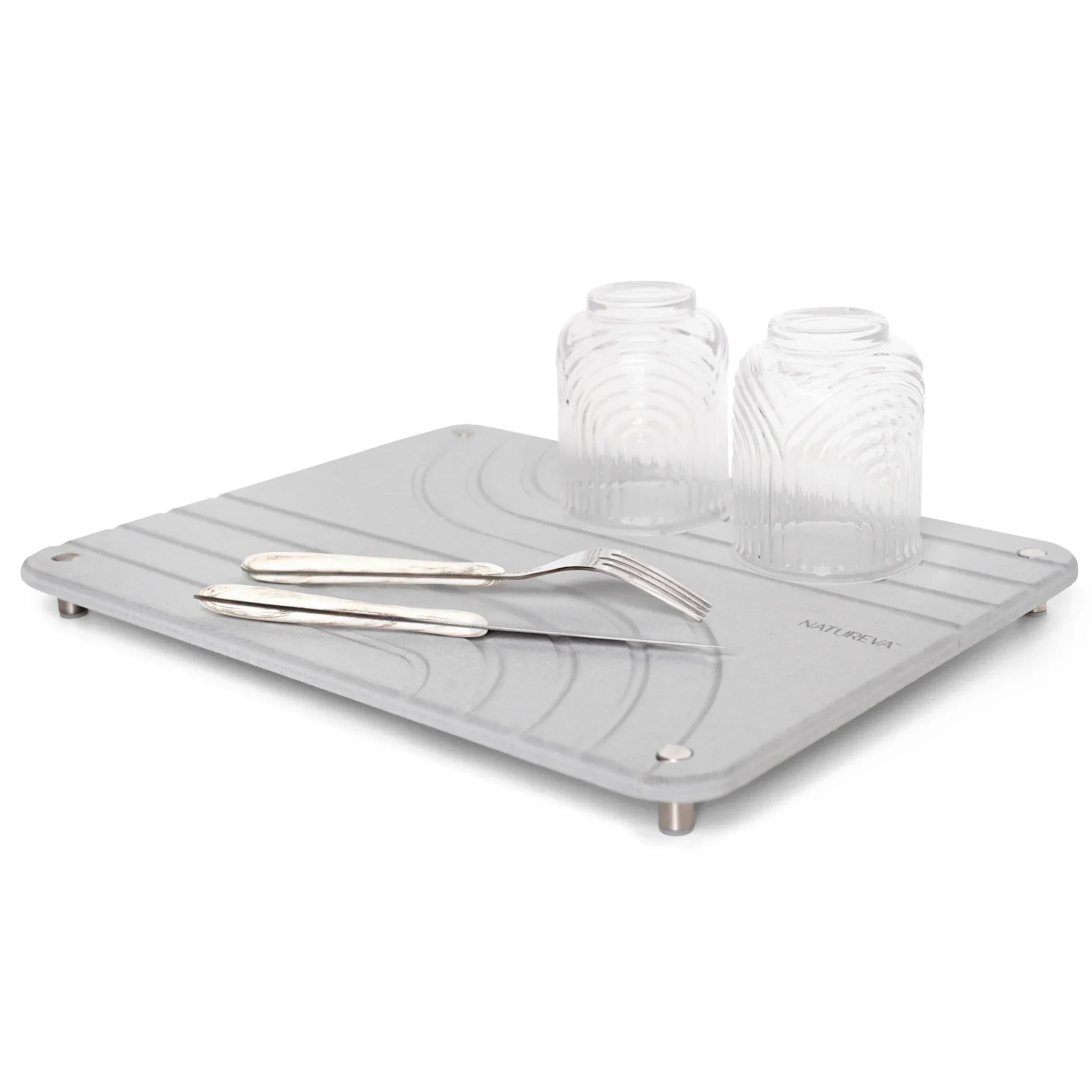
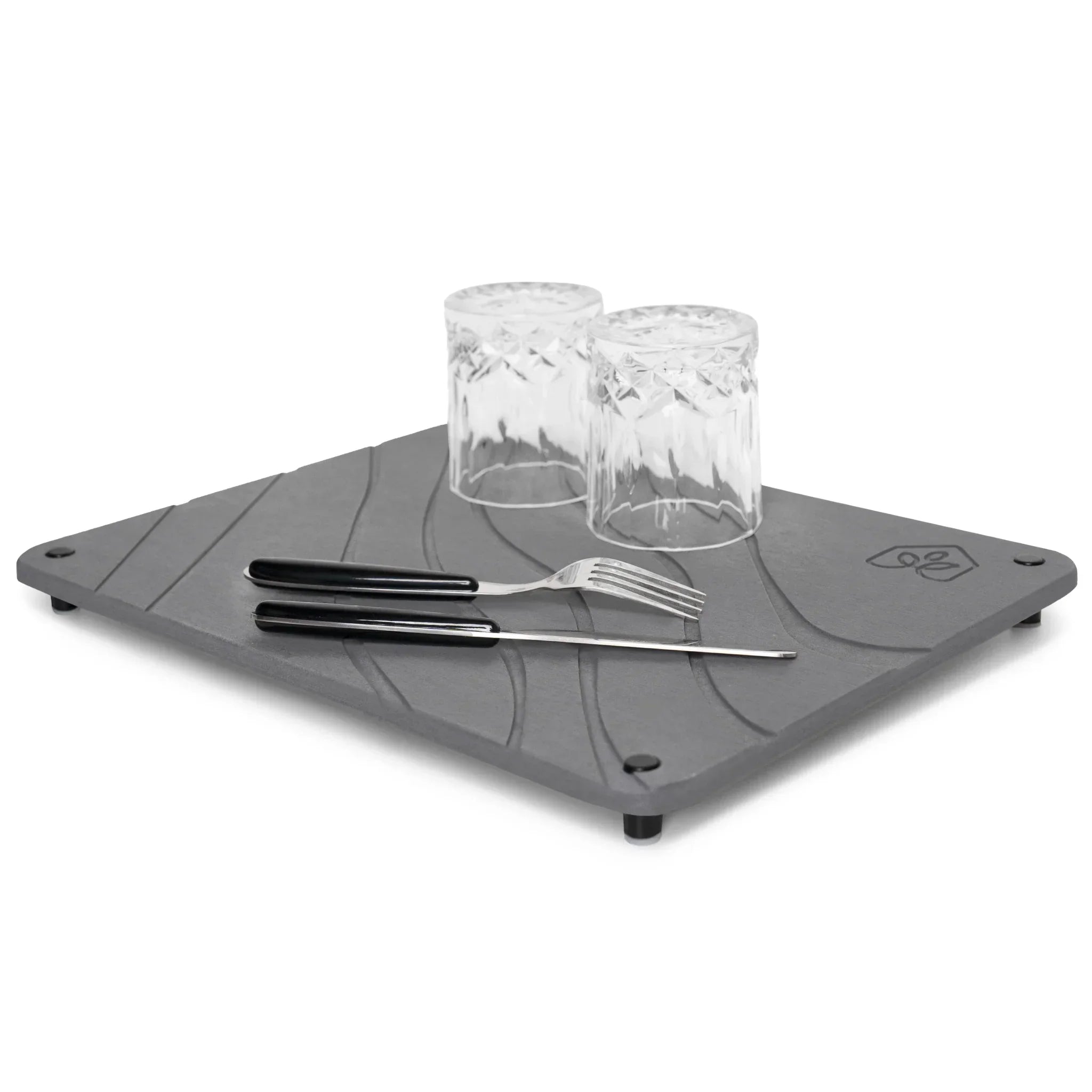
The surface is diatomaceous earth, the same material used across the Natureva lineup, and it pulls water off your feet and lets it evaporate instead of soaking into fibers. A shower puddle on Tide is gone in seconds, not hours, which keeps the tile underneath from staying wet all day.
At $59, Tide sits next to neutral tile, chrome faucets, and white or gray vanities without clashing. It works best in a single-vanity bathroom with a simple, boxy footprint rather than an open or curved layout. Before choosing it, check these points against your own space:
- Floor space in front of the sink is rectangular, not curved
- Vanity and fixtures lean modern or minimalist
- Only one person uses the sink at a time
- Tile or flooring color is neutral enough to pair with a plain stone mat
Softer Curves With the Arch Mat
Arch is the pick for a bathroom that already leans soft and rounded. Its curved top edge follows the line of a pedestal sink or an oval vanity instead of cutting across it the way a straight-edged mat would.
It uses the same stone build as Tide, so drying speed and absorption don't change, only the shape does. Shape is the only difference between Arch and Tide, which makes the choice mostly about what your sink and mirror already look like.
Arch costs $59 and fits in front of a single sink or a pedestal basin. It reads well next to:
- Round or oval mirrors
- Wood-framed vanities or wood shelving
- Boho or organic-modern decor with rattan or linen accents
- Curved pedestal or vessel sinks
If your bathroom already has rounded fixtures, a straight-edged mat looks out of place no matter how good the material is.
The next generation of home essentials: naturally made, cleaner by design, sustainable by nature.
SHOP ALLFlexible Fit With the Flow Mat
Flow is built for layouts that don't fit a standard square mat. Its elongated shape stretches across a narrow bathroom floor or runs the length of a double-sink counter, covering more ground without blocking the walkway.
One Flow mat can replace two smaller mats in front of a double vanity, which means fewer edges to trip on and fewer mats to wash or replace. It uses the same diatomite stone surface as Tide and Arch, so it still dries within seconds after each use despite the larger footprint.
That size and durability make it a practical choice for a household with more than one person using the bathroom each morning. Compare the three mats by shape and best use before you decide:
| Mat | Shape | Best For |
|---|---|---|
| Tide | Straight edges | Single, boxy vanity |
| Arch | Curved top edge | Pedestal or round sink |
| Flow | Long and narrow | Double vanity or narrow floor |
Matching a Cool Bath Mat to Your Floor
Start by measuring the open floor space in front of your sink and tub, since that number decides which shape actually fits. A space under 24 inches wide usually calls for a straight-edged mat like Tide, because a longer or curved shape will overlap the tub or cabinet.
Open or shared layouts, like a double vanity or a bathroom with a freestanding tub, give a curved or elongated mat room to sit flat without bunching against a wall. Measure before you buy, since a mat that overhangs a step or threshold becomes a trip hazard instead of a convenience.
Stone mats also skip the mildew smell that builds up in fabric mats after repeated damp cycles, since there's no fiber for moisture to sit in. Walk through these steps before ordering:
- Measure width and depth of the open floor area
- Note whether your sink or tub has a curved or straight edge
- Check if one long mat or two shorter ones suits a double vanity
- Compare shapes on the diatomite bath mat collection page before deciding
Stone or Fabric, What You Actually Give Up
A fabric bath mat stays wet for three to six hours after a shower, long enough for mildew to start in the fibers. That means washing it every few days just to keep the smell down, and most cotton mats start fraying or flattening within a year of that cycle. A stone mat dries in seconds and skips the wash cycle entirely, but it costs more upfront than a plain towel mat and has no soft give underfoot.
Fabric wins on one thing: a quilted or plush mat feels warmer on bare feet in a cold bathroom. Stone surfaces stay cool to the touch, which some people notice on winter mornings. That's the one real trade-off, comfort against dryness, and it's worth naming before you spend $59 on a mat you can't return for being too firm.
Picking a style shouldn't mean giving up function, and that choice used to force a trade-off it no longer has to. A stone mat in a curved or elongated shape still dries the same way a rectangle does, so matching the room's layout doesn't cost you anything on the drying side.
| Factor | Fabric Mat | Stone Mat |
|---|---|---|
| Dry time | 3-6 hours | Seconds |
| Washing needed | Weekly | Occasional wipe-down |
| Typical lifespan | 6-12 months | Years with normal use |
| Feel underfoot | Soft, warm | Firm, cool |
One stone mat purchase replaces the repeat cycle of buying a new fabric mat every time the old one wears out or starts smelling. Add up two or three fabric replacements a year, and the $59 price stops looking like the pricier option. The real question isn't which mat looks better, it's whether you want to keep buying mats or buy one and stop thinking about it, a question the features to check before buying page walks through in more detail.
Choose Tide, Arch, or Flow for Your Floor
Tide, Arch, and Flow cost the same $59 and dry at the same speed, so the only real decision left is which edge matches your floor. A straight vanity calls for Tide, a round or pedestal sink calls for Arch, and a long or double-sink layout calls for Flow. Pick the shape that matches what's already in your bathroom and stop there. Checkout on Natureva takes about a minute, and the mat starts pulling water off your tile the same day it arrives. There's no reason to keep comparing once the shape fits the room.
The next generation of home essentials: naturally made, cleaner by design, sustainable by nature.
SHOP ALLCommon questions
Can I use soap or cleaner directly on the stone surface?
Yes, a mild soap and a damp cloth work fine on diatomite. Skip harsh bleach or abrasive scrubbing pads, since they can clog the tiny pores that let the stone pull in water and release it. A quick wipe-down and air dry is usually all it needs between uses.
Will the mat's surface wear down or get slippery over time?
Normal foot traffic does not wear the surface smooth or make it slippery. The grip comes from the stone's texture, not a coating that can rub off, so a mat used daily for a year still absorbs and dries the way it did on day one. Heavy grinding, like dragging furniture across it, is the main thing that can dull the surface.
What happens if the mat gets scratched by a razor or jewelry?
A light scratch from a dropped razor or ring won't affect how the mat works. Diatomite is a dense, hard material, so small surface marks don't open it up to water damage or cracking. Deep gouges from something sharp and heavy, like a dropped tool, are the kind of damage that could eventually chip the edge.
Can I place the mat on heated bathroom flooring?
Stone mats sit fine on radiant heated floors without any issue. The material doesn't trap heat or insulate the way a fabric mat does, so the floor below warms up the same as it would uncovered. Natureva doesn't list a maximum floor temperature for the Tide, Arch, or Flow mats, so stick to the range your heating system's manufacturer sets for the flooring itself.