
Diatomite Bath Mat Pros and Cons You Should Know
Fabric bath mats stay damp for hours after a shower, creating the exact wet environment where mould, mildew, and odour thrive no matter how often you wash them. Diatomite bath mats solve this problem through material science rather than maintenance habits, using fossilised algae with millions of microscopic pores that absorb water on contact and release it through rapid evaporation. Understanding the diatomite bath mat pros and cons helps you decide whether stone outperforms fabric for your bathroom's specific needs.
How long does a diatomite bath mat take to dry?
Diatomite bath mats dry completely within 1 to 3 minutes after use due to their highly porous structure, which absorbs moisture instantly and releases it through rapid evaporation. This quick-drying property prevents mold and mildew growth that commonly affects fabric bath mats.
What is the lifespan of a diatomite bath mat?
A diatomite bath mat typically lasts 2 to 3 years with proper care, significantly longer than fabric mats which require replacement every 6 to 12 months. The mat's absorbency may decrease over time but can be restored by lightly sanding the surface with fine-grit sandpaper.
Can diatomite bath mats get moldy?
Diatomite bath mats are naturally mold-resistant and do not develop mold or mildew under normal use because they dry completely within minutes and contain no organic fibers for mold to feed on. The stone's porous structure prevents moisture retention, eliminating the damp environment that mold requires to grow.
Table of Contents
How Diatomite Bath Mats Work
Diatomite bath mats look like solid stone slabs, but they're actually made from something much more interesting. The main ingredient is diatomaceous earth, which comes from fossilised microscopic algae called diatoms that lived millions of years ago. When these tiny organisms died, their silica-based skeletons accumulated on ocean and lake beds, eventually forming thick deposits of what we now call diatomite. This ancient material has a secret superpower that makes it perfect for bathroom floors.
The Porous Structure That Makes It Work
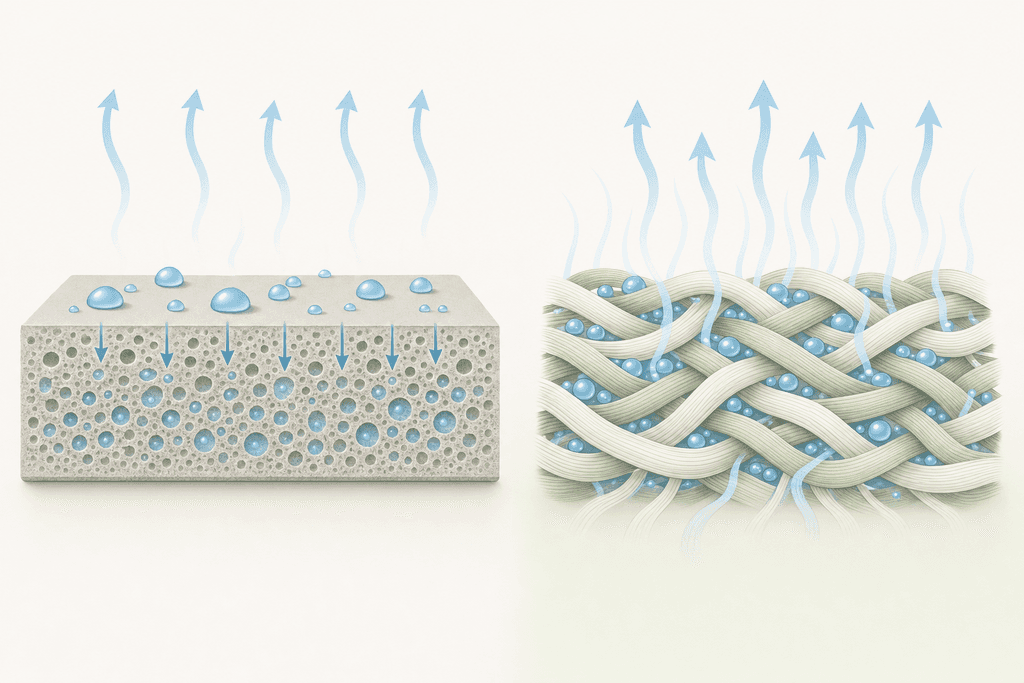
The magic happens at a microscopic level. Each piece of diatomite contains millions of tiny pores that you can't see with your naked eye. These pores act like miniature sponges, pulling water away from your feet the moment you step onto the mat. Unlike fabric mats that absorb water and stay damp, or rubber mats that just let water pool on top, diatomite actually moves moisture through its structure.
Here's what makes the material special:
- Microscopic pores create instant surface-to-air contact
- Water spreads through internal channels instead of sitting on top
- Large surface area inside the material speeds up evaporation
- Natural mineral composition requires no chemical treatments
From Wet to Dry in Minutes
The absorption-evaporation cycle is what sets stone mats apart from traditional options. When water hits the surface, it gets pulled into those millions of tiny pores almost instantly. Then, because the material is naturally breathable, that moisture evaporates back into the air within minutes. Most diatomite mats dry completely in under 10 minutes, which means they're ready for the next person who needs to use them.
Natureva stone bath mats combine diatomaceous earth with recycled paper to create a dense, durable composite. There are no synthetic coatings or waterproof layers that would trap moisture inside. The material stays hygienic through its rapid drying mechanism rather than relying on chemical additives. This natural approach means the mat works the same way on day one as it does months later.
What Diatomite Mats Are Actually Made Of
Not all stone mats use the same recipe. The composition affects how well they perform and how long they last. Quality matters when you're standing on something every single day.
| Component | Purpose | Benefit |
|---|---|---|
| Diatomaceous Earth | Primary absorbent material | Instant water absorption |
| Recycled Paper | Binding agent | Structural stability |
| Natural Compression | Density creation | Durability without chemicals |
The absence of synthetic coatings is actually a feature, not a limitation. Some manufacturers add waterproof layers or chemical treatments, but these can interfere with the natural evaporation process. When you compare stone bath mats to cloth alternatives, the difference in drying time becomes obvious. Fabric holds onto moisture for hours, creating the exact damp environment where mould and mildew love to grow.
The Advantages of Diatomite Bath Mats
Diatomite bath mats absorb water the moment your feet touch the surface, then dry completely in under 10 minutes. This happens because diatomite is made from fossilised microscopic algae with millions of tiny pores that pull moisture in and release it back into the air through rapid evaporation. Unlike fabric mats that stay damp for hours, a stone surface returns to its dry state almost immediately after use.
The fast-drying mechanism creates a surface that's hygienic by design. When moisture evaporates within minutes, there's no damp environment left for mould or mildew to develop. Fabric mats trap water in their fibres, creating the exact conditions where odour and bacteria thrive. Stone eliminates that problem entirely through its natural drying process, not through chemical treatments or coatings.
- Instant absorption: Water disappears on contact instead of pooling on the surface
- Rapid drying: Surface returns to dry state in under 10 minutes
- Low maintenance: Weekly wipe with warm water and cleaning vinegar replaces constant washing
- Non-slip base: Stable platform that doesn't bunch, slide, or curl on wet floors
- Chemical-free: No synthetic coatings or moisture-trapping finishes
The maintenance difference is significant. Fabric mats need washing every few days to stay fresh, which means hauling wet, heavy material to the laundry and waiting for it to dry. Stone mats need a quick wipe once a week. That's it. No machine washing, no hanging to dry, no dealing with mildew smell when you forget to wash it soon enough.
From a safety perspective, stone provides a stable surface that stays exactly where you place it. The non-slip base pad keeps the mat firmly in position, even when wet. Fabric mats bunch up, slide around, and create trip hazards, especially for older adults. A solid stone slab doesn't move.
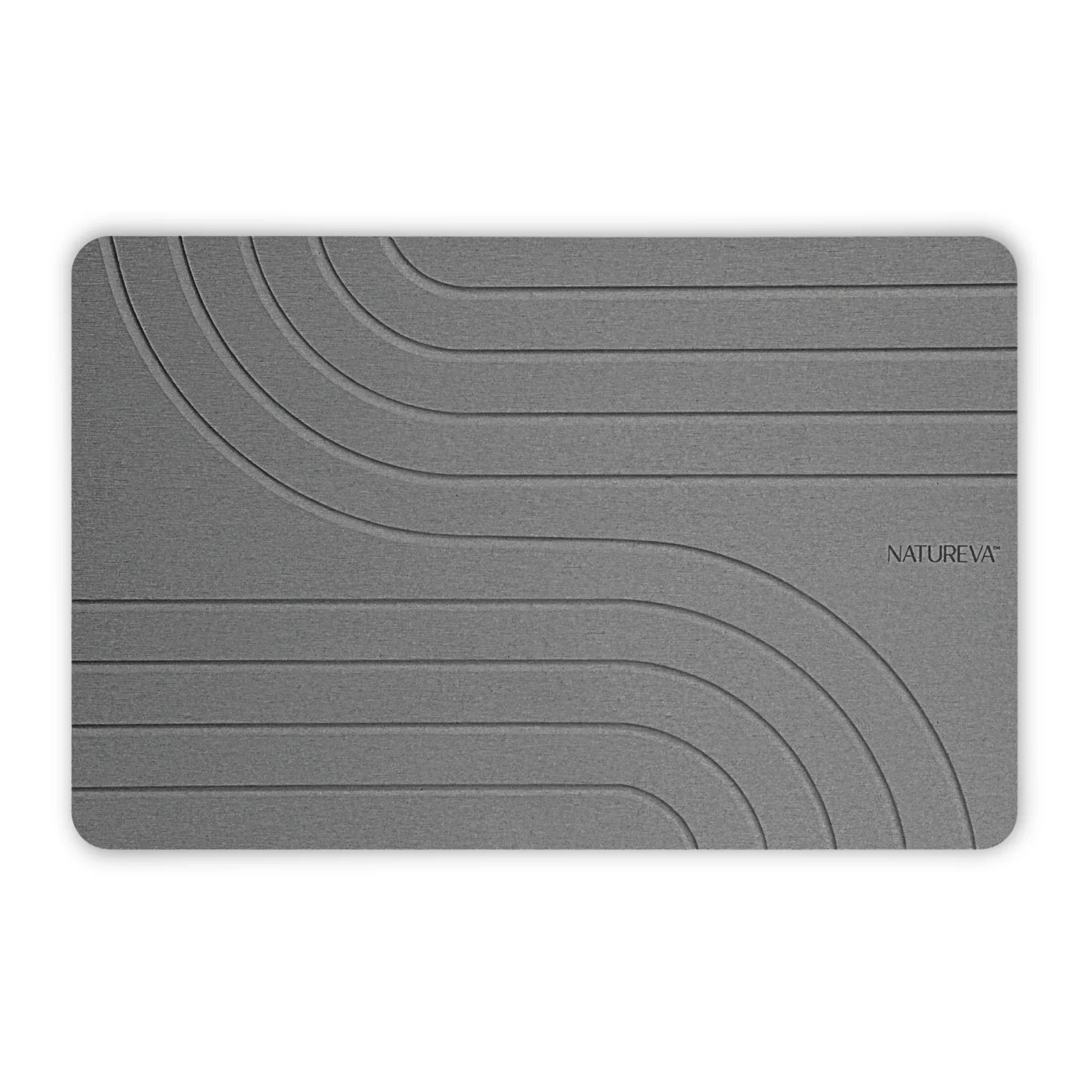
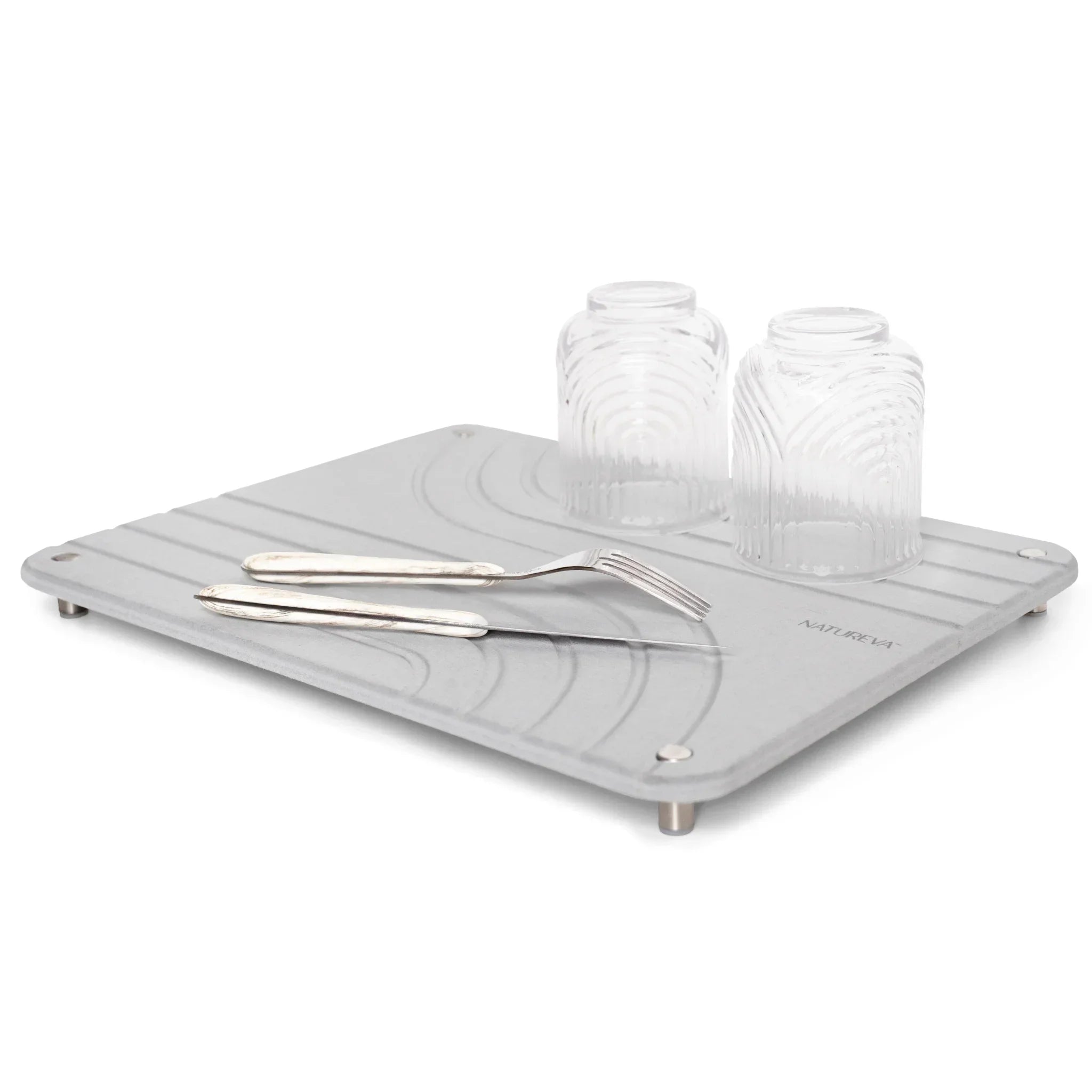
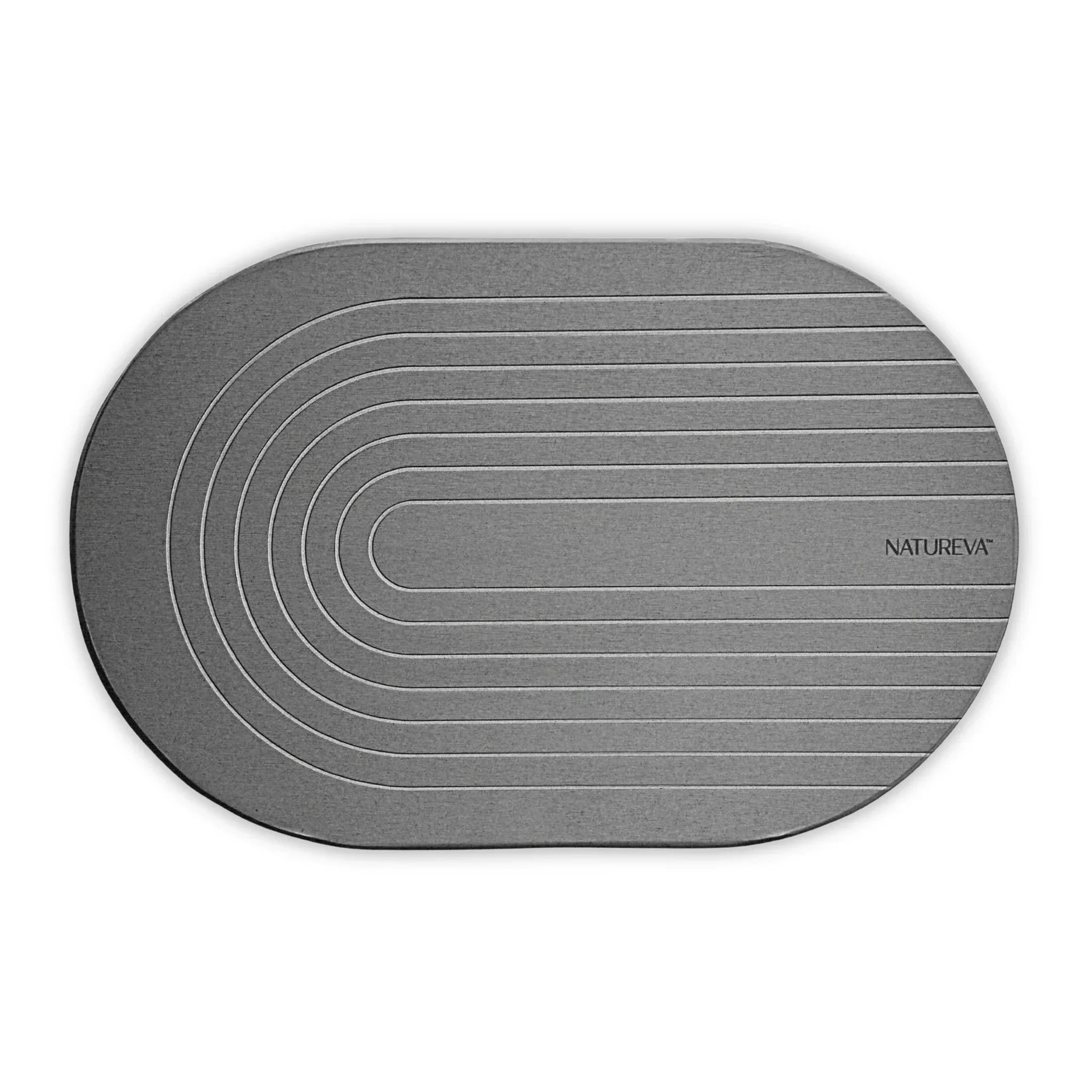
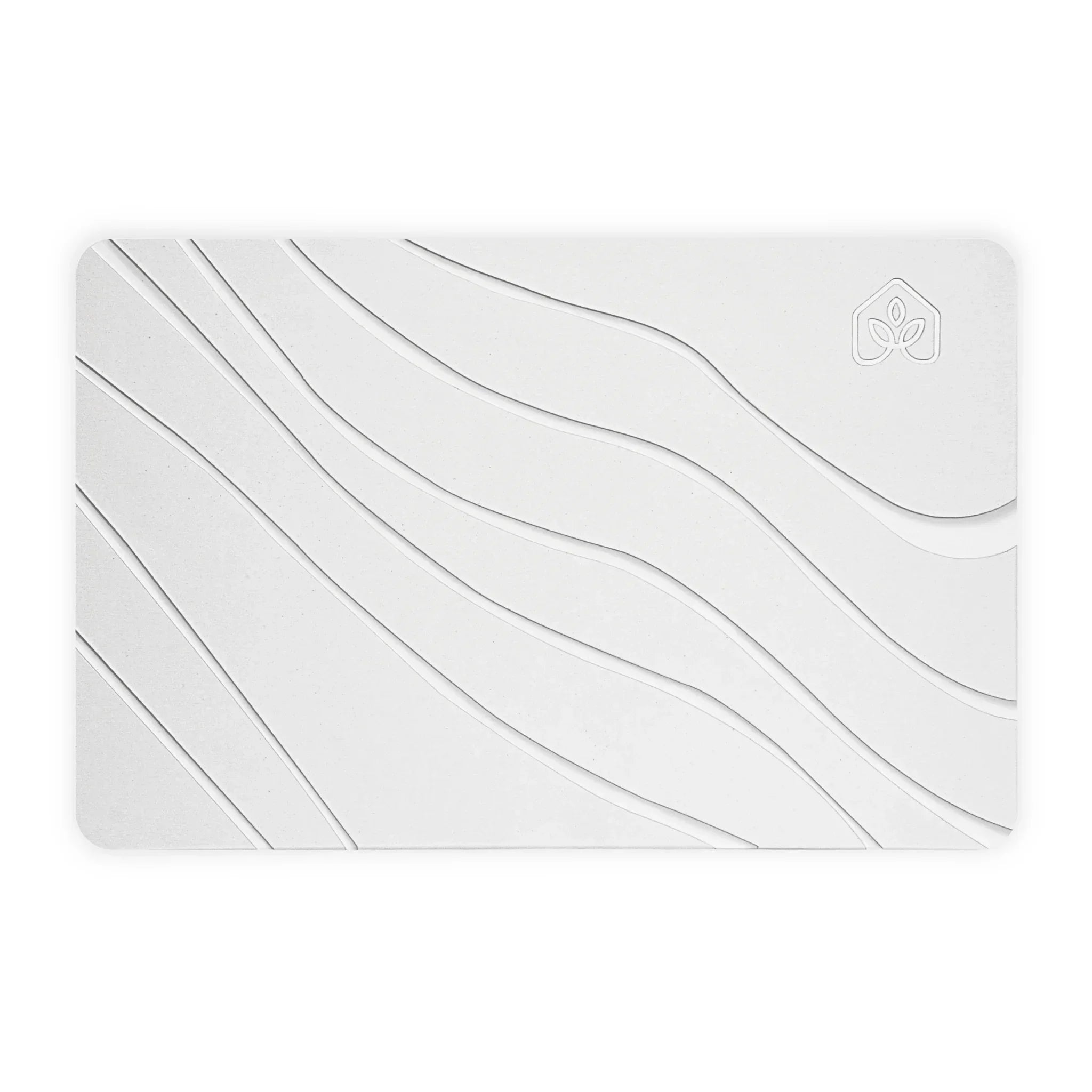
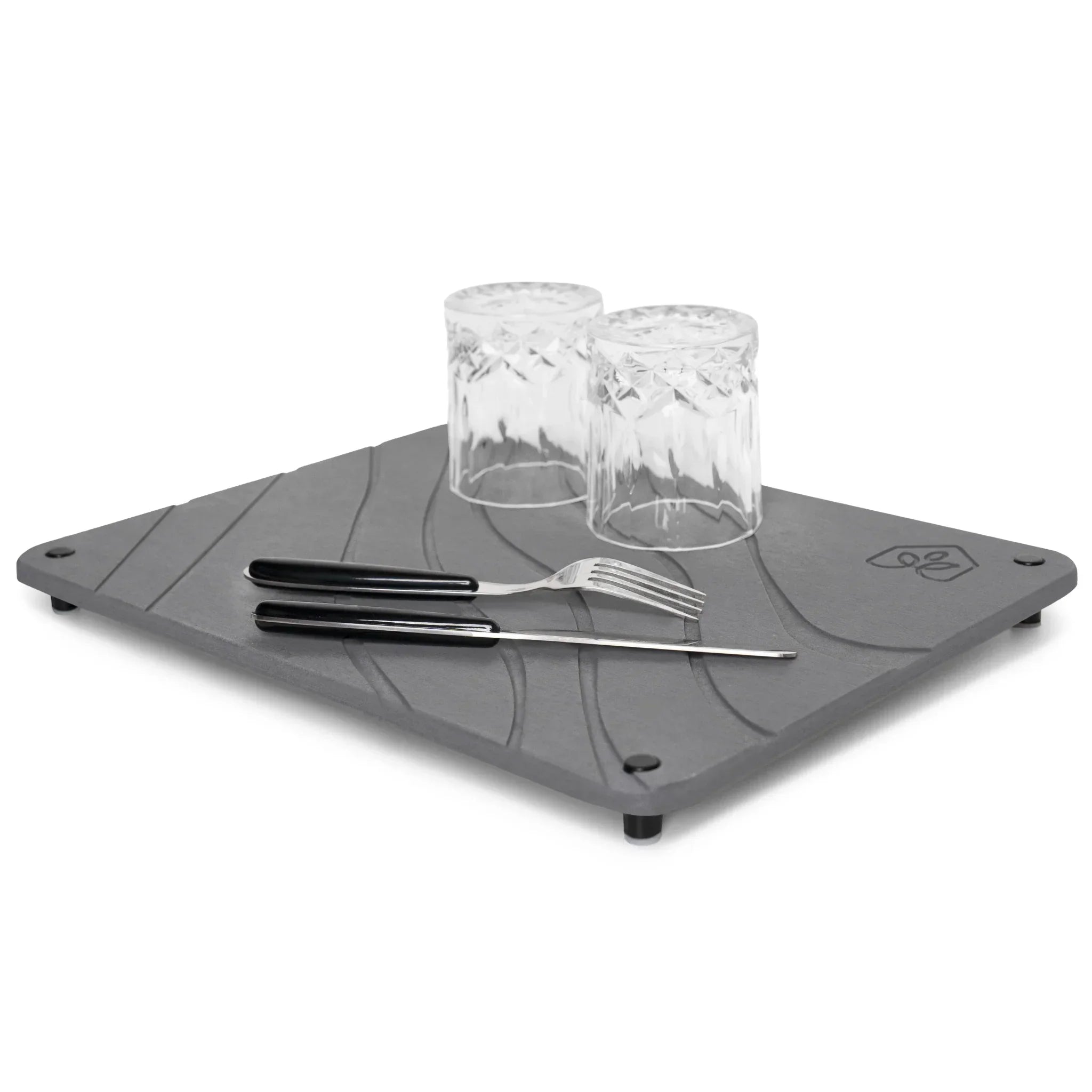
Design-wise, stone fits into modern interiors without compromise. The Natureva stone bath mat collection includes four carved surface patterns (Tide, Flow, Arch, and Rain) in three neutral colours (Graphite, Slate, and Chalk). The minimalist geometry looks intentional, not like something you're trying to hide. Each mat weighs approximately 1.8 kg and measures 60 × 39 × 0.9 cm, creating a substantial presence that reads as a design choice rather than a functional afterthought.
The material itself lasts for years with proper care. When the surface eventually loses absorbency from daily use, the included P320 grit sanding disc reopens the pores and restores full performance. You're not replacing the mat every six months like you would with fabric alternatives that fade, wear thin, and lose their shape.
The Drawbacks You Should Consider
Stone bath mats weigh approximately 1.8 kg, which is significantly heavier than fabric alternatives. This isn't a mat you can toss in the washing machine or easily move around. The weight comes from the dense diatomite composition that gives the mat its absorbent properties, but it also means you need to commit to a placement location. Moving it daily isn't practical.
The material can crack or chip if dropped on hard tile or concrete floors. Diatomite is durable for everyday use, but it's still a stone composite. If you knock it off a counter while cleaning or drop it during a bathroom renovation, there's a real chance it will break. This isn't a product that bounces back from rough handling.
- Weight: Approximately 1.8 kg makes it less portable than fabric options
- Fragility: Can crack or chip if dropped on hard surfaces
- Maintenance requirement: Needs periodic sanding to restore absorbency
- Surface staining: Coloured soaps or products can leave marks that require cleaning
- Initial cost: Higher upfront price compared to fabric mats
- Airflow dependency: Needs proper ventilation underneath to function optimally
The surface requires attention to maintain peak performance. Over time, the microscopic pores can become clogged with soap residue, body oils, or mineral deposits from hard water. When this happens, you need to use the included sanding tool to reopen the surface. It's not difficult, but it is an extra step that fabric mats don't require. Some users also find that coloured soaps or hair products can stain the lighter Chalk and Slate colours, requiring spot treatment with hydrogen peroxide.
Households with very young children need to consider the rigid surface and edges. While the non-slip base keeps the mat stable, toddlers who might stand on the edges or use the mat as a step could tip it. The solid construction doesn't flex or give way like fabric, which creates different safety considerations for families with kids under five.
The upfront cost is higher than fabric alternatives. At $59, a stone bath mat costs more than most fabric options available at department stores. The value proposition depends on longevity and reduced maintenance over time, but the initial investment is real. You're paying for material quality, NATA-accredited asbestos-free certification, and Australian design, which comes at a premium compared to mass-market fabric mats.
Proper airflow underneath the mat is essential for optimal drying. If you place the mat directly on a surface without the included base pad, or in a bathroom with poor ventilation, the moisture can't evaporate as efficiently. The mat works best in bathrooms with adequate air circulation, which isn't always possible in windowless or poorly ventilated spaces.
Stone vs Fabric Bath Mats
The performance gap between stone and fabric becomes obvious when you compare drying time. A fabric bath mat can stay damp for 4 to 8 hours after a shower, depending on thickness and bathroom humidity. A stone mat dries in under 10 minutes. That difference matters because every hour a mat stays wet is another hour where mould spores can settle and odour-causing bacteria can multiply.
Fabric mats trap moisture in their fibres by design. The absorbent material that soaks up water from your feet also holds onto that moisture, creating a damp environment that persists long after you've left the bathroom. Stone absorbs water into its porous structure, then releases it back into the air through evaporation. The mechanism is fundamentally different.
| Feature | Stone Mat | Fabric Mat |
|---|---|---|
| Drying Time | Under 10 minutes | 4-8 hours |
| Maintenance | Weekly wipe | Wash every 3-5 days |
| Lifespan | Years with care | 6-12 months |
| Weight | 1.8 kg | 0.3-0.5 kg |
| Surface Stability | Non-slip, stays flat | Bunches and slides |
Hygiene maintenance tells a similar story. Fabric mats need frequent washing to stay fresh, which means running the washing machine, using detergent, and waiting for the mat to dry completely before putting it back. Stone mats need a quick wipe with warm water and cleaning vinegar once a week. The time and effort difference adds up over months of use.
Lifespan is where stone really separates from fabric. A quality fabric bath mat might last 6 to 12 months before it starts to fade, thin out, or develop permanent odour. Stone mats last for years. When the surface loses absorbency, you sand it and restore full performance. You're not throwing it away and buying a replacement every year.
Safety characteristics differ in ways that matter for older adults and anyone concerned about falls. Fabric mats bunch up when wet, slide on smooth tile, and create uneven surfaces that can catch feet. Rubber-backed fabric mats address some of these issues but still shift position over time. Stone provides a rigid, stable platform that doesn't move. The non-slip base pad keeps it anchored exactly where you place it.
Design longevity is another factor. Fabric mats fade from washing, lose their texture, and start looking worn within months. Stone maintains its appearance indefinitely. The carved patterns on Natureva's Tide, Flow, Arch, and Rain designs don't fade or wear away. The Graphite, Slate, and Chalk colours stay consistent. What you see when you buy it is what you'll see years later.
Who Should Choose Diatomite
Stone bath mats solve specific problems for specific households. If you're furnishing a modern bathroom and want surfaces that look intentional rather than purely functional, stone fits that brief. The minimalist carved patterns and neutral colour palette work with contemporary interior design in a way that most fabric mats don't. Design-conscious homeowners who've invested in quality fixtures and finishes often find that fabric mats undermine the aesthetic they've worked to create.
Health-focused households prioritizing mould-free surfaces benefit from the rapid drying mechanism. If you've dealt with mildew smell in fabric mats or noticed dark spots forming along the edges, you understand the problem stone eliminates. The fast evaporation creates a surface that stays clean through its drying performance, not through chemical treatments.
- Time-poor individuals: Weekly wipe replaces constant washing and drying cycles
- Older adults: Stable, non-slip surface reduces fall risk compared to fabric that bunches
- Renovators: Permanent solution that matches modern bathroom finishes
- Minimalist households: Clean lines and neutral colours fit restrained design schemes
- Health-conscious buyers: Hygienic by design through moisture elimination
Older adults and anyone concerned about bathroom safety should consider the stability factor. Falls on wet bathroom floors are a real risk, and fabric mats that slide or bunch contribute to that hazard. A stone mat provides a solid, non-moving surface that stays exactly where you place it. The weight that makes it less portable also makes it more stable underfoot.
Renovators furnishing new bathrooms often choose stone because it matches the permanence of tile, fixtures, and other installed elements. When you've invested in quality materials throughout the space, a fabric mat feels like a temporary placeholder. Stone reads as a considered design choice that belongs in the finished room.
Stone isn't ideal for every situation. Households with toddlers or very young children who might stand on mat edges should consider the rigid surface and potential tipping. Bathrooms with extremely poor ventilation may not provide the airflow needed for optimal drying performance. And anyone who frequently rearranges their bathroom layout will find the weight and fragility limiting compared to fabric alternatives.
Budget-conscious buyers need to weigh the upfront cost against long-term value. At $59, the initial investment is higher than fabric options, but the multi-year lifespan and minimal maintenance create value over time. If you're replacing fabric mats every 6 to 12 months, the cost equation shifts. For more details on what to look for when choosing a stone mat, check out five diatomite bath mat features to check before buying.
The Natureva stone bath mat collection offers four design options (Tide, Flow, Arch, and Rain) in three colours (Graphite, Slate, and Chalk), all with the same NATA-accredited asbestos-free certification and included sanding tool for maintenance. You can explore the full range at the diatomite bath mat collection or learn more about the material itself in the complete guide to diatomite.
Making the Right Choice for Your Home
The decision to switch from fabric to diatomite comes down to matching material performance with your actual living conditions. Not every bathroom needs a stone mat, and not every household will benefit equally from the fast-drying surface. Your ventilation setup, household composition, and daily routines determine whether the diatomite bath mat pros and cons tilt in your favour. A poorly ventilated bathroom with multiple daily users creates the exact moisture problem that stone solves best, while a single-person household with excellent airflow might not notice as dramatic a difference.
The next generation of home essentials: naturally made, cleaner by design, sustainable by nature.
SHOP ALLAssess Your Bathroom Conditions First
Start by evaluating the physical environment where the mat will live. Humidity levels and airflow directly impact how well any bath mat performs, but they matter even more for diatomite because the material relies on evaporation to stay dry.
- Check for exhaust fans or windows that allow moisture to escape after showers
- Notice if your current fabric mat stays damp for hours or develops musty smells between washes
- Consider whether multiple people shower back-to-back, creating continuous moisture exposure
- Look at your floor type, as stone mats work on tile, vinyl, and sealed surfaces but need proper placement
Poor ventilation amplifies the hygiene benefits of stone because fabric simply can't dry fast enough in humid conditions. According to Baptist Health's analysis of stone bath mats, the rapid drying mechanism becomes especially valuable in bathrooms where traditional mats struggle to stay fresh.
Match the Mat to Household Safety Needs
Household composition changes the safety calculation significantly. Families with young children, older adults, or anyone with mobility concerns should prioritize stability over every other factor.
- Stone mats stay flat and won't bunch, curl, or slide when wet, reducing trip hazards
- The solid surface provides stable footing compared to fabric that shifts underfoot
- Heavier weight (approximately 1.8 kg) keeps the mat anchored in place during use
- Non-slip base pads prevent movement on tile and other smooth bathroom floors
Evaluate Maintenance Preferences Honestly
Your tolerance for cleaning routines matters more than most people admit upfront. Stone mats require different maintenance than fabric, not necessarily less work overall, just different types of effort spread across different intervals.
| Maintenance Task | Fabric Mat | Stone Mat |
|---|---|---|
| Weekly cleaning | Machine wash + dry | Wipe with damp cloth |
| Deep cleaning | Replace when worn | Sand surface to restore |
| Drying time | Hours in dryer | Minutes in open air |
| Storage needs | Laundry space required | Clean in place |
If you prefer throwing things in the washing machine and forgetting about them, fabric might feel more convenient despite the hygiene trade-offs. If you'd rather wipe a surface weekly and avoid laundry altogether, stone fits that preference better.
Consider Design Priorities and Interior Aesthetic
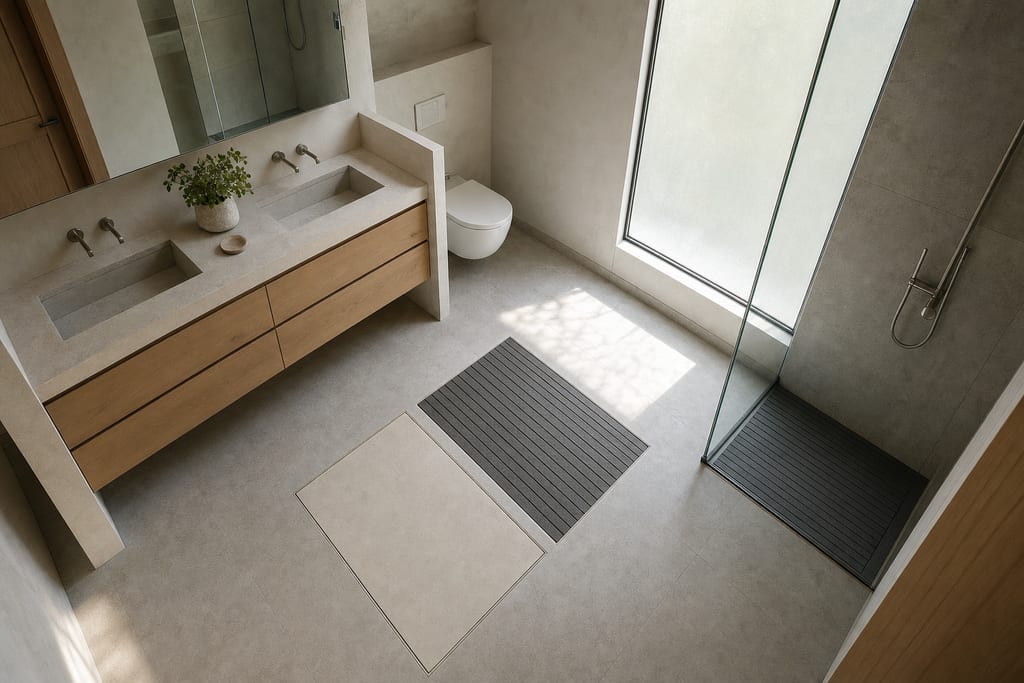
The visual impact of a bath mat rarely gets discussed in practical terms, but it shapes how your bathroom feels every single day. Stone mats read as permanent fixtures rather than temporary accessories, which works beautifully in modern, minimalist, or Japandi-inspired spaces.
- Carved surface patterns (Tide, Flow, Arch, Rain) add subtle texture without busy visual noise
- Three neutral colourways (Graphite, Slate, Chalk) coordinate with existing tile and fixture finishes
- The solid slab format creates architectural presence that fabric can't match
- Stone integrates into renovation projects as a design element, not just a functional afterthought
Natureva's bath mats use engraved contour patterns that echo natural landscapes, so the surface detail feels intentional rather than decorative. If your bathroom leans traditional or colourful, the minimalist stone aesthetic might feel too stark.
Understand Cost Versus Longevity Trade-offs
The upfront price difference between stone and fabric mats creates sticker shock for many buyers, but the calculation shifts when you factor in replacement cycles and hidden costs like energy for washing and drying.
- Stone mats cost more initially but last years with proper care and occasional sanding
- Fabric mats cost less upfront but require replacement every 6-12 months as they wear, stain, or develop odours
- Washing fabric mats weekly adds water, detergent, and energy costs that accumulate over time
- Stone maintenance involves only vinegar, water, and the included sanding tool for restoration
The long-term value proposition favours stone for households that plan to stay in their current home and want to reduce ongoing replacement purchases. Short-term renters or anyone planning to move soon might not recoup the initial investment.
Verify Safety Certifications Before Purchase
Material safety concerns around diatomite products have led to recalls and consumer warnings in recent years, making third-party certification non-negotiable. NATA-accredited asbestos-free testing provides independent verification that the diatomaceous earth used in production meets Australian safety standards.
- NATA (National Association of Testing Authorities) is Australia's peak accreditation body for laboratory testing
- Regular testing maintains certification standards as new production batches are manufactured
- Unverified diatomite products from unknown sources carry contamination risks that certified products eliminate
Natureva stone products carry NATA-accredited certification and are regularly tested to maintain that standard, addressing the safety concerns that have affected other diatomite products in the market. This certification matters most for households with children, pets, or anyone with respiratory sensitivities.
Decision-Making Checklist
Use this framework to evaluate whether diatomite aligns with your specific bathroom needs and household priorities. Answer honestly, as each factor weighs differently depending on your situation.
Diatomite makes sense if you:
- Have poor bathroom ventilation or high humidity that keeps fabric mats damp for hours
- Share the bathroom with multiple people who shower throughout the day
- Prioritize safety and stability, especially with young children or older adults in the home
- Prefer wiping surfaces over doing laundry and want to eliminate weekly mat washing
- Value modern, minimalist design and want the mat to integrate as a permanent fixture
- Plan to stay in your current home long enough to benefit from the mat's multi-year lifespan
- Want independently certified, asbestos-free materials with transparent safety testing
Stick with fabric if you:
- Have excellent bathroom ventilation and low humidity where fabric dries quickly
- Live alone or with one other person with minimal daily shower frequency
- Prefer the soft, cushioned feel underfoot that stone can't replicate
- Already have an established laundry routine and don't mind washing mats weekly
- Rent short-term or plan to move soon and want lower upfront costs
- Prefer colourful, patterned, or traditional bathroom aesthetics over minimalist design
The right choice depends entirely on which factors matter most in your daily life. Stone solves specific problems related to moisture, hygiene, and safety, but it introduces different maintenance requirements and aesthetic considerations that won't suit every household equally.
The Bottom Line on Stone Bath Mats
Diatomite bath mats solve the moisture problem that fabric, rubber, and silicone alternatives can't fix. The material absorbs water instantly and dries within minutes, which means no damp surface sitting on your bathroom floor for hours. That rapid drying is what keeps your bathroom cleaner without extra effort. You're not dealing with mildew smells, constant washing, or that gross feeling when you step on yesterday's dampness.
The trade-offs are real though. Stone mats weigh around 1.8 kg compared to a few hundred grams for fabric. They need occasional sanding to maintain peak absorbency. They can crack if dropped on tile. But for households that value hygiene and design over convenience, those downsides matter less than the performance you get in return.
Our stone bath mat collection includes four carved designs in three colours, all NATA-accredited asbestos-free and tested regularly. Each one dries your feet on contact and stays clean through moisture evaporation alone, not chemicals. If you want to understand exactly what makes a quality diatomite mat before buying, check out the five features to verify first.
Better materials solve problems better than better habits. You can't out-routine a fabric mat that stays damp for six hours. Stone wins for anyone who wants their bathroom to look clean and actually be clean without thinking about it every day.
Common Questions About Diatomite Bath Mats
Switching from fabric to stone raises a lot of practical questions. Most people want to know if these mats actually hold up over time, whether they're safe for everyone in the household, and what happens when things go wrong. Here's what you need to know before making the switch.
How long do diatomite bath mats last?
A quality diatomite bath mat typically lasts several years with proper care. The material doesn't break down like fabric or rubber, so it won't develop that musty smell or start falling apart after a few months. The main thing that affects lifespan is how well you maintain the surface pores, which can be restored anytime with light sanding.
Are stone bath mats safe for elderly users?
Stone mats are actually safer than fabric options for older adults because they stay flat and stable on the floor. Fabric mats bunch up, slide around, and curl at the edges when wet, which creates serious trip hazards. A solid stone surface with a non-slip base stays exactly where you put it and provides a firm, predictable surface to step onto.
What happens if the mat stops absorbing water?
When absorption slows down, it usually means the surface pores are clogged with soap residue or body oils. You can fix this in about two minutes by lightly sanding the surface with the included sanding tool, which reopens the microscopic pores and brings back full absorbency. It's a simple reset that works every time.
Can diatomite mats crack or break?
Diatomite mats are durable for everyday use, but they can crack if dropped on a hard surface or if something heavy falls on them. They're made from compressed natural material, not indestructible ceramic. Treat them like you would a cutting board and they'll hold up fine.
How do you clean a diatomite bath mat?
Weekly cleaning takes about 30 seconds. Just wipe the surface with a warm damp cloth and a bit of cleaning vinegar. Skip coloured soaps since they can stain the porous surface. For stubborn marks, rinse under water or use hydrogen peroxide, then let it air dry standing upright.
Are all diatomite products tested for asbestos?
Not all brands test their products, which is a real concern in this category. Natureva stone products are tested and certified asbestos-free by a NATA-accredited Australian laboratory, with regular testing to maintain that standard. It's worth checking whether any diatomite product you're considering has been independently verified for safety.
The next generation of home essentials: naturally made, cleaner by design, sustainable by nature.
SHOP ALL