
Stone Matt Guide What It Is and How to Choose the Right One
Fabric bath mats stay damp for hours after a shower, creating the perfect breeding ground for mould and mildew no matter how often you wash them. Stone mats solve this problem by absorbing water instantly and drying within minutes, eliminating the conditions where bacteria and odour develop. Made from diatomite, a naturally porous fossilised algae, these mats represent a fundamental shift in how modern homes manage moisture around sinks, showers, and high-traffic wet zones.
How long does a diatomite stone mat take to dry?
Diatomite stone mats dry completely within 60 seconds of use due to their highly porous structure, which contains millions of microscopic holes that absorb moisture at a rate 150% faster than cotton bath mats.
What is the difference between stone mats and traditional bath mats?
Stone mats are made from diatomaceous earth and dry within one minute while inhibiting bacterial growth, whereas traditional fabric bath mats retain moisture for hours and require machine washing every 3-4 days to prevent mold and odor buildup.
What size stone mat do I need for a standard bathroom?
A standard bathroom requires a stone mat measuring 24 x 16 inches (60 x 40 cm) to accommodate stepping out of the shower or tub, while smaller 18 x 12 inch mats work for powder rooms and larger 28 x 18 inch options suit master bathrooms with double vanities.
Table of Contents
The Science Behind Diatomite Stone
Most people don't know that the stone in their bath mat started as tiny algae floating in ancient oceans millions of years ago. Diatomite forms from fossilised diatoms, which are microscopic single-celled algae that lived in lakes and seas long before humans walked the earth. When these diatoms died, their silica-based skeletons sank to the bottom and compressed over time into thick deposits of what we now call diatomaceous earth. This natural process created something pretty special, a material filled with millions of microscopic pores that work like tiny sponges.
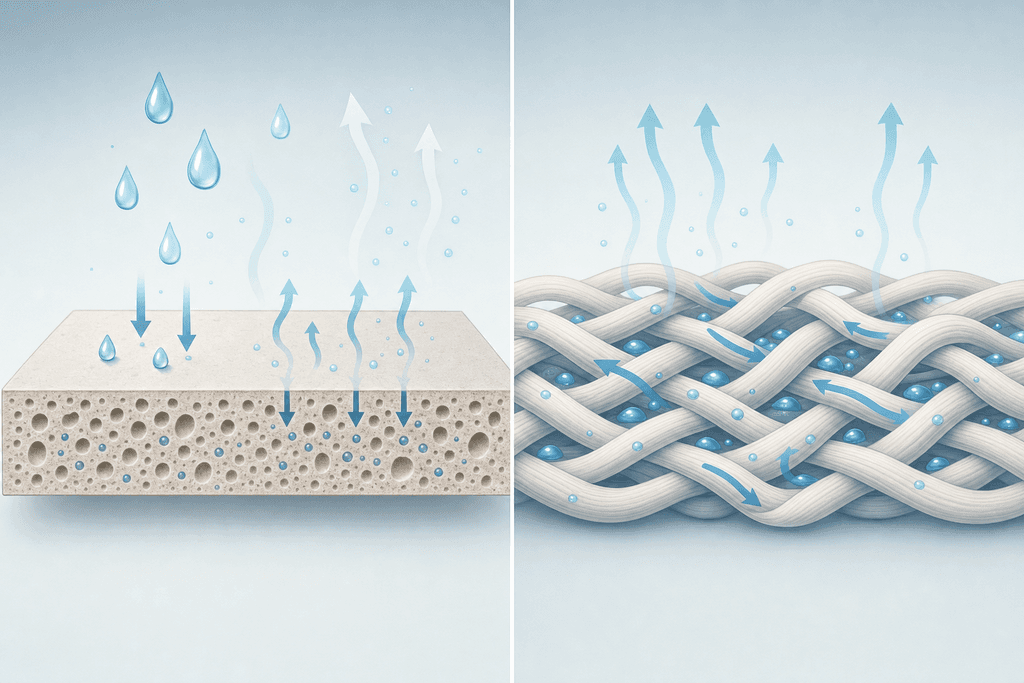
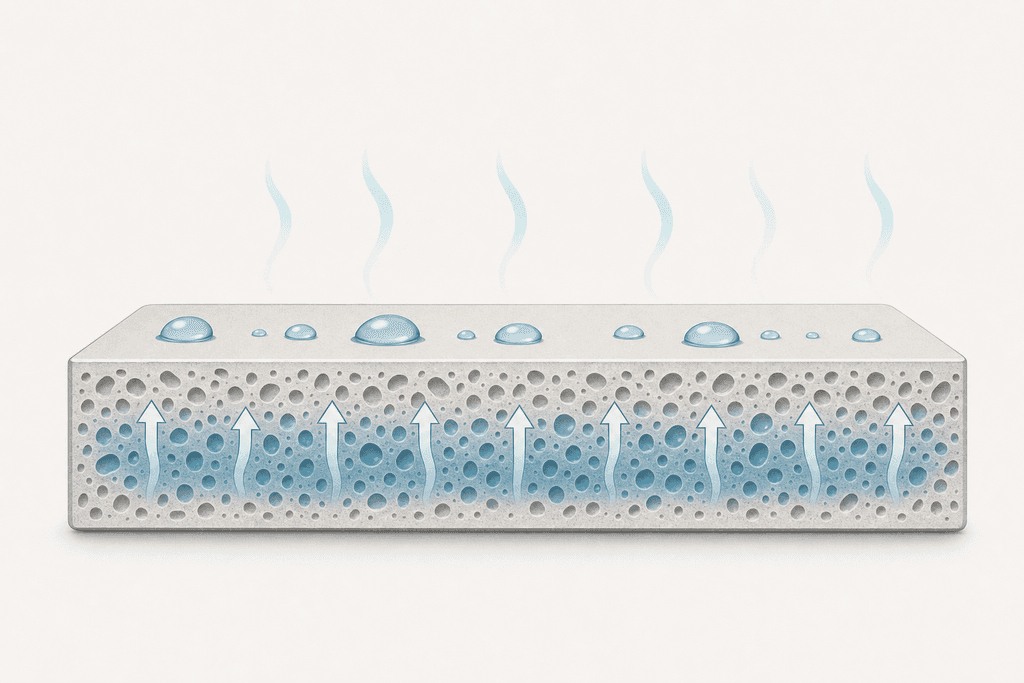
The magic happens in those microscopic pores. When water touches a diatomite surface, it gets pulled into these tiny spaces instantly through capillary action. Then the real trick starts, the water doesn't just sit there like it would in a fabric mat. Instead, it spreads through the porous network and evaporates back into the air within minutes. This absorption-evaporation cycle is what keeps stone mats dry and ready to use again and again throughout the day.
How Stone Mats Are Made
Stone mats aren't carved from a single piece of rock pulled from the ground. They're actually compressed from a mix of diatomaceous earth and recycled paper, shaped into dense slabs that feel solid underfoot while staying lightweight and breathable. The key difference from other moisture-absorbing products is what's not in them.
- No synthetic coatings that trap moisture underneath
- No chemical treatments or additives
- No fabric layers that stay damp for hours
- No rubber backing that can grow mildew
The material stays hygienic through rapid drying, not chemical additives. When a surface dries within minutes, it doesn't give mould, mildew, or odour-causing bacteria the damp environment they need to grow. That's the real advantage over traditional fabric mats that can stay wet for hours after a shower.
Comparing Moisture Management Methods
Different materials handle water in completely different ways. Understanding these differences helps explain why some bath mats stay fresh while others start smelling musty after a few weeks.
| Material Type | Drying Time | Maintenance Need | Hygiene Method |
|---|---|---|---|
| Stone (Diatomite) | Under 10 minutes | Weekly wipe | Rapid evaporation |
| Fabric/Cotton | 4-8 hours | Weekly wash | Machine washing |
| Microfibre | 2-4 hours | Frequent wash | Machine washing |
| Rubber/Silicone | 1-2 hours | Weekly scrub | Manual cleaning |
Natureva stone mats use this natural diatomite structure without any modifications that would slow down the drying process. The surface stays open and breathable, which is why they can handle multiple showers in a row without feeling soggy. According to independent testing by Homes To Love Australia, stone bath mats can dry completely in under 8 minutes, which is significantly faster than any fabric alternative.
Stone Mat Types and Where to Use Them
Most people think a mat is just a mat, but stone mats come in four distinct formats, each engineered for specific moisture patterns in your home. The difference between a bath mat and a faucet mat isn't just size. It's about how water hits the surface, how much of it there is, and how quickly it needs to disappear.
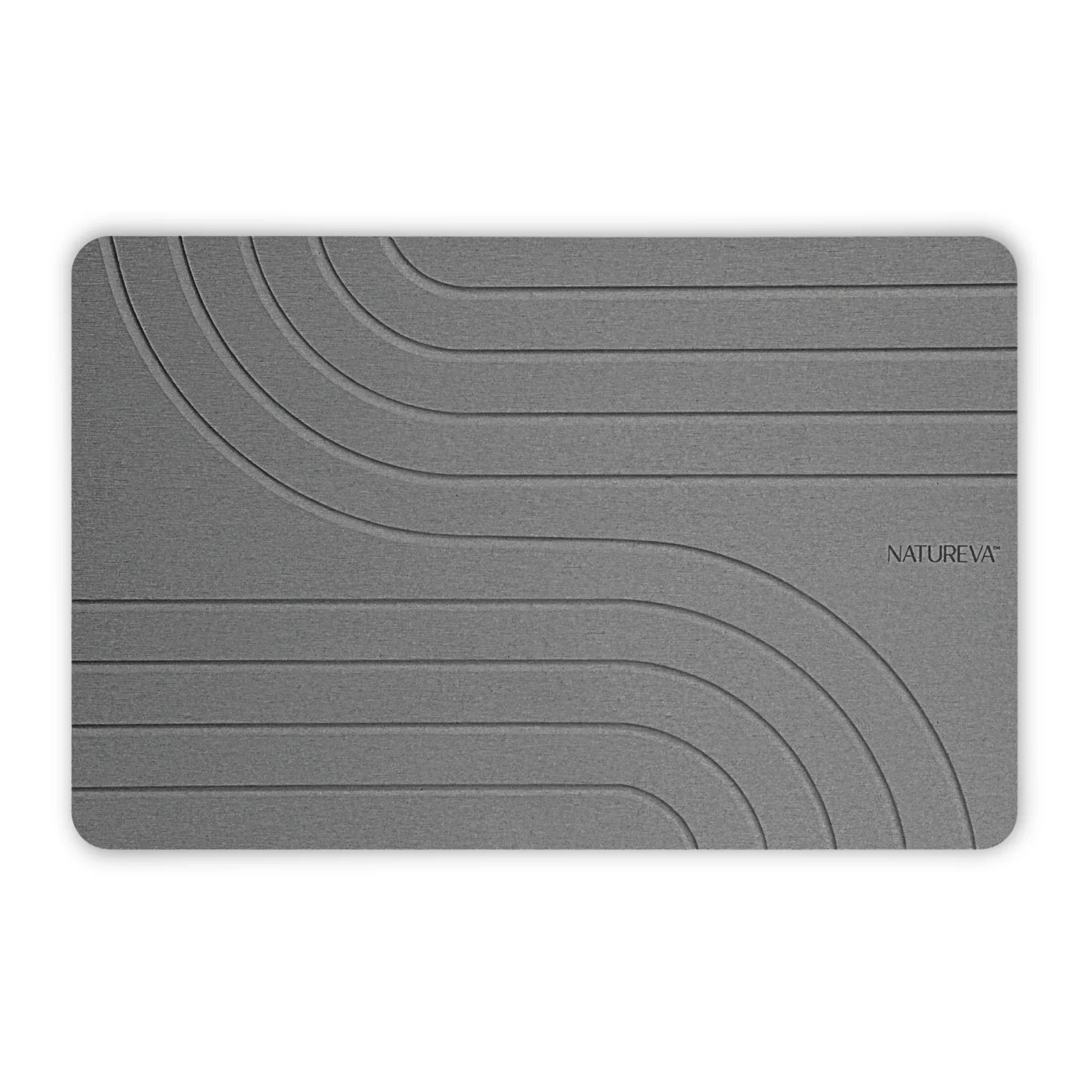
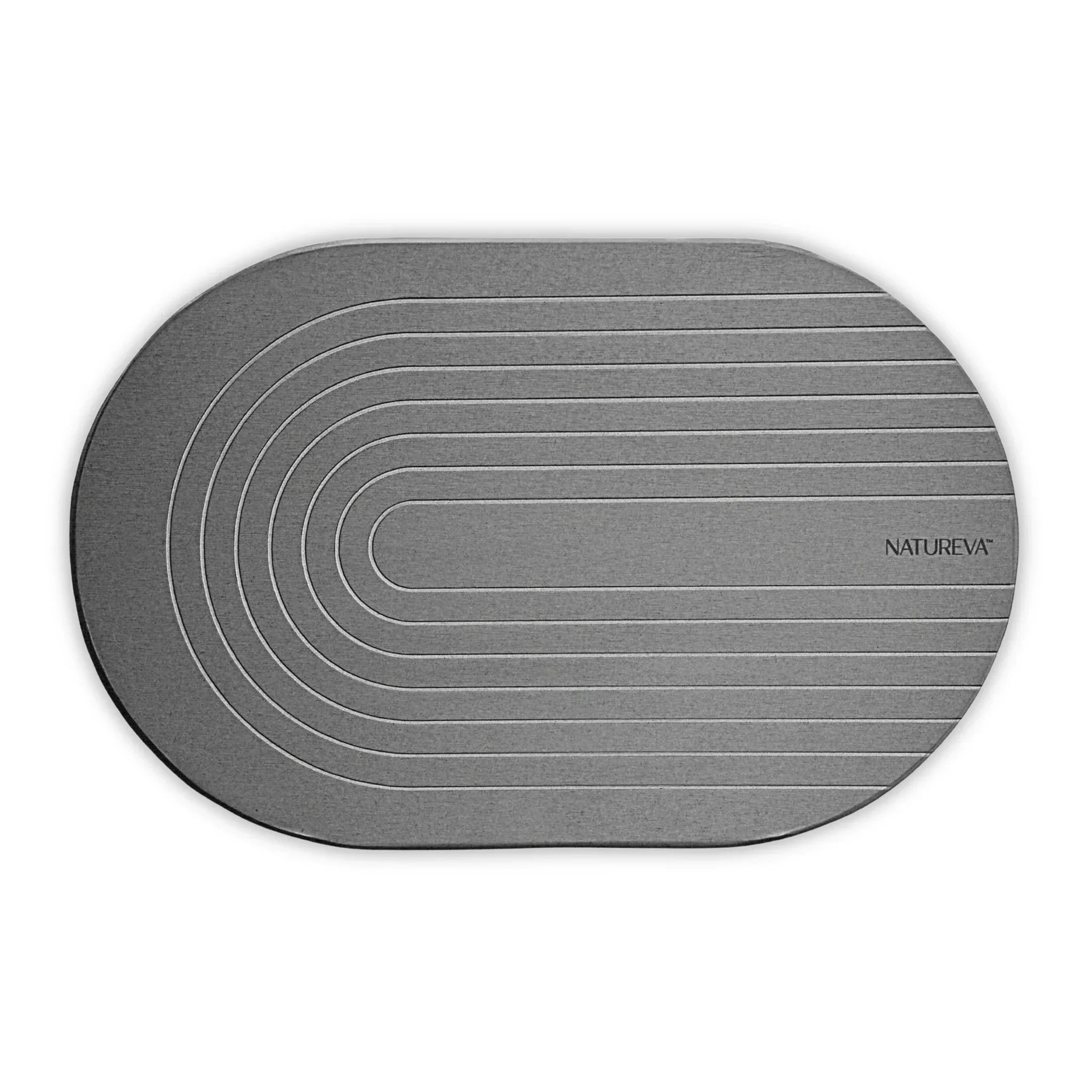
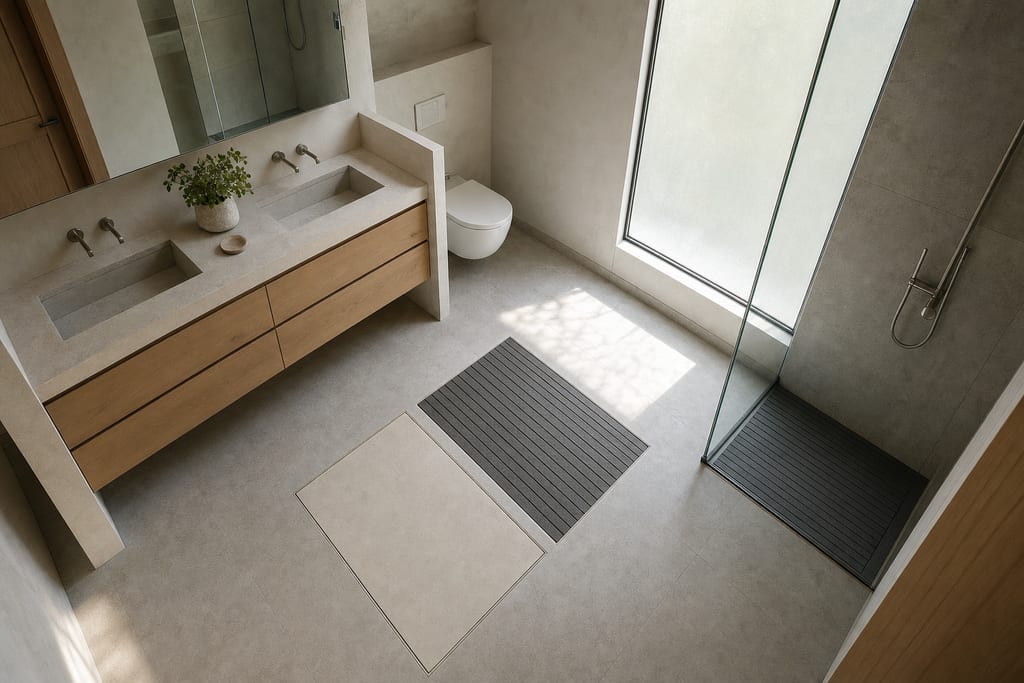
Bath mats handle the heaviest moisture load in your home. When you step out of the shower, your feet release water in concentrated spots that need instant absorption. These mats measure 60 × 39 cm (or oval for the Arch style) and weigh around 1.8 kg, giving them the mass and surface area to stay stable and absorb repeated foot contact without sliding. The non-slip base pad keeps them locked in place on wet tile floors, which matters more than most people realize until they've had a fabric mat bunch up under their feet.
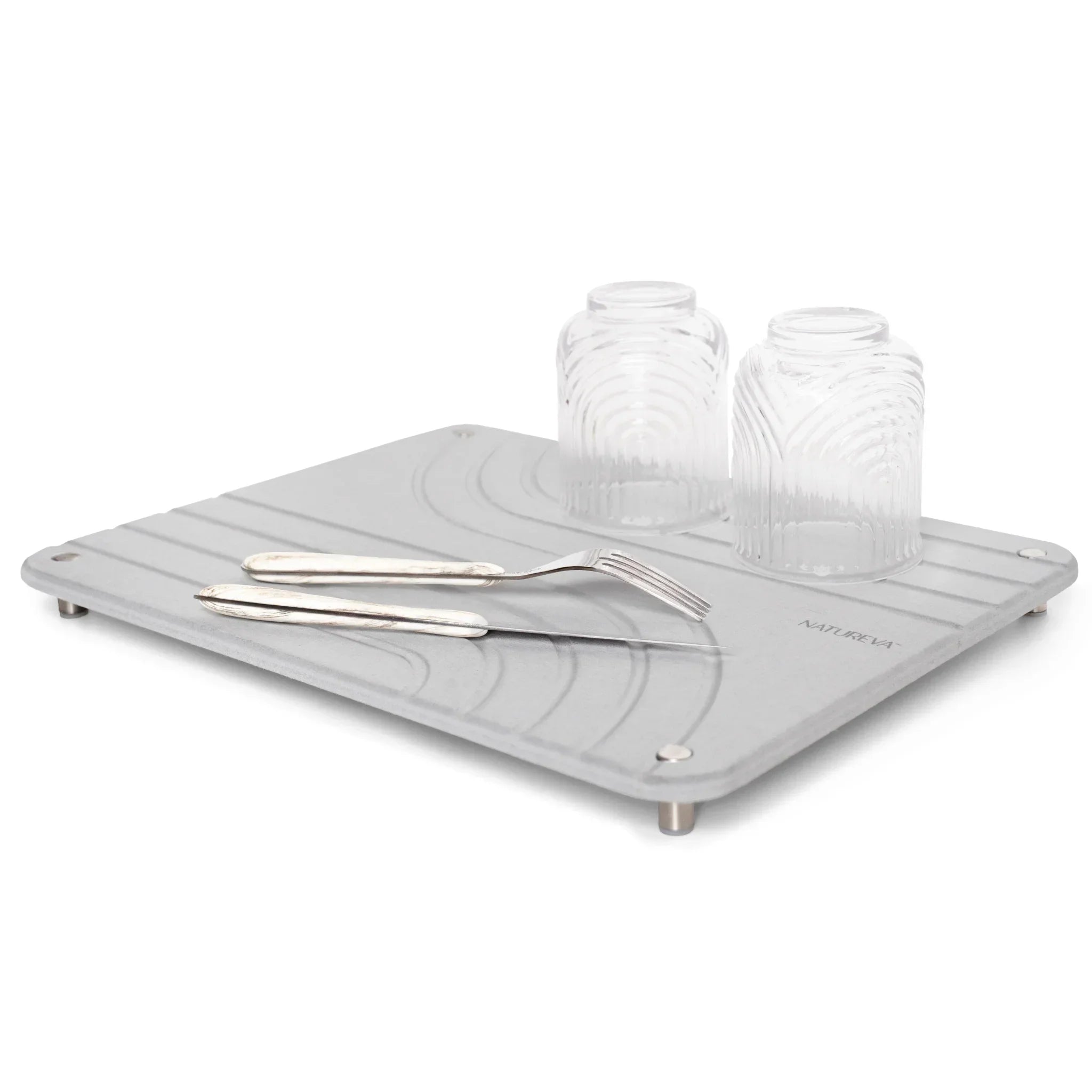
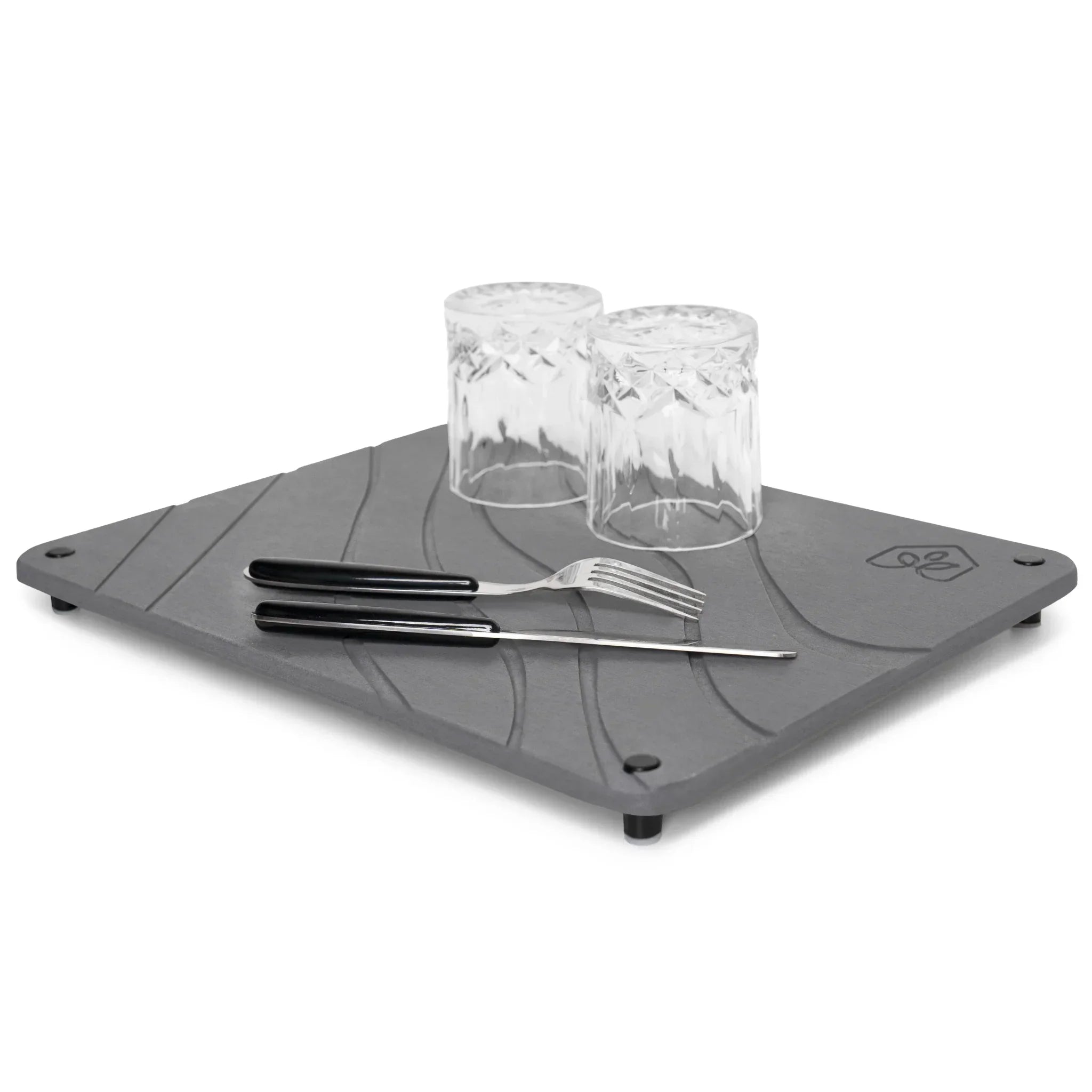
- Dish mats sit on your kitchen counter at 39.5 × 29.5 cm, elevated 2.5 cm on stainless steel legs
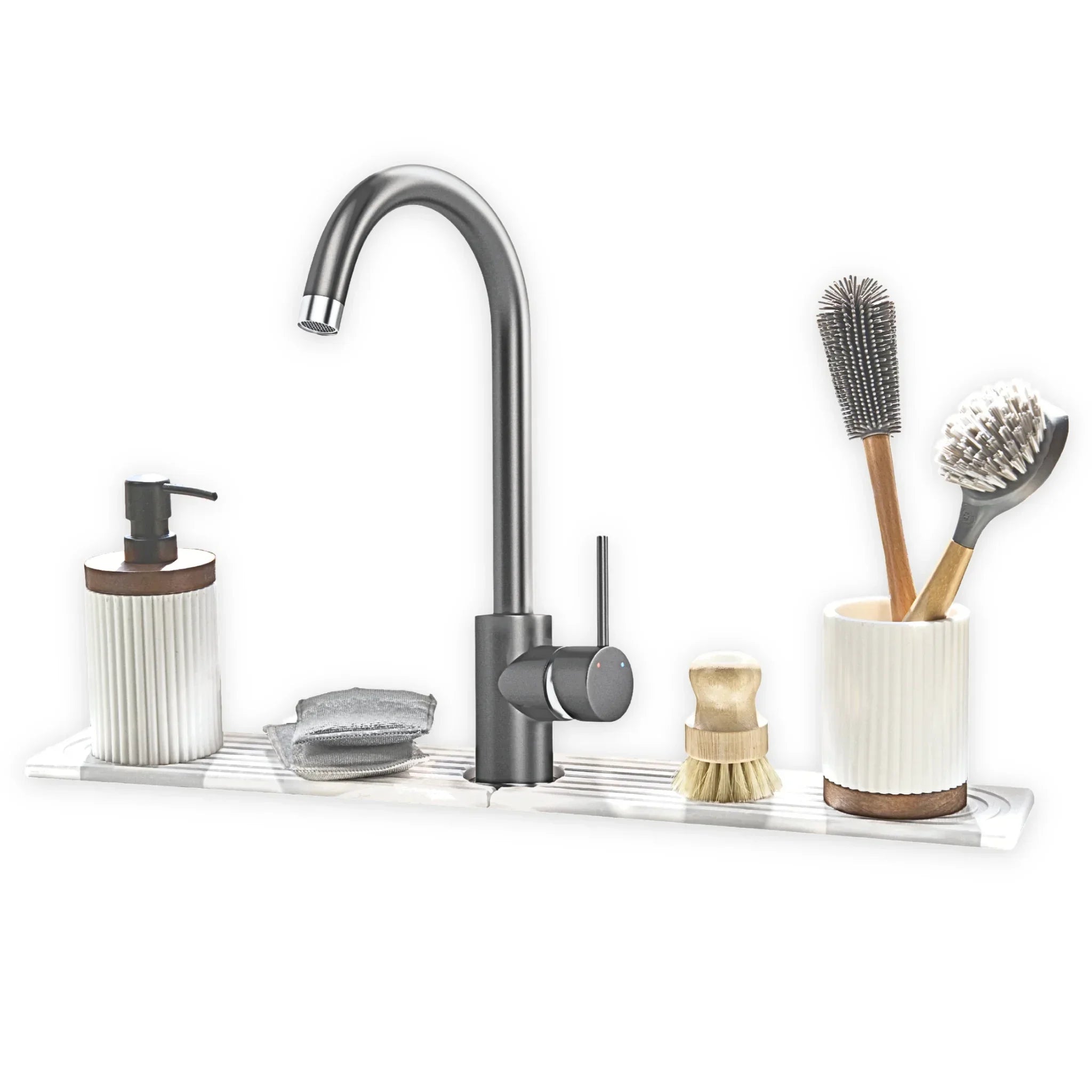
- Faucet mats are narrow strips (60 × 10 cm) designed to fit behind your sink where splashes collect
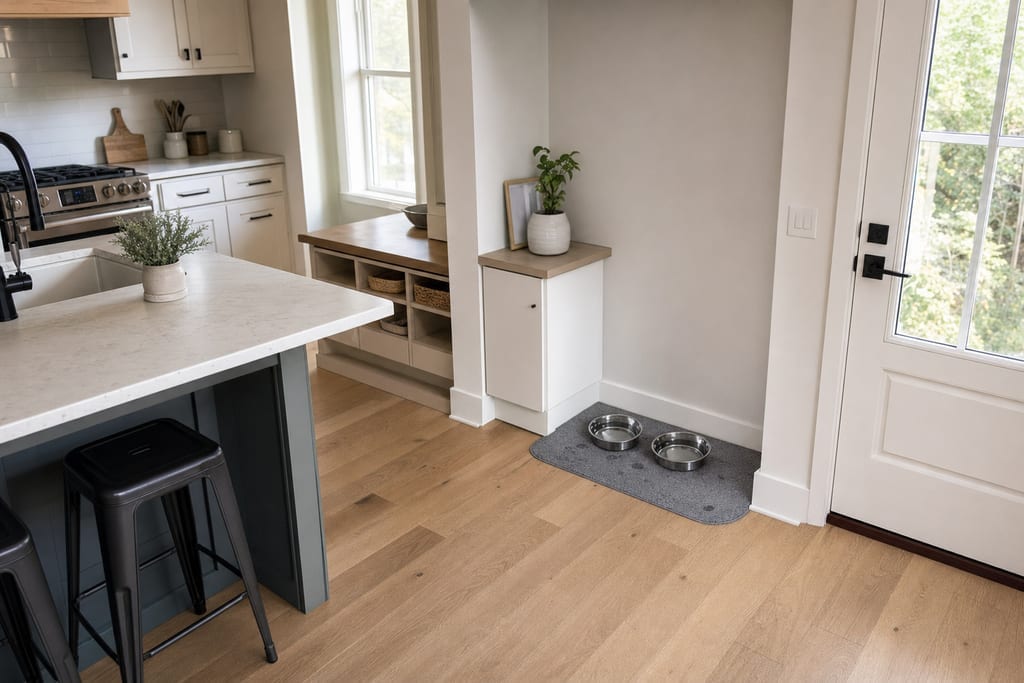
- Pet mats feature dual circular feeding zones at 47 × 29 cm to catch water bowl spills
The stone dish mat replaces those fabric drying mats that stay damp for hours after you place clean dishes on them. The elevated design creates airflow underneath, so moisture evaporates from both the top surface and the base. You're not just drying dishes faster. You're eliminating the damp environment where odour starts to develop on traditional mats.
Faucet mats solve a problem most people don't realize they can fix. That constant puddle behind your bathroom or kitchen sink isn't something you just wipe up forever. The stone faucet mat sits in that exact spot and absorbs splashes as they happen, drying within minutes instead of leaving your counter wet all day.
| Mat Type | Dimensions | Best For | Key Feature |
|---|---|---|---|
| Bath Mat | 60 × 39 cm | Post-shower drying | Non-slip base pad |
| Dish Mat | 39.5 × 29.5 cm | Counter drying | Elevated legs |
| Faucet Mat | 60 × 10 cm | Sink splashes | Compact fit |
| Pet Mat | 47 × 29 cm | Feeding stations | Dual bowl zones |
Each format uses the same diatomite material, a naturally porous fossilised algae that absorbs water on contact and releases it back into the air through rapid evaporation. The difference is in how the shape and structure match the moisture challenge in each room.
Design Patterns and How They Work
The carved patterns you see on stone mats aren't just decoration. They're engineered channels that guide water across the surface and speed up evaporation. When water hits a flat stone surface, it pools. When it hits carved contours, it spreads into thin films that dry faster because more surface area is exposed to air.
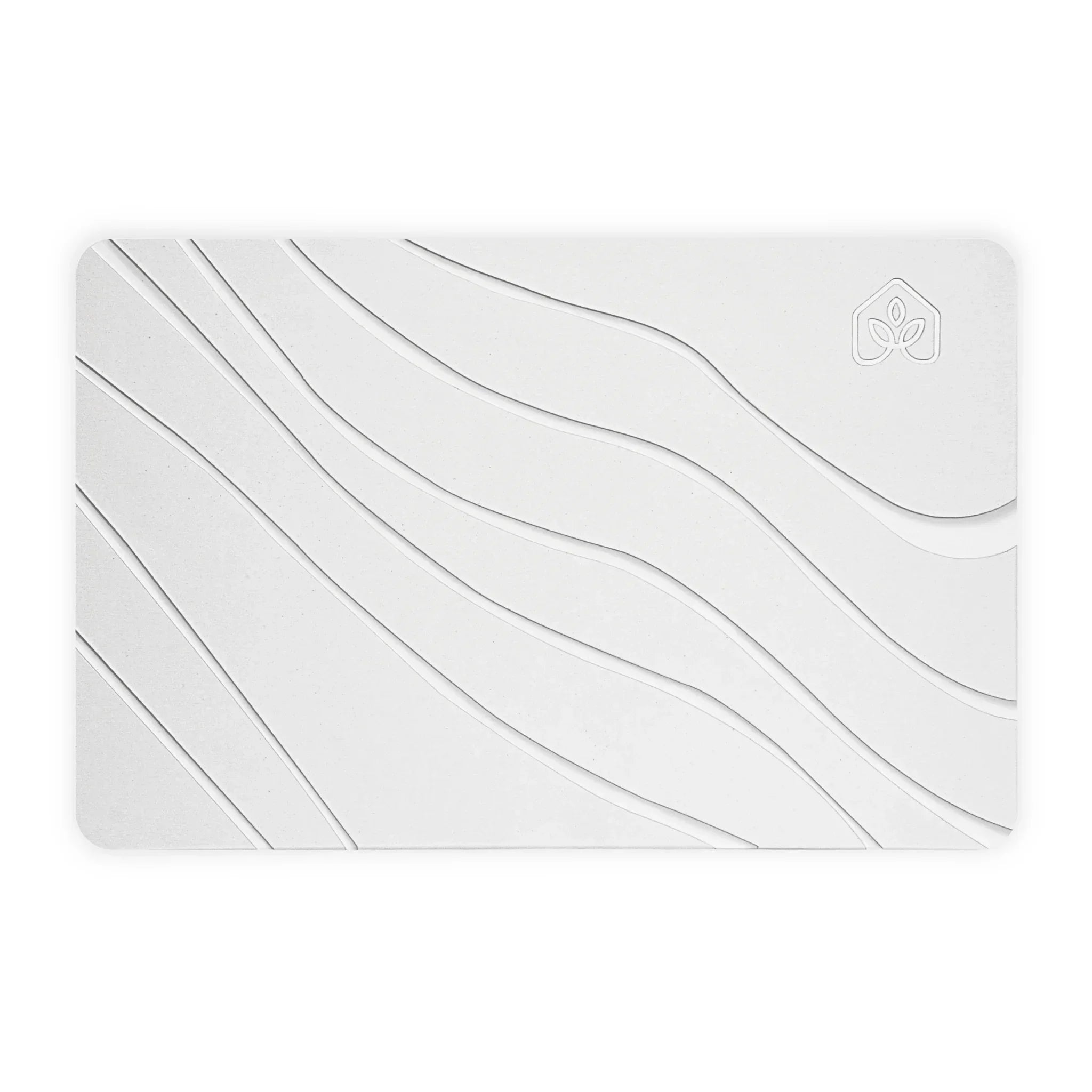
Tide features soft horizontal contour bands that resemble shoreline movement. The pattern runs across the width of the mat, creating shallow valleys that distribute water evenly when your feet make contact. Flow uses layered diagonal wave contours that suggest landscape motion, with channels angled to guide moisture away from the centre of the mat.
- Arch creates rounded architectural contour lines that echo the oval silhouette of the mat itself
- Rain arranges sparse vertical line segments like falling droplets, with minimal engraving for a cleaner look
- All four patterns add visual rhythm while improving water distribution across the diatomite surface
The Flow bath mat and Flow dish mat share the same diagonal wave language, so your bathroom and kitchen can coordinate without looking like a matching set. That's the point of a design system. It works together without announcing itself.
The depth of the engraving matters more than you'd think. Too shallow and water doesn't channel properly. Too deep and the mat loses structural integrity. Natureva's patterns sit at the exact depth where water flows into the grooves but the stone stays solid underfoot.
Choosing the Right Size and Colour
Measuring your space before buying a stone mat sounds obvious, but most people guess and end up with a mat that's too small for their shower exit or too large for their counter. Bath mats come in two formats: rectangular at 60 × 39 cm for standard shower doors, and oval (the Arch style) for curved spaces or freestanding tubs. The rectangular shape covers more floor area, while the oval fits tighter bathroom layouts without corners jutting into walkways.
Dish mats measure 39.5 × 29.5 cm, which fits most kitchen counters beside the sink without blocking workspace. The elevation height is 2.5 cm, so make sure you have clearance if you're placing it under a cabinet. Faucet mats are 60 × 10 cm, designed to sit in that narrow strip behind your sink where water always seems to collect.
- Graphite is a deep charcoal (PANTONE 425 C) that hides water marks and works with dark tile or modern fixtures
- Slate is a soft grey (PANTONE COOL GREY 3 C) that sits between light and dark, matching most neutral bathrooms
- Chalk is near white (PANTONE 000C), ideal for bright, minimalist spaces or all-white bathrooms
The three colours are available across all stone mat types, so you can match a Tide bath mat in Graphite with a faucet mat in the same colour. That's how you build a coordinated system without everything looking identical. Same material, same colour, different patterns and formats.
Colour choice affects more than aesthetics. Lighter colours show water marks more visibly as they dry, which some people prefer because it confirms the mat is working. Darker colours hide the drying process, which looks cleaner but gives you less visual feedback.
Stone Mats vs Traditional Alternatives
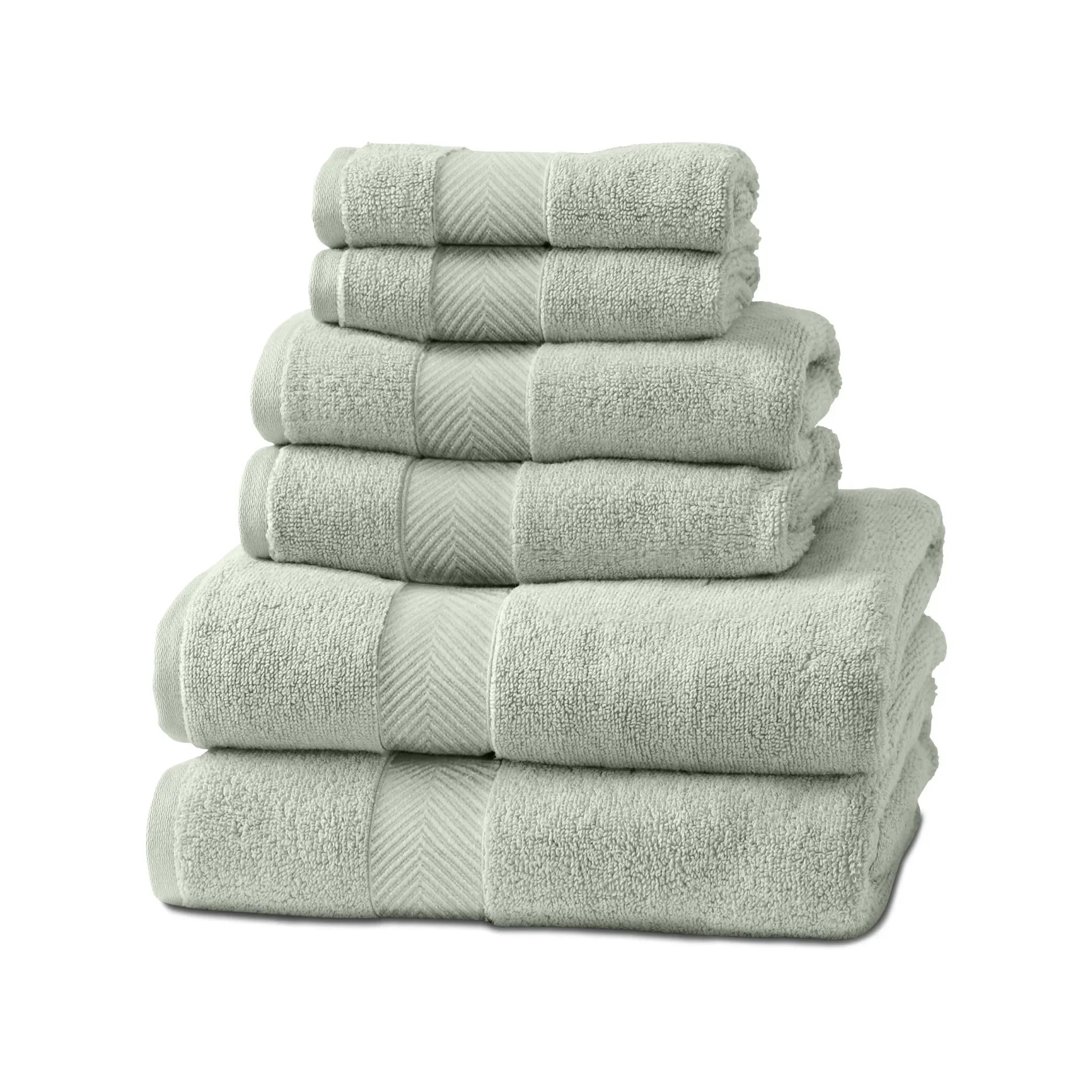
Fabric bath mats stay damp for hours after you step on them because cotton and microfibre trap water in their fibres instead of releasing it. You're standing on a wet surface, then that surface sits wet on your floor, creating the exact conditions where mould and mildew develop. Most people wash fabric mats weekly, but that's maintenance you're doing because the material can't dry itself.
Rubber mats repel water on top but trap moisture underneath, especially if they have suction cups. That layer between the mat and your floor never dries, which is why rubber mats start to smell after a few weeks. Silicone mats have the opposite problem. They repel water so effectively that it just pools on the surface instead of absorbing, leaving you standing in a puddle.
| Material | Drying Time | Maintenance | Lifespan |
|---|---|---|---|
| Fabric | 4-6 hours | Weekly washing | 6-12 months |
| Rubber | 2-3 hours | Scrubbing, odour | 12-18 months |
| Silicone | Doesn't absorb | Wipe puddles | 18-24 months |
| Stone | Under 10 min | Weekly wipe | Years |
Stone mats dry within minutes because diatomite is naturally porous at a microscopic level. Water absorbs into millions of tiny pores, then evaporates back into the air instead of sitting trapped in fabric or pooling on silicone. The fast-drying surface reduces the conditions where mould and mildew develop, which is why stone mats need only a weekly wipe with a damp cloth instead of constant washing.
The next generation of home essentials: naturally made, cleaner by design, sustainable by nature.
SHOP ALLThe maintenance difference is the real cost. Fabric mats need washing, drying, and replacing every year. Rubber mats need scrubbing to remove odour buildup. Stone mats need a quick wipe and occasional sanding if absorbency drops, which takes about 30 seconds with the included sanding tool.
- Fabric mats cost less upfront but require ongoing laundry and replacement cycles
- Stone mats cost more initially but eliminate washing and last for years with minimal care
- The stone bath mat collection includes NATA-accredited asbestos-free certification, which matters in a product category where material safety has been a concern
If you want to understand more about how diatomite works at a material level, the complete guide to diatomite breaks down the science behind the absorption and evaporation process. For specific features to check before buying any stone mat, the five features guide covers what actually matters beyond marketing claims.
What to Look for in Quality Stone Mats
Not all stone mats are created equal, and the difference between a certified product and an unverified one can be a matter of safety. The diatomite category has faced recalls and contamination concerns, particularly around asbestos found in products from unverified sources. When you're choosing a stone mat for your home, you need to know exactly what separates a quality product from a risky purchase. The right indicators tell you whether a mat has been properly tested, built to last, and designed to protect both your health and your floors.
Material Safety Comes First
The most important quality marker is NATA-accredited asbestos-free certification. NATA (National Association of Testing Authorities) is Australia's peak accreditation body for laboratory testing, and products carrying this certification have been independently verified for safety. Regular testing maintains that standard over time, which matters in a category where contamination has been documented. If a brand doesn't mention third-party lab testing, that's a red flag.
- Look for explicit mention of NATA-accredited testing or equivalent international standards
- Check whether the brand commits to regular retesting, not just a one-time certification
- Avoid products with vague safety claims that don't name the testing body
- Verify that the certification applies to the specific product you're buying, not just the brand in general
Construction Quality Determines Durability
A quality stone mat uses a composite construction of diatomaceous earth and recycled paper, compressed into a dense, chemical-free material. This combination creates a surface that's solid underfoot but still lightweight and breathable. Cheaper alternatives may use fillers or synthetic coatings that trap moisture instead of releasing it, which defeats the entire purpose of a fast-drying mat.
| Quality Indicator | What to Look For | Why It Matters |
|---|---|---|
| Material composition | Diatomite and recycled paper | Chemical-free, breathable structure |
| Surface finish | No synthetic coatings | Allows rapid evaporation |
| Weight | Approximately 1.8 kg for bath mat | Indicates proper density |
| Thickness | Around 0.9 cm | Structural integrity without bulk |
Included Accessories Show Attention to Detail
The best stone mats come with everything you need to maintain performance and protect your surfaces. Non-slip base pads prevent the mat from sliding on wet floors, which is a safety issue that fabric mats struggle with constantly. Elevation systems like silicone pads or stainless steel legs create airflow underneath, preventing moisture saturation and protecting countertops from pressure marks. A sanding tool should be included to restore absorbency over time as surface pores naturally compress with use.
- Non-slip base pads for bath mats and pet mats ensure stability on wet surfaces
- Silicone pads (typically 2 mm thick) for elevated products protect countertops and allow airflow
- Sanding tools (P320 grit, approximately 10 cm diameter) reopen surface pores and extend product life
- Stainless steel legs for sink caddies and dish mats create 2.5 cm elevation for maximum drying efficiency
Design Consistency Across Product Lines
A brand that offers a coordinated system of matching designs and colourways across bathroom, kitchen, and accessories shows a commitment to thoughtful product development. When you can match your bath mat to your sink caddy and dish mat in the same colour and pattern, it signals that the brand is building an ecosystem rather than just selling individual items. Natureva's stone products, for example, share design languages like Tide, Flow, Arch, and Rain across multiple product categories, creating visual continuity throughout the home.
According to UX research principles, product ecosystems that maintain consistent design language improve user satisfaction and reduce decision fatigue. The same logic applies to home essentials when every piece works together visually and functionally.
Finding Your Stone Mat Match
The right stone mat depends on where moisture shows up in your home. Bath mats like the Tide, Flow, Arch, and Rain handle wet feet after showers, while dish mats sit under drying dishes and pet mats catch water bowl spills. Each one absorbs moisture on contact and dries within minutes, which means no damp fabric sitting around collecting mildew.
Pattern and colour matter more than you might think. Graphite works in modern bathrooms with dark fixtures, Slate fits neutral spaces, and Chalk keeps things light and minimal. The carved patterns add texture without making the mat look busy, so it blends into your floor instead of standing out like a bright rubber mat.
Safety certifications separate tested products from unknown imports. NATA-accredited asbestos-free testing means the diatomite has been checked by an Australian lab, not just claimed safe in a product description. You can read more about what to look for in this guide on diatomite bath mat features before buying.
Stone mats work because they eliminate the conditions where hygiene problems develop. No damp surface means no mould growth, no mildew smell, and no constant washing to keep things fresh. The material does the work, so you spend less time cleaning and more time enjoying a bathroom or kitchen that stays dry without effort.
Common Questions About Stone Mats
Stone mats work differently than anything you've used before, so it's normal to have questions about how they perform in real life. Most people wonder about drying time, safety testing, and what happens when the surface gets saturated. Here's what you actually need to know before choosing a stone mat for your home.
How long does a stone mat take to dry completely?
A stone mat typically dries within 5 to 10 minutes after use. The diatomite material absorbs water instantly on contact, then releases it back into the air through rapid evaporation. Independent testing by Australia's Homes To Love confirmed that Natureva's Stone Bath Mat dried fully in under 8 minutes, which means it's ready for the next person almost immediately after you step off.
Are stone mats safe and tested for contaminants?
This depends entirely on the brand. Some diatomite products have faced recalls due to asbestos contamination from unverified sources. Natureva stone products are tested and certified asbestos-free by a NATA-accredited Australian laboratory, with regular testing to maintain that standard. NATA is Australia's peak accreditation body for laboratory testing, so this certification matters when you're choosing a product that sits on your bathroom floor every day.
How do you clean and maintain a stone mat?
Wipe your stone mat weekly with a warm damp cloth and cleaning vinegar. Avoid coloured soaps that can stain the porous surface. If absorbency decreases over time, use the included P320 grit sanding disc to lightly sand the surface and reopen the microscopic pores. This restores full absorption and extends the mat's lifespan significantly.
Can stone mats be used on heated floors?
Yes, stone mats work on heated floors without any issues. The diatomite material is heat-resistant and won't warp or crack from underfloor heating. The non-slip base pad protects both the mat and your floor surface, whether it's tile, vinyl, or heated stone.
What happens if a stone mat loses absorbency over time?
Surface pores can become clogged with soap residue, body oils, or mineral deposits from hard water. When this happens, the mat feels less absorbent. The fix is simple: rinse the mat under water, let it dry completely, then use the included sanding tool to lightly resurface the top layer. This reopens the pores and brings back the original fast-drying performance.
Do stone mats work in humid climates?
Stone mats perform well even in humid environments because they don't rely on air circulation alone to dry. The diatomite structure actively pulls moisture from the surface and releases it through evaporation, which happens faster than fabric mats that stay damp for hours. In high-humidity areas, stone mats stay hygienic by eliminating the damp conditions where mould and mildew develop, unlike fabric alternatives that trap moisture and require frequent washing.
The next generation of home essentials: naturally made, cleaner by design, sustainable by nature.
SHOP ALL