
How a Diatomite Sink Splash Guard Keeps Benches Dry
Diatomite is fossilised algae packed with millions of microscopic pores, and those tiny holes pull water in the moment it touches the surface. A diatomite sink splash guard uses that same structure to soak up splashback near the tap and release the moisture back into the air within minutes. That raises a simple question: if one slab of stone can dry itself this fast, why are so many benches still stuck damp and streaky?
How does a diatomite sink splash guard keep benches dry?
A diatomite sink splash guard absorbs water on contact because diatomite's porous, diatom-shell structure pulls moisture into millions of microscopic channels through capillary action. This allows the surface to dry within minutes instead of leaving standing water on the bench.
Why do fabric, silicone, and rubber splash guards fail to keep benches dry?
Fabric, silicone, and rubber splash guards only redirect or hold water on their surface rather than absorbing it, so puddles remain until manually wiped away. This surface moisture leads to mildew growth and slower evaporation compared to porous diatomite.
How do you maintain a diatomite splash guard so it keeps working like new?
A diatomite splash guard stays effective by air-drying fully between uses and being wiped with a dry cloth to clear surface residue, since trapped soap or oil can clog its pores and reduce absorption. Light sanding with fine-grit sandpaper restores full absorbency once the surface becomes less effective.
Table of Contents
- Why Benches Around Sinks Stay Wet in the First Place
- The Science Behind Diatomite's Drying Power
- Fabric Silicone and Rubber Splash Guards Fall Short
- How Design Details Keep Benches Protected
- Keeping a Splash Guard Working Like New
- Is a Stone Splash Guard Worth the Switch
- Wrap-Up Drier Benches Without the Extra Effort
- Common Questions About Diatomite Sink Splash Guards
Why Benches Around Sinks Stay Wet in the First Place
Every time someone rinses a dish, fills a glass, or washes their hands, tiny drops of water fly off the tap and land right on the bench. It happens so fast you barely notice it. But over a day, those little splashes add up into puddles sitting quietly next to the sink. Most kitchens don't have anything set up to catch that water, so it just sits there until someone wipes it up, or worse, until it dries on its own and leaves a hard water mark behind.
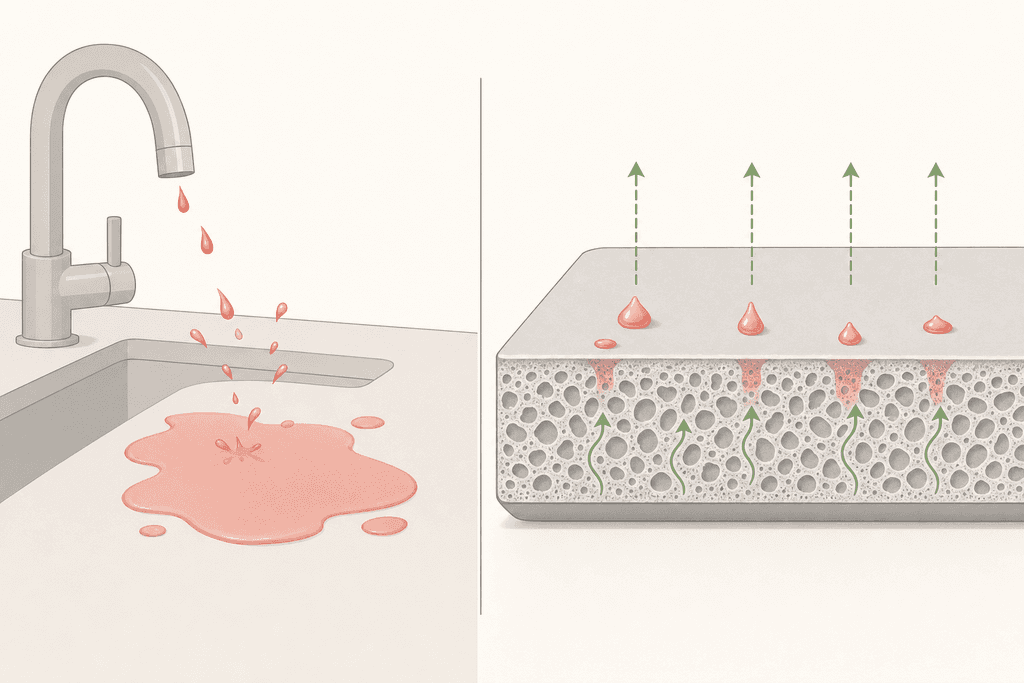
Standing water isn't just annoying to look at. It's actually the perfect setup for mould, mildew, and that musty smell nobody wants near their kitchen sink. Water that sits for hours gives bacteria and mould spores exactly what they need to settle in and grow. This is especially true in tight spots like corners near the tap base, where air doesn't really move and things stay damp longer.
Here's the thing though, not every material handles water the same way. Some soak it up fast and let it go. Others just hold onto it like a sponge that never gets squeezed out. That's a huge part of why a diatomite sink splash guard works so differently from what most people already have sitting on their counter.
How Drying Time Stacks Up
To really see the difference, it helps to look at how long common bench materials take to dry out after getting wet. Some materials you probably already have in your kitchen right now.
| Material | Average Drying Time |
|---|---|
| Fabric mat | 2 to 4 hours |
| Rubber mat | 1 to 2 hours |
| Silicone mat | 1 to 3 hours |
| Diatomite stone | Under 10 minutes |
That gap in drying time matters more than people think. A few things tend to happen with the slower-drying materials:
- Fabric mats trap moisture underneath and start smelling musty within days
- Rubber mats can develop a slippery film that's actually mould growth
- Silicone mats often pool water on top instead of absorbing it
- All three usually need regular washing just to stay usable
That's the everyday problem worth understanding before looking at what actually fixes it.
The Science Behind Diatomite's Drying Power
Diatomite comes from fossilised algae called diatoms, and these tiny creatures lived millions of years ago in oceans and lakes. When they died, their skeletons piled up and formed a soft, chalky rock full of microscopic holes. This porous structure is what makes diatomite pull in water the second it touches the surface. Think of it like a sponge, except this one is made of stone and doesn't fall apart when it gets wet over and over.
Once the water gets pulled in, it doesn't just sit there. The water spreads out and evaporates fast because of all those tiny pores acting like little air tunnels. No chemical coating, no plastic layer, nothing added to make this happen. It's just the natural shape of the material doing the work.
- Absorbs on contact — water disappears into the surface right away
- Evaporates in minutes — not hours like fabric
- Zero synthetic coatings — the drying power comes from the material itself
The Huffington Post actually covered this material and why people can't stop talking about it — you can read that Huffpost feature on diatomaceous earth splash guards for more on why it's picking up buzz outside the design world too.
Fabric Silicone and Rubber Splash Guards Fall Short
Most splash guards on the market are made from fabric, silicone, or rubber, and each one handles water in a different way. Fabric ones soak up splashes, sure, but they stay wet for hours afterward. That damp fabric sitting next to your sink is basically a welcome mat for smells and mildew. Silicone and rubber guards go the other direction. They don't absorb anything, they just push water around, which means it pools on the bench instead of soaking into a mat.
| Material | Absorbs Water | Dries Fast | Traps Moisture |
|---|---|---|---|
| Fabric | Yes | No | Yes |
| Silicone/Rubber | No | N/A | Yes (pooling) |
| Diatomite | Yes | Yes | No |
Either way, water sits around longer than it should. And wherever water sits, mould and odour have a chance to develop. House Digest wrote about this exact issue with sink areas, and their piece on keeping sink areas dry to avoid puddles makes the same point — the goal isn't to move water around, it's to get rid of it.
How Design Details Keep Benches Protected
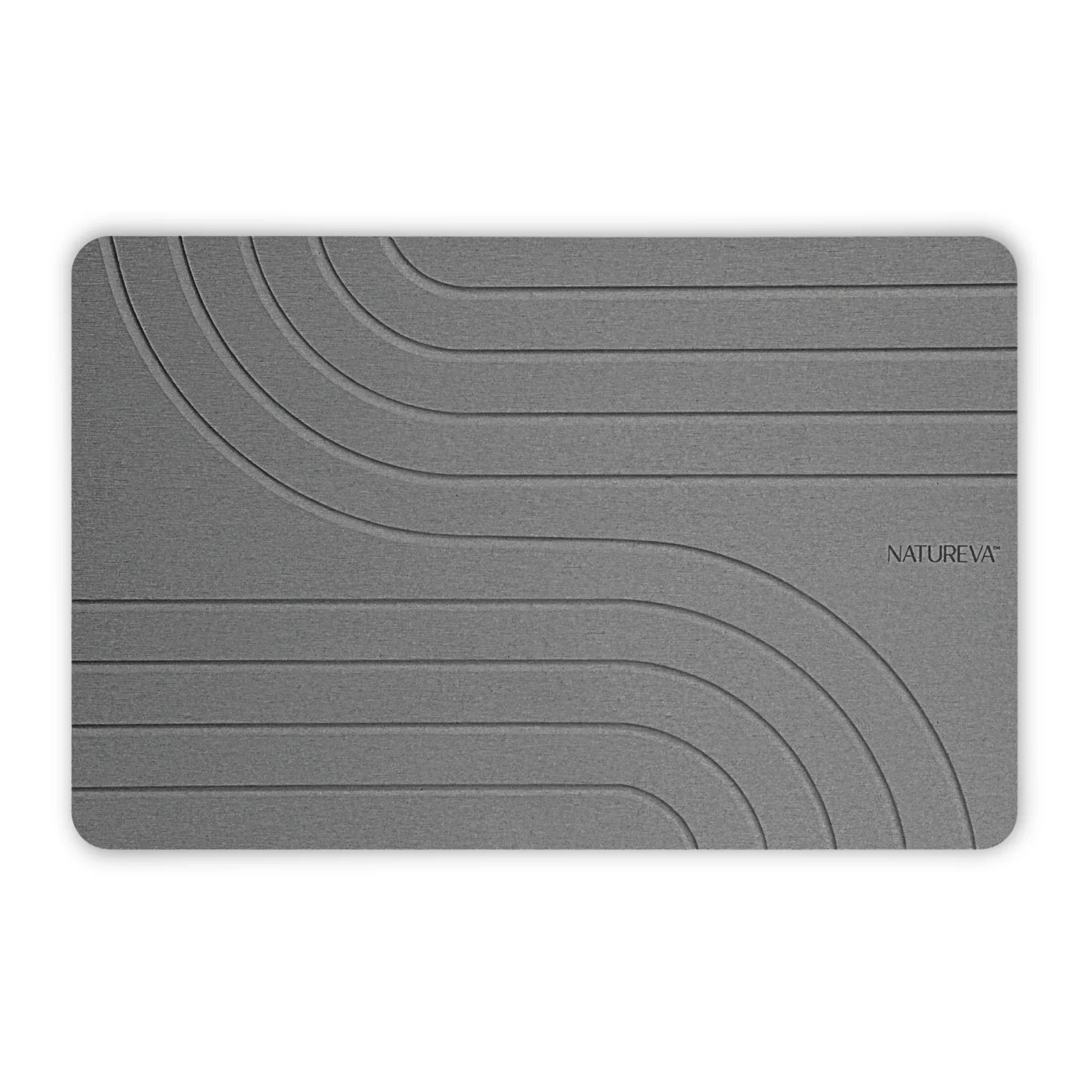
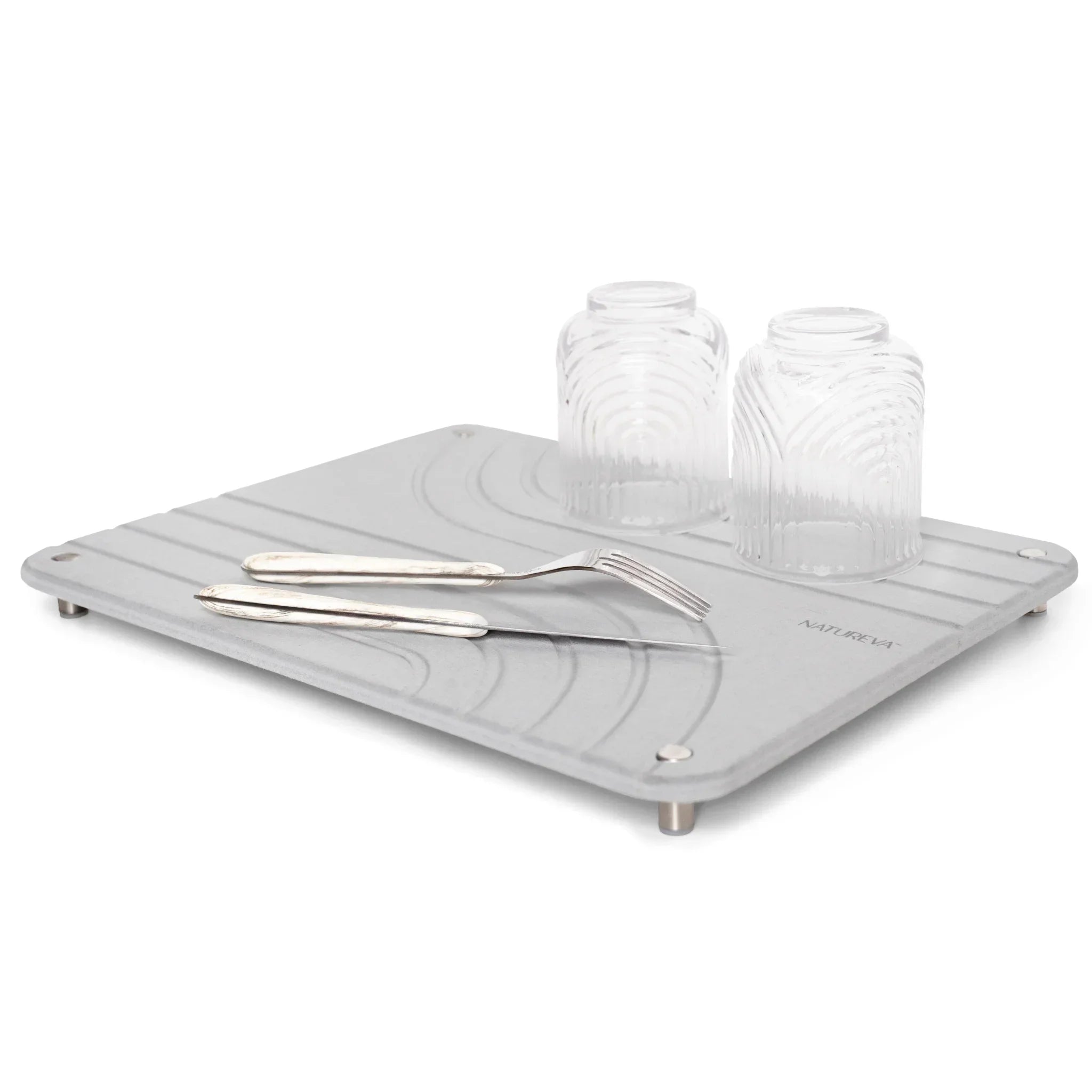
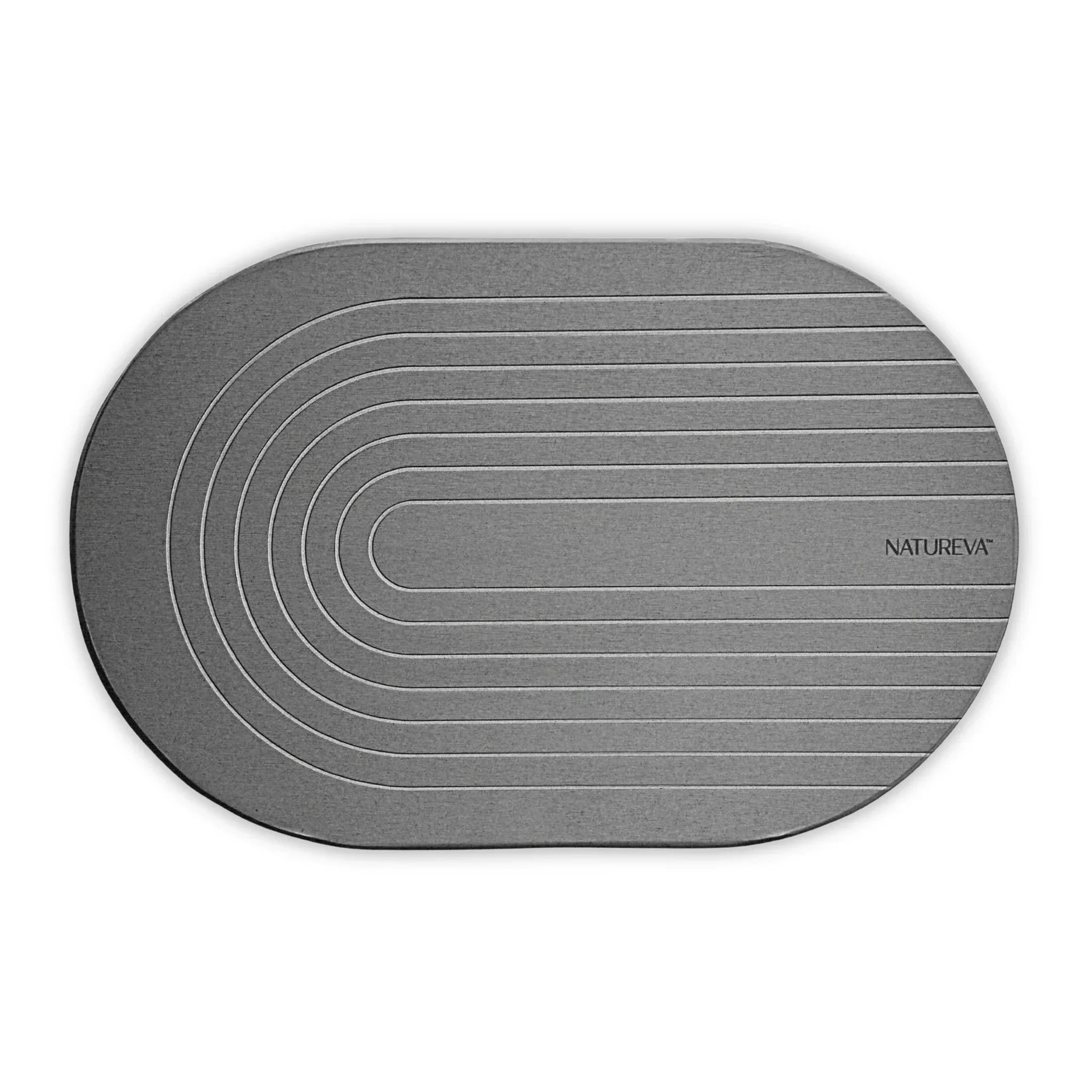
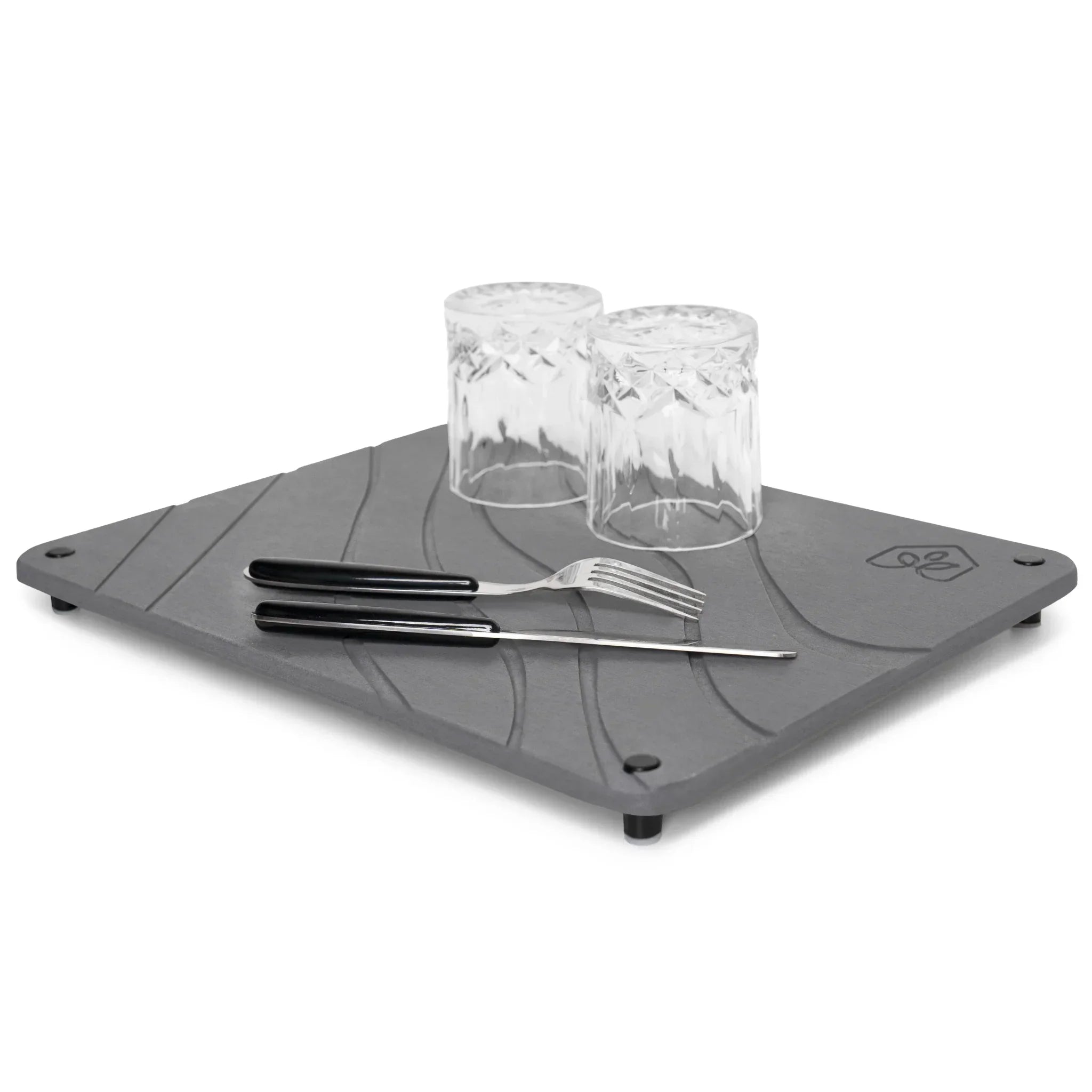
A good splash guard does more than just absorb water — the structure underneath matters just as much. Elevated stainless steel legs lift the mat off the counter, creating a small gap that lets air move underneath. That airflow stops the diatomite from staying saturated and helps it dry evenly instead of just on top. Natureva's stone sink caddy collection uses this exact elevation setup, sitting at 2.5 cm off the bench.
Underneath those legs are small silicone pads, and they do two jobs at once. They grip the counter so the mat doesn't slide around when it's wet, and they stop the metal legs from scratching or pressing marks into the benchtop over time.
- Stainless steel legs — create airflow gap underneath
- Silicone pads — sized flush to leg diameter, no overhang
- Compact footprint — fits neatly beside taps without crowding the sink
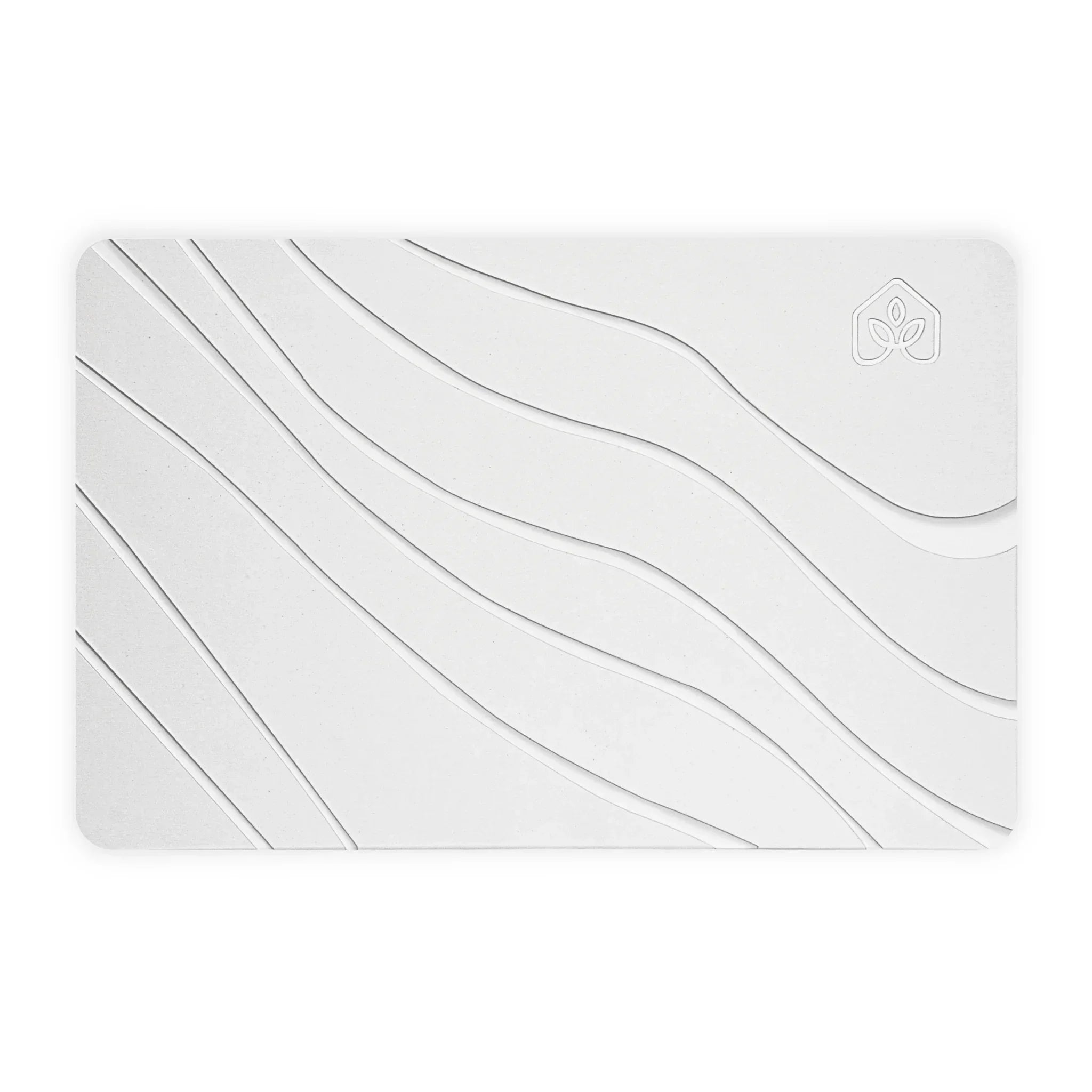
The Rain sink caddy and Flow sink caddy both carry this same engineering, just with different surface patterns carved into the top. Same performance, slightly different look depending on your kitchen or bathroom style.
Keeping a Splash Guard Working Like New
Diatomite doesn't need much upkeep, but a little care goes a long way toward keeping its pores open and absorbent. Wipe it down once a week with a damp cloth and some cleaning vinegar. That's really it for regular maintenance. Skip coloured soaps though, since they can leave residue that clogs the surface over time.
If a stain shows up, rinse it under running water first before reaching for anything stronger. Stubborn marks can be handled with hydrogen peroxide, and if the surface starts absorbing slower than it used to, that's usually a sign the pores need reopening.
- Wipe weekly with a damp cloth and cleaning vinegar
- Rinse stains under water — avoid coloured soaps
- Sand gently with a fine grit tool if absorption slows down
The next generation of home essentials: naturally made, cleaner by design, sustainable by nature.
SHOP ALLThat last step is where the included sanding tool comes in. It's a P320 grit disc, about 10 cm across, made just for reopening the surface pores when they get a bit clogged from everyday use. A few light passes and the mat goes back to absorbing like it did on day one. For a deeper look at how this material holds up long term, the complete guide to diatomite covers the full picture.
Is a Stone Splash Guard Worth the Switch
A diatomite sink splash guard earns its keep in the spots where water shows up the most. Not every surface in your home needs one. But high-splash zones like the area behind your kitchen faucet, under a bathroom tap, or around a pet's water bowl deal with moisture all day long. That's exactly where a fast-drying surface makes the biggest difference. In lower-traffic spots, a fabric mat might get by fine. But in these constant-splash areas, the drying gap between stone and fabric becomes obvious fast.
Independent testing backs this up with real numbers, not guesswork. Homes To Love tested the Natureva Stone Bath Mat and confirmed it dried fully in under 8 minutes. That's a fast-drying surface that reduces the conditions where mould and mildew develop, verified by a third party rather than a marketing claim.
| Surface Type | Approx Dry Time |
|---|---|
| Diatomite stone | Under 8 minutes |
| Fabric mat | Several hours |
| Rubber or silicone mat | Traps water, rarely fully dries |
A splash guard also works better as part of a system than as a single item. Natureva builds its stone products so they share the same drying mechanism and design language across the whole kitchen and bathroom.
- Dish mats handle drying dishes and cookware
- Sink caddies keep sponges and soap elevated and dry
- Coasters manage smaller daily spills on counters and tables
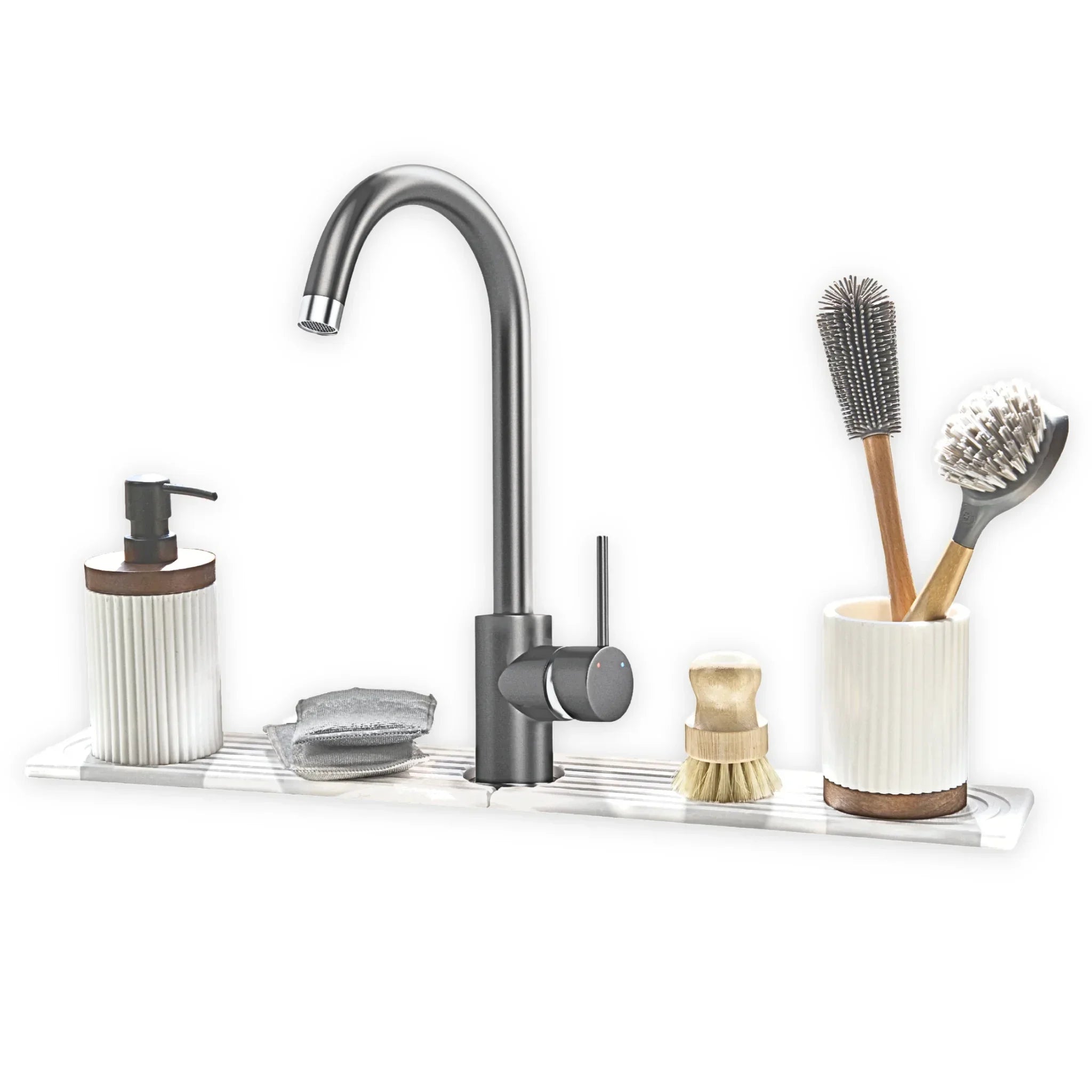
- Splash guards protect the wall or backsplash zone behind the tap
Cost is the other piece of this. A diatomite sink splash guard costs more upfront than a fabric one from the store. But fabric guards wear out, stain, and need replacing every few months. Stone doesn't work that way.
- No fraying edges or fabric pilling over time
- Surface pores can be restored with the included sanding tool
- No repeat purchases every season
Over a year or two, the math tends to favor stone, especially in a bench that sees water every single day.
Wrap-Up Drier Benches Without the Extra Effort
A wet bench is really just a moisture problem, and moisture problems have one real fix: something that dries fast. Fabric mats hold water. Silicone and rubber just push water around instead of dealing with it. Diatomite is different because it's built from millions of tiny pores that pull water in and let it evaporate right back out, often within minutes.
That's really the whole point of a diatomite sink splash guard. It's not about looking nice on the counter (though it does). It's about not having a damp sponge sitting in a puddle every morning.
A few design details make the difference bigger than just the material itself:
- Elevated legs keep the mat off the wet surface so air can move underneath
- Anti-slip pads under those legs stop scratching and sliding on wet counters
- The stone surface itself never needs a chemical coating to stay dry
This is exactly what Natureva's Stone Sink Caddies are built around. The Flow and Rain designs sit on stainless steel legs with silicone pads underneath, so bottles, sponges, and soap stay dry without soaking into the counter below. The Stone Faucet Mat does the same job for the strip behind the tap, which tends to be the wettest spot on the whole counter.
If you want the full breakdown of how diatomite actually works at a material level, this guide covers the science behind it in more detail. And if you're still deciding between mat styles, these five features are worth checking first before you buy anything.
So the real question left is which spot in your kitchen or bathroom is still fighting a losing battle against water. That's probably the one to fix first.
Common Questions About Diatomite Sink Splash Guards
Got questions before you commit to a stone splash guard for your kitchen? That's fair, since it's a different material than what most people grew up using around sinks. Here are the ones we hear most often, answered plain and simple.
How long does a diatomite splash guard take to dry
Most splashes disappear within a few minutes because the stone pulls water in on contact and releases it back into the air fast. There's no puddle sitting around waiting to soak into your counter or drip onto the floor.
Is diatomite safe to use near food and sinks
Yes. This is actually one of the bigger questions in this category, since diatomite products from unverified sources have had asbestos issues in the past. Natureva's stone products are tested and certified asbestos-free by a NATA-accredited Australian lab, and that testing happens on an ongoing basis, not just once.
How often does a splash guard need maintenance
Not much. A weekly wipe with a warm damp cloth and cleaning vinegar keeps it looking clean. Over time, the surface pores can get a little clogged with mineral buildup, which is why every stone product ships with a sanding tool to restore full absorbency in a few swipes.
Can a diatomite splash guard get moldy
The whole point of the material is to dry fast enough that mold and mildew don't get the damp conditions they need to grow. Because it stays dry through rapid evaporation rather than sitting wet like a fabric or silicone mat, it stays clean with a lot less scrubbing.
How is this different from a rubber or silicone splash guard
Rubber and silicone mats sit on top of water instead of absorbing it, so moisture pools underneath and around them until you wipe it up yourself. A diatomite sink splash guard actually draws the water into the material, so your bench stays dry without you having to babysit it.
Will it scratch my countertop
No. Natureva's stainless steel legs come fitted with silicone stabilizer pads sized to match the legs exactly, so the guard sits flush and steady without scratching or leaving pressure marks on your bench.
The next generation of home essentials: naturally made, cleaner by design, sustainable by nature.
SHOP ALL