
Stone Kitchen Sink Mats Explained and How to Choose One
A wet counter can stay damp for hours, but a slab of diatomite stone can dry the same puddle in minutes. That single fact is why stone kitchen sink mats are showing up in more kitchens, replacing soggy sponges and mildew-prone fabric pads. Natureva's stone sink caddies use this same fast-drying material, and this guide walks through what makes stone mats work before you pick one for your own sink.
What is a stone kitchen sink mat made of?
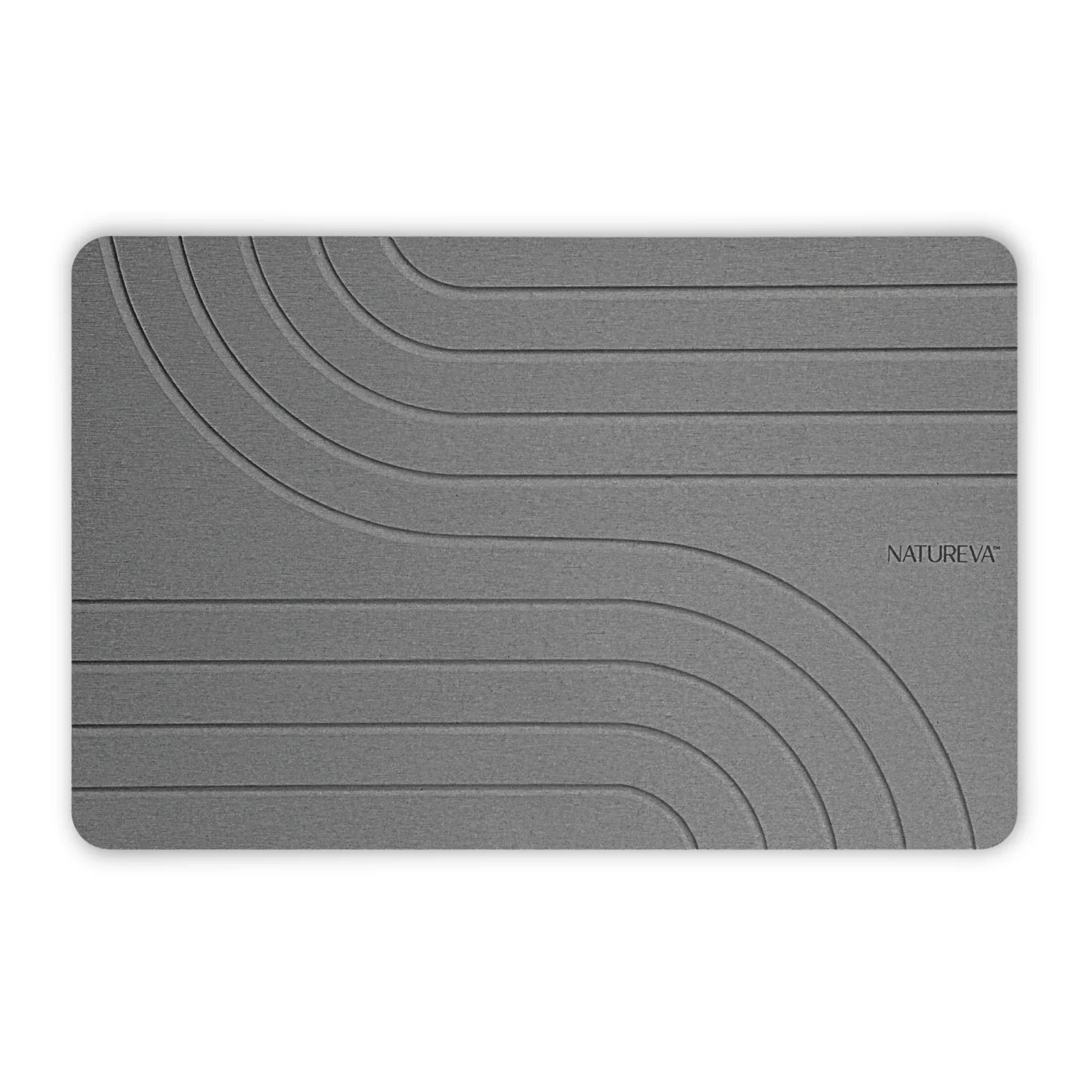
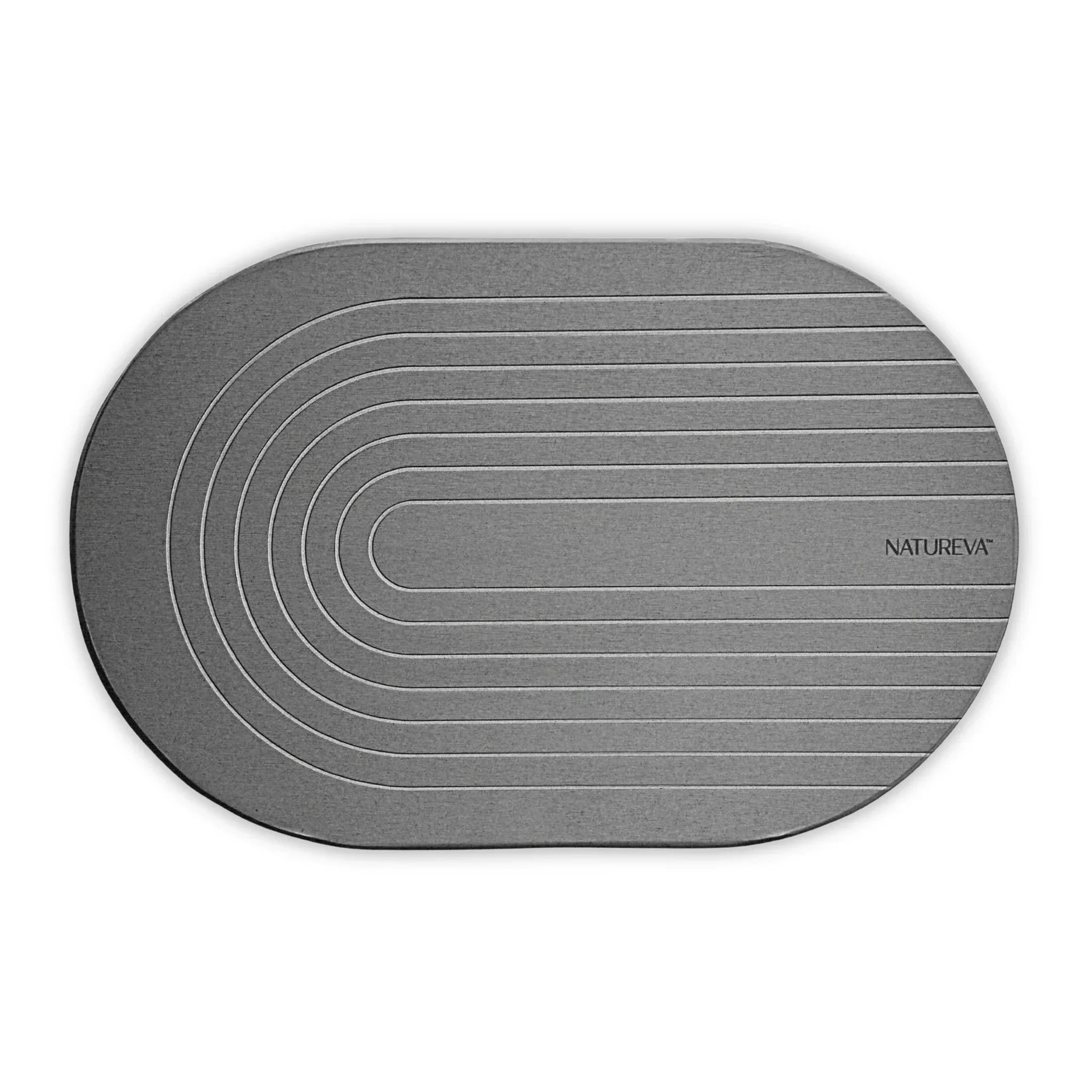
A stone kitchen sink mat is typically made of diatomite, a porous sedimentary rock composed of fossilized diatom remains that absorbs water and dries quickly. This material sets it apart from fabric or silicone mats, which trap moisture instead of absorbing it.
Are stone sink mats better than silicone or fabric mats?
Stone sink mats outperform fabric and silicone mats because their porous diatomite surface absorbs water on contact and dries within minutes, preventing mold and bacterial growth. Fabric mats retain moisture and require frequent washing, while silicone mats simply let water pool on the surface.
How long does a stone sink mat last?
A well-maintained stone sink mat lasts 2 to 5 years, depending on usage frequency and care. Its lifespan ends when the surface stops absorbing water quickly, which signals that the pores are permanently clogged with residue.
Table of Contents
- Fabric, Silicone, and Stone Sink Mats at a Glance
- The Science Behind Diatomite Sink Mats
- Why Stone Beats Fabric and Silicone Near the Sink
- How to Choose the Right Stone Sink Mat for Your Kitchen
- Caring for Your Stone Sink Mat Long Term
- Finding Your Match
- Is a Stone Sink Mat Worth It
- Wrap-up
- Common Questions About Stone Sink Mats
Fabric, Silicone, and Stone Sink Mats at a Glance
Most kitchen sinks in Australia have had the same mat for decades, and it's usually made of cloth or rubber. That worked fine when nobody thought too hard about what was happening underneath the mat. But if you flip over a fabric or silicone sink mat after a few weeks, you'll probably see something you wish you hadn't. Water gets trapped, air can't get in, and that damp spot becomes the perfect little home for mould and mildew. A stone kitchen sink mat works on a completely different idea, and once you see the science behind it, the old mats start to feel a bit outdated.
Here's a simple breakdown of how the three main types stack up:
| Material | Drying Time | Mould Risk | Typical Lifespan |
|---|---|---|---|
| Fabric mat | Several hours | High | 3 to 6 months |
| Silicone or rubber mat | Water sits on top, moisture traps underneath | Medium to high | 6 to 12 months |
| Stone mat | Minutes | Low | Years with basic care |
A few things to keep in mind when you're comparing these materials:
- Fabric soaks up water like a sponge but has no way to let it go quickly
- Silicone and rubber don't absorb anything, so puddles just sit on the surface or slide underneath
- Stone mats made from diatomite absorb water on contact and release it back into the air through evaporation
- Airflow underneath the mat matters just as much as the surface material itself
This is a pattern showing up across the whole home goods space right now, not just kitchens. Brands like Dorai Home, DrySorb, and Tosoro Home have all leaned into stone bath mats for the bathroom, and companies like Glassguard have added their own quick-dry stone versions too. That interest makes sense once you understand what diatomite actually does at a material level, and why it behaves so differently under a wet sponge or a dripping dish rack.
The Science Behind Diatomite Sink Mats
Diatomite is made from fossilised algae, and yes, that sounds strange for something sitting next to your sink. These tiny algae, called diatoms, died off thousands of years ago and left behind a mineral shell full of millions of microscopic pores. That pore structure is the whole reason this stuff works. When water hits the surface, it gets pulled in fast, almost like the mat is thirsty, and then it releases back into the air through evaporation.
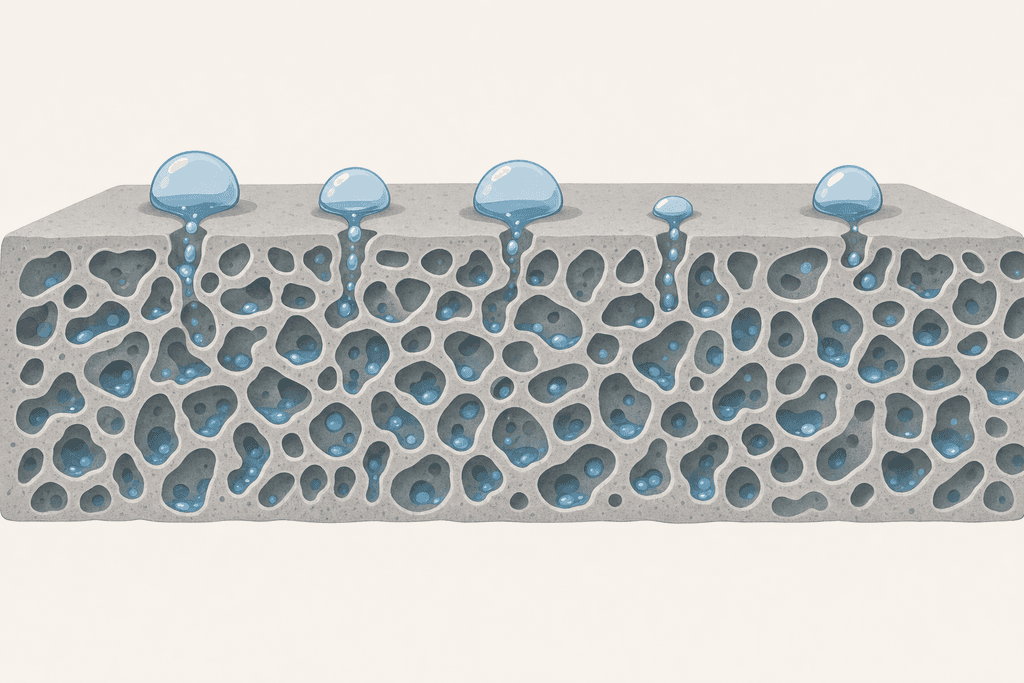
This is different from just soaking up water like a sponge. A sponge holds onto moisture until you squeeze it out. Diatomite lets go on its own.
- Instant absorption on contact with water
- Rapid evaporation instead of trapped moisture
- Hygienic by design, no chemical coatings needed
- Made from diatomaceous earth plus recycled paper for durability
Natureva's stone products combine that natural diatomite with recycled paper, pressed into a dense, solid form. It feels like stone underfoot or on the counter, but it's lighter and full of tiny air pockets doing the work. Nothing synthetic is coating the surface, and there's nothing to wear off over time.
Why Stone Beats Fabric and Silicone Near the Sink
Fabric mats near a sink are basically a mould experiment waiting to happen. They soak up water, bunch up under your dishes, and stay damp for hours, sometimes days if the weather's humid. Silicone and rubber mats aren't much better. Water pools underneath them since there's no airflow, and that trapped moisture is exactly the kind of condition where mildew and odour start to form.
A stone kitchen sink mat handles this completely differently, mostly because of the elevation.
| Material | Airflow | Drying Time |
|---|---|---|
| Fabric mat | None | Hours |
| Silicone/rubber mat | Minimal | Hours |
| Elevated stone mat | Full | Minutes |
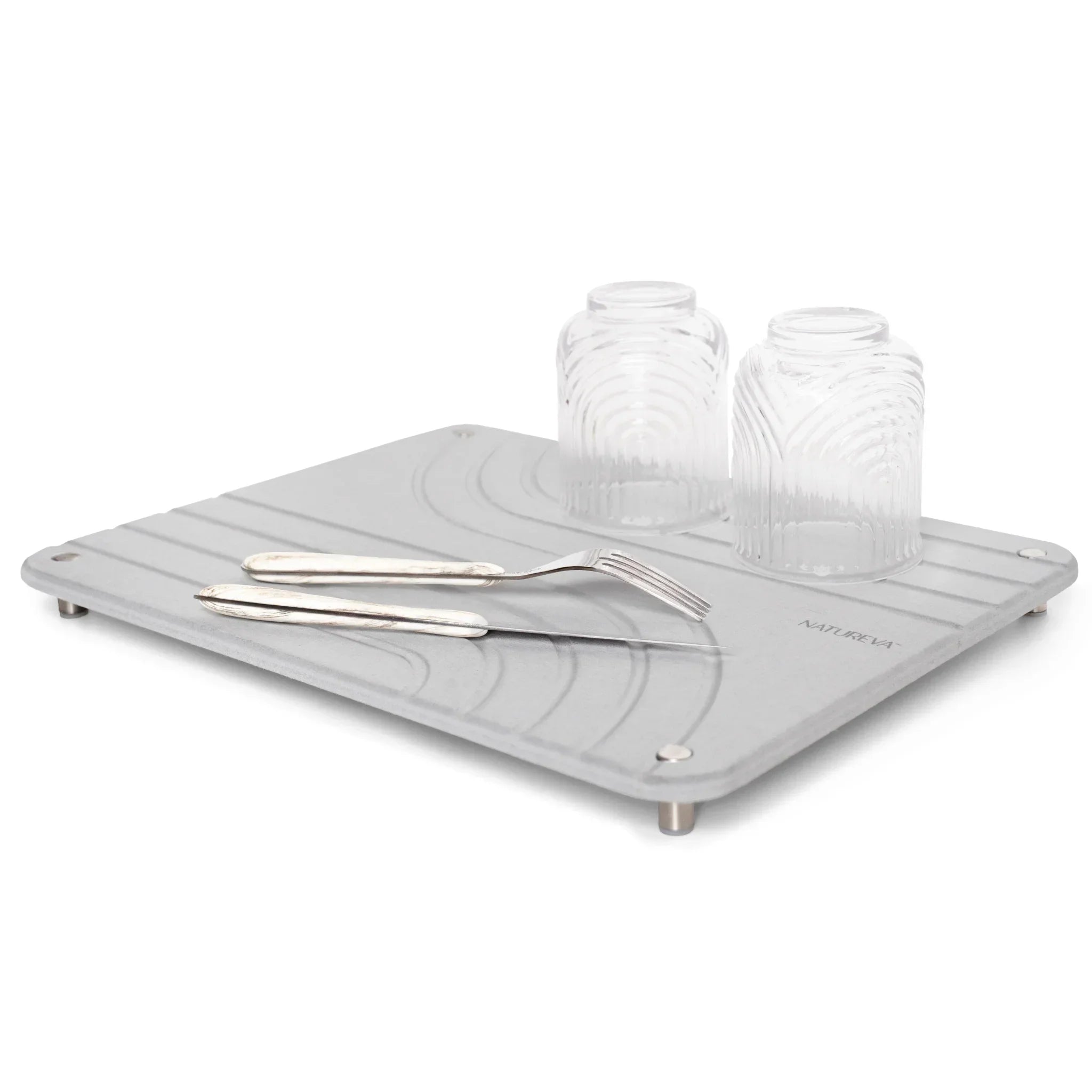
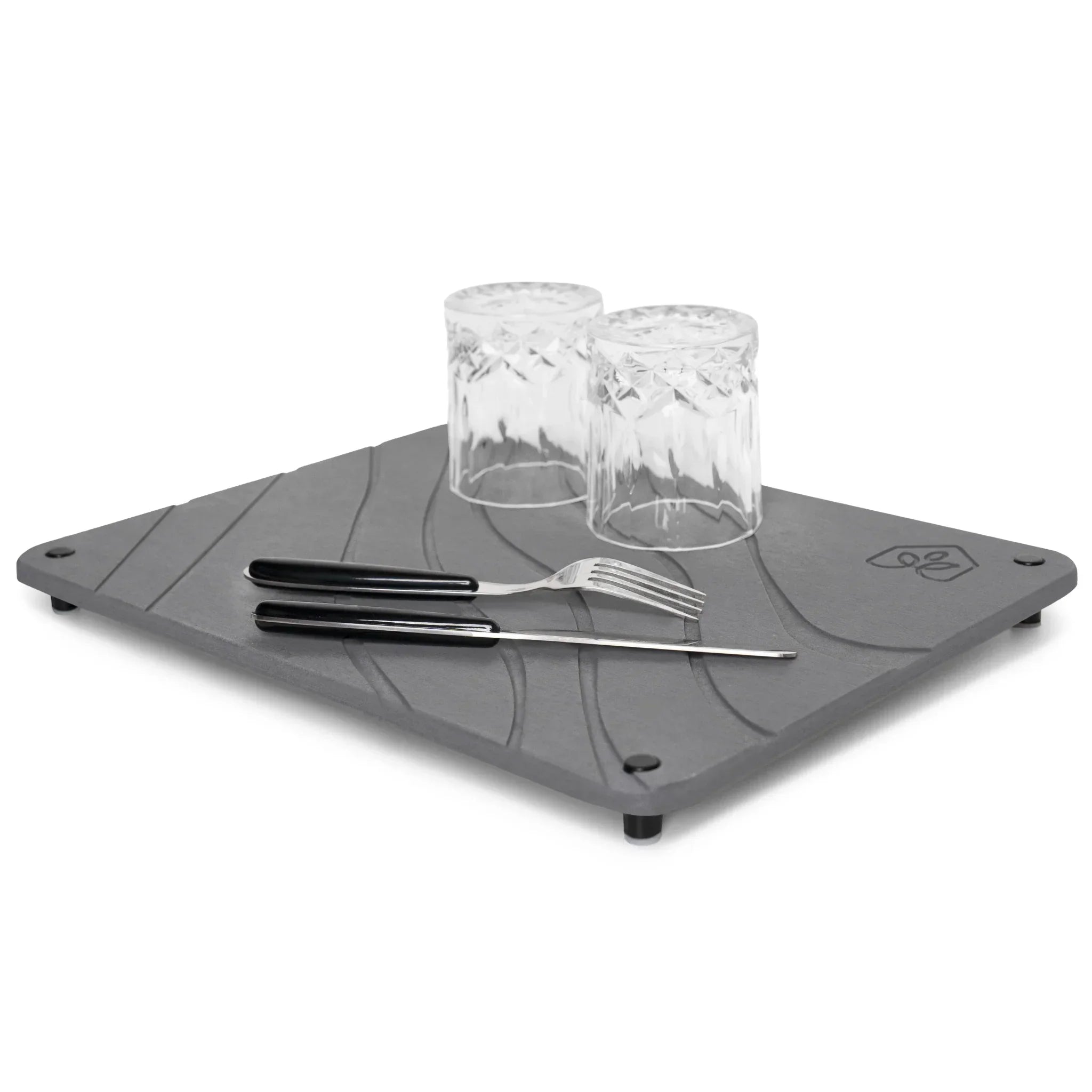
Natureva's dish mats and sink caddies sit on stainless steel legs, raised 2.5 cm off the counter. That gap lets air move underneath, which speeds up drying and stops water from just sitting there. You can read more on this exact setup in our breakdown of stone faucet mats and counter dryness.
Maintenance is lighter too. Fabric needs a wash cycle every week or so. Stone just needs a wipe and, every once in a while, a quick sand to reopen the pores.
How to Choose the Right Stone Sink Mat for Your Kitchen
Picking the right stone mat comes down to a few practical things, not just what looks nice. First, measure your counter and sink area so you know what size actually fits without hanging off the edge or crowding your tap. Then think about how you actually use that space. Do you need something flat to catch splashes, a narrow strip behind the tap, or a raised platform for wet sponges and bottles.
Here's a simple checklist before you buy:
- Measure counter space and sink layout first
- Choose a flat dish mat, faucet mat, or elevated sink caddy based on daily use
- Look for stainless steel legs with silicone pads if you want airflow and counter protection
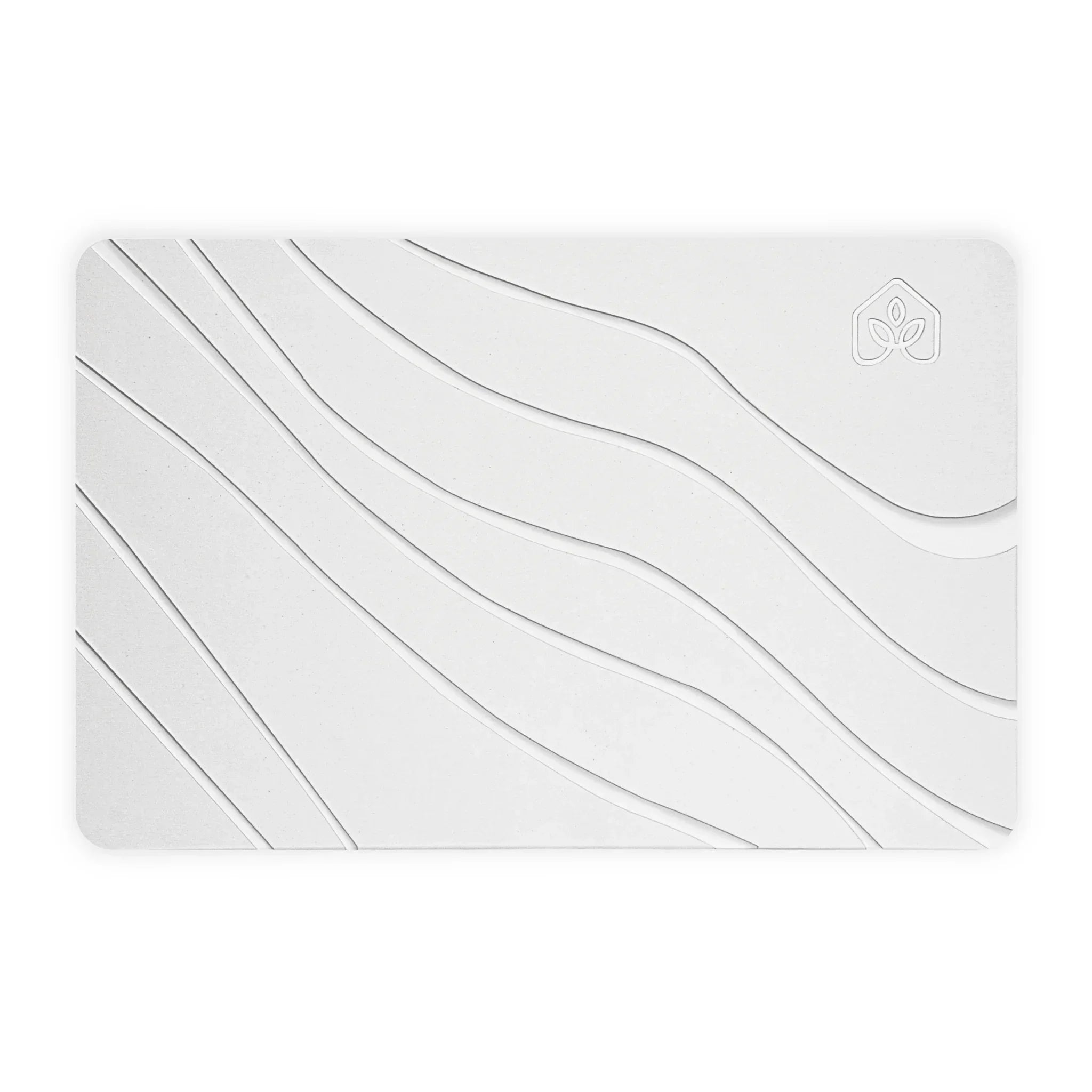
- Match the surface pattern (Tide or Flow) and colour to your existing kitchen or bathroom pieces
- Confirm the product has independent safety certification, like NATA-accredited asbestos-free testing
That last point matters more than people realise. Diatomite products from unverified sources have had real recalls over asbestos contamination, so a certified lab test isn't just a nice extra. If you want a side-by-side on features to check, our guide on diatomite mat features covers a lot of the same checks that apply to kitchen mats too.
Caring for Your Stone Sink Mat Long Term
A stone sink mat doesn't need much, but the little bit it does need actually matters. Wipe it down weekly with a warm damp cloth and some cleaning vinegar. That's really it for regular upkeep. Skip coloured soaps though, since the porous surface can pick up dye and stain over time, which is annoying once it happens.
If something spills and leaves a mark, rinse it under water first. For tougher stains, hydrogen peroxide works, or you can use the included sanding tool to buff the spot out.
- Wipe weekly with damp cloth and cleaning vinegar
- Avoid coloured soaps near the surface
- Sand gently when absorbency starts to slow down
- Air dry upright if the mat gets fully saturated
The sanding tool isn't just for stains, either. Over months of use, the surface pores can get a little clogged, and a quick sand reopens them so the mat goes back to absorbing like new. According to the EPA's guidance on mould prevention, keeping surfaces dry within 24 to 48 hours is one of the biggest factors in stopping mould before it starts, which is basically the whole point of a fast-drying mat in the first place.
Finding Your Match
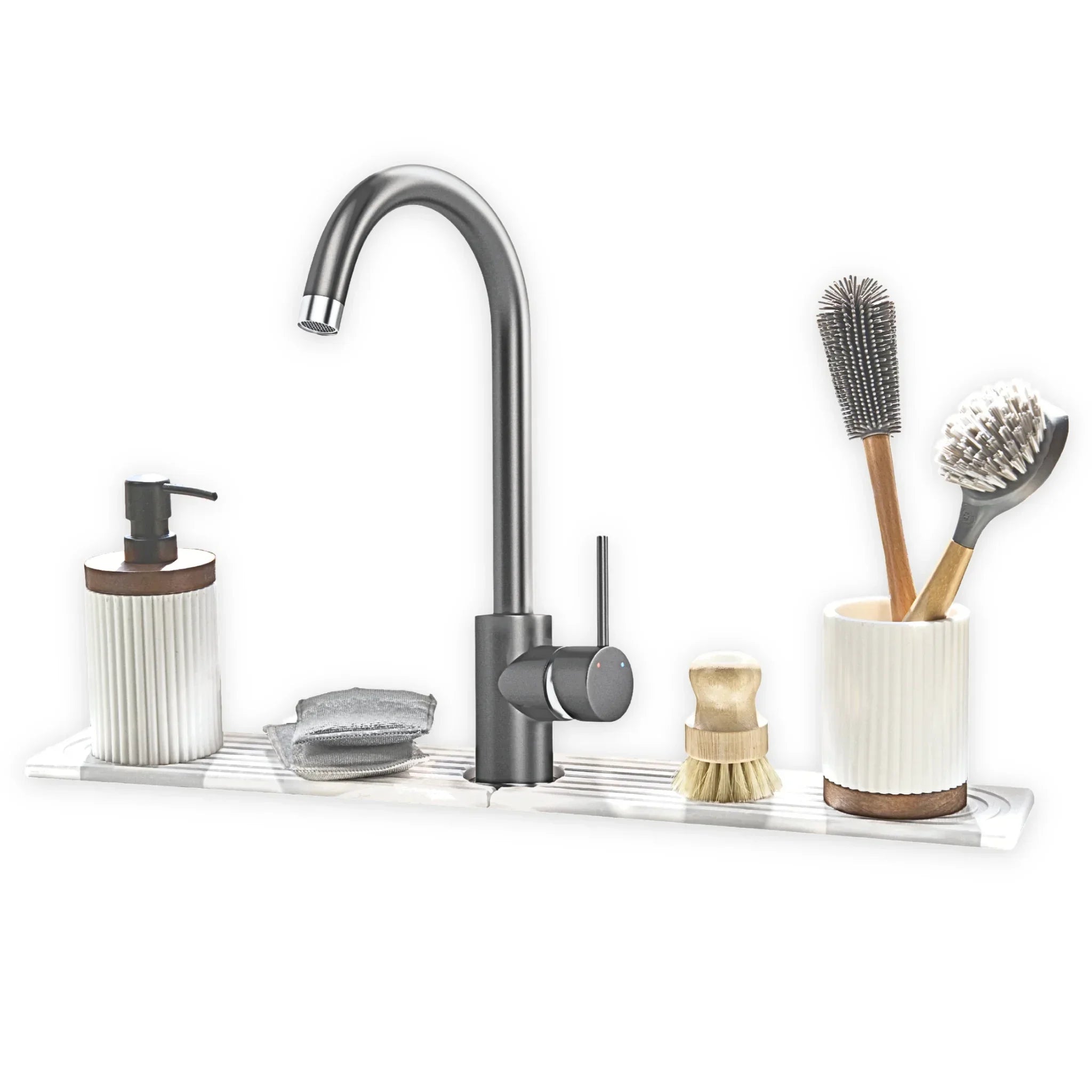
If you're leaning toward a flat drying surface, the Stone Dish Mat in Flow or the Tide pattern both sit on elevated legs for full airflow. Want something behind the tap instead? The Stone Faucet Mat in Arch is built for that narrow strip. And for bottles or sponges near the sink, the Sink Caddy in Rain or Flow keep things lifted and dry.
You can browse the full dish mat collection, the faucet mat range, or the sink caddy lineup to compare patterns and colours side by side. If you're curious about the material itself before deciding, our complete guide to diatomite walks through how it's made and why it lasts. And if a matching bathroom mat is next on your list, the bath mat collection, including Tide, Flow, Arch, and Rain, keeps the same design language running through the whole house.
Is a Stone Sink Mat Worth It
A fabric dish mat sitting next to a sink can take 3 to 4 hours to dry, while a stone kitchen sink mat handles the same water in under 10 minutes. That gap is really the whole decision. If your sink area sees action all day long, dishes drying, cutting boards resting, wet hands dripping, that speed difference adds up fast. But if your kitchen sink barely gets used, the upgrade might not matter as much. It comes down to how much moisture your sink deals with on a normal day.
Busy kitchens are where a stone sink mat earns its keep. Think households that cook daily, wash dishes by hand, or have kids constantly splashing water everywhere. In these homes, a fabric mat is basically always a little damp, which means it's also always a little smelly and a little gross.
- Frequent hand-washing of dishes
- Multiple people using the sink daily
- High humidity kitchens
- Households trying to cut down on laundry loads
Cost is the other honest tradeoff here. A stone kitchen sink mat costs more upfront than a basic fabric one from the supermarket. But fabric mats need constant washing, they wear out, and they eventually get replaced every few months. Stone doesn't really have that cycle. It's less about spending less right away and more about spending less effort over time.
There's also a comfort factor worth mentioning. Stone mats are hard and rigid, not soft or cushioned. If you like standing on something plush at the sink, this material won't feel the same underfoot as a fabric or foam mat. That's really the only physical drawback worth flagging.
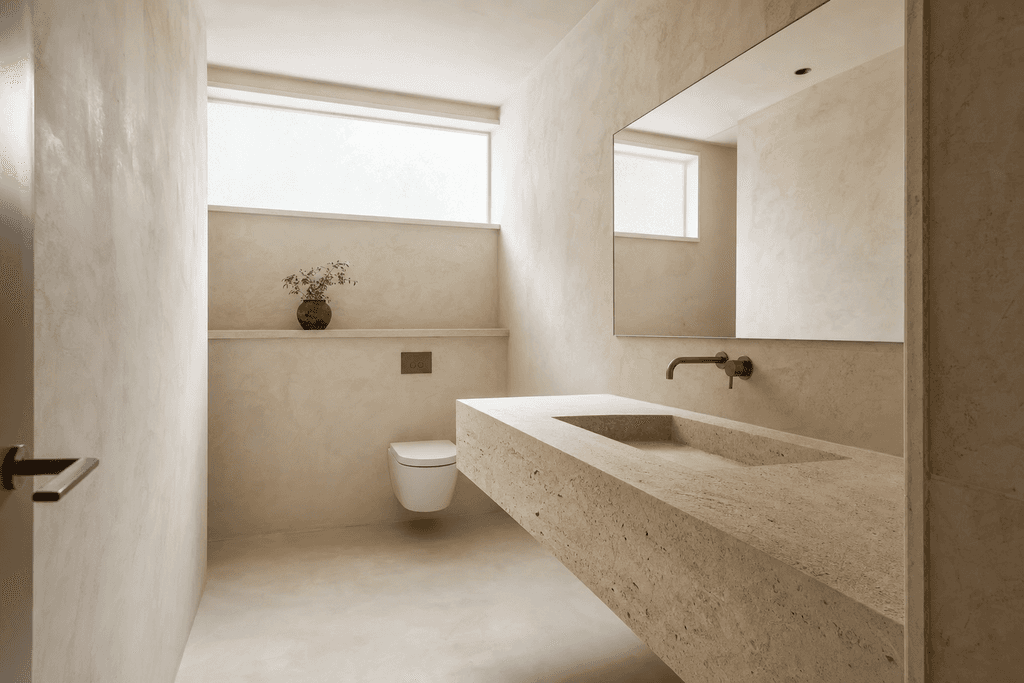
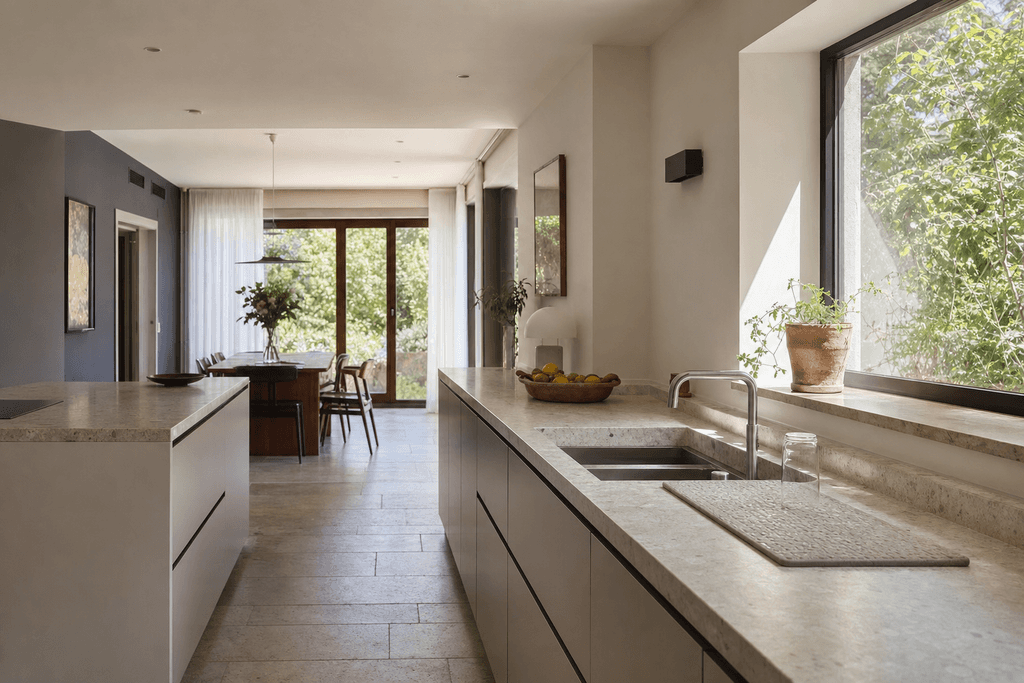
Design-wise, stone fits naturally into minimalist and Japandi-style kitchens. The clean lines and neutral stone tones blend into modern spaces instead of standing out like a bright fabric mat would.
- Works well in Japandi and minimalist kitchens
- Matches neutral, natural material palettes
- Sits flush without bulky texture
- Pairs with matching bathroom and accessory pieces
The next generation of home essentials: naturally made, cleaner by design, sustainable by nature.
SHOP ALLWrap-up
Here's the short version. Diatomite works because it pulls water in and lets it go through evaporation, not because of any chemical coating or treatment. That's the whole trick behind why these mats dry so fast and stay fresh without much effort from you.
Fabric mats and silicone trays just can't keep up with that. They trap water instead of releasing it, which is exactly the damp, smelly mess a stone kitchen sink mat is meant to fix.
When you're picking one out, three things actually matter:
- Size (make sure it fits your counter or sink area)
- Elevation (airflow legs matter more than people realize)
- Certification (asbestos-free testing shouldn't be optional)
Our stone sink caddies and dish mats check all three boxes. They're built with stainless steel legs for airflow and tested for safety, so you're not just buying something that looks nice on the counter.
If you want to go deeper into how the material itself works before you buy anything, this guide on diatomite breaks it all down. And if you're also shopping for a bath mat while you're at it, this one covers the features worth checking first.
Now, about how much water your sink area actually deals with in a week. That's probably more than you think.
Common Questions About Stone Sink Mats
Still have a few things running through your head before you buy one? That's normal. Here are the questions we hear most from people looking at a stone kitchen sink mat for the first time.
How long do stone sink mats take to dry
Most water disappears within a few minutes since the diatomite pulls moisture in and lets it evaporate right away. There's no puddle sitting on top like you'd get with rubber or silicone. That's the whole point of a fast-drying surface that reduces the conditions where mould and mildew develop.
Can stone sink mats scratch countertops
Not if the mat is built right. Our Stone Sink Caddies sit on stainless steel legs with silicone pads underneath, so the stone itself never touches your counter. Those pads also work as anti-slip stabilizers, keeping things steady even when everything around it is wet.
Are stone sink mats safe and asbestos-free
This is worth asking, honestly, since some diatomite products on the market have had asbestos issues before. Ours are tested by a NATA-accredited Australian lab and confirmed asbestos-free, with regular retesting to keep it that way. It's not a marketing line, it's a certification you can actually check.
How do you clean a stone sink mat
Wipe it down weekly with a warm damp cloth and a bit of cleaning vinegar. Skip coloured soaps since they can stain the stone over time.
- Rinse any stains under running water
- Use hydrogen peroxide for tougher marks
- Sand lightly with the included P320 grit tool if it stops absorbing water like it used to
That sanding step reopens the pores, so the mat basically resets itself instead of getting replaced.
Do stone mats work for both kitchen and bathroom
Yes, and that's part of the appeal. The same material that dries out a shower floor also handles drips by the sink or under a soap dispenser. Since the collection comes in matching colours and patterns like Tide and Flow, you can carry the same look from your bathroom into your kitchen without it feeling mismatched.
The next generation of home essentials: naturally made, cleaner by design, sustainable by nature.
SHOP ALL