
Key Differences Between Stone Dish Drying Mat Styles
That soggy fabric mat by your sink is probably growing more bacteria than your kitchen sponge, staying damp for hours after every dish session. A stone dish drying mat solves this with instant absorption and rapid evaporation, but most people don't realize the carved pattern you choose affects both how water moves across the surface and how the mat looks on your counter. Natureva's stone dish mats come in two distinct styles—Tide and Flow—each with different engraved designs that change the entire feel of your drying station.
Table of Contents
What Makes Stone Dish Mats Different
Traditional fabric dish mats sit in your kitchen collecting water, bacteria, and that weird smell you can never quite get rid of. They stay damp for hours, sometimes days, creating the perfect breeding ground for mold and mildew. Stone dish drying mats work completely differently because they're made from diatomite, a natural material formed from fossilized algae that's filled with millions of microscopic pores. When water hits the surface, it gets absorbed instantly and then evaporates back into the air within minutes instead of sitting there getting gross.
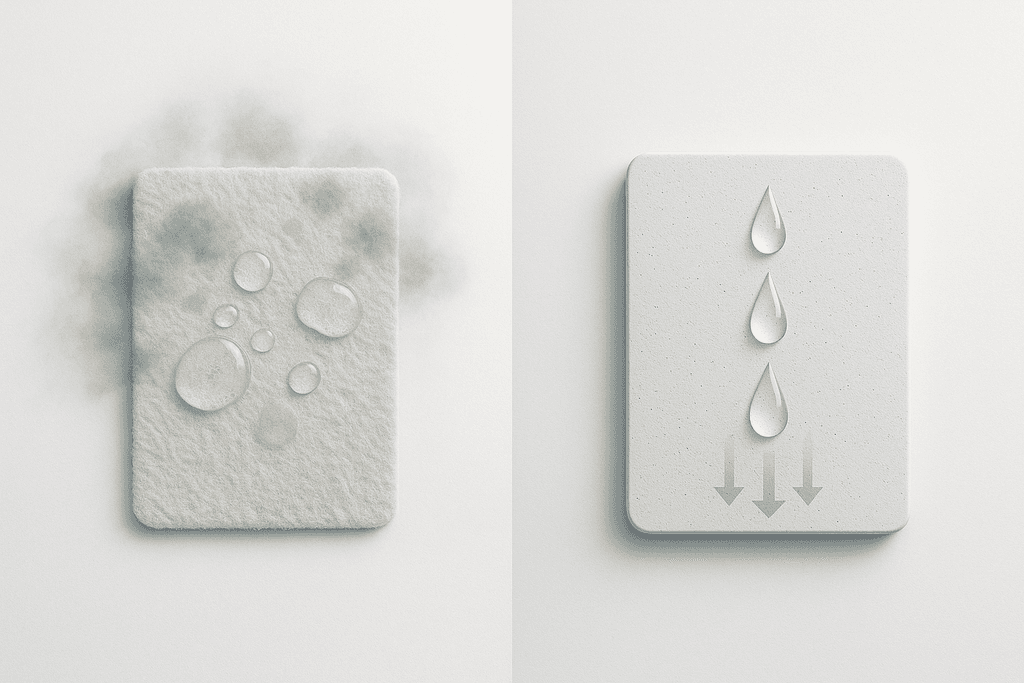
The construction itself is pretty straightforward. Natureva's stone dish mats combine diatomaceous earth with recycled paper, compressed into a solid slab without any chemical coatings or synthetic finishes. This means the material stays breathable and naturally antibacterial, not because of added chemicals, but because moisture simply doesn't stick around long enough for bacteria to thrive.
How the Elevation System Works
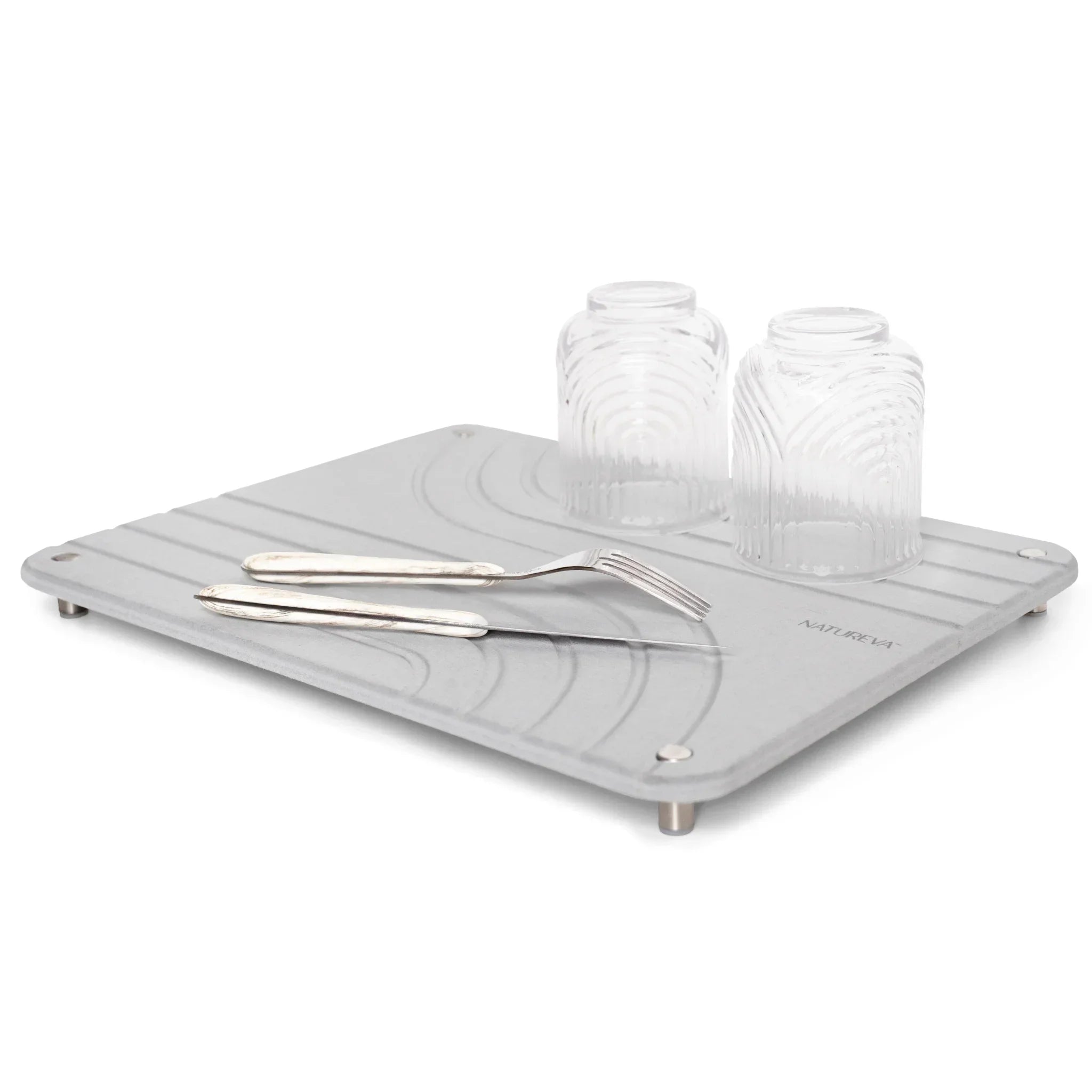
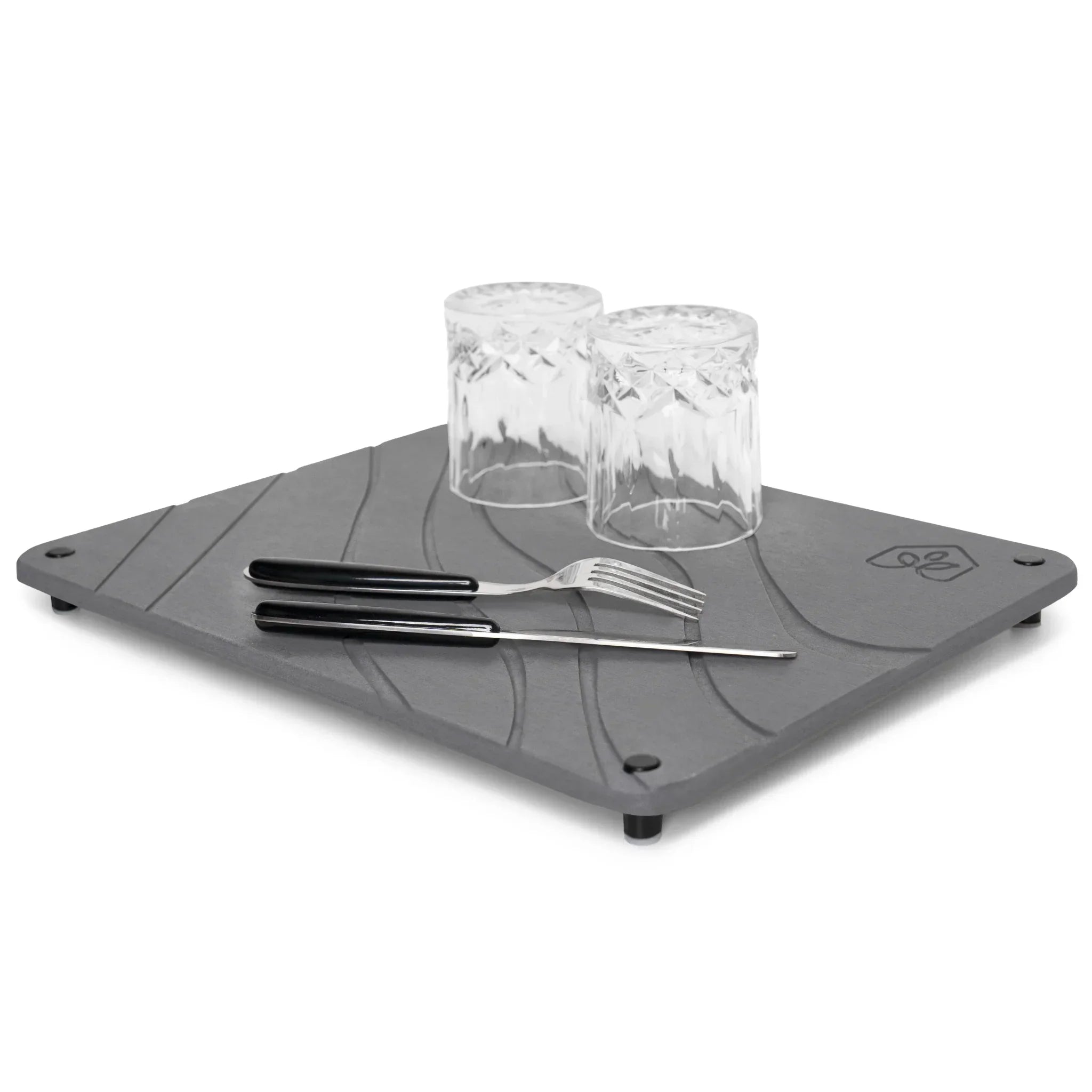
Here's where things get more interesting than your average dish mat. Each stone dish mat sits on stainless steel legs that lift it 2.5 cm off your countertop. This creates constant airflow underneath, which serves two purposes: it prevents the mat from getting saturated when you're drying a full sink of dishes, and it protects your counter from moisture damage.
The legs come with small transparent silicone pads that slip underneath. These pads keep the mat from sliding around when it's wet and prevent the metal from scratching your countertop. They're only 2 mm thick and 1.2 cm wide, so they're barely noticeable but make a real difference in stability.
Surface Patterns That Actually Do Something
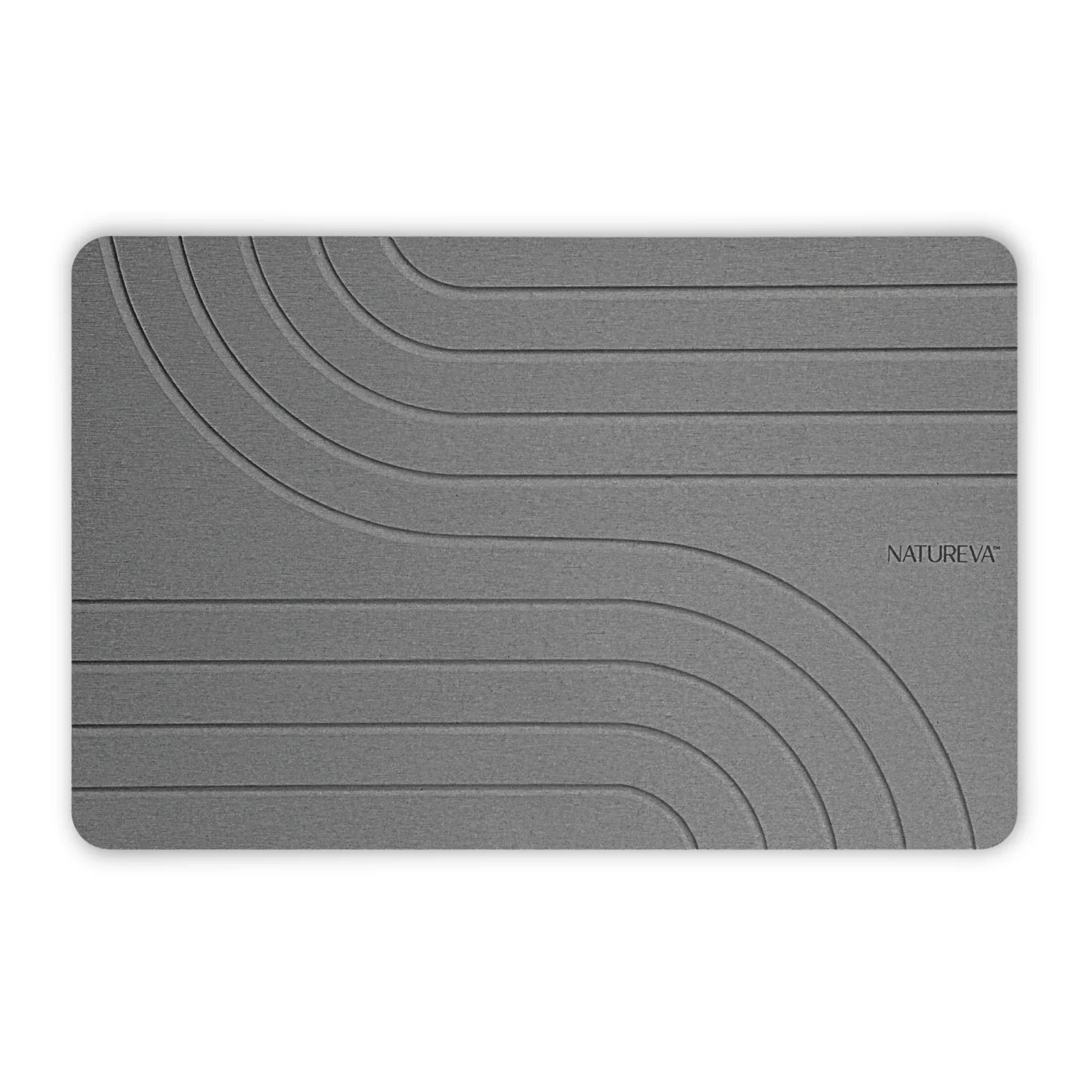
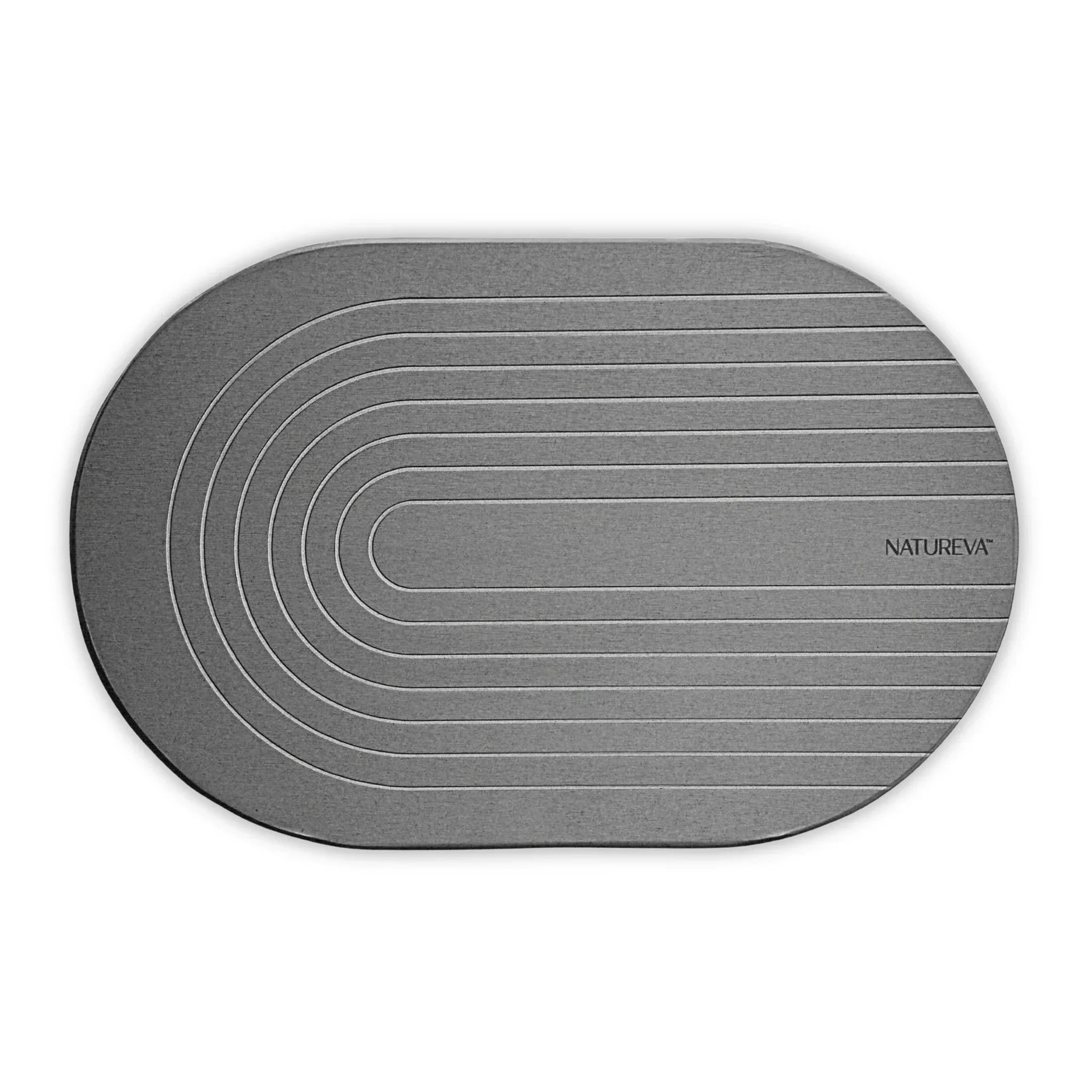
The carved patterns on stone dish mats aren't just decoration. Each engraved channel helps guide water across the surface, spreading it out so it evaporates faster instead of pooling in one spot. Natureva offers two pattern styles: Tide features wide horizontal curves that look like shoreline movement, while Flow has diagonal wave engravings that create a landscape-like texture.
Both patterns work the same way functionally. The choice comes down to which visual style fits your kitchen better.
Stone Versus Fabric Comparison
| Feature | Stone Dish Mat | Traditional Fabric Mat |
|---|---|---|
| Drying Time | Minutes | Hours to days |
| Material | Diatomite composite with recycled paper | Cotton, microfiber, or synthetic fabric |
| Antibacterial Method | Rapid moisture elimination | Chemical treatments (if any) |
| Elevation | 2.5 cm stainless steel legs | Flat against counter |
| Maintenance | Weekly vinegar wipe, occasional sanding | Frequent machine washing |
| Odor Development | Minimal due to fast drying | Common with prolonged dampness |
| Lifespan | Years with proper care | Months before replacement needed |
Brands like Dorah Home and Dry Sorb also make diatomite products, but the elevation system and carved surface patterns set Natureva's approach apart. The combination of airflow, material science, and functional design creates a dish mat that stays dry and clean without constant washing.
Tide Pattern: Horizontal Shoreline Movement
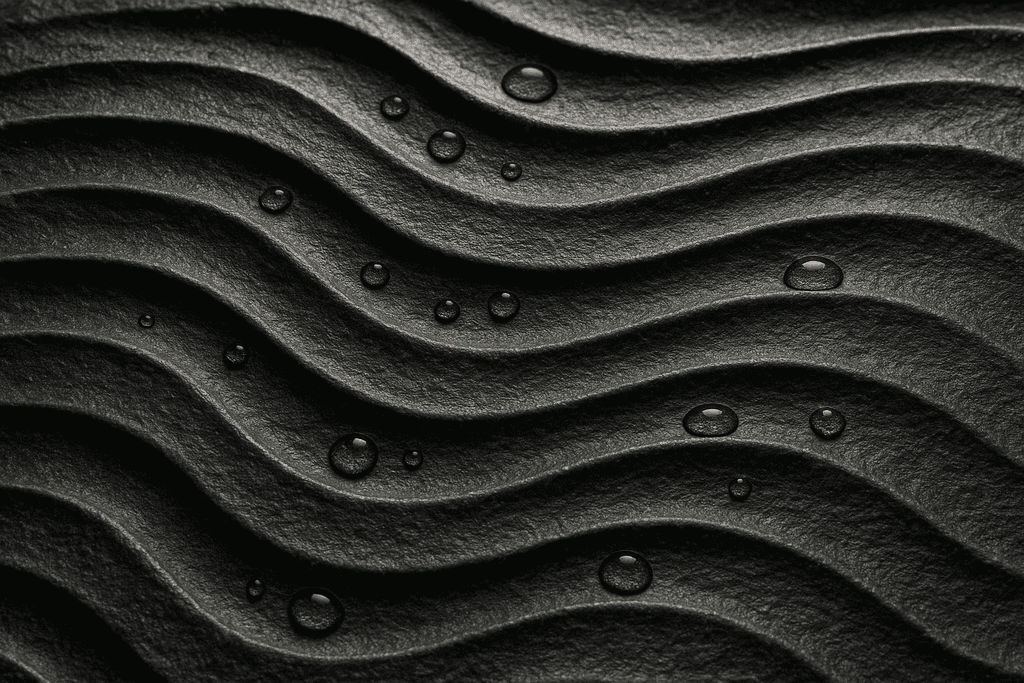
The Tide pattern on our stone dish drying mat takes its design cues from the way water shapes a shoreline over time. Wide horizontal contour bands run across the entire width of the mat, creating gentle curves that feel organic rather than rigid. When you place wet dishes on the surface, water naturally follows these carved channels, spreading across the mat in a way that mimics actual wave movement. The pattern isn't just decorative though, it actually helps distribute moisture evenly so the diatomite can absorb and evaporate it faster.
Tide Pattern: Horizontal Shoreline Movement
The visual rhythm of Tide creates a calming, coastal-inspired aesthetic that works particularly well in certain kitchen styles. If your space has horizontal design elements like subway tile backsplashes, long floating shelves, or wide plank flooring, the Tide pattern reinforces that visual language. It also pairs naturally with coastal or beach-inspired kitchens where the shoreline reference feels intentional rather than accidental.
What makes Tide different from Flow:- Softer, more organic curves instead of angular geometry
- Water channels move horizontally across the full width
- Creates a sense of calm rather than dynamic movement
- Better suited to traditional or transitional kitchen styles
- The engraved lines catch light differently depending on time of day
Both Graphite and Slate colour options are available with the Tide pattern. The way the carved contours interact with each colour creates noticeably different effects. Graphite's deep charcoal tone makes the horizontal bands stand out with dramatic shadow lines, while Slate's softer grey allows the pattern to blend more subtly into lighter countertops.
You can find the Tide dish mat here, which includes stainless steel legs, silicone pads, and a sanding tool for maintenance. The mat measures 39.5 × 29.5 × 2.5 cm and weighs about 0.9 kg.
Flow Pattern: Diagonal Landscape Waves
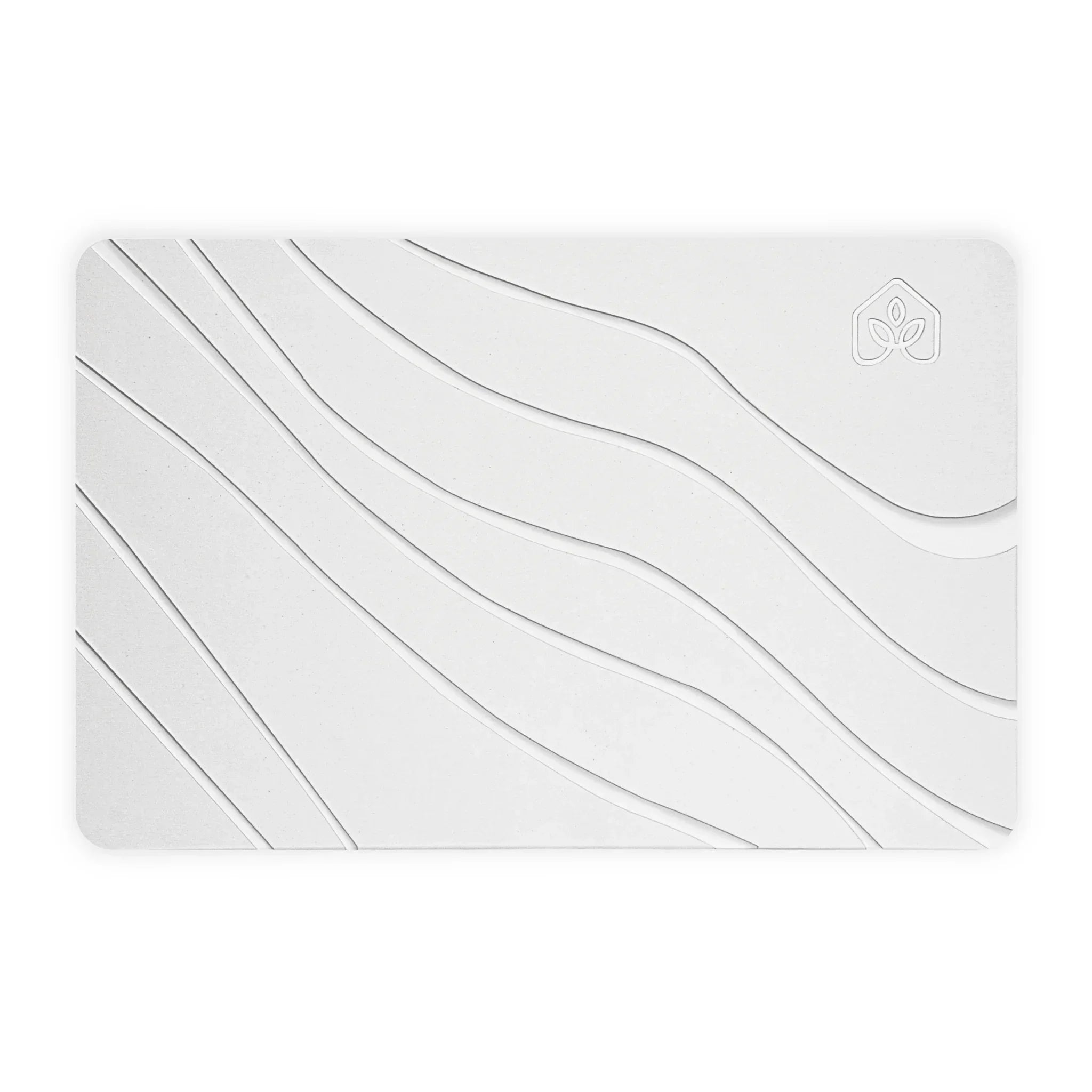
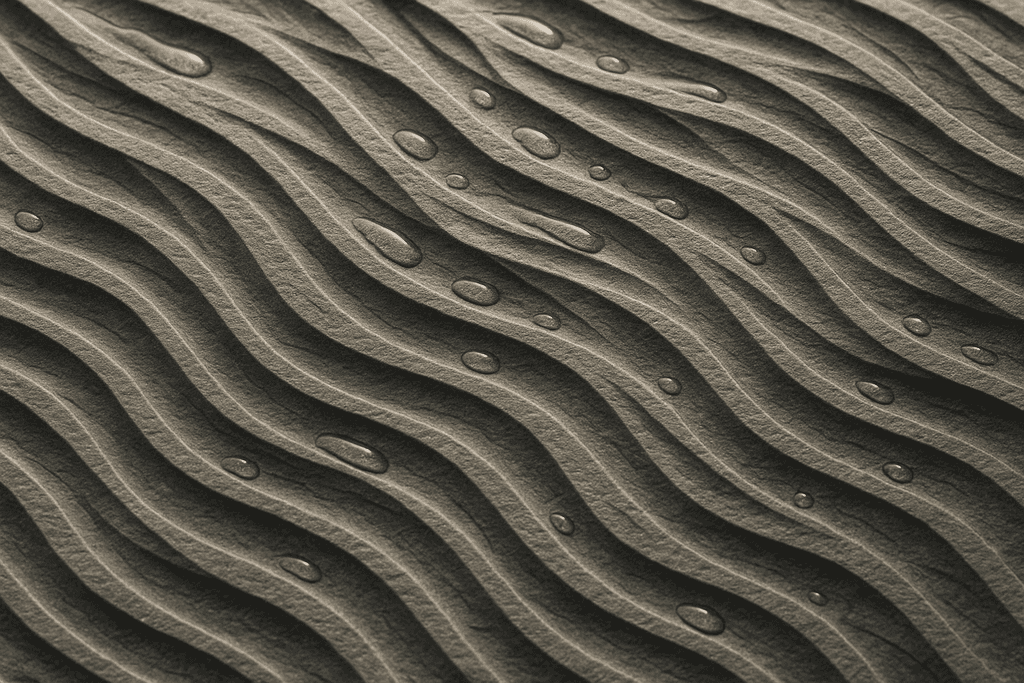
Flow takes a completely different approach to surface design. Instead of horizontal shoreline curves, this pattern uses layered diagonal wave contours that move from one corner to the opposite edge. The effect is more architectural and topographic, like looking at elevation lines on a landscape map. Water doesn't just sit on the surface, it travels along these diagonal channels in a way that feels more dynamic and directional than the Tide pattern.
Flow Pattern: Diagonal Landscape Waves
The diagonal orientation creates a sense of movement and energy on your countertop. This makes Flow better suited to modern, minimalist, or geometric kitchen designs where clean lines and contemporary aesthetics dominate. If your kitchen features angular cabinetry, diagonal tile patterns, or bold geometric elements, Flow reinforces that visual language instead of competing with it.
Key characteristics of the Flow pattern:- Diagonal wave contours create topographic appearance
- Water channels guide moisture diagonally across the mat
- More contemporary and architectural visual style
- Works with modern kitchens that emphasize geometry
- Available in both Graphite and Slate colours
- Creates stronger directional pull than horizontal patterns
The carved lines in Flow are slightly more angular than Tide's organic curves. This affects how the pattern catches light throughout the day. Morning sun hitting the diagonal channels creates different shadow patterns compared to afternoon light, which adds subtle visual interest without being distracting.
Like Tide, the Flow dish mat comes with everything you need: six transparent silicone pads that sit under the stainless steel legs, a sanding tool for restoring absorbency, and the same 2.5 cm elevation that protects your countertop while maximizing airflow.
Colour Options and Kitchen Coordination
Both Tide and Flow patterns are available in Graphite and Slate, but the colour you choose dramatically changes how the carved patterns appear in your space. Graphite offers a deep charcoal tone that creates bold contrast against lighter countertops, while Slate provides a soft grey that integrates more subtly into most kitchen colour schemes. The choice isn't just about personal preference, it's about how you want the mat to function visually in your kitchen.
Graphite works best when you want the dish mat to act as a focal point or design accent. The dark colour makes the carved patterns stand out with pronounced shadow lines, especially under task lighting. If you have black hardware, dark appliances, or charcoal-toned cabinetry, Graphite creates visual cohesion. It also pairs well with white or light-coloured countertops where the contrast becomes a deliberate design choice.
Graphite colour benefits:- Creates dramatic contrast on light countertops
- Makes carved patterns more visually prominent
- Pairs with black hardware and dark appliances
- Works as an intentional design accent
- Shows water marks less visibly during drying
Slate takes the opposite approach. Its soft grey tone blends naturally with stainless steel appliances, concrete countertops, and neutral colour palettes. The carved patterns are still visible but they don't demand attention the way Graphite does. This makes Slate ideal if you want the functional benefits of a stone dish drying mat without adding visual weight to your countertop.
Slate colour benefits:- Integrates subtly with most kitchen styles
- Complements stainless steel and light countertops
- Carved patterns appear softer and less dramatic
- Works in minimalist spaces that avoid bold accents
- Versatile enough to work with changing decor
The next generation of home essentials: naturally made, cleaner by design, sustainable by nature.
SHOP ALLThe way colour interacts with pattern matters more than you might expect. Graphite with Flow creates the most dramatic, contemporary look, while Slate with Tide offers the softest, most organic aesthetic. Graphite with Tide and Slate with Flow fall somewhere in between, giving you flexibility depending on your kitchen's existing design language.
If you're building a complete moisture-managing system across your home, the kitchen collection includes coordinating pieces like sink caddies and faucet mats that share the same design patterns and colour options. You can also explore the bathroom collection for bath mats in matching styles, or check out accessories like coasters and plant saucers that use the same diatomite material.
Choosing the Right Style for Your Kitchen
The pattern you choose for your stone dish drying mat won't change how it works, but it will change how your kitchen feels. Both Tide and Flow absorb water the same way and dry just as fast. The difference comes down to what looks right next to your sink. If you've got clean lines and modern cabinetry, one pattern might feel more natural than the other.
Your countertop material plays a bigger role than you might think. Dark granite or quartz pairs differently with horizontal curves versus diagonal waves, and the way light hits those engraved lines changes throughout the day.
- Tide's horizontal bands echo traditional kitchen layouts and work well with subway tile backsplashes
- Flow's diagonal movement adds visual energy to minimalist spaces
- Graphite hides water spots better on busy counters
- Slate offers middle-ground contrast that works with most colour schemes
Most stone dish drying mat options from brands like Dorah Home or Dry Sorb focus on single pattern approaches. Natureva's dual design language gives you actual choice without sacrificing the core function.
Matching Your Design Language
Think about the shapes already in your kitchen. Round cabinet knobs, curved faucet handles, and organic cutting boards suggest one direction. Sharp cabinet edges, linear hardware, and geometric tile point another way.
- Organic kitchens with natural wood and curved elements lean toward Tide's softer rhythm
- Geometric spaces with angular fixtures pair cleanly with Flow's directional lines
- Mixed design styles benefit from the mat acting as a visual bridge between elements
The pattern sits right where you work most, so it becomes part of your daily visual field. A stone dish drying mat that clashes with your backsplash will bother you more than you expect.
Pattern Selection Checklist
Before choosing between Tide and Flow, run through these practical considerations. They'll help narrow down which carved surface fits your actual kitchen rather than an idealized version.
- Look at your backsplash pattern – does it run horizontal, vertical, or diagonal?
- Check your countertop colour against Graphite and Slate samples if possible
- Consider whether your kitchen leans modern-minimal or warm-organic
- Think about existing textures – smooth cabinets versus wood grain versus stone
- Decide if you want the mat to blend in or stand out as a textural accent
Either way, you're replacing a soggy fabric mat with something that actually dries. The Natureva stone dish mat in both styles does the same job – it just does it with a surface that matches how you've already built your space.
Finding Your Perfect Stone Dish Mat Style
When you're choosing between Tide and Flow patterns, you're really just picking which visual style fits your kitchen better. Both stone dish drying mats absorb water the same way, dry at the same speed, and last just as long. The horizontal shoreline curves of Tide create a calmer, more structured look, while Flow's diagonal waves add a bit more movement and energy to your counter. Neither pattern performs better than the other, which means you can focus entirely on what looks right in your space.
The elevated construction with stainless steel legs works the same across both styles. Air flows underneath, moisture evaporates quickly, and your countertop stays protected from water damage. The natural antibacterial properties come from how fast the diatomite dries, not from any added chemicals.
Colour choice matters too, but mostly for matching your kitchen's existing palette. Graphite works well in darker or more modern spaces, while Slate fits lighter or neutral designs. Both colours are available in either pattern, so you're not locked into one combination.
If you're still building out your kitchen collection, the same design language carries through to sink caddies and faucet mats. That means you can keep a consistent look across different surfaces without sacrificing any drying performance. The questions below cover some of the practical details people usually ask about before choosing their stone dish drying mat.
Common Questions About Stone Dish Mat Styles
Choosing between Tide and Flow patterns often comes down to personal preference, but people still wonder if there are practical differences beyond looks. The carved designs might seem like they'd affect performance or need extra care, but the reality is simpler than you'd think. Both patterns use the same diatomite composite material and share identical construction methods, so the functional differences are minimal. Here's what actually matters when you're deciding between the two stone dish drying mat options from Natureva.
Does pattern affect drying speed or water absorption?
No, both Tide and Flow patterns absorb water at the same rate because they're made from identical diatomite composite material. The carved grooves are shallow surface engravings that don't change the internal pore structure responsible for moisture absorption. Water evaporates just as quickly regardless of which pattern you choose.
Can I mix Tide and Flow patterns in the same kitchen?
Absolutely, and many people do this when they want visual variety without switching colours. The design language is cohesive enough that mixing patterns looks intentional rather than mismatched. You could use a Flow dish mat near the sink and add Tide coasters on the counter without any visual conflict.
Which colour shows water stains less?
Slate tends to hide water marks and mineral deposits better than Graphite or Chalk because it sits in the middle of the tonal range. Graphite shows white calcium buildup more visibly, while Chalk can develop darker spots from coloured liquids. That said, a quick vinegar wipe removes most staining on any colour before it sets in permanently.
Do the carved grooves require special cleaning?
Not really, the grooves are shallow enough that a damp cloth wipes them clean during regular maintenance. If something gets stuck in the engraved lines, a soft brush or toothbrush works fine. The patterns don't trap debris any more than a flat surface would, and the stone naturally resists buildup because it dries so fast.
How do I restore the surface if it becomes less absorbent?
Every stone dish drying mat includes a P320 grit sanding disc that reopens the microscopic pores when absorption slows down. Just sand the surface lightly in circular motions, rinse off the dust, and let it dry completely. This brings back the original absorbency and can be done as often as needed without damaging the material.
Are the stainless steel legs the same for both patterns?
Yes, both Tide and Flow dish mats use identical stainless steel legs that elevate the mat 2.5 cm above your counter. The legs come with transparent silicone pads underneath that prevent slipping and protect surfaces from scratches. The only difference is that Graphite mats get black coated legs while Slate versions use raw stainless steel.
The next generation of home essentials: naturally made, cleaner by design, sustainable by nature.
SHOP ALL