
How to Clean a Stone Bath Mat (Without Ruining the Absorbency)
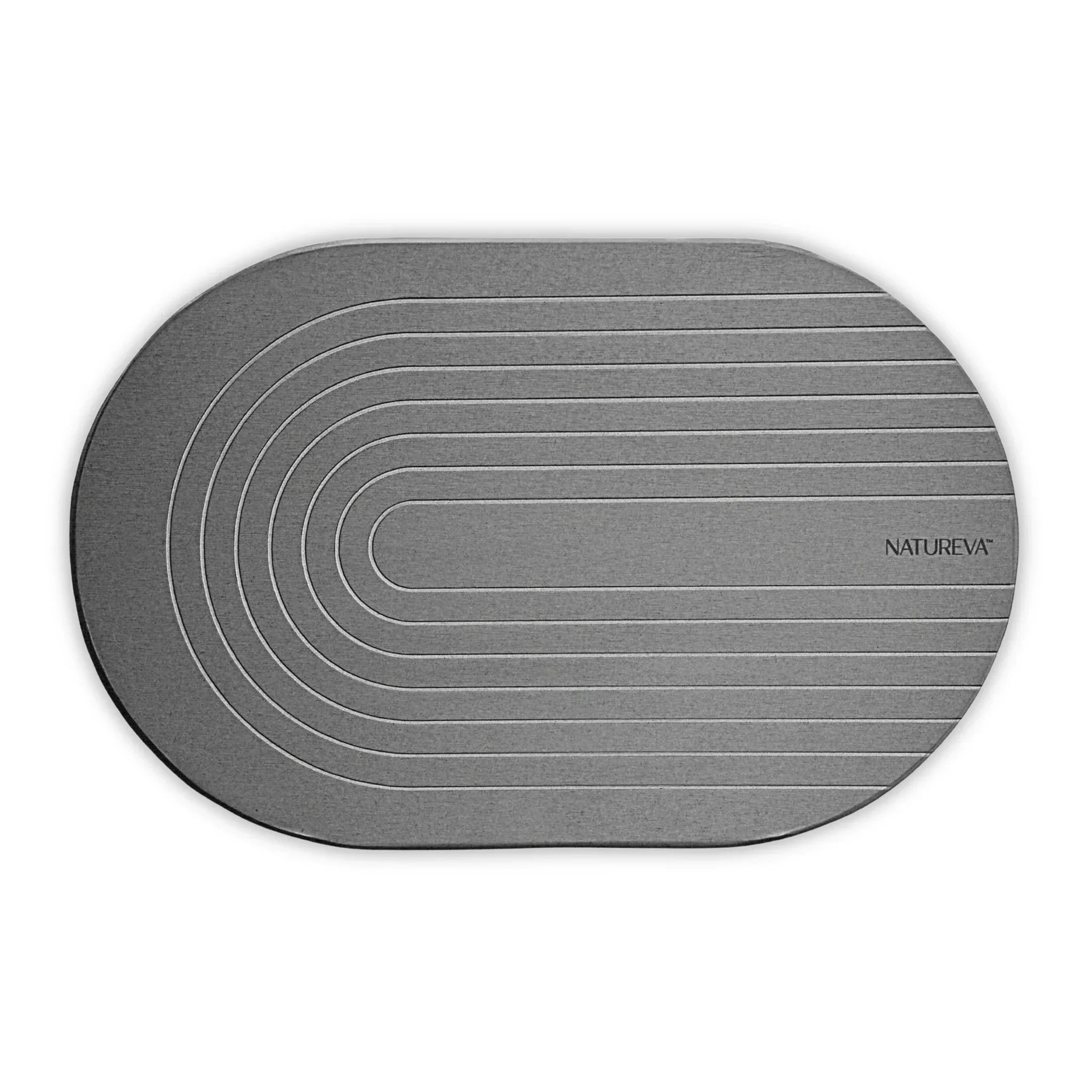
Your stone bath mat stopped absorbing water as fast as it used to, or maybe it's picked up a few stains you're not sure how to deal with. Either way, cleaning diatomite is nothing like cleaning a regular fabric mat. The wrong product can permanently clog the microscopic pores that make it work. The right approach takes about two minutes a week and keeps it performing like new for years. Here's exactly how to clean a stone bath mat without damaging it.
Table of Contents
How to Clean a Stone Bath Mat (Weekly Routine)
The best way to clean a stone bath mat is with something you probably already have in your kitchen: white vinegar. A simple vinegar and water solution breaks down soap residue, body oils, and mineral deposits without leaving any residue behind. Unlike commercial bathroom cleaners that coat surfaces, vinegar evaporates completely clean, which is exactly what you want for a porous material like diatomite.
Mix equal parts white vinegar and water in a spray bottle or bowl. That's your only cleaning product. Here's the full weekly routine:
- Mix 1:1 white vinegar and water
- Dampen a soft cloth with the solution (never pour liquid directly on the mat)
- Wipe the surface gently in the direction of any engraved patterns
- Let it air dry flat in its usual spot, or prop upright if it feels saturated
That's it. The vinegar smell disappears within minutes as it dries. This routine prevents buildup from accumulating in the microscopic pores that make your mat absorb water so quickly. If you use body oils, coloured soaps, or heavy moisturisers regularly, you might want to wipe it down twice a week instead.
The key things to avoid during weekly cleaning:
- Never soak the mat or let water pool on the surface
- Skip coloured soaps, scented cleaners, and anything with oils
- Don't scrub aggressively, gentle wiping is all it needs
- Never put it in the dishwasher or washing machine
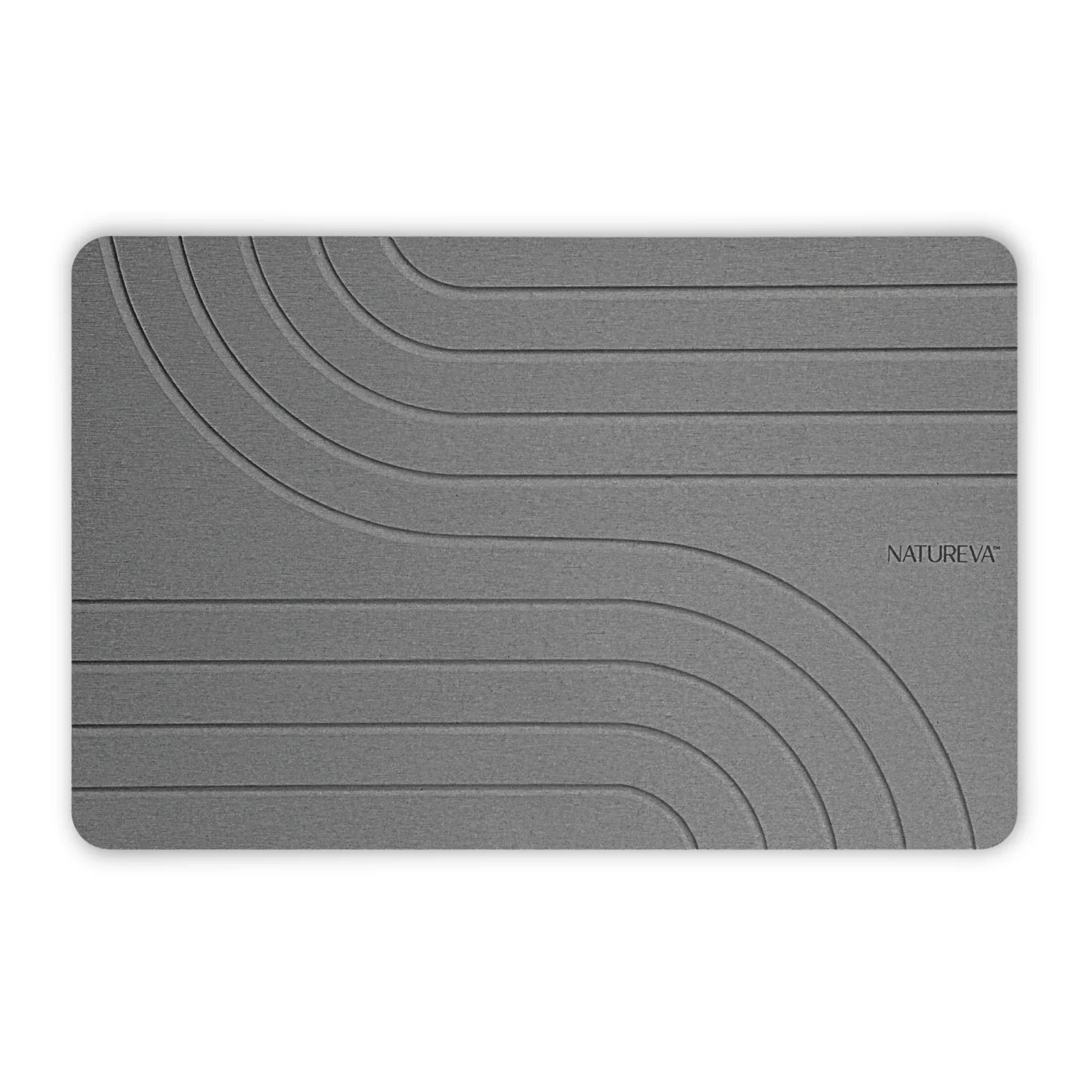
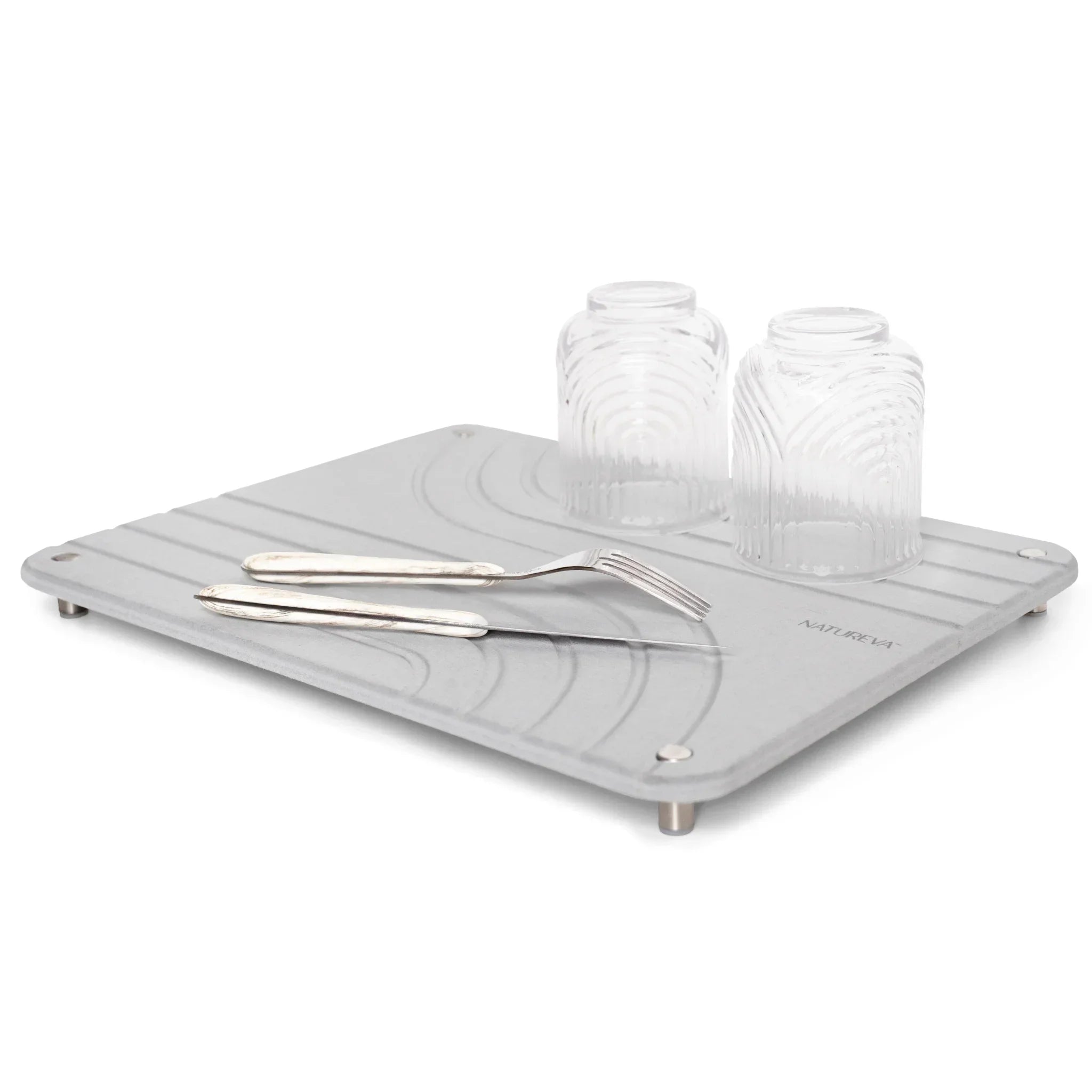
Our Natureva stone bath mats are designed to handle this simple maintenance without any special products. The same routine works for all diatomite products including dish mats and sink caddies.
How to Remove Stains from a Stone Bath Mat
Stains happen, especially in bathrooms where makeup, soap scum, and hard water are part of daily life. The good news is that diatomite's porous structure means most stains sit on the surface rather than soaking deep into the material. What looks like a permanent mark often comes away with the right cleaning method. The key is working through the steps in order, starting with the gentlest approach.
- Scrub with a sponge and clear, non-coloured dishwashing liquid under running water, then rinse thoroughly. This handles most stains.
- Still there? Apply a small amount of hydrogen peroxide to the area and gently scrub. This can help lift tougher stains without damaging the surface.
- Last resort: If the stain remains and is deeply set, lightly sand the surface using the included sanding tool. Take care not to sand too strongly, as this may mark or damage the surface. Avoid sanding over the printed logo.
| Stain Type | How to Clean It | Time Needed |
|---|---|---|
| Soap residue | Vinegar-water wipe | 2 minutes |
| Makeup marks | Sponge with clear dishwashing liquid, rinse well | 3 minutes |
| Hard water deposits | Dishwashing liquid first, then hydrogen peroxide if needed | 5 minutes |
| Stubborn or set-in stains | Dishwashing liquid, then hydrogen peroxide, then light sanding as last resort | 10 minutes |
| Yellowing or discolouration | Try hydrogen peroxide first, then sand entire surface evenly if needed | 5 minutes |
The dishwashing liquid must be clear and non-coloured. Coloured or dyed dishwashing liquids can leave pigment in the pores, creating new stains while you're trying to remove old ones. Use a soft sponge rather than a scrub brush to avoid damaging engraved surface patterns. Never use bleach, fabric softener, or oil based cleaners, as these either break down the material or permanently coat the absorbent pores.
The most important rule with stain removal: treat stains as soon as you notice them. The longer a stain sits, the deeper it can settle into the porous surface. A quick scrub right when it happens is always easier than working through all three steps later.
How to Restore Absorbency with Sanding
Even with regular cleaning, there will come a point where your stone bath mat absorbs water more slowly than it used to. You might notice small puddles forming where your feet land instead of the water disappearing instantly. This doesn't mean your mat is worn out. It means the microscopic pores at the surface have become clogged with mineral deposits and debris that regular wiping can't reach. A quick sand fixes this completely.
The next generation of home essentials: naturally made, cleaner by design, sustainable by nature.
SHOP ALLThe P320 grit sanding disc included with every Natureva stone product is designed specifically for this. It's gentle enough to preserve engraved patterns but abrasive enough to remove the thin layer blocking the pores.
- Place the mat on a flat, stable surface
- Use light circular motions with the sanding disc across the entire surface
- Focus extra attention on high traffic areas where feet land most often
- Fine dust will appear as you sand, this is normal
- Wipe away all dust with a damp cloth
- Splash water on the surface to test, it should disappear within seconds
The whole process takes about five minutes and makes a noticeable difference immediately. Most mats need sanding every 3 to 6 months depending on usage. A household of four will need it more frequently than someone living alone. Don't press hard or scrub aggressively, gentle pressure works better and protects the surface.
After sanding, the surface will feel slightly rougher than before. That's a good sign. It means fresh porous material is exposed and ready to absorb again. The texture smooths out naturally with regular foot traffic over the following days. The sanding disc that comes with products like our Tide bath mat or Flow dish mat lasts for multiple restorations. Learn more about how the absorption process works to understand why sanding is so effective.
What to Never Use on a Stone Bath Mat
The fastest way to ruin a stone bath mat is to clean it with products designed for fabric or sealed surfaces. Diatomite works because of its open pore structure, and anything that coats or saturates those pores destroys absorbency, sometimes permanently. Some cleaning methods seem logical but cause damage that can't be reversed.
| Safe to Use | Never Use |
|---|---|
| White vinegar and water | Bleach or chlorine cleaners |
| Clear, non-coloured dishwashing liquid with sponge | Fabric softener |
| Hydrogen peroxide (for tougher stains) | Oil based cleaners or essential oils |
| Plain water | Abrasive scrub brushes |
| P320 sanding disc | Dishwasher or washing machine |
| Damp cloth wipe | Coloured or dyed soaps and cleaners |
Fabric softeners and oils are the worst offenders. They coat every pore and block absorption completely. Once oil penetrates the surface, it's nearly impossible to remove fully. Bleach is another common mistake. It breaks down the composite material over time and can cause cracking.
Other things to avoid:
- Soaking the mat in water, this prevents proper evaporation and can cause warping
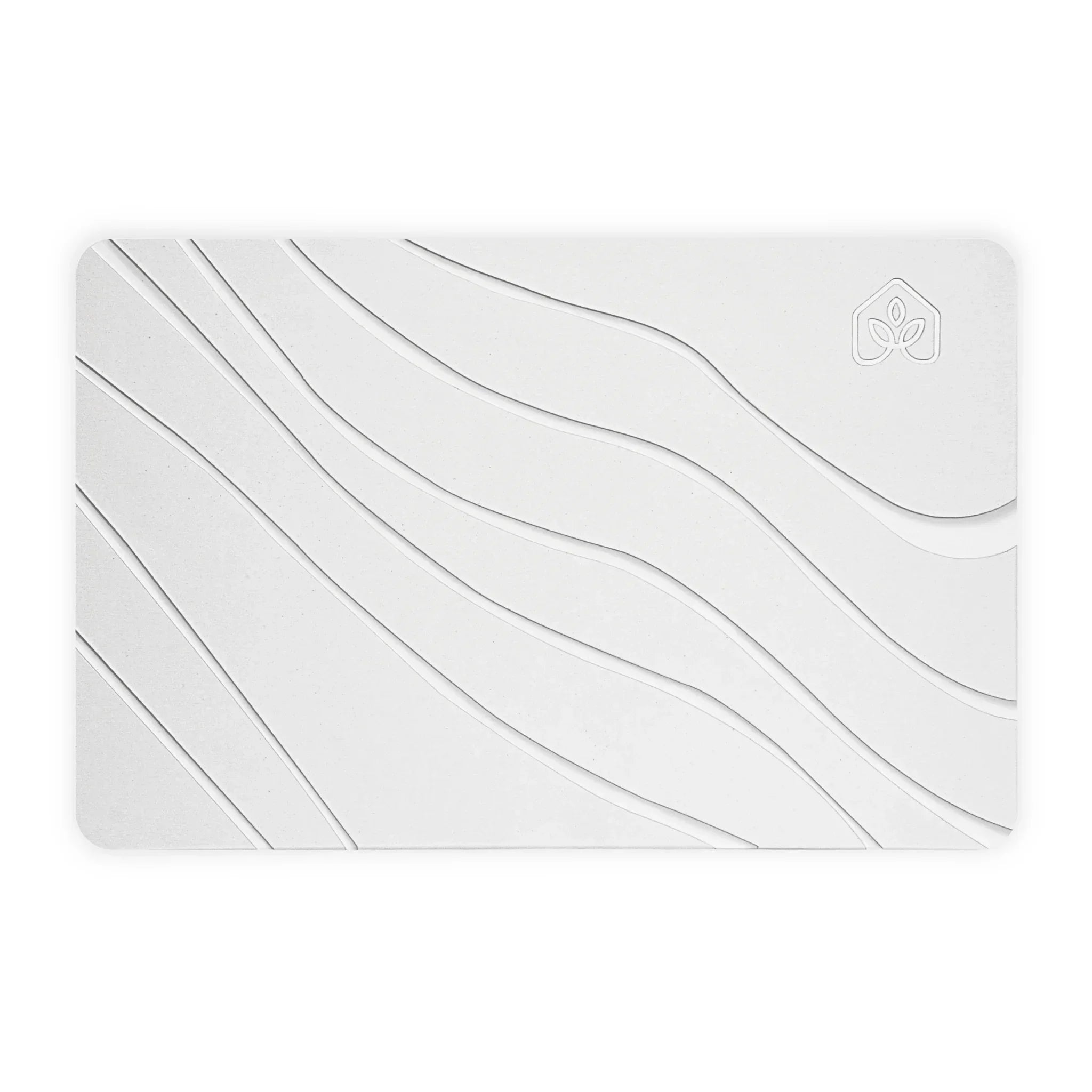
- Using abrasive scrub brushes on engraved patterns like Tide, Flow, or Rain
- Placing the mat in direct sunlight for extended periods to "dry it out"
- Using steam cleaners, the heat and pressure can damage the composite
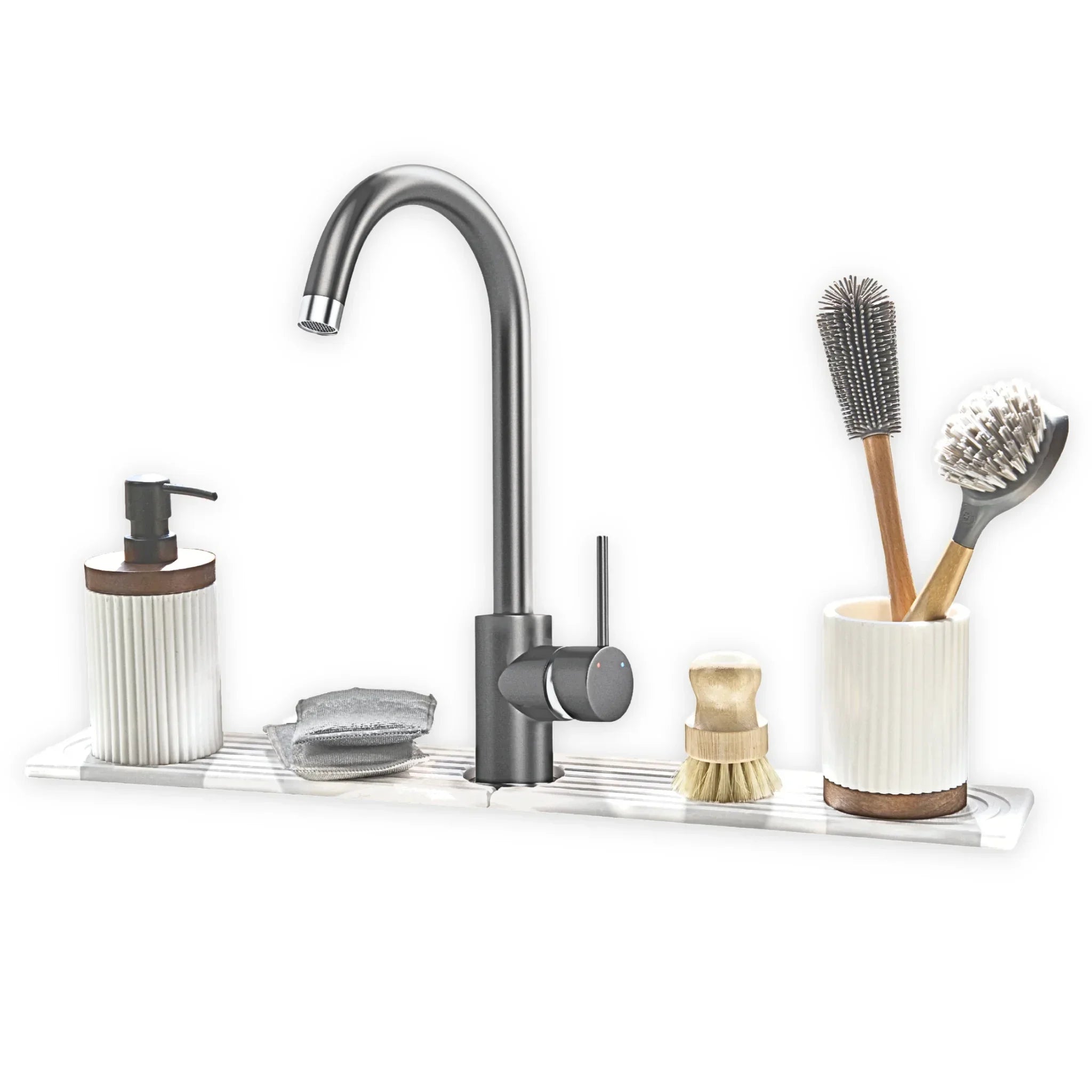
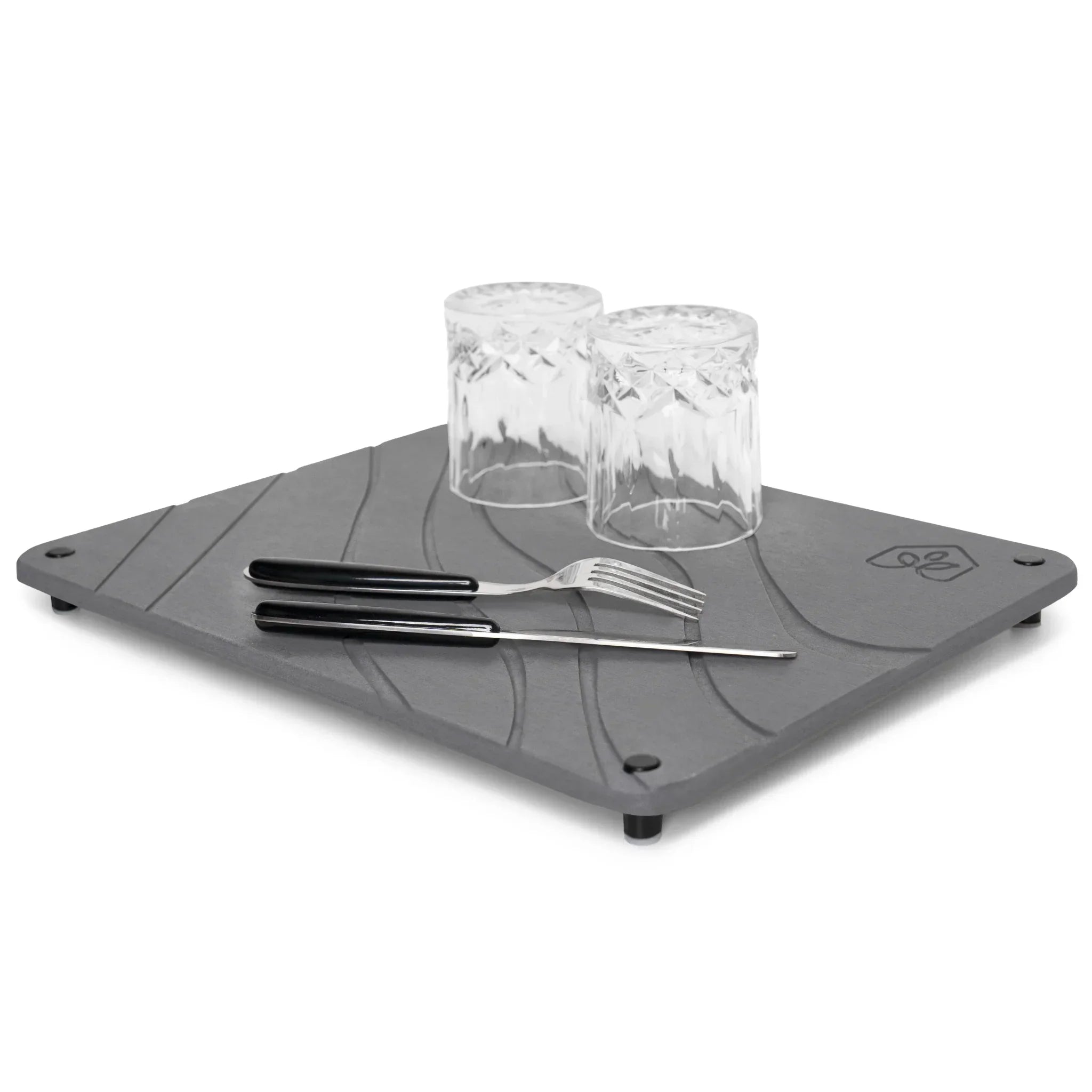
The same rules apply whether you have a bath mat, sink caddy, faucet mat, or pet mat. The diatomite material responds the same way across all products. When you treat it right, the natural antibacterial properties keep working through rapid drying alone, no chemical coatings needed.
Why Stone Bath Mats Need Different Care
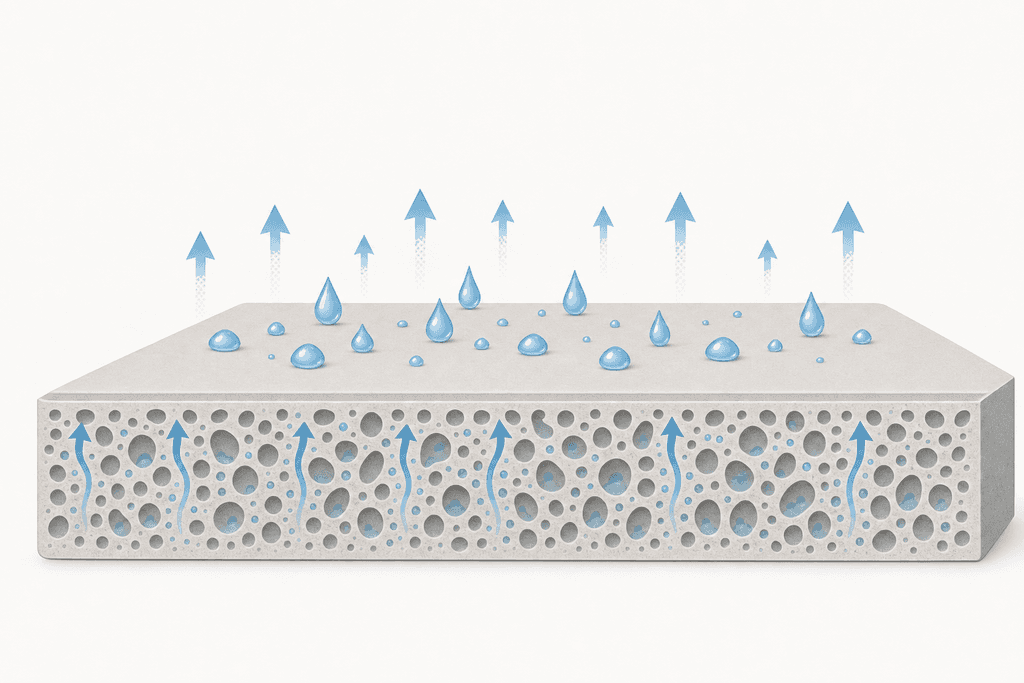
If you're wondering why you can't just clean a stone bath mat the same way you'd clean tile or a regular bathroom surface, it comes down to what the material actually is. Stone bath mats are made from diatomite, a natural rock formed from fossilised algae called diatoms. Under a microscope, the material is filled with millions of tiny pores that pull water in through capillary action and then release it back into the air through evaporation.
This pore system is what makes the mat absorb water instantly and dry itself within minutes. But those same pores are also why cleaning matters so much. If they get clogged with soap scum, body oils, or chemical residue, the whole absorption system stops working. You're not just cleaning a surface, you're maintaining a porous system that needs to stay open and functional.
| Material Feature | What It Does | Why Cleaning Matters |
|---|---|---|
| Millions of microscopic pores | Absorbs water instantly | Pores clog with residue if cleaned wrong |
| No synthetic coating | Allows rapid evaporation from all sides | Harsh chemicals damage unprotected surface |
| Diatomite and recycled paper composite | Keeps mat strong and breathable | Bleach and soaking weaken the binder |
| Natural rapid drying | Prevents bacteria without chemicals | Preserving drying ability is the whole point of care |
This is why the cleaning approach is so simple: vinegar and water for weekly maintenance, clear dishwashing liquid with a sponge for stains (with hydrogen peroxide as a second step for tougher marks), and occasional sanding for absorption. These methods clean without leaving anything behind. Commercial cleaners are designed for sealed surfaces that can handle chemical residue. Diatomite is unsealed by design, which is what makes it work so well but also what makes it sensitive to the wrong products.
For more detailed care guidance specific to each product type, visit our care and cleaning page. You can also find additional tips in our guide on seven easy care tips for stone bath mat longevity, or learn more about the material itself in our complete guide to diatomite.
Keep Your Stone Bath Mat Working Like New
Learning how to clean a stone bath mat properly takes about two minutes to understand and even less time to actually do each week. A quick vinegar wipe handles routine maintenance, a sponge with clear dishwashing liquid tackles most stains (with hydrogen peroxide for tougher marks), and the included sanding tool restores full absorbency whenever the surface starts slowing down. That's the entire care routine.
The real trick is knowing what to avoid. Fabric softeners, bleach, coloured soaps, and oil based cleaners can permanently clog the pores that make diatomite work. Stick with clear, residue-free products and your mat will keep absorbing water instantly for years.
The same approach works across all diatomite products, whether you're maintaining a stone bath mat, dish mat, sink caddy, faucet mat, or pet mat. The material does most of the work on its own. Your job is just keeping the pores clear and letting it breathe.
Common Questions About Cleaning Stone Bath Mats
Stone bath mats work differently than fabric, which means people often have questions about keeping them in good shape. Most concerns come down to understanding how diatomite behaves and what actually damages it versus what just looks like damage.
How often should I clean my stone bath mat?
A quick wipe with vinegar water once a week keeps most buildup from accumulating. If you regularly use body oils, heavy moisturisers, or coloured soaps, wiping twice a week is a better idea. The mat doesn't need deep cleaning unless you notice stains or absorption slowing down.
Can I use regular bathroom cleaners on a stone bath mat?
No. Most bathroom cleaners leave residue that clogs the microscopic pores and kills absorbency. Stick with white vinegar and water for weekly cleaning, or clear, non-coloured dishwashing liquid with a sponge for stains. If you accidentally use something harsh, rinse it thoroughly under running water and let it dry standing upright for 24 hours.
How do I know when to sand the surface?
If water sits on top for more than a few seconds instead of soaking in immediately, it's time to sand. The P320 grit tool included with every Natureva mat is designed for this. Most people need to sand every 3 to 6 months depending on how many people use the mat daily.
What if my stone bath mat stops absorbing completely?
Sand the surface first, since that fixes about 90% of absorption problems. If it still doesn't improve, scrub the blocked area with a sponge and clear, non-coloured dishwashing liquid under running water. For stubborn buildup, try hydrogen peroxide on the area, then sand again. Let it dry standing upright for at least 24 hours before testing.
Is it normal for the mat to feel rough after sanding?
Yes, and that roughness is a good sign. It means fresh porous material is exposed and ready to absorb. The texture smooths out naturally with regular foot traffic over the following days.
Can I clean the non slip base pad?
Yes, wipe it down with a damp cloth if it picks up dust or hair. Make sure both the mat and the pad are completely dry before putting them back together. Water trapped between the stone and the pad can slow down the drying process.
Can I use a stone bath mat without ever cleaning it?
Technically it will still work for a while, but absorption will gradually slow down as pores clog with natural buildup from soap, oils, and minerals in your water. A weekly vinegar wipe takes less than two minutes and keeps the mat performing at full capacity for years. It's worth the minimal effort.
The next generation of home essentials: naturally made, cleaner by design, sustainable by nature.
SHOP ALL