
Stone Bath Mat Explained and How to Choose the Right One
Fabric bath mats can stay damp for hours after a shower, creating the perfect environment for mould, mildew, and that musty smell no one wants in their bathroom. Stone bath mats solve this problem by absorbing water instantly and drying within minutes, thanks to a naturally porous material called diatomite. If you're tired of washing fabric mats every week or dealing with that perpetually damp feeling underfoot, understanding how stone bath mats work and what to look for when choosing one can transform your bathroom routine into something cleaner, drier, and far less maintenance-heavy.
How long does it take for a stone bath mat to dry?
Stone bath mats made from diatomite dry completely within 1 to 3 minutes after use due to their highly porous structure that absorbs moisture instantly and releases it through rapid evaporation. This quick-drying property prevents mold and mildew growth that commonly affects fabric bath mats.
What is diatomite and why is it used in bath mats?
Diatomite is a naturally occurring sedimentary rock formed from fossilized remains of diatoms (microscopic algae) that contains millions of tiny pores, making it absorb up to 150% of its weight in water. This exceptional absorption capacity and antimicrobial properties make diatomite the primary material in stone bath mats.
How often do you need to clean a stone bath mat?
Stone bath mats require light sanding with fine-grit sandpaper every 2 to 3 months to restore absorption capacity and should be wiped down weekly with a damp cloth. Unlike fabric mats that need weekly washing, stone mats are naturally antimicrobial and require minimal maintenance.
Table of Contents
The Science Behind Diatomite
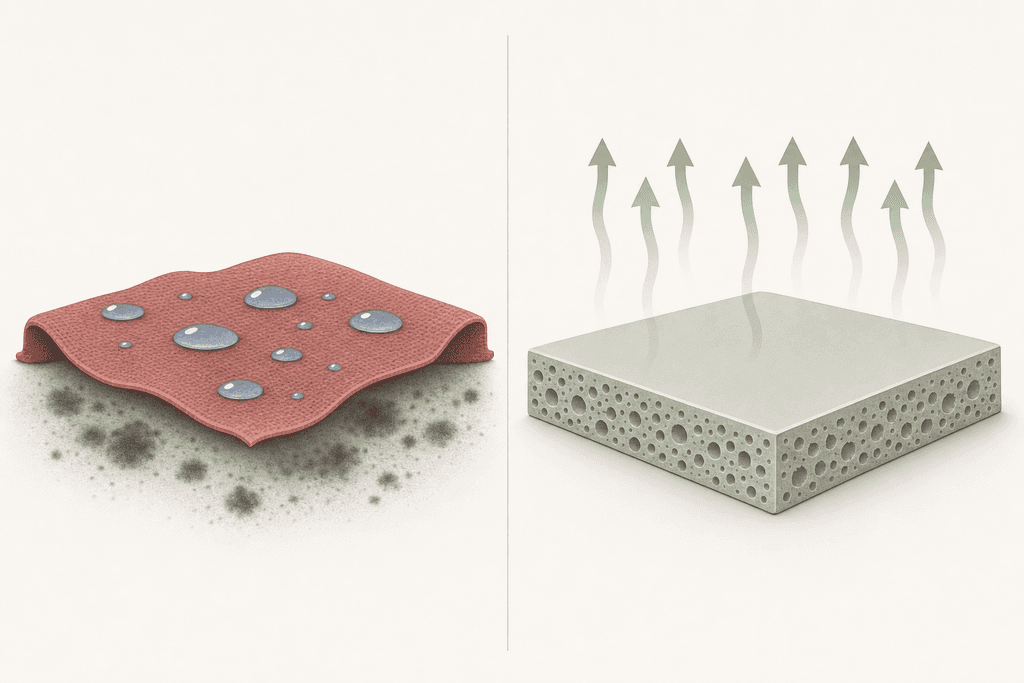
Most people step out of the shower onto a damp fabric mat that stays wet for hours, creating the perfect environment for mould and mildew. Stone bath mats work completely differently because they're made from diatomite, a natural material with a structure unlike anything else in your bathroom. Diatomite forms from fossilised diatoms, which are microscopic algae that lived in ancient oceans and lakes millions of years ago. When these tiny organisms died, their silica-based skeletons accumulated on the sea floor, eventually compressing into thick deposits of diatomaceous earth. The result is a mineral-rich material that looks solid but contains millions of invisible pores at the microscopic level.
How the Porous Structure Works
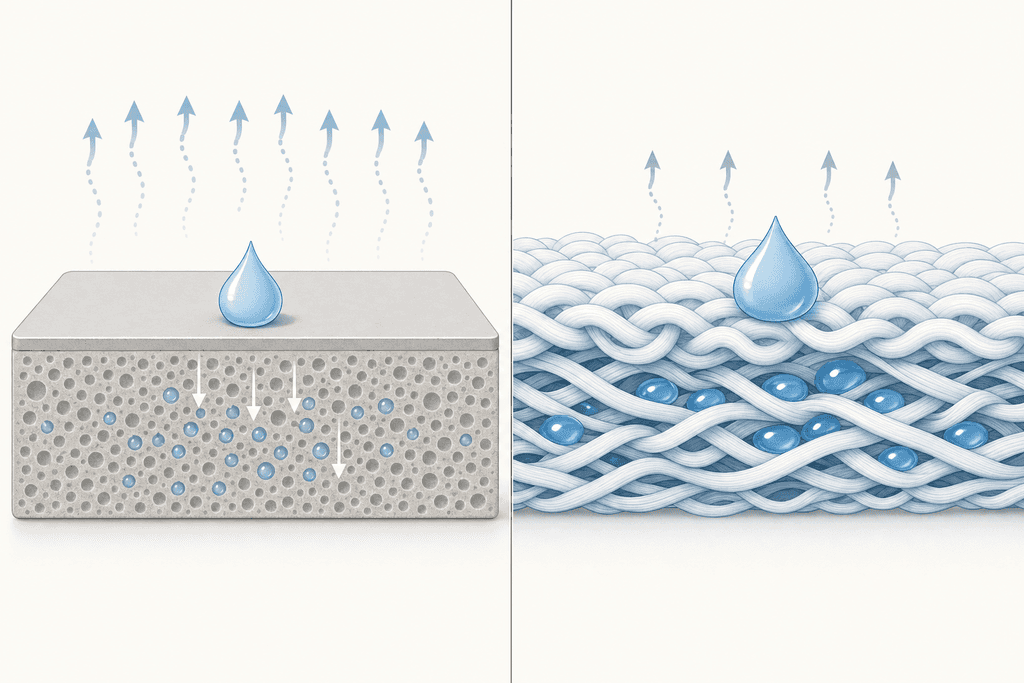
Think of diatomite like a sponge made of stone. Each microscopic pore acts as a tiny channel that pulls water away from the surface the moment your wet feet make contact. The water doesn't just sit on top like it does with rubber or silicone mats. Instead, it gets absorbed into the internal structure instantly, then releases back into the air through natural evaporation. This process happens so quickly that most stone bath mats dry completely within minutes, not hours.
The absorption happens because of capillary action, the same force that lets plants pull water up through their roots. Water molecules are naturally attracted to the silica walls inside each pore, drawing moisture inward without any chemical treatment or coating. Once inside, the water spreads throughout the porous network and evaporates through airflow.
Why Fast Drying Matters for Hygiene
The speed at which a bath mat dries directly affects how clean it stays. Mould, mildew, and odour-causing bacteria all need one thing to grow: moisture. When a surface stays damp for extended periods, it creates the perfect breeding ground for these problems. Stone bath mats eliminate this issue entirely through their rapid drying mechanism, not through chemical additives or treatments.
Here's what makes diatomite different from conventional bath mat materials:
- Fabric mats absorb water but trap it in fibres, staying damp for 4-8 hours
- Rubber and silicone mats repel water, leaving puddles on the surface that take hours to evaporate
- Microfibre mats hold moisture close to the floor, creating humid conditions underneath
- Stone mats absorb and release water within minutes, leaving no damp environment behind
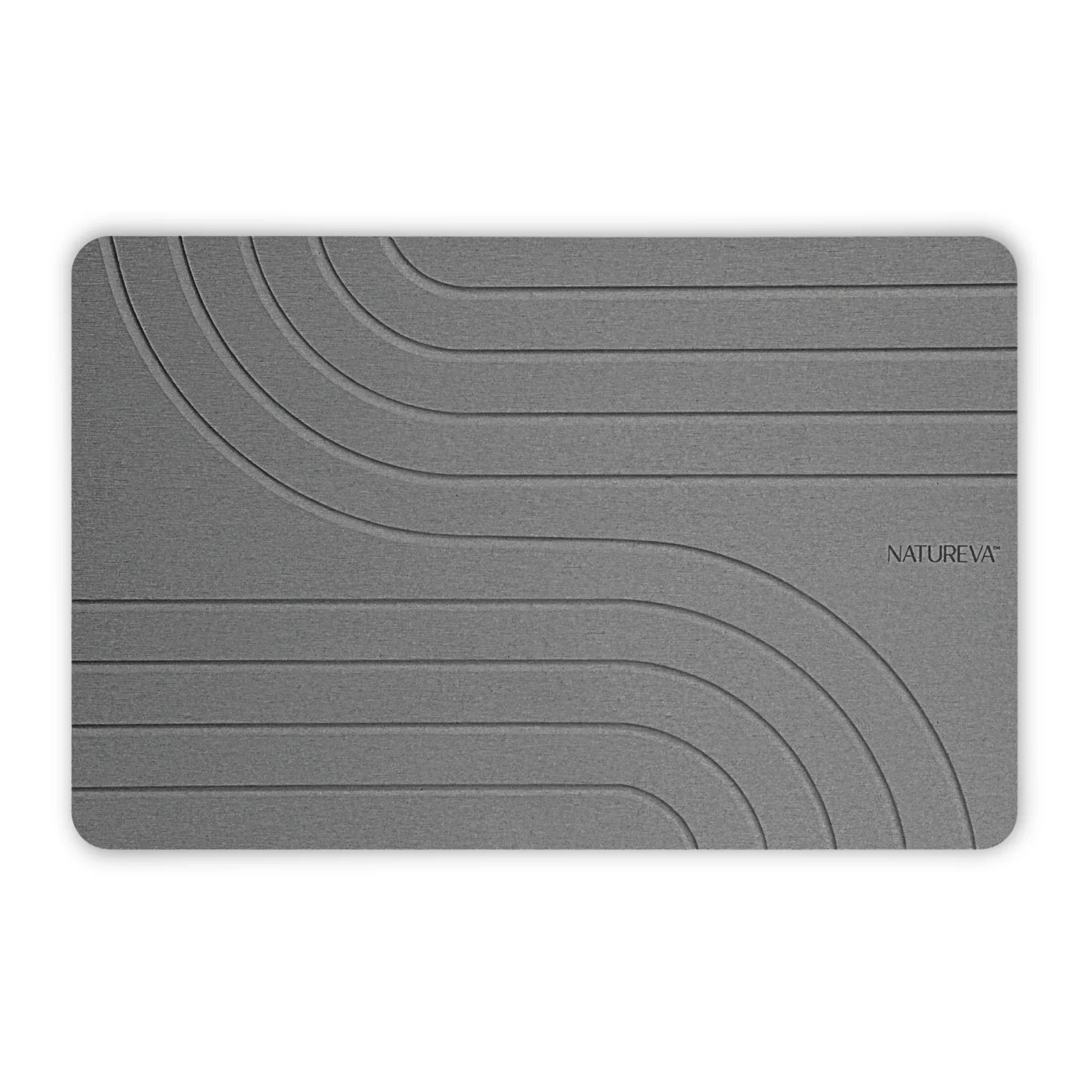
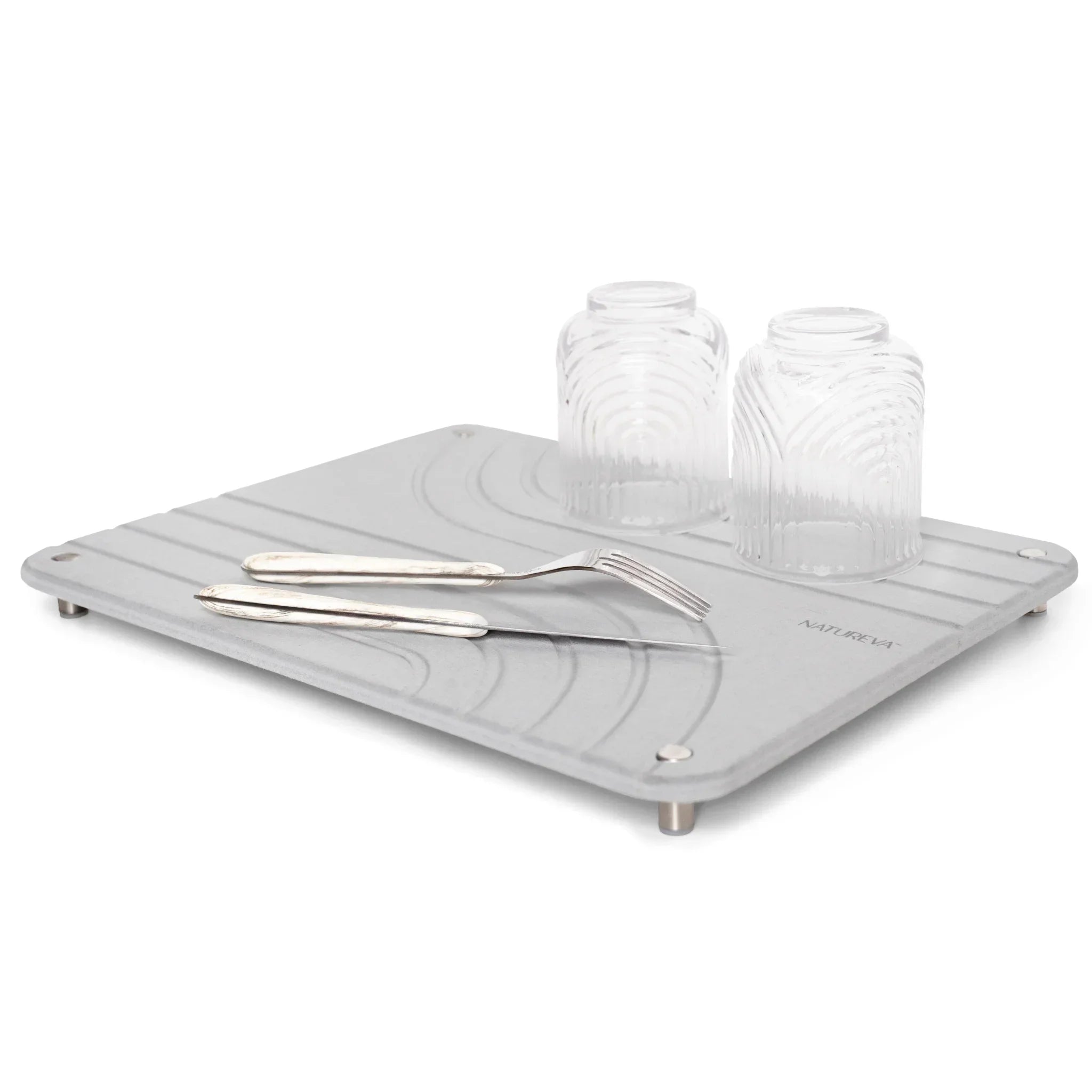
Natureva shapes diatomite into dense, stone-like slabs that feel solid underfoot while maintaining the material's natural breathability. Our stone bath mats use a composite of diatomaceous earth and recycled paper, compressed without synthetic coatings or moisture-trapping finishes. The material stays hygienic through its drying performance alone, which is why it works so well in humid bathrooms where traditional mats struggle.
The Material Composition
Not all stone bath mats use pure diatomite. Most products, including Natureva's, combine diatomaceous earth with binding materials to create a durable slab that won't crumble or break under daily use. The key is maintaining enough porosity to preserve the fast-drying properties while adding structural integrity. Natureva uses recycled paper as a binder, keeping the composition natural and chemical-free.
| Material Property | Diatomite Stone | Fabric Mats | Rubber/Silicone Mats |
|---|---|---|---|
| Drying Time | 5-10 minutes | 4-8 hours | 2-6 hours |
| Water Absorption | Instant, then evaporates | Absorbs and traps | Repels to surface |
| Mould Risk | Very low | High if not washed weekly | Medium to high |
| Maintenance Frequency | Weekly wipe down | Weekly machine wash | Weekly scrubbing |
The microscopic structure is what separates a true diatomite product from imitations. According to research published by the Journal of Earth and Planetary Sciences, authentic diatomaceous earth contains between 80-90% silica with a pore size ranging from 10 to 200 nanometers. This specific range is what creates the capillary action needed for instant absorption and rapid evaporation.
How Stone Bath Mats Outperform Traditional Options
Most fabric bath mats stay damp for hours after a single shower, creating the perfect environment for mould and mildew to develop. That damp, musty smell you notice after a few days isn't just unpleasant, it's a sign that moisture is trapped in the fibres where bacteria thrive. Stone bath mats work differently because they're made from diatomite, a naturally porous material formed from fossilised algae. The microscopic pores absorb water instantly and release it back into the air through rapid evaporation, leaving the surface dry within minutes instead of hours.
Rubber and silicone mats might seem like a step up from fabric, but they trap moisture underneath where you can't see it. That hidden dampness sits against your bathroom floor, creating conditions where mould can grow unnoticed until you lift the mat and find dark spots or a slimy film.
| Mat Type | Drying Time | Maintenance | Lifespan |
|---|---|---|---|
| Fabric | 4-8 hours | Weekly washing | 6-12 months |
| Rubber/Silicone | 2-4 hours | Frequent scrubbing | 1-2 years |
| Stone (Diatomite) | Under 8 minutes | Weekly wipe | 3-5 years |
Stone mats eliminate the damp environment that causes odour and mould formation, which means less time spent washing and replacing mats. A quick weekly wipe with a damp cloth and cleaning vinegar is all you need to keep the surface clean. Compare that to throwing a fabric mat in the washing machine every few days or scrubbing a rubber mat with a brush to remove buildup.
The performance difference becomes obvious after the first week of use. While fabric mats start to smell and rubber mats develop a sticky residue, stone mats stay dry and clean through their natural moisture-evaporation mechanism. Our stone bath mat collection includes four different surface patterns, all engineered to absorb water the moment your feet touch the surface.
Key Features to Look for When Choosing a Stone Bath Mat
Not all stone bath mats are created equal, and the material composition matters more than most people realize. A quality stone mat should be made from diatomite and recycled paper without synthetic coatings that would block the natural pores and prevent proper moisture absorption. Some manufacturers add chemical finishes or sealants that actually trap water instead of letting it evaporate, defeating the entire purpose of using stone in the first place.
Safety certification is non-negotiable when shopping for diatomite products. NATA-accredited asbestos-free certification ensures the material has been tested by an Australian laboratory and meets safety standards. This matters because diatomite products from unverified sources have faced recalls due to asbestos contamination, which is why independent testing from a recognized authority like NATA provides peace of mind.
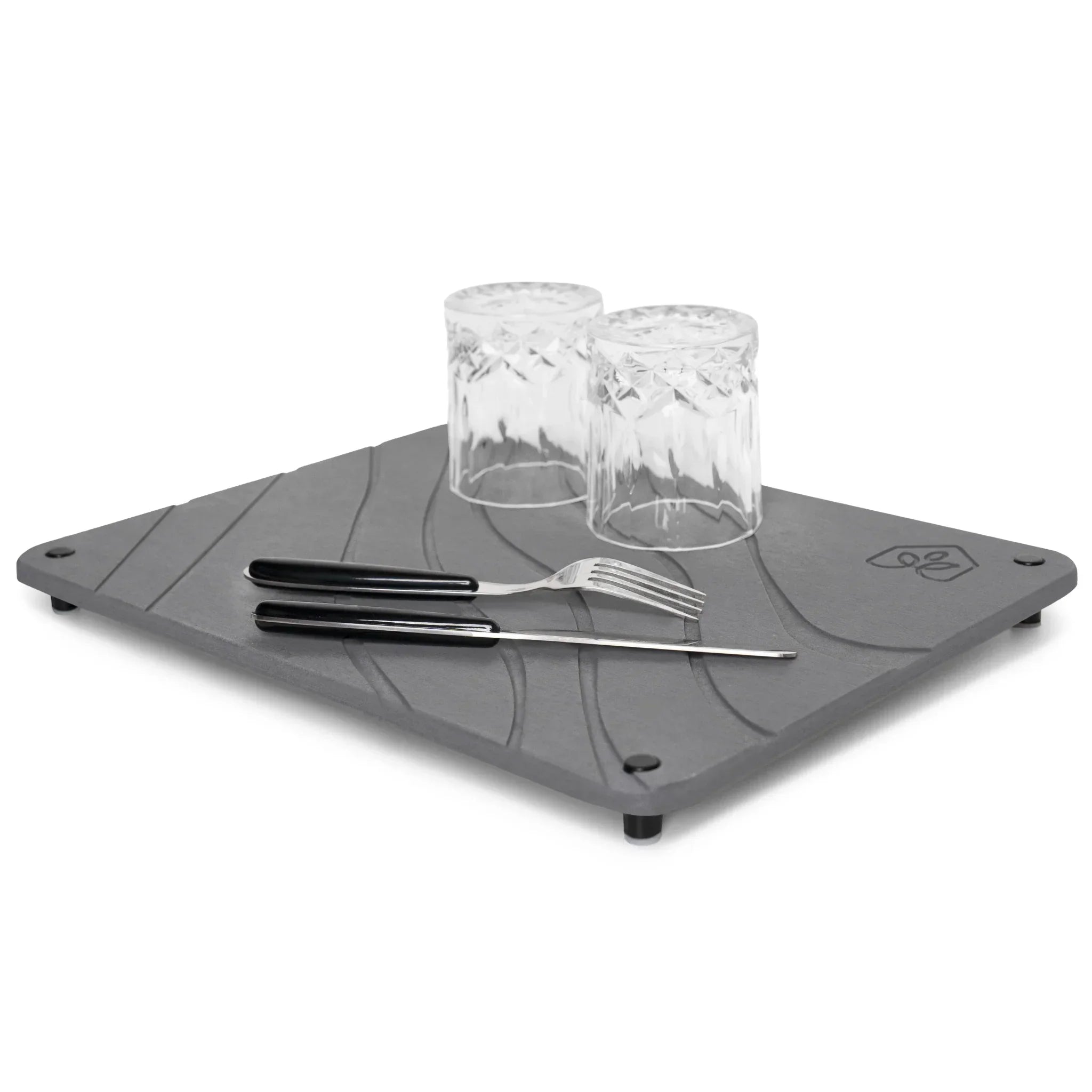
- Non-slip base pad prevents the mat from sliding on wet bathroom floors, reducing fall risk
- Surface design affects how water channels across the mat and how it looks in your space
- Weight and dimensions determine stability (heavier mats stay in place better) and coverage area
- Included restoration tools like a sanding disc extend the product's lifespan by reopening pores
The weight of a stone bath mat tells you something about its density and durability. A mat that weighs around 1.8 kg for a standard 60 × 39 cm size indicates solid construction that won't crack or break easily. Lighter mats might be easier to move around, but they're also more likely to shift underfoot when wet.
Look for mats that come with a P320 grit sanding disc in the box. This simple tool reopens the microscopic pores on the surface when absorption slows down over time, restoring the mat to like-new performance. Without this included accessory, you'd need to buy sandpaper separately or replace the entire mat once it stops absorbing as quickly. For a detailed breakdown of what to check before buying, this guide on five diatomite bath mat features covers the technical details.
Design Styles and How They Fit Your Bathroom
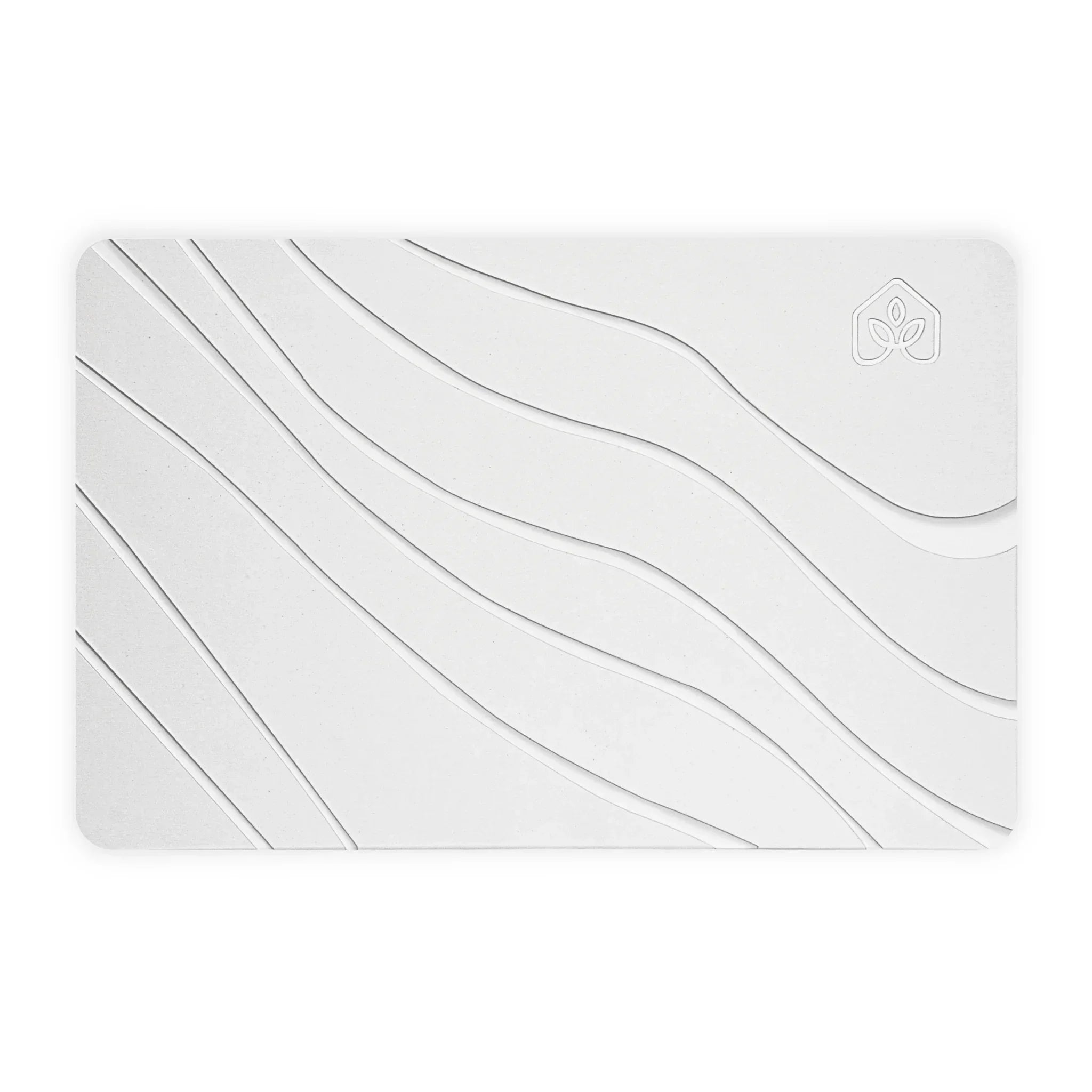
The carved surface patterns on stone bath mats serve both functional and aesthetic purposes. Water channels along the engraved lines, spreading moisture across more surface area for faster evaporation. At the same time, these patterns create visual texture that complements modern bathroom design without overwhelming the space. Horizontal shoreline bands, diagonal wave contours, rounded architectural lines, and vertical rain-inspired segments each bring a different character to the room.
Colour selection typically includes three neutral tones that work with most interior palettes. Graphite (charcoal) suits darker, moodier bathrooms with black fixtures and deep tile colours. Slate (soft grey) bridges the gap between light and dark spaces, working well in bathrooms with mixed metal finishes. Chalk (white) fits bright, airy bathrooms with white or light-coloured tile and fixtures.
- Tide pattern features soft horizontal contour bands that resemble shoreline movement
- Flow pattern uses layered diagonal wave contours suggesting landscape motion
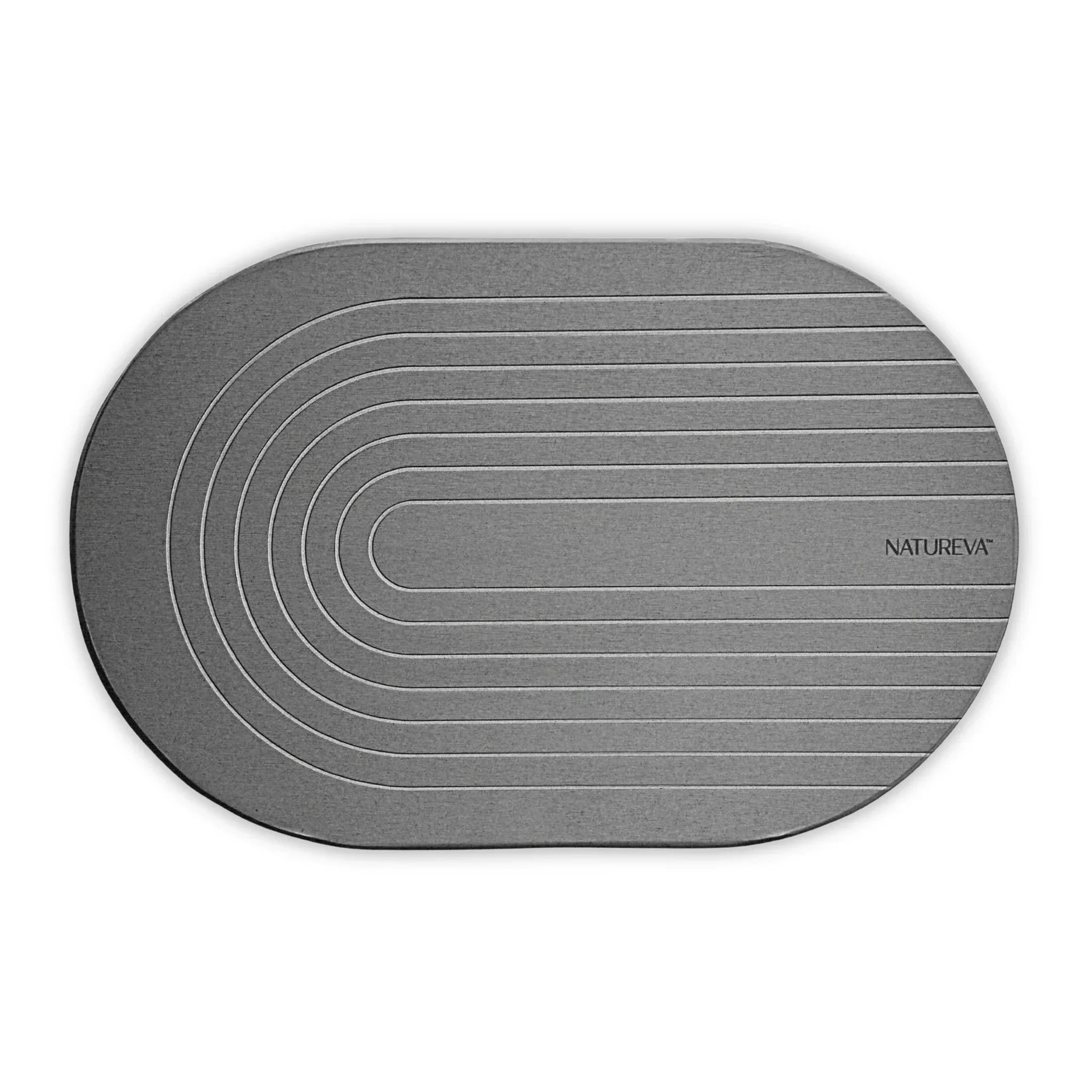
- Arch pattern creates rounded architectural contour lines in an oval silhouette
- Rain pattern arranges sparse vertical line segments like falling droplets
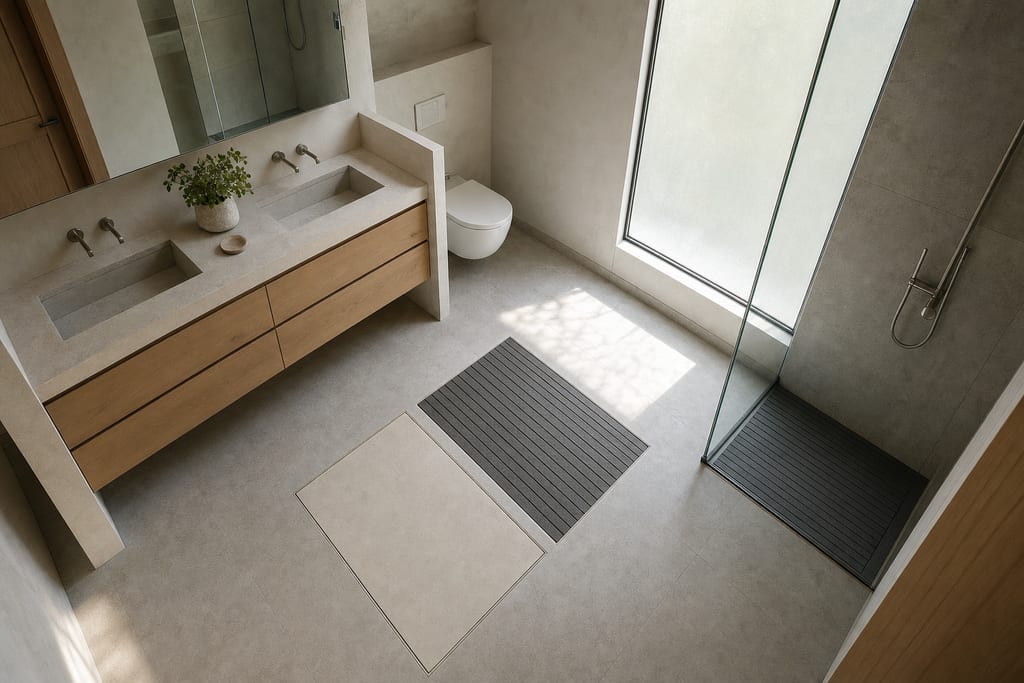
Minimalist engraving complements modern, Japandi, and Scandinavian design styles because it adds visual interest without clutter. The patterns read as subtle texture rather than bold decoration, which means they integrate quietly into spaces where clean lines and natural materials take priority. If your bathroom features wood accents, concrete surfaces, or matte black hardware, a stone mat with carved geometry fits right in.
Format matters for different bathroom layouts. Rectangular mats work well in front of standard bathtubs and walk-in showers where you step out in a predictable spot. Oval formats suit corner showers or smaller bathrooms where a softer shape feels less rigid against curved fixtures. Our Arch bath mat uses the oval silhouette with matching contour engraving that follows the shape.
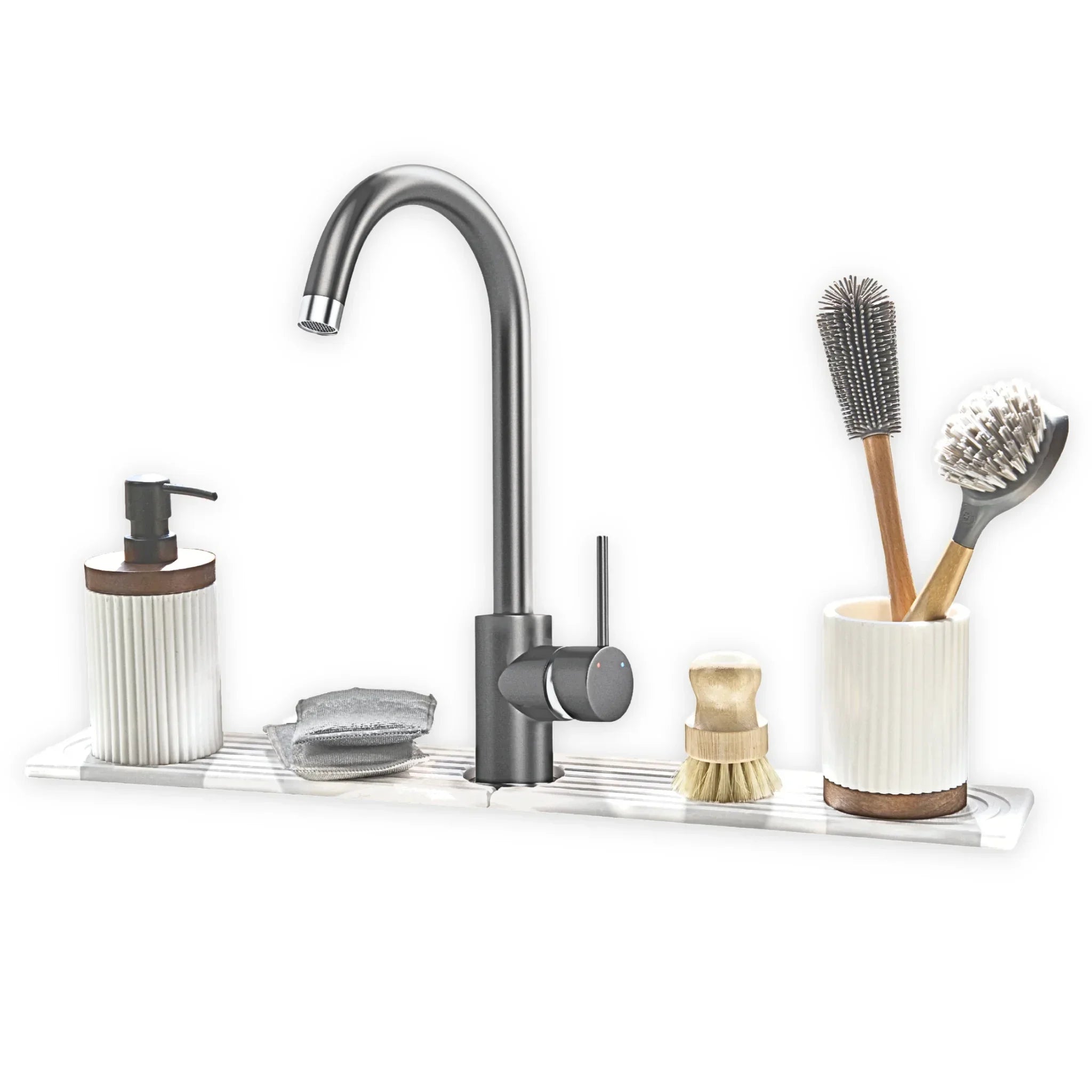
Coordinated product systems let you match the same design language across multiple bathroom surfaces. A bath mat, faucet mat, and sink caddy in the same pattern and colour create visual continuity without requiring exact matching, since the carved patterns tie everything together. This approach works especially well in open-concept bathrooms or ensuites where multiple surfaces are visible at once.
Maintenance and Care Requirements
Stone bath mats need far less maintenance than fabric or rubber alternatives, but they do require a simple weekly routine to stay in top condition. Wipe the surface with a warm damp cloth and cleaning vinegar once a week to remove any soap residue, dust, or mineral deposits from hard water. This takes about 30 seconds and prevents buildup that could clog the microscopic pores over time.
Avoid using coloured soaps or body washes directly on the mat surface. The porous structure that makes diatomite so absorbent also means it can absorb pigments from dyed products, leaving faint stains that are hard to remove. If you do notice discolouration, rinse the mat under running water and use hydrogen peroxide on stubborn marks before they set in.
The next generation of home essentials: naturally made, cleaner by design, sustainable by nature.
SHOP ALL- Weekly wipe with warm damp cloth and cleaning vinegar maintains surface cleanliness
- Avoid coloured soaps that can stain the porous surface
- Sanding tool reopens pores and restores full absorbency when needed
- Air dry upright when fully saturated to maximize evaporation
- No machine washing or harsh chemicals required
The included sanding tool becomes useful after several months of daily use when you notice the mat isn't absorbing water as quickly as it did when new. Gently sand the surface in circular motions with the P320 grit disc to remove the thin layer of compacted material and reopen the pores underneath. This restores the mat to its original absorption speed and extends its lifespan by years.
When the mat becomes fully saturated after multiple showers in a short period, lean it upright against a wall or in a corner to maximize airflow around all sides. This rarely happens with normal use since the mat dries so quickly, but if you have a large family taking back-to-back showers, giving it a few hours to fully dry prevents any moisture from sitting on the surface. According to independent testing by Baptist Health, proper care ensures stone mats maintain their performance for years.
The low-maintenance nature of stone mats means you spend less time on bathroom cleaning overall. No more throwing mats in the washing machine, hanging them to dry, or replacing them every few months when they start to smell. A quick wipe and occasional sanding is all it takes to keep a stone mat performing like new, which is why they've become a popular choice for people who want a cleaner bathroom without adding more chores to their routine. You can explore the full range of diatomite bath mats and see how different patterns and colours fit your space.
Why Stone Wins for Modern Bathrooms
Stone bath mats solve the single biggest frustration with traditional fabric mats: they stay wet for hours after use. Most households don't have time to wash bath mats weekly or deal with the musty smell that develops when moisture sits trapped in fabric fibres. A stone bath mat dries within minutes through rapid evaporation, which means the surface never stays damp long enough for mould or mildew to develop. This hygienic-by-design approach removes the need for constant washing cycles that fabric mats demand.
Time Savings That Actually Matter
Time-poor households benefit most from switching to stone. The maintenance difference is measurable and real.
- Fabric mats require washing every 3-7 days to prevent odour buildup
- Stone mats need only a quick wipe with warm water and vinegar once a week
- No dryer time, no waiting for mats to air dry, no damp bathroom floors
- The included sanding tool restores full absorbency in under a minute when needed
For families juggling work, kids, and daily routines, eliminating one weekly laundry load makes a noticeable difference. The Natureva Stone Bath Mat stays dry between uses, so there's no rush to wash it before guests arrive or before it starts to smell.
Safety Without Compromise
Older adults face real fall risks from fabric mats that bunch, slide, or curl on wet bathroom floors. Stone mats sit flat and stable with a full non-slip base pad that grips tile and vinyl surfaces securely. The solid 1.8 kg weight keeps the mat in place even when stepped on wet, and the surface texture provides grip without feeling rough underfoot.
| Mat Type | Drying Time | Washing Frequency | Slip Risk |
|---|---|---|---|
| Fabric | 4-8 hours | Weekly | High (bunching) |
| Stone | Under 10 minutes | Monthly wipe | Low (stable) |
Design That Fits Modern Interiors
Design-focused homeowners choose stone because it looks intentional, not accidental. The carved surface patterns on Natureva's Tide, Flow, Arch, and Rain designs add visual rhythm without clutter, and the Graphite, Slate, and Chalk colourways coordinate with modern bathroom palettes. Stone reads as a permanent fixture rather than a temporary accessory, which matters when you're trying to create a cohesive interior.
- Minimalist aesthetic integrates with Japandi, Scandi, and contemporary design styles
- Neutral tones work across renovation phases and décor changes
- Architectural engraving adds texture without pattern overload
Environmentally responsible materials align with sustainable living values that many Australian households now prioritise. Stone mats are made from diatomaceous earth and recycled paper with no synthetic coatings, and they last years instead of months. According to independent comparisons of stone versus cloth bath mats, the durability difference means fewer replacements and less textile waste ending up in landfill. For health-conscious families, the fast-drying surface reduces the conditions where mould and mildew develop, creating a cleaner bathroom environment without chemical sprays or constant maintenance.
Making the Right Choice for Your Home
A stone bath mat solves one specific problem that fabric, rubber, and silicone alternatives cannot fix: the recurring issue of damp bathroom floors and wet surfaces that never fully dry. The material science behind diatomite creates a surface that absorbs water on contact and releases it back into the air within minutes, leaving no damp environment where mould, mildew, or odour can develop. This is not about adding chemicals or coatings to fight moisture. It is about using a naturally porous material that eliminates the conditions where those problems start in the first place.
When you are comparing options, the quality indicators matter more than the price tag. Look for NATA-accredited asbestos-free certification, included restoration tools like a sanding disc, and a non-slip base that keeps the mat stable on wet floors. These details separate a well-engineered product from a cheap imitation that might look similar but will not perform the same way over time.
Design versatility is the other half of the equation. A stone bath mat should fit into your bathroom without clashing with your existing style, whether that is modern minimalist, Japandi, or something in between. Our bath mat collection includes four carved surface patterns and three neutral colourways that work across different interior aesthetics, so you are not stuck with a single generic option.
The right stone bath mat is not just about solving a moisture problem. It is about choosing a surface that stays cleaner with less effort, looks intentional in your space, and comes with the certifications and tools that prove it was designed to last. That combination is what makes the difference between a product that works and one that actually improves how your home functions day to day.
Common Questions About Stone Bath Mats
Stone bath mats work differently than anything you've used before, so it's normal to have questions. The material itself is what makes these mats unique, and understanding how diatomite behaves helps you get the most out of it. Here are the answers to what people ask most often when they're considering making the switch from fabric or rubber mats.
How long do stone bath mats take to dry completely?
A stone bath mat absorbs water instantly when you step on it, and the surface feels dry to the touch within seconds. Complete evaporation happens within minutes, not hours. Independent testing by Australia's Homes To Love publication confirmed that the Natureva Stone Bath Mat dried fully in under 8 minutes. That's faster than any fabric mat can manage, even in a well-ventilated bathroom.
Are stone bath mats safe and free from harmful materials?
Safety depends entirely on where the diatomite comes from and whether it's been tested. Some diatomite products have faced recalls due to asbestos contamination, which is why independent laboratory certification matters. Natureva stone products are tested and certified asbestos-free by a NATA-accredited Australian laboratory, with regular testing to maintain that standard. NATA is Australia's peak accreditation body for laboratory testing, so this isn't a marketing claim, it's a verified fact.
Can stone bath mats crack or break with regular use?
Stone bath mats are solid and durable, but they're not indestructible. Dropping them on a hard surface or applying sudden impact can cause cracks. With normal use, standing on them daily after a shower, they hold up well. The material is dense enough to support body weight without flexing or breaking down over time like fabric mats do.
How do you clean a stone bath mat?
Cleaning is simple because the mat doesn't trap moisture or odour the way fabric does. Wipe it weekly with a warm damp cloth and cleaning vinegar. Avoid coloured soaps that can stain the porous surface. For deeper marks, rinse under water or use hydrogen peroxide. If you notice reduced absorbency over time, the included sanding tool reopens the surface pores and restores full performance.
Do stone bath mats work in humid climates?
Yes, and that's actually where they perform best. Humid environments are exactly where fabric mats struggle, staying damp for hours and creating the perfect conditions for mould and mildew. Stone mats evaporate moisture rapidly regardless of ambient humidity because the diatomite structure releases water into the air through millions of microscopic pores. The mat doesn't rely on air circulation alone to dry.
What happens if the mat stops absorbing water?
Reduced absorbency usually means the surface pores have become clogged with soap residue, oils, or dust. This is normal over time and completely reversible. The sanding tool included with every Natureva stone product is designed specifically to reopen those pores. A quick light sanding restores the mat to full absorbency, and you can repeat this process as needed without damaging the material.
The next generation of home essentials: naturally made, cleaner by design, sustainable by nature.
SHOP ALL