
Teak Bath Mats for Spa Style Bathrooms and Better Drainage
Teak bath mats promise spa luxury but create a hidden problem most homeowners discover too late: water doesn't disappear, it just hides underneath. While the slatted wood looks elegant, moisture trapped between the mat and your floor becomes a breeding ground for mold and bacteria. Understanding why elevation fails where absorption succeeds can save you from constant maintenance and help you choose materials that actually keep your bathroom dry.
Table of Contents
What Makes Teak Popular for Bathrooms
Teak wood has been used in boat building for over 2,000 years because it doesn't rot when exposed to water. This same quality made it a natural choice for bathroom floors and bath mats when homeowners started looking for alternatives to soggy fabric mats in the 1990s. The wood contains natural oils called tectoquinone that repel water from its surface, which sounds perfect for a wet bathroom environment. But there's a big difference between water resistance and actual moisture management, and that's where most people get confused about what a teak bath mat can actually do.
The Spa Aesthetic Connection
Walk into any high-end spa and you'll probably see teak somewhere. The warm honey-brown color and visible wood grain create that relaxed, natural vibe that interior designers love. Teak became trendy in home bathrooms around the early 2000s when the "spa bathroom" look took off in home renovation shows and design magazines.
The material fits perfectly with the organic, zen-inspired aesthetic that defines modern spa design. It looks expensive, feels natural underfoot, and gives bathrooms an upscale resort feeling without much effort.
How Teak Compares to Traditional Materials
Before teak bath mats became popular, most people used one of four common options. Cotton mats were soft but stayed wet for hours and grew mildew quickly. Rubber mats dried faster but looked cheap and often developed that musty smell. Bamboo offered a similar natural look to teak but cracked more easily and didn't have the same water-repelling oils. Memory foam mats felt luxurious but trapped moisture underneath and needed constant washing.
| Material | Water Resistance | Drying Time | Maintenance Needs |
|---|---|---|---|
| Teak | High surface repellency | 2-4 hours | Monthly oiling, weekly cleaning |
| Bamboo | Moderate | 1-3 hours | Bi-monthly sealing |
| Cotton | None (absorbs) | 6-12 hours | Weekly washing |
| Rubber | Complete (non-porous) | 30-60 minutes | Weekly scrubbing |
| Diatomite Stone | Instant absorption | 5-15 minutes | Monthly sanding |
Teak seemed like the best compromise. It looked better than rubber, dried faster than cotton, and lasted longer than bamboo. But water resistance isn't the same as moisture management, and that's the problem most teak bath mat owners discover too late.
Water Resistance Versus Moisture Management
When water hits a teak bath mat, the natural oils push moisture to sit on top of the wood instead of soaking in immediately. This is water resistance in action. The wood itself stays relatively dry while water pools on the surface or drips between the slats onto your floor. According to bathroom accessory experts, this creates a slipping hazard and doesn't actually remove moisture from your bathroom environment.
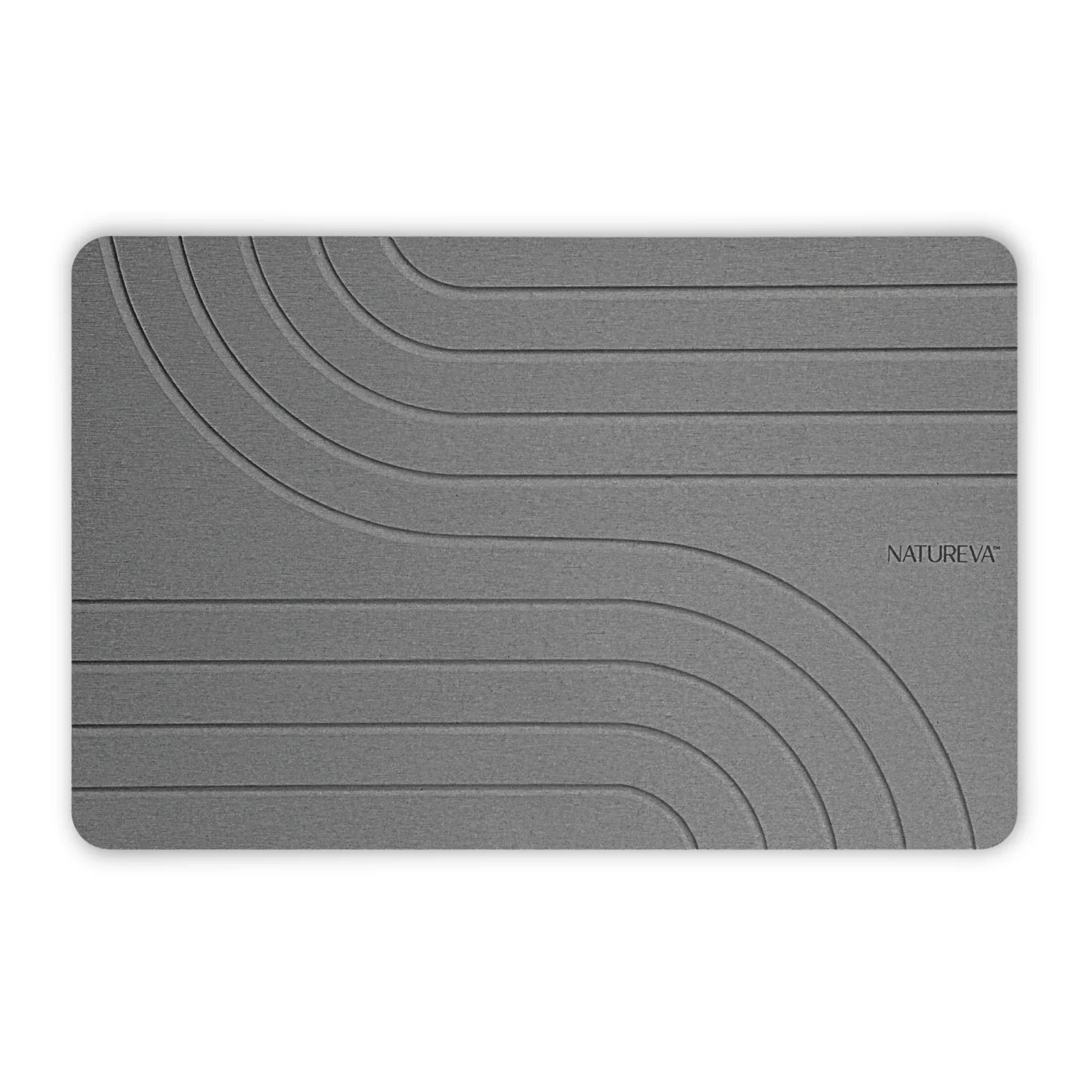
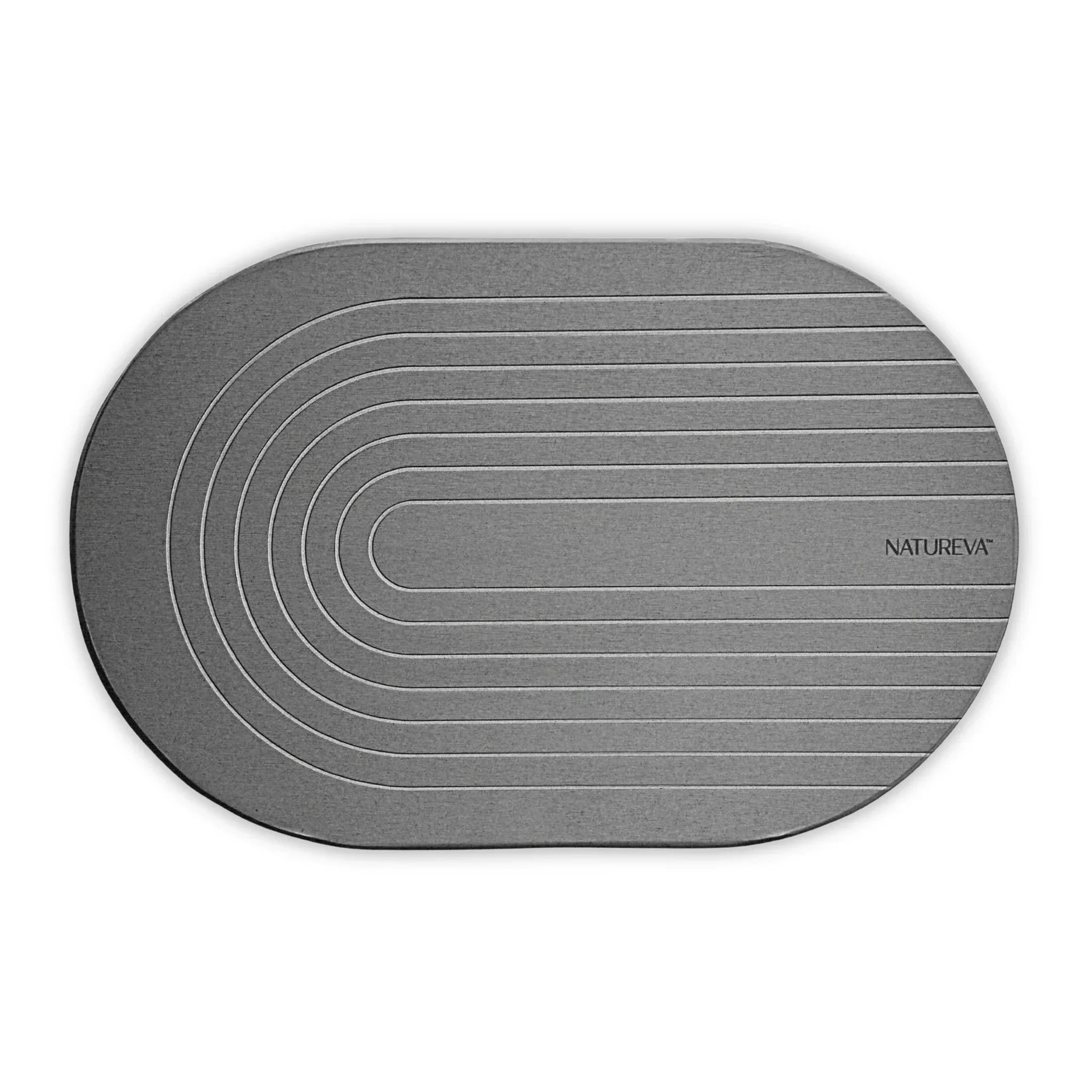
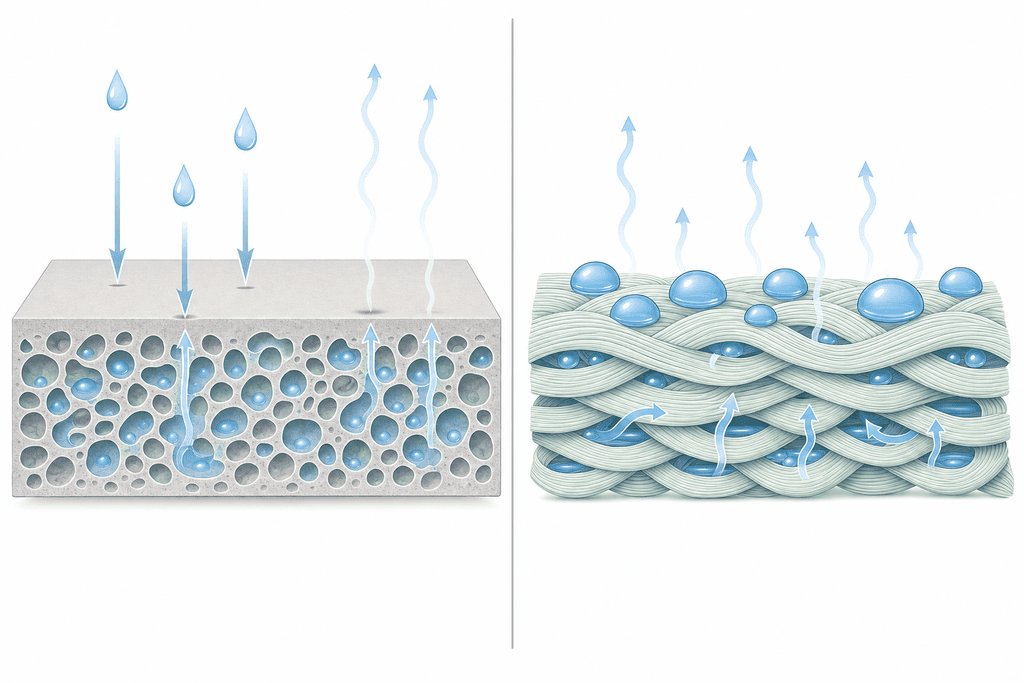
Real moisture management means pulling water away from the surface and releasing it into the air through evaporation. Materials like diatomite stone, which our Natureva bath mats use, absorb water instantly through millions of microscopic pores and dry within minutes. Teak just moves the water around without managing where it goes or how fast it disappears.
The Drainage Problem Nobody Talks About
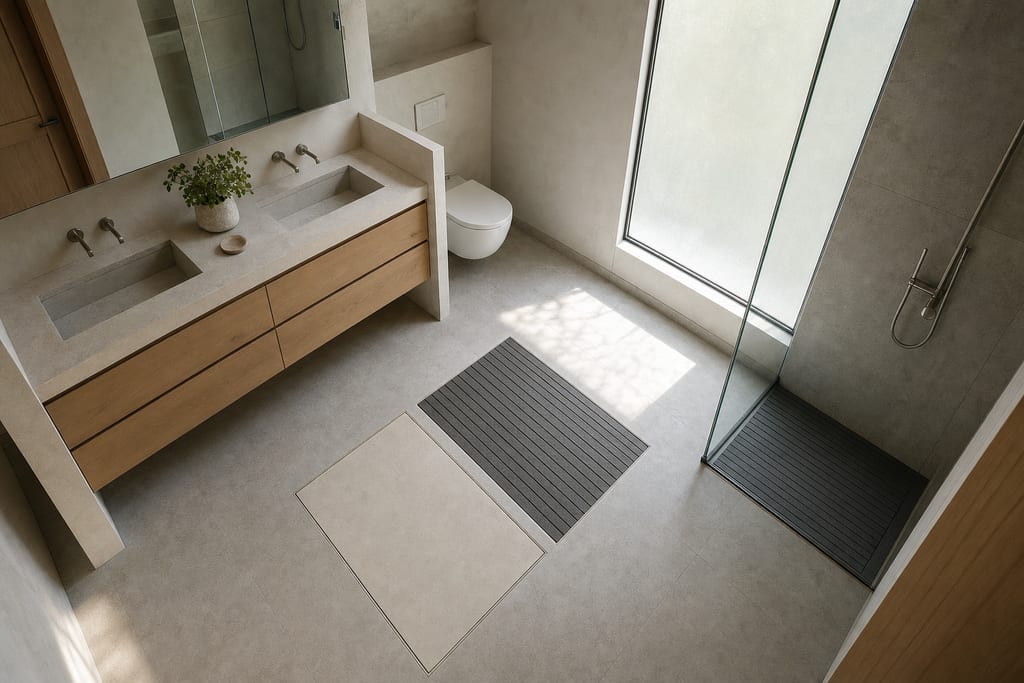
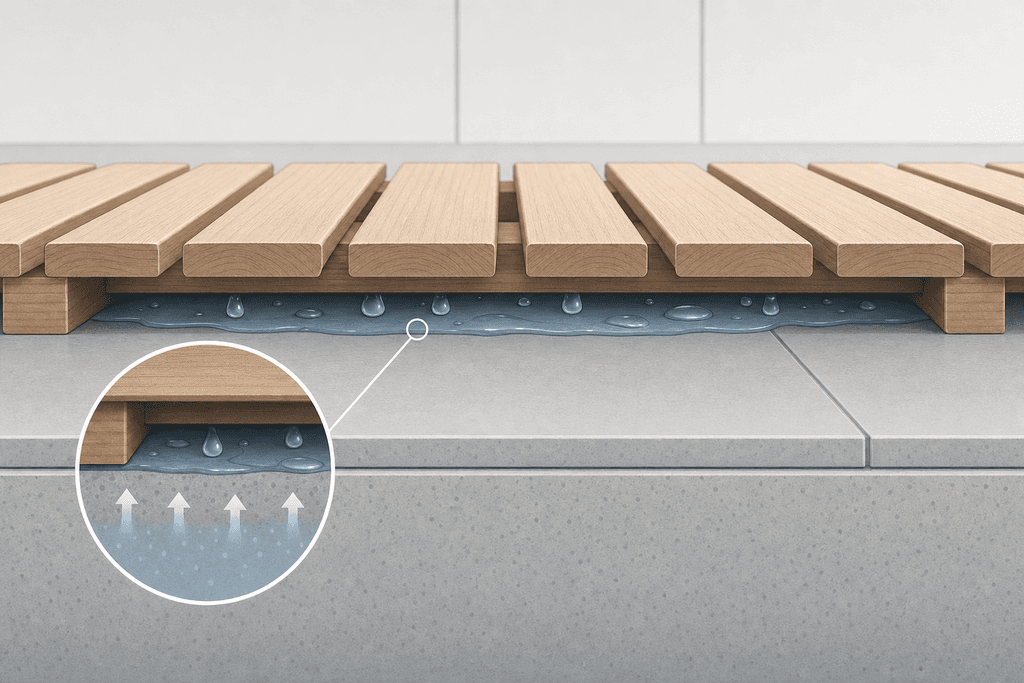
Most people buy a teak bath mat thinking the slatted design will keep their bathroom floor dry and clean. The gaps between the wood slats look like they should let water drain away quickly, and the elevated design seems like it would prevent moisture buildup. But after a few weeks of real use, something different happens. Water doesn't just disappear through those slats. It pools underneath the mat, sitting there for hours or even days depending on your bathroom's humidity levels.
The problem is that teak slats create airflow, but they don't actually absorb any moisture. When you step off the shower onto your teak bath mat, the water drips through the gaps and collects on your bathroom floor. That puddle stays there because the mat blocks most of the air circulation that would help it evaporate. The elevation creates a dark, damp space where mold loves to grow.
- Water pools underneath despite the slatted design
- Slats allow drainage but don't absorb any moisture
- Trapped water damages floors and grout over time
- Mold grows in the dark space between mat and floor
- Drying times stretch to 6-12 hours in humid bathrooms
You'll notice this especially if you have multiple people using the same bathroom. The mat never fully dries between showers. Even sources that promote teak mats admit they need proper ventilation and time to dry completely. In a busy household or a bathroom without great airflow, that just doesn't happen.
Maintenance Reality vs Marketing Claims
Teak bath mats get sold as low maintenance bathroom accessories that last for years with minimal care. The reality is quite different once you actually own one. Teak wood needs regular oiling to maintain its water resistant properties, usually every 4-6 weeks depending on use and humidity. Without this treatment, the wood dries out, cracks, and loses its ability to repel water effectively. The natural oils in teak do provide some protection, but they deplete quickly in wet bathroom environments.
Then there's the mold issue. Because water sits underneath and between the slats, you'll start seeing dark spots and discoloration within a few months. Removing mold from teak requires scrubbing with specialized cleaners, and sometimes you need to sand the wood to get rid of deep stains. This isn't a once-a-year task either. Most teak bath mat owners find themselves cleaning mold every few weeks if they want to keep the mat looking decent.
Monthly Teak Maintenance Checklist
- Lift mat and wipe underneath to remove standing water
- Scrub slats with teak cleaner to remove soap residue
- Check for mold growth between slats and treat if needed
- Let mat dry completely in direct sunlight for 4-6 hours
- Apply teak oil to all surfaces and let absorb overnight
- Buff excess oil and return mat to bathroom
The cost adds up too. Quality teak oil runs about $15-25 per bottle, and you'll go through several bottles per year. Teak cleaners cost another $10-20. Over a few years, you might spend more on maintenance products than the original mat cost. And despite all this care, teak naturally darkens and turns gray over time. That spa-like honey color you bought it for? It fades unless you're constantly treating the wood.
The contradiction is obvious when you think about it. A product marketed as naturally water resistant and low maintenance actually requires monthly treatments, regular cleaning, and constant vigilance against mold. Different bath mat materials have very different care requirements, and teak sits on the high maintenance end of that spectrum.
Better Alternatives for Spa Style Drainage
The real solution to bathroom moisture isn't avoiding water or letting it drain away slowly. It's absorbing it instantly and releasing it back into the air through rapid evaporation. Diatomite stone bath mats work completely differently than teak. The material is made from fossilized algae with millions of microscopic pores throughout its structure. When water touches the surface, it gets pulled into these pores immediately. Your feet feel dry within seconds, not minutes.
The science behind this is pretty straightforward. Diatomite's porous structure has massive surface area inside the material, which means water spreads out into a thin layer across millions of tiny spaces. This thin distribution allows moisture to evaporate in minutes rather than hours. There's no water pooling underneath because the stone absorbs it before it can drip through. There's no damp space for mold to grow because the surface stays dry.
| Feature | Teak Bath Mat | Diatomite Stone Mat |
|---|---|---|
| Absorption Time | No absorption | Instant |
| Drying Speed | 6-12 hours | 2-5 minutes |
| Maintenance Frequency | Monthly oiling | Weekly wipe |
| Antibacterial | Requires treatment | Naturally antibacterial |
| Floor Protection | Water pools underneath | Full non-slip base |
The antibacterial properties come from the rapid drying behavior, not from chemical treatments that wear off over time. Bacteria need moisture to thrive, and diatomite stone simply doesn't stay wet long enough for bacterial growth to take hold. This is why hospitals and labs use diatomaceous earth in moisture control applications.
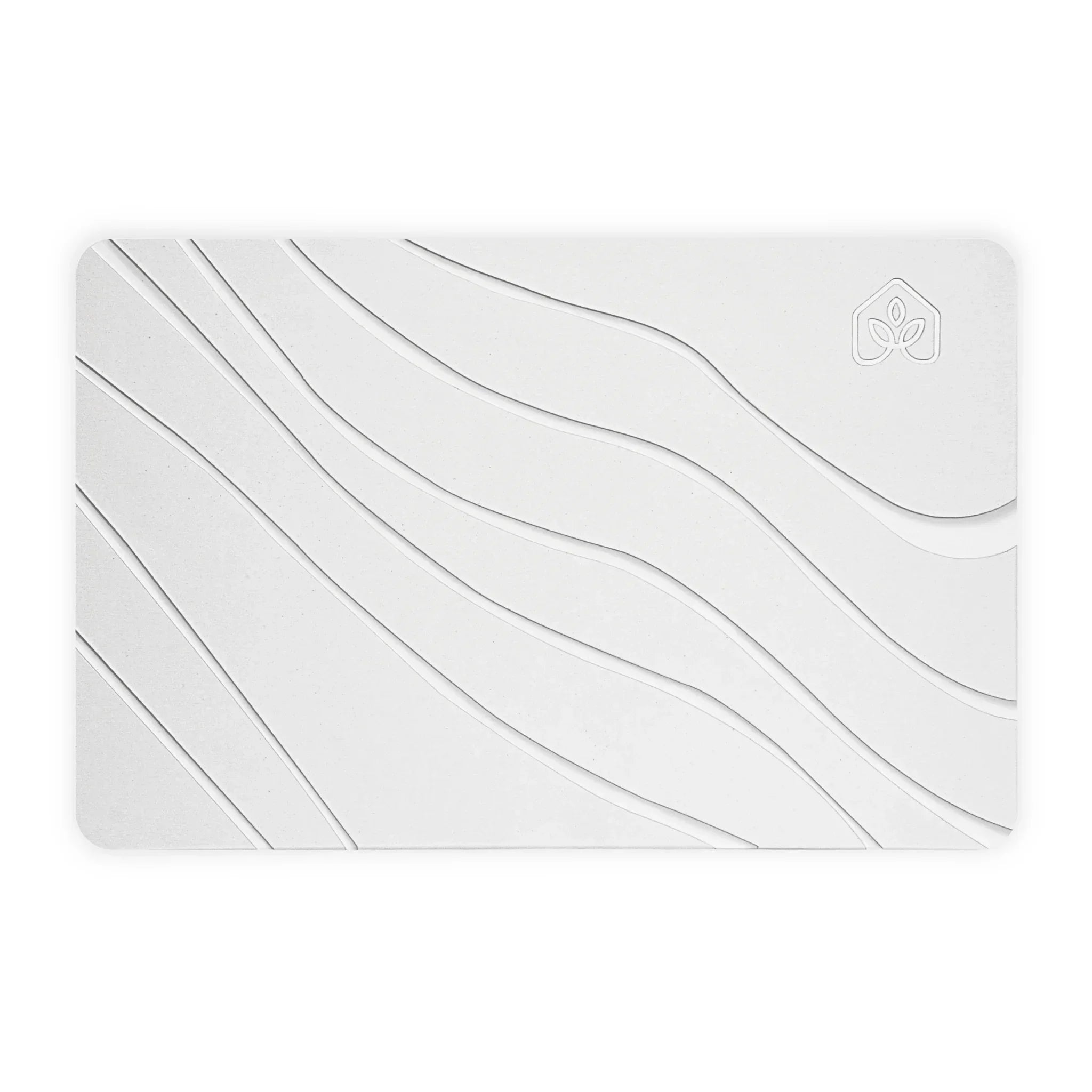
From a design perspective, stone bath mats match the minimalist spa aesthetic just as well as teak, if not better. Our stone bath mat collection includes five different carved patterns like Flow, Rain, and Aura that bring architectural detail without busy decoration. The surface engravings add visual interest while the solid form reads as calm and structured. You get the spa look without the spa maintenance schedule.
- Instant absorption instead of slow drainage
- Evaporation in minutes not hours
- Naturally antibacterial through dryness
- Minimalist carved designs in three neutral colors
- No oiling, no mold treatment, just weekly cleaning
The difference really comes down to whether you want to manage moisture or eliminate it. Teak tries to manage it by letting water drain away slowly while you deal with the puddles and maintenance. Diatomite stone eliminates the moisture problem by absorbing and evaporating it before it becomes an issue. Modern bath mat options have moved beyond traditional materials for good reason.
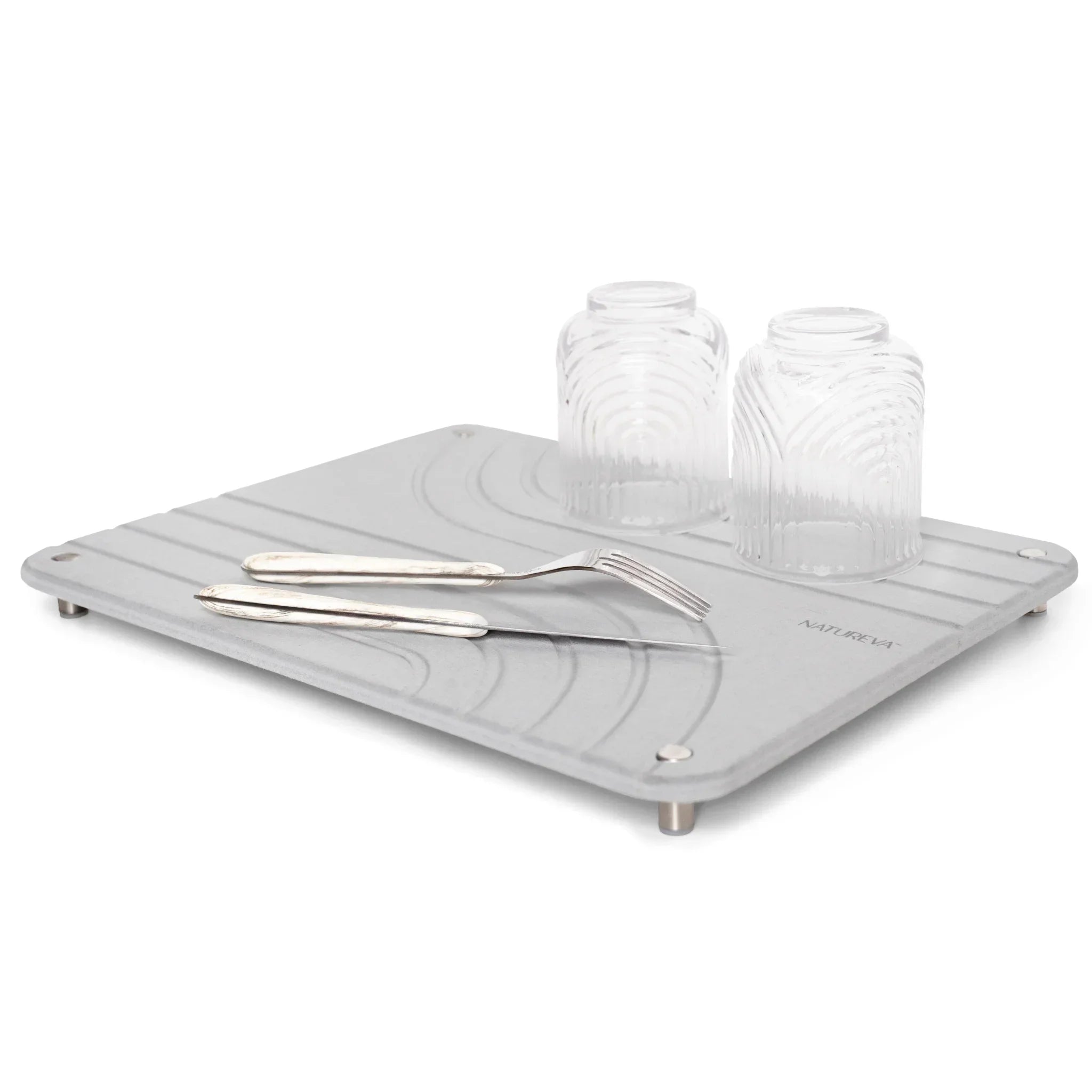
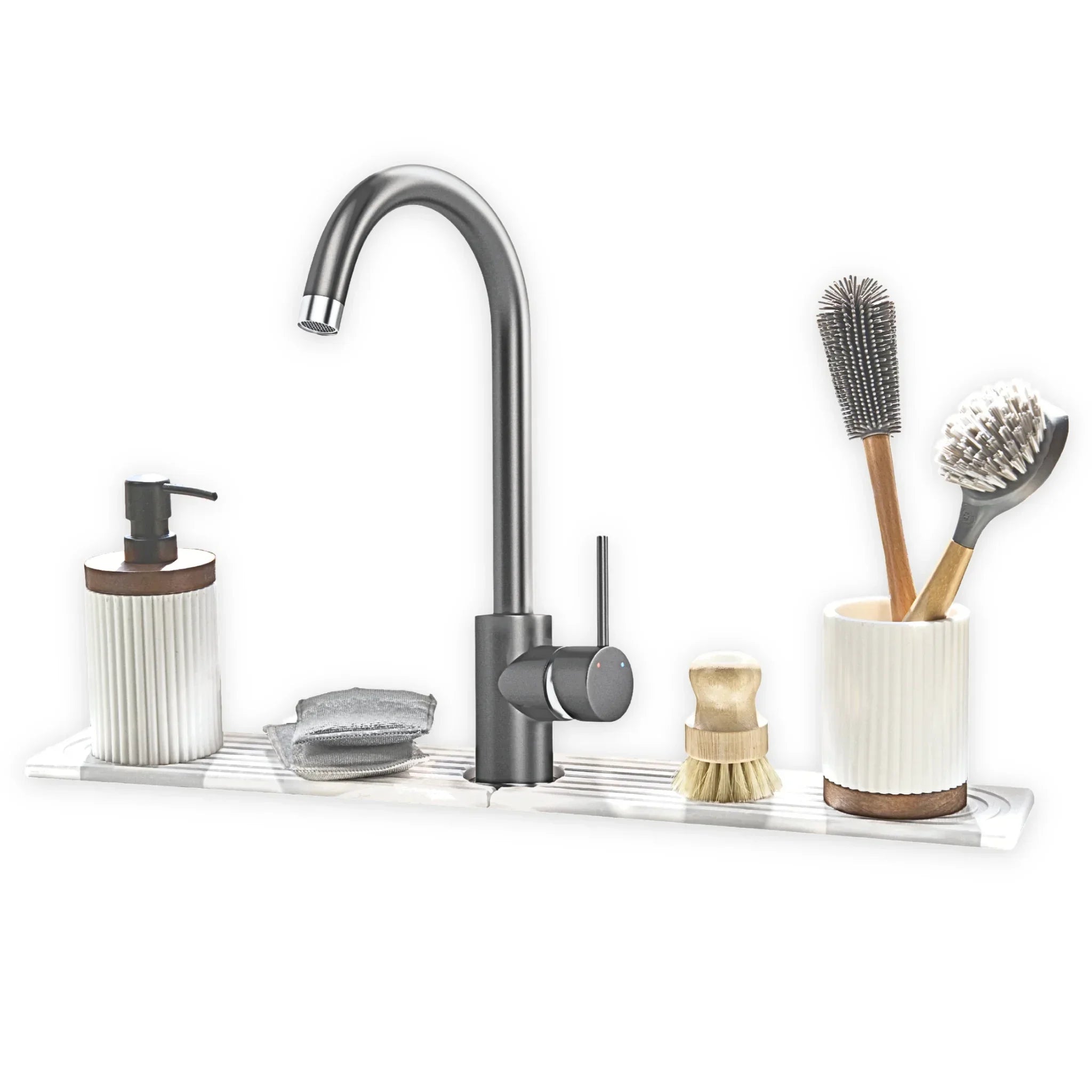
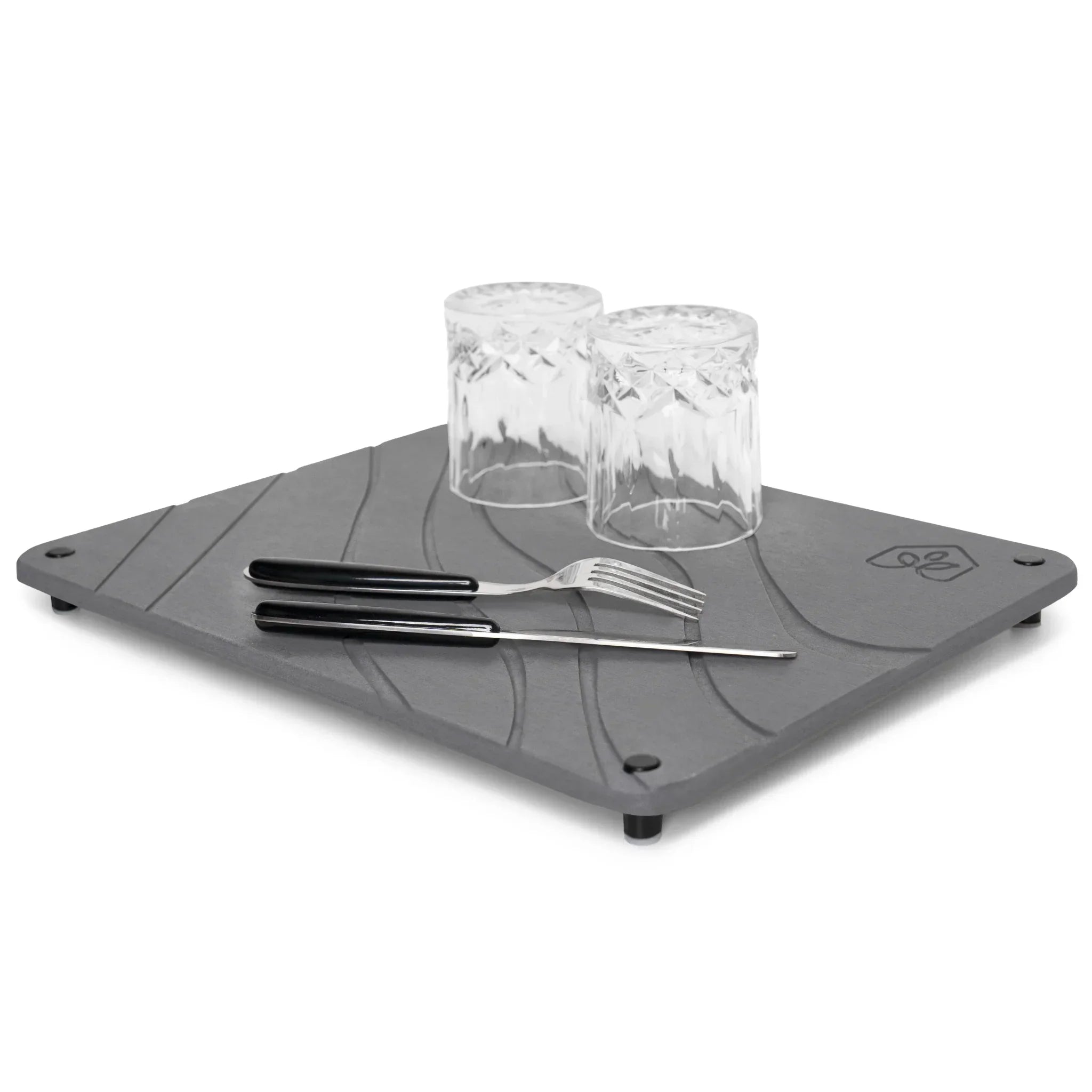
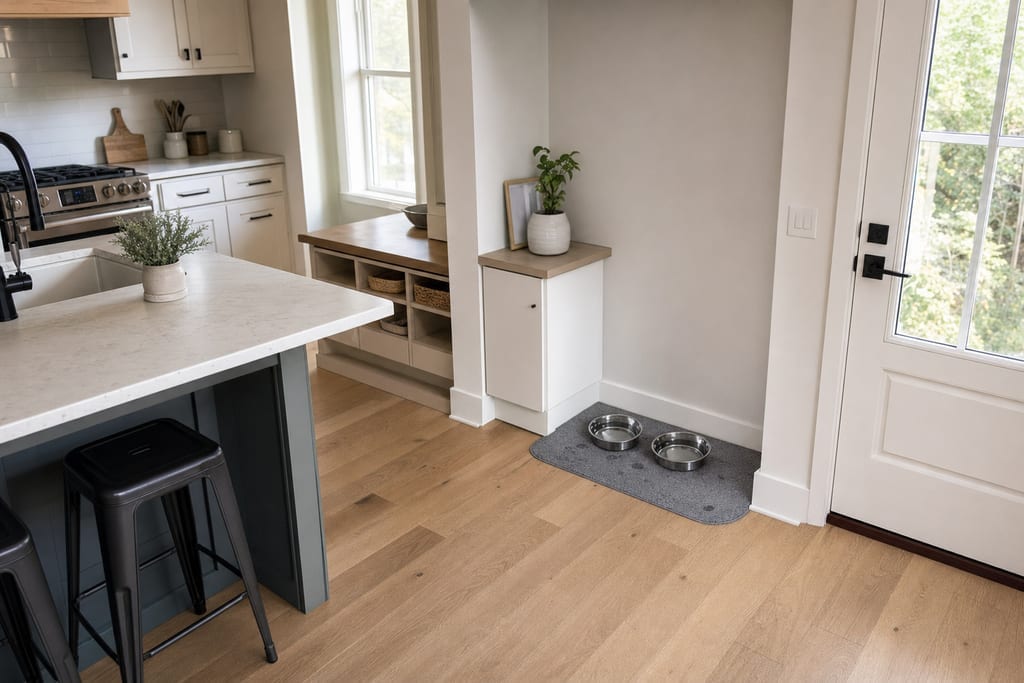
Our complete bathroom collection extends this same moisture management approach to other wet areas. The stone faucet mat handles sink splashes, while stone dish mats work the same way in kitchens. Each product uses the same diatomite composite material that absorbs instantly and dries rapidly. The entire system is built around keeping surfaces dry without constant maintenance or chemical treatments.
The next generation of home essentials: naturally made, cleaner by design, sustainable by nature.
SHOP ALL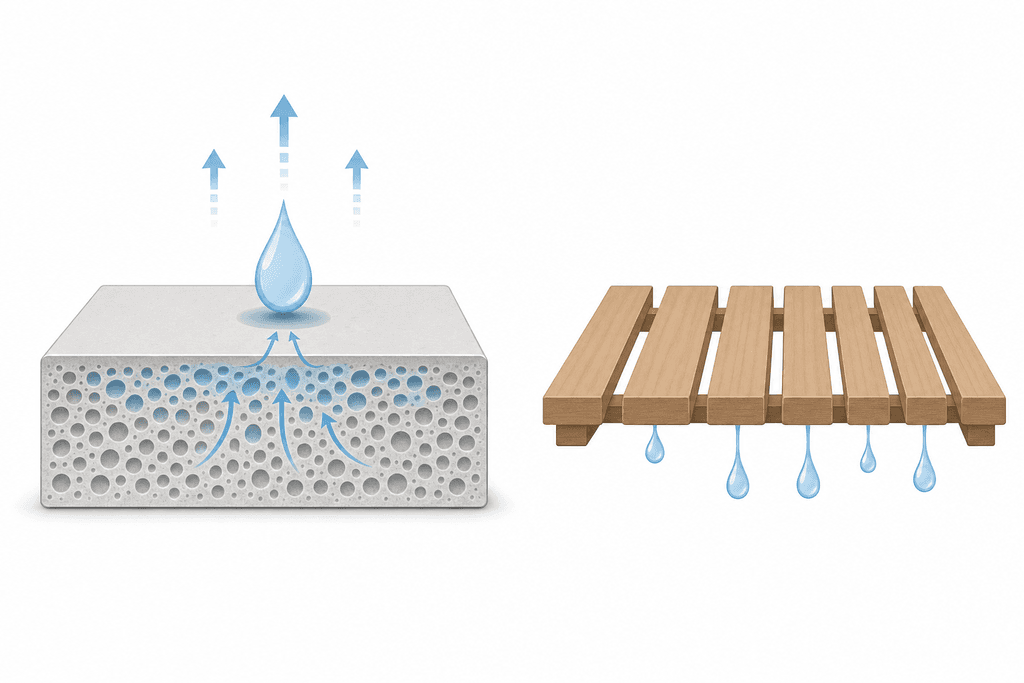
Why Instant Absorption Beats Elevation
The difference between a teak bath mat and a diatomite stone mat comes down to one simple question: what happens when water hits the surface? Teak relies on elevation and drainage, letting water drip through slats onto the floor below. Diatomite does something completely different. It pulls moisture into millions of microscopic pores and releases it back into the air through rapid evaporation. One material avoids water, the other actively manages it. That distinction matters more than most people realize when it comes to keeping a bathroom clean and hygienic.
Bacteria need three things to grow: moisture, warmth, and time. Bathrooms provide the first two naturally. The third factor is where material choice becomes critical. Research published in the National Center for Biotechnology Information shows that bacterial growth accelerates significantly on surfaces that remain damp for extended periods. Teak bath mats, even with their slatted design, trap water between wood fibers and in the gaps between slats. That moisture sits there until it slowly evaporates or drips away.
How Surface Drying Time Affects Hygiene
The speed at which a surface dries determines how hospitable it is to microbial growth. Teak's natural oils make it water-resistant, which sounds like an advantage until you realize that resistance means water pools rather than absorbs. Those puddles create micro-environments where bacteria and mildew can establish themselves between uses.
- Teak surfaces can stay damp for 2-4 hours depending on humidity levels
- Water-resistant materials force moisture to sit on the surface rather than moving through it
- Slat gaps collect soap residue and dead skin cells in perpetually damp conditions
- Wood grain naturally harbors moisture even when the surface appears dry
Diatomite works on the opposite principle. Instead of resisting water, it absorbs it instantly through capillary action. The porous structure pulls moisture away from your feet in seconds, then releases it into the air through evaporation. The surface returns to a dry state within minutes, not hours. That rapid cycle is what prevents bacterial colonization.
The Physics of Porous Stone Versus Dense Wood
Material density plays a surprising role in moisture management. Teak is a dense hardwood, which contributes to its durability but limits its ability to move water efficiently. The tight grain structure that makes teak resistant to rot also makes it slow to dry. Water sits on the surface or seeps slowly into the wood, where it can remain trapped for hours.
| Material Property | Teak | Diatomite |
|---|---|---|
| Surface Drying Time | 2-4 hours | 2-5 minutes |
| Moisture Management | Resistance | Absorption + Evaporation |
| Bacterial Growth Risk | Moderate to High | Low |
Diatomite's microscopic pore structure creates millions of tiny channels that act like a natural ventilation system. Water doesn't just sit on the surface or soak into the material. It moves through the pores and evaporates rapidly into the surrounding air. This active moisture management system is why stone bath mats like Natureva's Tide and Flow designs stay dry between uses without requiring constant maintenance or positioning near air vents.
Long Term Performance in Humid Environments
The real test of any bath mat material is how it performs after months of daily use in a humid bathroom. Teak requires regular oiling to maintain its water resistance, and even with proper care, the wood eventually develops mildew in the slat gaps and underneath the mat. Some sources promote teak's natural resistance, but that resistance diminishes over time as the wood's oils break down from repeated exposure to soap and water.
- Teak requires monthly oiling to maintain water resistance
- Slat gaps accumulate soap scum and require scrubbing with brushes
- Wood can warp or crack if not properly maintained
- Mildew often develops on the underside where air circulation is limited
Diatomite maintains its absorption capacity indefinitely with minimal maintenance. If the surface becomes saturated from heavy use, a quick pass with the included sanding tool reopens the pores and restores full absorbency. No oils, no special cleaners, no complicated care routines. The material's performance comes from its physical structure, not from chemical treatments that wear off over time.
Choosing Function Over Tradition
The truth is, a spa bathroom isn't just about how things look. It's about how they actually work when water hits them every single day. A teak bath mat might check the aesthetic box, but if it's holding moisture, growing mildew, and demanding constant maintenance, it's working against the clean, calm space you're trying to create. Modern bathrooms need materials that can keep up with real use without becoming a chore.
There's been a quiet shift happening in bathroom design. People are moving away from materials chosen purely for tradition and toward ones that solve actual problems. Wood had its moment, but moisture management technology has caught up to what bathrooms actually need. The question isn't whether teak looks nice, it's whether it can stay dry, stay clean, and stay low maintenance in a high humidity environment.
That's where materials like diatomite come in. Our stone bath mats absorb water instantly and dry within minutes, not hours or days. No wood oil. No flipping. No wondering if something's growing underneath. The Rain, Flow, and Tide designs handle moisture the way a spa bathroom should, without compromising on the minimalist look people want.
When you're choosing bathroom products, think about what your space actually deals with. High humidity, daily water exposure, and the need for something that stays hygienic without extra work. Those conditions matter more than sticking with what's always been done. The right material makes the difference between a bathroom that feels spa-like and one that just looks the part.
Common Questions About Bath Mat Materials
Choosing the right bath mat involves understanding how different materials perform in real bathroom conditions. These questions come up constantly when people compare teak to other options, especially when dealing with moisture, maintenance, and floor protection. Here's what you actually need to know before making a decision.
Do teak bath mats get moldy?
Yes, teak bath mats can develop mold and mildew if they don't dry completely between uses. The slats trap water underneath, and without proper airflow or regular cleaning, dark spots and musty smells appear within weeks. Even with teak's natural oils, moisture sitting in crevices creates the perfect environment for mold growth.
How long do teak bath mats take to dry?
A teak bath mat typically needs 4 to 8 hours to dry completely, depending on bathroom humidity and ventilation. The wood absorbs water into its grain, and the slatted design means moisture gets trapped between boards and underneath the mat. If your bathroom stays humid or lacks airflow, drying time stretches even longer, sometimes requiring you to prop the mat up or move it entirely.
What's better than teak for bathroom drainage?
Diatomite stone bath mats handle drainage faster than any wood option because they absorb water instantly and release it through evaporation within minutes. Materials like diatomaceous earth don't trap moisture the way wood grain does, so the surface stays dry and ready for the next use. Natureva's stone bath mats, for example, use this porous mineral structure to eliminate standing water without requiring slats, gaps, or constant repositioning.
Are stone bath mats slippery when wet?
No, quality stone bath mats aren't slippery because the diatomite surface absorbs water on contact rather than leaving it pooled on top. The material pulls moisture into its porous structure immediately, so your feet land on a dry surface even right after stepping out of the shower. Most stone mats also include non-slip base pads to keep them stable on tile or vinyl flooring.
How do you maintain a diatomite bath mat?
Maintenance is simple: wipe the mat weekly with a vinegar and water solution to prevent buildup, rinse any stains under running water, and use the included sanding tool if absorption slows down. Avoid fabric softeners and coloured soaps that can clog the pores. If the mat gets saturated from heavy use, just prop it upright to air dry completely before placing it back down.
Can teak bath mats damage bathroom floors?
Yes, teak bath mats can scratch tile, stain grout, and trap moisture against flooring, which leads to discolouration or even subfloor damage over time. The wood slats sit directly on the floor or on small rubber feet that concentrate weight in specific spots. Water that seeps underneath stays trapped, creating conditions for mold growth beneath the mat and potential long-term floor issues you won't notice until it's too late.
The next generation of home essentials: naturally made, cleaner by design, sustainable by nature.
SHOP ALL