
Bathroom Stone Options That Reduce Damp and Simplify Cleanup
Most bathroom floors stay wet for hours after a shower, creating the perfect environment for mold and mildew to grow in hidden corners. Traditional bath mats and tile surfaces trap moisture instead of managing it, which means you're constantly fighting dampness no matter how much you clean. Bathroom stone made from diatomite works differently by absorbing water instantly and releasing it back into the air within minutes, keeping surfaces dry and reducing the conditions where bacteria thrive.
Table of Contents
What Makes Bathroom Stone Different
Most people think all stone is the same, but bathroom stone made from diatomite works completely differently than the granite or marble you see in countertops. Diatomite forms from fossilized algae called diatoms that lived millions of years ago in ancient oceans and lakes. When these tiny organisms died, their silica-based skeletons piled up on the seafloor and eventually turned into a chalky, porous rock. The key difference is in what you can't see with your eyes.
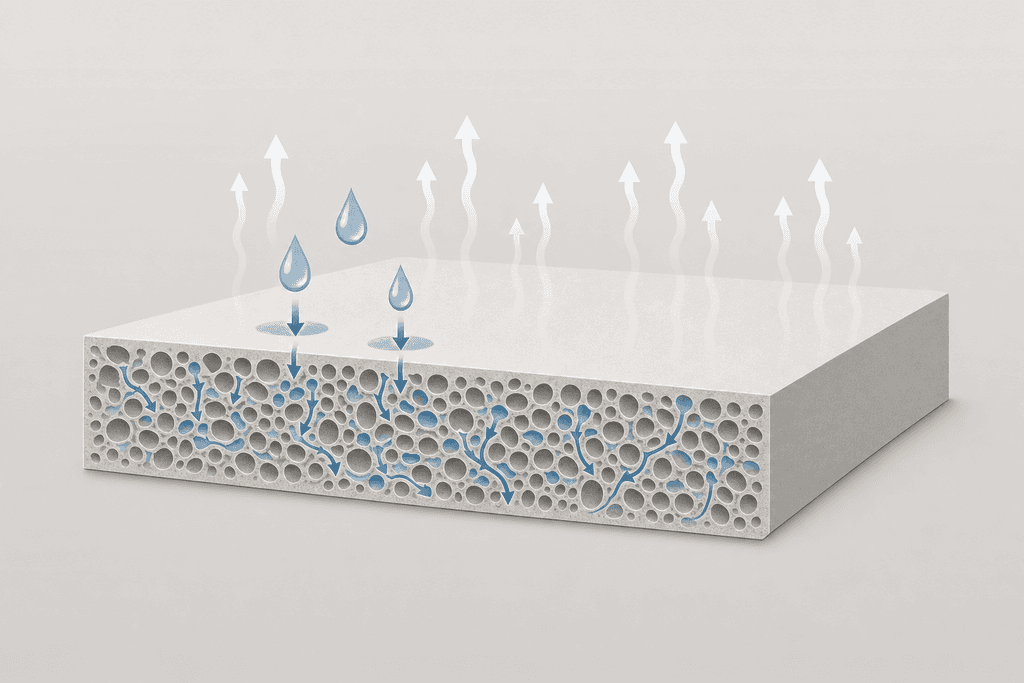
The Porous Structure That Changes Everything
Under a microscope, diatomite looks like a honeycomb filled with millions of tiny holes. These microscopic pores give the material an incredible ability to suck up water instantly and then release it back into the air through evaporation. Regular sealed stone or tile has either no pores or pores that are closed off by coatings, which means water just sits on top instead of getting absorbed.
The science behind this is pretty straightforward. When water touches diatomite, it gets pulled into those tiny spaces through capillary action. Then because the pores connect to the surface, air can flow through and carry the moisture away. This happens so fast that most bathroom stone products dry within minutes instead of staying damp for hours like fabric mats.
- Diatomite contains up to 80-90% empty pore space by volume
- Each pore measures between 10-200 micrometers in diameter
- The material can absorb up to 150% of its weight in water
- Evaporation happens continuously as long as air can circulate
How Fast Drying Stops Bacteria Naturally
Bacteria and mold need three things to grow: moisture, warmth, and time. Bathroom environments provide plenty of warmth, so the real battle is against moisture. Traditional fabric bath mats stay wet for hours after you step out of the shower, creating the perfect breeding ground. Sealed stone and tile don't absorb water at all, so puddles form and sit there until they evaporate slowly or get wiped up.
Diatomite bathroom stone solves this by removing the moisture factor almost immediately. Products like Natureva's stone bath mats absorb water on contact and dry so quickly that bacteria don't get the sustained dampness they need to multiply. This happens without any chemical treatments or antibacterial coatings. The material itself does the work just by staying dry.
- Bacteria need at least 2-4 hours of moisture to establish colonies
- Diatomite surfaces typically dry in 5-15 minutes depending on humidity
- No chemical additives are needed for antibacterial properties
According to research on how humidity affects stone characteristics, moisture management is critical for maintaining both hygiene and material integrity in bathroom environments. The faster a surface dries, the less opportunity there is for degradation or contamination.
Comparing Bathroom Materials
Not all bathroom surfaces handle moisture the same way. The differences become obvious when you look at how long water sticks around and what happens to the material over time. Here's how diatomite bathroom stone stacks up against other common options.
| Material Type | Drying Time | Bacterial Growth Risk | Maintenance Needs |
|---|---|---|---|
| Diatomite Stone | 5-15 minutes | Very Low | Weekly wipe, occasional sand |
| Fabric Bath Mat | 4-8 hours | High | Weekly washing required |
| Sealed Stone/Tile | 30-60 minutes | Medium | Daily wiping needed |
| Memory Foam Mat | 6-12 hours | Very High | Frequent washing, replacement |
The speed difference matters more than most people realize. A fabric mat that stays damp all day creates a cycle where you're stepping onto yesterday's moisture every morning. Sealed surfaces look clean but water pools on top, which means you're either constantly wiping or walking through puddles. Diatomite breaks that cycle by getting rid of the water before it becomes a problem.
- Fabric mats can harbor up to 1 million bacteria per square inch when damp
- Sealed surfaces require manual drying to prevent slip hazards
- Diatomite maintains its performance without chemical treatments
- Natural evaporation eliminates odor-causing moisture buildup
How Bathroom Stone Stops Moisture Problems
Most bathroom surfaces trap water instead of dealing with it. Tile grout holds moisture for hours, fabric mats stay damp all day, and plastic trays create puddles that never quite dry. This sitting water creates the exact conditions where mold spores settle in and bacteria multiply. The problem isn't just the water itself, but what happens when it sticks around too long.
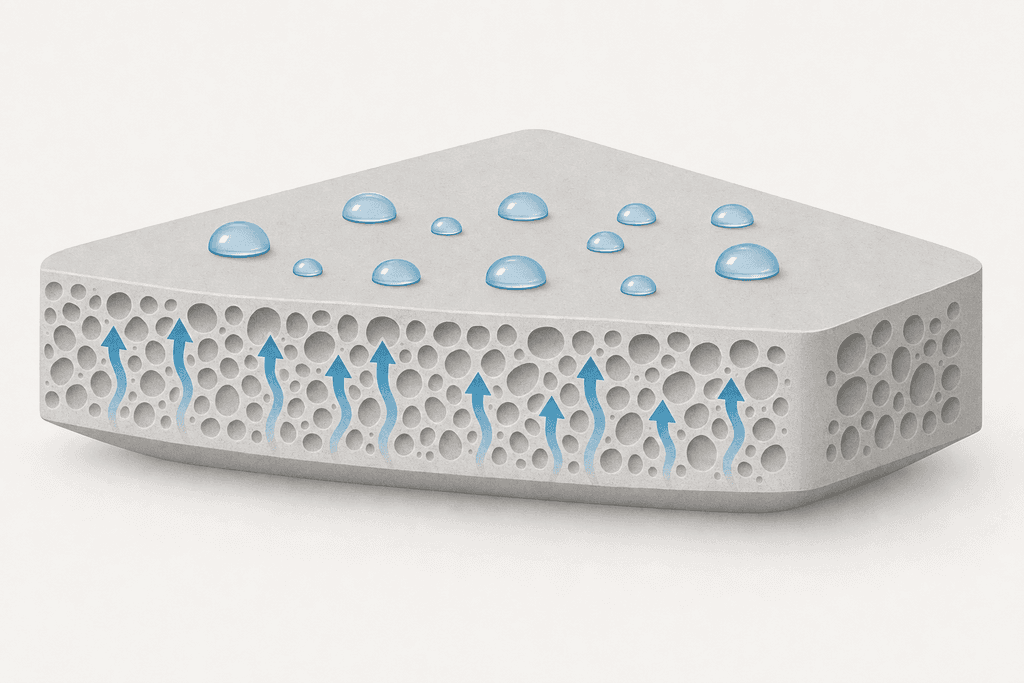
Bathroom stone made from diatomite works differently because of its internal structure. The material comes from fossilized algae that lived millions of years ago, and their microscopic skeletons left behind millions of tiny pores. When water hits the surface, it gets pulled into these pores instantly, then releases back into the air through natural evaporation.
- Water absorbs on contact, leaving the surface dry within seconds
- Complete evaporation happens in minutes, not hours
- Dry surfaces don't support bacterial growth or odor formation
- No chemical treatments needed to stay clean
The speed matters more than you'd think. Bacteria need moisture to colonize surfaces, and most bathroom materials give them plenty of time to settle in. When a surface dries in minutes instead of hours, that window closes before anything can take hold.
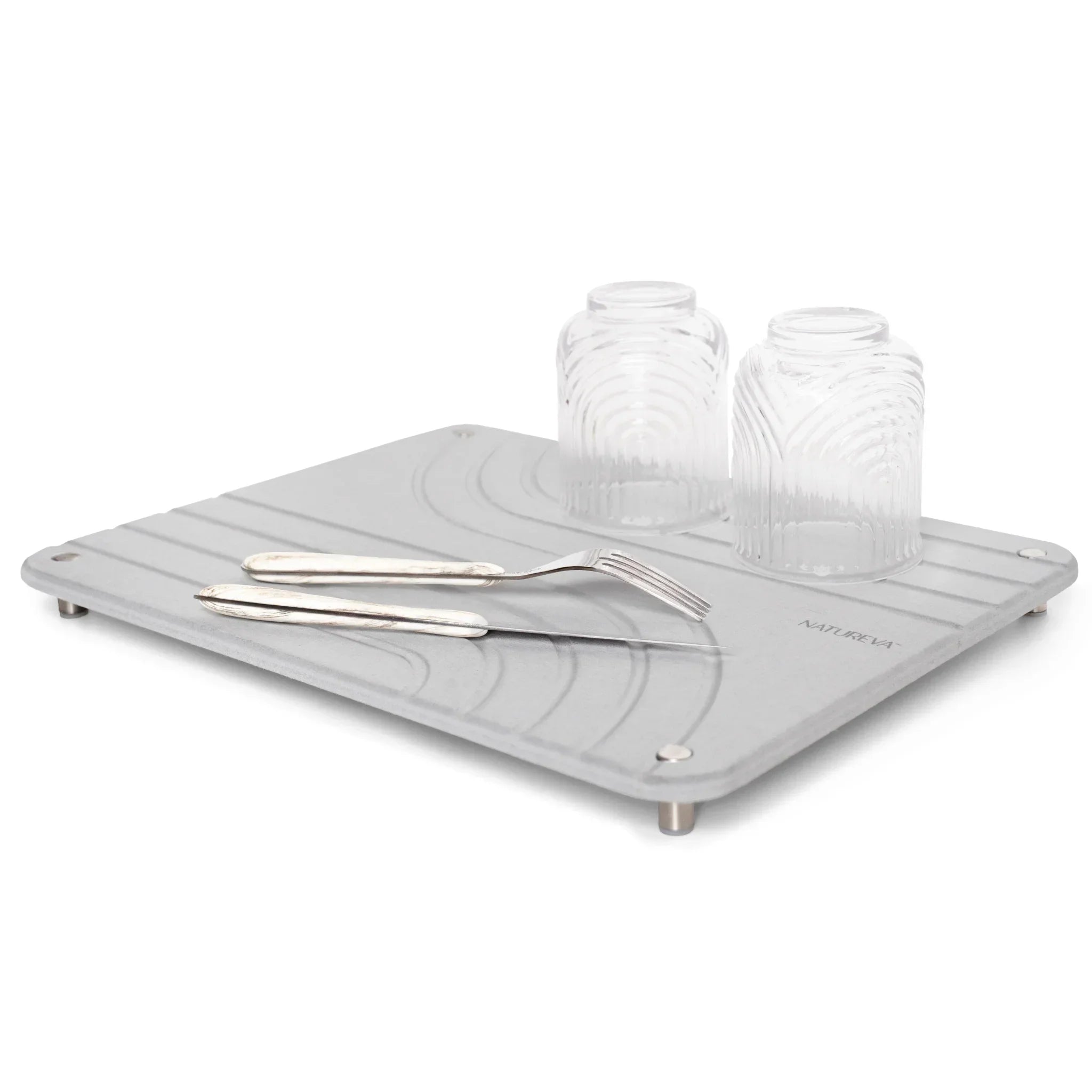
Airflow makes the whole system work better. Products like our stone sink caddies sit on stainless steel legs that lift them 2.5 cm off the counter. Air moves underneath, moisture escapes faster, and nothing gets trapped between the stone and your surface. Bath mats use full non-slip base pads that still allow enough circulation to prevent saturation.
The material doesn't just absorb water, it actively releases it. That's the difference between a sponge that holds moisture and a stone that processes it. One stays wet, the other returns to dry.
Bathroom Stone Products That Work
Different spots in your bathroom deal with different moisture problems. The floor by your shower gets hit with dripping feet. The counter around your sink collects soap residue and water splashes. The area behind your faucet turns into a permanent puddle. Each zone needs something specific, not just a generic solution that sort of works everywhere.
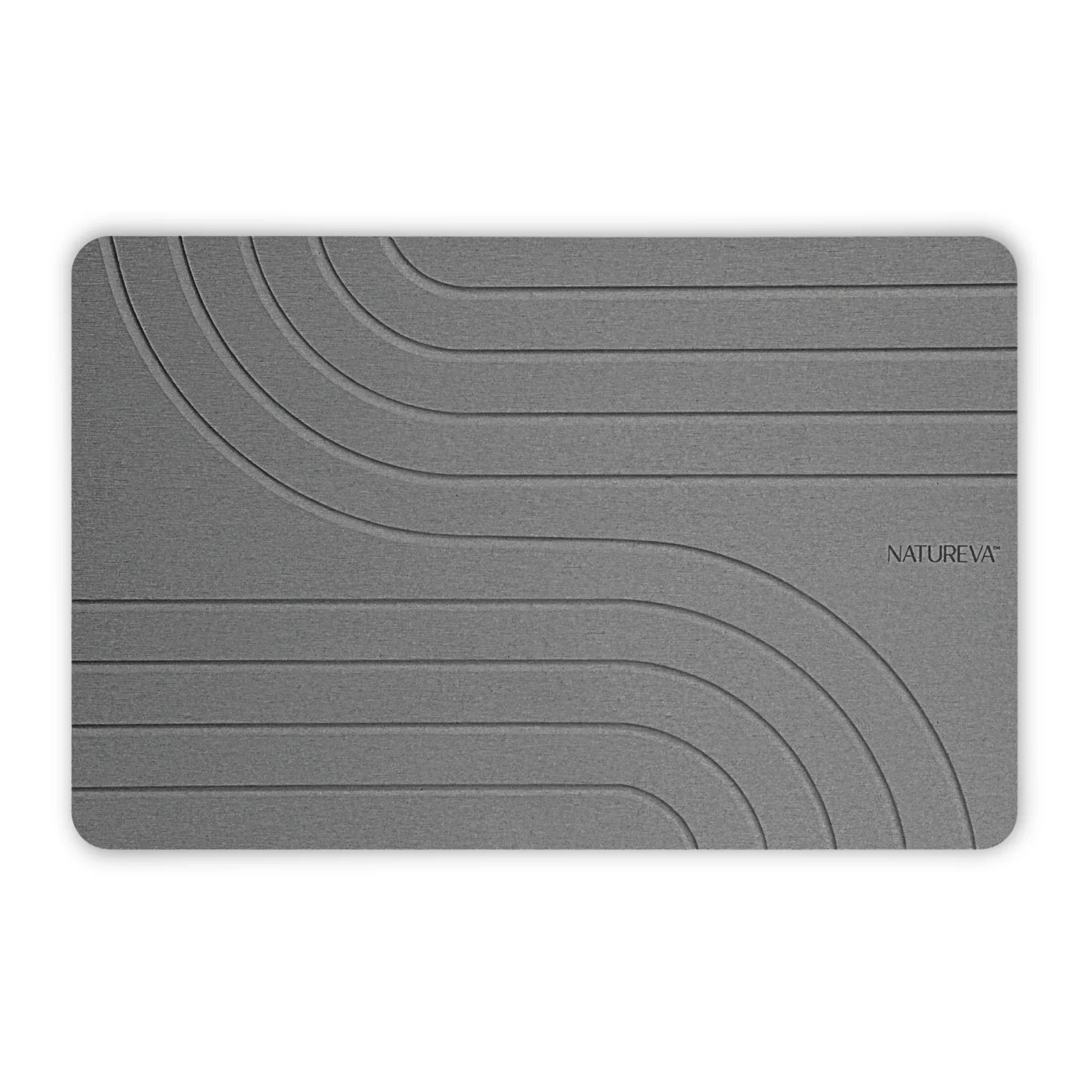
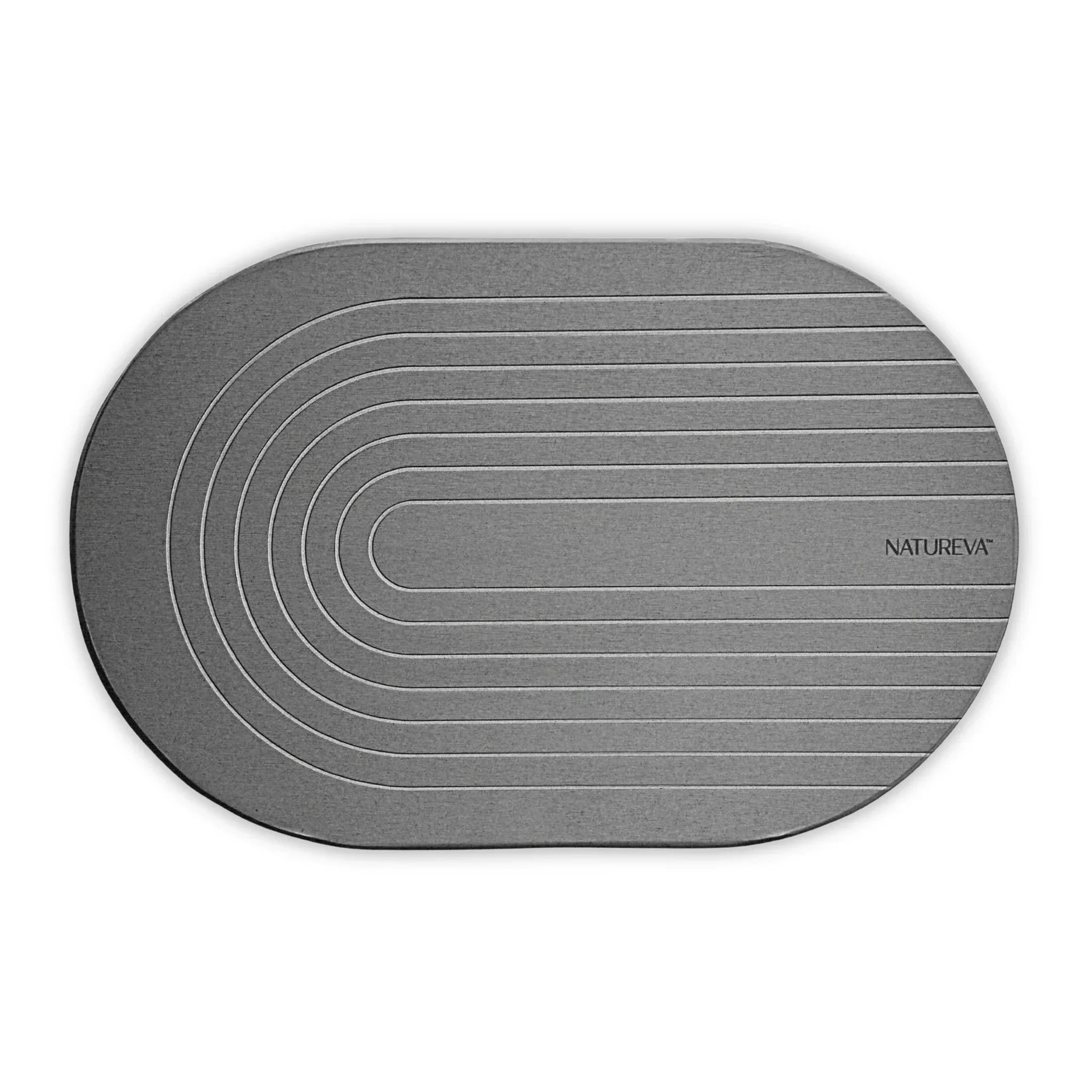
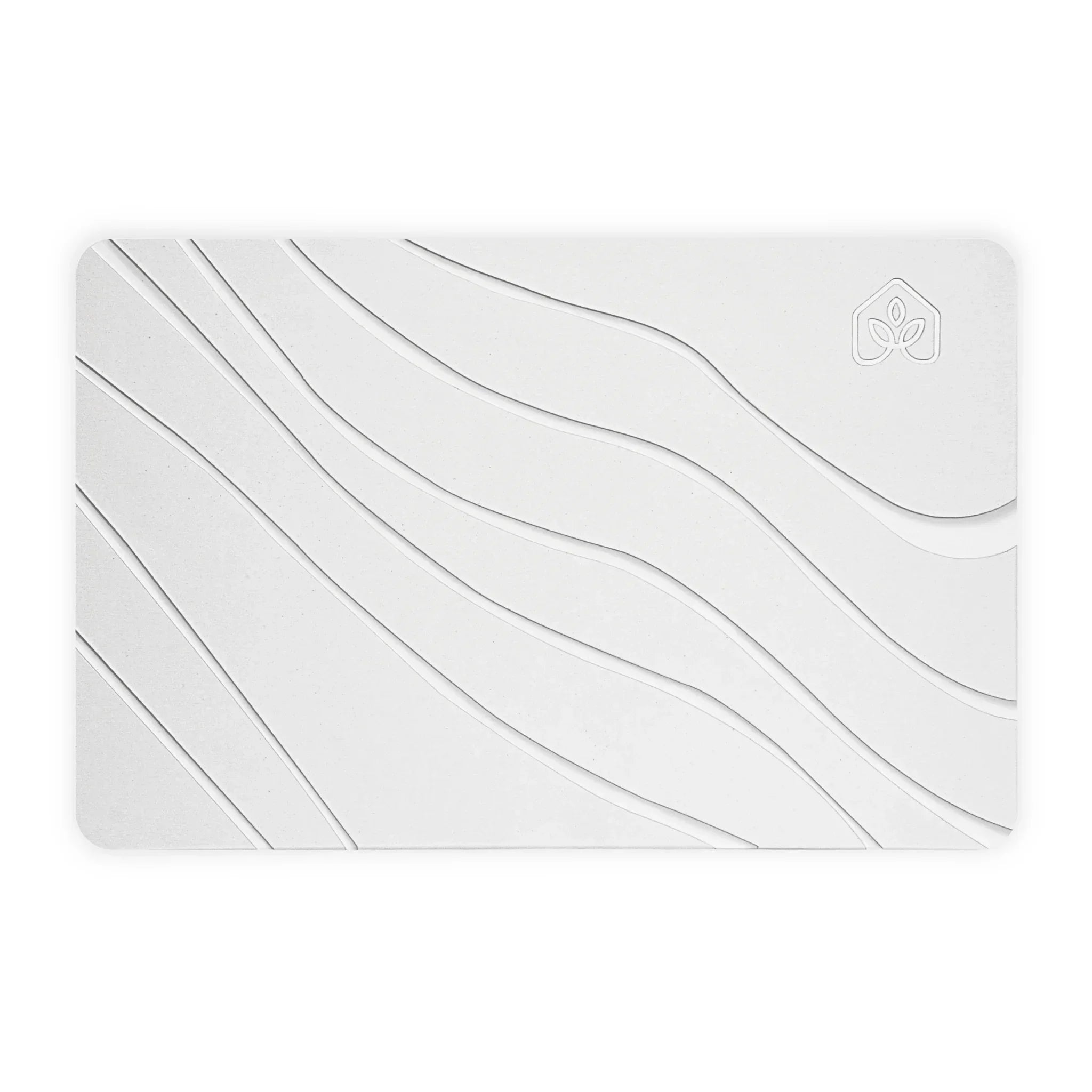
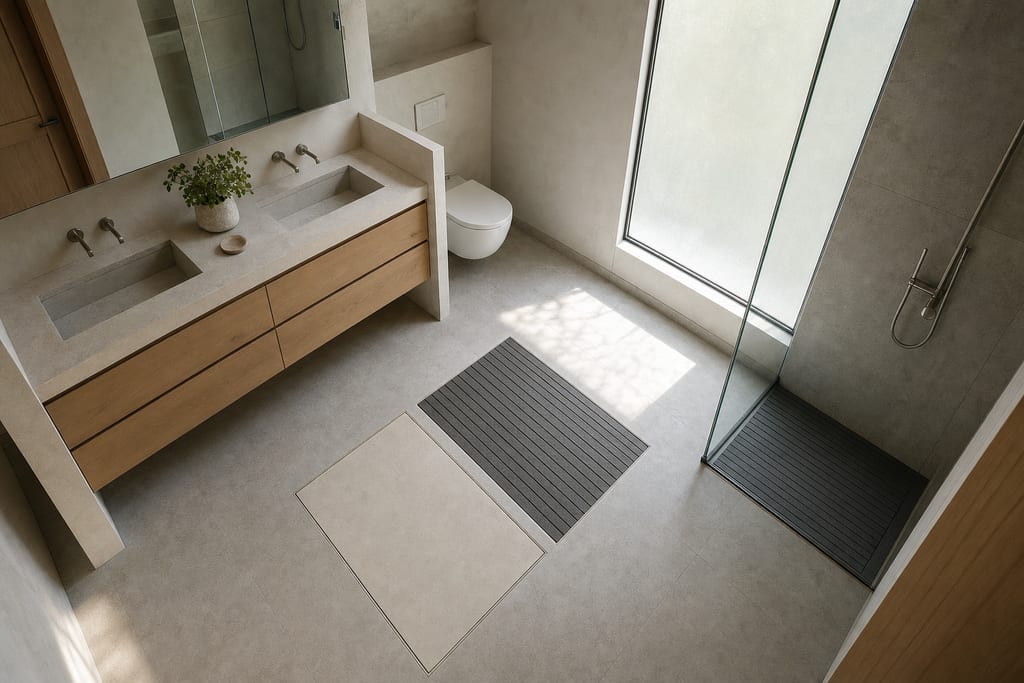
Stone bath mats handle the heaviest water load. When you step out of the shower, your feet are soaking wet and most mats just spread that water around. Our bath mats absorb it immediately, so you're standing on a dry surface within seconds. They come in five different carved patterns like Tide, Flow, and Rain, each with engraved channels that guide water across the surface for faster evaporation.
The next generation of home essentials: naturally made, cleaner by design, sustainable by nature.
SHOP ALL| Product | Dimensions | Weight | Key Feature |
|---|---|---|---|
| Bath Mats | 60 × 39 × 0.9 cm | 1.8 kg | Non-slip base pad |
| Sink Caddies | 25 × 10 × 2.5 cm | 0.25 kg | Elevated steel legs |
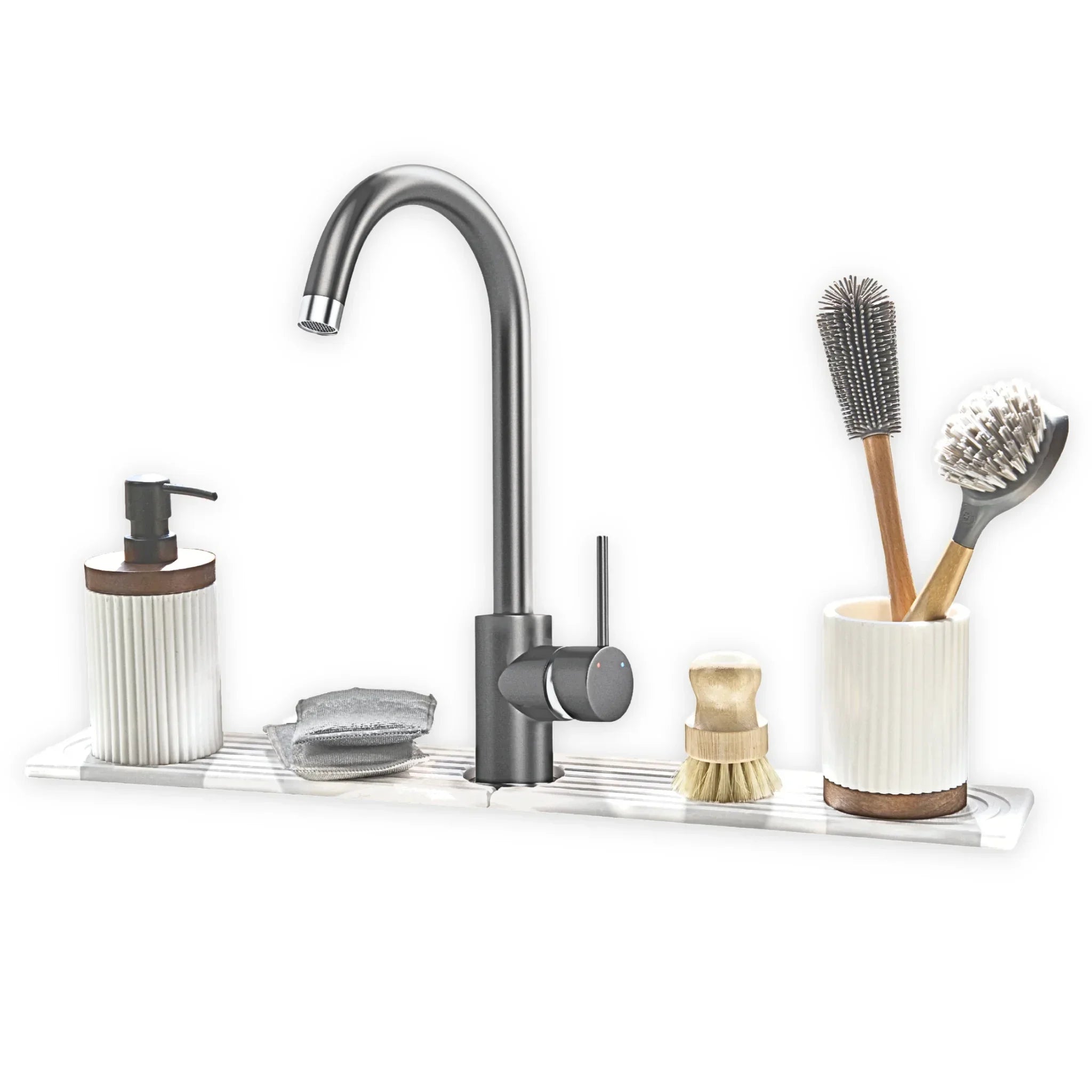
| Faucet Mat | 60 × 10 × 0.9 cm | 0.4 kg | Contour water channels |
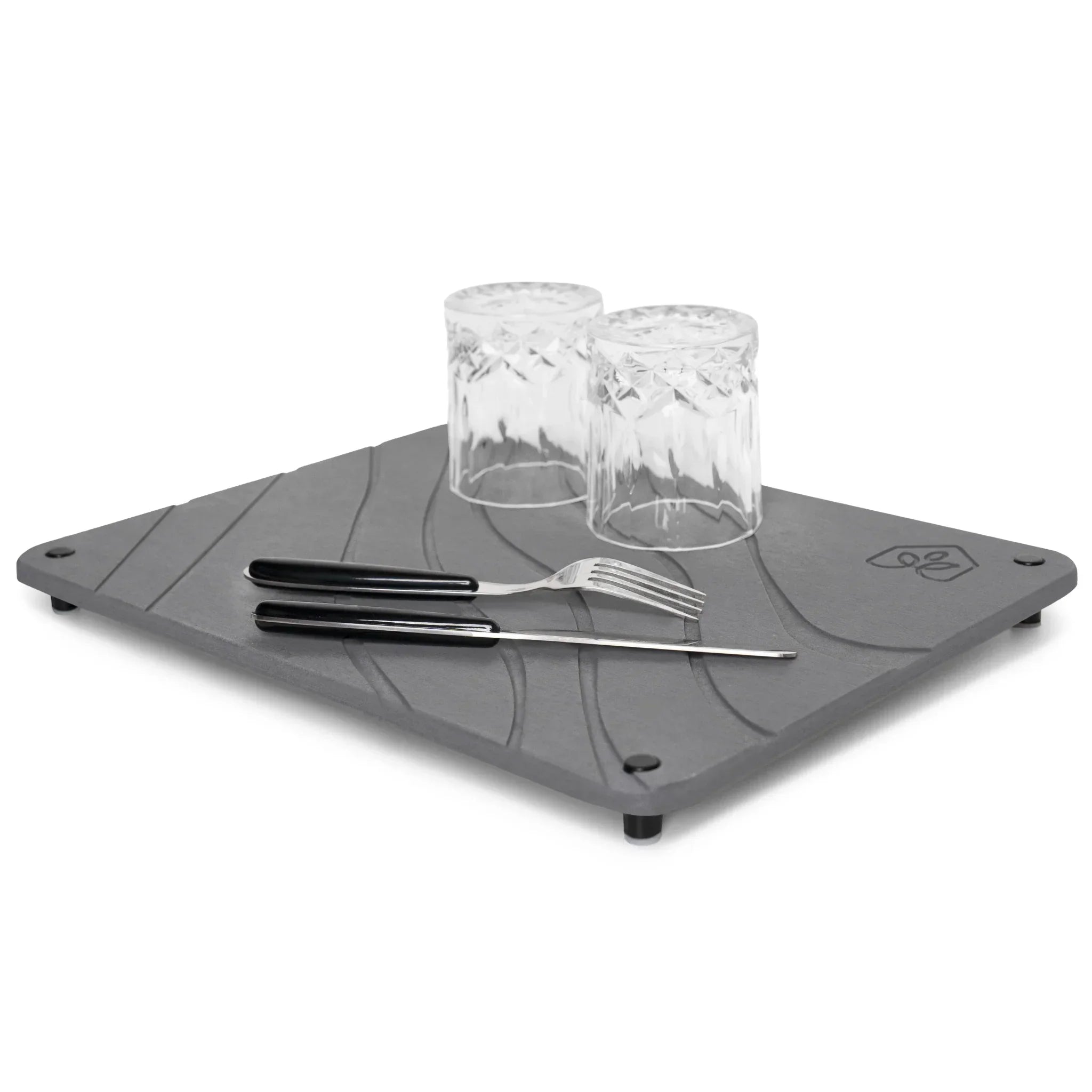
Sink caddies solve the problem of wet soap bottles and damp sponges that never fully dry. The elevated design keeps everything off the counter, so air circulates underneath while the stone absorbs drips from above. They come in Flow and Rain patterns, with either black coated or raw stainless steel legs depending on the color you choose.
The faucet mat sits right behind your tap where water constantly splashes and pools. Most people just wipe this area down repeatedly or let it stay wet. The Arch pattern has tight parallel channels that run the full length, guiding water along engineered paths so it evaporates faster instead of sitting in random puddles.
Each product uses the same composite construction: diatomaceous earth and recycled paper compressed into a dense, chemical-free material. No synthetic coatings that trap moisture or wear off over time. The carved patterns aren't just decorative, they increase surface area and create pathways for water to spread and evaporate. You can see the full range in our bathroom collection.
Keeping Bathroom Stone Clean and Effective
Bathroom stone doesn't need much maintenance, but it does need the right kind. The porous structure that makes it absorb water so well can also pick up oils, soap residue, and mineral deposits if you ignore it completely. The good news is that basic care takes about two minutes a week and keeps the stone working like new for years. Most people overthink it or use the wrong products, which creates more problems than it solves.
A weekly vinegar water wipe prevents most buildup before it starts. Mix equal parts white vinegar and water, wipe down the surface, and let it air dry. This removes soap scum and mineral deposits without clogging the pores. Avoid colored soaps and products with dyes, since these can stain the stone over time.
- Wipe with vinegar water solution once a week
- Rinse any visible stains under running water immediately
- Use hydrogen peroxide for stubborn marks
- Never use bleach or harsh chemical cleaners
- Air dry upright if the stone becomes fully saturated
Every stone product includes a sanding tool for a reason. When the surface starts absorbing slower than usual, a quick sand reopens the pores. The P320 grit disc is gentle enough not to damage the stone but effective enough to remove the thin layer of buildup that blocks absorption. Just rub it across the surface in circular motions for 30 seconds, rinse off the dust, and you're back to instant drying.
If your stone gets completely saturated from heavy use, stand it upright against a wall to dry. Laying it flat when soaked can trap moisture underneath and slow down the evaporation process. The material needs airflow on all sides to work properly. This is also why products like sink caddies use elevated legs and why bath mats have base pads that still allow circulation.
Some materials require constant replacement or lose effectiveness over time. Bathroom stone maintains its performance as long as you follow basic care. The composite construction doesn't break down from water exposure, and the natural antibacterial properties come from staying dry, not from chemicals that wash away. For more guidance on moisture-resistant surfaces in bathrooms, the principles are similar: materials that dry quickly stay cleaner longer.
The sanding tool is your reset button. Most people never need to replace their bathroom stone, they just need to refresh the surface every few months. That's the difference between a product designed to be maintained and one designed to be thrown away.
Dry Bathrooms Start With Better Materials
Most bathroom moisture problems come down to one thing: materials that trap water instead of releasing it. Traditional fabric mats, plastic trays, and sealed surfaces hold onto dampness for hours, creating the exact conditions where mold, mildew, and bacteria thrive. Bathroom stone made from diatomite works differently because its porous structure pulls moisture in and pushes it back out through natural evaporation. The surface dries in minutes, not hours, which means less time scrubbing and fewer chances for anything gross to grow.
Switching to diatomite changes how much effort you put into keeping things clean. Our stone bath mats don't need daily washing or hanging to dry. A quick weekly wipe with vinegar water is usually enough. The same goes for sink caddies and faucet mats, which handle drips and splashes without turning into soggy messes.
A drier bathroom is a healthier bathroom. When surfaces stay dry, odors don't build up and bacteria have fewer places to settle. The material itself doesn't need chemical treatments to stay fresh because the rapid drying does the work naturally. You get a space that feels cleaner without adding extra products or routines to your day.
If you're tired of dealing with damp mats and constant cleaning, the bathroom collection offers a straightforward fix. The stone absorbs what it needs to and releases the rest, keeping your floors and counters dry without any extra effort on your part.
Common Questions About Bathroom Stone
Switching from fabric to stone in your bathroom raises some practical questions. Most people wonder about drying time, maintenance, and whether bathroom stone actually stays cleaner than traditional mats. Here's what you need to know before making the switch.
How long does bathroom stone take to dry?
Bathroom stone made from diatomite absorbs water instantly when you step on it, and the surface feels dry to the touch within 60 seconds. The material releases moisture back into the air through millions of microscopic pores, so it doesn't stay wet like fabric mats that can take hours to dry. Natureva stone bath mats use this same rapid evaporation process to stay dry between uses.
Can bathroom stone get moldy or stained?
Bathroom stone resists mold growth because it dries so quickly that bacteria and mold don't have the damp conditions they need to thrive. Stains can happen if you use coloured soaps or lotions directly on the surface, but most marks rinse off under water. For stubborn stains, a quick wipe with hydrogen peroxide or light sanding with the included tool brings the surface back to new.
How do I restore absorption if it decreases?
If your bathroom stone starts absorbing slower, it usually means the surface pores are clogged with soap residue or body oils. Light sanding with the P320 grit tool that comes with every Natureva product reopens those pores and restores full absorption in about 30 seconds. A weekly wipe with diluted vinegar also prevents buildup and keeps the stone performing like new.
Which bathroom stone product works best for different spaces?
Bath mats work best in front of showers and tubs where you need full foot coverage. The faucet mat fits perfectly along sinks to catch splashes and drips in a narrow space. Sink caddies sit on the counter to hold soap bottles and sponges while absorbing moisture underneath them. Each product is sized for its specific spot, so you're not trying to make one piece work everywhere.
How does bathroom stone compare to fabric mats in durability?
Fabric mats wear out, fade, and develop odors over time because they trap moisture in their fibers. Bathroom stone doesn't absorb water into its structure, it just moves moisture through and releases it, which means no breakdown of material and no smell buildup. Brands like Dorah Home and Drysorb offer similar stone options, but durability comes down to material density and proper airflow underneath. Natureva products include non slip bases and elevation systems that protect both the stone and your floors from moisture damage.
The next generation of home essentials: naturally made, cleaner by design, sustainable by nature.
SHOP ALL