
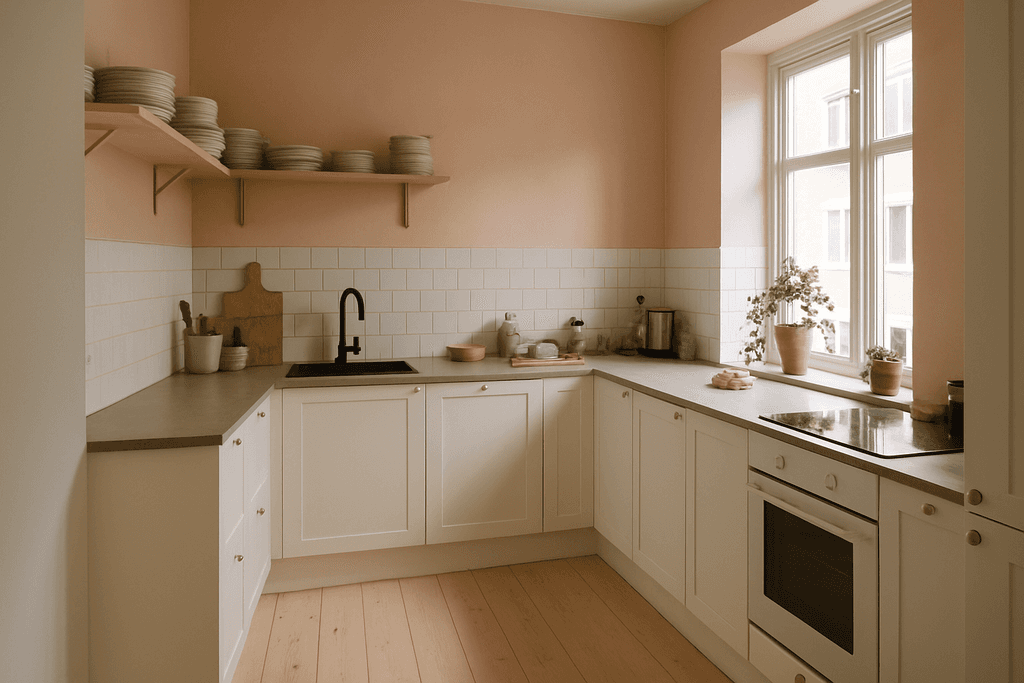
Five Kitchen Tray Shapes That Catch Benchtop Spills
A single wet sponge left on your benchtop can leave a puddle that spreads across the counter within minutes. Most kitchen trays just collect that water instead of eliminating it, which means you're wiping down the same spots over and over. The shape of your tray determines whether spills get absorbed quickly or sit trapped underneath, and choosing the wrong form for your kitchen zones makes moisture problems worse instead of better.
Table of Contents
- The Problem With Standard Kitchen Trayss
- Rectangular Dish Mat Shape for Drying Zones
- Compact Rectangular Caddy for Sink Areas
- Extended Linear Shape for Faucet Zones
- Organic Irregular Shapes for Flexible Placement
- Rounded Organic Saucer Shape for Plant Moisture
- Choosing the Right Tray Shape for Your Kitchen
- Common Questions About Kitchen Tray Shapes
The Problem With Standard Kitchen Trays
Most kitchen trays sold today are made from plastic, silicone, or sealed wood that trap water instead of releasing it back into the air. When you place a wet dish, dripping bottle, or damp sponge on these surfaces, the moisture just sits there with nowhere to go. Within hours, that standing water becomes a breeding ground for bacteria and starts creating those musty smells nobody wants near their food prep areas. The material itself becomes part of the problem rather than the solution.
Why Shape Matters More Than You Think
Walk into any home goods store and you'll find dozens of rectangular kitchen trays in nearly identical dimensions. The assumption is that one size fits all kitchen needs, but that's rarely true in practice. Your sink area needs different coverage than your dish drying zone, and the space next to your coffee maker has completely different requirements than the area under your dish soap.
Here's what happens when shape doesn't match function:
- Narrow rectangular trays leave gaps where spills escape onto countertops
- Oversized trays take up valuable counter space and collect dust in unused corners
- Square trays don't fit the linear layout of most sink edges and faucet areas
- Generic shapes force you to position items awkwardly instead of naturally
The Moisture Trap Cycle
When water can't evaporate properly from kitchen trays, it creates a cycle that damages both the tray and your countertop. Sealed materials like coated bamboo or laminated wood prevent airflow from reaching the wet surface. The water stays trapped between the tray and counter, slowly working its way into grout lines, under cabinet edges, and into porous stone surfaces.
The damage compounds over time in predictable ways:
- Mold and mildew form in dark, damp spaces under the tray
- Wooden countertops develop water stains and warping
- Grout between tiles becomes discolored and weakened
- Bacteria colonies establish themselves in moisture-rich environments
Elevation Changes Everything
A flat tray sitting directly on your counter creates a sealed environment where moisture has no escape route. Even absorbent materials fail when there's no airflow underneath to pull moisture away from the contact point. This is why elevation and airflow are non-negotiable features for any kitchen tray that actually manages moisture instead of just collecting it.
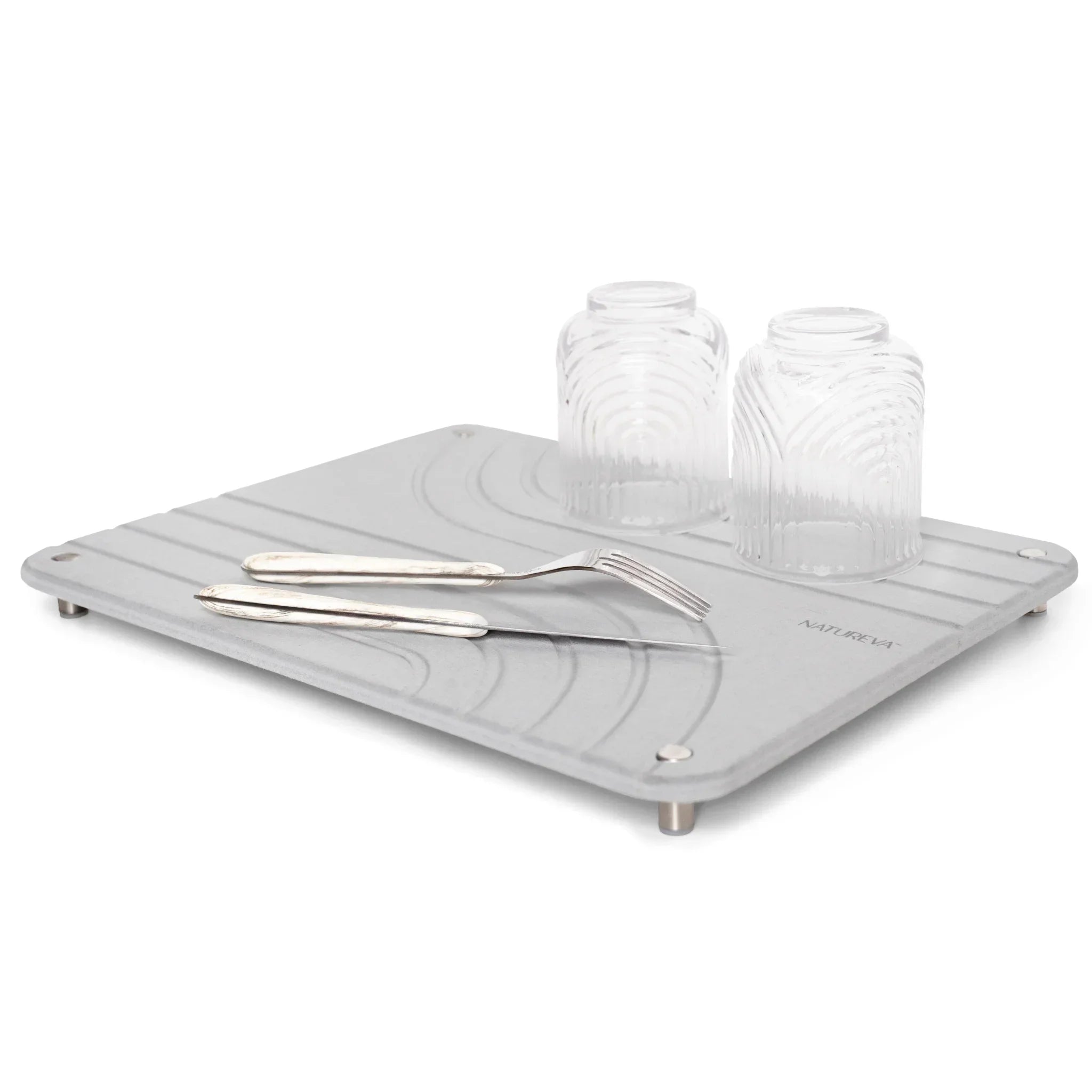
Products like our Stone Dish Mats use stainless steel legs to create 2.5 cm of clearance beneath the surface. This simple design choice allows air to circulate continuously, pulling moisture away from both the tray and your countertop. The diatomite material absorbs spills instantly while the elevated structure ensures everything dries completely between uses.
| Tray Type | Material | Drying Method | Airflow |
|---|---|---|---|
| Standard Plastic | Sealed polymer | Manual wiping | None |
| Silicone Mat | Flexible silicone | Air drying only | Minimal |
| Coated Bamboo | Sealed wood | Surface evaporation | None |
| Elevated Stone | Porous diatomite | Absorption + evaporation | Full circulation |
The difference between a tray that manages moisture and one that just moves it around comes down to material science and structural design. Shape determines coverage and fit, while elevation and porosity determine whether water actually leaves the system or just relocates to a different problem area.
Rectangular Dish Mat Shape for Drying Zones
Most kitchen counters have one spot where dishes pile up after washing. That spot usually ends up with a soggy fabric mat that never quite dries and starts smelling weird after a few days. The rectangular dish mat shape exists specifically to handle this problem, giving you a wide platform that can hold multiple plates, bowls, and glasses all at once without crowding.
The wide rectangular platform works because it matches how we naturally stack dishes. You're not trying to balance a mug on a tiny circle or fit a dinner plate on something too narrow. Instead, you get a full drying zone that makes sense for real kitchen use.
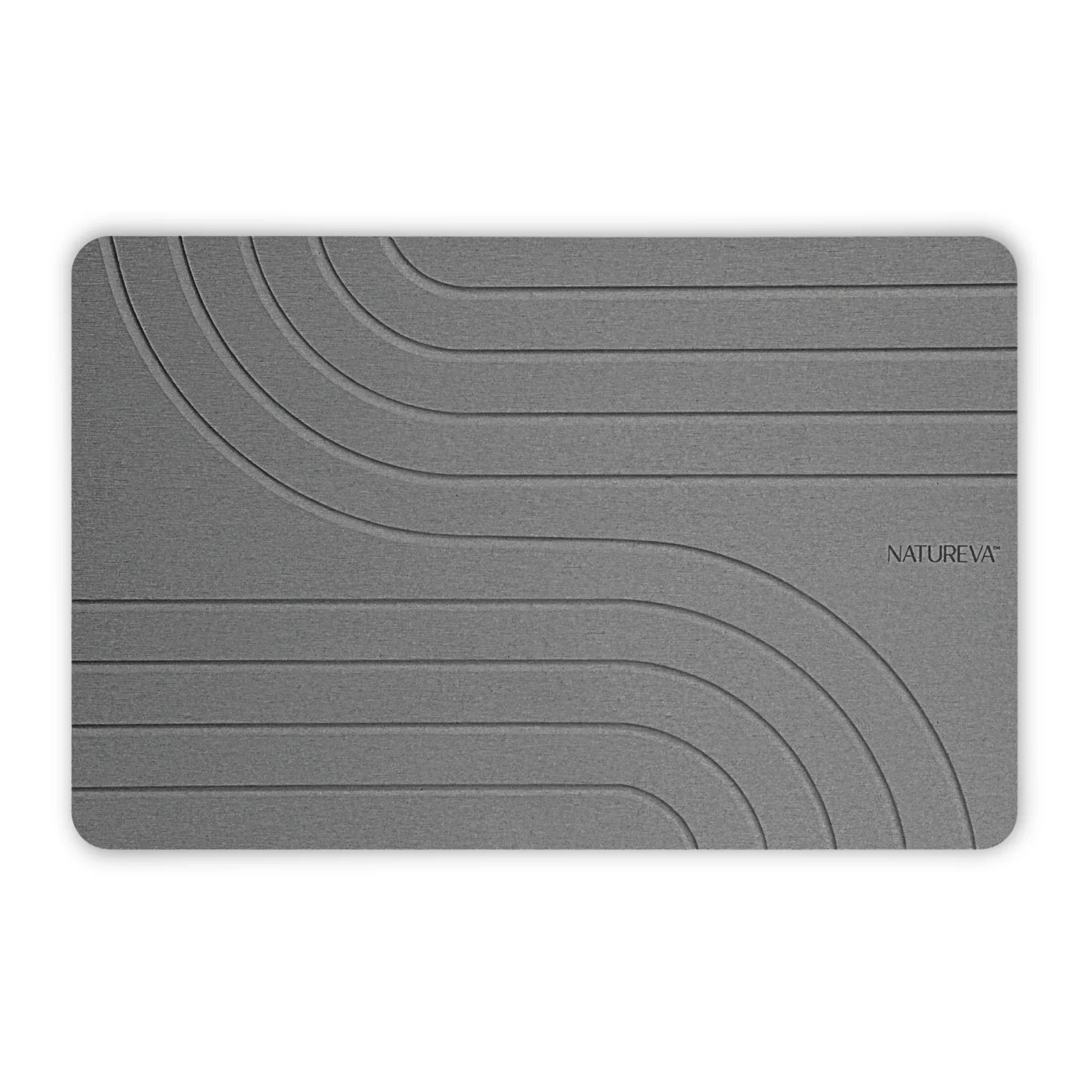
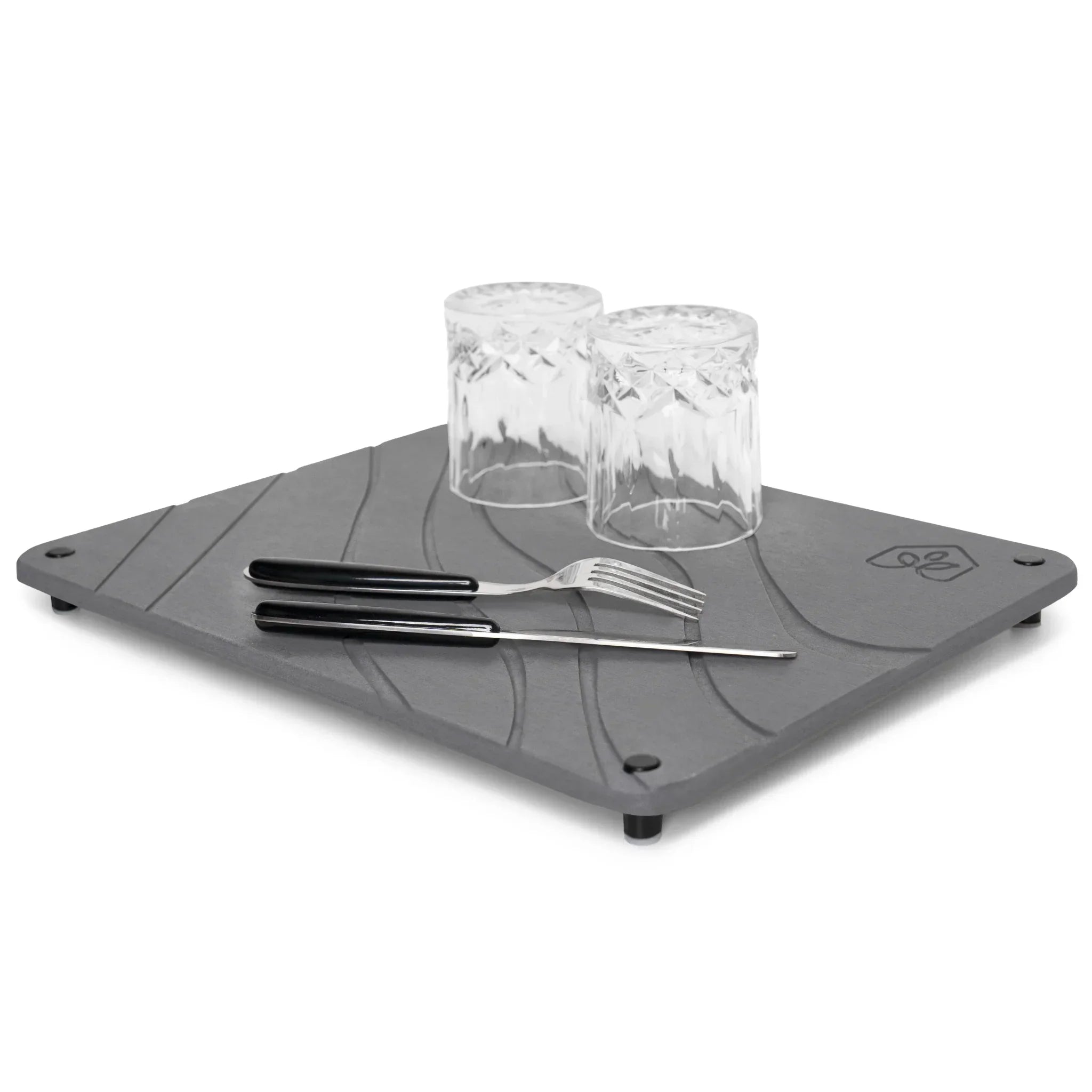
Natureva's Stone Dish Mats take this classic shape and make it actually functional. The diatomite material absorbs water the second a wet dish touches it, then releases that moisture back into the air through rapid evaporation. No more puddles sitting under your clean dishes for hours.
- Dimensions of 39.5 × 29.5 cm provide enough space for a full sink load
- Stainless steel legs create 2.5 cm elevation so air flows underneath constantly
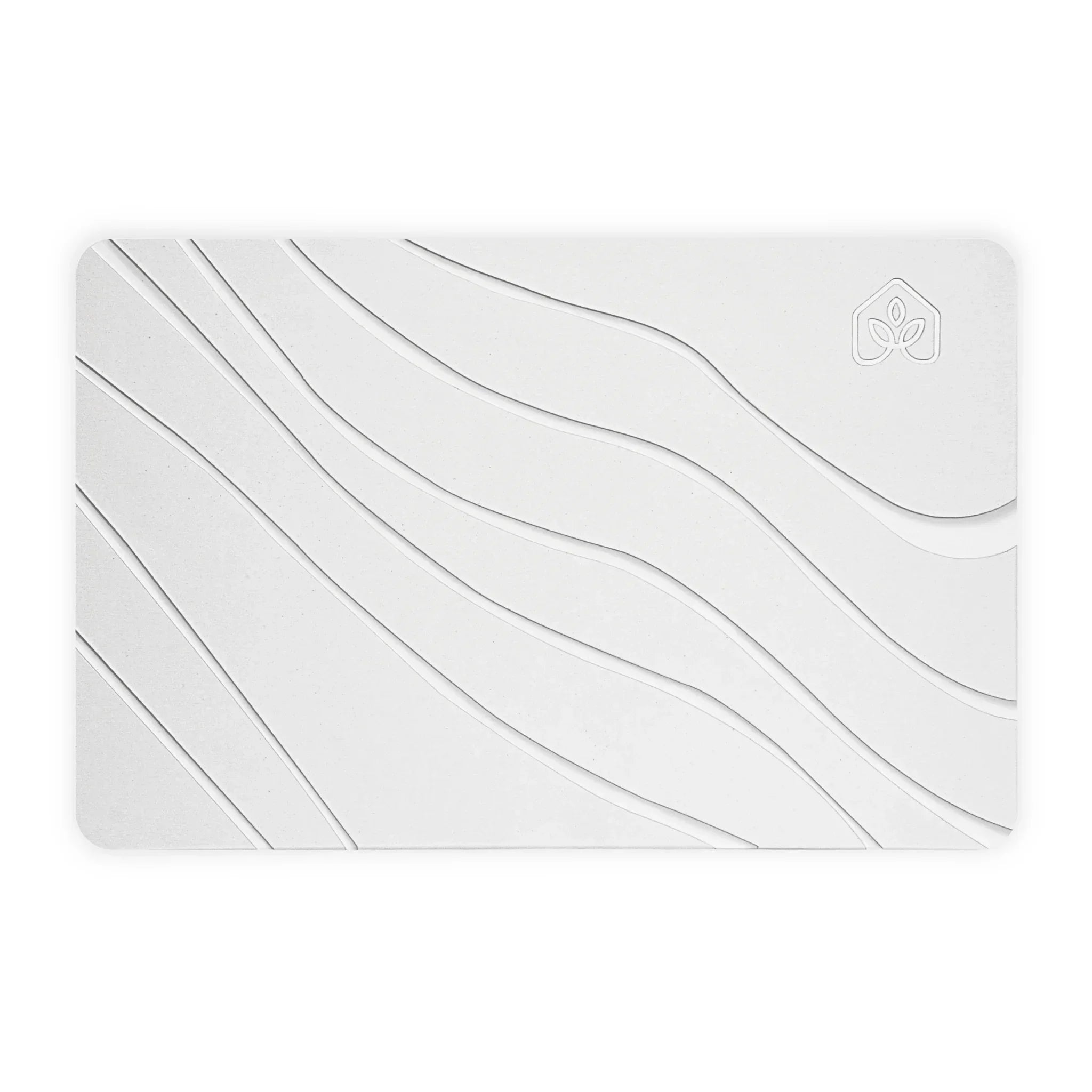
- Available in Tide pattern (horizontal curves) or Flow pattern (diagonal waves)
- Comes in Graphite or Slate colours to match different counter styles
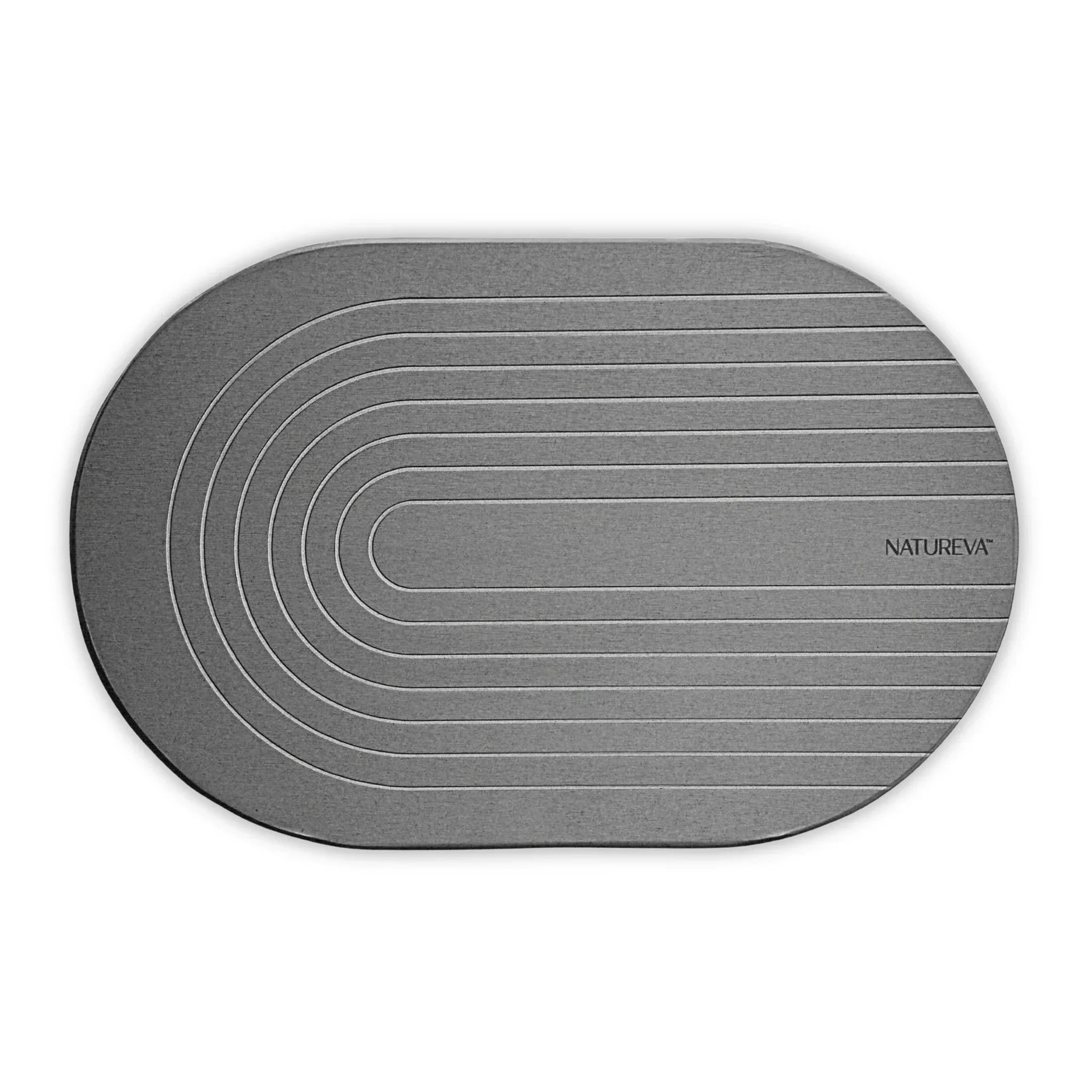
The engraved patterns aren't just decoration. Horizontal or diagonal channels guide water flow across the surface, helping moisture spread out and evaporate faster instead of pooling in one spot. The Tide pattern uses wide shoreline curves that run side to side, while Flow creates diagonal landscape waves that move water at an angle.
What makes this shape work better than fabric mats is the elevated design with airflow underneath. Those stainless steel legs keep the stone lifted off your counter, so moisture never gets trapped between the mat and the surface. The silicone pads under each leg prevent scratching while keeping everything stable, even when you're setting down heavy pots.
Compact Rectangular Caddy for Sink Areas
The space right next to your sink is usually a mess of soap bottles sitting in their own drips and sponges that never dry out. This narrow strip of counter gets wet constantly but doesn't have room for a full sized mat. That's where the compact rectangular caddy shape comes in, designed specifically to fit in tight spots while still catching every drip.
A narrow rectangular design fits beside sinks without eating up the counter space you actually need for food prep. The shape is long enough to hold a soap dispenser, hand soap, and a sponge all in a row, but slim enough that it doesn't stick out awkwardly or block your workspace.
Natureva's Stone Sink Caddies measure exactly 25 × 10 cm, which is the sweet spot for most sink areas. The elevated platform keeps bottles and sponges dry while the diatomite surface catches and absorbs any drips that roll down the sides of containers.
- Flow pattern provides diagonal wave engraving for fluid topographic character
- Rain pattern uses minimal vertical line segments in a sparse structured grid
- Available in Graphite (with black coated steel legs), Slate, or Chalk (both with raw stainless steel legs)
- Stainless steel legs create 2.5 cm elevation for continuous airflow
The silicone pads under legs prevent scratching and provide stability even when the surface gets wet. These pads are precision sized at 1.2 cm diameter to match the exact width of the stainless steel legs, sitting flush underneath without any visible overhang. You get six pads total, which means you have extras if you ever need replacements.
Different surface patterns give you aesthetic options that match your kitchen style. The Flow pattern works well in modern spaces with its diagonal movement, while Rain keeps things minimal and structured with its vertical line segments.
Extended Linear Shape for Faucet Zones
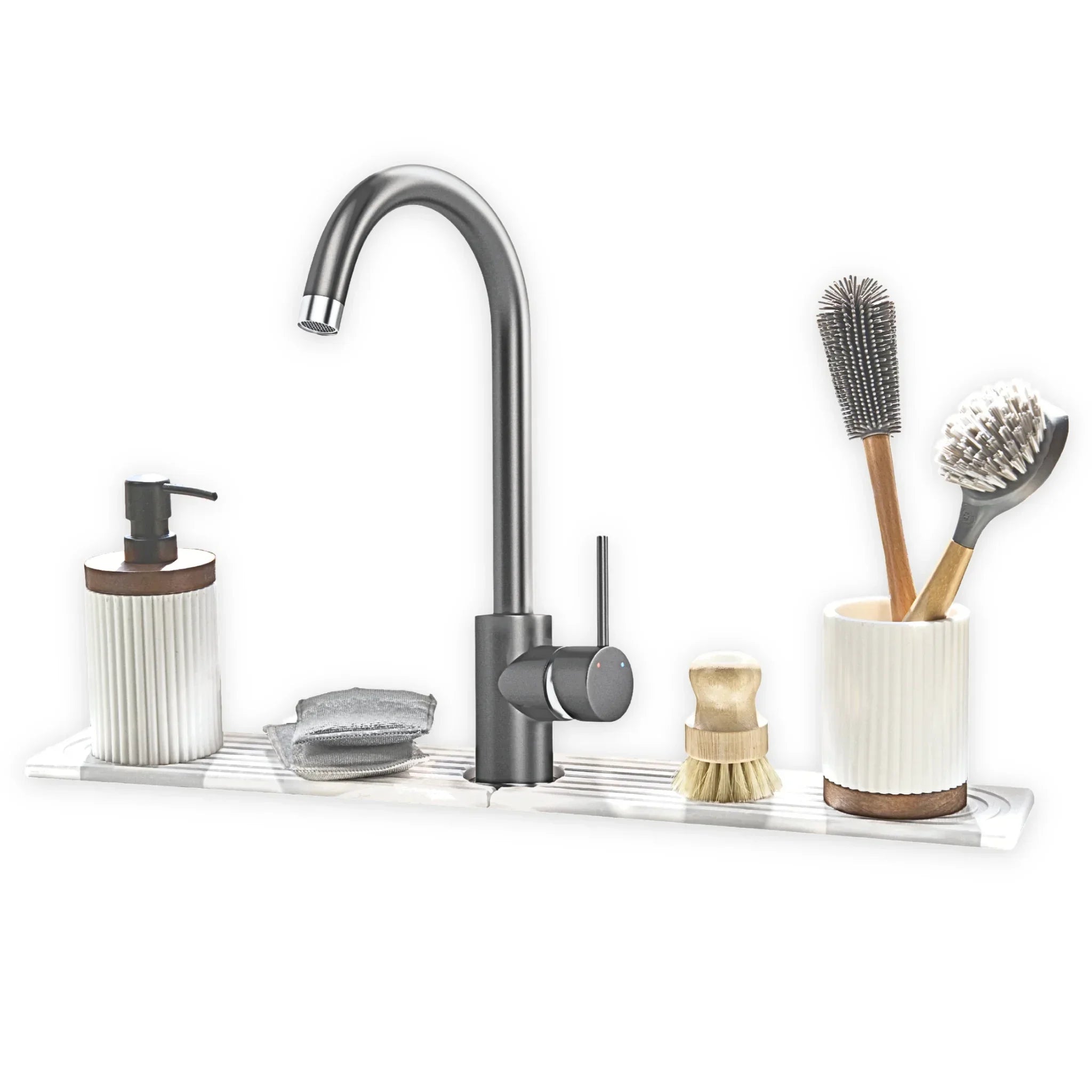
Every time you wash your hands or rinse vegetables, water splashes onto the counter behind your faucet. By the end of the day, that area is covered in water spots and soap residue. The extended linear tray shape runs parallel to your faucet base, creating a catch zone for all those splashes without taking up much depth on your counter.
The elongated 60 × 10 cm shape is long enough to cover the full width of most sinks but narrow enough that it doesn't interfere with anything else on your counter. This shape works because it matches the splash pattern that naturally happens when you use a faucet.
Natureva's Stone Faucet Mat uses the Arch pattern, which creates tight parallel contour channels that run the entire length of the mat. These channels guide water along engineered paths, helping moisture spread out and evaporate instead of pooling in random spots.
- Catches splashes from handwashing and tap use throughout the day
- Diatomite material provides instant absorption the moment water hits the surface
- Comes with 10 transparent silicone pads for slight elevation
- Available in Graphite, Slate, or Chalk colours
Unlike the dish mat or sink caddy, the faucet mat uses silicone pads instead of bulky legs. The pads are 2 mm thick and 1.2 cm in diameter, creating just enough elevation for airflow without making the mat sit too high. This keeps the profile low and sleek while still preventing moisture from getting trapped underneath.
The next generation of home essentials: naturally made, cleaner by design, sustainable by nature.
SHOP ALLThe continuous linear flow design means water doesn't just sit there. It gets absorbed immediately, then the moisture evaporates through the millions of microscopic pores in the diatomite material. Your counter stays dry all day, even with heavy faucet use.
Organic Irregular Shapes for Flexible Placement
Not all moisture problems happen in predictable spots. Sometimes you need something under a water glass on your kitchen island, or beneath a vase on your counter, or under a coffee mug by your cutting board. Rigid geometric shapes don't always fit these scattered needs, which is where organic irregular forms become useful.
Irregular organic silhouettes inspired by natural river stones work anywhere because they don't look like typical kitchen accessories. Each piece has its own unique shape, but they all feel cohesive as a set. You can scatter them around your kitchen wherever moisture shows up.
Natureva's Stone Coasters come in sets of six unique shapes, each measuring 10 × 10 cm. The compact size means you can place them anywhere on your counters without them feeling bulky or taking up too much space.
- Works for plants, glasses, bottles, or any moisture source
- Each coaster weighs about 67 grams, light enough to move around easily
- Available in Graphite colour
- EVA pads underneath create airflow while protecting surfaces
The organic shapes mean these don't look like typical kitchen trays. They blend into your space more naturally, almost like decorative elements that happen to be extremely functional. You can use them under drinking glasses during the day, then move them under plant pots in the evening.
Each coaster comes with five small EVA pads (2 mm thick, 10 mm diameter) that sit underneath. These create slight elevation for airflow, which is crucial for the diatomite to dry properly between uses. The pads also protect your counters from any scratching or pressure marks.
Rounded Organic Saucer Shape for Plant Moisture
Plants on kitchen counters or windowsills always create the same problem. You water them, excess drains out the bottom, and suddenly you have a puddle sitting under the pot. Traditional plastic saucers just hold that water there, creating a breeding ground for mold and leaving water rings on your surfaces. The rounded organic saucer shape solves this by absorbing overflow water instead of trapping it.
The rounded organic outline mimics natural forms rather than perfect circles or squares. This makes them look less like functional trays and more like natural stone elements in your kitchen. The shape feels intentional but not overly designed.
Natureva's Stone Plant Saucers come in two sizes: 20 × 20 cm for smaller pots and 30 × 30 cm for larger plants. Both have the same flat surface design with engraved perimeter lines that follow the curved edge, creating a subtle topographic effect.
- Flat surface with no raised lip keeps the design minimal and modern
- Engraved lines trace the outer silhouette in soft continuous curves
- Available in Graphite colour
- Large rubber pads (5 cm diameter) provide stable elevation and airflow
The key detail here is that these are flat slabs, not bowls or catch trays. There's no raised edge trying to contain water. Instead, the diatomite material absorbs excess moisture directly, then releases it back into the air through evaporation. This means your plants never sit in standing water, which is better for root health anyway.
Each saucer sits on five large rubber pads underneath. At 5 cm diameter, these pads are significantly bigger than the ones used on coasters or other products. This creates stable elevation even for heavy plant pots, while ensuring enough airflow underneath for the diatomite to dry properly between waterings.
| Shape Type | Dimensions | Best Use | Elevation Method |
|---|---|---|---|
| Rectangular Dish Mat | 39.5 × 29.5 cm | Dish drying zone | Steel legs, 2.5 cm |
| Compact Caddy | 25 × 10 cm | Sink side bottles | Steel legs, 2.5 cm |
| Linear Faucet Mat | 60 × 10 cm | Behind faucet | Silicone pads, 2 mm |
| Organic Coasters | 10 × 10 cm | Scattered placement | EVA pads, 2 mm |
| Rounded Saucers | 20 × 20 or 30 × 30 cm | Plant overflow | Rubber pads, 2 mm |
The variety of shapes means you can handle moisture problems throughout your entire kitchen, not just in one or two spots. Each shape serves a specific purpose based on where water tends to accumulate and how much space you have available. You can explore the full range of kitchen collection options to see which shapes work best for your specific counter layout, or check out the accessories collection for smaller placement solutions. For detailed maintenance tips on keeping these surfaces performing well over time, the care and cleaning guide covers everything you need to know about weekly maintenance and stain removal.
Choosing the Right Tray Shape for Your Kitchen
The shape of your kitchen trays matters more than most people think. A rectangular dish mat handles multiple plates and bowls in an organized drying zone, while a long linear faucet mat catches those annoying splashes that always seem to pool behind the tap. Organic shapes like plant saucers work anywhere you need flexibility, whether that's under a potted herb or next to your coffee maker. The key is matching the shape to where water actually lands in your kitchen, not just picking what looks nice.
But here's what most fabric mats and plastic trays get wrong. They trap moisture underneath, which means your benchtop stays wet long after you've wiped it down. That's where material makes the real difference.
Our kitchen collection uses diatomite stone that absorbs water instantly and releases it back into the air through evaporation. The Flow dish mat sits on stainless steel legs that create 2.5 cm of airflow underneath, so moisture never gets trapped against your counter. Same goes for the Arch faucet mat, which uses small silicone pads to lift the stone just enough for air to circulate.
The right tray shape solves your specific spill problem. The right material keeps everything dry without creating new problems underneath. Most kitchen trays only do one of those things, which is why wet counters keep happening.
Common Questions About Kitchen Tray Shapes
Choosing the right kitchen tray shape can feel more complicated than it needs to be. Most people wonder if the shape actually matters or if it's just about looks. The truth is that shape affects how well a tray fits your space, how much water it can handle, and whether you'll actually use it every day. Here are the answers to questions that come up most often when people shop for kitchen trays.
Which tray shape works best in small kitchens?
Rectangular trays give you the most usable surface area without wasting counter space. They fit neatly against walls or backsplashes and can slide under dish racks or next to the sink. Our Stone Dish Mat in Tide or Flow measures 39.5 × 29.5 cm and handles multiple dishes without taking over your entire counter.
Do elevated trays actually dry faster?
Yes, and the difference is noticeable. Trays that sit flat on the counter trap moisture underneath, which slows down evaporation and can leave water marks on your benchtop. Elevated designs with legs or pads create airflow underneath so the tray dries from both sides. This matters especially in humid kitchens where nothing seems to dry properly.
Can one tray shape handle multiple kitchen zones?
Rectangular trays are the most flexible because they work beside the sink, under a dish rack, or next to the stove for utensils. Organic shapes look better but they're harder to fit into tight spots. If you only want to buy one tray, go rectangular. If you have space for specialty zones, organic shapes add visual interest near coffee stations or plant corners.
How do you clean different tray shapes?
Most kitchen trays just need a weekly wipe with vinegar water to prevent buildup. Rectangular trays with carved patterns can trap crumbs in the grooves, so rinse them under the tap if you notice debris. Organic shapes with smooth surfaces are easier to wipe clean. For diatomite stone trays, avoid coloured soaps that can stain and use the included sanding tool if absorption slows down.
What material absorbs moisture best in kitchen trays?
Diatomite stone absorbs water faster than fabric, silicone, or plastic because of its porous structure. The material pulls moisture in immediately and releases it through evaporation within minutes. Brands like Dorah Home and Tosoro Home also use diatomite, but the key is finding trays with proper airflow underneath. Without elevation, even the best material stays damp longer than it should.
Do organic shapes absorb as well as rectangular ones?
The absorption rate depends on the material, not the shape. An organic diatomite tray absorbs just as fast as a rectangular one. The difference is surface area. Rectangular trays give you more space to spread out wet items, while organic shapes work better for smaller tasks like catching drips under a soap dispenser or holding a single wet sponge.
The next generation of home essentials: naturally made, cleaner by design, sustainable by nature.
SHOP ALL