
What Sink Splash Guard Kitchen Buyers Get Wrong
That puddle around your kitchen sink isn't just annoying, it's probably there because your sink splash guard kitchen setup is doing the opposite of what you think. Most people grab whatever mat or guard fits their counter space, but the real problem isn't coverage, it's how these products handle moisture after they catch it. Understanding why traditional guards fail comes down to three things most buyers completely miss: material science, airflow design, and strategic placement.
Table of Contents
Why Traditional Sink Guards Fail
Most people think a sink splash guard kitchen setup is as simple as throwing down a mat or strip near the faucet. The reality is that most traditional guards are designed to look good on a product page but fail completely when water actually hits them. They trap moisture instead of managing it, which creates a breeding ground for bacteria and mold right where you prepare food. The materials used in conventional sink guards prioritize appearance and low manufacturing costs over actual performance, leaving homeowners with a false sense of protection.
The Moisture Trap Problem
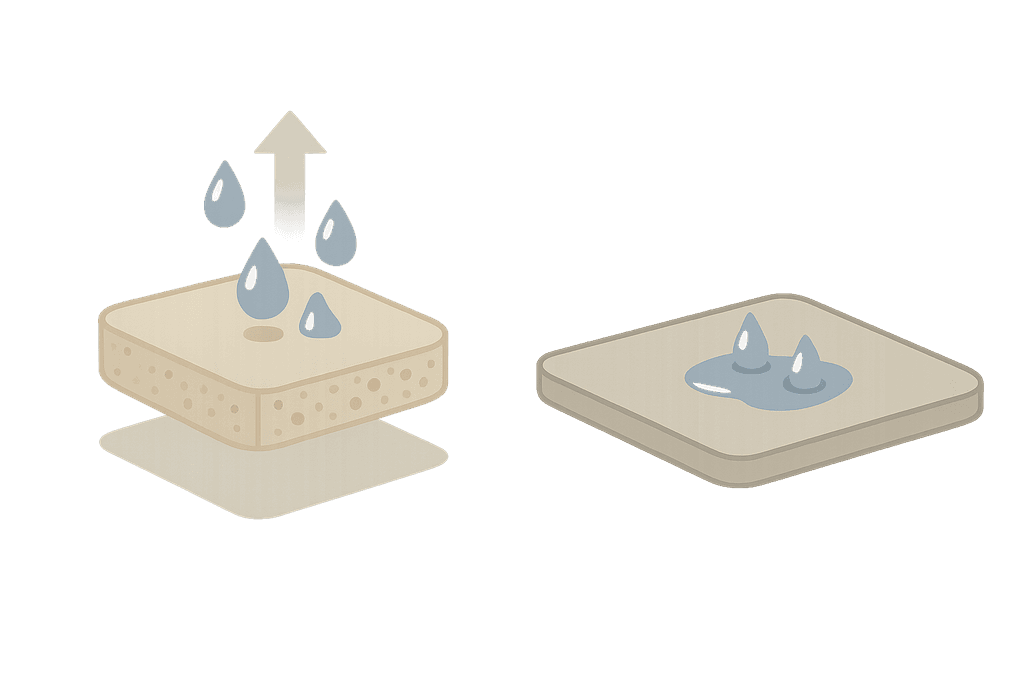
Traditional sink guards made from fabric, rubber, or silicone all share one critical flaw. They hold water against your countertop instead of letting it evaporate. When moisture sits trapped between the guard and your surface for hours, it creates the perfect environment for bacterial growth and unpleasant smells.
Here's what happens with common materials:
- Fabric mats absorb water but stay wet for hours or even days
- Silicone strips repel water but trap it underneath in puddles
- Rubber guards create airtight seals that prevent any drying
- Plastic versions just push water around without managing it
Flat Design Equals Flat Performance
Most sink guards sit completely flat against your counter. This might seem logical, but it's actually the worst possible design for moisture management. Without any elevation or airflow underneath, water has nowhere to go and no way to dry quickly.
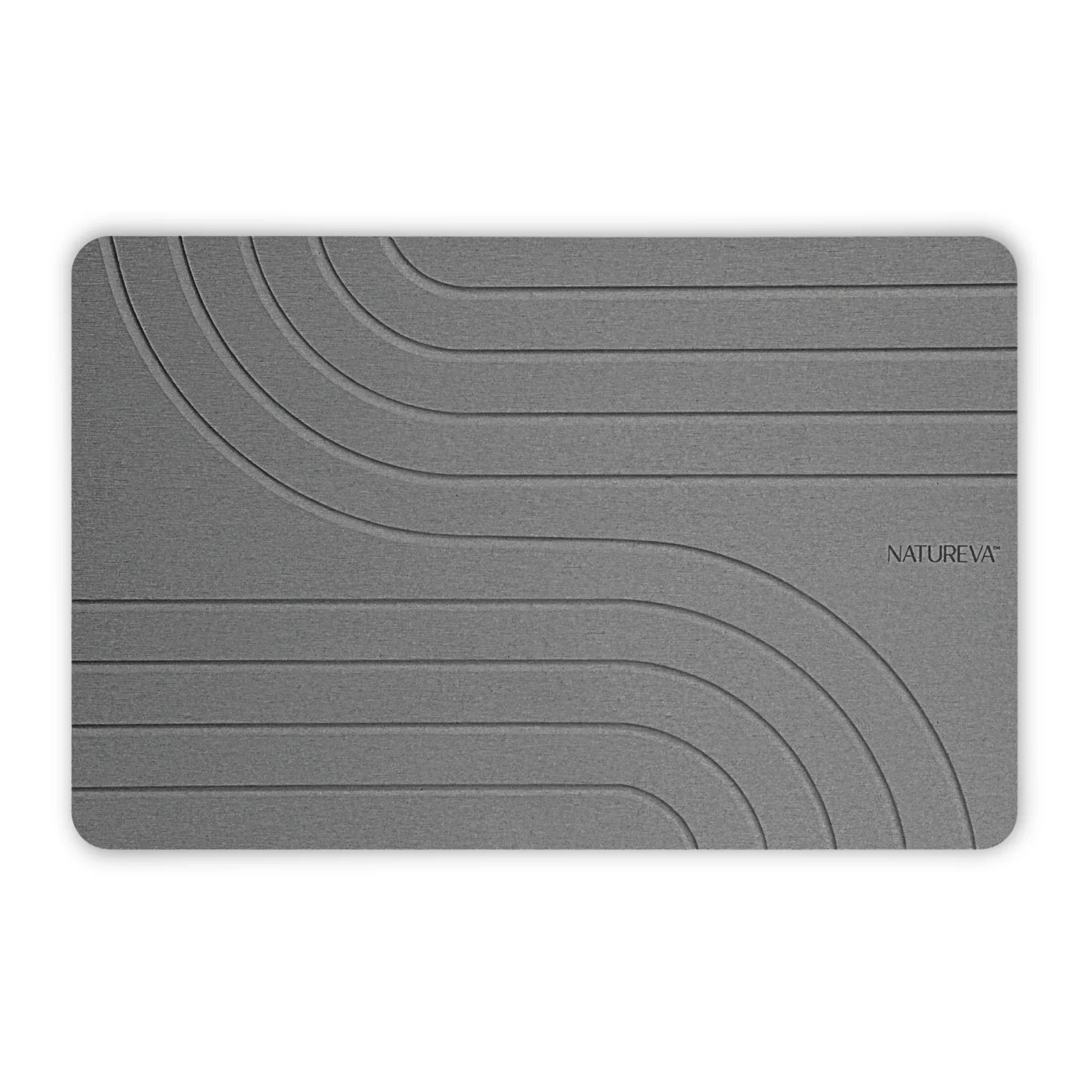
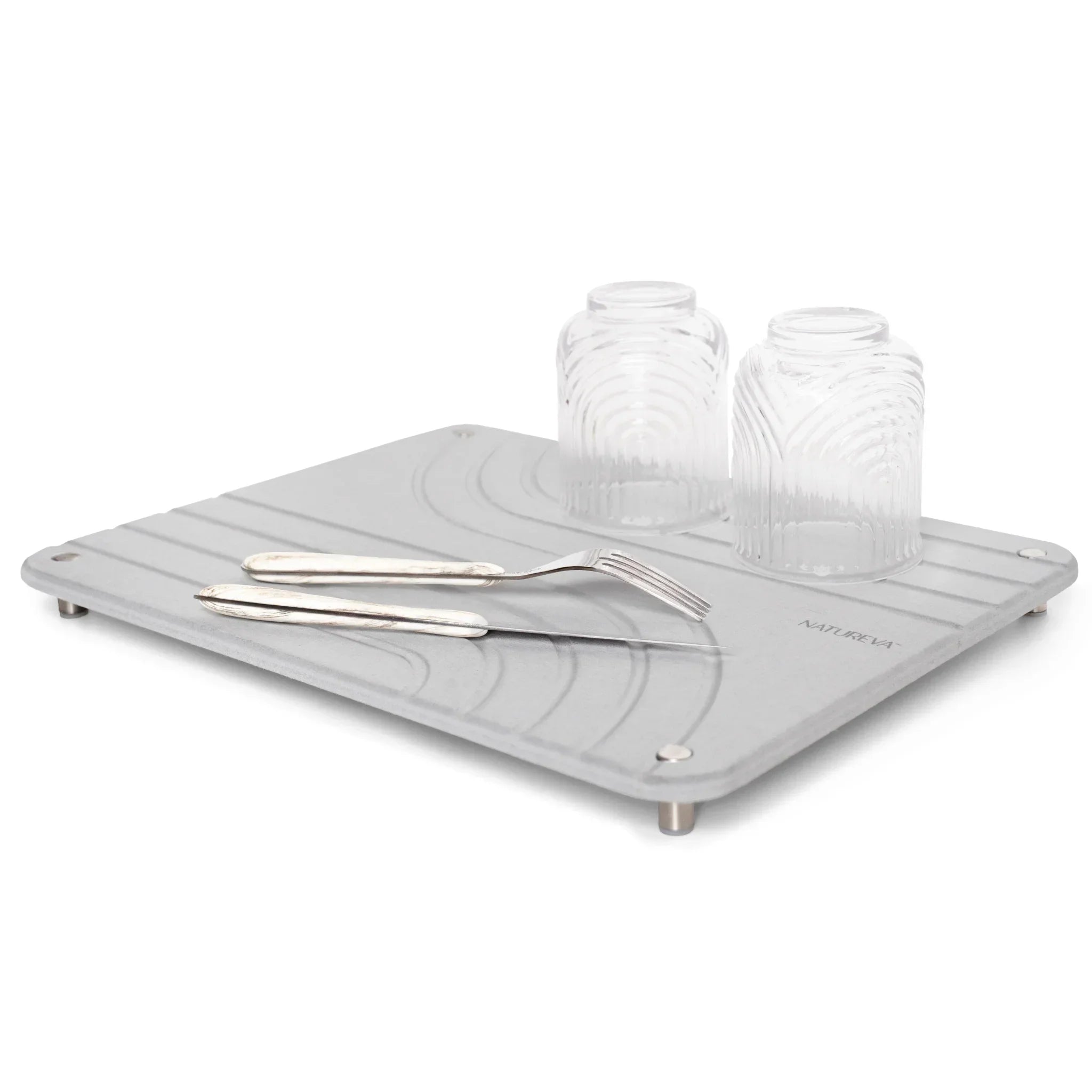
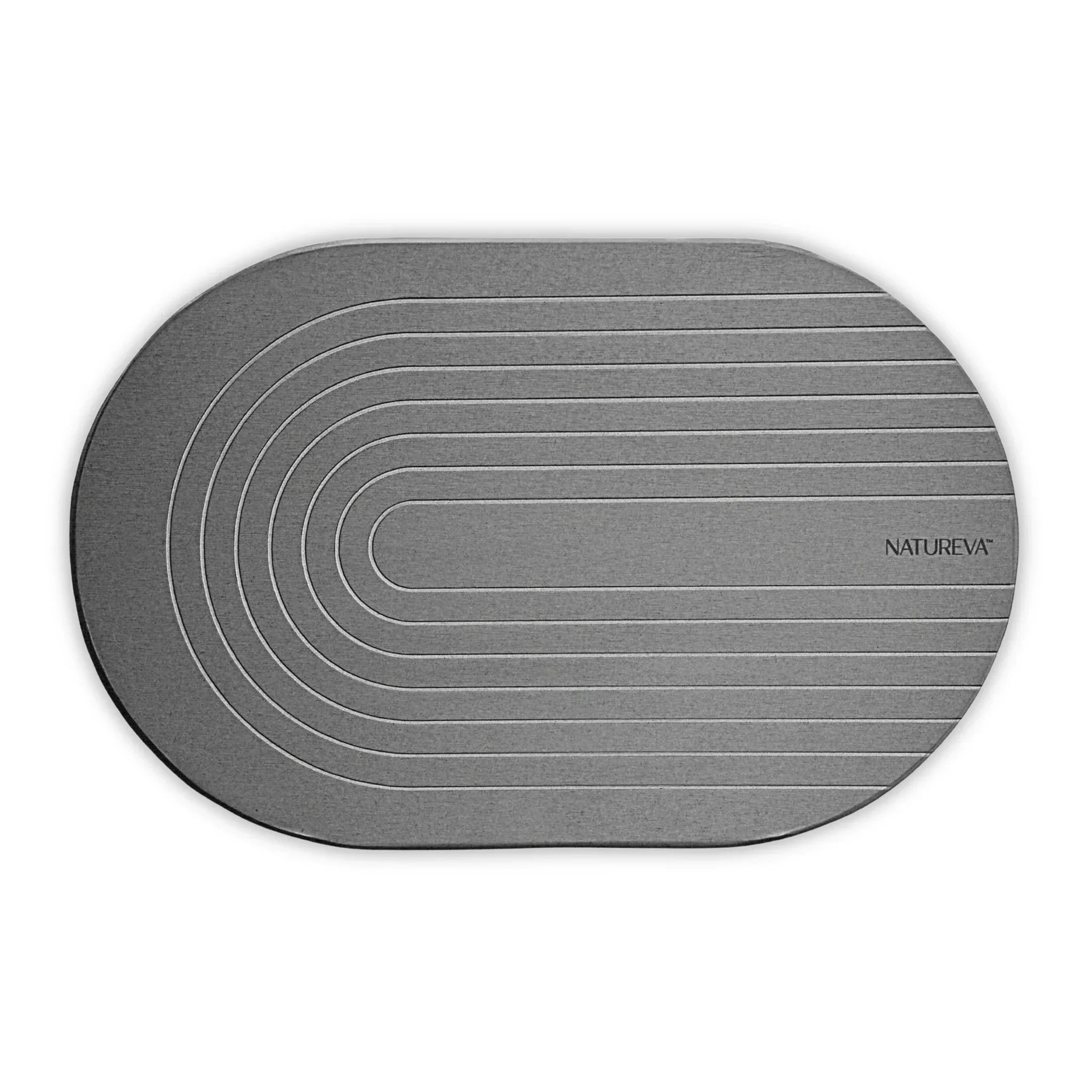
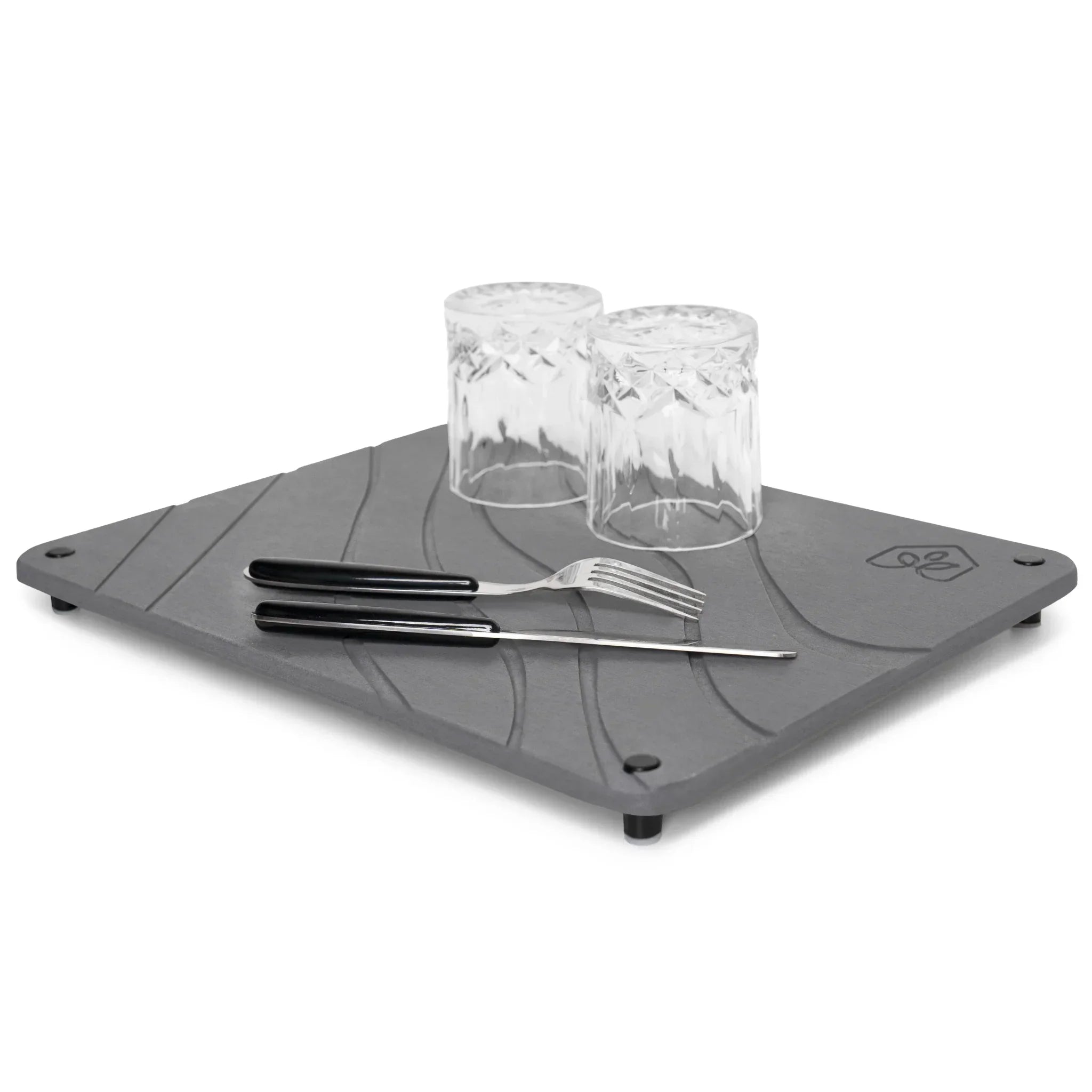
The science is straightforward. Evaporation requires air circulation, and flat surfaces pressed against countertops eliminate that circulation entirely. Products like the Natureva Stone Sink Caddy solve this with 2.5 cm stainless steel legs that create constant airflow underneath while the diatomite surface absorbs moisture instantly.
| Material Type | Drying Time | Airflow | Bacterial Risk |
|---|---|---|---|
| Fabric | 4-12 hours | None | High |
| Silicone | Never fully dries | None | Very High |
| Rubber | 2-8 hours | None | High |
| Diatomite Stone | Under 1 hour | Elevated design | Low |
When Pretty Beats Practical
The sink splash guard kitchen market is flooded with products that photograph well but perform poorly. Manufacturers focus on colors, patterns, and matching your decor rather than asking whether the product actually keeps your counter dry and hygienic.
Some materials absorb water but never release it back into the air efficiently. Others repel water entirely, which sounds good until you realize the water just pools somewhere else. The key difference is between materials that hold moisture and materials that manage it through rapid evaporation.
- Decorative fabric guards prioritize aesthetics over absorption rates
- Silicone products focus on non-slip features while trapping moisture
- Cheap composite materials crack and harbor bacteria in crevices
Material Choice Matters More Than Size
Most people shopping for a sink splash guard kitchen solution focus on dimensions and color, completely missing the factor that actually determines whether their counter stays dry or becomes a bacterial breeding ground. The material your splash guard is made from controls how quickly water disappears, how long moisture lingers, and whether you're creating a cleaner space or just hiding the mess under something decorative. A large fabric mat that holds water for hours creates more problems than a smaller stone surface that dries in minutes.
Diatomite stands apart from traditional materials because of its microscopic pore structure. These millions of tiny channels pull moisture off your counter the moment water hits the surface, then release it back into the air through rapid evaporation. Fabric mats and silicone guards trap that same water for hours, creating the damp environment where bacteria multiply and odors develop.
- Diatomite absorbs water instantly through capillary action in its porous structure
- Fabric materials can stay damp for 4-8 hours depending on humidity levels
- Silicone repels water rather than managing it, leaving puddles on your counter
- Natural materials eliminate bacterial growth through drying speed, not chemicals
The composite construction of diatomaceous earth and recycled paper creates a dense, stone-like material that feels solid but remains breathable. No synthetic coatings block the natural evaporation process. This matters more than most people realize because those waterproof finishes on competing products actually prevent moisture from escaping, trapping it inside the material where you can't see it decomposing.
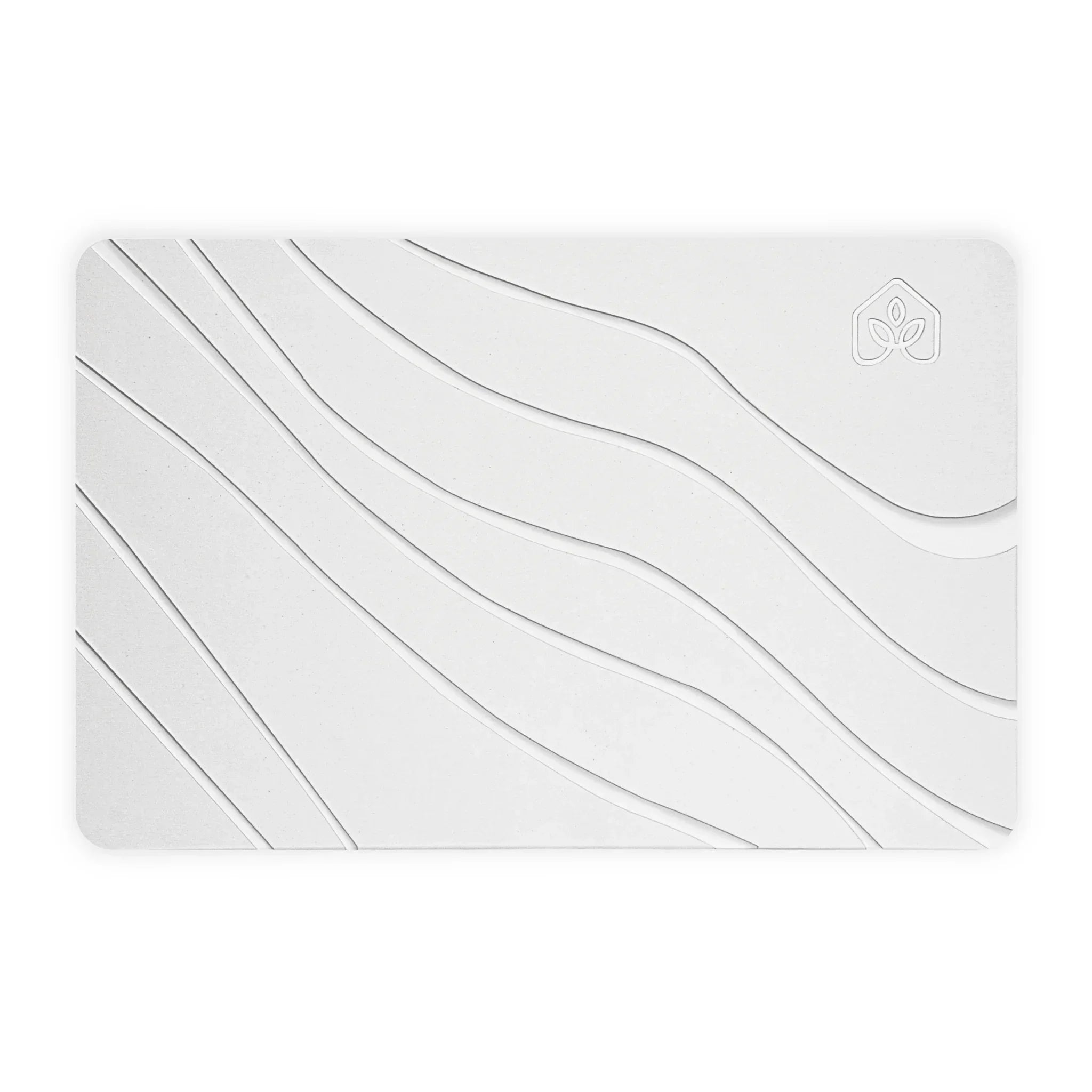
Surface texture plays a bigger role than coverage area. A textured diatomite surface with engraved channels guides water into the porous structure faster than a smooth surface of any material. Our Stone Faucet Mat uses parallel contour channels that direct water along engineered paths, maximizing contact with the absorbent material.
Airflow Design Prevents Bacterial Growth
The space underneath your sink guard determines whether it stays hygienic or becomes a science experiment. When a mat sits flat against your counter, moisture gets trapped in that thin layer between the product and the surface. That's where bacterial colonies establish themselves, completely invisible until the smell gives them away. Elevation creates continuous airflow that prevents this entire problem from starting.
A 2.5 cm gap might seem insignificant, but it changes everything about how moisture behaves. Air circulates underneath, carrying away the water vapor as it evaporates from the bottom surface of the guard. This prevents saturation that would otherwise keep the material damp indefinitely.
- Flat guards create anaerobic conditions perfect for bacterial growth
- Stainless steel legs provide structural support without blocking air channels
- Continuous airflow extends product lifespan by preventing moisture damage
- Proper elevation protects countertops from water stains and surface degradation
The silicone stabilizer pads serve a dual purpose most buyers don't consider. They protect your counter from scratches and pressure marks from the stainless steel legs, but they're designed with a 2 mm thickness and 1.2 cm diameter that maintains the airflow gap. These pads sit flush underneath the legs without creating a moisture seal, unlike full-coverage rubber bases that trap water.
Our Stone Sink Caddies and Dish Mats both use this elevated design with precision-sized pads. The relationship between airflow and odor prevention is direct. When moisture can't escape, organic matter in that trapped water begins decomposing. Elevation eliminates the stagnant conditions where decomposition happens.
Even naturally antibacterial materials need airflow to maintain their hygiene advantage. The rapid drying behavior of diatomite only works when air can reach all surfaces of the material, including the bottom.
Placement Strategy Most People Ignore
Positioning your sink splash guard kitchen setup based on aesthetics instead of water patterns is like putting an umbrella where it looks nice instead of where the rain actually falls. Your sink creates specific splash zones based on faucet height, water pressure, and how you use the space. Most people center their mat under the faucet and wonder why their counters still get soaked. The actual splash pattern extends further than you think, and different tasks create completely different moisture problems.
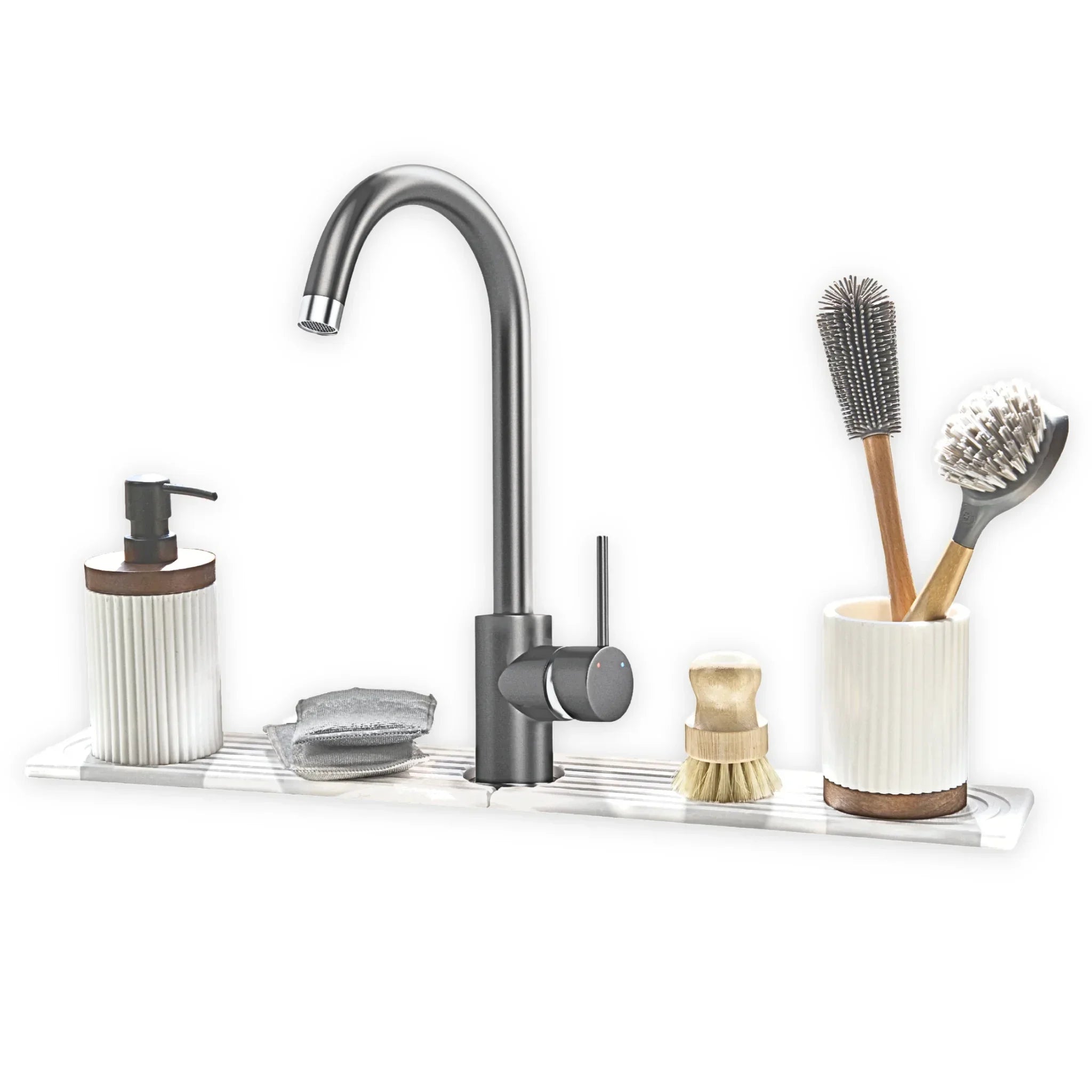
Faucet mats need placement that accounts for the arc of water when you turn on the tap, not just the drip zone directly below. When you rinse dishes or fill pots, water bounces off those surfaces and travels outward. A 60 cm faucet mat positioned to catch this splash radius prevents more moisture damage than a smaller mat centered perfectly under the spout.
- Observe where water actually lands during normal kitchen tasks for three days
- Mark the wet zones on your counter with tape to visualize the pattern
- Position guards to cover the highest-traffic moisture areas first
- Add secondary guards for dish drying zones separate from washing areas
The next generation of home essentials: naturally made, cleaner by design, sustainable by nature.
SHOP ALLCombining multiple guards creates comprehensive coverage without the clutter of one oversized mat. A faucet mat handles splash from washing, while a dish mat positioned to the side manages drying. This separation also prevents cross-contamination between dirty dish water and clean drying areas, something a single large mat can't accomplish.
The shape of your guard should follow water flow patterns, not just match your sink dimensions. Rectangular mats work better for linear splash patterns along the counter, while our Arch design fits curved sink edges where water tends to pool. Kitchen updates often focus on visible changes but ignore these functional moisture management details that affect daily use.
Decorative placement puts the mat where it looks balanced. Functional positioning puts it where water actually goes. These are rarely the same location. Test your current setup by placing paper towels around your sink area during dish washing to see where moisture really travels.
The Real Cost of Wrong Choices
Most people think about price tags when buying a sink splash guard kitchen solution, but the real expense shows up months later. That cheap fabric mat you grabbed for fifteen dollars might seem like a win until you're replacing it for the third time in eighteen months. The math gets worse when you factor in what's happening to your countertop underneath, where trapped moisture is slowly eating away at sealed surfaces and creating permanent water rings that no amount of scrubbing will fix.
The replacement cycle alone tells the story. Budget options typically last three to six months before they start falling apart or developing that smell you can't wash out. Quality materials like diatomite stone can last years with basic maintenance, which means you're actually spending less over time even though the upfront cost feels higher.
Hidden Expenses That Add Up
- Fabric mats trap water against countertops, causing permanent staining and seal degradation that requires professional refinishing
- Cleaning moldy guards takes 10-15 minutes weekly, adding up to over 12 hours annually of scrubbing time
- Bacterial growth in damp environments creates health risks, especially in homes with young children or immune-compromised family members
- Disposable solutions contribute to landfill waste every few months versus durable options that last years
The health angle matters more than most realize. When a sink splash guard kitchen product stays wet for hours, it becomes a breeding ground for bacteria and mold spores. You're essentially creating a petri dish right where you wash your dishes and prepare food.
| Cost Factor | Cheap Guard | Quality Stone |
|---|---|---|
| Replacement Frequency | Every 3-6 months | 3+ years |
| Annual Cleaning Time | 12+ hours | 2-3 hours |
| Counter Damage Risk | High | Minimal |
Short Term Savings Versus Long Term Value
The appeal of saving twenty or thirty dollars upfront makes sense until you run the numbers. Three cheap replacements in a year cost more than one quality piece that lasts three years. Add in the time spent shopping for replacements, the frustration of dealing with mold, and potential counter repairs, and the budget option becomes the expensive choice.
Products like Natureva's stone sink caddies use elevated designs with airflow underneath, which means moisture evaporates instead of sitting trapped against your counter. That simple design difference prevents the damage cycle before it starts, protecting both the guard and the surface beneath it.
Making Smarter Sink Guard Decisions
Most people think any sink splash guard kitchen setup will work as long as it catches water. But the material you choose determines whether moisture gets managed or just sits there breeding bacteria. If your guard doesn't have proper airflow underneath, you're basically creating a wet sponge that never fully dries. The difference between a product that works and one that becomes a hygiene problem comes down to understanding these basics.
Elevation matters more than most realize. Without at least 2 to 3 cm of space underneath, moisture has nowhere to go. Our stone sink caddies sit 2.5 cm off the counter on stainless steel legs with silicone pads underneath, which means air circulates and water evaporates instead of pooling.
Strategic placement beats pretty placement every time. You can have the nicest looking guard in the wrong spot and still deal with constant puddles. Watch where water actually lands during your daily routine, then position your guard there. The faucet mat works because it sits exactly where drips happen most.
Cheap options might save money upfront, but they usually trap moisture or fall apart within months. Diatomite composite construction lasts years because the material itself pulls water in and releases it through evaporation. That's not something fabric or plastic can replicate. Check out our full kitchen collection to see how proper material science changes the game.
The right sink splash guard kitchen setup isn't about trends or aesthetics alone. It's about picking materials that actually dry, designing for airflow, and placing things where water goes. Get those three things right and you'll stop dealing with the same wet mess every day.
Common Sink Splash Guard Questions
How do I maintain a stone sink guard?
Wipe your stone guard weekly with a vinegar and water solution to prevent buildup. If you notice stains from coloured soaps or food, rinse the guard under water immediately and let it air dry upright. For stubborn marks, you can use hydrogen peroxide or the included sanding tool to restore the surface.
What size sink guard do I need?
Measure the area where water splashes most often, usually the space between your faucet and the sink edge. Most standard sinks work well with guards around 60 cm long and 10 cm wide for faucet areas, or 25 cm by 10 cm for soap and sponge zones. The Natureva Stone Faucet Mat covers the full length at 60 cm, while the Stone Sink Caddies handle smaller splash zones at 25 cm.
Do elevated guards work on all countertops?
Yes, elevated guards with silicone pads work on granite, marble, laminate, and wood counters without causing damage. The small pads underneath create airflow while protecting your surface from scratches and pressure marks. Just make sure the pads sit flush under the legs so the guard stays stable when wet.
When should I replace my sink guard?
Stone guards don't need replacing if you maintain them properly. If absorption slows down, sand the surface with the included tool to reopen the pores. Fabric or silicone guards should be replaced when they stay damp for hours, develop mildew smell, or show visible wear and tearing.
Can I use a sink guard with an undermount sink?
Absolutely. Undermount sinks actually benefit more from guards because water splashes directly onto the counter instead of a raised sink rim. Place the guard between your faucet and the counter edge where drips land most often. The elevated design works especially well here since it keeps moisture off the counter surface completely.
Why does my stone guard absorb slower over time?
Soap residue, minerals from hard water, and everyday grime gradually fill the microscopic pores in diatomite stone. This is completely normal and easy to fix. Use the P320 grit sanding tool that comes with your guard to lightly buff the surface in circular motions. This reopens the pores and brings back the instant absorption you had on day one.
The next generation of home essentials: naturally made, cleaner by design, sustainable by nature.
SHOP ALL